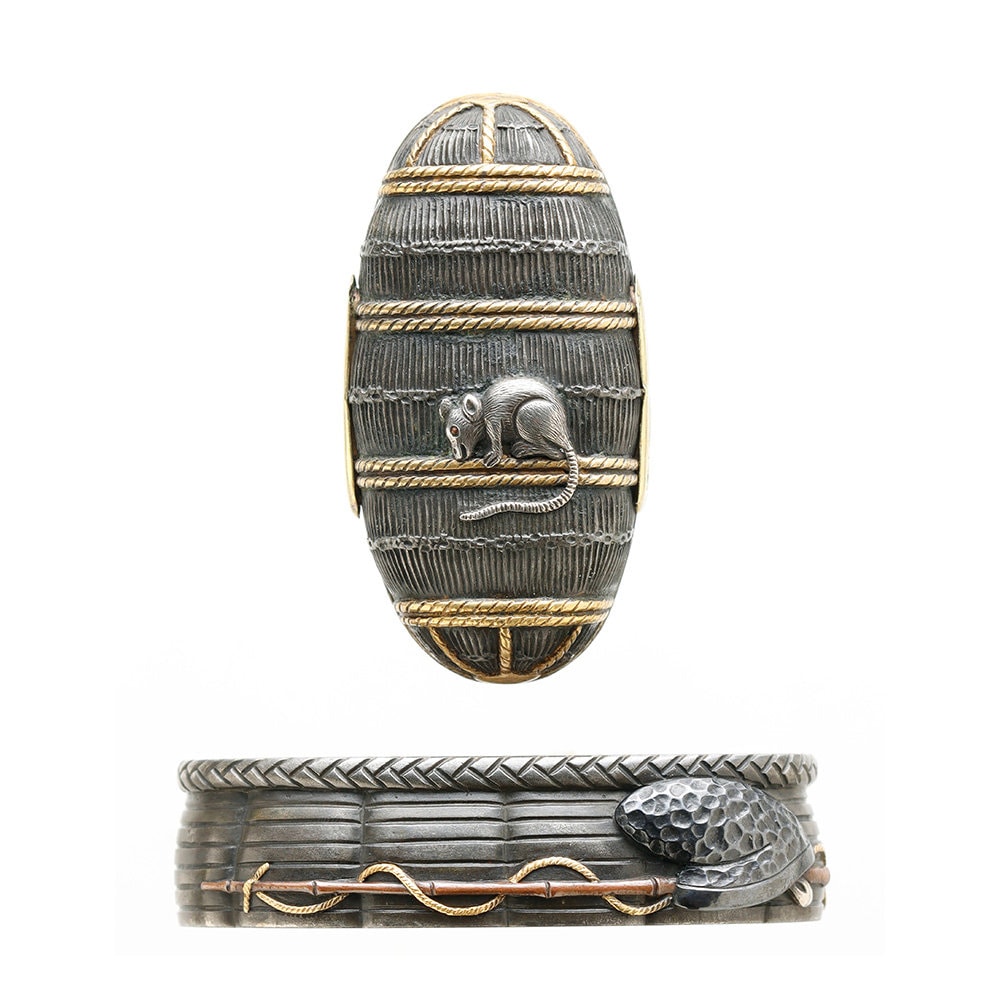
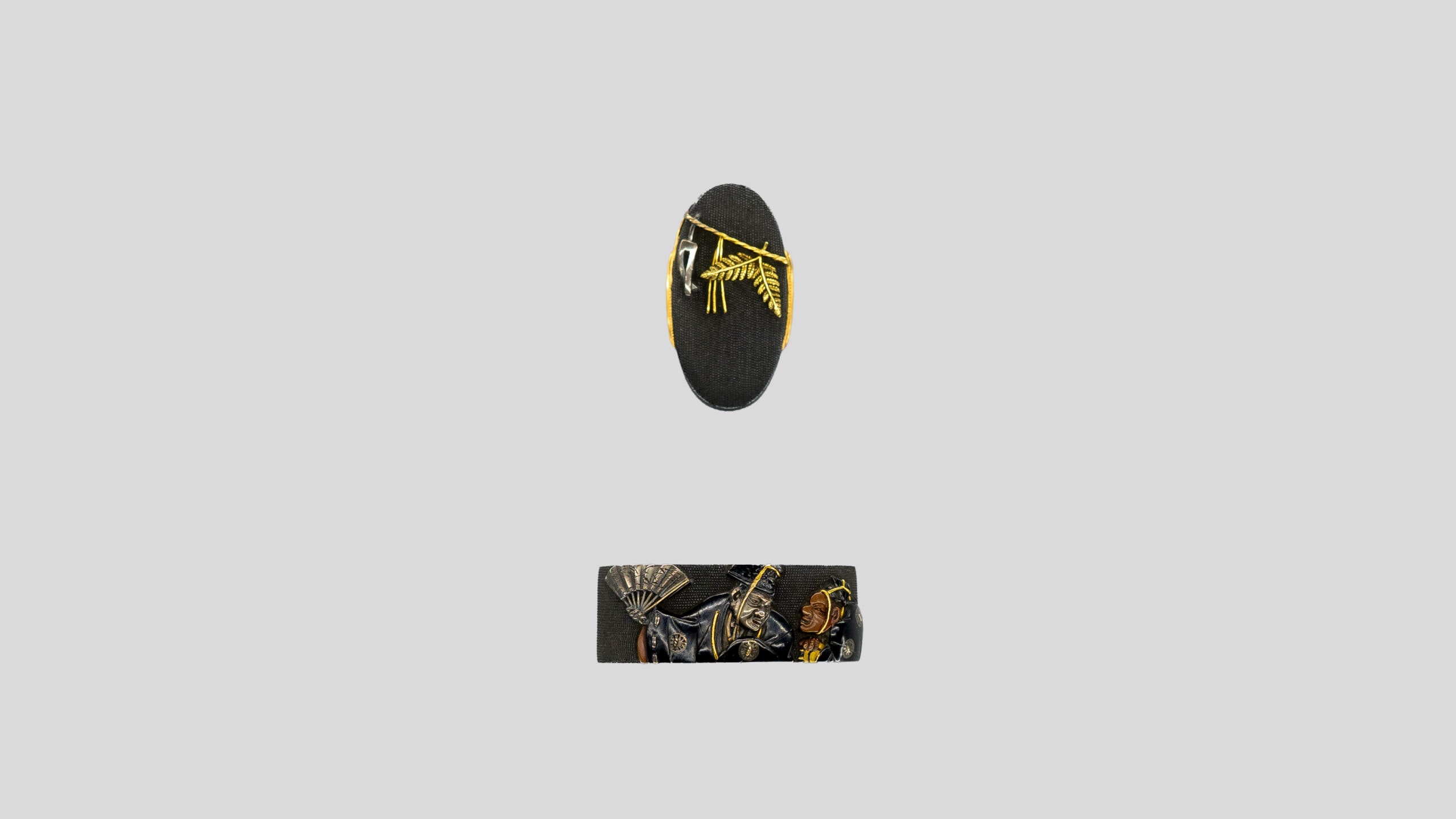
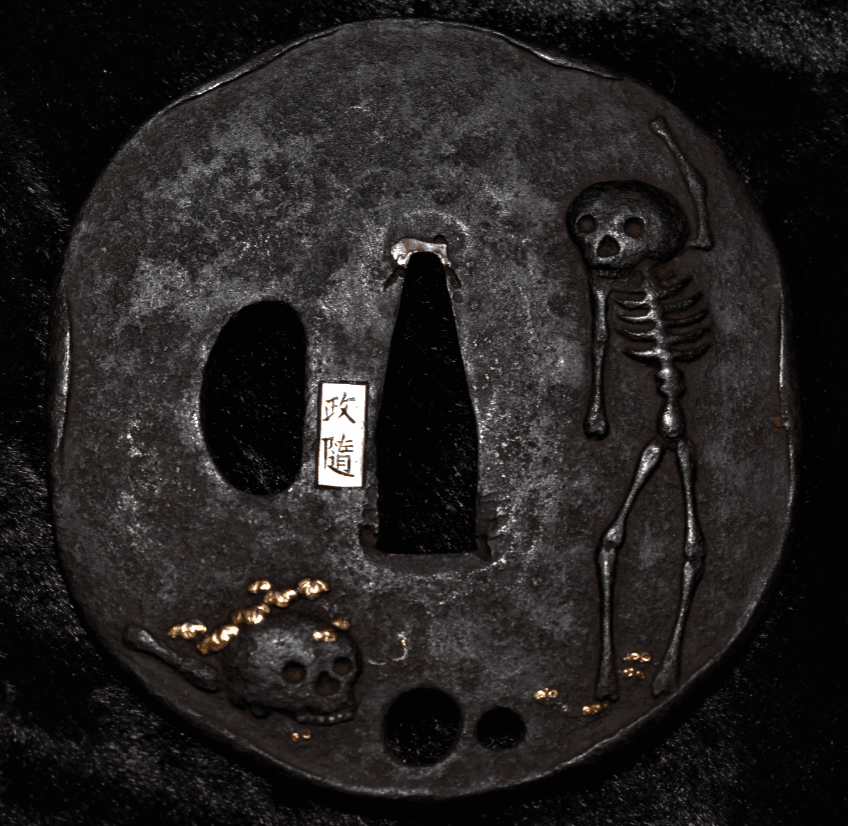
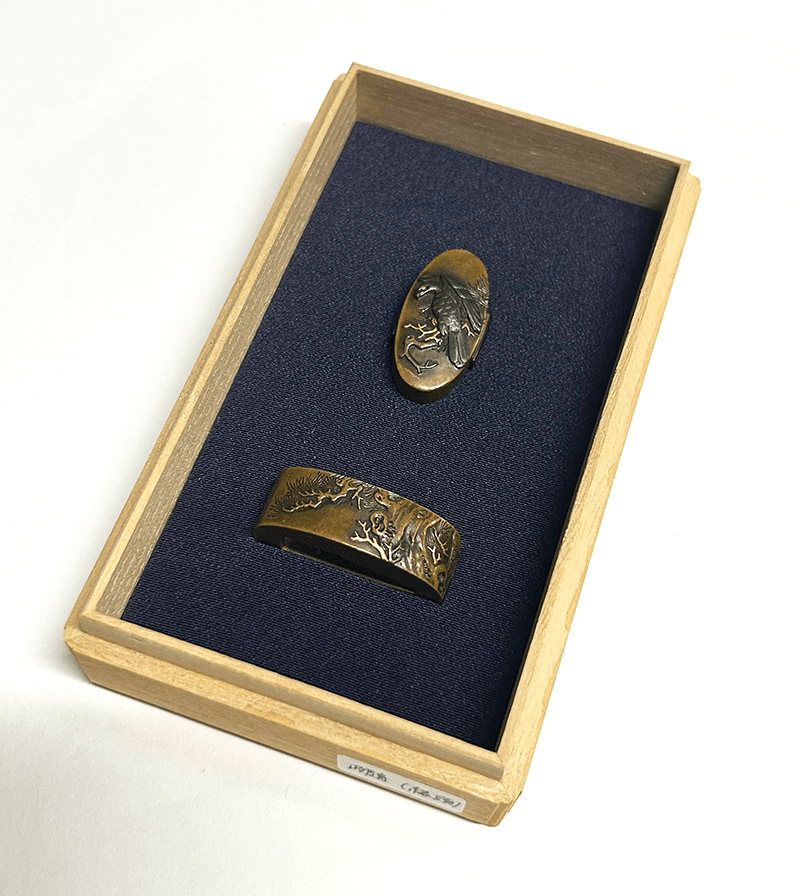
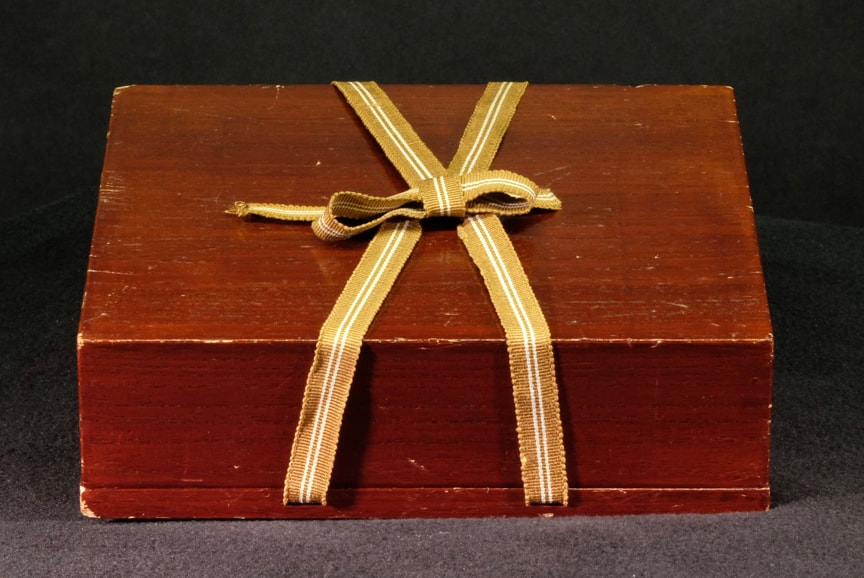
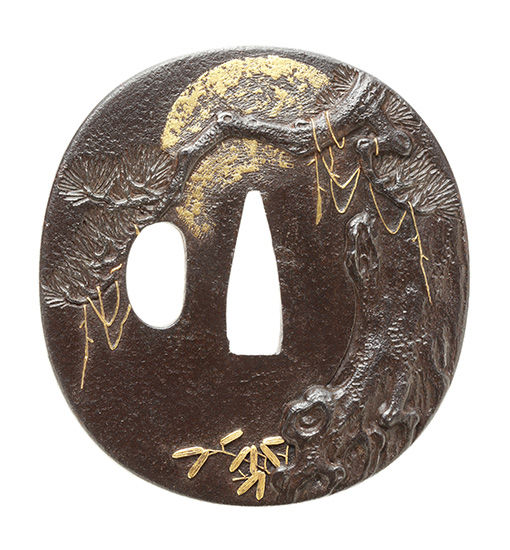
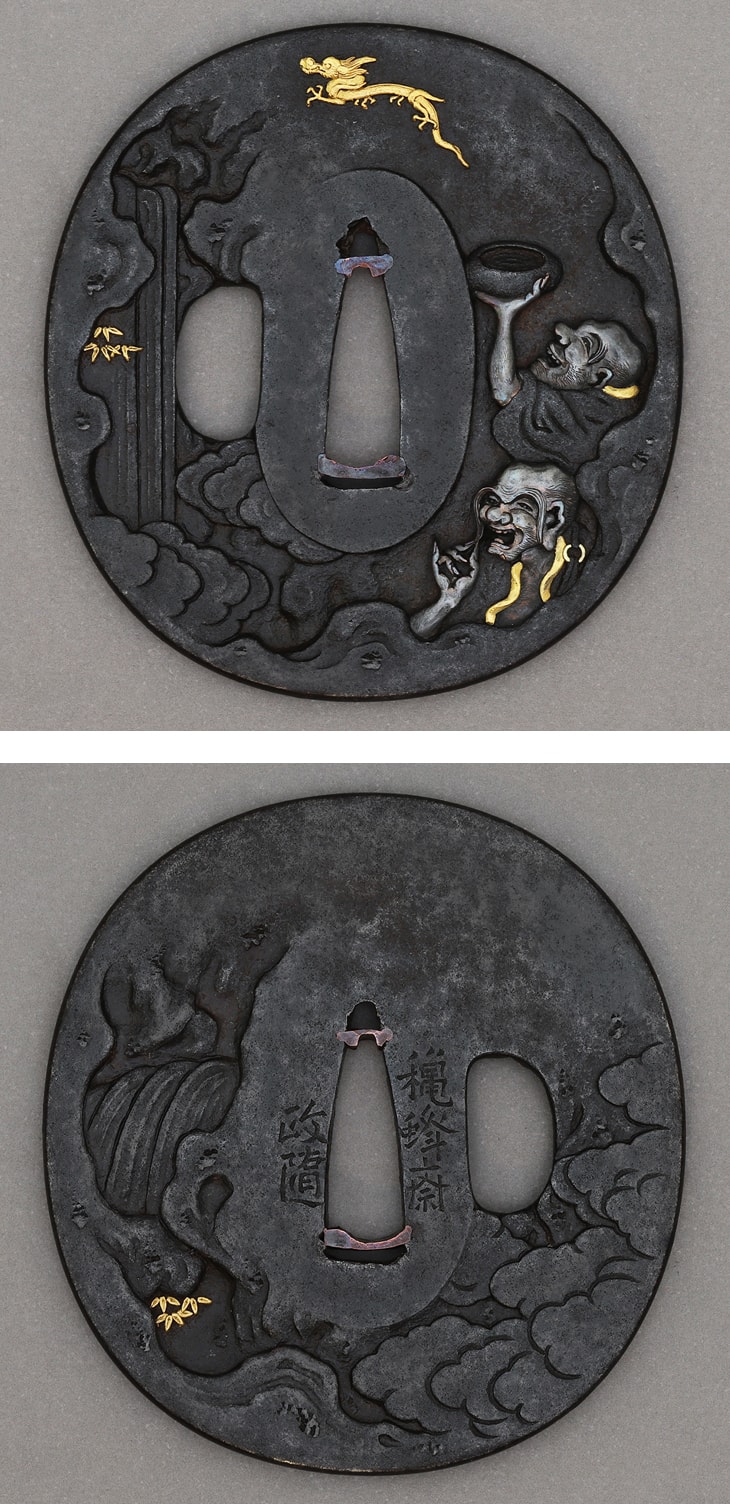
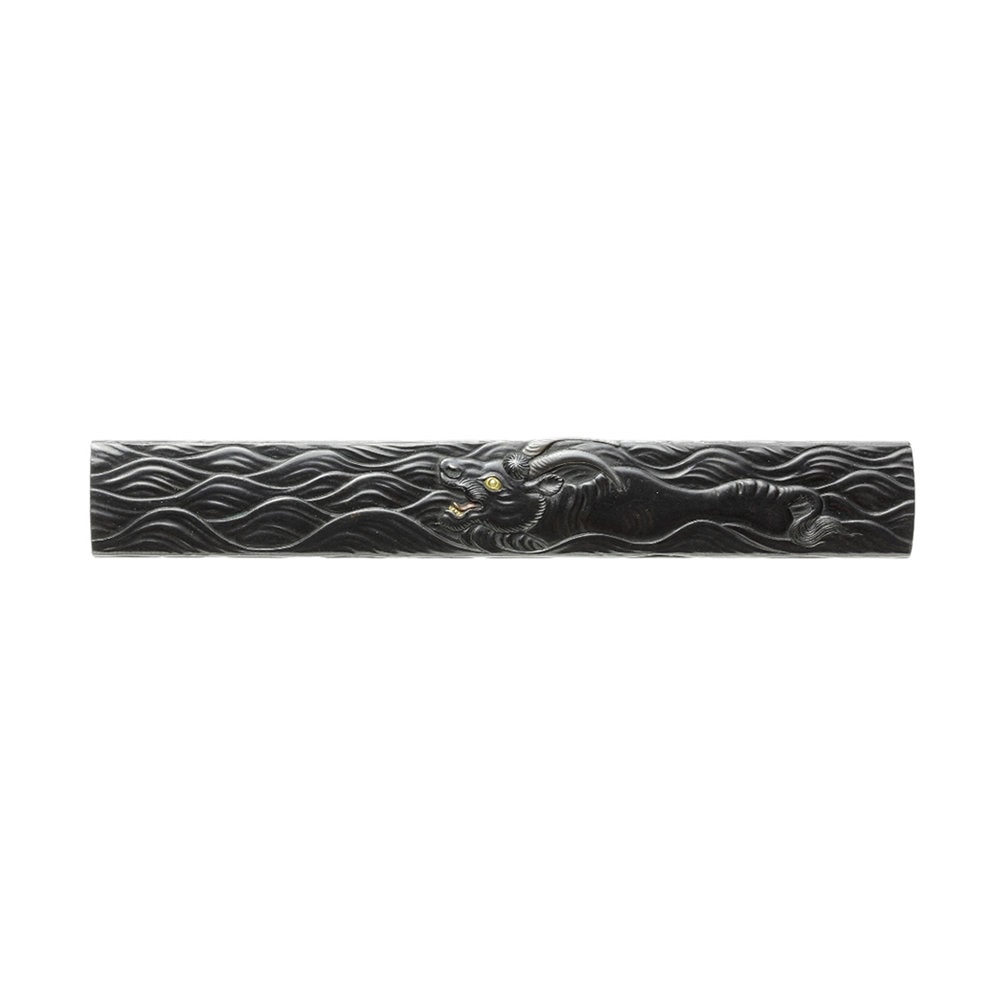
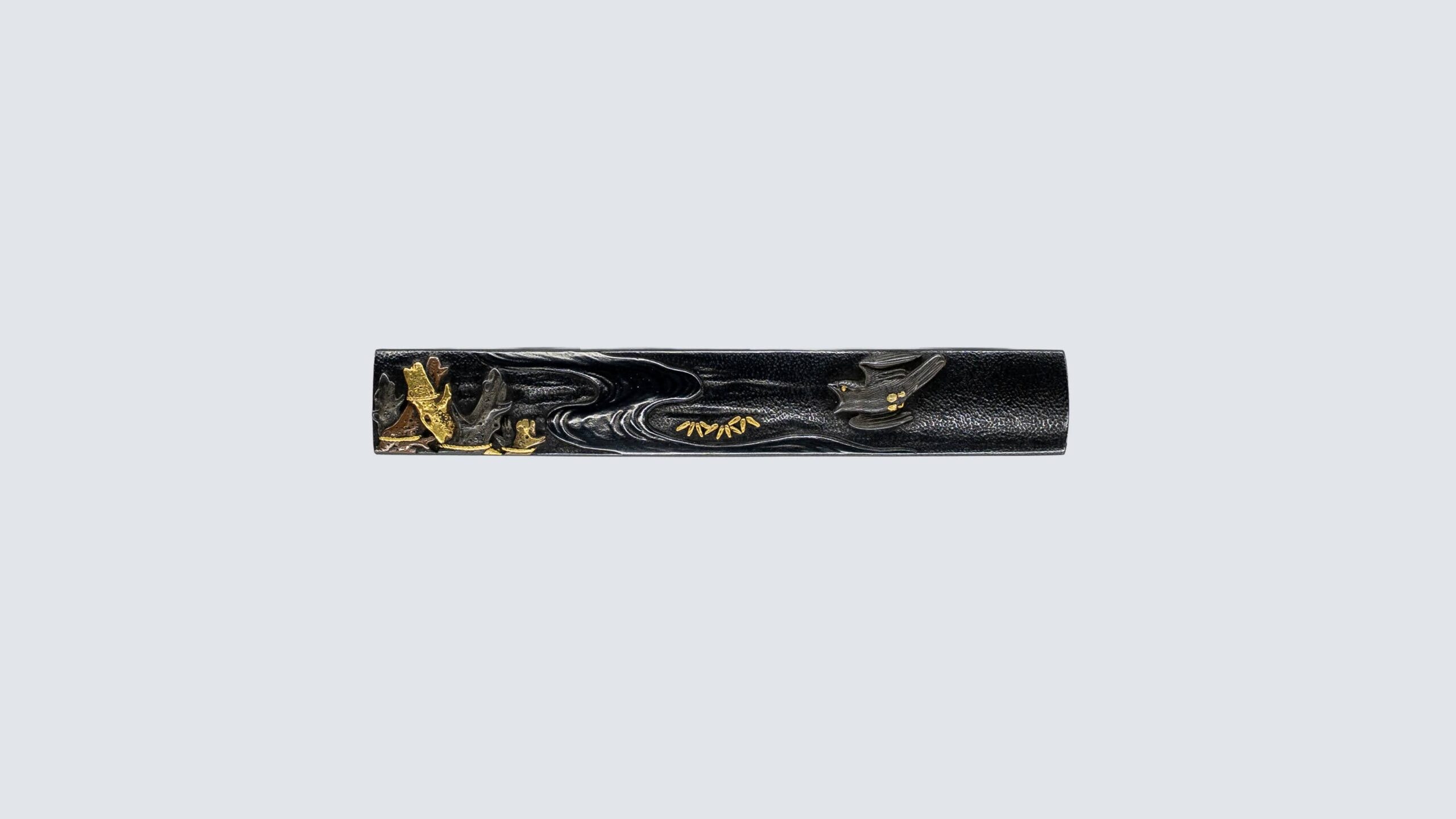
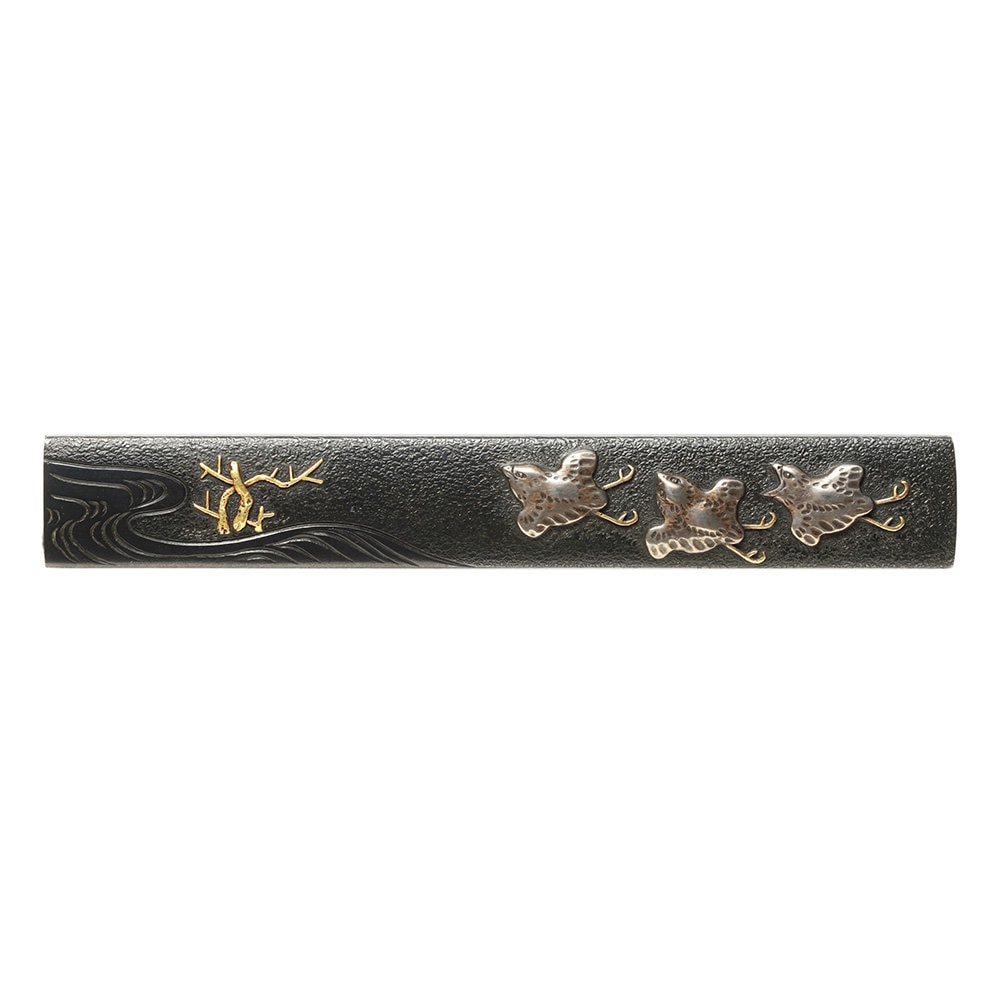
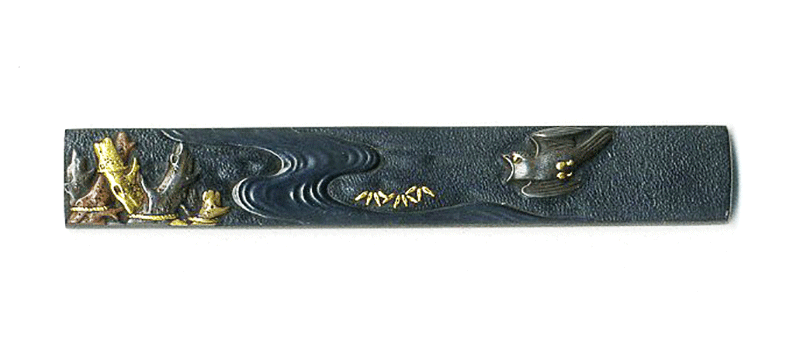
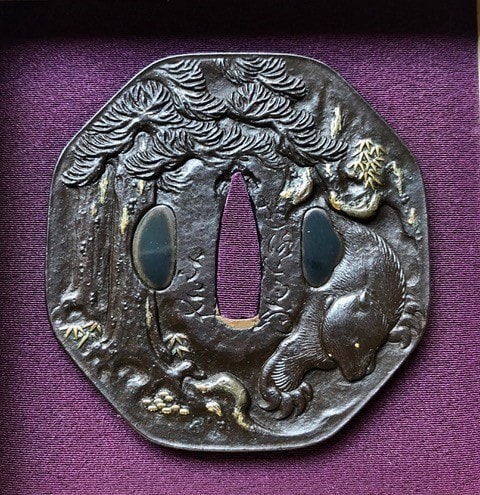
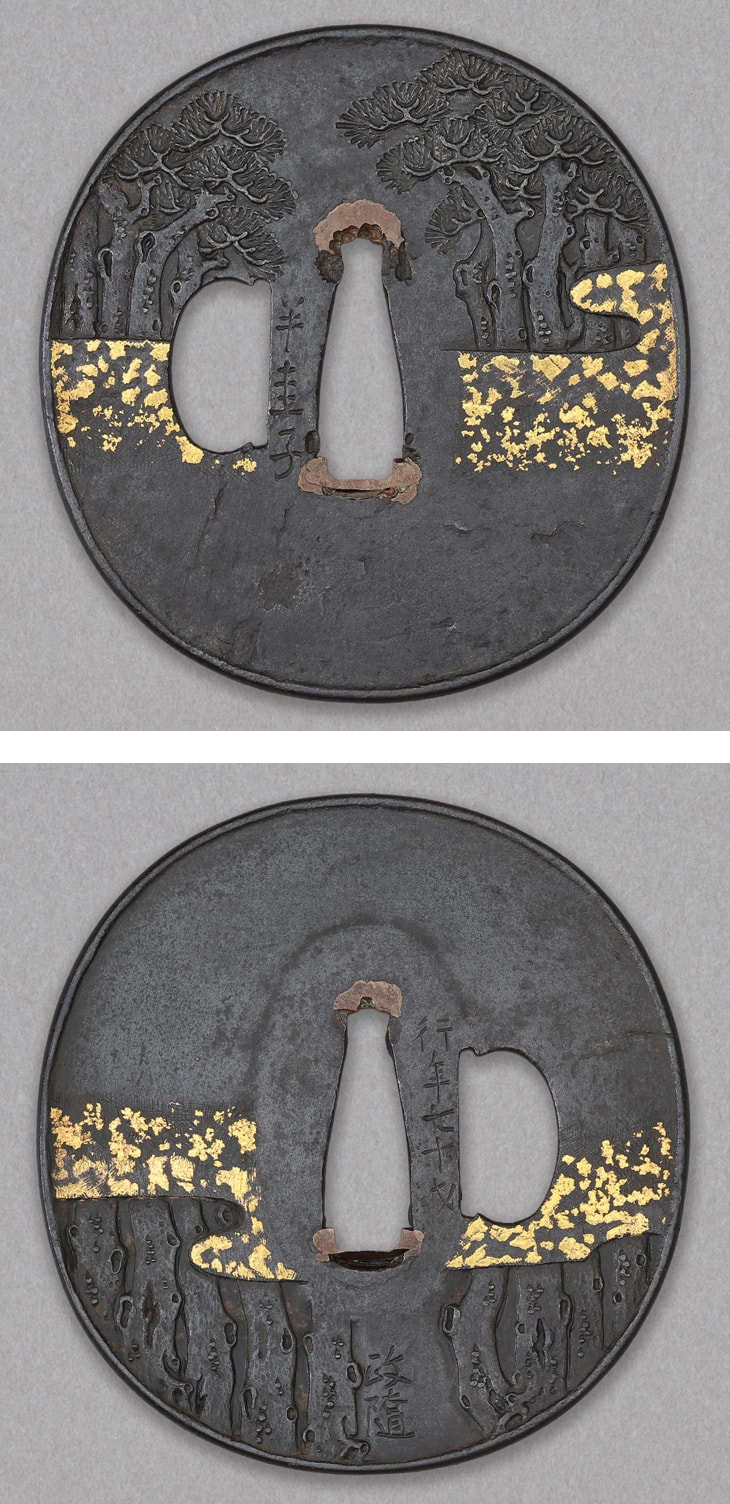
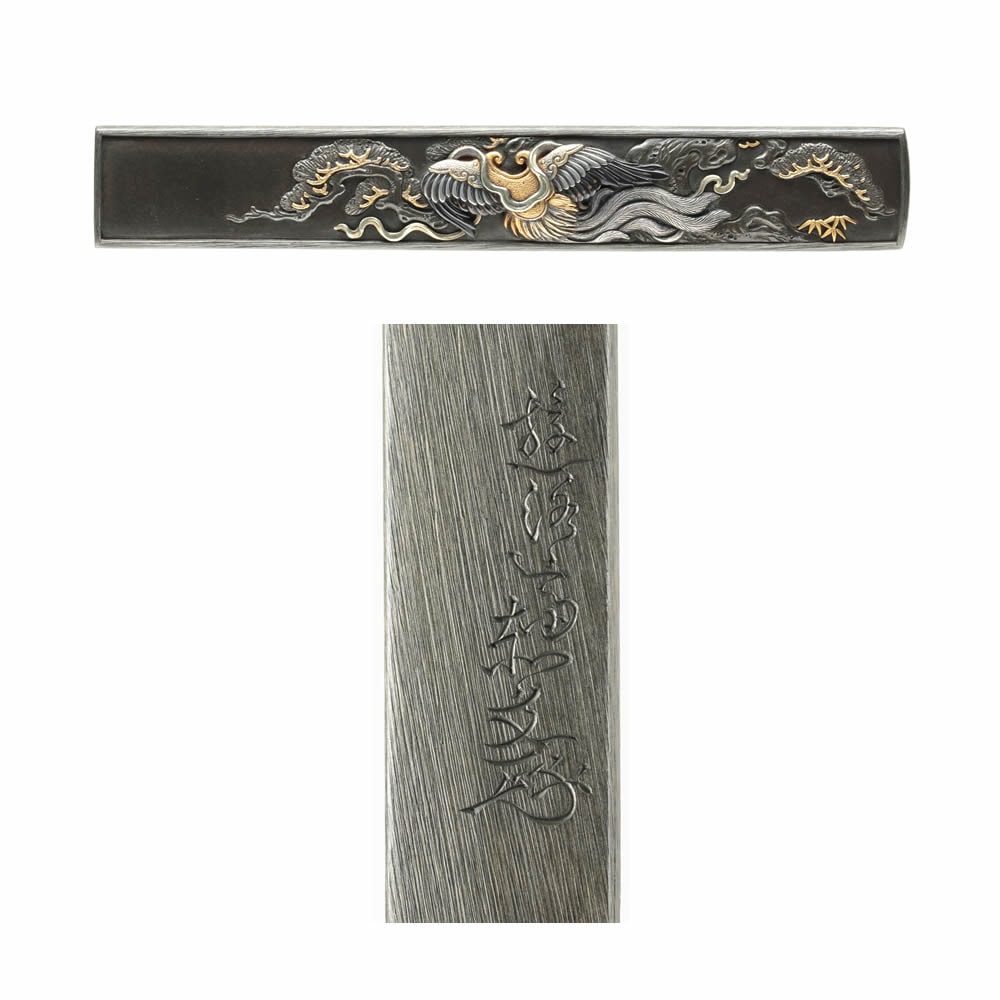
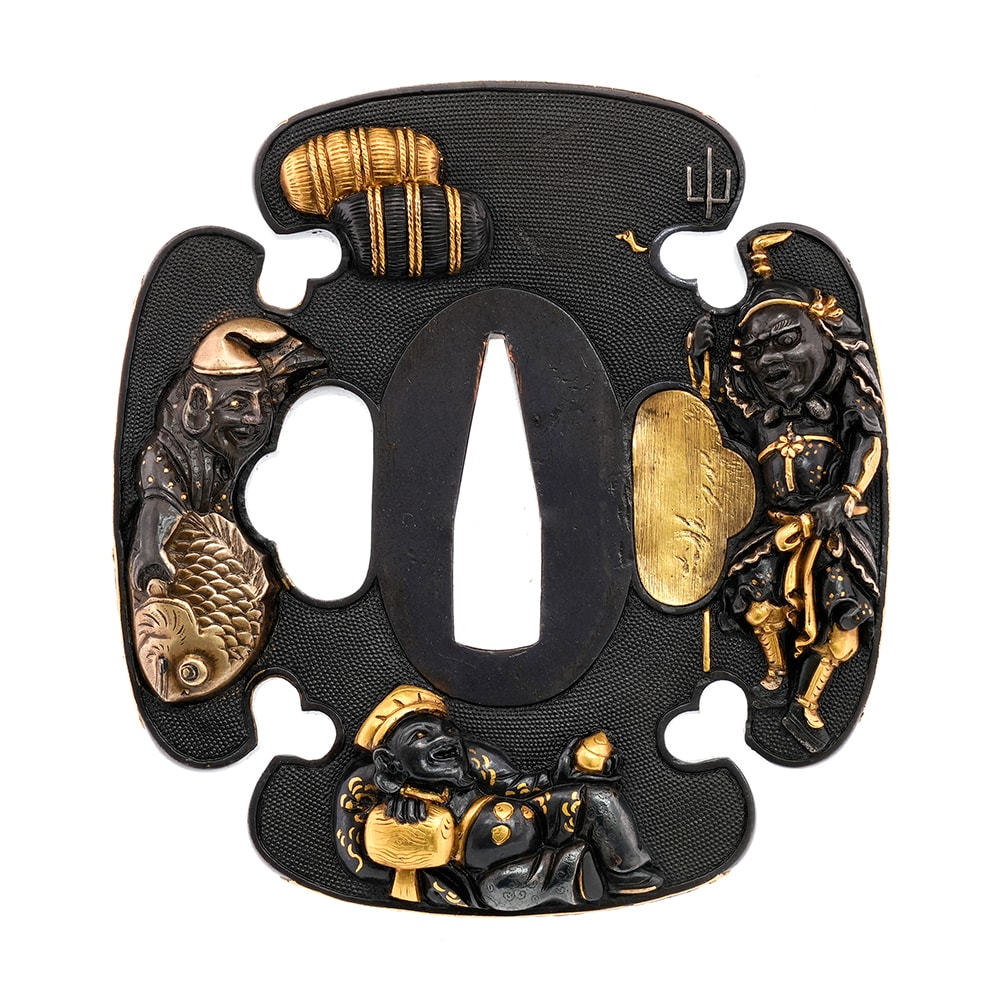
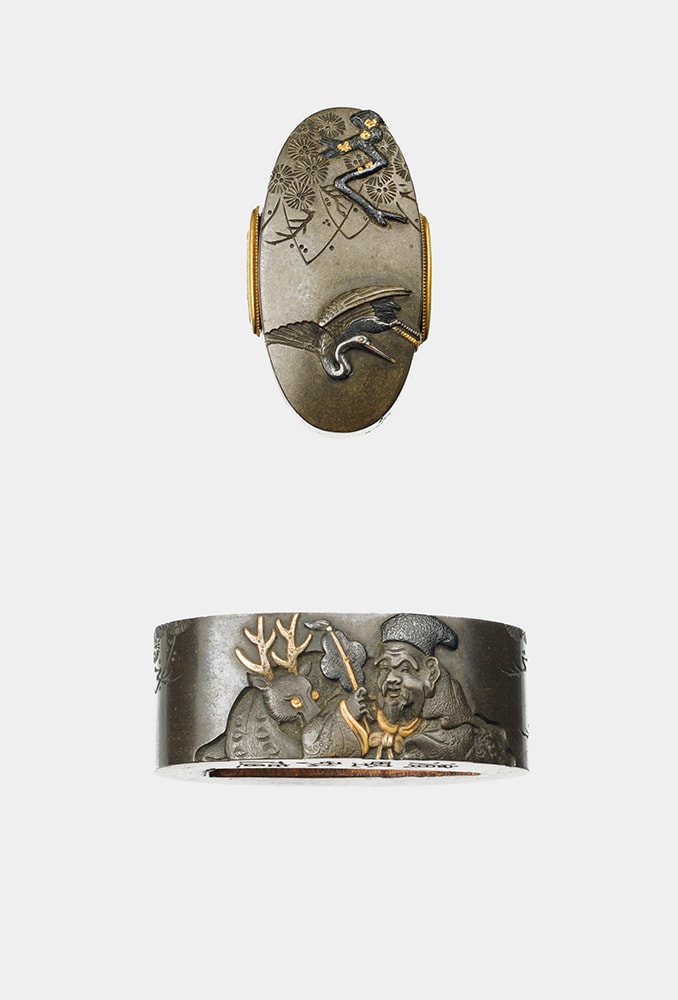
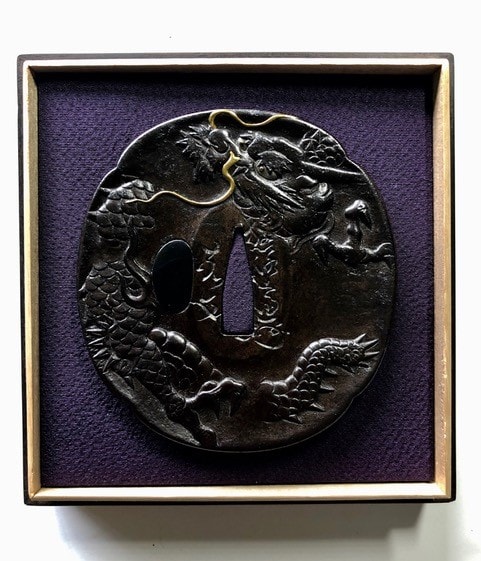
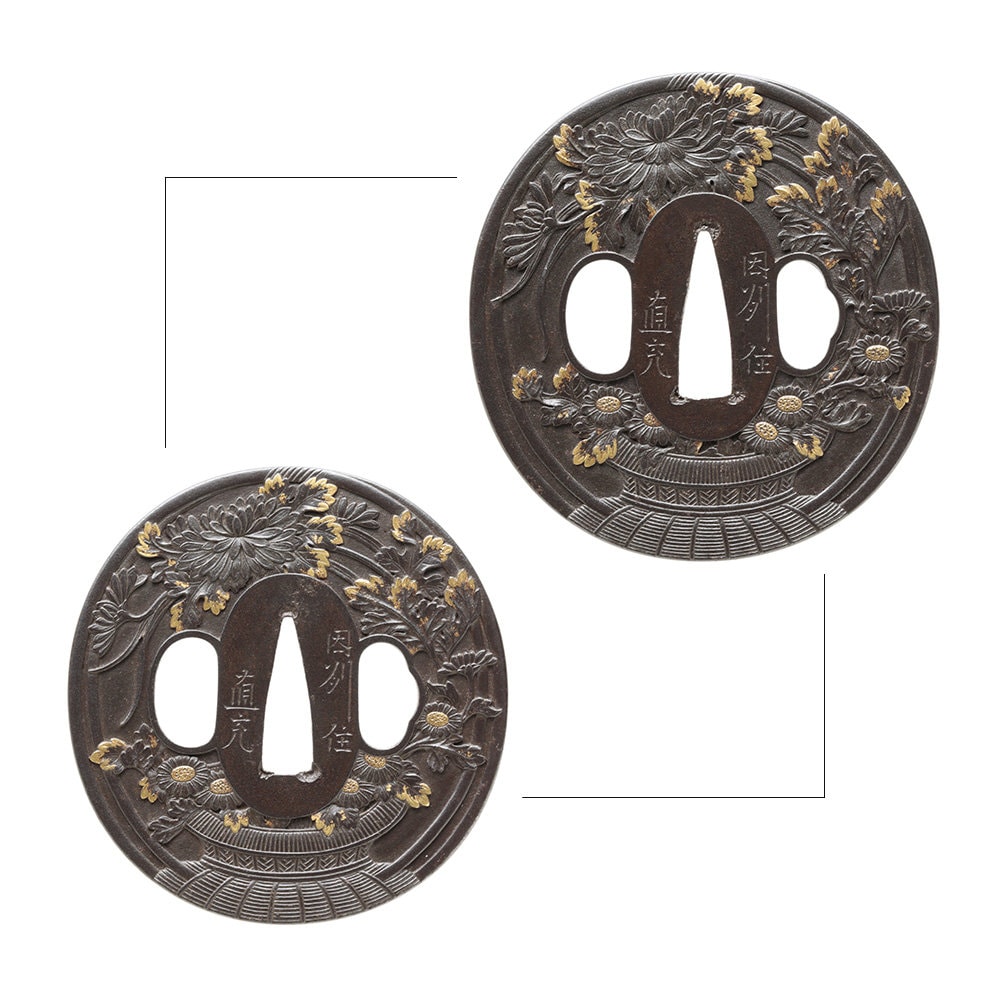
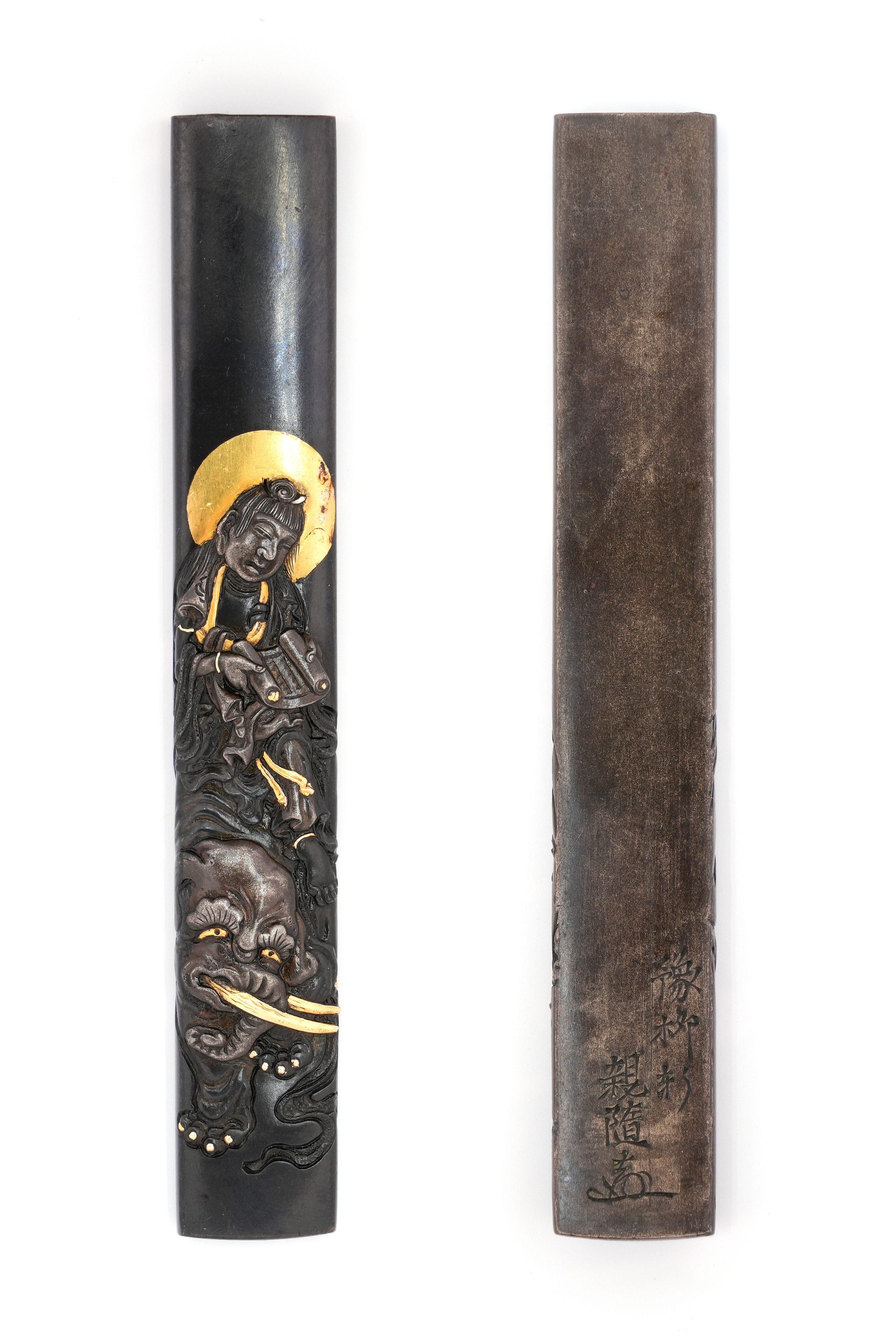
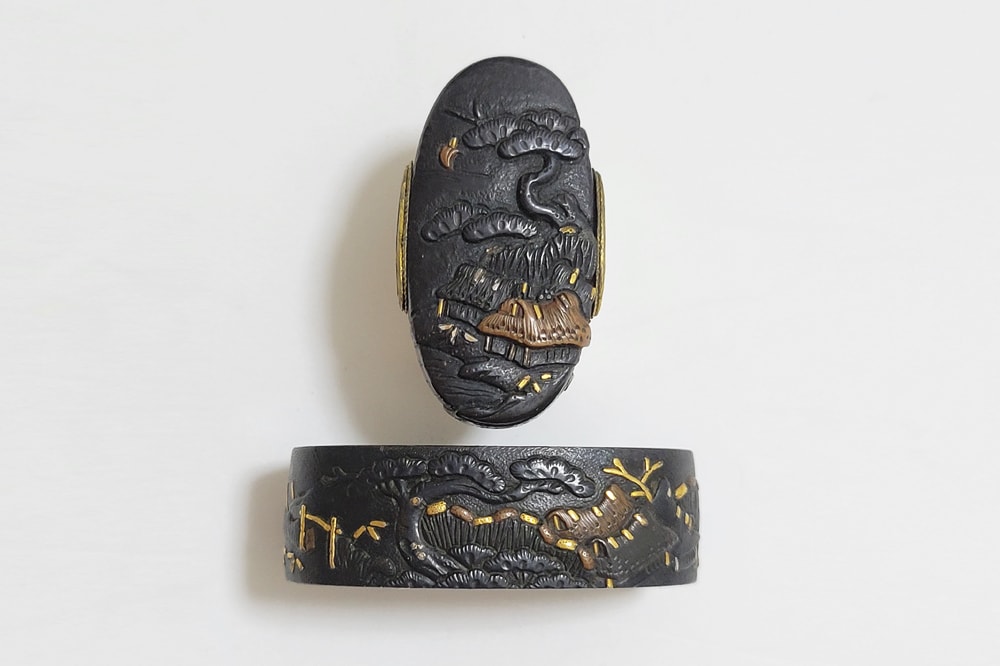
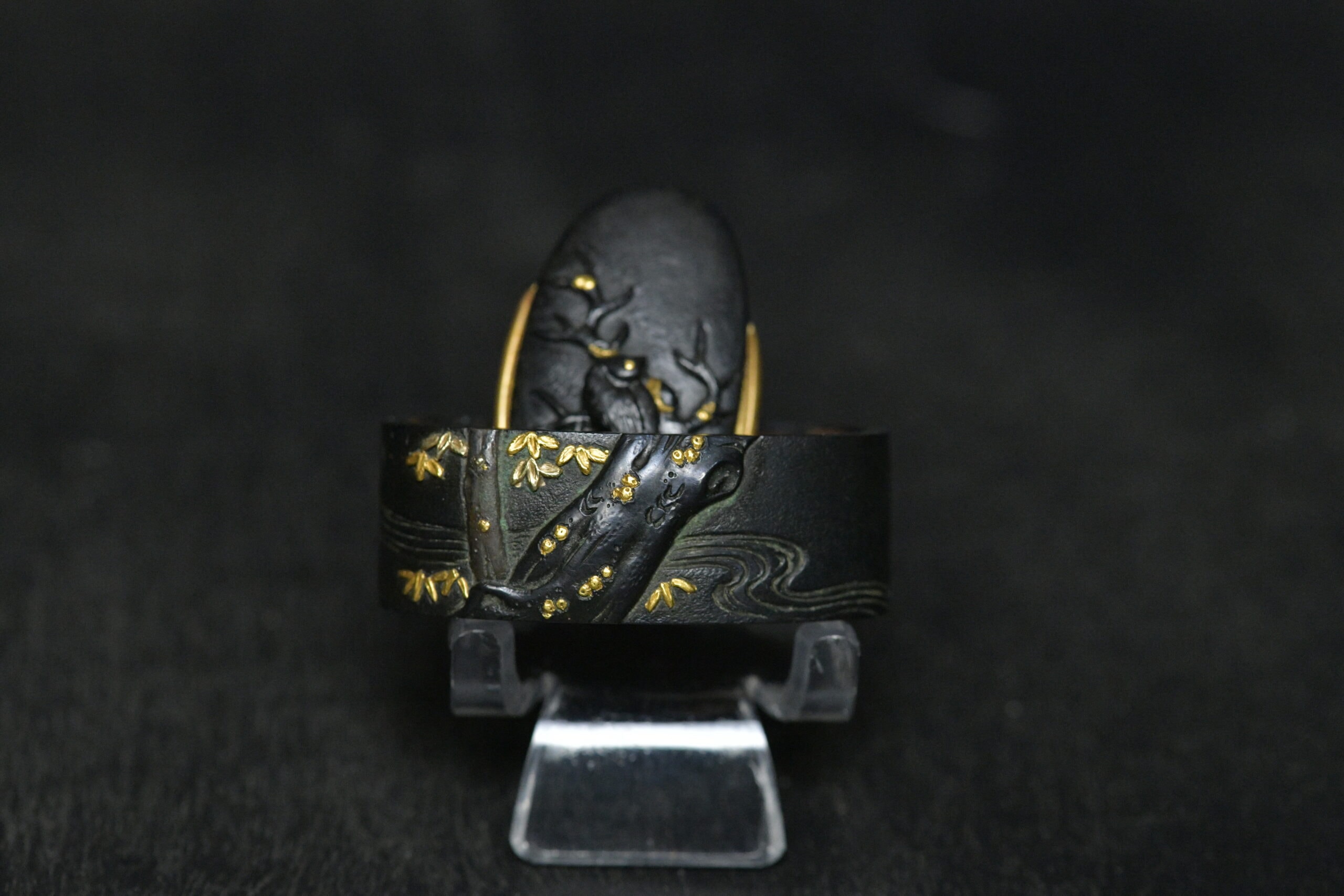
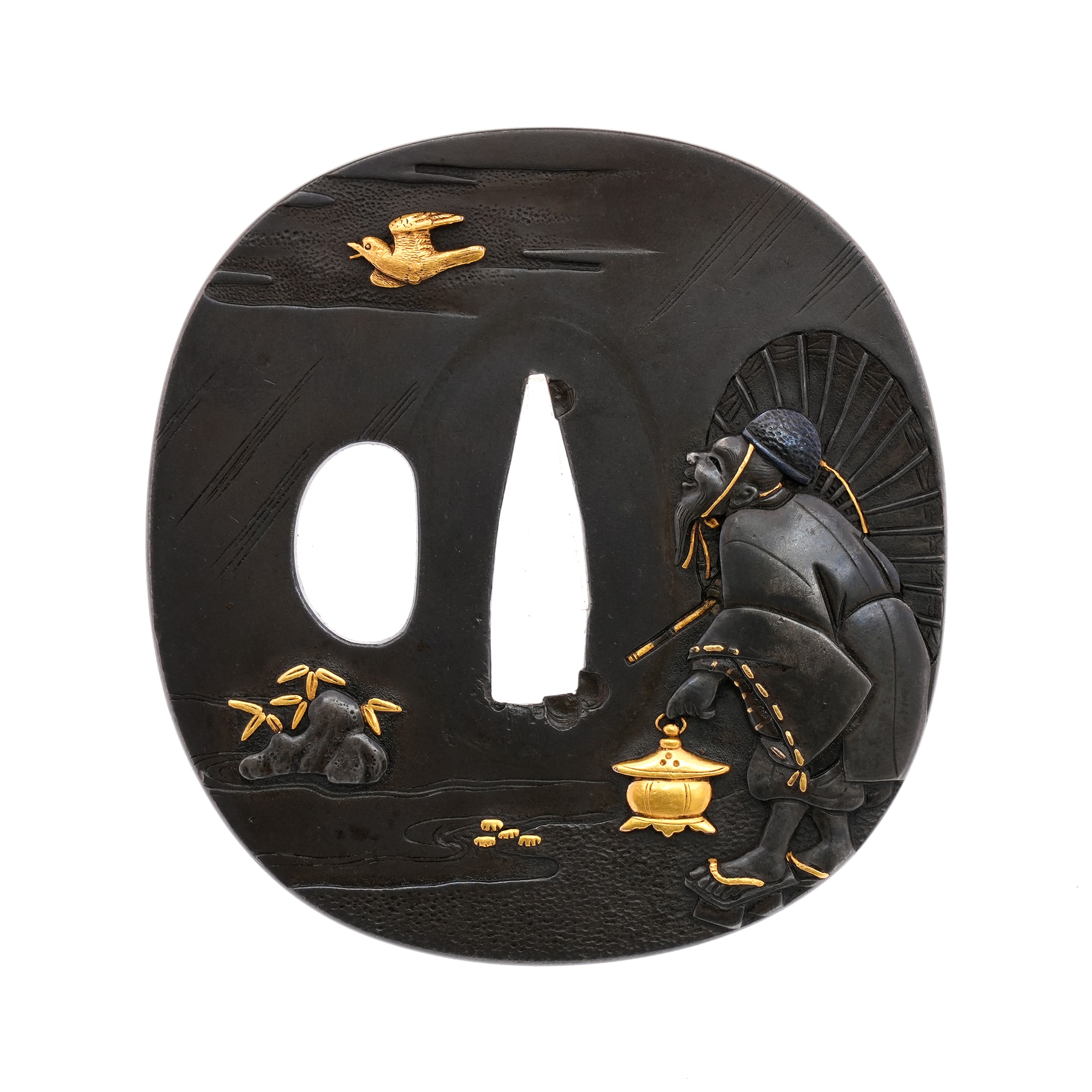
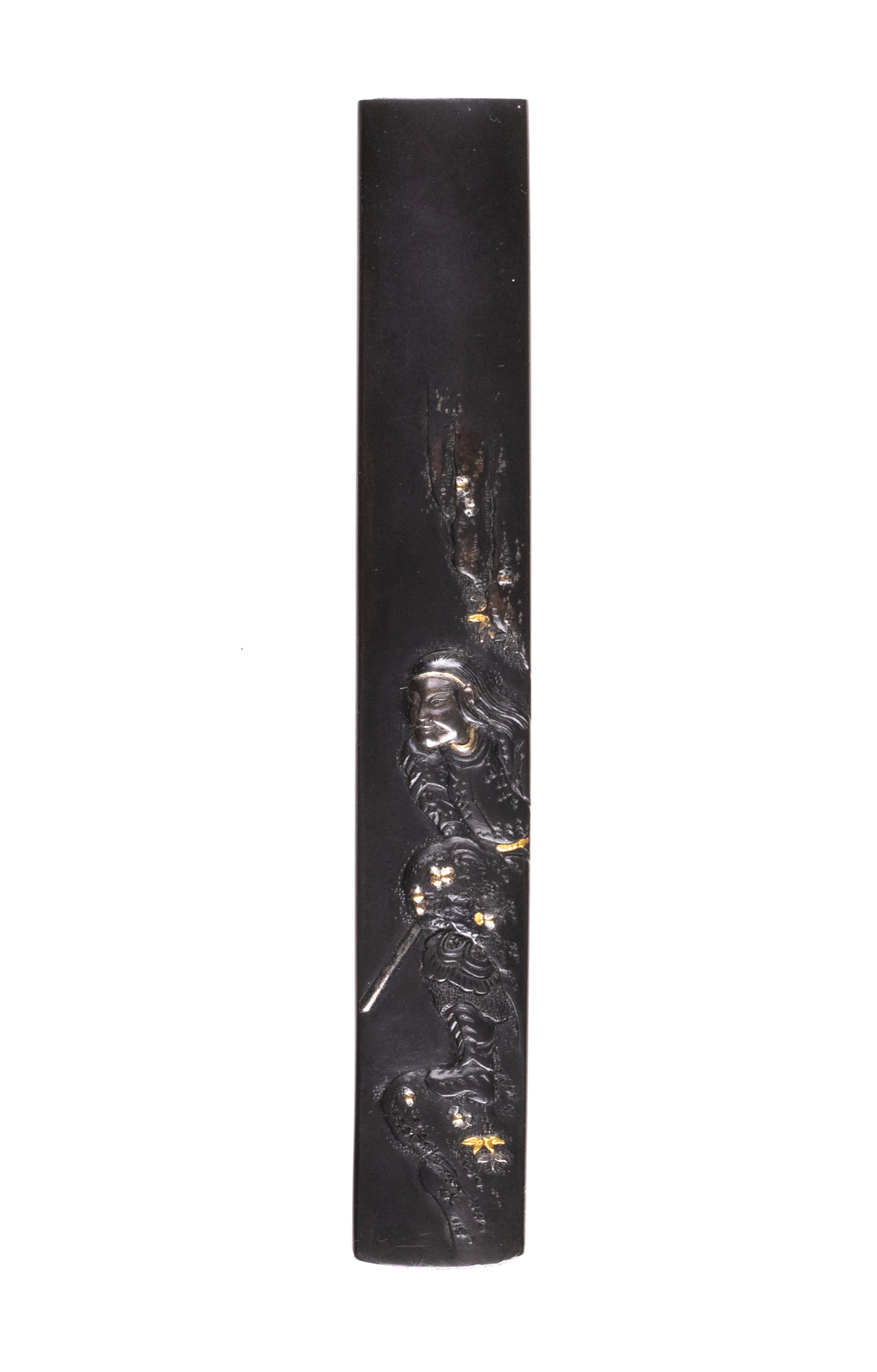
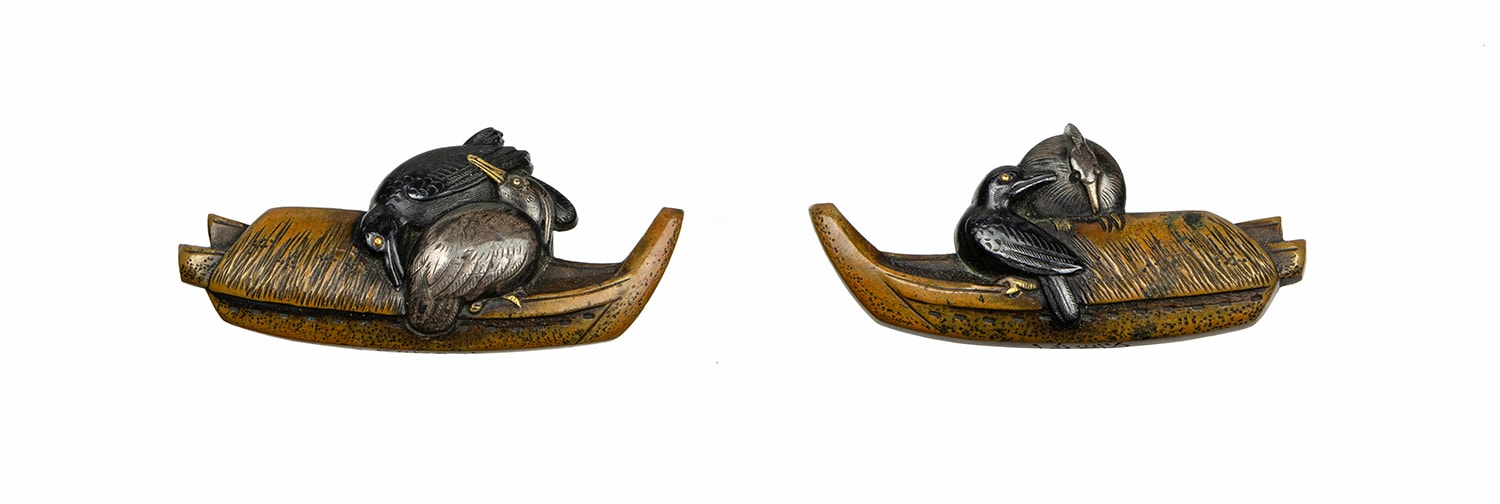
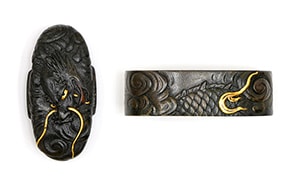
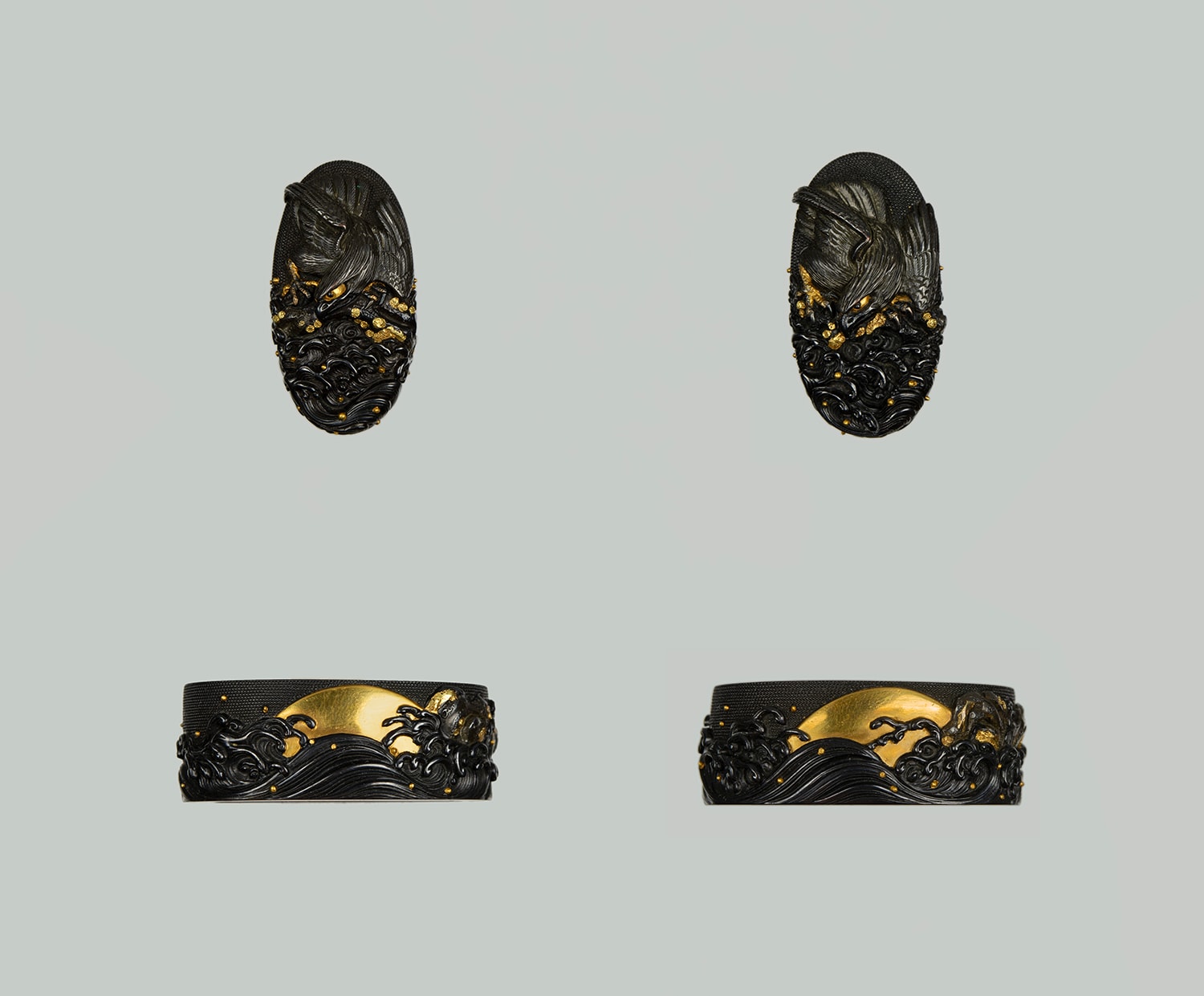
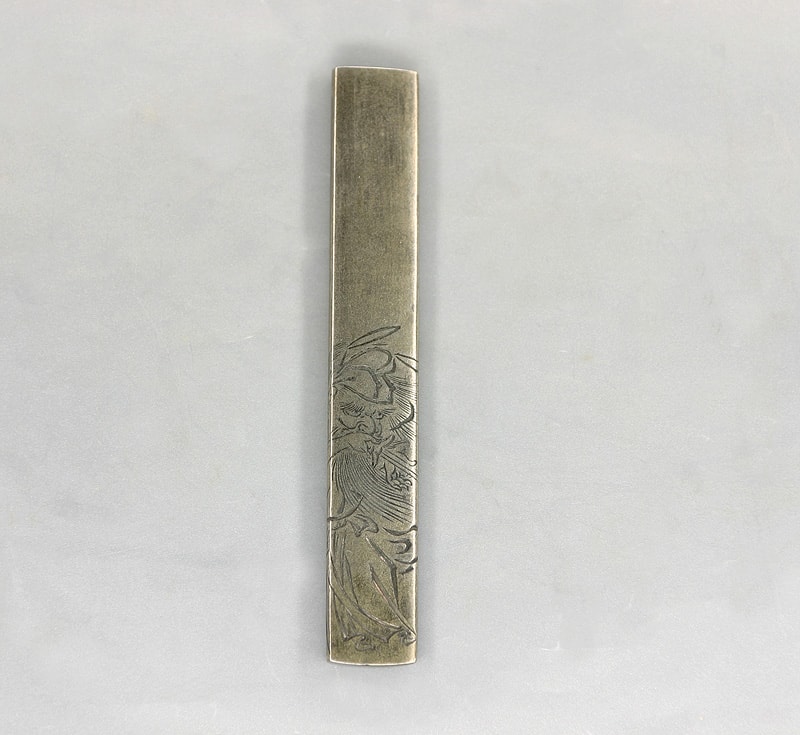
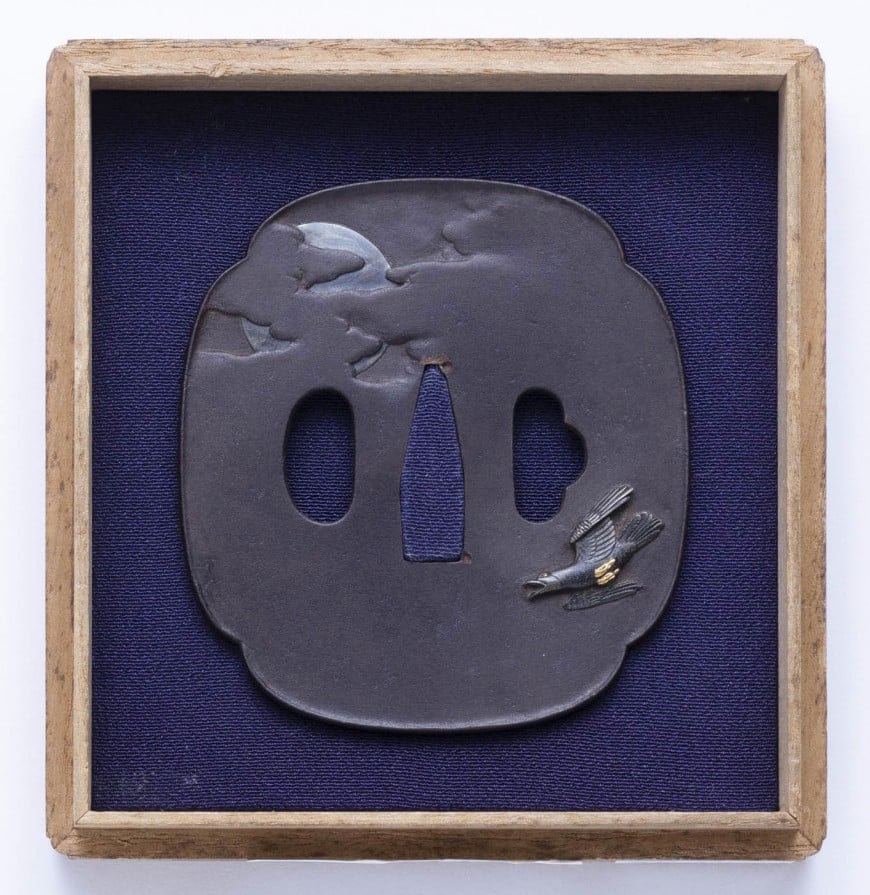
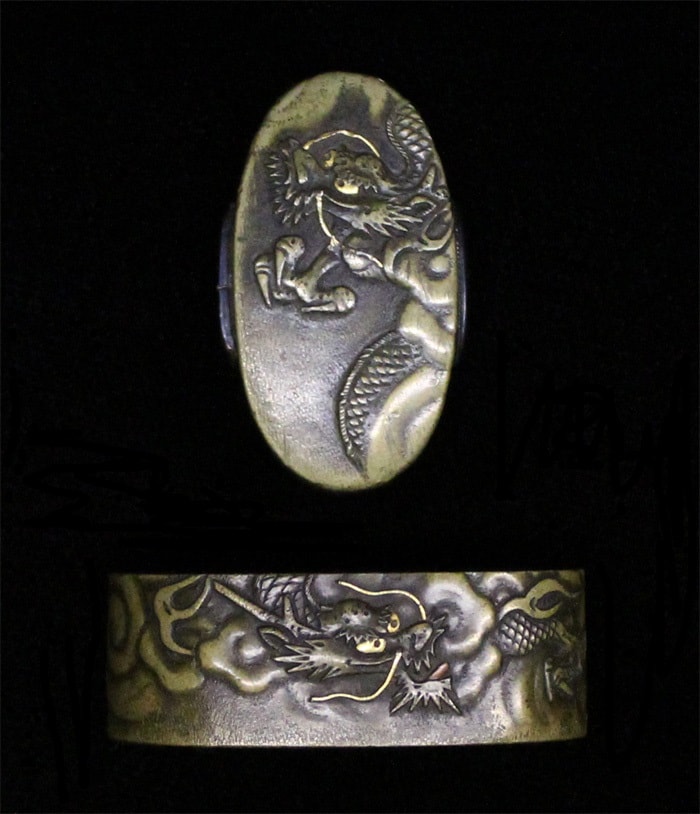
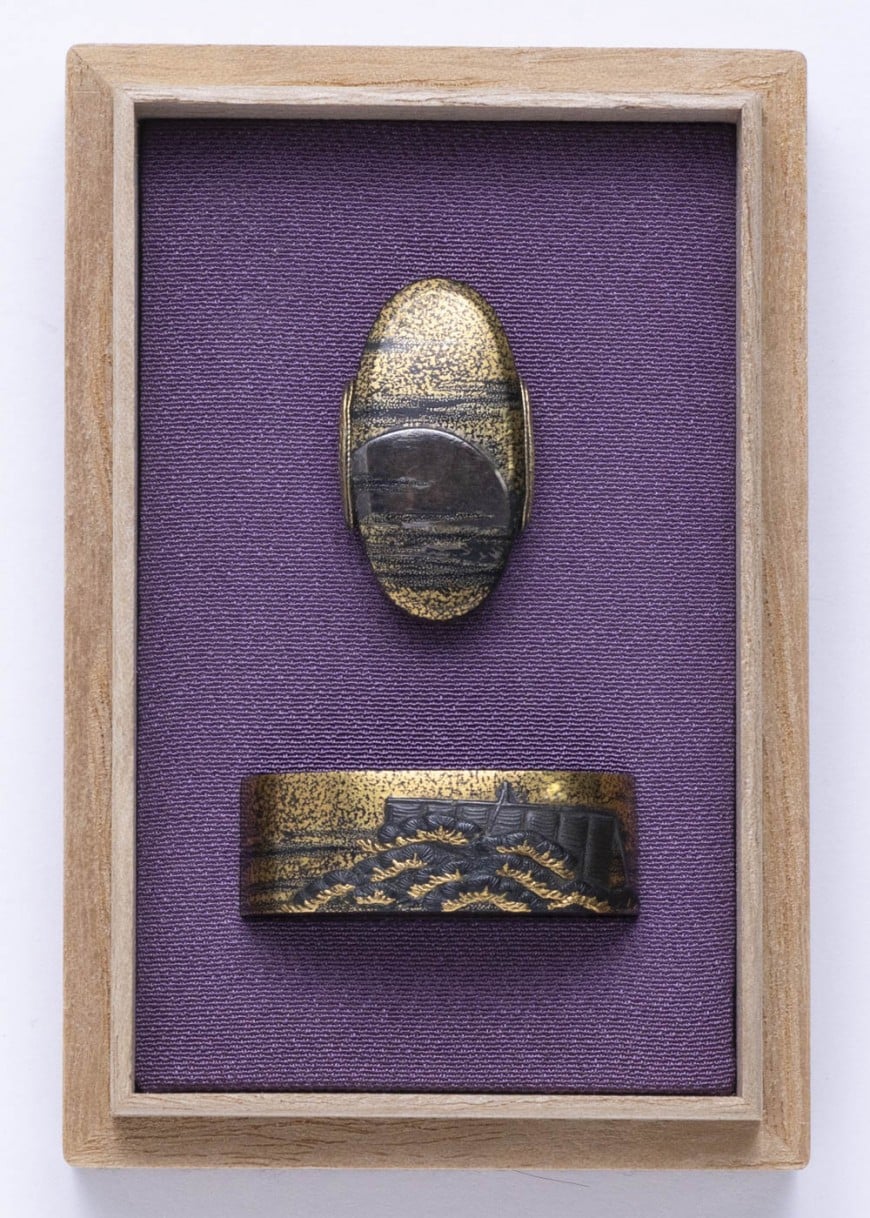
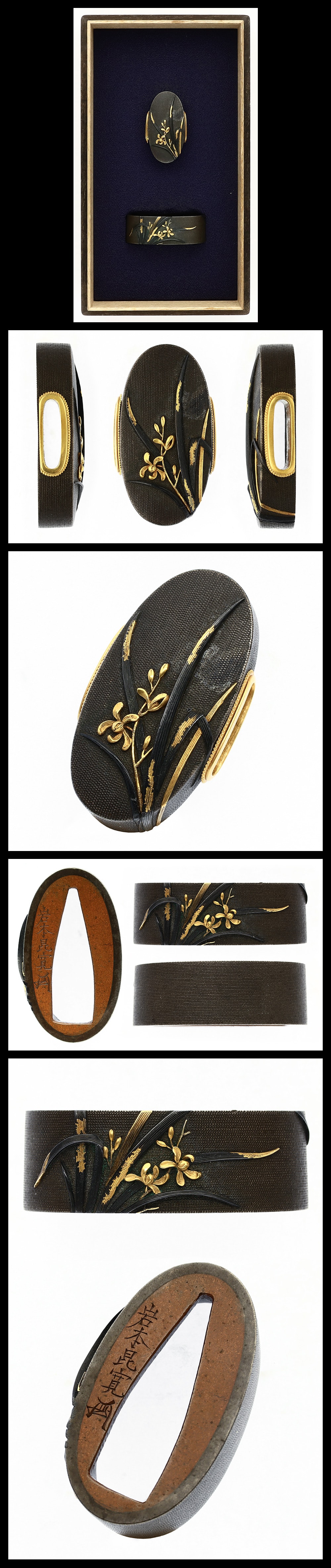
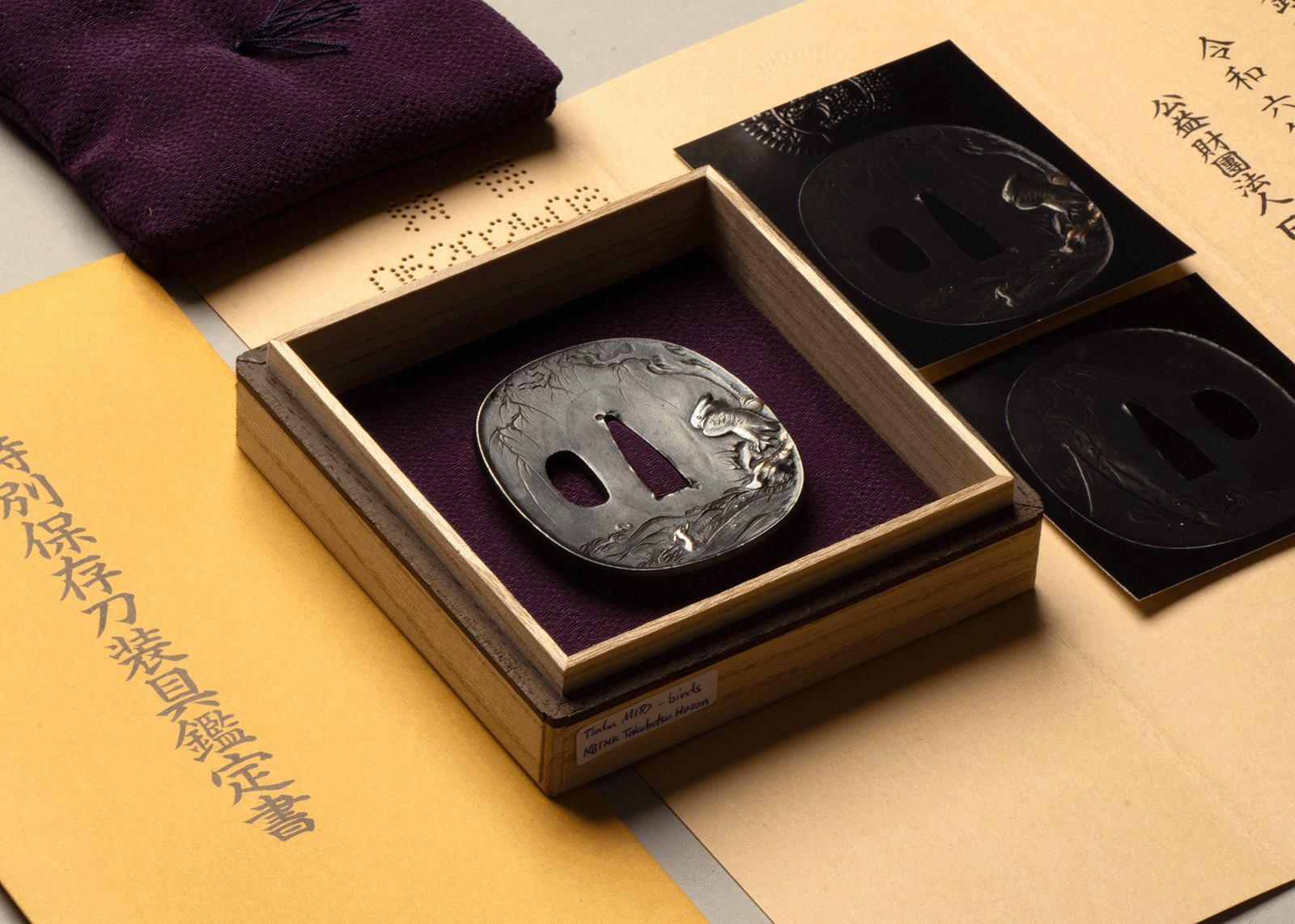
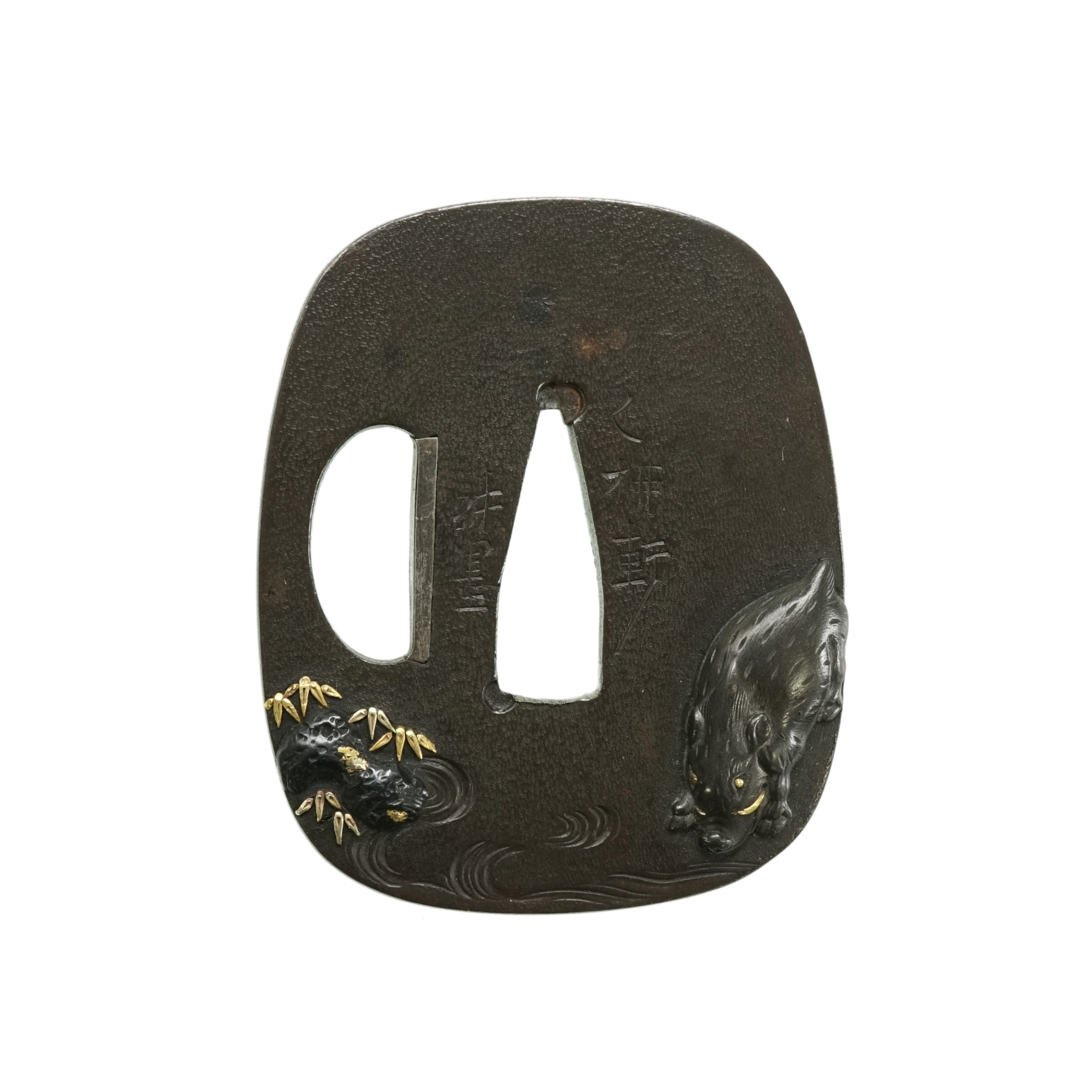
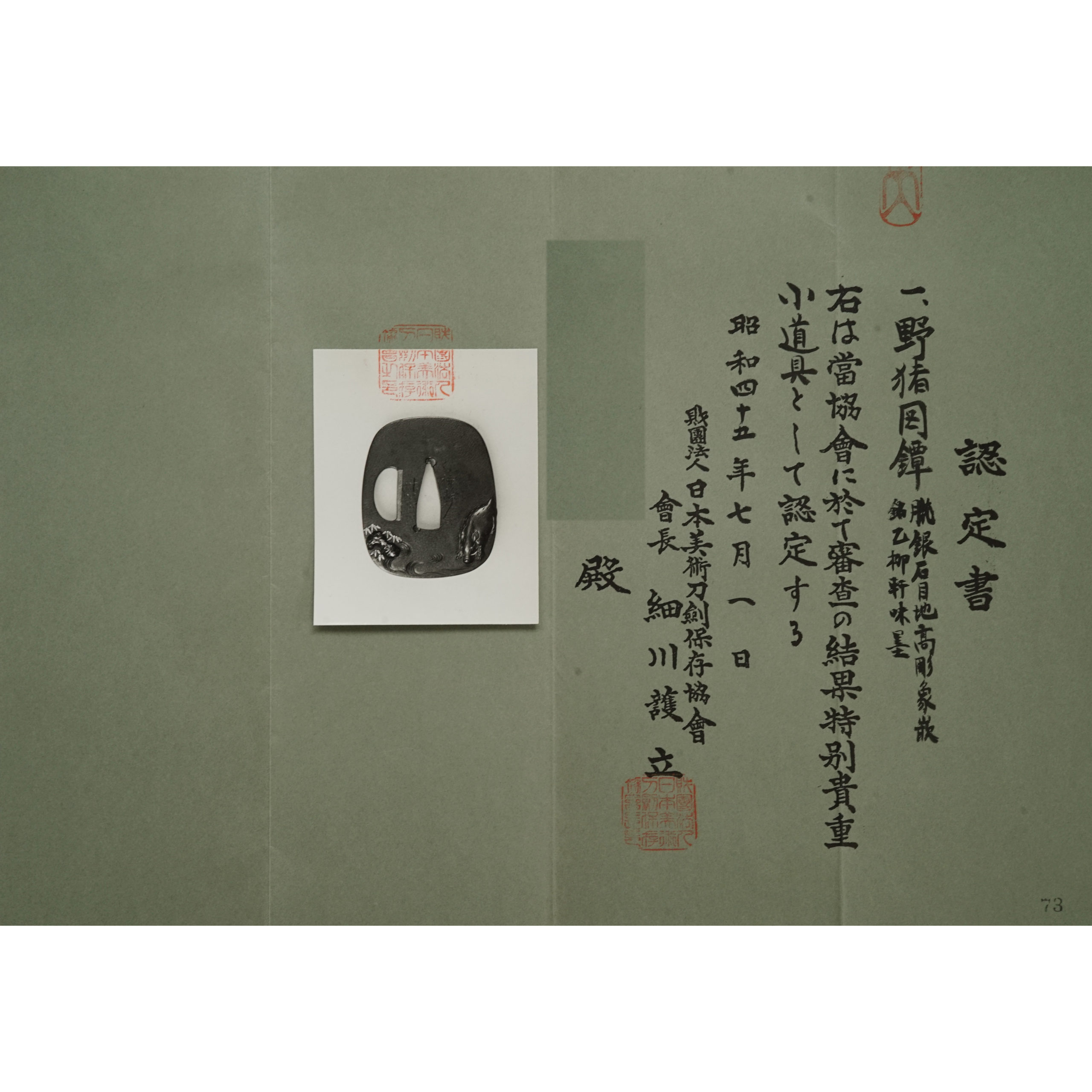
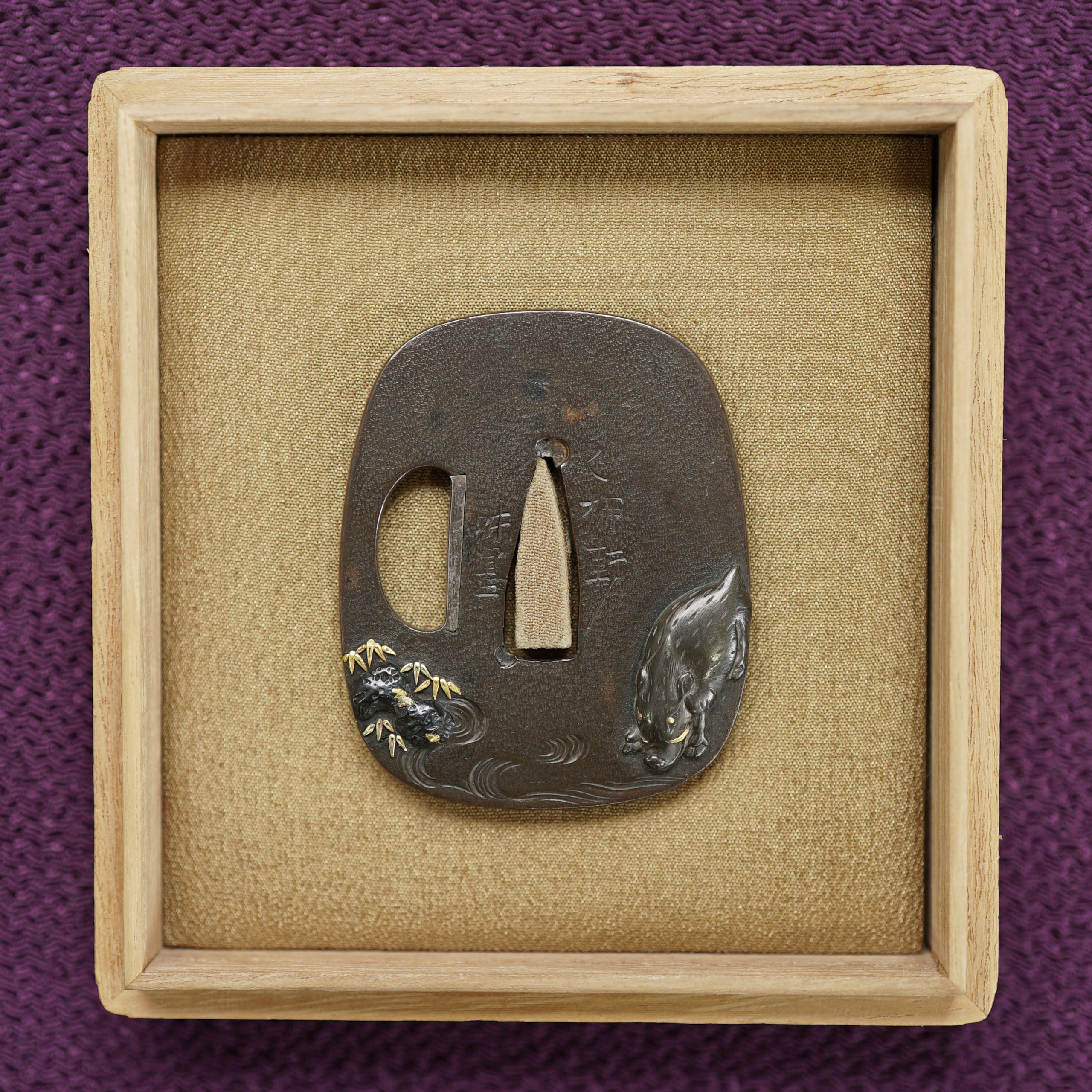
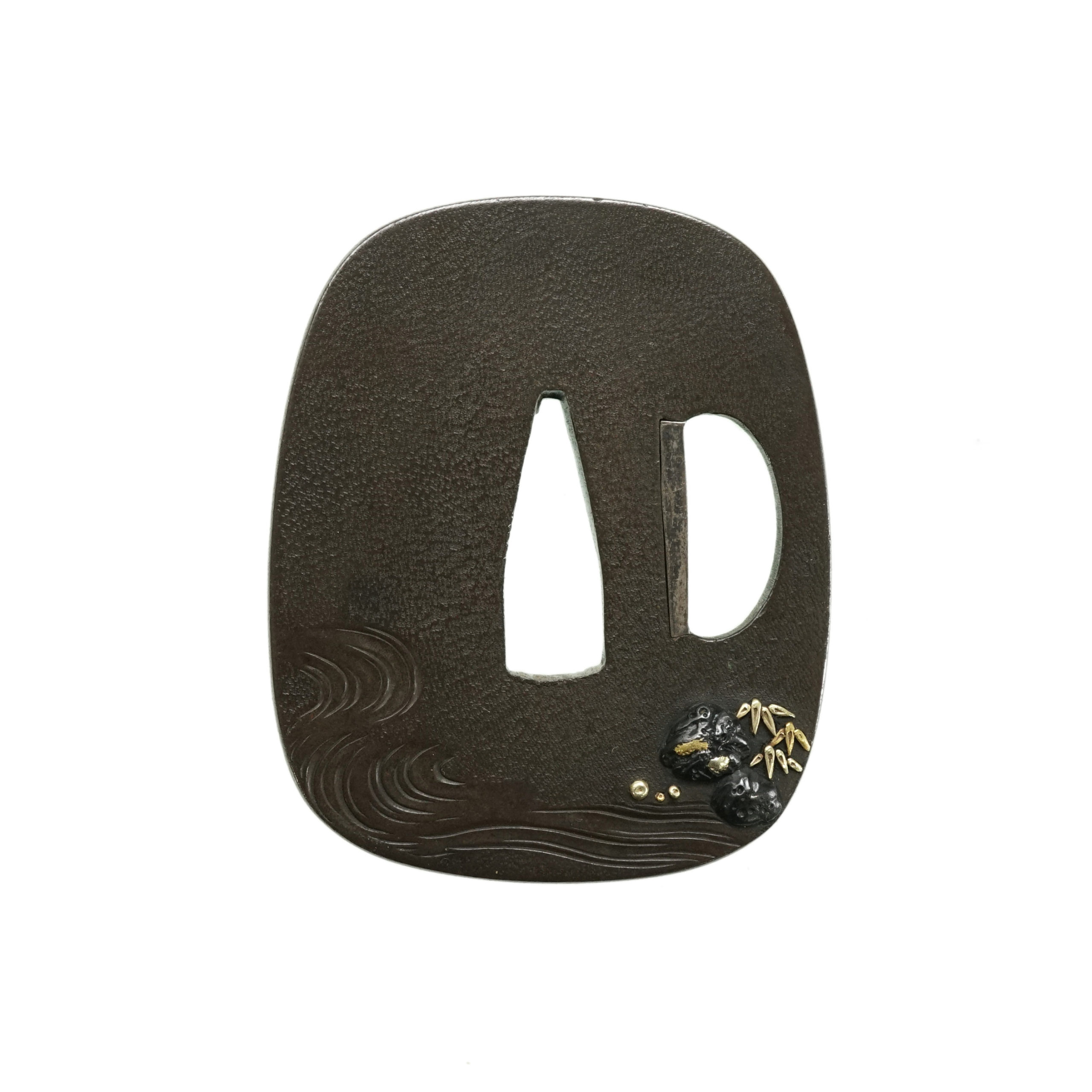
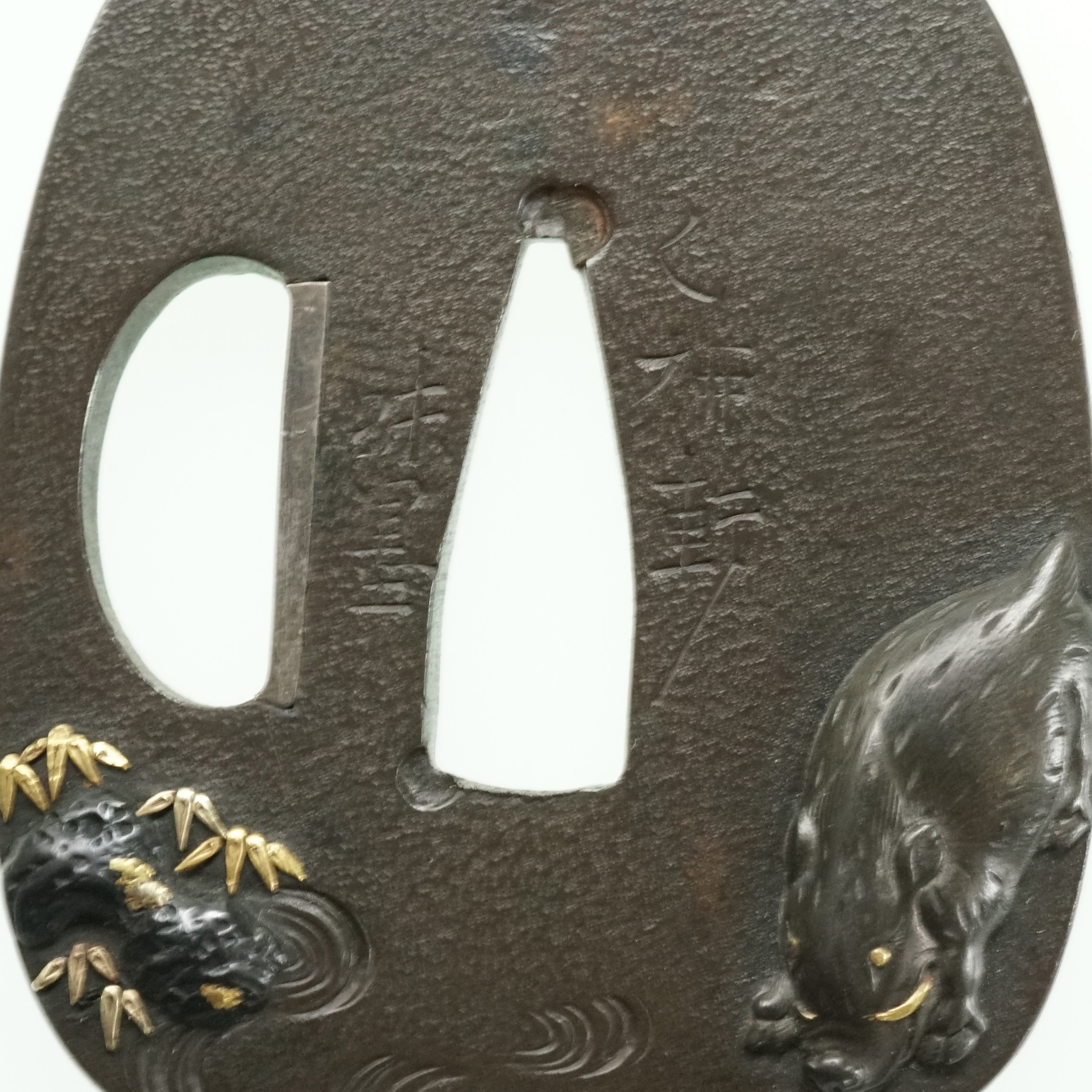
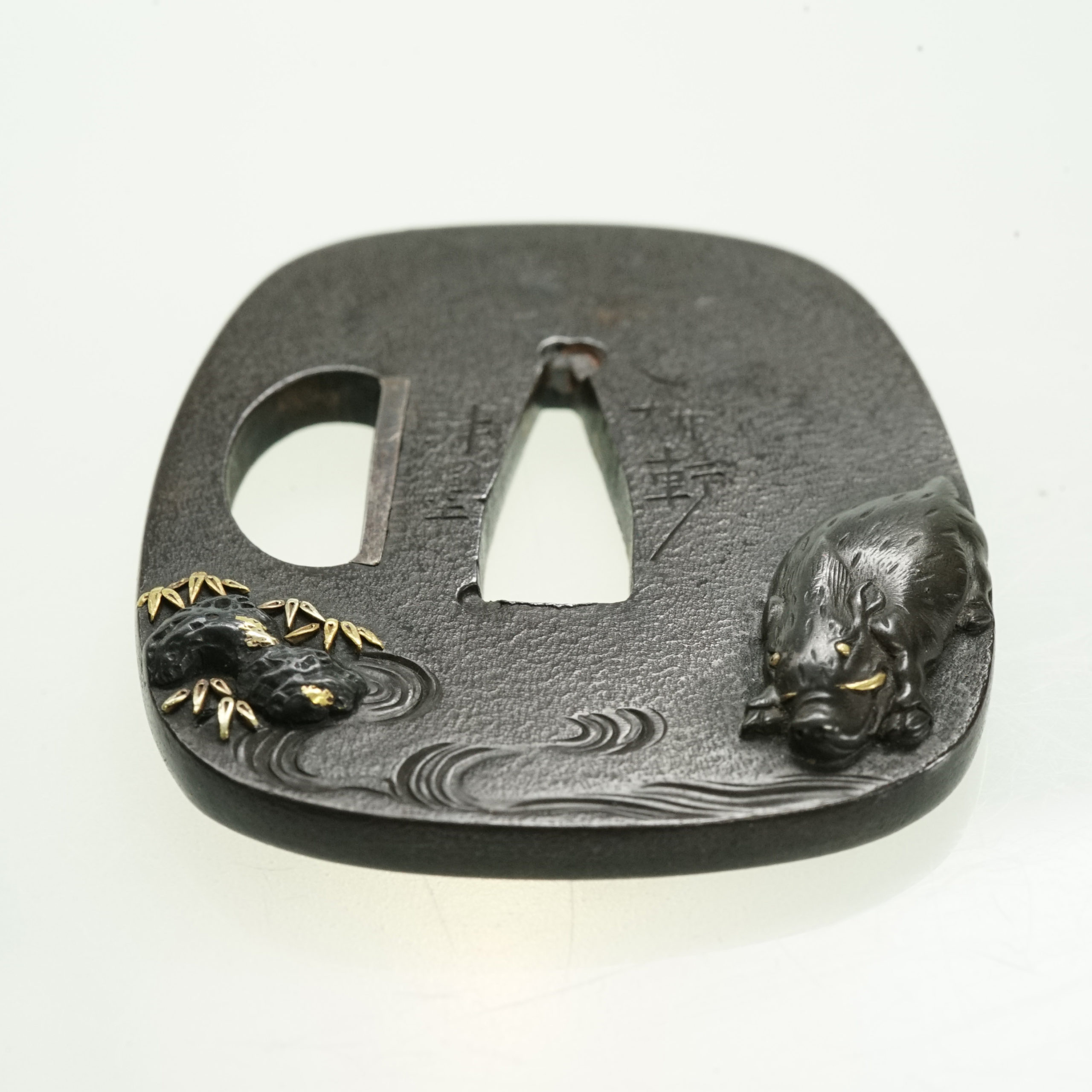
This is an Edo period Shibuichi Tsuba with sloping four corners and a Kozuka hole. It features a wild boar engraved and inlaid with gold, signed by Miboku, a pupil of Toshinaga Nara. The Tsuba is certified by the NBTHK.
 NihontoWatch
mei · Hamano · Edo
Hamano Shozui
Edo
Signed
Machibori · Musashi
3 pieces on the market now
Hamano Masayuki was an outstanding talent among the disciples of Nara Toshihisa and was commonly known as Tarobei. He trained many pupils and established the Hamano school as one of the principal lineages of urban metalworkers (machibori), thereby founding an independent tradition comparable in stature to the Yokoya school. As recorded in the Edo Kinko Meifu, he "thundered through the world," gaining widespread fame as one of the "Four Heavenly Kings of Nara" (Nara Shitenno). He used numerous art names throughout his career, including Otsuryuken, Miboku, Kankei, Rifudo, Yukotei, Shuhosai, Hankeishi, Isshunan, and others. Among his followers, artists such as Kakusui, Naosui, and Masaryo are known as excellent craftsmen who carried forward the lineage.
Masayuki's technique was highly esteemed, and he excelled in every approach — whether in bold sukidashi-bori, nikiai-bori, nikubori, or katakiribori. His manner is characterized, as the Soken Kisho appraises it, by a preference for "the challenging," through which he reveals a bold spirit; his work is "brisk and forceful."[[c:1]] While inheriting the style of his master Toshihisa and incorporating mannerisms associated with Joi and Yasuchika, he devised an individual sculptural approach, adding distinctive nikubori-like modeling to high-relief subjects. The Hamano school's characteristic manner — using vertically oriented compositions and placing the principal subject in a large, forceful arrangement realized through realism — was firmly transmitted within the lineage.
In his later years, Masayuki left many powerful works that can be called distinctly his own, making vigorous use of robust high relief. His late pieces, often signed with age statements recording his seventies, fully display what the NBTHK describes as "the true essence of his art through the vigorous deployment of his powerful carving techniques." Works from this final period combine daring with attentiveness, their polychrome iroe accents executed with great care, standing as eloquent testaments to his elevated technical skill and the enduring vitality of the tradition he founded.
Where Shozui stands among comparable artisans: across all of nihontō, and within tradition, era, and period. The tiers (Foremost · Leading · Major · Notable) weigh official designations from the NBTHK and Japan's Agency for Cultural Affairs, together with historical honors of lasting repute such as the Sansaku and Meibutsu-chō.
Select a lens to see how it's measured.
Machibori · Edo
30 pieces on the market now
The Hamano school of machibori carving was established in mid-Edo Edo by Hamano Masazui (浜野政隨), commonly known as Tarōbei, an exceptionally gifted pupil of Nara Toshihisa. As the Edo Kinkō Meifu states of him that he "thunders through the world," Masazui won widespread renown as one of the "Four Guardian Kings of Nara" (Nara Shitennō). Training many disciples and employing numerous art names—including Otsuryūken, Aji-zumi, Kankei, Rifūdō, Yūkotei, Shūhōsai, Hankei-shi, and Isshunan—he formed what came to be known as the Hamano school, establishing one of the principal lineages of machibori artistry and founding an independent house. " Works are rendered by means of yōbori (sculptural carving) upon varied grounds—gold-and-silver imo-tsugi-ji, solid gold (kinmuku)—with details frequently treated in the in'yō-kon mode, suggesting the early Gotō masters as models.
The carving is executed with "ample, well-judged volume (nikudori)" and "exceptionally full, weighty presence," while applied metal (okigane) in silver and shakudō with shakudō iroe tightens pictorial fields and imparts additional movement. Later Hamano artists such as Katsurano Akafumi maintained this technical versatility, favoring polychrome inlay applied to high-relief compositions. " The NBTHK repeatedly notes that works "clearly demonstrate the high level of technique," "amply demonstrate advanced technical mastery," and possess "a composed dignity"—attestations to the school's sustained excellence across generations and its enduring place within the broader machibori tradition. Learn more →
| Smith | Era | Designated |
|---|---|---|
| Shozui政随 | — | 17 |
| Sekibun赤文 | 1670 | 8 |
| Noriyuki矩随 | — | 4 |
| Yoshinao義直 | — | 0 |
| Haruchika春親 | — | 0 |
We could not find an authenticity certificate on the seller’s listing. Japanese swords and fittings are normally papered by the NBTHK (or the NTHK). Without one, the attribution is the seller’s own assessment and has not been independently verified — treat it with caution and ask the dealer about certification before buying.
Returns/exchanges limited to defects caused by shipping (except willful misconduct or gross negligence by the company); customers must contact within 72 hours of receiving the product.
This is an Edo period Shibuichi Tsuba with sloping four corners and a Kozuka hole. It features a wild boar engraved and inlaid with gold, signed by Miboku, a pupil of Toshinaga Nara. The Tsuba is certified by the NBTHK.
NihontoWatchmei · Hamano · Edo
Hamano Shozui
Edo
Signed
Machibori · Musashi
3 pieces on the market now
Hamano Masayuki was an outstanding talent among the disciples of Nara Toshihisa and was commonly known as Tarobei. He trained many pupils and established the Hamano school as one of the principal lineages of urban metalworkers (machibori), thereby founding an independent tradition comparable in stature to the Yokoya school. As recorded in the Edo Kinko Meifu, he "thundered through the world," gaining widespread fame as one of the "Four Heavenly Kings of Nara" (Nara Shitenno). He used numerous art names throughout his career, including Otsuryuken, Miboku, Kankei, Rifudo, Yukotei, Shuhosai, Hankeishi, Isshunan, and others. Among his followers, artists such as Kakusui, Naosui, and Masaryo are known as excellent craftsmen who carried forward the lineage.
Masayuki's technique was highly esteemed, and he excelled in every approach — whether in bold sukidashi-bori, nikiai-bori, nikubori, or katakiribori. His manner is characterized, as the Soken Kisho appraises it, by a preference for "the challenging," through which he reveals a bold spirit; his work is "brisk and forceful."[[c:1]] While inheriting the style of his master Toshihisa and incorporating mannerisms associated with Joi and Yasuchika, he devised an individual sculptural approach, adding distinctive nikubori-like modeling to high-relief subjects. The Hamano school's characteristic manner — using vertically oriented compositions and placing the principal subject in a large, forceful arrangement realized through realism — was firmly transmitted within the lineage.
In his later years, Masayuki left many powerful works that can be called distinctly his own, making vigorous use of robust high relief. His late pieces, often signed with age statements recording his seventies, fully display what the NBTHK describes as "the true essence of his art through the vigorous deployment of his powerful carving techniques." Works from this final period combine daring with attentiveness, their polychrome iroe accents executed with great care, standing as eloquent testaments to his elevated technical skill and the enduring vitality of the tradition he founded.
Where Shozui stands among comparable artisans: across all of nihontō, and within tradition, era, and period. The tiers (Foremost · Leading · Major · Notable) weigh official designations from the NBTHK and Japan's Agency for Cultural Affairs, together with historical honors of lasting repute such as the Sansaku and Meibutsu-chō.
Select a lens to see how it's measured.
Machibori · Edo
30 pieces on the market now
The Hamano school of machibori carving was established in mid-Edo Edo by Hamano Masazui (浜野政隨), commonly known as Tarōbei, an exceptionally gifted pupil of Nara Toshihisa. As the Edo Kinkō Meifu states of him that he "thunders through the world," Masazui won widespread renown as one of the "Four Guardian Kings of Nara" (Nara Shitennō). Training many disciples and employing numerous art names—including Otsuryūken, Aji-zumi, Kankei, Rifūdō, Yūkotei, Shūhōsai, Hankei-shi, and Isshunan—he formed what came to be known as the Hamano school, establishing one of the principal lineages of machibori artistry and founding an independent house. " Works are rendered by means of yōbori (sculptural carving) upon varied grounds—gold-and-silver imo-tsugi-ji, solid gold (kinmuku)—with details frequently treated in the in'yō-kon mode, suggesting the early Gotō masters as models.
The carving is executed with "ample, well-judged volume (nikudori)" and "exceptionally full, weighty presence," while applied metal (okigane) in silver and shakudō with shakudō iroe tightens pictorial fields and imparts additional movement. Later Hamano artists such as Katsurano Akafumi maintained this technical versatility, favoring polychrome inlay applied to high-relief compositions. " The NBTHK repeatedly notes that works "clearly demonstrate the high level of technique," "amply demonstrate advanced technical mastery," and possess "a composed dignity"—attestations to the school's sustained excellence across generations and its enduring place within the broader machibori tradition. Learn more →
| Smith | Era | Designated |
|---|---|---|
| Shozui政随 | — | 17 |
| Sekibun赤文 | 1670 | 8 |
| Noriyuki矩随 | — | 4 |
| Yoshinao義直 | — | 0 |
| Haruchika春親 | — | 0 |
We could not find an authenticity certificate on the seller’s listing. Japanese swords and fittings are normally papered by the NBTHK (or the NTHK). Without one, the attribution is the seller’s own assessment and has not been independently verified — treat it with caution and ask the dealer about certification before buying.
Returns/exchanges limited to defects caused by shipping (except willful misconduct or gross negligence by the company); customers must contact within 72 hours of receiving the product.