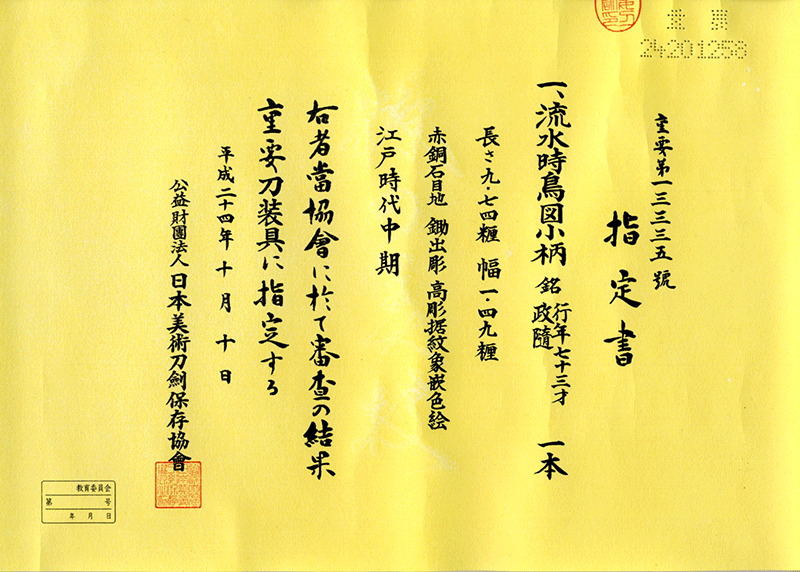
-, 58th Session — Designated October 10, 2012
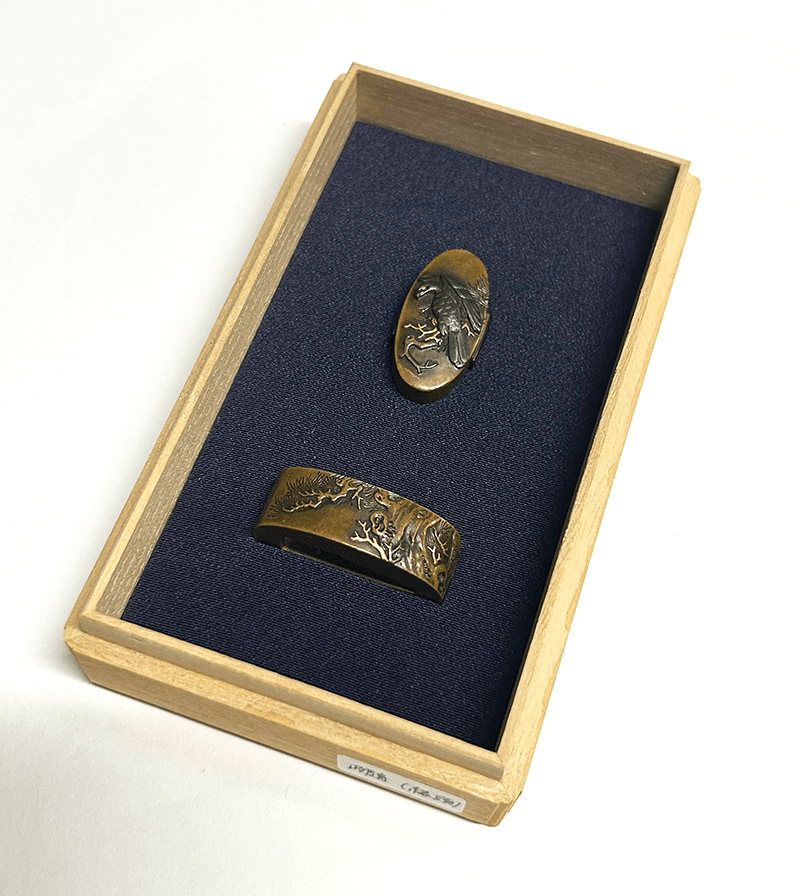
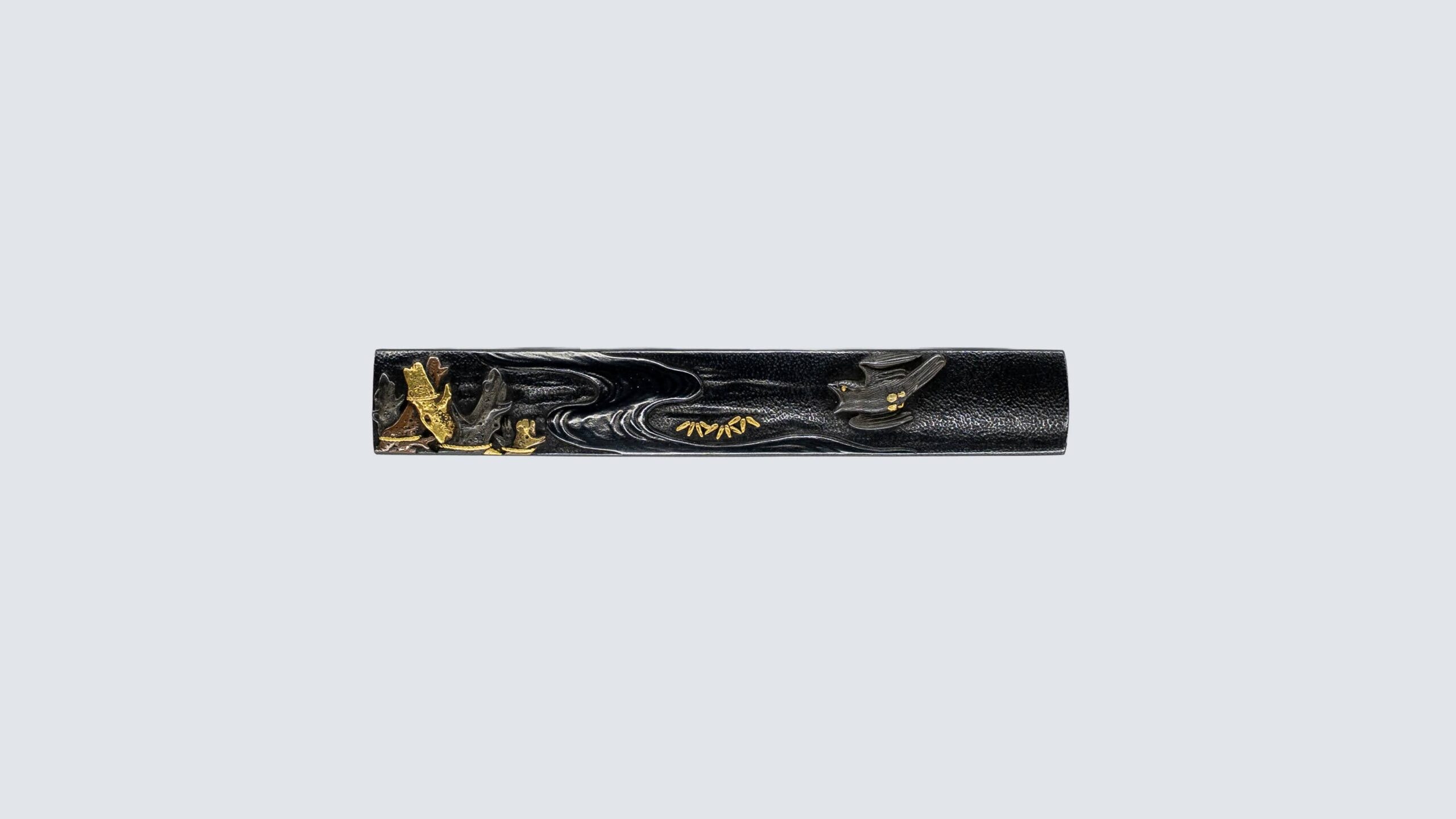
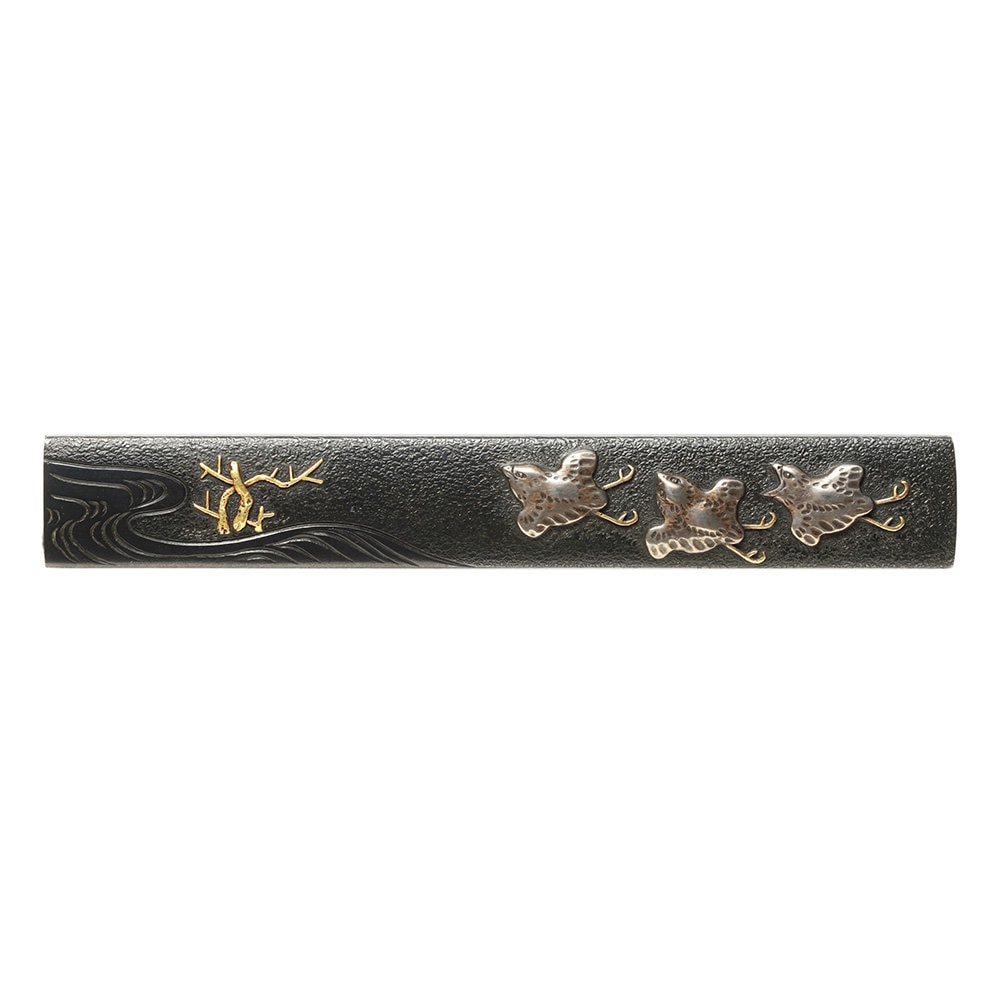
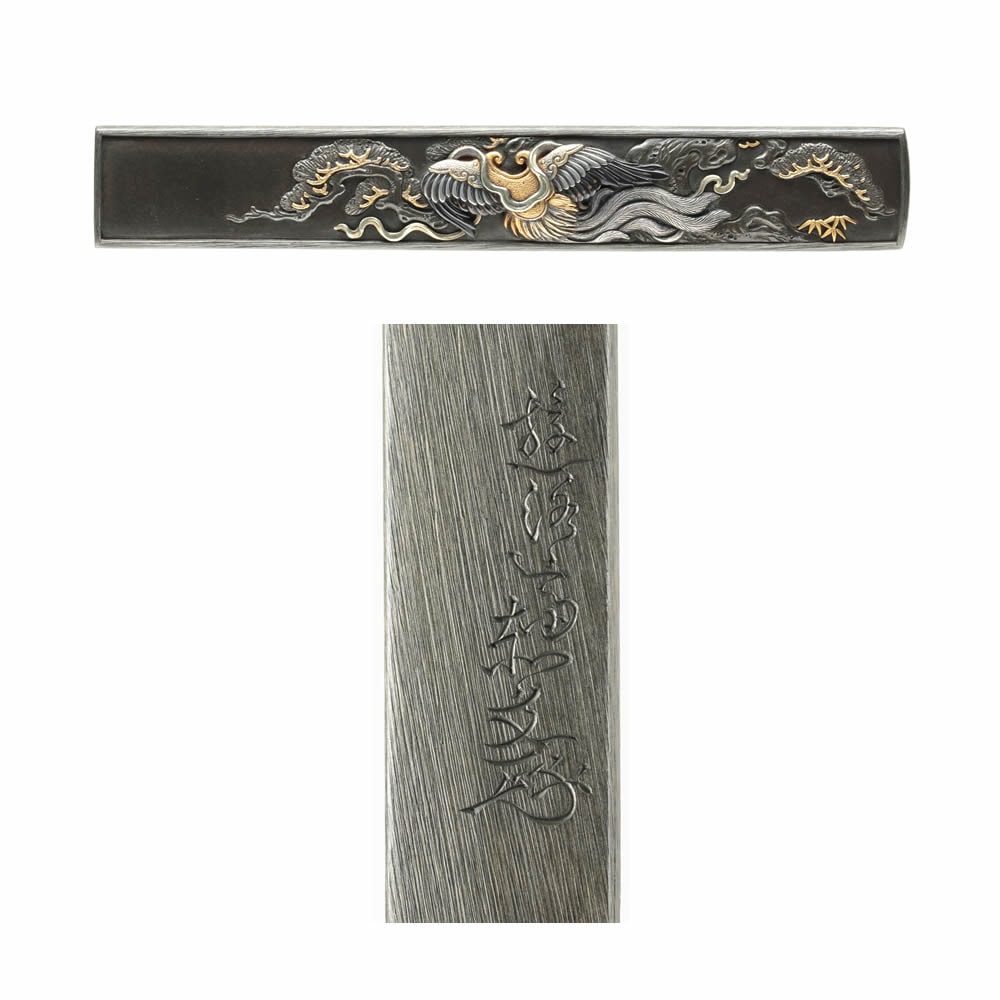
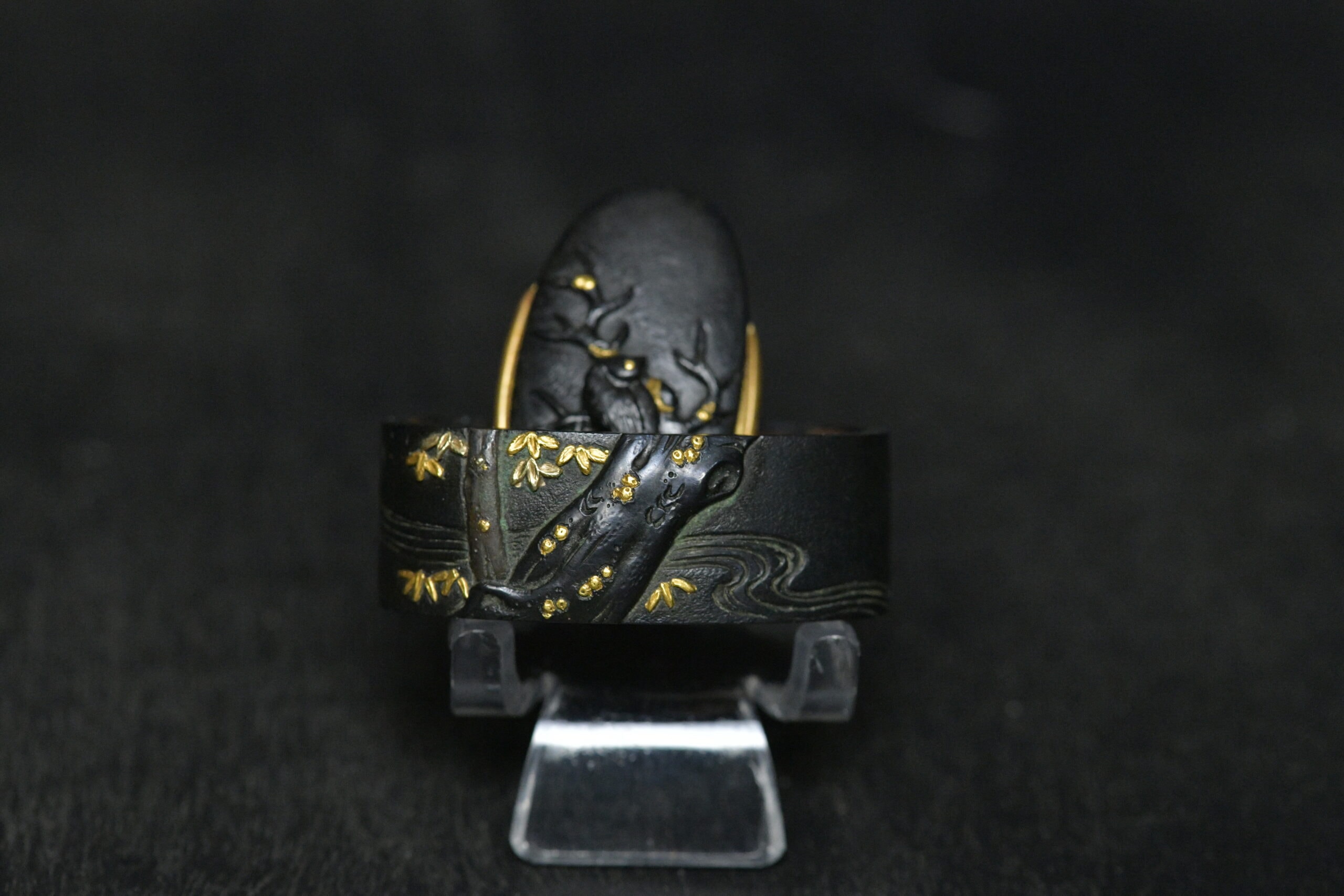
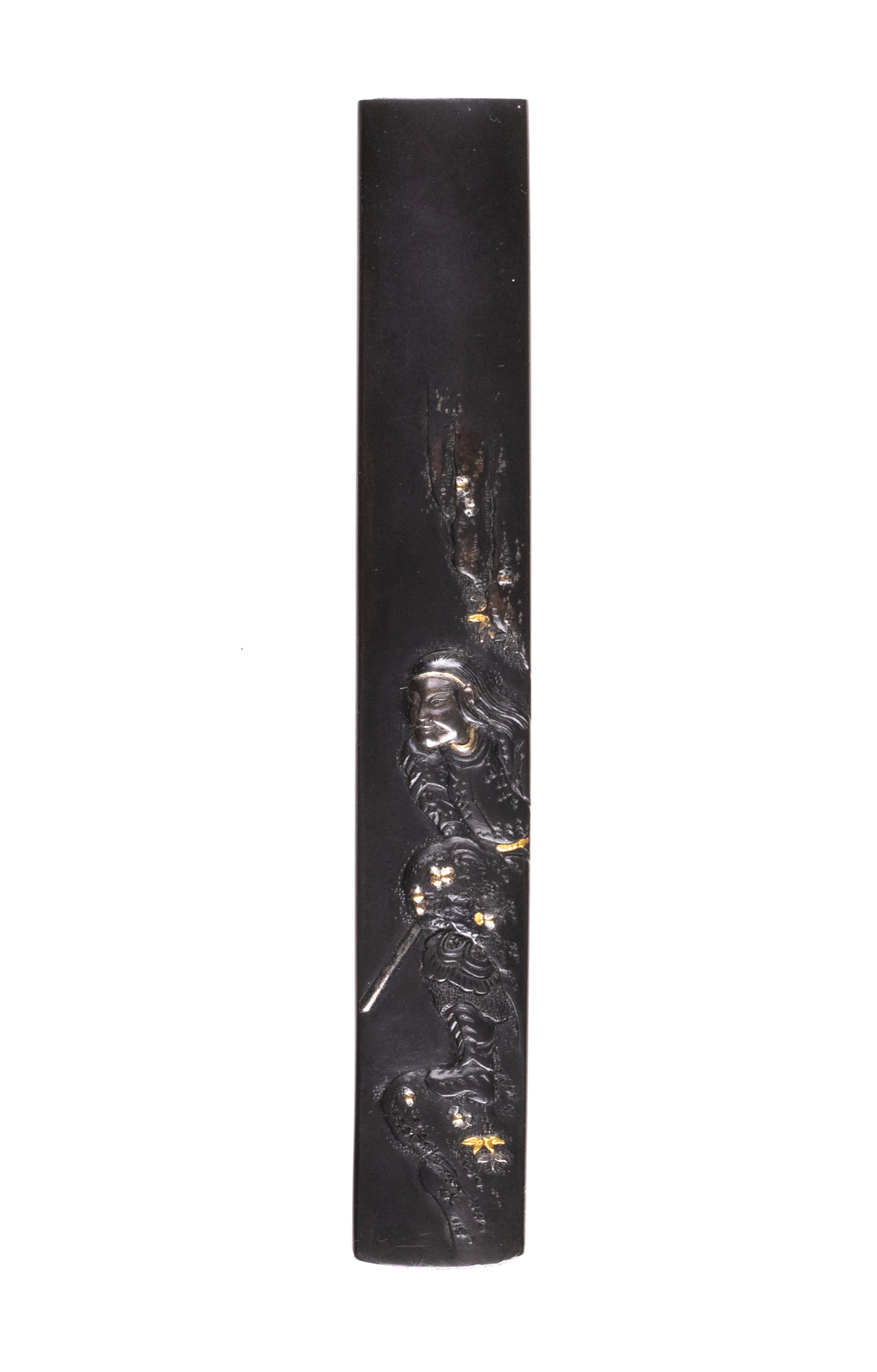
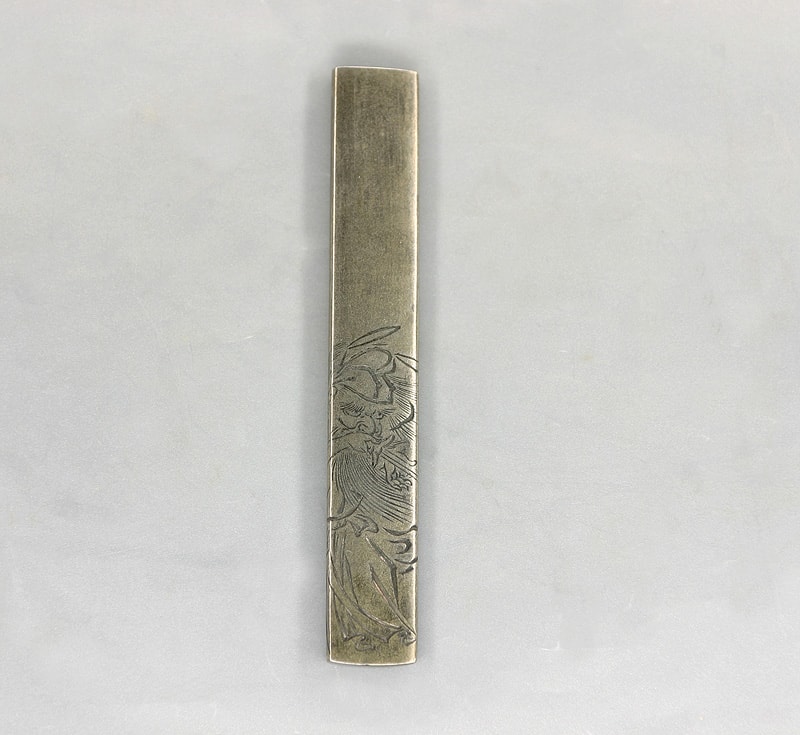
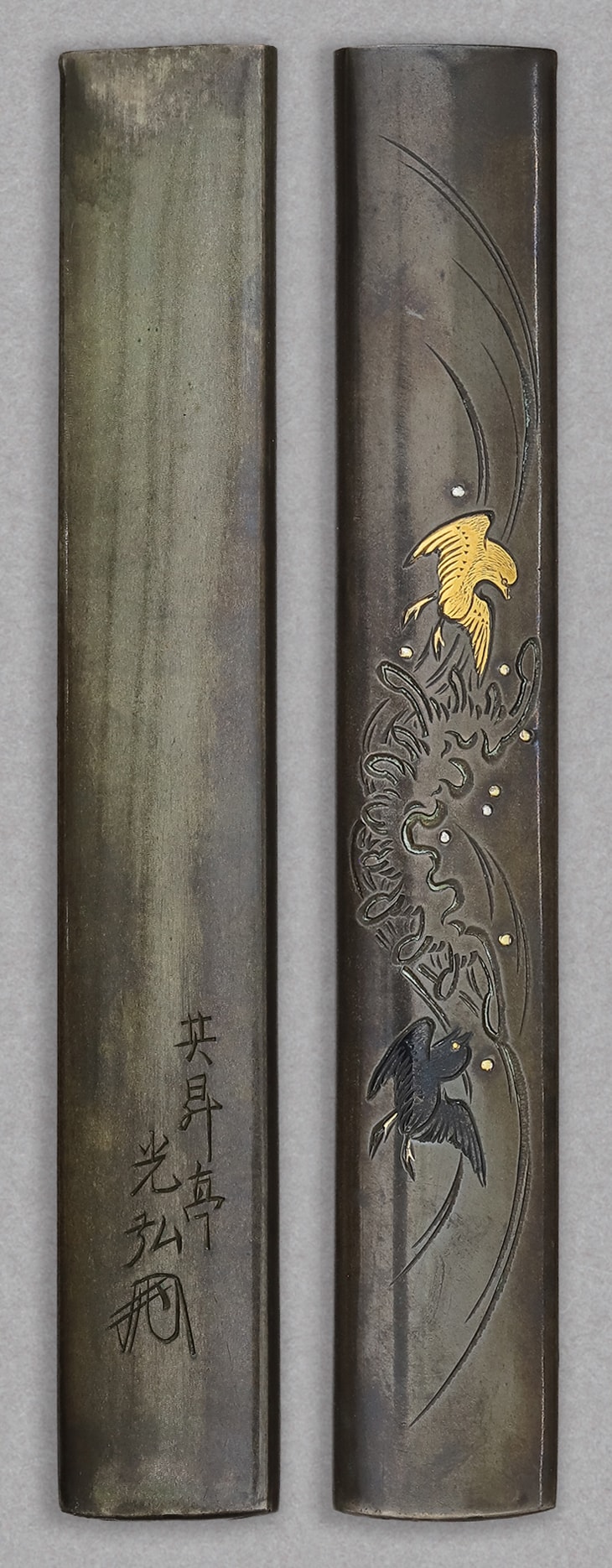
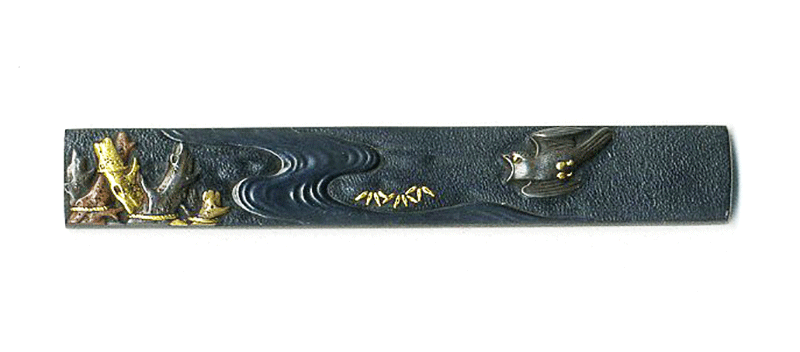
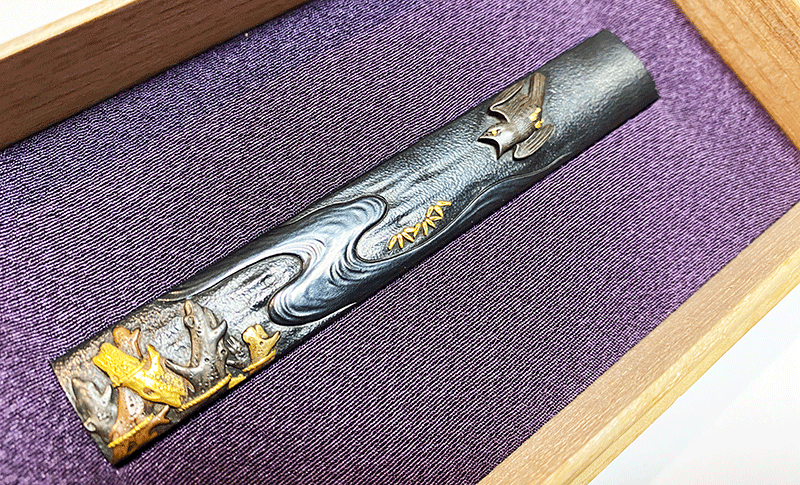
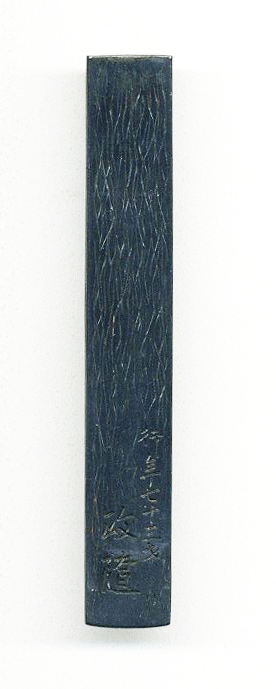
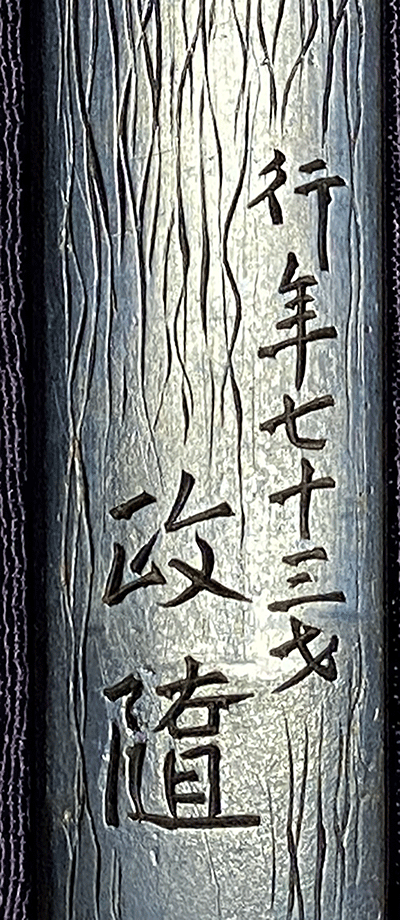
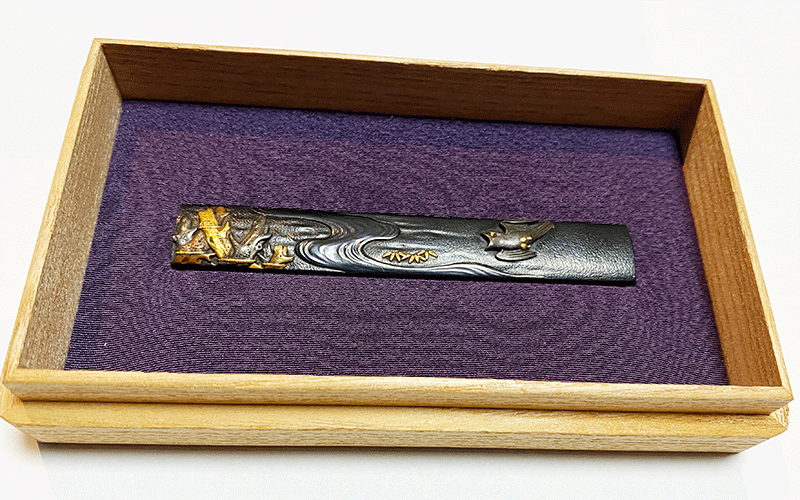
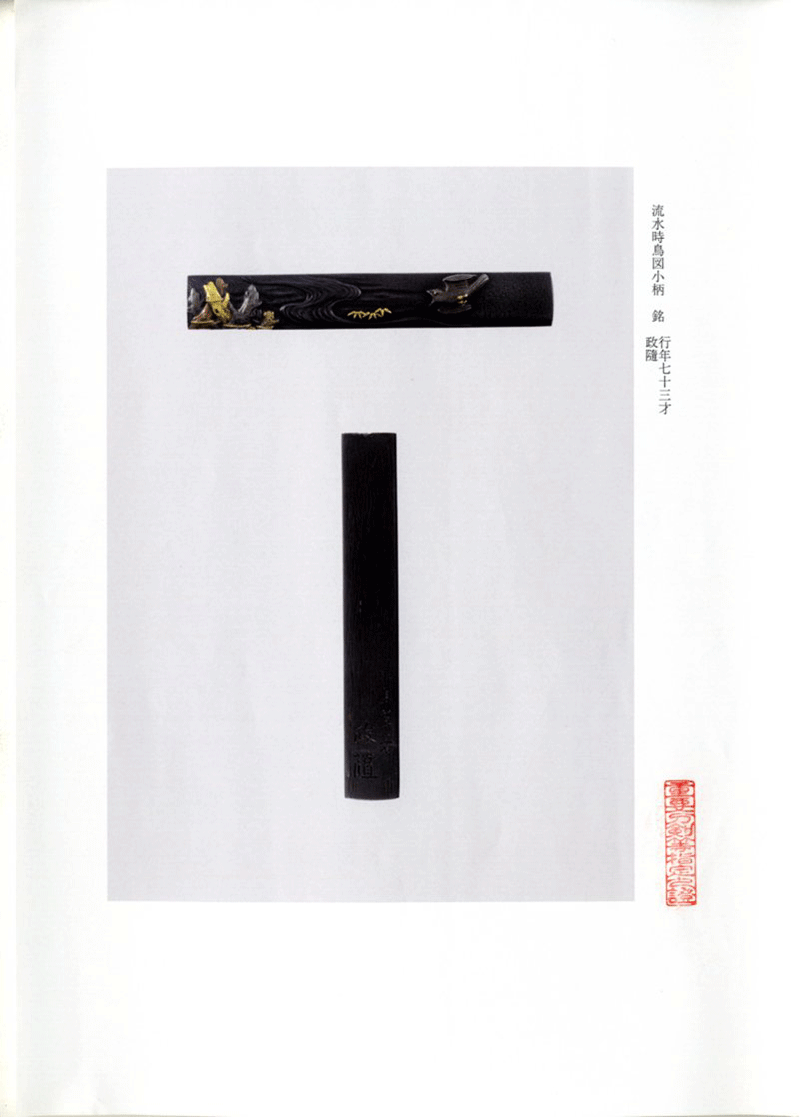
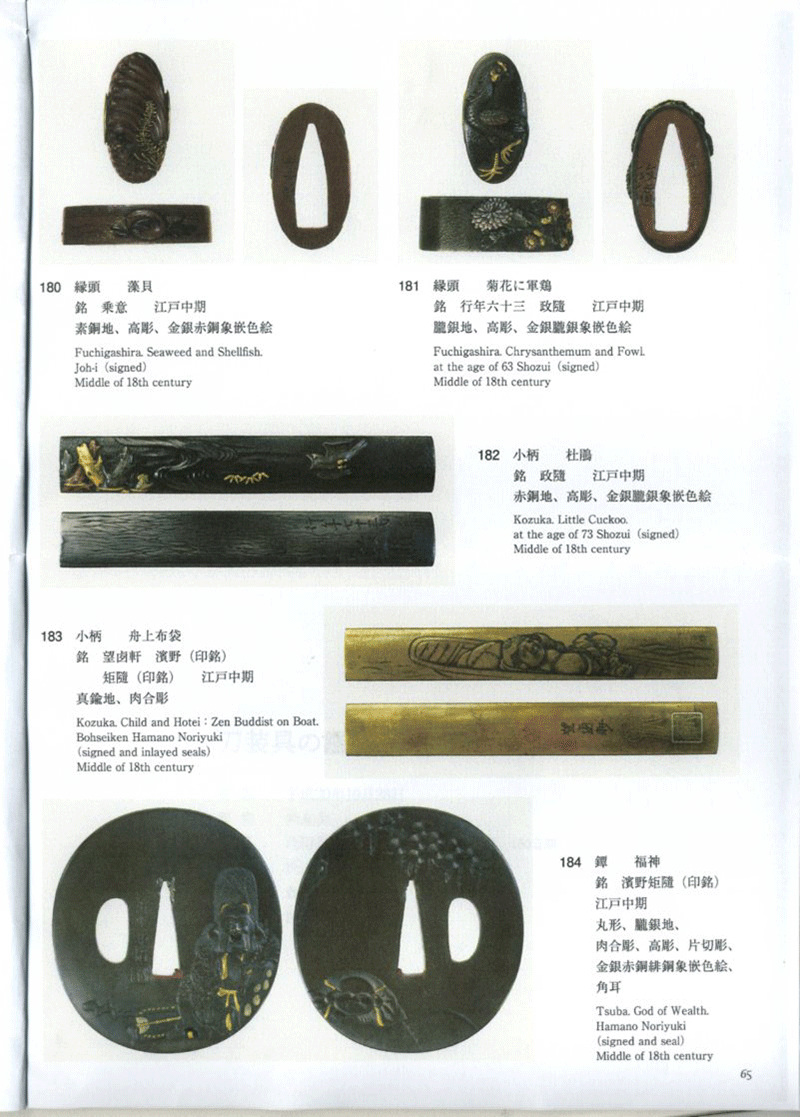
, design of a cuckoo amid flowing water (Ryūsui hototogisu zu , 流水時鳥図小柄), signed “Masayuki” (政隨), at age 73
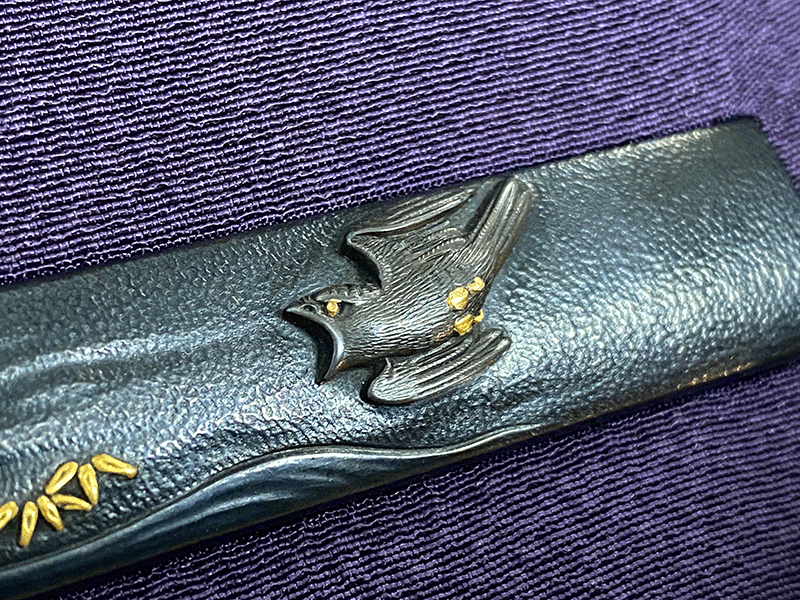
A single in with an ground, depicting a hototogisu (lesser cuckoo) crying out beside flowing water, rendered with emphatic carving and vivid accents.
: ground; carving in and bold ; details executed with suemon-zōgan and ; inscription includes the maker’s signature “政隨” (Masayuki) and the note “行年七十三才” (“at age seventy-three”). Measurements: Length 9.74 cm; width 1.49 cm. Count: One piece (complete).
Artisan/Origin Hamano Masayuki (浜野政隨), Hamano school, metalworker.
Era Mid- period.
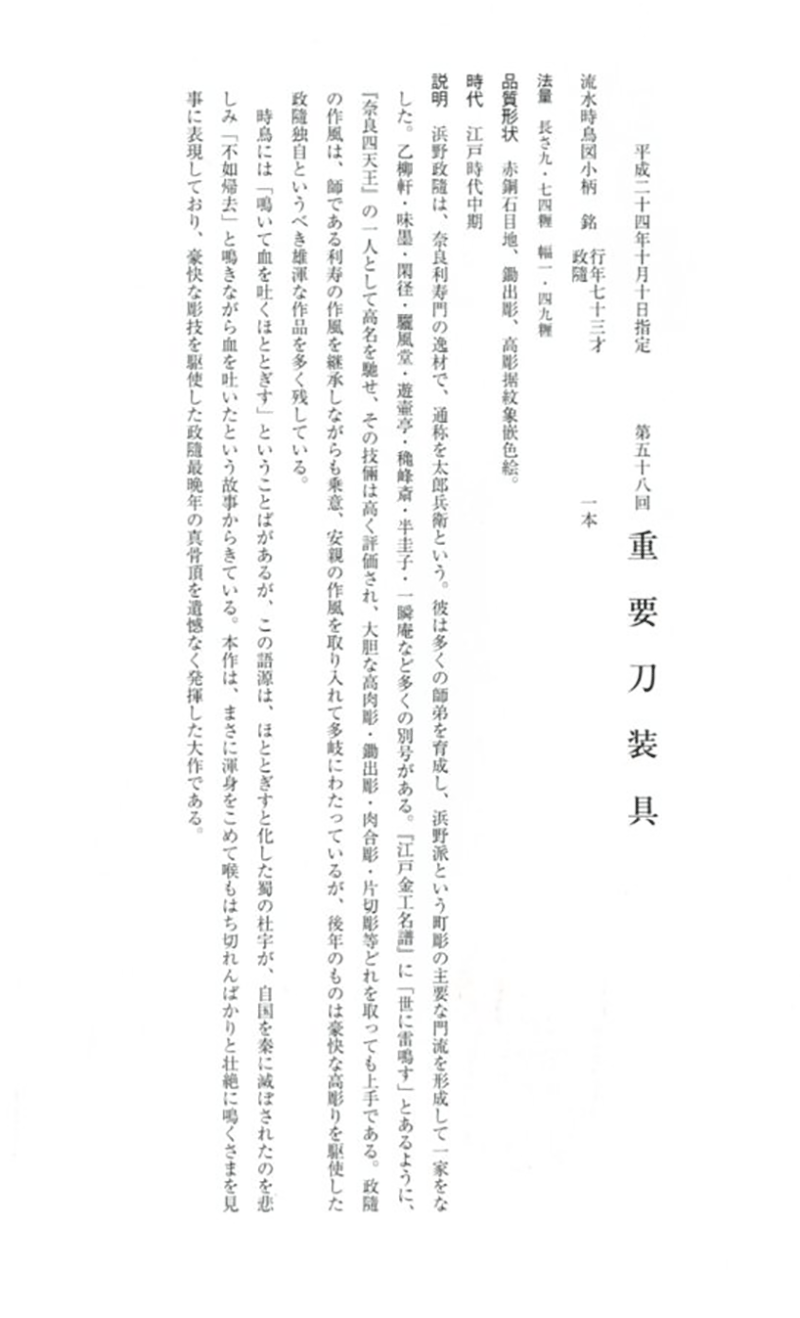
Explanation Hamano Masayuki was an outstanding talent among the disciples of Nara Toshihisa (奈良利寿) and was commonly known as Tarōbei (太郎兵衛). He trained many pupils, establishing the Hamano school as one of the principal lineages of urban () metalworkers, thereby founding an independent tradition. He also used numerous art names, including Otsuryūken, Aji-zumi, Kankei, Rifūdō, Yūkotei, Shūhōsai, Hankei-shi, Isshunan, and others.
As recorded in the Kinkō Meifu (『江戸金工名譜』)—“he thundered through the world”—Masayuki gained fame as one of the “Four Heavenly Kings of Nara” (『奈良四天王』). His skills were highly esteemed: whether in bold high-relief , nikiai-bori, or , he excelled in every technique. While inheriting the style of his master Toshihisa and also incorporating mannerisms associated with Jōi and Yasuchika, his work ranges widely; in his later years, however, he left many powerful works that can be called distinctly his own, making vigorous use of robust high relief.
Regarding the cuckoo, there is the expression “the hototogisu that cries until it spits blood.” The origin of this phrase lies in the legend of Du Yu (杜宇), ruler of Shu, who—after his country was destroyed by Qin—was transformed into a cuckoo; lamenting, he cried “ nyo ki kyo” (“Would that I might return home”), and spat blood as he called. This piece superbly conveys precisely such a desperate, almost throat-rending cry, expressing it with striking effectiveness. It is a large-scale work in which Masayuki, in his very latest years, fully and unmistakably displays the true essence of his art through the vigorous deployment of his powerful carving techniques.