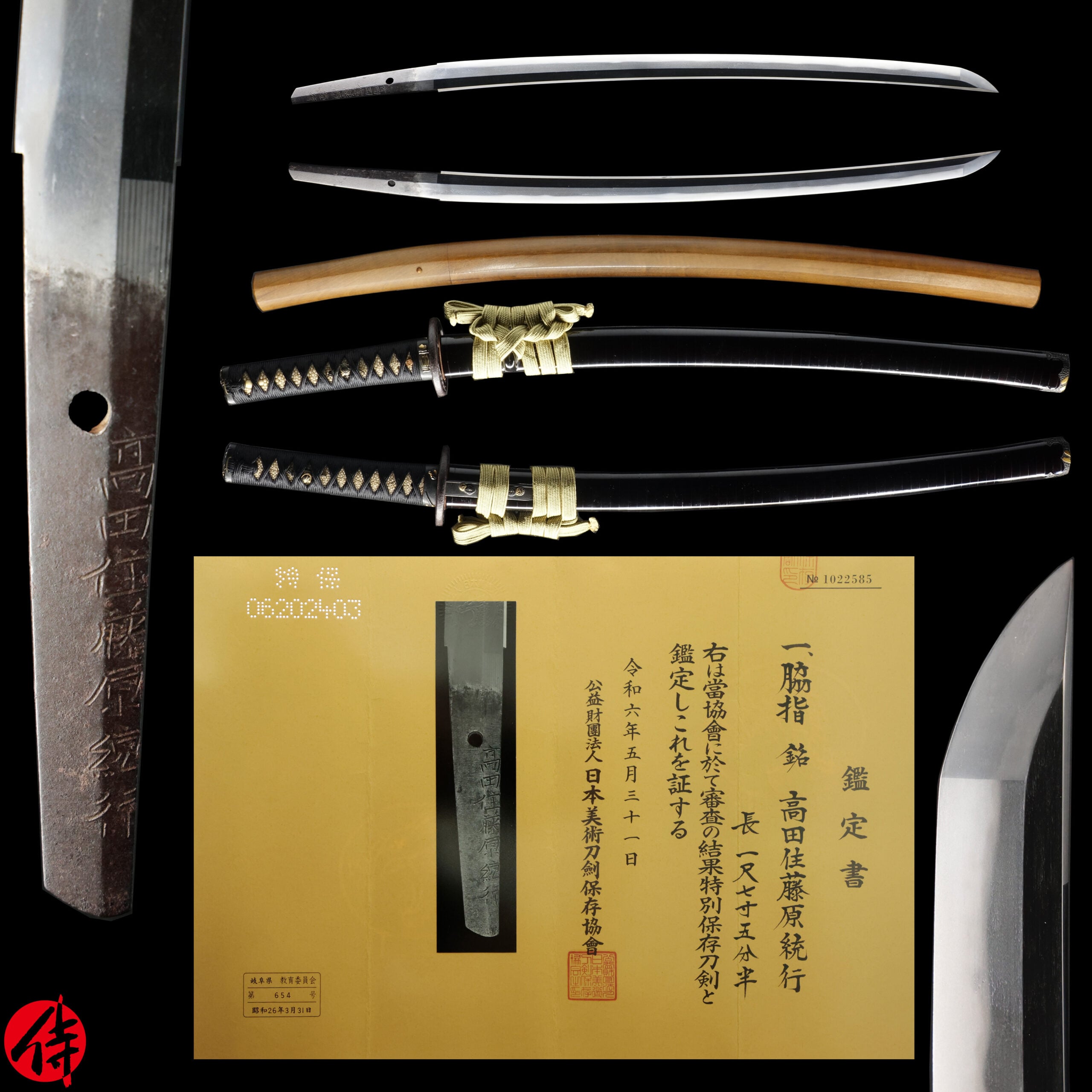
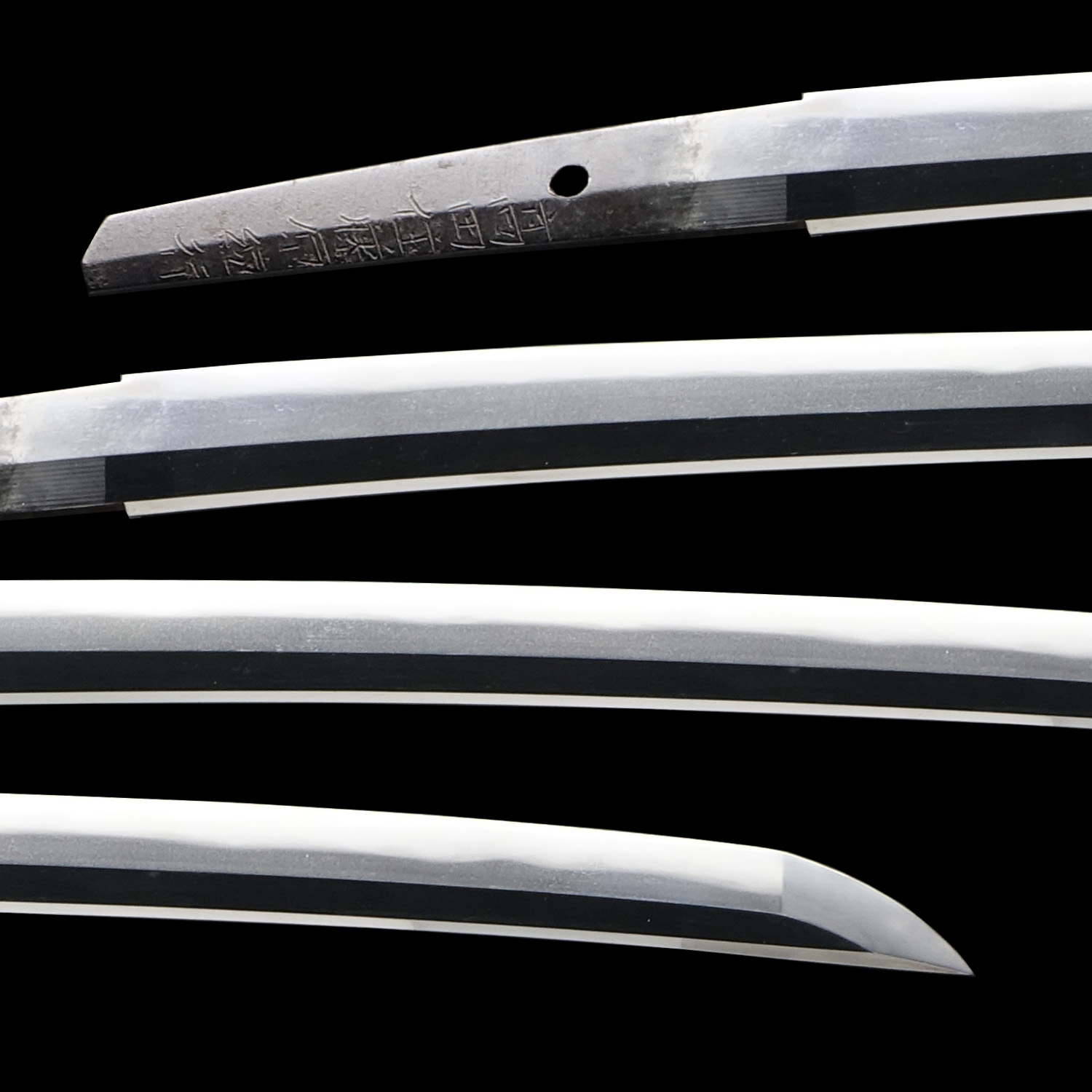
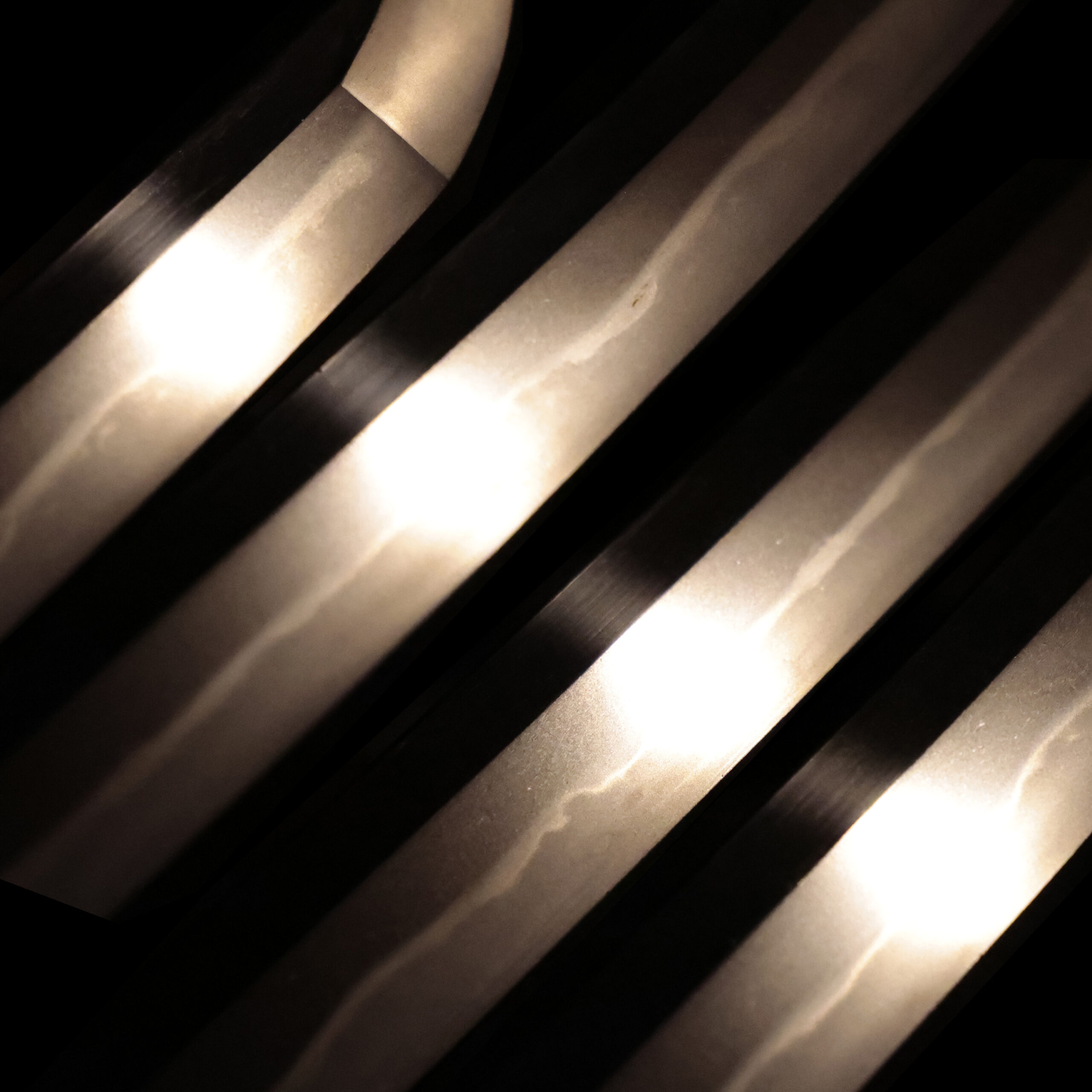
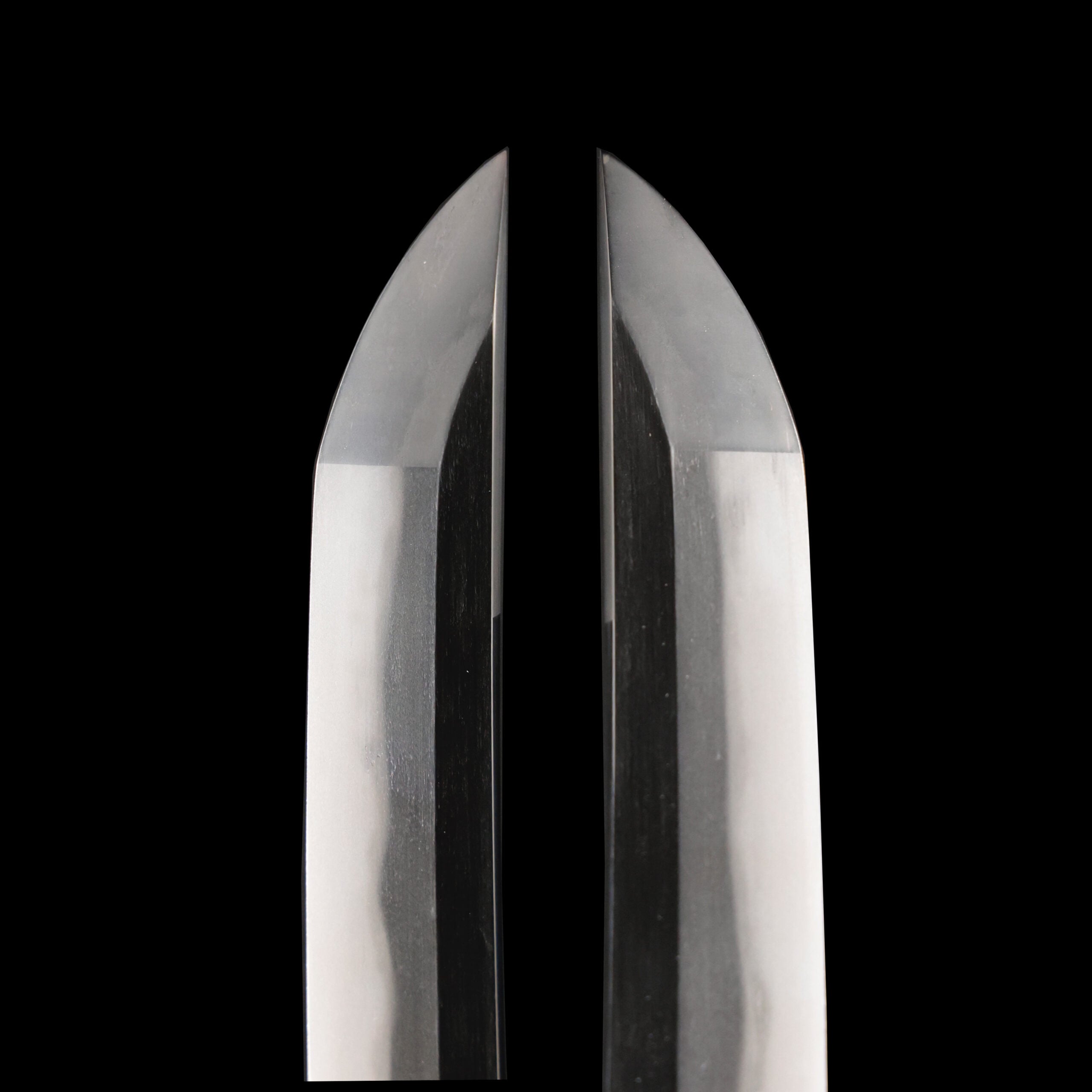
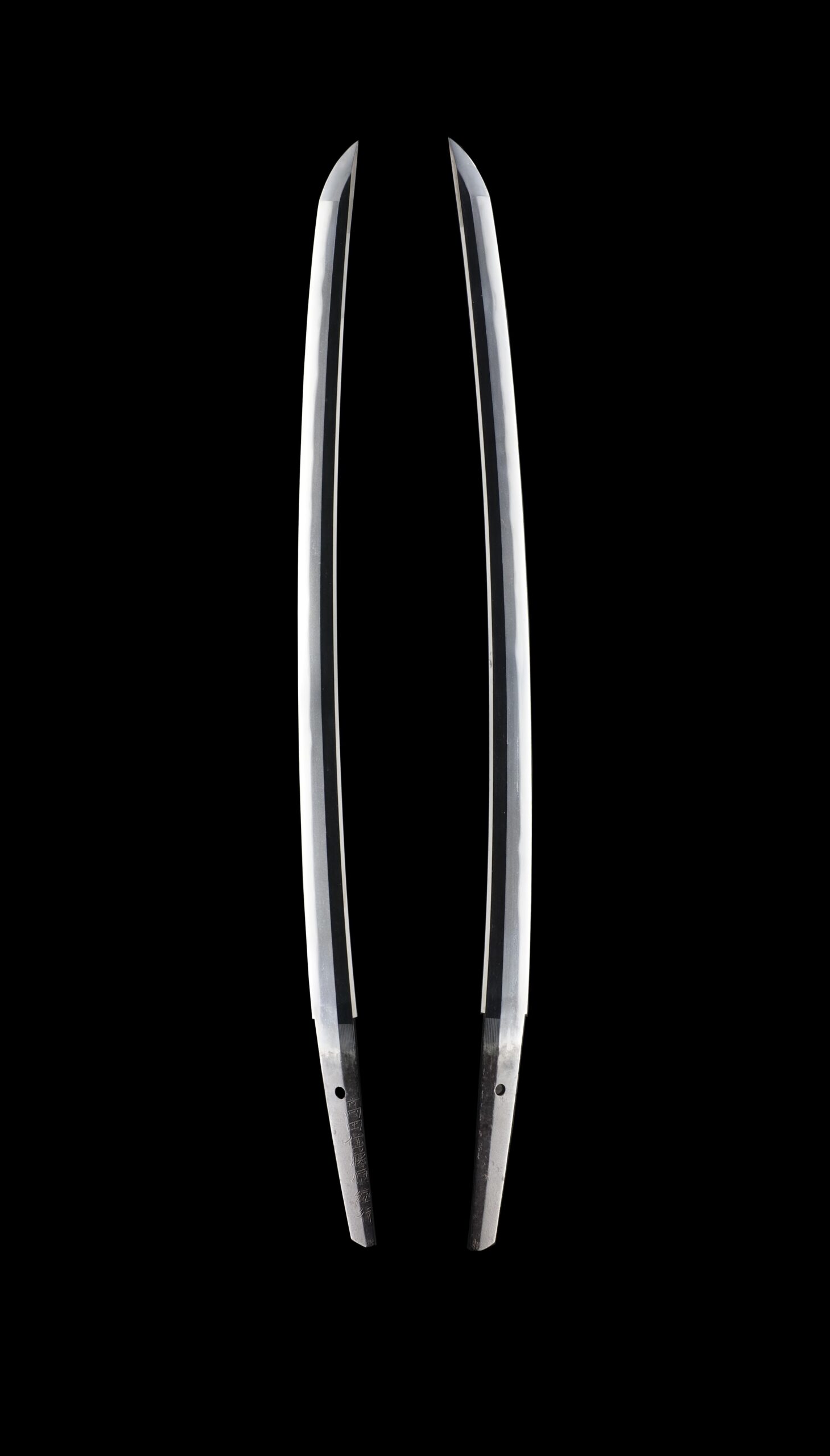
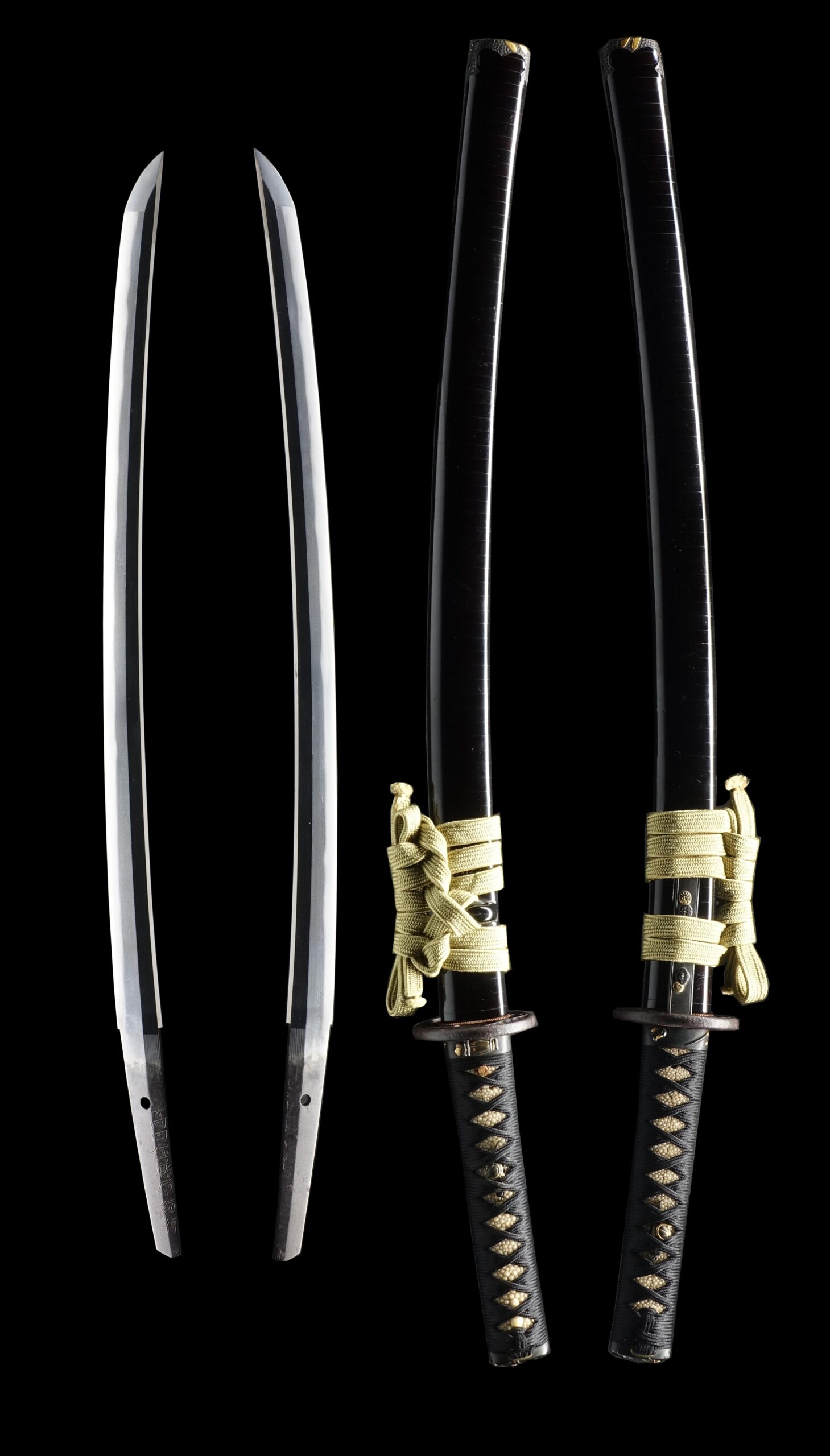
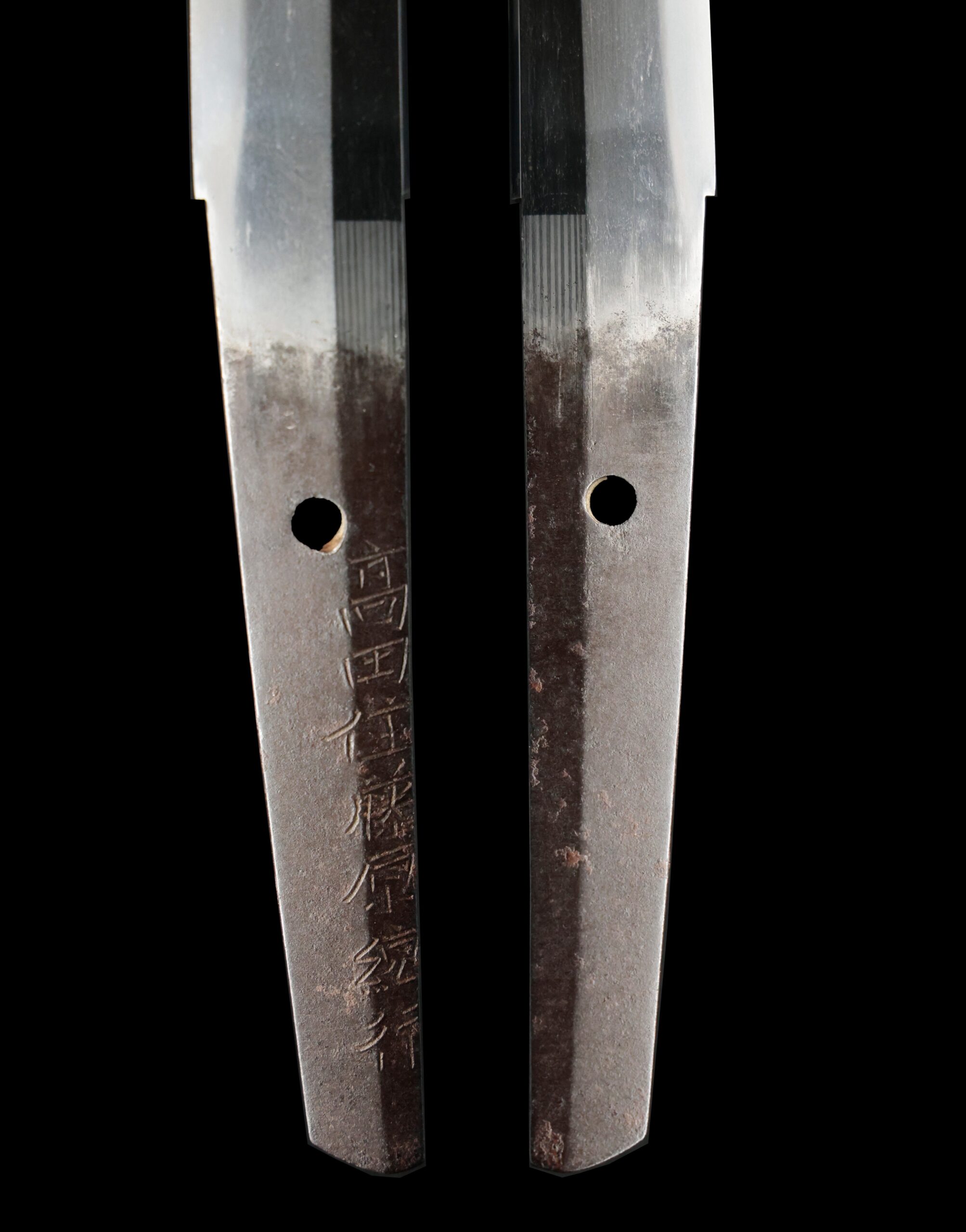
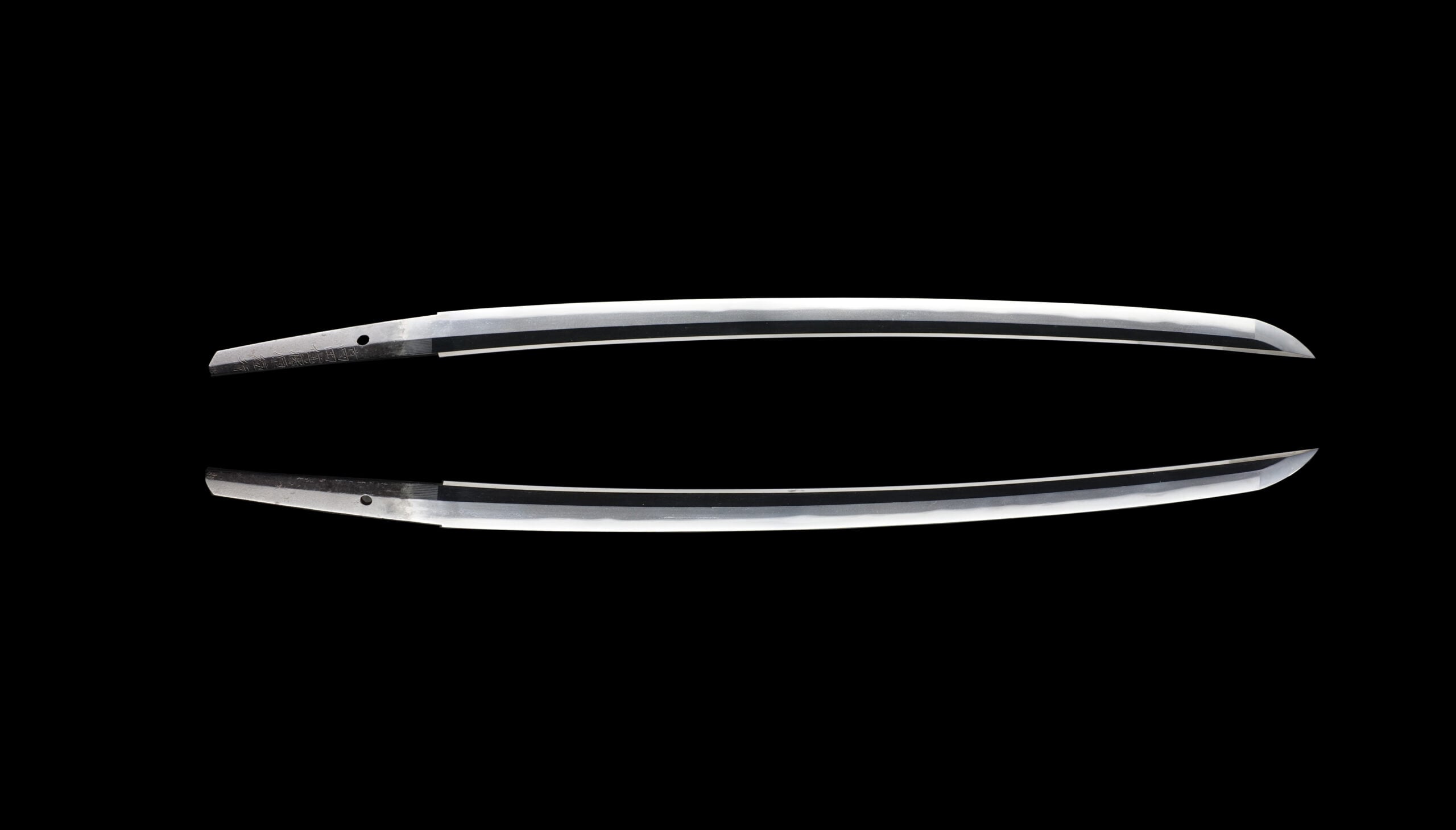
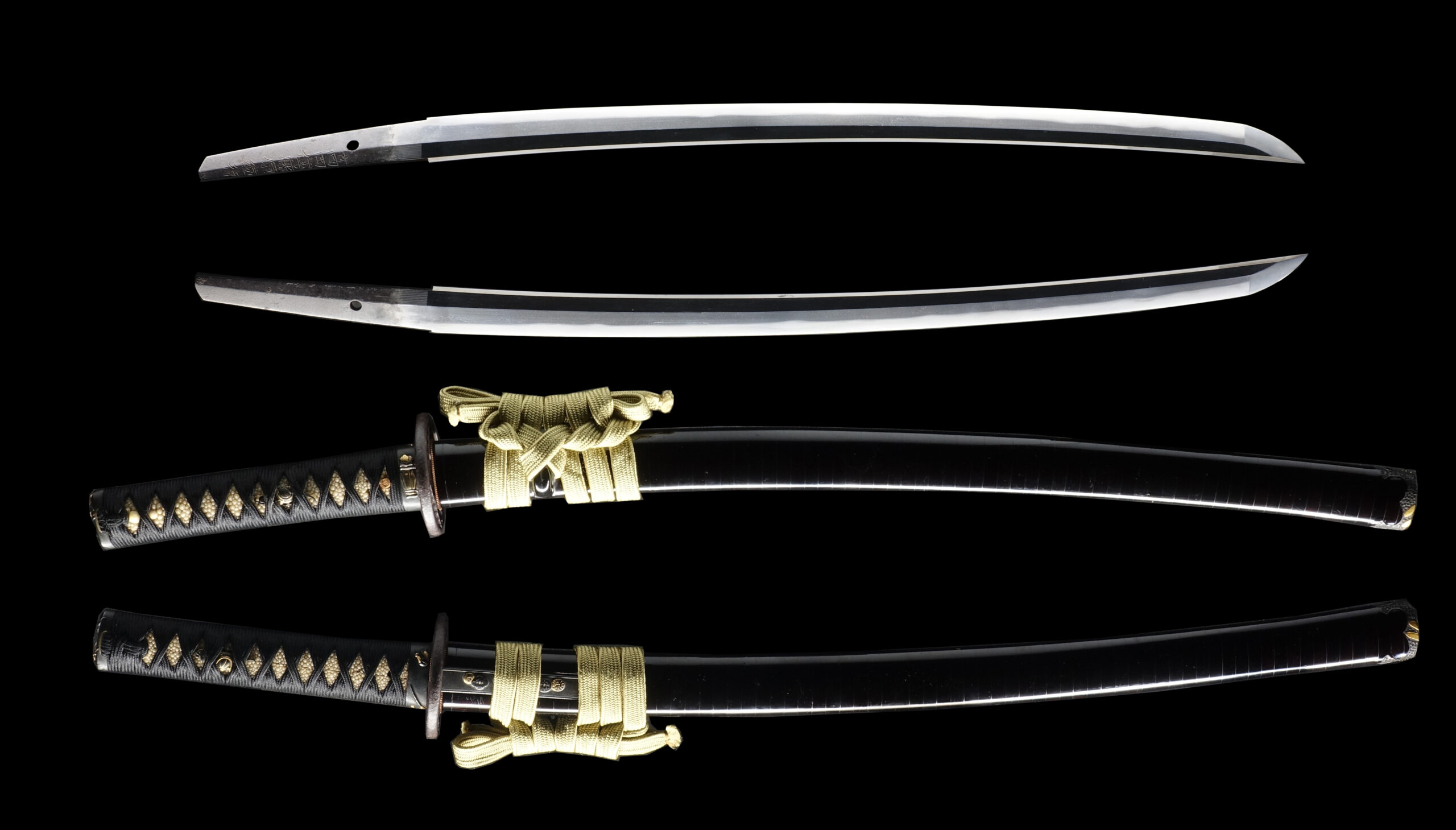
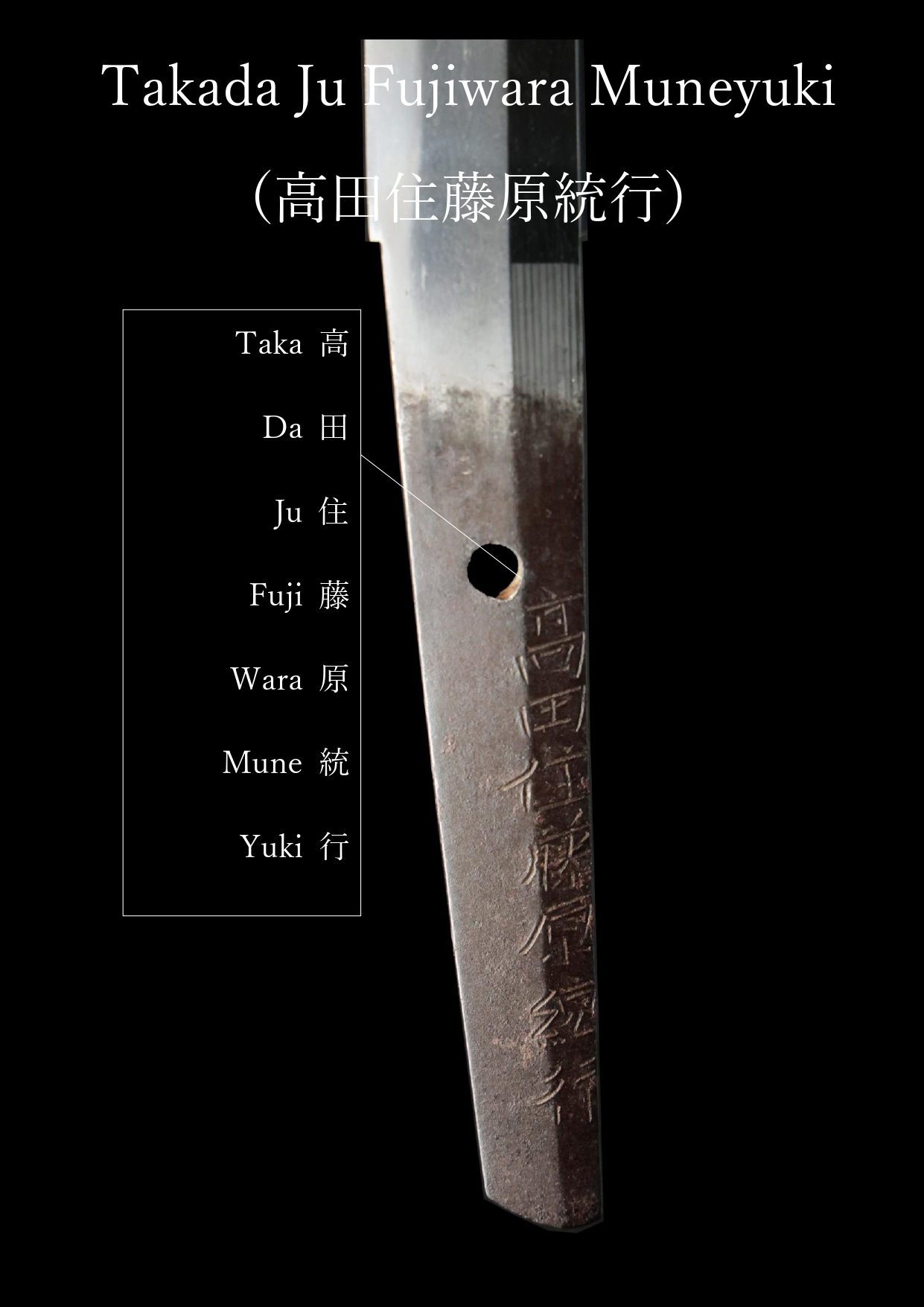
This blade was signed by Takada Ju Fujiwara Muneyuki (高田住藤原統行), who belonged to a prestigious school named Takada (高田). The maker’s name Muneyuki lasted three generations from the Tensho to Meireki era (1573-1658). And, based on the characteristic of the signature inscribed on the tang, we estimate the second-gen or third-gen Muneyuki, who was active during the early edo period (the early – mid 17th century), forge it.
Takada school was founded by Takada Tomoyuki in Takada village, Bungo domain (today’s Oita prefecture), during the Nanbokucho period (1334-1338 A.D). Takada Tomoyuki went to Bizen province (today’s Okayama prefecture) to master the sword-forging techniques of BIZEN and returned to the village and trained his apprentices. That is how Takada school started.
During Sengoku Period (the warring state period: from late 15 C to late 16 C), the Takada school forged many swords for many Samurais in Kyushu island. It is said that the reputation of the blades forged by Takada school was close to MINO or BIZEN swords, two of which are the most famous sword forging places.
The Bungo domain was ruled by Otomo Yoshishige (Sorin) during the Sengoku period. Yoshishige and his domain built a strong military and political base there. Yoshishige was known as one of the most famous warlords on Kyushu island. It is said that Takada swordsmiths forged swords for those who served the Otomo clan and the first-gen Muneyuki received 統 letter, one of his maker’s name from Otomo family. And, Muneyuki played an important role to make Takada school prosperous during the Edo period.
Generally speaking, Kyushu island was prosperous in sword-making because of its long trading history with Asian countries. Many feudal lords on this island fought against each other to gain an advantage in trading. Takada school received many orders as the demand increased among those lords.
The material of Japanese swords (high-quality iron sand and charcoal) was abundant in mount Sobo Katamuki, located near Takada village. We believe Takada school prospered because of its geographic location and natural resources.
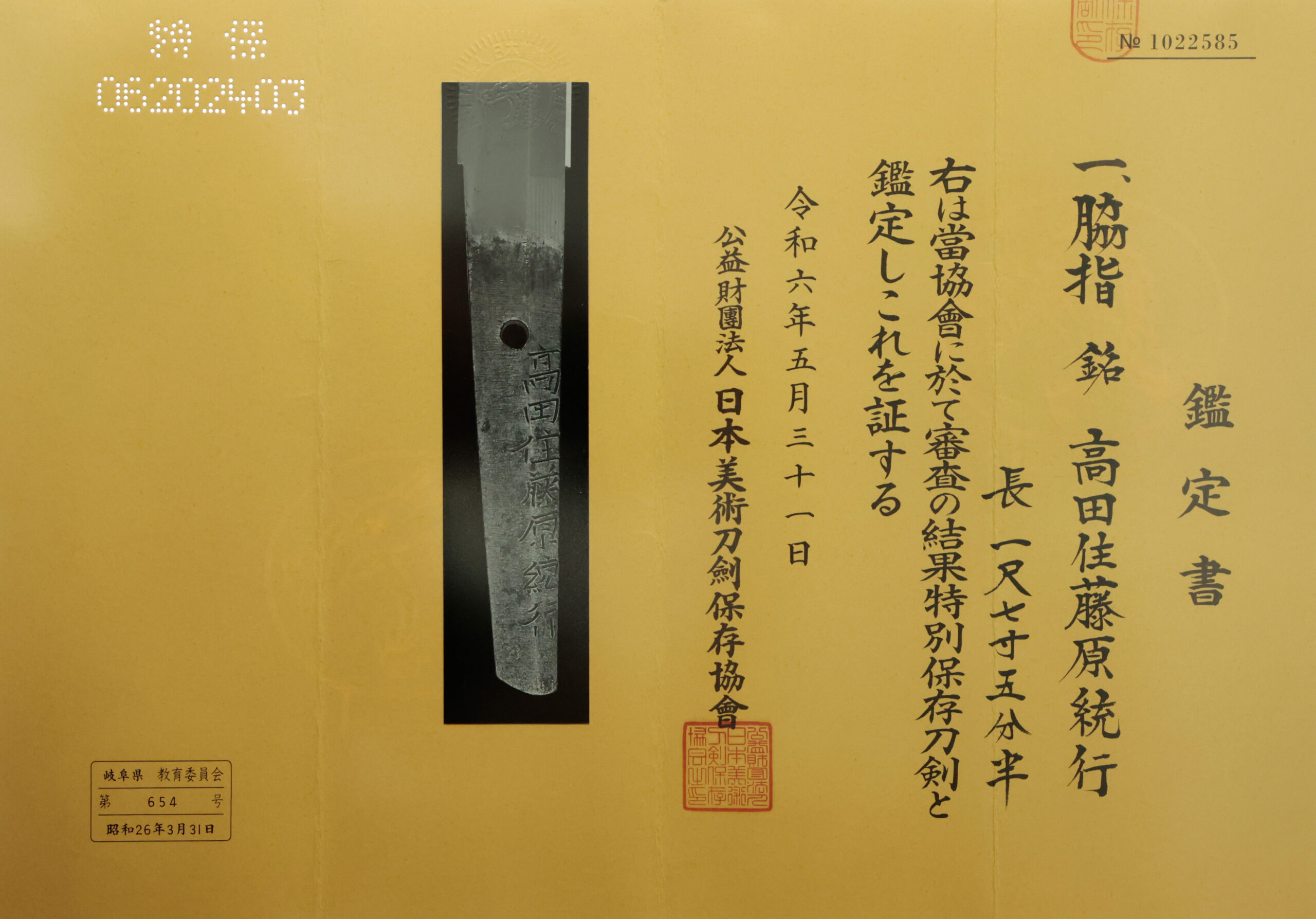
This blade is appraised as a Tokubetsu Hozon Token (特別保存刀剣) issued by NBTHK (Nihon Bijutsu Touken Hozon Kyokai:日本美術刀剣保存協会).
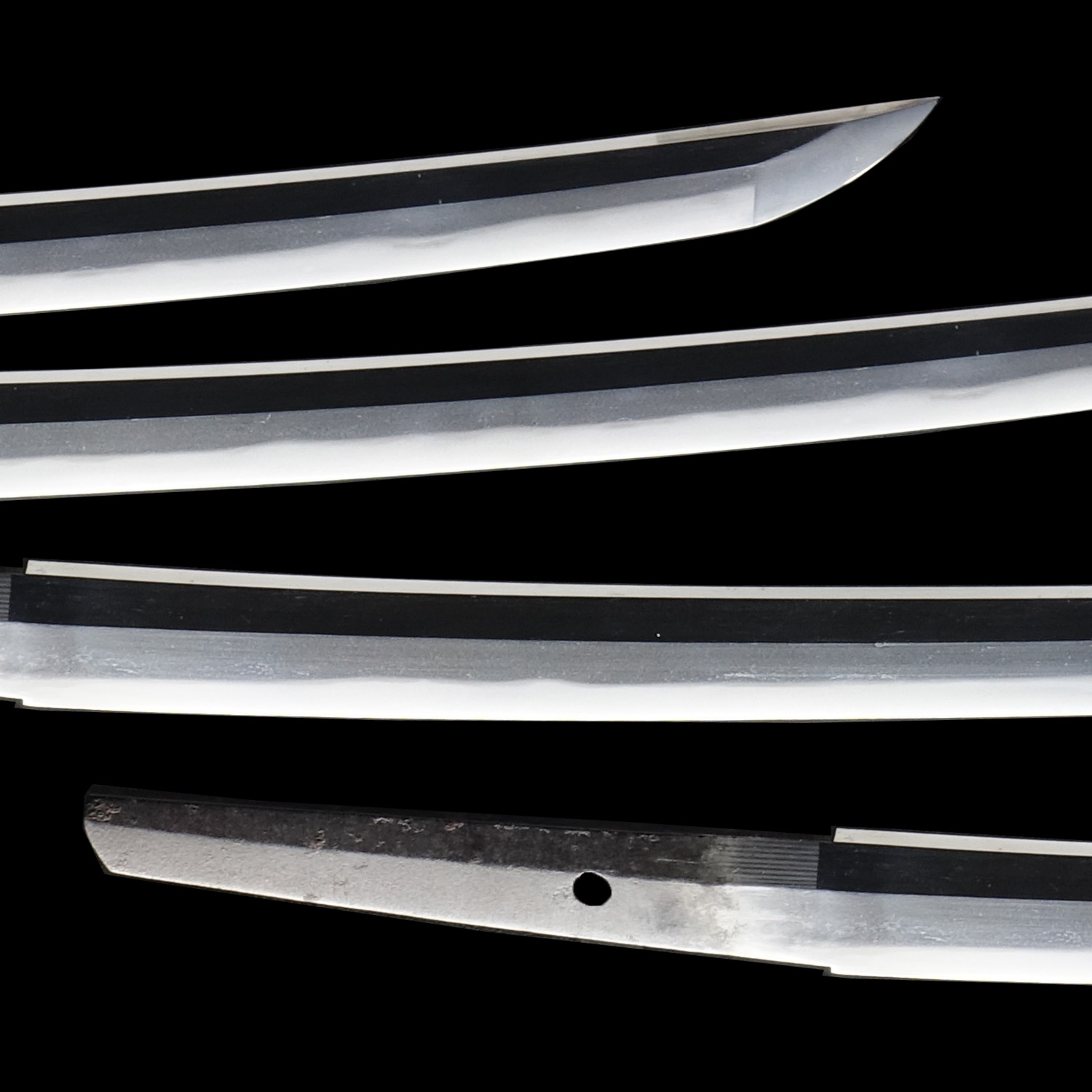
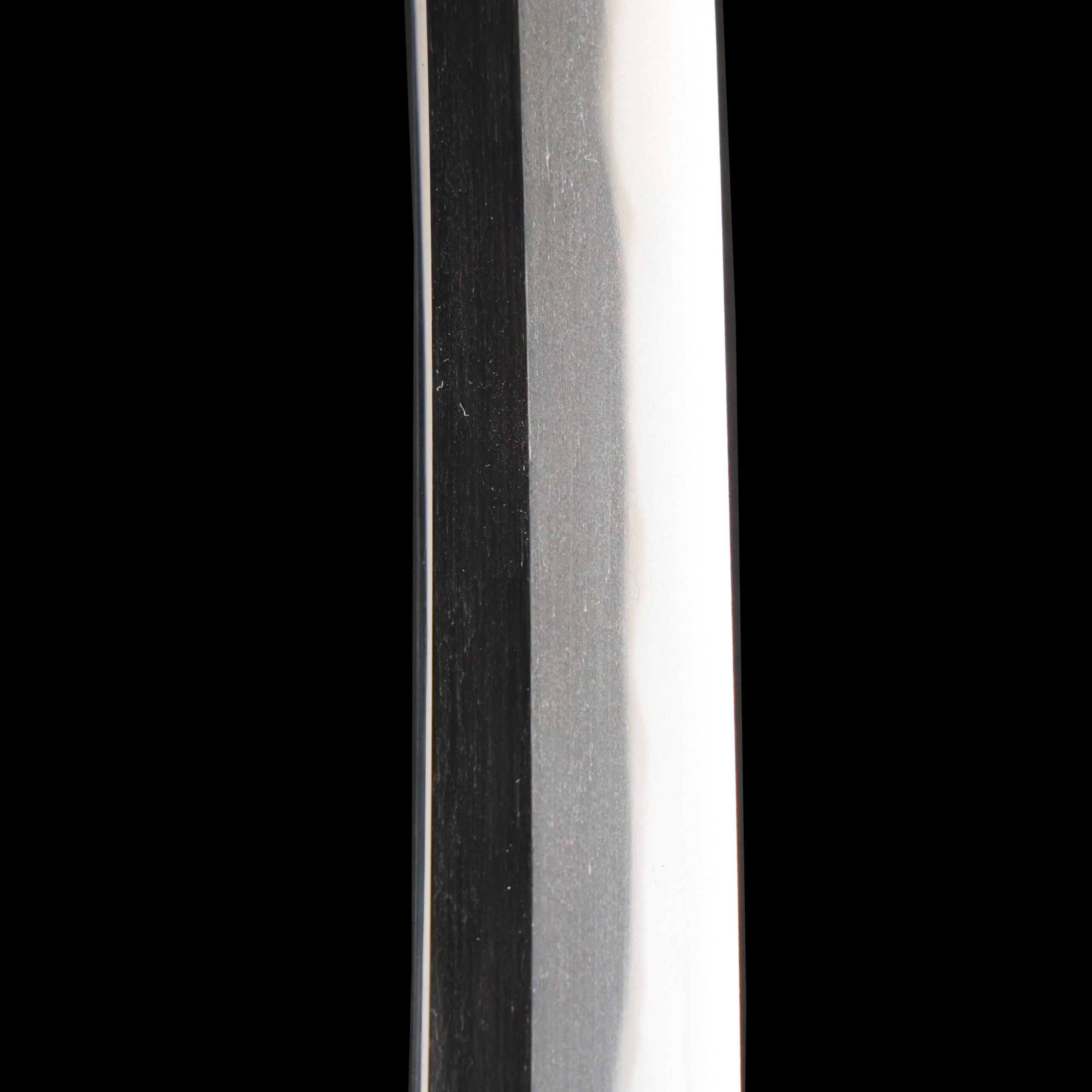
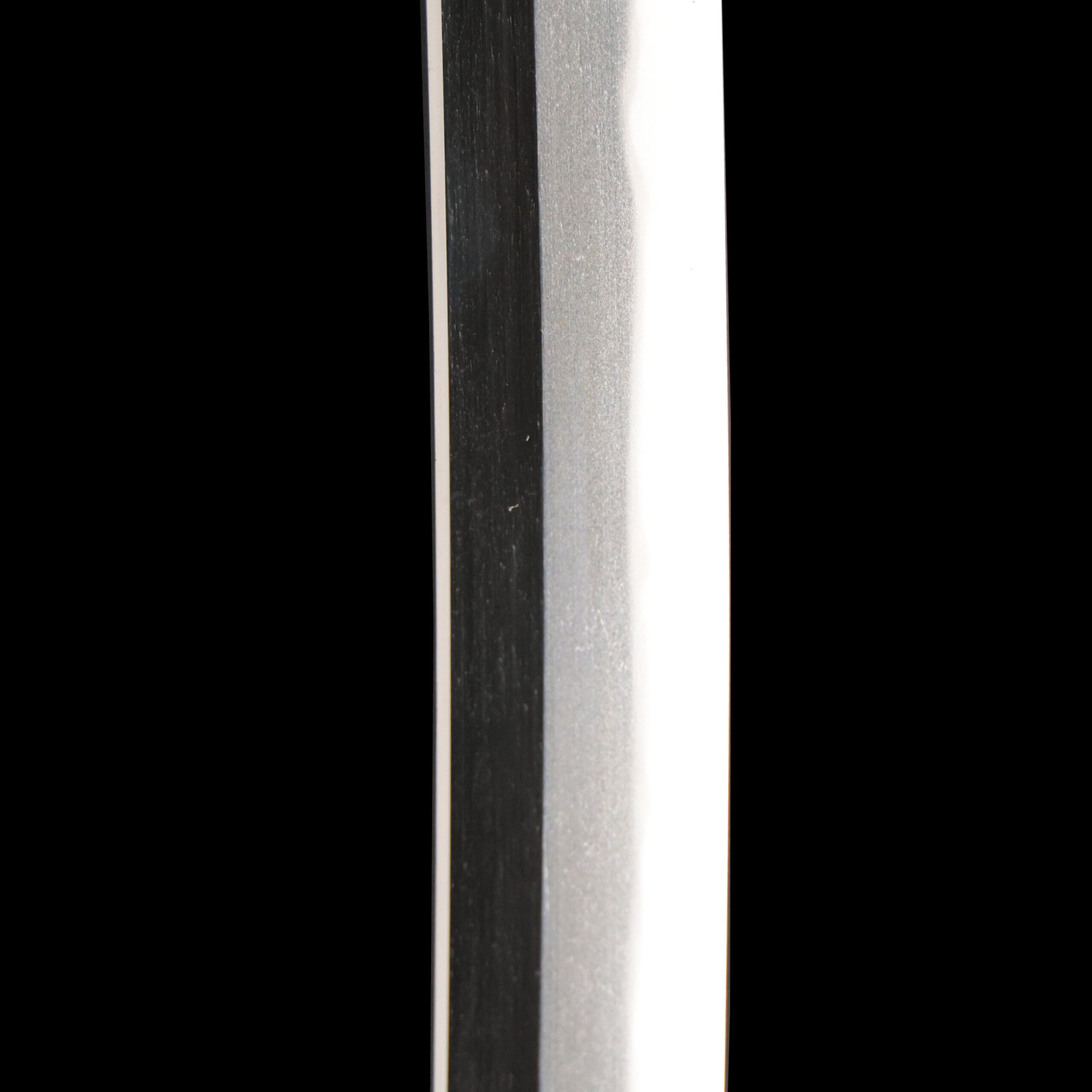
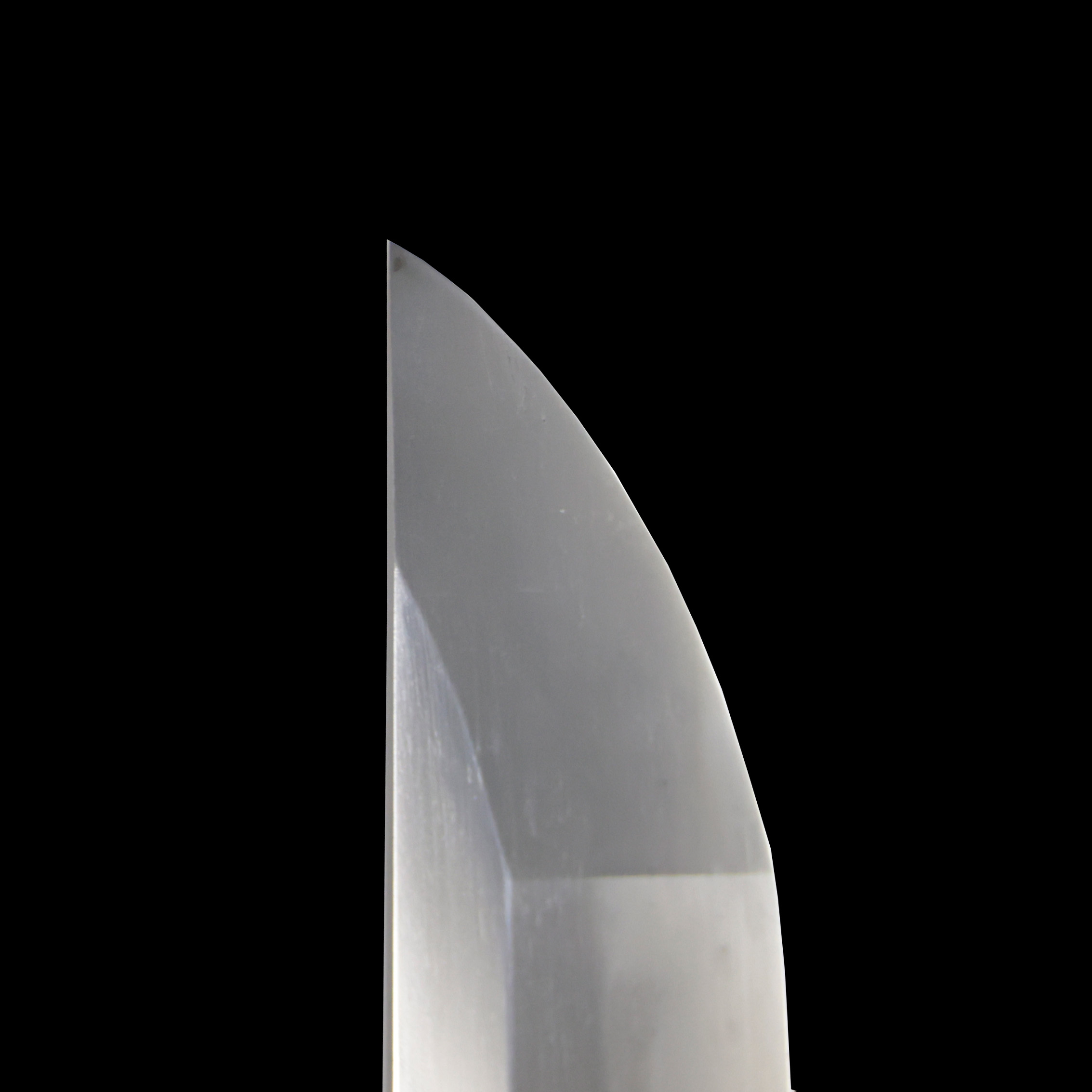
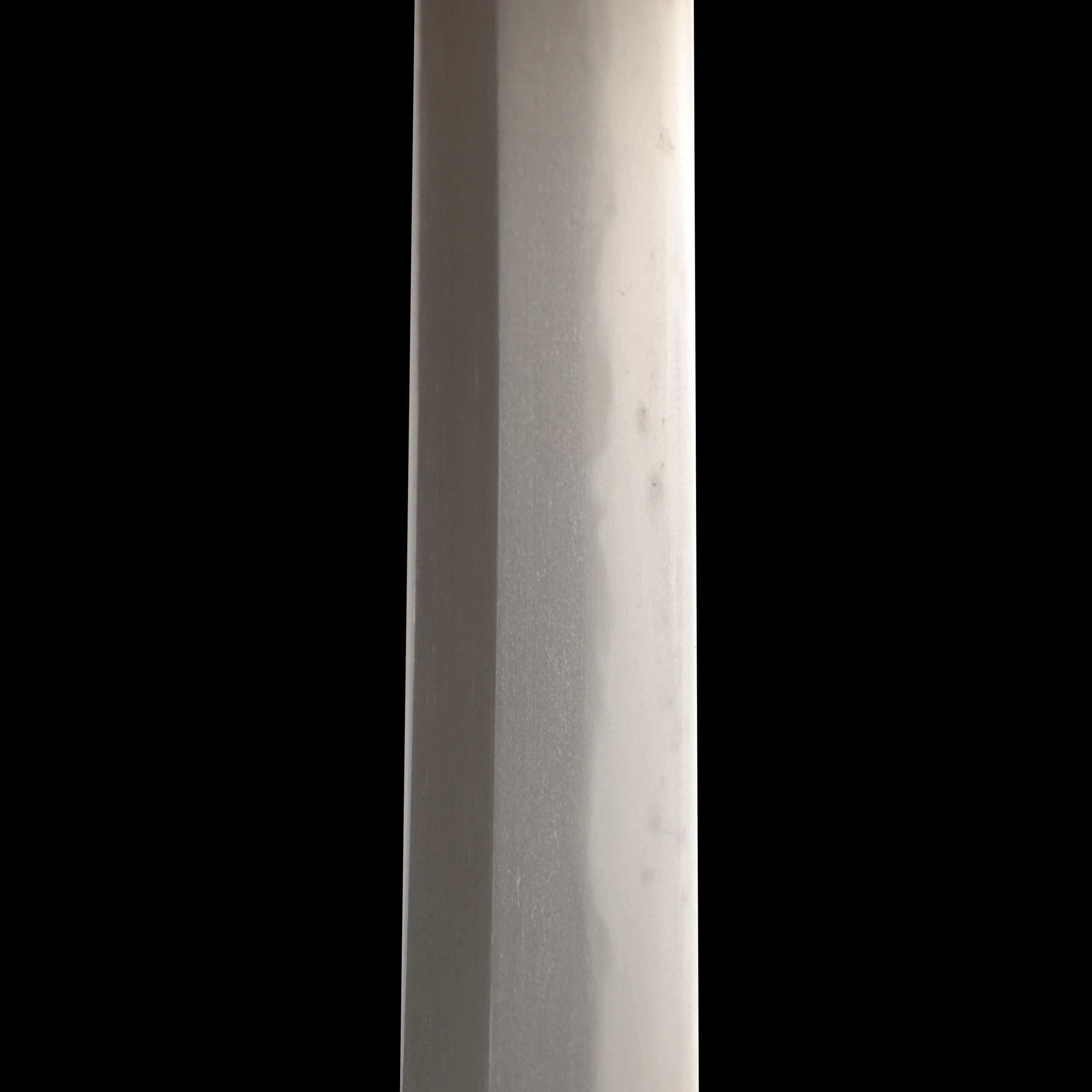
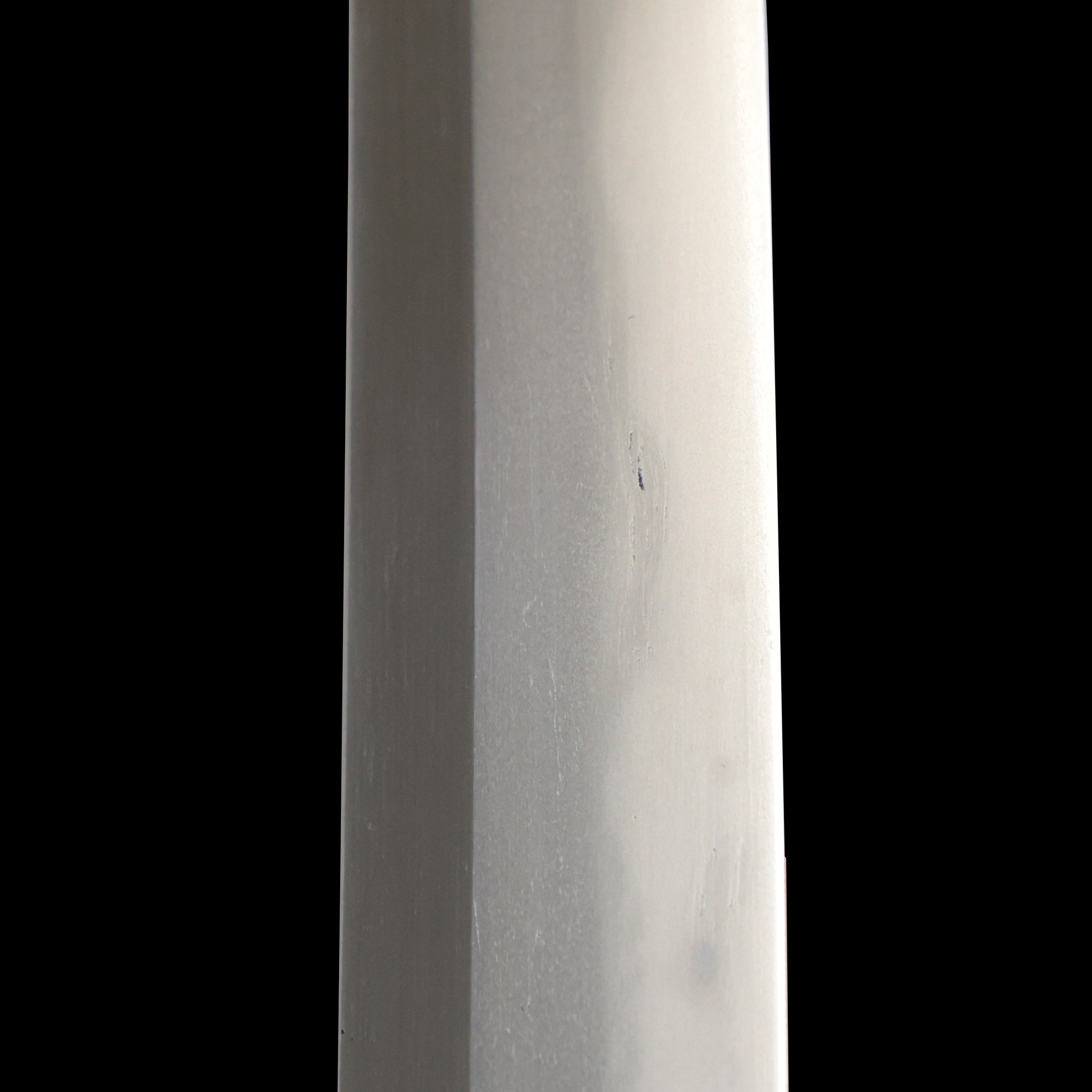
*Please keep in mind that there is a couple of Kitae Kizu on the blade.
Fuchi-Kashira
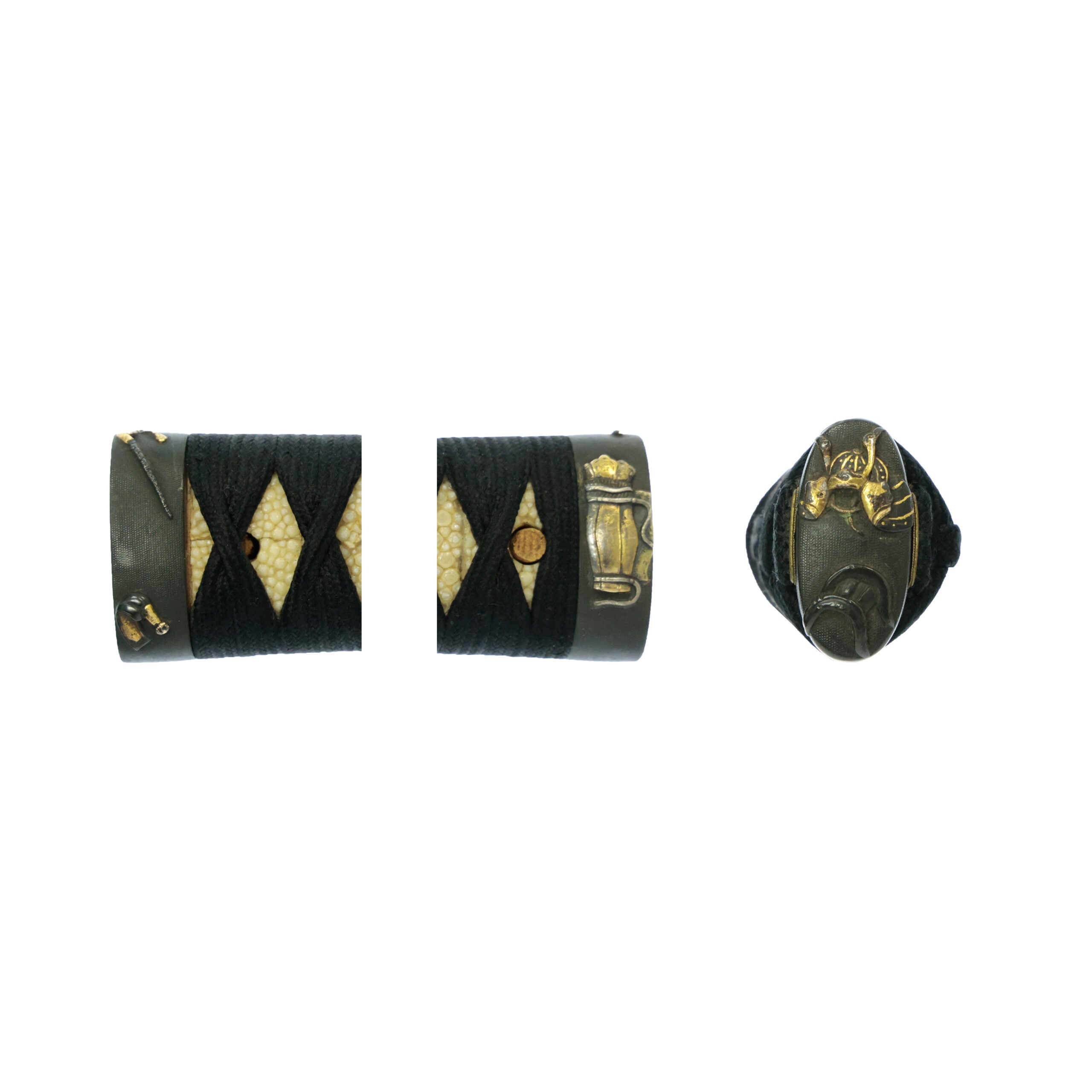
You would find some tools used by Samurai on this Fuchi Kashira. While Abumi (鐙, stirrup) and Muchi (鞭, whip) are depicted on the Fuchi, Kabuto (兜, helmet), Kura (鞍, saddle), and Suneate (臑当, shin guard) are depicted on the Kashira part.
The Abumi is a type of harness, a tool that hangs on the side of the horse and puts the foot on when riding. And stirrups are used with the Kura (鞍, saddle). It is a device worn on the back of a horse to allow it to sit on the horse. The Kakogashira (鉸具頭, ring-shaped bracket) and the Sasuga (刺鉄, rotating needle-like metal fitting), these parts exist for attaching stirrups to a saddle. Stirrups are used in two ways. One is to put your feet on when you straddle a horse and climb up. The other is used for balancing on horseback while the horse is running. Stirrups were originally created to allow people who were not nomadic equestrians to ride horses easily. It is said the Abumi was introduced to Japan from the continent in the Kohun period (古墳時代, 250-538). At first, it was a simple ring-shaped object. However, it became more practical, and some had highly decorative appearances.
The whip called Muchi was used to direct the advance or retreat of a battle. Unlike the whip used for riding, the whip used in battle is a stick-shaped tool similar to a bamboo sword.
The Kabuto is a protector for the head. It seems the Kabuto depicted on this Kashira is categorized as he Hoshi Kabuto (星兜). The Hoshi Kabuto is a type of Samurai helmet that was born in the middle of the Heian period (平安, around 888-1068). Small rivets that hold iron plates together. These rivets are called the Hoshi (星, star). When people started using the Kabuto, it was initially designed for practical use such as wearing it to turn the attack by swords and so on. However, the principal purpose of its design has changed with time; Samurais tried to express their dignity, personality, or religion by wearing the characteristic design Kabutos.
The Kura is a device worn on the back of a horse to allow it to sit on the horse. This item is used with the Abumi (鐙, stirrup). The Kakogashira (鉸具頭, ring-shaped bracket) and the Sasuga (刺鉄, rotating needle-like metal fitting), these parts exist for attaching stirrups to a saddle. The saddle is basically assembled along a skeleton called the sella bone. It is made up of a Maewa (前輪), which is a front cover on the saddle bone on the side in the direction of travel, a Shizuwa (後輪), which is a back cover in the opposite direction to the direction of travel, and an Igi (居木), which is the valley that connects these two parts. The shapes of these covers and the number of Igi changed over time.
The shin guards were were made of three steel plates joined together, which were then wrapped around the shins and fastened together with leather straps.
Also, the surface of this Fuchi Kashira is decorated with the Nanako-Ji (魚子地) technique. This process makes a uniform minimal protrusions pattern by hitting the Nanako-Ji Tagane (魚子地鏨, a chisel for this technique) on a metal surface. This decorative technique is often seen on sword mountings.
Tsuka and Menuki
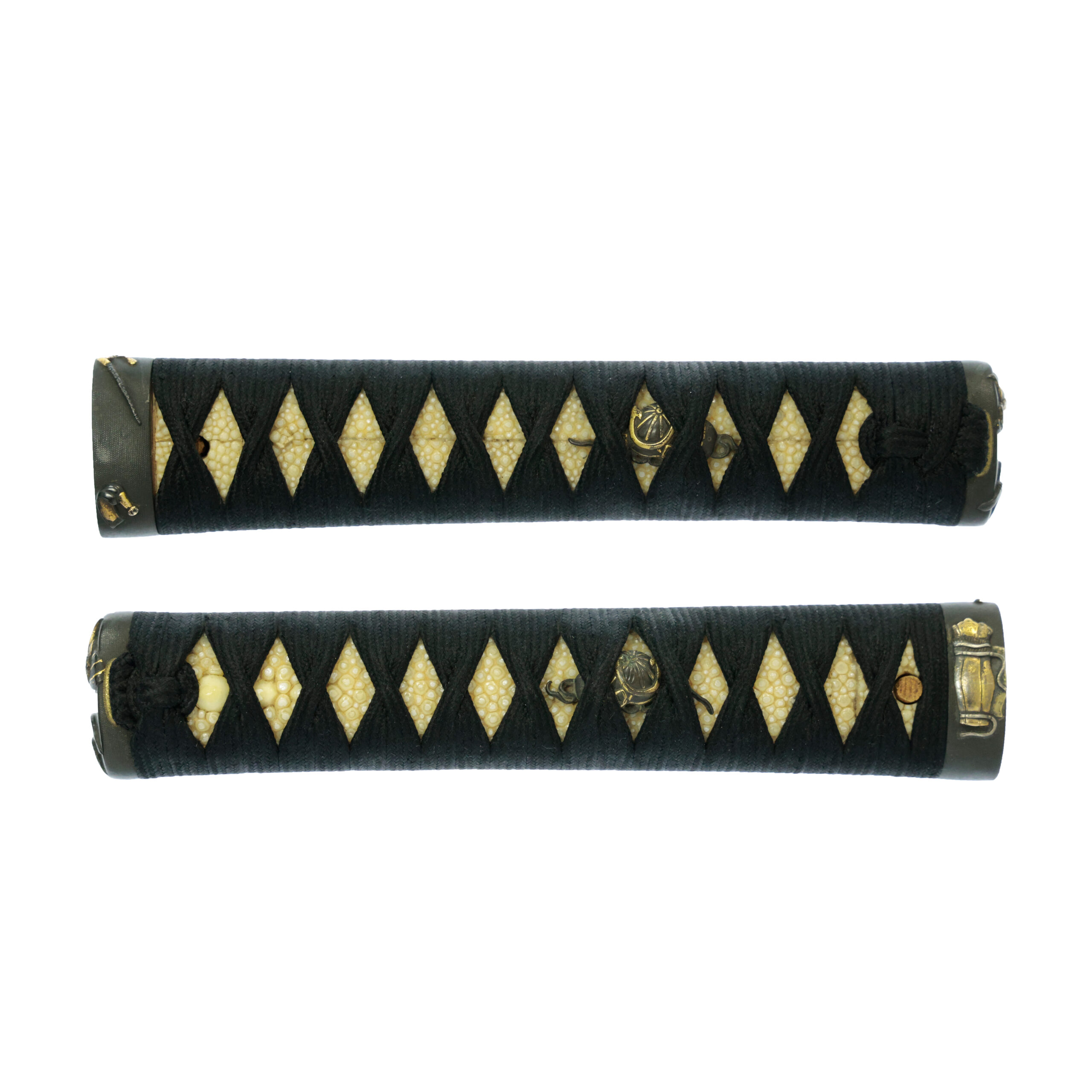
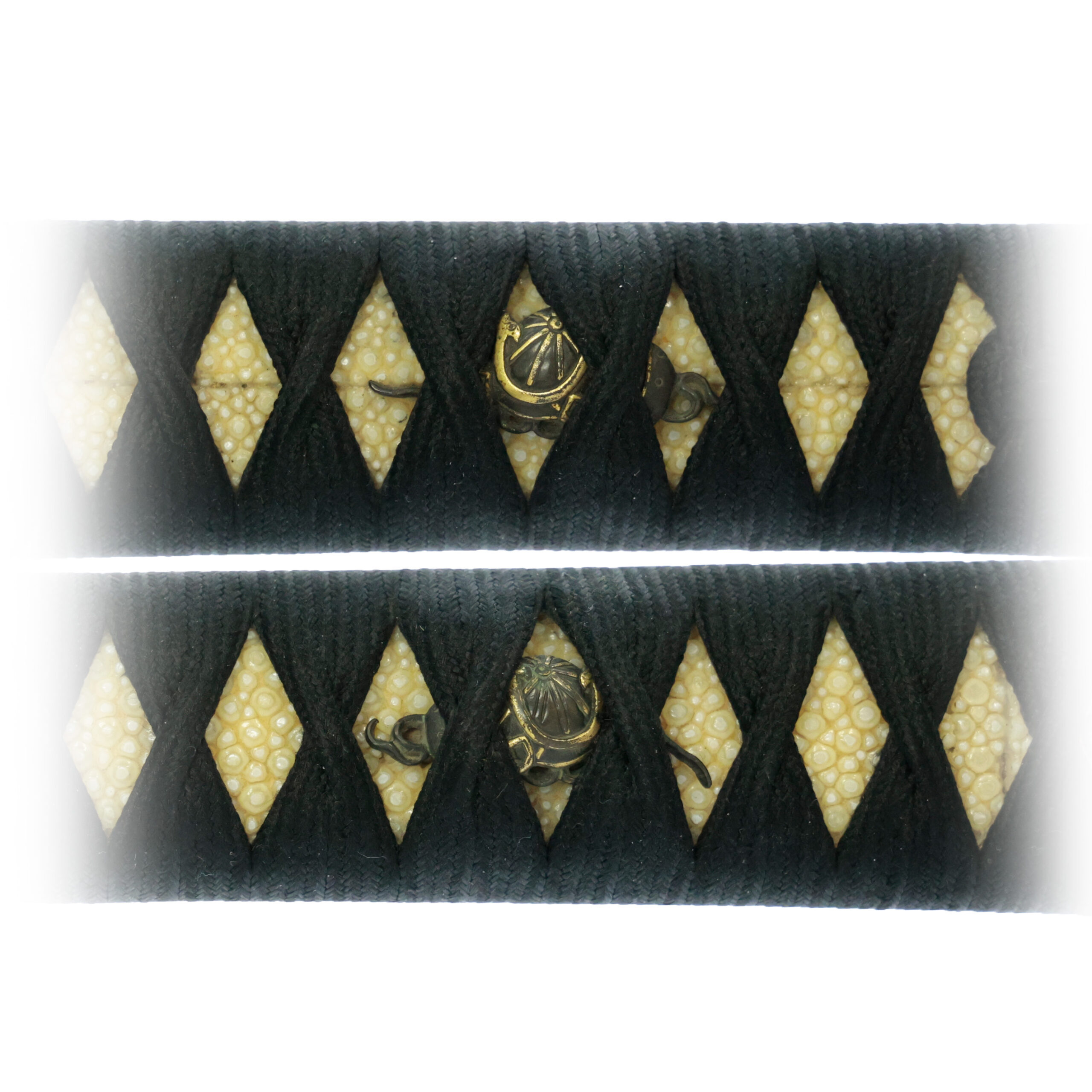
The motif of this Menuki is Kabuto (兜, helmet).
As mentioned in the description of the Fuchi Kashira, Kabuto is a protector for the head. And, this Kabuto seems to tbe Suji Kabuto (筋兜). Suji Kabuto consists of many small riveted iron plates to form its shape. Suji means a stripe in Japanese, and you can see stripes in the helmet. During the Nanbokuchou (南北朝, 1337-1392) period, the tactic was gradually changed from the piggyback fight style to battle with the Tachi (太刀) sword and the Naginata (薙刀, Japanese halberd) on the ground. Therefore, there was a rise in demand for the weight saving of the Kabuto. Also, in order to turn the attack by swords, a new type of structure was invented; it is the Suji Kabuto. Its form slides swords’ attacks when weapons hit the Kabuto. It is said that the production of the Suji Kabuto prospered in the Muromachi (室町, 1336-1573) period. The Suji Kabuto production continued in the Edo period also; however, iron plates that Kabuto makers used at that time were thicker than the Muromachi period’s Suji Kabuto. Therefore, it was heavier, and we understand that then people cherished the Suji Kabuto to enjoy the old-style Kabuto, not to wear it on the battlefields.
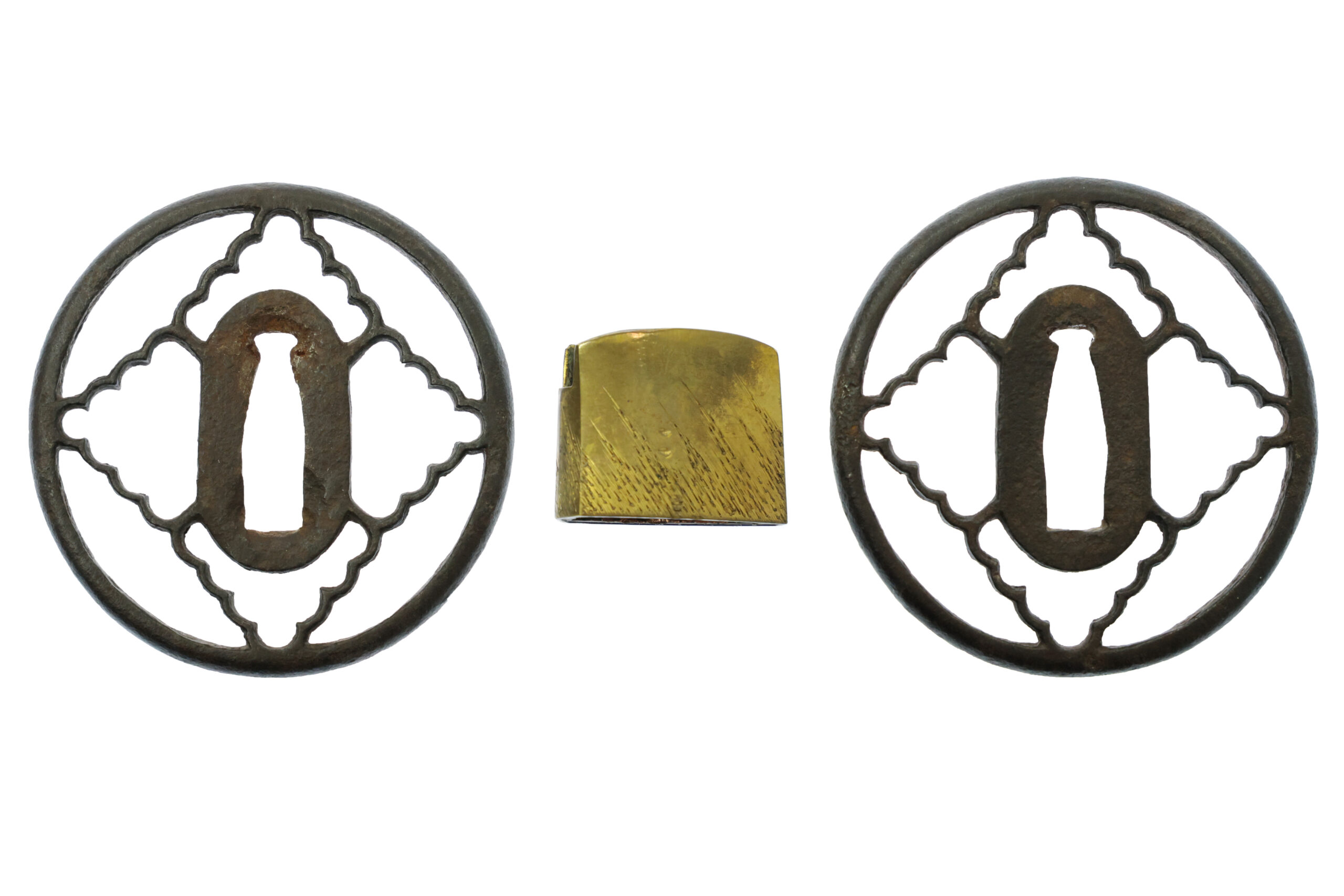
Tsuba and Habaki
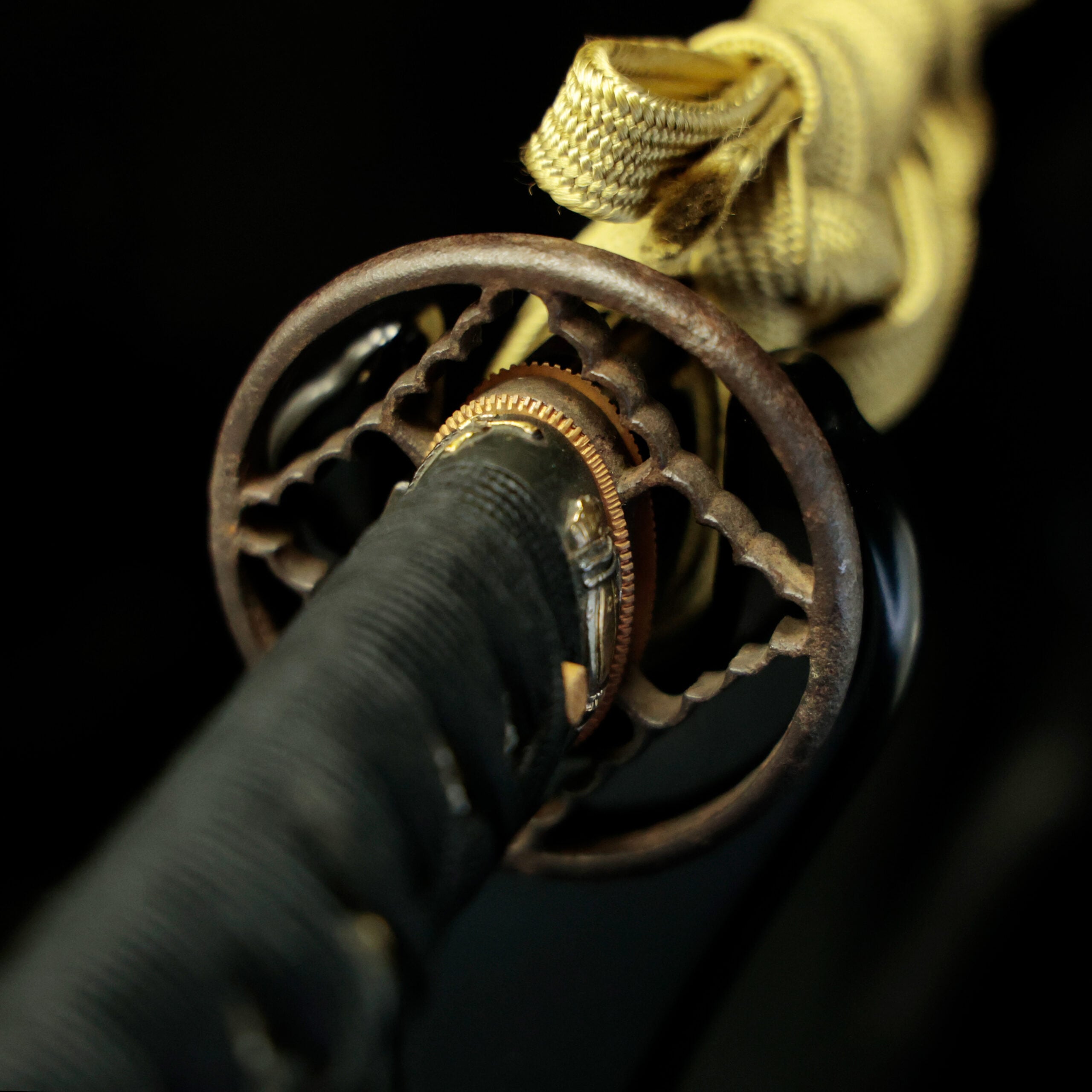
The motif of this Tsuba is Hanabishi (花菱). In this pattern, petals are designed in a rhombus. This pattern became a Yusoku Monyou (有職文様, generic term for designs of court nobles’ clothing or furnishings, these designs have unique and elegant styles) during the Heian period (794-1185). People loved it as an auspicious pattern.
Also, it is said that since this pattern is elegant and prestigious, it was appropriate for festive occasions such as weddings, and considered to represent longevity and prosperity of descendants.
These petals were cut very thinly, and each petal is connected to the edges. You would appreciate the high-level technique of metalwork of this Tsuba’s maker.
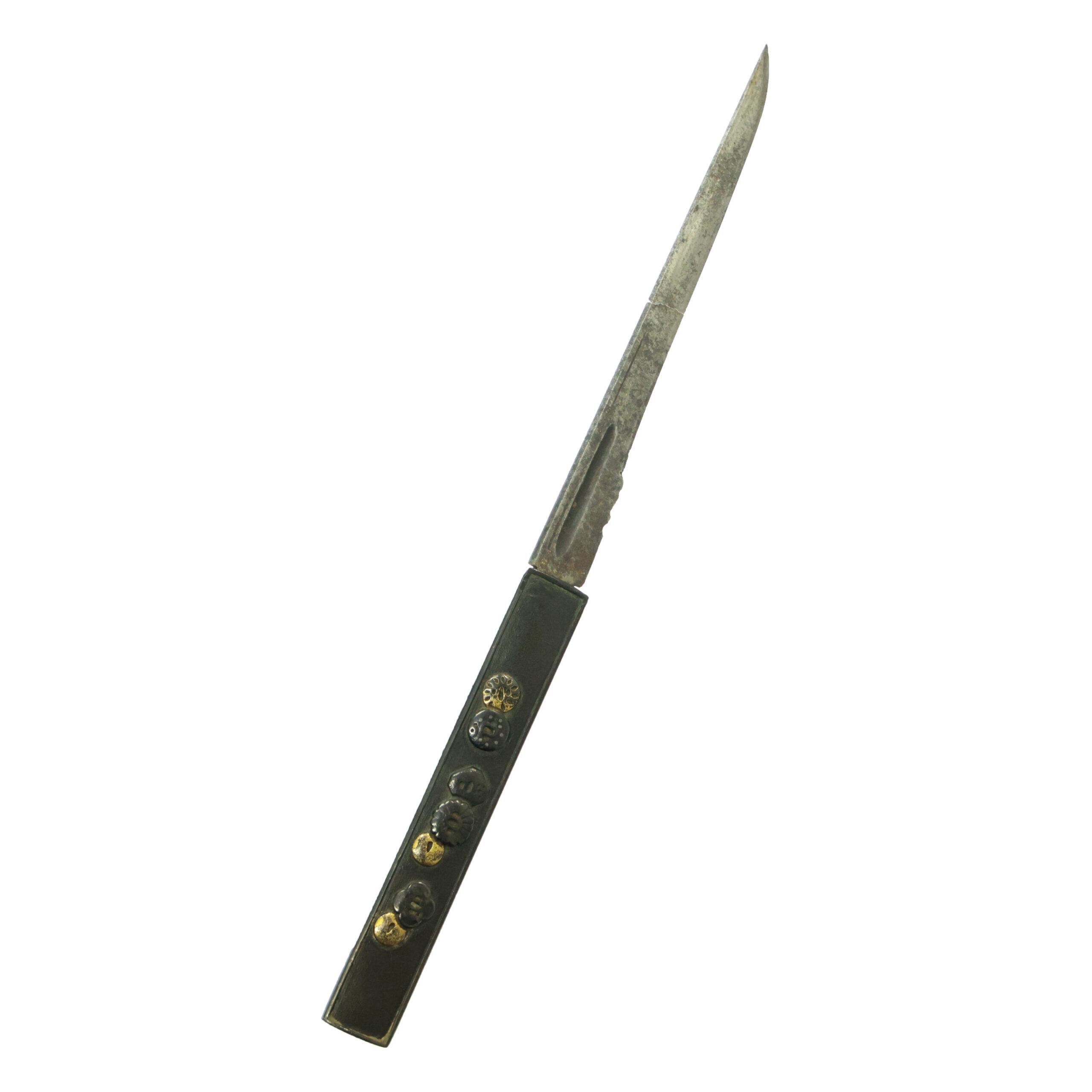
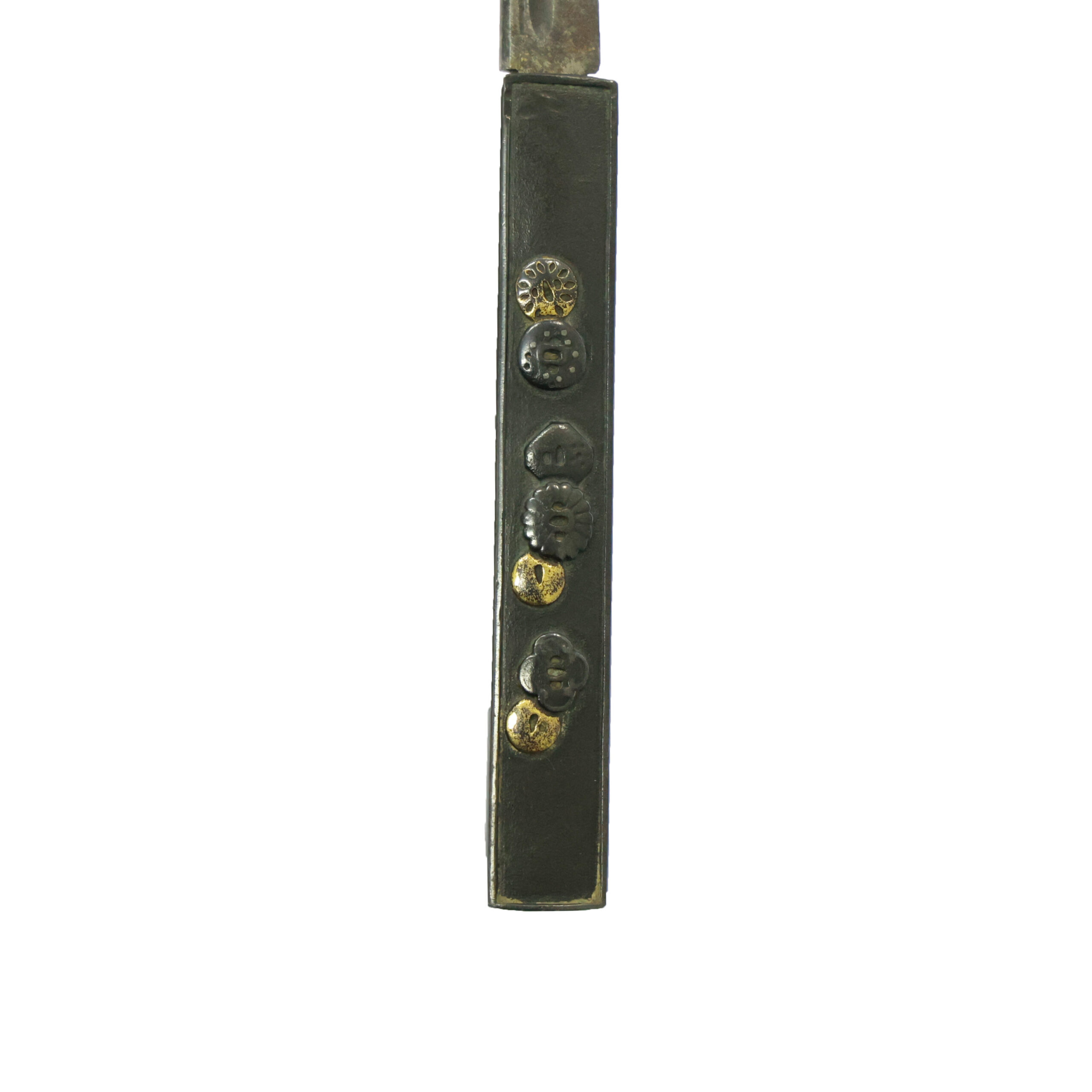
Kozuka
On the surface of this Kozuka, it is interesting that many small Tsuba motifs are depicted.
One of the Tsubas has a shape of Kiku (菊, chrysanthemum). A long time ago, the chrysanthemum was used as a medicine for obtaining a long life in China, and it was brought to Japan with this thought in the Nara period (648-781). Chrysanthemum is one of the flowers which symbolizes fall, and people appreciate it very much since ancient times. As its petals form radially, the chrysanthemum has been likened to the sun. That is why this flower pattern is treated as the symbol of perpetual youth and longevity or good health. “Kiku no Gomon (菊の御紋)” is a kind of chrysanthemum pattern, and it has been used as the crest of the Emperor and the royal family in Japan so that it is well-known as a noble pattern.
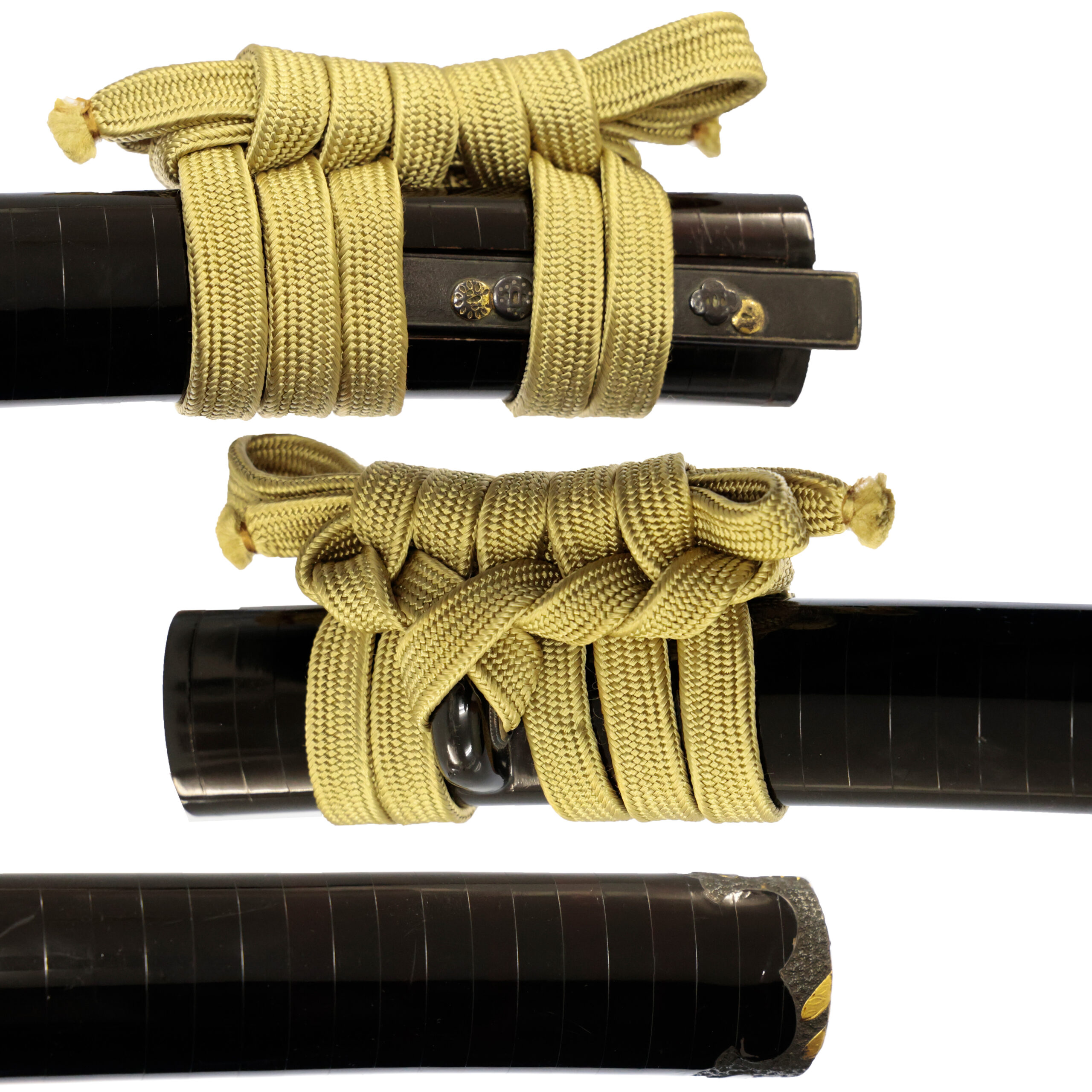
Saya
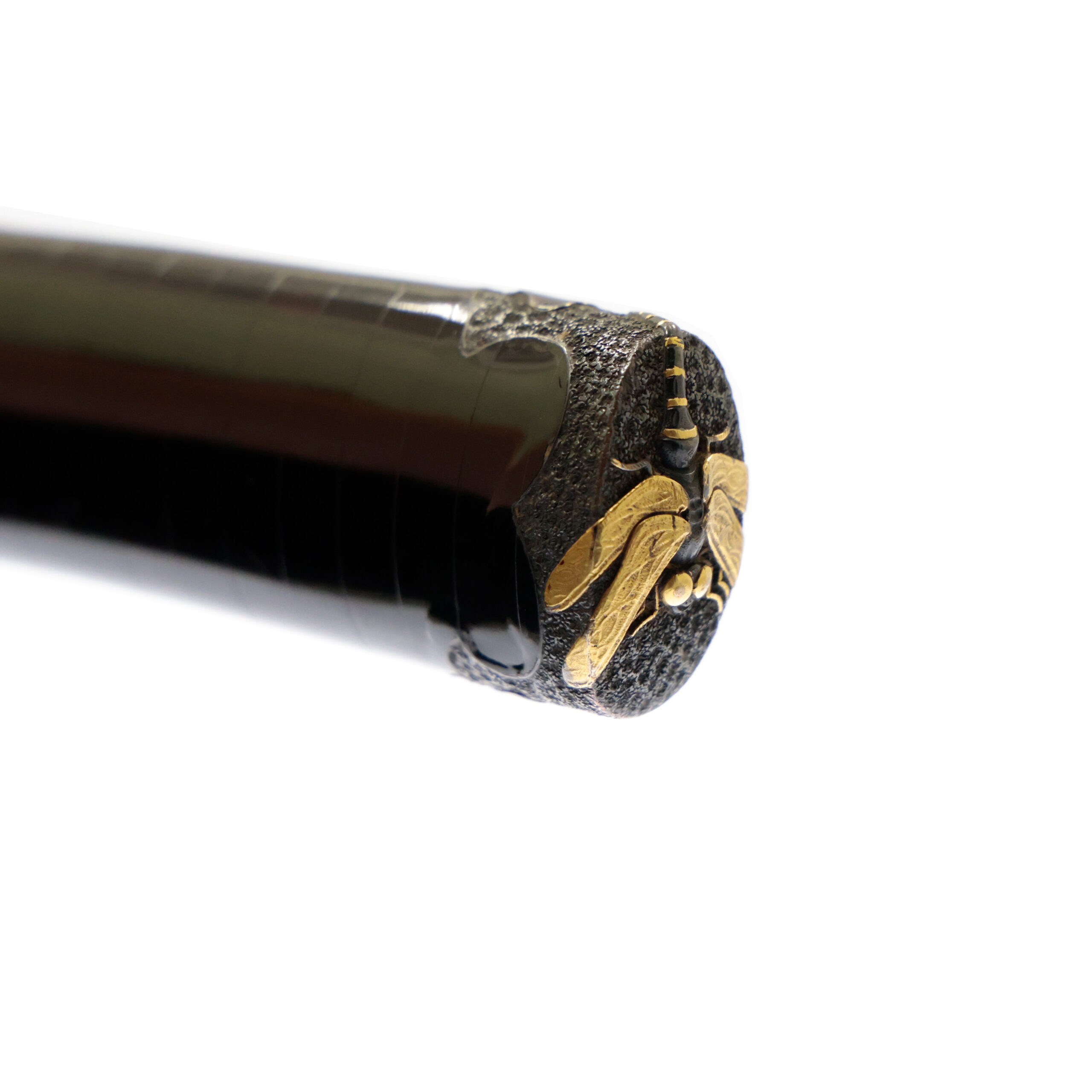
On the Kojiri, the head of Saya, Tonbo (蜻蛉, dragonfly) is depicted.
Dragonflies have been inhabited in Japan for a long time. As this insect bag preys quickly, its heroic figure was sometimes the object of belief. During the Warring States period, the dragonfly was called the Kachimushi (勝ち虫, winning insect) because of its fearless character. Dragonflies fly around fast to catch pests, moving only forward, not backward. Therefore, people thought the behaviors of this insect showed the spirit of Futaiten (不退転); it is a state of mind or a state in which a person has some conviction and does not give in to difficulties. It is very persuasive that Samurai warriors cherished this design as an auspicious motif because of the spirit that Samurai should be prepared for the battlefields. Not only for sword mountings, dragonfly patterns were also incorporated into various items such as helmets, armor, battle coats, etcetera.
Also, the surface of this Saya is decorated with the Fuemaki Nuri (笛巻塗). It is a method of painting in a stepped pattern by painting at regular intervals. The word Fue means a flute, and Maki means wrapping. It is said that the name Fuemaki comes from its resemblance to the joints of a bamboo flute.
Authentication Paper
They authenticated the blade on May 31st in the 6th year of Reiwa (2024). They appraised it as Tokubetsu Hozon Touken, the blade especially worth preserving for Japanese society.

 NihontoWatch