NihontoWatch MonNihontoWatch
Market
Encyclopedia
Kantei
NihontoWatch MonNihontoWatch
Market
Encyclopedia
Kantei

Description

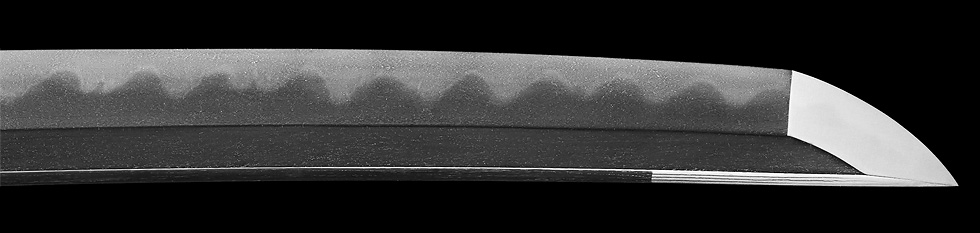
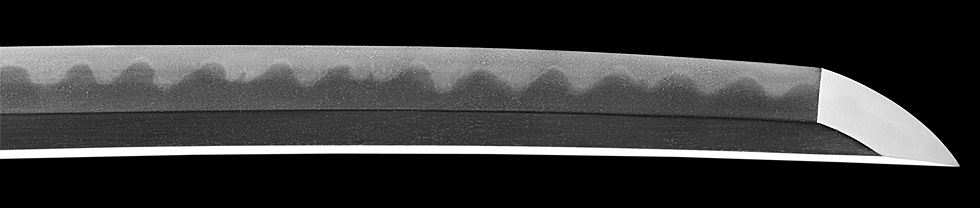
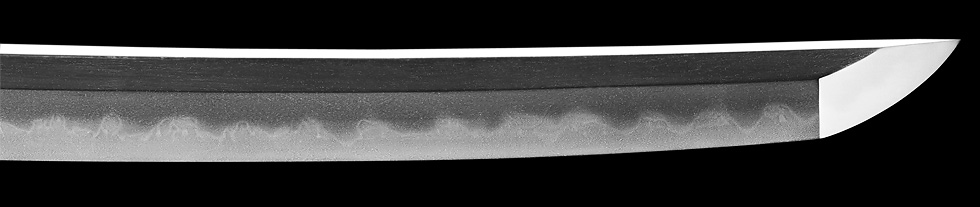
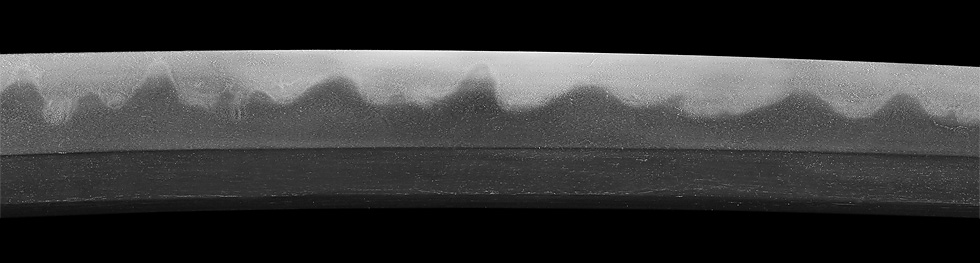
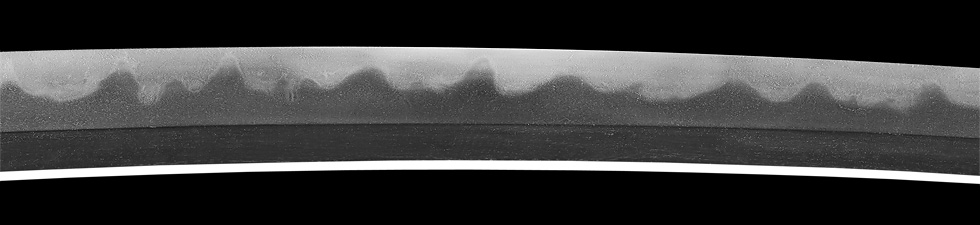
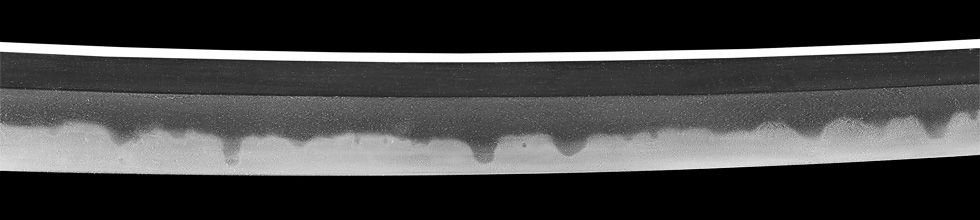
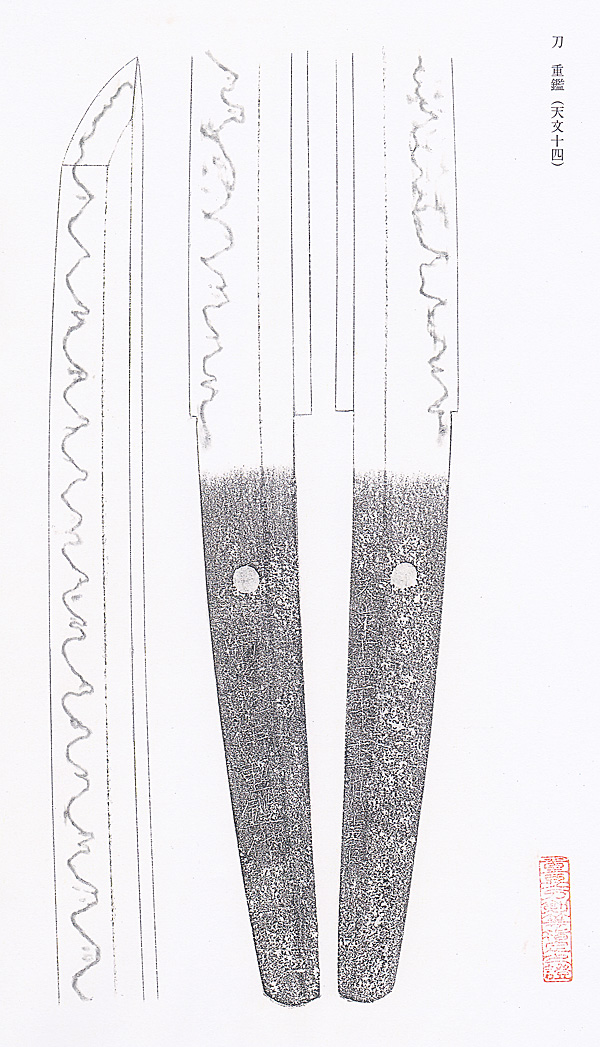
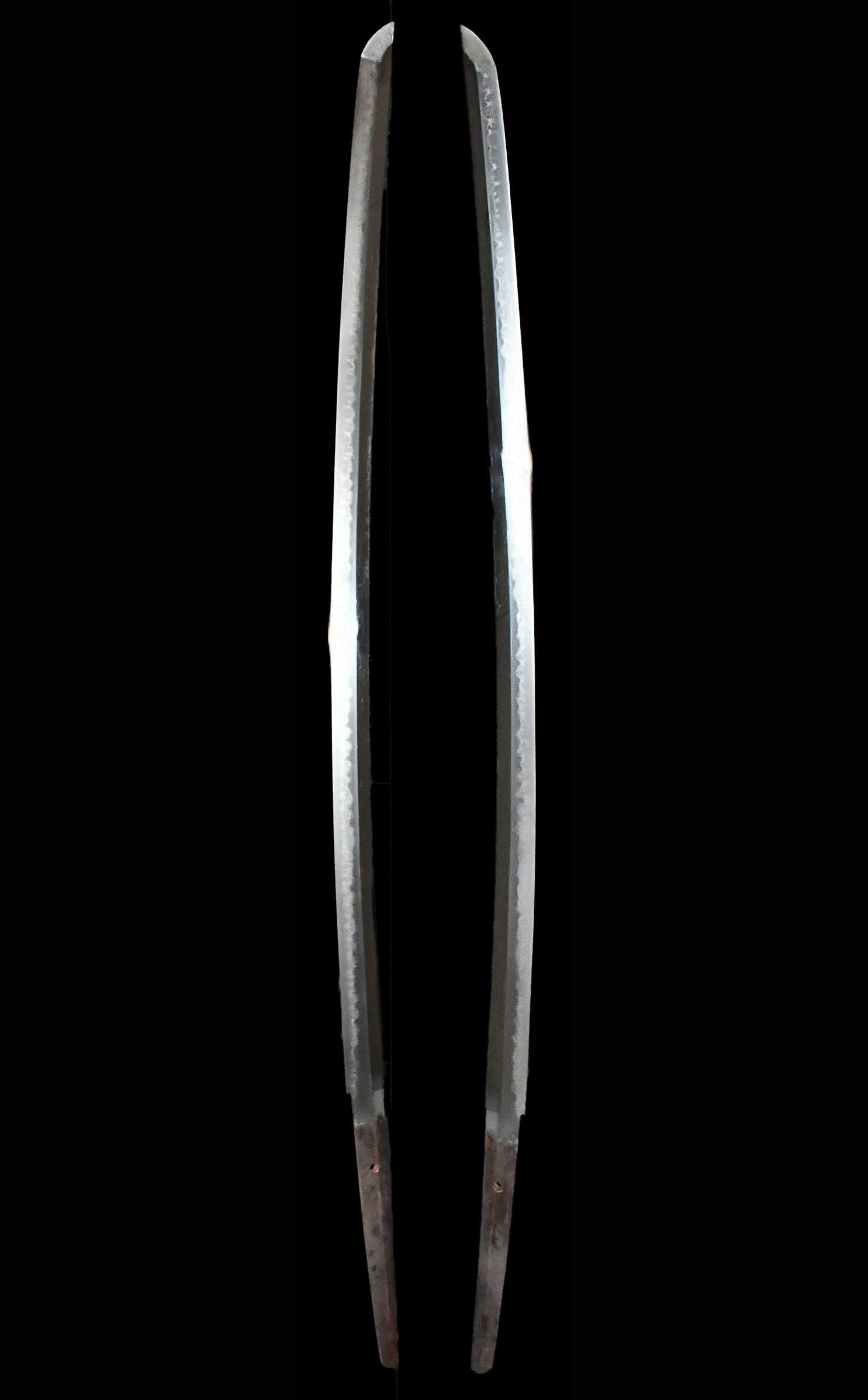
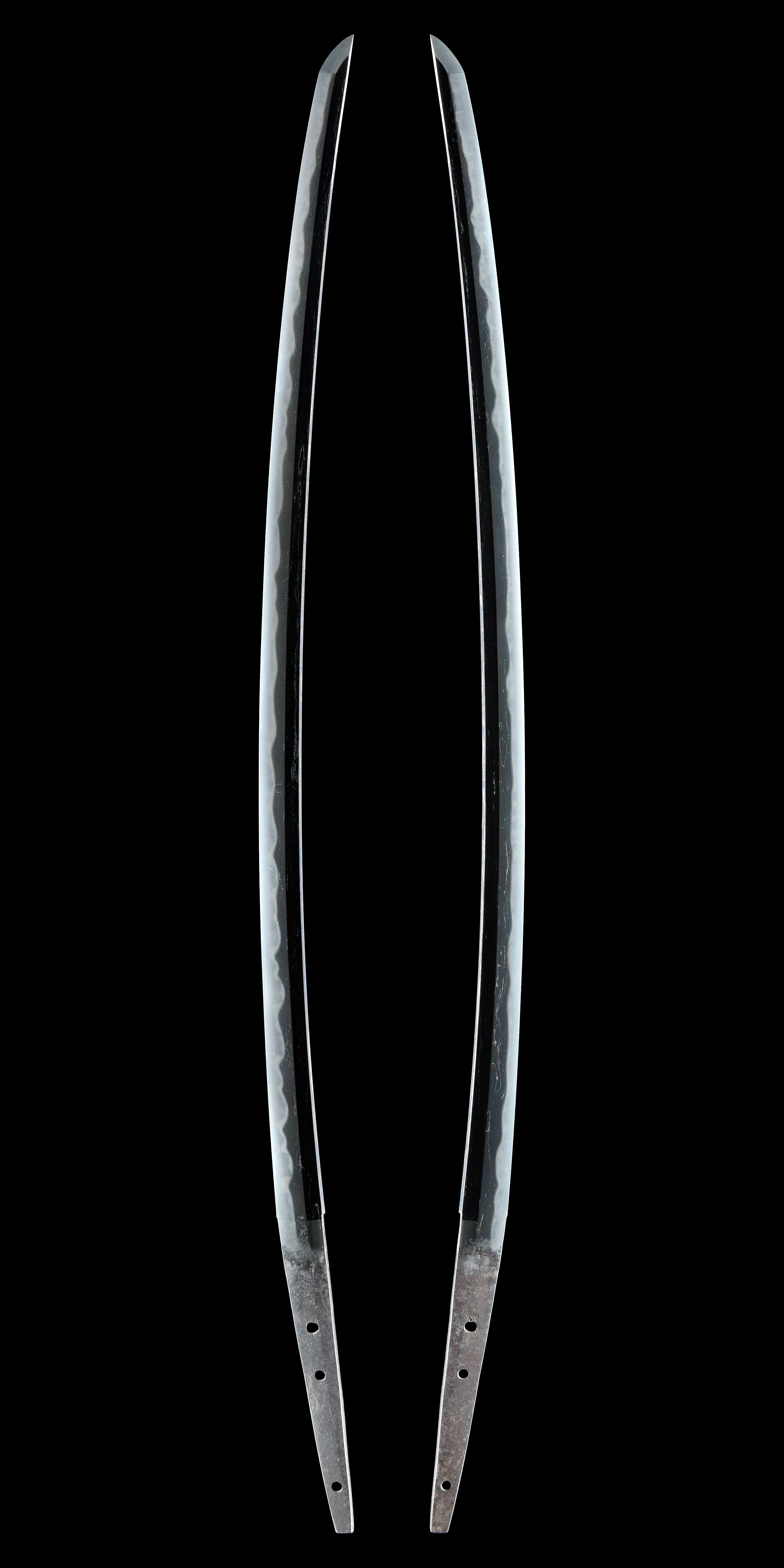
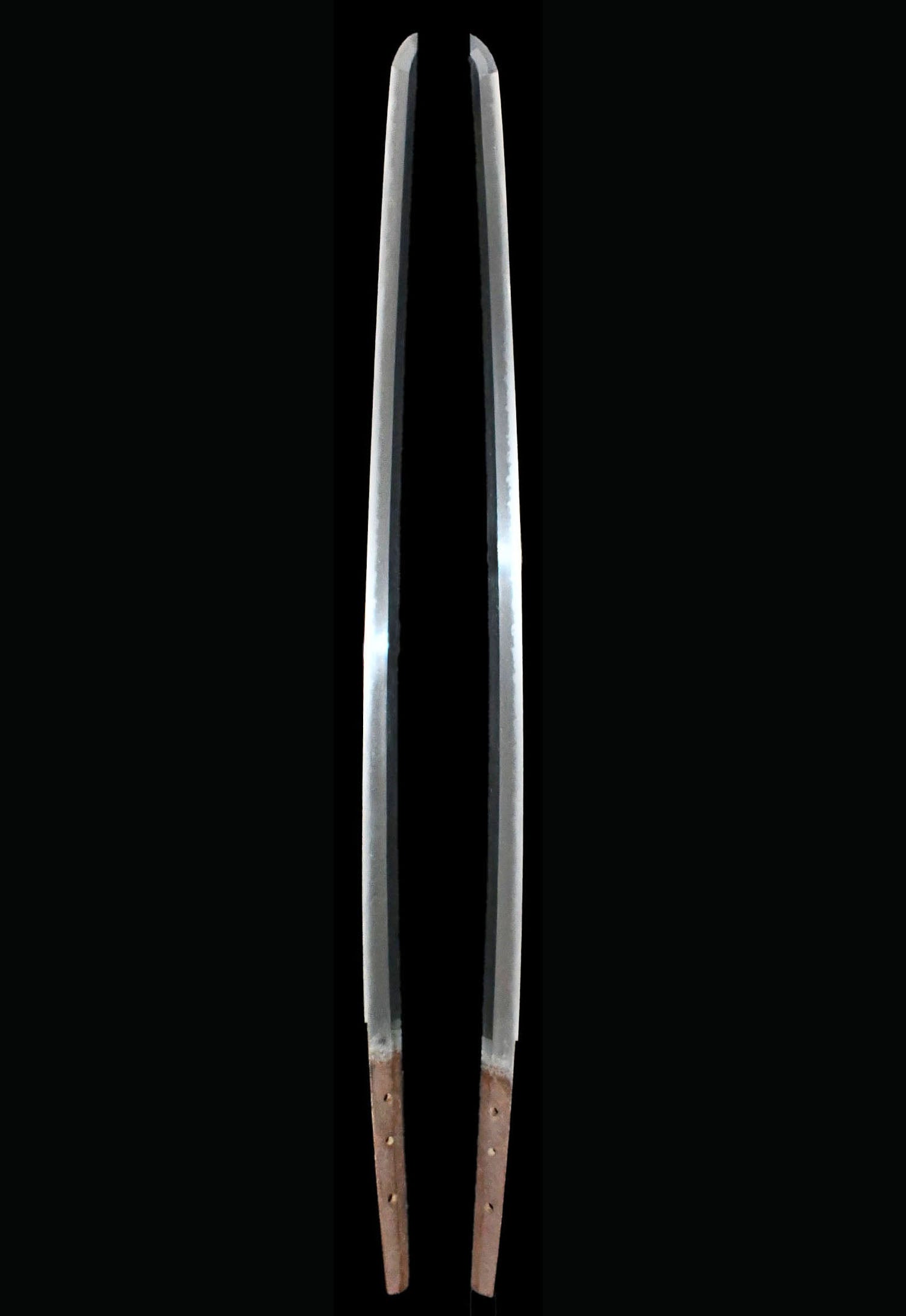
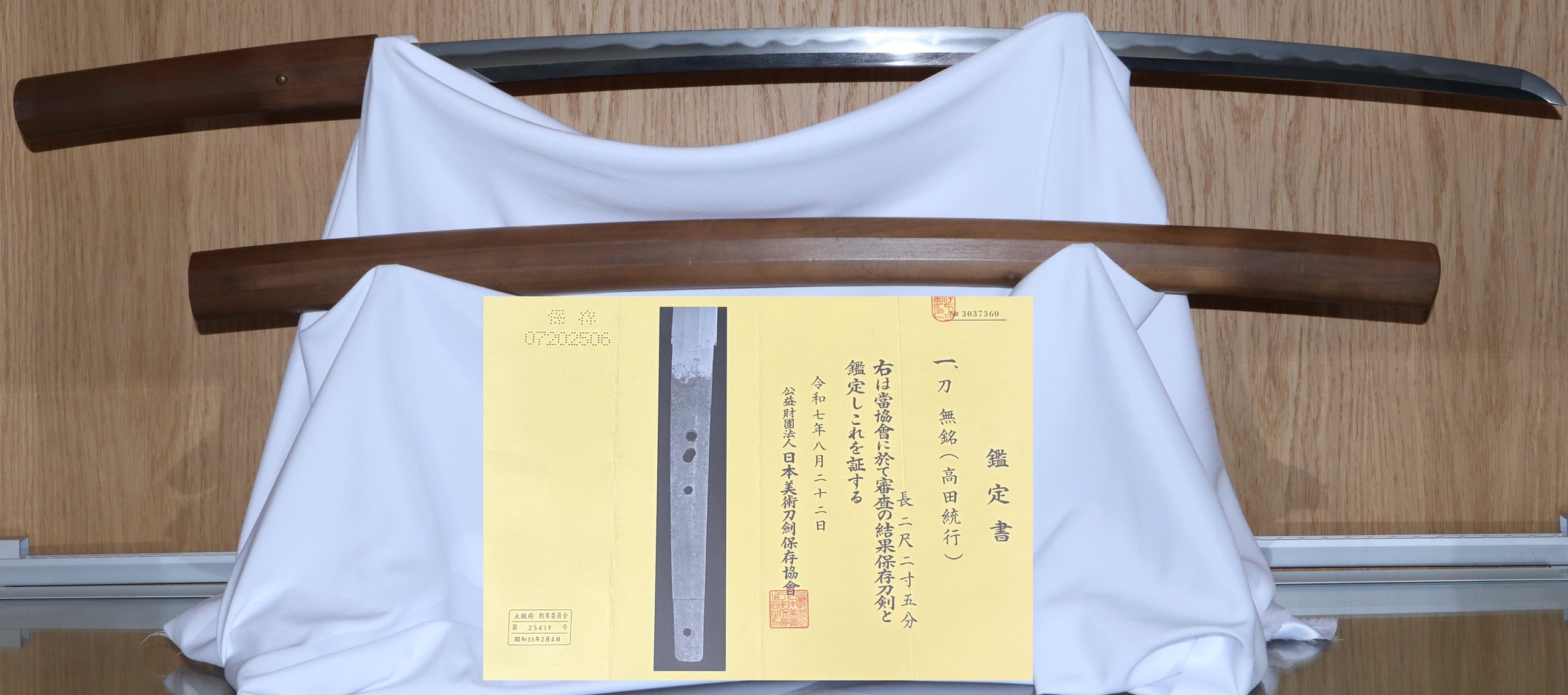
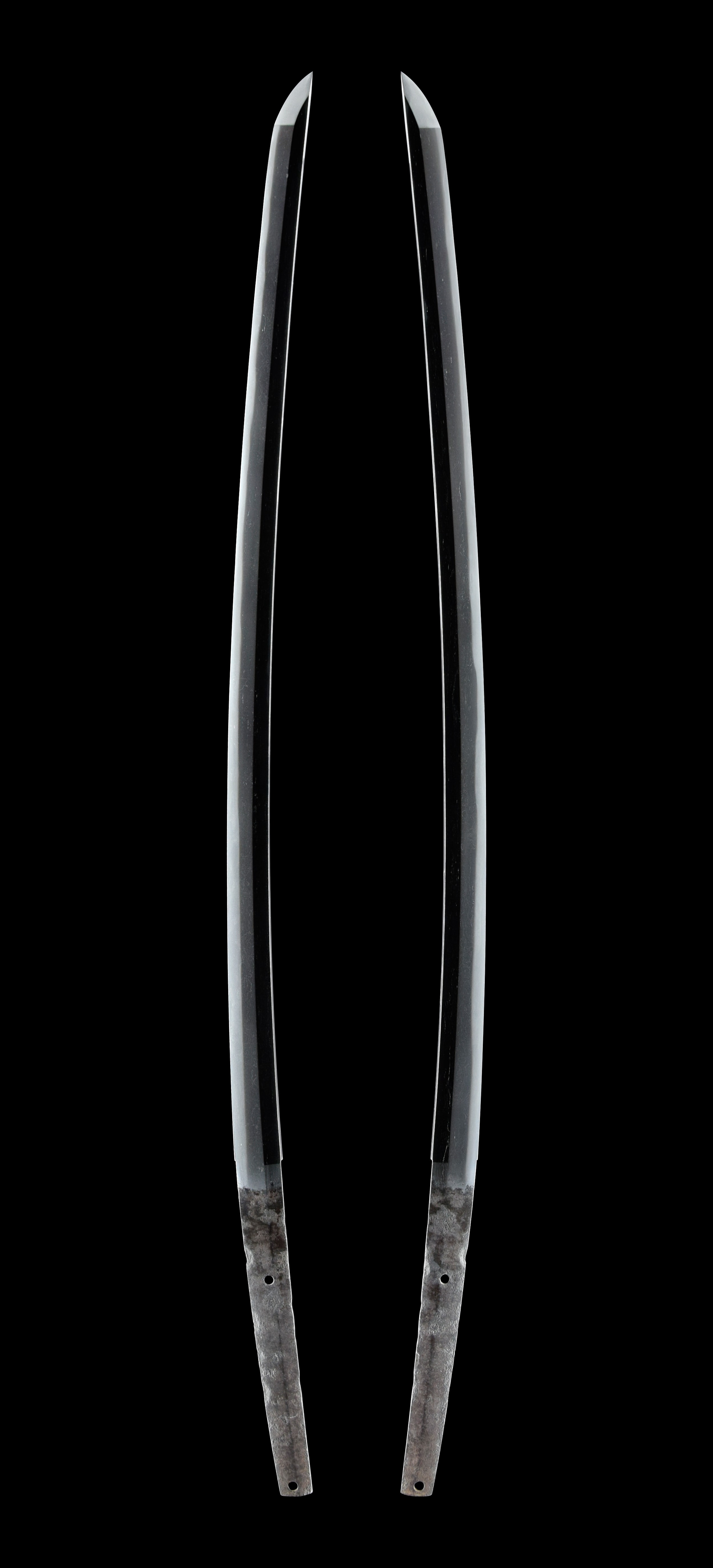
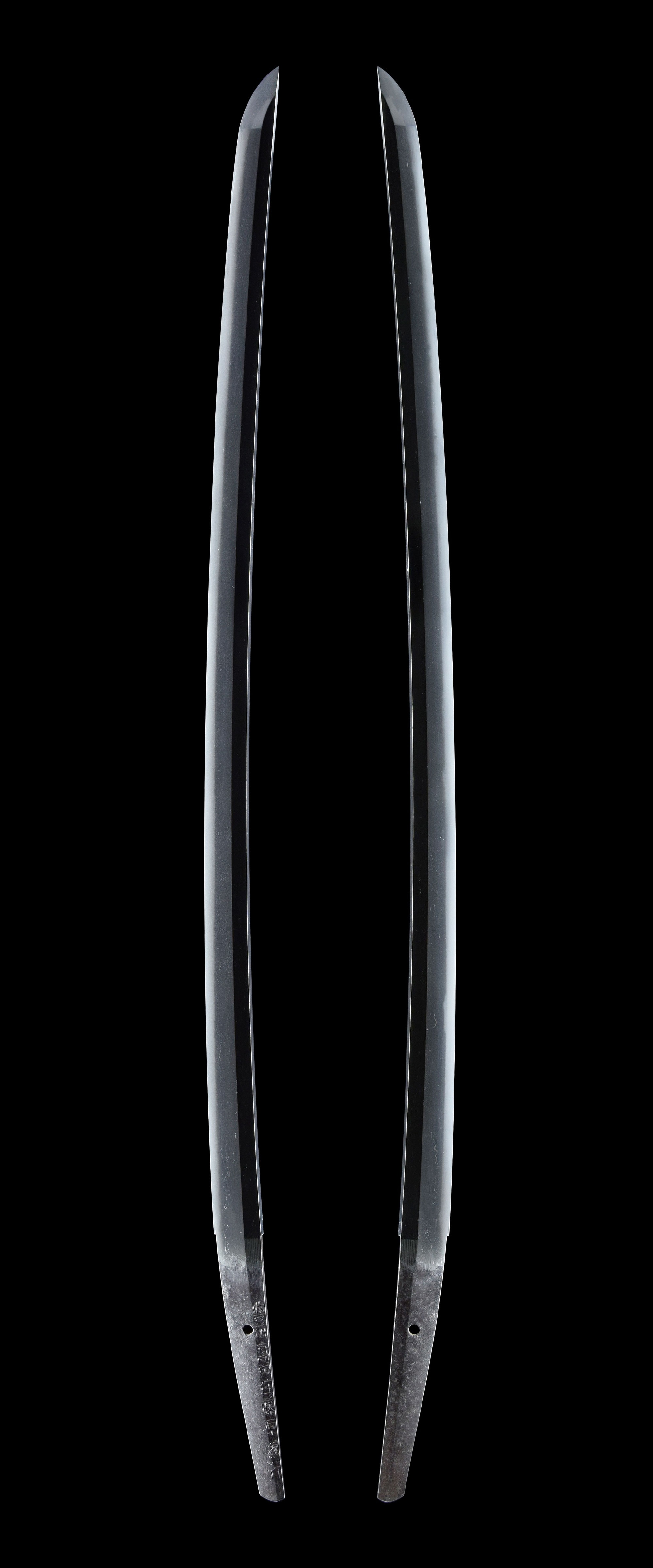
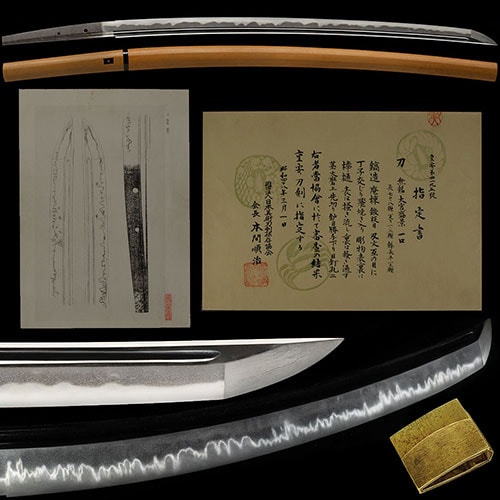
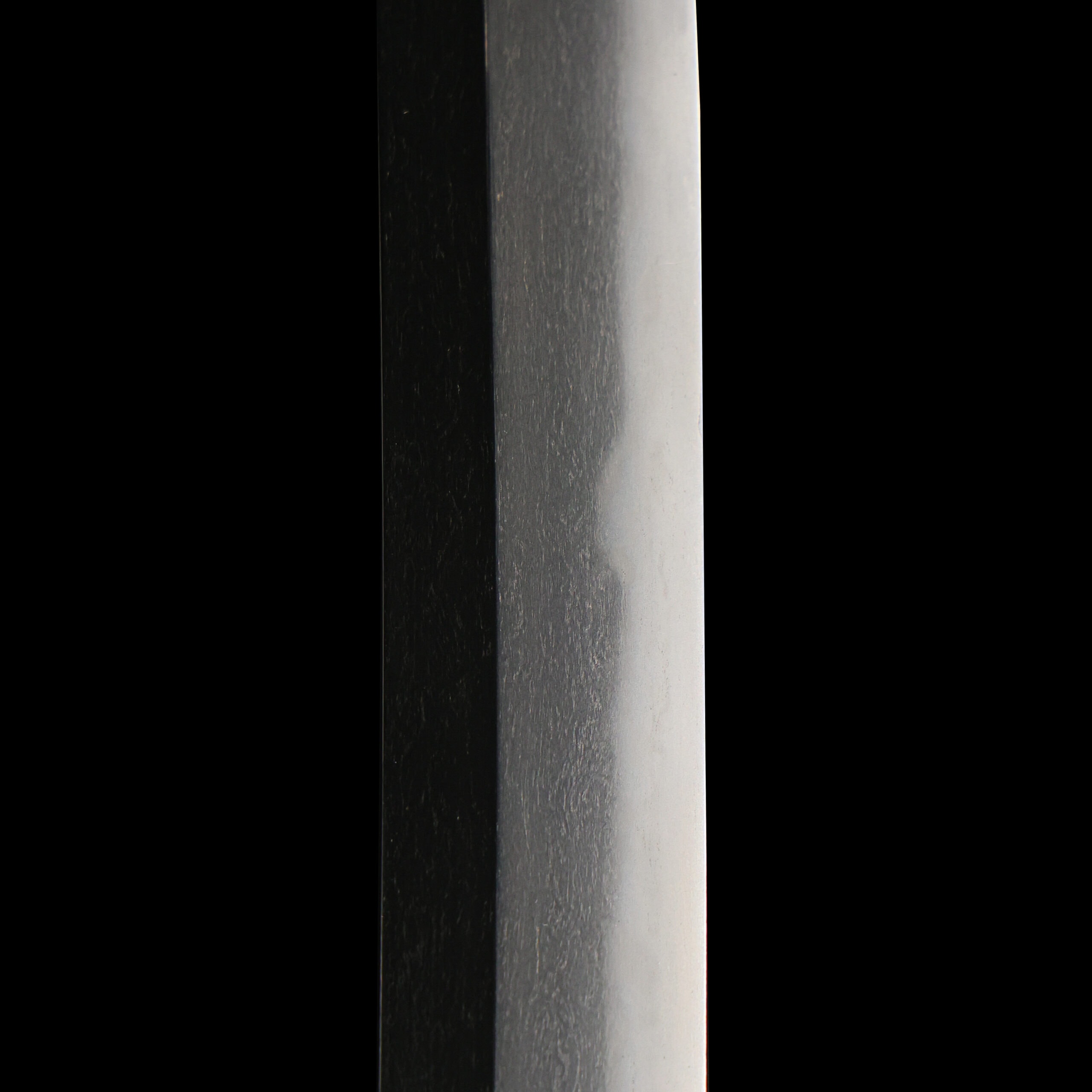
This is a katana by Shigeaki, a smith from Osumi province, dated to 1545. It features a well-packed ko-itame hada with thick ji-nie and fine chikei, showing a faint utsuri. The hamon is a gunome-midare with choji and some togari-ba, with a tight nioi-guchi and abundant ko-nie. It is a masterpiece of the Namihei school and is designated as a 31st Juyo Token.

NBTHK Setsumei

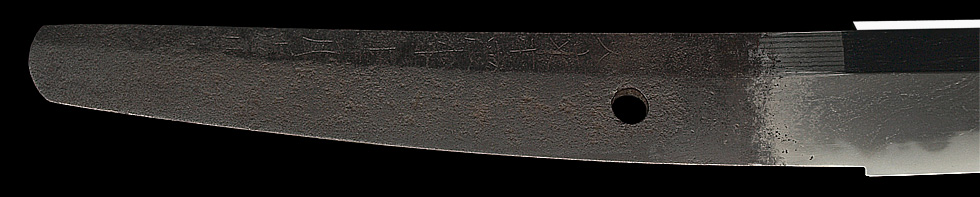
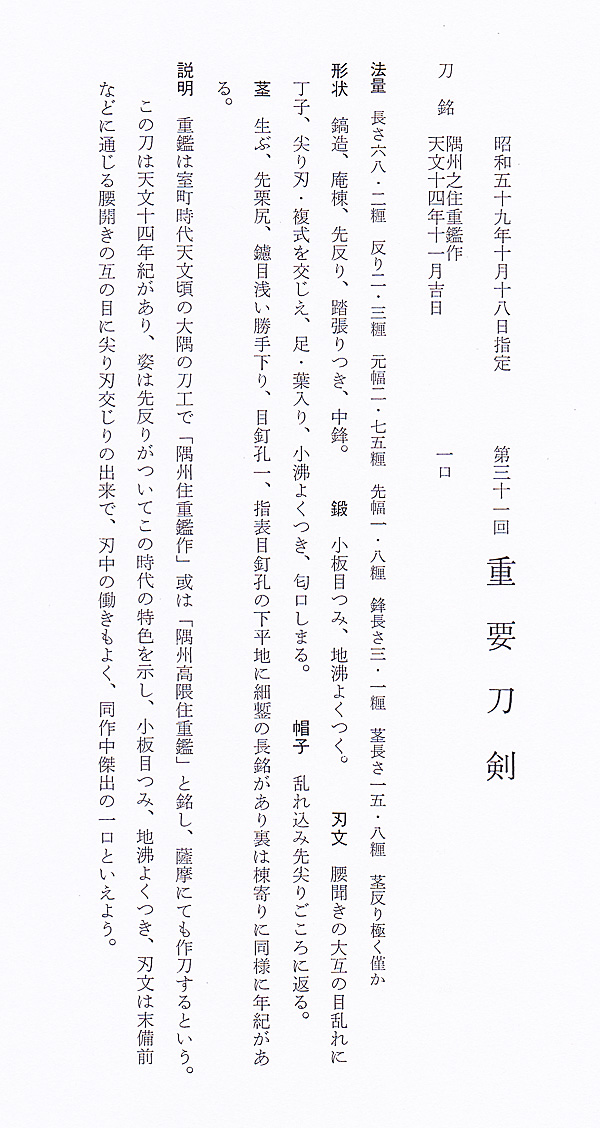
Jūyō-Tōken, 31st Session — Designated October 18, 1984 Katana, mei: Sūshū no jū Shigekane saku (隅州之住重鑑作) Measurements Nagasa 68.2 cm, sori 2.3 cm, motohaba 2.75 cm, sakihaba 1.8 cm, kissaki-nagasa 3.1 cm, nakago-nagasa 15.8 cm, nakago-sori extremely slight Description Keijō: shinogi-zukuri, iori-mune; sakizori with funbari; chū-kissaki. Kitae: ko-itame closely forged; ji-nie adheres well. Hamon: A large gunome-midare with a noticeably “opened” (koshi-biraki) lower portion; mixed with chōji, togariba, and compound elements; with ashi and yō; ko-nie adheres well and the nioiguchi is tight. Bōshi: midare-komi; turning back with a pointed tendency. Horimono: None. Nakago: ubu; tip kurijiri; shallow katte-sagari yasurime; one mekugi-ana; on the omote, below the mekugi-ana on the hiraji, there is a long signature cut with fine chisel-work; on the ura, near the mune, the date is inscribed in the same manner. Artisan Shigekane (重鑑) Era Muromachi period; dated Tenbun 14 (1545), 11th month, an auspicious day Explanation Shigekane was a swordsmith of Ōsumi Province active around the Tenbun era of the Muromachi period. He signed works as “Sūshū jū Shigekane saku,” and also as “Sūshū Takakuma jū Shigekane,” and it is said that he likewise forged swords in Satsuma. This katana bears a date of Tenbun 14. In its sugata it shows the period character through its sakizori. The forging is a compact ko-itame with well-adhering ji-nie. The hamon is a “waist-opened” (koshi-biraki) gunome mixed with pointed elements, a manner that connects with late Bizen works such as Sue-Bizen; the internal activities within the tempered edge are also rich. It may be regarded as an especially outstanding example among Shigekane’s works.

Certificate Reading

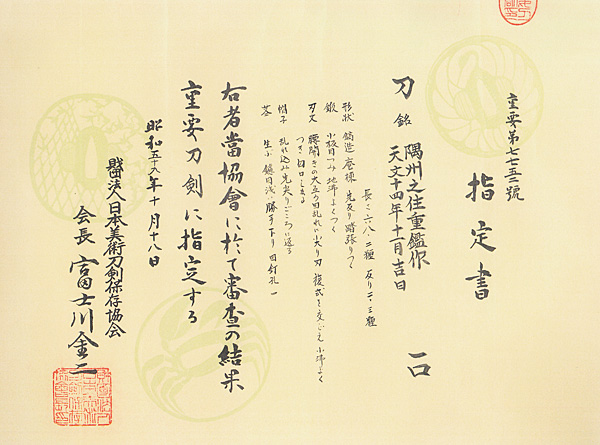
Certificate reading — 銘 隅州之住重鑑作 天文十四年十一月吉日

NihontoWatch MonNihontoWatch
MarketEncyclopediaKantei
Swords›Bizen-den›Takada›Shigeaki›Katana: Shigeaki from Osumi Province, dated Tenbun 14th year, 11th month, auspicious day (31st Juyo Token)
katanaJūyō
Takada Shigeaki

Katana: Shigeaki from Osumi Province, dated Tenbun 14th year, 11th month, auspicious day (31st Juyo Token)

mei · Namihei · Tenmon (1532-1555) · nagasa 68.2cm · sori 1.3cm

¥5,300,000
Visit seller website →
Takada Shigeaki (重鑑) · Namihei · Tenmon (1532-1555)1 work for sale →
KatanaJūyō
Could you name the smith from the blade alone? Today’s kantei →
Takada Shigeaki — 1 of 13
Takada Shigeaki — 2 of 13
Takada Shigeaki — 3 of 13
Takada Shigeaki — 4 of 13
Takada Shigeaki — 5 of 13
Takada Shigeaki — 6 of 13
Takada Shigeaki — 7 of 13
Takada Shigeaki — 8 of 13
Takada Shigeaki — 9 of 13
Takada Shigeaki — 10 of 13
Takada Shigeaki — 11 of 13
Takada Shigeaki — 12 of 13
Takada Shigeaki — 13 of 13
1 / 13
1 / 13
Takada Shigeaki — 1 of 13Takada Shigeaki — 2 of 13Takada Shigeaki — 3 of 13Takada Shigeaki — 4 of 13Takada Shigeaki — 5 of 13Takada Shigeaki — 6 of 13Takada Shigeaki — 7 of 13Takada Shigeaki — 8 of 13Takada Shigeaki — 9 of 13Takada Shigeaki — 10 of 13Takada Shigeaki — 11 of 13Takada Shigeaki — 12 of 13Takada Shigeaki — 13 of 13
Takada Shigeaki (重鑑) · Namihei · Tenmon (1532-1555)1 work for sale →
KatanaJūyō
Could you name the smith from the blade alone? Today’s kantei →
Measurements & details
Smith
Takada Shigeaki
Type
Katana
School
Takada
Period
Around 1532–1555(Tenmon)
Province
Osumi
Signature
Signed
Measurements
Nagasa 68.2cmSori 1.3cm
Description

This is a katana by Shigeaki, a smith from Osumi province, dated to 1545. It features a well-packed ko-itame hada with thick ji-nie and fine chikei, showing a faint utsuri. The hamon is a gunome-midare with choji and some togari-ba, with a tight nioi-guchi and abundant ko-nie. It is a masterpiece of the Namihei school and is designated as a 31st Juyo Token.

NBTHK Zufu Commentary

Juyo #31

AI translation — may contain errors

-, 31st Session — Designated October 18, 1984

, : Sūshū no jū Shigekane (隅州之住重鑑作)

Measurements 68.2 cm, 2.3 cm, 2.75 cm, 1.8 cm, 3.1 cm, 15.8 cm, extremely slight

Description Keijō: , ; with ; . : closely forged; adheres well. : A large with a noticeably “opened” () lower portion; mixed with , , and compound elements; with and ; adheres well and the is tight. : ; turning back with a pointed tendency. : None. : ; tip ; shallow ; one ; on the , below the on the , there is a long signature cut with fine chisel-work; on the , near the , the date is inscribed in the manner.

Artisan Shigekane (重鑑)

Era period; dated Tenbun 14 (1545), 11th month, an auspicious day

Explanation Shigekane was a swordsmith of Ōsumi Province active around the Tenbun era of the period. He signed works as “Sūshū jū Shigekane ,” and also as “Sūshū Takakuma jū Shigekane,” and it is said that he likewise forged swords in Satsuma.

This bears a date of Tenbun 14. In its it shows the period character through its . The forging is a compact with well-adhering . The is a “waist-opened” () mixed with pointed elements, a manner that connects with late works such as ; the internal activities within the tempered edge are also rich. It may be regarded as an especially outstanding example among Shigekane’s works.

About the maker

Shigeaki

重鑑

Bizen-den · Bungo · around 1532-1555

Tōken Taikan top 77%

1 piece on the market now

›
1 work by Shigeaki on the market→
Shigeaki — full profileBizen-den school

Study this maker →

About the school

Takada

高田

Bizen-den · Bungo

43 pieces on the market now

›

In Bungo Province on Kyushu, the early Kamakura masters Sadahide and Yukihira appeared and then, for a span, distinguished makers ceased; the setsumei repeatedly mark this gap before the line that became the Takada school took hold. The school was founded in the Nanbokuchō period by Tomoyuki, who arose at Takada Manor (Takada-shō) and signed in the long form "Hōshū Takada-shō Fujiwara Tomoyuki," with dated work surviving from the Shōhei (1349) and Jōji eras into the 1360s. Beside him the registers place Tokiyuki, said to be his son or disciple, and Masayuki, thought to belong to a separate line, whose Kentoku 2 (1371) tantō carries Southern Court dating and a Kurikara relief following the example of Yukihira. From these Nanbokuchō roots the lineage ran continuously through Muromachi and on into the shintō era. The naming itself tracks the periods: Nanbokuchō smiths prefixed Fujiwara; from Muromachi they signed Taira and shared the characters 盛・守・鎮・統, so the group is broadly called Taira-Takada (Heike or Hira-Takada); late in the line they returned to Fujiwara, and that stream, carried into the Edo period, is distinguished as Fujiwara-Takada. Named Muromachi hands in the setsumei include Taira Naomori (a ken dated Ōnin 3, 1469), Taira Nagamori, Takada Tatemori (Meiō 10, 1501), Taira Shizunori, and Fujiwara Shinkiyo. Across the blades a consistent vocabulary recurs. The jihada is itame mixed with mokume, frequently tending toward standing grain (hada-dachi) and, in the early work, drifting toward masame or nagare; ji-nie and chikei appear, the steel often carries a darkish kanagu tone with patches of jifu, and a whitish shirake-utsuri (sometimes a faint midare-utsuri) stands out conspicuously.

The temper runs from suguha and chū-suguha mixed with ko-gunome up to gunome-midare, with nie adhering and ashi and yō entering; kinsuji and sunagashi run through, and in fuller-tempered work tobiyaki, muneyaki and hitatsura develop (as in Nagamori's Eishō wakizashi). Founder-period Tomoyuki work is recognized by angular gunome spaced at wide intervals, an overall subdued (shizumi) impression, strong shirake with jifu, and a manner the setsumei liken to Sue-Sa and the Samonji group; the school as a whole shows Bizen-leaning utsuri, Yamato-tinged masame and nagare, and at its summit, in Shizunori, work judged to take Rai Kuniyuki as its model. Branch and period read off the signature prefix and the shape: deep curvature with an arched, upturned profile through mid-Muromachi, then broader blades with shallower sori and an extended chū-kissaki in the later phase. " Among the smiths the setsumei single out Nagamori as the most accomplished of the Heike-Takada, a suguha specialist with notably good jigane and skilled horimono, his name carried across several generations and dated freely in the Eishō and Daiei eras; one of his blades was bestowed by Shimazu Tsugutoyo of Kagoshima on the retainer Honda Chikaaki, and Tatemori is rated near him. The line reached into early shintō through Kunifusa, a disciple of Shizumasa of Takada who moved to Uwajima in Iyo, served Date Hidemune, and worked in a Horikawa manner. Provenance runs through the descriptions: Masayuki's tantō was transmitted in the Shōnai Sakai family with a Hon'ami Kōchū origami of Kyōhō 6 and recorded in the Kōzan oshigata and Umetada Meikan, and Nagamori's tachi survives with a maki-e and raden scabbard. The cutting-oriented robustness of the work, weighty in hand with thick kasane and a sturdy build, reflects the taste of an age of warfare, and these blades served as practical arms across Kyushu. The setsumei are candid that Takada has drawn a generally low evaluation in the field, and several of the registered pieces are framed expressly as answering that judgment, restoring the standing of a long lineage on the strength of its best surviving work. Learn more →


11 recorded smiths31 designated works
Leading smiths
SmithEraDesignated
Tomoyuki友行1350-136715
Kunifusa國房1615-16245
Norishige則重1558-15700
Sadayuki貞行1658-16610
Masamori正盛1573-15921
Explore the Takada school →

Historical context

Bizen in the Muromachi period

›

In the Muromachi period Osafune ran a two-tier trade: kazuuchimono bundle swords for the ranks, and chūmon-uchi custom orders bearing the patron’s personal name in the inscription. The best late Sukesada work stands with anything the school ever made.

Bizen in the Muromachi period →

NBTHK Certificate
Jūyō Tōken重要刀剣
Important Sword
›

A blade of top-grade workmanship and condition, formally judged to rank with a nationally recognized Important Art Object (Jūyō Bijutsuhin). Awarded only at the NBTHK’s competitive annual examination.

Of Japan’s roughly 2.5 million registered swords, only 12,307 (about 1 in 203) have ever attained Jūyō.

Signed: 隅州之住重鑑作 天文十四年十一月吉日 (Takada Shigeaki)
As written on the certificate
About the NBTHK›

The NBTHK (Nihon Bijutsu Tōken Hozon Kyōkai, the Society for the Preservation of Japanese Art Swords) is a public-interest incorporated foundation founded in 1948 and supervised by Japan’s Agency for Cultural Affairs (Bunkachō); it is based at the Japanese Sword Museum in Tokyo. Its expert panels physically examine each submitted work (shinsa) and issue a certificate (kanteishō) ranking it by artistic and historical merit. NBTHK papers are the most widely recognized standard of authentication for Japanese swords and fittings.

NBTHK official site→
Seller
T
Token-Net
Established 1981 · 45 yrs on the market
🇯🇵Ships from Japan
›
✓Verified dealertoken-net.com
Settles in JPY
✓Ships worldwideWire transferCredit card
Return policy

Within one week of the item's arrival (cooling-off is possible within Japan only). For defects that differ from the purchase conditions, we will accept the return and refund the payment. For other cases such as overseas, we will consult separately.

View all of Token-Net’s listings→View this item on the dealer’s site→

More from the Takada school

View all →
Giheiya
Hozon
Katana - Hozon - by Takada School - Mumei (Hira Takada) - 72.1cm, with Koshirae and ShirasayaKatana - Hozon - by Takada School - Mumei (Hira Takada) - 72.1cm, with Koshirae and Shirasaya

Katana

ByTakada School
¥350,000
Toyuukai
Hozon
Katana - Hozon - by Takada Muneyuki - Mumei (Takada Muneyuki) - NBTHK Hozon CertificateKatana - Hozon - by Takada Muneyuki - Mumei (Takada Muneyuki) - NBTHK Hozon Certificate

Katana

ByTakada Muneyuki
¥700,000
Toushin
Hozon
Katana - Hozon - by Takada School - Mumei (Tairatakada)Katana - Hozon - by Takada School - Mumei (Tairatakada)

Katana

ByTakada School
¥462,000
Touken Komachi
Tokuho
Katana - Tokuho - by Takada Kuniyuki - Bungo KuniyukiKatana - Tokuho - by Takada Kuniyuki - Bungo Kuniyuki

Katana

ByTakada Kuniyuki
¥550,000
Toyuukai
Hozon
Katana - Hozon - by Takada School - Unsigned Fujiwara Takada with NBTHK Hozon CertificateKatana - Hozon - by Takada School - Unsigned Fujiwara Takada with NBTHK Hozon Certificate

Katana

ByTakada School
¥500,000
Token Oranda
Hozon
Katana - Hozon - by Takada Muneyuki - Mumei Takada Muneyuki in Shirasaya NBTHK HozonKatana - Hozon - by Takada Muneyuki - Mumei Takada Muneyuki in Shirasaya NBTHK Hozon

Katana

ByTakada Muneyuki
NihontoWatch Price¥2,200¥2,300
Toushin
Hozon
Katana - Hozon - by Takada School - Takada - MumeiKatana - Hozon - by Takada School - Takada - Mumei

Katana

ByTakada School
¥385,000
Toushin
Tokuho
Katana - Tokuho - by Takada Muneyuki - Hoshu Takada ju Fujiwara MuneyukiKatana - Tokuho - by Takada Muneyuki - Hoshu Takada ju Fujiwara Muneyuki

Katana

ByTakada Muneyuki
¥899,800

More from the Bizen tradition

View all →
Nihonto.com
Jūyō
Tanto - Jūyō - by Osafune Kagemitsu - Juyo Tanto by Bizen KagemitsuTanto - Jūyō - by Osafune Kagemitsu - Juyo Tanto by Bizen Kagemitsu

Tantō

ByOsafune Kagemitsu
¥89,500
Aoi Art
Jūyō Bijutsuhin
Daisho - Jubi - by Osafune Nagamitsu - Dai Sho: Katana (Important Art Object): Mumei (Attributed to Nagamitsu) / Wakizashi: Mumei (Attributed to Sekishu Naotsuna)Daisho - Jubi - by Osafune Nagamitsu - Dai Sho: Katana (Important Art Object): Mumei (Attributed to Nagamitsu) / Wakizashi: Mumei (Attributed to Sekishu Naotsuna)

Daishō

ByOsafune Nagamitsu
Ask
Tsuruginoya
Jūyō
Katana - Jūyō - by Fukuoka Ichimonji School - Mumei Fukuoka IchimonjiKatana - Jūyō - by Fukuoka Ichimonji School - Mumei Fukuoka Ichimonji

Katana

ByFukuoka Ichimonji School
Ask
Hyozaemon
Tokuho
Tokuho - by Fukuoka Ichimonji Yoshifusa - Naginata Naoshi Wakizashi by Fukuoka Ichimonji Yoshifusa, a Master of IchimonjiTokuho - by Fukuoka Ichimonji Yoshifusa - Naginata Naoshi Wakizashi by Fukuoka Ichimonji Yoshifusa, a Master of Ichimonji

Naginata Naoshi Wakizashi by Fukuoka Ichimonji Yoshifusa, a Master of Ichimonji

ByFukuoka Ichimonji Yoshifusa
Ask
Eirakudo
Tokuho
Katana - Tokuho - by Katayama Ichimonji School - Katayama Ichimonji - Tokubetsu Hozon TokenKatana - Tokuho - by Katayama Ichimonji School - Katayama Ichimonji - Tokubetsu Hozon Token

Katana

ByKatayama Ichimonji School
¥4,500,000
Eirakudo
Jūyō
Katana - Jūyō - by Motoshige - Motoshige - Juyo TokenKatana - Jūyō - by Motoshige - Motoshige - Juyo Token

Katana

ByMotoshige
¥6,000,000
Eirakudo
Jūyō
Katana - Jūyō - by Omiya Morikage - Ohmiya Morikage - Juyo TokenKatana - Jūyō - by Omiya Morikage - Ohmiya Morikage - Juyo Token

Katana

ByOmiya Morikage
¥4,000,000
Samurai Museum
Katana - by Osafune Kanemitsu - Antique Japanese Sword Katana Attributed to Den Osafune Kanemitsu NTHK Yushu Saku Kanteisho CertificateKatana - by Osafune Kanemitsu - Antique Japanese Sword Katana Attributed to Den Osafune Kanemitsu NTHK Yushu Saku Kanteisho Certificate

Katana

ByOsafune Kanemitsu
¥27,856

Swords

  • Katana
  • Wakizashi
  • Tantō
  • Tachi
  • Naginata
  • Yari
  • Japanese Swords
  • Samurai Swords

Fittings

  • Tsuba
  • Fuchi-Kashira
  • Kozuka
  • Menuki
  • Sword Guards (Tsuba)

Armor

  • Kabuto
  • Samurai Armor
  • All Samurai Armor

By Certification

  • Tokujū
  • Jūyō
  • Tokuho
  • Hozon

Resources

  • Dealer Directory
  • Artist Directory
  • The Daily Kantei
  • Glossary
  • Browse All
Nihontowatch© 2026
TermsPrivacyCookiesAbout

¥5,300,000

View on Token-Net

Description

This is a katana by Shigeaki, a smith from Osumi province, dated to 1545. It features a well-packed ko-itame hada with thick ji-nie and fine chikei, showing a faint utsuri. The hamon is a gunome-midare with choji and some togari-ba, with a tight nioi-guchi and abundant ko-nie. It is a masterpiece of the Namihei school and is designated as a 31st Juyo Token.

NBTHK Setsumei

Jūyō-Tōken, 31st Session — Designated October 18, 1984 Katana, mei: Sūshū no jū Shigekane saku (隅州之住重鑑作) Measurements Nagasa 68.2 cm, sori 2.3 cm, motohaba 2.75 cm, sakihaba 1.8 cm, kissaki-nagasa 3.1 cm, nakago-nagasa 15.8 cm, nakago-sori extremely slight Description Keijō: shinogi-zukuri, iori-mune; sakizori with funbari; chū-kissaki. Kitae: ko-itame closely forged; ji-nie adheres well. Hamon: A large gunome-midare with a noticeably “opened” (koshi-biraki) lower portion; mixed with chōji, togariba, and compound elements; with ashi and yō; ko-nie adheres well and the nioiguchi is tight. Bōshi: midare-komi; turning back with a pointed tendency. Horimono: None. Nakago: ubu; tip kurijiri; shallow katte-sagari yasurime; one mekugi-ana; on the omote, below the mekugi-ana on the hiraji, there is a long signature cut with fine chisel-work; on the ura, near the mune, the date is inscribed in the same manner. Artisan Shigekane (重鑑) Era Muromachi period; dated Tenbun 14 (1545), 11th month, an auspicious day Explanation Shigekane was a swordsmith of Ōsumi Province active around the Tenbun era of the Muromachi period. He signed works as “Sūshū jū Shigekane saku,” and also as “Sūshū Takakuma jū Shigekane,” and it is said that he likewise forged swords in Satsuma. This katana bears a date of Tenbun 14. In its sugata it shows the period character through its sakizori. The forging is a compact ko-itame with well-adhering ji-nie. The hamon is a “waist-opened” (koshi-biraki) gunome mixed with pointed elements, a manner that connects with late Bizen works such as Sue-Bizen; the internal activities within the tempered edge are also rich. It may be regarded as an especially outstanding example among Shigekane’s works.

Certificate Reading

Certificate reading — 銘 隅州之住重鑑作 天文十四年十一月吉日

NihontoWatch MonNihontoWatch
MarketEncyclopediaKantei
Swords›Bizen-den›Takada›Shigeaki›Katana: Shigeaki from Osumi Province, dated Tenbun 14th year, 11th month, auspicious day (31st Juyo Token)
katanaJūyō
Takada Shigeaki

Katana: Shigeaki from Osumi Province, dated Tenbun 14th year, 11th month, auspicious day (31st Juyo Token)

mei · Namihei · Tenmon (1532-1555) · nagasa 68.2cm · sori 1.3cm

¥5,300,000
Visit seller website →
Takada Shigeaki (重鑑) · Namihei · Tenmon (1532-1555)1 work for sale →
KatanaJūyō
Could you name the smith from the blade alone? Today’s kantei →
Takada Shigeaki — 1 of 13
Takada Shigeaki — 2 of 13
Takada Shigeaki — 3 of 13
Takada Shigeaki — 4 of 13
Takada Shigeaki — 5 of 13
Takada Shigeaki — 6 of 13
Takada Shigeaki — 7 of 13
Takada Shigeaki — 8 of 13
Takada Shigeaki — 9 of 13
Takada Shigeaki — 10 of 13
Takada Shigeaki — 11 of 13
Takada Shigeaki — 12 of 13
Takada Shigeaki — 13 of 13
1 / 13
1 / 13
Takada Shigeaki — 1 of 13Takada Shigeaki — 2 of 13Takada Shigeaki — 3 of 13Takada Shigeaki — 4 of 13Takada Shigeaki — 5 of 13Takada Shigeaki — 6 of 13Takada Shigeaki — 7 of 13Takada Shigeaki — 8 of 13Takada Shigeaki — 9 of 13Takada Shigeaki — 10 of 13Takada Shigeaki — 11 of 13Takada Shigeaki — 12 of 13Takada Shigeaki — 13 of 13
Takada Shigeaki (重鑑) · Namihei · Tenmon (1532-1555)1 work for sale →
KatanaJūyō
Could you name the smith from the blade alone? Today’s kantei →
Measurements & details
Smith
Takada Shigeaki
Type
Katana
School
Takada
Period
Around 1532–1555(Tenmon)
Province
Osumi
Signature
Signed
Measurements
Nagasa 68.2cmSori 1.3cm
Description

This is a katana by Shigeaki, a smith from Osumi province, dated to 1545. It features a well-packed ko-itame hada with thick ji-nie and fine chikei, showing a faint utsuri. The hamon is a gunome-midare with choji and some togari-ba, with a tight nioi-guchi and abundant ko-nie. It is a masterpiece of the Namihei school and is designated as a 31st Juyo Token.

NBTHK Zufu Commentary

Juyo #31

AI translation — may contain errors

-, 31st Session — Designated October 18, 1984

, : Sūshū no jū Shigekane (隅州之住重鑑作)

Measurements 68.2 cm, 2.3 cm, 2.75 cm, 1.8 cm, 3.1 cm, 15.8 cm, extremely slight

Description Keijō: , ; with ; . : closely forged; adheres well. : A large with a noticeably “opened” () lower portion; mixed with , , and compound elements; with and ; adheres well and the is tight. : ; turning back with a pointed tendency. : None. : ; tip ; shallow ; one ; on the , below the on the , there is a long signature cut with fine chisel-work; on the , near the , the date is inscribed in the manner.

Artisan Shigekane (重鑑)

Era period; dated Tenbun 14 (1545), 11th month, an auspicious day

Explanation Shigekane was a swordsmith of Ōsumi Province active around the Tenbun era of the period. He signed works as “Sūshū jū Shigekane ,” and also as “Sūshū Takakuma jū Shigekane,” and it is said that he likewise forged swords in Satsuma.

This bears a date of Tenbun 14. In its it shows the period character through its . The forging is a compact with well-adhering . The is a “waist-opened” () mixed with pointed elements, a manner that connects with late works such as ; the internal activities within the tempered edge are also rich. It may be regarded as an especially outstanding example among Shigekane’s works.

About the maker

Shigeaki

重鑑

Bizen-den · Bungo · around 1532-1555

Tōken Taikan top 77%

1 piece on the market now

›
1 work by Shigeaki on the market→
Shigeaki — full profileBizen-den school

Study this maker →

About the school

Takada

高田

Bizen-den · Bungo

43 pieces on the market now

›

In Bungo Province on Kyushu, the early Kamakura masters Sadahide and Yukihira appeared and then, for a span, distinguished makers ceased; the setsumei repeatedly mark this gap before the line that became the Takada school took hold. The school was founded in the Nanbokuchō period by Tomoyuki, who arose at Takada Manor (Takada-shō) and signed in the long form "Hōshū Takada-shō Fujiwara Tomoyuki," with dated work surviving from the Shōhei (1349) and Jōji eras into the 1360s. Beside him the registers place Tokiyuki, said to be his son or disciple, and Masayuki, thought to belong to a separate line, whose Kentoku 2 (1371) tantō carries Southern Court dating and a Kurikara relief following the example of Yukihira. From these Nanbokuchō roots the lineage ran continuously through Muromachi and on into the shintō era. The naming itself tracks the periods: Nanbokuchō smiths prefixed Fujiwara; from Muromachi they signed Taira and shared the characters 盛・守・鎮・統, so the group is broadly called Taira-Takada (Heike or Hira-Takada); late in the line they returned to Fujiwara, and that stream, carried into the Edo period, is distinguished as Fujiwara-Takada. Named Muromachi hands in the setsumei include Taira Naomori (a ken dated Ōnin 3, 1469), Taira Nagamori, Takada Tatemori (Meiō 10, 1501), Taira Shizunori, and Fujiwara Shinkiyo. Across the blades a consistent vocabulary recurs. The jihada is itame mixed with mokume, frequently tending toward standing grain (hada-dachi) and, in the early work, drifting toward masame or nagare; ji-nie and chikei appear, the steel often carries a darkish kanagu tone with patches of jifu, and a whitish shirake-utsuri (sometimes a faint midare-utsuri) stands out conspicuously.

The temper runs from suguha and chū-suguha mixed with ko-gunome up to gunome-midare, with nie adhering and ashi and yō entering; kinsuji and sunagashi run through, and in fuller-tempered work tobiyaki, muneyaki and hitatsura develop (as in Nagamori's Eishō wakizashi). Founder-period Tomoyuki work is recognized by angular gunome spaced at wide intervals, an overall subdued (shizumi) impression, strong shirake with jifu, and a manner the setsumei liken to Sue-Sa and the Samonji group; the school as a whole shows Bizen-leaning utsuri, Yamato-tinged masame and nagare, and at its summit, in Shizunori, work judged to take Rai Kuniyuki as its model. Branch and period read off the signature prefix and the shape: deep curvature with an arched, upturned profile through mid-Muromachi, then broader blades with shallower sori and an extended chū-kissaki in the later phase. " Among the smiths the setsumei single out Nagamori as the most accomplished of the Heike-Takada, a suguha specialist with notably good jigane and skilled horimono, his name carried across several generations and dated freely in the Eishō and Daiei eras; one of his blades was bestowed by Shimazu Tsugutoyo of Kagoshima on the retainer Honda Chikaaki, and Tatemori is rated near him. The line reached into early shintō through Kunifusa, a disciple of Shizumasa of Takada who moved to Uwajima in Iyo, served Date Hidemune, and worked in a Horikawa manner. Provenance runs through the descriptions: Masayuki's tantō was transmitted in the Shōnai Sakai family with a Hon'ami Kōchū origami of Kyōhō 6 and recorded in the Kōzan oshigata and Umetada Meikan, and Nagamori's tachi survives with a maki-e and raden scabbard. The cutting-oriented robustness of the work, weighty in hand with thick kasane and a sturdy build, reflects the taste of an age of warfare, and these blades served as practical arms across Kyushu. The setsumei are candid that Takada has drawn a generally low evaluation in the field, and several of the registered pieces are framed expressly as answering that judgment, restoring the standing of a long lineage on the strength of its best surviving work. Learn more →

11 recorded smiths31 designated works
Leading smiths
SmithEraDesignated
Tomoyuki友行1350-136715
Kunifusa國房1615-16245
Norishige則重1558-15700
Sadayuki貞行1658-16610
Masamori正盛1573-15921
Explore the Takada school →

Historical context

Bizen in the Muromachi period

›

In the Muromachi period Osafune ran a two-tier trade: kazuuchimono bundle swords for the ranks, and chūmon-uchi custom orders bearing the patron’s personal name in the inscription. The best late Sukesada work stands with anything the school ever made.

Bizen in the Muromachi period →

NBTHK Certificate
Jūyō Tōken重要刀剣
Important Sword
›

A blade of top-grade workmanship and condition, formally judged to rank with a nationally recognized Important Art Object (Jūyō Bijutsuhin). Awarded only at the NBTHK’s competitive annual examination.

Of Japan’s roughly 2.5 million registered swords, only 12,307 (about 1 in 203) have ever attained Jūyō.

Signed: 隅州之住重鑑作 天文十四年十一月吉日 (Takada Shigeaki)
As written on the certificate
About the NBTHK›

The NBTHK (Nihon Bijutsu Tōken Hozon Kyōkai, the Society for the Preservation of Japanese Art Swords) is a public-interest incorporated foundation founded in 1948 and supervised by Japan’s Agency for Cultural Affairs (Bunkachō); it is based at the Japanese Sword Museum in Tokyo. Its expert panels physically examine each submitted work (shinsa) and issue a certificate (kanteishō) ranking it by artistic and historical merit. NBTHK papers are the most widely recognized standard of authentication for Japanese swords and fittings.

NBTHK official site→
Seller
T
Token-Net
Established 1981 · 45 yrs on the market
🇯🇵Ships from Japan
›
✓Verified dealertoken-net.com
Settles in JPY
✓Ships worldwideWire transferCredit card
Return policy

Within one week of the item's arrival (cooling-off is possible within Japan only). For defects that differ from the purchase conditions, we will accept the return and refund the payment. For other cases such as overseas, we will consult separately.

View all of Token-Net’s listings→View this item on the dealer’s site→

More from the Takada school

View all →
Giheiya
Hozon
Katana - Hozon - by Takada School - Mumei (Hira Takada) - 72.1cm, with Koshirae and ShirasayaKatana - Hozon - by Takada School - Mumei (Hira Takada) - 72.1cm, with Koshirae and Shirasaya

Katana

ByTakada School
¥350,000
Toyuukai
Hozon
Katana - Hozon - by Takada Muneyuki - Mumei (Takada Muneyuki) - NBTHK Hozon CertificateKatana - Hozon - by Takada Muneyuki - Mumei (Takada Muneyuki) - NBTHK Hozon Certificate

Katana

ByTakada Muneyuki
¥700,000
Toushin
Hozon
Katana - Hozon - by Takada School - Mumei (Tairatakada)Katana - Hozon - by Takada School - Mumei (Tairatakada)

Katana

ByTakada School
¥462,000
Touken Komachi
Tokuho
Katana - Tokuho - by Takada Kuniyuki - Bungo KuniyukiKatana - Tokuho - by Takada Kuniyuki - Bungo Kuniyuki

Katana

ByTakada Kuniyuki
¥550,000
Toyuukai
Hozon
Katana - Hozon - by Takada School - Unsigned Fujiwara Takada with NBTHK Hozon CertificateKatana - Hozon - by Takada School - Unsigned Fujiwara Takada with NBTHK Hozon Certificate

Katana

ByTakada School
¥500,000
Token Oranda
Hozon
Katana - Hozon - by Takada Muneyuki - Mumei Takada Muneyuki in Shirasaya NBTHK HozonKatana - Hozon - by Takada Muneyuki - Mumei Takada Muneyuki in Shirasaya NBTHK Hozon

Katana

ByTakada Muneyuki
NihontoWatch Price¥2,200¥2,300
Toushin
Hozon
Katana - Hozon - by Takada School - Takada - MumeiKatana - Hozon - by Takada School - Takada - Mumei

Katana

ByTakada School
¥385,000
Toushin
Tokuho
Katana - Tokuho - by Takada Muneyuki - Hoshu Takada ju Fujiwara MuneyukiKatana - Tokuho - by Takada Muneyuki - Hoshu Takada ju Fujiwara Muneyuki

Katana

ByTakada Muneyuki
¥899,800

More from the Bizen tradition

View all →
Nihonto.com
Jūyō
Tanto - Jūyō - by Osafune Kagemitsu - Juyo Tanto by Bizen KagemitsuTanto - Jūyō - by Osafune Kagemitsu - Juyo Tanto by Bizen Kagemitsu

Tantō

ByOsafune Kagemitsu
¥89,500
Aoi Art
Jūyō Bijutsuhin
Daisho - Jubi - by Osafune Nagamitsu - Dai Sho: Katana (Important Art Object): Mumei (Attributed to Nagamitsu) / Wakizashi: Mumei (Attributed to Sekishu Naotsuna)Daisho - Jubi - by Osafune Nagamitsu - Dai Sho: Katana (Important Art Object): Mumei (Attributed to Nagamitsu) / Wakizashi: Mumei (Attributed to Sekishu Naotsuna)

Daishō

ByOsafune Nagamitsu
Ask
Tsuruginoya
Jūyō
Katana - Jūyō - by Fukuoka Ichimonji School - Mumei Fukuoka IchimonjiKatana - Jūyō - by Fukuoka Ichimonji School - Mumei Fukuoka Ichimonji

Katana

ByFukuoka Ichimonji School
Ask
Hyozaemon
Tokuho
Tokuho - by Fukuoka Ichimonji Yoshifusa - Naginata Naoshi Wakizashi by Fukuoka Ichimonji Yoshifusa, a Master of IchimonjiTokuho - by Fukuoka Ichimonji Yoshifusa - Naginata Naoshi Wakizashi by Fukuoka Ichimonji Yoshifusa, a Master of Ichimonji

Naginata Naoshi Wakizashi by Fukuoka Ichimonji Yoshifusa, a Master of Ichimonji

ByFukuoka Ichimonji Yoshifusa
Ask
Eirakudo
Tokuho
Katana - Tokuho - by Katayama Ichimonji School - Katayama Ichimonji - Tokubetsu Hozon TokenKatana - Tokuho - by Katayama Ichimonji School - Katayama Ichimonji - Tokubetsu Hozon Token

Katana

ByKatayama Ichimonji School
¥4,500,000
Eirakudo
Jūyō
Katana - Jūyō - by Motoshige - Motoshige - Juyo TokenKatana - Jūyō - by Motoshige - Motoshige - Juyo Token

Katana

ByMotoshige
¥6,000,000
Eirakudo
Jūyō
Katana - Jūyō - by Omiya Morikage - Ohmiya Morikage - Juyo TokenKatana - Jūyō - by Omiya Morikage - Ohmiya Morikage - Juyo Token

Katana

ByOmiya Morikage
¥4,000,000
Samurai Museum
Katana - by Osafune Kanemitsu - Antique Japanese Sword Katana Attributed to Den Osafune Kanemitsu NTHK Yushu Saku Kanteisho CertificateKatana - by Osafune Kanemitsu - Antique Japanese Sword Katana Attributed to Den Osafune Kanemitsu NTHK Yushu Saku Kanteisho Certificate

Katana

ByOsafune Kanemitsu
¥27,856

Swords

  • Katana
  • Wakizashi
  • Tantō
  • Tachi
  • Naginata
  • Yari
  • Japanese Swords
  • Samurai Swords

Fittings

  • Tsuba
  • Fuchi-Kashira
  • Kozuka
  • Menuki
  • Sword Guards (Tsuba)

Armor

  • Kabuto
  • Samurai Armor
  • All Samurai Armor

By Certification

  • Tokujū
  • Jūyō
  • Tokuho
  • Hozon

Resources

  • Dealer Directory
  • Artist Directory
  • The Daily Kantei
  • Glossary
  • Browse All
Nihontowatch© 2026
TermsPrivacyCookiesAbout

¥5,300,000

View on Token-Net
NihontoWatch MonNihontoWatch
Market
Encyclopedia
Kantei
NihontoWatch MonNihontoWatch
Market
Encyclopedia
Kantei