After the Ōnin War broke the Ashikaga order, a century of Sengoku warfare armed nearly every province in Japan. The era rewards a discriminating eye: routine work exists in quantity, and beside it stand custom blades of the first rank.
 NihontoWatchNihontoWatch
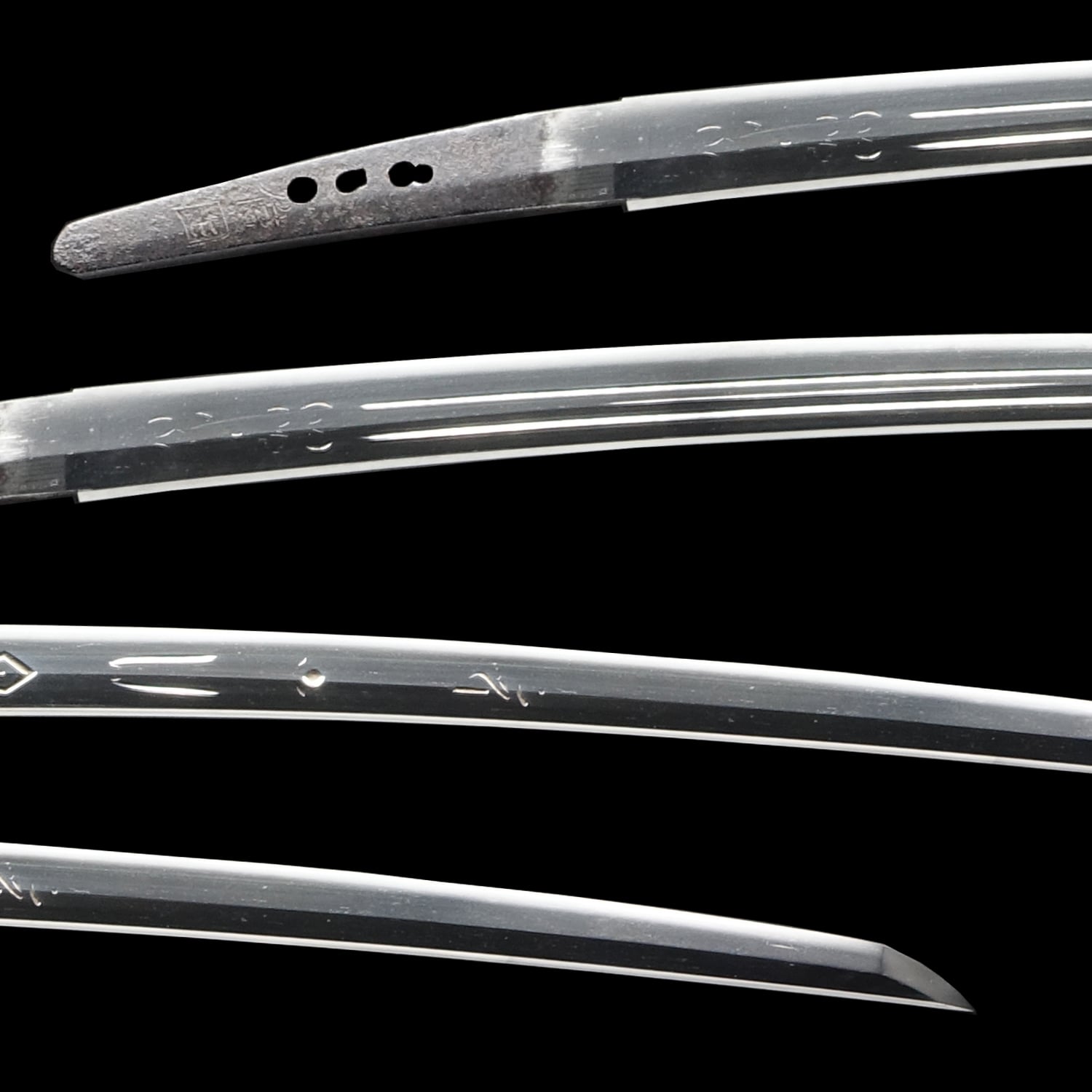
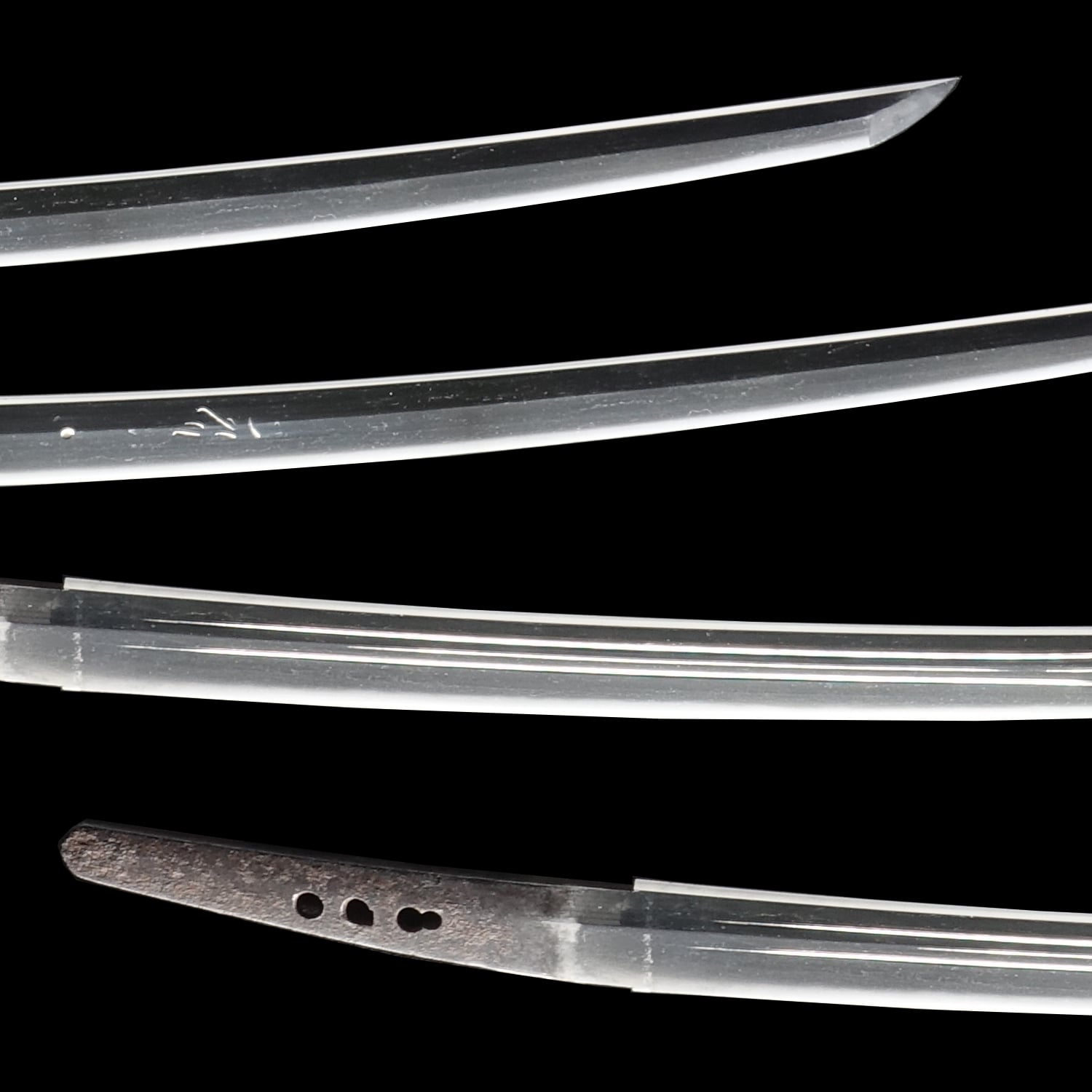
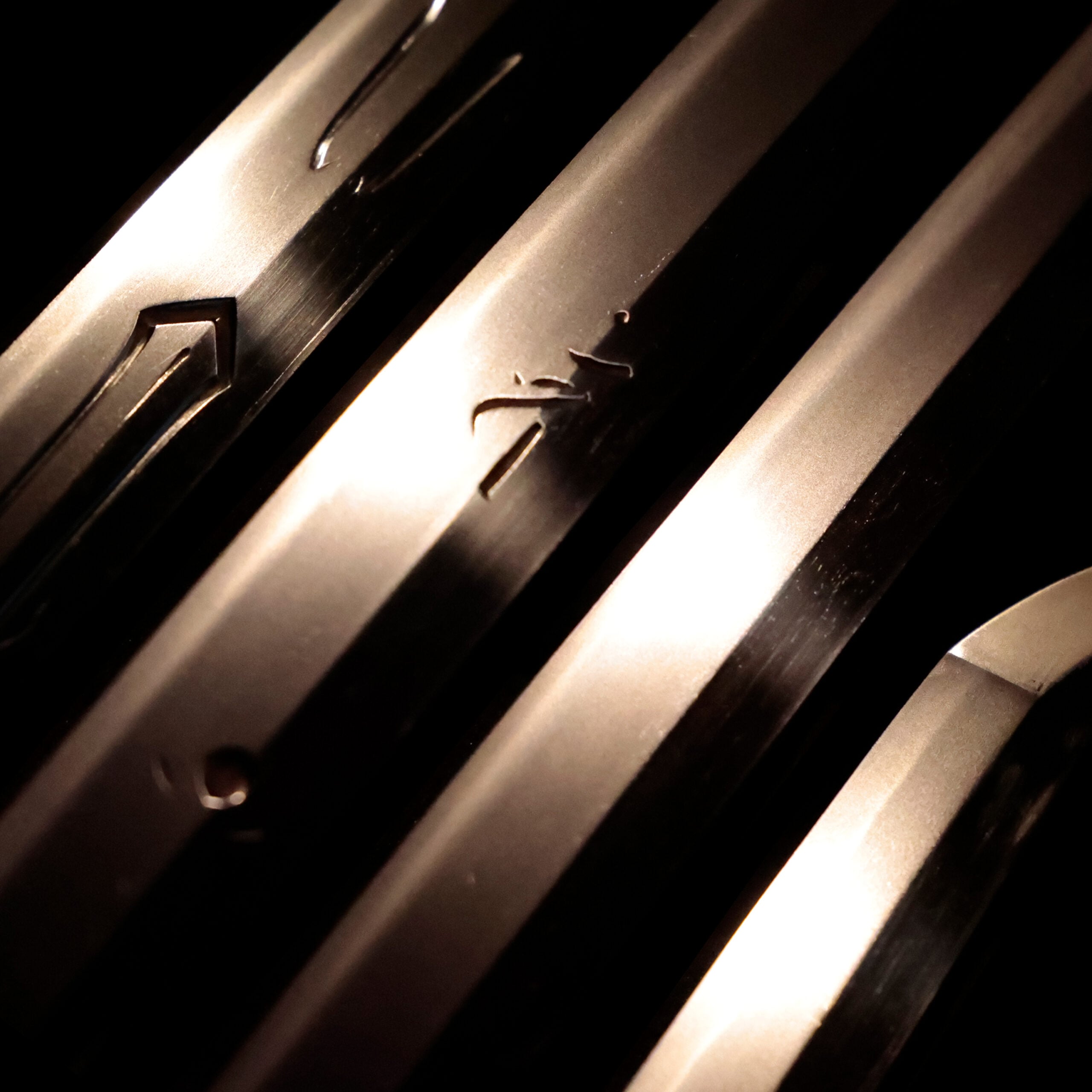
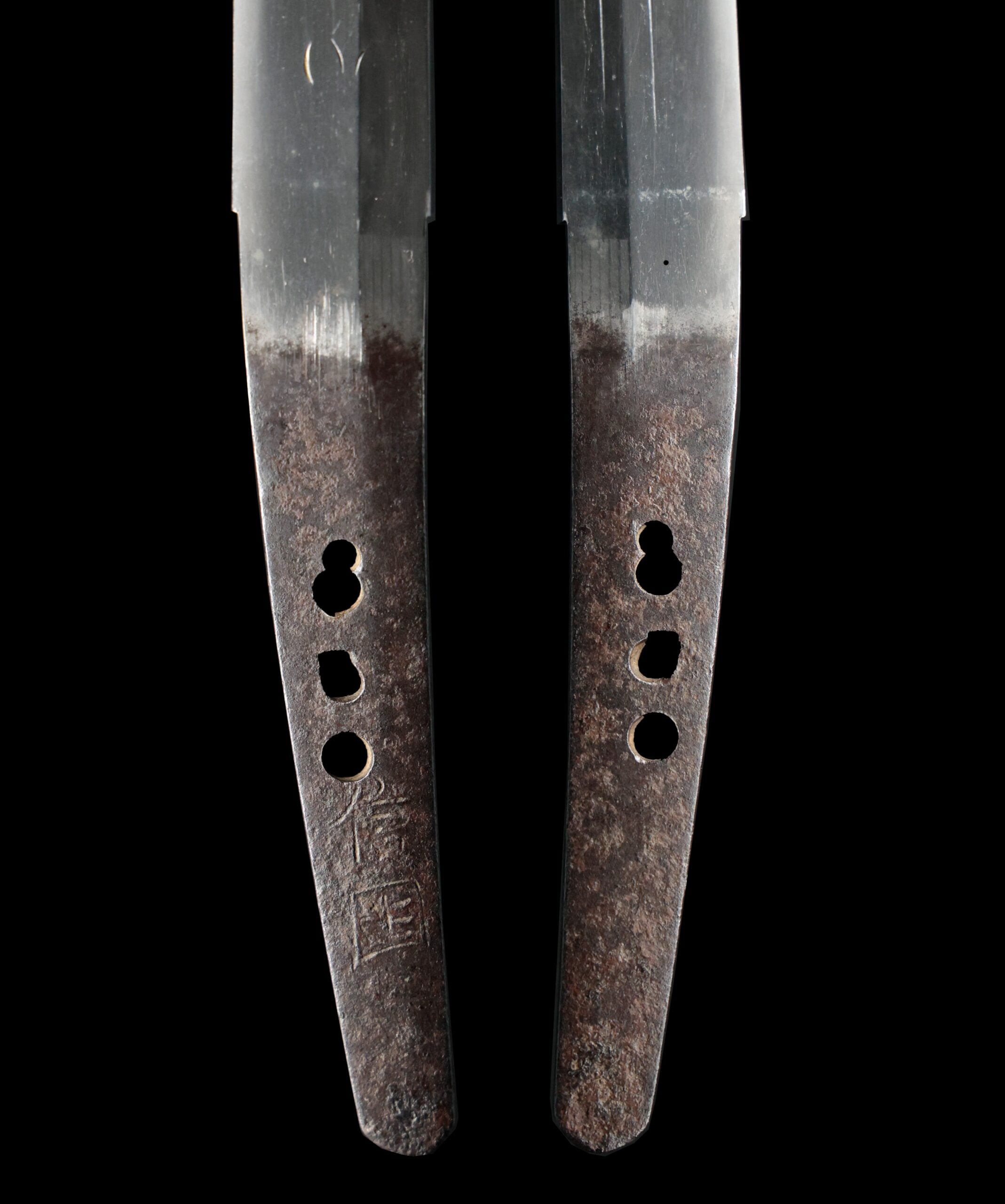
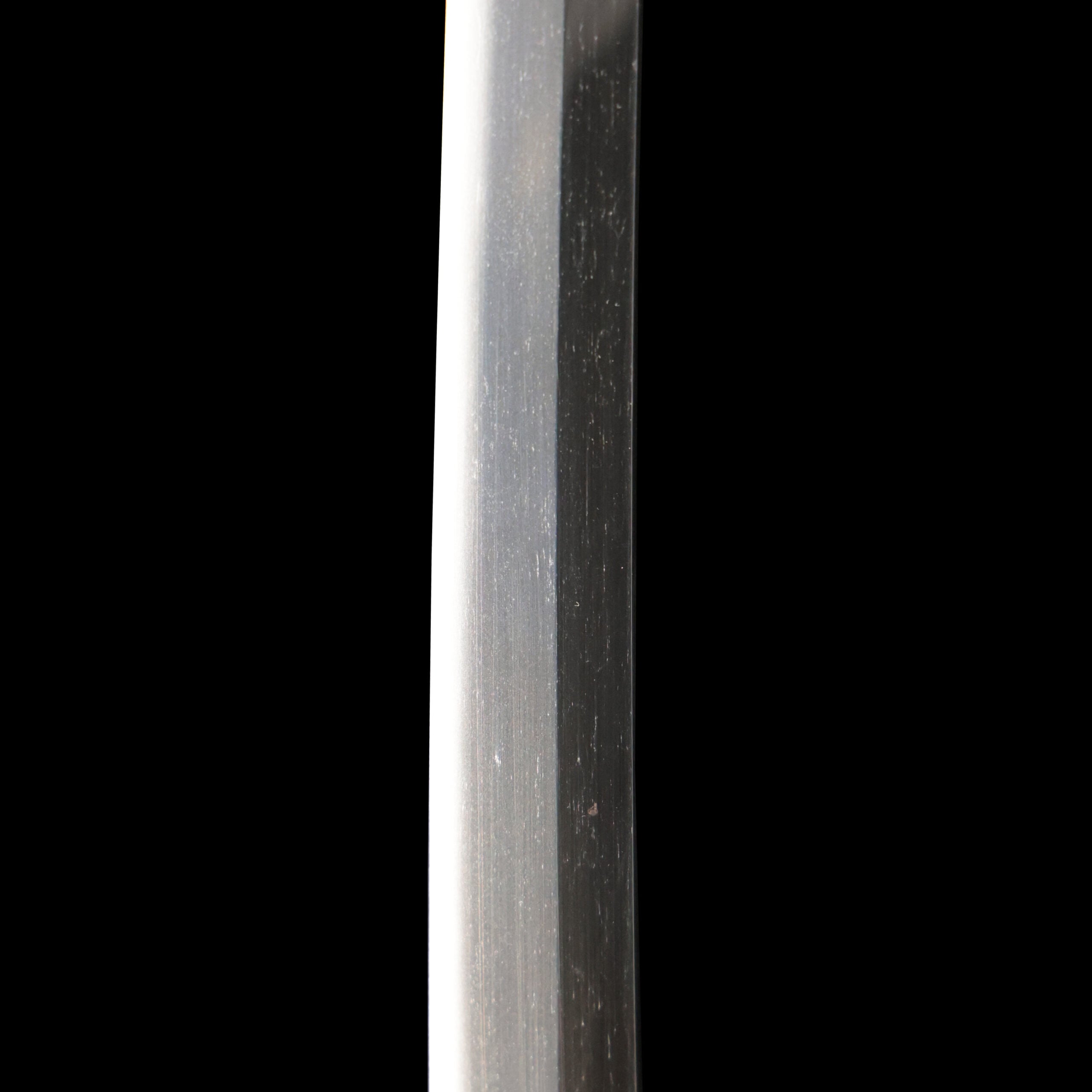
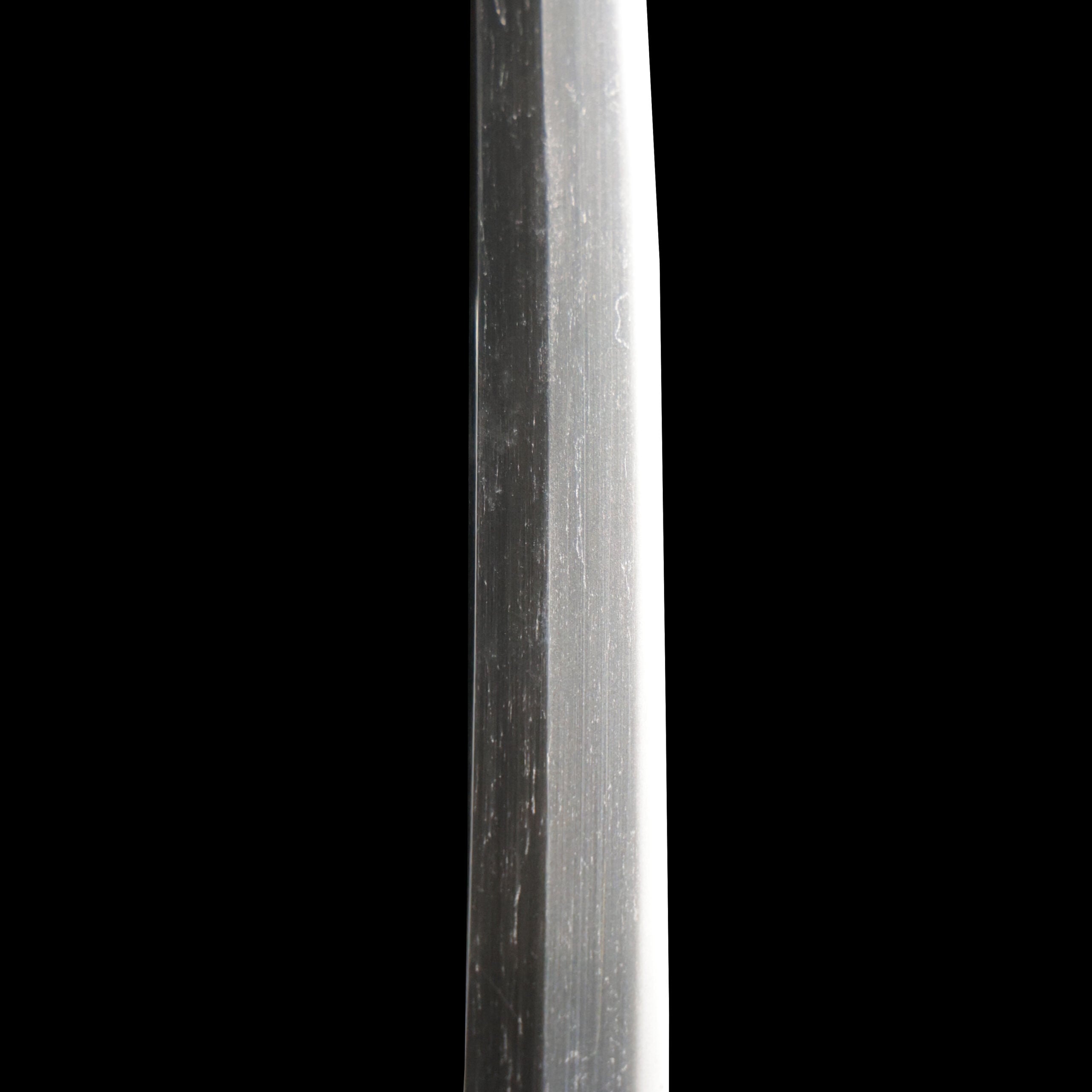
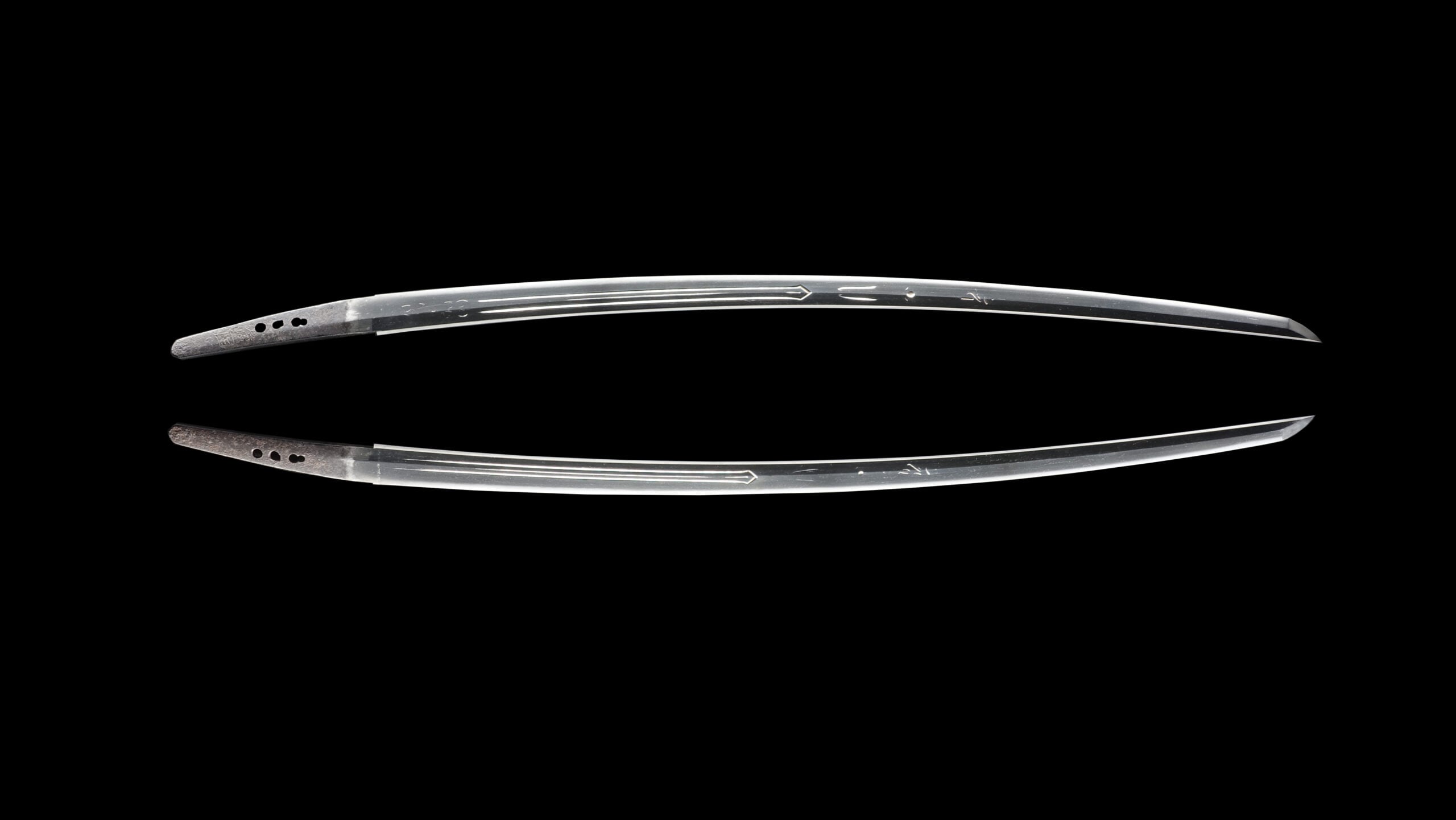
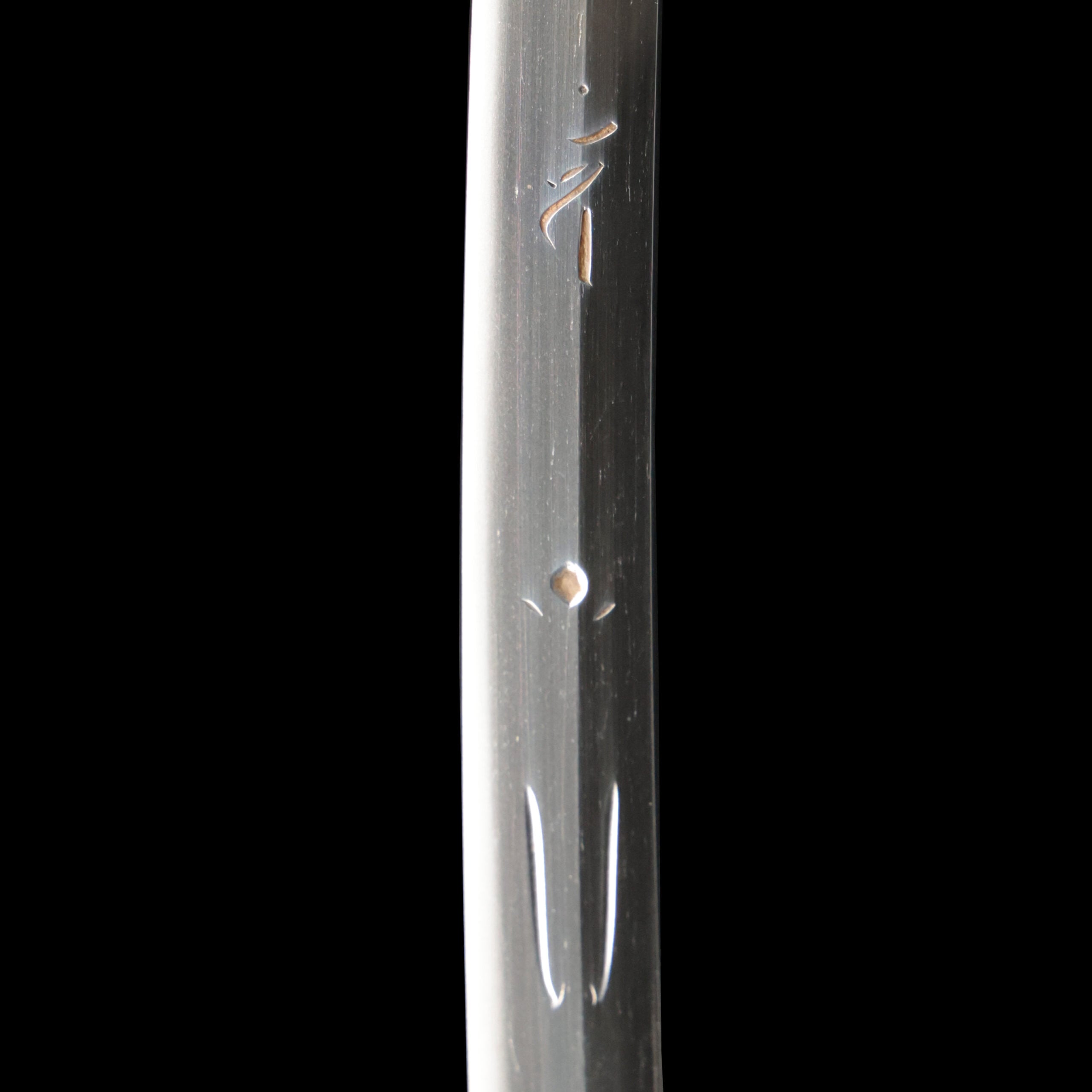
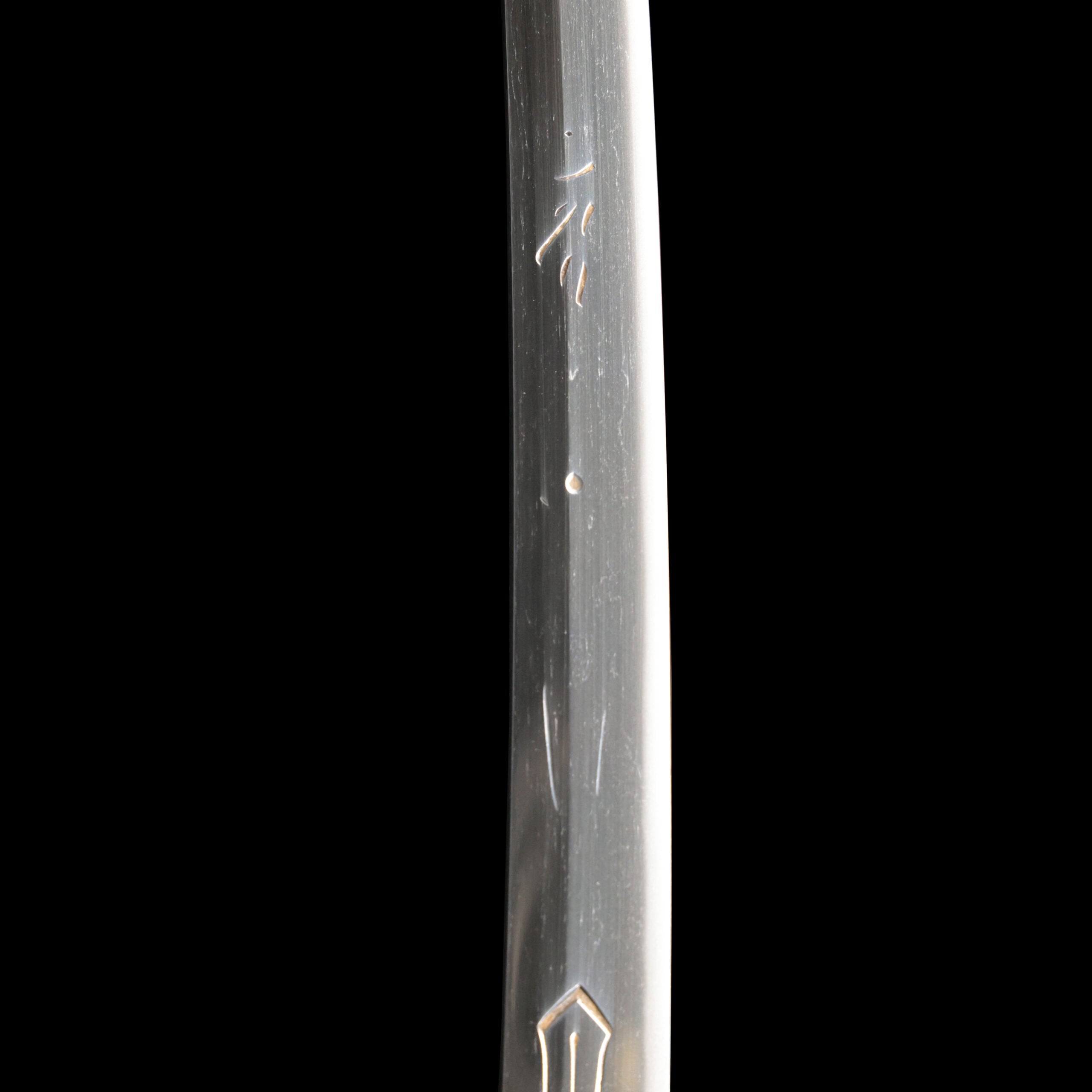
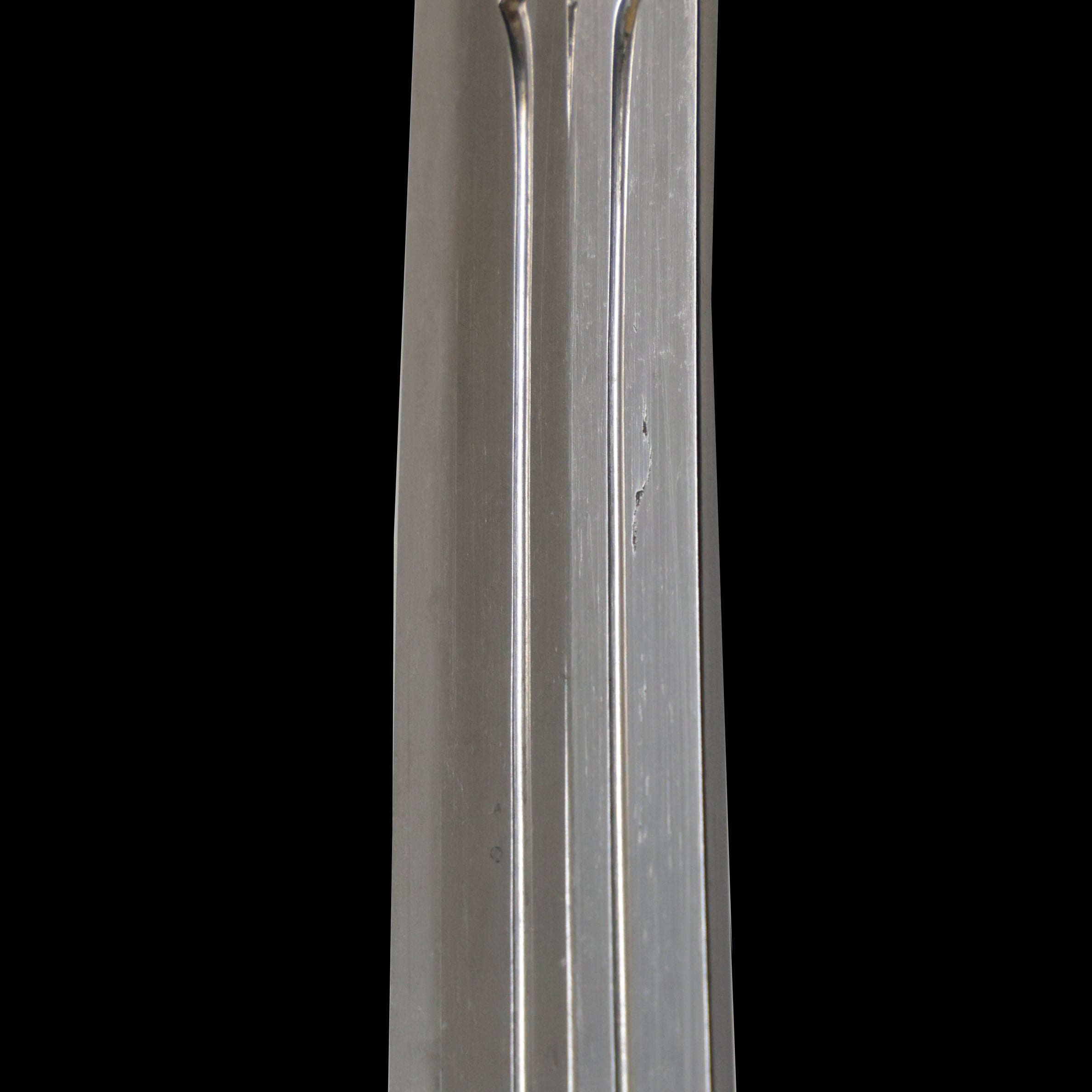
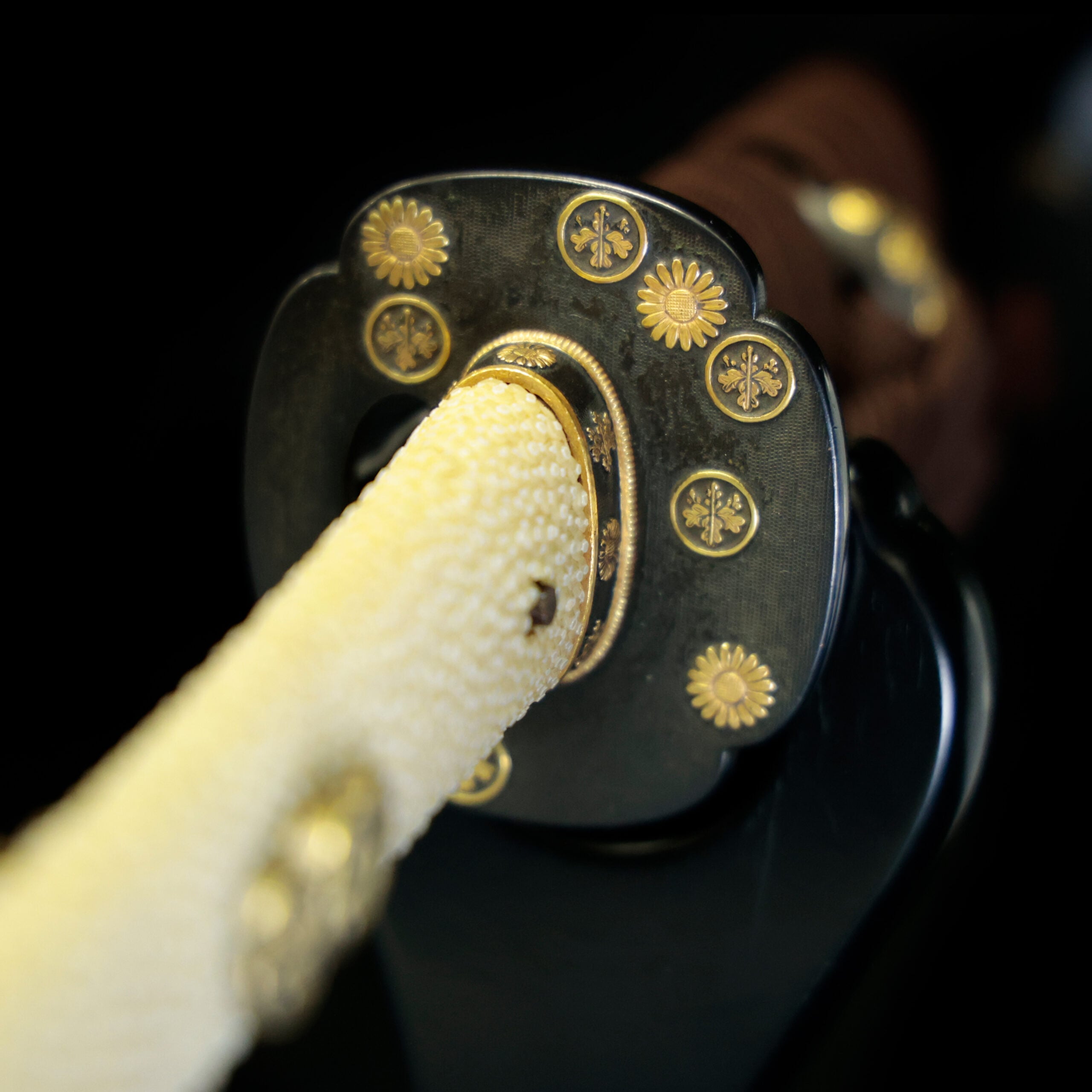
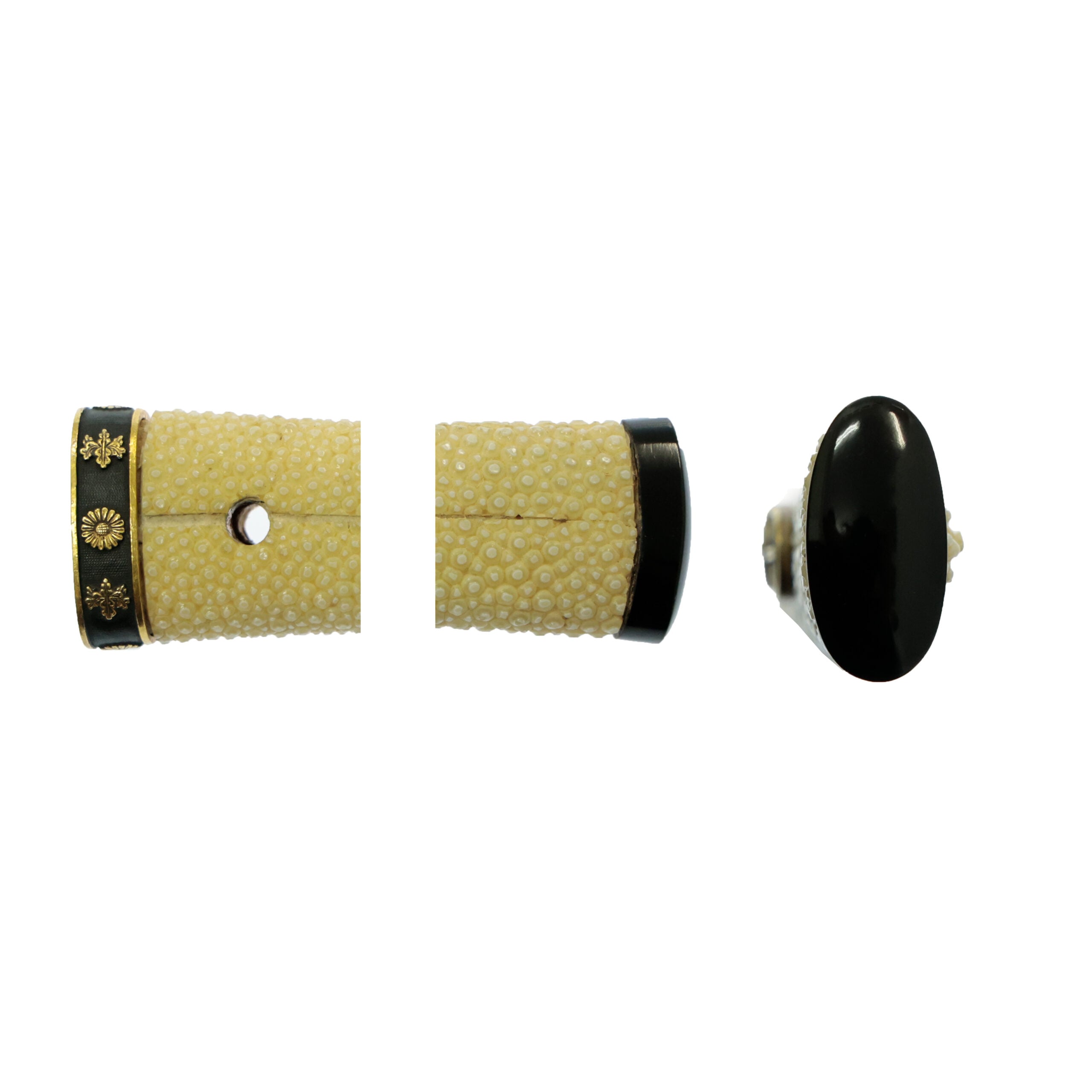
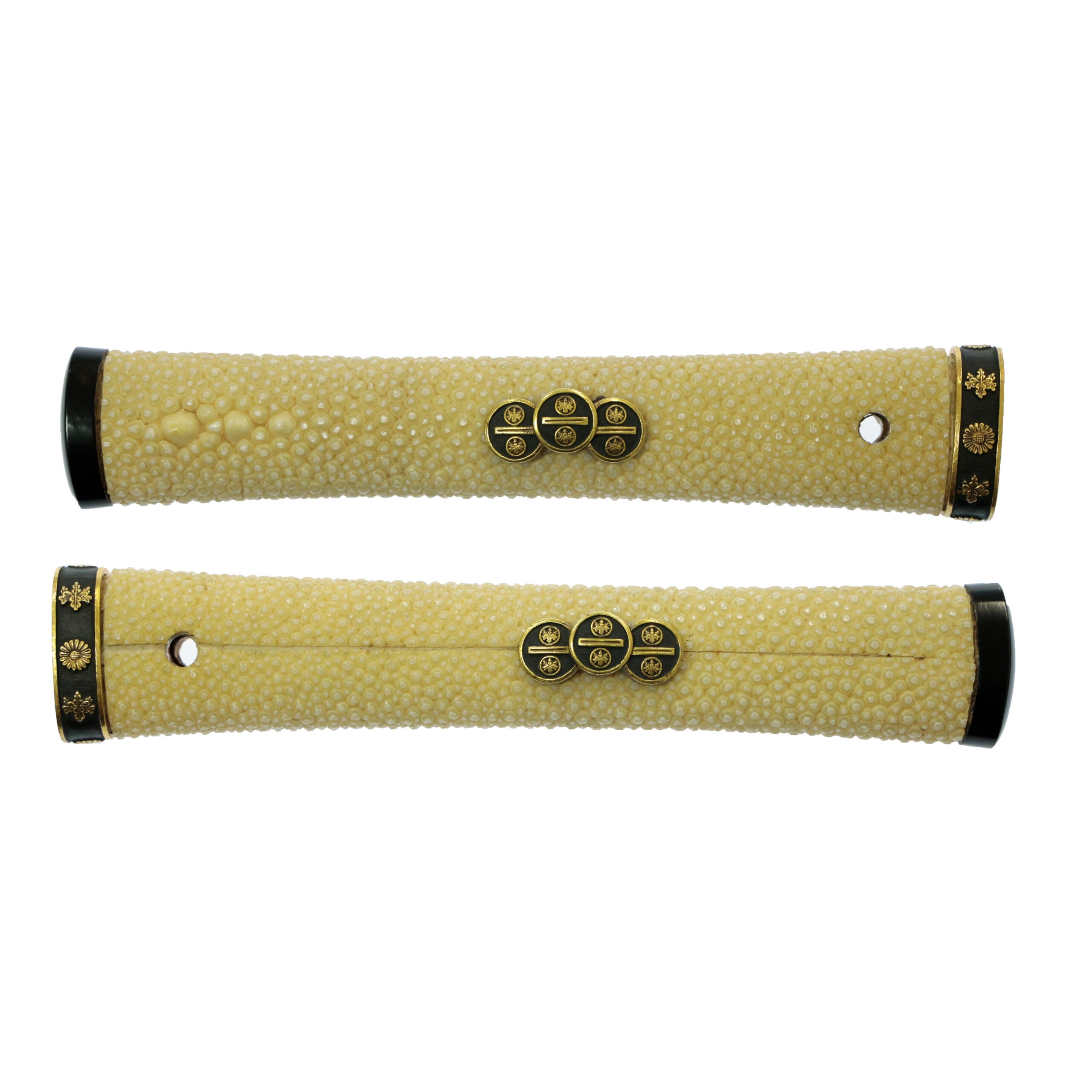
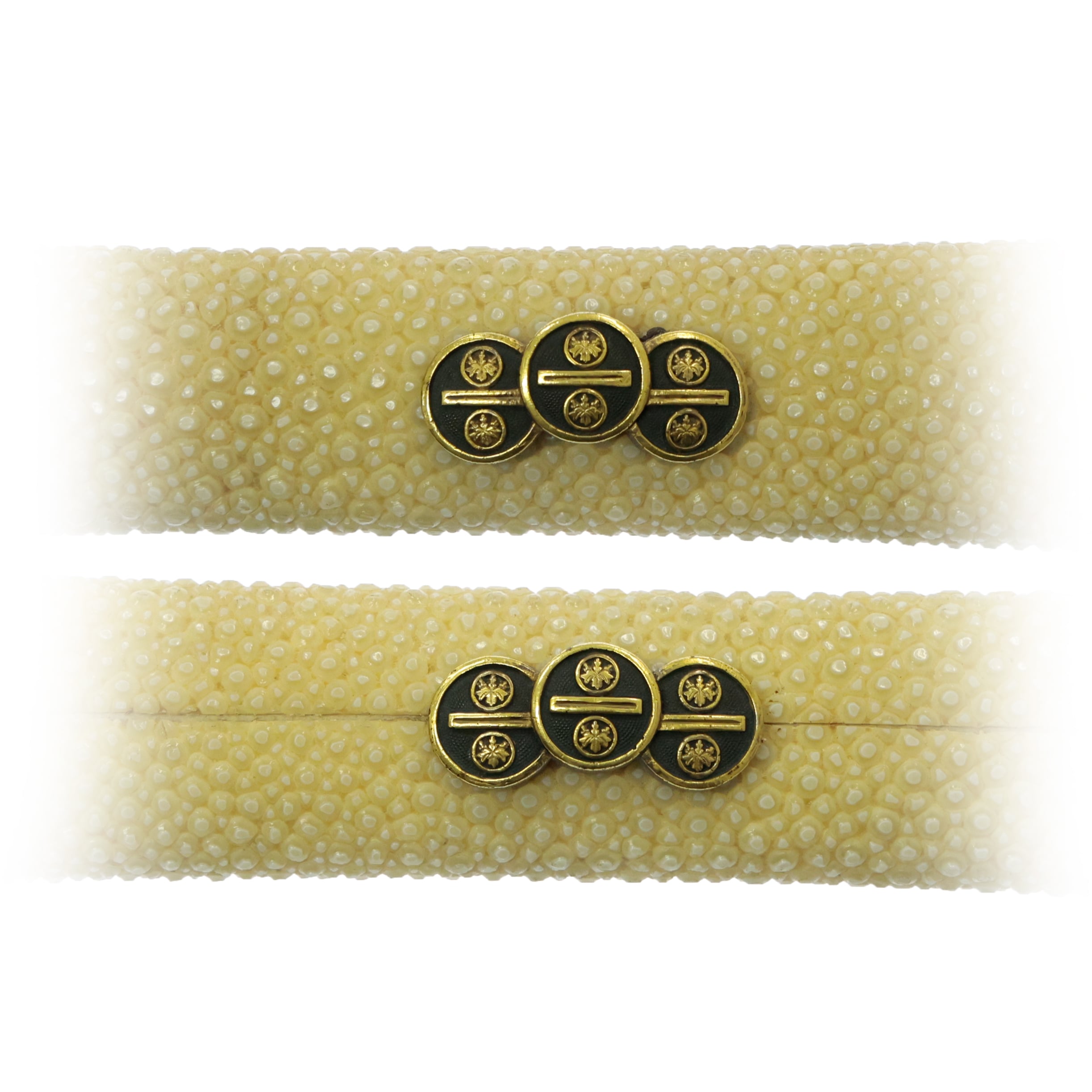
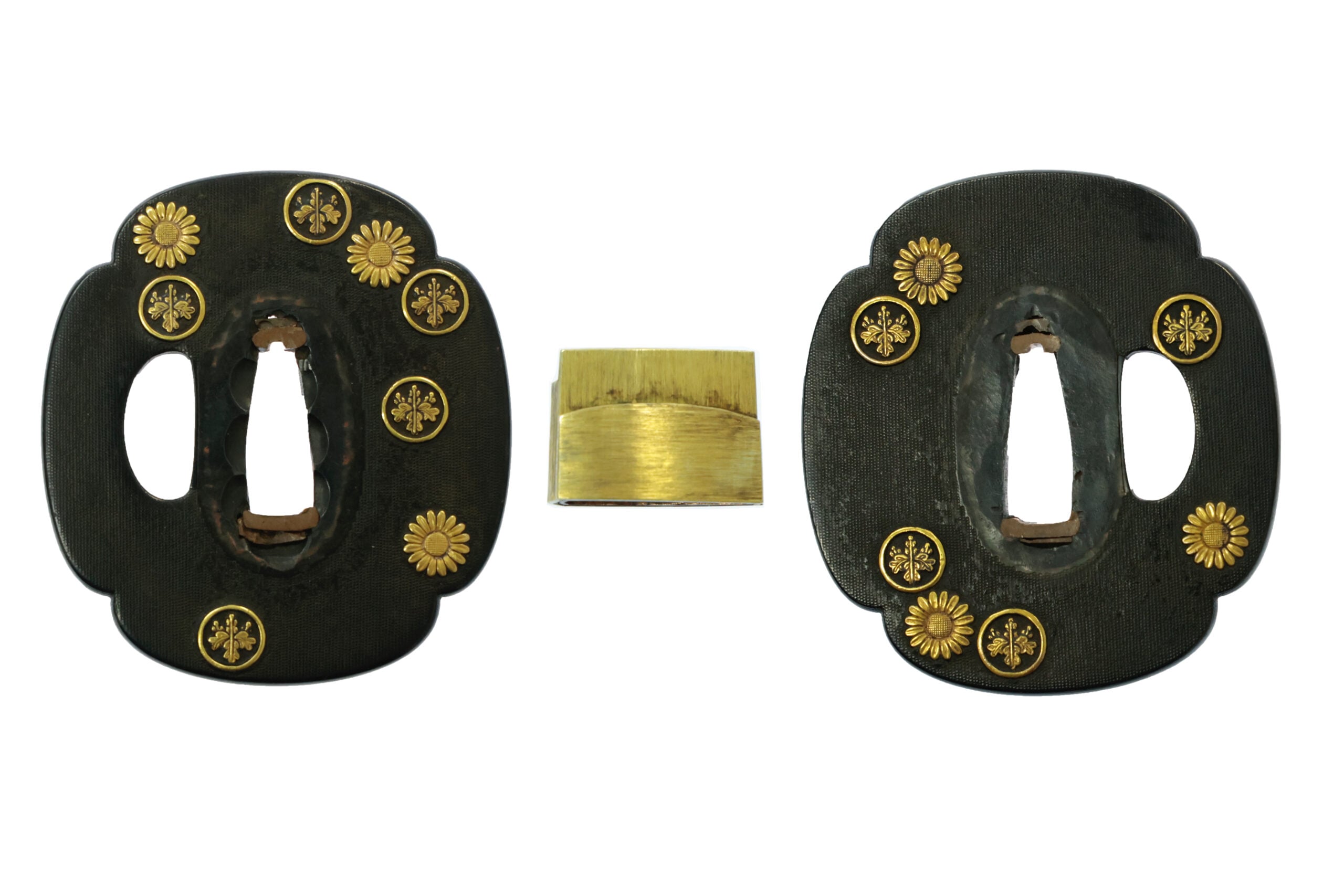
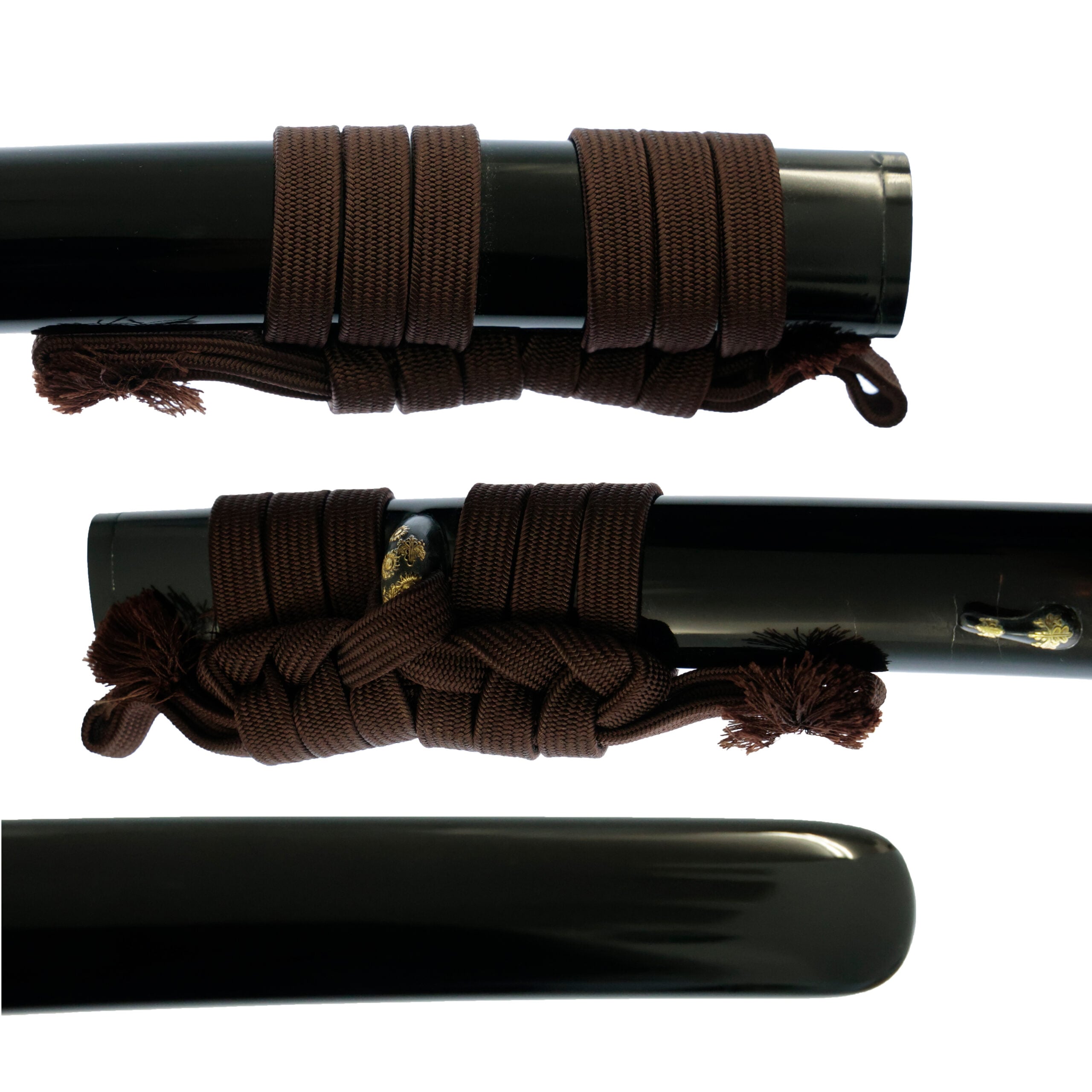
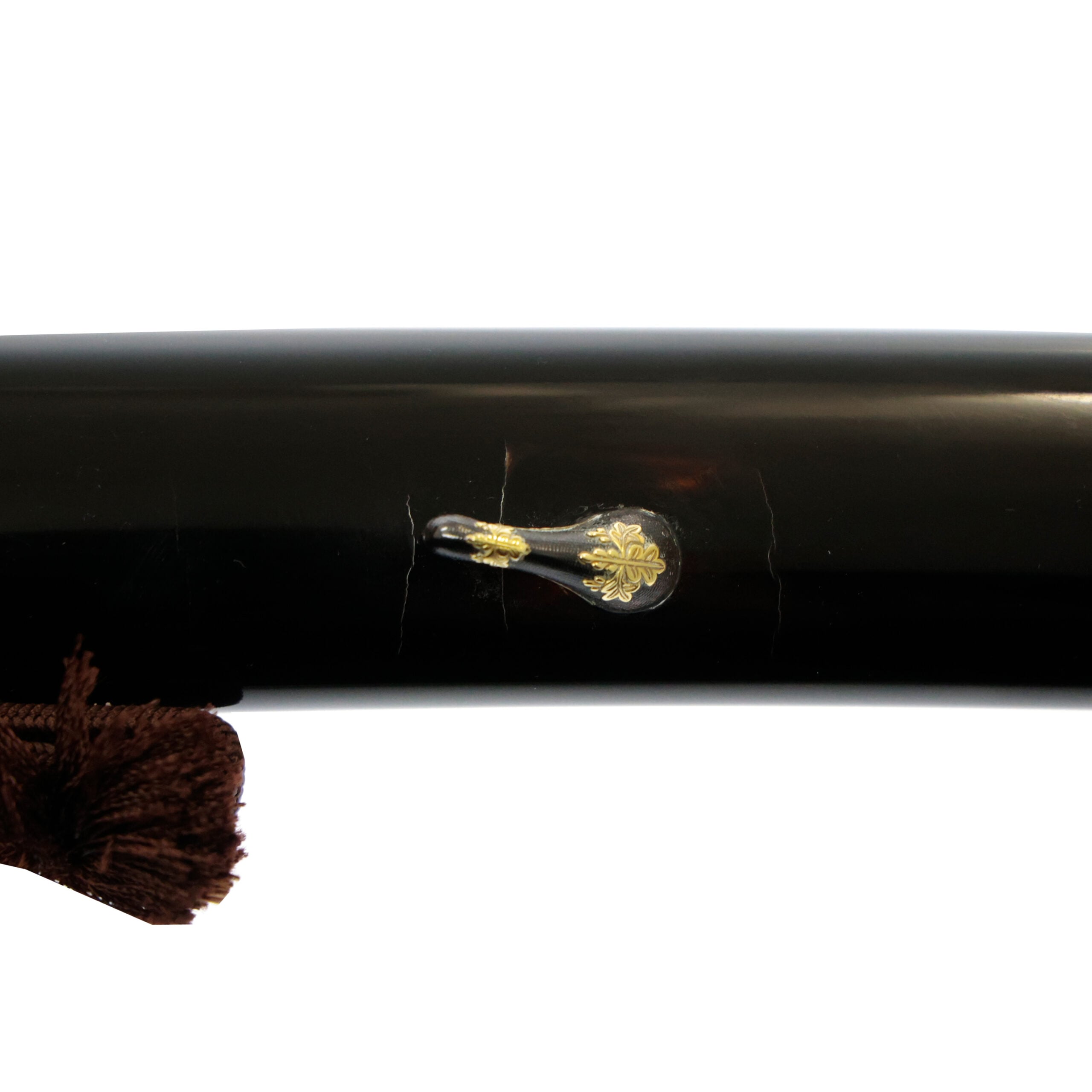
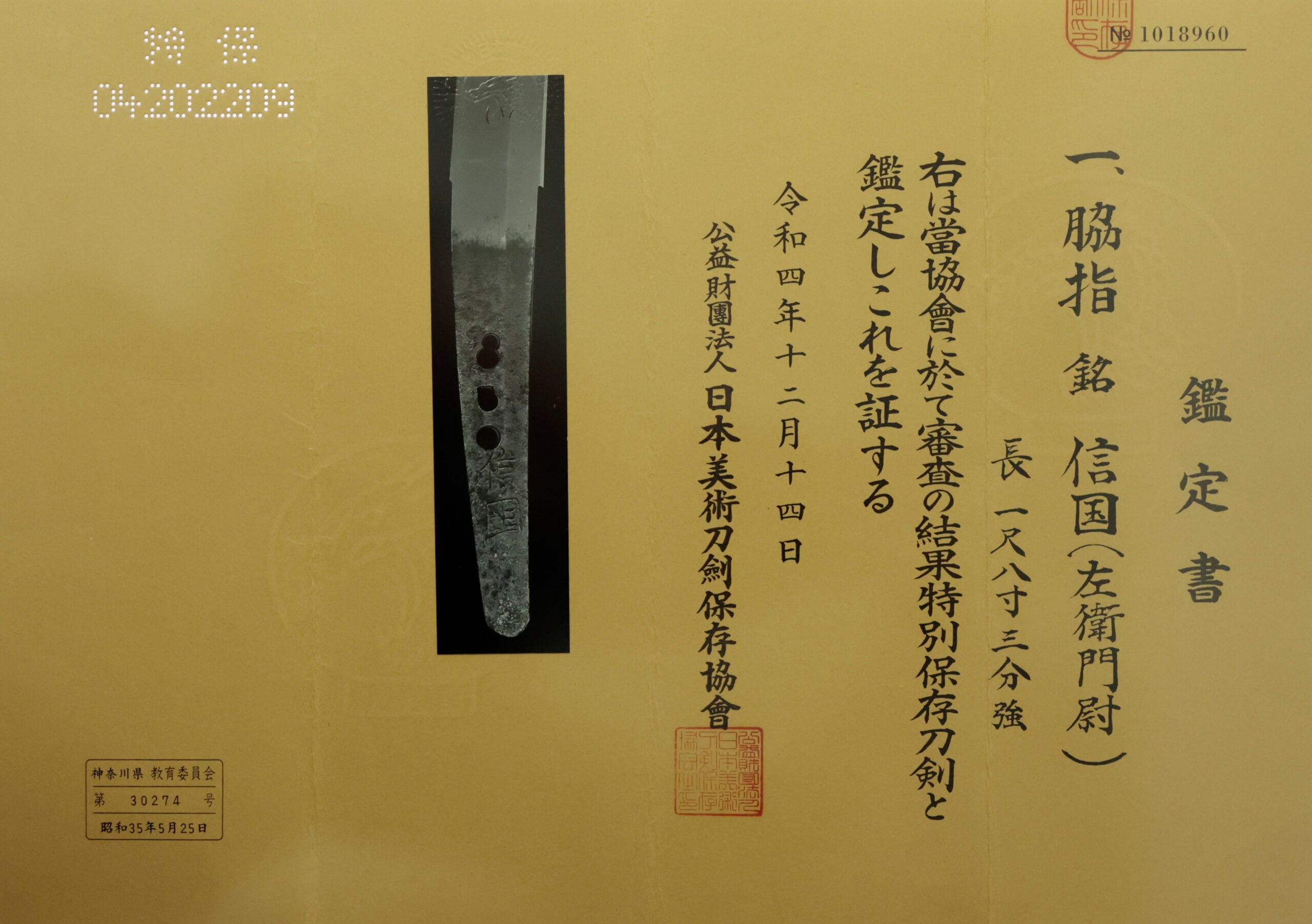
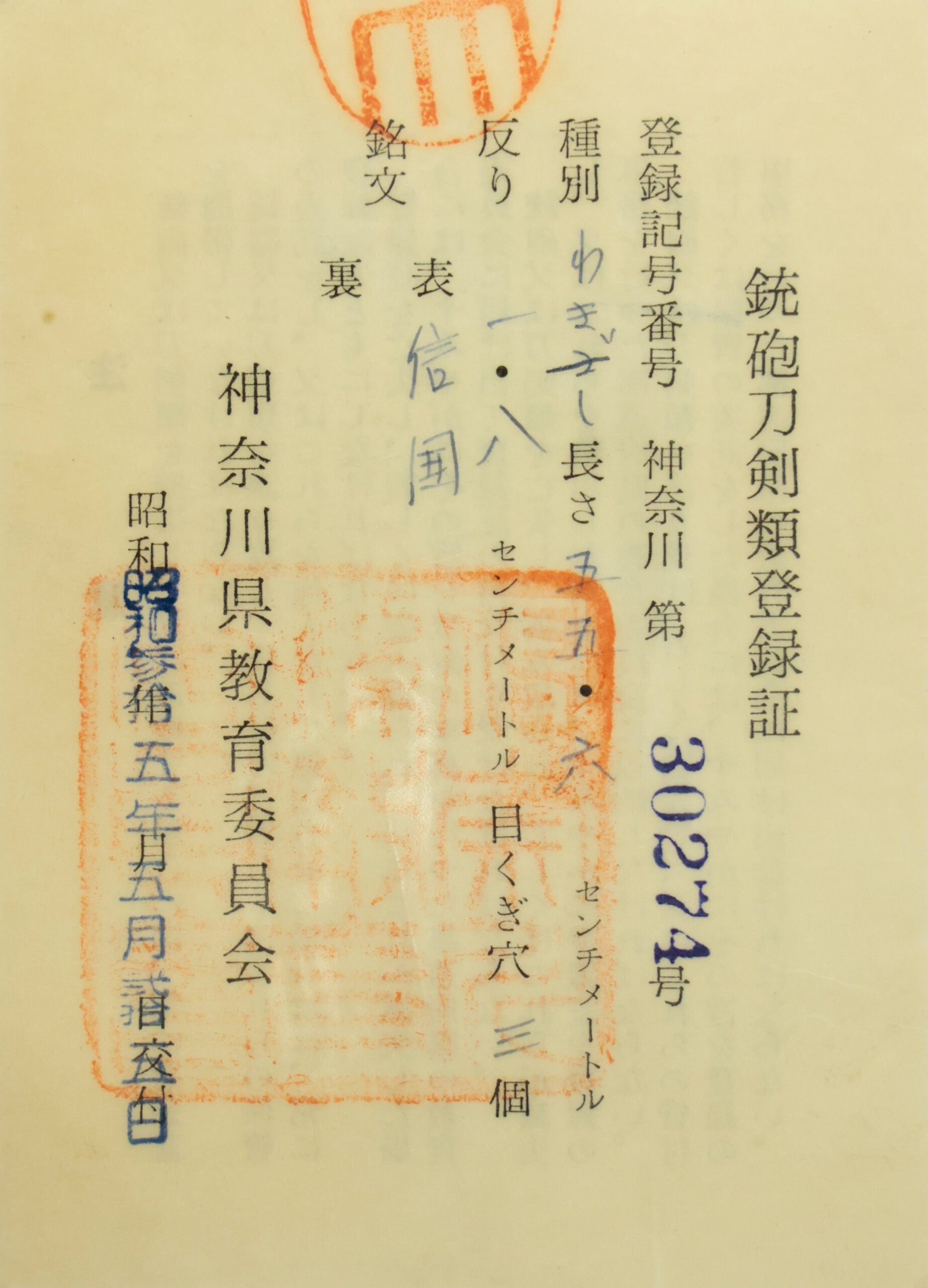
Summary This blade was signed by Nobukuni (信国), or called Saemon no Jyo Nobukuni (左衛門尉信国), according to NBHTK’s Tokubetsu Hozon appraisal. He was active during the O-Ei era (1394-1427: Early Muromachi period) in Yamashiro province (Today’s Kyoto). Nobukuni is also the name of the school he belonged to, and it was prosperous during the Nanbokucho-Muromachi period. He was also known as a master of engraving and one of the prominent figures in the school. There were a few generations of Nobukuni, and he was the third-gen Nobukuni. To distinguish him from other Nobukuni, he is often called O-Ei Nobukuni because of the era he forged blades. The first-gen Nobukuni was an apprentice of Soshu Sadamune (相州貞宗), one of the most famous swordsmiths. He was a grandson of Ryokai Hisanobu, who was a renowned maker in Ryokai school. Ryokai School Ryokai was a swordsmith from the late Kamakura period in Yamashiro Province(Today’s Kyoto). It is said that he was a son of Rai Kuniyuki (来国行) and a younger brother of Rai Kunitoshi (来国俊). Both of them are renowned swordsmiths throughout Samurai history. Ryokai founded his school, and the apprentices were allowed to use Ryokai in their maker’s names. Ryokai’s son was Ryokai Hisanobu, who took over the school. Horimono (Engraving on the blade) On this blade, you would find the Horimo of Bonjis (梵字, Sanscrit letter). Sword carvings often depict Fudo Myo-O (不動明王, acalanātha) or his incarnations, and there are also Sanskrit characters that represent this god. Among the various Buddhist Buddhas, Fudo Myo-O was deeply worshiped by Samurai warriors. According to a theory, this god is the incarnation of Dainichi Nyorai (大日如来, Mahāvairocana, the principal image of esoteric Buddhism). Perhaps the most common type of Sanskrit character carved on the blades is the character “Kahn (カーン)”, which means Fudo Myo-O. There is also a Sanskrit character called “Kanmarn (カンマーン),” which is combined with the word “Man.” There was once a trend that Samurai warriors incorporated motifs with religious meaning into their battle costumes, such as armor and helmets, and this sword carving was also a way to express their religious beliefs. We hope you enjoy this carving as well as the beauty of the blade itself. This blade is appraised as a Tokubetsu Hozon Token (特別保存刀剣) issued by NBTHK (Nihon Bijutsu Touken Hozon Kyokai:日本美術刀剣保存協会). *Please keep in mind that there are a couple of Kitae Kizu on this blade. Koshirae All of the sword mountings of this Koshirae are decorated with the common motif: the Gosan-no-Kiri Mon (五三の桐紋). It comes from the Kiri (桐, paulownia) pattern, and the Gosan-no-Kiri Mon is a popular and famous design for this flower pattern. The Kiri (桐) pattern is generally composed of three standing straight inflorescences and three leaves. The number of blooming flowers at each inflorescence means the ranks of this design. The imperial family and national leaders back then once used this plant pattern. Today, this plant pattern is used as the crest of the Japanese Government. It is permitted to be used by ordinary households and is appreciated as their family crests. According to a tradition, the Houou (鳳凰, Fenghuang, a kind of sacred beast) rests its wings at the paulownia tree; therefore, it has come to be regarded as a sacred plant. The surface of each sword mounting and metal fittings were finished with the Nanako-Ji (魚子地) technique. By hitting with the Nanako-Ji Tagane (魚子地鏨, chisel used for this technique), delicate fish egg-shaped protrusions are made on the surface of the metal. This process is often seen and is one of the elements that add gorgeousness to the appearance of metalworks. Fuchi-Kashira In addition to the Gosan-no-Kiri Mon (五三の桐紋), flower patterns are designed on this Fuchi. We estimate the motif of this plant pattern is chrysanthemum (菊, Kiku) or sunflower (向日葵, Himawari). The sunflower always faces the sun. This habit might have been captured in a positive meaning and treated as a motif for this Menuki. If the motif of these flowers is chrysanthemums, there is another theory. As chrysanthemums’ petals form radially, this flower has been likened to the sun. People treated this plant as a symbol of perpetual youth and longevity or good health. Tsuba and Habaki This Tsuba has the shape of Yotsu-Mokkou. Its origin is the shape of eggs in a nest. When a quince (it is written 木瓜 in Japanese) is cut into round slices, its cross-section looks similar to this shape; therefore, it was named Mokkougata Tsuba (木瓜形鐔). Yotsu-Mokkougata (四ツ木瓜形, a combination of four Mokkou shapes) Tsuba is often seen, same as this Tsuba. Also, the Gosan-no-Kiri Mon and flower patterns are randomly depicted on both sides of this Tsuba. Authentication Paper They authenticated the blade on Dec 14th in the 4th year of Reiwa (2022). They appraised it as Tokubetsu Hozon Touken, the blade especially worth preserving for Japanese society.
Nobukuni信國
Offered by Samurai Museum
This piece has sold
Get an email when a new Nobukuni piece hits the market.

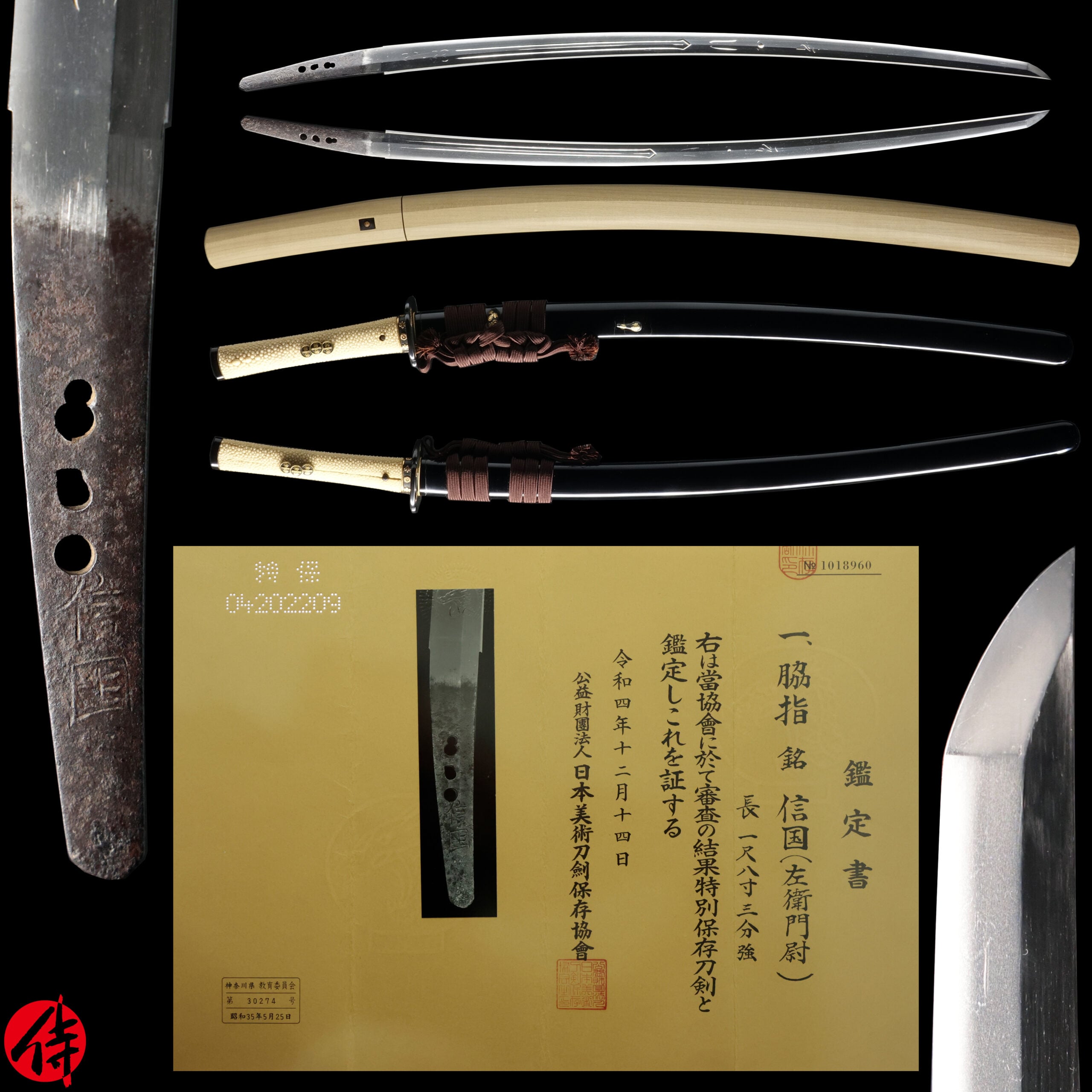
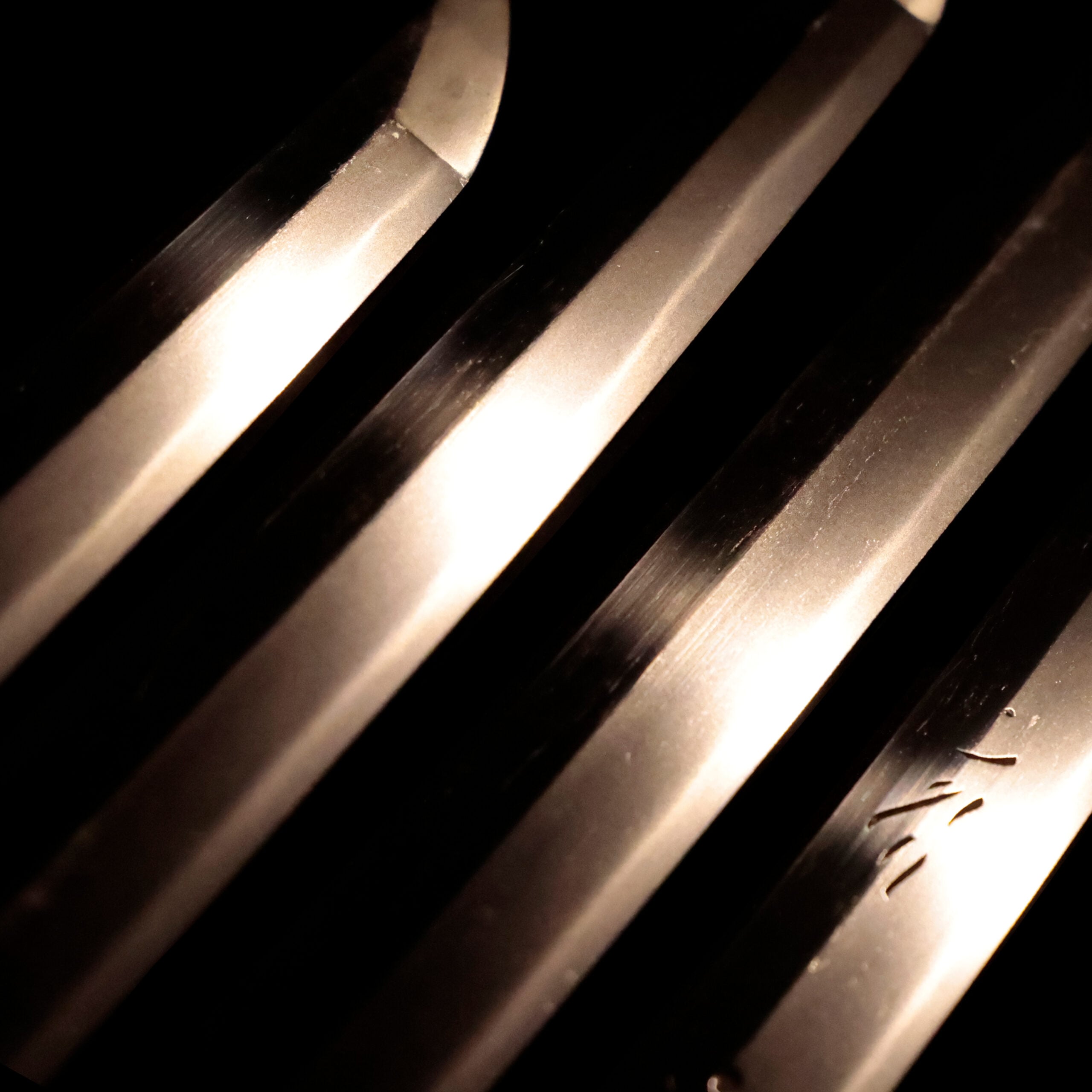
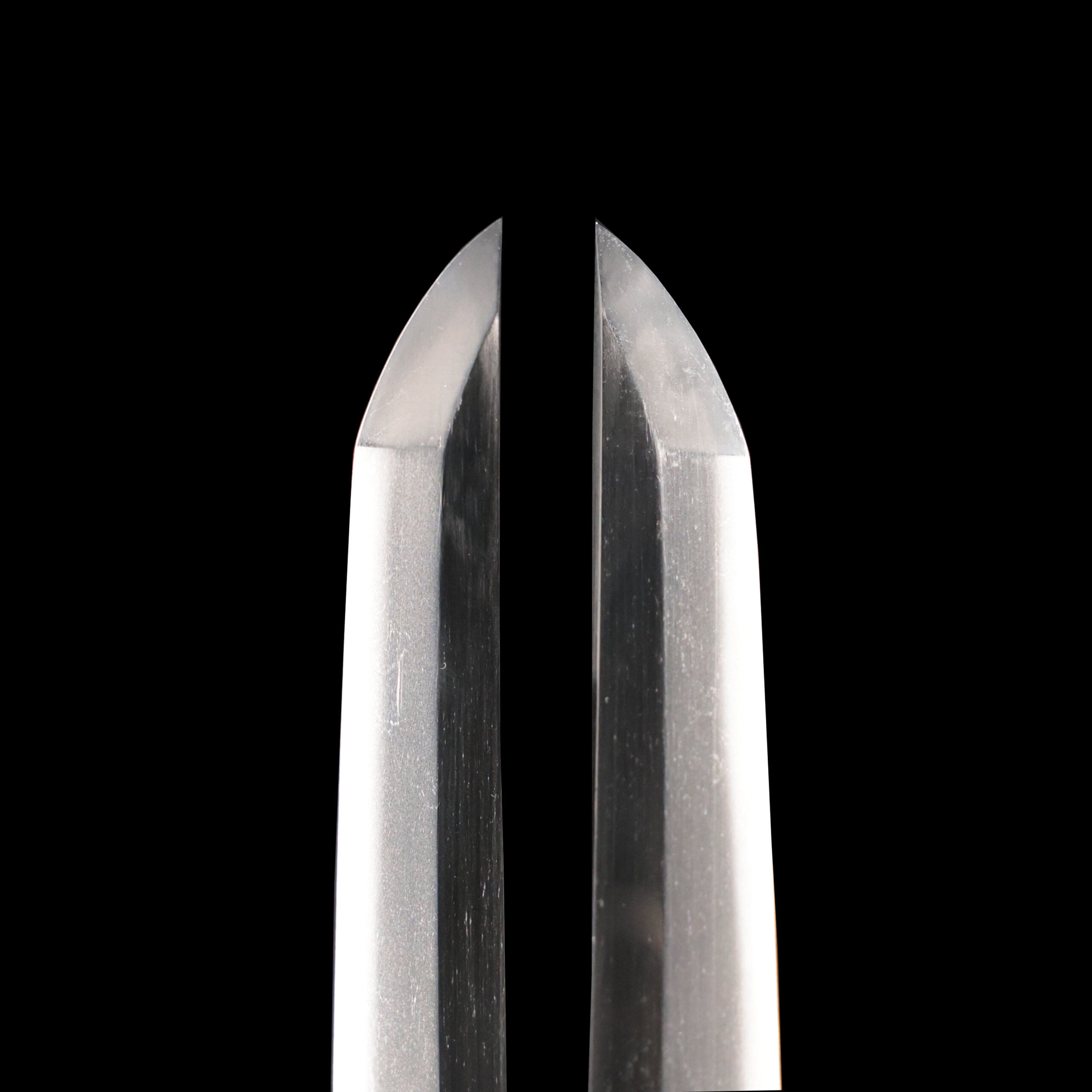
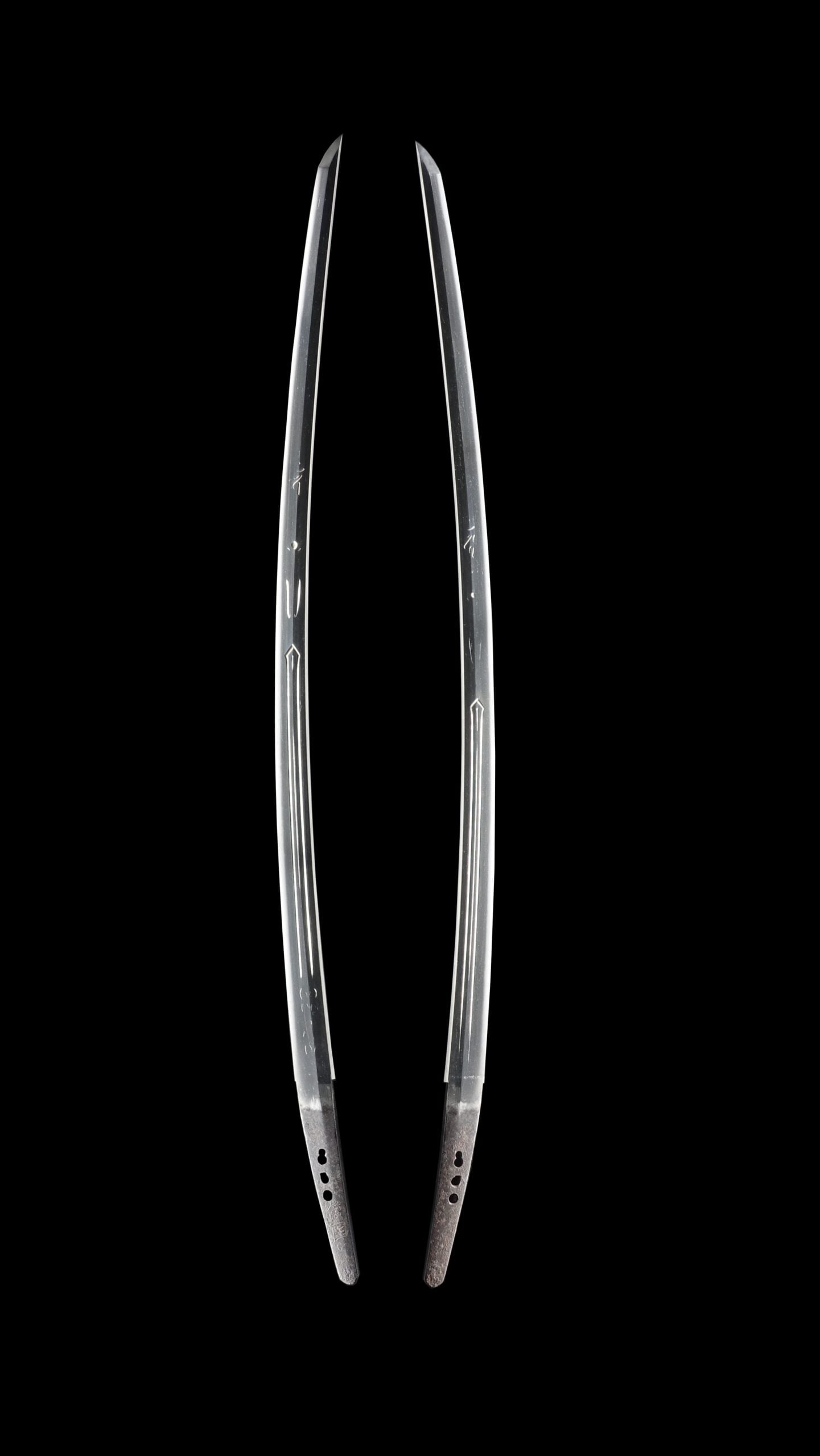
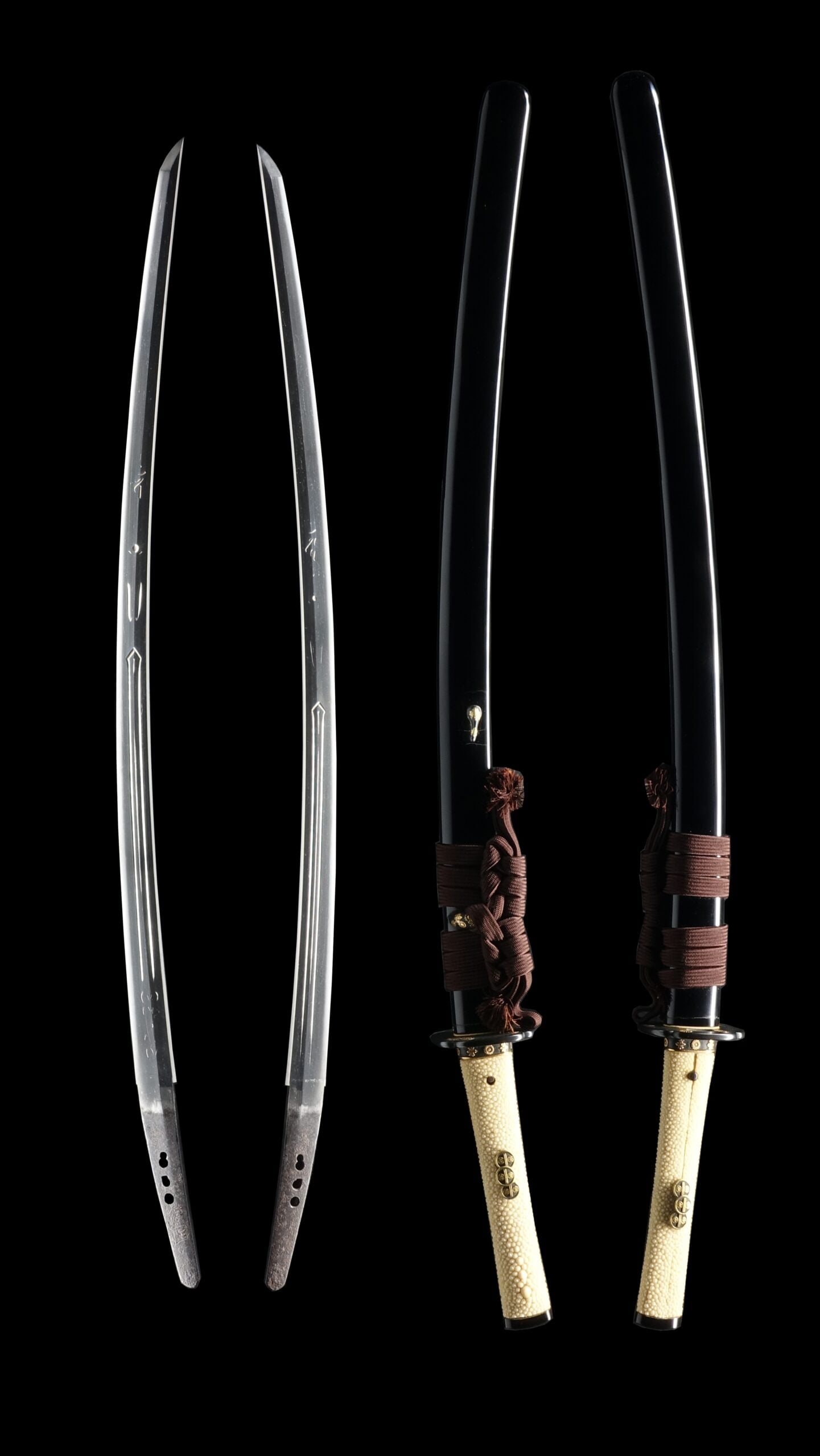
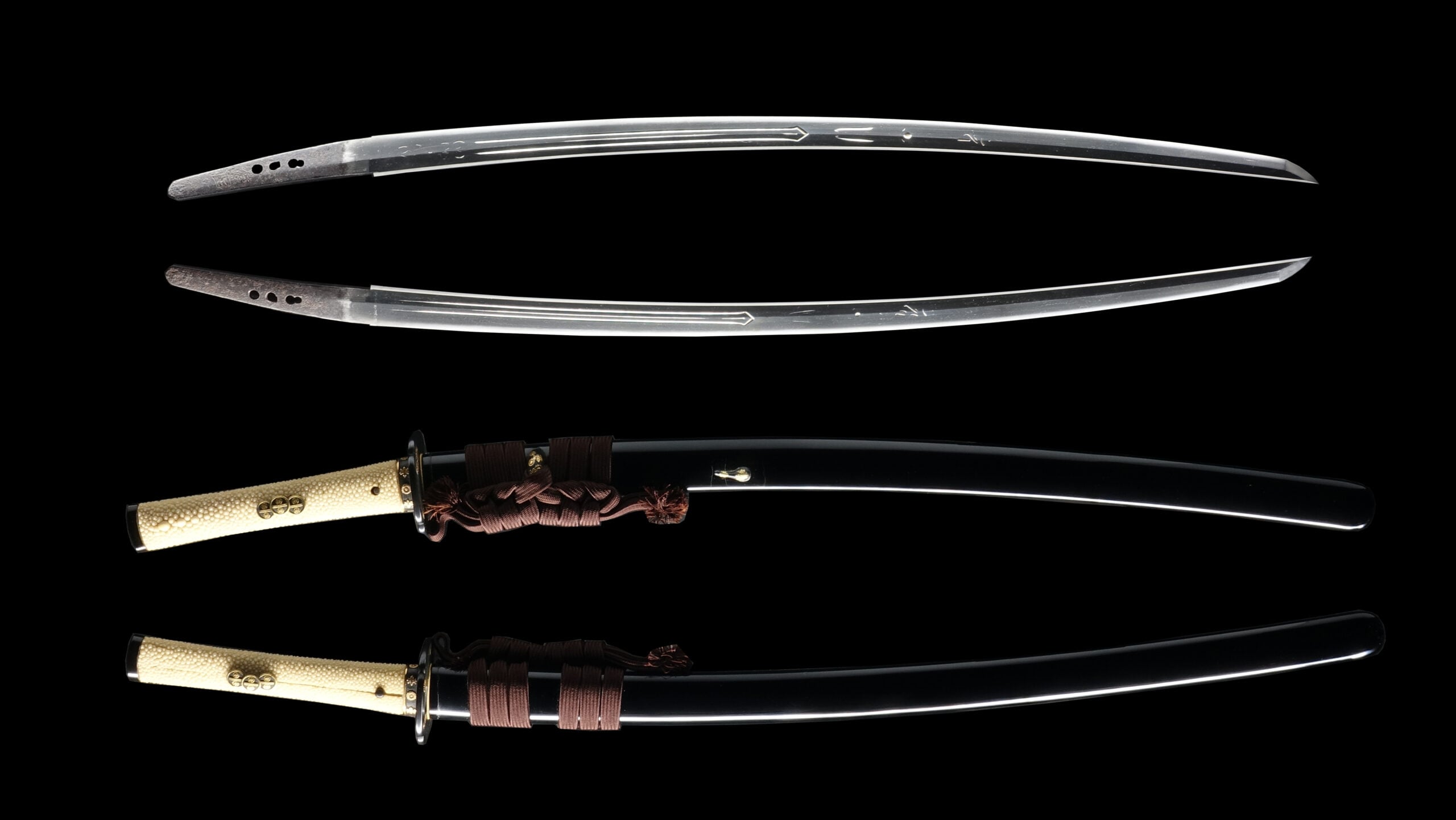
Nobukuni (Kyoto / Yamashiro), Ōei generation · Yamashiro · around 1394-1428
Fujishiro Jo-jo saku · Tōken Taikan top 8%
1 piece on the market now
A wakizashi dated the eighth month of Ōei 20 (1413), handed down in the Ōshimazu family of Satsuma and raised to Tokubetsu Juyo at the twenty-sixth session, is signed in two lines Minamoto Saemon-no-jō Nobukuni, and within the character kuni the interior is cut as the character for "left." That reversed form is the first point the published sources give for this hand. The NBTHK opens its account with the house: 「信国は京鍛冶の名門で, 南北朝時代から室町時代にかけて大いに栄えた」 (Nobukuni was a distinguished Kyoto house of smiths that flourished greatly from the Nanbokucho into the Muromachi period). In the Muromachi branch Saemon-no-jō Nobukuni and Shikibu-no-jō Nobukuni are the representative smiths, and because both cut Ōei dates they are admired together as the Ōei Nobukuni. The line descends from Ryōkai and so from the Rai, and its first generation is said to have studied under Sōshū Sadamune; his works of Enbun and Jōji are the oldest dated pieces, and the Ōei smiths are reckoned the third generation. Tradition makes Saemon-no-jō the elder brother, but the published sources observe that among known dates the Nobukuni signature of Shikibu-no-jō is in fact the older, and they leave the relationship of the two to future research.
His most constant feature is carving. The published sources state that Saemon-no-jō and Shikibu-no-jō alike 「濃厚な彫物を得意としている」 (excel at dense carving), and the record bears it out. Flaming bonji, a kurikara in relief within a hitsu or pierced through it, sanko-ken and suken, hata-hoko, lotus pedestals and the invocation Hachiman Daibosatsu cut into the groove recur on both faces, often layered one over another. Of one Juyo wakizashi the judges write that the ji and ha are ordinary but the pierced kurikara in its hitsu is splendid. The temper he made his own is the second mark. Every generation of Nobukuni, the published record explains, worked chiefly in two manners, a suguha showing the Kyoto tradition and a notare inherited from Sadamune, and from the late Nanbokucho generation into the Ōei smiths 「互の目主調の乱れ刃の作域を新たに見ることが出来る」 (a working range of midare-ba led by gunome can newly be seen). Its idiom is a gunome that runs in pairs. The sources describe 「互の目が二つずつ矢筈形に連れた特色ある刃文」 (a distinctive hamon in which the gunome run two by two in the shape of an arrow-nock), mixed with angular and pointed teeth, ko-notare and choji-like elements. Ashi and yo enter, the ko-nie lies thick, kinsuji and sunagashi run through the ha, and tobiyaki and yubashiri gather over the crests under a bright nioiguchi.
Beneath both tempers lies one jigane. It is an itame mixed with mokume, flowing in places into masame toward the edge and tending to stand, with thick ji-nie and frequent chikei; where the forging tightens it becomes a ko-itame. The suguha that keeps the Kyoto tradition is the rarer face of his work. It runs narrow to medium, at times with a little ko-gunome, ko-ashi and yo entering, ko-nie well adhered and the habuchi fraying in places with kinsuji and sunagashi; the boshi runs straight to a ko-maru with hakikake. On the Ōshimazu wakizashi the judges call that suguha 「匂口明るく刃中よく働き」 (bright in the nioiguchi and full of activity within the ha). Of an Ōei tanto in hoso-suguha they draw a comparison: 「応永備前も直刃の作を好んで焼くがやはり信国の方が沸が強いようである」 (Ōei Bizen too likes to temper suguha, yet Nobukuni seems the stronger in nie). Another judgment holds that 「この時代の信国には直刃の出来は珍しく」 (suguha work is rare among Nobukuni of this period), and a large wakizashi tempered in suguha with a tight nioiguchi is said to recall Rai work.
Most of the record is wakizashi and tanto, hira-zukuri with mitsu-mune and somewhat extended in length, a build one judgment likens to Ōei Bizen. Signed tachi are few. A tachi dated Ōei 2 (1395) and a shobu-zukuri wakizashi dated Ōei 4 are assigned to the Nobukuni who worked from the close of the previous age into early Ōei, and their dates are called valuable material for the study of the school. Further dated pieces of Ōei 15, 20, 21, 30 and 34 follow. On the Ōei 34 tachi, a prewar Juyo Bijutsuhin, the published record notes 「丁子乱のにぎやかな刃文」 (a lively choji-midare hamon), unlike the Nanbokucho Nobukuni. A Shikibu-no-jō tanto in hitatsura is called a temper rarely seen in his work, perhaps made with the senior Kyoto school of Hasebe in mind. The signature completes the reading. The name carries the family Minamoto, so the smith commonly called Genzaemon-no-jō is properly Minamoto Saemon-no-jō, and his kuni is known by its reversed interior, a form the sources trace from Shitoku and Meitoku and find common in Ōei. Honma's inventory of the Imperial collection adds a caution, that this form 「必ずしも源左衛門尉に限ったことではなく, 後代信国にも見るところである」 (is by no means confined to Minamoto Saemon-no-jō but is also seen in later Nobukuni), so the workmanship must be weighed together with the mei. One tanto with the reversed kuni is accordingly left undecided.
The first Nobukuni, the published sources write, was a pupil of Sadamune whose work 「殆んど師貞宗に迫る作風を示している」 (shows a style that comes close to that of his master Sadamune). The Ōei generation carries that Sōshū nie into its paired gunome while keeping the bright Kyoto suguha, and his own combination is what sets him apart: the gunome running in pairs, the standing itame that flows toward the edge, the strong nie, and the layered devotional carving. The sources also record that other smiths cut a two-character Nobukuni mei in the same years, so that several namesakes are thought to have worked side by side, and unsigned or plainly signed pieces are referred to Saemon-no-jō or Shikibu-no-jō by the cut of the mei and the manner. The line later spread, one branch moving to Bungo in Kyushu and signing Nobukuni with a further name. Honma also notes that the Nobukuni nakago ends in a round kurijiri from the first generation to the last, unlike the ken-shaped tang of Sadamune.
Fujishiro grades the Ōei Nobukuni Jo-jo saku, and forty-four designated works stand on record. There are no National Treasures. One Important Cultural Property, a wakizashi signed as a dedication to the Fuji Hongū Sengen shrine by Minamoto Shikibu-no-jō Nobukuni and dated Ōei 24 (1417), is kept at that shrine. One blade holds Tokubetsu Juyo rank and thirty-nine more the Juyo, forty in the two tiers together; the Ōei 34 tachi is a prewar Juyo Bijutsuhin once held by Tokugawa Munetaka; and two blades, a ken and a tanto, are recorded in Honma's inventory of the Imperial collection. Forty-three of the designated works are signed and only one is unsigned. Recorded provenance runs through the Ōshimazu of Satsuma, the Tokugawa shogunal house and the Owari Tokugawa, Hosokawa Tadaoki and the Kuninomiya family. A tanto of the Kenshō-in at Tōnomine was presented by that temple to the shogunate at the succession from Ietsuna to Tsunayoshi, Tōnomine offering one sword from its treasury at each change of shogun. Of recorded whereabouts, examples rest at Atsuta Jingu and Ise Jingu, the Tokugawa Art Museum, the Sano Art Museum, the Kurokawa Research Institute and the Kyushu and Kyoto National Museums. For the collector the Ōei Nobukuni is a name within reach of patience: signed wakizashi and tanto of the Juyo tier come to market from time to time, while a signed tachi, which the published sources call 「頗る貴珍」 (exceedingly rare and precious), appears only rarely and is an occasion when it does.
Where Nobukuni stands among comparable artisans: across all of nihontō, and within tradition, era, and period. The tiers (Foremost · Leading · Major · Notable) weigh official designations from the NBTHK and Japan's Agency for Cultural Affairs, together with historical honors of lasting repute such as the Sansaku and Meibutsu-chō.
Select a lens to see how it's measured.
Years he was demonstrably active, proven by signed-and-dated blades
Yamashiro-den · Yamashiro
22 pieces on the market now
Few Kyoto houses bridged two traditions as deliberately as Nobukuni (信国), the Yamashiro-den lineage whose work runs from the Nanbokucho period through Muromachi and on, in a western branch, into the shinto age. The first generation, the smith the NBTHK counts as shodai, is the master of the Enbun, Koan and Joji years; the older registers placed a founding Nobukuni back in the Kenmu era, but the published sources set that legend aside, since no work survives so early and the style of the oldest dated blades connects directly with that of Sadamune. Two inheritances meet in him. By blood he belongs to the Ryokai line, recorded as son or grandson of Ryo Hisanobu and therefore of Rai descent; by training he is said to have studied under Soshu Sadamune, counted among the Sadamune Santetsu, the three brilliant pupils. The name then passed on: a change-of-generation Nobukuni with Eitoku, Shitoku and Meitoku dates stands at the close of Nanbokucho, and in early Muromachi come the so-called Oei Nobukuni, Saemon-no-jo and Shikibu-no-jo, conventionally the third generation. The published commentary keeps these hands apart and notes that several smiths of the same signature appear within the Nanbokucho period alone. Through Muromachi the line moved to Buzen and then Chikuzen, where it served the Kuroda house of Fukuoka as retained smiths and flourished as the Chikuzen Nobukuni group of Yoshisada, Yoshimasa, Yoshitsugu, Yoshikane and Shigekane. A single steel underlies the whole school. The jigane is an itame mixed with mokume that flows toward the ha and stands into masame, with thick ji-nie and chikei entering frequently; on the finer-forged pieces a streak-like nie-utsuri rises, and that masame-tinged surface is read as the visible token of the Ryokai pedigree.
Over it the temper divides into the manners the sources name together: a suguha expressing the Kyoto tradition, refined in ko-nie with fine hotsure and a niju-ba tendency, carried on tanto and ko-wakizashi; and a ko-notare mixed with gunome inheriting the Sadamune style, laid thick in nie, with kinsuji, sunagashi, hotsure and conspicuous yubashiri, on the most flamboyant pieces stringing into a two-tiered ha. From the late Nanbokucho succession into the Oei generation a third range enters, a gunome-led midare whose tell is paired gunome linked across the valleys by a low ko-notare into a yahazu, arrow-notch, profile, with muneyaki, tobiyaki and niju-ba on the liveliest blades. Above all stands the carving the sources call the house art, the horimono of bonji, kurikara, suken, gomabashi, sanko-ken and the invocation of Hachiman Daibosatsu, often layered one over another in kasanebori; few smiths of the age are so consistently identified by what they carved. The Chikuzen branch carried the masame-leaning itame forward and added a choji-midare with midare-utsuri, Yoshikane reaching toward Soshu-den with deep nioi and thick nie, Shigekane ranked highest in skill within his group and noted as a copyist of meibutsu who emulated Fudo Kuniyuki at the Hama Palace. To kantei Nobukuni is to read the Kyoto traces that part him from Sadamune: the nie-utsuri, the niju-ba, and the hada that drifts into masame along the ha. Within the long succession the shodai remains the touchstone, his dated work the standard against which unsigned blades and generation questions are resolved, the reversed left-form kuni marking the Oei Saemon-no-jo, the yahazu the daigawari hand. The best members rank Jo-jo saku under Fujishiro, and the carving reputation is the constant thread, distinguishing these blades from the plainer utilitarian grooving of contemporary Bizen. Provenance runs through the great houses: the Kuroda wakizashi once carried by Kuroda Nagamasa, a Hongan-ji meibutsu held to have been cherished by Rennyo Shonin, the signed Arao Nobukuni descended in the Asano of Geishu, pieces in the Sanada, Tosa Yamauchi and Tamura families, and a tachi bestowed on the Owari Tokugawa. Examples rest today in the Tokugawa Art Museum, the Kyoto National Museum, shrines such as Atsuta and Ise, and long-held private collections, with the Chikuzen smiths' shogunal-command pieces preserving the historical episodes that produced them. Learn more →
| Smith | Era | Designated |
|---|---|---|
| Nobukuni信國 | 1356-1368 | 70 |
| Nobukuni信國 | 1383-1392 | 33 |
| Nobukuni信國 | 1394-1428 | 44 |
| Yoshikane吉包 | 1661-1686 | 6 |
| Masanobu正信 | 1356-1361 | 4 |
The Muromachi period (1392 to 1573)
After the Ōnin War broke the Ashikaga order, a century of Sengoku warfare armed nearly every province in Japan. The era rewards a discriminating eye: routine work exists in quantity, and beside it stand custom blades of the first rank.
A Hozon-certified blade judged to show notably superior workmanship and a better state of preservation. The bar is higher: re-tempered blades and most unsigned Muromachi/Edo works are excluded.
The NBTHK (Nihon Bijutsu Tōken Hozon Kyōkai, the Society for the Preservation of Japanese Art Swords) is a public-interest incorporated foundation founded in 1948 and supervised by Japan’s Agency for Cultural Affairs (Bunkachō); it is based at the Japanese Sword Museum in Tokyo. Its expert panels physically examine each submitted work (shinsa) and issue a certificate (kanteishō) ranking it by artistic and historical merit. NBTHK papers are the most widely recognized standard of authentication for Japanese swords and fittings.
NBTHK official siteReturns/exchanges limited to defects caused by shipping (except willful misconduct or gross negligence by the company); customers must contact within 72 hours of receiving the product.