Perry’s arrival in 1853 unraveled the Tokugawa peace and created the first mass demand for working swords in two centuries. Kiyomaro, called the Masamune of Yotsuya, died on its eve; Munetsugu and Yukihide carried the boom to the end.
 NihontoWatchNihontoWatch
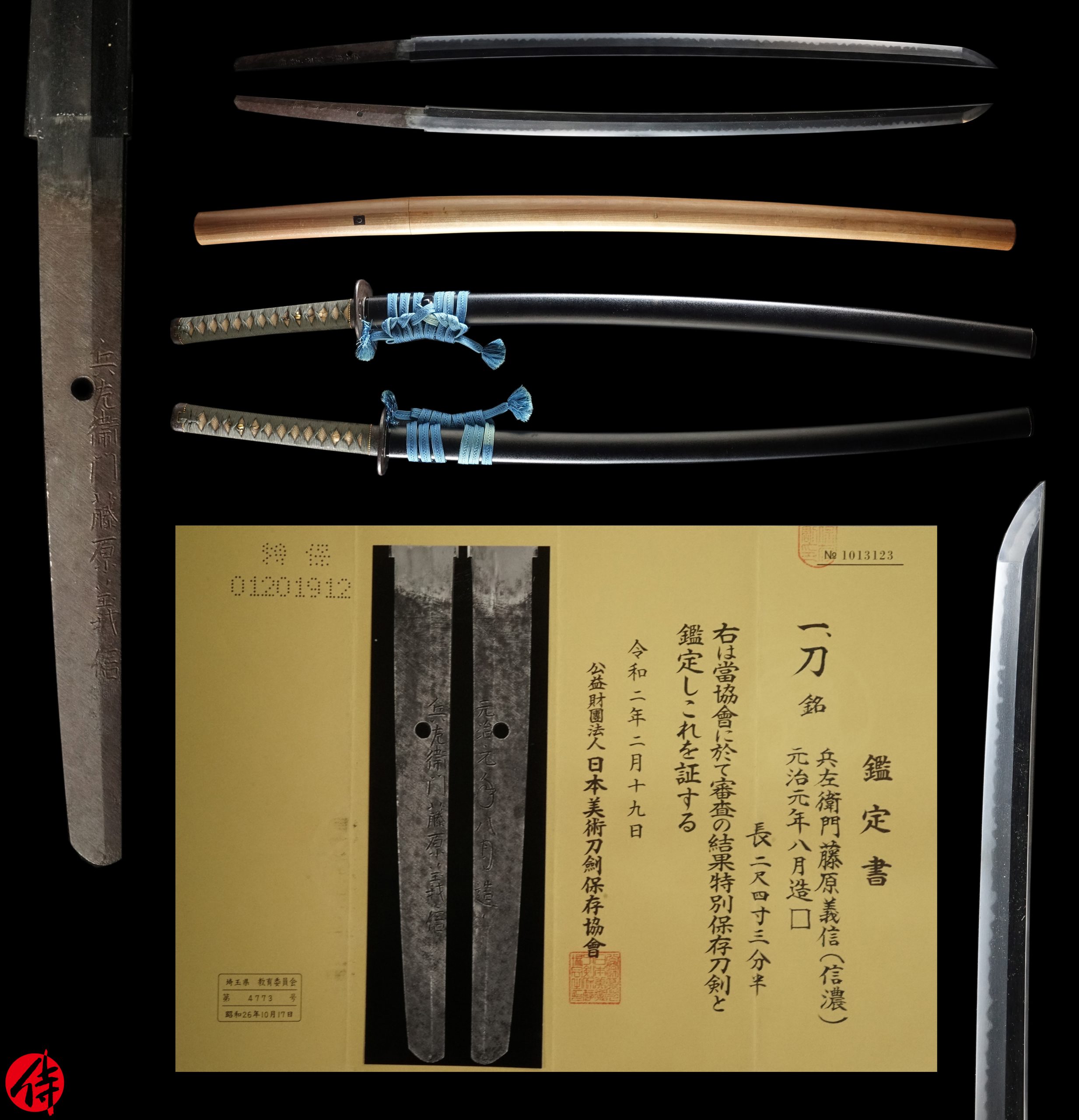
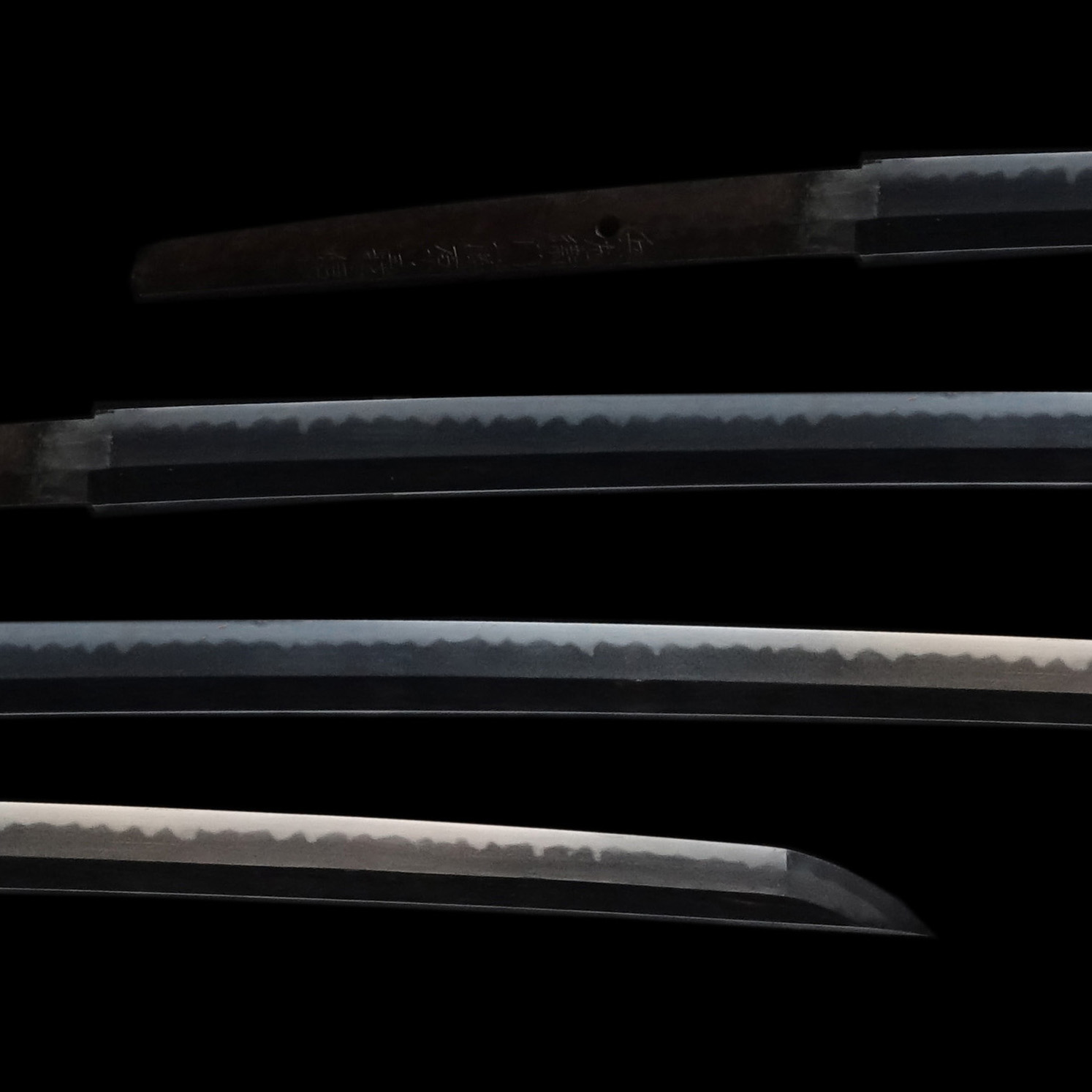
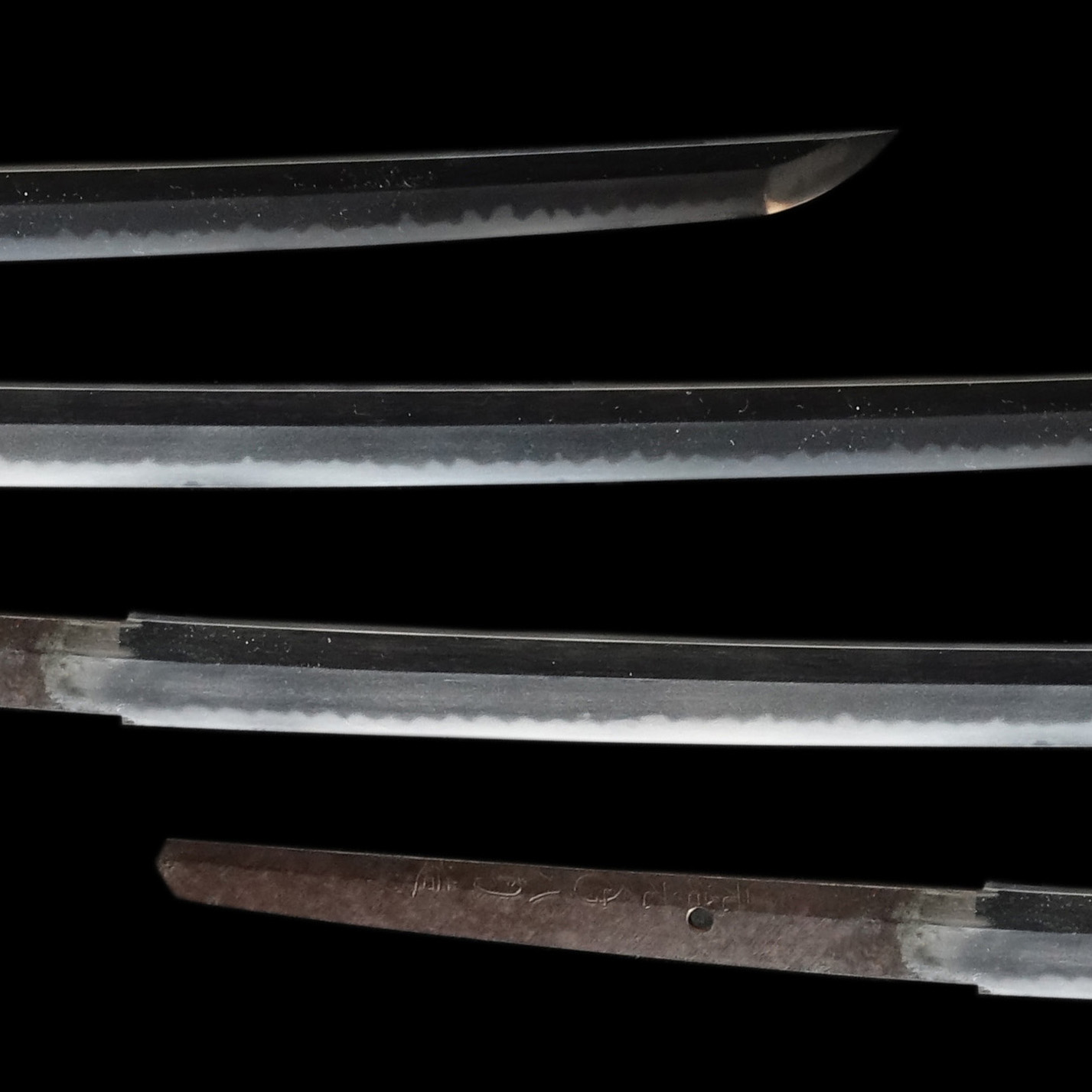
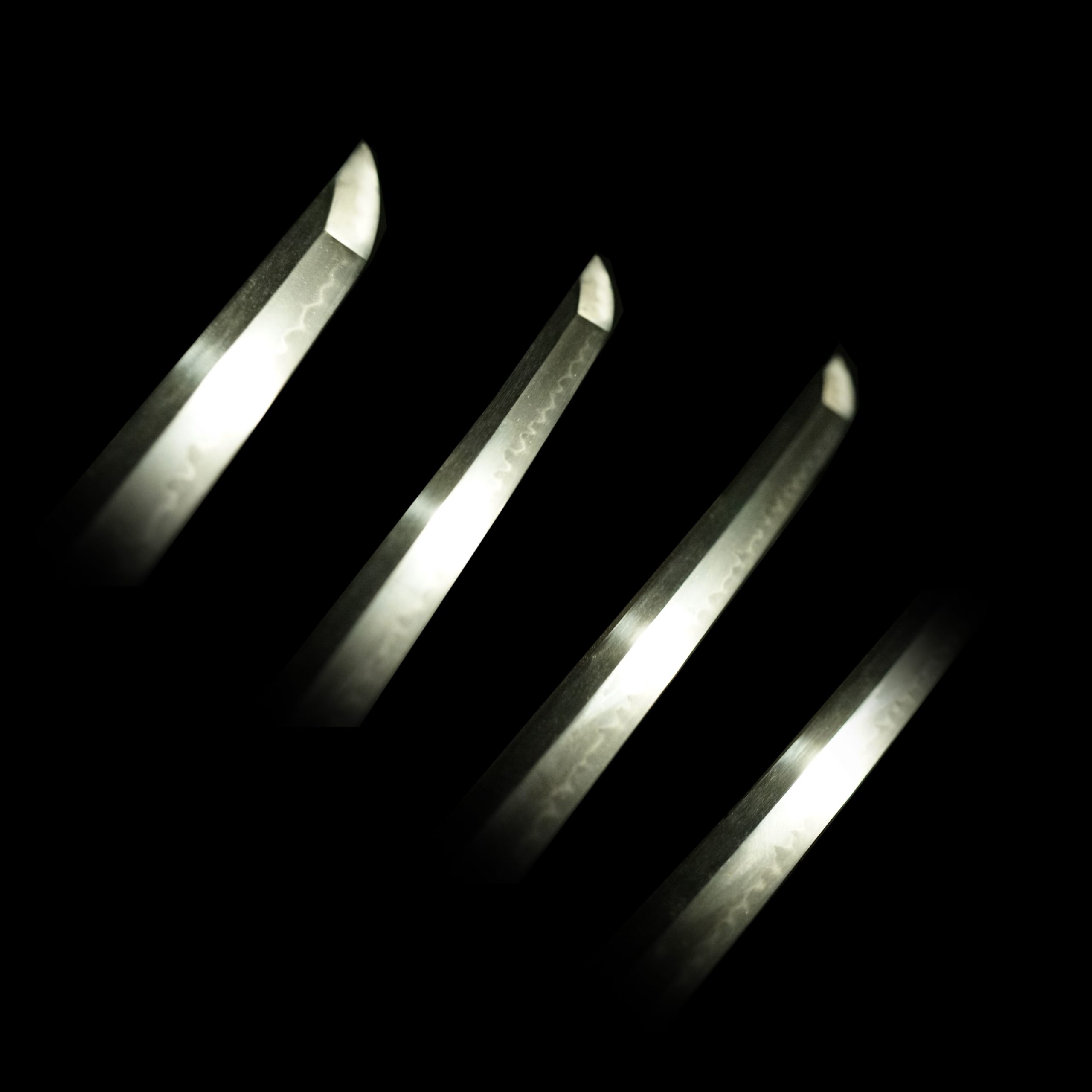
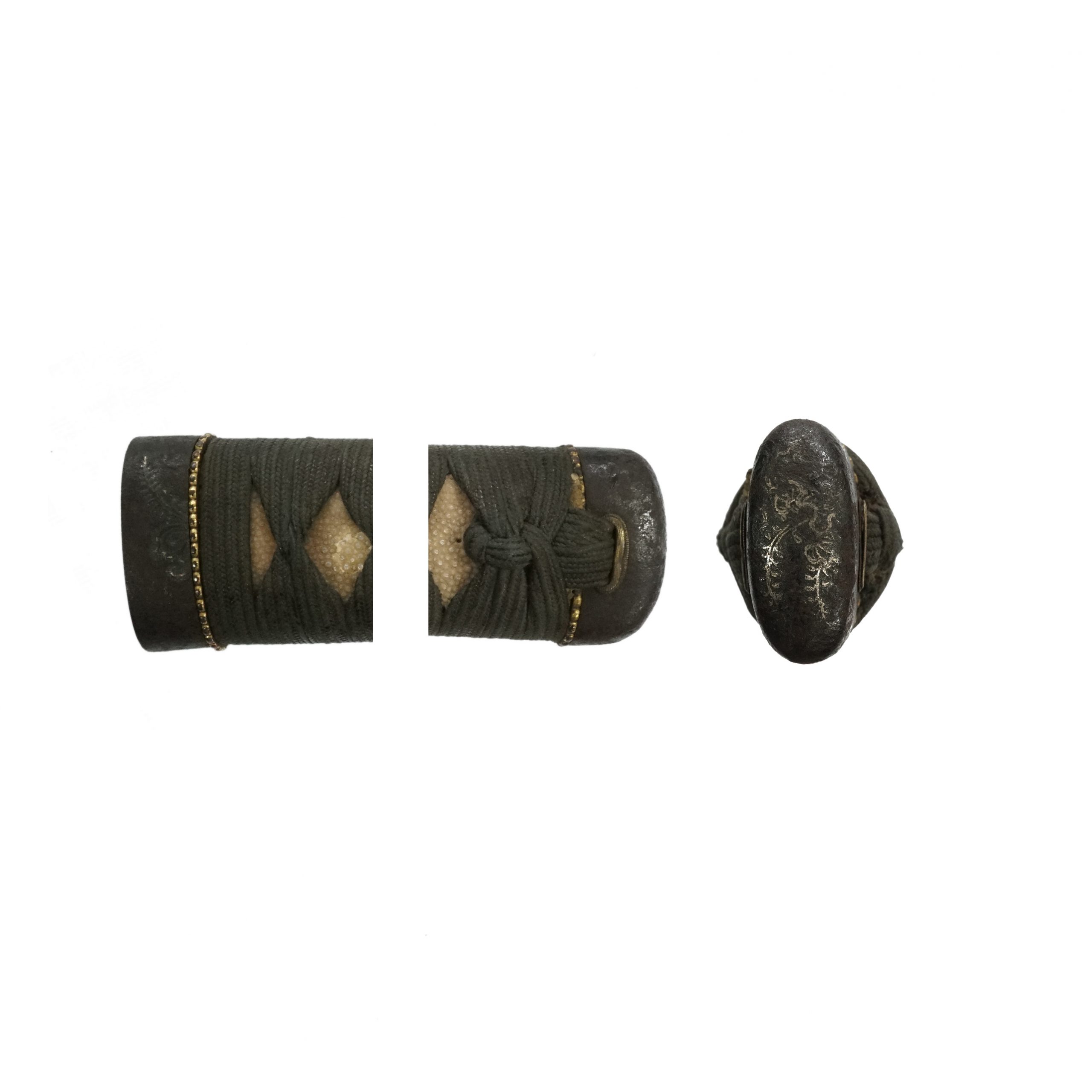
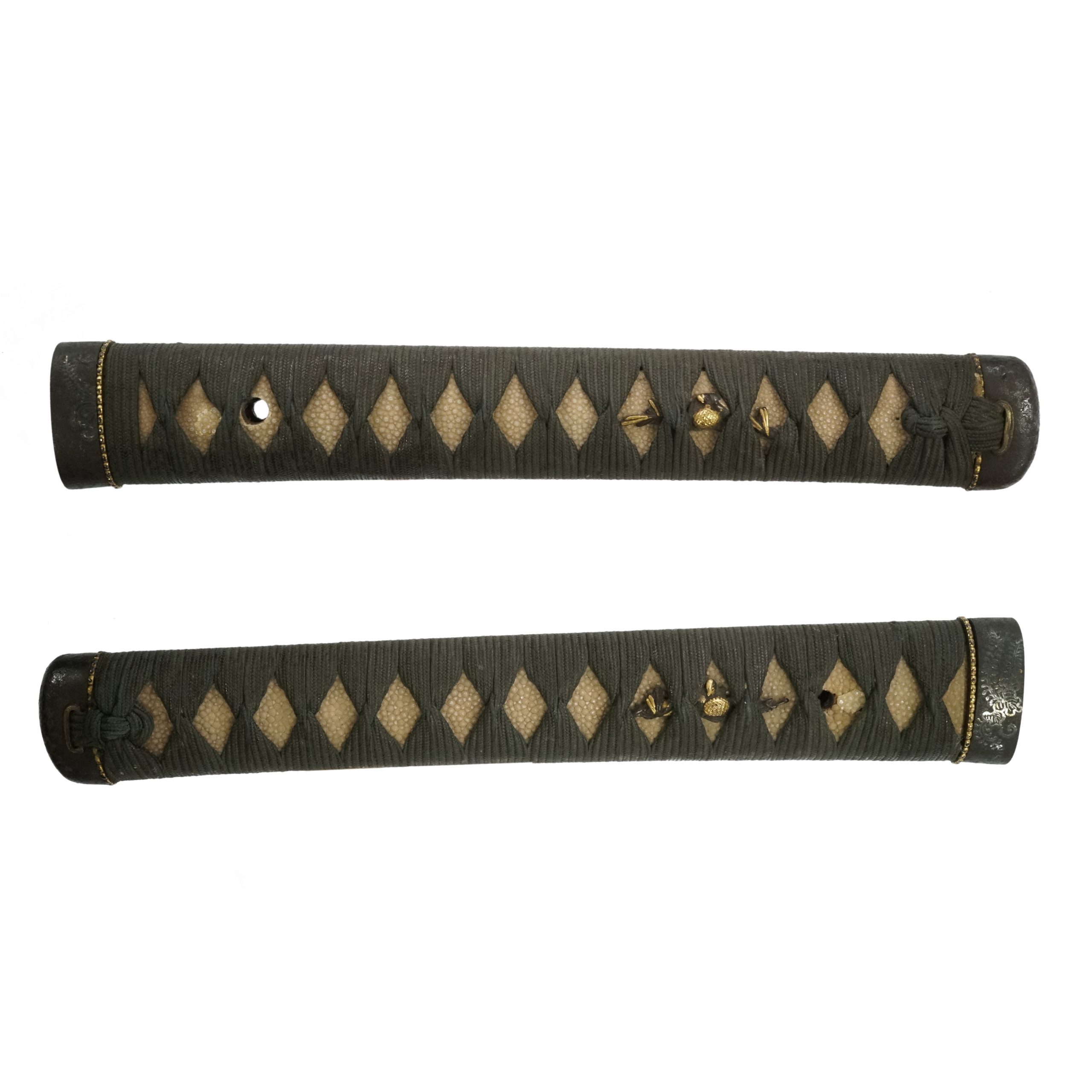
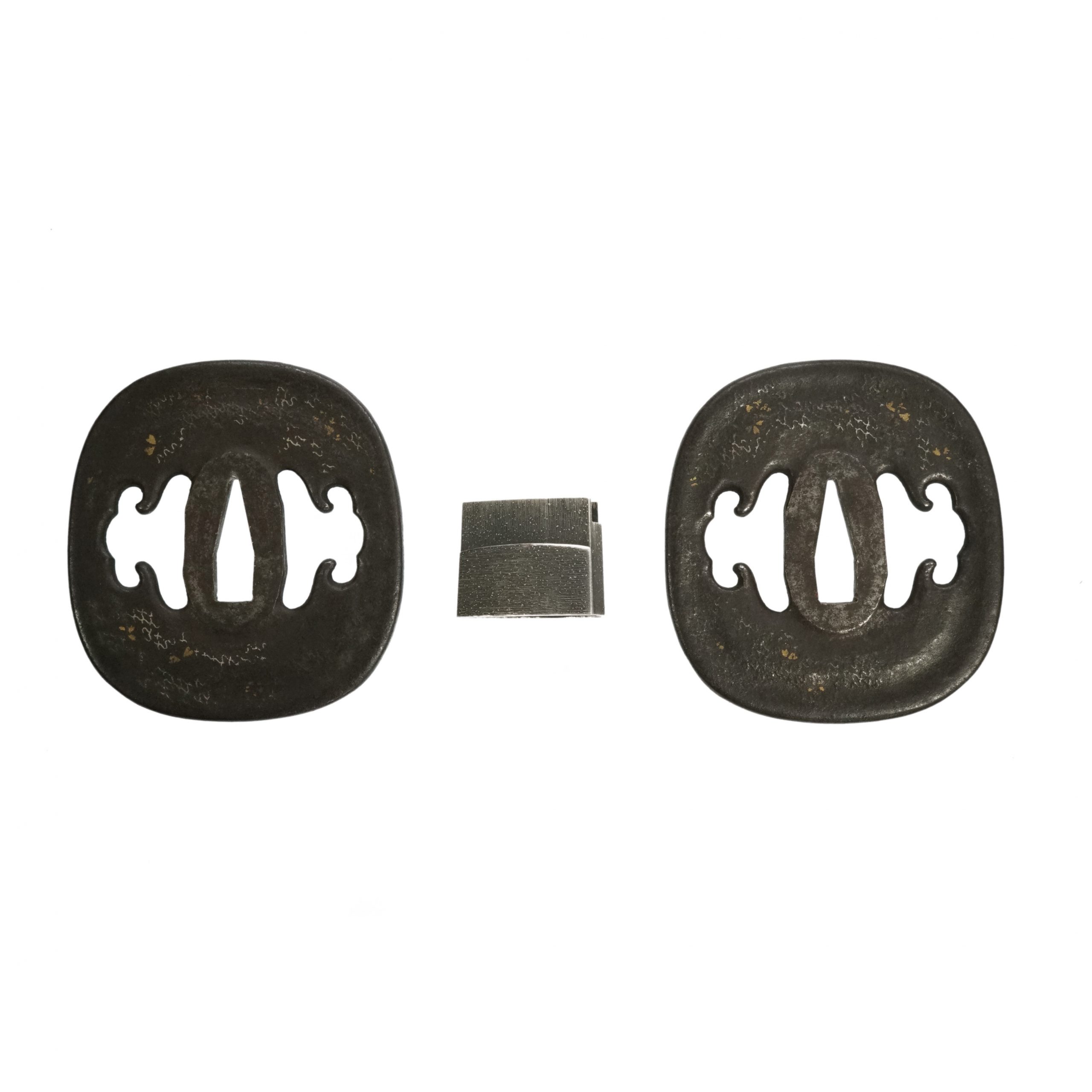
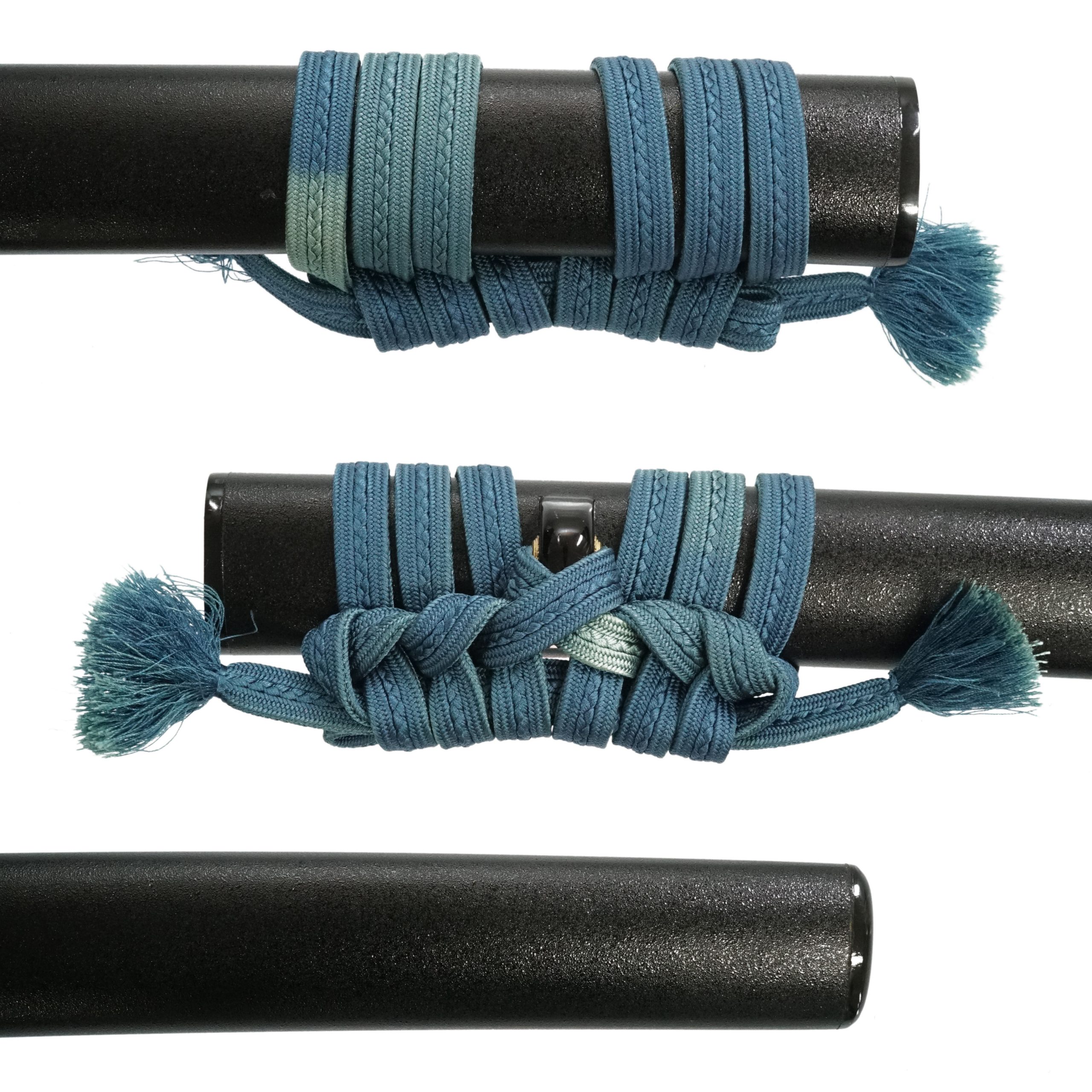
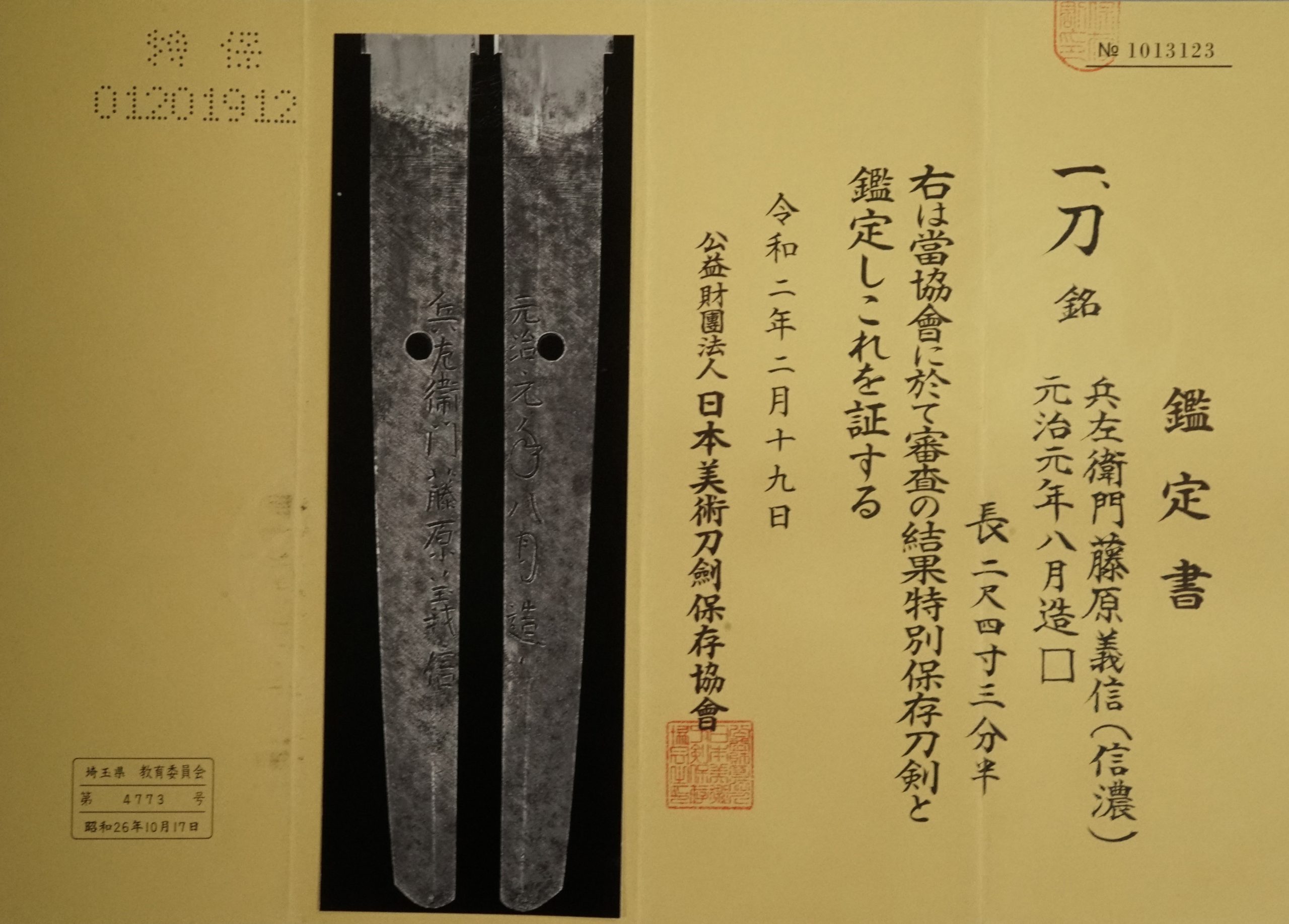
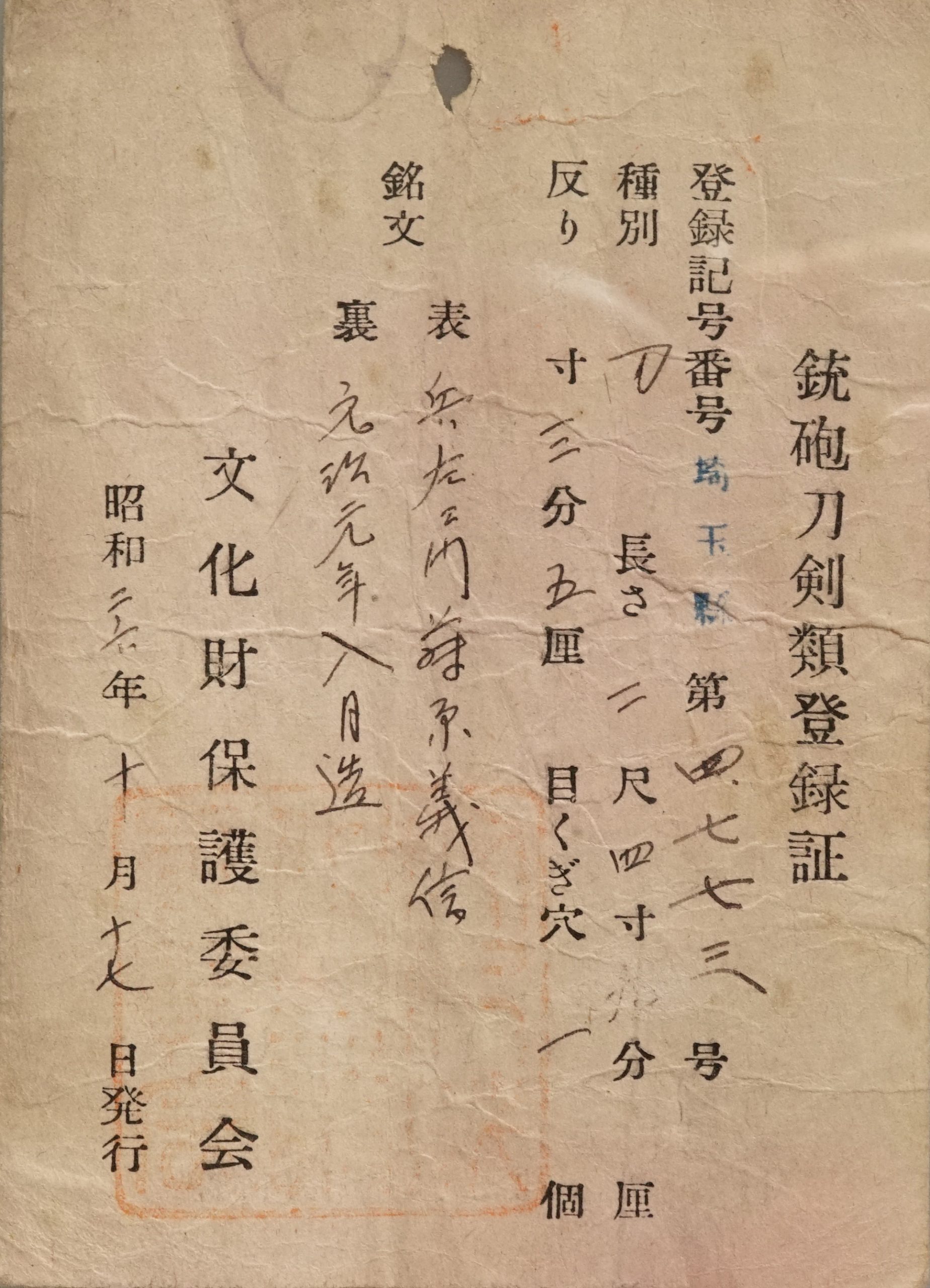
FijiwaraYoshinobu(藤原義信) was a swordsmith from Shinano province who forged swords during the Bakumatsu era (the Edo period’s last years). This blade was created by him in the first year of Genji, August(1864) based on the signature. His style appears to derive from the Kiyomaro school, one of the finest swordsmiths around the Bakumatsu era. Yoshinobu studied his art from Saneo, who was one of Kiyomaro’s siblings. Minamoto Kiyomaro(源清麿) was known as one of the three most famous swordsmiths in the late Edo period, along with Suishinshi Masahide(水心子正秀), Taikei Naotane(大慶直胤). The Japanese swords made after the mid-Edo period towards the end of the Edo period are called Shin-Shin-To in Japanese. Shin-Shin-To were likely to be made more practical and robust. The Shin-Shin-To movement initially took place when Suishinshi Masahide began to bring back the old-school Japanese swords forged around the mid-to-late Kamakura period. Their swords rapidly gained popularity as the Edo regime had fallen into an unstable political state. As opposed to most swords of the previous era that were essentially more like luxury properties, the Shin-Shin-To spoke louder to the Samurais’ minds mourning the sad state of Edo. This blade has approx 73.6 cm long and must have been practical to use at the end of the Edo period. You can appreciate Yoshinobu’s craftmanship very well by looking at the beautiful Hamon and Jigane. If you are interested in an antique Japanese sword related to Kiyomaro school, you would be pleased to see it. This blade is appraised as Tokubetsu Hozon certificate issued by NBTHK. This authentication paper was only given to Japanese swords, especially worth preserving by Nihon Bijutsu Touken Hozon Kyokai(the Society for the Preservation of the Japan Art Sword). It accompanies with gorgeous sword mountings. Fuchi-Kashira This Fuchi Kashira is decorated with a plant pattern. By seeing its shape, it might be Shida (羊歯, fern). As ferns have a high fertility rate, the Shida pattern represents children’s prosperity and success in business. Also, “羊歯” can be written as “歯朶” in Japanese. “歯” means ages, and “朶” means branches grow long; therefore, it symbolizes longevity. Tsuka and Menuki It is challenging to judge what the motif of this Menuki is. Its shape might depict a kind of plant. Tsuba and Habaki The petals of cherry blossom are inlaid for this Tsuba. Cherry blossom is a seasonal thing of spring. In Japan, people enjoy this flower for a long time. Its pattern is designed not only for sword mountings but also for Kimono (traditional Japanese costume) or furnishings. It has believed the god of grain dwells in cherry blossom. Therefore, this flower pattern has been treated as the symbol of a rich harvest. People held a traditional event under cherry blossom trees to pray for a bumper year in ancient times. Authentication Paper They authenticated the blade on Feb 19th in the second year of Reiwa (2020). They appraised it as Tokubetsu Hozon Touken, the blade especially worth preserving for Japanese society.
Offered by Samurai Museum

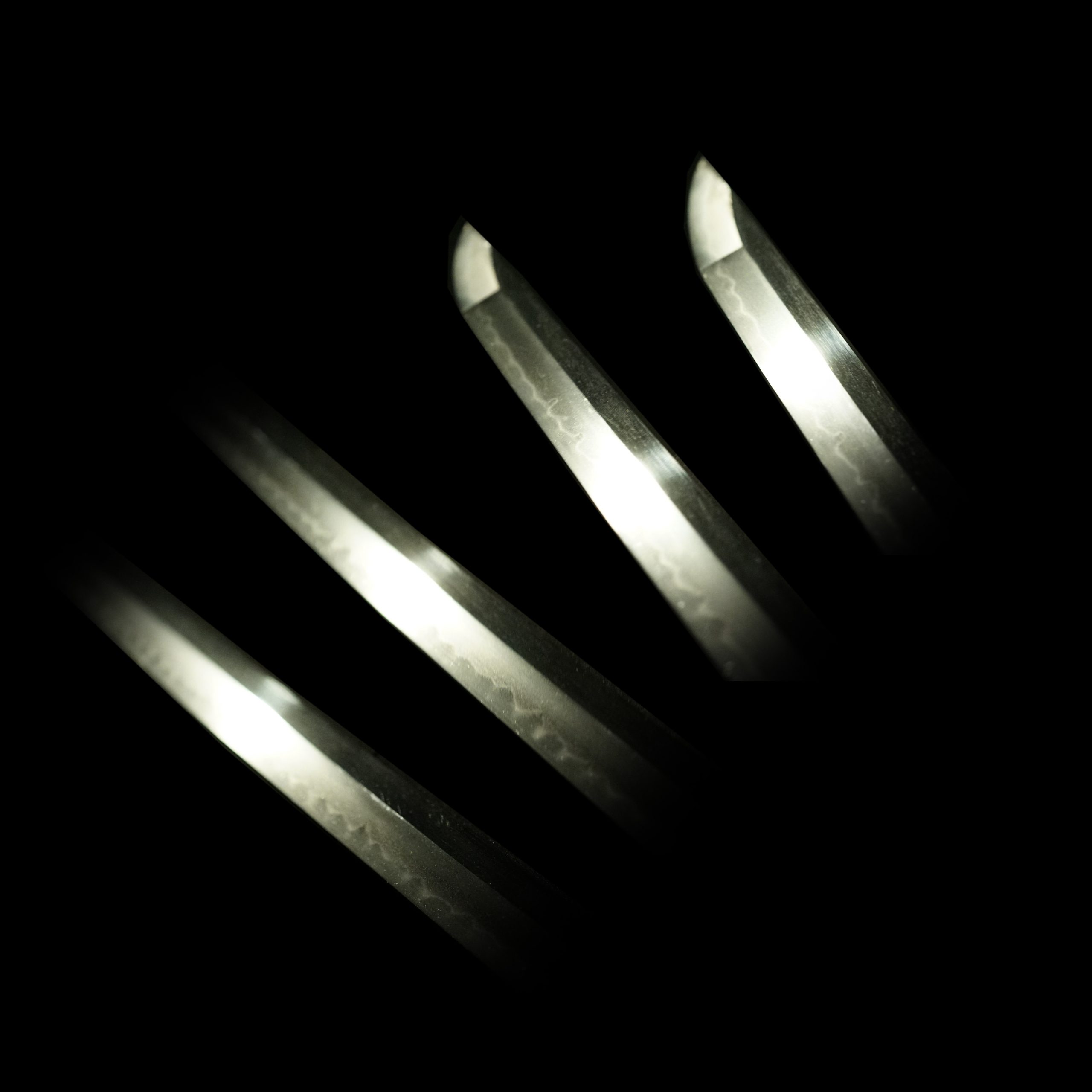
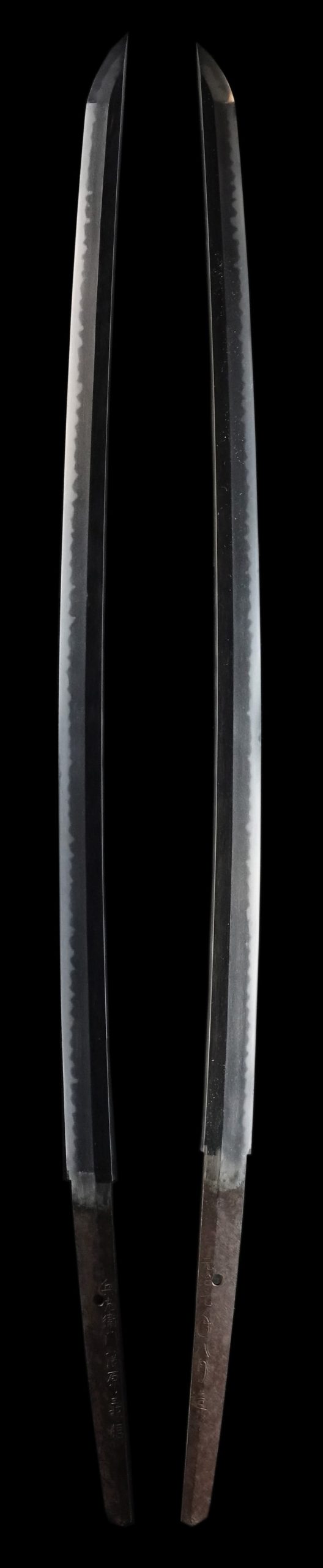
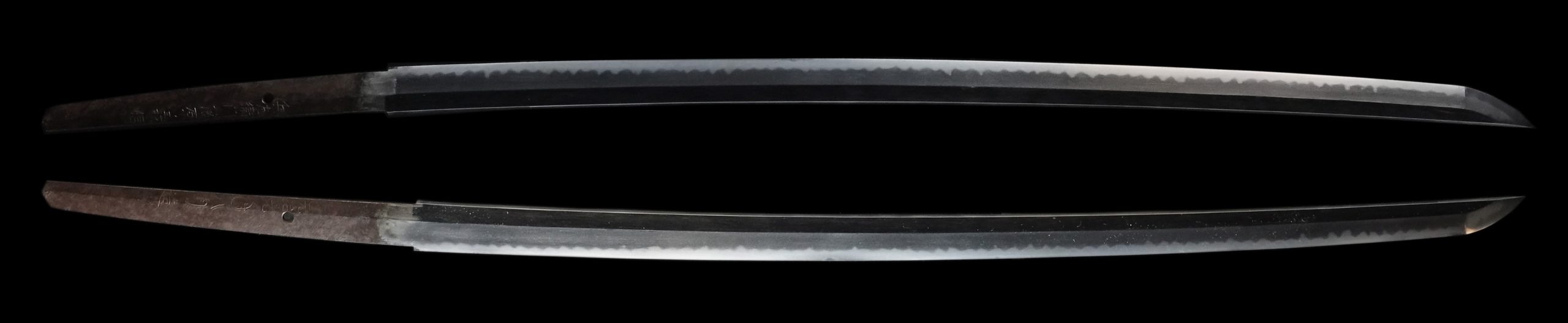
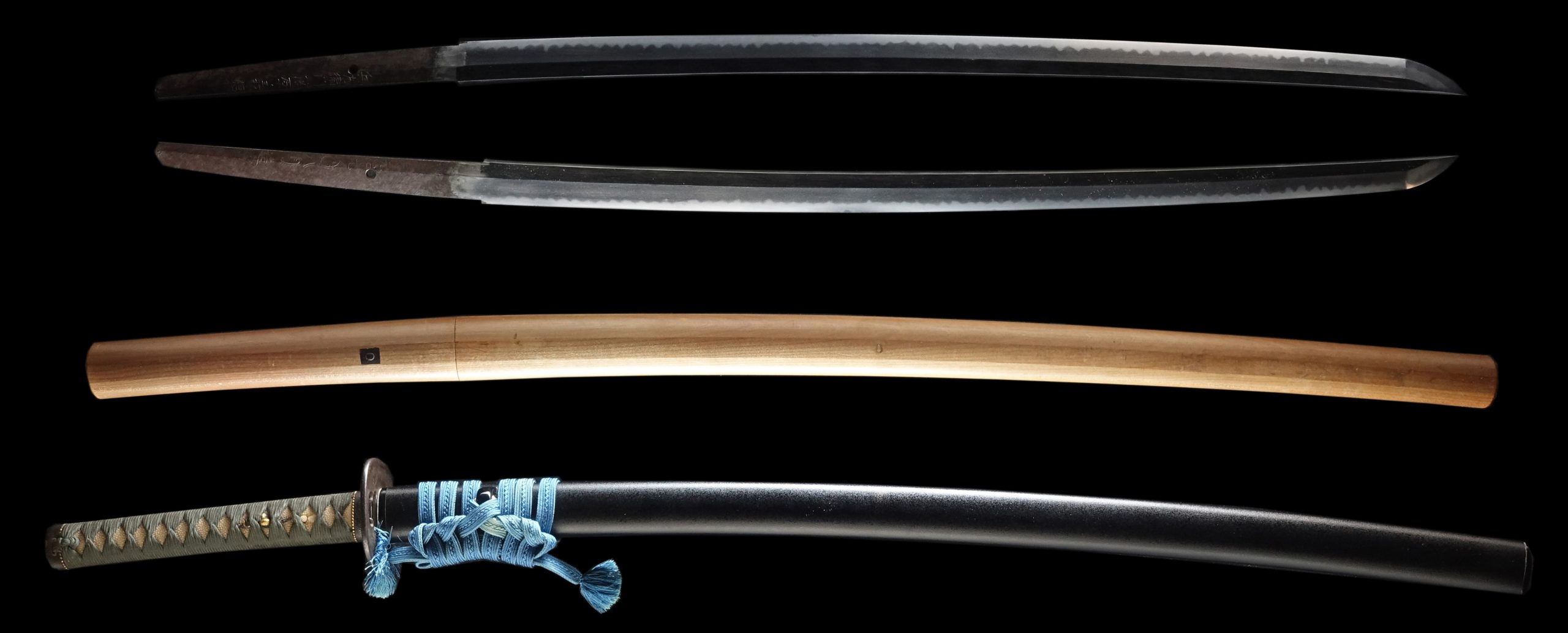

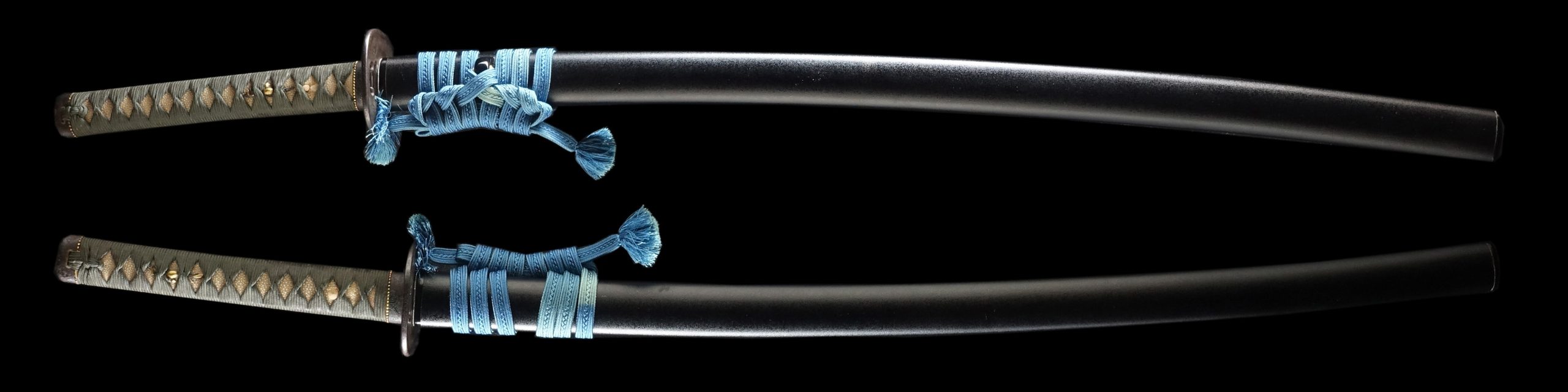
Shinshinto · Musashi
17 pieces on the market now
The Kiyomaro school gathered in the workshops of Yotsuya in Edo around the middle of the nineteenth century, its founder Yamaura Kiyomaro (清麿) born in Bunka 10 (1813) at Akaiwa village in the Komoro district of Shinano, the second son of the country gentry-warrior Yamaura Nobukaze. He learned forging first under the Ueda-domain smith Kawamura Toshitaka, signing his early blades Masayuki, went up to Edo in Tenpo 6 (1835) under the patronage of the military scholar Kubota Kiyone, and in the autumn of Koka 3 (1846) settled at Iga-cho in Yotsuya and changed his signature to Kiyomaro; he died by his own hand at forty-two in Kaei 7 (1854). Around him moved his elder brother Yamaura Masao (真雄/正雄), who took the same instruction from Toshitaka and walked the same course from choji into Soshu-den, and the pupils who entered the Yotsuya forge in its final years: Kurihara Nobuhide (信秀), a mirror-maker from Sanjo in Echigo whom the published sources place nearest the master's hand; Saito Kiyondo (清人) of Dewa, who afterward settled his teacher's sword debts and carried the manner into early Meiji; and the wider circle of associates and patrons through which the line passed. The shared vocabulary of the school is a powerful Soshu-revival manner. Over an itame that flows and stands a little, well packed and at times opening into mokume and o-itame, the smiths lay thick ji-nie with frequent chikei, the steel clear and without utsuri, for this is a late hand reaching back five centuries to Sagami rather than a Bizen revival. The temper is an o-midare or gunome-midare mixed with ko-notare, the ashi and yo entering, the nie thick and gathering coarse in clusters of ara-nie, with long kinsuji and streaming sunagashi running through nearly every blade; the boshi answers in a midare-komi turning pointed with hakikake. A Bizen-leaning side survives from the early years in the residual choji that shades into the mature work. Within this common ground the hands diverge. Kiyomaro's is read as the overwhelming one, his Soshu-den reaching the upper transmission with the Shizu vein as his forte of fortes, the NBTHK calling his work 「覇気に満ちている」, filled with commanding spirit.
Masao's grounded forging is candidly weighed against his brother's, the texts noting that his chikei, sunagashi, and kinsuji run fewer and the quality does not reach Kiyomaro's level. Nobuhide is named the closest approach to the master and is alone in the school for his carving, a mirror-maker's hand that set kurikara, dragons, and bonji into blades the others left plain. Kiyondo holds the round-headed gunome-midare at full strength and adds a manner of his own, a bright suguha aligned with the Yamato tradition that Kiyomaro never worked. To kantei the school, read first the imposing shape particular to the Yamaura line: a wide body with little taper, the sori toward the point, a chu-kissaki extended or run to an o-kissaki whose fukura is allowed to wither for a sharp impression, often a shobu-zukuri or kanmuri-otoshi wakizashi. Read then the nie, thick in ji and ha, the chikei and the conspicuous kinsuji and sunagashi that mark the force of the steel rather than any borrowed pattern. Carving narrows the field to Nobuhide; a Yamato suguha narrows it to Kiyondo. Kiyomaro stands at the head of the line, ranked by the published sources as high as Kotetsu and named without question the leading master among the shinshinto, the smith called the Yotsuya Masamune (四谷正宗). His extant work is scarce and closely held, passing through documented hands such as the Iwasaki family and the Seikado Bunko, and reaches the market only from time to time and at the very top of it. The pupils and the elder brother offer the more attainable face of the circle, signed and dated blades that come to a collector with patience; a signed example of any of these hands is a document of the moment when Soshu was reborn in Edo. Learn more →
| Smith | Era | Designated |
|---|---|---|
| Kiyomaro清麿 | 1839-1854 | 73 |
| Nobuhide信秀 | 1857-1867 | 34 |
| Kiyondo清人 | 1848-1868 | 10 |
| Masao真雄 | 1844-1866 | 7 |
| Masanao正直 | 1865-1868 | 3 |
Bakumatsu: the last war market
Perry’s arrival in 1853 unraveled the Tokugawa peace and created the first mass demand for working swords in two centuries. Kiyomaro, called the Masamune of Yotsuya, died on its eve; Munetsugu and Yukihide carried the boom to the end.
A Hozon-certified blade judged to show notably superior workmanship and a better state of preservation. The bar is higher: re-tempered blades and most unsigned Muromachi/Edo works are excluded.
The NBTHK (Nihon Bijutsu Tōken Hozon Kyōkai, the Society for the Preservation of Japanese Art Swords) is a public-interest incorporated foundation founded in 1948 and supervised by Japan’s Agency for Cultural Affairs (Bunkachō); it is based at the Japanese Sword Museum in Tokyo. Its expert panels physically examine each submitted work (shinsa) and issue a certificate (kanteishō) ranking it by artistic and historical merit. NBTHK papers are the most widely recognized standard of authentication for Japanese swords and fittings.
NBTHK official siteReturns/exchanges limited to defects caused by shipping (except willful misconduct or gross negligence by the company); customers must contact within 72 hours of receiving the product.