Perry’s arrival in 1853 unraveled the Tokugawa peace and created the first mass demand for working swords in two centuries. Kiyomaro, called the Masamune of Yotsuya, died on its eve; Munetsugu and Yukihide carried the boom to the end.
 NihontoWatchNihontoWatch
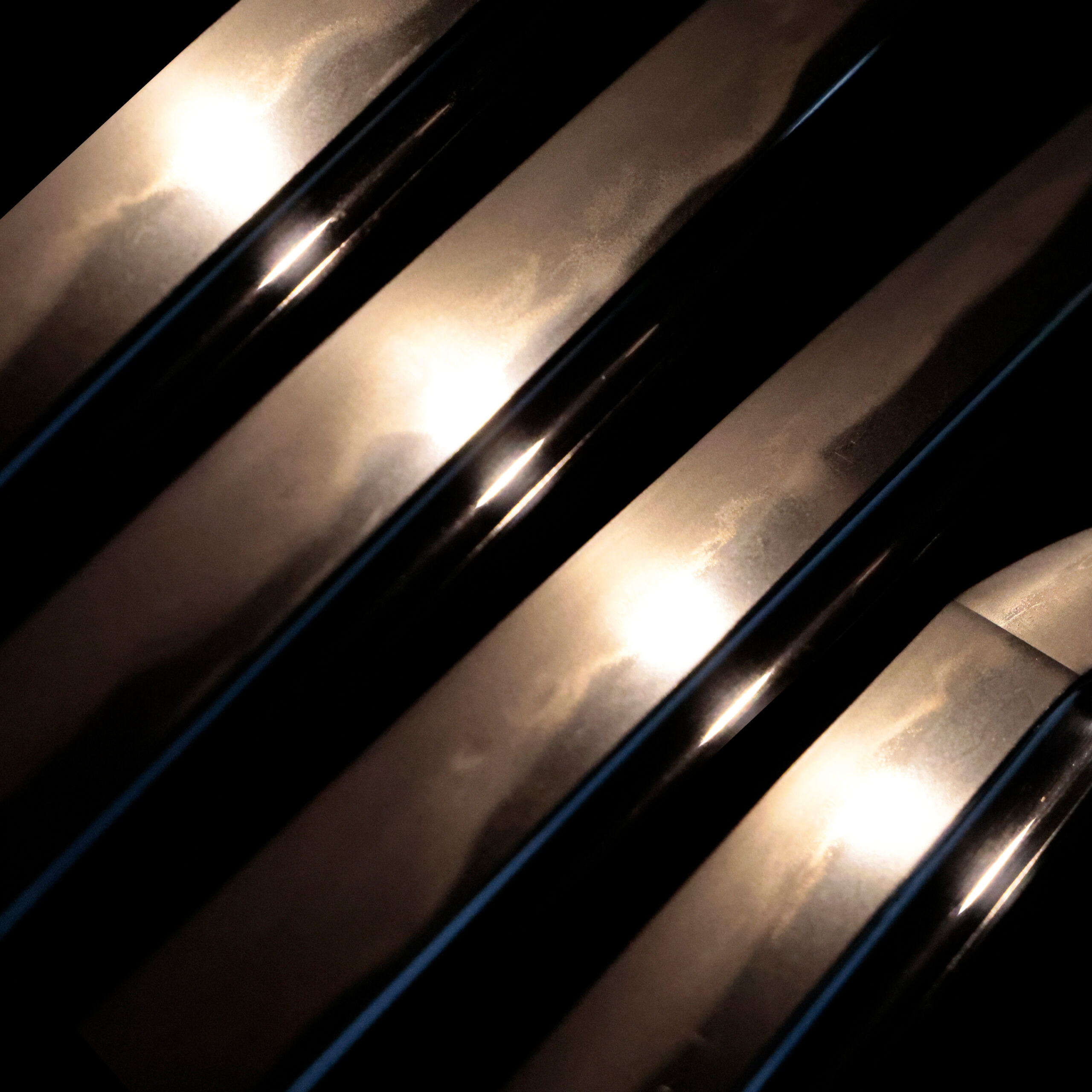
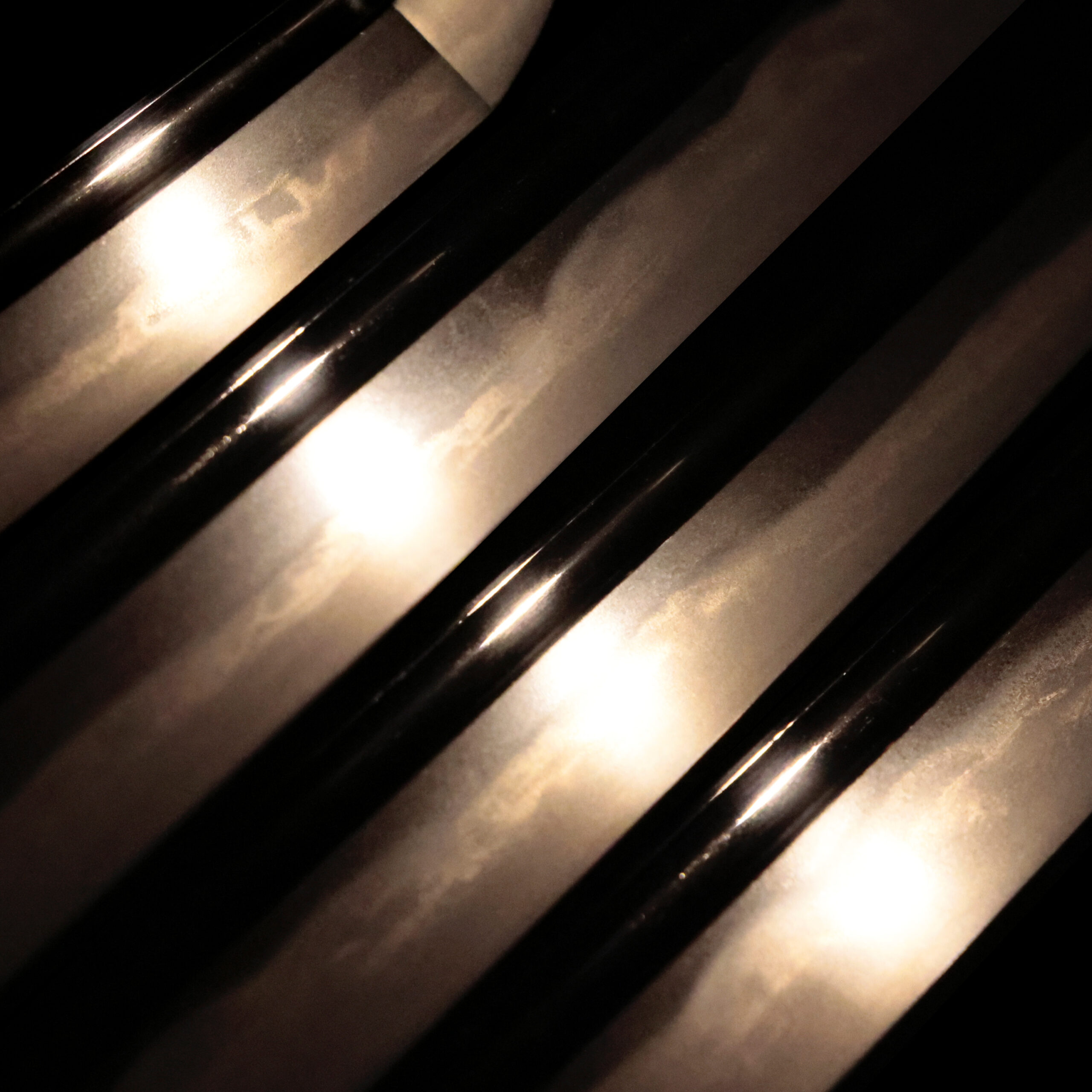
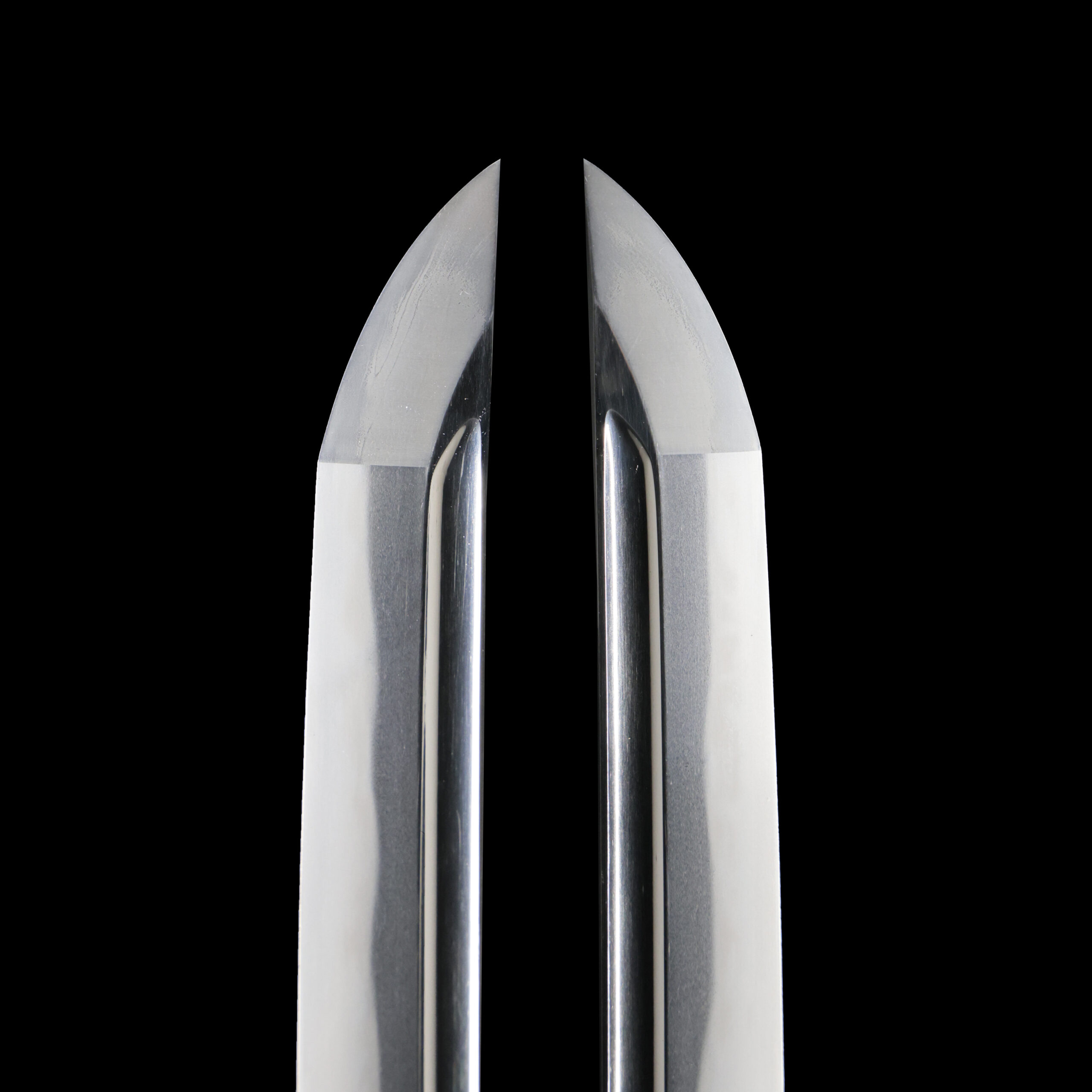
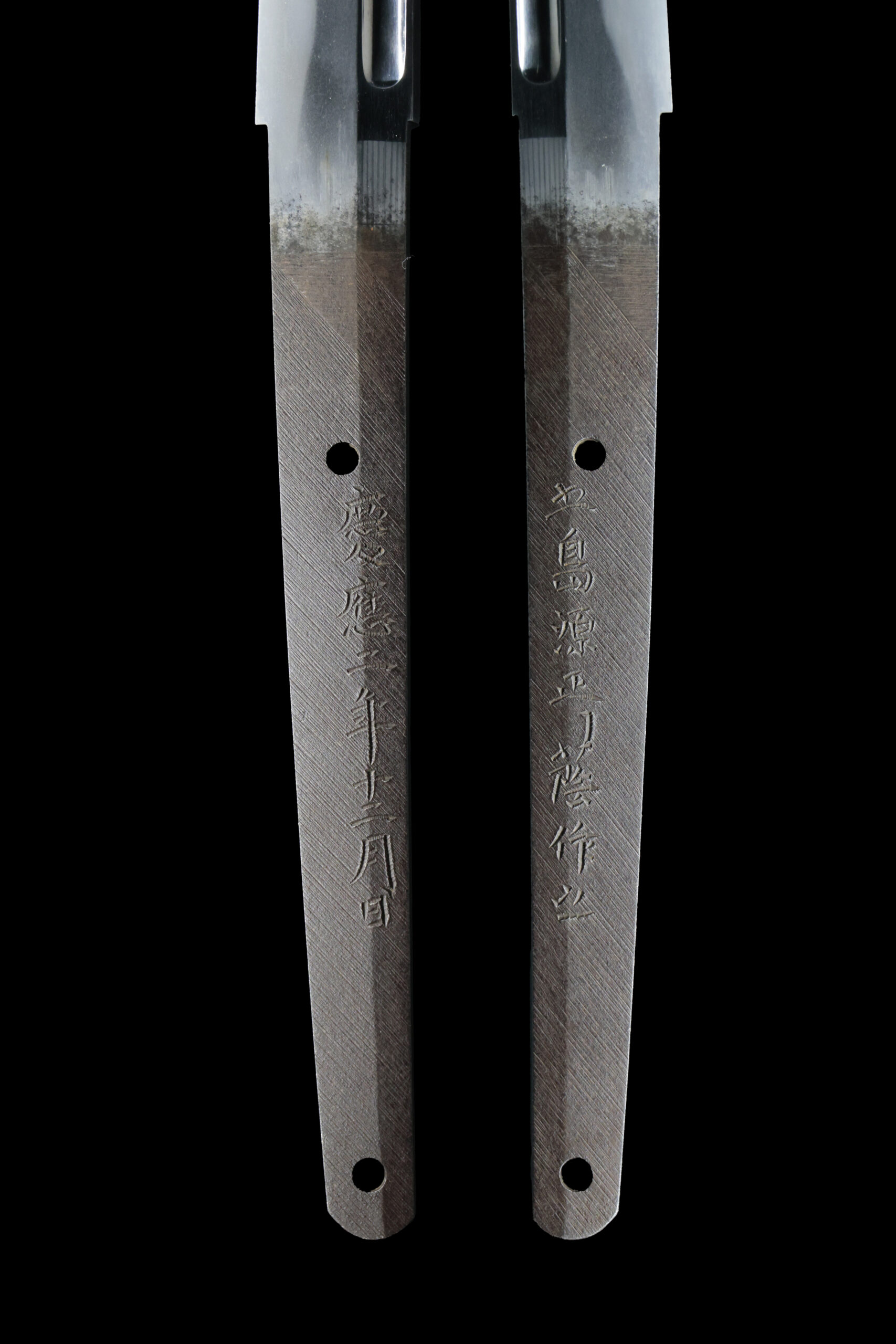
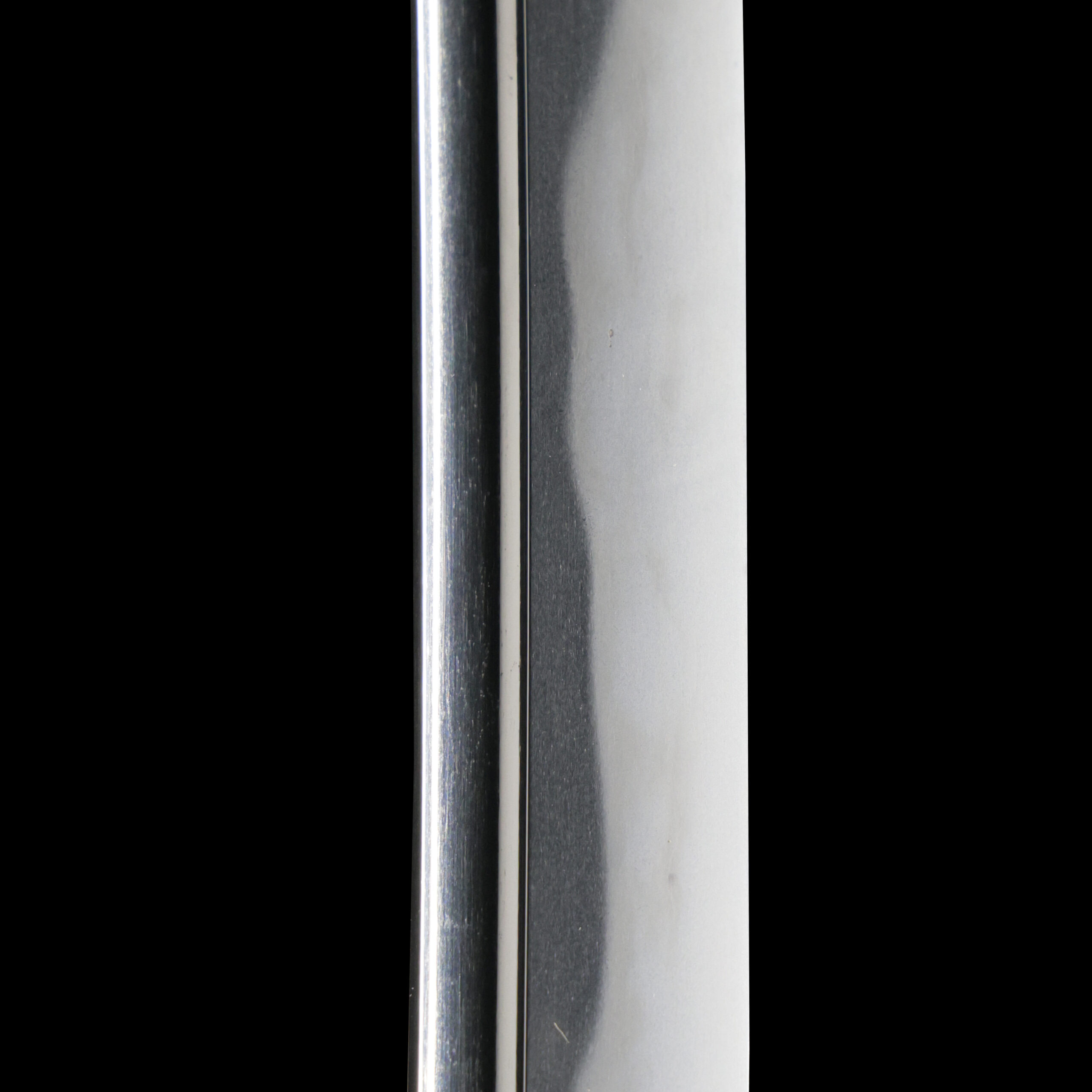
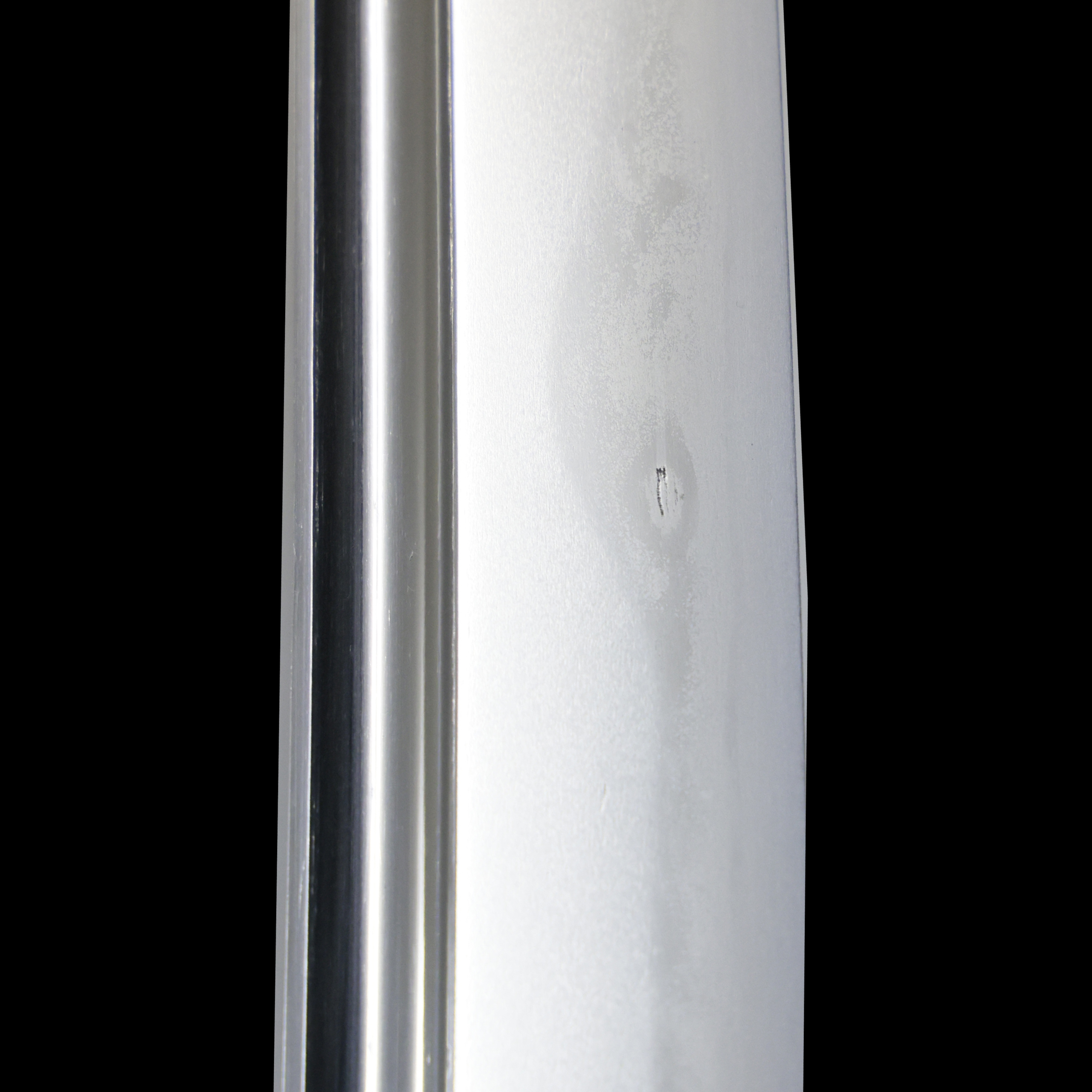
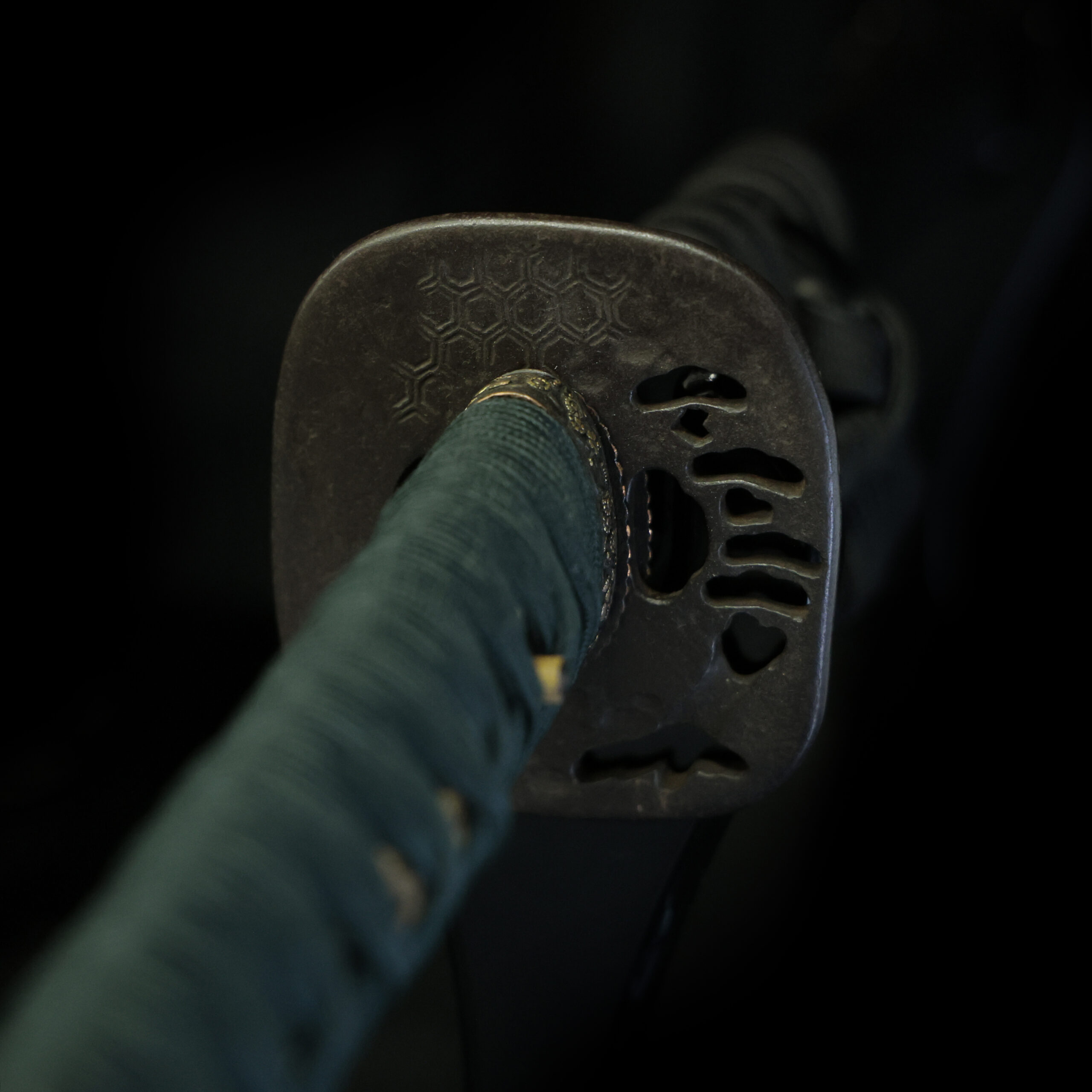
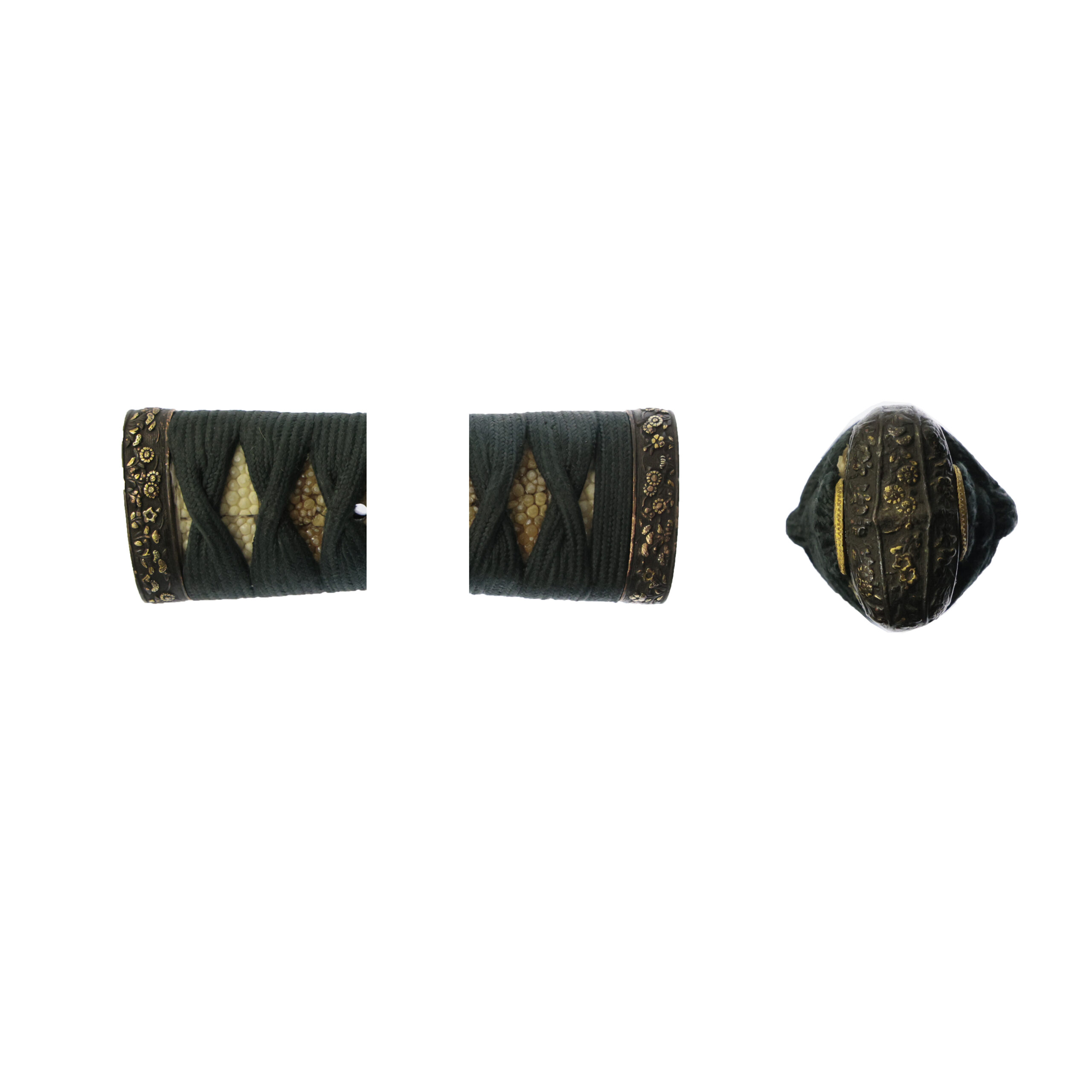
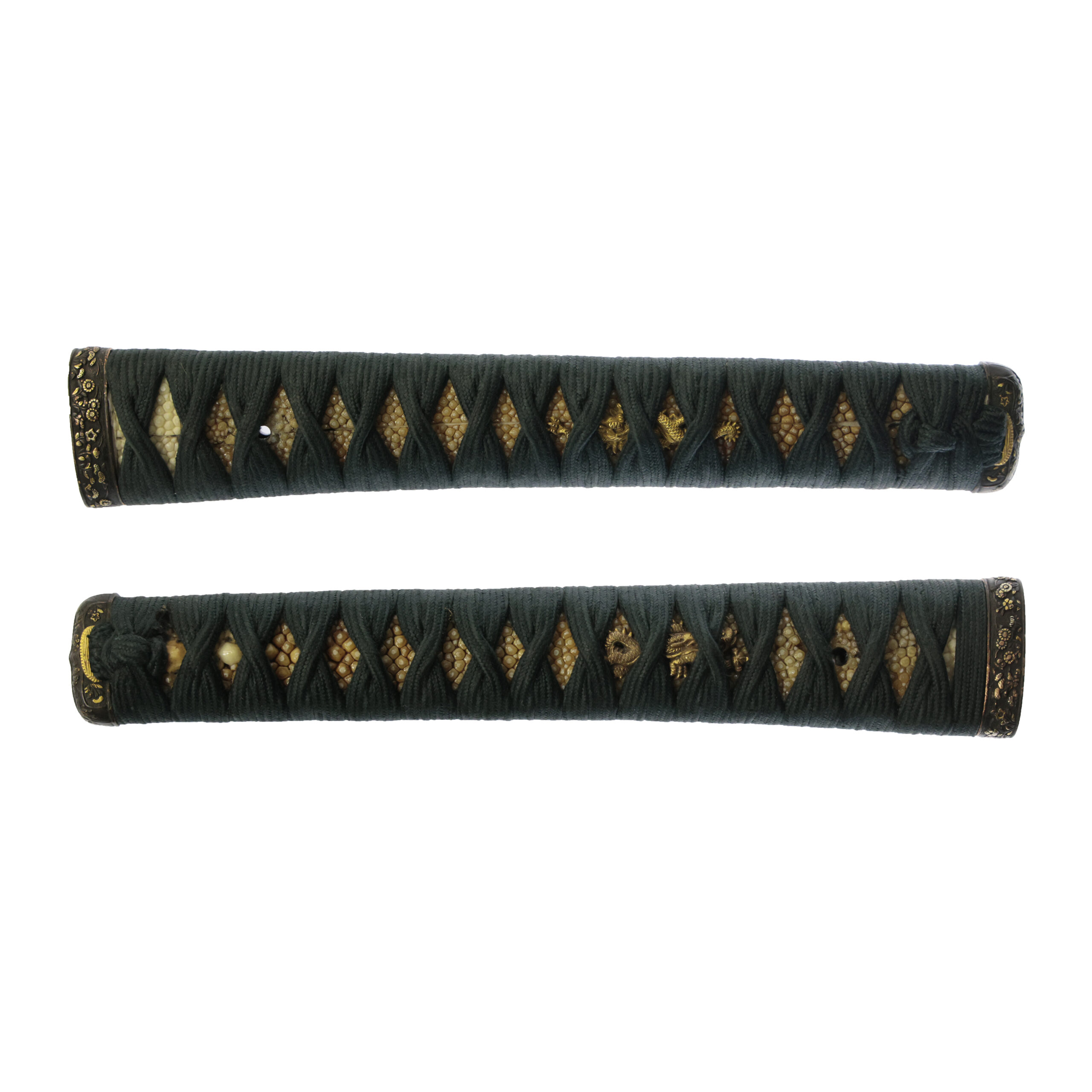
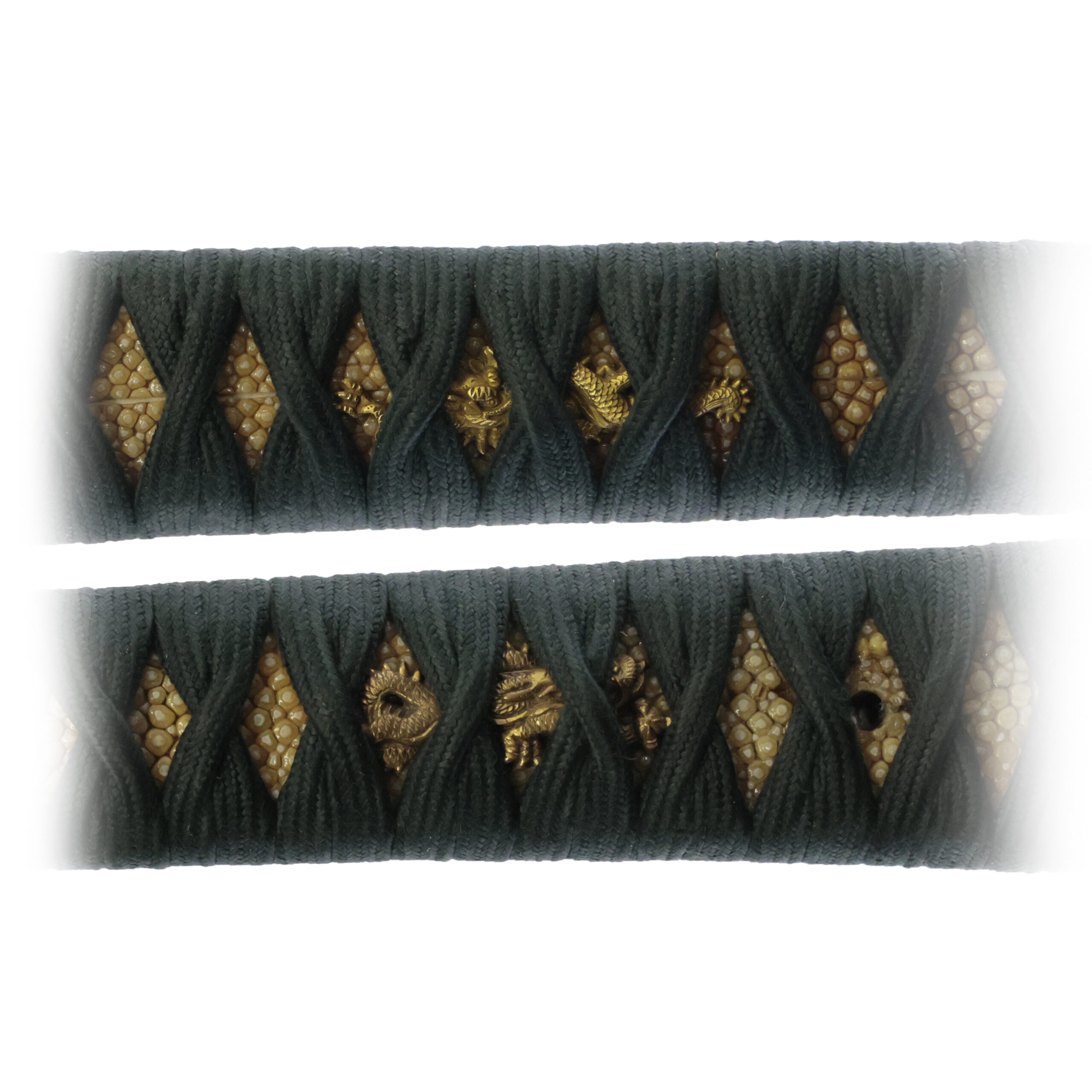
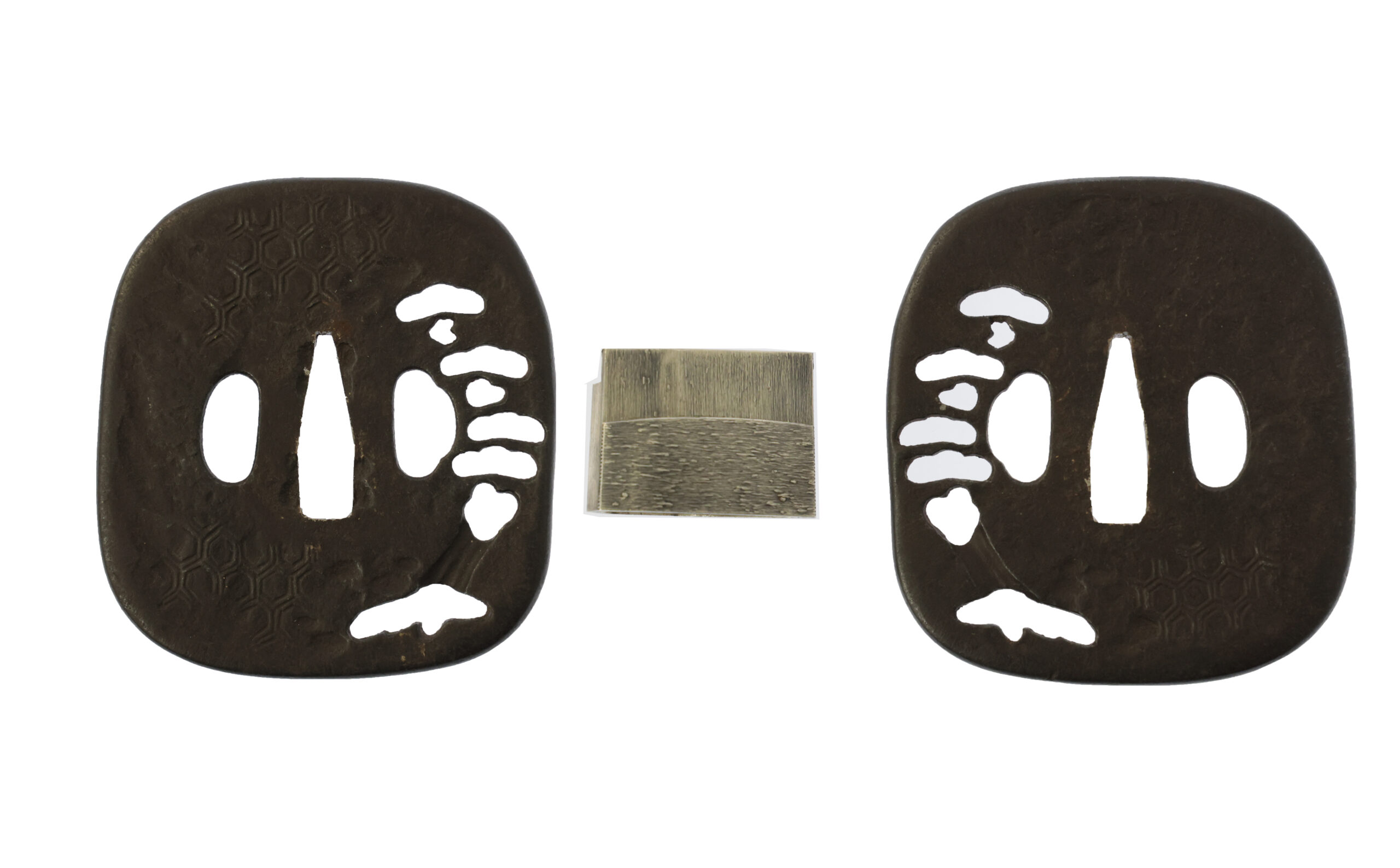
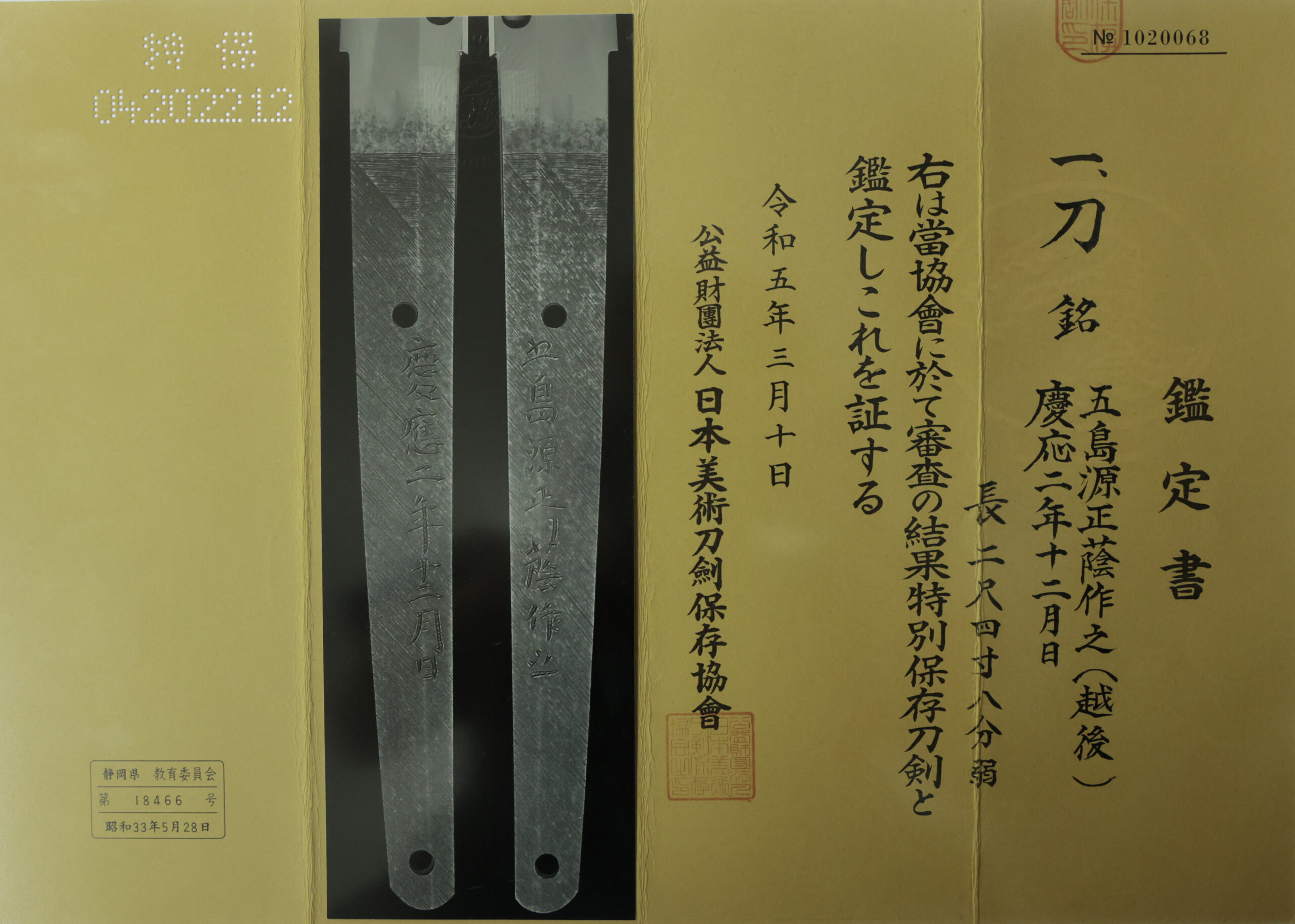
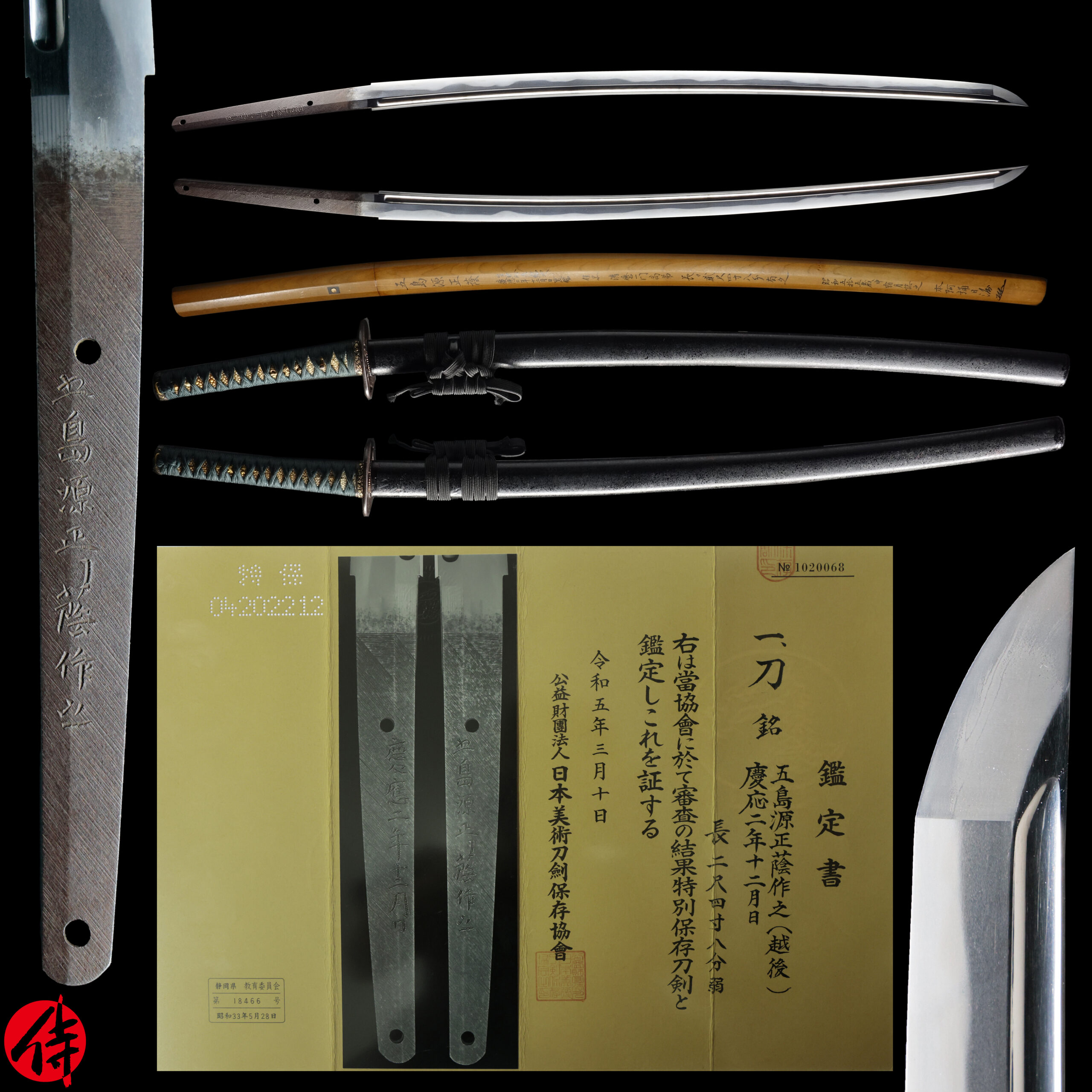
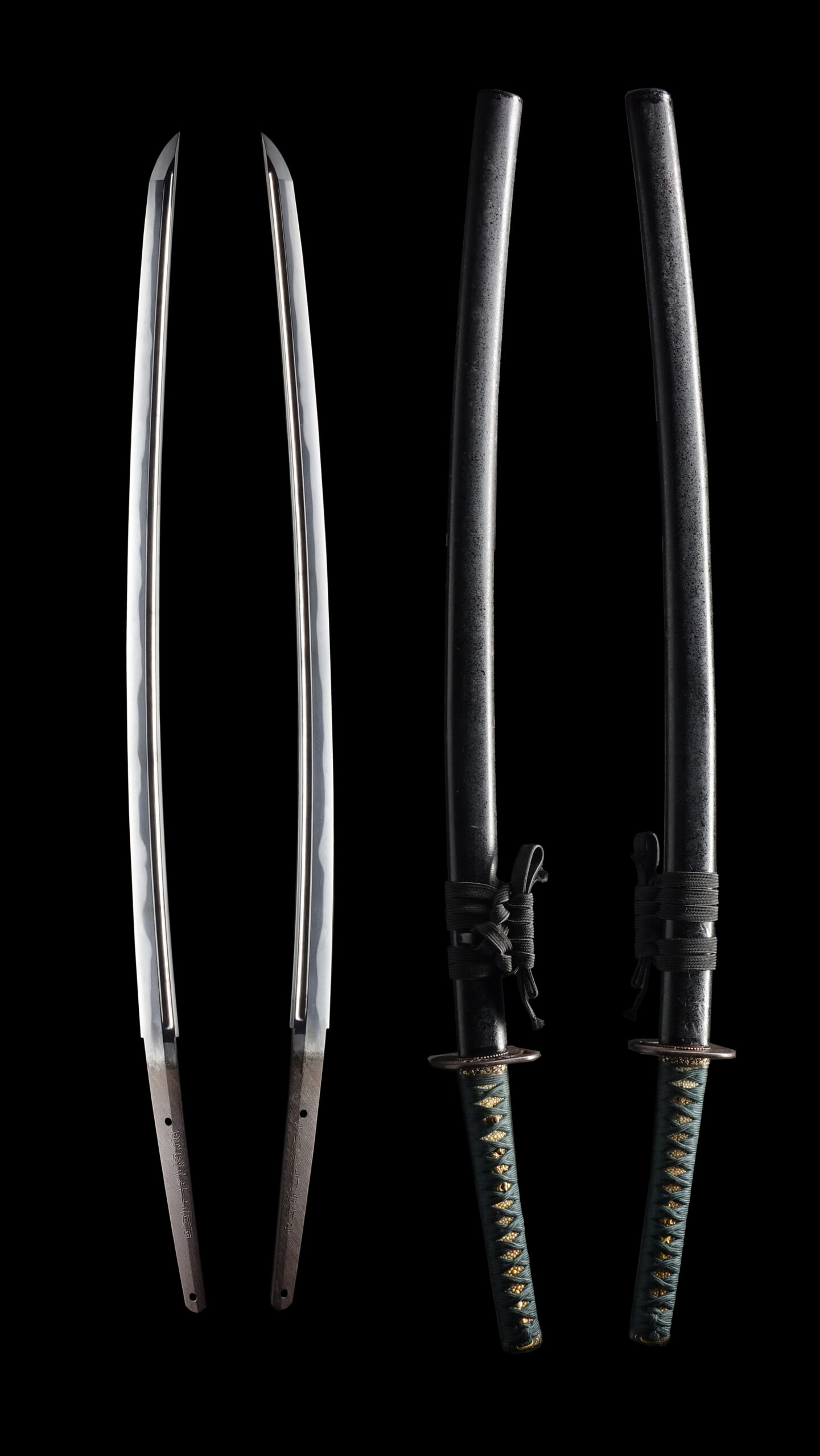
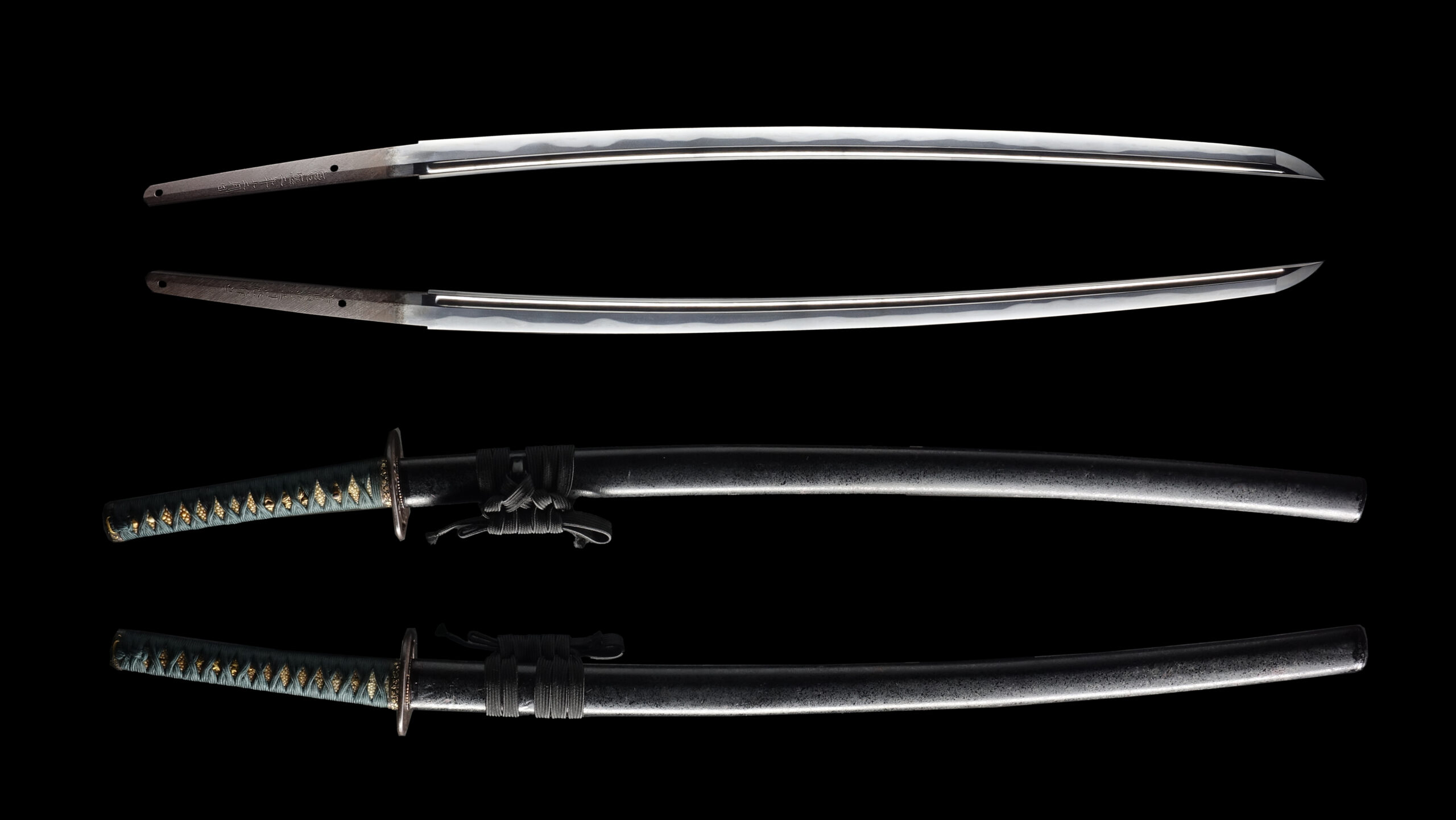
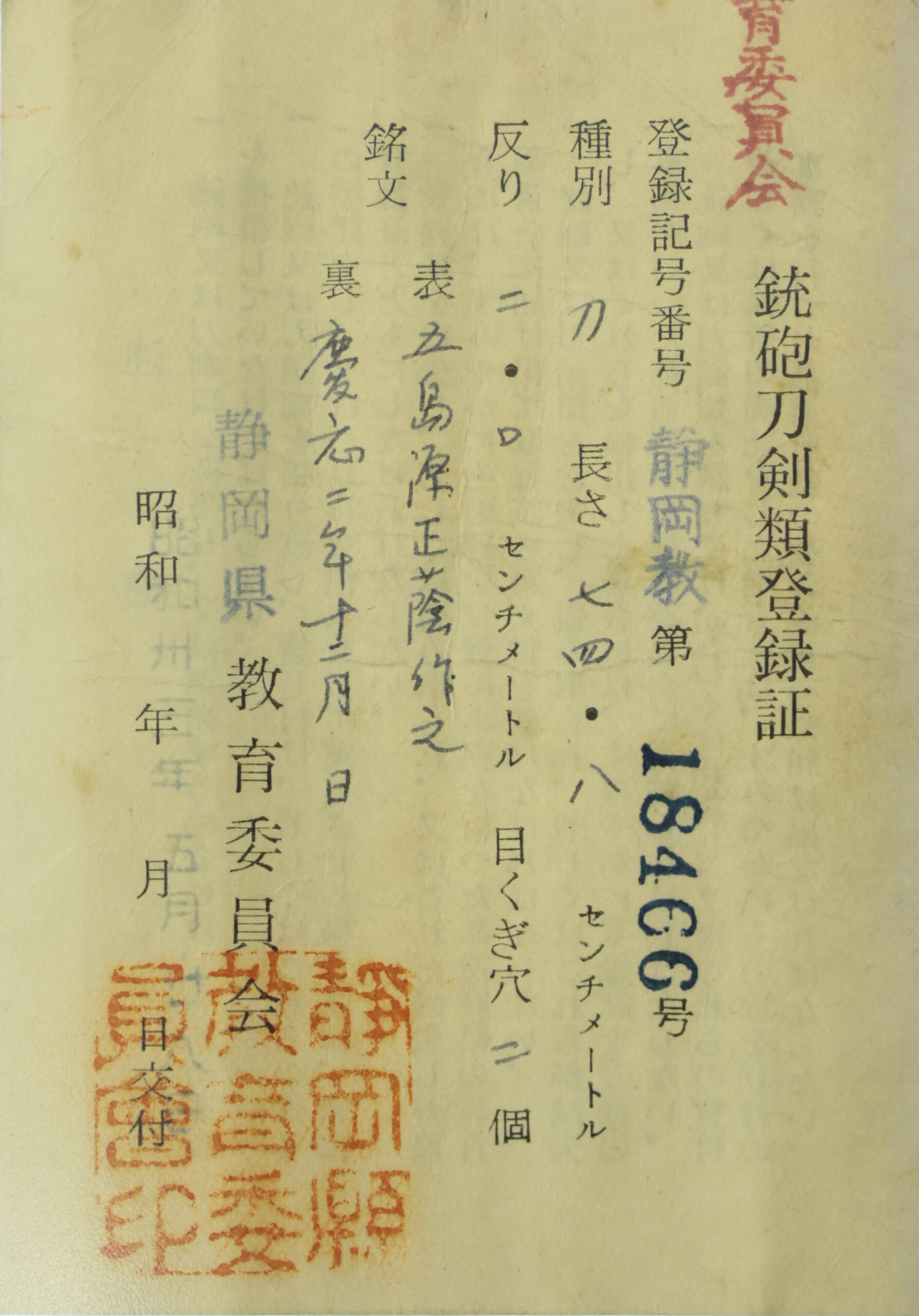
This blade was forged in December 1866 (the 2nd year of the Keio era) by Gotou Minamoto no Masakage (五島源正陰). Masakage was a disciple of Masao Minamoto (also known as Suzuki Masao), a distinguished student of the famous late Edo master Minamoto Kiyomaro, making Masakage effectively Kiyomaro’s grand-disciple. Born as Gotou Koisuke in Etchū Province (today’s Toyama Prefecture), he first studied under Masao in Edo and later refined his skills under Suishinshi Masatsugu. He eventually established his forge in Takada Castle town (Echigo Province), producing blades that met the high demand during the turbulent Bakumatsu era. Masakage is categorized as a swordsmith of the Kiyomaro school; however, with the Meiji government’s prohibition of swords, he had no choice but to abandon his career as a swordsmith. His signatures include “Minamoto no Masakage,” “Masakage,” “Gyokushinsai Masakage Saku,” and “Gotou Minamoto Masakage.” Inheriting the brilliant style of the Kiyomaro lineage, Masakage’s swords are regarded as fine works with great potential value for future generations. Minamoto Kiyomaro — The “Yotsuya Masamune” Minamoto Kiyomaro (源清麿, 1813–1855) is remembered as one of the most outstanding swordsmiths of the late Edo period, often regarded as the greatest master of the Bakumatsu era. He was born into a gōshi (郷士, farmer-samurai) family in Akaiwa village, Komoro domain (present-day Tōmi City, Nagano Prefecture). His real name was Yamaura Kurōsuke Tamaki. Kiyomaro first studied under his elder brother, Yamaura Saneo, before moving to Edo, where he entered the dojo of Kubota Sugane, a martial arts instructor. Kubota soon recognized his true talent in swordsmithing and encouraged him to dedicate himself fully to the craft. Kiyomaro studied ancient masterpieces directly, borrowing swords from retainers, and strove to recreate practical, battle-ready blades. He strongly embraced the Revivalist Sword Theory (刀剣復古論, Token Fukko Ron), introduced by Suishinshi Masahide in 1826. This movement called for a return to the robust and practical forms of Kamakura-period blades, in contrast to the straighter and less powerful styles of his own day. The influence of this theory was so profound that Japanese swords are now historically divided into “Shintō” (New Swords, pre-Masahide) and “Shinshintō” (New New Swords, post-Masahide). Together with Suishinshi Masahide and his disciple Taikei Naotane, Kiyomaro came to be celebrated as one of the “Three Great Edo Masters (Edo Sansaku).” He later established his forge in Yotsuya, Edo, where he developed a distinctive style that fused elements of the Sōshū-den and Bizen-den traditions. His blades, with their brilliant nie activity and bold, majestic form, were considered so remarkable that he was hailed as the “reincarnation of Masamune,” earning him the enduring nickname “Yotsuya Masamune.” Tragically, Kiyomaro’s life ended in suicide at the age of 42, following a decline brought on by heavy drinking. Despite his short life, his dramatic story and extraordinary craftsmanship cemented his place in history. Today, Kiyomaro’s swords remain among the most highly prized works on the market, admired as masterpieces that embody both the artistry and the spirit of the Bakumatsu era. Suishinshi Masahide Suishinshi Masahide (水心子正秀, 1750–1825) played an essential role in reshaping the sword-making world of the late Edo period. During his time, mainstream Japanese swords had become straighter and less robust compared to the masterpieces of the Kamakura era. By studying ancient swords, Masahide felt that something was lacking in contemporary blades. He therefore announced the Token Fukko Ron (Revivalist Sword Theory), declaring that swordsmiths should return to the old ways of forging. This theory deeply resonated with sword makers of the time and eventually became the mainstream of sword-forging. Masahide also wrote about ten books on swordsmithing and passionately trained many apprentices. Among his most famous students were Chounsai Tsunatoshi and Taikei Naotane, both of whom became renowned masters in their own right. His profound influence made him a central figure of the late Edo revival movement. He is counted as one of the Edo Sansaku (Three Great Edo Masters), together with Taikei Naotane and Minamoto Kiyomaro. In his biography, Masahide stated that he had forged 369 swords during his career. However, only about 100 of them have been identified in Japan today, most of which are wakizashi. It is extremely rare to find a katana signed by him, making such works highly valuable and historically significant. About late Edo period The Bakumatsu period (幕末) was the final part of Japan’s Edo period, lasting from around 1853 to 1868. It began when American ships led by Commodore Perry arrived in Japan and encouraged the country to open its ports to international trade. This moment was a turning point in Japanese history. Many people in Japan were surprised by Western technology and started thinking about how the country should respond to the changing world. At the time, there were strong debates between those who supported the traditional Tokugawa shogunate and others who believed Japan needed to modernize and return political power to the Emperor. These disagreements eventually led to conflict and the end of samurai-led government. Samurai were important figures during the Bakumatsu period. Their swords, known as Katana, were not just weapons but also powerful symbols of their values and way of life. However, as Japan began to build a modern army and adopt new weapons, swords became less common in battle. It is appraised as a Tokubetsu Hozon Token (特別保存刀剣) issued by NBTHK (Nihon Bijutsu Touken Hozon Kyokai:日本美術刀剣保存協会). *Please keep in mind that there is a couple of Kitae Kizu on the Mune. Fuchi-Kashira The motif of this Fuchi-Kashira appears to represent the “Seven Flowers of Autumn” (秋の七草, Aki no Nanakusa), delicately expressed in fine gold inlay. In Japanese culture, the Seven Flowers of Autumn are deeply associated with classical literature and poetry, especially the Manyoshu (the oldest anthology of Japanese poems). They were admired not for eating but for their beauty and for the way they symbolize the seasonal transition from summer to autumn. By adorning sword fittings with such motifs, samurai not only enjoyed their refined aesthetic but also carried with them symbolic wishes for resilience, purity of spirit, and dignity in life. The tradition of admiring the Seven Flowers of Autumn was a form of seasonal appreciation. In ancient Japan, people would stroll through flower fields and compose poems (waka and haiku) inspired by their beauty. The origin of this custom is attributed to two poems by the Nara-period poet Yamanoue no Okura (660–733), which are preserved in the Manyoshu. From these verses, the appreciation of the Seven Flowers of Autumn became an enduring part of Japanese seasonal culture. Tsuka and Menuki The motif of this Menuki is a dragon (龍, Ryū). The dragon was originally an imaginary creature from ancient Chinese traditions and myths. It is considered a symbolic beast of auspicious signs. Its body is described as a combination of nine animals: antlers of a deer, the head of a camel, eyes of a demon, the neck of a snake, the belly of a Mizuchi (a Japanese mythical creature resembling a horned, four-legged serpent), scales of a fish, claws of a falcon, palms of a tiger, and ears of a cow. Because of this extraordinary form, the dragon was believed to reign at the top of all creatures. In ancient China, dragon motifs were used exclusively for the emperor’s clothing, with strict rules regarding the design and even the number of claws. In Japan, however, such rigid regulations did not exist, and the dragon motif was widely used while still retaining its meaning as an all-purpose auspicious design. In addition, in Japan the dragon is also revered as a water deity, known as Ryūjin Shinkō (竜神信仰). Since rice cultivation has always depended on water, the dragon became a familiar and powerful symbol deeply connected to Japanese life and culture. Tsuba and Habaki The design of this tsuba features a hexagonal geometric pattern crafted using the technique known as sukashi-bori (透かし彫り, openwork carving). Sukashi-bori involves cutting through the surface of the metal to create open spaces, allowing a hard material like iron to be expressed in a delicate and airy form. Light and shadow interplay through the openings, producing a striking visual effect. Beyond its decorative appeal, this technique also served practical purposes, such as reducing the overall weight of the guard and distributing structural stress during use. Authentication Paper They authenticated the blade on March 10th in the 5th year of Reiwa (2023). They appraised it as Tokubetsu Hozon Touken, the blade especially worth preserving for Japanese society.
Offered by Samurai Museum

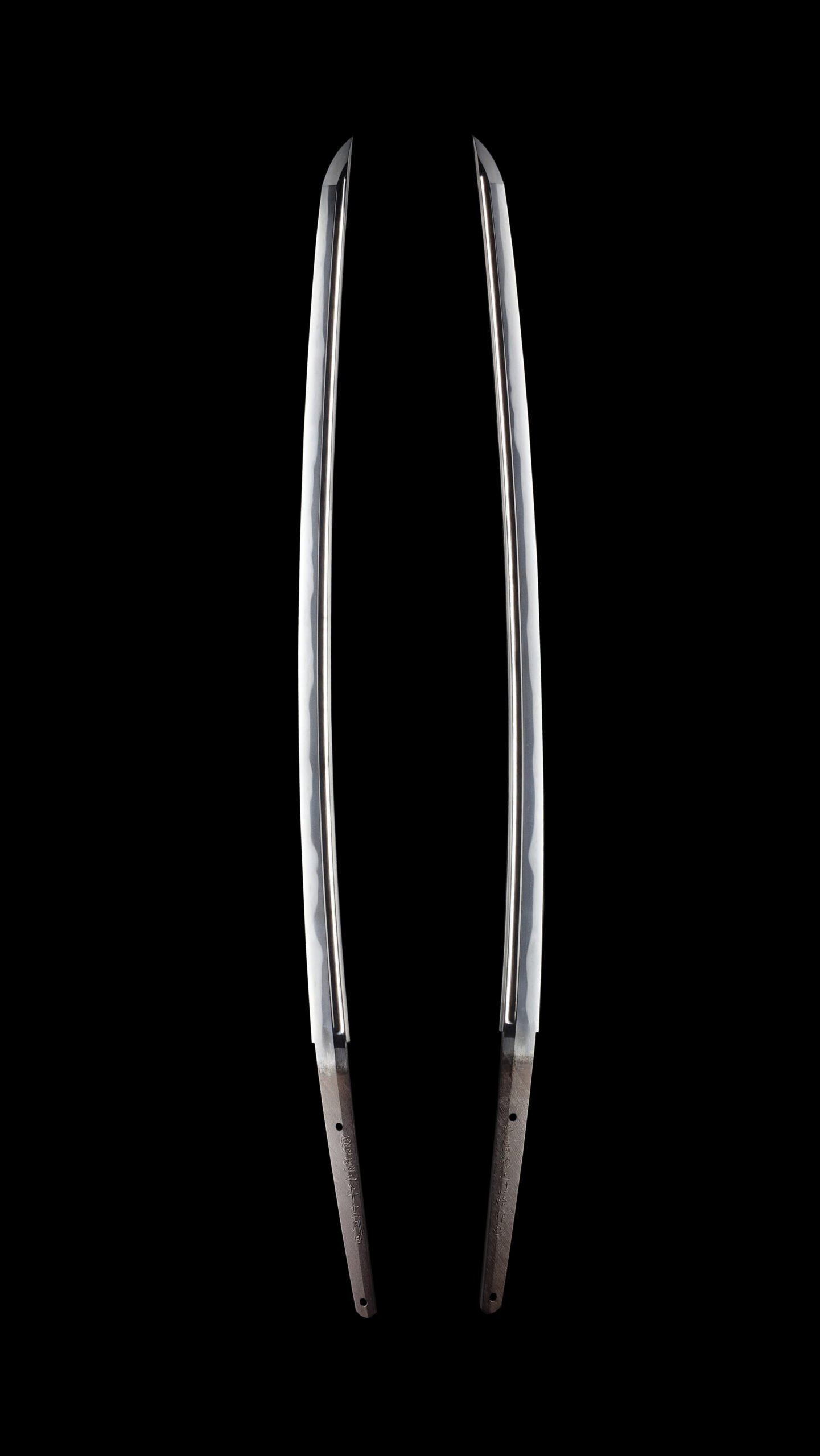
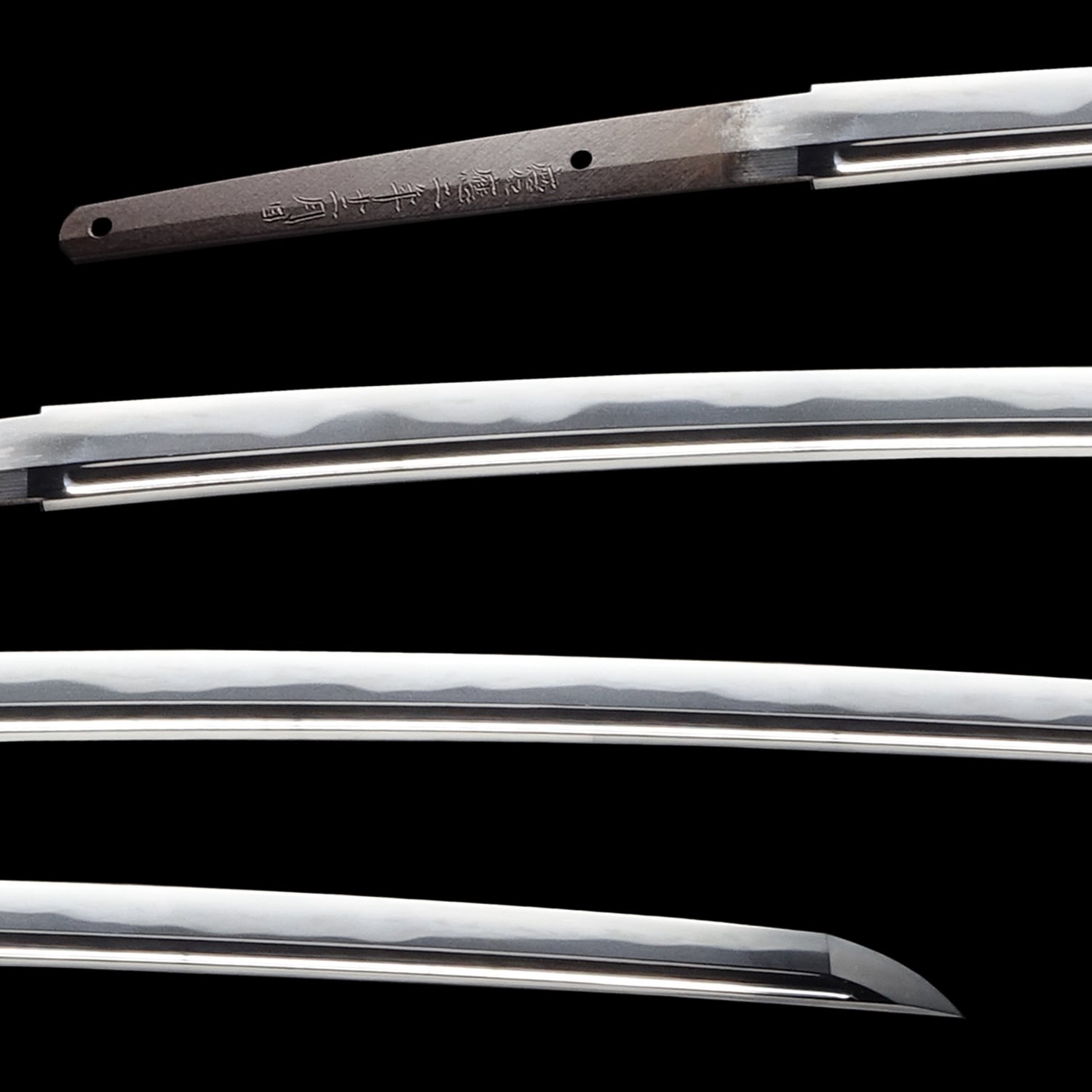
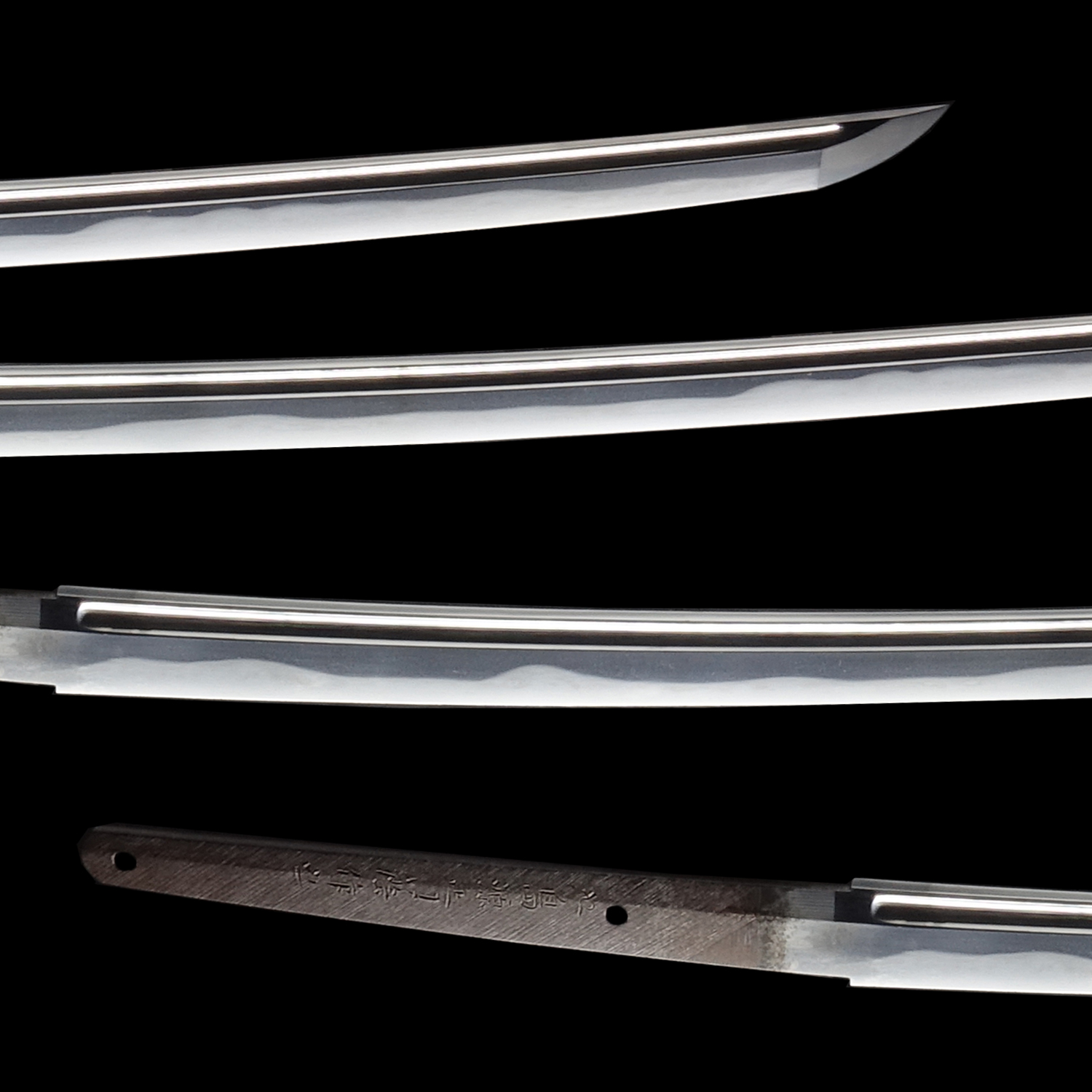
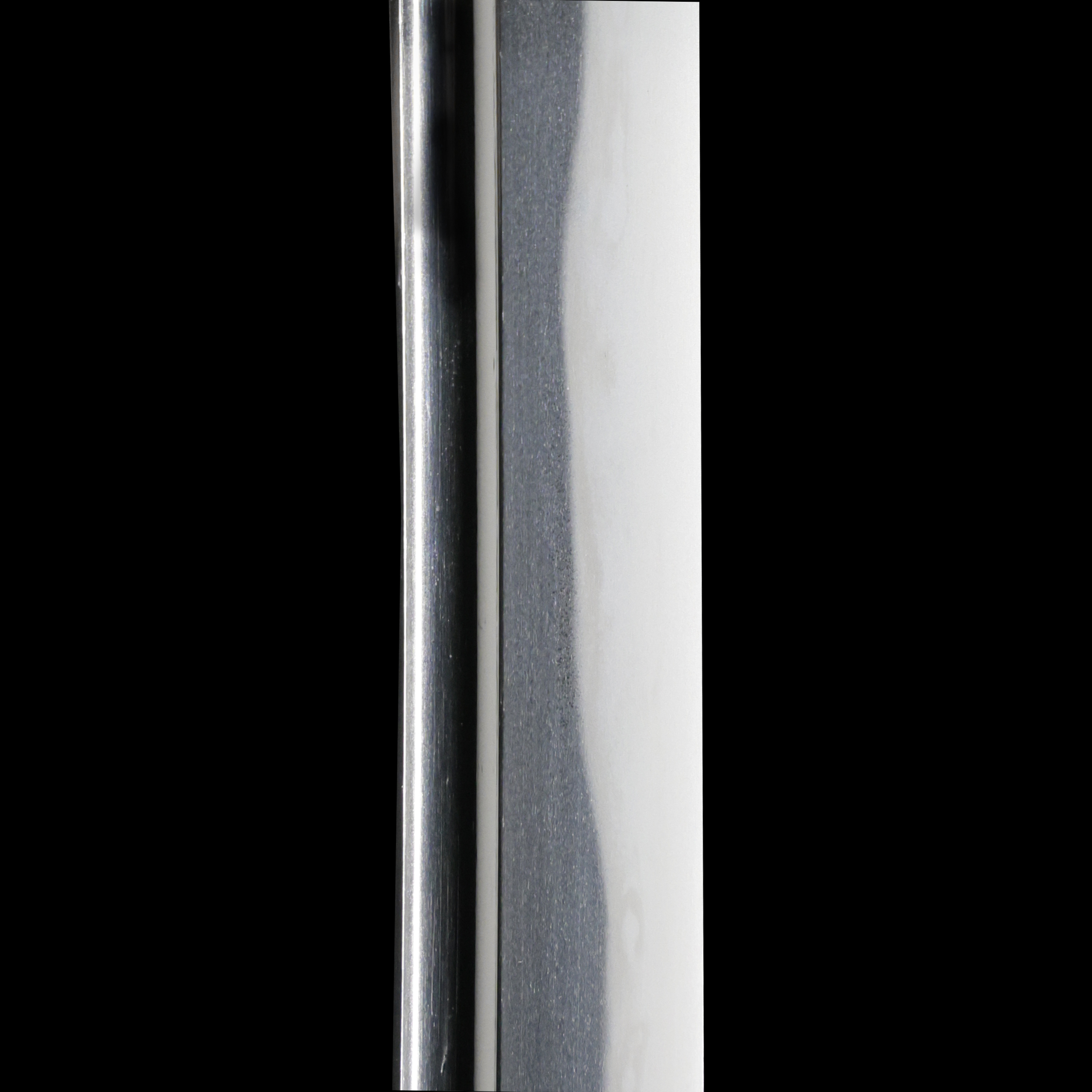
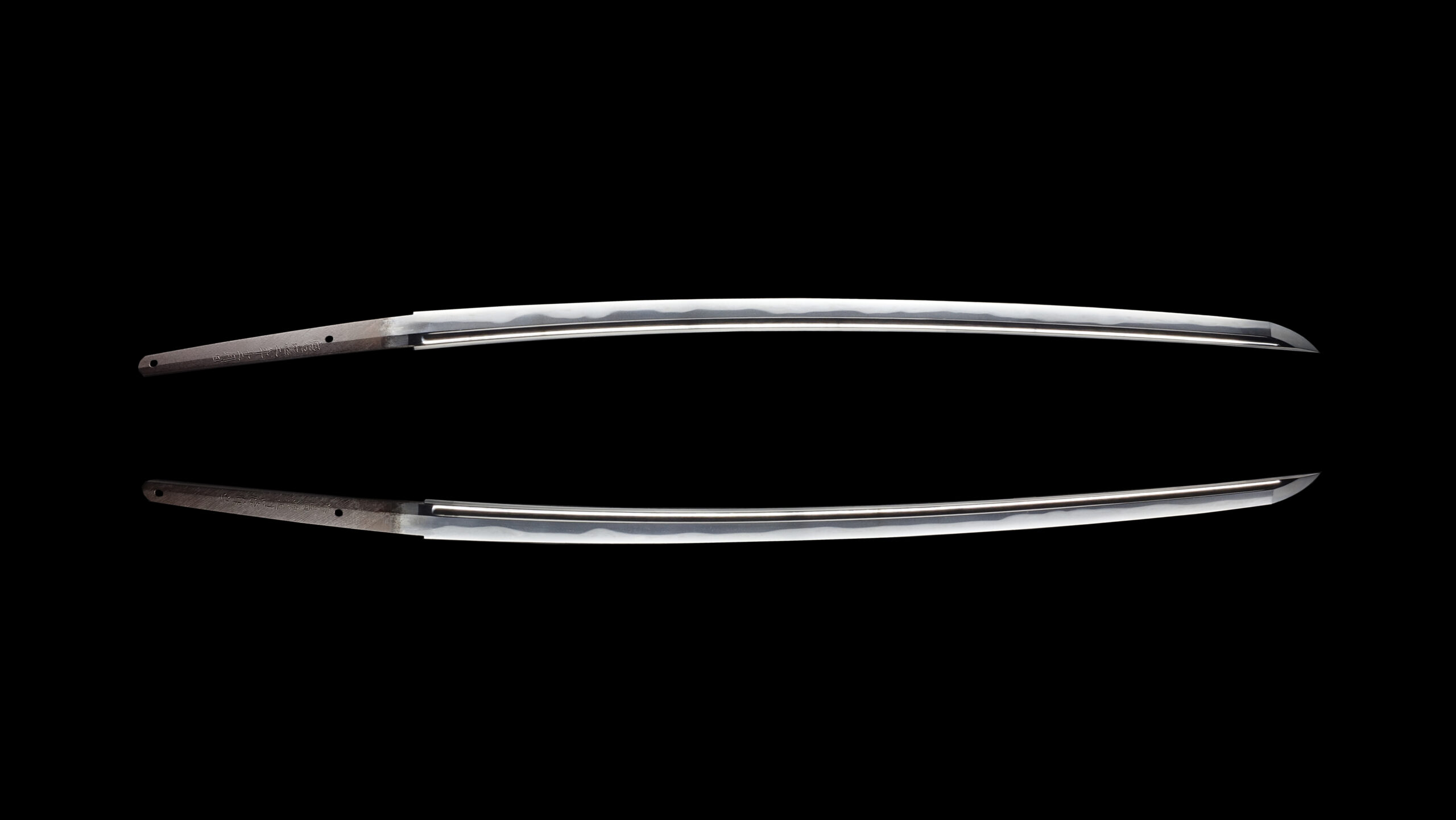
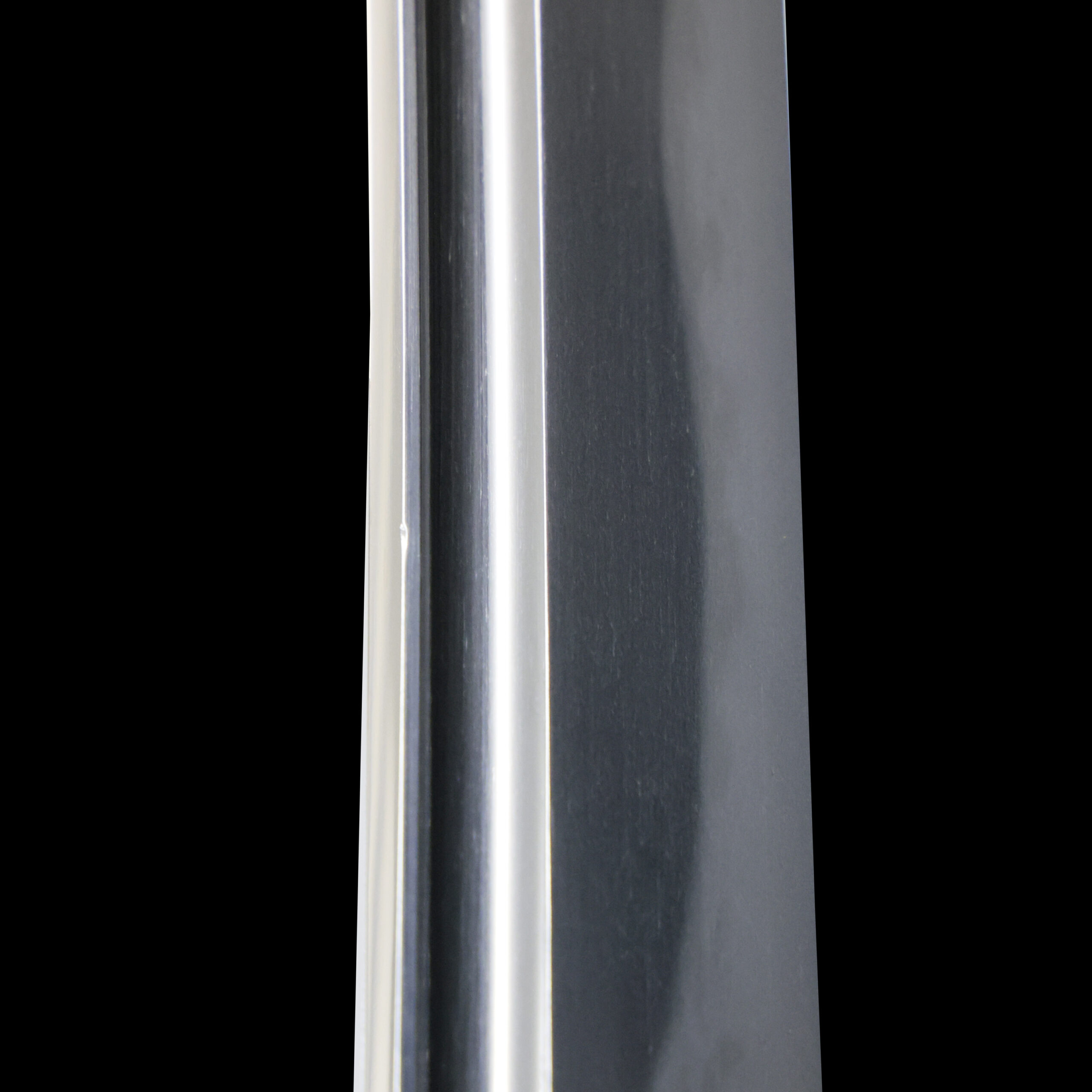
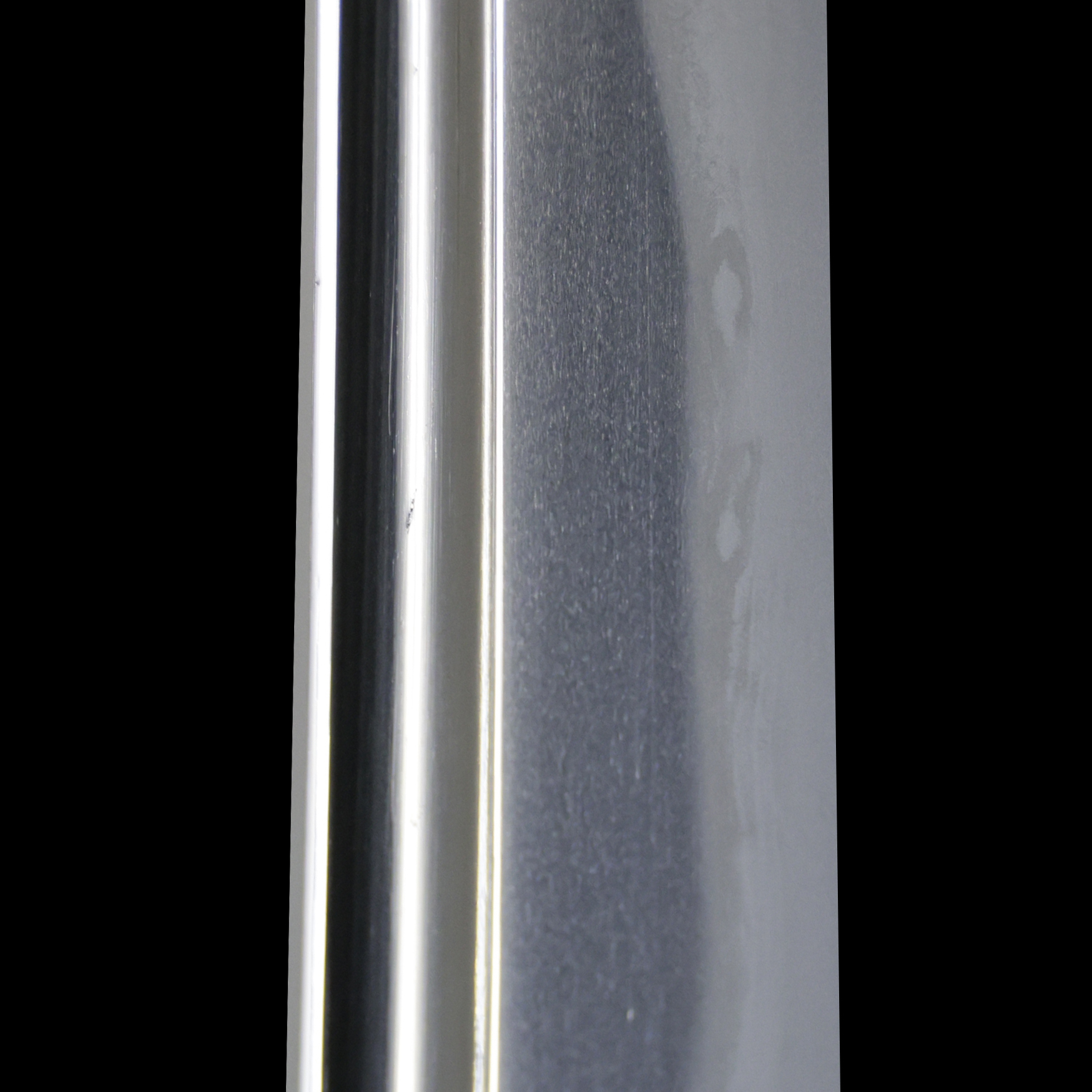
Shinshinto · Musashi
17 pieces on the market now
The Kiyomaro school gathered in the workshops of Yotsuya in Edo around the middle of the nineteenth century, its founder Yamaura Kiyomaro (清麿) born in Bunka 10 (1813) at Akaiwa village in the Komoro district of Shinano, the second son of the country gentry-warrior Yamaura Nobukaze. He learned forging first under the Ueda-domain smith Kawamura Toshitaka, signing his early blades Masayuki, went up to Edo in Tenpo 6 (1835) under the patronage of the military scholar Kubota Kiyone, and in the autumn of Koka 3 (1846) settled at Iga-cho in Yotsuya and changed his signature to Kiyomaro; he died by his own hand at forty-two in Kaei 7 (1854). Around him moved his elder brother Yamaura Masao (真雄/正雄), who took the same instruction from Toshitaka and walked the same course from choji into Soshu-den, and the pupils who entered the Yotsuya forge in its final years: Kurihara Nobuhide (信秀), a mirror-maker from Sanjo in Echigo whom the published sources place nearest the master's hand; Saito Kiyondo (清人) of Dewa, who afterward settled his teacher's sword debts and carried the manner into early Meiji; and the wider circle of associates and patrons through which the line passed. The shared vocabulary of the school is a powerful Soshu-revival manner. Over an itame that flows and stands a little, well packed and at times opening into mokume and o-itame, the smiths lay thick ji-nie with frequent chikei, the steel clear and without utsuri, for this is a late hand reaching back five centuries to Sagami rather than a Bizen revival. The temper is an o-midare or gunome-midare mixed with ko-notare, the ashi and yo entering, the nie thick and gathering coarse in clusters of ara-nie, with long kinsuji and streaming sunagashi running through nearly every blade; the boshi answers in a midare-komi turning pointed with hakikake. A Bizen-leaning side survives from the early years in the residual choji that shades into the mature work. Within this common ground the hands diverge. Kiyomaro's is read as the overwhelming one, his Soshu-den reaching the upper transmission with the Shizu vein as his forte of fortes, the NBTHK calling his work 「覇気に満ちている」, filled with commanding spirit.
Masao's grounded forging is candidly weighed against his brother's, the texts noting that his chikei, sunagashi, and kinsuji run fewer and the quality does not reach Kiyomaro's level. Nobuhide is named the closest approach to the master and is alone in the school for his carving, a mirror-maker's hand that set kurikara, dragons, and bonji into blades the others left plain. Kiyondo holds the round-headed gunome-midare at full strength and adds a manner of his own, a bright suguha aligned with the Yamato tradition that Kiyomaro never worked. To kantei the school, read first the imposing shape particular to the Yamaura line: a wide body with little taper, the sori toward the point, a chu-kissaki extended or run to an o-kissaki whose fukura is allowed to wither for a sharp impression, often a shobu-zukuri or kanmuri-otoshi wakizashi. Read then the nie, thick in ji and ha, the chikei and the conspicuous kinsuji and sunagashi that mark the force of the steel rather than any borrowed pattern. Carving narrows the field to Nobuhide; a Yamato suguha narrows it to Kiyondo. Kiyomaro stands at the head of the line, ranked by the published sources as high as Kotetsu and named without question the leading master among the shinshinto, the smith called the Yotsuya Masamune (四谷正宗). His extant work is scarce and closely held, passing through documented hands such as the Iwasaki family and the Seikado Bunko, and reaches the market only from time to time and at the very top of it. The pupils and the elder brother offer the more attainable face of the circle, signed and dated blades that come to a collector with patience; a signed example of any of these hands is a document of the moment when Soshu was reborn in Edo. Learn more →
| Smith | Era | Designated |
|---|---|---|
| Kiyomaro清麿 | 1839-1854 | 73 |
| Nobuhide信秀 | 1857-1867 | 34 |
| Kiyondo清人 | 1848-1868 | 10 |
| Masao真雄 | 1844-1866 | 7 |
| Masanao正直 | 1865-1868 | 3 |
Bakumatsu: the last war market
Perry’s arrival in 1853 unraveled the Tokugawa peace and created the first mass demand for working swords in two centuries. Kiyomaro, called the Masamune of Yotsuya, died on its eve; Munetsugu and Yukihide carried the boom to the end.
A Hozon-certified blade judged to show notably superior workmanship and a better state of preservation. The bar is higher: re-tempered blades and most unsigned Muromachi/Edo works are excluded.
The NBTHK (Nihon Bijutsu Tōken Hozon Kyōkai, the Society for the Preservation of Japanese Art Swords) is a public-interest incorporated foundation founded in 1948 and supervised by Japan’s Agency for Cultural Affairs (Bunkachō); it is based at the Japanese Sword Museum in Tokyo. Its expert panels physically examine each submitted work (shinsa) and issue a certificate (kanteishō) ranking it by artistic and historical merit. NBTHK papers are the most widely recognized standard of authentication for Japanese swords and fittings.
NBTHK official siteReturns/exchanges limited to defects caused by shipping (except willful misconduct or gross negligence by the company); customers must contact within 72 hours of receiving the product.