NihontoWatch MonNihontoWatchBETA
MarketEncyclopedia
NihontoWatch Mon

NihontoWatchBETA

Market
Encyclopedia
Overview·Kantei·Designations·Provenance·Blade Forms·Signatures·Lineage·School
OverviewKanteiDesignationsProvenanceBlade FormsSignaturesLineageSchool
  1. Schools
  2. Kiyomaro
  3. Nobuhide

Kiyomaro Nobuhide

信秀

Jūyō
Vol. 49, No. 216 · Naginata

Kiyomaro Nobuhide

信秀

34 ranked works

ProvinceMusashiEraBunkyu (1861–1864)PeriodEdoSchoolKiyomaroTraditionShinshintoTeacherKiyomaroFujishiroJo-jo sakuToko Taikan900(top 10%)TypeSwordsmithCodeNOB174
34Jūyō Tōken

Overview

Kurihara Kenji Nobuhide was born at in Echigo and began life as a maker of metal mirrors, turning to the sword only around Kaei 3 when he entered the workshop of Yamaura Kiyomaro at Yotsuya. Of the master's pupils he is the one the published sources place nearest the source: examining a blade made before he took his title, the writes that 'his technique was, among the members of that school, the closest to approaching the level of his master' (その技術は一門中、最も師に迫るものであり). He received the honorary title no Kami in the fifth month of Keiō 1, lived three years at Osaka, returned to , and after the Haitōrei went home to Echigo and forged only a little until his death in Meiji 13. He signed Nobuhide, often Taira Nobuhide and, after the title, Kurihara no Kami Taira Nobuhide. With Kiyondo he is one of the two hands who carried the Kaei-era revival of the Yotsuya Masamune into the Bakumatsu and early Meiji.

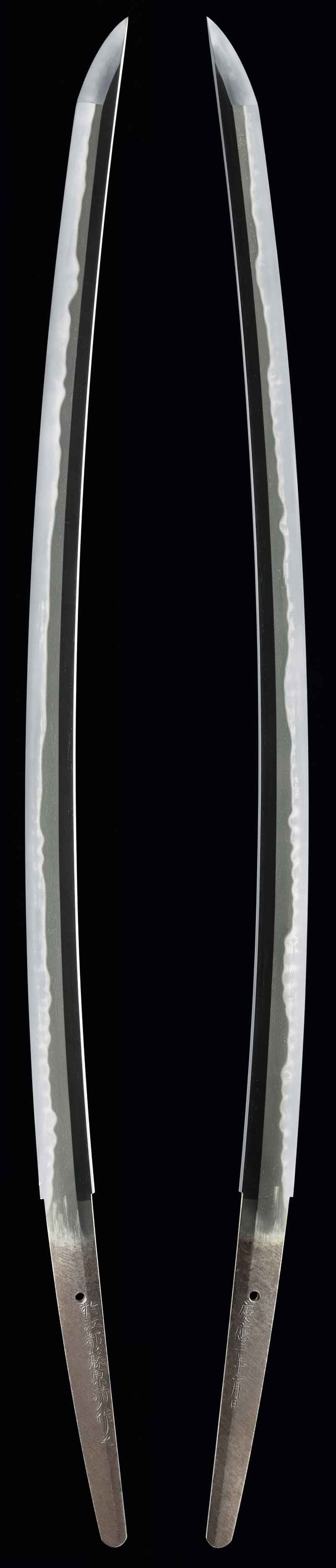
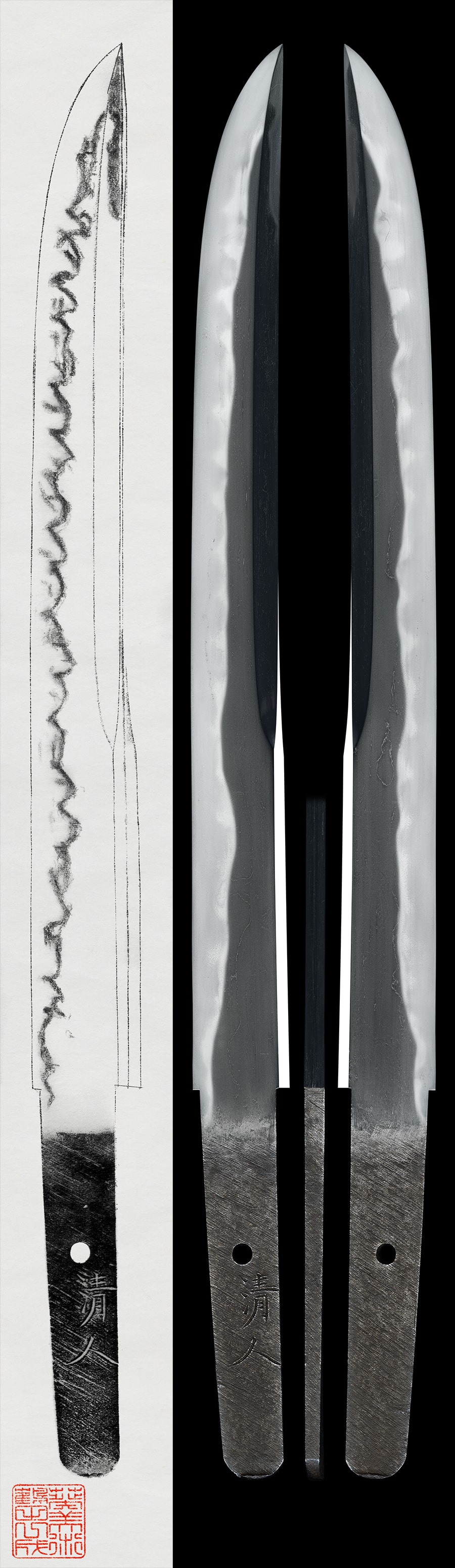
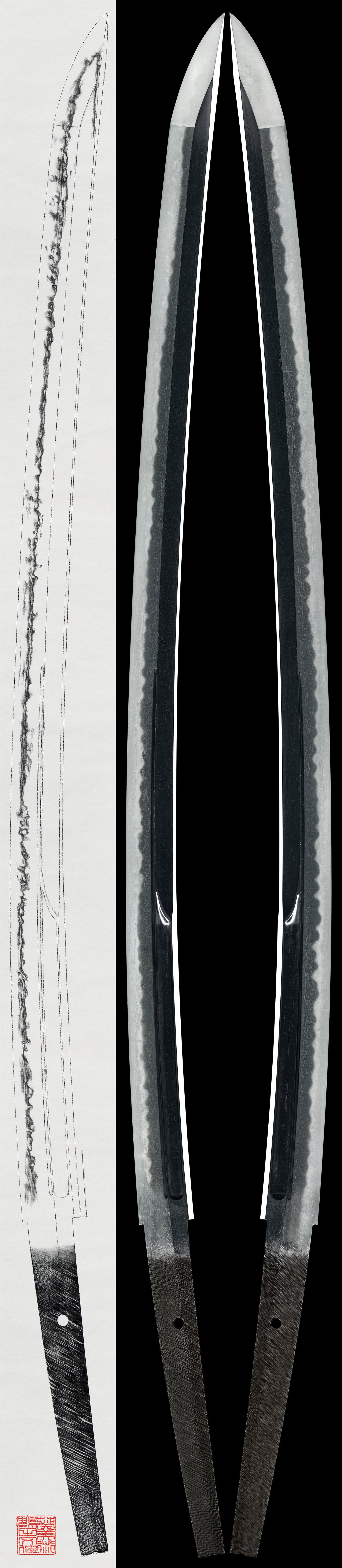
What he aimed at is his teacher's manner, and within it the vein Kiyomaro favoured most. The published commentary states plainly that his workmanship 'resembles his teacher and excels in the tradition' (師に似て志津伝を得意としている). The temper is a into which he sets and an angular , a feeling entering and at times mixing in, with and well in. The activity is that of a deep edge: adheres well, streams through, and long enter frequently, the bright and clear. The runs and turns with a pointed tendency, often with , sometimes thrusting up to a small round. On a wide the judges read exactly this hand at full strength, 'a work full of commanding spirit, and operating repeatedly, giving a powerful impression' (覇気あふれる出来で、砂流し、金筋頻りに働いて力強い).

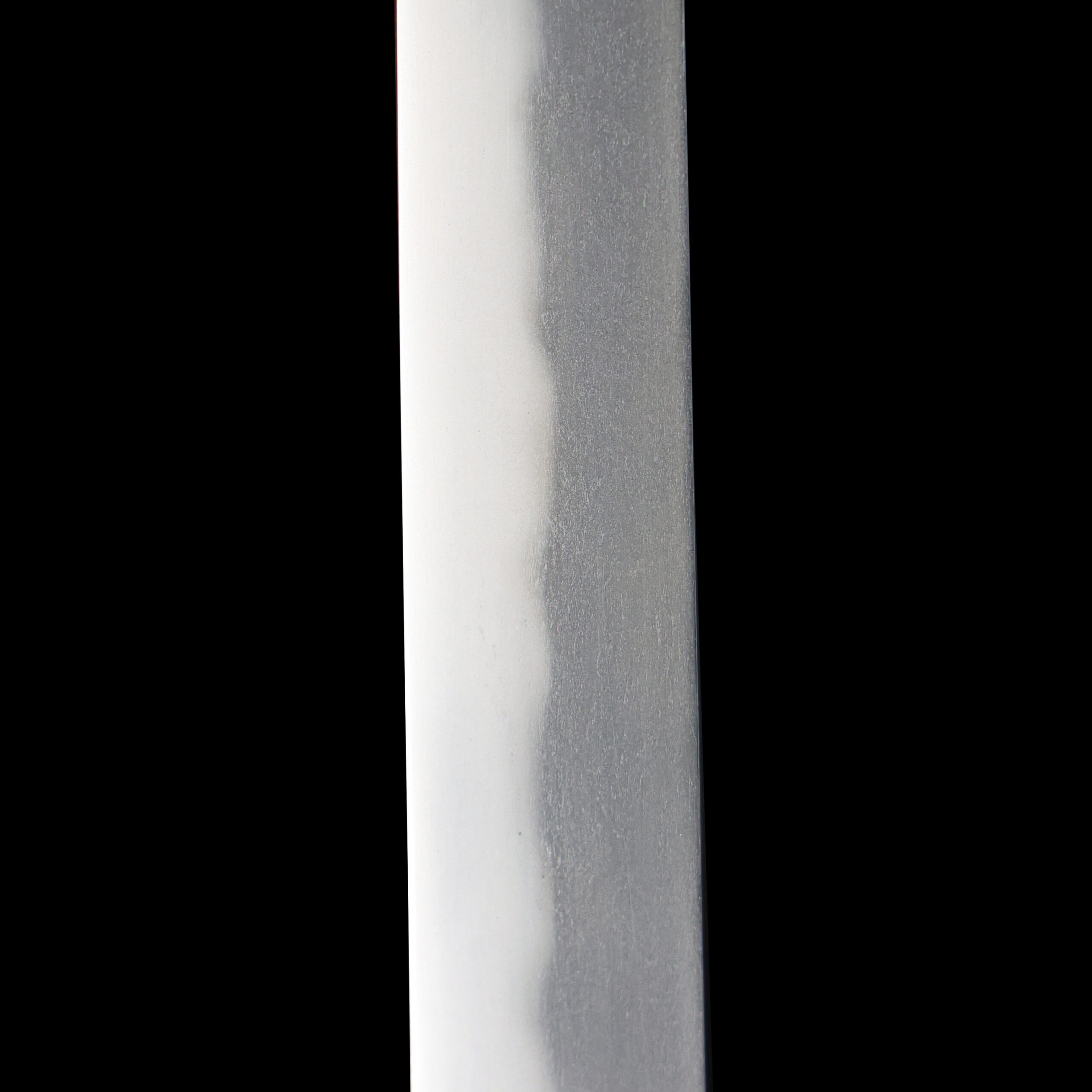
The is where his closeness to Kiyomaro tells most. Over an that flows and stands a little, at times mixed with and , he lays a thick with entering frequently, the steel clear. There is no : this is a hand reaching back to through , not a one, and the brightness lives in the of and rather than in any reflection. His swords are imposing in shape, wide in body, the often thin and the shallow, the extended or run to an , several with a tendency. Set against this strength the published sources are candid about the limit of the inheritance: his spirit and forcefulness, they note more than once, do not reach his master's, even as the deftness of the work is beyond question.

His own tell, the feature that is his alone in the school, is the carving. The mirror-maker's training gave him a hand for metal that the others lacked, and the records that within the Yamaura line 'there are no blades but his that bear carvings' (山浦一派では彼の刀以外に彫物がない). The motifs are diverse and distinctively his: a grass-style , a jewel-chasing dragon, a dragon-riding Kannon, Ame-no-Uzume-no-Mikoto and mountain cherry at the , and beneath and . From Meiji 1, after study with the metal-artist Kanō Natsuo, his carving changes markedly into a shallow, low-relief manner. The form that accompanies the carving is the , which the published sources note is not uncommonly encountered among his swords, alongside the wide . Carving was so much the point of his work that on one entirely uncarved the judges turn the absence into praise: with no to occupy the eye, they write, the blade is 'all the more such that it could be mistaken for his teacher Kiyomaro' (却って師清麿に見紛う程の出来).

What separates him from his teacher is named in the commentary itself, and it is a matter of degree, not of kind. He works the flowing with thick and , the deep in with and , the pointed ; but where Kiyomaro's hand is read as overwhelming in spirit, Nobuhide's is read as the most skillful approach to it, the closest the school came. Among the Kiyomaro pupils his is the carved hand, the Osaka and Echigo wandering hand, the one whose blades can be dated and placed by their signatures and titles. He is therefore the open, knowable face of a school whose founder is the more mythologized for his short and violent life.

For the collector he is an attainable Kiyomaro-school name of real quality. Fujishiro grades him Jō-jō , and the Tōkō Taikan values his work highly among smiths. He has no National Treasures and no Important Cultural Properties; his record runs instead through the rank, where something over thirty of his signed , and are designated. His provenance is grounded and historically resonant rather than broad: one of Keiō 1, the published sources record, 'was presented to Shogun Yoshinobu' (将軍慶喜に献上のものである), and a blade is preserved at the Hachiman shrine of his native in Echigo. Most designated blades are held rather than traded, and only a small share fall in the tradeable tier, so a signed Nobuhide reaches the market only from time to time. When one does, it is among the most rewarding ways a collector can hold the Kiyomaro manner, signed, dated, and often carried by his own carving.
Kantei

one signed hand in two faces: the Kiyomaro Soshu prime, a nie-laden gunome-midare with togariba and a choji feeling over a flowing standing itame, sunagashi and kinsuji frequent, bright nioiguchi, the boshi pointed; set within it the carving-and-katakiriba register that is his alone in the Yamaura school, the mirror-maker's hand turned to horimono

Kurihara Kenji Nobuhide is the foremost pupil of Yamaura Kiyomaro and, with Kiyondo, one of the two hands who carried the Kaei-era Soshu revival into the Bakumatsu and early Meiji. He was born at Sanjo in Echigo, worked first as a mirror-maker, then around Kaei 3 entered Kiyomaro's school at Yotsuya in Edo, received the honorary title Chikuzen no Kami in Keio 1, lived three years at Osaka, and died in Echigo in Meiji 13. The published sources call his technique the closest of the whole school to his master, his finest unsigned-carving blade made so well it could be mistaken for Kiyomaro himself, while granting that his martial spirit and forcefulness do not reach his teacher's. He works the Kiyomaro Soshu manner in the Shizu vein his master favoured: over a standing, flowing itame with thick ji-nie and frequent chikei he sets a gunome-midare mixed with togariba and a choji feeling, ashi and yo entering, ko-nie well adhered, sunagashi flowing and kinsuji frequent, the nioiguchi bright and clear, the boshi midare-komi turning pointed with hakikake; there is no utsuri, for this is a shinshinto hand reaching back to Soshu. His own tell within the school is the carving: trained as a mirror-maker and later studying under Kano Natsuo, he is the only Yamaura smith whose blades carry horimono, and katakiriba-zukuri is his recurring form. Being entirely a signed smith, his kantei problem is not attribution but his standing as the leading inheritor of the Kiyomaro line.

Diagnostic discriminators

unique vs shinshinto contemporaries (Bizen / Kotetsu copying)

unique vs the rest of the Yamaura/Kiyomaro school (no horimono)

Observation by phase

The Kiyomaro Soshu manner (his prime, closest of the school to the master)

His recognized prime is the shinogi-zukuri katana of imposing build: wide in body, the kasane often thin, the sori shallow, the kissaki extended or running to an o-kissaki, several with a sakizori tendency. The ground is an itame that flows and stands a little, at times mixed with masame and mokume, with a thick ji-nie laid in and chikei entering frequently, the jigane clear; there is no utsuri, for this is a shinshinto hand reaching back to Soshu. Over it the temper is a gunome-midare mixed with togariba and an angular kaku-gunome, a choji feeling entering, ashi and yo well in, the nioi deep and ko-nie well adhered, sunagashi running and kinsuji frequent and long, the nioiguchi bright and clear. The boshi is midare-komi, turning pointed with hakikake, sometimes thrusting up to a small round. The published sources call his technique the closest of the whole Kiyomaro school to his master and one carving-free blade made so well it could be mistaken for Kiyomaro himself, while reading his spirit and forcefulness as falling short of his teacher's; his Osaka-made pieces of Keio 1 they hold to show his ability to the fullest.

Sugata 姿
Jigane 地鉄
Hamon 刃文
Bōshi 帽子

The carving and katakiriba register (his tell within the Yamaura school)

Within the school the manner that is his alone is the carving. Trained first as a mirror-maker and later, around the early Meiji, studying under the metal-artist Kano Natsuo, he is the only Yamaura smith whose blades carry horimono, and the published sources hold that within the Kiyomaro group no blades but his bear carvings. The motifs are diverse and distinctively chosen: a grass-style kurikara, a jewel-chasing dragon, a dragon-riding Kannon, Ame-no-Uzume-no-Mikoto and mountain-cherry at the koshimoto, bonji, suken and the futasuji-hi and bo-hi above them; from Meiji 1 his carving changes markedly into a shallow nikuai-bori manner. The form that goes with it is the katakiriba-zukuri, which the published sources note is not uncommon among his swords, alongside the wide hira-zukuri sunobi wakizashi. On these the temper is the same gunome-midare with togari and a choji feeling, sunagashi and kinsuji running, the nioiguchi bright; one wakizashi the sources read as a boldly patterned, leaping gunome-midare, full of commanding spirit.

Sugata 姿
Jigane 地鉄
Hamon 刃文
Bōshi 帽子
Scholarship

The published sources trace his life closely: born at Sanjo in Echigo and first a mirror-maker, he entered Kiyomaro's school around Kaei 3 and became the leading disciple, received Chikuzen no Kami in Keio 1, lived three years at Osaka and returned to Edo, then after the Haitorei went home to Echigo and died in Meiji 13. His technique was the closest of the whole school to his master, and one of his blades without carving was made so well it could be mistaken for Kiyomaro himself.

On the carving the published sources are explicit: within the Yamaura school there are no blades but his that bear horimono, his prior training as a mirror-maker forming the foundation of his especially precise work, and from Meiji 1 his carving changed markedly into a shallow nikuai-bori manner after study under Kano Natsuo. Works in katakiriba-zukuri are not uncommonly encountered among his swords.

Designations

Kokuhō—
Jūyō Bunkazai—
Jūyō Bijutsuhin—
Gyobutsu—
Tokubetsu Jūyō—
Jūyō Tōken34

Elite Standing

0.15 across 34 designated works

Top 14% among smiths

Provenance

2 documented provenances across certified works by Nobuhide

Provenance Standing

1 works held in elite collections across 2 documented provenances

Top 86% among smiths

Raw score: 1.81 / 10

Blade Forms

Distribution across 34 ranked works

Signatures

Signature types across 34 ranked works

Currently Available

Lineage

TeacherKiyomaro
Nobuhide
Student
  1. 1.Nobuchika信親1 for sale

Kiyomaro School

Other artisans of the Kiyomaro school

  1. 1.Kiyomaro清麿52designated
  2. 2.Kiyondo清人4 for sale8designated
  3. 3.Masao真雄6designated
  4. 4.Masanao正直1 for sale3designated
  5. 5.Hidetoshi秀寿1designated
  6. 6.Masao正雄3 for sale2designated
  7. 7.Kiyohito清土1 for sale2designated
  8. 8.Masatoshi正俊2designated