Perry’s arrival in 1853 unraveled the Tokugawa peace and created the first mass demand for working swords in two centuries. Kiyomaro, called the Masamune of Yotsuya, died on its eve; Munetsugu and Yukihide carried the boom to the end.
 NihontoWatchNihontoWatch
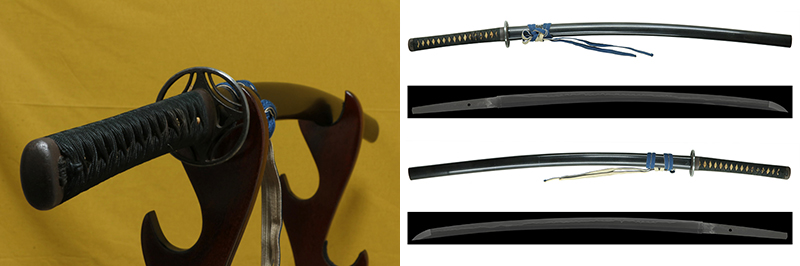
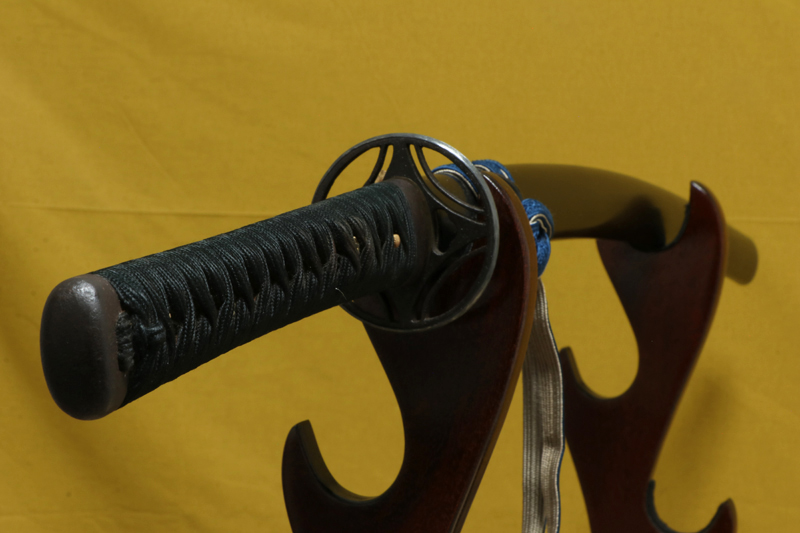
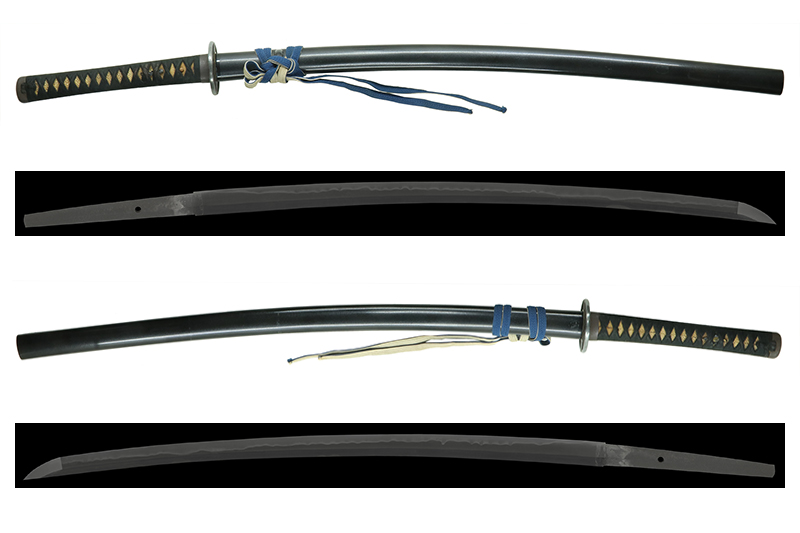
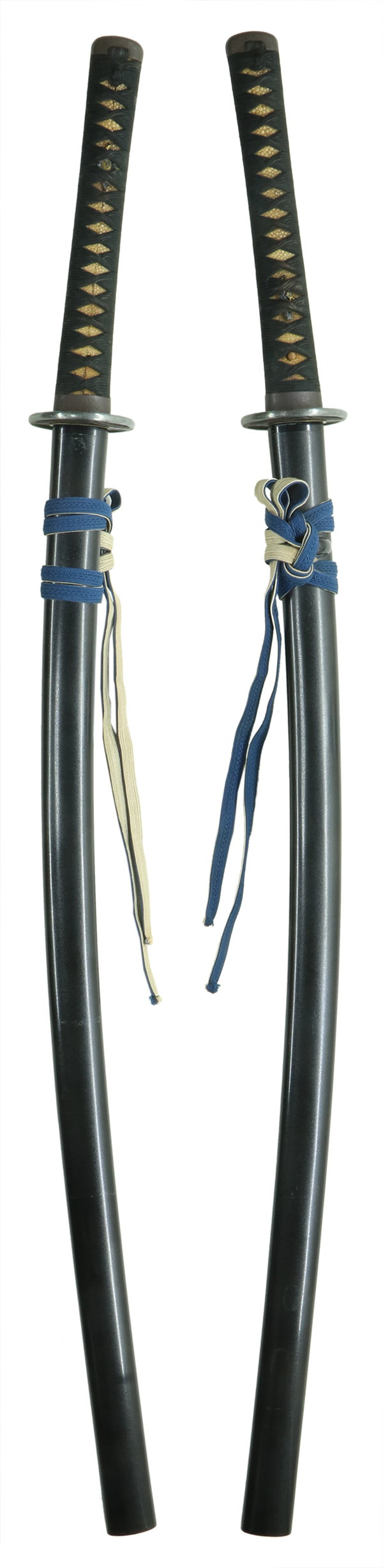
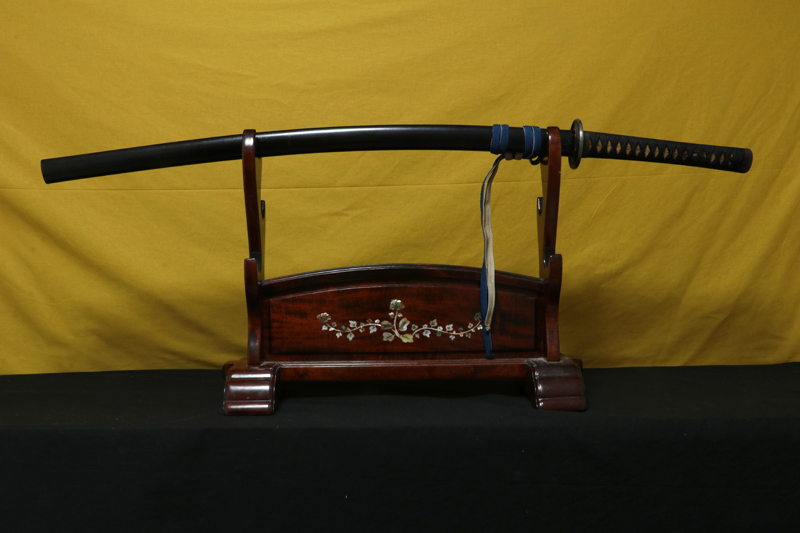
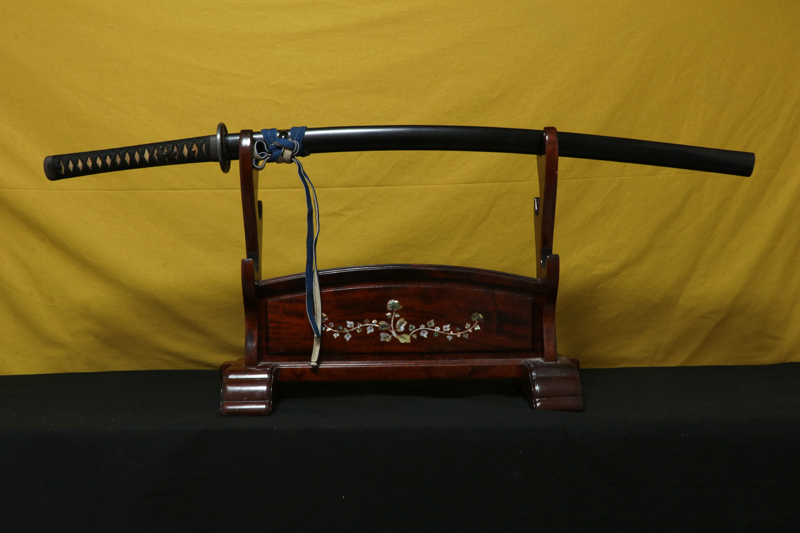
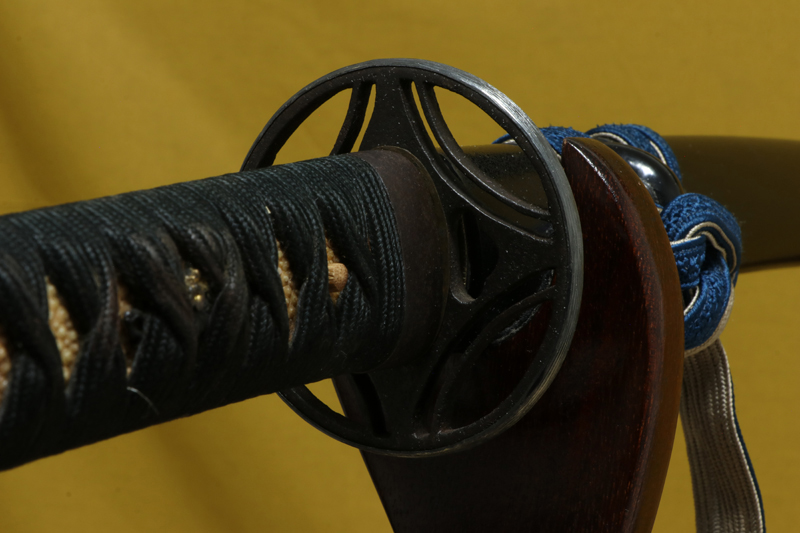
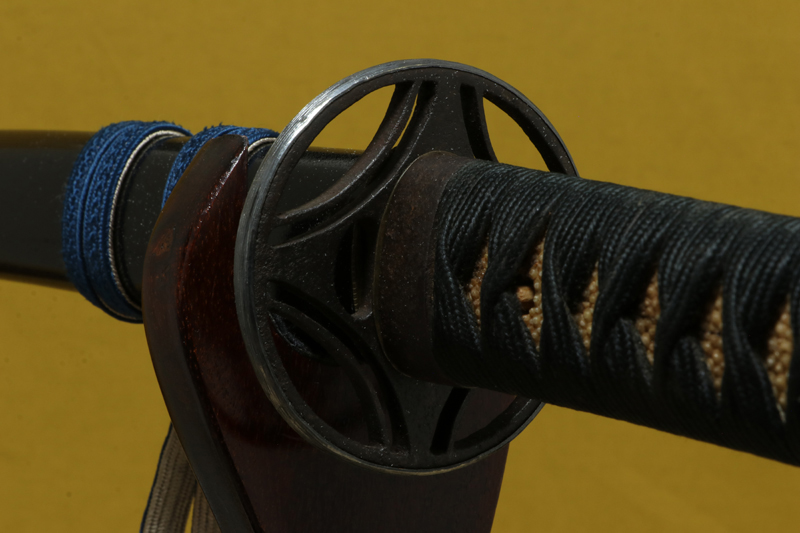
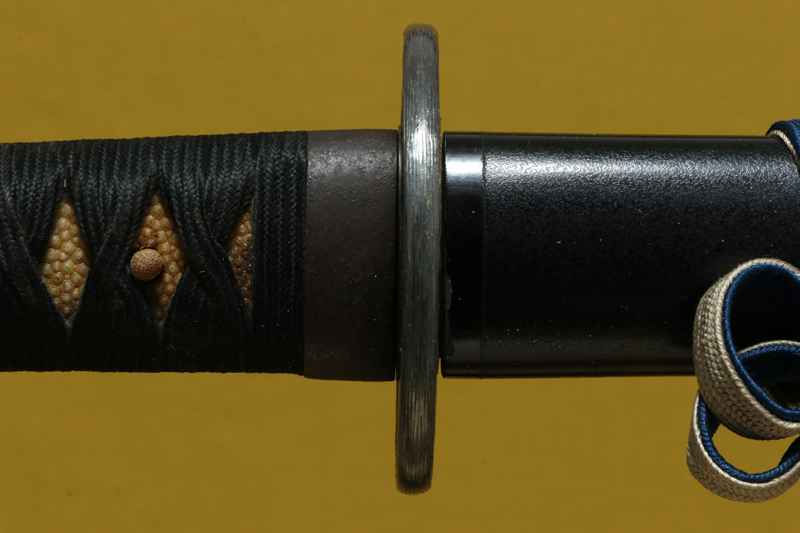
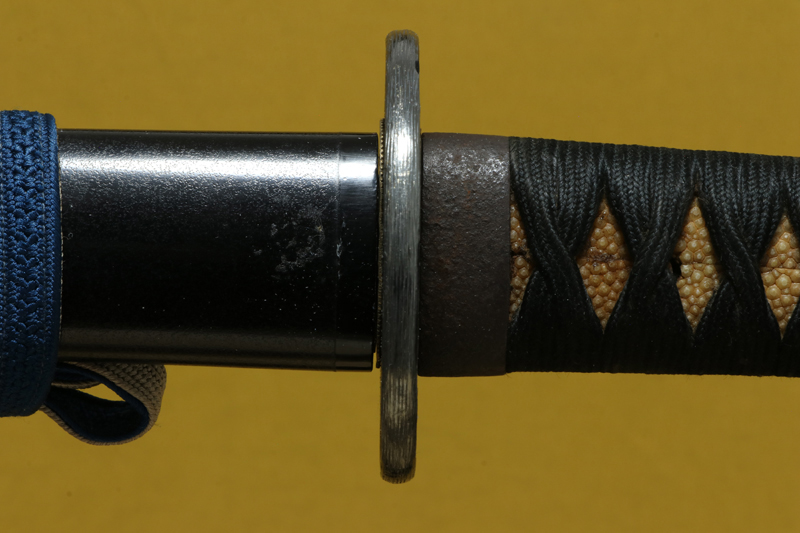
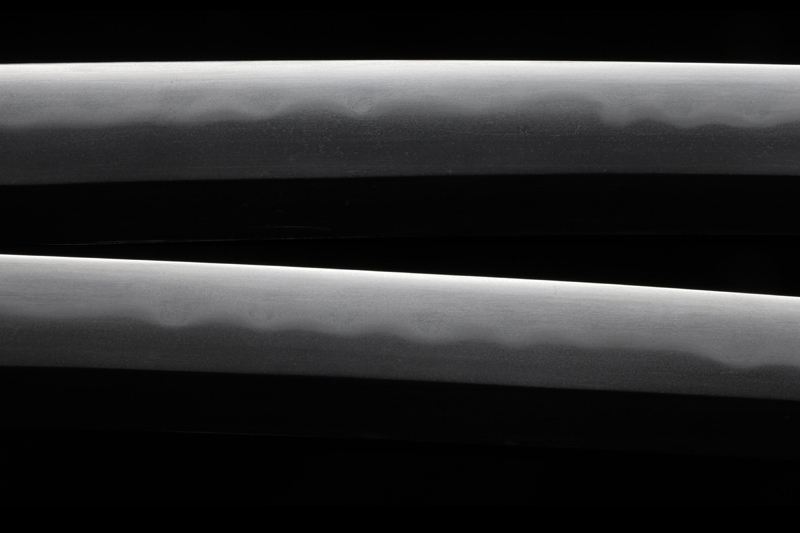
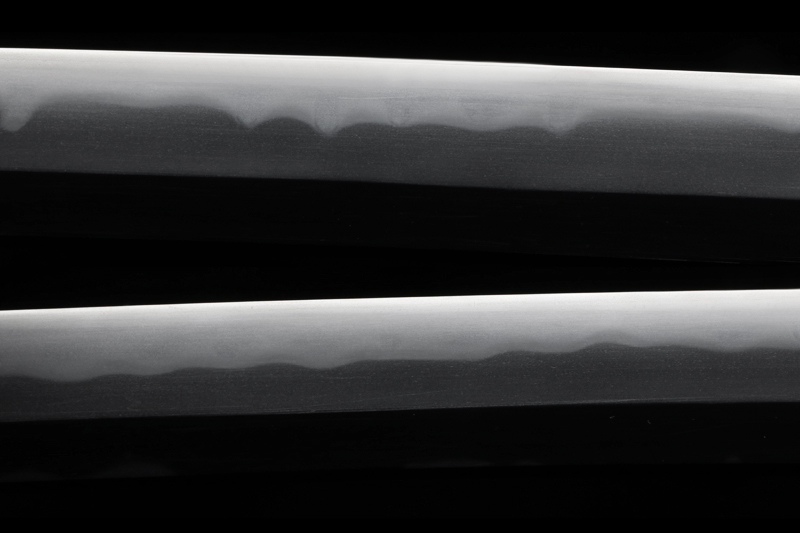
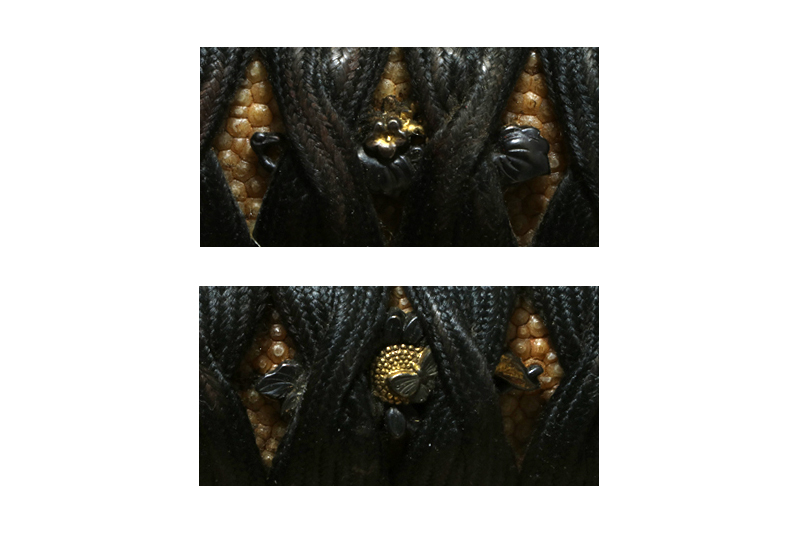
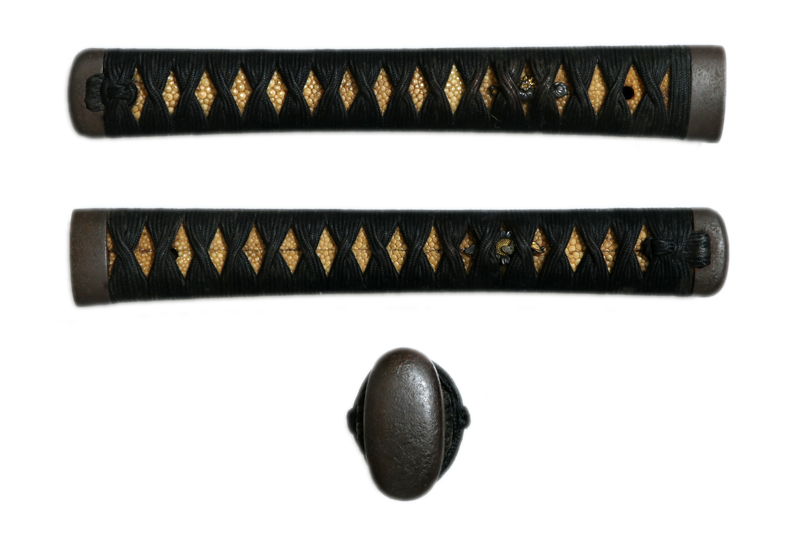
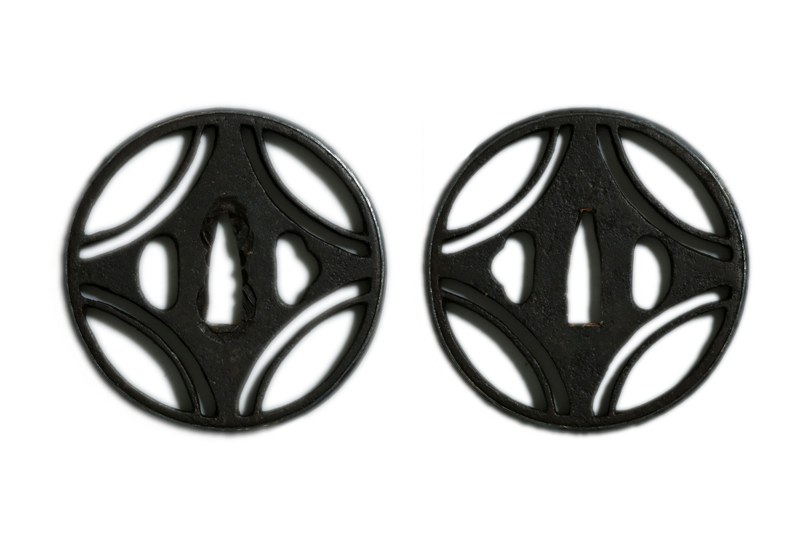
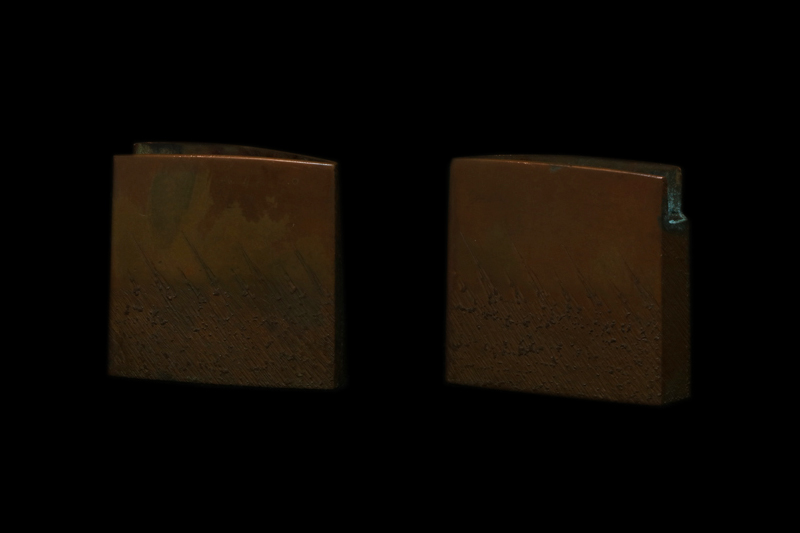
Shinshinto Mumei with Koshirae. 無銘の新々刀で、江戸時代後期の作品ですが、国は不明です。 電球などの光にかざすと、刃中に簾(すだれ)のように働く金筋が確認できます。 清磨一門の作品である可能性も考えられる、夢の有る一振りです。 This is an unsigned shinshintō blade from the late Edo period, though the province is unknown. When viewed against a light source such as a bulb, kinsuji can be seen working within the ha like hanging blinds (sudare). It is a sword full of potential, possibly a work of the Kiyomaro school. 「刀姿 sword figure」 鎬造り庵棟、身幅重尋常、鳥居反り大鋒。茎は生で筋違い鑢がかかる、茎尻は浅い栗尻。 「地鉄 jigane」 地鉄は板目肌が流れ柾と成り、地沸付く。 「刃紋 hamon」 刃紋は互の目丁子、刃縁沸が付き、尖り刃を交え足入り、棟焼きを見せる。刃中は金筋が栄んに働く。釯子は乱れ込み小丸に返る。 「特徴 detailed」 本作は無銘の新々刀で、江戸時代後期の作品ですが、作者は不明です。 研ぎの状態自体は良好ですが、あまり上質な研ぎではないため、刃文の働きがはっきりと見えません。ただし、電球などの光にかざして見ると、刃中に簾(すだれ)のように働く金筋が確認できます。清磨一門の作品である可能性も考えられます。 刀身には錆はなく、鍛え割れなどの欠点も見られません。より良い研ぎを施せば、化ける可能性を秘めた一振りです。 This is an unsigned shinshintō blade.This piece is an unsigned shinshintō blade from the late Edo period, but the maker is unknown. The polish is in good condition; however, it is not of particularly high quality, so the activities in the hamon are not clearly visible. When viewed against a light source, kinsuji can be seen working within the ha like hanging blinds (sudare). It may possibly be a work of the Kiyomaro school. There is no rust on the blade, nor are there any flaws such as forging cracks. With a higher-quality polish, this sword may reveal itself as something truly special. 「拵 koshirae」 ハバキ(habaki) :素銅地一重の腰祐乗。 鍔(tsuba) :鉄地糸車の図。 縁頭(futikasira):鉄錆地。 目貫(menuki) :赤銅地秋草の図。 柄(tsuka) :鮫は巻鮫。柄糸は正絹黒の諸撮み巻。 鞘(saya) :黒石目。 「刀剣の状態 condition of blade」 研:良好です。 傷:欠点に成るような傷は有りません。
NihontoWatchOffered by Giheiya


Translated from the shop's Japanese ·
Rows still in Japanese are as written by the shop
Shinshinto · Musashi
17 pieces on the market now
The Kiyomaro school gathered in the workshops of Yotsuya in Edo around the middle of the nineteenth century, its founder Yamaura Kiyomaro (清麿) born in Bunka 10 (1813) at Akaiwa village in the Komoro district of Shinano, the second son of the country gentry-warrior Yamaura Nobukaze. He learned forging first under the Ueda-domain smith Kawamura Toshitaka, signing his early blades Masayuki, went up to Edo in Tenpo 6 (1835) under the patronage of the military scholar Kubota Kiyone, and in the autumn of Koka 3 (1846) settled at Iga-cho in Yotsuya and changed his signature to Kiyomaro; he died by his own hand at forty-two in Kaei 7 (1854). Around him moved his elder brother Yamaura Masao (真雄/正雄), who took the same instruction from Toshitaka and walked the same course from choji into Soshu-den, and the pupils who entered the Yotsuya forge in its final years: Kurihara Nobuhide (信秀), a mirror-maker from Sanjo in Echigo whom the published sources place nearest the master's hand; Saito Kiyondo (清人) of Dewa, who afterward settled his teacher's sword debts and carried the manner into early Meiji; and the wider circle of associates and patrons through which the line passed. The shared vocabulary of the school is a powerful Soshu-revival manner. Over an itame that flows and stands a little, well packed and at times opening into mokume and o-itame, the smiths lay thick ji-nie with frequent chikei, the steel clear and without utsuri, for this is a late hand reaching back five centuries to Sagami rather than a Bizen revival. The temper is an o-midare or gunome-midare mixed with ko-notare, the ashi and yo entering, the nie thick and gathering coarse in clusters of ara-nie, with long kinsuji and streaming sunagashi running through nearly every blade; the boshi answers in a midare-komi turning pointed with hakikake. A Bizen-leaning side survives from the early years in the residual choji that shades into the mature work. Within this common ground the hands diverge. Kiyomaro's is read as the overwhelming one, his Soshu-den reaching the upper transmission with the Shizu vein as his forte of fortes, the NBTHK calling his work 「覇気に満ちている」, filled with commanding spirit.
Masao's grounded forging is candidly weighed against his brother's, the texts noting that his chikei, sunagashi, and kinsuji run fewer and the quality does not reach Kiyomaro's level. Nobuhide is named the closest approach to the master and is alone in the school for his carving, a mirror-maker's hand that set kurikara, dragons, and bonji into blades the others left plain. Kiyondo holds the round-headed gunome-midare at full strength and adds a manner of his own, a bright suguha aligned with the Yamato tradition that Kiyomaro never worked. To kantei the school, read first the imposing shape particular to the Yamaura line: a wide body with little taper, the sori toward the point, a chu-kissaki extended or run to an o-kissaki whose fukura is allowed to wither for a sharp impression, often a shobu-zukuri or kanmuri-otoshi wakizashi. Read then the nie, thick in ji and ha, the chikei and the conspicuous kinsuji and sunagashi that mark the force of the steel rather than any borrowed pattern. Carving narrows the field to Nobuhide; a Yamato suguha narrows it to Kiyondo. Kiyomaro stands at the head of the line, ranked by the published sources as high as Kotetsu and named without question the leading master among the shinshinto, the smith called the Yotsuya Masamune (四谷正宗). His extant work is scarce and closely held, passing through documented hands such as the Iwasaki family and the Seikado Bunko, and reaches the market only from time to time and at the very top of it. The pupils and the elder brother offer the more attainable face of the circle, signed and dated blades that come to a collector with patience; a signed example of any of these hands is a document of the moment when Soshu was reborn in Edo. Learn more →
| Smith | Era | Designated |
|---|---|---|
| Kiyomaro清麿 | 1839-1854 | 73 |
| Nobuhide信秀 | 1857-1867 | 34 |
| Kiyondo清人 | 1848-1868 | 10 |
| Masao真雄 | 1844-1866 | 7 |
| Masanao正直 | 1865-1868 | 3 |
Bakumatsu: the last war market
Perry’s arrival in 1853 unraveled the Tokugawa peace and created the first mass demand for working swords in two centuries. Kiyomaro, called the Masamune of Yotsuya, died on its eve; Munetsugu and Yukihide carried the boom to the end.
Within 3 days of the item's arrival, we offer a refund or an exchange. Return shipping and the bank transfer fee for the refund are at the customer's expense.