Hizen swords were a domain enterprise: the Nabeshima sent Tadayoshi to study under Umetada Myōju around 1596, then built a licensed school around him. Nine generations carried its famously consistent konuka-hada work into the Meiji era.
 NihontoWatchNihontoWatch
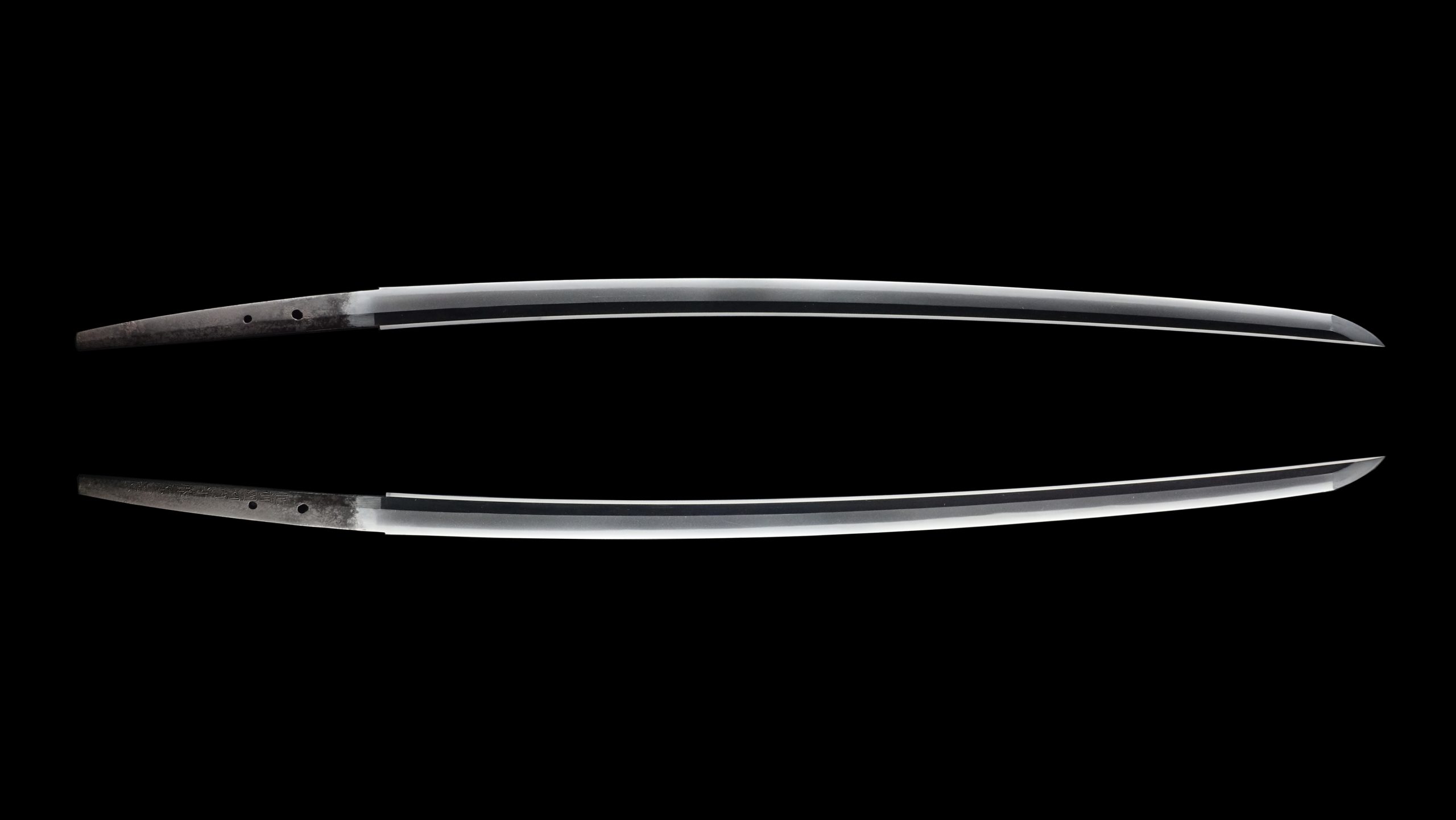
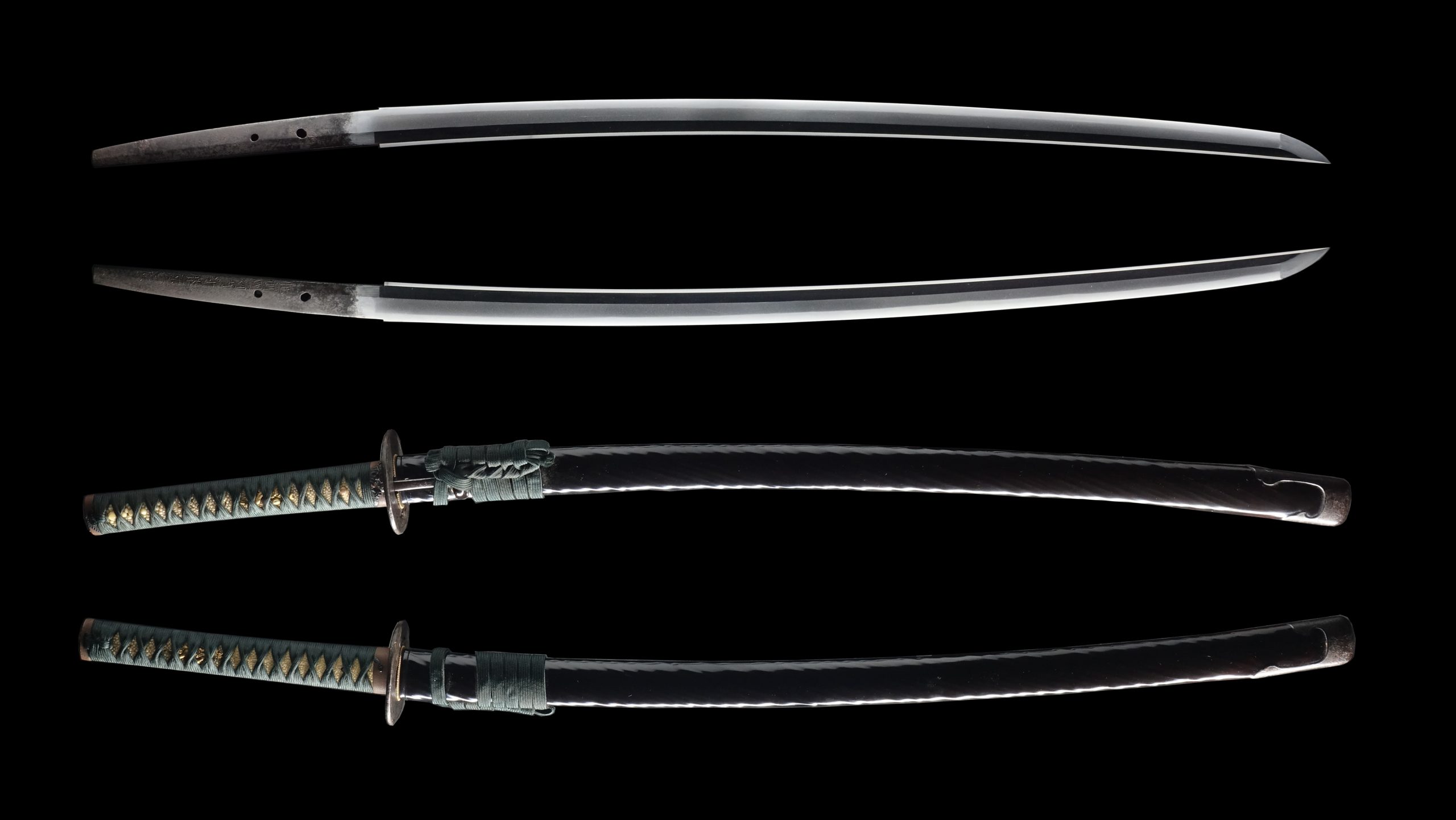
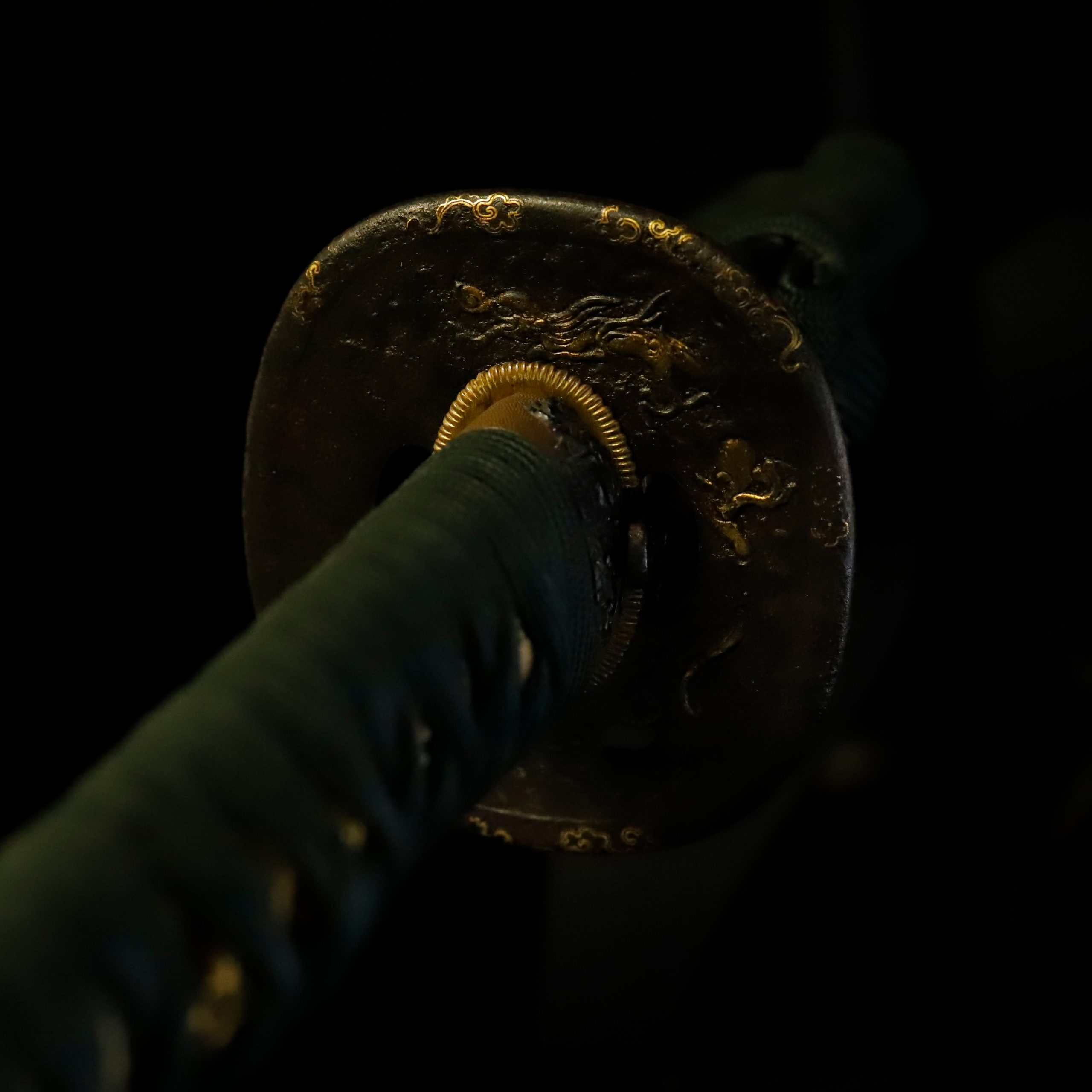
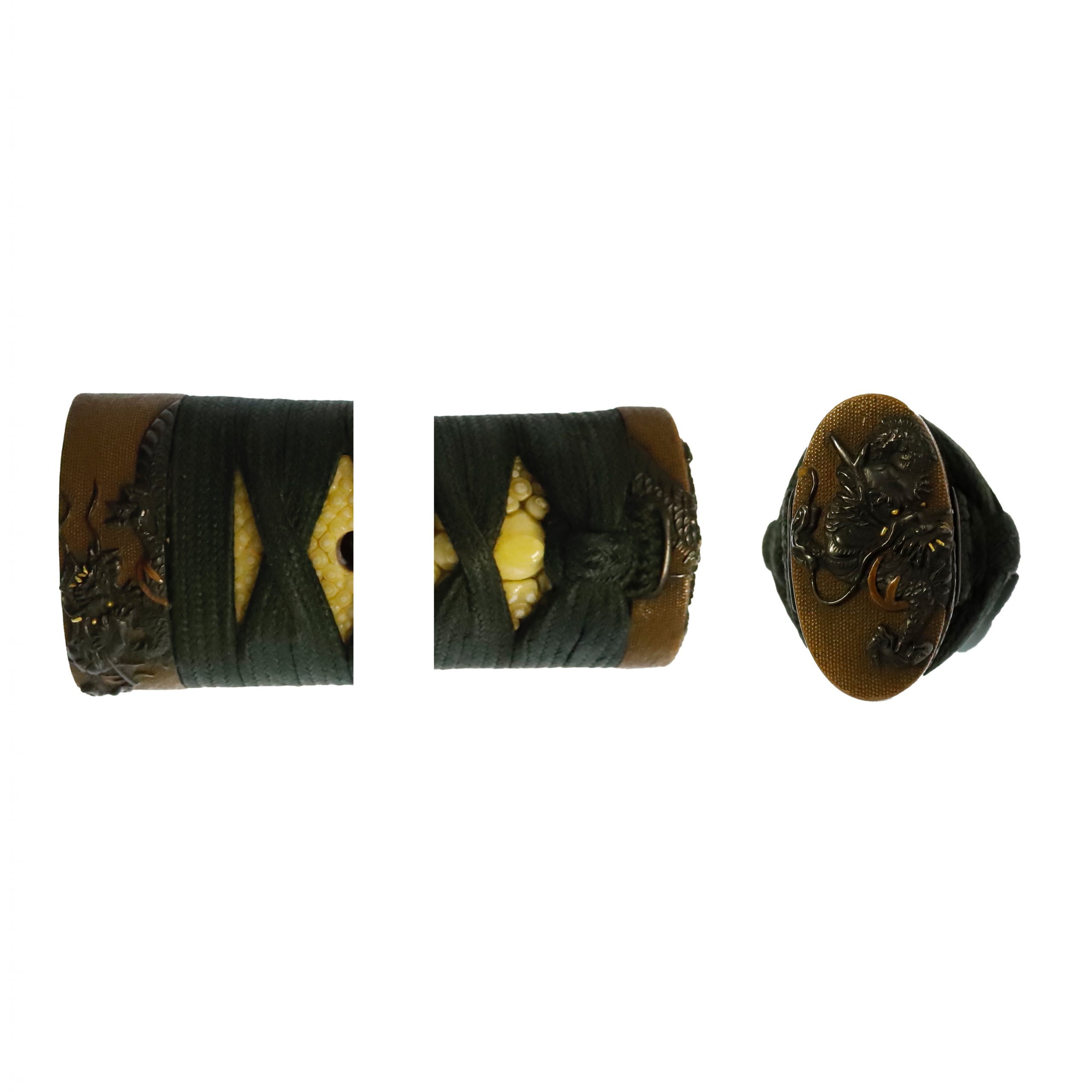
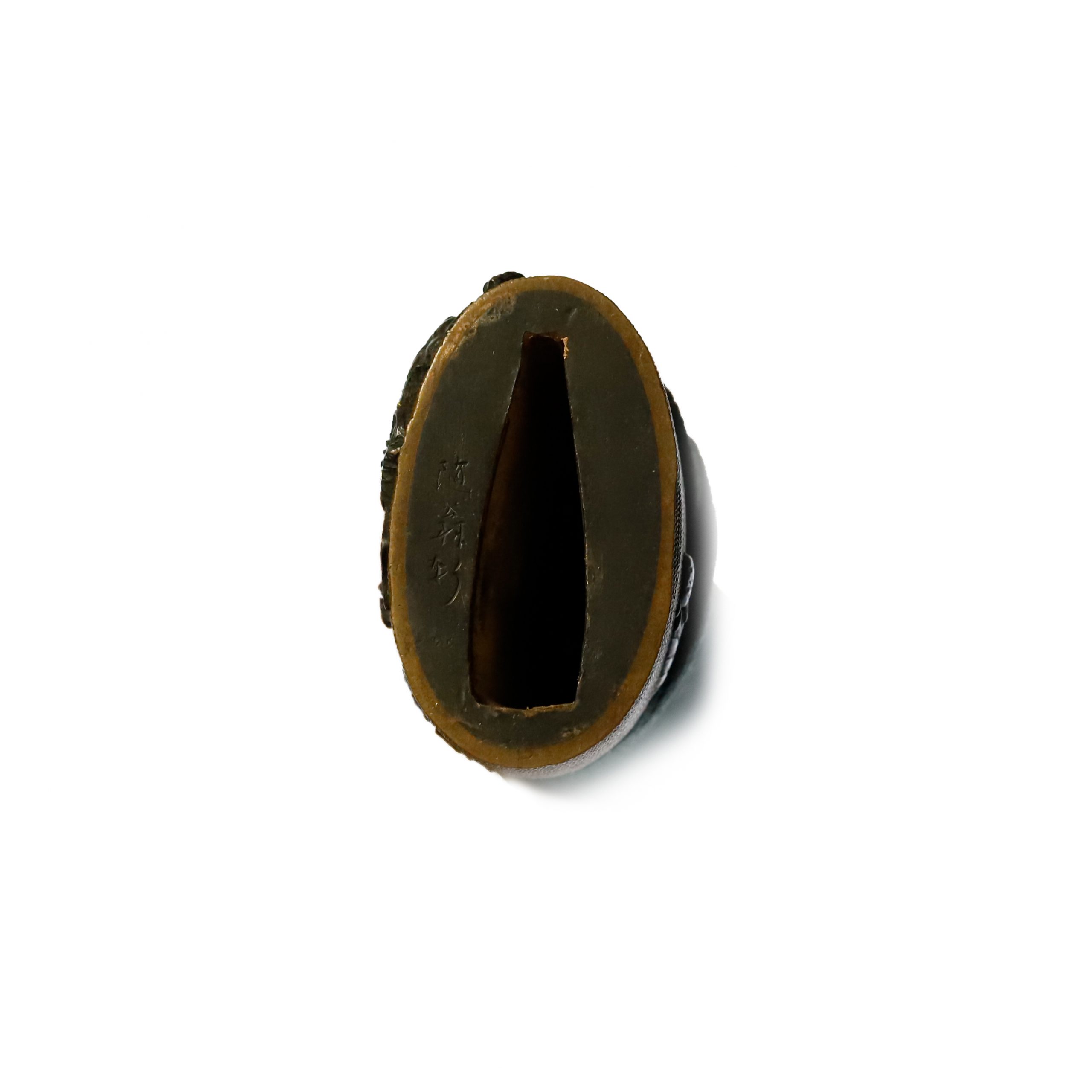
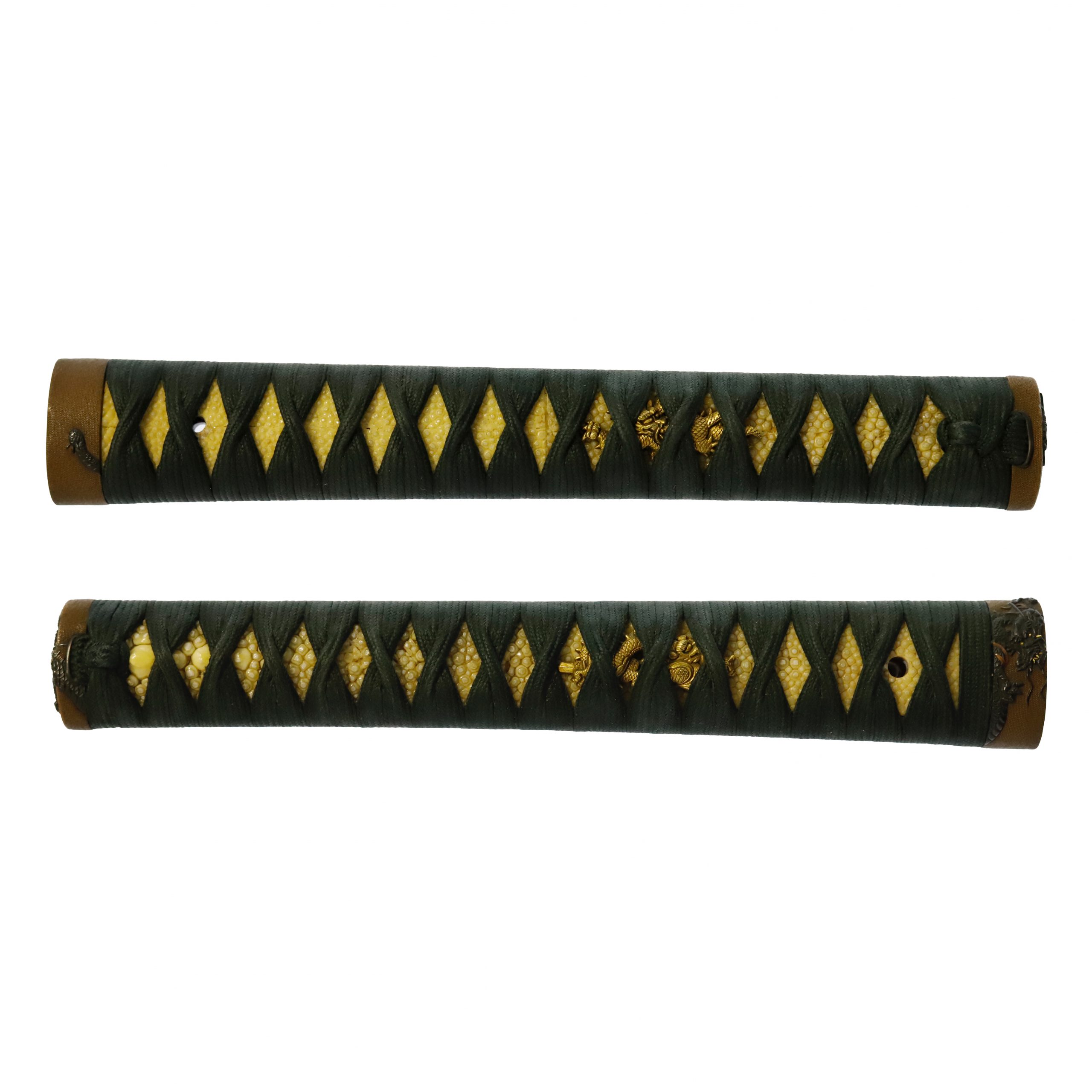
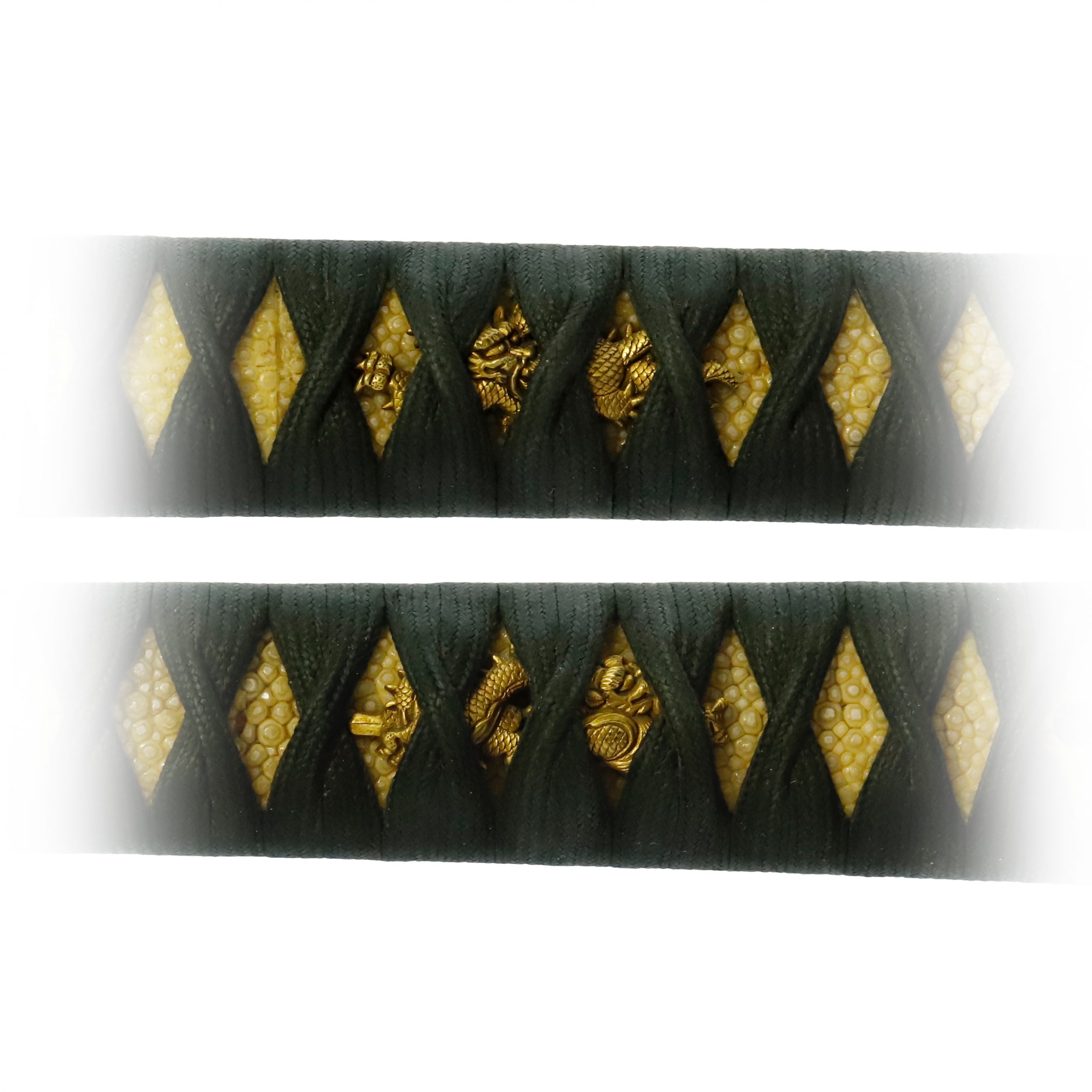
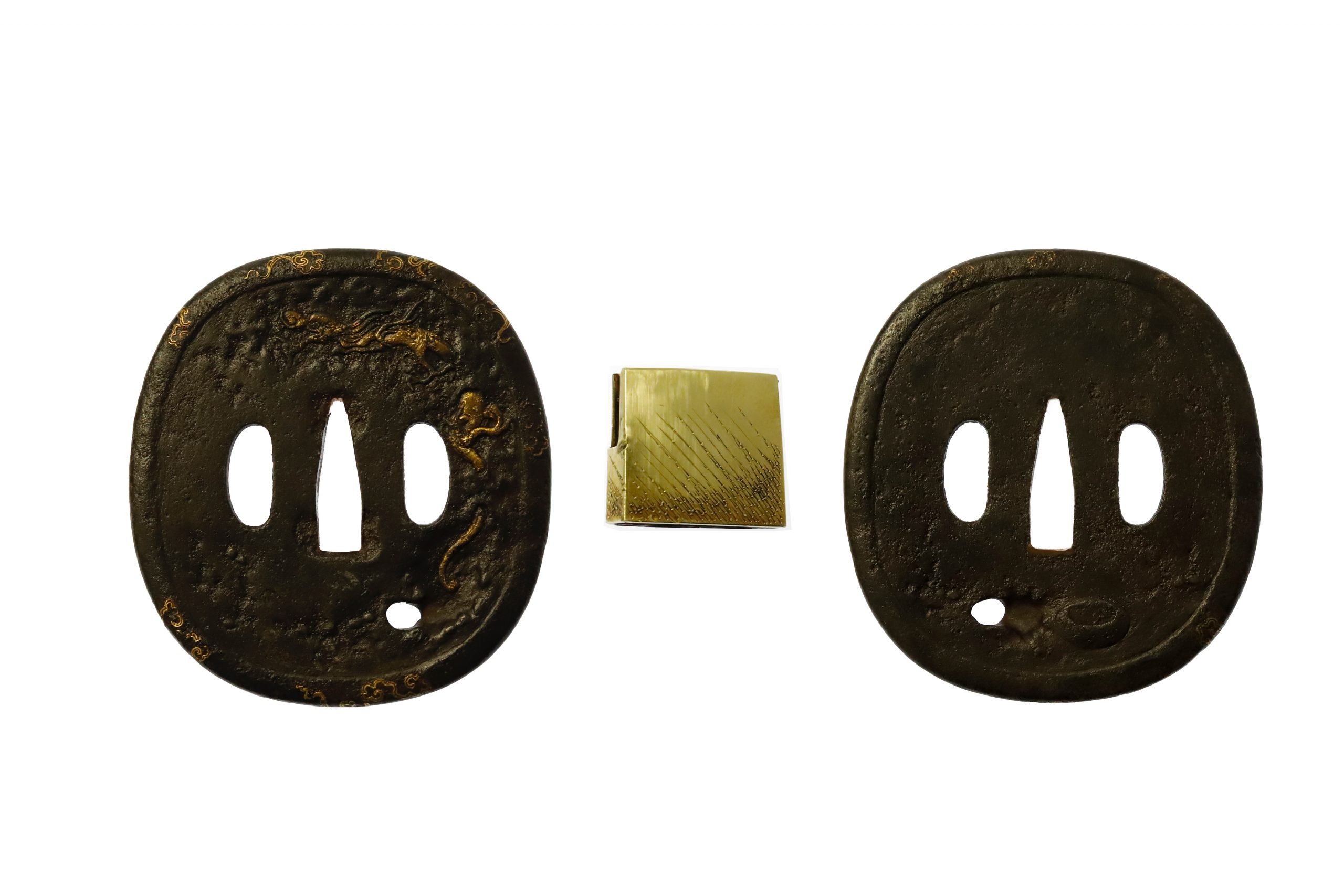
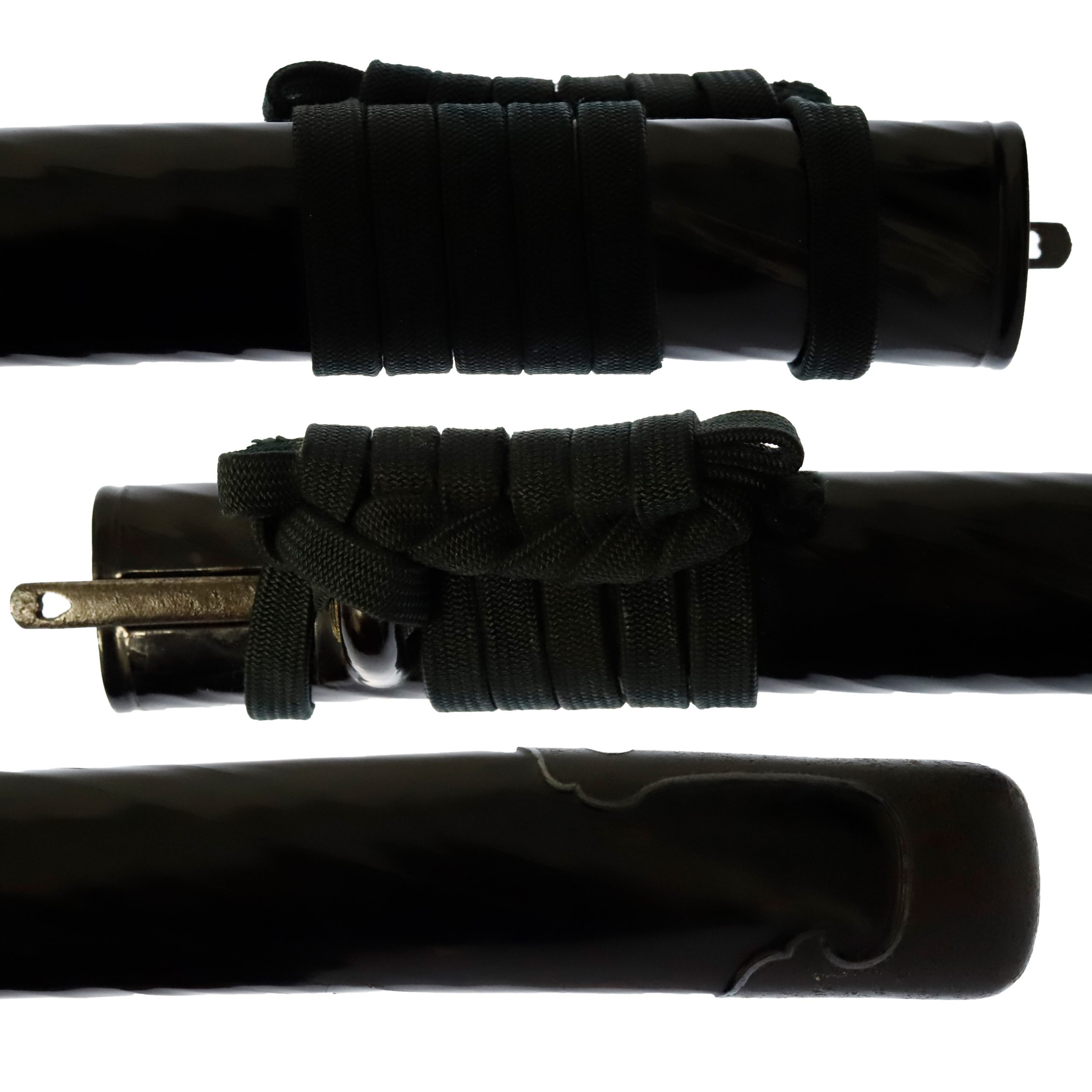
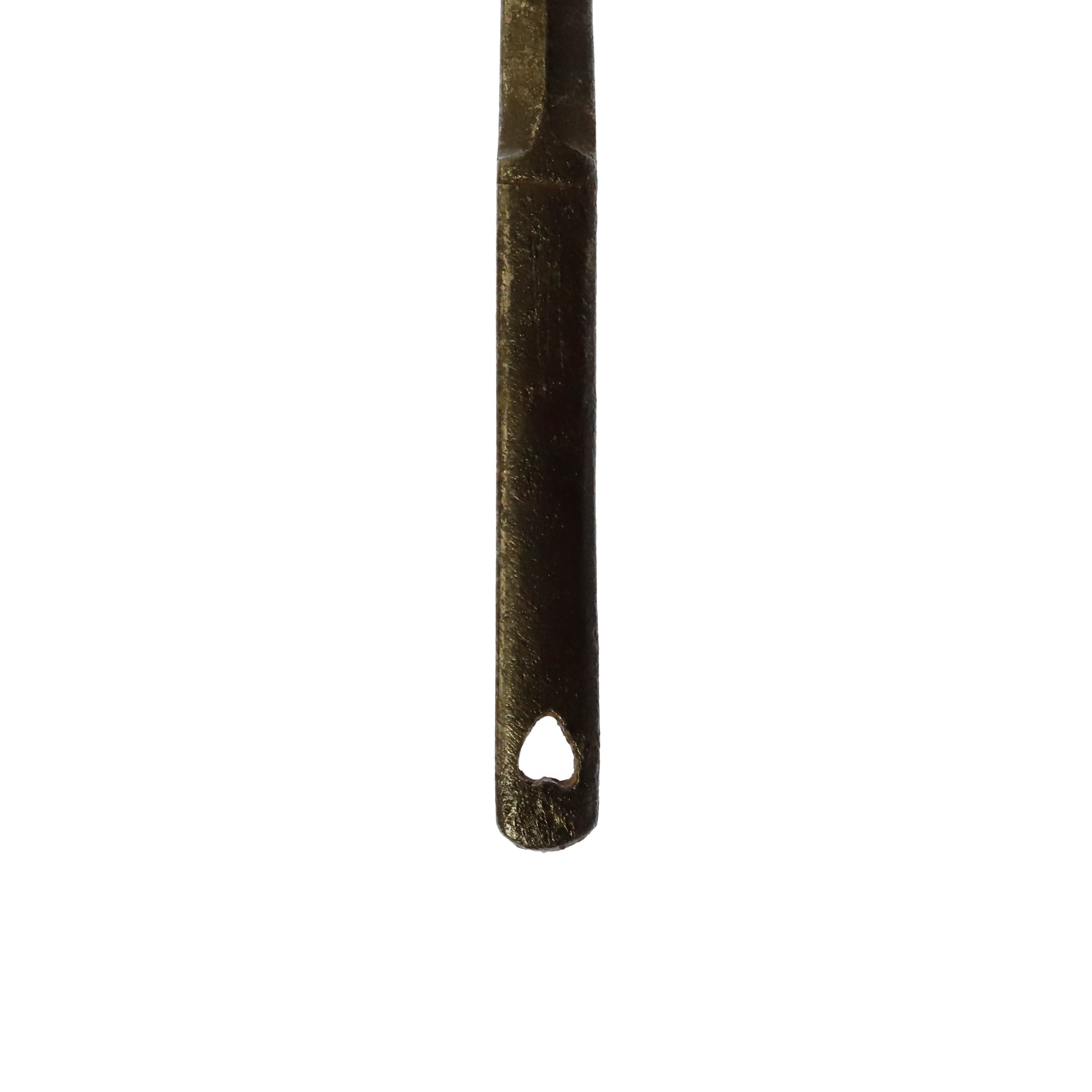
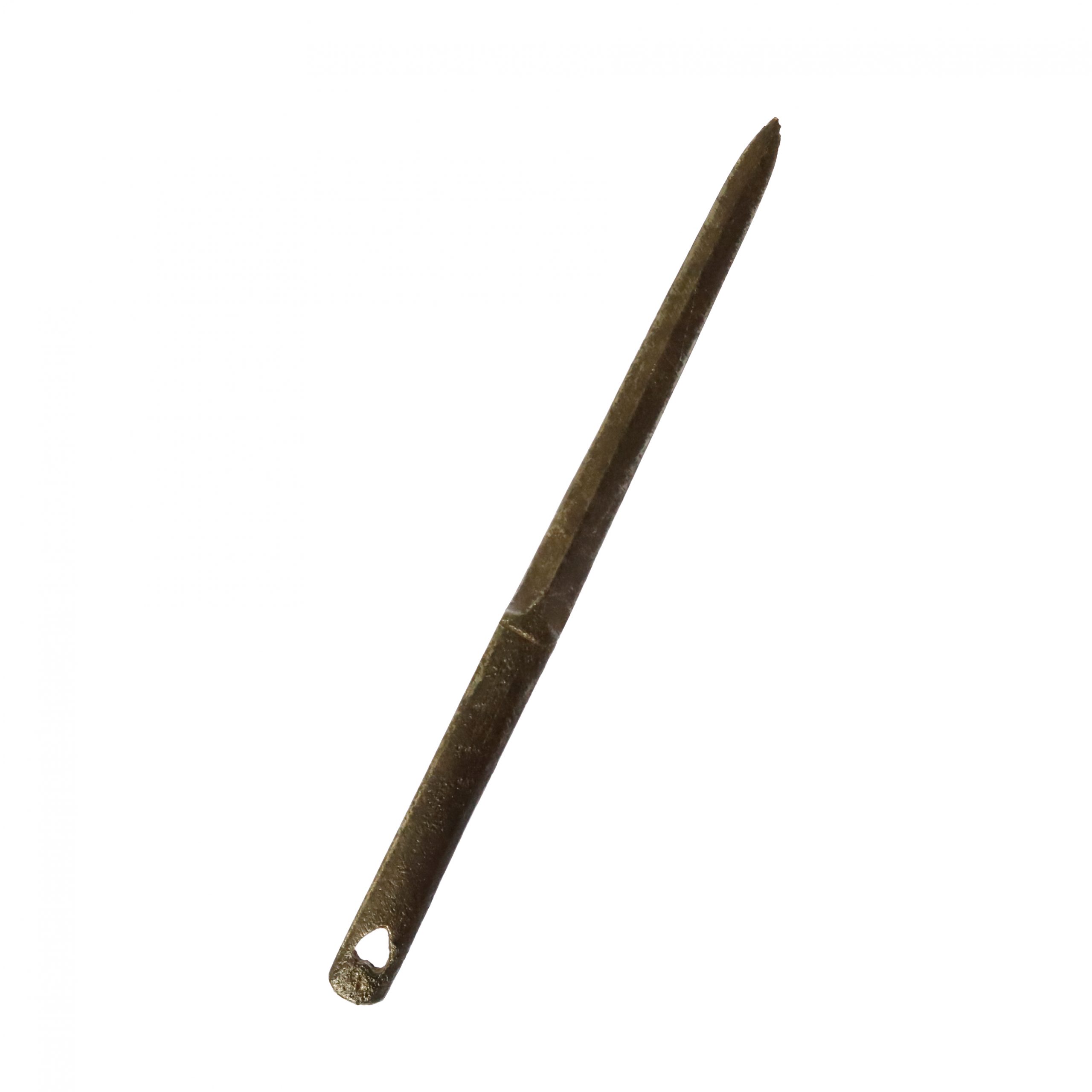
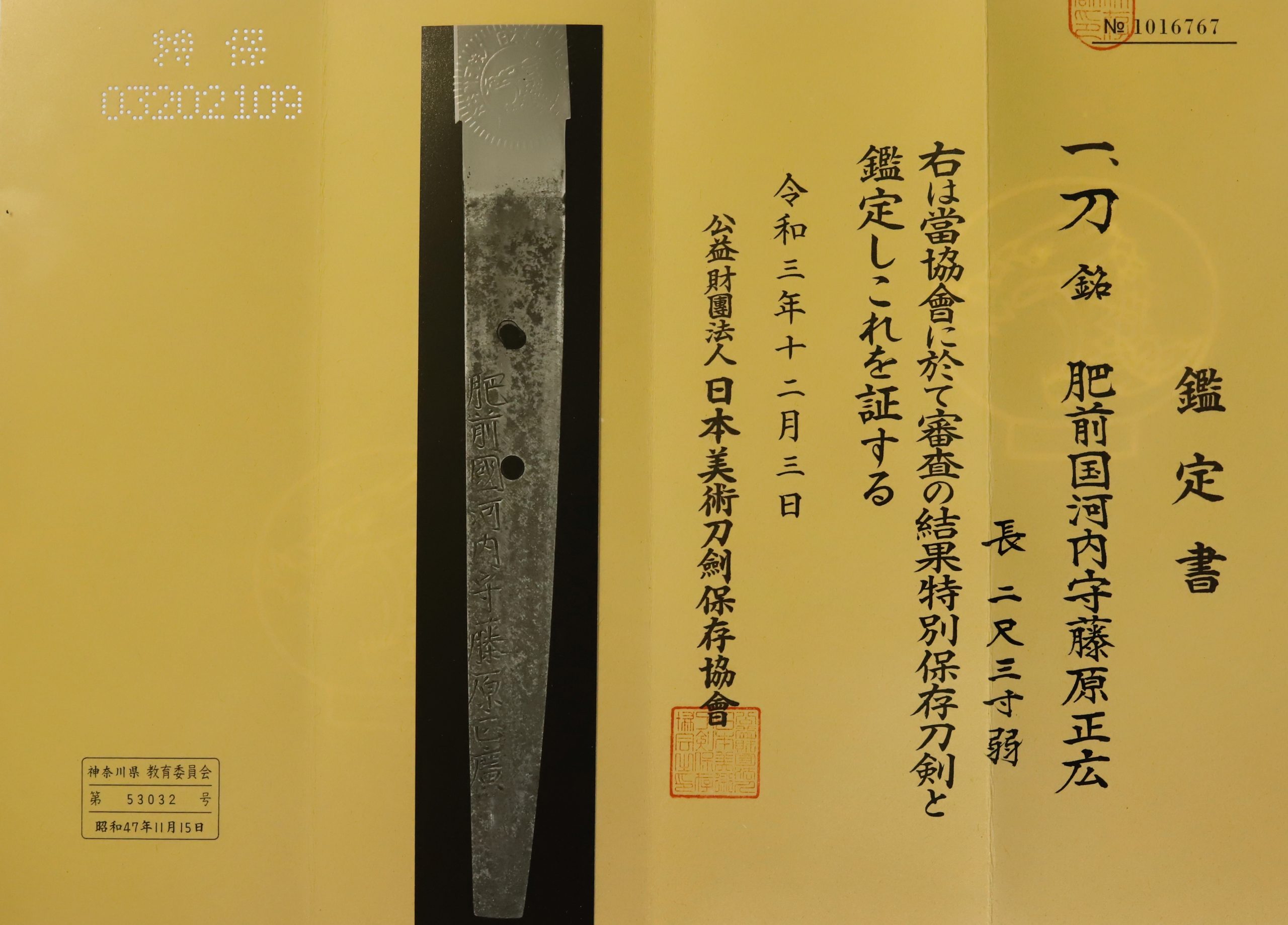
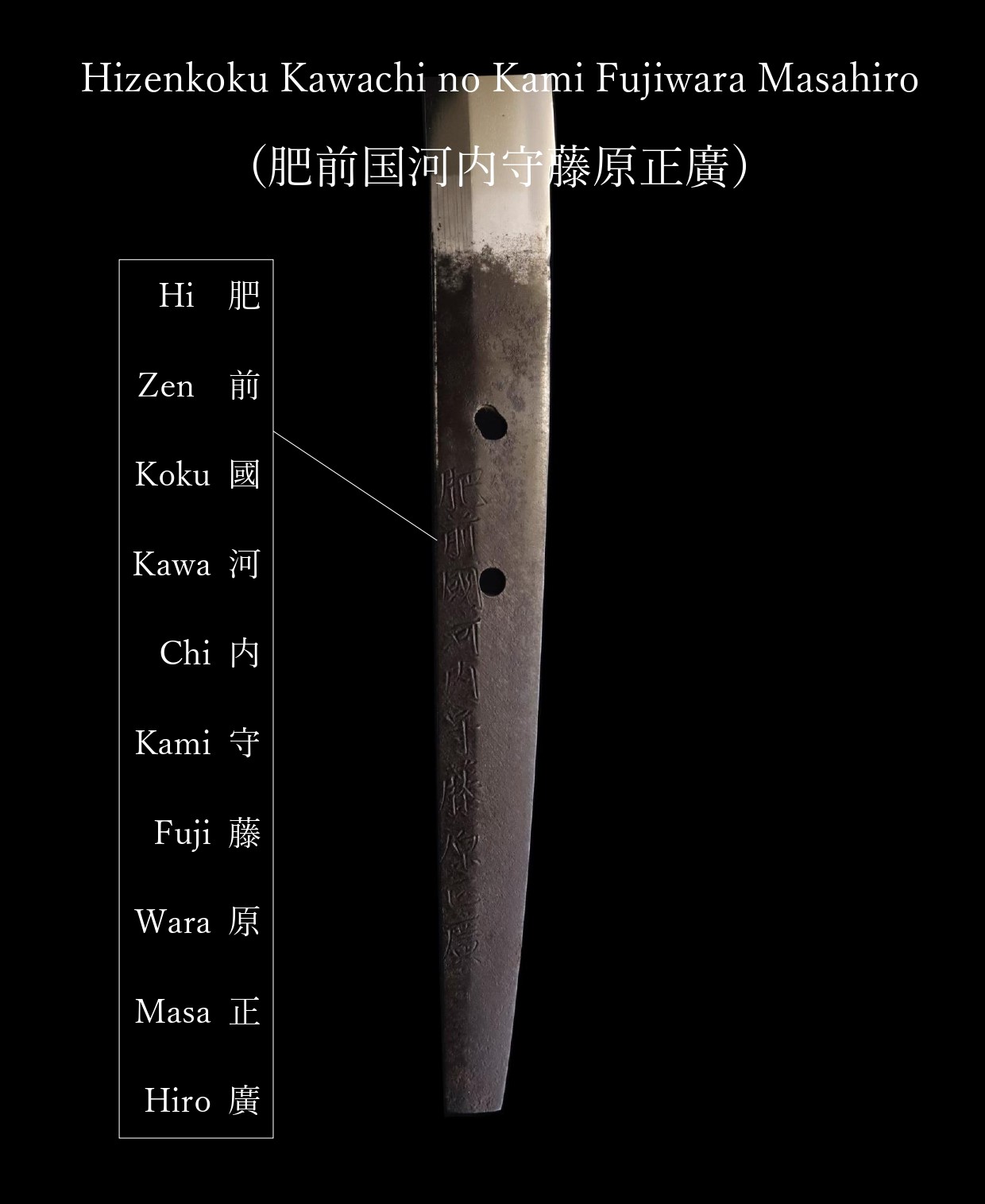
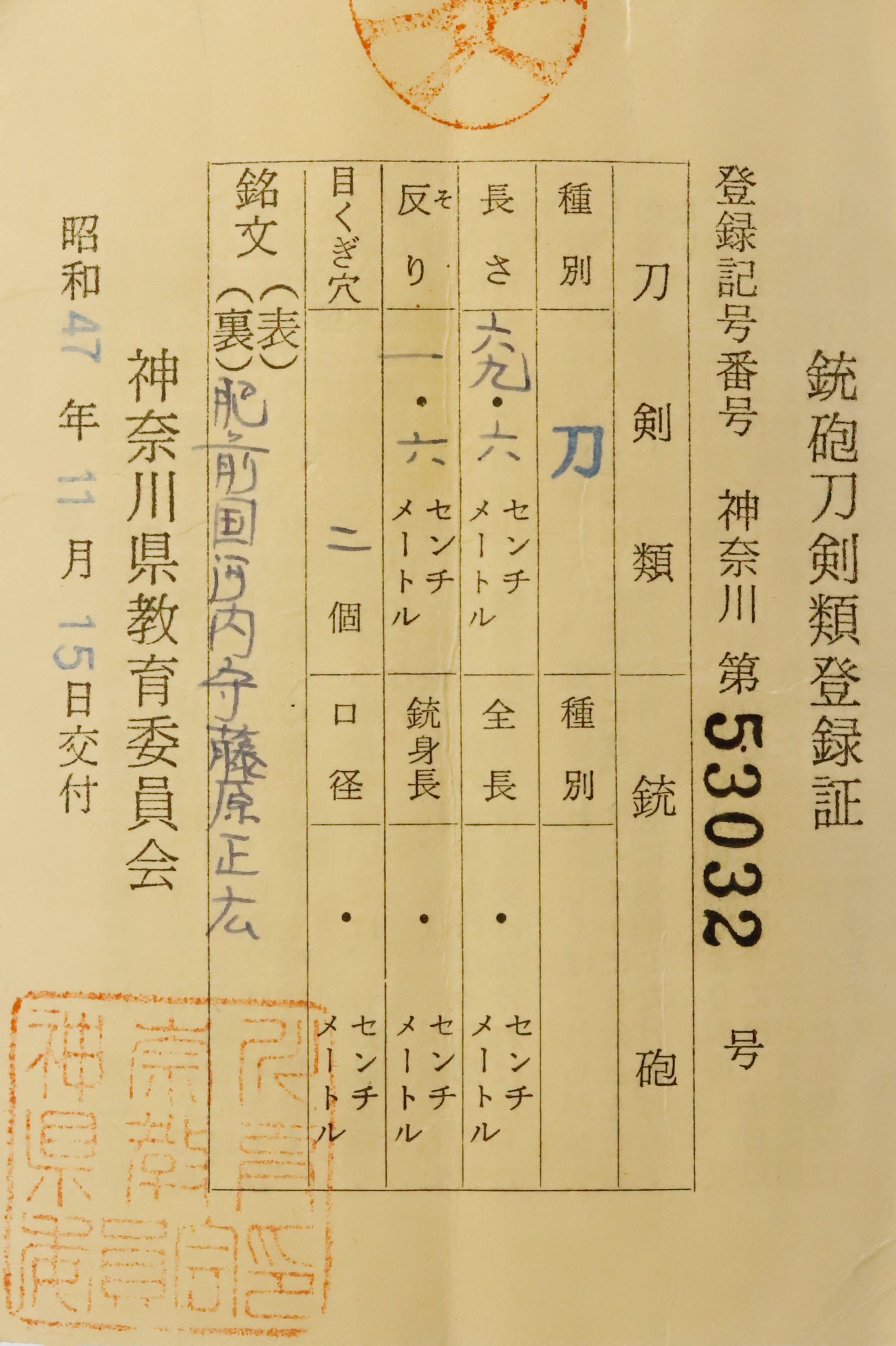
Hizenkoku Kawachi no kami Fujiwara Masahiro This blade was signed by Hizenkoku Kawachi no kami Fujiwara Masahiro (肥前国河内守藤原正廣), also known as the second-gen Masahiro. He was especially active in sword-forging during the early Edo period (Approx. 1658-1673). He was born in the fourth year of Kan-Ei era (1626) as the child of the first-gen Masahiro. The second-gen Masahiro received the honorable official title named Musashi Daijyo(武蔵大掾) in the third year of Manji era(1660) and promoted to Musashi no Kami(武蔵守) next year. He eventually received Kawachi no Kami(河内守) in the fifth year of Kan-Ei era (1665) after his father, first-gen Masahiro, was deceased. The second-gen died at the age of 73 in the 12th year of Genroku era(1699). We believe this blade was forged after 1665 as the signature includes Kawachi no Kami, his last title. Kami or Daijyo is an honorable official title given by the emperor for highly-skilled swordsmiths. Hizenkoku, located in Saga prefecture, is the name of the place where the second-Masahiro forged swords. His linage dates back to the beginning of the Edo period, when the first-gen Tadayoshi, his great grandfather, founded the school. Tadayoshi is known as one of the greatest swordsmiths in the early Edo period in Japanese sword history. His father, the first-gen Masahiro, is also a famous swordsmith in the province. The first-gen Masahiro started to serve Nabeshima Katsushige when he was 17 years old. Nabeshima Katsushige became the head of Saga Domain in Hizen in 1607. The first-gen Masahiro was selected as Okakae Kaji for the Nabeshima clan, meaning he exclusively forged swords for the feudal family. The second-gen Masahiro, the swordsmith who forged this blade, was also an Okakaekaji for this clan. Nabeshima clan ruled Hizenkoku during the Edo period, which indicates that Masahiro served a powerful feudal lord. The swordsmiths in the Hizen province worked under the auspices of the Nabeshima clan like the second-gen Masahiro. They were able to produce beautiful Jigane-patterned blades, also known as Hizen To, using and mixing carbon steel made in western countries. Hizenkoku had been flourishing by international trading. The geographic location of this domain made it possible to have easy access to western carbon steel. The first-gen Tadayoshi (His grand grandfather) The first-gen Tadayoshi was born and raised in the Saga domain. In 1596, under the domain’s order, he went to Kyoto to learn the sword-forging technique from Umetada Myojyu(埋忠明寿), one of the greatest swordsmiths in the early Edo period. He improved his craftsmanship and returned to the Saga domain two years later (1598). The first head of the Nabeshima clan, Nabeshima Katsushige, appreciated the work of the first-gen Tadayoshi very much. Then, Katsushige appointed him as his Okakaekaji, a swordsmith who exclusively forged swords for a specific domain or clan. And Tadayoshi started to stay near Saga castle, which is the headquarter of the Nabeshima clan. And, he founded Hizen Tadayoshi school, which trained more than 100 swordsmiths during the Edo period. Masahiro is one of them. This blade is appraised as a Tokubetsu Hozon Token(特別保存刀剣) issued by NBTHK(Nihon Bijutsu Touken Hozon Kyokai:日本美術刀剣保存協会). Fuchi-Kashira The surface is decorated with the Nanako-Ji (魚子地) technique. It is made by hitting a specific chisel, and it makes minor protrusions. In this Fuchi Kashira, each protrusion is beautifully arranged and decorates this work. A dragon is engraved on Fuchi and Kashira. You would find the same motif in other sword mountings of this sword: Menuki and Tsuba. Please check the following explications. Tsuka and Menuki The dragon is the motif of this Menuki. Golden paint is applied to it and adds a decorativeness to the Koshirae. Initially, the dragon is an imaginary creature found in ancient traditions or myths. Furthermore, it is regarded as a symbol of auspicious signs. Its body is likened to nine animals: antlers are deer, the head is a camel, eyes are demons, the neck is a snake, belly is the Mizuchi (蛟, a mythical animal in Japan that looks like a snake and has a horn and four legs), scales are fish, claws are falcons, palms are tigers, and ears are cows. It was thought that the dragon would reign at the top of all animals because of its odd-looking appearance. There are many sword mountings that have the dragon design. It shows that lots of Samurais loved this dignified beast motif. Tsuba and Habaki As mentioned above, this Tsuba is also decorated with a dragon design. You would find it on the front. If you focus on the Tsuba’s edge, you will see the cloud pattern is inlaid with golden metal (probably gold or brass). The combination of dragons and clouds is often seen, including sword mountings. We are unsure, but it might have been inspired by a religion that worships a dragon as a water god. As clouds would bring blessed rain, this relation is understandable. Or, a theory says dragons and gods dwell in clouds; some people have believed in clouds’ supernatural power. It is also a possibility that this combination is designed for various items. Bashin A Bashin (馬針) is a tool for keeping a horse in good condition by scratching the legs of a congested horse after a long run to promote bleeding. A Bashin is also called the Kankyu-Tou (貫級刀). It looks similar to Kozuka. The difference between these weapons is that a Bashin has a double-edged blade, and the handle and sword are integrally molded. You would find a small heart mark-shaped hole at the edge of the handle part. It is the Inome (猪の目, boar’s eye) pattern, which has been used since ancient times. Some people believed that the Inome design would work as an amulet to protect them from evil spirits or fire. Also, it is said it would bring good luck. Authentication Paper They authenticated the blade on Dec 3rd in the 3rd year of Reiwa (2021). They appraised it as Tokubetsu Hozon Touken, the blade especially worth preserving for Japanese society.
Offered by Samurai Museum
This piece has sold
Get an email when a new Hizen Masahiro piece hits the market.

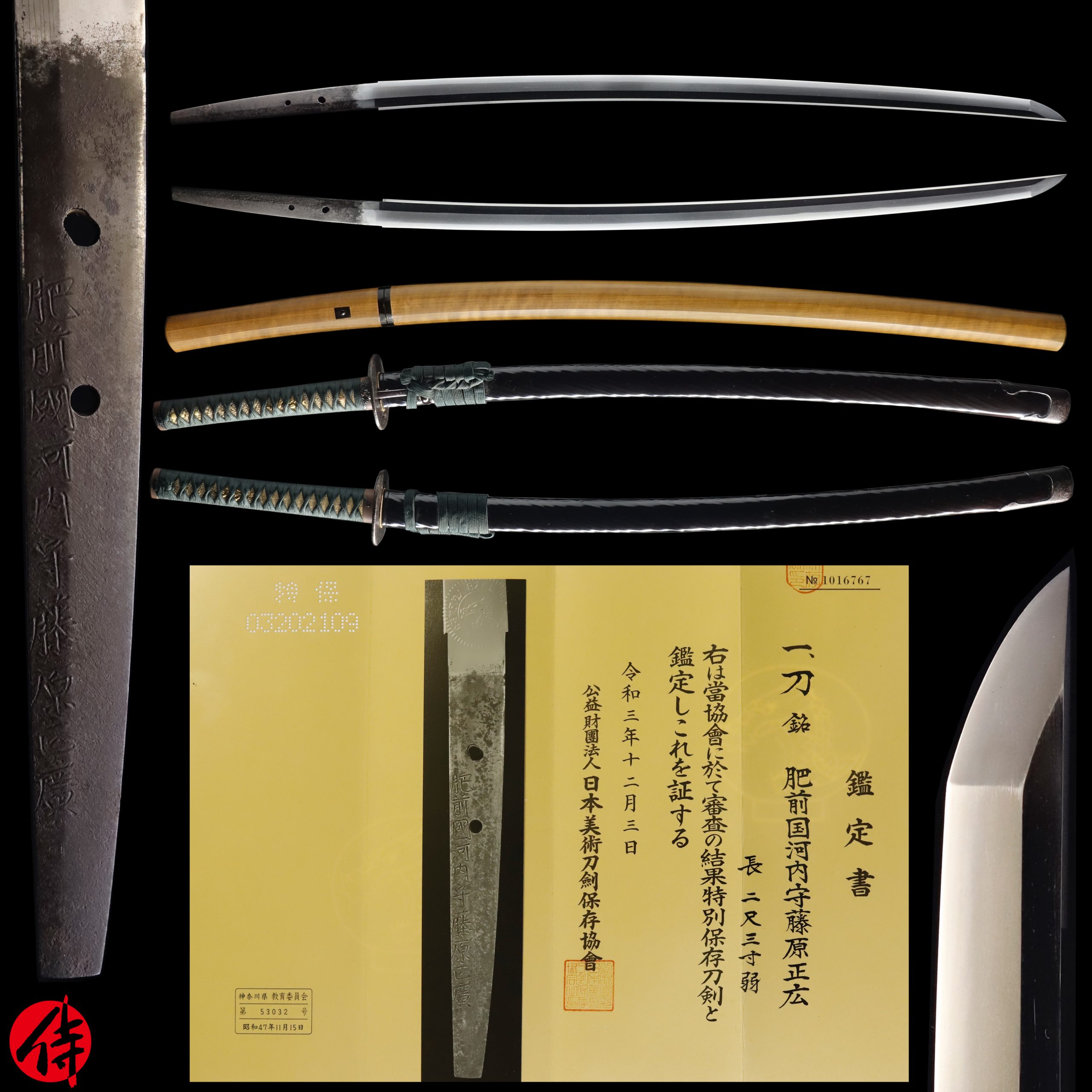
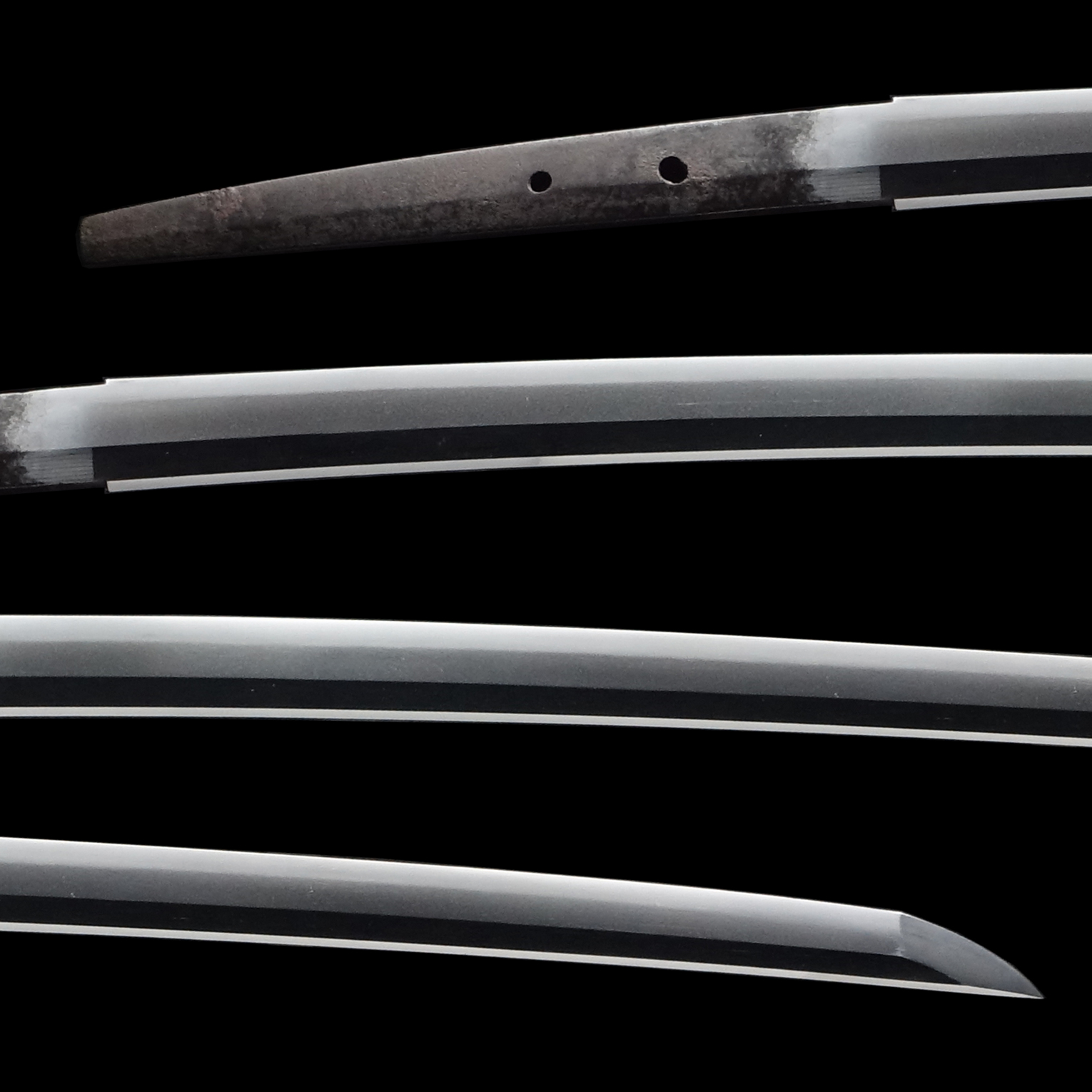
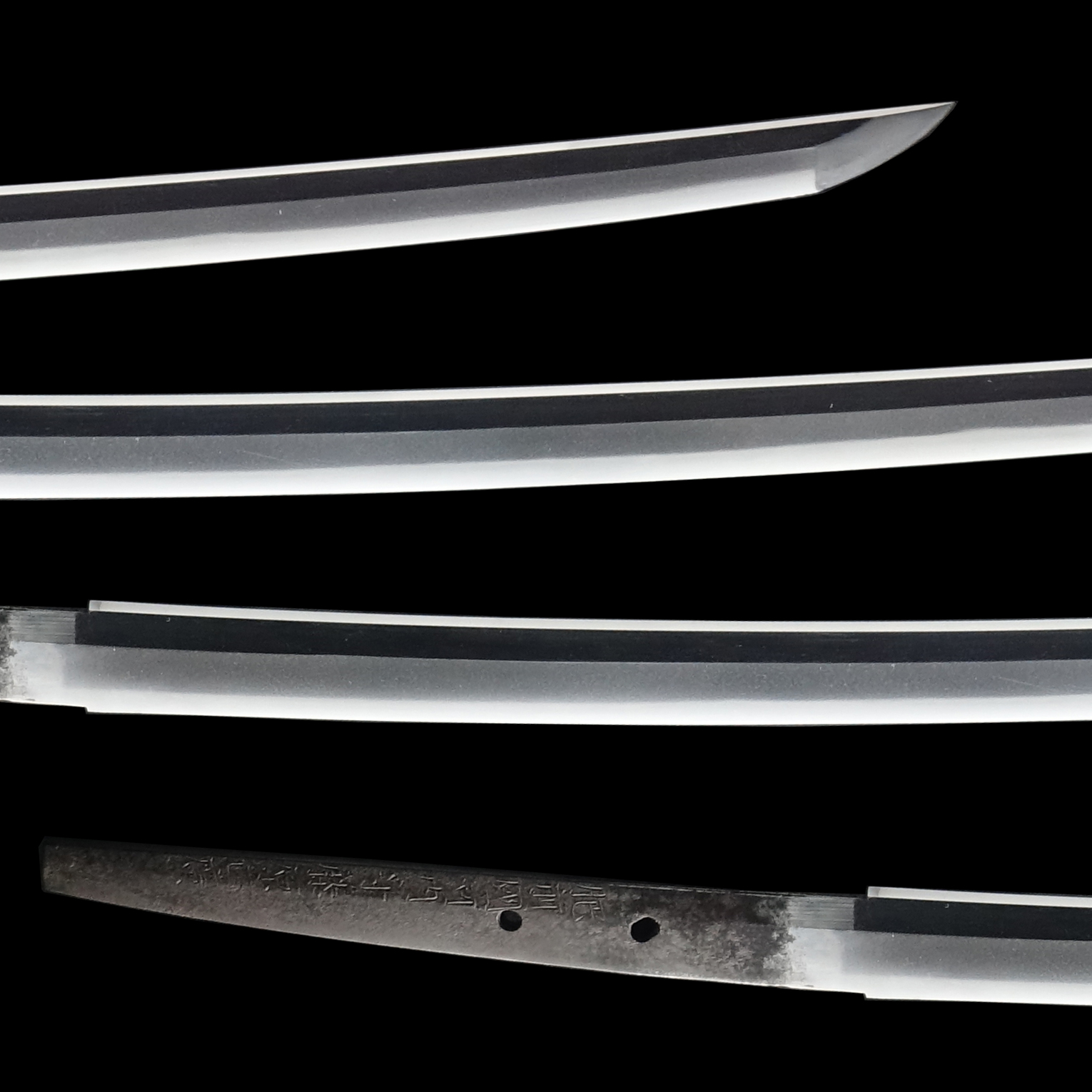
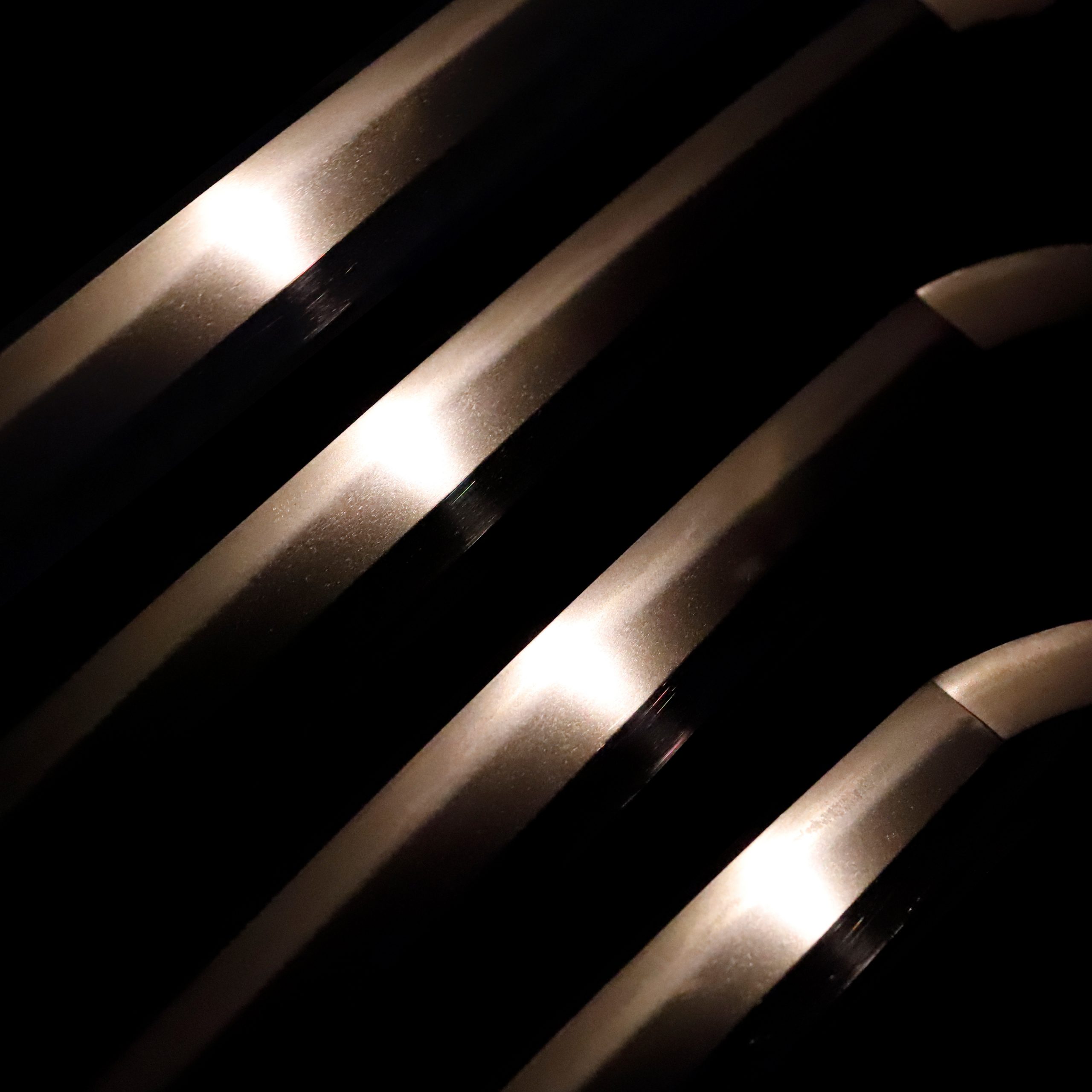
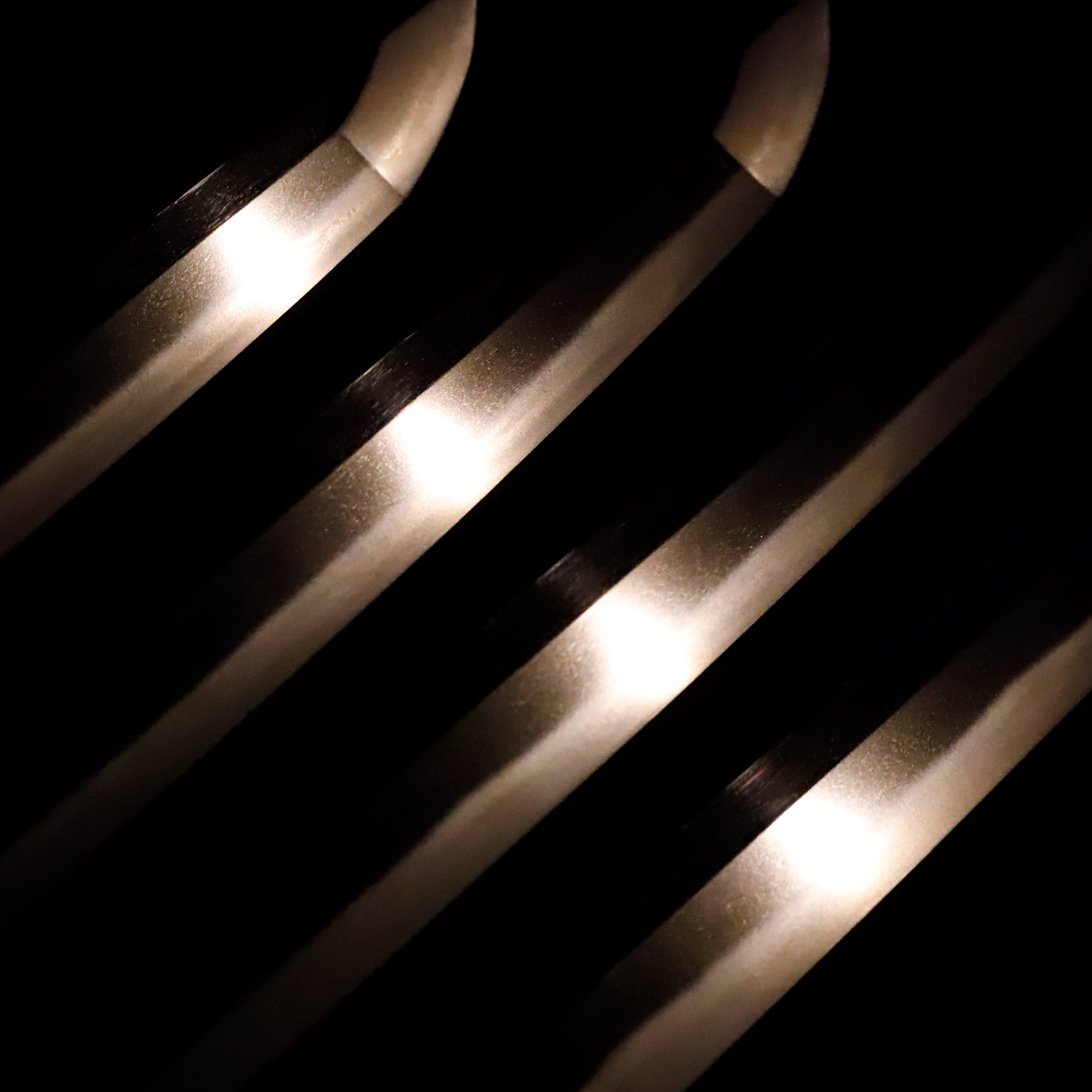
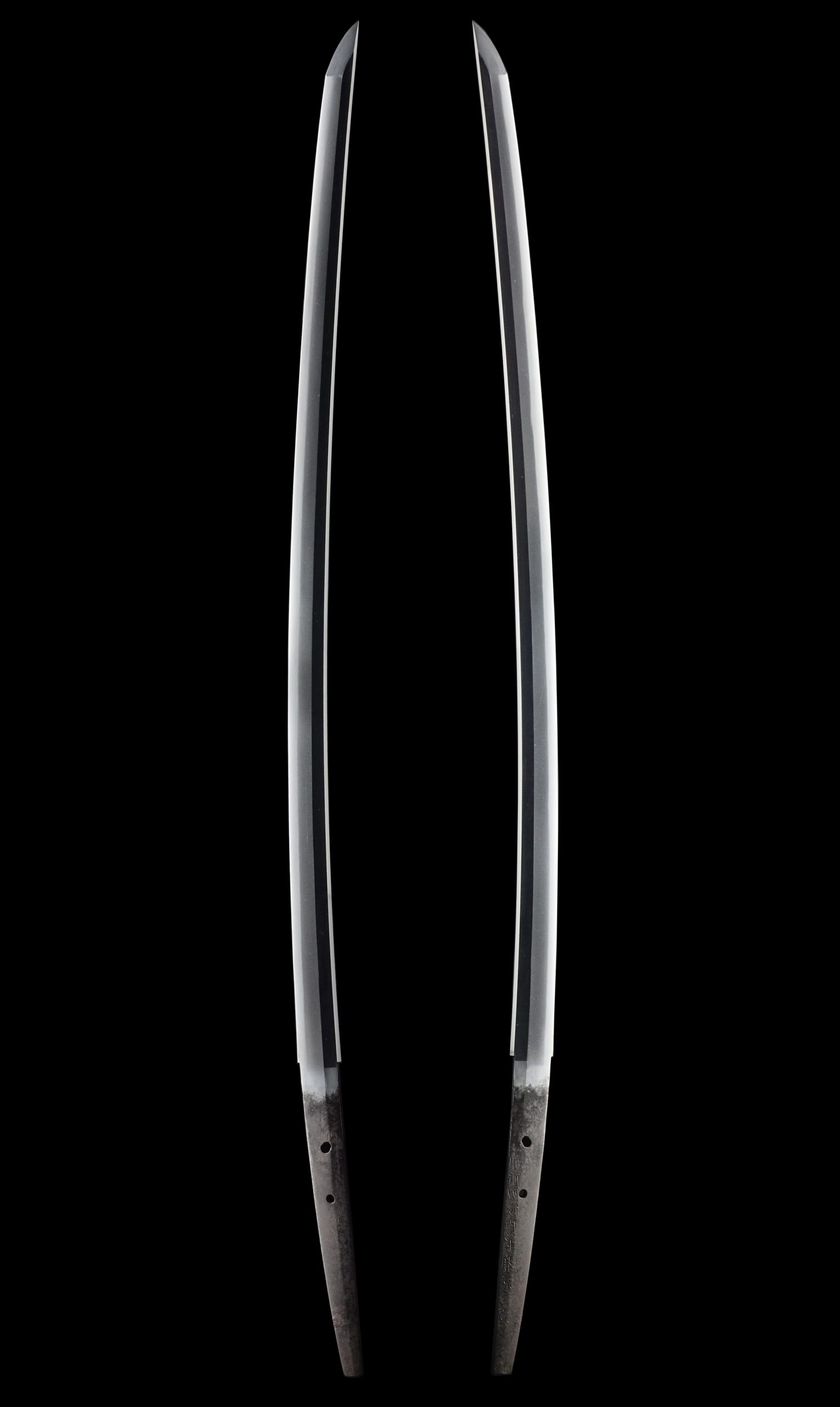
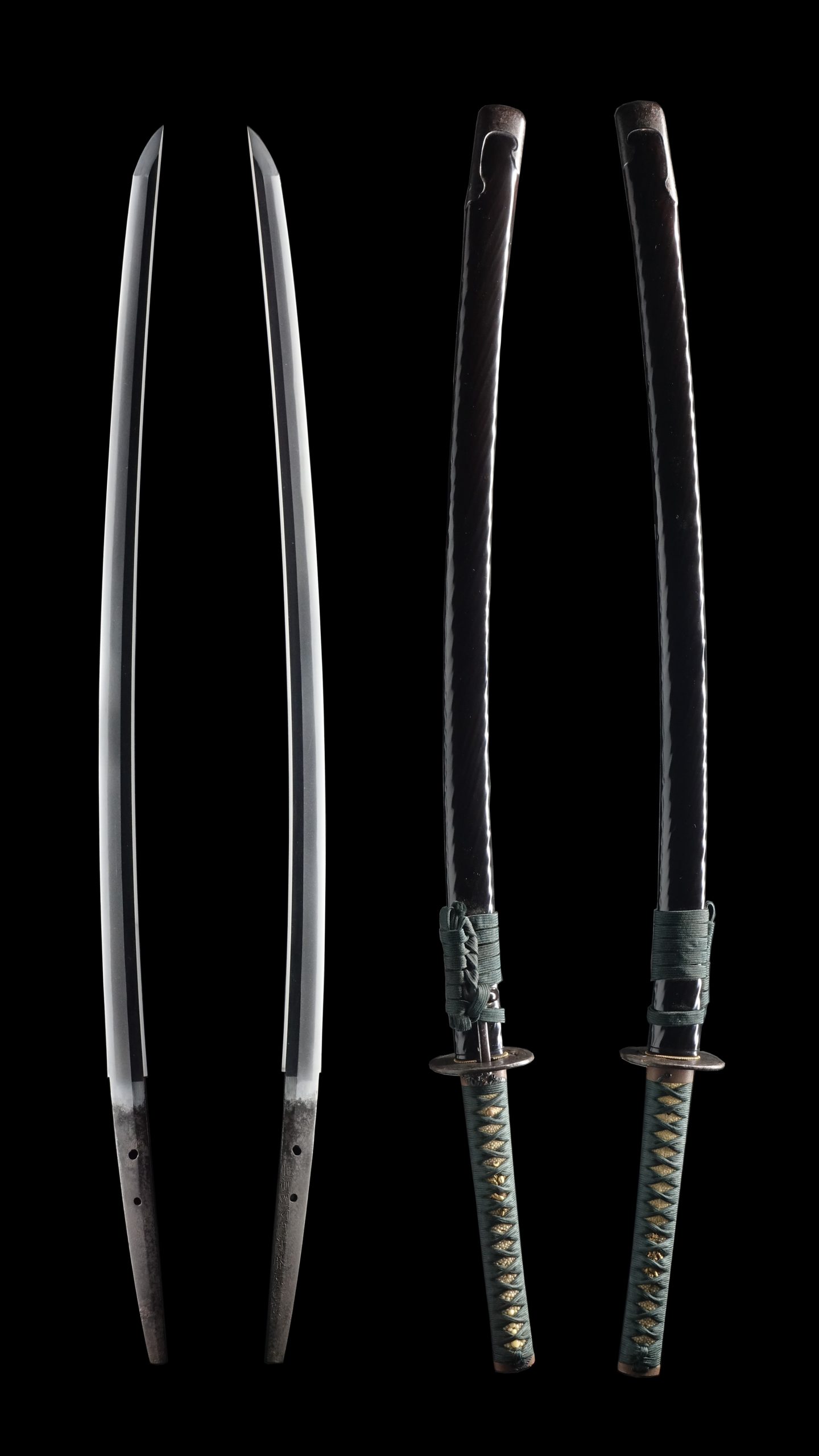
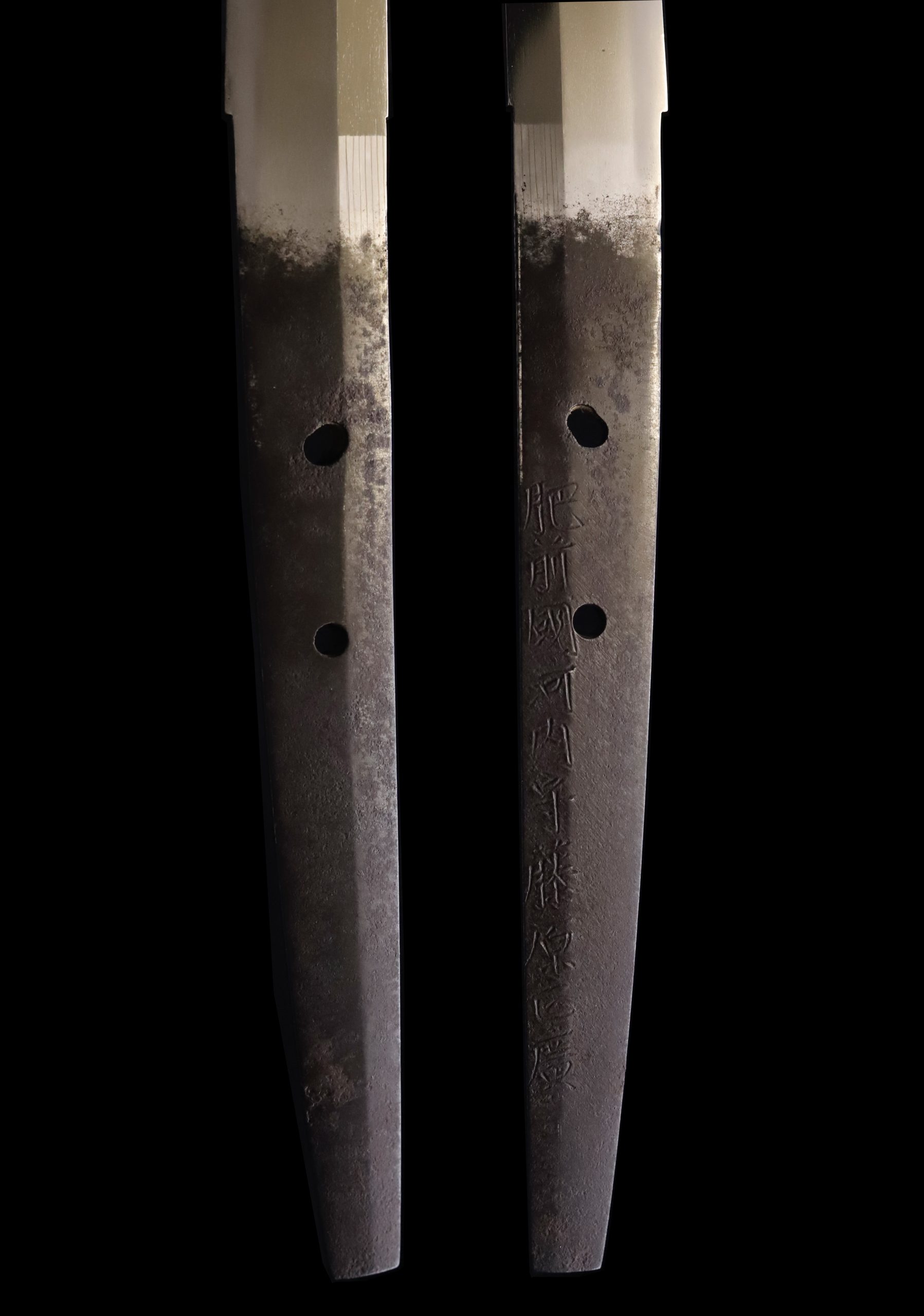
Hizen Tadayoshi main line, second-generation Masahiro (Saga) · Hizen · around 1658-1661
Fujishiro Jo saku · Tōken Taikan top 26%
3 pieces on the market now
The second-generation Masahiro was the son and successor of the first-generation Kawachi Daijo Masahiro, born in Kan'ei 4 (1627) and known by the common name Sadenji. In his father's lifetime he signed Masanaga. He received the title Musashi no Daijo in Manji 3 (1660) and was promoted to Musashi no Kami the following year. His father died on the fifth day of the second month of Kanbun 5 (1665), when he was thirty-nine, and on the thirteenth day of the fourth month he was transferred to Kawachi no Kami. A court appointment document, the kuzen-an, addressed to him as Musashi no Kami Fujiwara Masahiro[[c:1]] leads the published sources to conclude that he took the Masahiro name almost immediately after his father's death. He died in Genroku 12 (1699) at seventy-three, and the published record counts him, like his father, among the collaborators of the main Hizen house.
The judges set him remarkably close to his father. In both suguha and midareba, they write, he is skilled second only to his father, with virtually nothing to choose between them[[c:2]]. His work in either manner is described as exactly like that of the first Masahiro, and his technique as in no way inferior to his father's. He was above all adept at the irregular temper, and one record names his showy choji-midare as his own domain, 「正に彼の独壇場である」.
That midareba is a choji-based temper mixed with gunome, set wide and broadly undulating. Two features within it are named as characteristic of the second generation's hataraki: gunome with rounded heads and an arrow-notch, yahazu-like element. Long ashi and yo enter, the nioi is deep and the nie thick, gathering in places in the valleys, and kinsuji and sunagashi run through the hamon in abundance. Some blades add tobiyaki, and one is described as the showiest work in his record[[c:3]]. As with the waki-Hizen generally, a straight yakidashi may appear at the base. The jigane is a tightly packed ko-itame with dust-fine ji-nie laid thickly and fine chikei entering, several entries naming it the komenuka-hada peculiar to Hizen swords, and on one robust piece the hada is said to stand slightly. The boshi runs straight to a ko-maru.
The suguha is the second register of his record, and the published sources draw attention to it: 「初代正広よりも直刃の作品が多く見られることにも注意したい」. His suguha works are fewer than his midareba, yet more numerous than his father's, and even and consistent in quality. On a typical chu-suguha katana the jigane is said to be packed even more tightly than usual, and one deep-nioi chu-suguha is described as recalling the suguha of the main house. Two further chu-suguha katana are singled out because the temper is deeper in nioi and thicker in nie than his usual straight work, with ashi and hataraki in abundance, and they are said to show a certain boldness[[c:4]]. His bodies are often broad, thick and heavy in the hand, at times with an extended or large kissaki.
The two generations are told apart by signature. The second Masahiro most often signs Hizen no Kuni Kawachi no Kami Fujiwara Masahiro, occasionally Fujiuji in place of Fujiwara, and the published sources set out how the forms of the characters Fuji and Hiro differ between father and son, the second generation's Hiro carrying one more stroke. Carving on his blades is described as extremely rare. One katana, dated Kanbun 12, carries carving added later by Nobukuni Yoshinao and a cutting-test inscription of Kanbun 13 by Yamano Kanjuro.
Masahiro is graded Jo saku by Fujishiro. He has no National Treasures and no Important Cultural Properties, and his record lies in the Juyo rank, where twenty-six of his works have been designated. One katana with a broad, irregular temper and tobiyaki in the shape of sun and moon is called his finest and a sword representative of Hizen work[[c:5]]; it carries a gold-inlaid cutting-test inscription by Yamano Kanjuro Hisahide and the sword name Tsugi-kosode. Another bears a cutting test with the name Senpu, and the published sources note that test inscriptions are extremely rare on Hizen swords. A dated wakizashi of Kanbun 7 is valued as a reference piece. Recorded provenance is slight, and a signed example of the Juyo rank comes to market only from time to time.
Where Masahiro stands among comparable artisans: across all of nihontō, and within tradition, era, and period. The tiers (Foremost · Leading · Major · Notable) weigh official designations from the NBTHK and Japan's Agency for Cultural Affairs, together with historical honors of lasting repute such as the Sansaku and Meibutsu-chō.
Select a lens to see how it's measured.
Shinto · Hizen
107 pieces on the market now
The Hizen school began with a single domain commission. In Keicho 1 (1596) the Nabeshima of Hizen ordered Hashimoto Shinzaemon, the smith who would sign Tadayoshi, up to Kyoto with the carver Munenaga; there he entered the gate of Umetada Myoju and studied forging while Munenaga learned the chisel. The two returned to the province in Keicho 3 (1598), and Tadayoshi settled in the castle town below Saga, where under the domain's patronage the line grew into the dominant sword-making house of Kyushu. His own work runs from Keicho 5 (1600) to his death in Kan'ei 9 (1632); in Genna 10 (1624) he received the court title Musashi Daijo, changed his name to Tadahiro, and shifted his clan name from Minamoto to Fujiwara, so that the late Musashi Daijo blades are the founder under a second name. From him the house became a true generational institution: his son the second-generation Omi Daijo Tadahiro carried it forward as its most prolific hand, the third-generation Mutsu no Kami Tadayoshi returned its highest finish, and a Tosa no Kami branch took the founder's signature when he set it aside. Around this main line grew a circle of disciples and collateral hands, the waki-Hizen or Soba-Hizen smiths, several of them, like Yoshiie and Hironori, working as daisaku substitute makers whose own signed pieces are therefore scarce. The school's signature is its steel. Over a ko-itame forged so tightly it shows no slackness, fine ji-nie gathers in minute particles until the surface takes on the rice-bran konuka-hada (also written komenuka-hada) that no other school produces, fine chikei entering throughout and the ji notably clear and bright.
The orthodox temper laid upon it is a chu-suguha or hiro-suguha, sometimes tinged with a shallow notare and ko-gunome, the nioiguchi deep with finely clustered ko-nie and tightened to a bright clarity, the boshi running straight to a quiet ko-maru. The founder aimed this suguha toward the Rai school yet departed from it, his nioiguchi tighter and his forging carrying more vigor; the third generation refined it to what the published sources call the strongest and most precise hand of the first three generations. Against that calm register the house also worked a showier one, the Hizen choji-midare mixing gunome, long ashi, kinsuji and sunagashi, a manner the published sources already find more often in the founder's late Musashi Daijo work than in his Tadayoshi years, and one the second generation made his own. The branches pushed further from the suguha standard: Tadakuni of the Ogi domain ran sunagashi more conspicuously than any other Hizen hand and reached toward old Ichimonji in his o-choji; Masahiro and Yukihiro favored a flamboyant long-ashi choji over the calm main line; and the Iyo no Jo Munetsugu line worked apart in the Soshu-den, building a midareba on notare with a pointed togariba and a jihada that tends to stand and tone slightly blackish. A collector seeks Hizen-to first for that steel, and reads it the same way the appraiser does: a bright suguha lying over a clear, tight konuka-hada identifies the school before the signature is consulted, and the quiet ko-maru boshi on the ura-signed tang confirms the main-line practice. Generation and branch are then told within that frame, the third generation's powerful sugata recalling not his father but his grandfather, the waki-Hizen hands set apart by their irregular temper, their sujikai file marks and a sashi-ura signature, the Munetsugu line by its Soshu togari. The main line, made in real numbers across so long a span, reaches the market more readily than any Kamakura master, so a papered example is within reach of a patient collector, while the founder's own work and the finest konuka-suguha of the third generation come to open hands only from time to time. Provenance runs back through the house the school served, blades recorded to Nabeshima Katsushige and Nabeshima Naomoto and passing onward to the Owari Tokugawa, the Satake and the Imperial families; documentary inscriptions sharpen the picture further, a Myoju soemei attesting the founder's discipleship, Umetada carving adding flowers to brocade on his late blades, and the gold-inlaid cutting tests of Yamano Kanjuro and Yamano Ka'emon, rare on Hizen work, naming the edge as well as the hand. Learn more →
| Smith | Era | Designated |
|---|---|---|
| Tadayoshi忠吉 | 1596-1632 | 155 |
| Tadayoshi忠吉 | 1660-1686 | 61 |
| Tadahiro忠廣 | 1633-1693 | 133 |
| Tadakuni忠國 | 1648-1652 | 32 |
| Masahiro正廣 | 1624-1655 | 30 |
Hizen: a domain enterprise
Hizen swords were a domain enterprise: the Nabeshima sent Tadayoshi to study under Umetada Myōju around 1596, then built a licensed school around him. Nine generations carried its famously consistent konuka-hada work into the Meiji era.
A Hozon-certified blade judged to show notably superior workmanship and a better state of preservation. The bar is higher: re-tempered blades and most unsigned Muromachi/Edo works are excluded.
The NBTHK (Nihon Bijutsu Tōken Hozon Kyōkai, the Society for the Preservation of Japanese Art Swords) is a public-interest incorporated foundation founded in 1948 and supervised by Japan’s Agency for Cultural Affairs (Bunkachō); it is based at the Japanese Sword Museum in Tokyo. Its expert panels physically examine each submitted work (shinsa) and issue a certificate (kanteishō) ranking it by artistic and historical merit. NBTHK papers are the most widely recognized standard of authentication for Japanese swords and fittings.
NBTHK official siteReturns/exchanges limited to defects caused by shipping (except willful misconduct or gross negligence by the company); customers must contact within 72 hours of receiving the product.