Edo was the sword’s age of connoisseurship: the Hon’ami appraisers, the shogunal register of famous blades of 1719, and a thriving literature turned the sword into an object of study even as it ceased to be drawn in war.
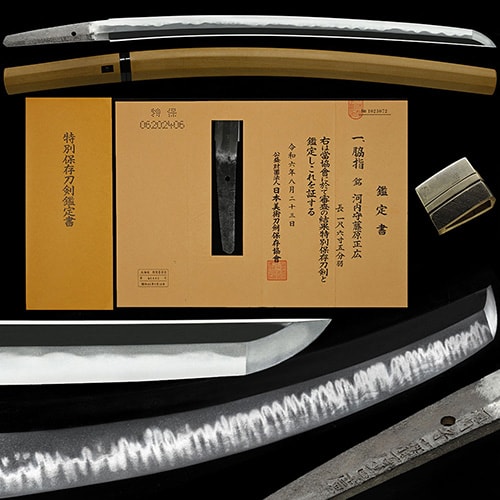
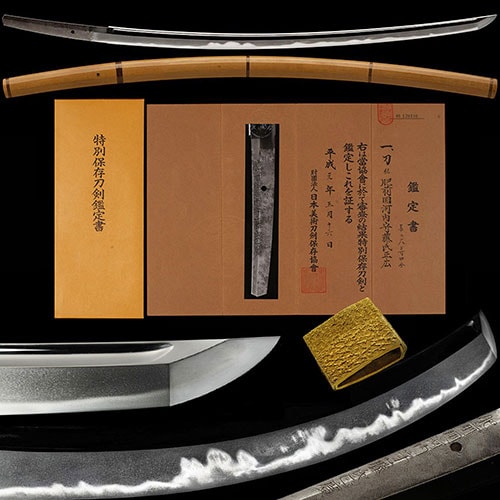
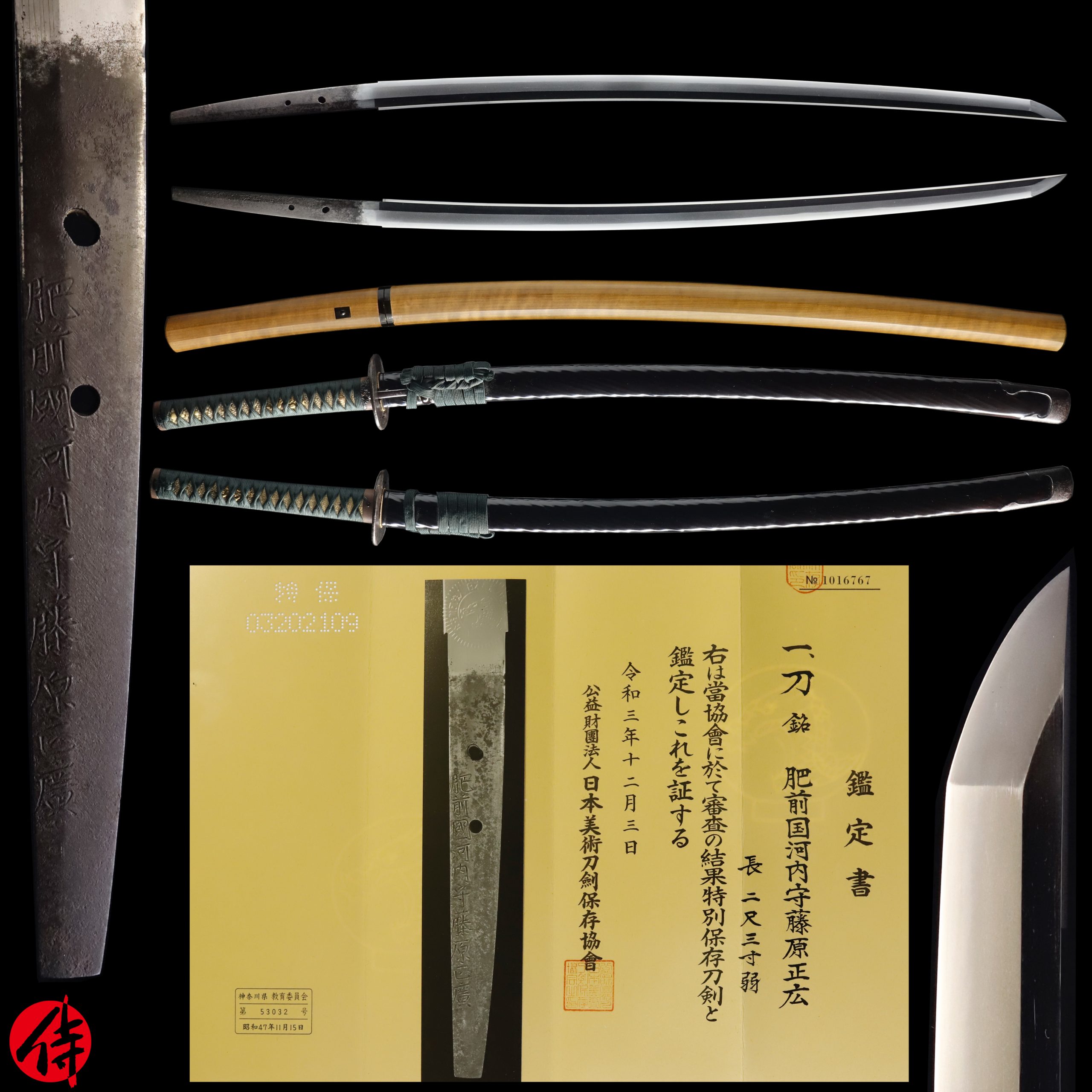
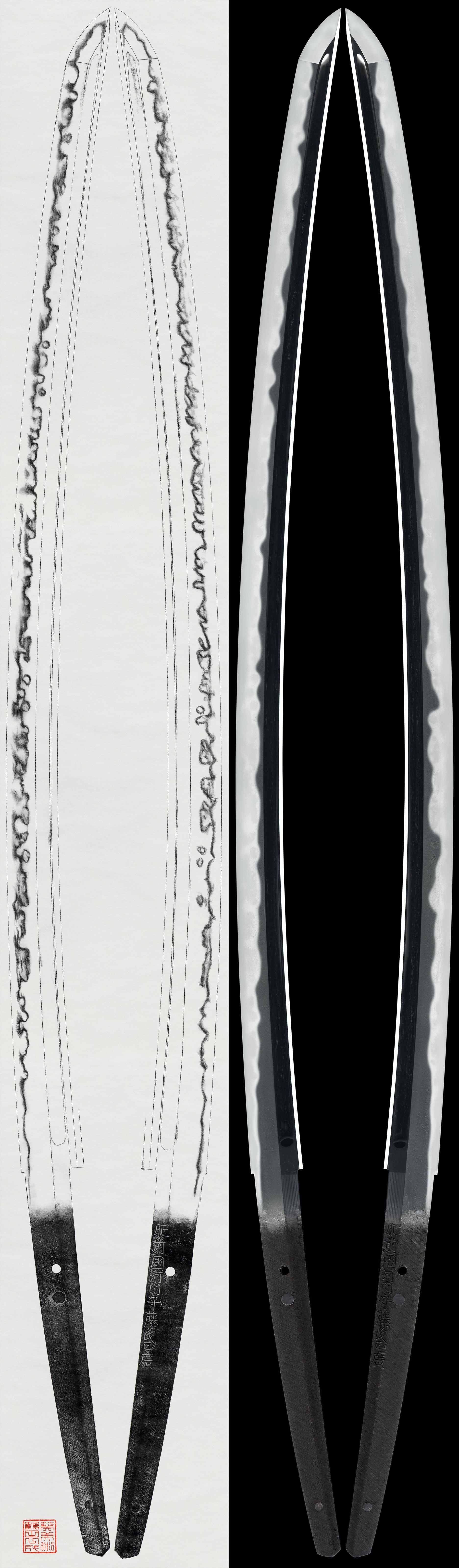
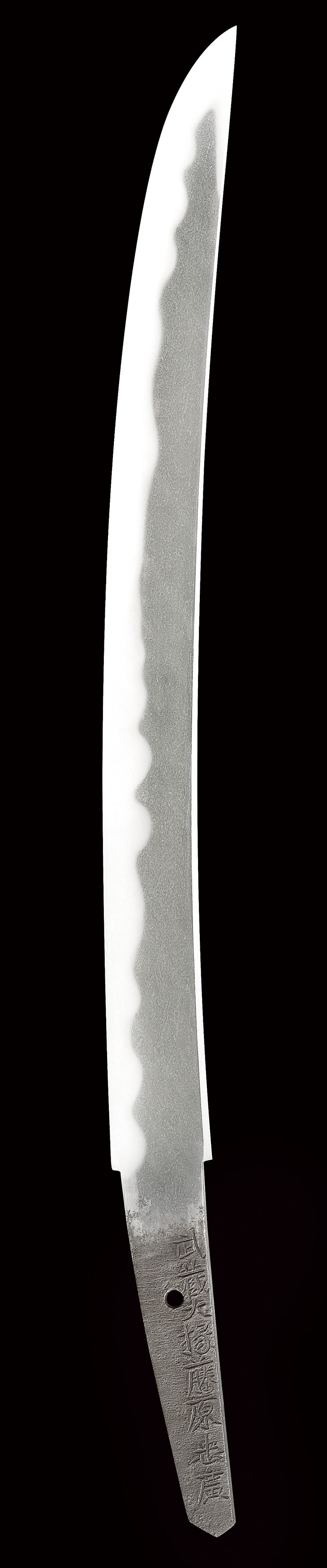
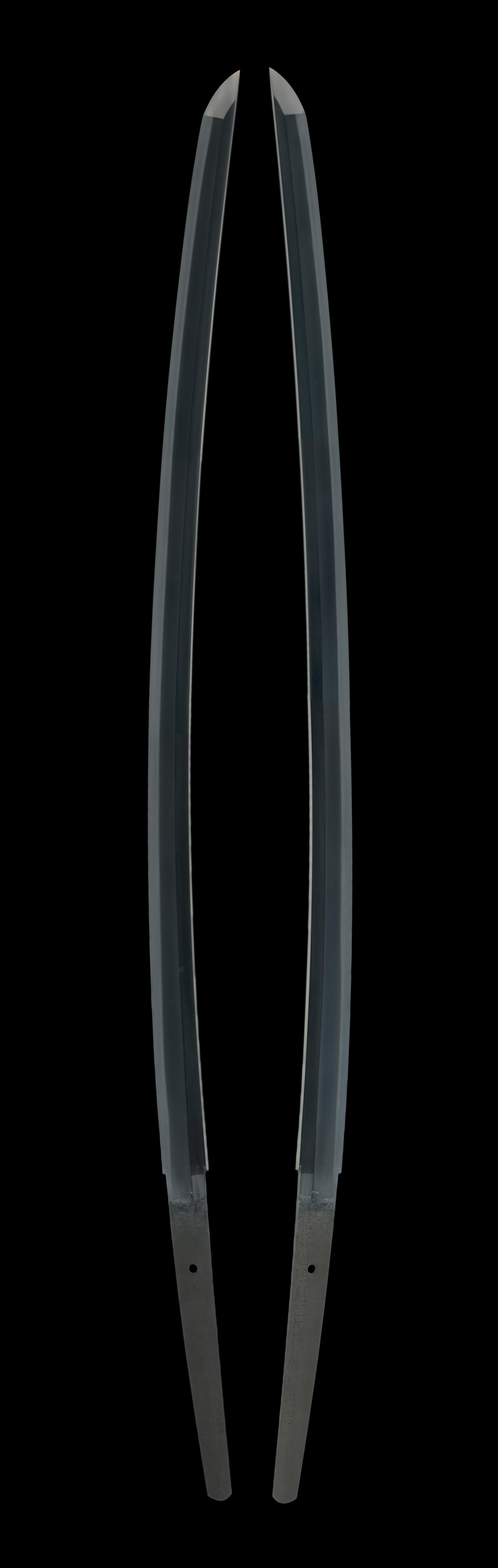
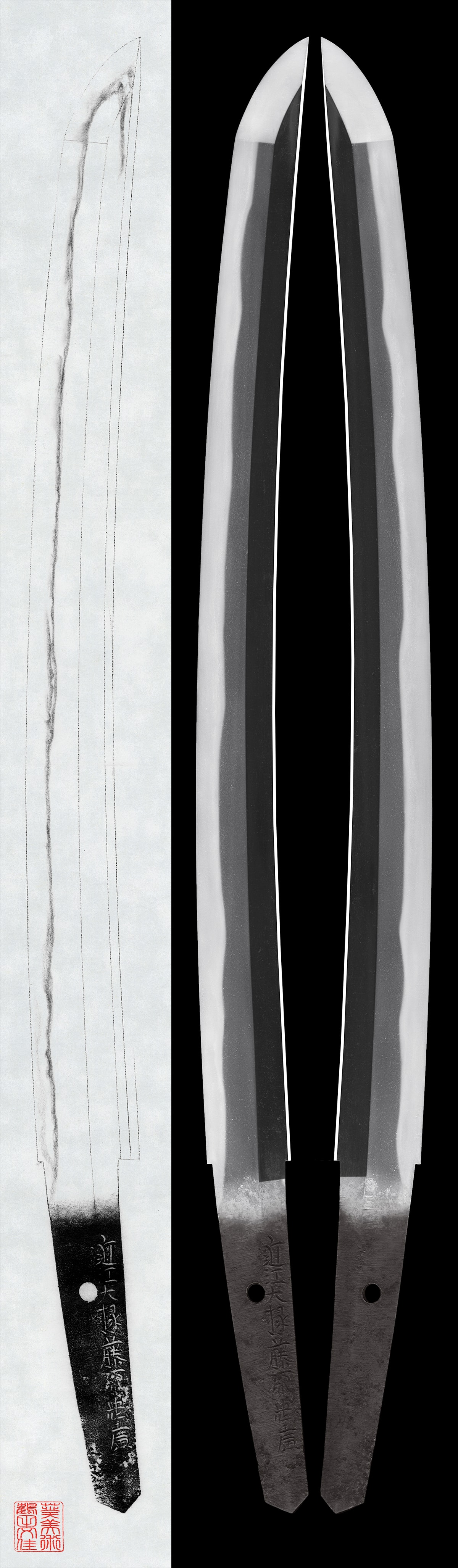
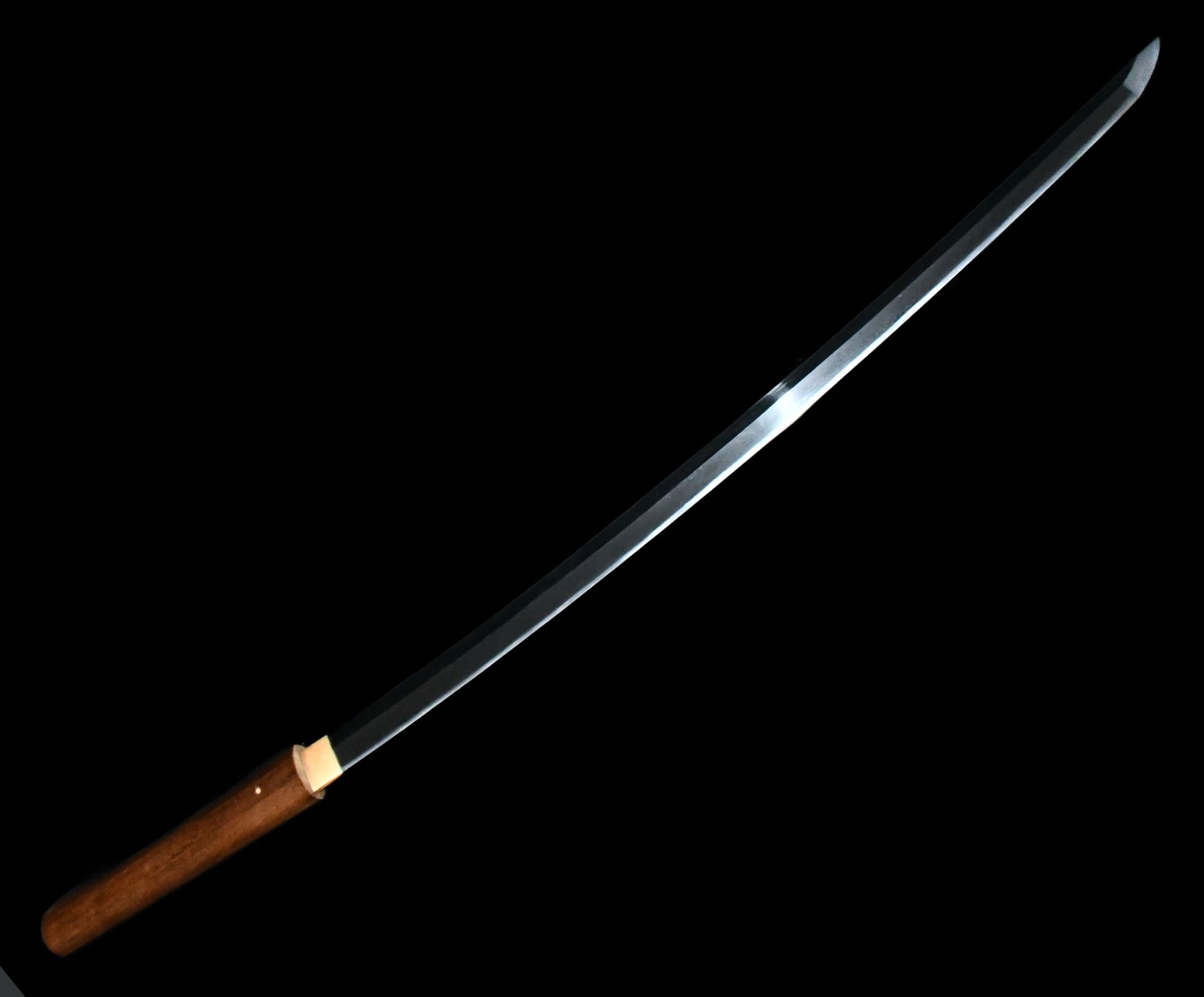
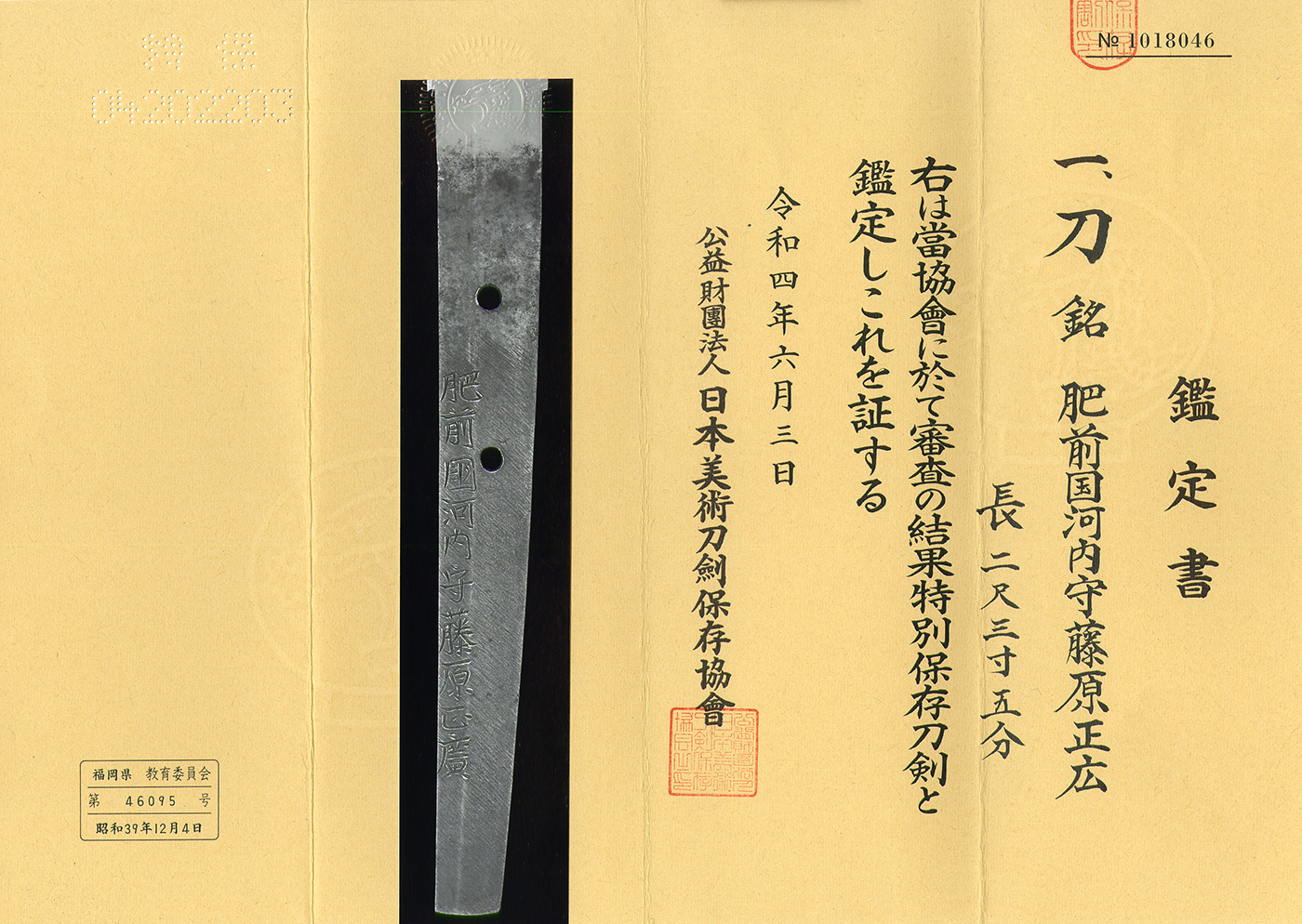
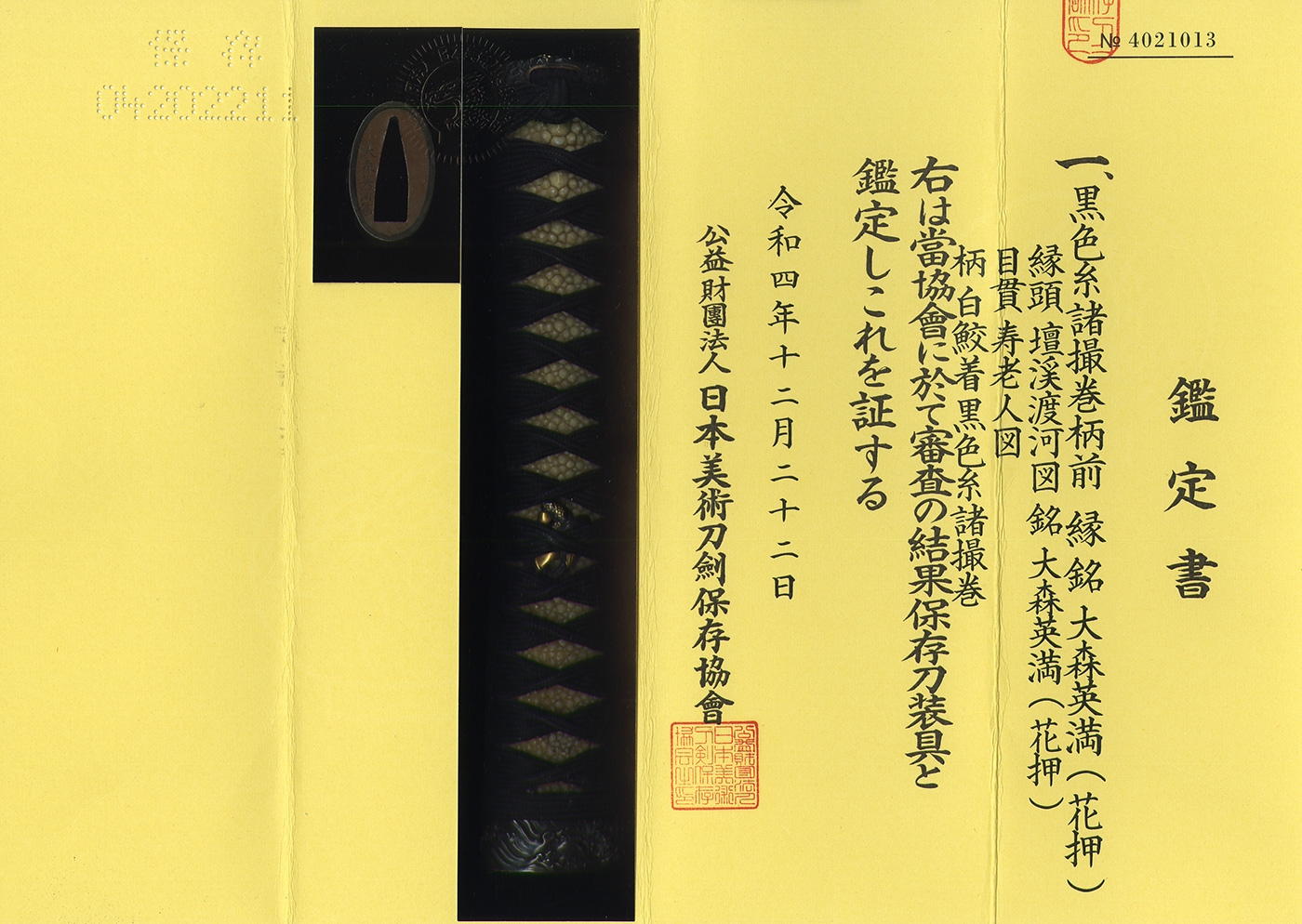
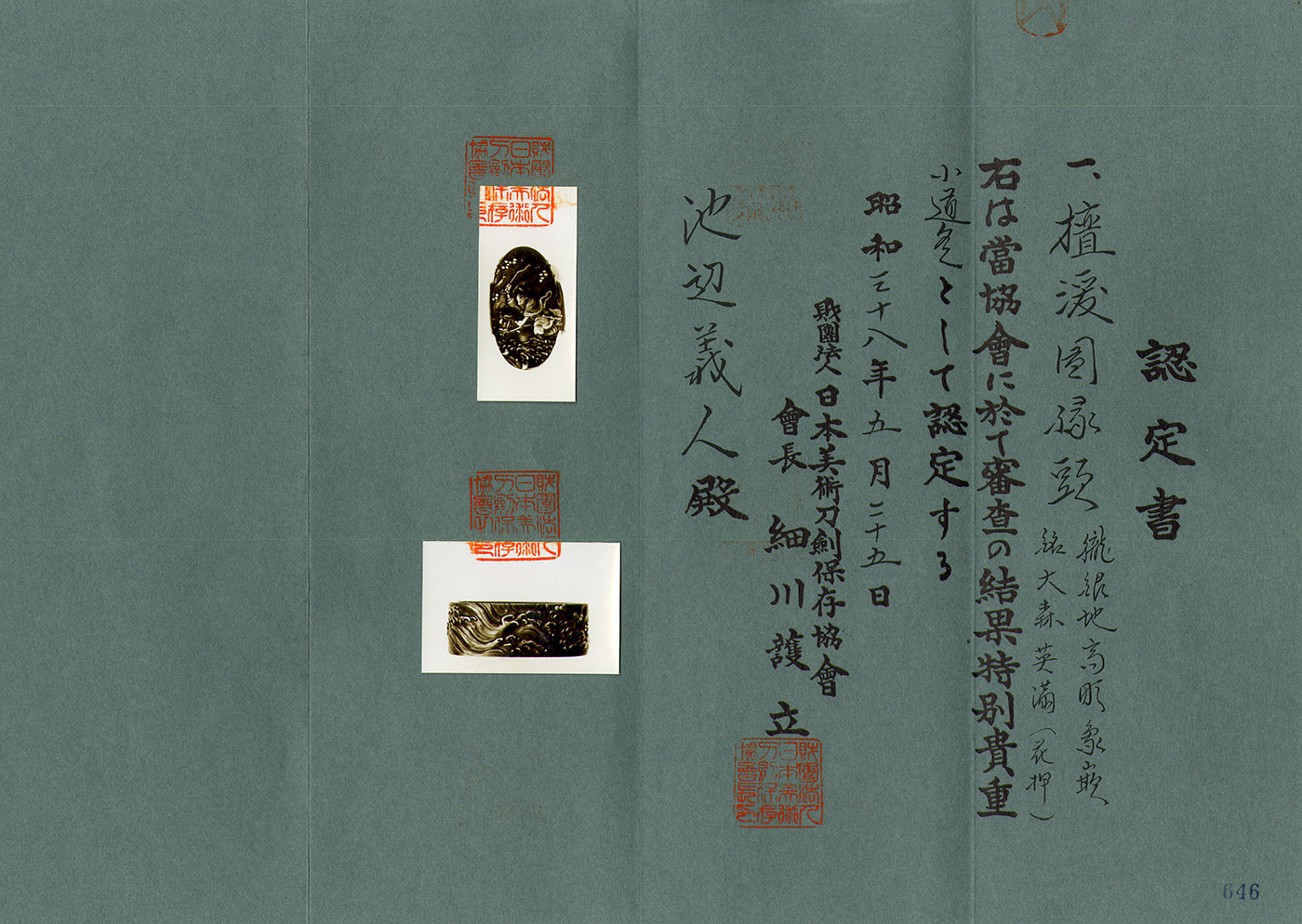
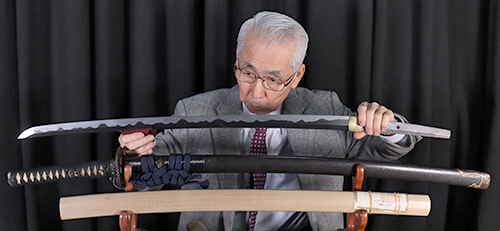
This is a katana made by Hizen Kuni Kawachi Kami Fujiwara Masahiro (2nd Generation) during the Shinto period. The blade has a polished surface and features a wide body, substantial thickness, deep curvature, and an elongated kissaki. It comes with NBTHK Tokubetsu Hozon Token certification and has a koshirae with NBTHK Hozon Tosogu Tsuka and NBTHK Tokubetsu Kicho Tosogu Fuchikashira.
 NihontoWatch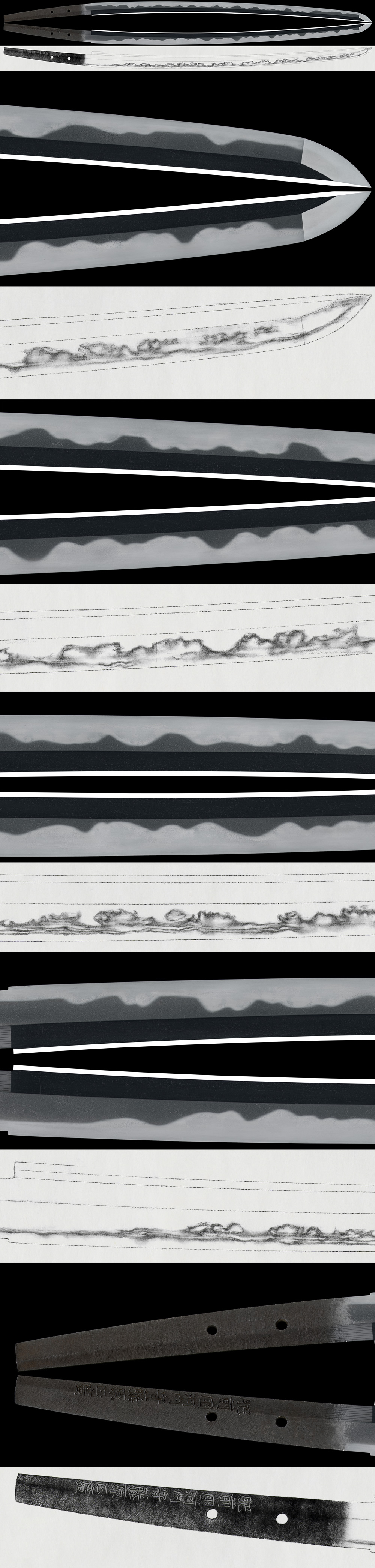


Hizen Tadayoshi main line, second-generation Masahiro (Saga) · Hizen · around 1658-1661
Fujishiro Jo saku · Tōken Taikan top 26%
5 pieces on the market now
The second-generation Masahiro of Hizen was born in Kan'ei 4 (1627), the son and direct heir of the first-generation Kawachi Daijo Masahiro, and he died in Genroku 12 (1699) at the age of seventy-three. He styled himself Sadenji and first signed Masanaga; in Manji 3 (1660) he received the title Musashi no Daijo and then Musashi no Kami, and on the death of his father in Kanbun 5 (1665), when he was thirty-nine, he transferred to the title Kawachi no Kami and took up the name Masahiro. He worked within the Hizen Tadayoshi main line at Saga, and the published sources read him as a successor who matched his father so nearly that in many pieces the hands cannot be separated, the workmanship of both, in suguha and in midareba, holding "scarcely anything by which to rank one above the other"[[c:1]]. He inherited the refined Hizen jigane and the bright temper directly, and his record divides cleanly into two manners.
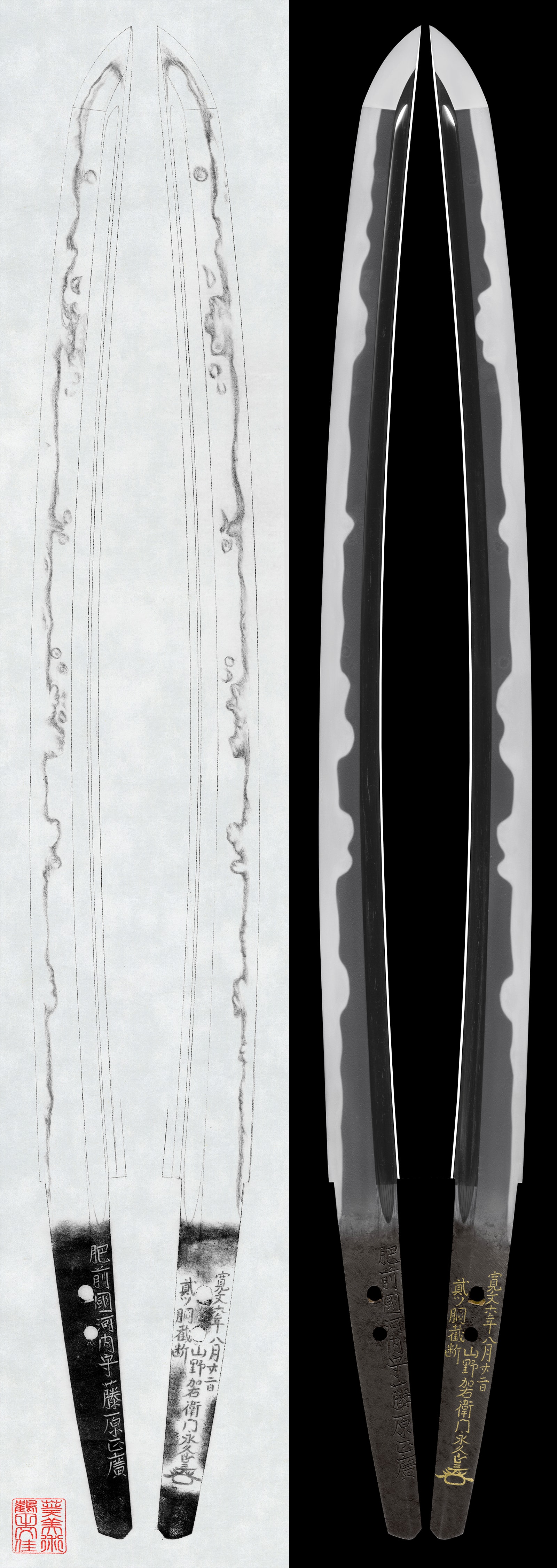
His characteristic hand is the flamboyant midareba the published sources say he favored above all, "especially adept at the irregular temper"[[c:2]]. Over the jigane he lays a choji-dominant midare, into which he mixes gunome, round-headed gunome, large gunome and a shallow ko-notare, with at times a yahazu-like or angular flavor, opening on occasion from a slight yakidashi at the base and linking the clusters of midare with a quieter notare-toned line. The temper is laid high and low; long ashi enter frequently with yo among them; the nioiguchi is deep, with thick ko-nie gathering in the valleys of the midare and tobiyaki breaking out above; sunagashi runs broadly and long kinsuji appear, and the nioiguchi is bright and clear. The published sources call the broad yakihaba into which he develops this flamboyant choji-midare "precisely the area in which he excelled"[[c:3]], and they read the yahazu-like teeth and round-headed gunome set into the temper as the tell of his particular ha-dori.
The jigane is the constant beneath both manners. It is a tightly packed ko-itame, the grain at times standing a little, into which extremely fine ji-nie is laid thickly until it takes on the rice-bran komenuka-hada characteristic of Hizen work, with fine chikei entering throughout and the steel bright. This is the same refined jigane the Hizen main house carried, and the second-generation Masahiro forges it faithfully, so that the showy edge sits over a quiet, lucid surface. The boshi, on either manner, runs straight into a ko-maru with hakikake and a deep turnback, at times opening into a small midare-komi or a larger maru. The sugata is robust and dignified, often wide in body with a thick kasane and an extended chu-kissaki, at times reaching an o-kissaki.
The other face of his record is the chu-suguha, the manner the published sources note he commanded in greater number than the first generation, observing that "works in suguha are encountered more frequently in his output than in that of the first Masahiro"[[c:4]]. It is a medium straight temper that takes on a shallow notare-tendency in places and mixes ko-ashi and gunome-ashi, at times a kuichigai flavor and a small gunome about the monouchi; the nioiguchi stays deep with thick ko-nie, in places a coarser nie, sunagashi running and long kinsuji appearing, the whole bright and clear over the same komenuka jigane. The published sources hold his suguha even and consistent, and call one such blade conspicuous for a deeper nioi and a thicker nie than the suguha usually seen from him, reading the manner as recalling the suguha at which the Hizen main house excelled. His blades are signed Hizen no Kuni Kawachi no Kami Fujiwara Masahiro, and at times Kawachi no Kami Fuji-uji Masahiro; several are dated, in Kanbun 7 and Kanbun 12, giving fixed points in his career.
What sets him apart within the school is read first from the signature, not the steel, since his hand follows his father's so closely. The published sources name the means of telling the two generations: the form of the element within the character Fuji, written one way by the first generation and another by the second, and an added stroke in the element of the character Hiro, together with his consistent practice of signing katana on the sashi-ura, the differing manner a guard against forgery. In workmanship the distinction is one of proportion rather than kind: the father favored the midareba and the son carries the same flamboyant choji-midare forward, while the son's suguha, the more numerous of the two for him, returns the line to the calm straight temper that is the main house's own signature.
For the collector he is a Hizen master of the Kanbun era recorded entirely in the Juyo tier, where twenty-four of his works are designated; Fujishiro grades him Jo saku. He has no National Treasures or Important Cultural Properties, and his designation record stands instead on that body of Juyo blades, among the denser such records for a Shinto smith. The published commentary calls one of his katana "a sword that stands as a representative example of Hizen-to"[[c:5]] and another the "most flamboyant and brilliant workmanship seen among his works"[[c:6]], while noting that cutting-test inscriptions are themselves rare on Hizen blades, that "on Hizen blades pieces bearing cutting-test inscriptions are extremely rare"[[c:7]]. Several of his katana carry the gold-inlaid cutting tests of Yamano Kanjuro Hisahide and the nicknames that go with them, Tsugi-kosode, Aranami and Senpu, each praising the blade's sharpness. No owner provenance is recorded on his designated blades, so the honest account is that they pass quietly among private and institutional collections of recorded whereabouts; one of his Juyo works in midareba or suguha comes to the market only from time to time, a substantial acquisition when it does, and the most direct way for a collector to hold a sword of the Hizen main line at the height of its second generation.
Where Masahiro stands among comparable artisans: across all of nihontō, and within tradition, era, and period. The tiers (Foremost · Leading · Major · Notable) weigh official designations from the NBTHK and Japan's Agency for Cultural Affairs, together with historical honors of lasting repute such as the Sansaku and Meibutsu-chō.
Select a lens to see how it's measured.
Shinto · Hizen
137 pieces on the market now
The Hizen Tadayoshi school began with a single domain commission. In Keicho 1 (1596) the Nabeshima of Hizen ordered Hashimoto Shinzaemon, the smith who would sign Tadayoshi, up to Kyoto with the carver Munenaga; there he entered the gate of Umetada Myoju and studied forging while Munenaga learned the chisel. The two returned to the province in Keicho 3 (1598), and Tadayoshi settled in the castle town below Saga, where under the domain's patronage the line grew into the dominant sword-making house of Kyushu. His own work runs from Keicho 5 (1600) to his death in Kan'ei 9 (1632); in Genna 10 (1624) he received the court title Musashi Daijo, changed his name to Tadahiro, and shifted his clan name from Minamoto to Fujiwara, so that the late Musashi Daijo blades are the founder under a second name. From him the house became a true generational institution: his son the second-generation Omi Daijo Tadahiro carried it forward as its most prolific hand, the third-generation Mutsu no Kami Tadayoshi returned its highest finish, and a Tosa no Kami branch took the founder's signature when he set it aside. Around this main line grew a circle of disciples and collateral hands, the waki-Hizen or Soba-Hizen smiths, several of them, like Yoshiie and Hironori, working as daisaku substitute makers whose own signed pieces are therefore scarce. The school's signature is its steel. Over a ko-itame forged so tightly it shows no slackness, fine ji-nie gathers in minute particles until the surface takes on the rice-bran konuka-hada (also written komenuka-hada) that no other school produces, fine chikei entering throughout and the ji notably clear and bright.
The orthodox temper laid upon it is a chu-suguha or hiro-suguha, sometimes tinged with a shallow notare and ko-gunome, the nioiguchi deep with finely clustered ko-nie and tightened to a bright clarity, the boshi running straight to a quiet ko-maru. The founder aimed this suguha toward the Rai school yet departed from it, his nioiguchi tighter and his forging carrying more vigor; the third generation refined it to what the published sources call the strongest and most precise hand of the first three generations. Against that calm register the house also worked a showier one, the Hizen choji-midare mixing gunome, long ashi, kinsuji and sunagashi, ordered clove the founder himself had not attempted but the second generation made his own. The branches pushed further from the suguha standard: Tadakuni of the Ogi domain ran sunagashi more conspicuously than any other Hizen hand and reached toward old Ichimonji in his o-choji; Masahiro and Yukihiro favored a flamboyant long-ashi choji over the calm main line; and the Iyo no Jo Munetsugu line worked apart in the Soshu-den, building a midareba on notare with a pointed togariba and a jihada that tends to stand and tone slightly blackish. A collector seeks Hizen-to first for that steel, and reads it the same way the appraiser does: a bright suguha lying over a clear, tight konuka-hada identifies the school before the signature is consulted, and the quiet ko-maru boshi on the ura-signed tang confirms the main-line practice. Generation and branch are then told within that frame, the third generation's powerful sugata recalling not his father but his grandfather, the waki-Hizen hands set apart by their irregular temper, their sujikai file marks and a sashi-ura signature, the Munetsugu line by its Soshu togari. The main line, made in real numbers across so long a span, reaches the market more readily than any Kamakura master, so a papered example is within reach of a patient collector, while the founder's own work and the finest konuka-suguha of the third generation come to open hands only from time to time. Provenance runs back through the house the school served, blades recorded to Nabeshima Katsushige and Nabeshima Naomoto and passing onward to the Owari Tokugawa, the Satake and the Imperial families; documentary inscriptions sharpen the picture further, a Myoju soemei attesting the founder's discipleship, Umetada carving adding flowers to brocade on his late blades, and the gold-inlaid cutting tests of Yamano Kanjuro and Yamano Ka'emon, rare on Hizen work, naming the edge as well as the hand. Learn more →
| Smith | Era | Designated |
|---|---|---|
| Tadayoshi忠吉 | 1596-1632 | 123 |
| Tadayoshi忠吉 | 1662-1681 | 58 |
| Tadahiro忠廣 | 1624-1693 | 169 |
| Masahiro正廣 | 1624-1655 | 32 |
| Tadakuni忠國 | 1648-1652 | 32 |
The Edo period (1615 to 1868)
Edo was the sword’s age of connoisseurship: the Hon’ami appraisers, the shogunal register of famous blades of 1719, and a thriving literature turned the sword into an object of study even as it ceased to be drawn in war.
We could not find an authenticity certificate on the seller’s listing. Japanese swords and fittings are normally papered by the NBTHK (or the NTHK). Without one, the attribution is the seller’s own assessment and has not been independently verified — treat it with caution and ask the dealer about certification before buying.
If you wish to return an item, please notify us within 3 days of receipt. After this period we cannot accept cancellations. Please ship the return to us within 5 business days. Cancellation is conditional on the item being kept in the same condition as at the time of sale, so please handle it with care.
This is a katana made by Hizen Kuni Kawachi Kami Fujiwara Masahiro (2nd Generation) during the Shinto period. The blade has a polished surface and features a wide body, substantial thickness, deep curvature, and an elongated kissaki. It comes with NBTHK Tokubetsu Hozon Token certification and has a koshirae with NBTHK Hozon Tosogu Tsuka and NBTHK Tokubetsu Kicho Tosogu Fuchikashira.
NihontoWatchHizen Tadayoshi main line, second-generation Masahiro (Saga) · Hizen · around 1658-1661
Fujishiro Jo saku · Tōken Taikan top 26%
5 pieces on the market now
The second-generation Masahiro of Hizen was born in Kan'ei 4 (1627), the son and direct heir of the first-generation Kawachi Daijo Masahiro, and he died in Genroku 12 (1699) at the age of seventy-three. He styled himself Sadenji and first signed Masanaga; in Manji 3 (1660) he received the title Musashi no Daijo and then Musashi no Kami, and on the death of his father in Kanbun 5 (1665), when he was thirty-nine, he transferred to the title Kawachi no Kami and took up the name Masahiro. He worked within the Hizen Tadayoshi main line at Saga, and the published sources read him as a successor who matched his father so nearly that in many pieces the hands cannot be separated, the workmanship of both, in suguha and in midareba, holding "scarcely anything by which to rank one above the other"[[c:1]]. He inherited the refined Hizen jigane and the bright temper directly, and his record divides cleanly into two manners.
His characteristic hand is the flamboyant midareba the published sources say he favored above all, "especially adept at the irregular temper"[[c:2]]. Over the jigane he lays a choji-dominant midare, into which he mixes gunome, round-headed gunome, large gunome and a shallow ko-notare, with at times a yahazu-like or angular flavor, opening on occasion from a slight yakidashi at the base and linking the clusters of midare with a quieter notare-toned line. The temper is laid high and low; long ashi enter frequently with yo among them; the nioiguchi is deep, with thick ko-nie gathering in the valleys of the midare and tobiyaki breaking out above; sunagashi runs broadly and long kinsuji appear, and the nioiguchi is bright and clear. The published sources call the broad yakihaba into which he develops this flamboyant choji-midare "precisely the area in which he excelled"[[c:3]], and they read the yahazu-like teeth and round-headed gunome set into the temper as the tell of his particular ha-dori.
The jigane is the constant beneath both manners. It is a tightly packed ko-itame, the grain at times standing a little, into which extremely fine ji-nie is laid thickly until it takes on the rice-bran komenuka-hada characteristic of Hizen work, with fine chikei entering throughout and the steel bright. This is the same refined jigane the Hizen main house carried, and the second-generation Masahiro forges it faithfully, so that the showy edge sits over a quiet, lucid surface. The boshi, on either manner, runs straight into a ko-maru with hakikake and a deep turnback, at times opening into a small midare-komi or a larger maru. The sugata is robust and dignified, often wide in body with a thick kasane and an extended chu-kissaki, at times reaching an o-kissaki.
The other face of his record is the chu-suguha, the manner the published sources note he commanded in greater number than the first generation, observing that "works in suguha are encountered more frequently in his output than in that of the first Masahiro"[[c:4]]. It is a medium straight temper that takes on a shallow notare-tendency in places and mixes ko-ashi and gunome-ashi, at times a kuichigai flavor and a small gunome about the monouchi; the nioiguchi stays deep with thick ko-nie, in places a coarser nie, sunagashi running and long kinsuji appearing, the whole bright and clear over the same komenuka jigane. The published sources hold his suguha even and consistent, and call one such blade conspicuous for a deeper nioi and a thicker nie than the suguha usually seen from him, reading the manner as recalling the suguha at which the Hizen main house excelled. His blades are signed Hizen no Kuni Kawachi no Kami Fujiwara Masahiro, and at times Kawachi no Kami Fuji-uji Masahiro; several are dated, in Kanbun 7 and Kanbun 12, giving fixed points in his career.
What sets him apart within the school is read first from the signature, not the steel, since his hand follows his father's so closely. The published sources name the means of telling the two generations: the form of the element within the character Fuji, written one way by the first generation and another by the second, and an added stroke in the element of the character Hiro, together with his consistent practice of signing katana on the sashi-ura, the differing manner a guard against forgery. In workmanship the distinction is one of proportion rather than kind: the father favored the midareba and the son carries the same flamboyant choji-midare forward, while the son's suguha, the more numerous of the two for him, returns the line to the calm straight temper that is the main house's own signature.
For the collector he is a Hizen master of the Kanbun era recorded entirely in the Juyo tier, where twenty-four of his works are designated; Fujishiro grades him Jo saku. He has no National Treasures or Important Cultural Properties, and his designation record stands instead on that body of Juyo blades, among the denser such records for a Shinto smith. The published commentary calls one of his katana "a sword that stands as a representative example of Hizen-to"[[c:5]] and another the "most flamboyant and brilliant workmanship seen among his works"[[c:6]], while noting that cutting-test inscriptions are themselves rare on Hizen blades, that "on Hizen blades pieces bearing cutting-test inscriptions are extremely rare"[[c:7]]. Several of his katana carry the gold-inlaid cutting tests of Yamano Kanjuro Hisahide and the nicknames that go with them, Tsugi-kosode, Aranami and Senpu, each praising the blade's sharpness. No owner provenance is recorded on his designated blades, so the honest account is that they pass quietly among private and institutional collections of recorded whereabouts; one of his Juyo works in midareba or suguha comes to the market only from time to time, a substantial acquisition when it does, and the most direct way for a collector to hold a sword of the Hizen main line at the height of its second generation.
Where Masahiro stands among comparable artisans: across all of nihontō, and within tradition, era, and period. The tiers (Foremost · Leading · Major · Notable) weigh official designations from the NBTHK and Japan's Agency for Cultural Affairs, together with historical honors of lasting repute such as the Sansaku and Meibutsu-chō.
Select a lens to see how it's measured.
Shinto · Hizen
137 pieces on the market now
The Hizen Tadayoshi school began with a single domain commission. In Keicho 1 (1596) the Nabeshima of Hizen ordered Hashimoto Shinzaemon, the smith who would sign Tadayoshi, up to Kyoto with the carver Munenaga; there he entered the gate of Umetada Myoju and studied forging while Munenaga learned the chisel. The two returned to the province in Keicho 3 (1598), and Tadayoshi settled in the castle town below Saga, where under the domain's patronage the line grew into the dominant sword-making house of Kyushu. His own work runs from Keicho 5 (1600) to his death in Kan'ei 9 (1632); in Genna 10 (1624) he received the court title Musashi Daijo, changed his name to Tadahiro, and shifted his clan name from Minamoto to Fujiwara, so that the late Musashi Daijo blades are the founder under a second name. From him the house became a true generational institution: his son the second-generation Omi Daijo Tadahiro carried it forward as its most prolific hand, the third-generation Mutsu no Kami Tadayoshi returned its highest finish, and a Tosa no Kami branch took the founder's signature when he set it aside. Around this main line grew a circle of disciples and collateral hands, the waki-Hizen or Soba-Hizen smiths, several of them, like Yoshiie and Hironori, working as daisaku substitute makers whose own signed pieces are therefore scarce. The school's signature is its steel. Over a ko-itame forged so tightly it shows no slackness, fine ji-nie gathers in minute particles until the surface takes on the rice-bran konuka-hada (also written komenuka-hada) that no other school produces, fine chikei entering throughout and the ji notably clear and bright.
The orthodox temper laid upon it is a chu-suguha or hiro-suguha, sometimes tinged with a shallow notare and ko-gunome, the nioiguchi deep with finely clustered ko-nie and tightened to a bright clarity, the boshi running straight to a quiet ko-maru. The founder aimed this suguha toward the Rai school yet departed from it, his nioiguchi tighter and his forging carrying more vigor; the third generation refined it to what the published sources call the strongest and most precise hand of the first three generations. Against that calm register the house also worked a showier one, the Hizen choji-midare mixing gunome, long ashi, kinsuji and sunagashi, ordered clove the founder himself had not attempted but the second generation made his own. The branches pushed further from the suguha standard: Tadakuni of the Ogi domain ran sunagashi more conspicuously than any other Hizen hand and reached toward old Ichimonji in his o-choji; Masahiro and Yukihiro favored a flamboyant long-ashi choji over the calm main line; and the Iyo no Jo Munetsugu line worked apart in the Soshu-den, building a midareba on notare with a pointed togariba and a jihada that tends to stand and tone slightly blackish. A collector seeks Hizen-to first for that steel, and reads it the same way the appraiser does: a bright suguha lying over a clear, tight konuka-hada identifies the school before the signature is consulted, and the quiet ko-maru boshi on the ura-signed tang confirms the main-line practice. Generation and branch are then told within that frame, the third generation's powerful sugata recalling not his father but his grandfather, the waki-Hizen hands set apart by their irregular temper, their sujikai file marks and a sashi-ura signature, the Munetsugu line by its Soshu togari. The main line, made in real numbers across so long a span, reaches the market more readily than any Kamakura master, so a papered example is within reach of a patient collector, while the founder's own work and the finest konuka-suguha of the third generation come to open hands only from time to time. Provenance runs back through the house the school served, blades recorded to Nabeshima Katsushige and Nabeshima Naomoto and passing onward to the Owari Tokugawa, the Satake and the Imperial families; documentary inscriptions sharpen the picture further, a Myoju soemei attesting the founder's discipleship, Umetada carving adding flowers to brocade on his late blades, and the gold-inlaid cutting tests of Yamano Kanjuro and Yamano Ka'emon, rare on Hizen work, naming the edge as well as the hand. Learn more →
| Smith | Era | Designated |
|---|---|---|
| Tadayoshi忠吉 | 1596-1632 | 123 |
| Tadayoshi忠吉 | 1662-1681 | 58 |
| Tadahiro忠廣 | 1624-1693 | 169 |
| Masahiro正廣 | 1624-1655 | 32 |
| Tadakuni忠國 | 1648-1652 | 32 |
The Edo period (1615 to 1868)
Edo was the sword’s age of connoisseurship: the Hon’ami appraisers, the shogunal register of famous blades of 1719, and a thriving literature turned the sword into an object of study even as it ceased to be drawn in war.
We could not find an authenticity certificate on the seller’s listing. Japanese swords and fittings are normally papered by the NBTHK (or the NTHK). Without one, the attribution is the seller’s own assessment and has not been independently verified — treat it with caution and ask the dealer about certification before buying.
If you wish to return an item, please notify us within 3 days of receipt. After this period we cannot accept cancellations. Please ship the return to us within 5 business days. Cancellation is conditional on the item being kept in the same condition as at the time of sale, so please handle it with care.