Hizen swords were a domain enterprise: the Nabeshima sent Tadayoshi to study under Umetada Myōju around 1596, then built a licensed school around him. Nine generations carried its famously consistent konuka-hada work into the Meiji era.
 NihontoWatchNihontoWatch
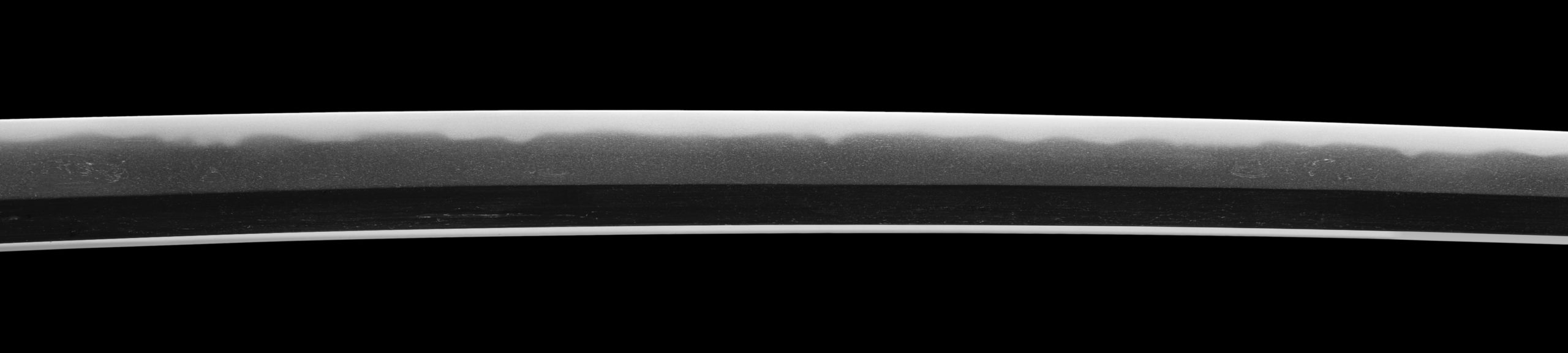
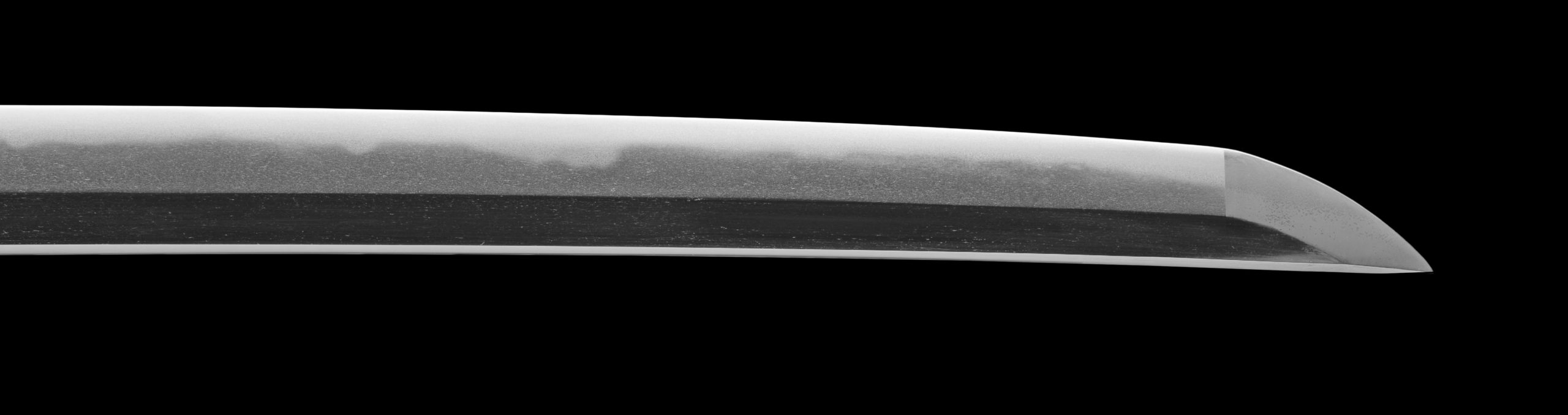
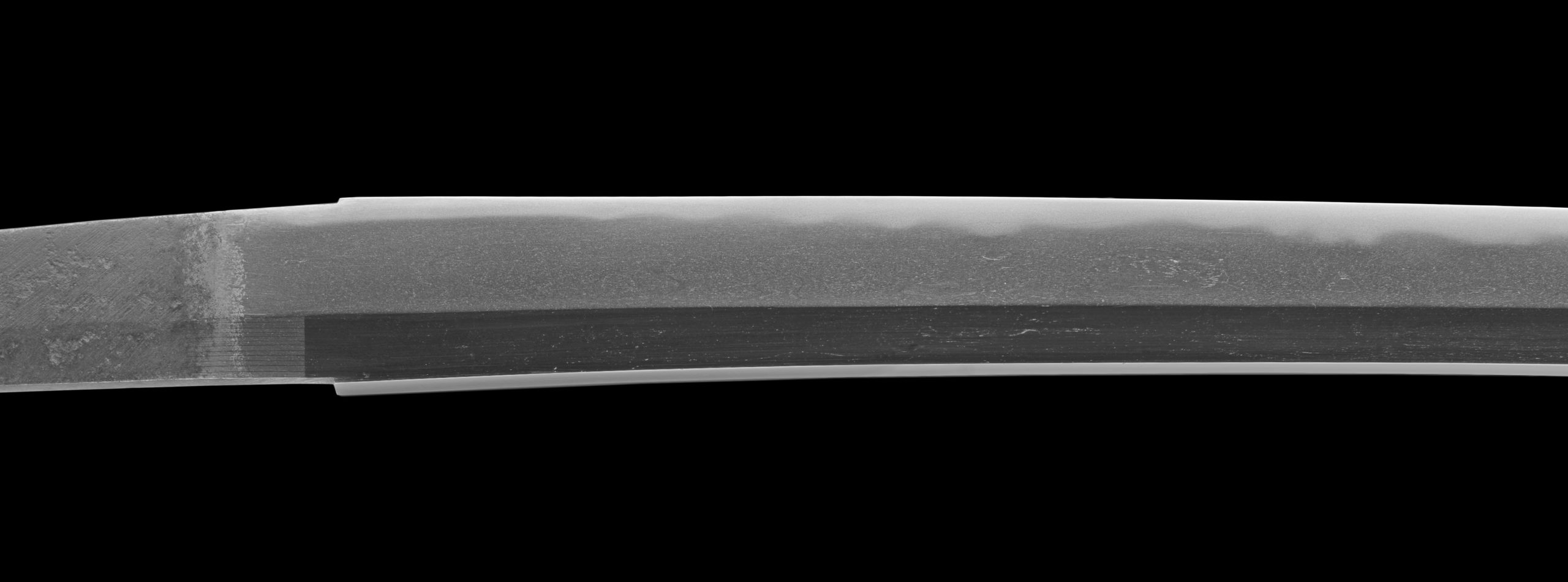
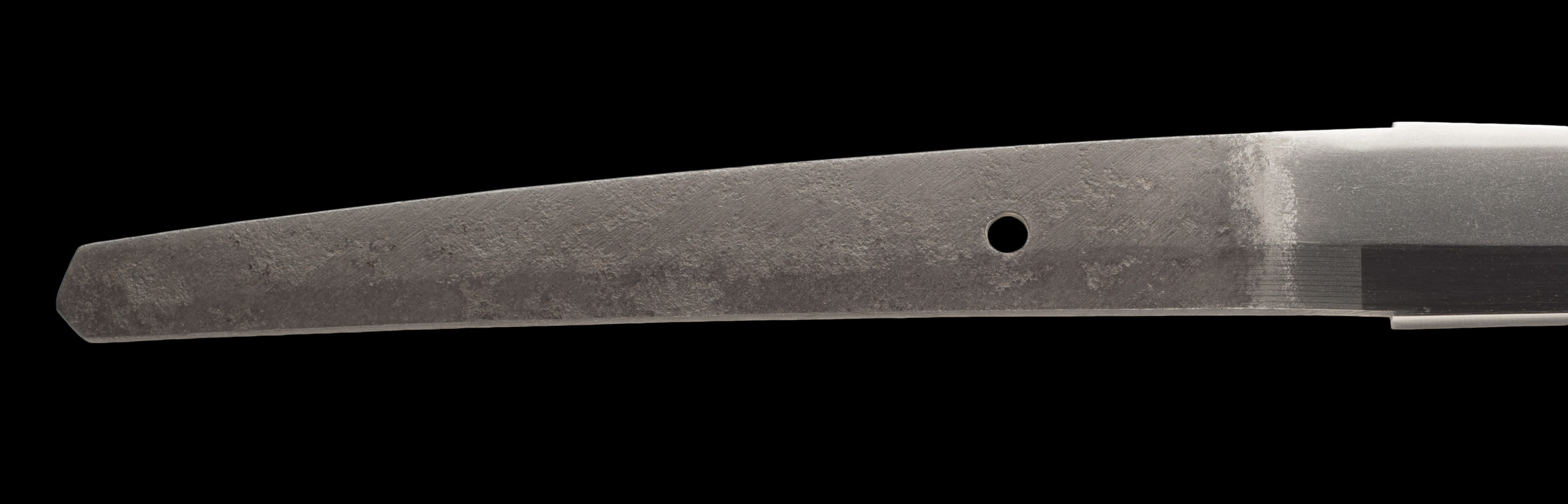
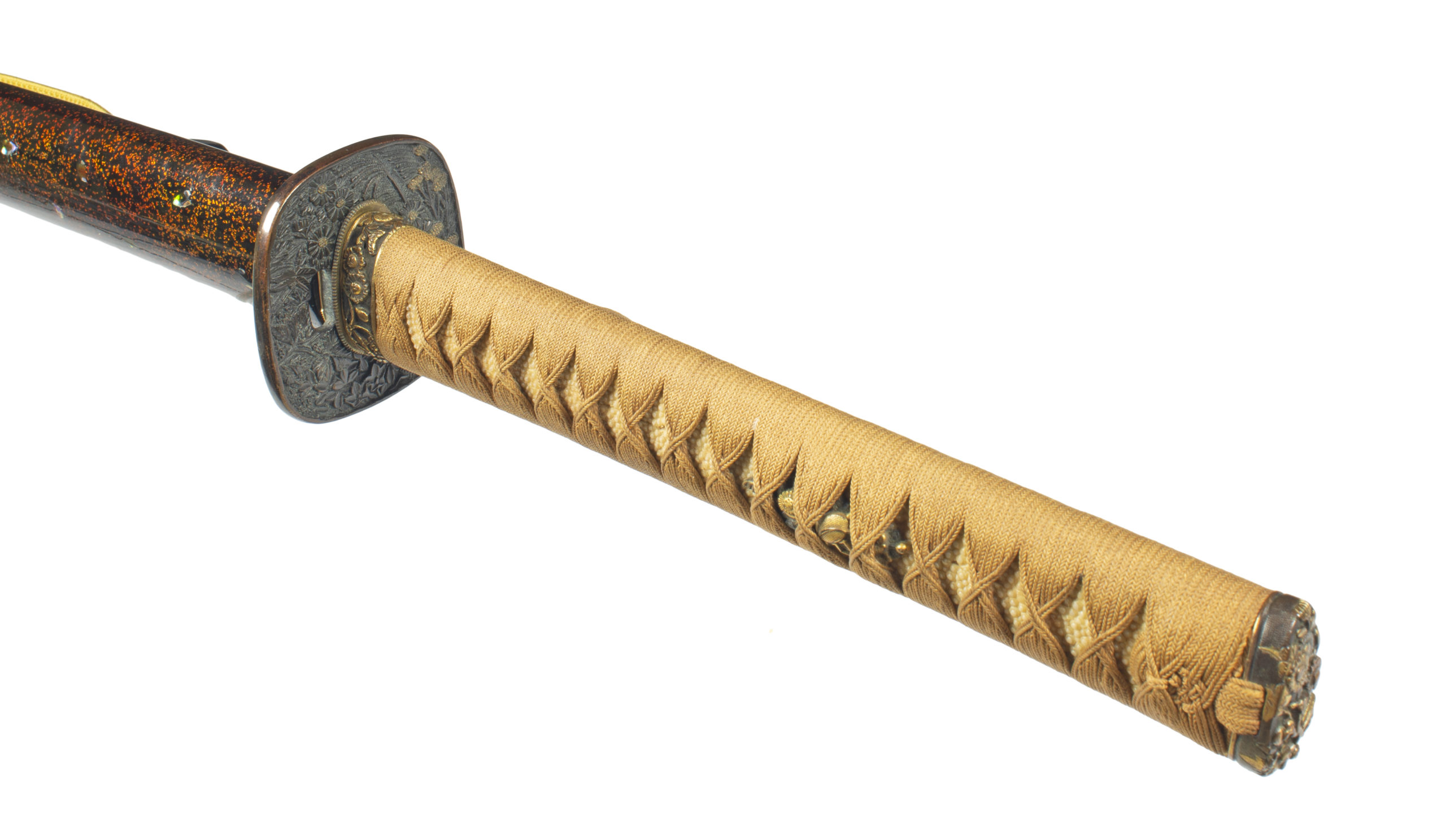
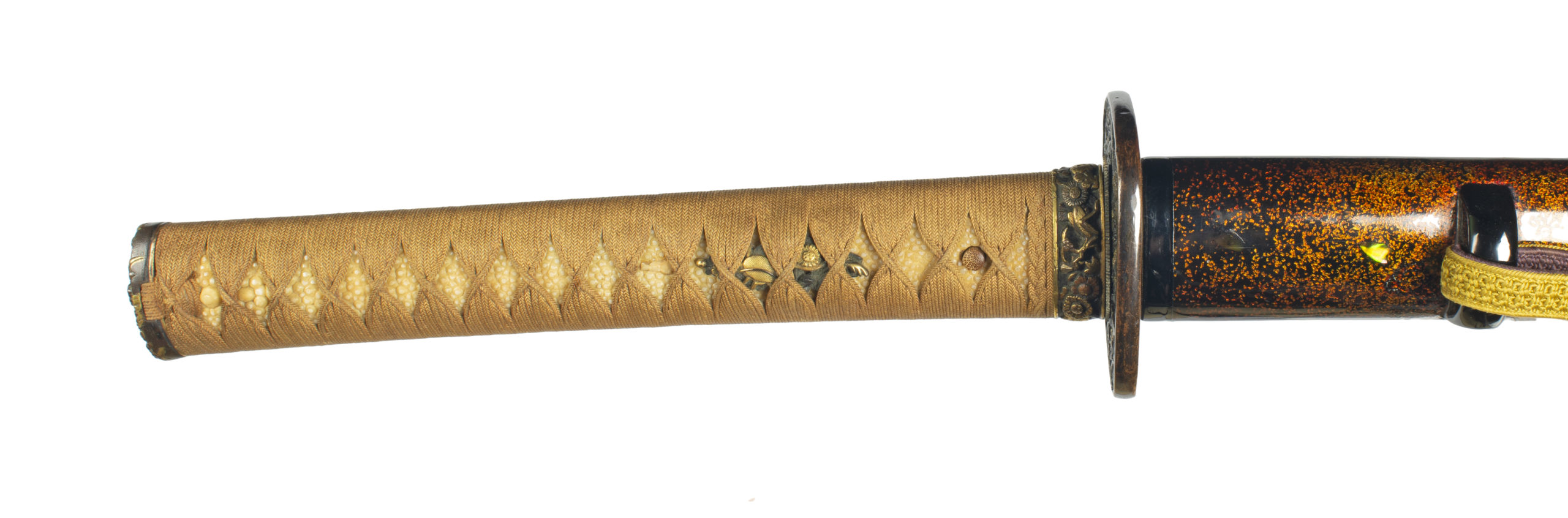
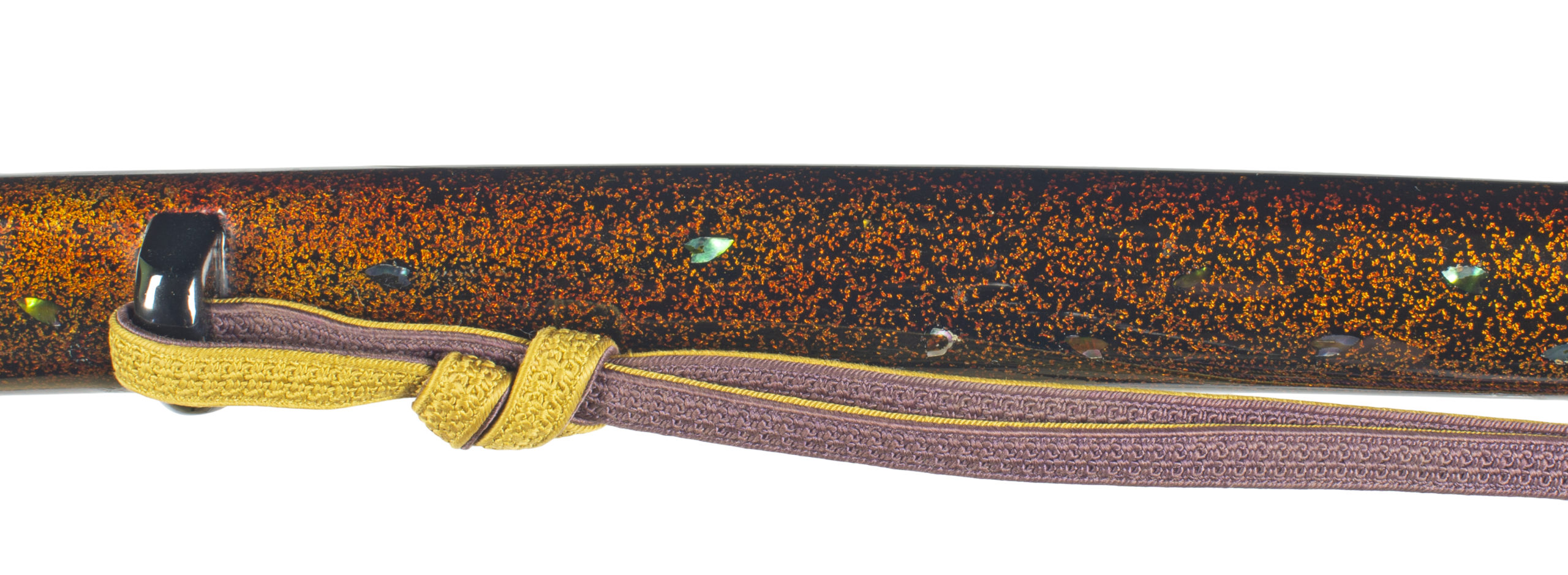
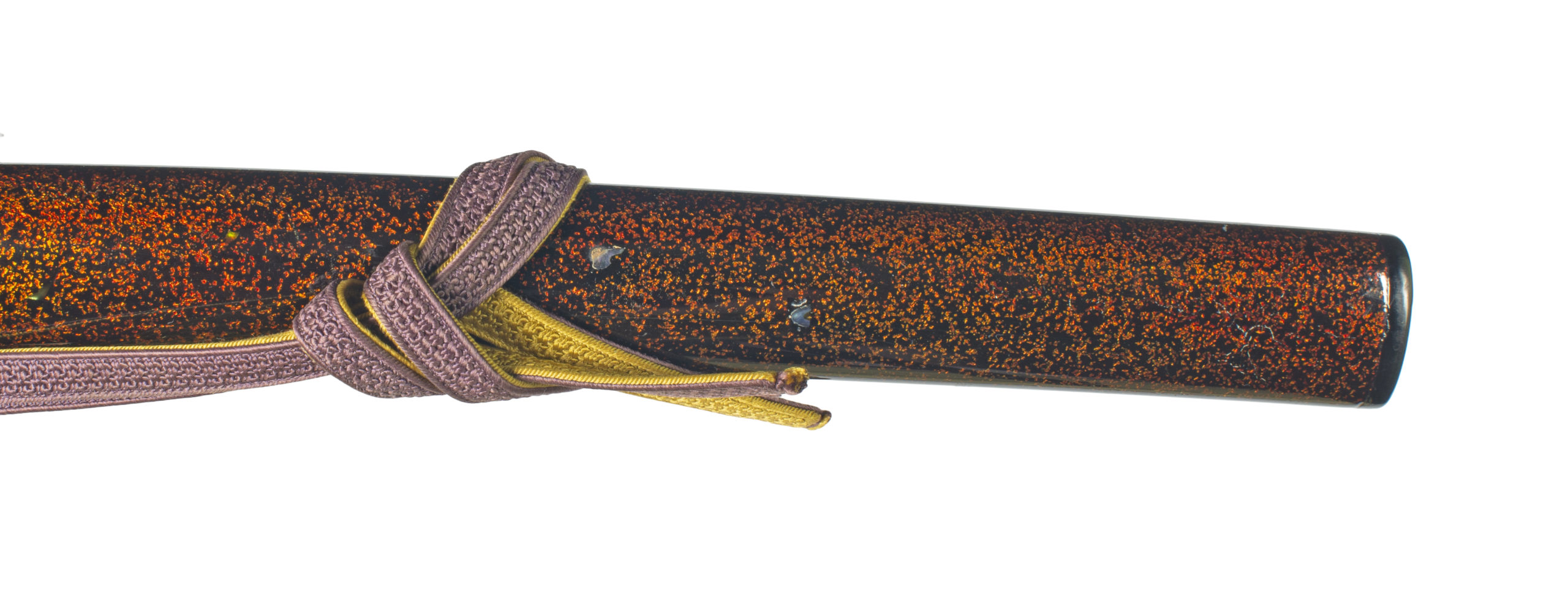
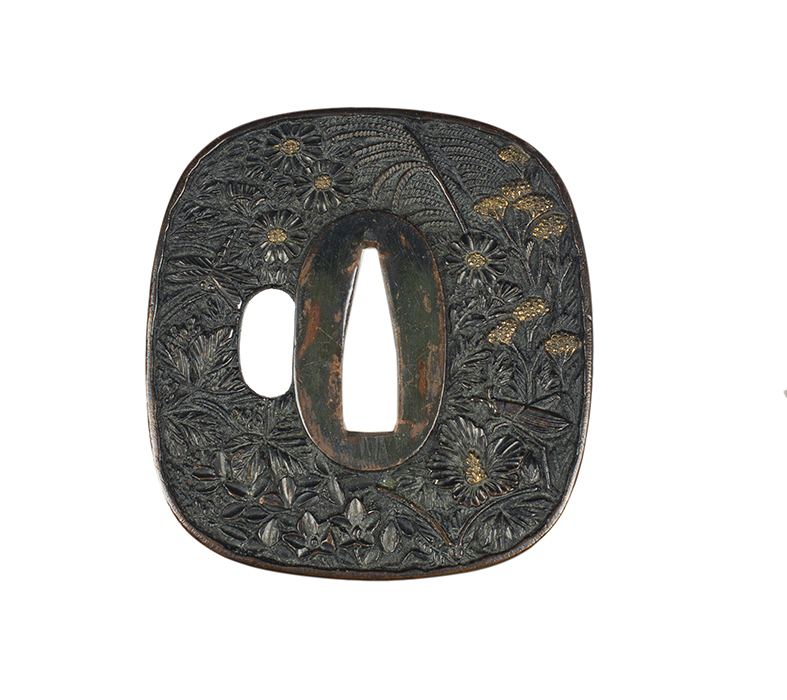
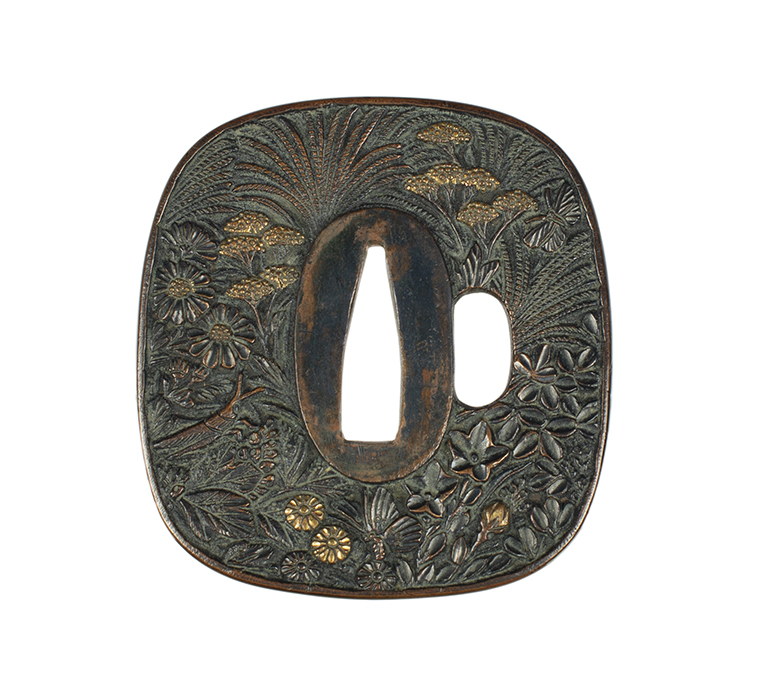
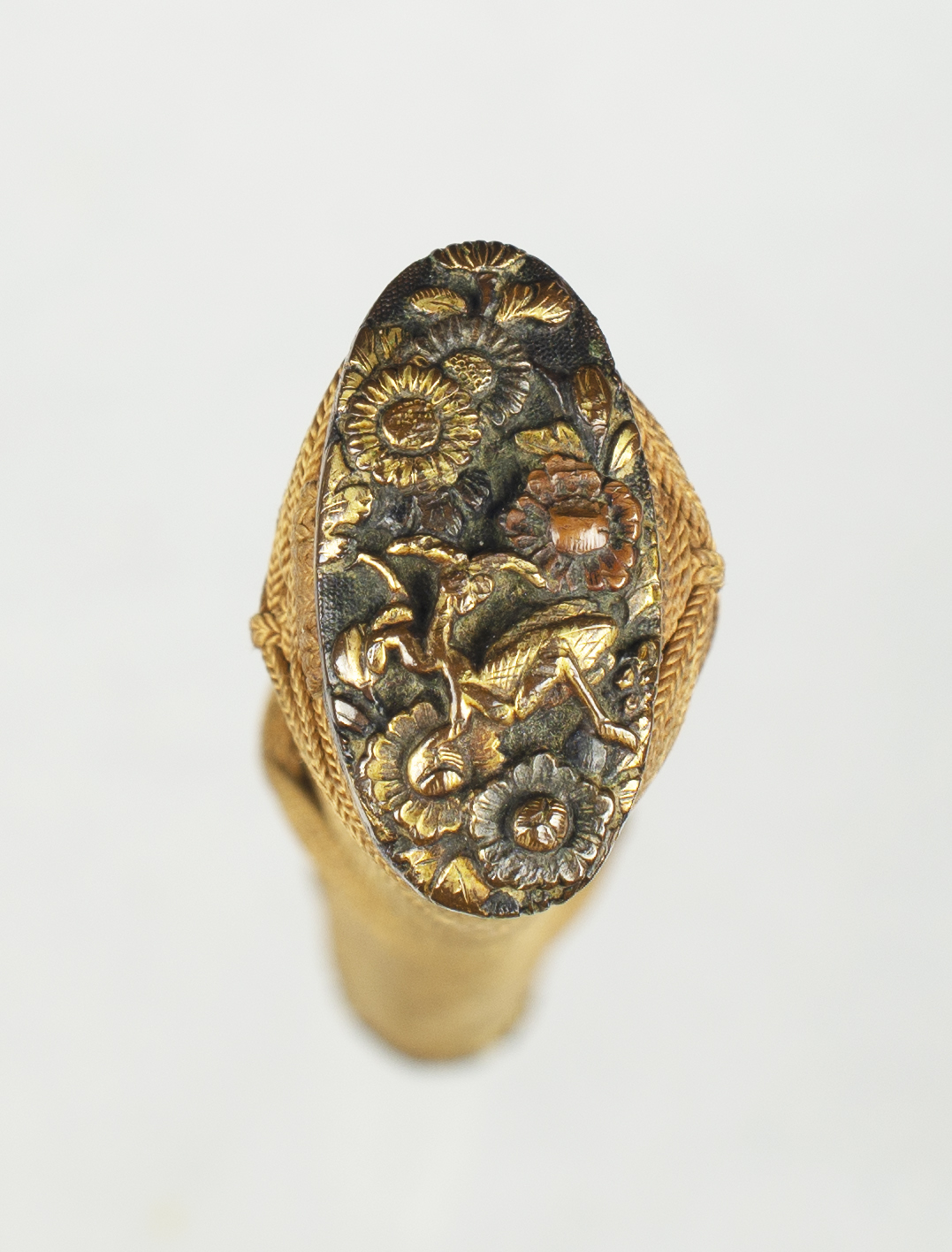
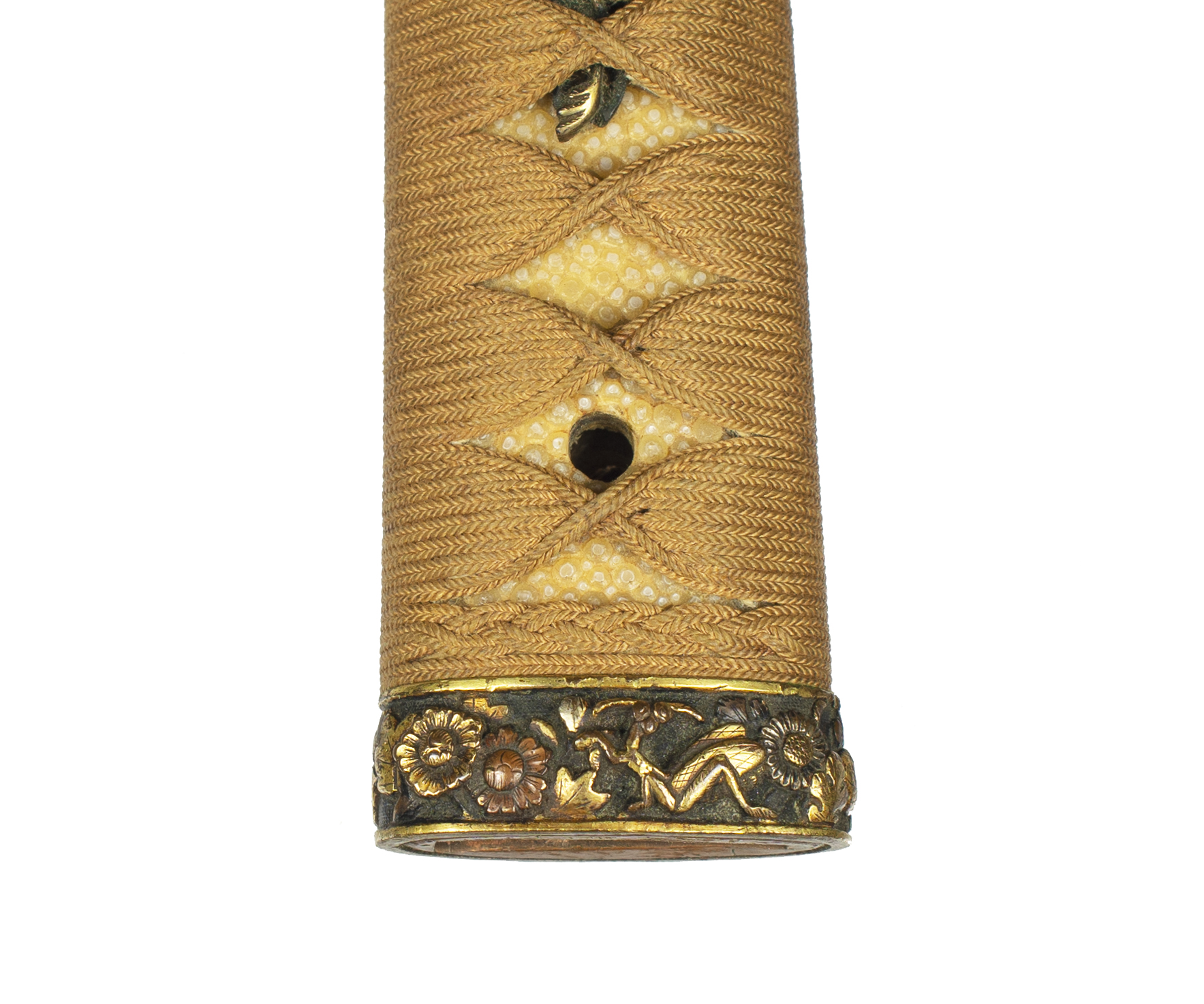
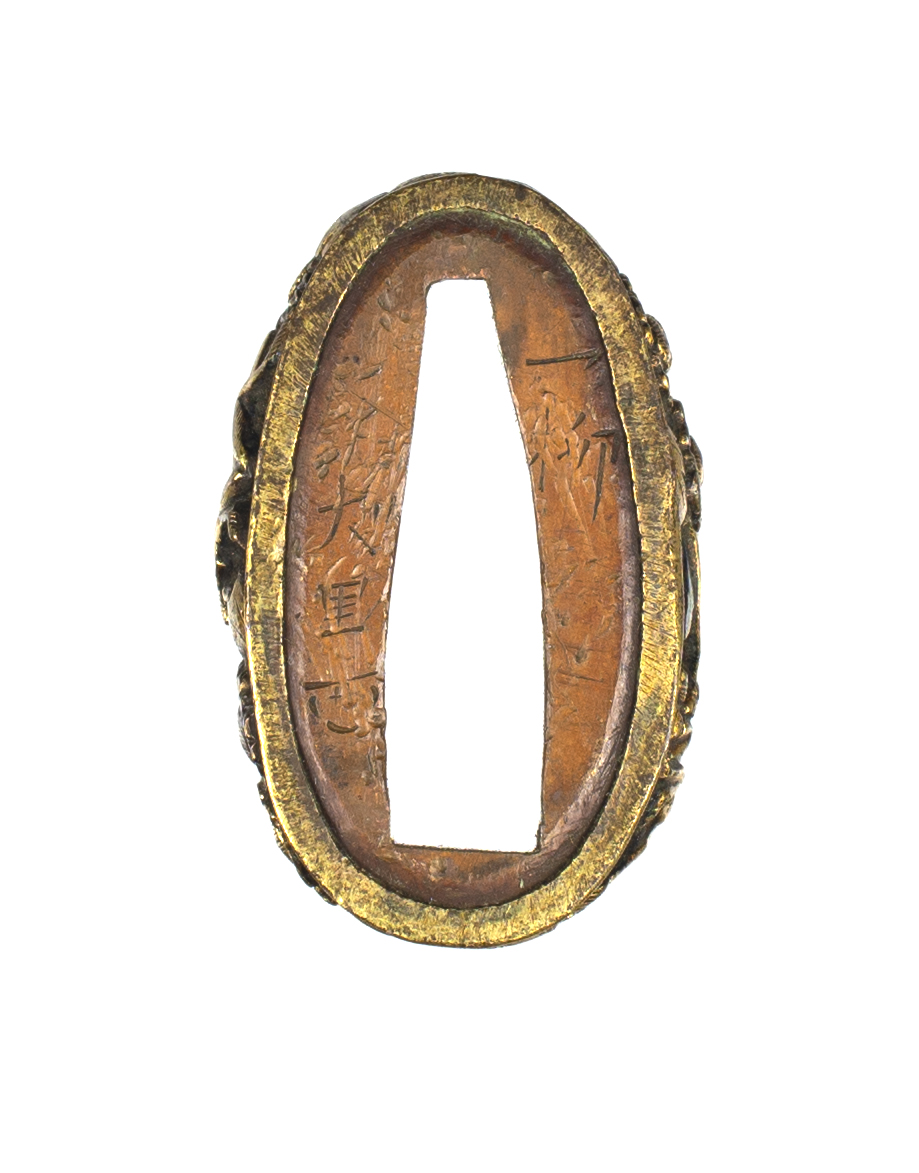
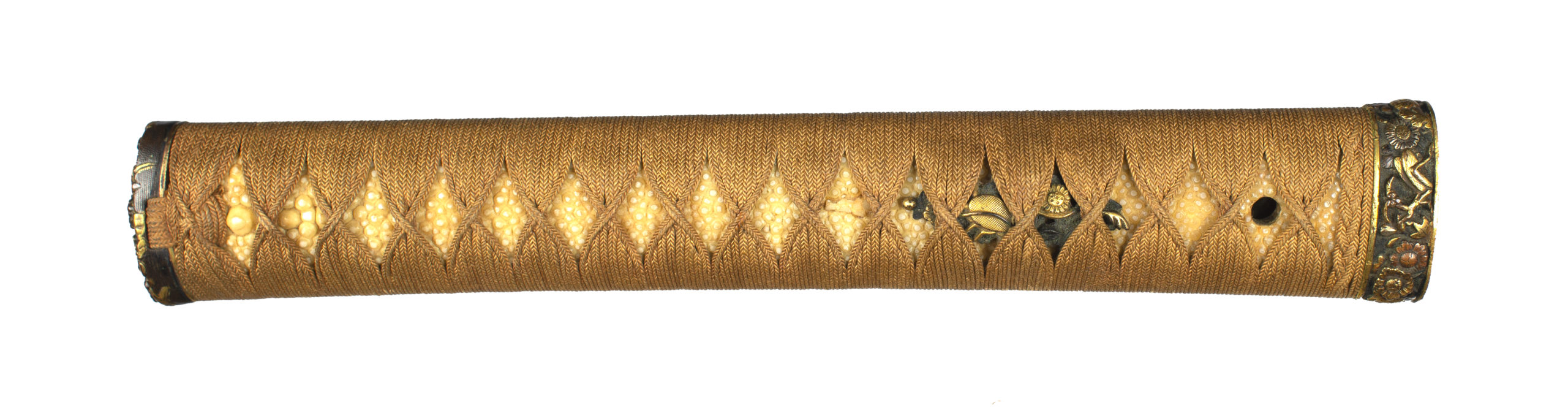
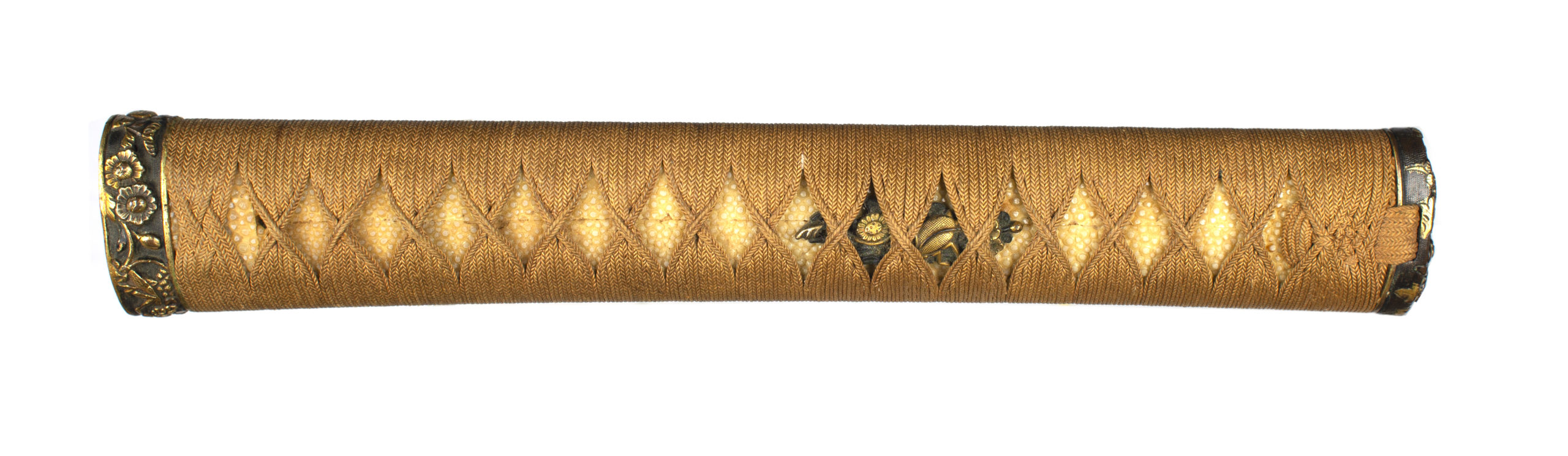
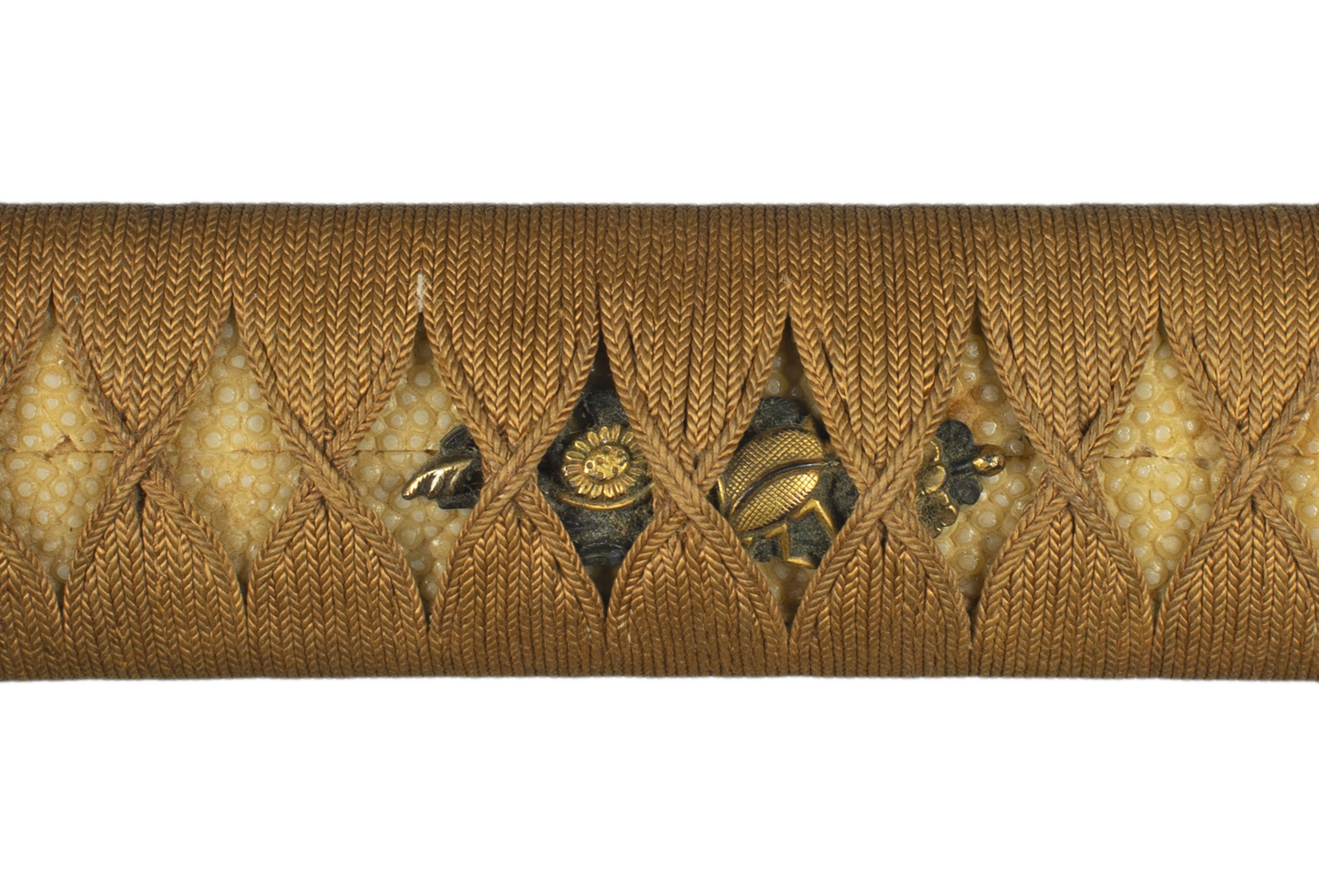
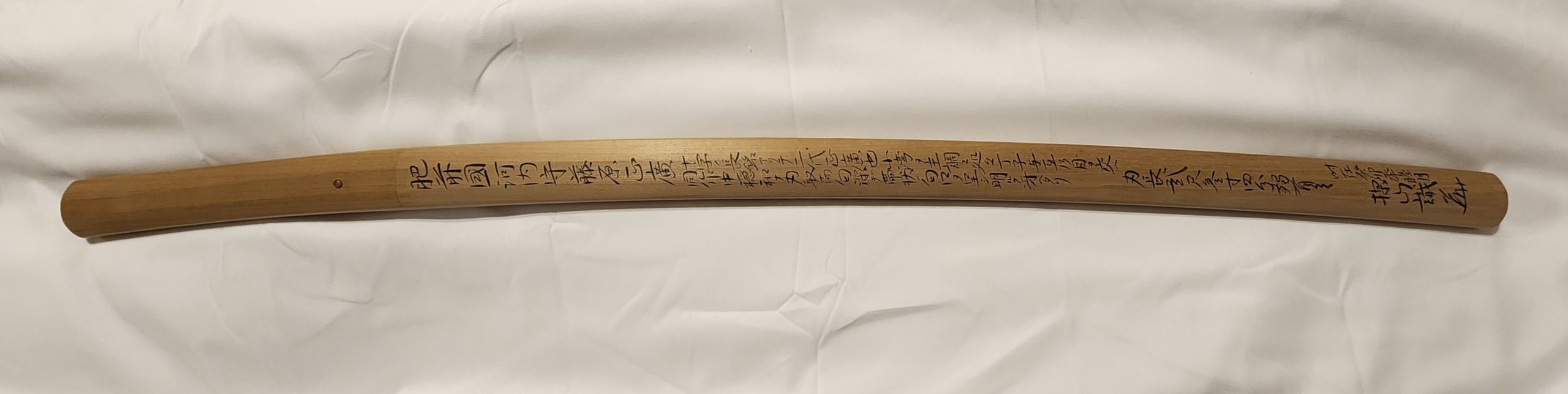
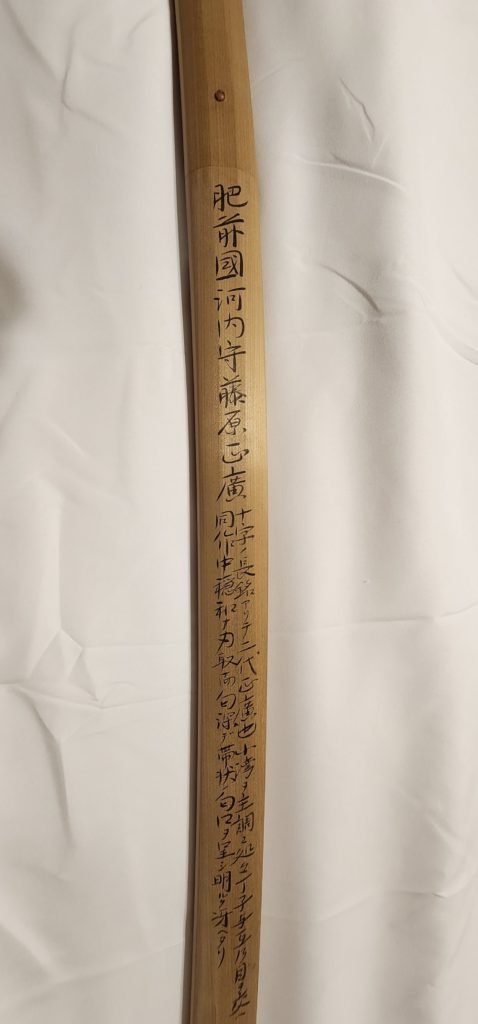
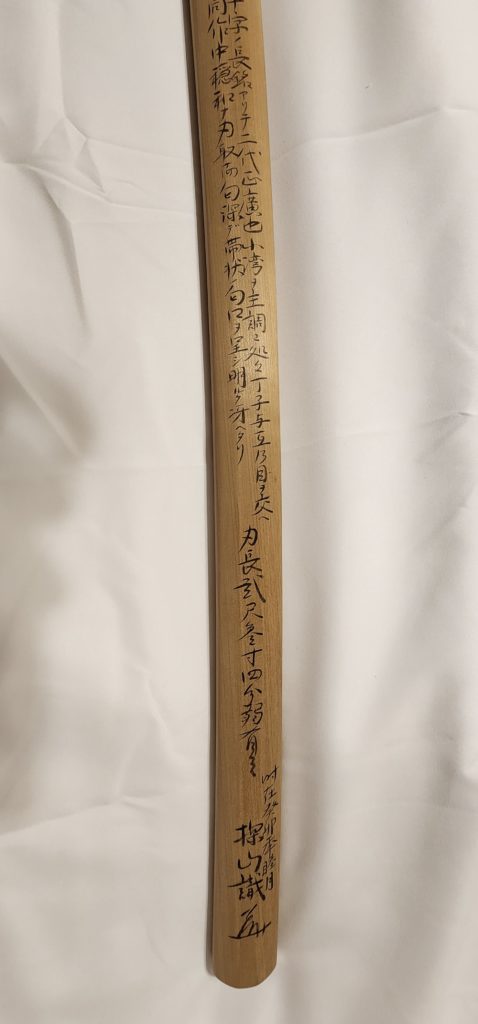
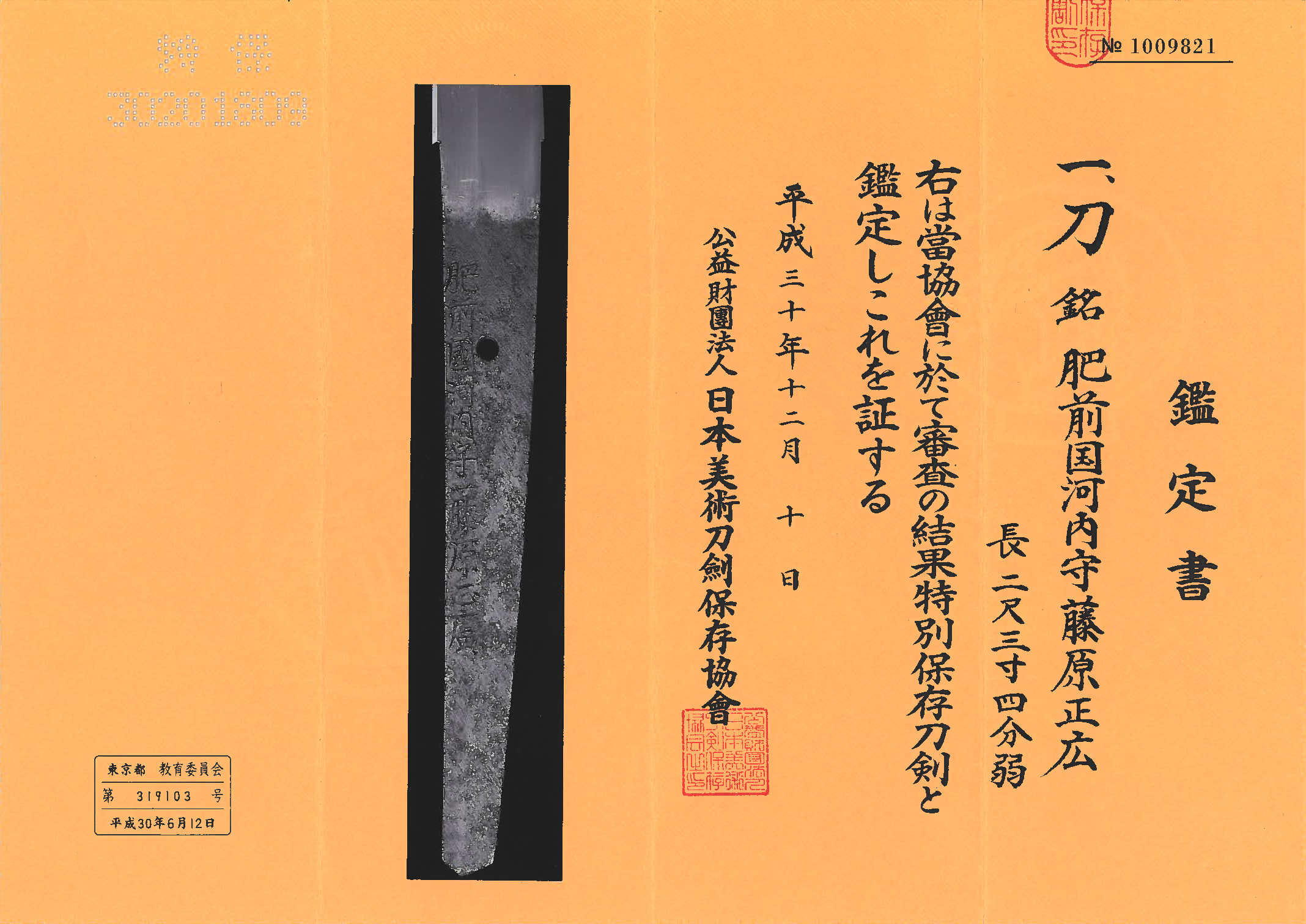
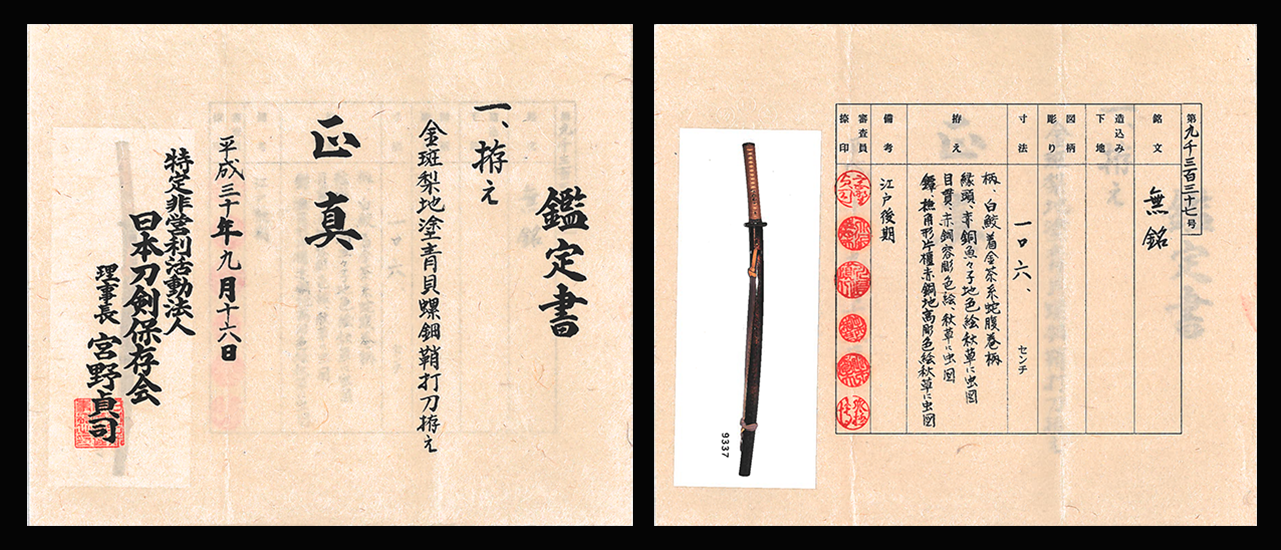
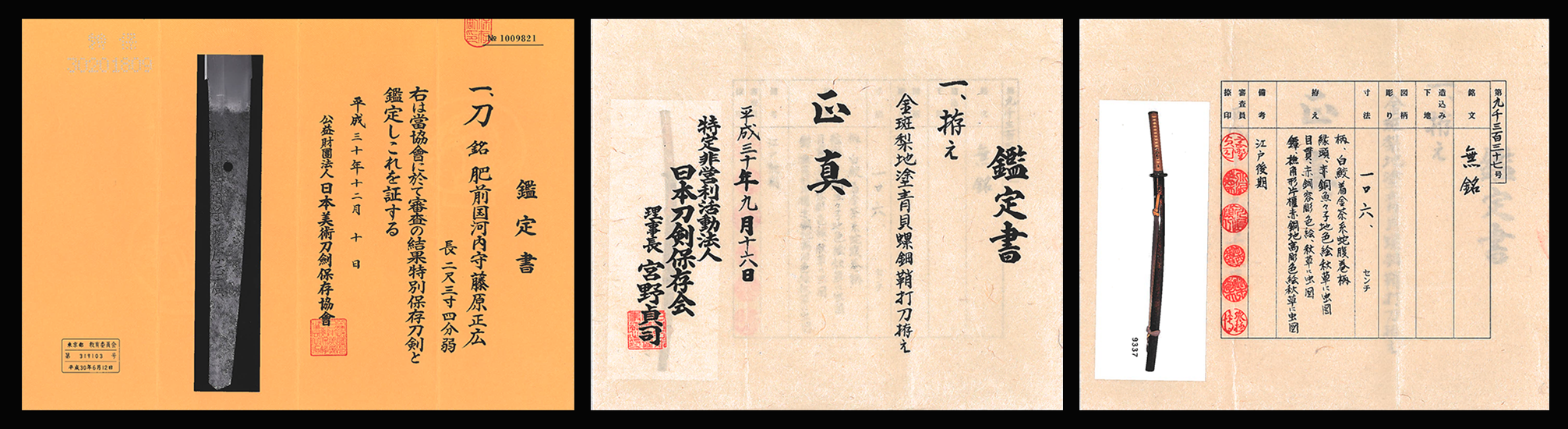
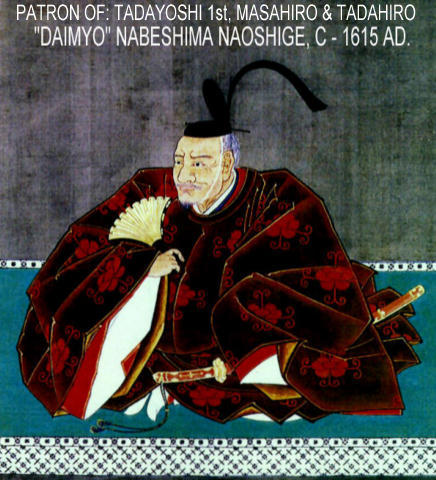
nidai / 2nd GEN., HIZEN MASAHIRO NBTHK Tokubetsu Hozon Rated “upper class” (Jo – Saku) Tanobe Michihiro (Tanzan) sensei sayagaki Fittings: Mino Goto school with flowers and praying mantis Saya: with Gold-speckled nashiji lacquer and diverse mother-in-pearl accents Hizen no Kuni Kawachi no Kami Fujiwara Masahiro (肥前國河内守藤原正廣) 2nd Generation/ nidai This is a Hizen Masahiro nidai (2nd generation) signed Hizen no Kuni Kawachi no Kami Fujiwara Masahiro (肥前國河内守藤原正廣). This was made in 1665 or later before his death, we know this to be true because Masahiro nidai received a new title of Kawachi no Kami on April 13th, 1665 in the same year of his fathers passing. He is rated Jo-saku (superior made). He was first called Sadenji and he used the name of Masanaga (正永) when he started making swords. He worked under his father Shodai Masahiro. His name civilian name was Hashimoto Yashichirō. This blade has the sayagaki of Tanobe Michihiro (Tanzan) sensei. With certificates of NBTHK Tokubetsu Hozon on the blade, and a NTHK-npo certificate on the superb koshirae. Nagasa- 70.85 cm ~ 27.89″ Sori- 1.3 cm ~ 1/2″ Motohaba (width)- 3.15 cm ~ 1 1/4″ Nakago- UBU (unaltered) Smith Ratings: Hawley’s- score of 50, reference MAS173 Toko Taikan- ¥5M, page 578 Fujishiro’s – Jo Saku (superior made), reference S334 Sayagaki: 肥前國河内守藤原正廣 十字ノ長銘アリテ二代正廣也小湾ヲ主調ニ処々丁子与互乃目ヲ交ヘ同作中穏和ナ刃取而匂深デ帯状ノ匂口ヲ呈シ明ルク冴ヘタリ 刃長弐尺参寸四分弱有之 時在癸卯秊睦月 探山識「花押」 Jūji no naga-mei arite nidai Masahiro nari. Ko-notare o shuchō ni tokorodokoro chōji yo gunome o majie dōsaku-chū onwa na hadori shikamo nioi fukaku de obi-jō no nioiguchi o teishi akaruku saetari. Nagasa ni-shaku san-sun yon-bu jaku kore ari Jizai mizunoto-usagidoshi mutsuki Tanzan shirusu + kaō Kawachi no Kami Fujiwara Masahiro from Hizen Province This blade bears a naga-mei consisting of ten characters and is a work of the second generation. It shows a ko-notare-based hamon that is mixed with chōji and gunome in places and that is relatively calm for the smith. The nioiguchi is wide, of the typical belt shape, and is furthermore bright and clear. Blade length ~ 70.85 cm Written by Tanzan [Tanobe Michihiro] in January in the year of the hare of this era (2023) + monogram. Koshirae- Kin madara-nashiji-nuri aogai-raden saya uchigatana-koshirae (金斑梨地塗青貝螺鈿鞘打刀拵) – Uchigatana-koshirae with saya in gold-speckled nashiji lacquer and diverse mother-in-pearl accents. “mounted on tsunagi” Fittings- Mino Goto school Fuchi mei- Ichiryū Dairi + kaō (一柳・大里「花押」) Mounting- Hilt covered in white same and wrapped jabaramaki style with brown cord. Fuchigashira of shakudō with nanako ground and iroe accents, depicting autumnal vegetation and insects. Menuki of shakudō and in katachibori with iroe accents, depicting autumnal vegetation and insects. Tsuba of angular shape with rounded corners, one hitsu-ana, of shakudō and with takabori relief and iroe accents, depicting autumnal vegetation and insects. Habaki- Kinkise koshi Yūjō, A gold foil habaki with design originally made by Yūjō Reference information from – Index of Japanese sword smiths By Markus Sesko Available for purchase – click here. Masahiro (正広), 2nd gen., Kanbun (寛文, 1661-1673), Hizen – „Hizen no Kuni Masanaga“ (肥前国正永), „Hizen-jū Musashi no Kami Fujiwara Masanaga“ (肥前住武蔵守藤原正永), „Hishū Saga-jū Fujiwara Masahiro“ (肥州佐賀住藤原正広), „Hizen no Kuni Kawachi no Kami Fujiwara Masahiro“ (肥前国河内守藤原正広), civilian name „Hashimoto Yashichirō“ (橋本弥七郎), he also beared the first name „Sadenjirō“ (左伝次郎), son of the 1st gen. Masahiro (正広), he received the honorary title „Musashi no Daijō“ on the 19th say of the tenth month Manji three (万治, 1660), this title was upgraded to „Musashi no Kami“ on the 28th day of the ninth month Kanbun one (1661) but was changed on the 13th day of the fourth month Kanbun five (1665) to „Kawachi no Kami“, with this he changed his name from „Masanaga“ (正永) to „Masahiro“ (正広), he died on the sixth day of the eighth month Genroku twelve (元禄, 1699) at the age of 73, suguha, notare mixed with ko-gunome-ashi, gunome-midare, sometimes also picturesque hamon interpretations, wakizashi are mostly signed with the prefix „Hishū“ (肥州) The school of Tadayoshi in Hizen was started by Shodai (1st) Tadayoshi around 1598, who studied under Umetada Myoju. “Shodai Masahiro” was a student, and “great grandson of Shodai Tadayoshi”, his father Yoshinobu also assisted in his teachings. Masahiro started signing swords using the name Masanaga. (Masahiro also used to sign swords for Tadayoshi when he became ill (dai mei). “Lord Nabeshima” had seen the skill he had and told him he should start signing his works as Masahiro. (given the character “hiro” by the lord). He eventually had his own line of students working under him, even training Nidai Tadahiro (2nd). The swords of Hizen were among the most popular in Japans history, with orders being placed from all over the country; some being gifted to foreign dignitaries from the Shogun. The Tadayoshi name lived for close to 300 years, finally ending with 9th generation in 1880. The Hizen schools notable characteristics were that all katana were signed tachi mei, with wakizashi and tanto signed katana mei. The preferred style of hamon was suguba, midare and notare (with some examples of choji-midare) with brilliant nie; (The mainline Tadayoshi smiths mastered the Rai school style of suguba hamon). Hada was typically very tightly forged ko-mokume (often referred to nashiji hada). The sori of their swords was considered nearly perfect for cutting among the samurai. In the late 16th century, the feudal lord Nabeshima Naoshige would write a set of wall inscriptions for his followers. Historians describe the wall inscriptions as “Everyday wisdom, rather than house laws proper” Lord Nabeshima’s written works also include a mention of bushido: “Bushido is in being crazy to die. Fifty or more could not kill one such a man” In 1584, Nabeshima Naoshige was the chief retainer for the Lord of Hizen until he was killed in battle by the forces of the powerful Shimazu Clan. After his lord’s death, Nabeshima became the true leader of the fiefdom and fought against the Shimazu again in 1587. A Sengoku era warlord, Nabeshima distinguished himself in battle by killing hundreds of men. He was later sent on Hideyoshi’s Korean campaigns where he struck up a friendship with Kato Kiyomasa and upon his return to Hizen, Tokugawa Ieyasu. At Sekigahara, Lord Nabeshima’s son, Katsushige, was convinced to take sides against Tokugawa Ieyasu. Nabeshima wisely recalled him to attack Tokugawa’s enemies in Kyushu, thus saving the clan from disaster. Historians describe Nabeshima as “a survivor and a man of quick intelligence” who saved his domain from invasion several times. His actions and sayings are immortalized in the third chapter of the Hagakure by writer Tsunetomo Yamamoto, a close attendant of Nabeshima Naoshige’s grandson, Mitsushige. Kantei-Sho (鑑定書) – Appraisal No 1009821 (肥前国河内守藤原正広) – “Kawachi no Kami Fujiwara Masahiro from Hizen province” nagasa ~ 70.9 cm According to the result of the shinsa committee of our society, we judge this work as authentic and rank it as Tokubetsu-Hozon Tōken. December 10, 2018 [Foundation] Nihon Bijutsu Tōken Hozon Kyōkai, NBTHK (日本美術刀劍保存協會) Koshirae (拵え) Kin madara-nashiji-nuri aogai-raden saya uchigatana-koshirae (金斑梨地塗青貝螺鈿鞘打刀拵) – Uchigatana-koshirae with saya in gold-speckled nashiji lacquer and diverse mother-in-pearl accents Shōshin (正真) – Authentic Heisei 30 nen 9 gatsu 16 nichi (平成三十年九月十六日) – September 16, 2018 Non-Profit Organization (特定非営利活動法人) Nihon Tōken Hozon Kai (日本刀剣保存会) – NTHK Board Chairman (理事長): Miyano Teiji (宮野貞司) No 9337 meibun (銘文) – Signature: unsigned tsukurikomi (造り込み) – Shape: n/a shitaji (下地) – Foundation: n/a zugara (図柄) – Motif: n/a hori (彫り) – Carvings: n/a sunpō (寸法) – Measurements: 106 cm koshirae (拵え) – Mounting: Hilt covered in white same and wrapped jabaramaki style with brown cord. Fuchigashira of shakudō with nanako ground and iroe accents, depicting autumnal vegetation and insects. Menuki of shakudō and in katachibori with iroe accents, depicting autumnal vegetation and insects. Tsuba of angular shape with rounded corners, one hitsu-ana, of shakudō and with takabori relief and iroe accents, depicting autumnal vegetation and insects. bikō (備考) – Remarks: late Edo period shinsa’in natsu’in (審査員捺印) – Seals of Judges: 6 seals
Offered by SamuraiSword
3 on the market





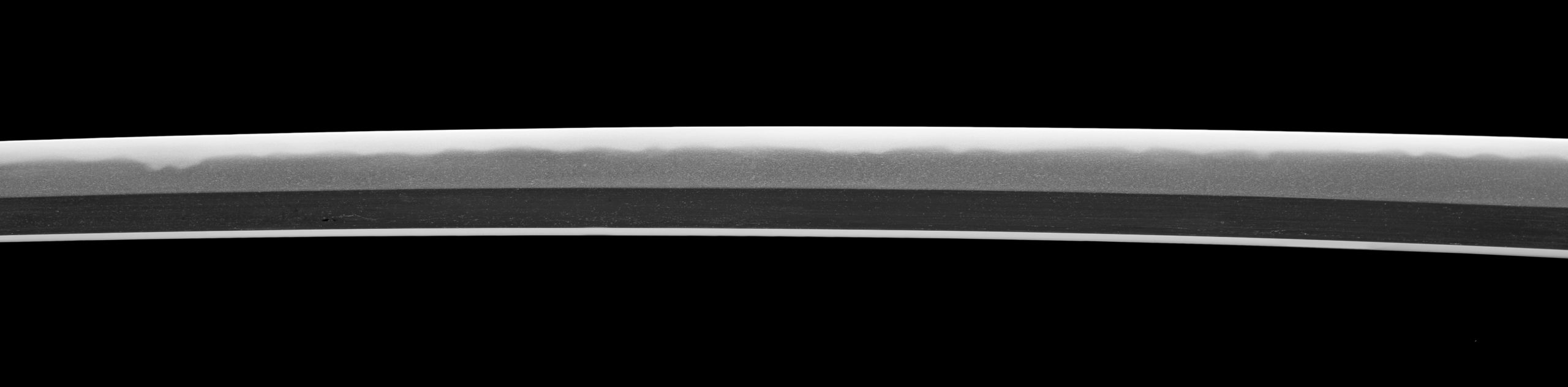
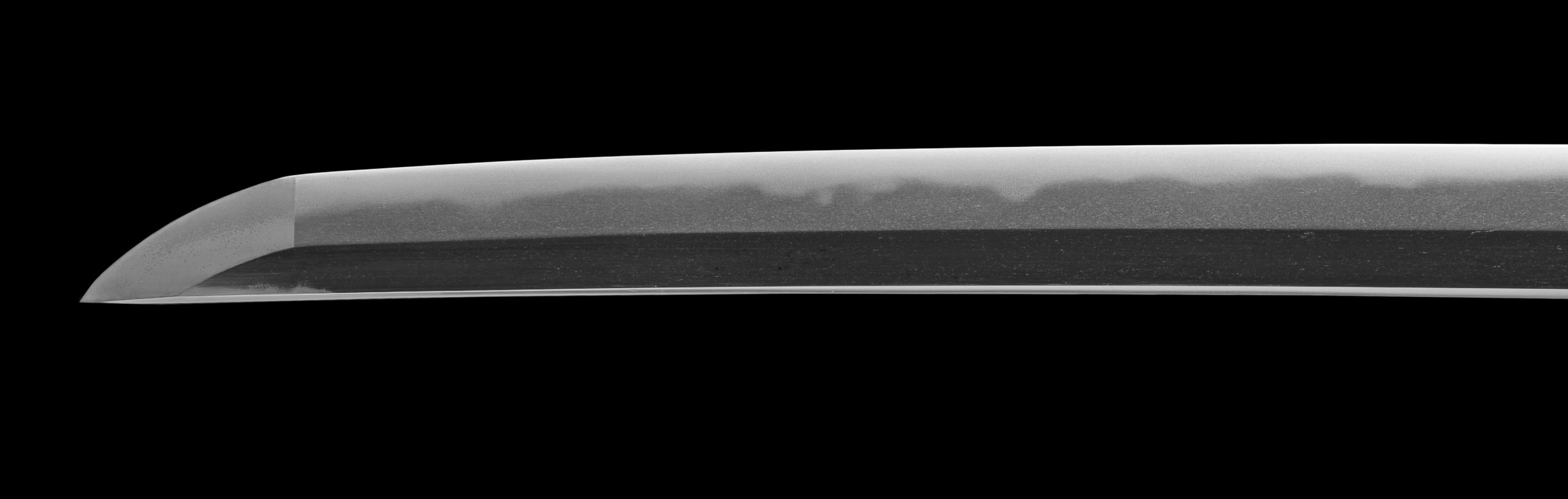
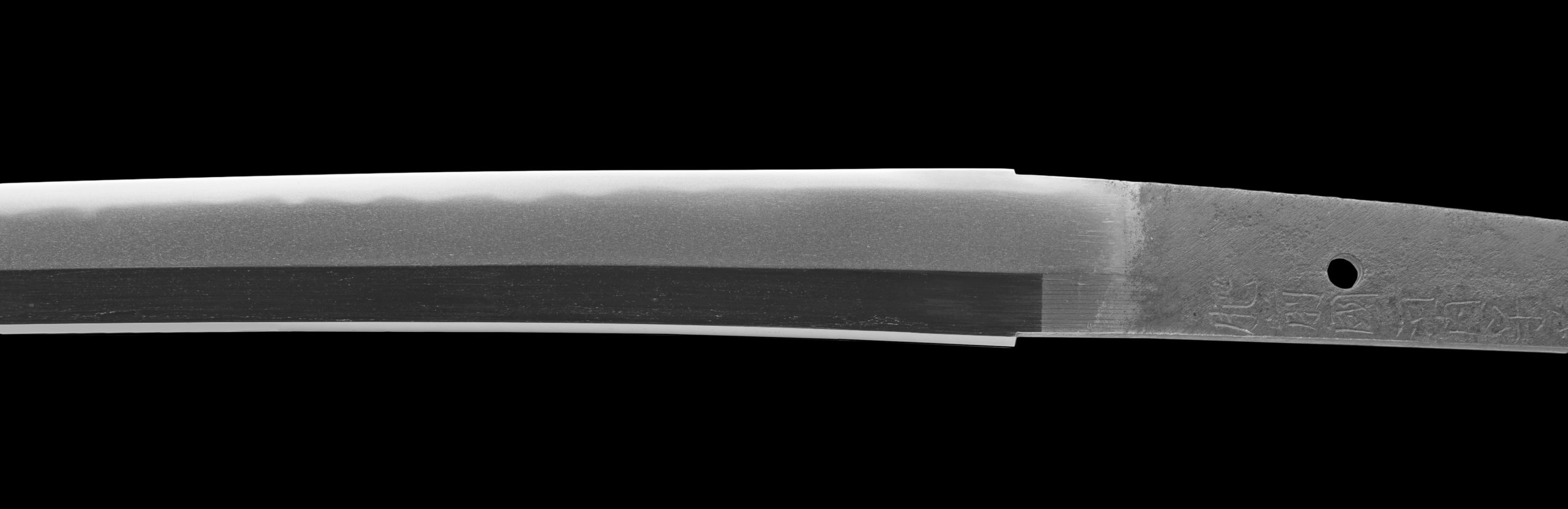
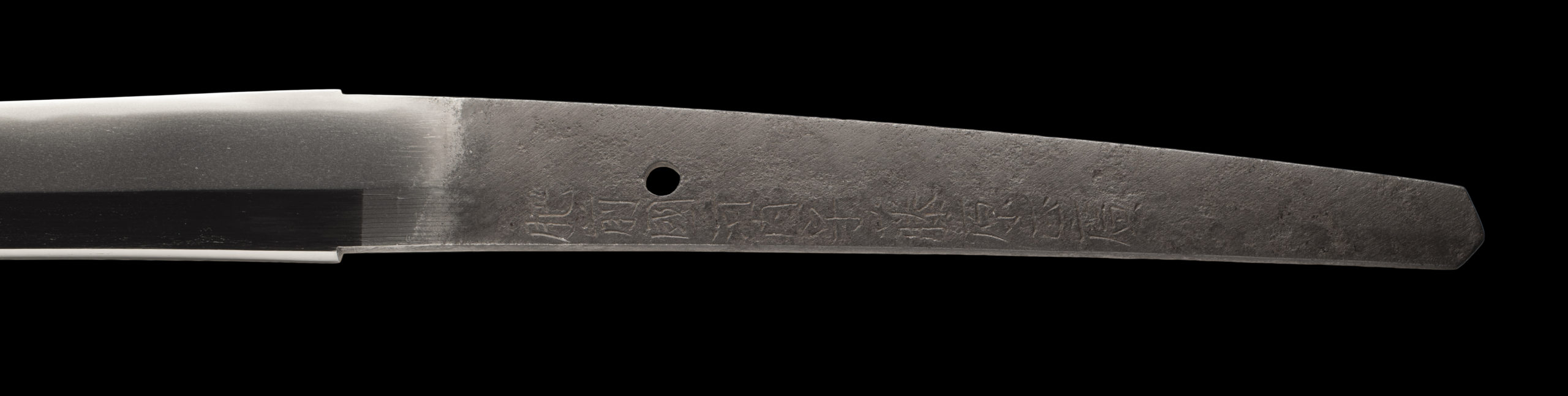




As written by the shop
Hizen Tadayoshi main line, second-generation Masahiro (Saga) · Hizen · around 1658-1661
Fujishiro Jo saku · Tōken Taikan top 26%
3 pieces on the market now
The second-generation Masahiro was the son and successor of the first-generation Kawachi Daijo Masahiro, born in Kan'ei 4 (1627) and known by the common name Sadenji. In his father's lifetime he signed Masanaga. He received the title Musashi no Daijo in Manji 3 (1660) and was promoted to Musashi no Kami the following year. His father died on the fifth day of the second month of Kanbun 5 (1665), when he was thirty-nine, and on the thirteenth day of the fourth month he was transferred to Kawachi no Kami. A court appointment document, the kuzen-an, addressed to him as Musashi no Kami Fujiwara Masahiro[[c:1]] leads the published sources to conclude that he took the Masahiro name almost immediately after his father's death. He died in Genroku 12 (1699) at seventy-three, and the published record counts him, like his father, among the collaborators of the main Hizen house.
The judges set him remarkably close to his father. In both suguha and midareba, they write, he is skilled second only to his father, with virtually nothing to choose between them[[c:2]]. His work in either manner is described as exactly like that of the first Masahiro, and his technique as in no way inferior to his father's. He was above all adept at the irregular temper, and one record names his showy choji-midare as his own domain, 「正に彼の独壇場である」.
That midareba is a choji-based temper mixed with gunome, set wide and broadly undulating. Two features within it are named as characteristic of the second generation's hataraki: gunome with rounded heads and an arrow-notch, yahazu-like element. Long ashi and yo enter, the nioi is deep and the nie thick, gathering in places in the valleys, and kinsuji and sunagashi run through the hamon in abundance. Some blades add tobiyaki, and one is described as the showiest work in his record[[c:3]]. As with the waki-Hizen generally, a straight yakidashi may appear at the base. The jigane is a tightly packed ko-itame with dust-fine ji-nie laid thickly and fine chikei entering, several entries naming it the komenuka-hada peculiar to Hizen swords, and on one robust piece the hada is said to stand slightly. The boshi runs straight to a ko-maru.
The suguha is the second register of his record, and the published sources draw attention to it: 「初代正広よりも直刃の作品が多く見られることにも注意したい」. His suguha works are fewer than his midareba, yet more numerous than his father's, and even and consistent in quality. On a typical chu-suguha katana the jigane is said to be packed even more tightly than usual, and one deep-nioi chu-suguha is described as recalling the suguha of the main house. Two further chu-suguha katana are singled out because the temper is deeper in nioi and thicker in nie than his usual straight work, with ashi and hataraki in abundance, and they are said to show a certain boldness[[c:4]]. His bodies are often broad, thick and heavy in the hand, at times with an extended or large kissaki.
The two generations are told apart by signature. The second Masahiro most often signs Hizen no Kuni Kawachi no Kami Fujiwara Masahiro, occasionally Fujiuji in place of Fujiwara, and the published sources set out how the forms of the characters Fuji and Hiro differ between father and son, the second generation's Hiro carrying one more stroke. Carving on his blades is described as extremely rare. One katana, dated Kanbun 12, carries carving added later by Nobukuni Yoshinao and a cutting-test inscription of Kanbun 13 by Yamano Kanjuro.
Masahiro is graded Jo saku by Fujishiro. He has no National Treasures and no Important Cultural Properties, and his record lies in the Juyo rank, where twenty-six of his works have been designated. One katana with a broad, irregular temper and tobiyaki in the shape of sun and moon is called his finest and a sword representative of Hizen work[[c:5]]; it carries a gold-inlaid cutting-test inscription by Yamano Kanjuro Hisahide and the sword name Tsugi-kosode. Another bears a cutting test with the name Senpu, and the published sources note that test inscriptions are extremely rare on Hizen swords. A dated wakizashi of Kanbun 7 is valued as a reference piece. Recorded provenance is slight, and a signed example of the Juyo rank comes to market only from time to time.
Where Masahiro stands among comparable artisans: across all of nihontō, and within tradition, era, and period. The tiers (Foremost · Leading · Major · Notable) weigh official designations from the NBTHK and Japan's Agency for Cultural Affairs, together with historical honors of lasting repute such as the Sansaku and Meibutsu-chō.
Select a lens to see how it's measured.
Shinto · Hizen
107 pieces on the market now
The Hizen school began with a single domain commission. In Keicho 1 (1596) the Nabeshima of Hizen ordered Hashimoto Shinzaemon, the smith who would sign Tadayoshi, up to Kyoto with the carver Munenaga; there he entered the gate of Umetada Myoju and studied forging while Munenaga learned the chisel. The two returned to the province in Keicho 3 (1598), and Tadayoshi settled in the castle town below Saga, where under the domain's patronage the line grew into the dominant sword-making house of Kyushu. His own work runs from Keicho 5 (1600) to his death in Kan'ei 9 (1632); in Genna 10 (1624) he received the court title Musashi Daijo, changed his name to Tadahiro, and shifted his clan name from Minamoto to Fujiwara, so that the late Musashi Daijo blades are the founder under a second name. From him the house became a true generational institution: his son the second-generation Omi Daijo Tadahiro carried it forward as its most prolific hand, the third-generation Mutsu no Kami Tadayoshi returned its highest finish, and a Tosa no Kami branch took the founder's signature when he set it aside. Around this main line grew a circle of disciples and collateral hands, the waki-Hizen or Soba-Hizen smiths, several of them, like Yoshiie and Hironori, working as daisaku substitute makers whose own signed pieces are therefore scarce. The school's signature is its steel. Over a ko-itame forged so tightly it shows no slackness, fine ji-nie gathers in minute particles until the surface takes on the rice-bran konuka-hada (also written komenuka-hada) that no other school produces, fine chikei entering throughout and the ji notably clear and bright.
The orthodox temper laid upon it is a chu-suguha or hiro-suguha, sometimes tinged with a shallow notare and ko-gunome, the nioiguchi deep with finely clustered ko-nie and tightened to a bright clarity, the boshi running straight to a quiet ko-maru. The founder aimed this suguha toward the Rai school yet departed from it, his nioiguchi tighter and his forging carrying more vigor; the third generation refined it to what the published sources call the strongest and most precise hand of the first three generations. Against that calm register the house also worked a showier one, the Hizen choji-midare mixing gunome, long ashi, kinsuji and sunagashi, a manner the published sources already find more often in the founder's late Musashi Daijo work than in his Tadayoshi years, and one the second generation made his own. The branches pushed further from the suguha standard: Tadakuni of the Ogi domain ran sunagashi more conspicuously than any other Hizen hand and reached toward old Ichimonji in his o-choji; Masahiro and Yukihiro favored a flamboyant long-ashi choji over the calm main line; and the Iyo no Jo Munetsugu line worked apart in the Soshu-den, building a midareba on notare with a pointed togariba and a jihada that tends to stand and tone slightly blackish. A collector seeks Hizen-to first for that steel, and reads it the same way the appraiser does: a bright suguha lying over a clear, tight konuka-hada identifies the school before the signature is consulted, and the quiet ko-maru boshi on the ura-signed tang confirms the main-line practice. Generation and branch are then told within that frame, the third generation's powerful sugata recalling not his father but his grandfather, the waki-Hizen hands set apart by their irregular temper, their sujikai file marks and a sashi-ura signature, the Munetsugu line by its Soshu togari. The main line, made in real numbers across so long a span, reaches the market more readily than any Kamakura master, so a papered example is within reach of a patient collector, while the founder's own work and the finest konuka-suguha of the third generation come to open hands only from time to time. Provenance runs back through the house the school served, blades recorded to Nabeshima Katsushige and Nabeshima Naomoto and passing onward to the Owari Tokugawa, the Satake and the Imperial families; documentary inscriptions sharpen the picture further, a Myoju soemei attesting the founder's discipleship, Umetada carving adding flowers to brocade on his late blades, and the gold-inlaid cutting tests of Yamano Kanjuro and Yamano Ka'emon, rare on Hizen work, naming the edge as well as the hand. Learn more →
| Smith | Era | Designated |
|---|---|---|
| Tadayoshi忠吉 | 1596-1632 | 155 |
| Tadayoshi忠吉 | 1660-1686 | 61 |
| Tadahiro忠廣 | 1633-1693 | 133 |
| Tadakuni忠國 | 1648-1652 | 32 |
| Masahiro正廣 | 1624-1655 | 30 |
Hizen: a domain enterprise
Hizen swords were a domain enterprise: the Nabeshima sent Tadayoshi to study under Umetada Myōju around 1596, then built a licensed school around him. Nine generations carried its famously consistent konuka-hada work into the Meiji era.
A Hozon-certified blade judged to show notably superior workmanship and a better state of preservation. The bar is higher: re-tempered blades and most unsigned Muromachi/Edo works are excluded.
The NBTHK (Nihon Bijutsu Tōken Hozon Kyōkai, the Society for the Preservation of Japanese Art Swords) is a public-interest incorporated foundation founded in 1948 and supervised by Japan’s Agency for Cultural Affairs (Bunkachō); it is based at the Japanese Sword Museum in Tokyo. Its expert panels physically examine each submitted work (shinsa) and issue a certificate (kanteishō) ranking it by artistic and historical merit. NBTHK papers are the most widely recognized standard of authentication for Japanese swords and fittings.
NBTHK official site24 hour inspection period for all Antique items (USA only); all sales final on International orders.
$17,500