 NihontoWatchNihontoWatch
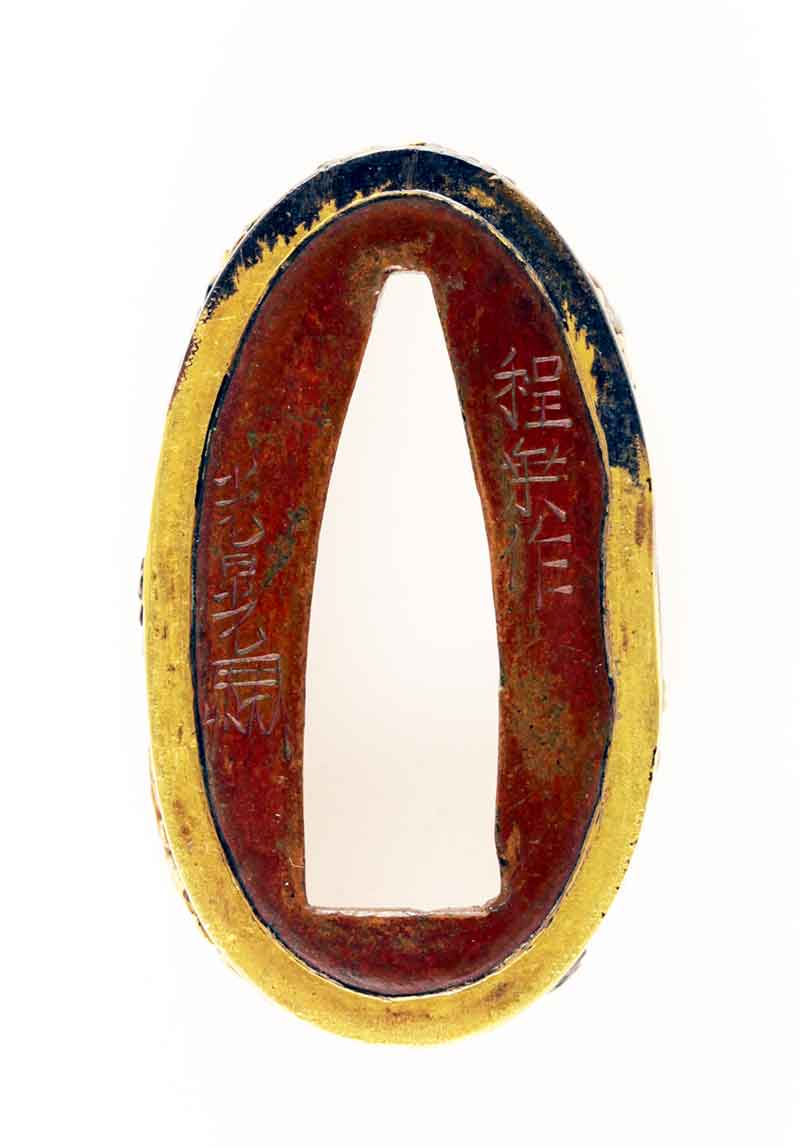
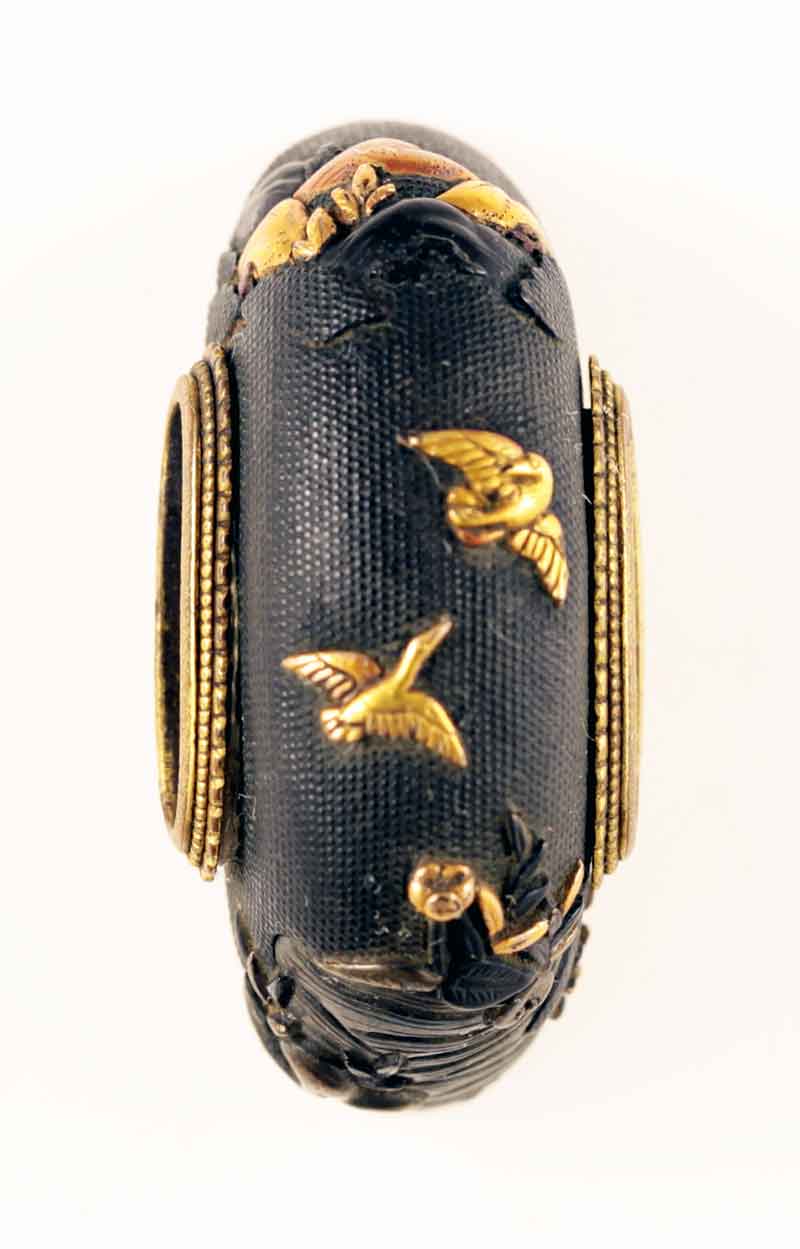
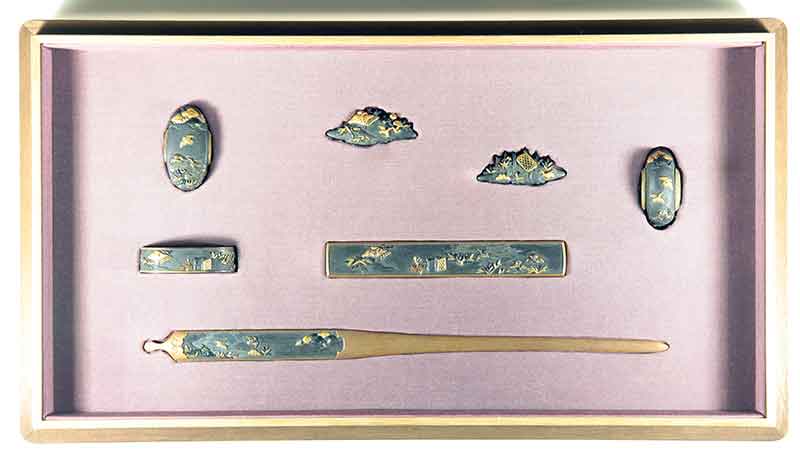
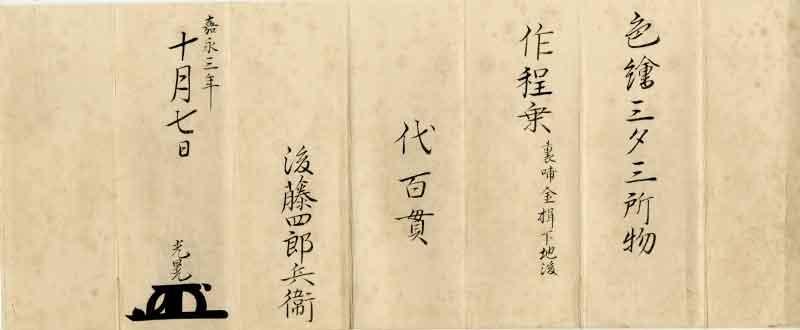
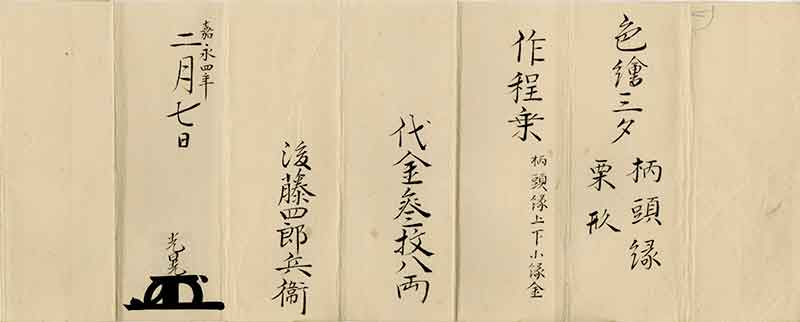
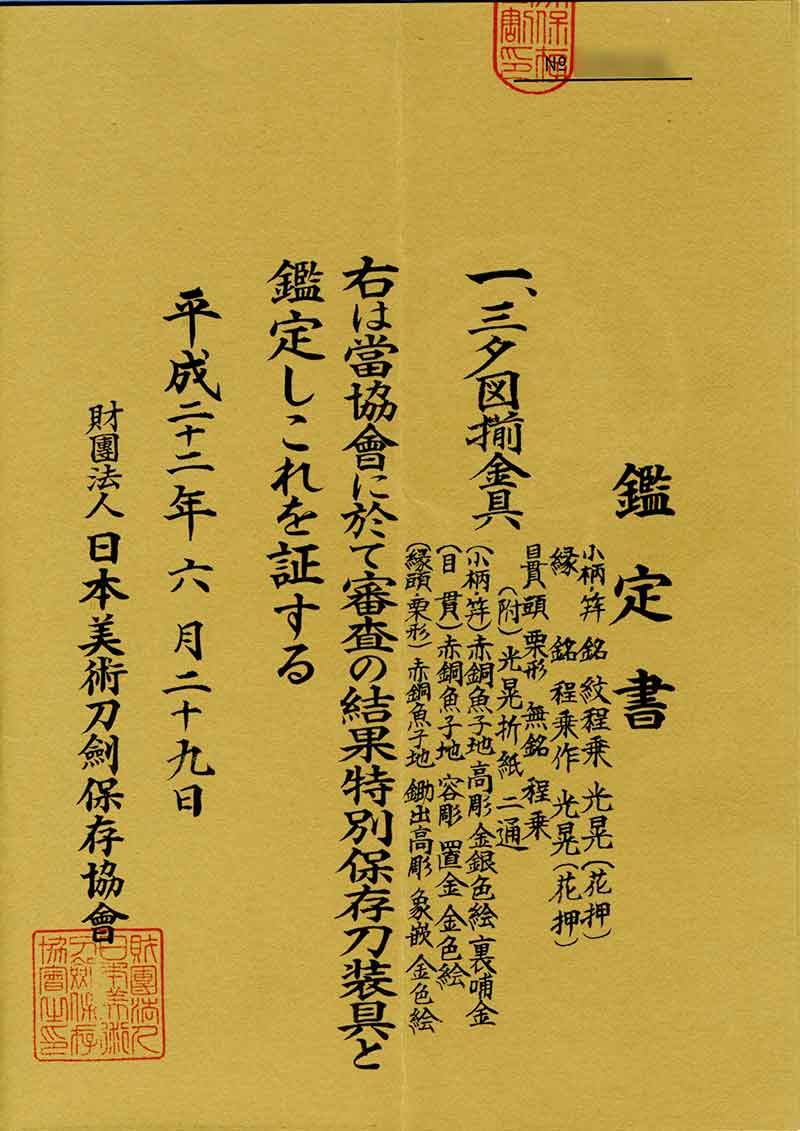
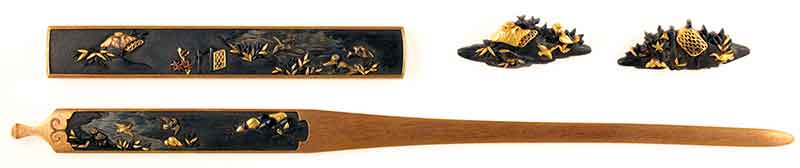
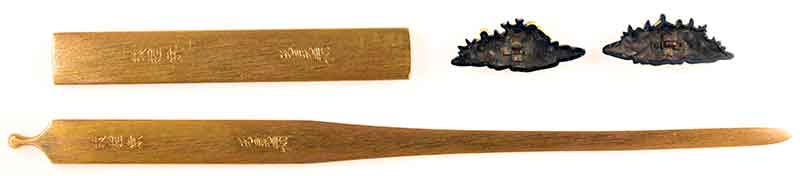
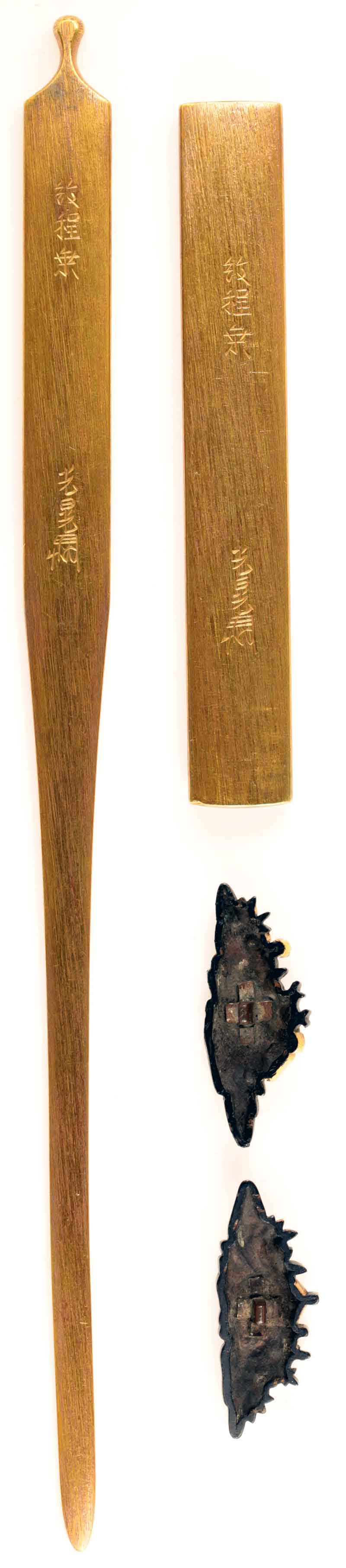
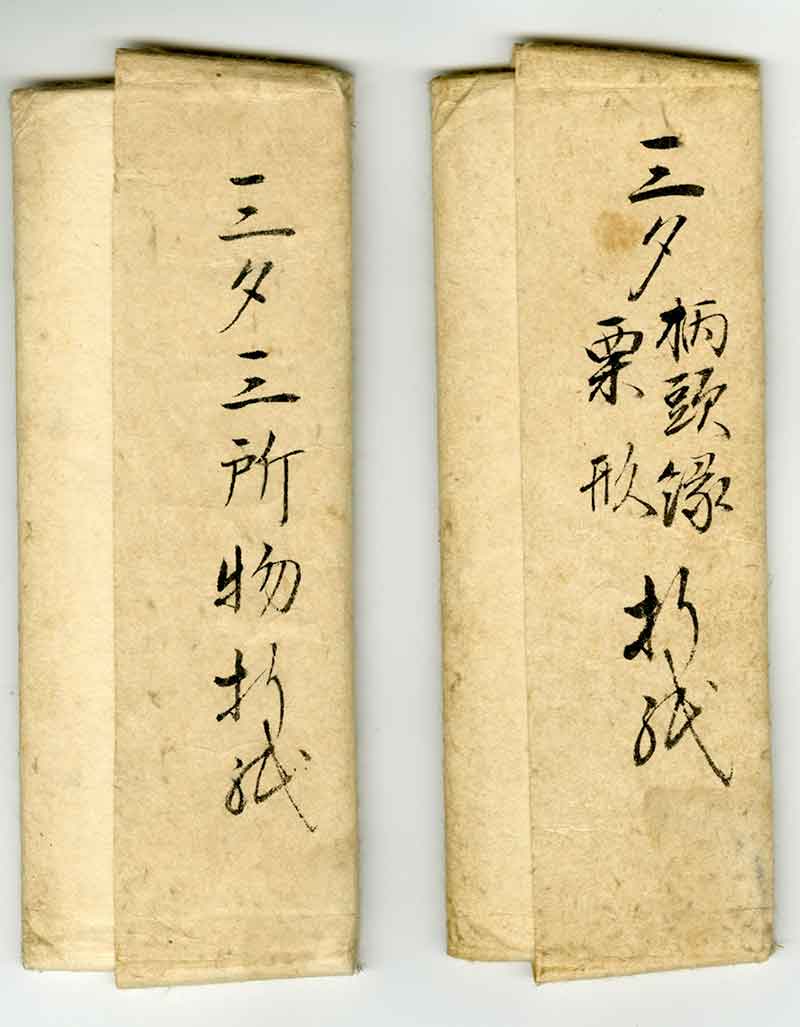
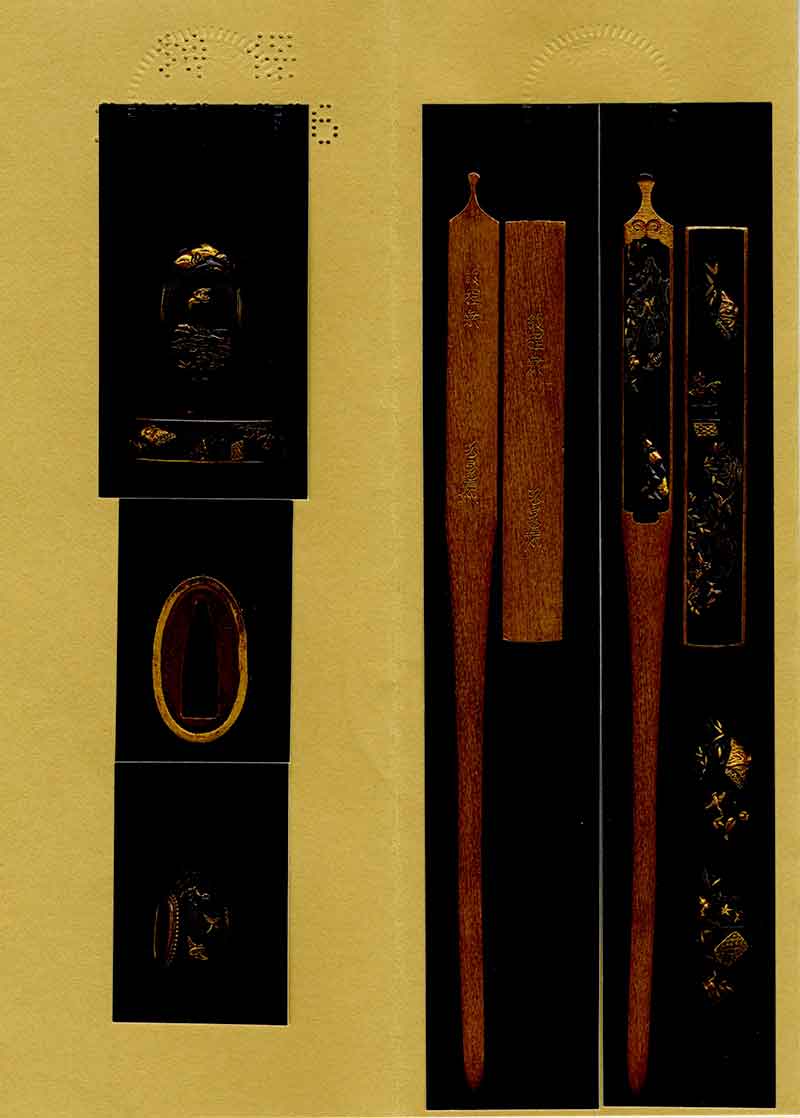
Goto Teijo was the second son of the seventh generation Kenjo and was born in Keicho 8. In Kan'ei 1, his father Masatsugu shaved his head and took the name Kenjo, so at this time, at the age of 22, he inherited the Rihei family and changed his name to Rihei Mitsumasa. Afterwards, because the son of the eighth generation head of the main family Sokujo, Genshiro (Mitsutomo), was still young, Teijo acted as guardian and became the ninth generation; when Genshiro turned 18, he had him succeed to the main family's hereditary name of Shirobei, and in Shoo 1, when Mitsutomo was 25, he handed over the tenth generation. After that, he succeeded his father Kenjo and served the Kaga Maeda family, and together with his father, contributed greatly to the development of the Kaga Hyakuman-goku culture. The theme of this work is Sanshoku-zu, a highly poetic design that expresses the end of the day as it transitions from evening to night through the three concepts of "evening": the evening sun, the evening moon, and the evening mist. Rather than a theme depicting people or stories, its characteristic lies in taking the changes of nature and the passage of time itself as the subject, avoiding direct depiction and evoking the scene through negative space and atmosphere. As an intellectual theme based on Chinese literati thought, it was widely appreciated in Japan during the Edo period. In this work, mountains, fields, flowering grasses, a rural cottage, and birds are represented on a shakudo ji using gold, silver, and suaka; in particular, the expression of flowing water in silver, which Teijo excelled at, is one of the highlights. The expression of light is restrained, the presence of the evening sun is not depicted, and the quiet period of time following it is shown. Through the figures of small birds standing by the water and the expansion of space, the atmosphere and feeling of the air after sunset are skillfully expressed, and one can feel the charm unique to Sanshoku-zu, which values stillness and lingering emotions. Regarding the mitokoromono, in Kaei 4, the sixteenth generation Mitsuaki produced the kozuka and kogai with urabokin and issued an origami; the fuchigashira and kurigata are also works by Teijo, and in Kaei 4, the sixteenth generation Mitsuaki likewise issued an origami, making them a matching set of kanagu. Goto Mitsuaki origami, two documents "Iroe Sanshoku Mitokoromono, Saku Teijo, Urabokin Sao Shitaji Nami, Dai Hyakkan, Goto Shirobei, Kaei 3 Jugatsu Nanoka, Mitsuaki (Kao)" "Iroe Sanshoku Tsukagashira Fuchi, Kurigata, Saku Teijo, Tsukagashira Fuchi Jogesho-beri Kin, Daikin Sanmai Hachiryo, Goto Shirobei, Kaei 4 Nigatsu Nanoka, Mitsuaki (Kao)"
Goto Teijo後藤程乗
Offered by Tsuruginoya

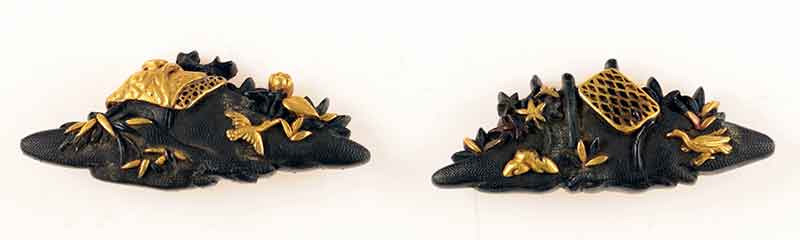
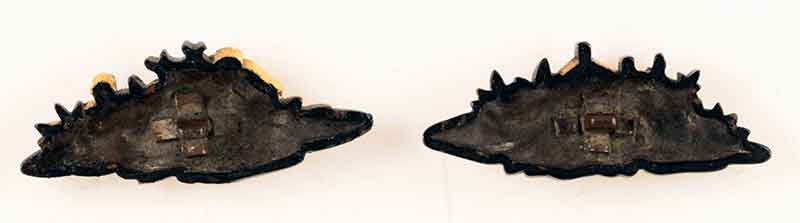
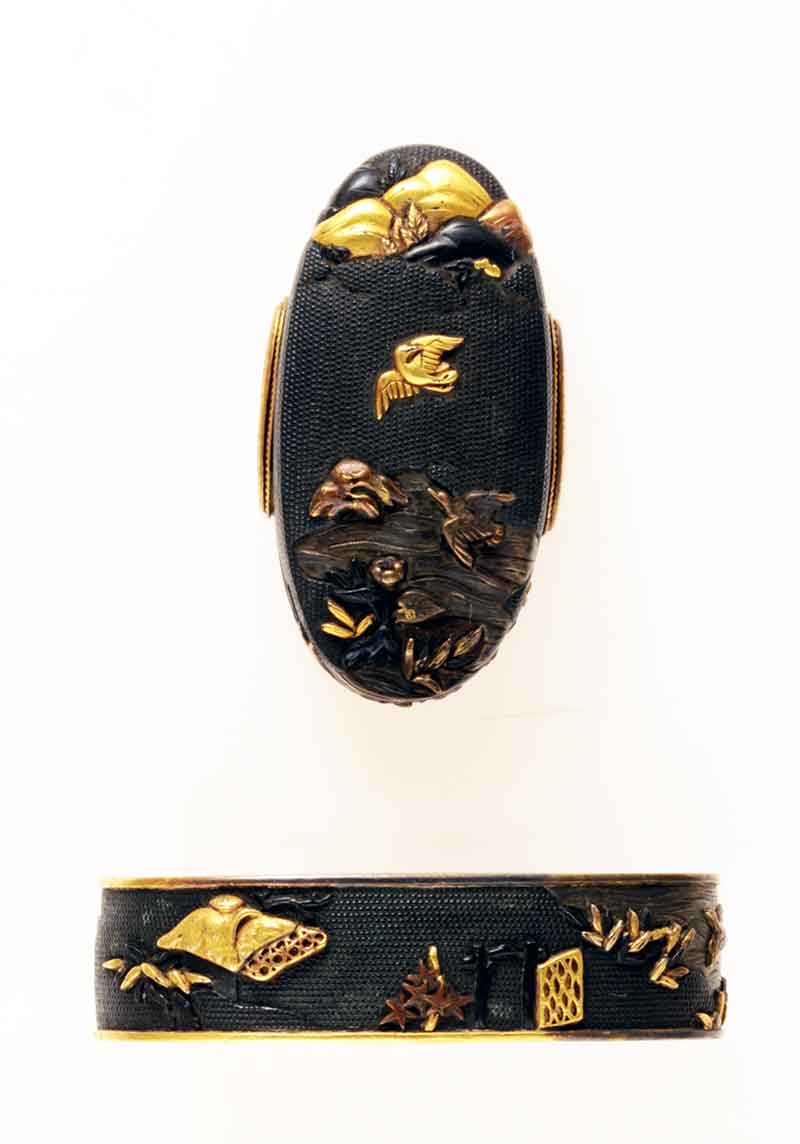
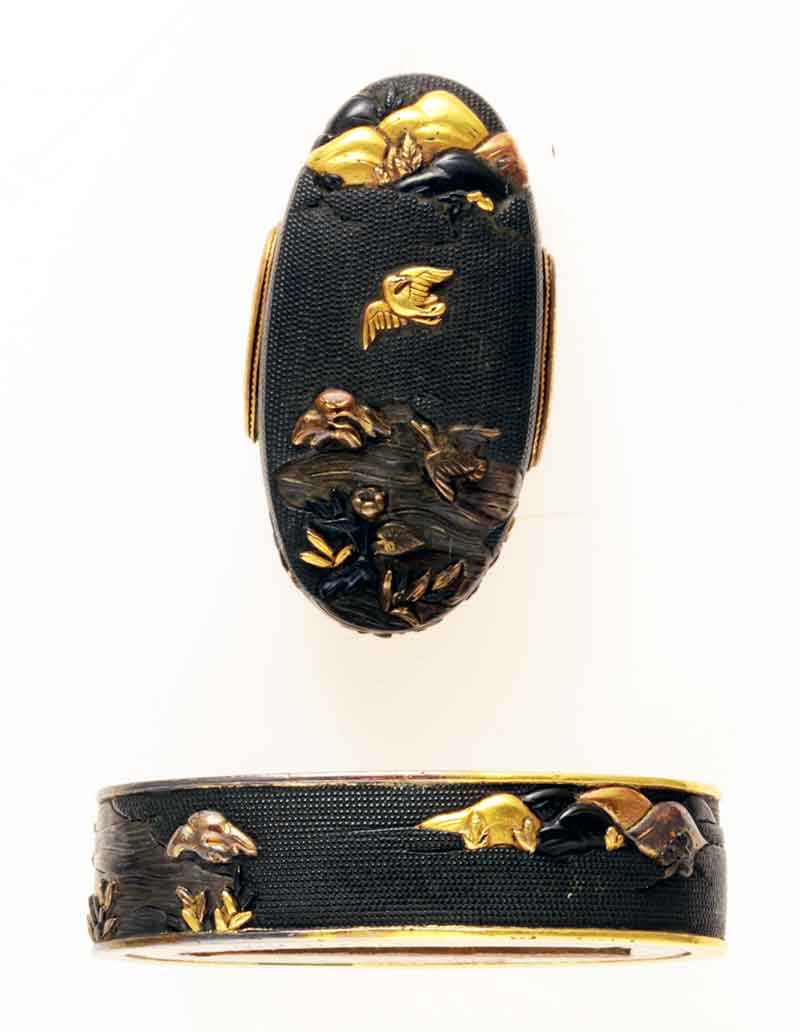
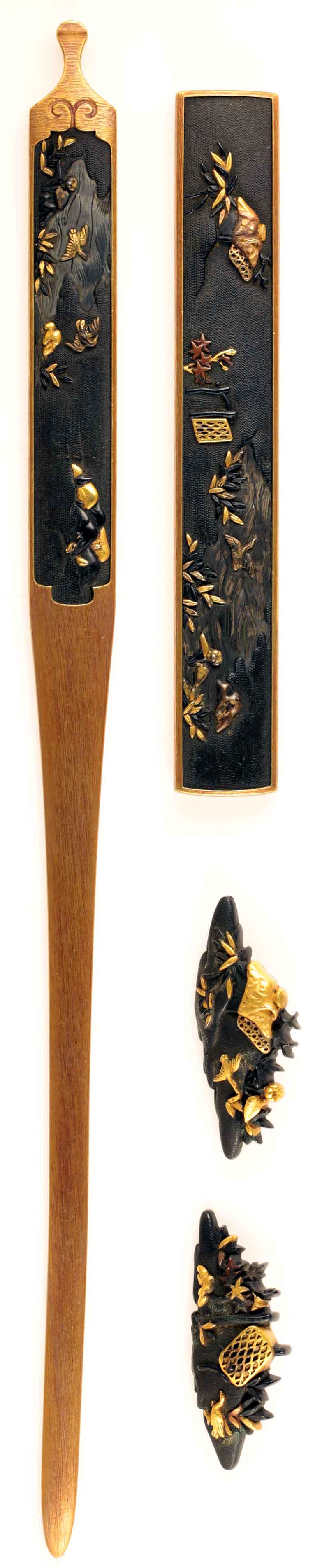
Goto Teijo
Edo
Yamashiro
Signed
Tokuho (NBTHK)
Machine translation of the shop's Japanese ·
Machine translation from the shop's Japanese · may contain errors ·
Iebori · Yamashiro · around 1603-1673
8 pieces on the market now
Gotō Teijō (程乗), whose personal name was Mitsumasa (光昌), was the ninth-generation head of the Gotō main line (sōke) and a pivotal figure in the transition of the house's metalwork tradition into the early Edo period. Born in Keichō 8 (1603) as the second son of the seventh head Kenjō (顕乗), his childhood name was Gen'ichirō. In Kan'ei 1 (1624), when his father Masatsugu took the tonsure and assumed the art name Kenjō, Teijō succeeded as the second head of the Rihei branch house, changing his name to Rihei Mitsumasa. When the eighth head of the main line, Mitsushige (Sokujō), died at the young age of thirty-two and his heir Kameichi was still only four years old, Kenjō temporarily assumed responsibility for the main line, after which Teijō inherited the position as ninth head. He served as guardian to the young tenth head Renjō, transferring the headship when Renjō reached eighteen and continuing as his protector until he turned twenty-five. Teijō also served the Kaga Maeda house, alternating by year with Enjō, a son of Kakujō, and in this way made a major contribution to the development of the refined culture supported by Kaga's "million-koku" domain, where his influence established what became known as the Kaga-Gotō lineage.
Teijō's work is executed predominantly in shakudō nanako-ji grounds with takabori relief carving and polychrome iroe employing gold and silver, though he also produced pieces on solid gold (kinmuku) grounds of exceptional sumptuousness. His carving manner is characterized by a calm, restrained temperament and fine precision[[c:1]]; the chisel work varies freely between measured and rapid passages, and the modeling of forms is full yet taut. He is noted for achieving distinctive coloristic effects through the purposeful deployment of irogane such as silver and copper. His menuki display powerful yōbori rounded relief with pronounced variation in height and depth, and his kozuka and kōgai are consistently finished with gold-backed reverse plates (kin'ura). While Teijō carefully preserved the Gotō house's hereditary design vocabulary -- dragons, lions, and tigers rendered with the sculptural fullness and expressive modeling characteristic of the main line -- he also incorporated novel themes including literary and historical narratives such as the Rashōmon legend, scenes from the Tale of Genji, and the Oxherd and Weaver Maiden, as well as uncommon subjects such as anchors and the rare one-horned dragon, a motif of imperial rank.
Teijō's output spans the full range of tōsōgu forms, including mitokoromono, sanshōmono, and nisomono sets as well as individual kozuka, menuki, and tsuba. His fittings also appear integrated into formal koshirae mountings of the highest order, including ito-maki tachi transmitted in the great Tokugawa houses. Numerous works bear origami appraisals and authentication inscriptions by later Gotō masters -- the tenth head Renjō, the thirteenth head Enjō Mitsutaka, and the fifteenth head Shinjō Mitsuyoshi among them -- attesting to the esteem in which his production was held within the house's own critical tradition. Several important pieces are recorded as having been handed down in the Kōnoike family, the wealthy Osaka merchants, further demonstrating the regard accorded to his work among the most discriminating collectors of the Edo period. As the master who bridged the Gotō main line's Kyoto heritage and its new role serving the Kaga domain, Teijō occupies a position of particular consequence in the history of the house, and his works consistently manifest the elevated dignity that defines mainline Gotō metalwork at its finest[[c:2]].
Where Goto Teijo stands among comparable artisans: across all of nihontō, and within tradition, era, and period. The tiers (Foremost · Leading · Major · Notable) weigh official designations from the NBTHK and Japan's Agency for Cultural Affairs, together with historical honors of lasting repute such as the Sansaku and Meibutsu-chō.
Select a lens to see how it's measured.
Iebori · Yamashiro
Phase: Goto Main Line後藤宗家· 1573–1900
315 pieces on the market now
| Smith | Era | Designated |
|---|---|---|
| Goto Joshin後藤乗真 | 1512-1562 | 68 |
| Goto Yujo後藤祐乗 | 1440-1512 | 41 |
| Goto Sojo後藤宗乗 | 1461-1538 | 56 |
| Goto Kenjo後藤顕乗 | 1586-1663 | 46 |
| Goto Teijo後藤程乗 | 1603-1673 | 42 |
A Hozon-certified blade judged to show notably superior workmanship and a better state of preservation. The bar is higher: re-tempered blades and most unsigned Muromachi/Edo works are excluded.
The NBTHK (Nihon Bijutsu Tōken Hozon Kyōkai, the Society for the Preservation of Japanese Art Swords) is a public-interest incorporated foundation founded in 1948 and supervised by Japan’s Agency for Cultural Affairs (Bunkachō); it is based at the Japanese Sword Museum in Tokyo. Its expert panels physically examine each submitted work (shinsa) and issue a certificate (kanteishō) ranking it by artistic and historical merit. NBTHK papers are the most widely recognized standard of authentication for Japanese swords and fittings.
NBTHK official sitePlease exercise cooling-off within 8 days of the item's arrival. (1) We cannot accept items that have been altered or worked on in any way (e.g. test cutting, polishing or other work, display at viewing meetings, photography, taking oshigata rubbings, use for appreciation, copying of books). (2) Return shipping is at the customer's expense. (3) Costs other than the item price (bank transfer fees, cash-on-delivery fees, installment fees, etc.) cannot be refunded. (4) For cash-on-delivery and similar payments, the refund is made after the payment has reached us. (5) We cannot accept a return when a trade-in item is involved. (6) Items delivered overseas cannot be returned or refunded (because of the time involved and, for swords, the surrender of the registration certificate and other circumstances).
Price on request
Certificate reading — 銘 小柄・笄:銘 紋程乗 光晃(花押) / 縁:銘 程乗作 光晃(花押) / 頭・目貫:無銘 程乗