 NihontoWatchNihontoWatch
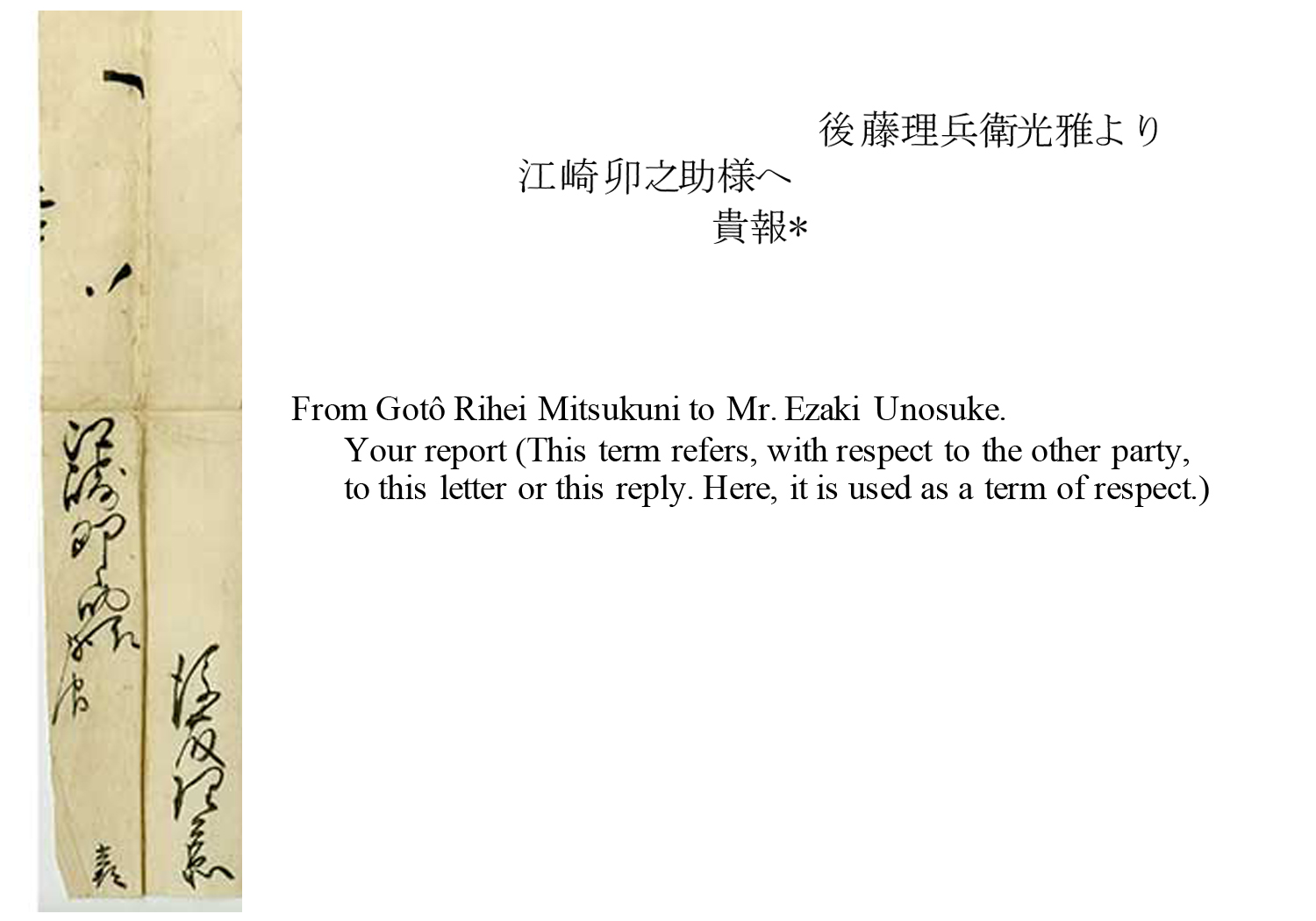
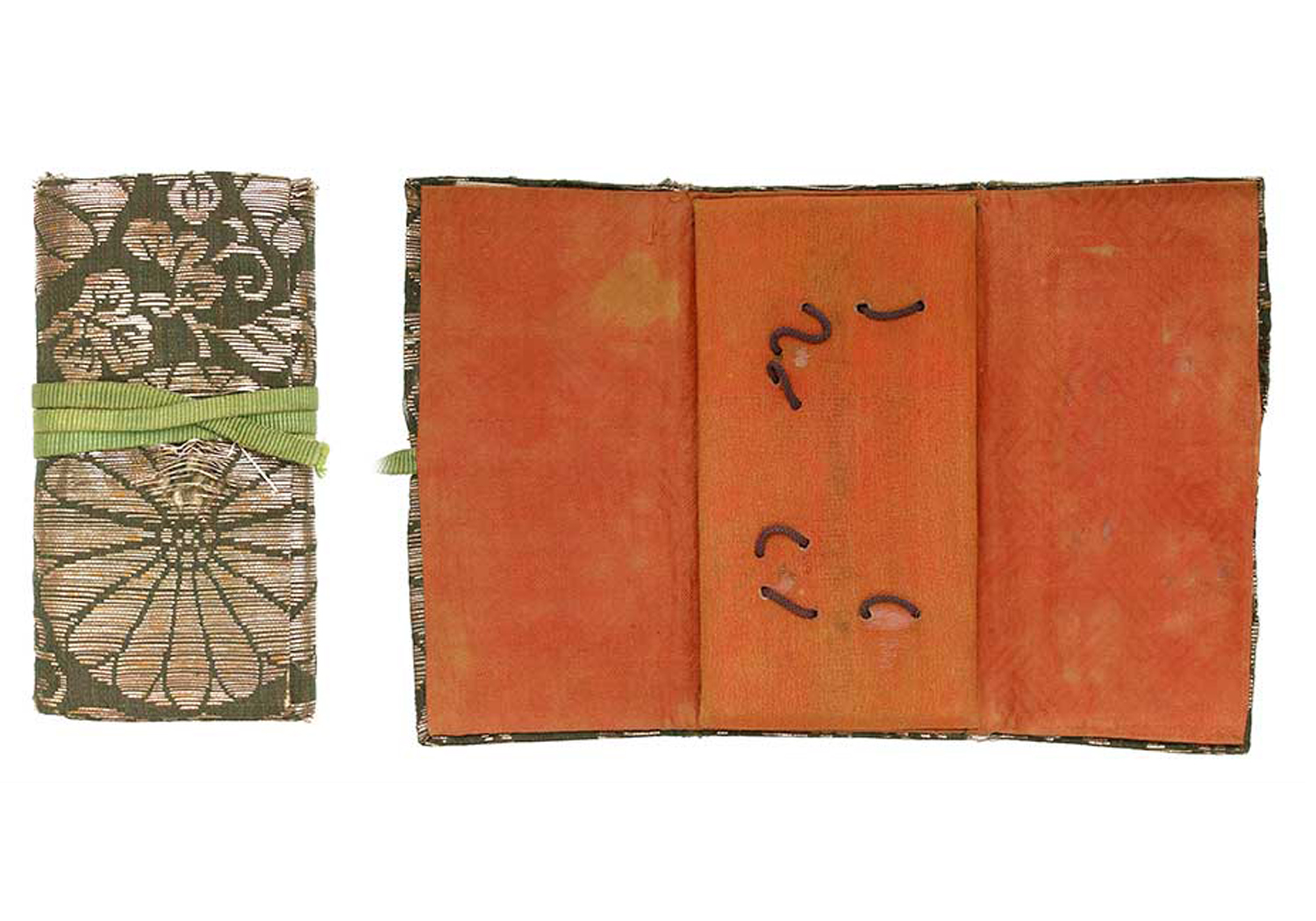
Gotô Teijô (1603-1673), was the second son of Kenjô, the seventh Shirobei mainline master. His real name was Genichirô, which was changed to Mitsumasa after his twenty-second birthday. Mitsumasa ‘s uncle was Sokujô Mitsushige (1600-1631), the eighth Gotô Shirobei master. Sokujô died in 1631 at the early age of 32. His son, Renjô, who was four years old at the time, was too young to take over as head of the family lineage. Therefore, Teijô became the guardian of the family and inherited the title as head of the Gotô Shirobei line in Kan-ei 13th (1636), becoming the ninth mainline master. In the third year of Shoho (1646), when he was forty-four, Mitsumasa changed his name to Teijô. For some time, Gotô Teijô was in the service of Tokugawa Ietsuna, the fourth Tokugawa Shogun, receiving an annual stipend of forty koku of rice. He also worked for the Maeda family as second master of the Kaga Gotô school. When Renjô came of age around Shoo 1st (1652), Teijô retired as head of the family and became a full-time retainer of Maeda Toshitsune (1593-1658). Along with his cousin Enjo, Teijo Mitsumasa continued to work for the Maeda clan in Kaga, and the Edo Bakufu, until his death in the first year of Enpo (1673). The works of Teijô, Kenjô and Kakujô mark the beginning of the Kaga Gotô school. These makers and their followers were all quite highly skilled. The Kinko Meikan ranks Teijô as Meiko which is the next to top rank for a kinko artisan. Gotô Teijô signed some of his items but mostly left his work unsigned. This was standard practice at the time as the works were going to daimyo, nobility and the Shogunate. When he signed he signed sometimes with his civilian name Gotô Mitsumasa, sometimes he signed just in two characters as Teijô with his kao. Sometimes he signed and filled his name in gold. From the signed items we can see a diverse work style and subject matter that branched out from the standard shishi and dragon types from previous generations. Some of these are whimsical. However when he made dragons, he made powerful and beautifully shaped items. Many of Teijô’s works have passed Jûyô, and one tsuba passed Tokujû (his kogai is part of a mixed set on a daisho which has also pass Tokuju). There are some other mixed sets of Gôtô work at Jûyô that contain his work as well. Furthermore, there is an outstanding koshirae for a ken which is the work of Gotô Teijô and has the rank of Jûyô Bunkazai, and Important Cultural Property. The futatokoromono presented here are a fine example of the skill of Gotô Teijô. The kozuka and menuki tell the story of the duel on the Gojo Bridge in Kyôto between Musashibo Benkei and Ushiwakamaru who later became known as Minamoto Yoshitsune. Benkei was a powerful Buddhist priest who was known for his fighting prowess using the long staffed Naginata. None could defeat him. He was said to have wandered around Kyoto every night on a personal quest to take 1000 swords from samurai warriors, who he believed were arrogant and unworthy to possess them. After collecting 999 swords through duels and looking for his final prize, he met a young man playing a flute at Gojotenjin Shrine in Kyôto. The much shorter man supposedly carried a gilded sword around his waist. Instead of dueling at the shrine itself, the two walked to Gojo Bridge in the city where the bigger Benkei ultimately lost to the smaller warrior, who happened to be Minamoto no Yoshitsune, a son of Minamoto no Yoshitomo. Not long after the duel, Benkei, frustrated and looking for revenge, waited for Yoshitsune at the Buddhist temple of Kiyomizu, where they fought and he lost yet again. After the second defeat, he became Yoshitsune’s retainer and fought with him in the Genpei War against the Taira clan from 1185 until his death in 1189. This set of fittings passed jûyô kodôgu in the 61st Jûyô shinsa held in 2015. The translation of the Jûyô certification is as follows: Jūyō-kodōgu at the 61st jūyō shinsa held on October 20, 2015 Hashi Benkei no zu futatokoromono (橋弁慶図二所物) – Futatokoro depicting Minamoto no Yoshitsune (源義経) fighting Benkei (弁慶) on Gojô bridge Kozuka, menuki mumei: Teijō (程乗) With soejō by Gotō Mitsukuni (後光) Measurements: Kozuka length 9.65 cm, width 1.45 cm Description: Hinshitsu-keijō: kozuka of shakudō with nanako ground and takabori relief that is highlighted with gold and silver iroe, reverse gilded; menuki of shakudō, in katachibori, and highlighted with gold and silver iroe. Era: Early Edo period Explanation; The 9th Gotō generation Teijō (程乗) was the second son of the 7th generation Kenjō (顕乗) and was born in Keichō eight (慶⻑, 1603). He bore the same youth name as his father, Gen’ichirō (源一郎), and his legal first name was Mitsutada (光伊). When his father entered priesthood in Kan’ei one (寛永, 1624) under the name Kenjō, Teijō, then Mitsutada, succeeded as 2nd generation of the Ribei (理兵衛) lineage under the name Ribei Mitsumasa (理兵衛光昌). He was 22 years old at that time. When the 8th Gotō main line generation Mitsushige (光重), also named Sokujō (即乗) died at the young age of 32, his successor Kameichi (⻲市), later Renjō (廉乗), was only four years old. Thus, Kenjō succeeded as 8th generation of the main line and passed on this function to his son Teijō, who later followed as 9th generation. When Kameichi/Renjō turned 18, he became the 10th head of the main line, although Teijō acted as his guardian until Kameichi/Renjō was 25 years old. Together with Kakujō’s (覚乗) son Enjō (演乗), Teijō worked on a biannual basis for the wealthy Kaga domain and contributed so greatly to the flamboyant local culture. This work depicts the gorgeously carved scene of Ushiwakamaru (牛若丸), i.e., the young Minamoto no Yoshitsune, fighting the warrior monk Benkei on the large Gojō (五条) Bridge in Kyōto, and the actions of each of the figures is interpreted in a truly lively manner. This futatokoromono set comes with an accompanying documentation (soejō) written by Teijō’sson and heir Etsujō Mitsukuni (悦乗光邦), in which he certifies that this is an authentic work of his father. Such a soejō is regarded as reliable as if the work was signed by the artist. Incidentally, appraising soejō by Etsujō Mitsukuni are extremely rare and valuable. This futatokoromono set comes with an accompanying documentation (soejō) written by Teijō’s son and heir Etsujō Mitsukuni (悦乗光邦), in which he certifies that this is an authentic work of his father. Such a soejō is regarded as reliable as if the work was signed by the artist. Incidentally, appraising soejō by Etsujō Mitsukuni are extremely rare and valuable. CERTIFICATION PAPERS This is the actual original Soejō (appraisal) written by Gotô Etsujō Mitsukuni in the 1600’s attesting to the fact that his father, Gotô Teijô made these fittings. EDO PERIOD PACKAGING This is the packaging used by Gotô Teijô when he presented these items to his client.
NihontoWatchOffered by Nihonto.com
10 on the market

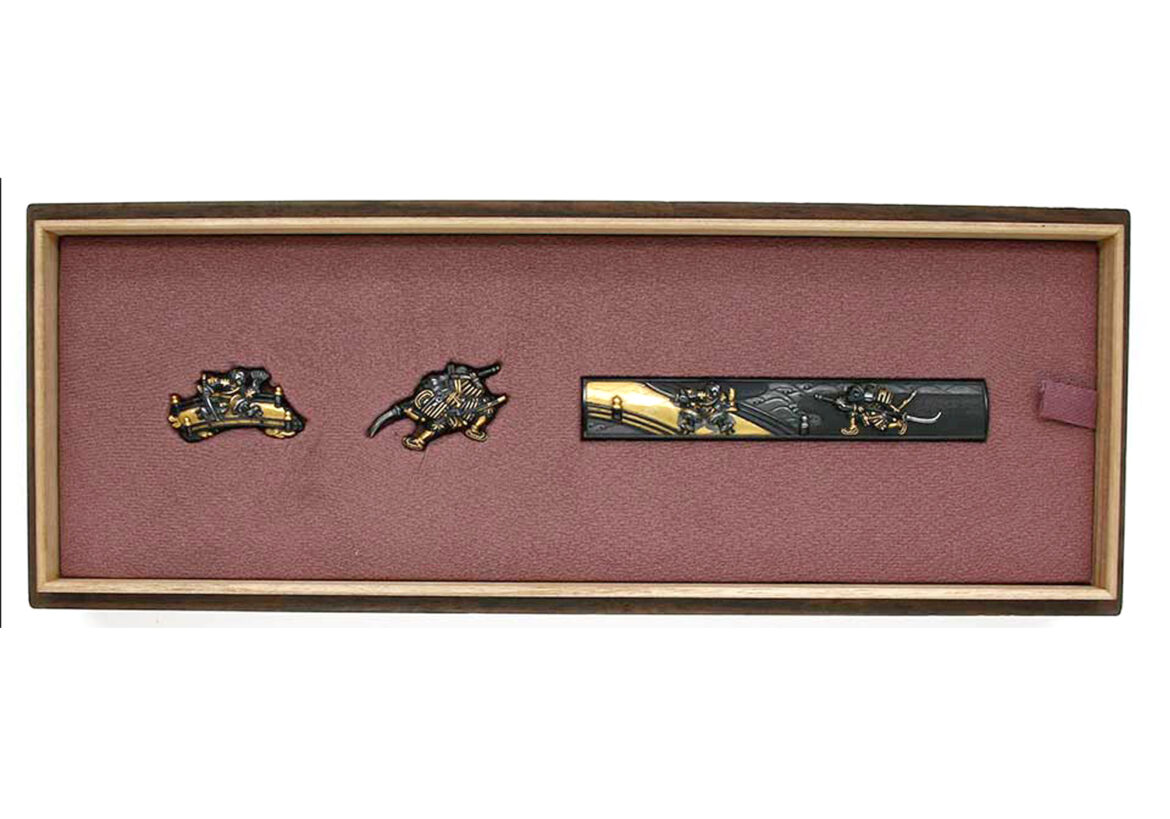
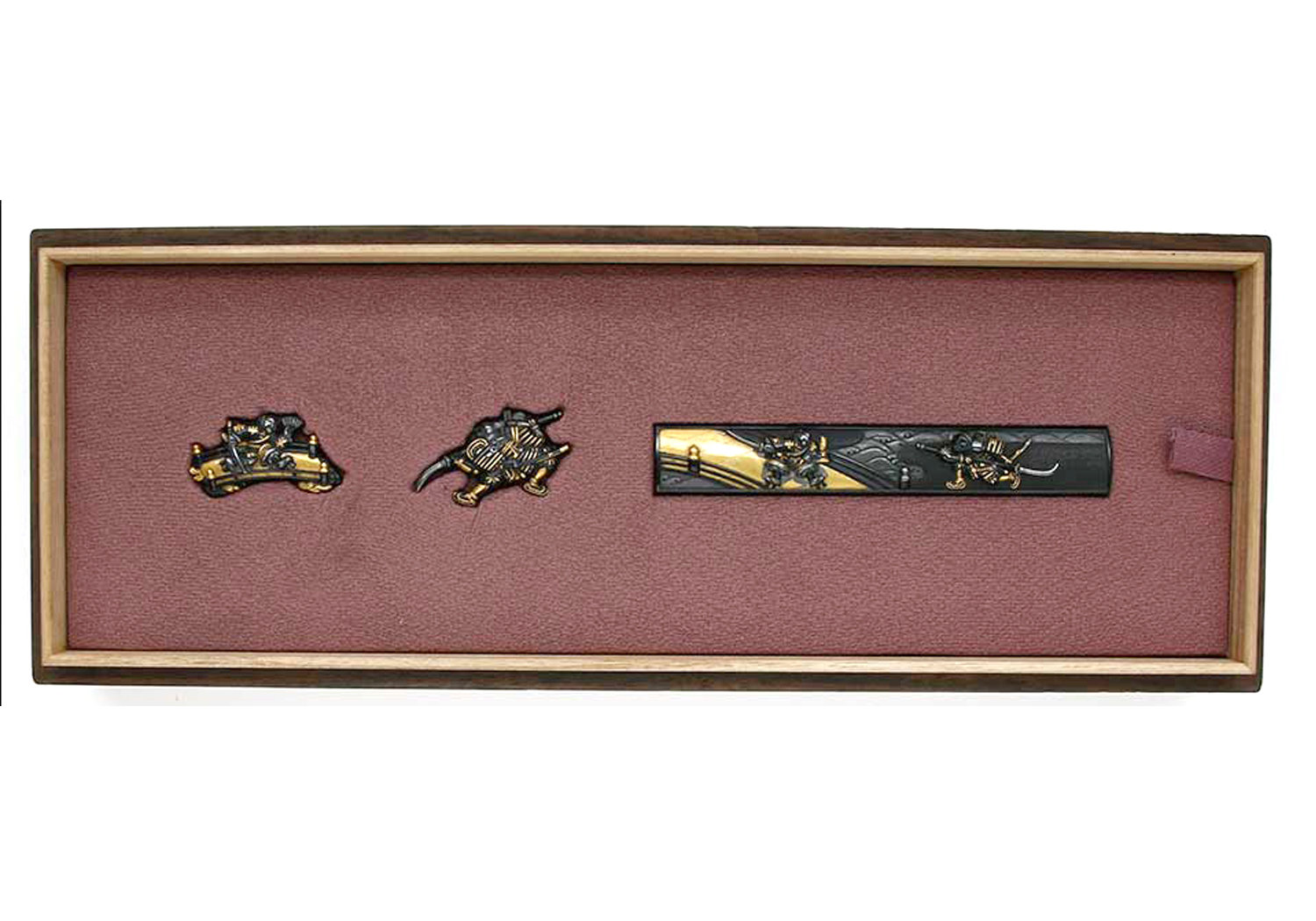
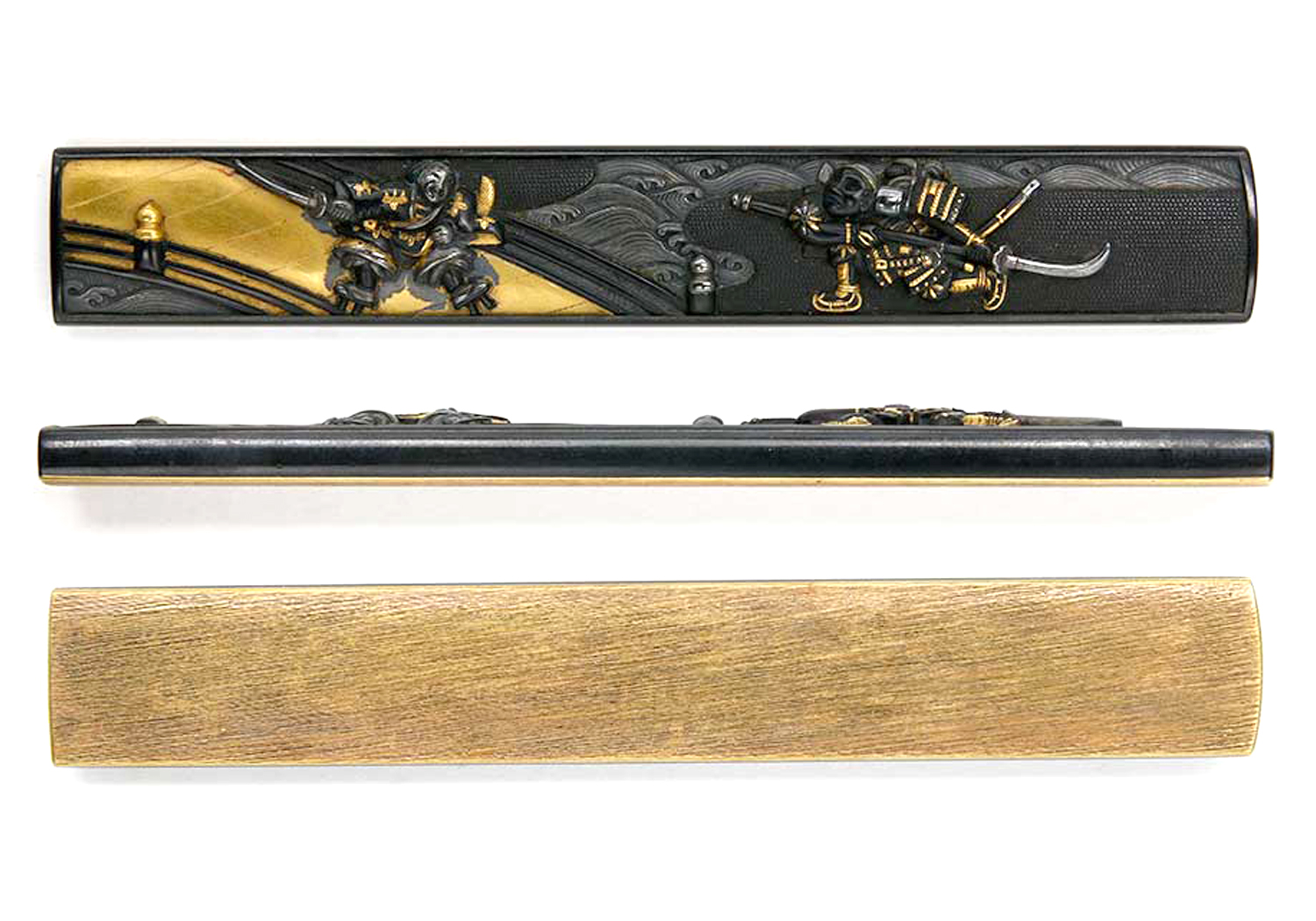
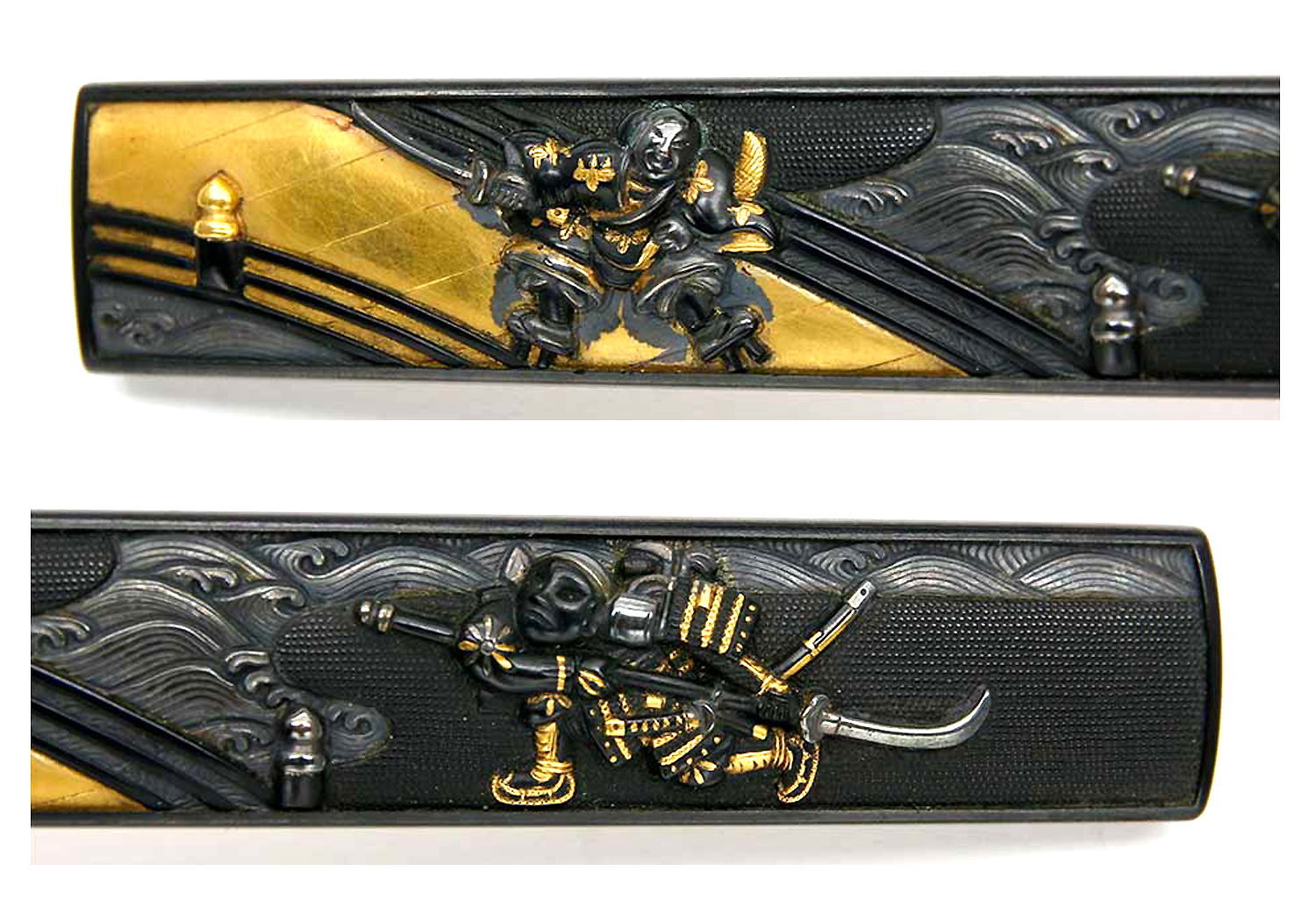
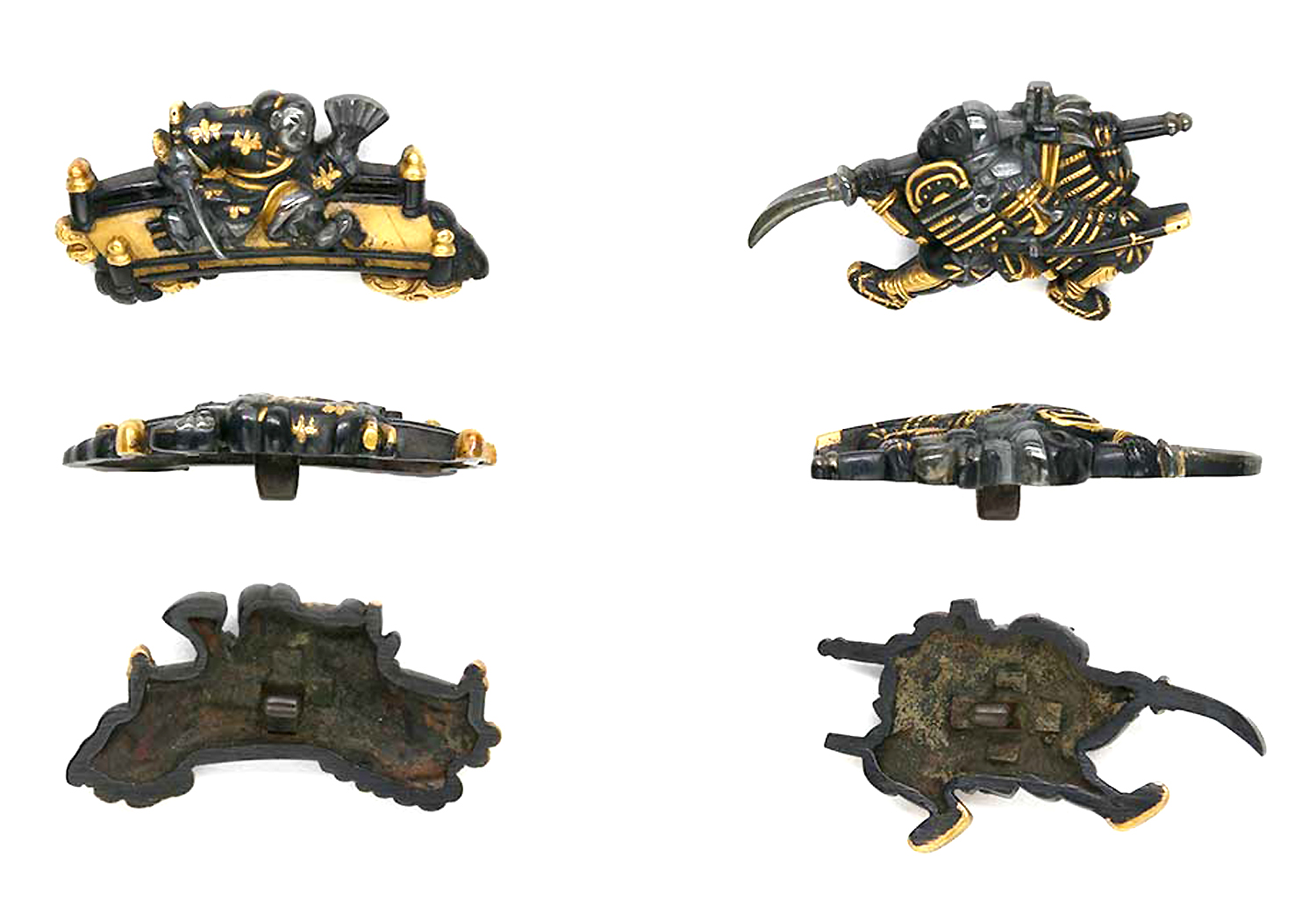
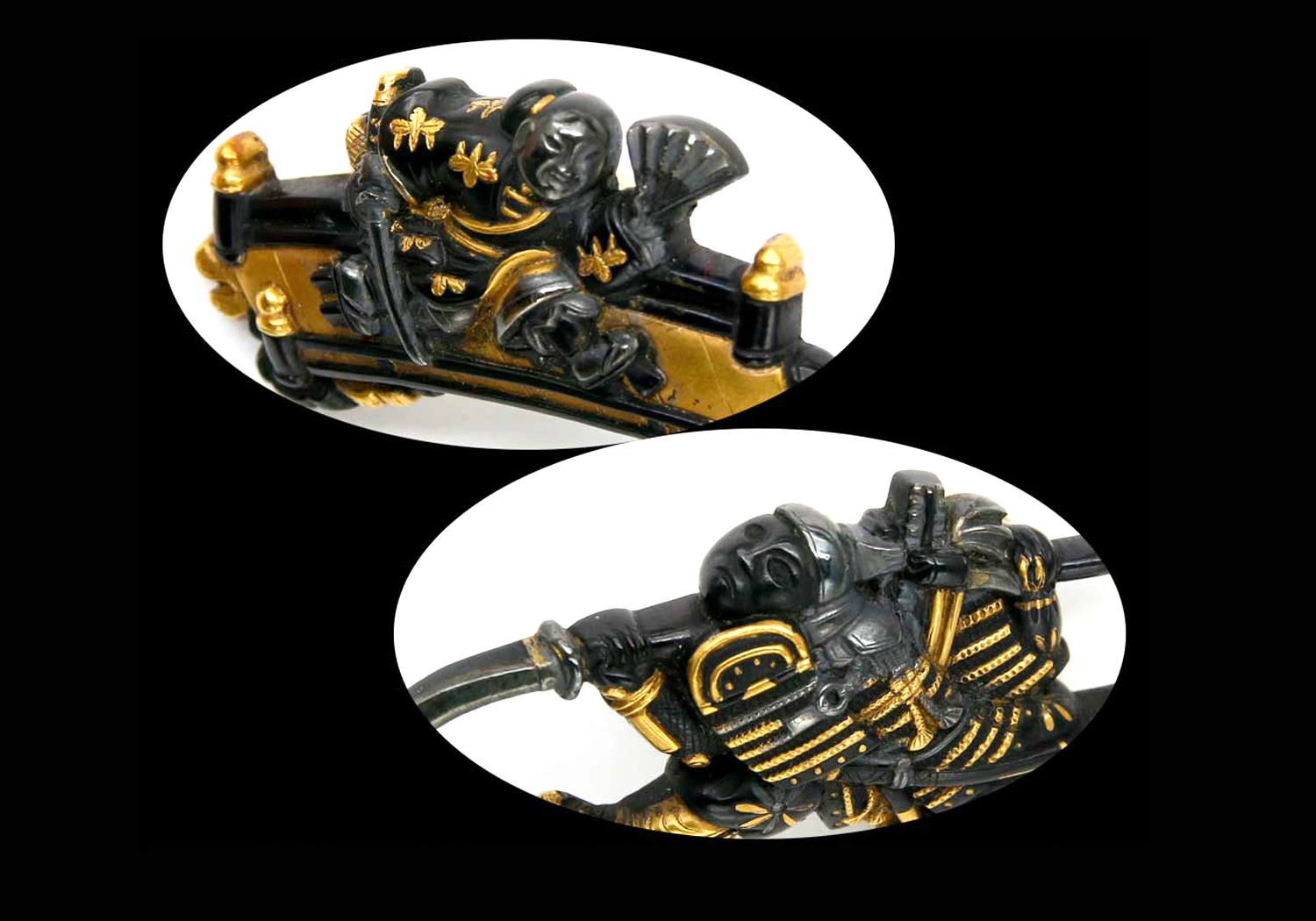
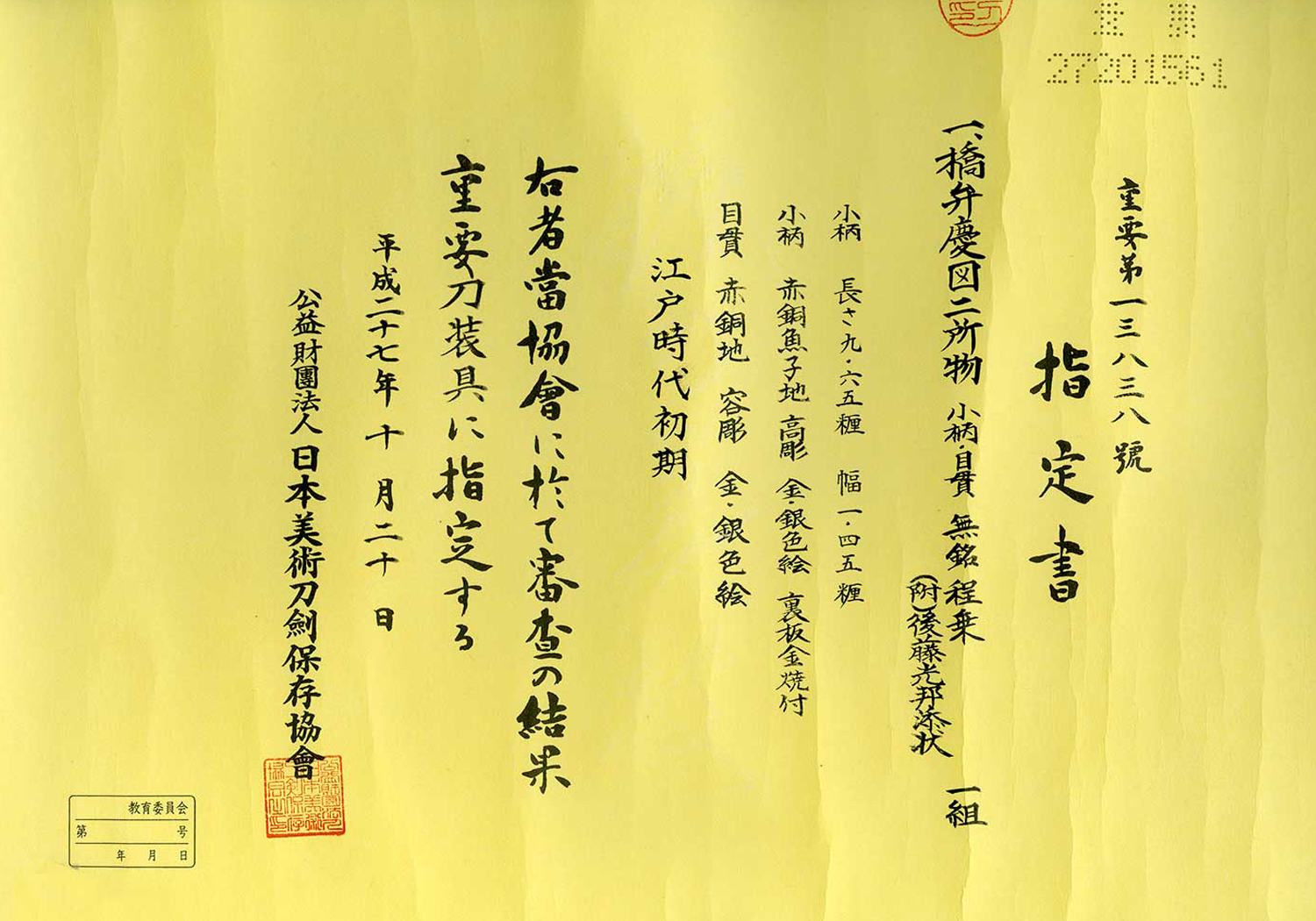
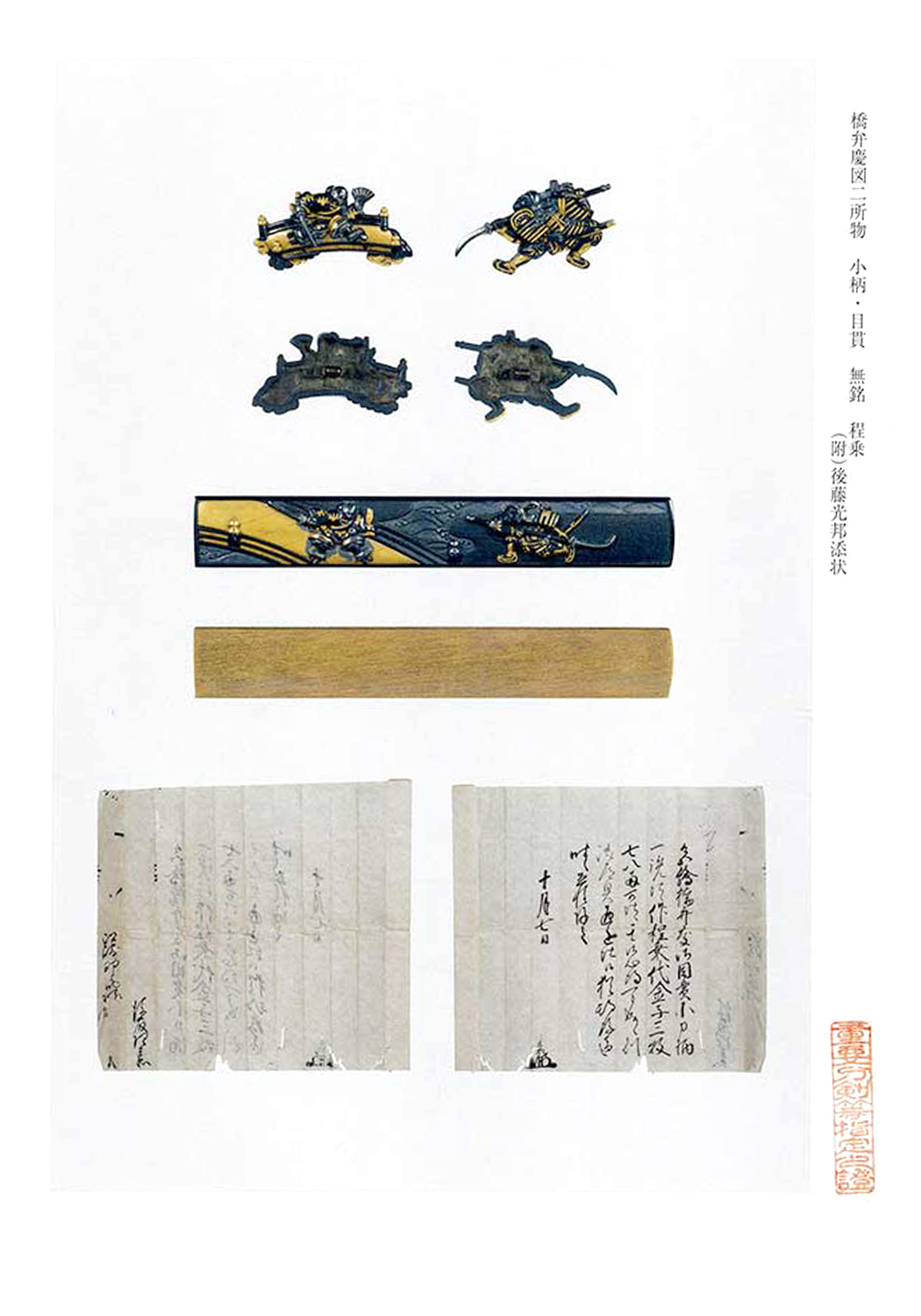
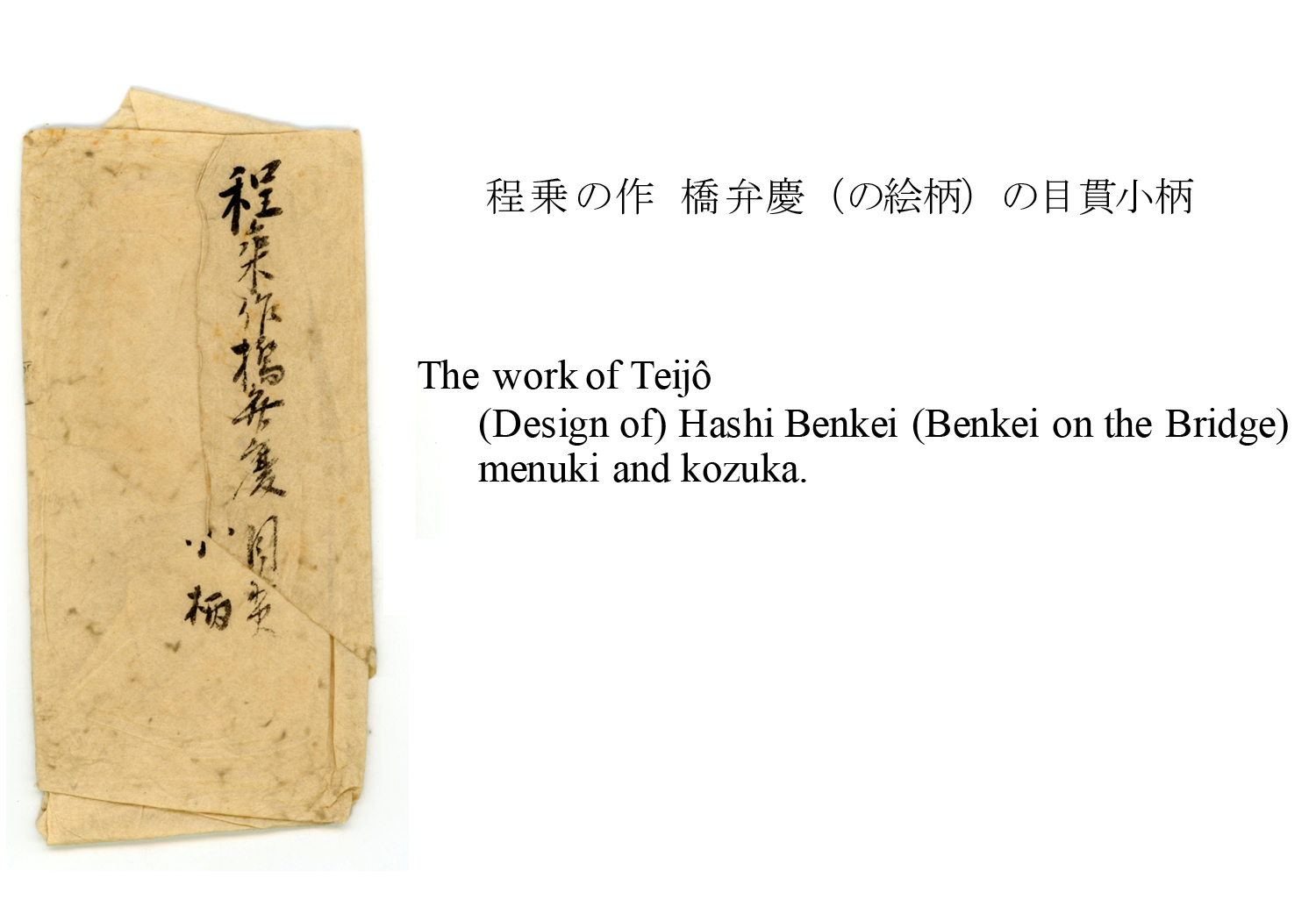
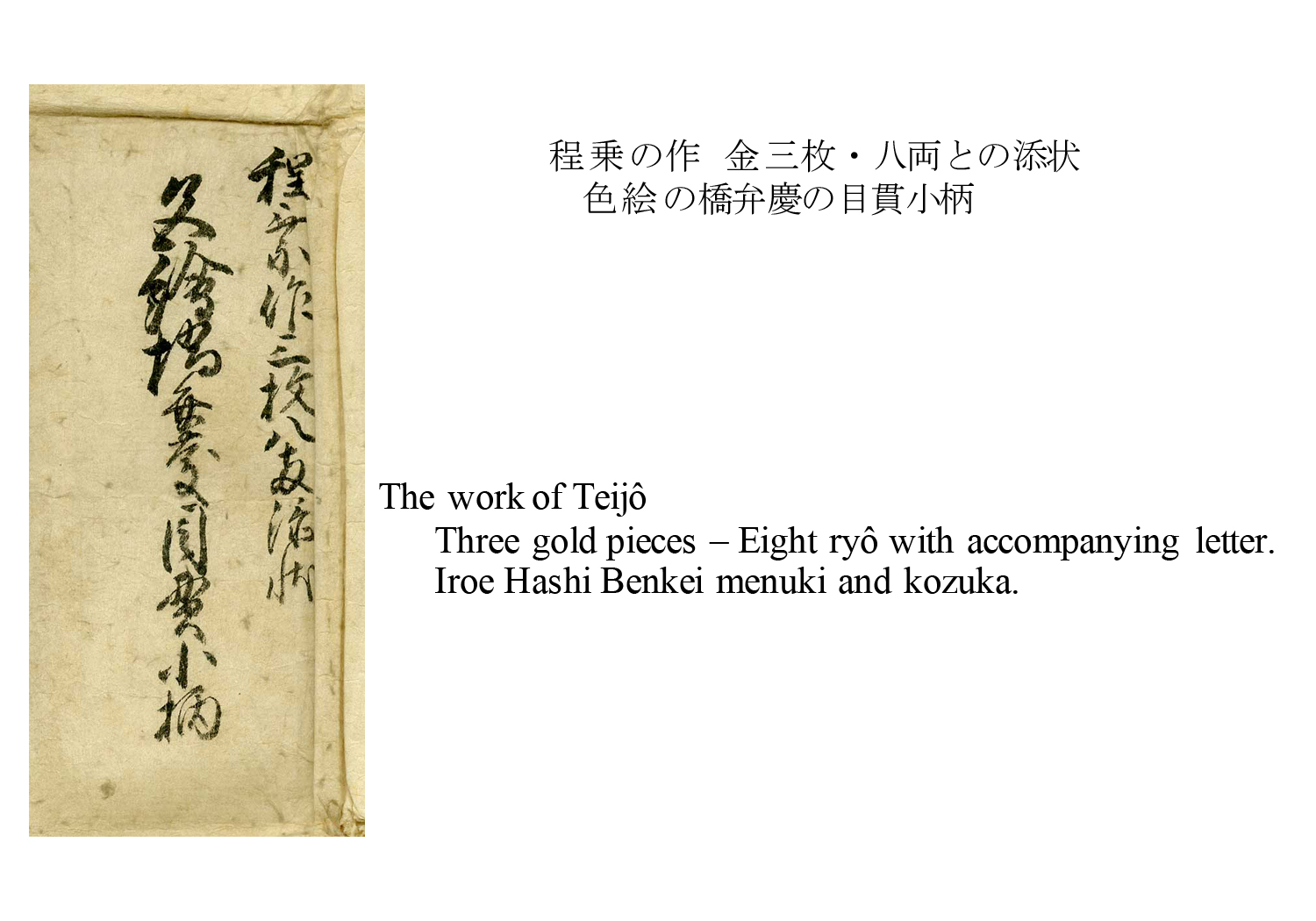
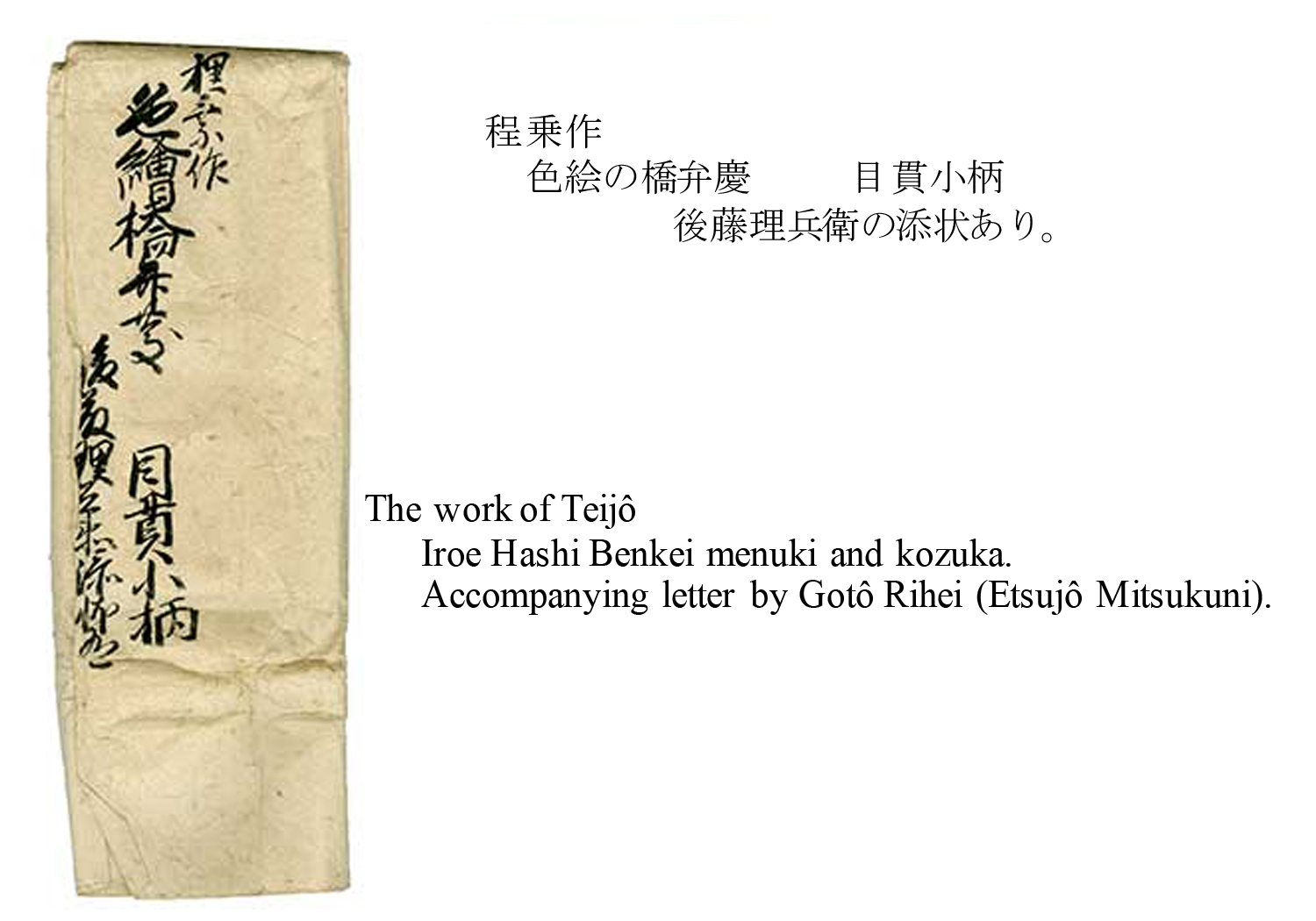
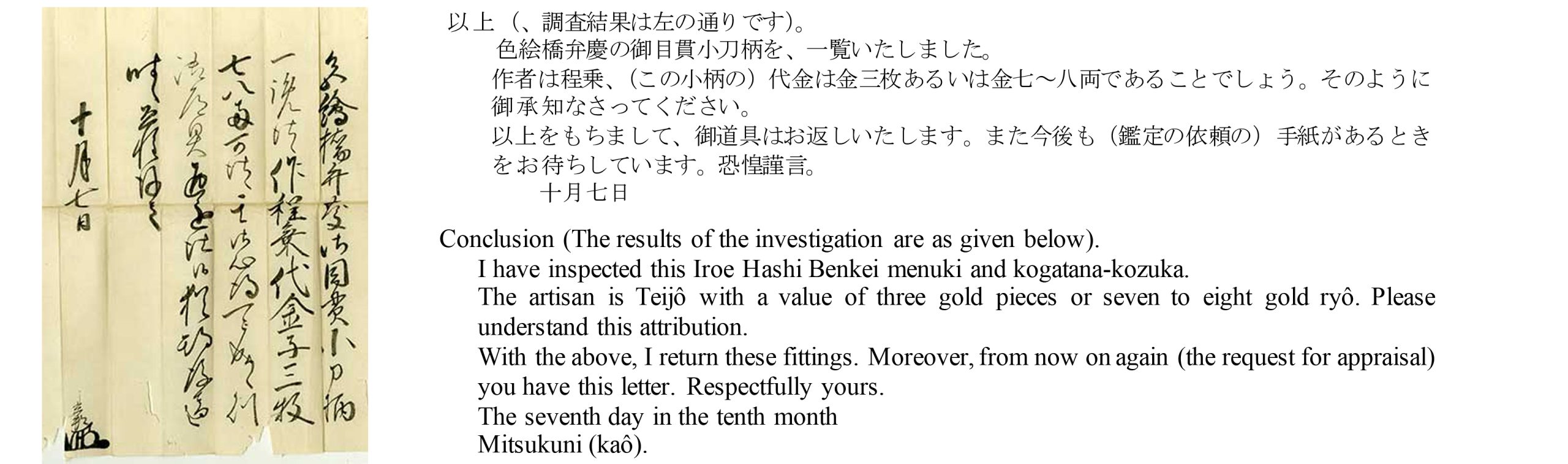
Goto Teijo
Early Edo (1603-1673)
Unsigned
Jūyō
Iebori · Yamashiro · around 1603-1673
10 pieces on the market now
Gotō Teijō (程乗), whose personal name was Mitsumasa (光昌), was the ninth-generation head of the Gotō main line (sōke) and a pivotal figure in the transition of the house's metalwork tradition into the early Edo period. Born in Keichō 8 (1603) as the second son of the seventh head Kenjō (顕乗), his childhood name was Gen'ichirō. In Kan'ei 1 (1624), when his father Masatsugu took the tonsure and assumed the art name Kenjō, Teijō succeeded as the second head of the Rihei branch house, changing his name to Rihei Mitsumasa. When the eighth head of the main line, Mitsushige (Sokujō), died at the young age of thirty-two and his heir Kameichi was still only four years old, Kenjō temporarily assumed responsibility for the main line, after which Teijō inherited the position as ninth head. He served as guardian to the young tenth head Renjō, transferring the headship when Renjō reached eighteen and continuing as his protector until he turned twenty-five. Teijō also served the Kaga Maeda house, alternating by year with Enjō, a son of Kakujō, and in this way made a major contribution to the development of the refined culture supported by Kaga's "million-koku" domain, where his influence established what became known as the Kaga-Gotō lineage.
Teijō's work is executed predominantly in shakudō nanako-ji grounds with takabori relief carving and polychrome iroe employing gold and silver, though he also produced pieces on solid gold (kinmuku) grounds of exceptional sumptuousness. His carving manner is characterized by a calm, restrained temperament and fine precision[[c:1]]; the chisel work varies freely between measured and rapid passages, and the modeling of forms is full yet taut. He is noted for achieving distinctive coloristic effects through the purposeful deployment of irogane such as silver and copper. His menuki display powerful yōbori rounded relief with pronounced variation in height and depth, and his kozuka and kōgai are consistently finished with gold-backed reverse plates (kin'ura). While Teijō carefully preserved the Gotō house's hereditary design vocabulary -- dragons, lions, and tigers rendered with the sculptural fullness and expressive modeling characteristic of the main line -- he also incorporated novel themes including literary and historical narratives such as the Rashōmon legend, scenes from the Tale of Genji, and the Oxherd and Weaver Maiden, as well as uncommon subjects such as anchors and the rare one-horned dragon, a motif of imperial rank.
Teijō's output spans the full range of tōsōgu forms, including mitokoromono, sanshōmono, and nisomono sets as well as individual kozuka, menuki, and tsuba. His fittings also appear integrated into formal koshirae mountings of the highest order, including ito-maki tachi transmitted in the great Tokugawa houses. Numerous works bear origami appraisals and authentication inscriptions by later Gotō masters -- the tenth head Renjō, the thirteenth head Enjō Mitsutaka, and the fifteenth head Shinjō Mitsuyoshi among them -- attesting to the esteem in which his production was held within the house's own critical tradition. Several important pieces are recorded as having been handed down in the Kōnoike family, the wealthy Osaka merchants, further demonstrating the regard accorded to his work among the most discriminating collectors of the Edo period. As the master who bridged the Gotō main line's Kyoto heritage and its new role serving the Kaga domain, Teijō occupies a position of particular consequence in the history of the house, and his works consistently manifest the elevated dignity that defines mainline Gotō metalwork at its finest[[c:2]].
Where Goto Teijo stands among comparable artisans: across all of nihontō, and within tradition, era, and period. The tiers (Foremost · Leading · Major · Notable) weigh official designations from the NBTHK and Japan's Agency for Cultural Affairs, together with historical honors of lasting repute such as the Sansaku and Meibutsu-chō.
Select a lens to see how it's measured.
Iebori · Yamashiro
Phase: Goto Main Line後藤宗家· 1573–1900
309 pieces on the market now
| Smith | Era | Designated |
|---|---|---|
| Goto Joshin後藤乗真 | 1512-1562 | 68 |
| Goto Yujo後藤祐乗 | 1440-1512 | 41 |
| Goto Sojo後藤宗乗 | 1461-1538 | 56 |
| Goto Kenjo後藤顕乗 | 1586-1663 | 46 |
| Goto Teijo後藤程乗 | 1603-1673 | 42 |
A blade of top-grade workmanship and condition, formally judged to rank with a nationally recognized Important Art Object (Jūyō Bijutsuhin). Awarded only at the NBTHK’s competitive annual examination.
Of Japan’s roughly 2.5 million registered swords, only 12,348 (about 1 in 202) have ever attained Jūyō.
The NBTHK (Nihon Bijutsu Tōken Hozon Kyōkai, the Society for the Preservation of Japanese Art Swords) is a public-interest incorporated foundation founded in 1948 and supervised by Japan’s Agency for Cultural Affairs (Bunkachō); it is based at the Japanese Sword Museum in Tokyo. Its expert panels physically examine each submitted work (shinsa) and issue a certificate (kanteishō) ranking it by artistic and historical merit. NBTHK papers are the most widely recognized standard of authentication for Japanese swords and fittings.
NBTHK official siteThree-day inspection period and seven-day return period; buyer notifies by email within three days of receipt, no reason needed; full refund once item returned undamaged and unaltered.
$29,500