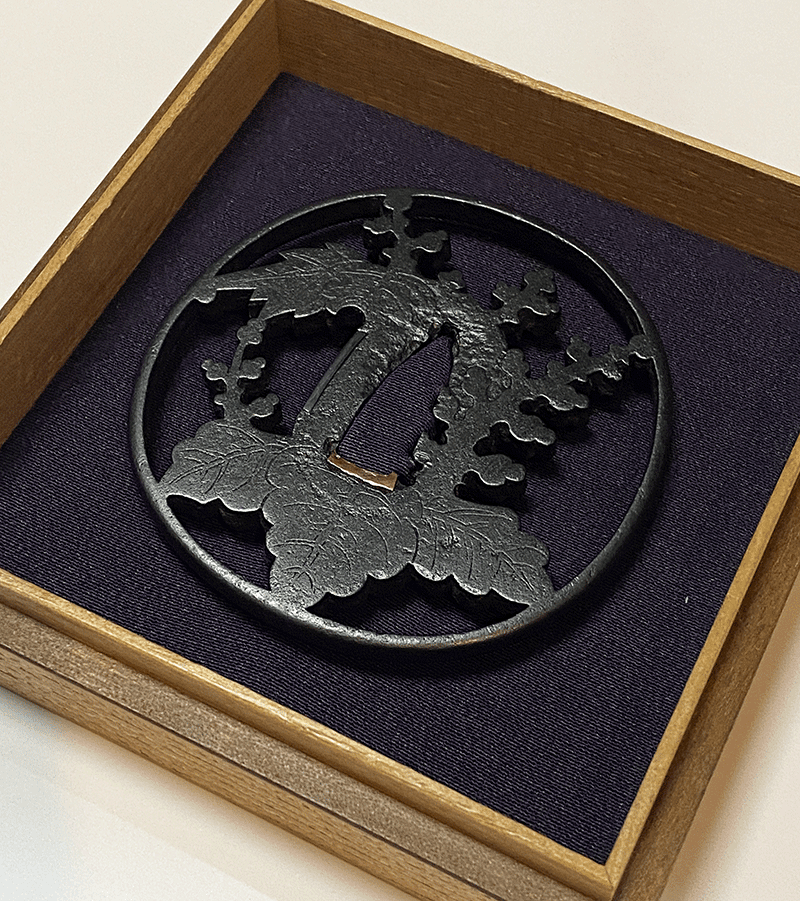
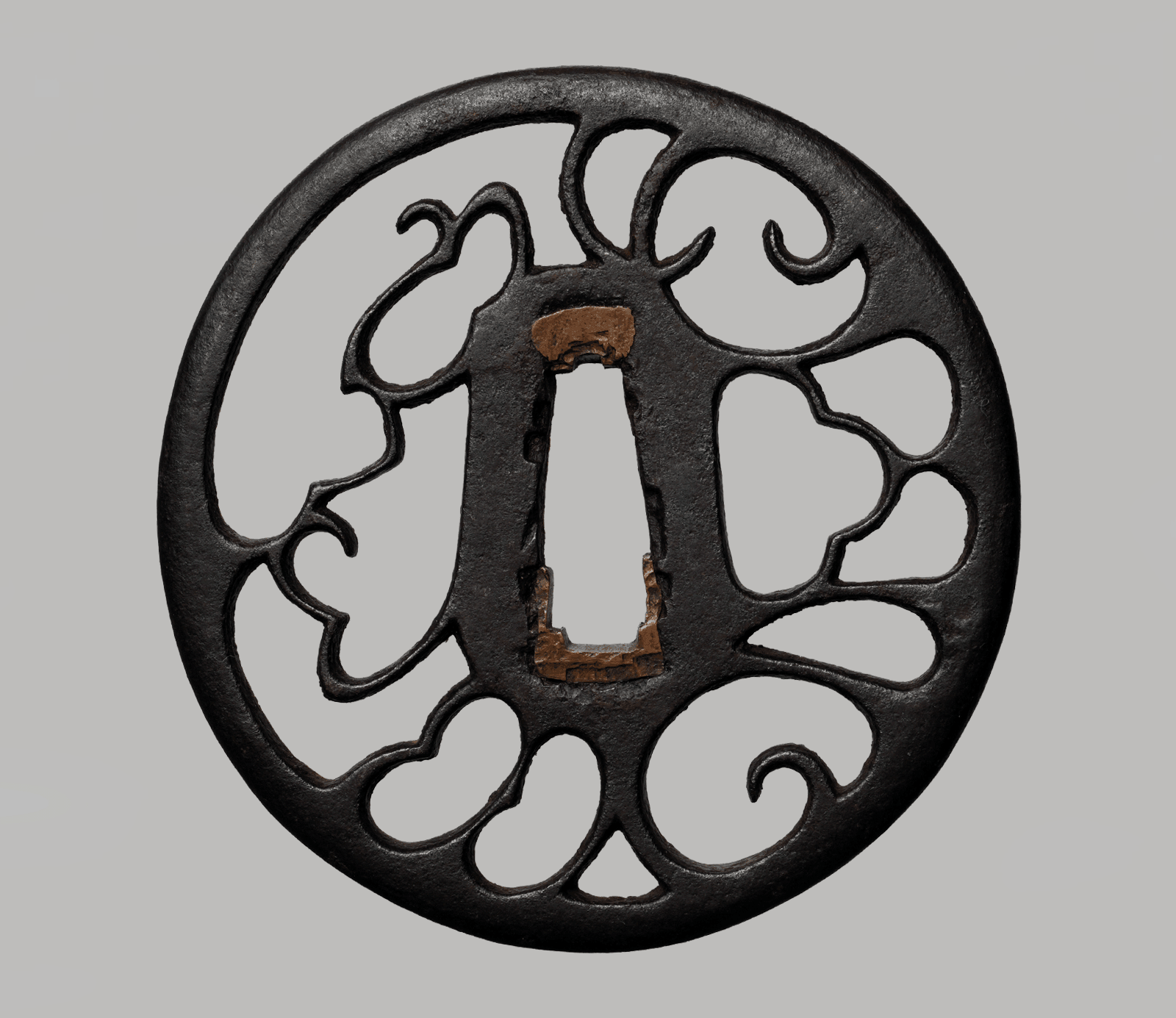
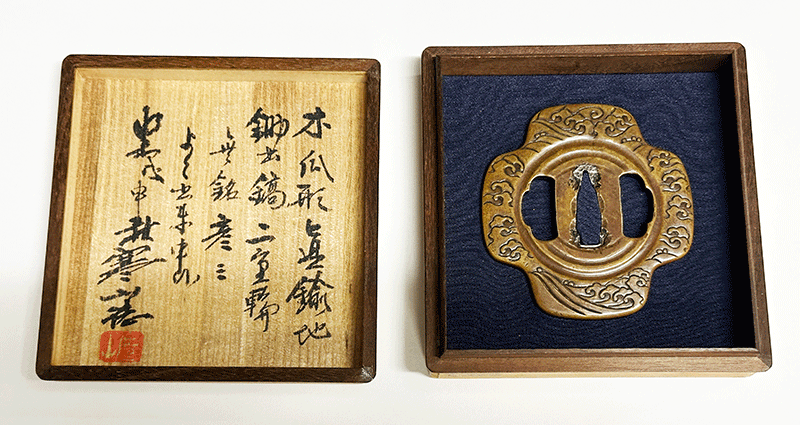
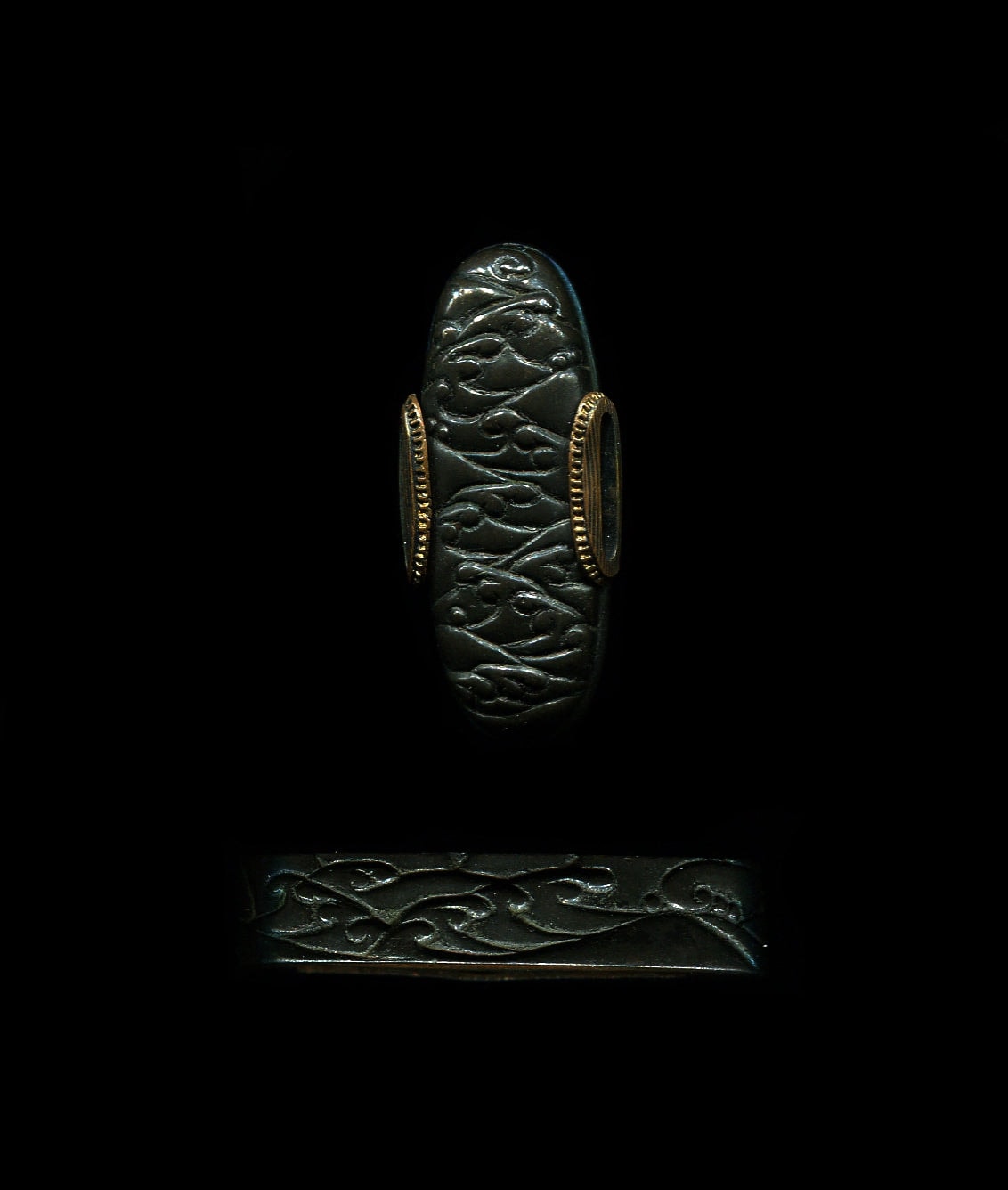
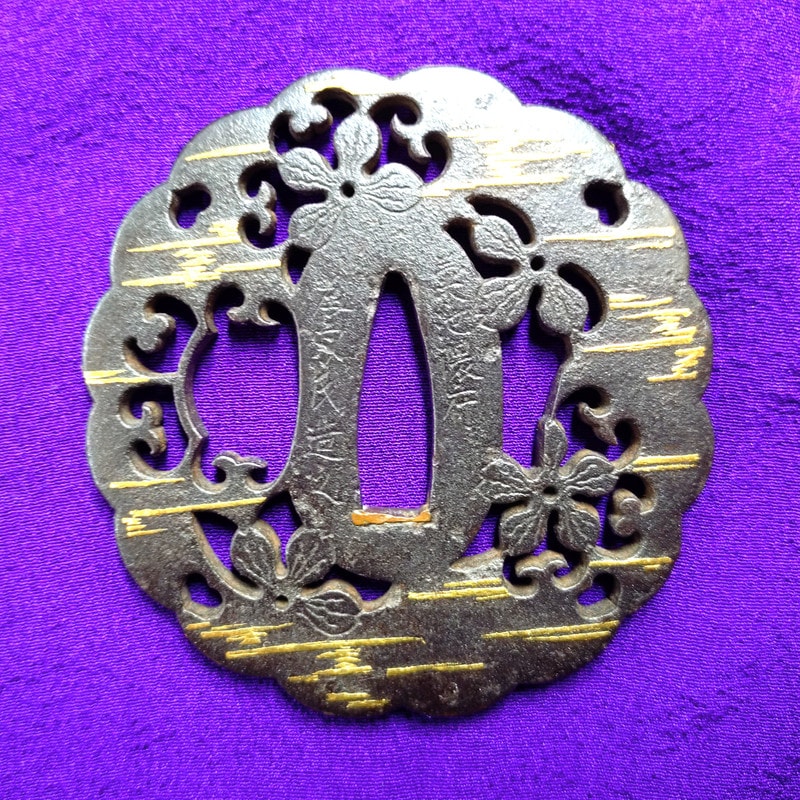
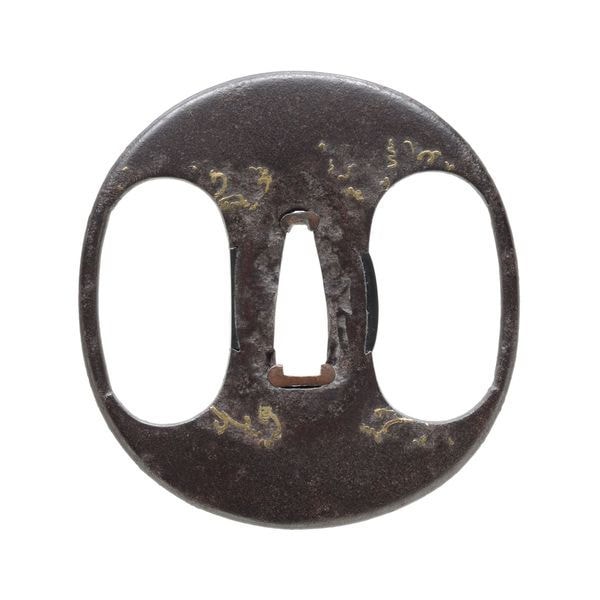
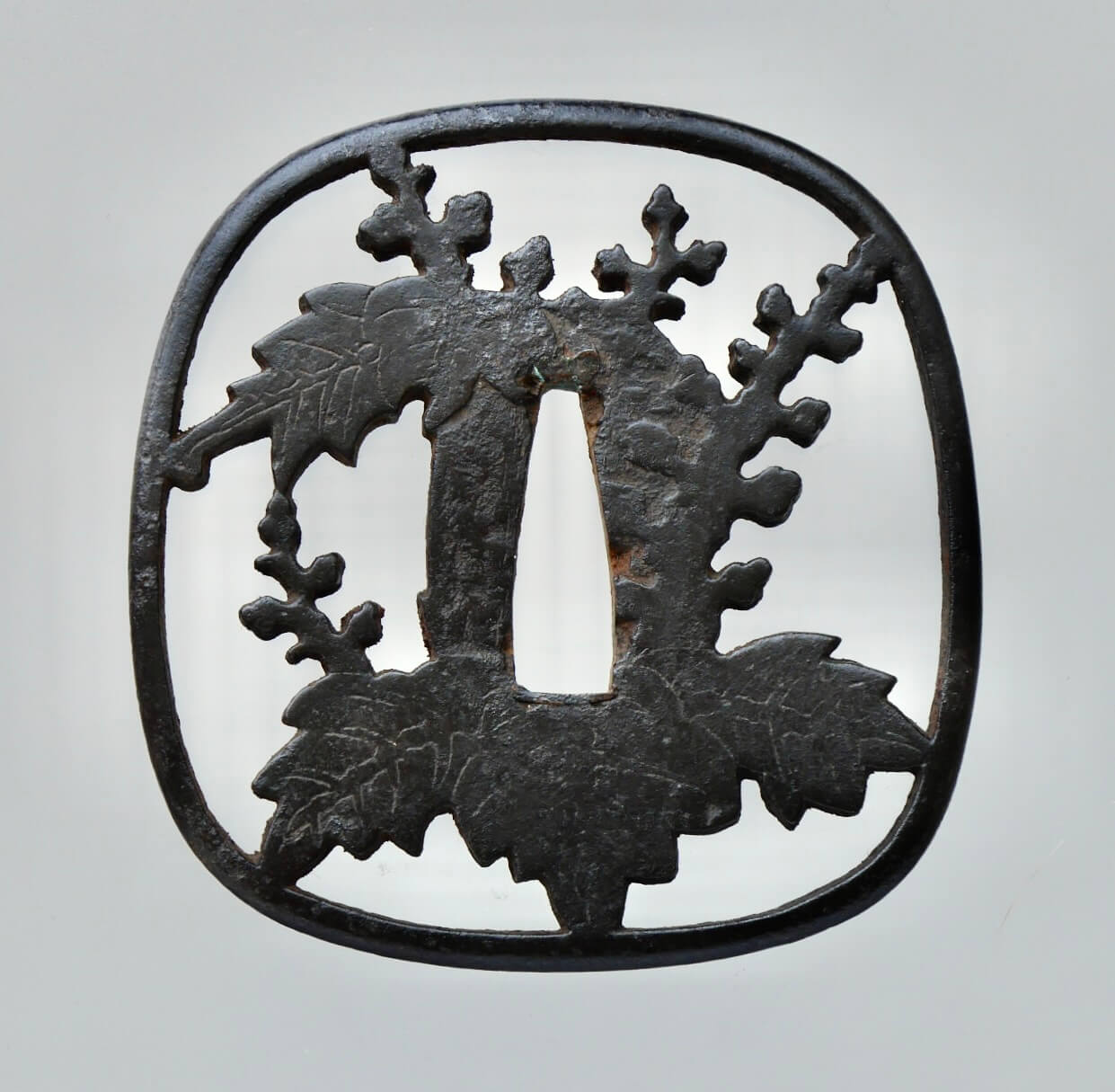
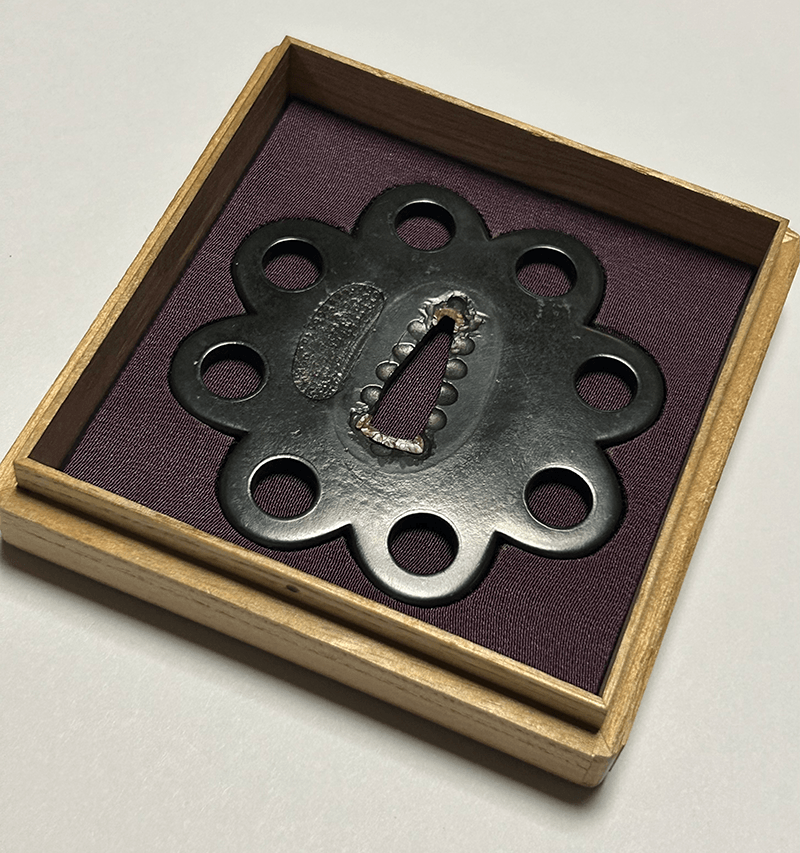
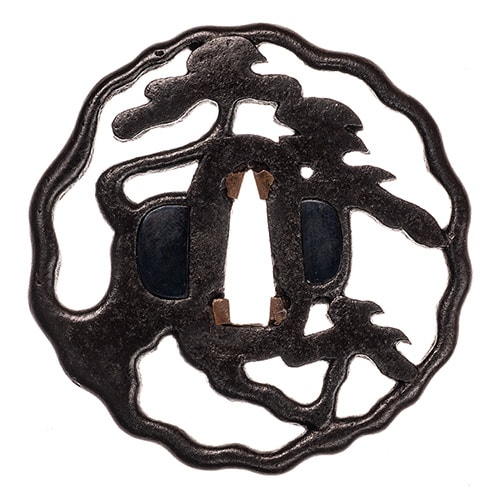
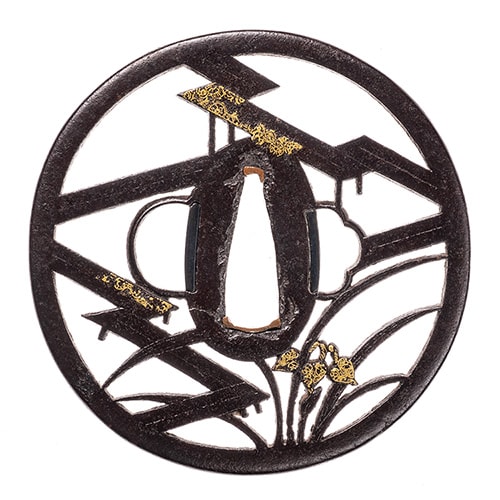
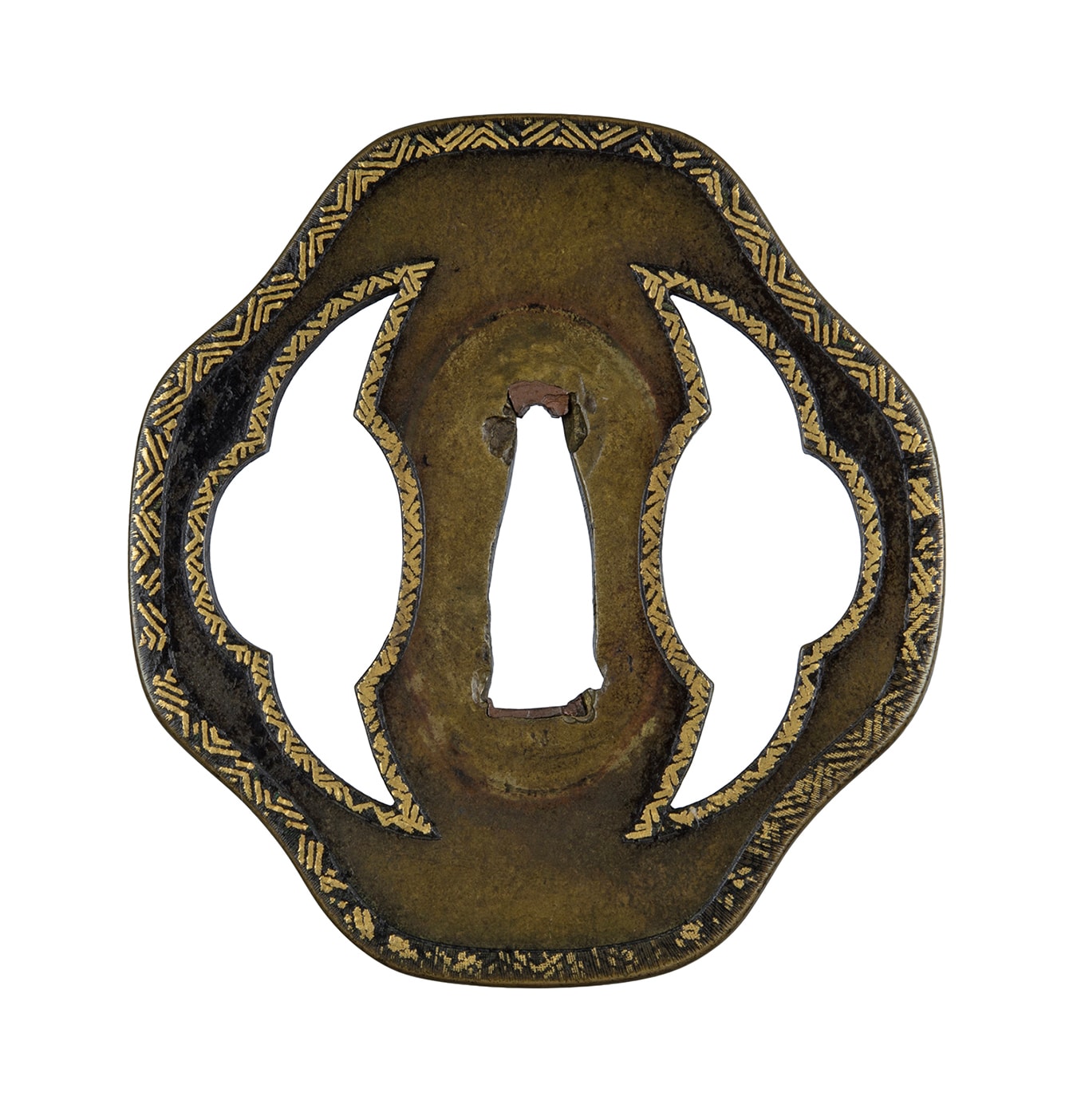
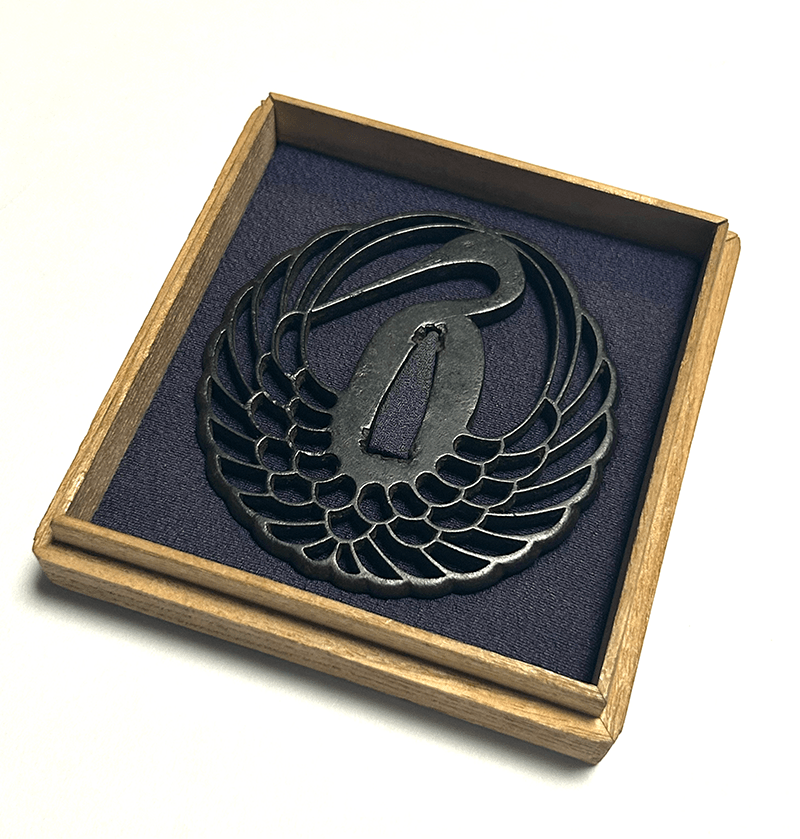
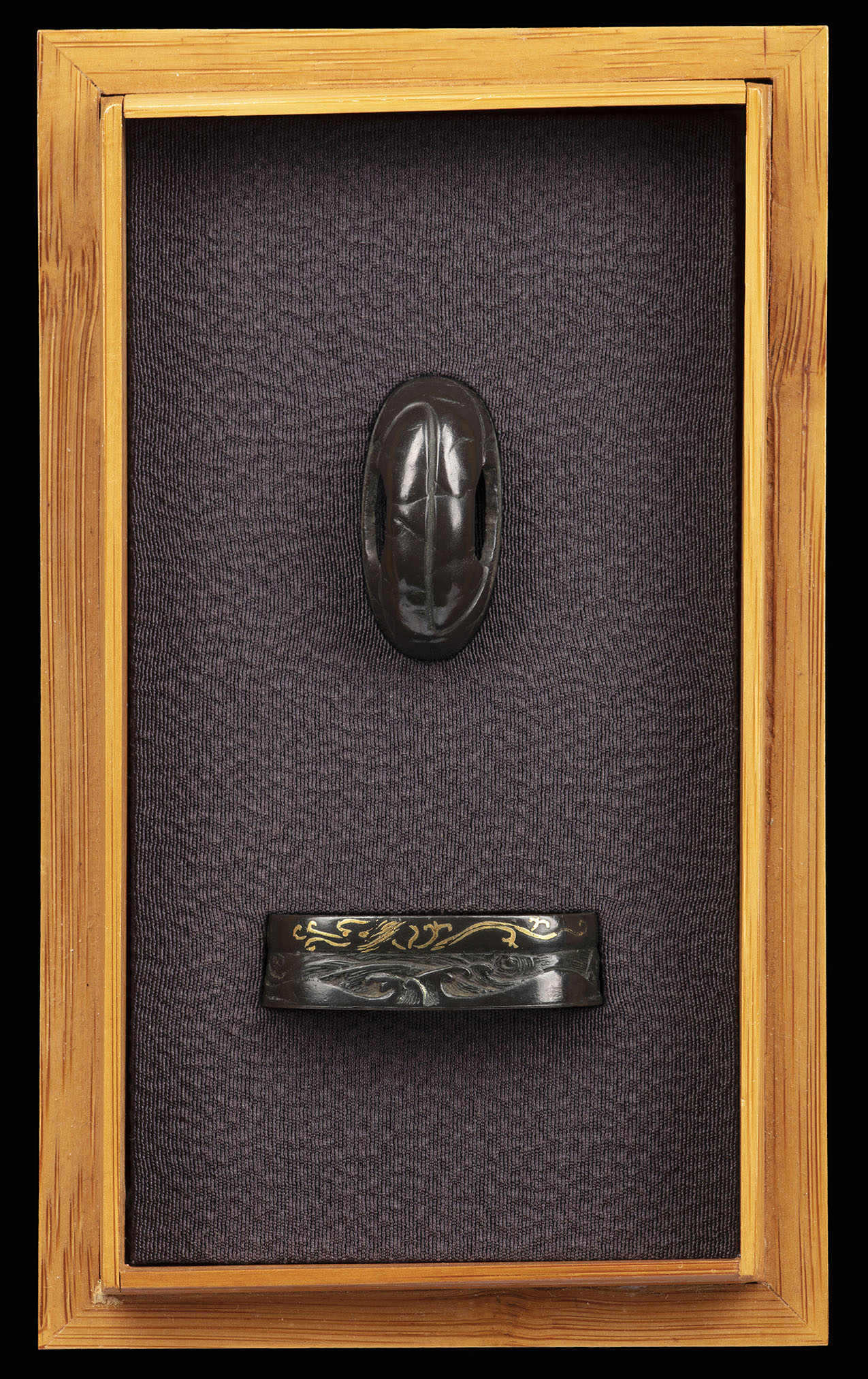
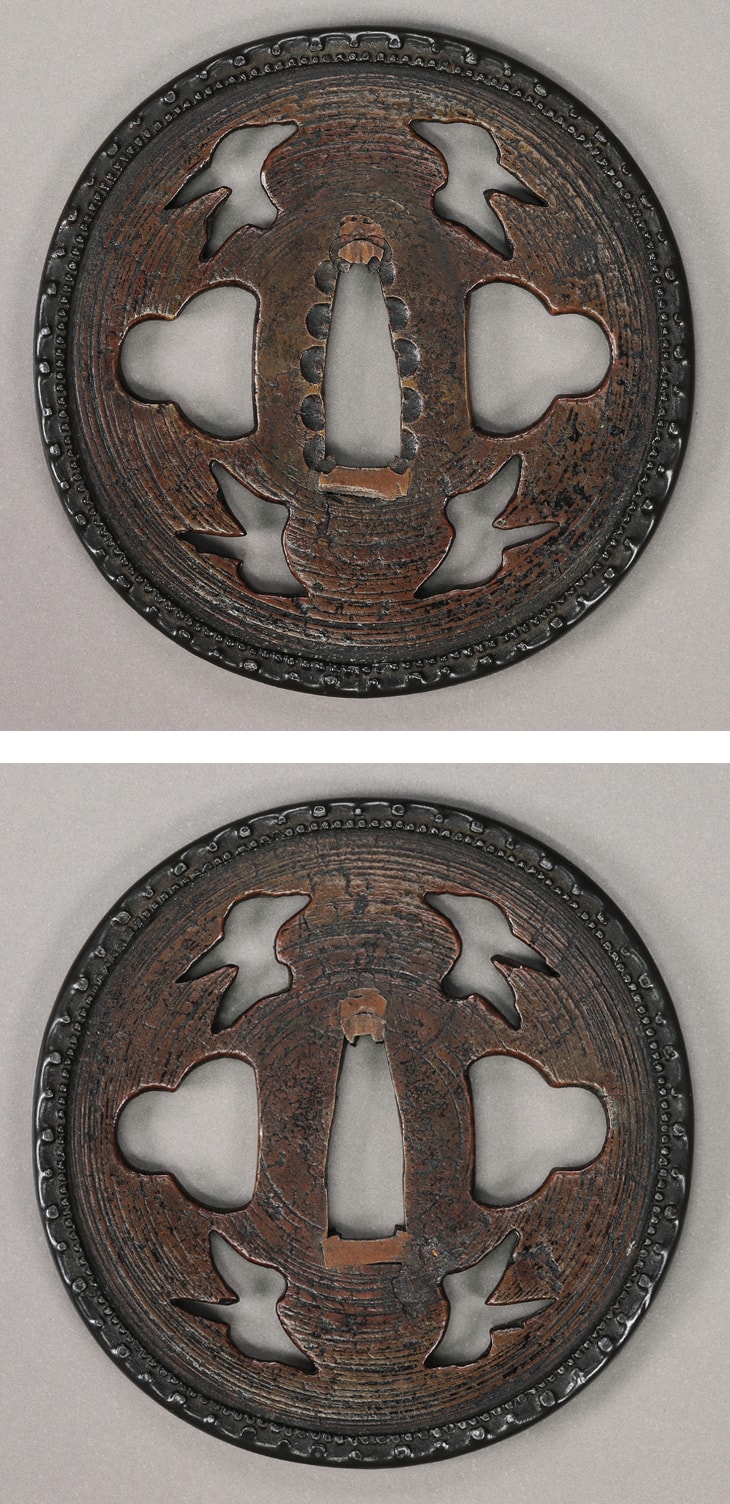
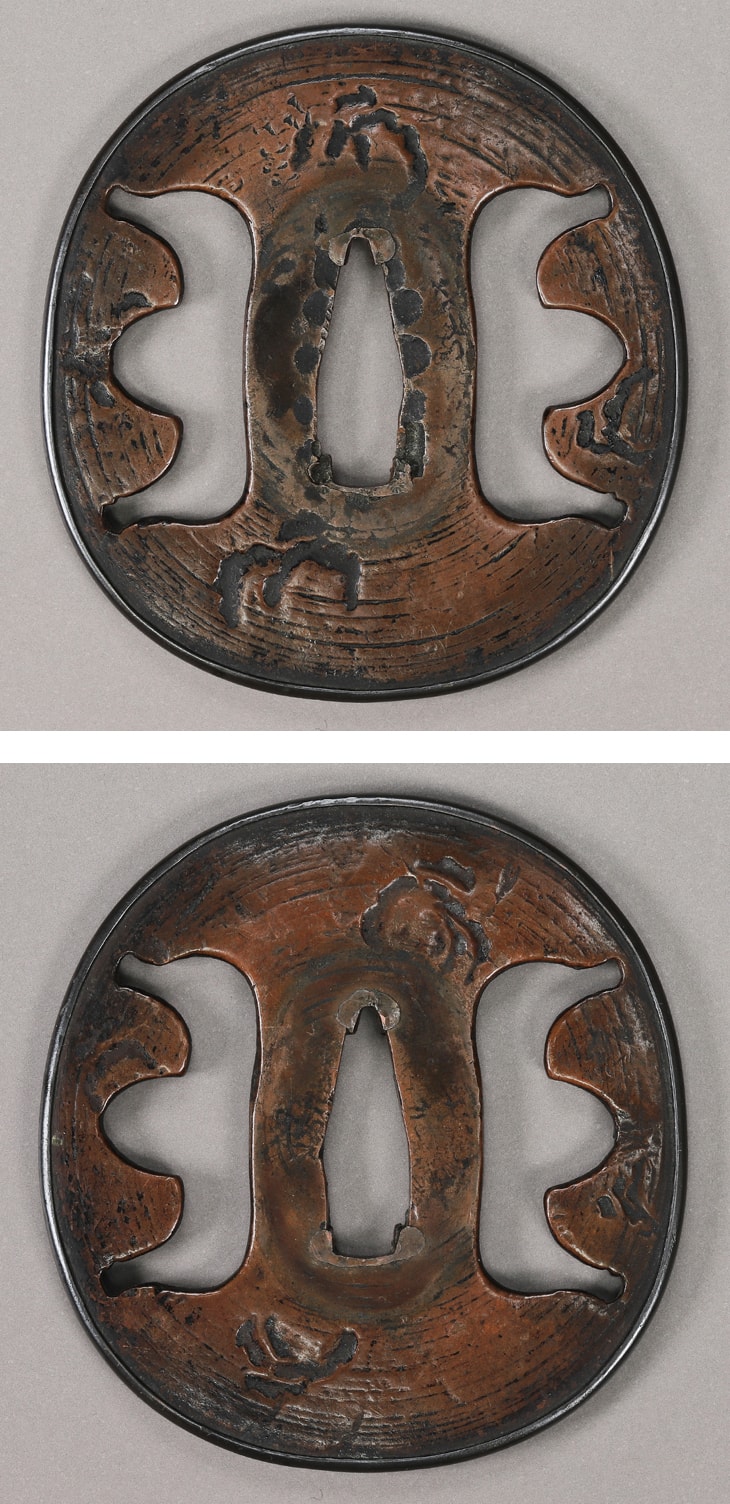
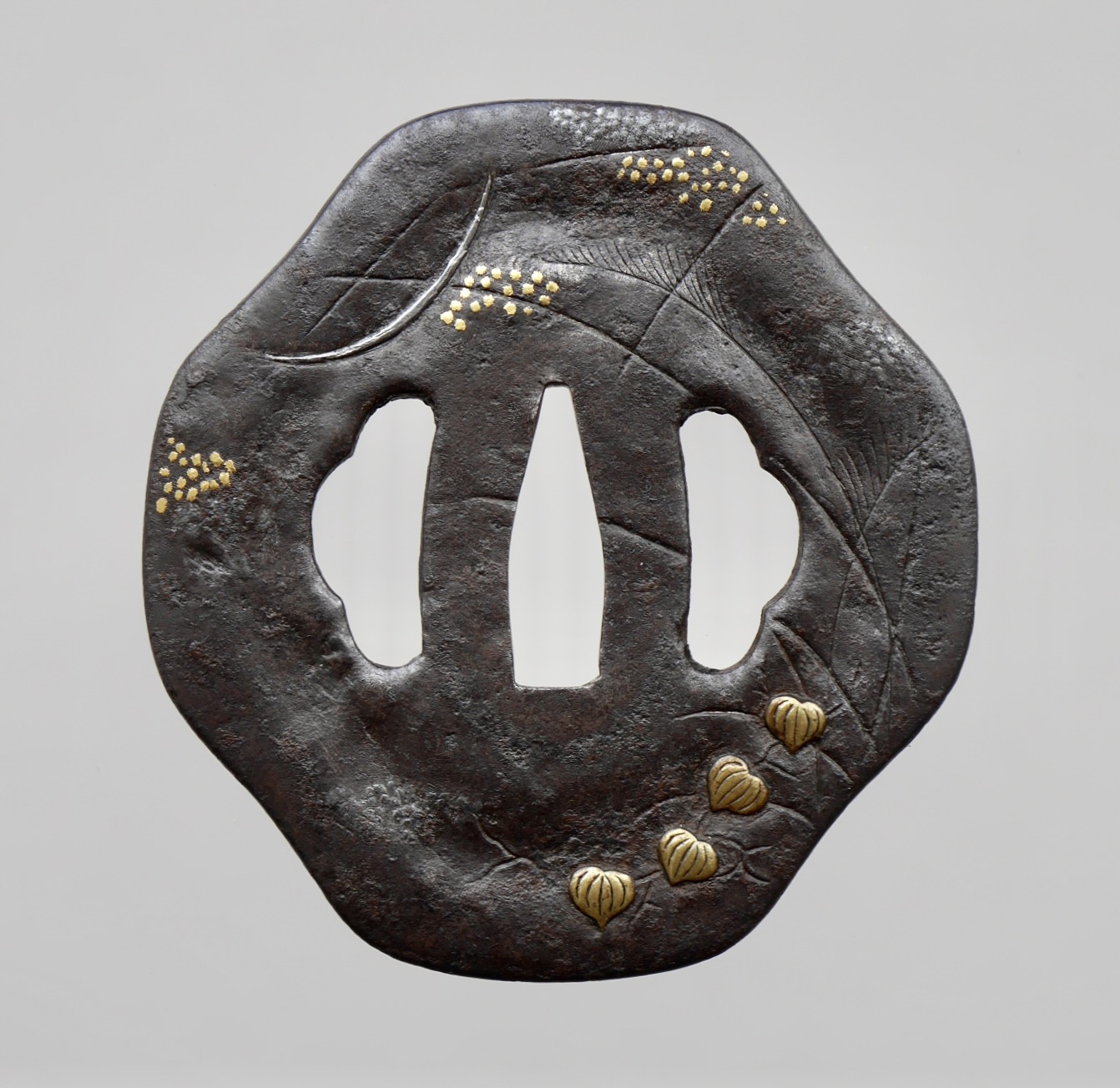
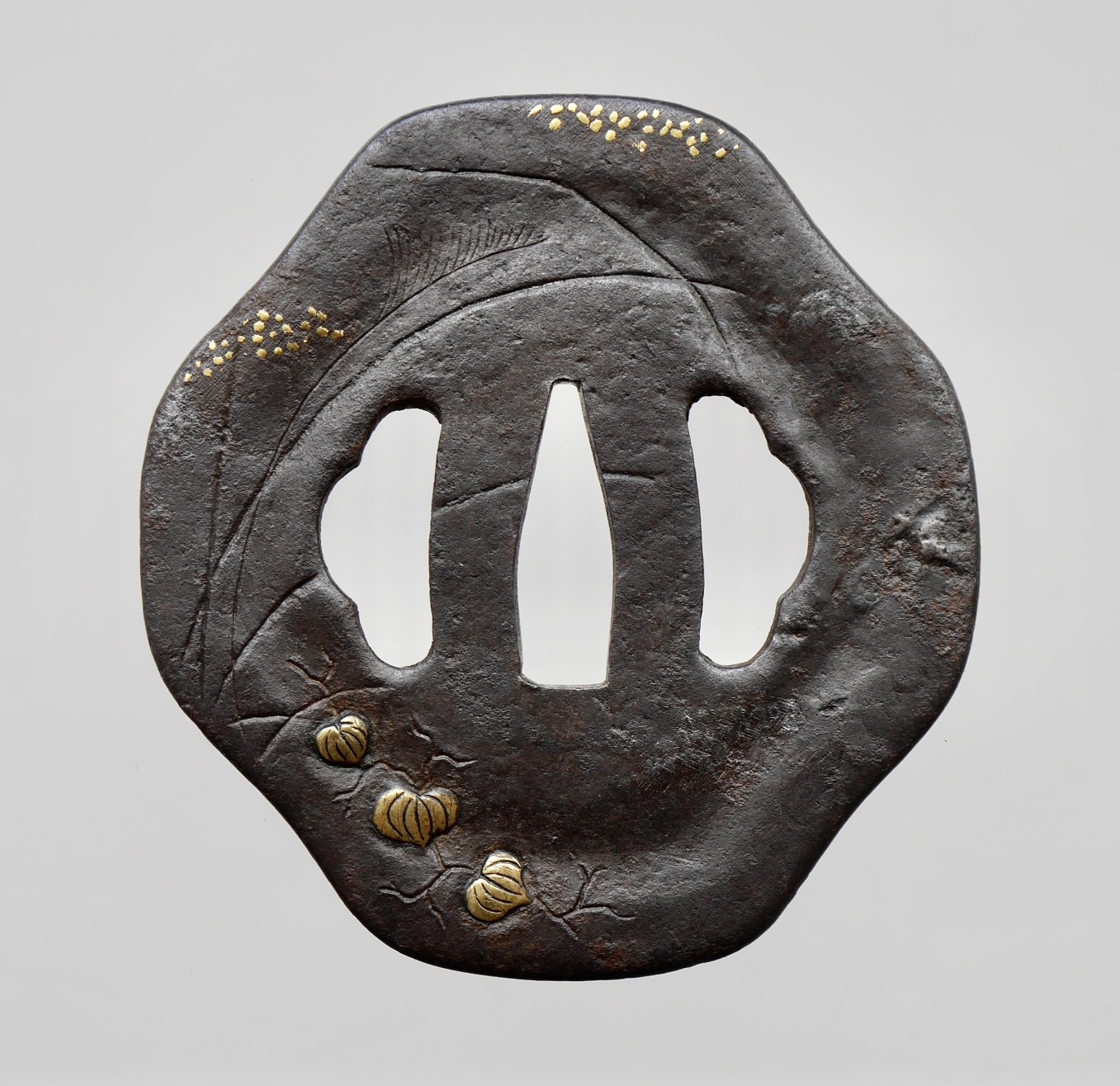
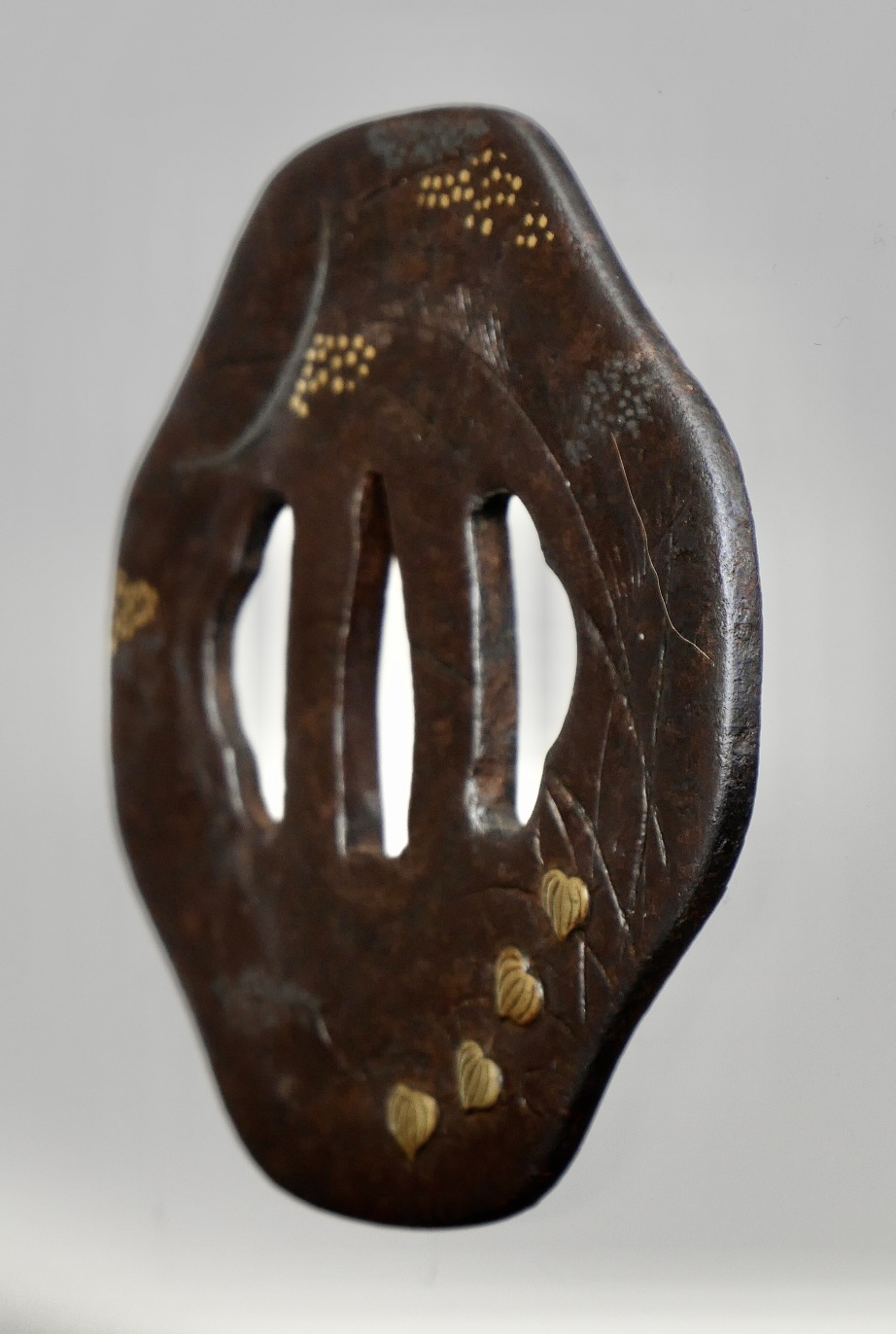
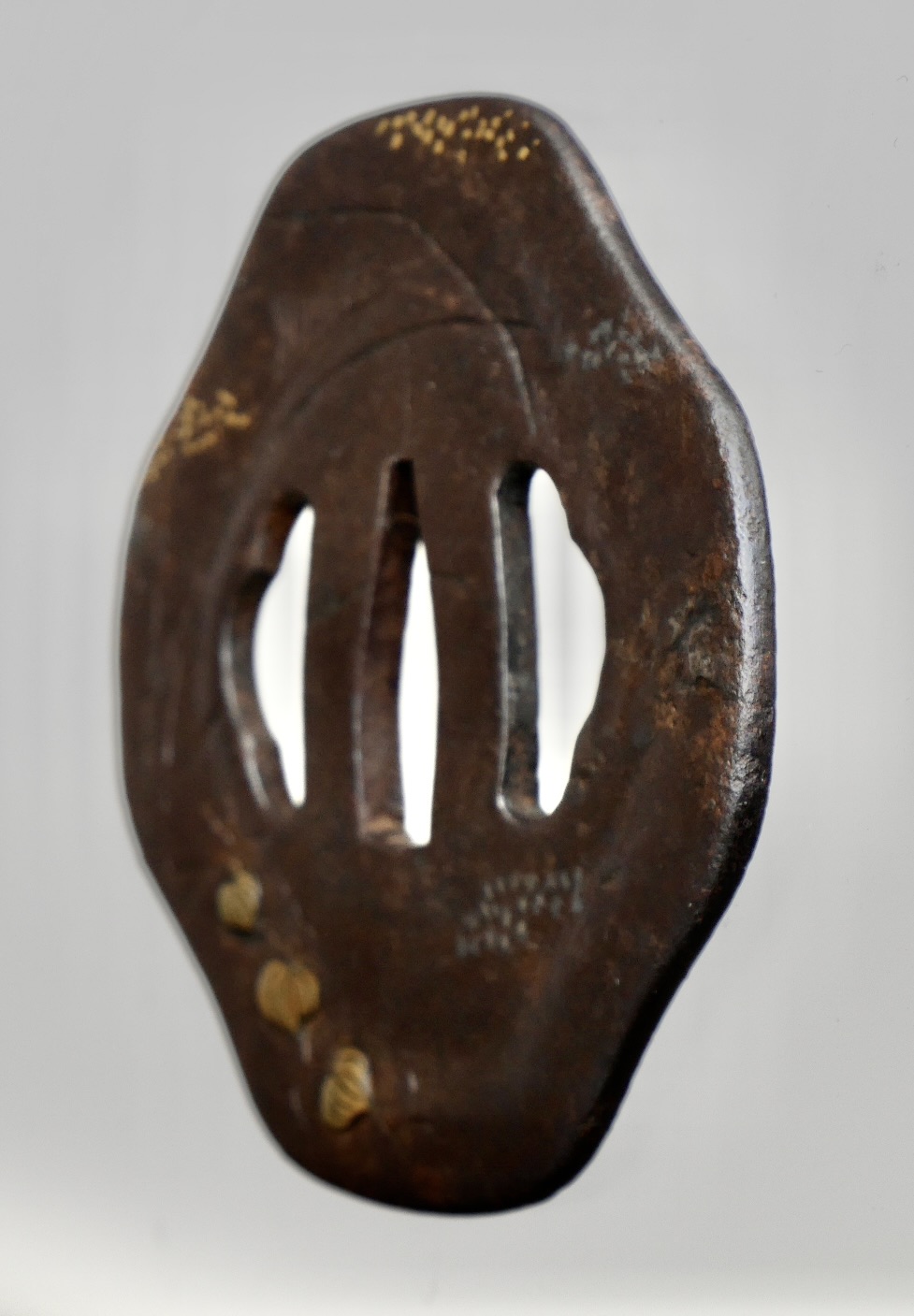
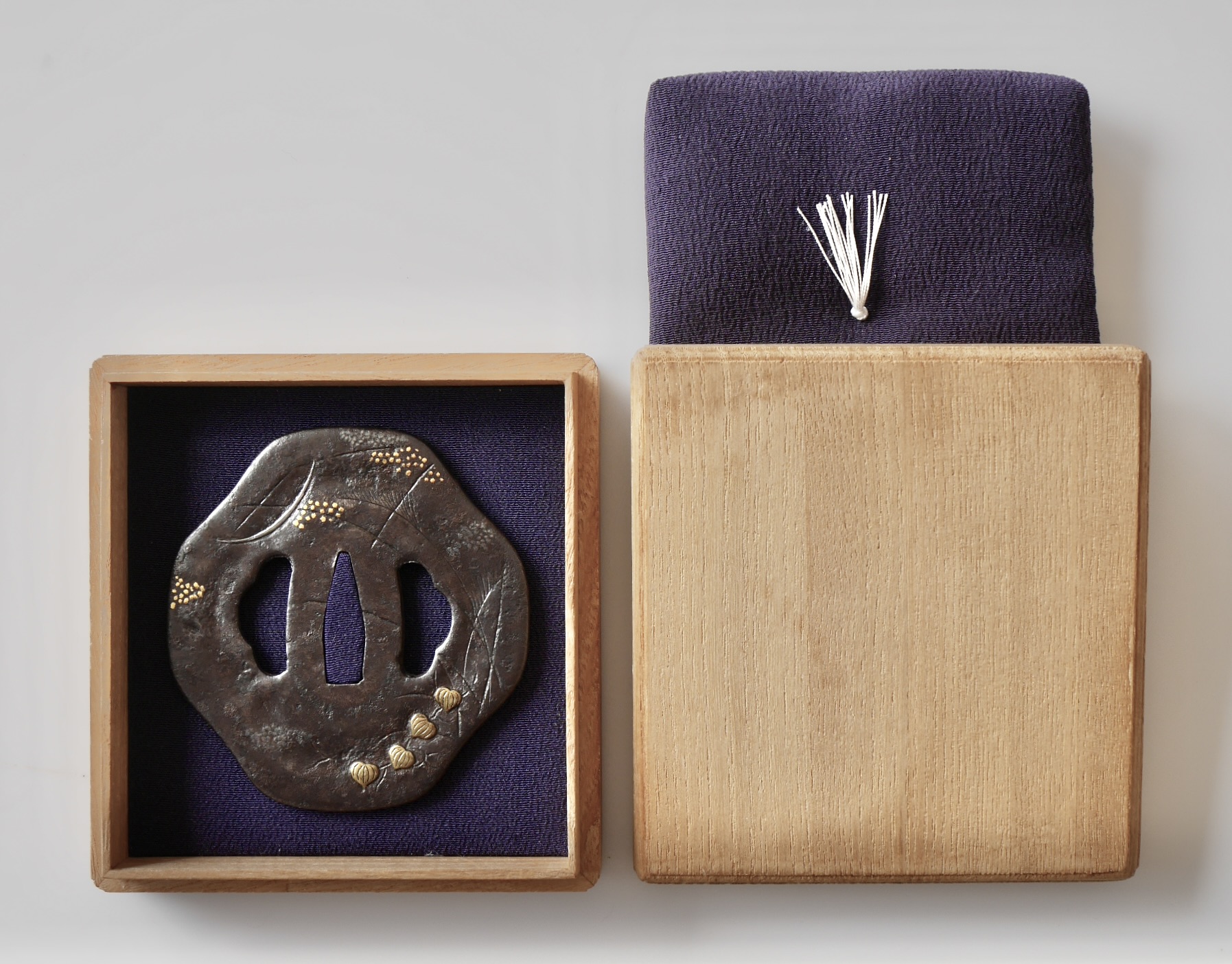
This is an unsigned iron tsuba by the 2nd Generation Nishigaki Kanshiro Hisanaga, featuring an autumn grass design. It is crafted in a mokko-gata shape with brass inlay and gold/silver nunome-zogan, depicting susuki grass, ivy leaves, and a crescent moon. The tsuba is certified as Hozon Tosogu by the NBTHK and is a masterpiece with a refined, decorative style popular during the Genroku era.
 NihontoWatch
mumei · Nishigaki · Edo
Nishigaki Nagahisa
Edo
Higo
Unsigned
Hozon (NBTHK)
Higo · Higo
1 piece on the market now
The second-generation Nishigaki Kanshiro, whose go is Nagahisa, is the eldest son of the founder of the Higo Nishigaki line, one of the four great schools of Higo metalwork. The records make him a master second only to his father, give his common name as Mosaku and his go as Yoshimasa or Nagahisa, and say he was born in Kan'ei 16 (1639) and died in Kyoho 2 (1717) aged seventy-nine, with a younger brother Kanpei. Where the founder is wholly unsigned and excelled at the iron openwork guard (the tossed-paulownia and distant-pine devices), the second generation is the first of the house to sign and turned to skilful inlay on brass and refined-copper grounds, in which the records find his true strength; his celebrated masterpiece is the Tagoto-no-tsuki (moon-in-each-paddy) guard. He is also said to have studied under the seventh Goto head Kenjo. His accepted work runs to both signed brass-and-copper inlay guards and a few iron openwork tsuba in the founder's manner.
Where Nagahisa stands among comparable artisans: across all of nihontō, and within tradition, era, and period. The tiers (Foremost · Leading · Major · Notable) weigh official designations from the NBTHK and Japan's Agency for Cultural Affairs, together with historical honors of lasting repute such as the Sansaku and Meibutsu-chō.
Select a lens to see how it's measured.
Higo · Higo
36 pieces on the market now
The Nishigaki school is one of the four great lineages of Higo metalworkers, ranked alongside the Hayashi, Hirata, and Shimizu families. Its founder, Nishigaki Kanshiro I (also known as Yoshihiro), was born in Keicho 18 (1613) at Nakatsu in Buzen Province, the son of a Shinto priest. Learn more →
| Smith | Era | Designated |
|---|---|---|
| Kanshiro勘四郎 | — | 31 |
| Kanzaemon勘左衛門 | — | 0 |
| Kanzaemon勘左衛門 | — | 0 |
| Kanpei勘平 | — | 0 |
| Nagahisa永久 | — | 5 |
Certifies a genuine fitting worth preserving: a correct signature, or, if unsigned, an identifiable era and school, with recognized artistic and craft value.
The NBTHK (Nihon Bijutsu Tōken Hozon Kyōkai, the Society for the Preservation of Japanese Art Swords) is a public-interest incorporated foundation founded in 1948 and supervised by Japan’s Agency for Cultural Affairs (Bunkachō); it is based at the Japanese Sword Museum in Tokyo. Its expert panels physically examine each submitted work (shinsa) and issue a certificate (kanteishō) ranking it by artistic and historical merit. NBTHK papers are the most widely recognized standard of authentication for Japanese swords and fittings.
NBTHK official siteReturns accepted within 7 days of delivery (return shipping paid by customer); items must arrive in original condition; international orders cannot be returned.
This is an unsigned iron tsuba by the 2nd Generation Nishigaki Kanshiro Hisanaga, featuring an autumn grass design. It is crafted in a mokko-gata shape with brass inlay and gold/silver nunome-zogan, depicting susuki grass, ivy leaves, and a crescent moon. The tsuba is certified as Hozon Tosogu by the NBTHK and is a masterpiece with a refined, decorative style popular during the Genroku era.
NihontoWatchmumei · Nishigaki · Edo
Nishigaki Nagahisa
Edo
Higo
Unsigned
Hozon (NBTHK)
Higo · Higo
1 piece on the market now
The second-generation Nishigaki Kanshiro, whose go is Nagahisa, is the eldest son of the founder of the Higo Nishigaki line, one of the four great schools of Higo metalwork. The records make him a master second only to his father, give his common name as Mosaku and his go as Yoshimasa or Nagahisa, and say he was born in Kan'ei 16 (1639) and died in Kyoho 2 (1717) aged seventy-nine, with a younger brother Kanpei. Where the founder is wholly unsigned and excelled at the iron openwork guard (the tossed-paulownia and distant-pine devices), the second generation is the first of the house to sign and turned to skilful inlay on brass and refined-copper grounds, in which the records find his true strength; his celebrated masterpiece is the Tagoto-no-tsuki (moon-in-each-paddy) guard. He is also said to have studied under the seventh Goto head Kenjo. His accepted work runs to both signed brass-and-copper inlay guards and a few iron openwork tsuba in the founder's manner.
Where Nagahisa stands among comparable artisans: across all of nihontō, and within tradition, era, and period. The tiers (Foremost · Leading · Major · Notable) weigh official designations from the NBTHK and Japan's Agency for Cultural Affairs, together with historical honors of lasting repute such as the Sansaku and Meibutsu-chō.
Select a lens to see how it's measured.
Higo · Higo
36 pieces on the market now
The Nishigaki school is one of the four great lineages of Higo metalworkers, ranked alongside the Hayashi, Hirata, and Shimizu families. Its founder, Nishigaki Kanshiro I (also known as Yoshihiro), was born in Keicho 18 (1613) at Nakatsu in Buzen Province, the son of a Shinto priest. Learn more →
| Smith | Era | Designated |
|---|---|---|
| Kanshiro勘四郎 | — | 31 |
| Kanzaemon勘左衛門 | — | 0 |
| Kanzaemon勘左衛門 | — | 0 |
| Kanpei勘平 | — | 0 |
| Nagahisa永久 | — | 5 |
Certifies a genuine fitting worth preserving: a correct signature, or, if unsigned, an identifiable era and school, with recognized artistic and craft value.
The NBTHK (Nihon Bijutsu Tōken Hozon Kyōkai, the Society for the Preservation of Japanese Art Swords) is a public-interest incorporated foundation founded in 1948 and supervised by Japan’s Agency for Cultural Affairs (Bunkachō); it is based at the Japanese Sword Museum in Tokyo. Its expert panels physically examine each submitted work (shinsa) and issue a certificate (kanteishō) ranking it by artistic and historical merit. NBTHK papers are the most widely recognized standard of authentication for Japanese swords and fittings.
NBTHK official siteReturns accepted within 7 days of delivery (return shipping paid by customer); items must arrive in original condition; international orders cannot be returned.