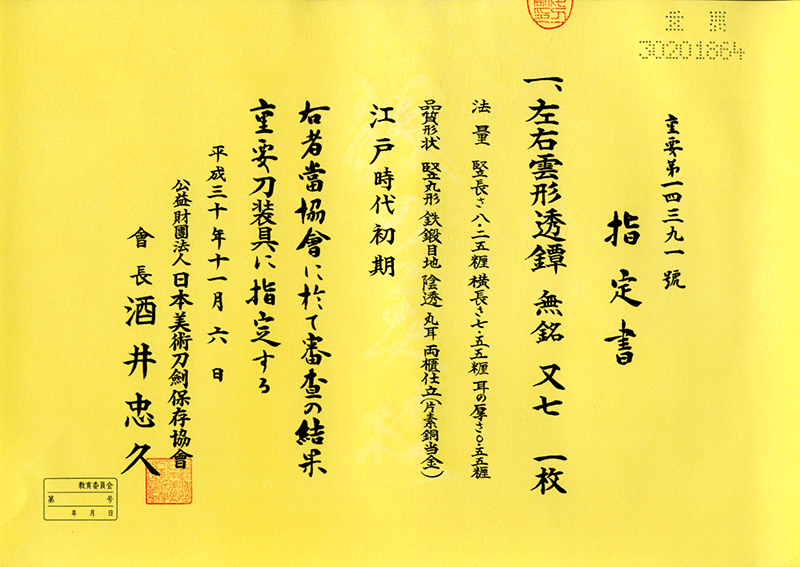
-Tōsōgu, 64th Session — Designated November 6, 2018
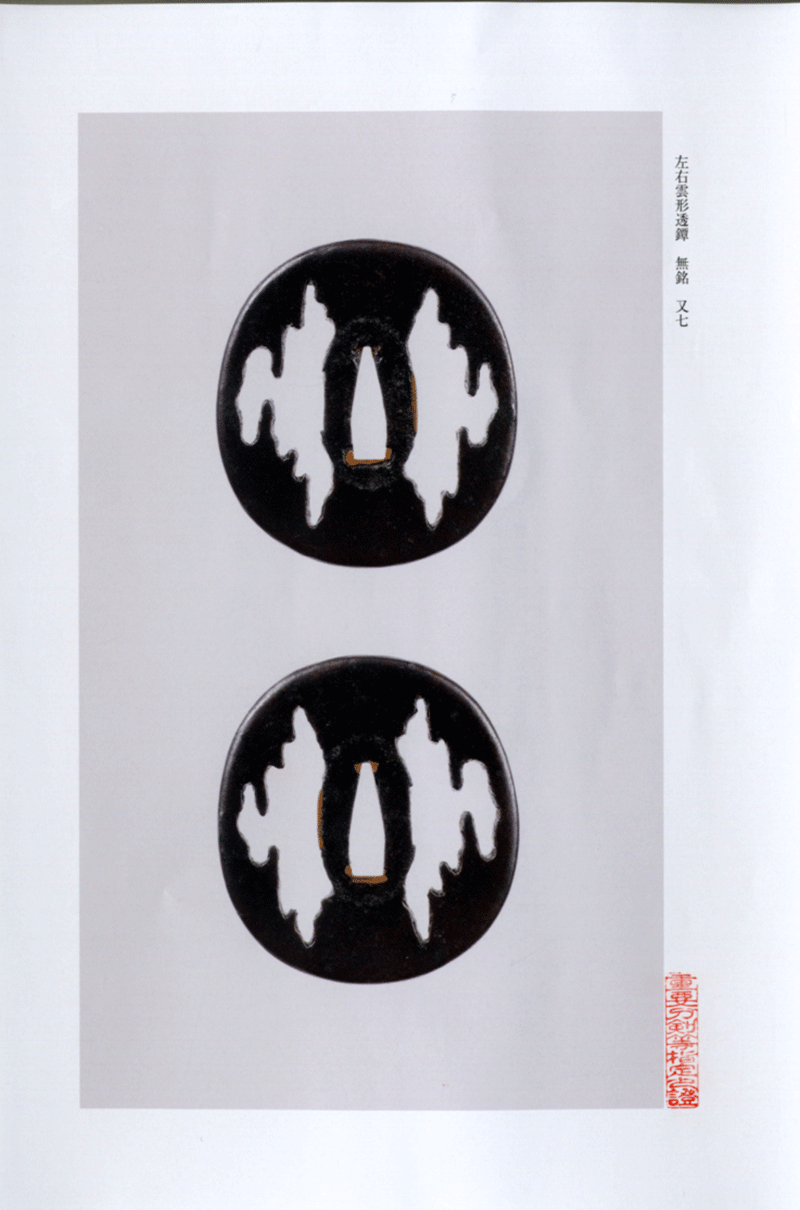
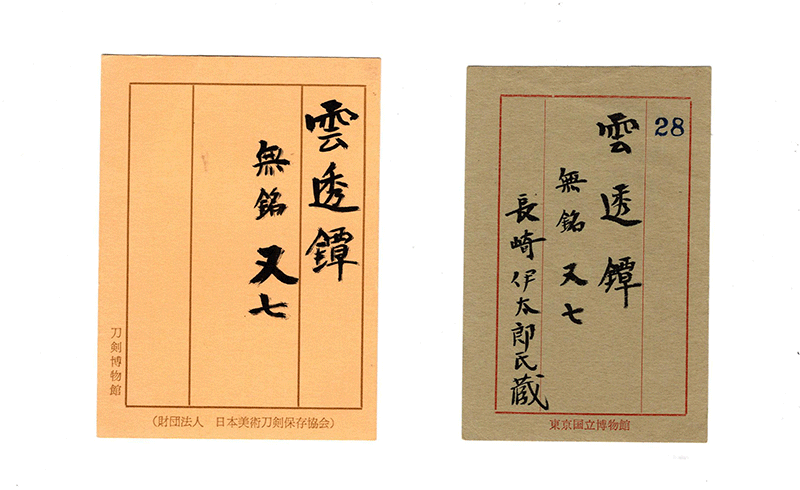
, : Hayashi Matashichi (林又七)
by Nakano Yoshiaki (中野嘉明)
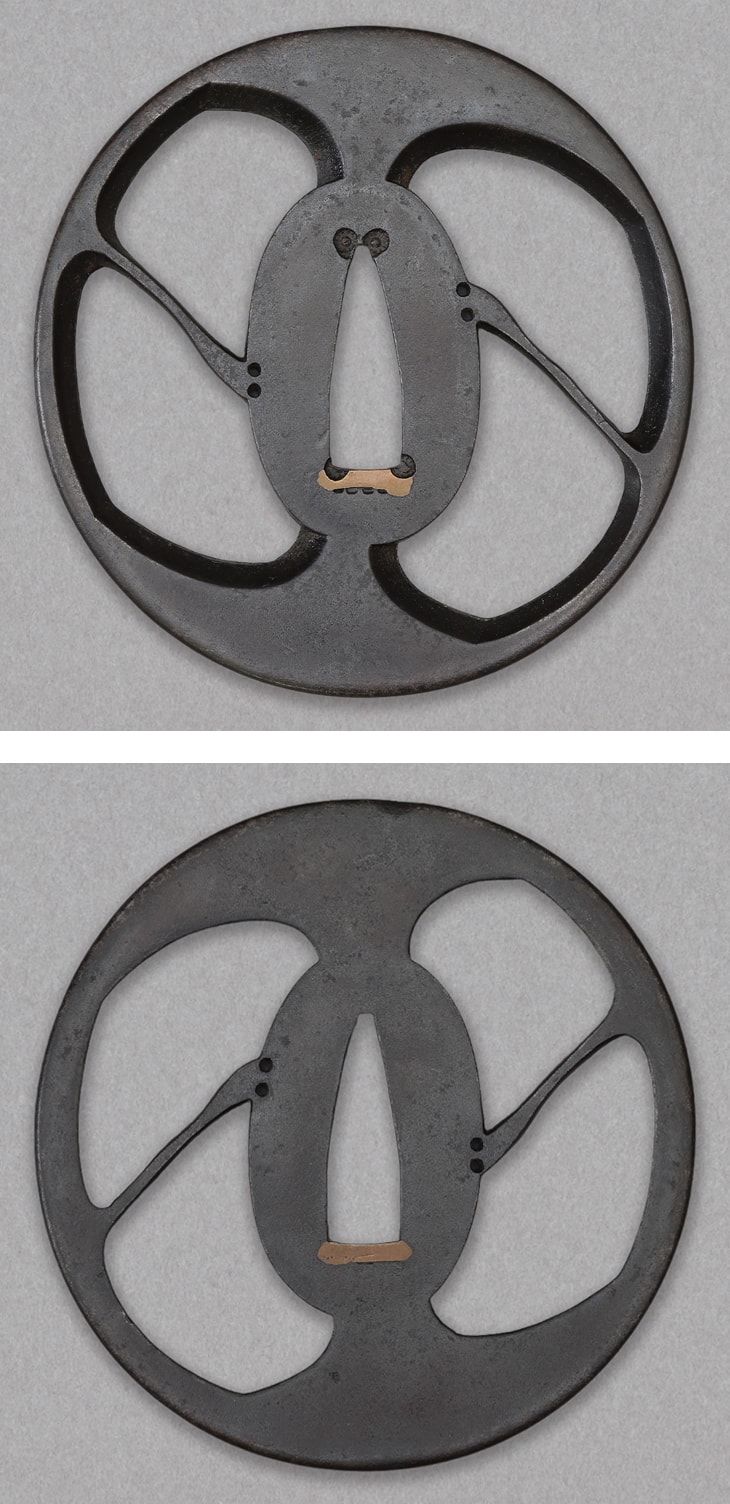
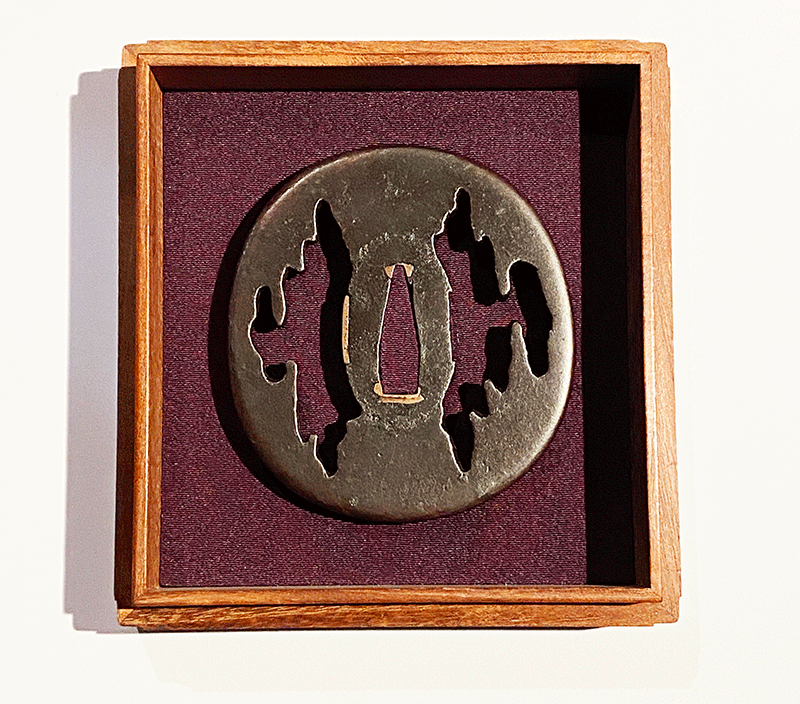
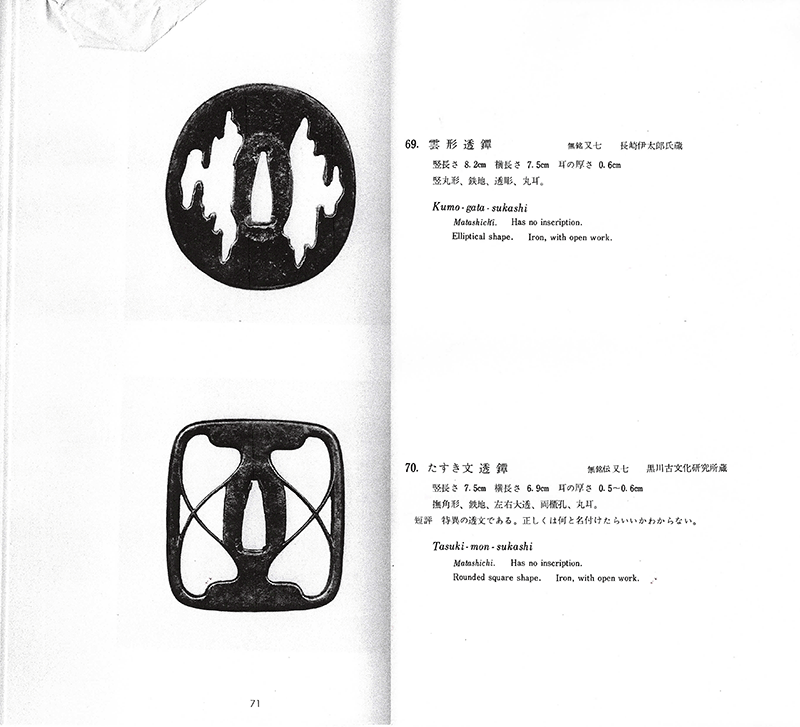
Measurements (height): 8.25 cm (width): 7.55 cm Mimi thickness: 0.55 cm
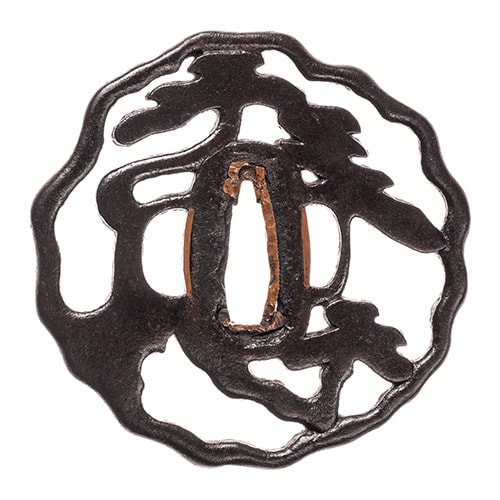
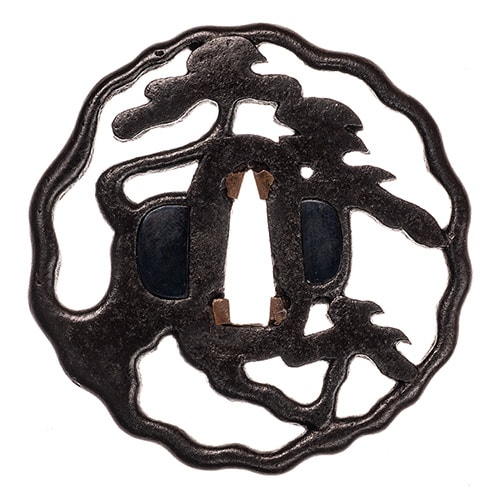
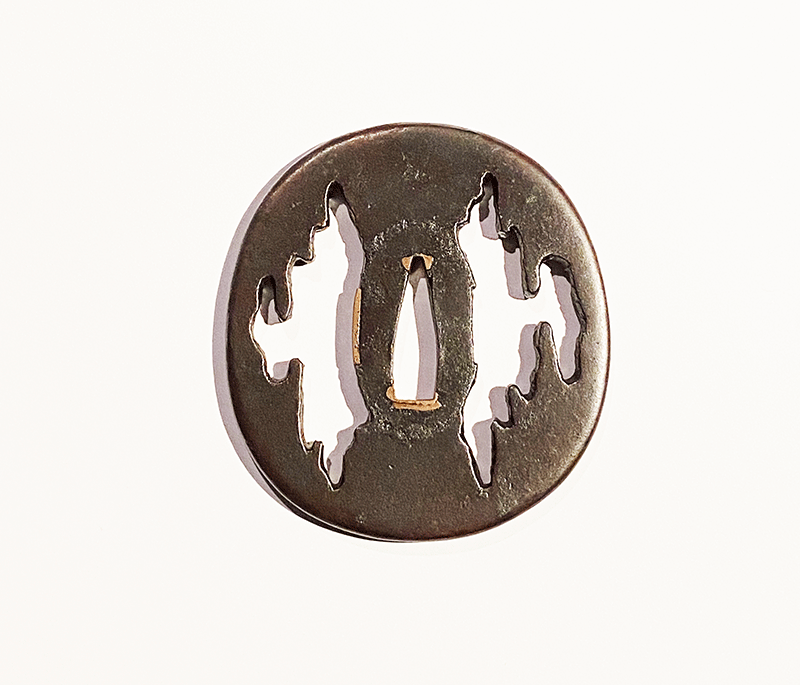
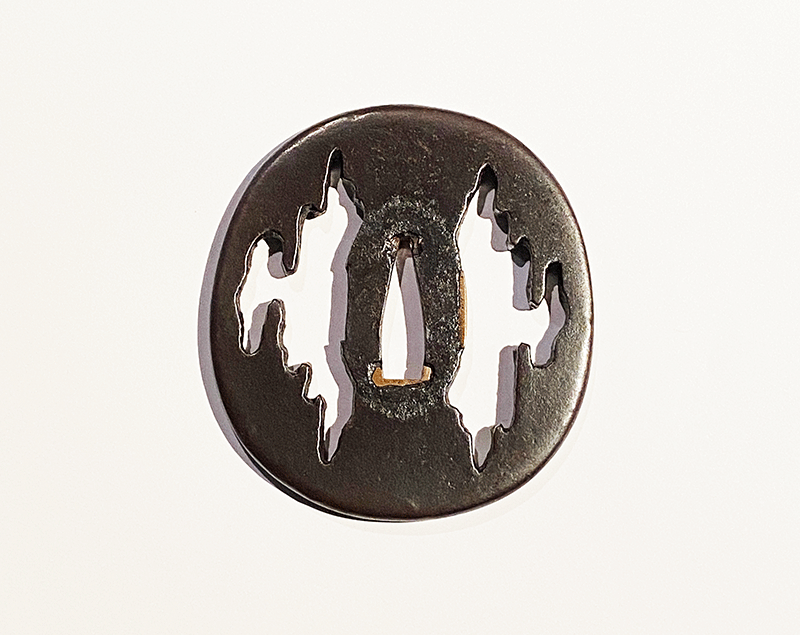
Description Form: (vertical round/oval form) Material: iron Construction: ; forged ground with visible forging texture (tetsu taneme-) Design: left-and-right cloud-form openwork (saiyū kumogata ) Decoration: kage- (shadow/silhouette openwork), leaving chisel traces within the cut-through areas Rim: : ryō-hitsu (both openings) present; one fitted with a (plain copper) insert (ate-gane) Signature:
Artisan Founder of the Hayashi line of metalworkers: Hayashi Matashichi (林又七)
Era Early period
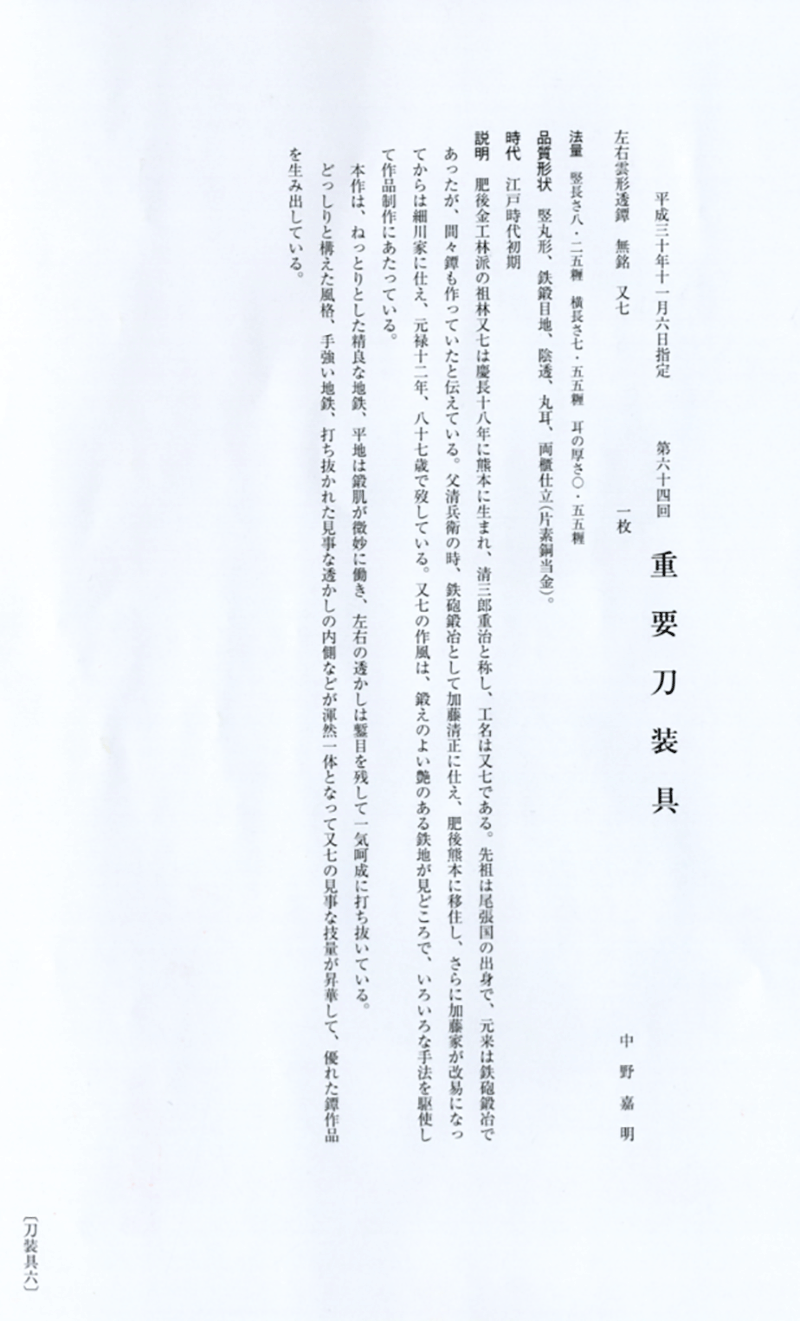
Explanation Hayashi Matashichi, regarded as the founder of the Hayashi line of metalworkers, was born in Kumamoto in Keichō 18 (1613). His personal name was Seisaburō Shigeharu, and his working name () was Matashichi. His ancestors came from Owari Province and were originally gunsmiths, though it is said that from time to time they also produced . In the time of his father, Seibei, the family served Katō Kiyomasa as gunsmiths and relocated to Kumamoto; after the Katō house was dispossessed, they entered the service of the Hosokawa. Matashichi died in Genroku 12 (1699) at the age of eighty-seven.
The chief attraction of Matashichi’s work lies in its well-forged, lustrous iron plate, and he applied a variety of methods in creating his pieces.
In this example, the plate iron is dense and exceptionally refined, with subtle activity in the forged surface of the flat ground. The left and right openwork is pierced decisively in a single sustained effort, while deliberately retaining the marks of the chisel. The dignified, firmly-set presence; the tenacious quality of the iron; and the superb interior surfaces of the pierced openwork cohere seamlessly, elevating Matashichi’s formidable skill into an outstanding work of art.
[Tōsōgu VI]