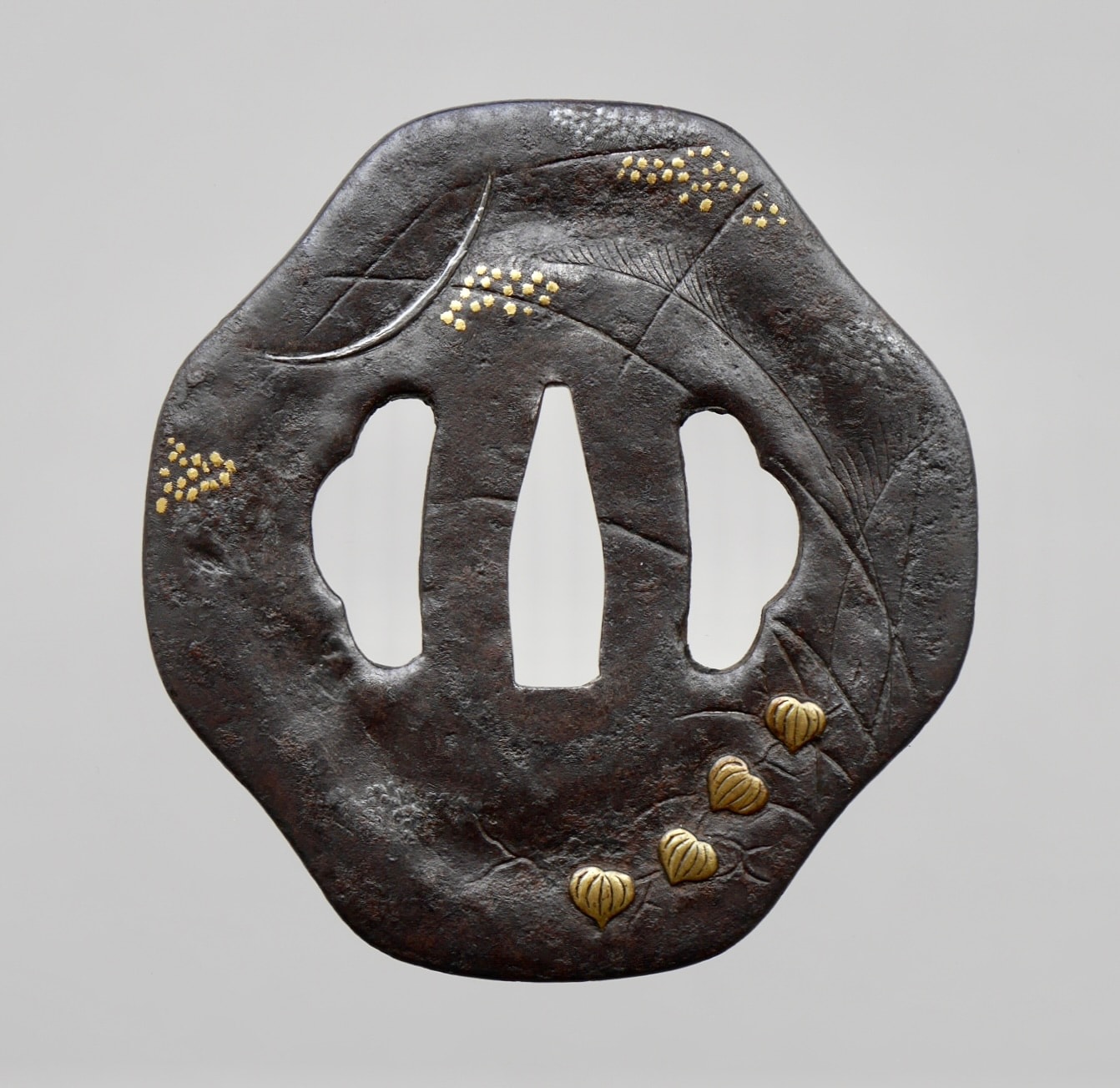
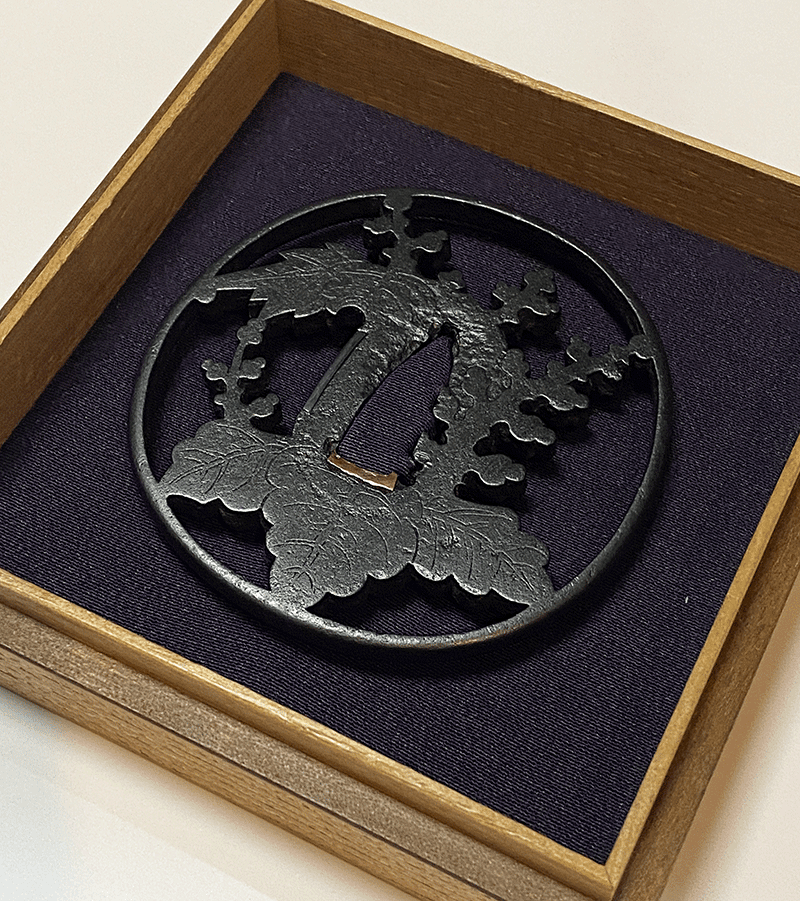
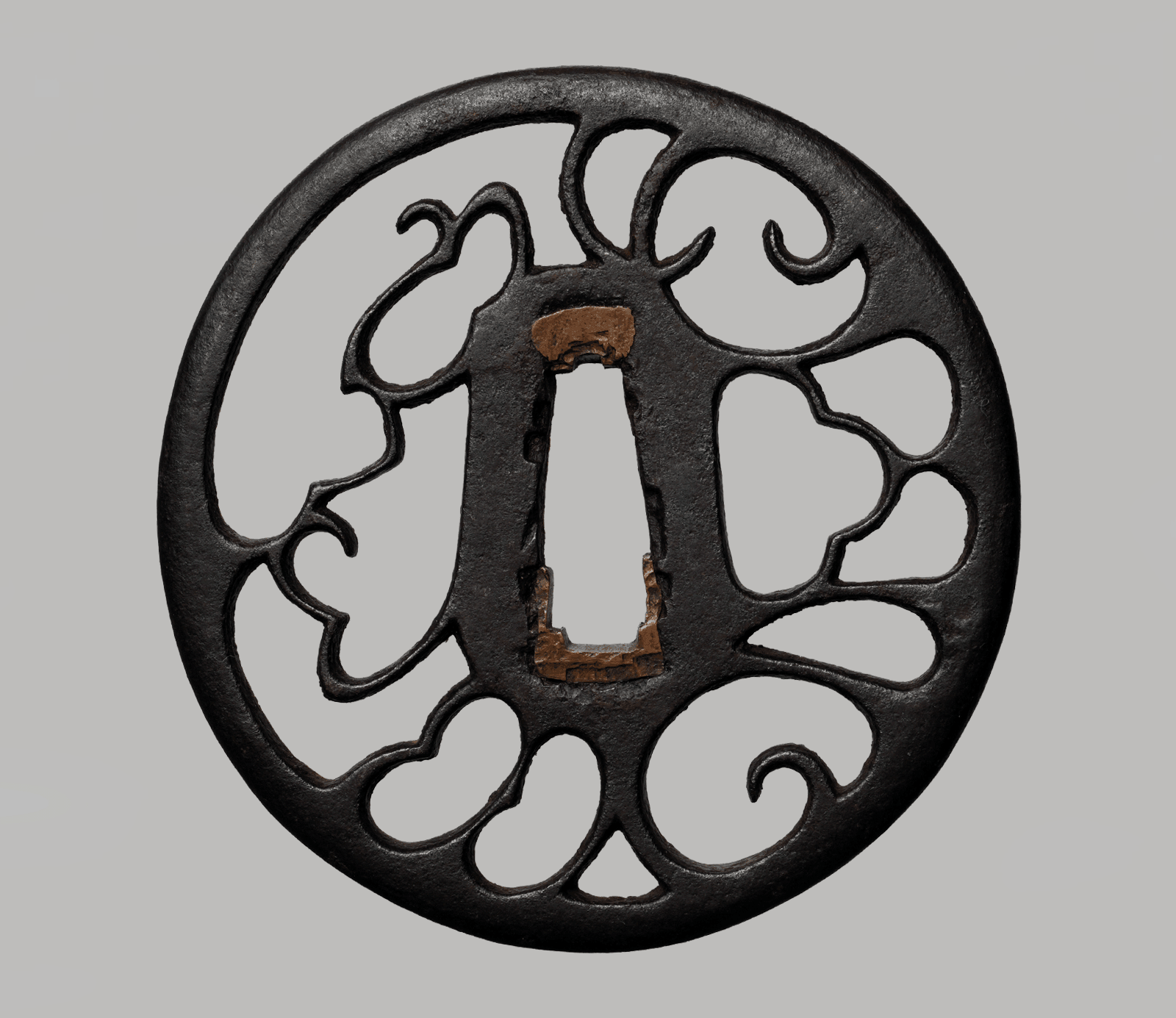
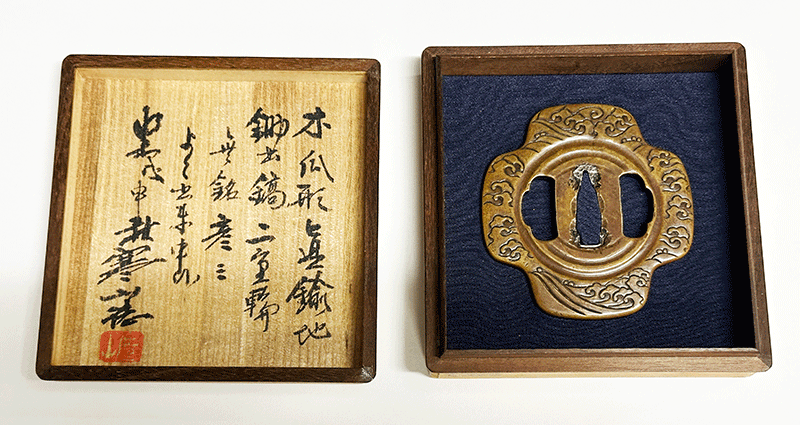
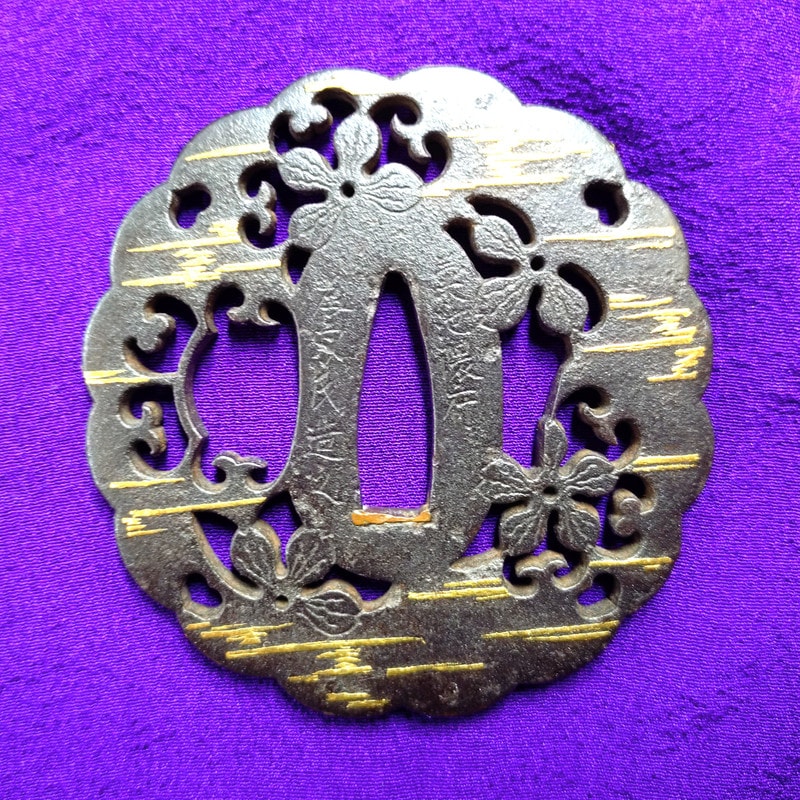
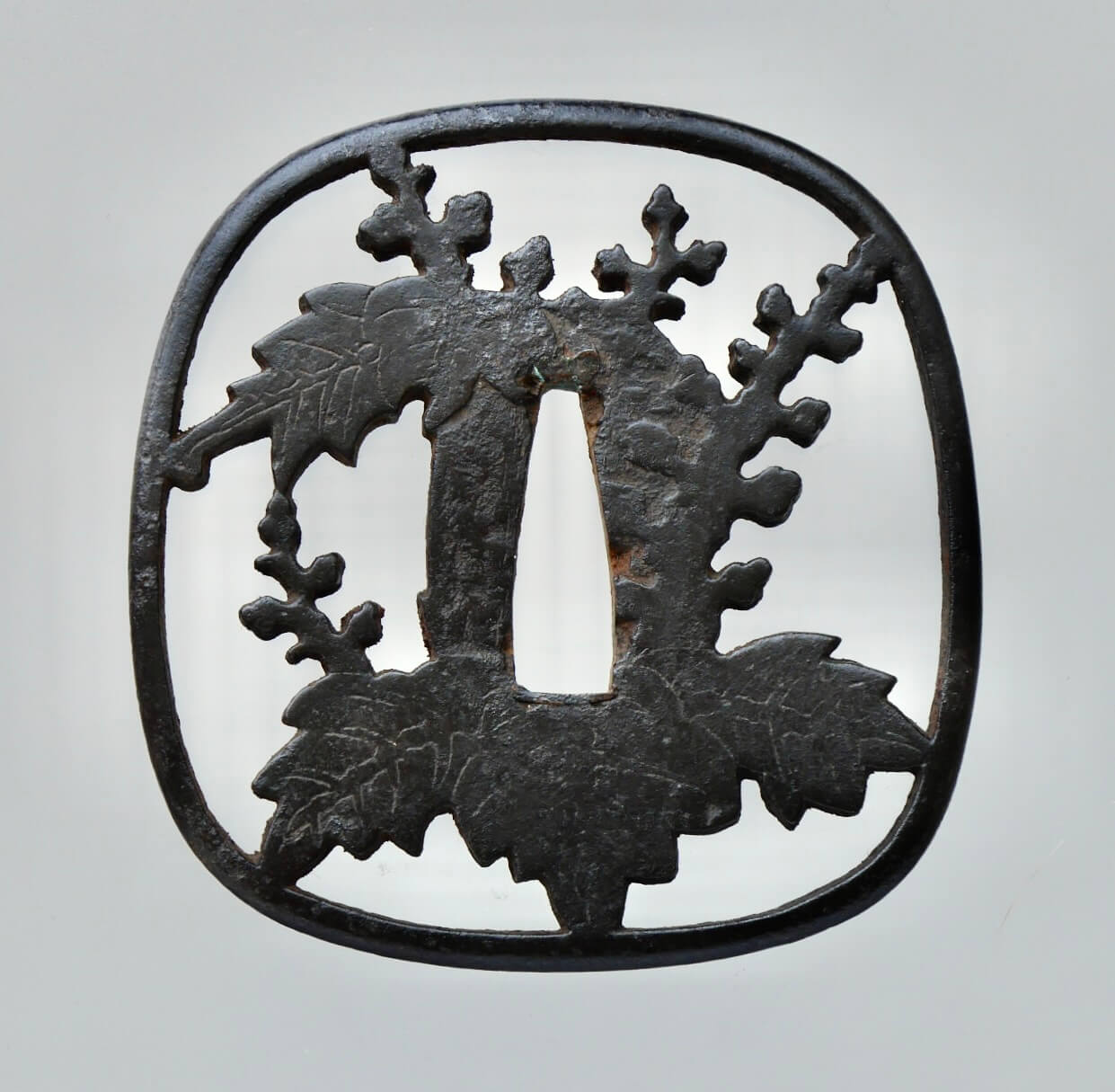
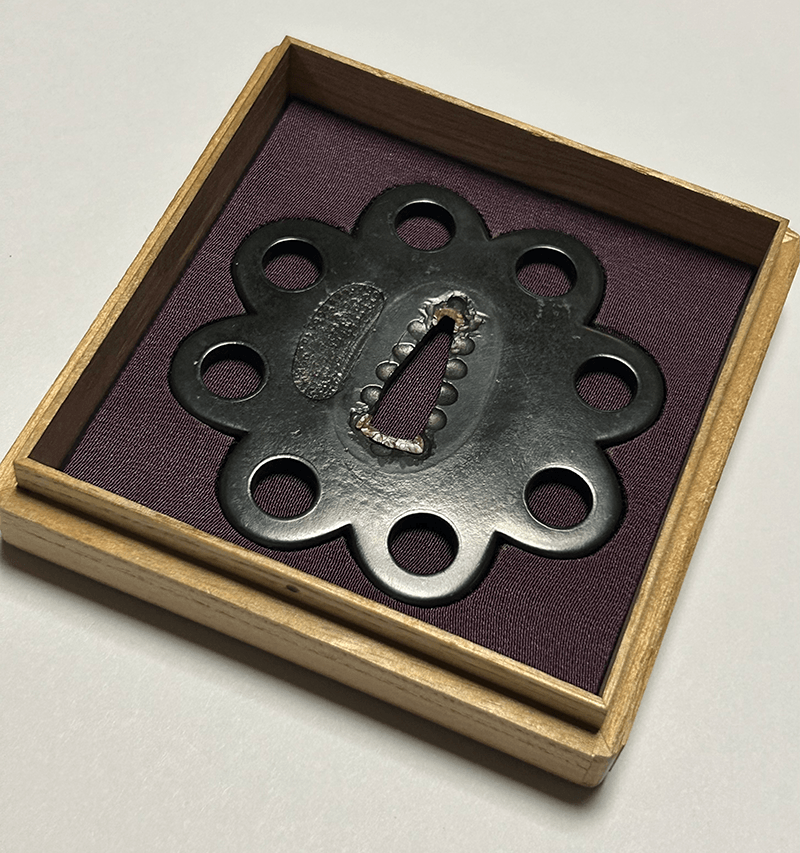
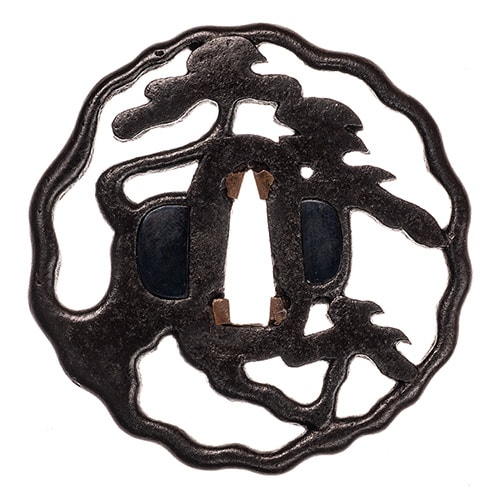
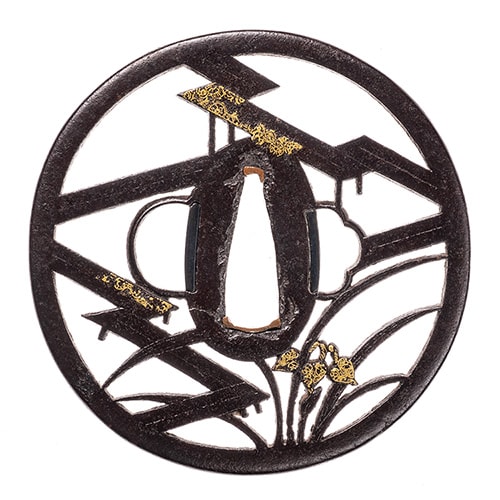
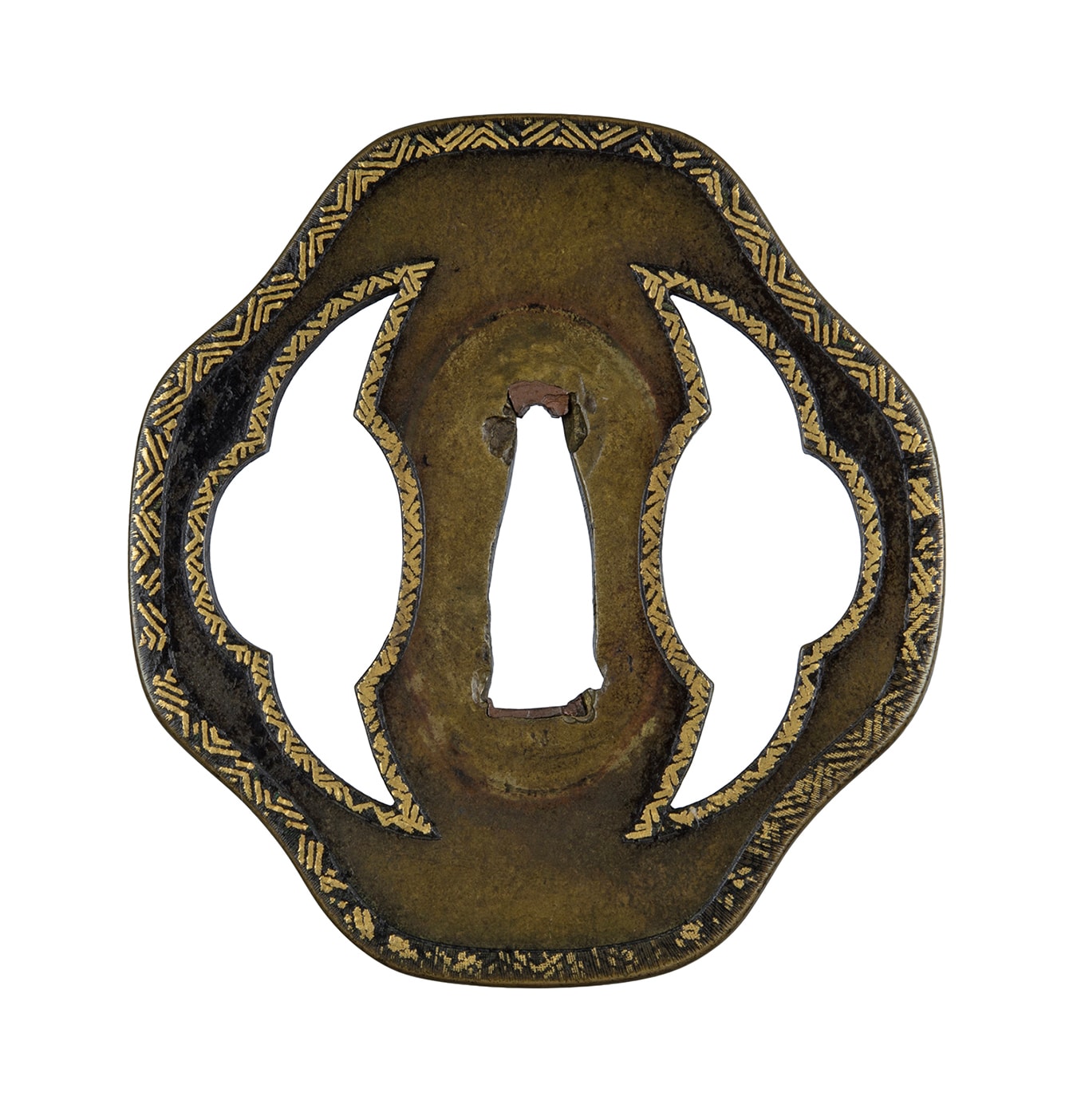
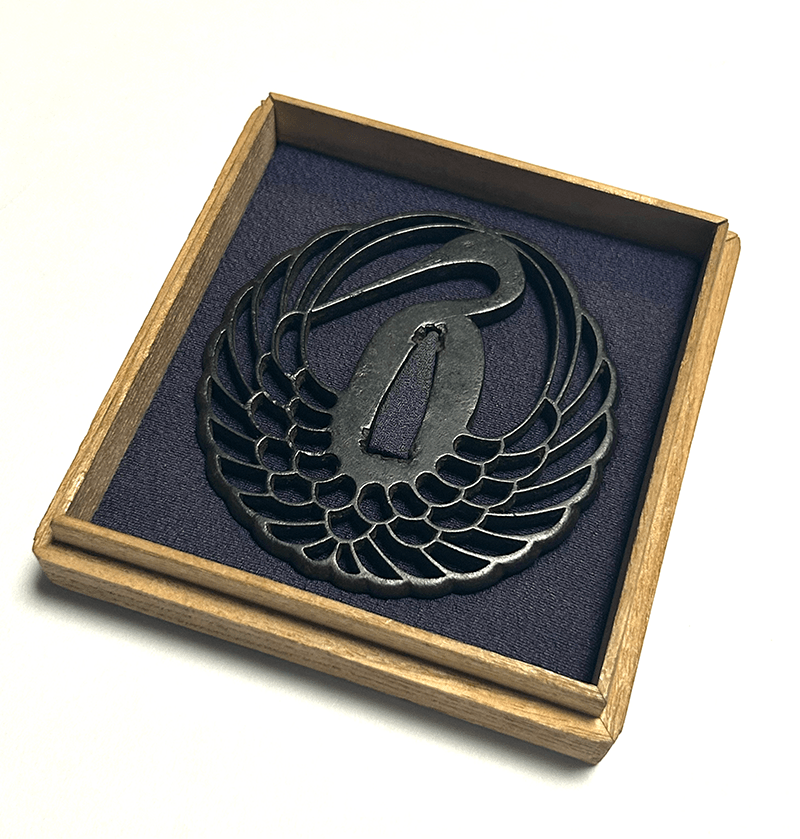
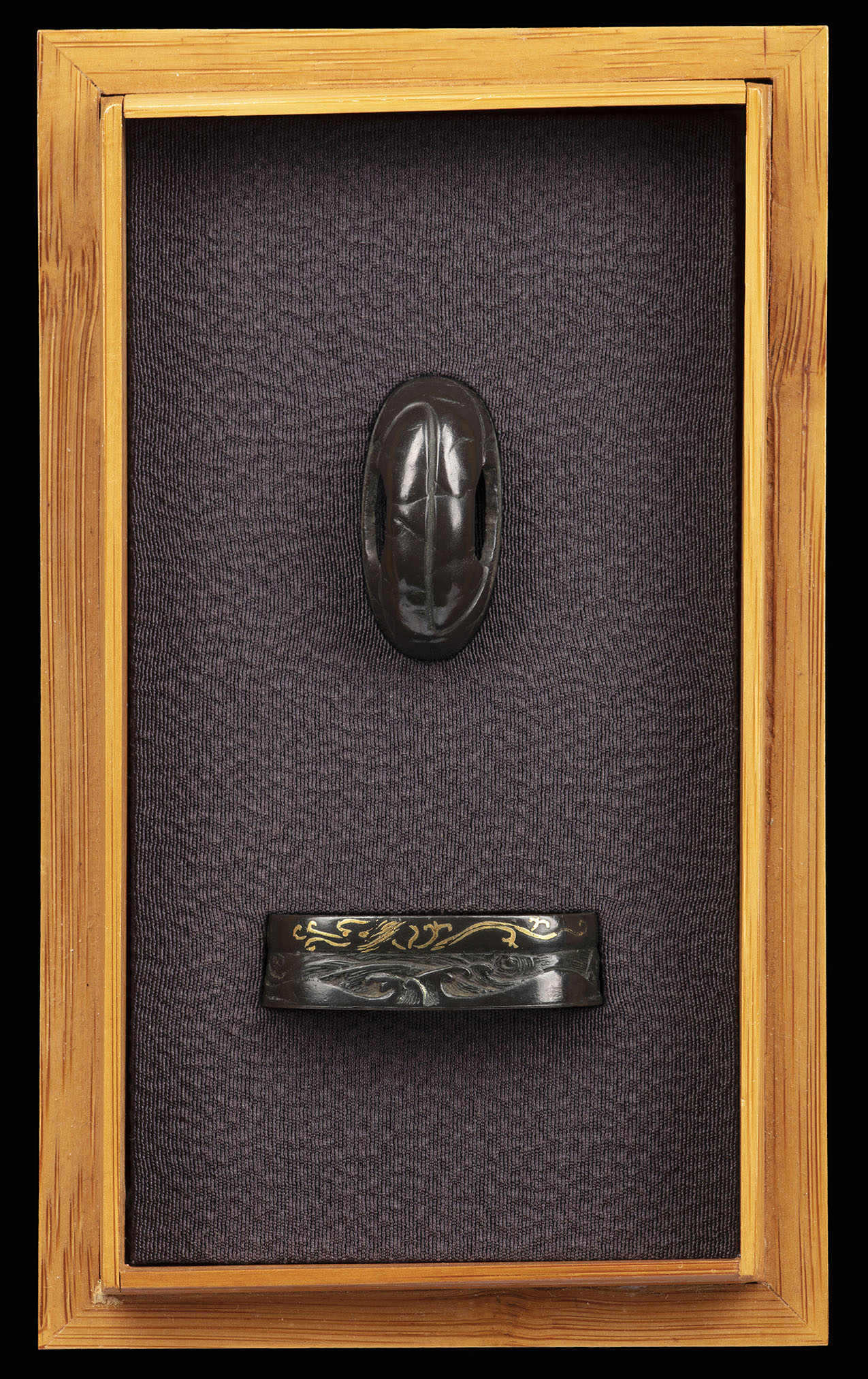
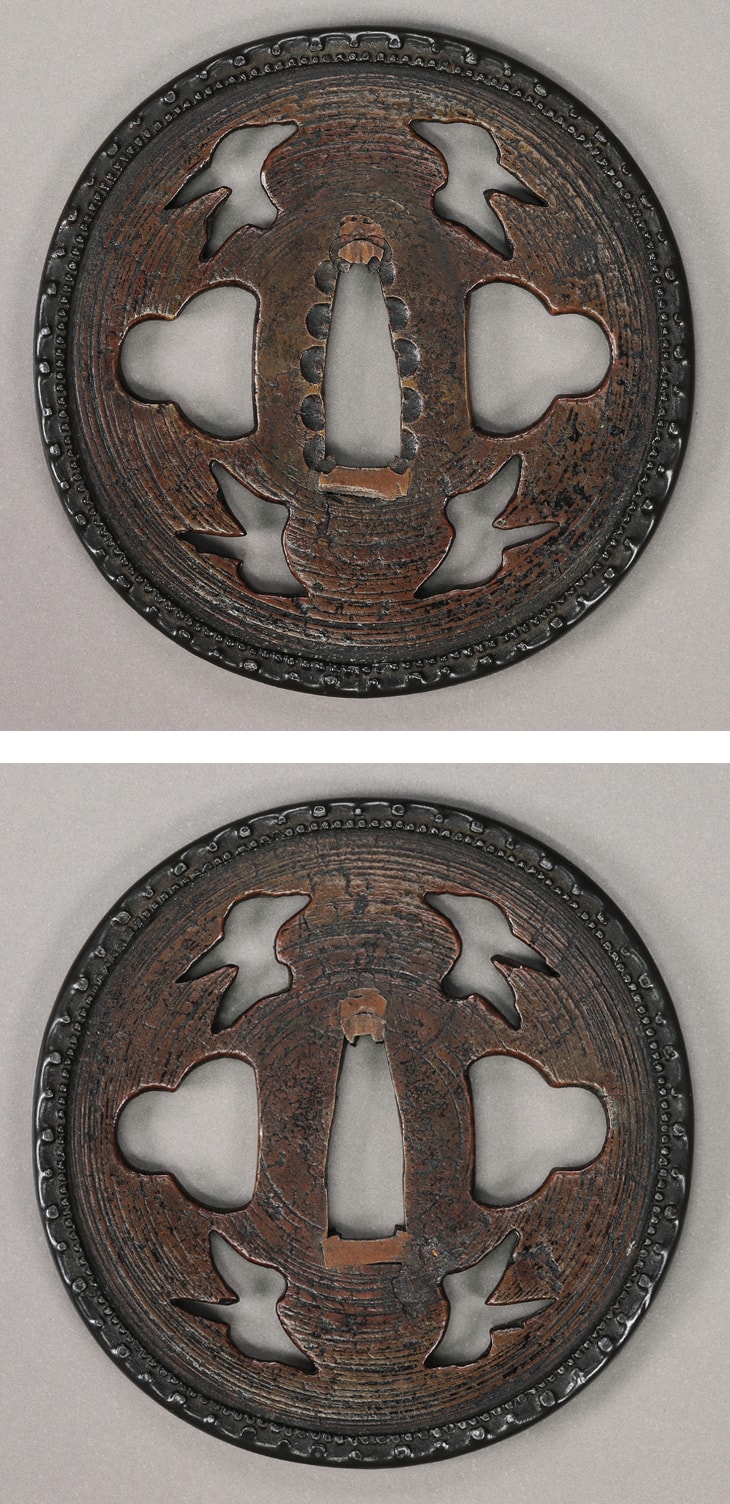
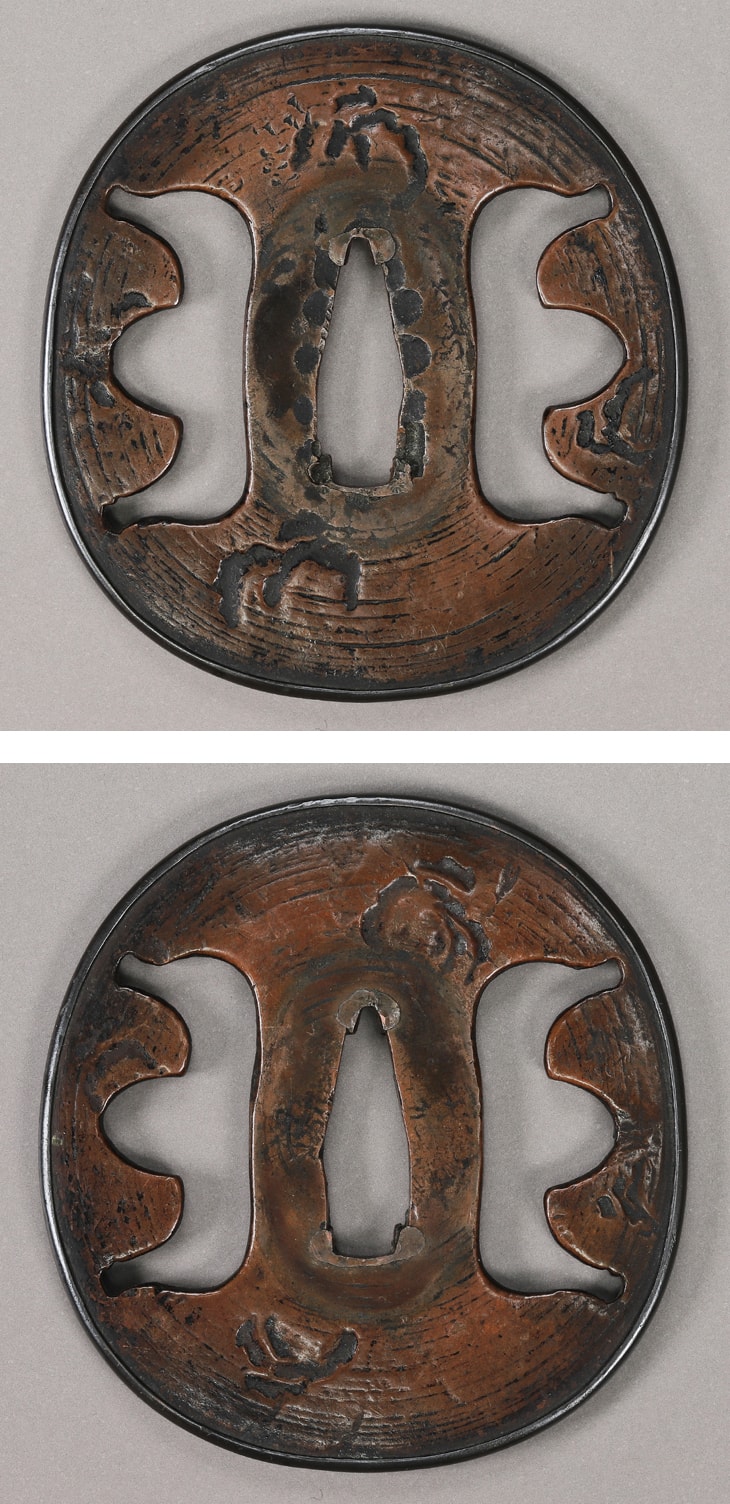
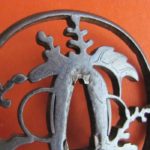
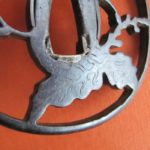
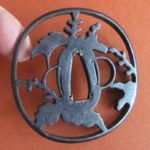
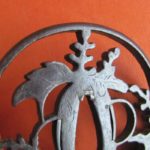
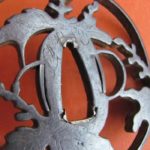
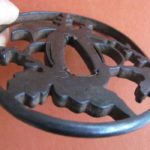
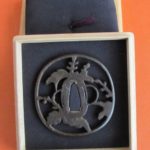
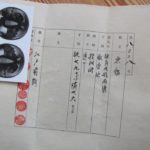
Higo iron sukashi tsuba papered to 2nd Gen. Kanshiro Nishigaki. The tsuba features a sanmai kiri design (3 paulownia branches with leaves) and is in excellent condition. It comes in a fitted box with pillow and has a NTHK-NPO paper dated 2017.
 NihontoWatch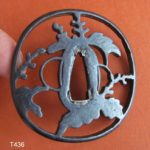
Nishigaki Nagahisa
Edo
Higo
Signed
Higo · Higo
1 piece on the market now
The second-generation Nishigaki Kanshiro, whose go is Nagahisa, is the eldest son of the founder of the Higo Nishigaki line, one of the four great schools of Higo metalwork. The records make him a master second only to his father, give his common name as Mosaku and his go as Yoshimasa or Nagahisa, and say he was born in Kan'ei 16 (1639) and died in Kyoho 2 (1717) aged seventy-nine, with a younger brother Kanpei. Where the founder is wholly unsigned and excelled at the iron openwork guard (the tossed-paulownia and distant-pine devices), the second generation is the first of the house to sign and turned to skilful inlay on brass and refined-copper grounds, in which the records find his true strength; his celebrated masterpiece is the Tagoto-no-tsuki (moon-in-each-paddy) guard. He is also said to have studied under the seventh Goto head Kenjo. His accepted work runs to both signed brass-and-copper inlay guards and a few iron openwork tsuba in the founder's manner.
Where Nagahisa stands among comparable artisans: across all of nihontō, and within tradition, era, and period. The tiers (Foremost · Leading · Major · Notable) weigh official designations from the NBTHK and Japan's Agency for Cultural Affairs, together with historical honors of lasting repute such as the Sansaku and Meibutsu-chō.
Select a lens to see how it's measured.
Higo · Higo
36 pieces on the market now
The Nishigaki school is one of the four great lineages of Higo metalworkers, ranked alongside the Hayashi, Hirata, and Shimizu families. Its founder, Nishigaki Kanshiro I (also known as Yoshihiro), was born in Keicho 18 (1613) at Nakatsu in Buzen Province, the son of a Shinto priest. Learn more →
| Smith | Era | Designated |
|---|---|---|
| Kanshiro勘四郎 | — | 31 |
| Kanzaemon勘左衛門 | — | 0 |
| Kanzaemon勘左衛門 | — | 0 |
| Kanpei勘平 | — | 0 |
| Nagahisa永久 | — | 5 |
The NTHK’s principal certificate, issued for a fitting of considerable quality. It confirms a genuine signature, or, for an unsigned (mumei) work, records the judges’ attribution to a smith or school. The paper carries a detailed worksheet with a numerical point score.
The NTHK (Nihon Tōken Hozon Kai, the Society for the Preservation of the Japanese Sword) is the oldest of Japan’s sword-appraisal bodies, founded in 1910, decades before the NBTHK. After the death of its long-serving head it divided into two successor societies, the NTHK and the NTHK-NPO, both of which continue to hold shinsa. NTHK certificates are known for a detailed worksheet that records a numerical point score alongside the judges’ written opinion, and the society is especially respected for its attribution of unsigned (mumei) work.
3-day return window from receipt.
Higo iron sukashi tsuba papered to 2nd Gen. Kanshiro Nishigaki. The tsuba features a sanmai kiri design (3 paulownia branches with leaves) and is in excellent condition. It comes in a fitted box with pillow and has a NTHK-NPO paper dated 2017.
NihontoWatchNishigaki Nagahisa
Edo
Higo
Signed
Higo · Higo
1 piece on the market now
The second-generation Nishigaki Kanshiro, whose go is Nagahisa, is the eldest son of the founder of the Higo Nishigaki line, one of the four great schools of Higo metalwork. The records make him a master second only to his father, give his common name as Mosaku and his go as Yoshimasa or Nagahisa, and say he was born in Kan'ei 16 (1639) and died in Kyoho 2 (1717) aged seventy-nine, with a younger brother Kanpei. Where the founder is wholly unsigned and excelled at the iron openwork guard (the tossed-paulownia and distant-pine devices), the second generation is the first of the house to sign and turned to skilful inlay on brass and refined-copper grounds, in which the records find his true strength; his celebrated masterpiece is the Tagoto-no-tsuki (moon-in-each-paddy) guard. He is also said to have studied under the seventh Goto head Kenjo. His accepted work runs to both signed brass-and-copper inlay guards and a few iron openwork tsuba in the founder's manner.
Where Nagahisa stands among comparable artisans: across all of nihontō, and within tradition, era, and period. The tiers (Foremost · Leading · Major · Notable) weigh official designations from the NBTHK and Japan's Agency for Cultural Affairs, together with historical honors of lasting repute such as the Sansaku and Meibutsu-chō.
Select a lens to see how it's measured.
Higo · Higo
36 pieces on the market now
The Nishigaki school is one of the four great lineages of Higo metalworkers, ranked alongside the Hayashi, Hirata, and Shimizu families. Its founder, Nishigaki Kanshiro I (also known as Yoshihiro), was born in Keicho 18 (1613) at Nakatsu in Buzen Province, the son of a Shinto priest. Learn more →
| Smith | Era | Designated |
|---|---|---|
| Kanshiro勘四郎 | — | 31 |
| Kanzaemon勘左衛門 | — | 0 |
| Kanzaemon勘左衛門 | — | 0 |
| Kanpei勘平 | — | 0 |
| Nagahisa永久 | — | 5 |
The NTHK’s principal certificate, issued for a fitting of considerable quality. It confirms a genuine signature, or, for an unsigned (mumei) work, records the judges’ attribution to a smith or school. The paper carries a detailed worksheet with a numerical point score.
The NTHK (Nihon Tōken Hozon Kai, the Society for the Preservation of the Japanese Sword) is the oldest of Japan’s sword-appraisal bodies, founded in 1910, decades before the NBTHK. After the death of its long-serving head it divided into two successor societies, the NTHK and the NTHK-NPO, both of which continue to hold shinsa. NTHK certificates are known for a detailed worksheet that records a numerical point score alongside the judges’ written opinion, and the society is especially respected for its attribution of unsigned (mumei) work.
3-day return window from receipt.