
NihontoWatch Mon

NihontoWatchBETA

MarketAuctions
Encyclopedia
NihontoWatch Mon

NihontoWatchBETA

MarketAuctions
Encyclopedia

Description

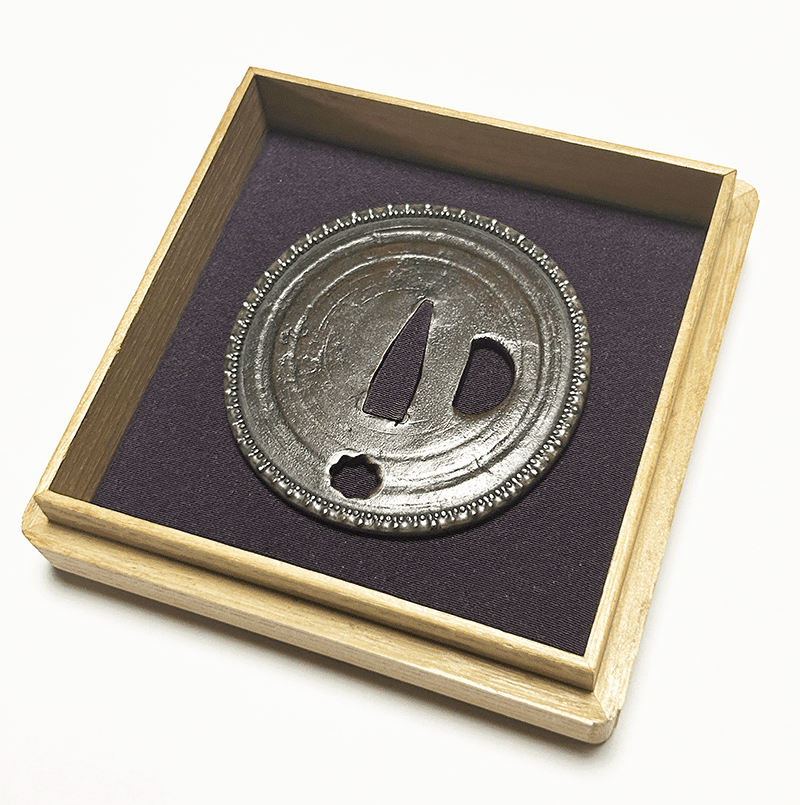
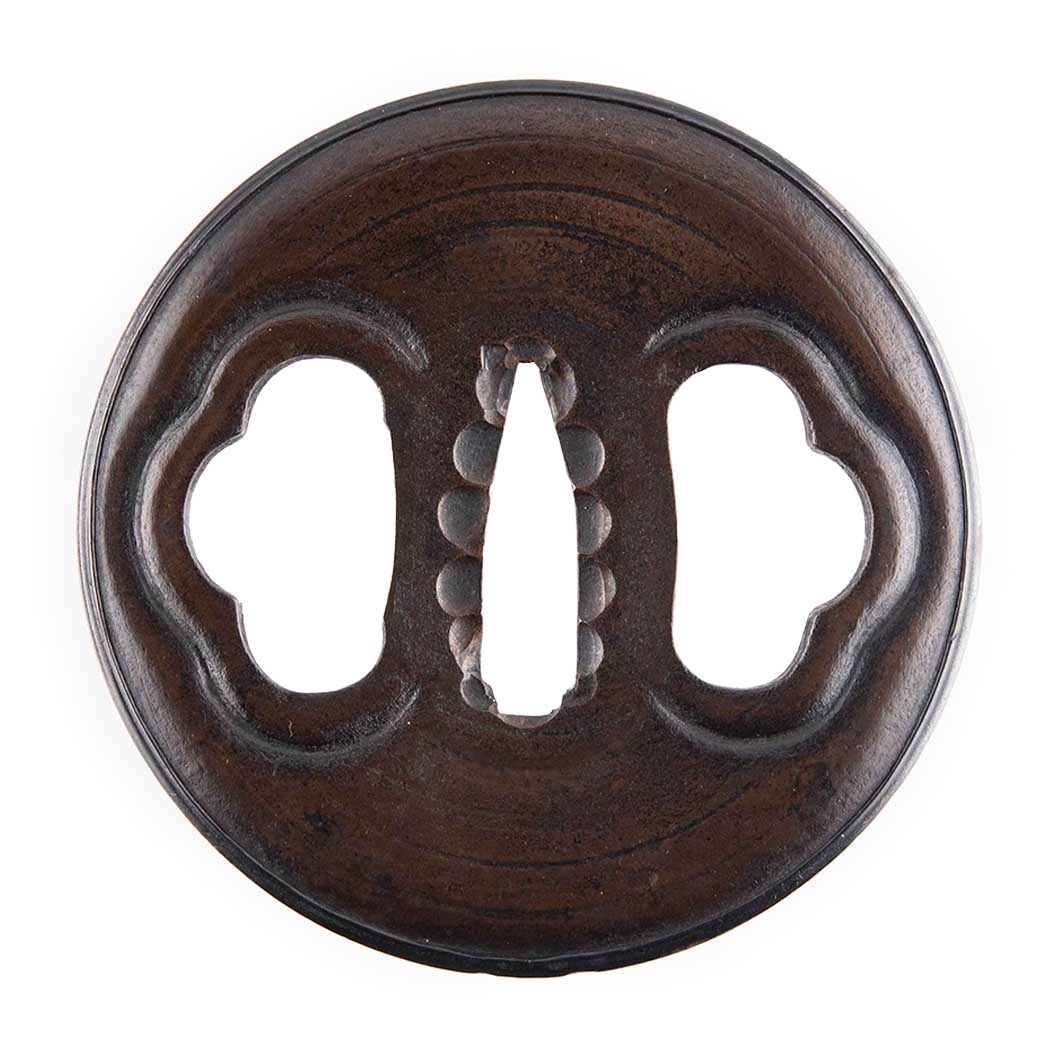
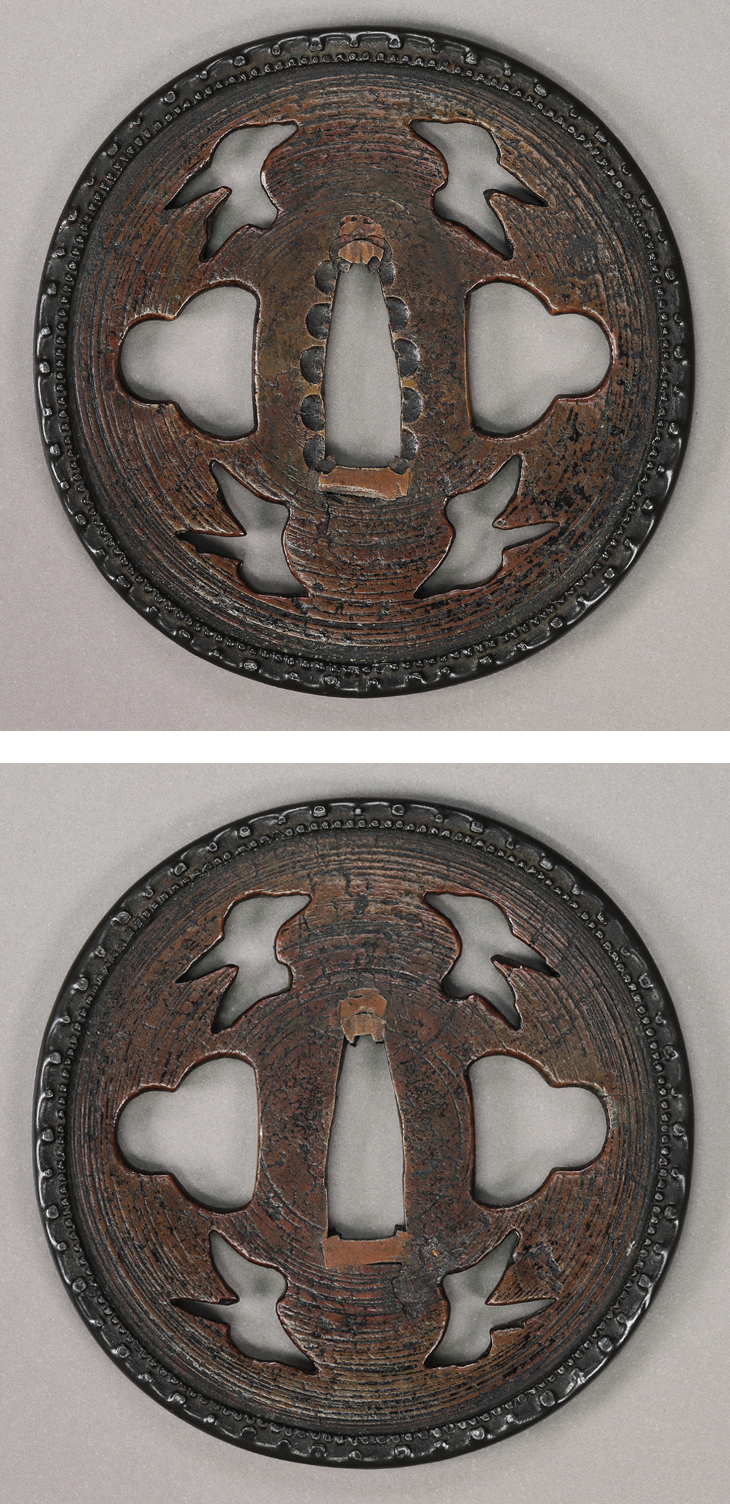
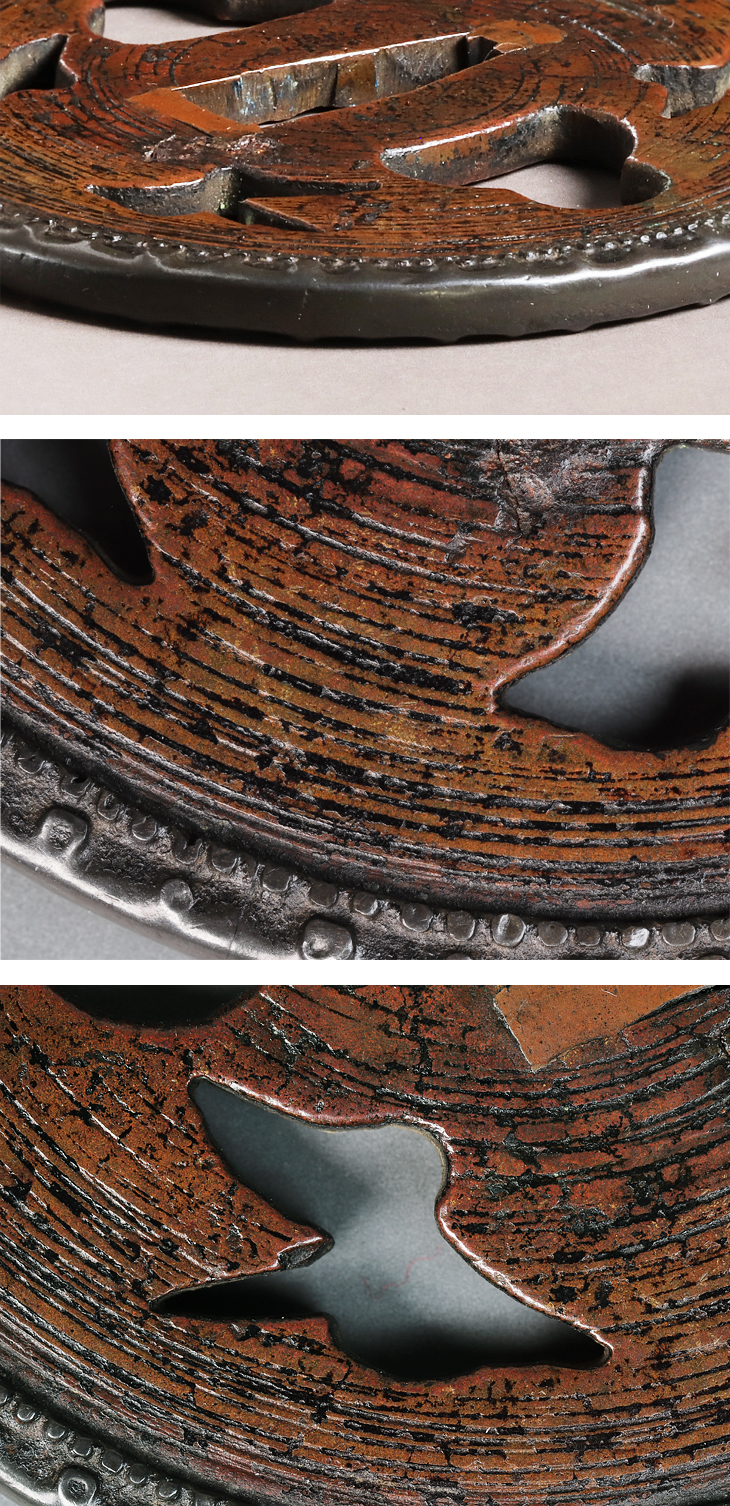
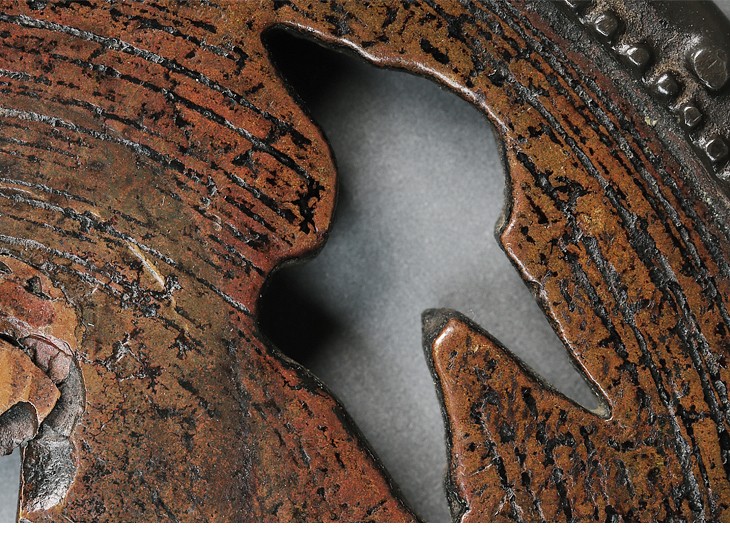
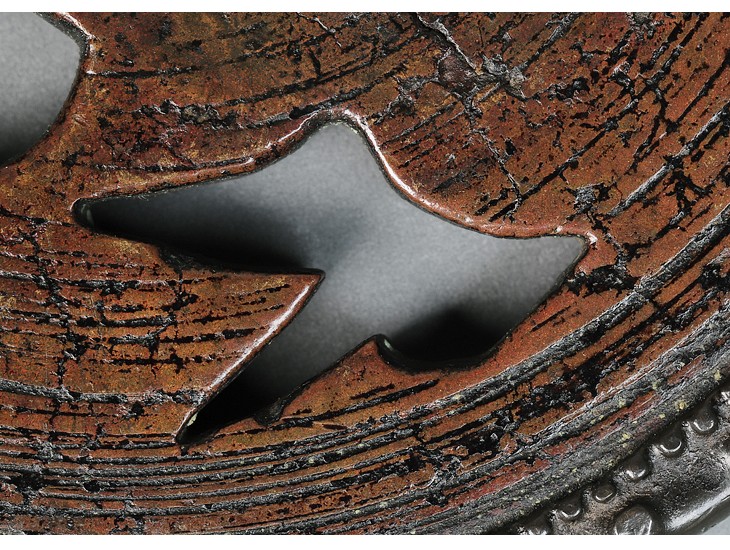
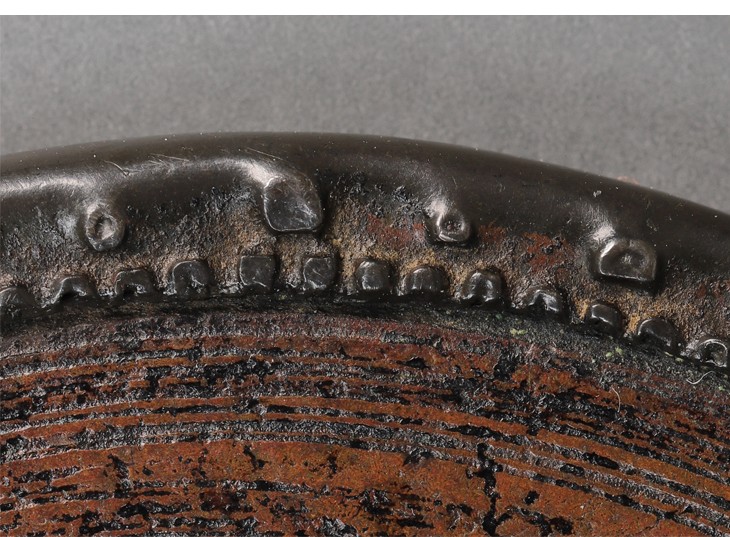
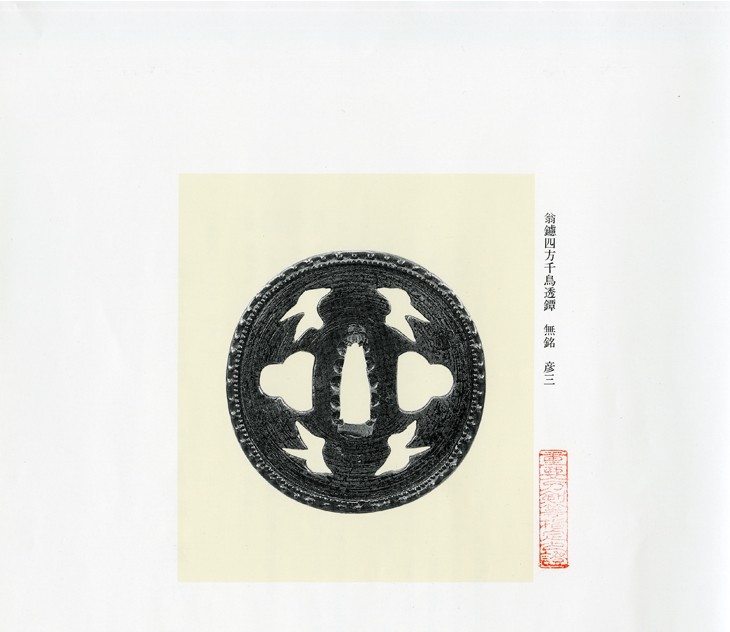
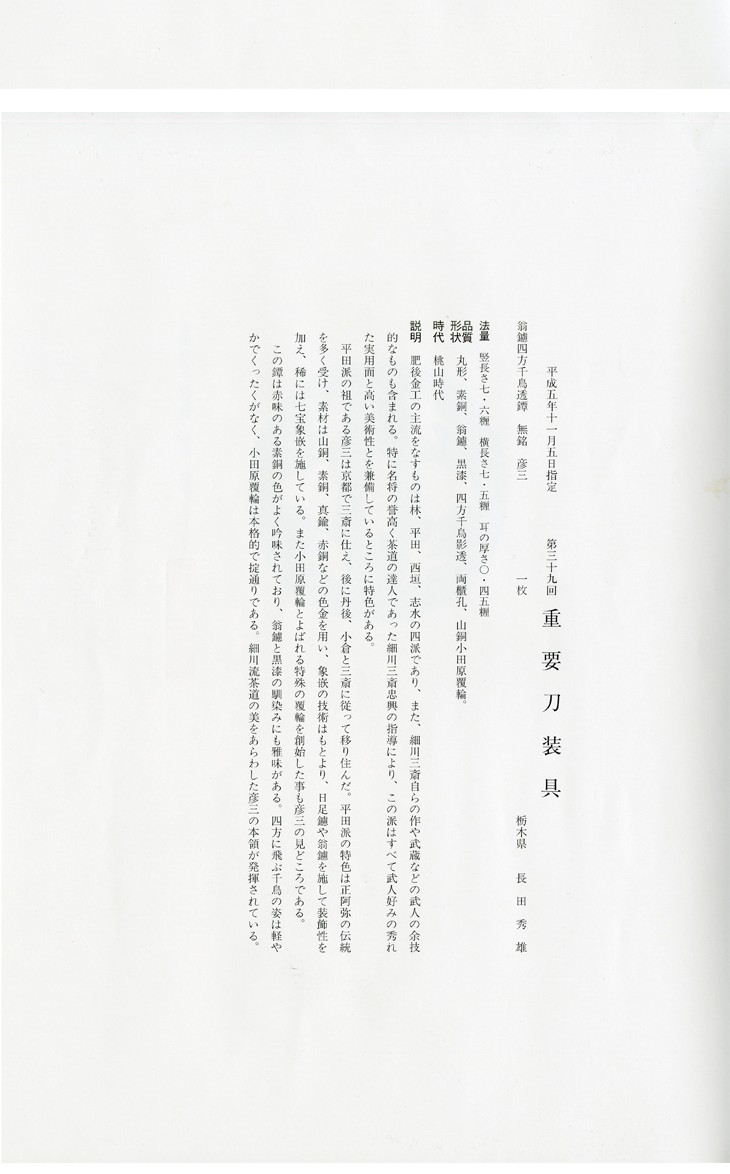
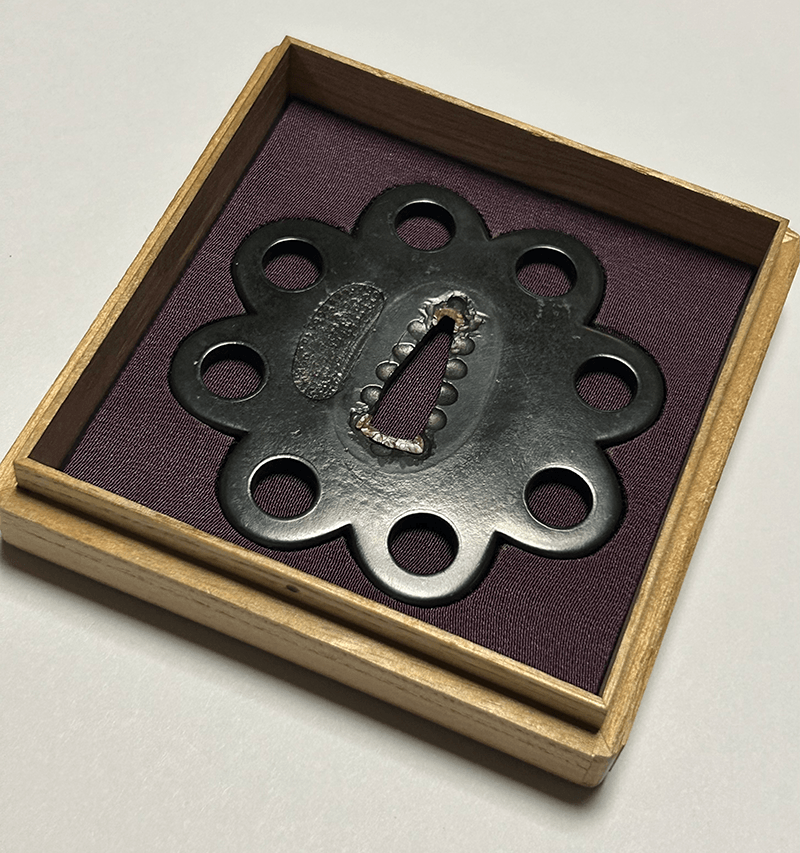
This is an unsigned tsuba attributed to Hikoso of the Hirata school, dating to the Momoyama period. It features an Okinayasuri finish on a black lacquered suaka ground with openwork of plovers flying in four directions, and is adorned with an Odawara fukurin. The tsuba is designated as a 39th session Juyo Tosogu by the NBTHK.

NBTHK Setsumei

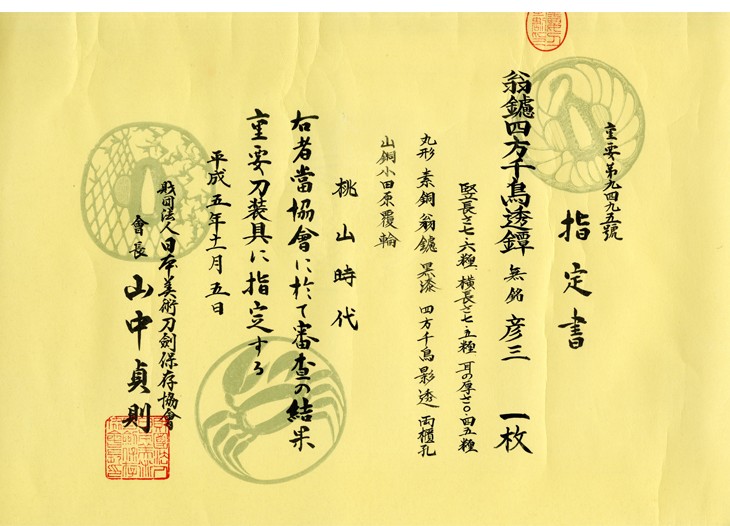
Juyo-Tosogu, 39th Session — Designated November 5, 1993 Tsuba, mumei: Hikozō (彦三) Measurements Tate (height): 7.6 cm Yoko (width): 7.5 cm Mimi thickness: 0.45 cm Description Form: maru-gata Material: suaka (refined copper) Decoration / Surface: okina-yasuri file marks with black urushi lacquer Design: “Chidori in Four Directions” openwork (shihō chidori sukashi) Hitsu-ana: two hitsu-ana Rim: yamagane “Odawara” fukurin (小田原覆輪) Signature: none Artisan Higo metalwork, Hirata school — attributed to Hikozō (彦三), founder of the Hirata lineage. Era Momoyama period. Explanation The principal streams of Higo metalwork are the four lineages of Hayashi, Hirata, Nishigaki, and Shimizu. In addition, there are works made personally by Hosokawa Sansai as well as pieces produced as a kind of martial “accomplishment” (yogi) by warrior figures such as Musashi. Under the guidance of Hosokawa Tadaoki—renowned as a great commander and also an expert of the tea ceremony—this tradition came to be characterized by fittings that unite excellent practicality, suited to warrior taste, with a high level of artistic refinement. Hikozō, progenitor of the Hirata school, served Sansai in Kyoto, and later moved in his company to Tango and then Kokura. The distinguishing features of the Hirata school include a strong inheritance of Shōami traditions. In materials they employed various irogane—such as yamagane, suaka, brass, and shakudō—and, beyond inlay techniques, they added ornamentation through nanako and okina-yasuri, and on rare occasions even used cloisonné inlay (shippo zōgan). Another point of special interest in Hikozō’s oeuvre is his founding of the distinctive rim construction known as “Odawara fukurin.” In this tsuba, the slightly reddish tone of the suaka has been selected with discernment, and there is an elegant harmony in the way the okina-yasuri and black urushi have settled together. The chidori flying in the four directions are rendered with lightness, free of affectation, and the Odawara fukurin is orthodox and fully in accordance with established rules. Here, Hikozō’s true strengths—expressing the beauty of the Hosokawa tradition of tea—are amply displayed. NBTHK Juyo Tosogu Designation Certificate (translation) As the result of examination, the above-mentioned item is hereby designated Juyo Tosogu. Designated: November 5, 1993 (Heisei 5) NBTHK (Society for the Preservation of the Japanese Art Sword) Chairman: Yamanaka Sadao (山中貞雄)

Certificate Reading

Certificate reading — 無銘(彦三)

NihontoWatch MonNihontoWatchBETA
MarketAuctionsEncyclopedia
Fittings›Higo Kinkō›Hirata›Hikozo›Tsuba: Okinayasuri Shiho Chidori Zu
tsubaJūyō
Hirata Hikozo

Tsuba: Okinayasuri Shiho Chidori Zu

mumei · Hirata · Momoyama

Price on request
Visit seller website →
Hirata Hikozo — 1 of 9
Hirata Hikozo — 2 of 9
Hirata Hikozo — 3 of 9
Hirata Hikozo — 4 of 9
Hirata Hikozo — 5 of 9
Hirata Hikozo — 6 of 9
Hirata Hikozo — 7 of 9
Hirata Hikozo — 8 of 9
Hirata Hikozo — 9 of 9
1 / 9
1 / 9
Hirata Hikozo — 1 of 9Hirata Hikozo — 2 of 9Hirata Hikozo — 3 of 9Hirata Hikozo — 4 of 9Hirata Hikozo — 5 of 9Hirata Hikozo — 6 of 9Hirata Hikozo — 7 of 9Hirata Hikozo — 8 of 9Hirata Hikozo — 9 of 9
Measurements & details
Maker

Hirata Hikozo

Era

Momoyama

Signature

Unsigned

Papers

Jūyō #39 (NBTHK)

Description

This is an unsigned tsuba attributed to Hikoso of the Hirata school, dating to the Momoyama period. It features an Okinayasuri finish on a black lacquered suaka ground with openwork of plovers flying in four directions, and is adorned with an Odawara fukurin. The tsuba is designated as a 39th session Juyo Tosogu by the NBTHK.

NBTHK Zufu Commentary

Juyo #39

AI translation — may contain errors

-Tosogu, 39th Session — Designated November 5, 1993

, : Hikozō (彦三)

Measurements (height): 7.6 cm (width): 7.5 cm Mimi thickness: 0.45 cm

Description Form: Material: (refined copper) Decoration / Surface: file marks with black urushi lacquer Design: “Chidori in Four Directions” openwork (shihō chidori ) : two Rim: “Odawara” (小田原覆輪) Signature: none

Artisan metalwork, Hirata school — attributed to Hikozō (彦三), founder of the Hirata lineage.

Era period.

Explanation The principal streams of metalwork are the four lineages of Hayashi, Hirata, Nishigaki, and Shimizu. In addition, there are works made personally by Hosokawa Sansai as well as pieces produced as a kind of martial “accomplishment” (yogi) by warrior figures such as . Under the guidance of Hosokawa Tadaoki—renowned as a great commander and also an expert of the tea ceremony—this tradition came to be characterized by fittings that unite excellent practicality, suited to warrior taste, with a high level of artistic refinement.

Hikozō, progenitor of the Hirata school, served Sansai in Kyoto, and later moved in his company to Tango and then Kokura. The distinguishing features of the Hirata school include a strong inheritance of Shōami traditions. In materials they employed various —such as , , brass, and —and, beyond inlay techniques, they added ornamentation through and , and on rare occasions even used cloisonné inlay (shippo ). Another point of special interest in Hikozō’s oeuvre is his founding of the distinctive rim construction known as “Odawara .”

In this , the slightly reddish tone of the has been selected with discernment, and there is an elegant harmony in the way the and black urushi have settled together. The chidori flying in the four directions are rendered with lightness, free of affectation, and the Odawara is orthodox and fully in accordance with established rules. Here, Hikozō’s true strengths—expressing the beauty of the Hosokawa tradition of tea—are amply displayed.

Tosogu Designation Certificate (translation) As the result of examination, the above-mentioned item is hereby designated Tosogu. Designated: November 5, 1993 (Heisei 5) (Society for the Preservation of the Japanese Art Sword) Chairman: Yamanaka Sadao (山中貞雄)
About the maker

Hikozo

彦三

Higo · Higo

4 pieces on the market now

›

Hirata Hikozo, founder of the Hirata school of Higo metalworkers, was a craftsman of Shoami lineage who served the celebrated warrior and tea master Hosokawa Sansai in Kyoto. When the Hosokawa domain was transferred, Hikozo accompanied his lord first to Tango and Kokura, and finally down to Kumamoto, where he died in Kan'ei 12 (1635). Under the guidance of Sansai — famed for his command of both martial and cultural refinement — Hikozo developed an aesthetic vision that merged outstanding practical function suited to the warrior's taste with a dignified, elevated artistic quality. From among his followers emerged Shimizu Jingo (his nephew) and Nishigaki Kanshiro; together with Hayashi Matahichi of the Owari lineage, these masters formed what came to be regarded as the four major schools of Higo metalwork. It was Hikozo who established the artistic foundations upon which this entire tradition would rest.

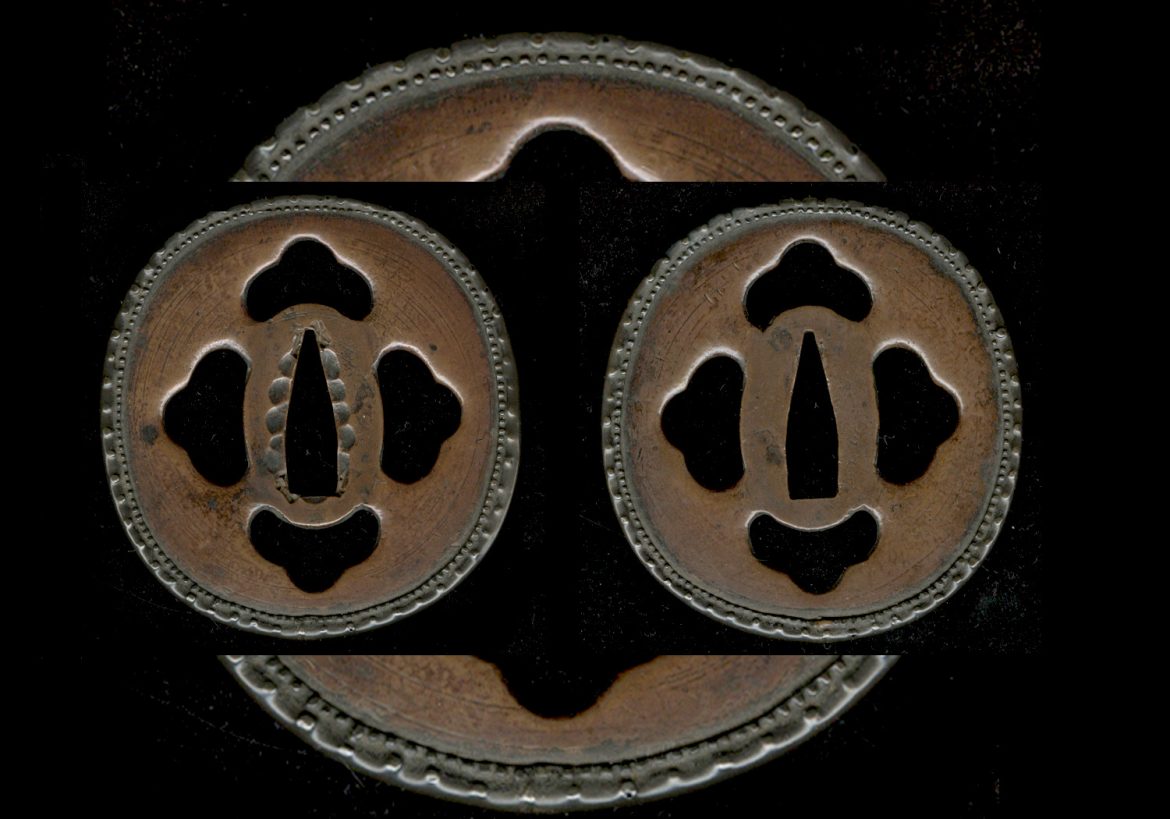
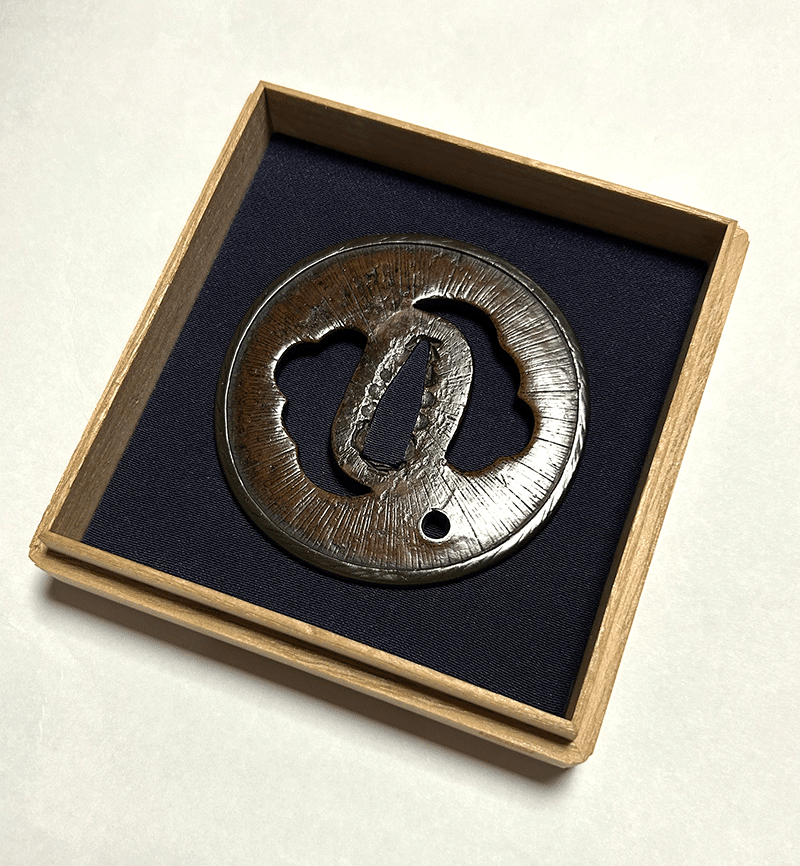
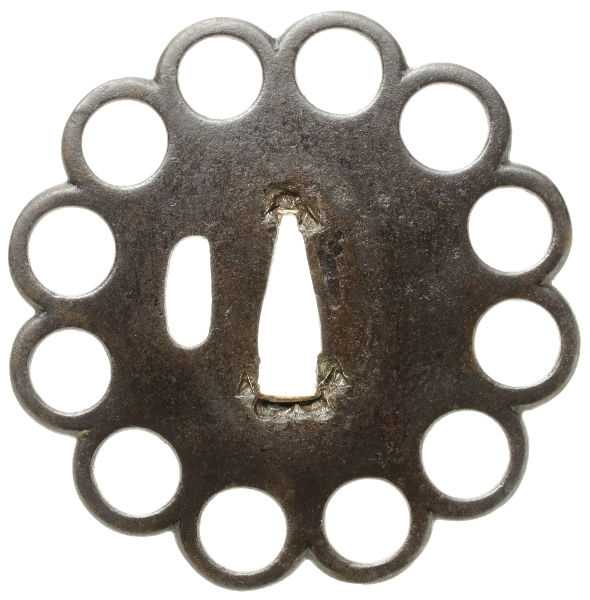
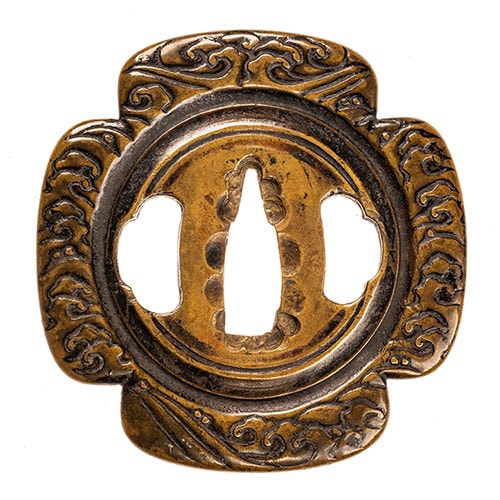
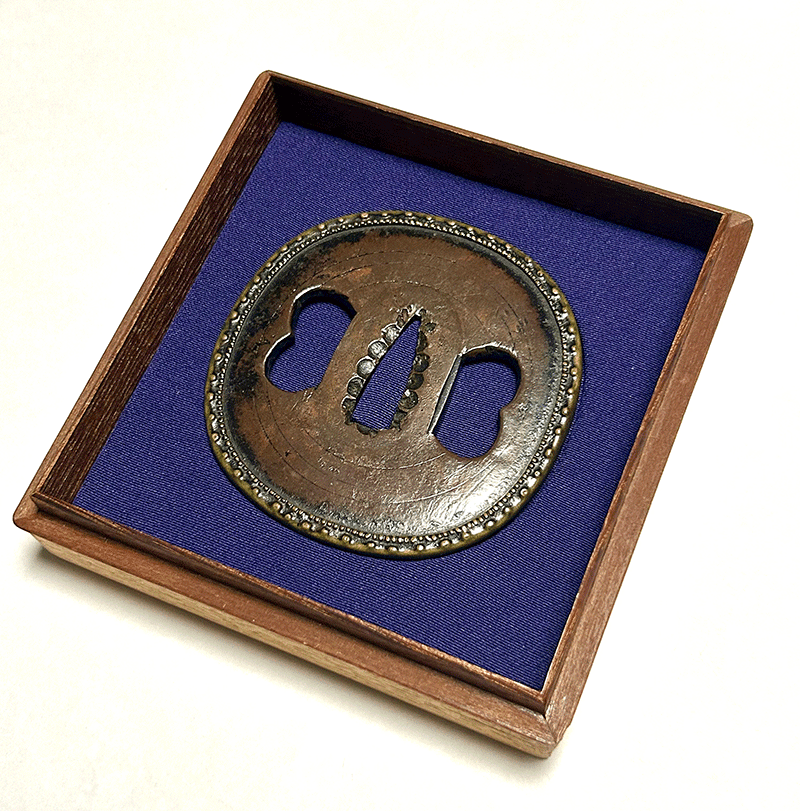
Technically, the Hirata school inherited much of the Shoami tradition. While iron-ground works are also encountered, Hikozo frequently employed irogane such as yamagane, brass, and shakudo, producing the distinctive, richly toned coloration known as "Hikozo-gane." In addition to zogan inlay — including gold keshikomi-zogan, silver-wire inlay, and on rare occasions shippo-zogan (cloisonne inlay) — he heightened decorative elegance by applying characteristic filing treatments such as Amida-yasuri and Okina-yasuri, thereby adding an abundance of refined and courtly taste[[c:1]]. His invention of the Odawara fukurin rim technique became a hallmark of the school, executed in shakudo, brass, shibuichi, or yamagane with a rope-pattern (nawame) finish of dense workmanship. His openwork favored kage-sukashi — shadow or negative silhouettes — rendered with gentle chamfering that contributes to a prevailing softness of impression. Traces of black lacquer often remain upon the ground, producing an exquisite modulation of tone that harmonizes with the underlying metal surface.

What distinguishes Hikozo within the broader Higo tradition is the convergence of plainness and profundity in a single plate. The NBTHK setsumei repeatedly identify in his work a "plain, sincere character" joined to "archaic elegance[[c:3]]," a sensibility "removed from the mundane" that yields results described as "mysterious, esoteric, and subtly profound." His tsuba are praised for expressing the quiet, tranquil beauty of kanjaku and the refined elegance of sabi — qualities rooted in the aesthetic of the Hosokawa school of tea. Through long years, the ground metal acquires a deeper flavor, and a quiet, dignified world is formed within the single plate[[c:2]]. Whether working in bold o-sukashi openwork or restrained enso compositions, Hikozo's pieces are consistently recognized as possessing an ineffable atmosphere: a subdued, moist feeling of finish[[c:4]] in which the high level of technique is fully apparent precisely because the design is so direct and spare.

Historical importance

Where Hikozo stands among comparable artisans: across all of nihontō, and within tradition, era, and period. The tiers (Foremost · Leading · Major · Notable) weigh official designations from the NBTHK and Japan's Agency for Cultural Affairs, together with historical honors of lasting repute such as the Sansaku and Meibutsu-chō.

随一
Foremost
屈指
Leading
有数
Major
著名
Notable

Select a lens to see how it's measured.

Designation record
50 designated works
Jūyō Bijutsuhin
1
Tokubetsu Jūyō
2
Jūyō
47
4 works by Hikozo on the market→
Hikozo — full profileHigo school
About the school

Hirata

平田

Higo · Higo

9 pieces on the market now

›

The Hirata school encompasses two distinct but related lineages of Japanese metalworkers bearing the Hirata name, each distinguished by its founder's artistic inheritance and medium. The first is the Hirata school of Higo Province, founded by Hirata Hikozo, a craftsman of Shoami lineage who served the celebrated warrior and tea master Hosokawa Sansai. Learn more →

1 recorded smiths50 designated works
Leading smiths
SmithEraDesignated
Hikozo彦三—50
Shozaburo小三郎—0
Hikozo彦三—0
Explore the Hirata school →
NBTHK Certificate
Jūyō Tōsōgu重要刀装具
Important Fitting
›

Exceptional craft of very high artistic value, judged to rank with a nationally recognized Important Art Object (Jūyō Bijutsuhin).

Unsigned (attr. Hirata Hikozo)
As written on the certificate
About the NBTHK›

The NBTHK (Nihon Bijutsu Tōken Hozon Kyōkai, the Society for the Preservation of Japanese Art Swords) is a public-interest incorporated foundation founded in 1948 and supervised by Japan’s Agency for Cultural Affairs (Bunkachō); it is based at the Japanese Sword Museum in Tokyo. Its expert panels physically examine each submitted work (shinsa) and issue a certificate (kanteishō) ranking it by artistic and historical merit. NBTHK papers are the most widely recognized standard of authentication for Japanese swords and fittings.

NBTHK official site→
Seller
S
Samurai Nippon
Established 1977 · 49 yrs on the market
🇯🇵Ships from Japan
›
✓Verified dealersamurai-nippon.net
✓Ships worldwide✓English supportWire transferPayPalCredit card
Return policy

For one-of-a-kind items such as swords, sword fittings, and antiques, please contact us about a return within 3 days of the item's arrival and ship it back within 8 days. Refunds are issued the same day the returned item arrives.

View all of Samurai Nippon’s listings→View this item on the dealer’s site→

More works by Hirata Hikozo

View all →
Nihonto.com
Jūyō
Tsuba - Jūyō - by Hirata Hikozo - Juyo Tsuba by Hirata HikozoTsuba - Jūyō - by Hirata Hikozo - Juyo Tsuba by Hirata Hikozo

Tsuba

ByHirata Hikozo
¥48,500
Iida Koendo
Tokuho
Tsuba - Tokuho - by Hirata Hikozo - Tosogu: HikozoTsuba - Tokuho - by Hirata Hikozo - Tosogu: Hikozo

Tsuba

ByHirata Hikozo
Ask
Iida Koendo
Jūyō
Tsuba - Jūyō - by Hirata Hikozo - Tosogu: NBTHK Juyo Tosogu No.55Tsuba - Jūyō - by Hirata Hikozo - Tosogu: NBTHK Juyo Tosogu No.55

Tsuba

ByHirata Hikozo
¥7,700,000

Previously sold by Hirata Hikozo

Tsuba Info
Tokuho
Tsuba - Tokuho - by Hirata Hikozo - Tsuba by Hirata HikozoTsuba - Tokuho - by Hirata Hikozo - Tsuba by Hirata Hikozo
Sold

Tsuba

ByHirata Hikozo
SOLD
Choshuya
Tokuho
Tsuba - Tokuho - by Hirata Hikozo - Twelve Stars Openwork, Mumei, Hirata Hikozo (Higo)Tsuba - Tokuho - by Hirata Hikozo - Twelve Stars Openwork, Mumei, Hirata Hikozo (Higo)
Sold

Tsuba

ByHirata Hikozo
SOLD
Samurai Nippon
Hozon
Tsuba - Hozon - by Hirata Hikozo - Hato Enso ZuTsuba - Hozon - by Hirata Hikozo - Hato Enso Zu
Sold

Tsuba

ByHirata Hikozo
SOLD
Iida Koendo
Tokuho
Tsuba - Tokuho - by Hirata Hikozo - Hirata HikozōTsuba - Tokuho - by Hirata Hikozo - Hirata Hikozō
Sold

Tsuba

ByHirata Hikozo
SOLD
Choshuya
Tsuba - by Hirata Hikozo - Amida-yasuri Design, Unsigned Hirata Hikozo (Higo)Tsuba - by Hirata Hikozo - Amida-yasuri Design, Unsigned Hirata Hikozo (Higo)
Sold

Tsuba

ByHirata Hikozo
SOLD

More from the Hirata school

View all →
Samurai Nippon
Tokuho
Tsuba - Tokuho - by Hirata School - Sayumon Sukashi ZuTsuba - Tokuho - by Hirata School - Sayumon Sukashi Zu

Tsuba

ByHirata School
¥750,000
Shoubudou
Tokuho
Fuchi-Kashira - Tokuho - by Hirata School - Fuchikashira: Mumei Hirata Shippo, Group of Butterflies DesignFuchi-Kashira - Tokuho - by Hirata School - Fuchikashira: Mumei Hirata Shippo, Group of Butterflies Design

Fuchi-Kashira

ByHirata School
¥450,000
Katanahanbai
Tokuho
Tsuba - Tokuho - by Hirata School - Bushi-kan Scattered Design, Hirata ShippoTsuba - Tokuho - by Hirata School - Bushi-kan Scattered Design, Hirata Shippo

Tsuba

ByHirata School
¥380,000
Choshuya
Tokuho
Kozuka - Tokuho - by Hirata School - Kozuka with Kakko Drum Design, Mumei, Hirata ShippoKozuka - Tokuho - by Hirata School - Kozuka with Kakko Drum Design, Mumei, Hirata Shippo

Kozuka

ByHirata School
¥650,000
Nihonto US
Tsuba - by Hirata School - HirataTsuba - by Hirata School - Hirata

Tsuba

ByHirata School
¥3,000

More from the Higo Kinkō tradition

View all →
Iida Koendo
Jūyō
Tsuba - Jūyō - by Nishigaki Kanshiro - Nishigaki KanshiroTsuba - Jūyō - by Nishigaki Kanshiro - Nishigaki Kanshiro

Tsuba

ByNishigaki Kanshiro
¥4,400,000
Iida Koendo
Tokuho
Tsuba - Tokuho - by Hayashi School - Tosogu: Mumei (Hayashi)Tsuba - Tokuho - by Hayashi School - Tosogu: Mumei (Hayashi)

Tsuba

ByHayashi School
¥880,000
Legacy Swords
Hozon
Fuchi-Kashira - Hozon - by Kinko Misumi Masaharu - Rare Signed Higo Fuchigashira Set by Misumi Koji (Masaharu) with NBTHK Hozon PaperFuchi-Kashira - Hozon - by Kinko Misumi Masaharu - Rare Signed Higo Fuchigashira Set by Misumi Koji (Masaharu) with NBTHK Hozon Paper

Fuchi-Kashira

ByKinko Misumi Masaharu
¥3,900
Soryu
Hozon
Tsuba - Hozon - by Kumagai School - Iron Kumagai School Tsuba with NBTHK Hozon TosoguTsuba - Hozon - by Kumagai School - Iron Kumagai School Tsuba with NBTHK Hozon Tosogu

Tsuba

ByKumagai School
¥1,600
Eirakudo
Tokuho
Tsuba - Tokuho - by Kamiyoshi School - KamiyoshiTsuba - Tokuho - by Kamiyoshi School - Kamiyoshi

Tsuba

ByKamiyoshi School
¥360,000
Iida Koendo
Tokuho
Tsuba - Tokuho - by Nishigaki Kanshiro - Tosogu: Kanshiro NishigakiTsuba - Tokuho - by Nishigaki Kanshiro - Tosogu: Kanshiro Nishigaki

Tsuba

ByNishigaki Kanshiro
¥1,650,000
Tetsugendo
Fuchi-Kashira - by Nishigaki Kanshiro - Fuchi-Kashira: Nishigaki Kanshiro - Higo SchoolFuchi-Kashira - by Nishigaki Kanshiro - Fuchi-Kashira: Nishigaki Kanshiro - Higo School

Fuchi-Kashira

ByNishigaki Kanshiro
¥4,500
Iida Koendo
Jūyō
Tsuba - Jūyō - by Hayashi Matashichi - Tosogu: Juyo Tosogu by Hayashi MatashichiTsuba - Jūyō - by Hayashi Matashichi - Tosogu: Juyo Tosogu by Hayashi Matashichi

Tsuba

ByHayashi Matashichi
¥7,700,000

Swords

  • Katana
  • Wakizashi
  • Tantō
  • Tachi
  • Naginata
  • Yari

Fittings

  • Tsuba
  • Fuchi-Kashira
  • Kozuka
  • Menuki

By Certification

  • Tokujū
  • Jūyō
  • Tokuho
  • Hozon

Resources

  • Dealer Directory
  • Artist Directory
  • Glossary
  • Browse All
Nihontowatch© 2026
TermsPrivacyCookiesAbout

Description

This is an unsigned tsuba attributed to Hikoso of the Hirata school, dating to the Momoyama period. It features an Okinayasuri finish on a black lacquered suaka ground with openwork of plovers flying in four directions, and is adorned with an Odawara fukurin. The tsuba is designated as a 39th session Juyo Tosogu by the NBTHK.

NBTHK Setsumei

Juyo-Tosogu, 39th Session — Designated November 5, 1993 Tsuba, mumei: Hikozō (彦三) Measurements Tate (height): 7.6 cm Yoko (width): 7.5 cm Mimi thickness: 0.45 cm Description Form: maru-gata Material: suaka (refined copper) Decoration / Surface: okina-yasuri file marks with black urushi lacquer Design: “Chidori in Four Directions” openwork (shihō chidori sukashi) Hitsu-ana: two hitsu-ana Rim: yamagane “Odawara” fukurin (小田原覆輪) Signature: none Artisan Higo metalwork, Hirata school — attributed to Hikozō (彦三), founder of the Hirata lineage. Era Momoyama period. Explanation The principal streams of Higo metalwork are the four lineages of Hayashi, Hirata, Nishigaki, and Shimizu. In addition, there are works made personally by Hosokawa Sansai as well as pieces produced as a kind of martial “accomplishment” (yogi) by warrior figures such as Musashi. Under the guidance of Hosokawa Tadaoki—renowned as a great commander and also an expert of the tea ceremony—this tradition came to be characterized by fittings that unite excellent practicality, suited to warrior taste, with a high level of artistic refinement. Hikozō, progenitor of the Hirata school, served Sansai in Kyoto, and later moved in his company to Tango and then Kokura. The distinguishing features of the Hirata school include a strong inheritance of Shōami traditions. In materials they employed various irogane—such as yamagane, suaka, brass, and shakudō—and, beyond inlay techniques, they added ornamentation through nanako and okina-yasuri, and on rare occasions even used cloisonné inlay (shippo zōgan). Another point of special interest in Hikozō’s oeuvre is his founding of the distinctive rim construction known as “Odawara fukurin.” In this tsuba, the slightly reddish tone of the suaka has been selected with discernment, and there is an elegant harmony in the way the okina-yasuri and black urushi have settled together. The chidori flying in the four directions are rendered with lightness, free of affectation, and the Odawara fukurin is orthodox and fully in accordance with established rules. Here, Hikozō’s true strengths—expressing the beauty of the Hosokawa tradition of tea—are amply displayed. NBTHK Juyo Tosogu Designation Certificate (translation) As the result of examination, the above-mentioned item is hereby designated Juyo Tosogu. Designated: November 5, 1993 (Heisei 5) NBTHK (Society for the Preservation of the Japanese Art Sword) Chairman: Yamanaka Sadao (山中貞雄)

Certificate Reading

Certificate reading — 無銘(彦三)

NihontoWatch MonNihontoWatchBETA
MarketAuctionsEncyclopedia
Fittings›Higo Kinkō›Hirata›Hikozo›Tsuba: Okinayasuri Shiho Chidori Zu
tsubaJūyō
Hirata Hikozo

Tsuba: Okinayasuri Shiho Chidori Zu

mumei · Hirata · Momoyama

Price on request
Visit seller website →
Hirata Hikozo — 1 of 9
Hirata Hikozo — 2 of 9
Hirata Hikozo — 3 of 9
Hirata Hikozo — 4 of 9
Hirata Hikozo — 5 of 9
Hirata Hikozo — 6 of 9
Hirata Hikozo — 7 of 9
Hirata Hikozo — 8 of 9
Hirata Hikozo — 9 of 9
1 / 9
1 / 9
Hirata Hikozo — 1 of 9Hirata Hikozo — 2 of 9Hirata Hikozo — 3 of 9Hirata Hikozo — 4 of 9Hirata Hikozo — 5 of 9Hirata Hikozo — 6 of 9Hirata Hikozo — 7 of 9Hirata Hikozo — 8 of 9Hirata Hikozo — 9 of 9
Measurements & details
Maker

Hirata Hikozo

Era

Momoyama

Signature

Unsigned

Papers

Jūyō #39 (NBTHK)

Description

This is an unsigned tsuba attributed to Hikoso of the Hirata school, dating to the Momoyama period. It features an Okinayasuri finish on a black lacquered suaka ground with openwork of plovers flying in four directions, and is adorned with an Odawara fukurin. The tsuba is designated as a 39th session Juyo Tosogu by the NBTHK.

NBTHK Zufu Commentary

Juyo #39

AI translation — may contain errors

-Tosogu, 39th Session — Designated November 5, 1993

, : Hikozō (彦三)

Measurements (height): 7.6 cm (width): 7.5 cm Mimi thickness: 0.45 cm

Description Form: Material: (refined copper) Decoration / Surface: file marks with black urushi lacquer Design: “Chidori in Four Directions” openwork (shihō chidori ) : two Rim: “Odawara” (小田原覆輪) Signature: none

Artisan metalwork, Hirata school — attributed to Hikozō (彦三), founder of the Hirata lineage.

Era period.

Explanation The principal streams of metalwork are the four lineages of Hayashi, Hirata, Nishigaki, and Shimizu. In addition, there are works made personally by Hosokawa Sansai as well as pieces produced as a kind of martial “accomplishment” (yogi) by warrior figures such as . Under the guidance of Hosokawa Tadaoki—renowned as a great commander and also an expert of the tea ceremony—this tradition came to be characterized by fittings that unite excellent practicality, suited to warrior taste, with a high level of artistic refinement.

Hikozō, progenitor of the Hirata school, served Sansai in Kyoto, and later moved in his company to Tango and then Kokura. The distinguishing features of the Hirata school include a strong inheritance of Shōami traditions. In materials they employed various —such as , , brass, and —and, beyond inlay techniques, they added ornamentation through and , and on rare occasions even used cloisonné inlay (shippo ). Another point of special interest in Hikozō’s oeuvre is his founding of the distinctive rim construction known as “Odawara .”

In this , the slightly reddish tone of the has been selected with discernment, and there is an elegant harmony in the way the and black urushi have settled together. The chidori flying in the four directions are rendered with lightness, free of affectation, and the Odawara is orthodox and fully in accordance with established rules. Here, Hikozō’s true strengths—expressing the beauty of the Hosokawa tradition of tea—are amply displayed.

Tosogu Designation Certificate (translation) As the result of examination, the above-mentioned item is hereby designated Tosogu. Designated: November 5, 1993 (Heisei 5) (Society for the Preservation of the Japanese Art Sword) Chairman: Yamanaka Sadao (山中貞雄)
About the maker

Hikozo

彦三

Higo · Higo

4 pieces on the market now

›

Hirata Hikozo, founder of the Hirata school of Higo metalworkers, was a craftsman of Shoami lineage who served the celebrated warrior and tea master Hosokawa Sansai in Kyoto. When the Hosokawa domain was transferred, Hikozo accompanied his lord first to Tango and Kokura, and finally down to Kumamoto, where he died in Kan'ei 12 (1635). Under the guidance of Sansai — famed for his command of both martial and cultural refinement — Hikozo developed an aesthetic vision that merged outstanding practical function suited to the warrior's taste with a dignified, elevated artistic quality. From among his followers emerged Shimizu Jingo (his nephew) and Nishigaki Kanshiro; together with Hayashi Matahichi of the Owari lineage, these masters formed what came to be regarded as the four major schools of Higo metalwork. It was Hikozo who established the artistic foundations upon which this entire tradition would rest.

Technically, the Hirata school inherited much of the Shoami tradition. While iron-ground works are also encountered, Hikozo frequently employed irogane such as yamagane, brass, and shakudo, producing the distinctive, richly toned coloration known as "Hikozo-gane." In addition to zogan inlay — including gold keshikomi-zogan, silver-wire inlay, and on rare occasions shippo-zogan (cloisonne inlay) — he heightened decorative elegance by applying characteristic filing treatments such as Amida-yasuri and Okina-yasuri, thereby adding an abundance of refined and courtly taste[[c:1]]. His invention of the Odawara fukurin rim technique became a hallmark of the school, executed in shakudo, brass, shibuichi, or yamagane with a rope-pattern (nawame) finish of dense workmanship. His openwork favored kage-sukashi — shadow or negative silhouettes — rendered with gentle chamfering that contributes to a prevailing softness of impression. Traces of black lacquer often remain upon the ground, producing an exquisite modulation of tone that harmonizes with the underlying metal surface.

What distinguishes Hikozo within the broader Higo tradition is the convergence of plainness and profundity in a single plate. The NBTHK setsumei repeatedly identify in his work a "plain, sincere character" joined to "archaic elegance[[c:3]]," a sensibility "removed from the mundane" that yields results described as "mysterious, esoteric, and subtly profound." His tsuba are praised for expressing the quiet, tranquil beauty of kanjaku and the refined elegance of sabi — qualities rooted in the aesthetic of the Hosokawa school of tea. Through long years, the ground metal acquires a deeper flavor, and a quiet, dignified world is formed within the single plate[[c:2]]. Whether working in bold o-sukashi openwork or restrained enso compositions, Hikozo's pieces are consistently recognized as possessing an ineffable atmosphere: a subdued, moist feeling of finish[[c:4]] in which the high level of technique is fully apparent precisely because the design is so direct and spare.

Historical importance

Where Hikozo stands among comparable artisans: across all of nihontō, and within tradition, era, and period. The tiers (Foremost · Leading · Major · Notable) weigh official designations from the NBTHK and Japan's Agency for Cultural Affairs, together with historical honors of lasting repute such as the Sansaku and Meibutsu-chō.

随一
Foremost
屈指
Leading
有数
Major
著名
Notable

Select a lens to see how it's measured.

Designation record
50 designated works
Jūyō Bijutsuhin
1
Tokubetsu Jūyō
2
Jūyō
47
4 works by Hikozo on the market→
Hikozo — full profileHigo school
About the school

Hirata

平田

Higo · Higo

9 pieces on the market now

›

The Hirata school encompasses two distinct but related lineages of Japanese metalworkers bearing the Hirata name, each distinguished by its founder's artistic inheritance and medium. The first is the Hirata school of Higo Province, founded by Hirata Hikozo, a craftsman of Shoami lineage who served the celebrated warrior and tea master Hosokawa Sansai. Learn more →

1 recorded smiths50 designated works
Leading smiths
SmithEraDesignated
Hikozo彦三—50
Shozaburo小三郎—0
Hikozo彦三—0
Explore the Hirata school →
NBTHK Certificate
Jūyō Tōsōgu重要刀装具
Important Fitting
›

Exceptional craft of very high artistic value, judged to rank with a nationally recognized Important Art Object (Jūyō Bijutsuhin).

Unsigned (attr. Hirata Hikozo)
As written on the certificate
About the NBTHK›

The NBTHK (Nihon Bijutsu Tōken Hozon Kyōkai, the Society for the Preservation of Japanese Art Swords) is a public-interest incorporated foundation founded in 1948 and supervised by Japan’s Agency for Cultural Affairs (Bunkachō); it is based at the Japanese Sword Museum in Tokyo. Its expert panels physically examine each submitted work (shinsa) and issue a certificate (kanteishō) ranking it by artistic and historical merit. NBTHK papers are the most widely recognized standard of authentication for Japanese swords and fittings.

NBTHK official site→
Seller
S
Samurai Nippon
Established 1977 · 49 yrs on the market
🇯🇵Ships from Japan
›
✓Verified dealersamurai-nippon.net
✓Ships worldwide✓English supportWire transferPayPalCredit card
Return policy

For one-of-a-kind items such as swords, sword fittings, and antiques, please contact us about a return within 3 days of the item's arrival and ship it back within 8 days. Refunds are issued the same day the returned item arrives.

View all of Samurai Nippon’s listings→View this item on the dealer’s site→

More works by Hirata Hikozo

View all →
Nihonto.com
Jūyō
Tsuba - Jūyō - by Hirata Hikozo - Juyo Tsuba by Hirata HikozoTsuba - Jūyō - by Hirata Hikozo - Juyo Tsuba by Hirata Hikozo

Tsuba

ByHirata Hikozo
¥48,500
Iida Koendo
Tokuho
Tsuba - Tokuho - by Hirata Hikozo - Tosogu: HikozoTsuba - Tokuho - by Hirata Hikozo - Tosogu: Hikozo

Tsuba

ByHirata Hikozo
Ask
Iida Koendo
Jūyō
Tsuba - Jūyō - by Hirata Hikozo - Tosogu: NBTHK Juyo Tosogu No.55Tsuba - Jūyō - by Hirata Hikozo - Tosogu: NBTHK Juyo Tosogu No.55

Tsuba

ByHirata Hikozo
¥7,700,000

Previously sold by Hirata Hikozo

Tsuba Info
Tokuho
Tsuba - Tokuho - by Hirata Hikozo - Tsuba by Hirata HikozoTsuba - Tokuho - by Hirata Hikozo - Tsuba by Hirata Hikozo
Sold

Tsuba

ByHirata Hikozo
SOLD
Choshuya
Tokuho
Tsuba - Tokuho - by Hirata Hikozo - Twelve Stars Openwork, Mumei, Hirata Hikozo (Higo)Tsuba - Tokuho - by Hirata Hikozo - Twelve Stars Openwork, Mumei, Hirata Hikozo (Higo)
Sold

Tsuba

ByHirata Hikozo
SOLD
Samurai Nippon
Hozon
Tsuba - Hozon - by Hirata Hikozo - Hato Enso ZuTsuba - Hozon - by Hirata Hikozo - Hato Enso Zu
Sold

Tsuba

ByHirata Hikozo
SOLD
Iida Koendo
Tokuho
Tsuba - Tokuho - by Hirata Hikozo - Hirata HikozōTsuba - Tokuho - by Hirata Hikozo - Hirata Hikozō
Sold

Tsuba

ByHirata Hikozo
SOLD
Choshuya
Tsuba - by Hirata Hikozo - Amida-yasuri Design, Unsigned Hirata Hikozo (Higo)Tsuba - by Hirata Hikozo - Amida-yasuri Design, Unsigned Hirata Hikozo (Higo)
Sold

Tsuba

ByHirata Hikozo
SOLD

More from the Hirata school

View all →
Samurai Nippon
Tokuho
Tsuba - Tokuho - by Hirata School - Sayumon Sukashi ZuTsuba - Tokuho - by Hirata School - Sayumon Sukashi Zu

Tsuba

ByHirata School
¥750,000
Shoubudou
Tokuho
Fuchi-Kashira - Tokuho - by Hirata School - Fuchikashira: Mumei Hirata Shippo, Group of Butterflies DesignFuchi-Kashira - Tokuho - by Hirata School - Fuchikashira: Mumei Hirata Shippo, Group of Butterflies Design

Fuchi-Kashira

ByHirata School
¥450,000
Katanahanbai
Tokuho
Tsuba - Tokuho - by Hirata School - Bushi-kan Scattered Design, Hirata ShippoTsuba - Tokuho - by Hirata School - Bushi-kan Scattered Design, Hirata Shippo

Tsuba

ByHirata School
¥380,000
Choshuya
Tokuho
Kozuka - Tokuho - by Hirata School - Kozuka with Kakko Drum Design, Mumei, Hirata ShippoKozuka - Tokuho - by Hirata School - Kozuka with Kakko Drum Design, Mumei, Hirata Shippo

Kozuka

ByHirata School
¥650,000
Nihonto US
Tsuba - by Hirata School - HirataTsuba - by Hirata School - Hirata

Tsuba

ByHirata School
¥3,000

More from the Higo Kinkō tradition

View all →
Iida Koendo
Jūyō
Tsuba - Jūyō - by Nishigaki Kanshiro - Nishigaki KanshiroTsuba - Jūyō - by Nishigaki Kanshiro - Nishigaki Kanshiro

Tsuba

ByNishigaki Kanshiro
¥4,400,000
Iida Koendo
Tokuho
Tsuba - Tokuho - by Hayashi School - Tosogu: Mumei (Hayashi)Tsuba - Tokuho - by Hayashi School - Tosogu: Mumei (Hayashi)

Tsuba

ByHayashi School
¥880,000
Legacy Swords
Hozon
Fuchi-Kashira - Hozon - by Kinko Misumi Masaharu - Rare Signed Higo Fuchigashira Set by Misumi Koji (Masaharu) with NBTHK Hozon PaperFuchi-Kashira - Hozon - by Kinko Misumi Masaharu - Rare Signed Higo Fuchigashira Set by Misumi Koji (Masaharu) with NBTHK Hozon Paper

Fuchi-Kashira

ByKinko Misumi Masaharu
¥3,900
Soryu
Hozon
Tsuba - Hozon - by Kumagai School - Iron Kumagai School Tsuba with NBTHK Hozon TosoguTsuba - Hozon - by Kumagai School - Iron Kumagai School Tsuba with NBTHK Hozon Tosogu

Tsuba

ByKumagai School
¥1,600
Eirakudo
Tokuho
Tsuba - Tokuho - by Kamiyoshi School - KamiyoshiTsuba - Tokuho - by Kamiyoshi School - Kamiyoshi

Tsuba

ByKamiyoshi School
¥360,000
Iida Koendo
Tokuho
Tsuba - Tokuho - by Nishigaki Kanshiro - Tosogu: Kanshiro NishigakiTsuba - Tokuho - by Nishigaki Kanshiro - Tosogu: Kanshiro Nishigaki

Tsuba

ByNishigaki Kanshiro
¥1,650,000
Tetsugendo
Fuchi-Kashira - by Nishigaki Kanshiro - Fuchi-Kashira: Nishigaki Kanshiro - Higo SchoolFuchi-Kashira - by Nishigaki Kanshiro - Fuchi-Kashira: Nishigaki Kanshiro - Higo School

Fuchi-Kashira

ByNishigaki Kanshiro
¥4,500
Iida Koendo
Jūyō
Tsuba - Jūyō - by Hayashi Matashichi - Tosogu: Juyo Tosogu by Hayashi MatashichiTsuba - Jūyō - by Hayashi Matashichi - Tosogu: Juyo Tosogu by Hayashi Matashichi

Tsuba

ByHayashi Matashichi
¥7,700,000

Swords

  • Katana
  • Wakizashi
  • Tantō
  • Tachi
  • Naginata
  • Yari

Fittings

  • Tsuba
  • Fuchi-Kashira
  • Kozuka
  • Menuki

By Certification

  • Tokujū
  • Jūyō
  • Tokuho
  • Hozon

Resources

  • Dealer Directory
  • Artist Directory
  • Glossary
  • Browse All
Nihontowatch© 2026
TermsPrivacyCookiesAbout
NihontoWatch Mon

NihontoWatchBETA

MarketAuctions
Encyclopedia
NihontoWatch Mon

NihontoWatchBETA

MarketAuctions
Encyclopedia