NihontoWatch Mon

NihontoWatch

MarketAuctions
Encyclopedia
NihontoWatch Mon

NihontoWatch

MarketAuctions
Encyclopedia

Description

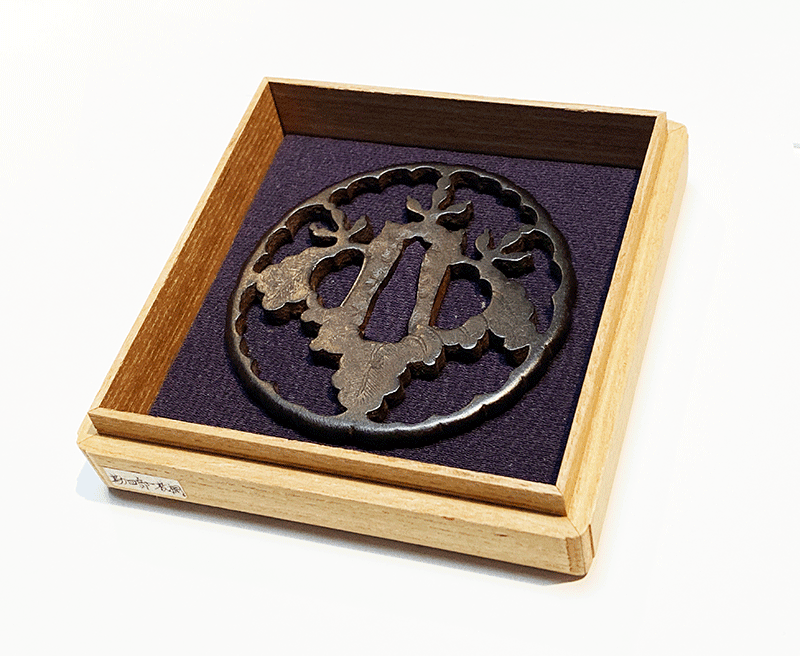
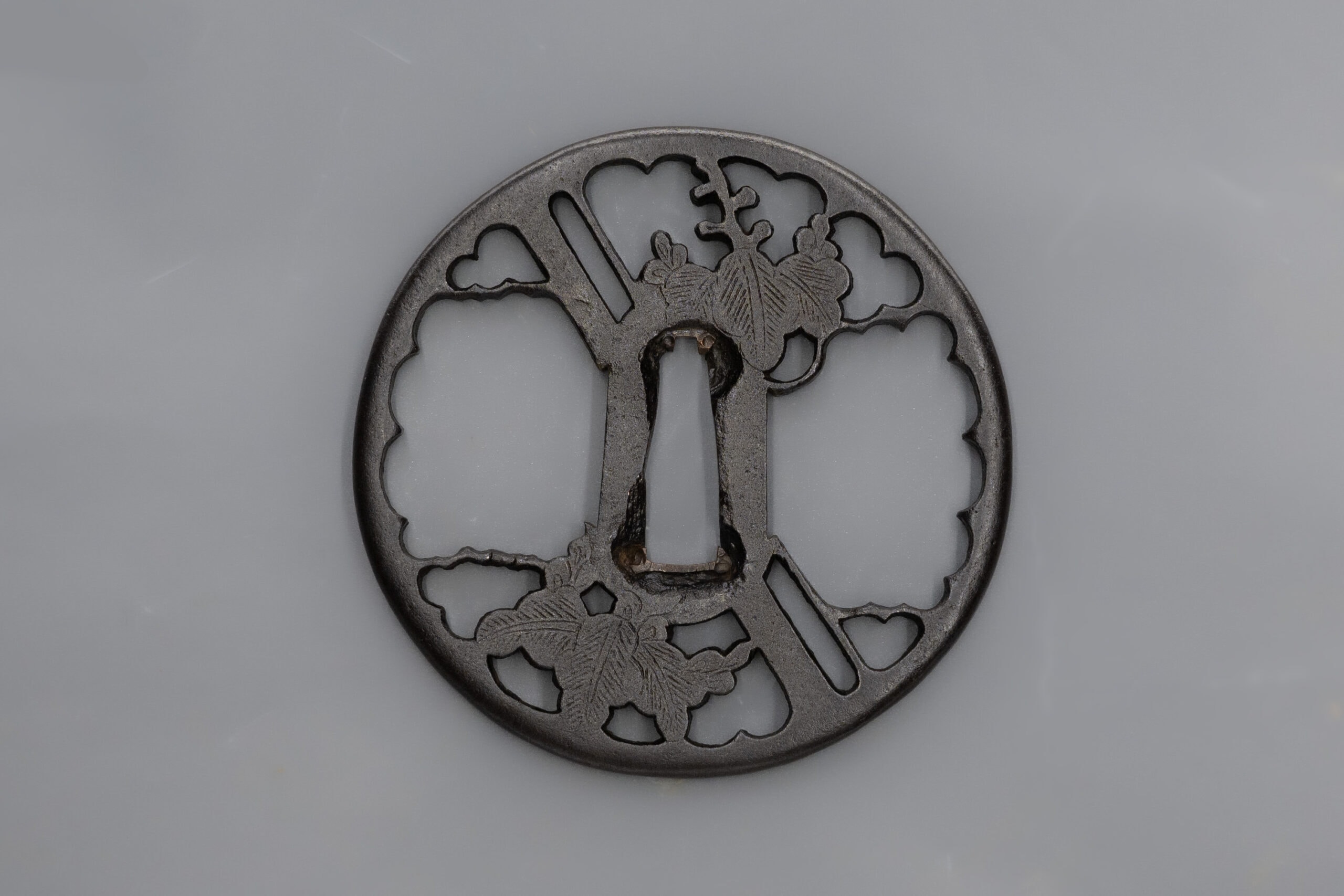
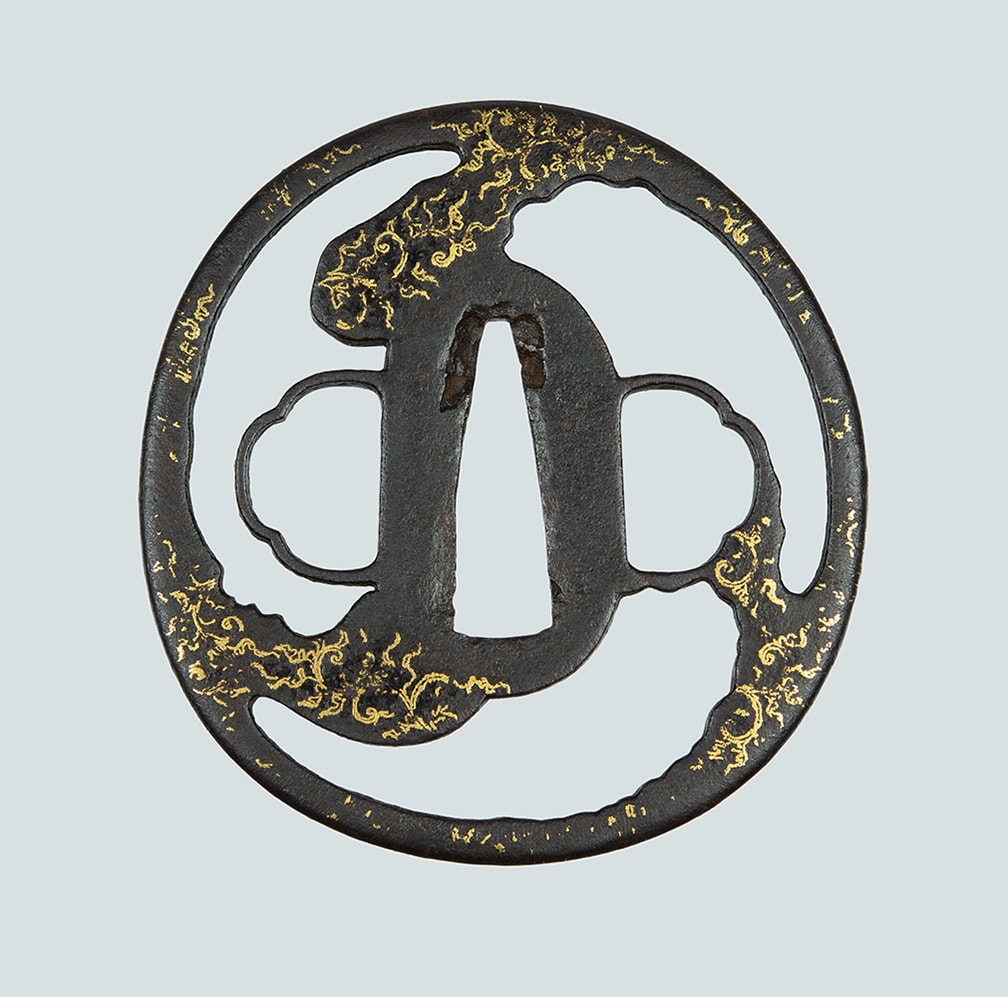
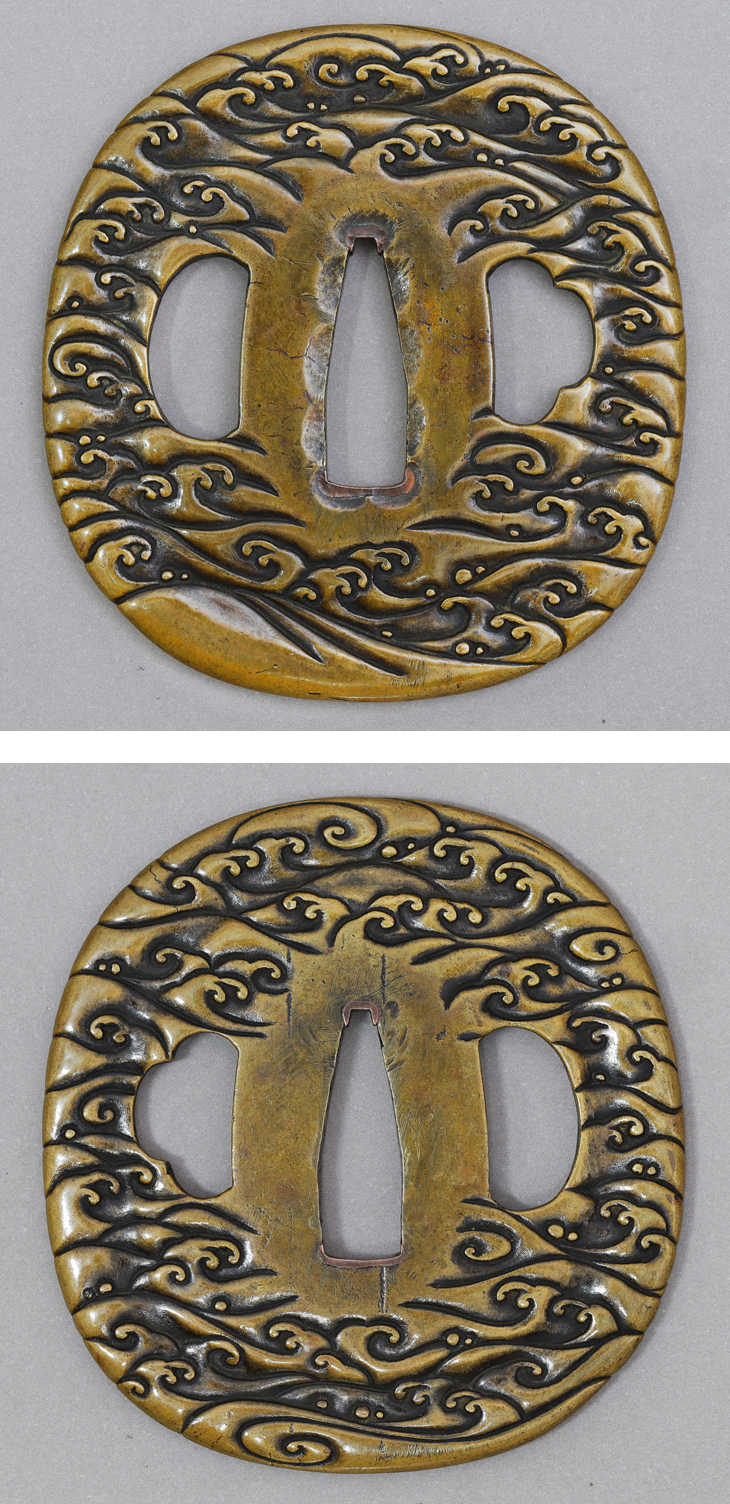
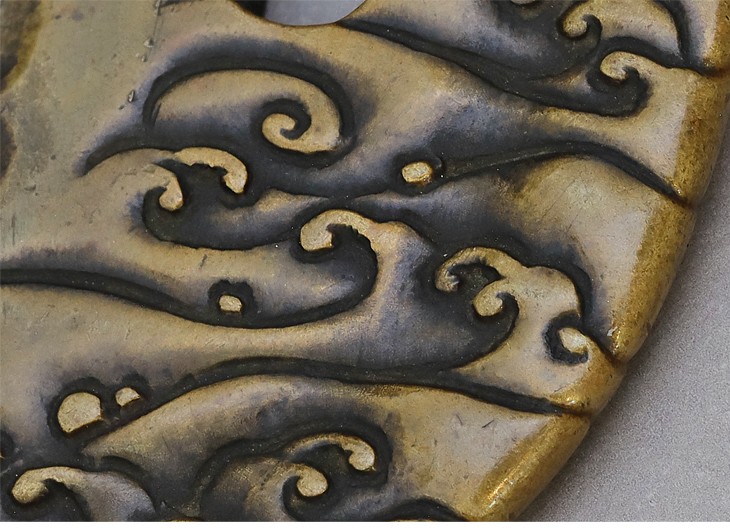
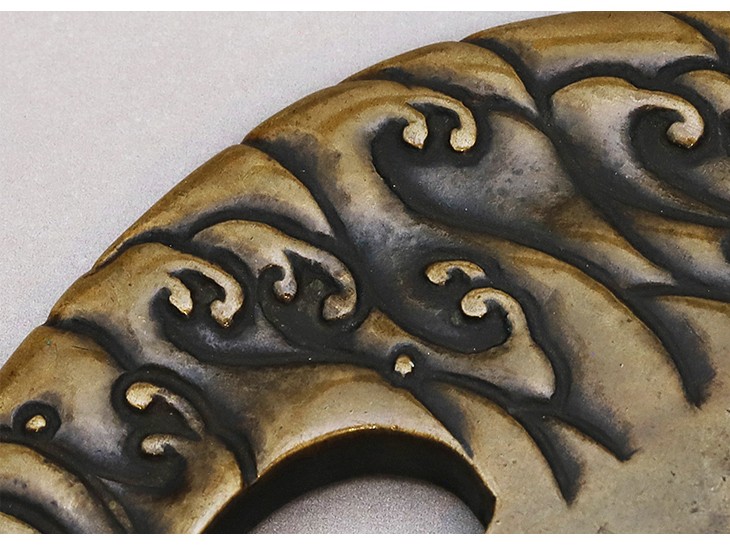
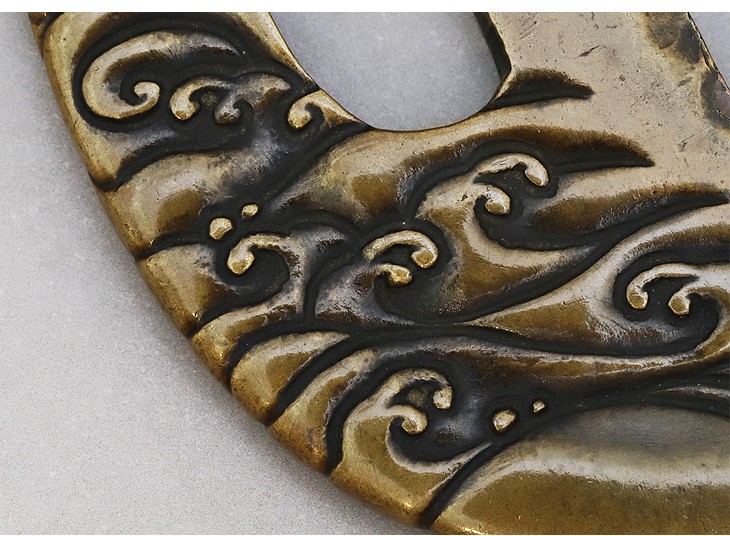
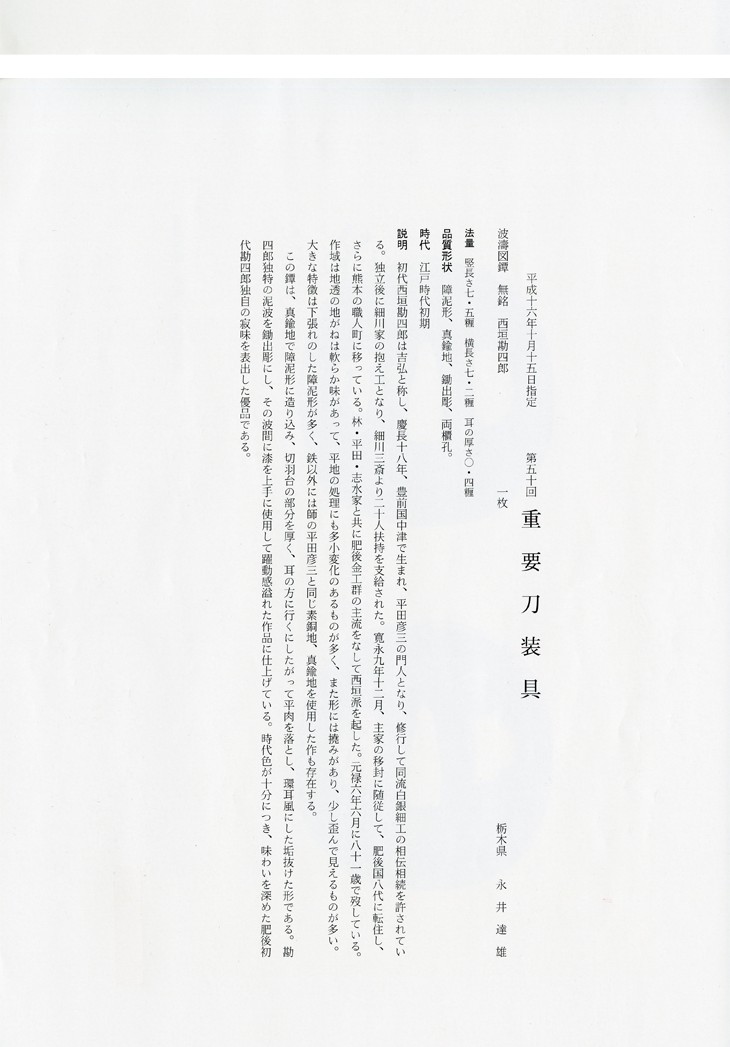
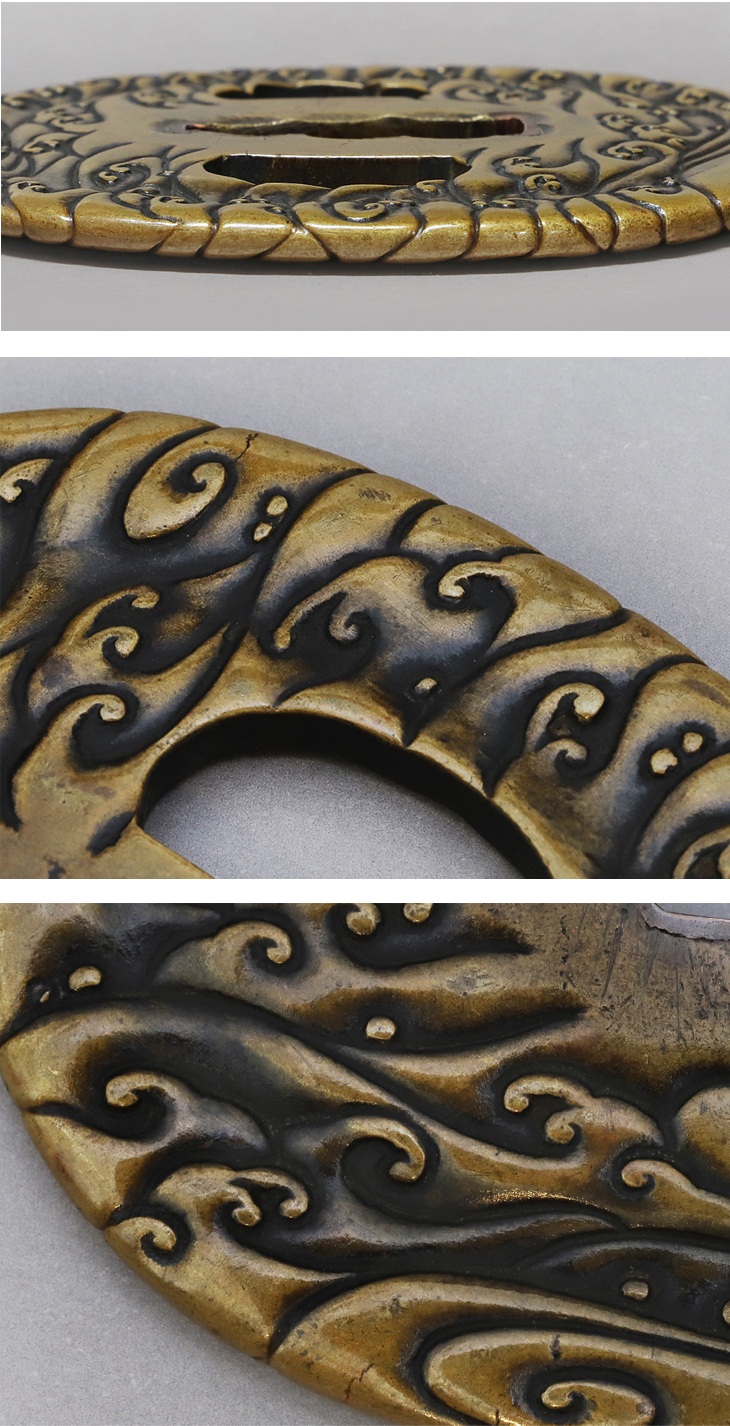
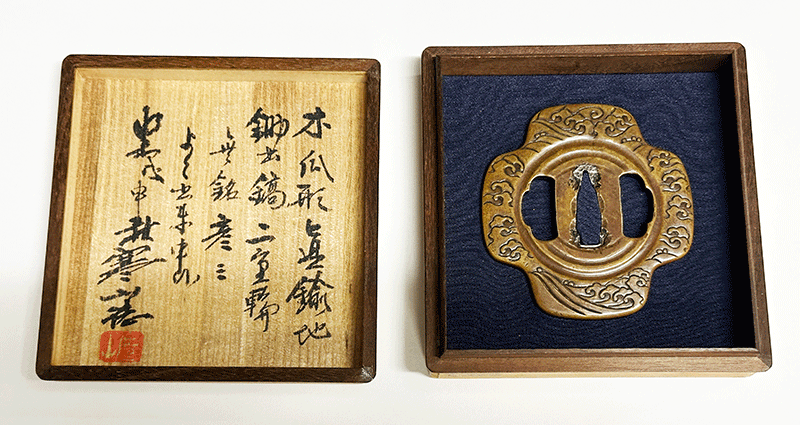
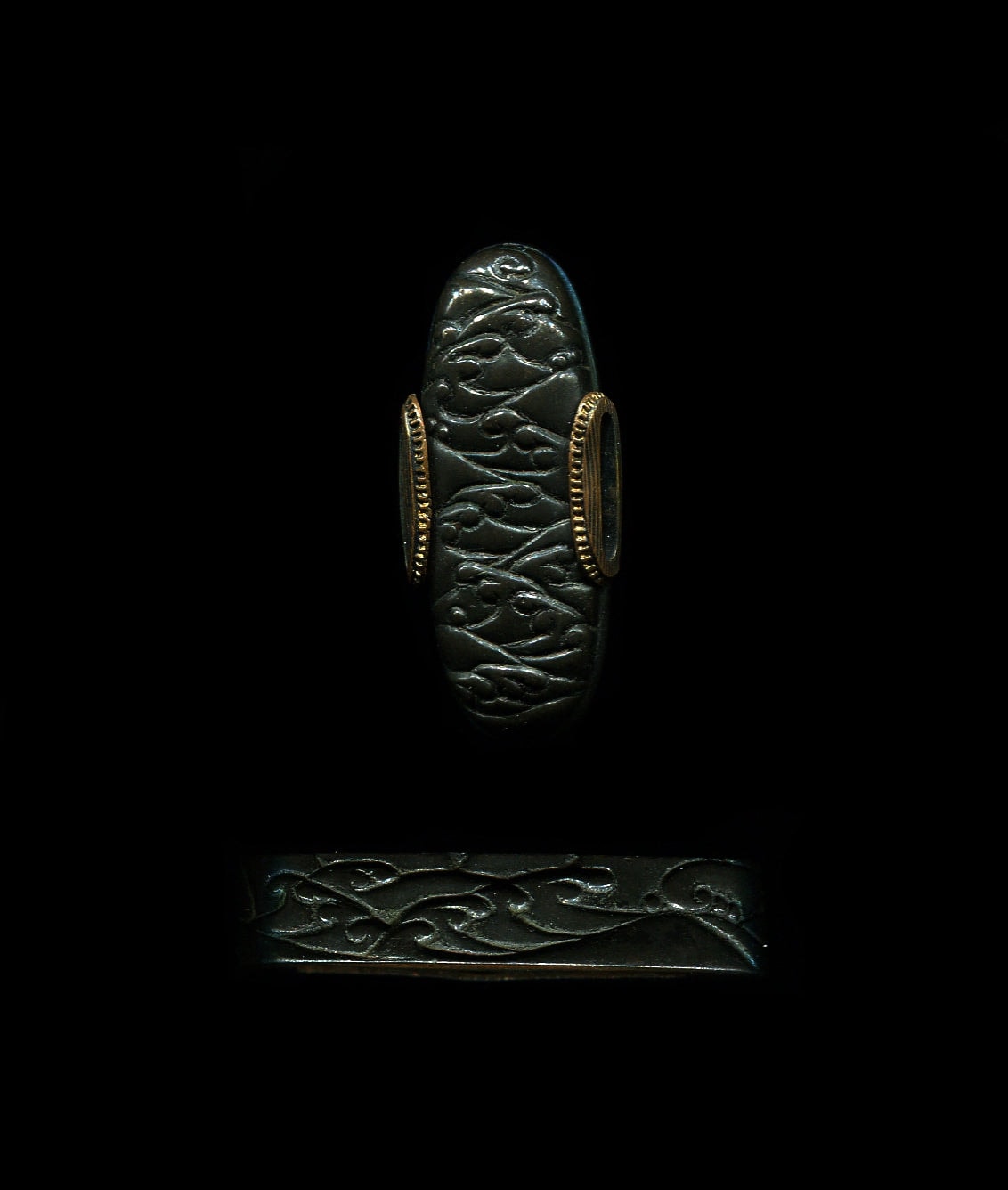
This is an unsigned tsuba by Nishigaki Kanshiro, featuring a dynamic wave design (Hato Zu) in brass. It is designated as a 50th session Juyo Tosogu by the NBTHK. The tsuba showcases Kanshiro's unique style with a 'shiri-gata' shape and skillfully carved waves, enhanced with lacquer to create a sense of movement.

NBTHK Setsumei

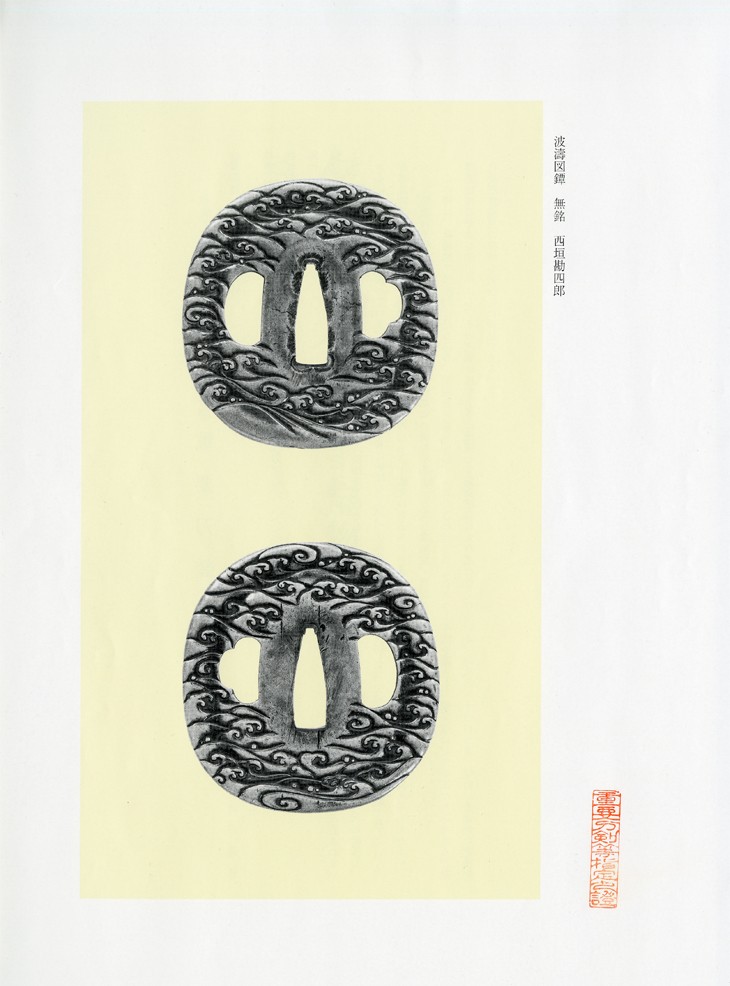
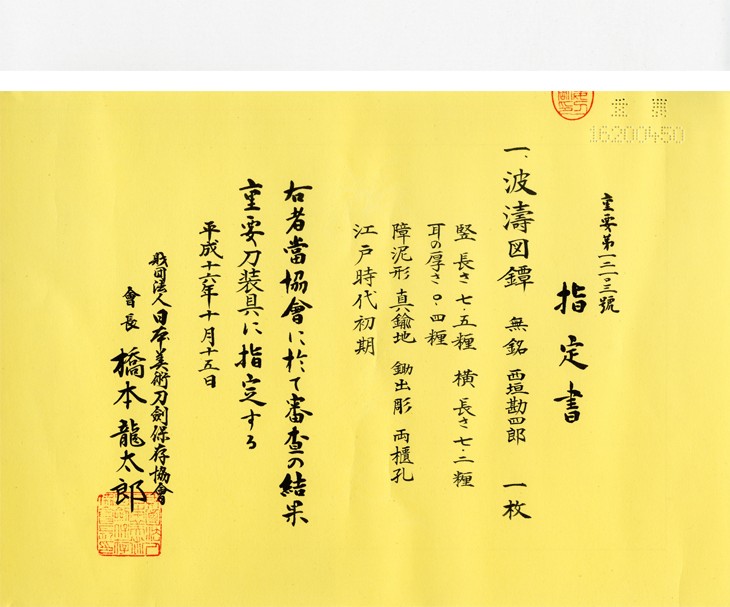
Jūyō-Tōsōgu, 50th Session — Designated October 15, 2004 Tsuba, mumei: Nishigaki Kanshirō (西垣勘四郎) Measurements Height (tate): 7.5 cm Width (yoko): 7.2 cm Rim thickness (mimi no atsusa): 0.4 cm Description Form: shōdei-gata (mudguard-shaped), single plate (ichimai) Material: brass ground (shinchu-ji) Construction: carved from the plate with modeled relief transitions Design: breaking waves (hatō) Decoration: sukidashi-bori; lacquer (urushi) applied effectively in the troughs between waves Rim: tapered modeling from the thickened seppa-dai toward the rim, finished in a clean, ring-rim-like (kanmimi-fū) manner Hitsu-ana: two openings (ryō hitsu-ana) Signature: unsigned (mumei) Artisan Nishigaki Kanshirō (attributed; associated with the Higo Nishigaki group) Era Early Edo period Explanation The first-generation Nishigaki Kanshirō, also known as Yoshihiro, was born in Nakatsu in Buzen Province in Keichō 18 (1613). He became a pupil of Hirata Hikozō, trained under him, and was permitted to inherit and continue the transmissions of that line’s silverworking traditions. After becoming independent, he entered the service of the Hosokawa as a retained craftsman, receiving from Hosokawa Sansai a stipend of twenty nin fuchi. In Kan’ei 9 (1632), 12th month, he accompanied his lord upon the family’s transfer and moved to Yatsushiro in Higo Province; he later relocated again to the artisans’ quarter in Kumamoto. Together with the Hayashi, Hirata, and Shimizu houses, he formed the mainstream of the Higo community of metalworkers and established what became known as the Nishigaki group. He died in Genroku 6 (1693), 6th month, at the age of eighty-one. As to the scope of his workmanship, his ji-sukashi plates often show a softness of ground, and the treatment of the flat surfaces frequently includes subtle variations. In addition, many examples display a slight flex or distortion in form. A major hallmark is his frequent use of shōdei-gata with a “flared lower” profile (shita-bari). Moreover, in works not made in iron there also exist examples, like those of his teacher Hirata Hikozō, employing copper (sudō) or brass (shinchu) grounds. This tsuba is made of brass and is formed in shōdei-gata. The seppa-dai is constructed thickly, and as the surface proceeds toward the rim the hiraniku is reduced, producing a sophisticated, ring-rim-like contour. Kanshirō’s distinctive “muddy waves” (doro-nami) are rendered in sukidashi-bori, and lacquer is used skillfully in the spaces between the waves, bringing the composition to an energetic, animated finish. With ample period coloration, this is an excellent piece that expresses the particular quiet austerity (sabimi) characteristic of the first-generation Higo Kanshirō, deepening its overall flavor and appeal.

NihontoWatch Mon

NihontoWatch

MarketAuctions
Encyclopedia
Fittings›Higo Kinkō›Nishigaki›Kanshiro›Tsuba: Hato Zu (Waves Design)
tsubaJūyō
Nishigaki Kanshiro

Tsuba: Hato Zu (Waves Design)

mumei · Nishigaki · Edo

Price on request
Visit seller website →
Nishigaki Kanshiro — 1 of 8
Nishigaki Kanshiro — 2 of 8
Nishigaki Kanshiro — 3 of 8
Nishigaki Kanshiro — 4 of 8
Nishigaki Kanshiro — 5 of 8
Nishigaki Kanshiro — 6 of 8
Nishigaki Kanshiro — 7 of 8
Nishigaki Kanshiro — 8 of 8
1 / 8
1 / 8
Nishigaki Kanshiro — 1 of 8Nishigaki Kanshiro — 2 of 8Nishigaki Kanshiro — 3 of 8Nishigaki Kanshiro — 4 of 8Nishigaki Kanshiro — 5 of 8Nishigaki Kanshiro — 6 of 8Nishigaki Kanshiro — 7 of 8Nishigaki Kanshiro — 8 of 8
Measurements & details
Maker

Nishigaki Kanshiro

Era

Edo

Province

Higo

Signature

Unsigned

Papers

Jūyō #50 (NBTHK)

Description

This is an unsigned tsuba by Nishigaki Kanshiro, featuring a dynamic wave design (Hato Zu) in brass. It is designated as a 50th session Juyo Tosogu by the NBTHK. The tsuba showcases Kanshiro's unique style with a 'shiri-gata' shape and skillfully carved waves, enhanced with lacquer to create a sense of movement.

NBTHK Zufu Commentary

Juyo #50

AI translation — may contain errors

-Tōsōgu, 50th Session — Designated October 15, 2004

, : Nishigaki Kanshirō (西垣勘四郎)

Measurements Height (): 7.5 cm Width (): 7.2 cm Rim thickness (mimi no atsusa): 0.4 cm

Description Form: shōdei-gata (mudguard-shaped), single plate () Material: brass ground (shinchu-) Construction: carved from the plate with modeled relief transitions Design: breaking waves (hatō) Decoration: ; lacquer (urushi) applied effectively in the troughs between waves Rim: tapered modeling from the thickened toward the rim, finished in a clean, ring-rim-like (kanmimi-) manner : two openings (ryō hitsu-ana) Signature: unsigned ()

Artisan Nishigaki Kanshirō (attributed; associated with the Nishigaki group)

Era Early period

Explanation The first-generation Nishigaki Kanshirō, also known as Yoshihiro, was born in Nakatsu in Buzen Province in Keichō 18 (1613). He became a pupil of Hirata Hikozō, trained under him, and was permitted to inherit and continue the transmissions of that line’s silverworking traditions. After becoming independent, he entered the service of the Hosokawa as a retained craftsman, receiving from Hosokawa Sansai a stipend of twenty nin .

In ’ei 9 (1632), 12th month, he accompanied his lord upon the family’s transfer and moved to Yatsushiro in Province; he later relocated again to the artisans’ quarter in Kumamoto. Together with the Hayashi, Hirata, and Shimizu houses, he formed the mainstream of the community of metalworkers and established what became known as the Nishigaki group. He died in Genroku 6 (1693), 6th month, at the age of eighty-one.

As to the scope of his workmanship, his plates often show a softness of ground, and the treatment of the flat surfaces frequently includes subtle variations. In addition, many examples display a slight flex or distortion in form. A major hallmark is his frequent use of shōdei-gata with a “flared lower” profile (shita-bari). Moreover, in works not made in iron there also exist examples, like those of his teacher Hirata Hikozō, employing copper (sudō) or brass (shinchu) grounds.

This is made of brass and is formed in shōdei-gata. The is constructed thickly, and as the surface proceeds toward the rim the is reduced, producing a sophisticated, ring-rim-like contour. Kanshirō’s distinctive “muddy waves” (doro-nami) are rendered in , and lacquer is used skillfully in the spaces between the waves, bringing the composition to an energetic, animated finish. With ample period coloration, this is an excellent piece that expresses the particular quiet austerity (sabimi) characteristic of the first-generation Kanshirō, deepening its overall flavor and appeal.
About the maker

Kanshiro

勘四郎

Higo · Higo

8 pieces on the market now

›

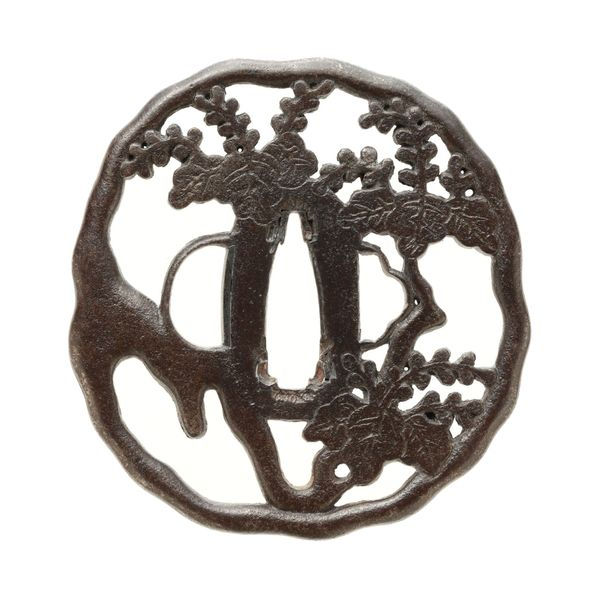
Nishigaki Kanshiro, also known as Yoshihiro, was born in Keicho 18 (1613) at Nakatsu in Buzen Province, the son of a Shinto priest. He became a disciple of Hirata Hikozo, received full transmission licensing (soden menkyo), and established himself independently. He subsequently entered the service of the Hosokawa family as a retained craftsman (kakae-ko), receiving a stipend of twenty persons' rations from Hosokawa Sansai Tadaoki. In the twelfth month of Kan'ei 9 (1632), he accompanied his lord upon transfer of fief and relocated to Yatsushiro in Higo Province, later moving again to the artisans' quarter in Kumamoto. Together with the Hayashi, Hirata, and Shimizu families, he formed the mainstream of the Higo group of metalsmiths and founded the Nishigaki school, counted among the four great lineages of Higo metalworkers. Hayashi Matashichi was of the same generation, born in the same year; because their materials and manner of workmanship share certain similarities, the two have often been contrasted in terms of artistic character: Matashichi is said to possess the dignified bearing of a kunshi, whereas Kanshiro is characterized as having the elegant refinement of a koshi. Both absorbed the cultivation of Hosokawa Sansai and gave expression upon the tsuba to a poetic resonance (fuin) informed by the aesthetics of tea. The second-generation Kanshiro, the eldest son of the founder, bore the common name Mosaku and also used the names Yoshito and Eikyu; he was born in Kan'ei 16 (1639) and died in Kyoho 2 (1717) at the age of seventy-nine. The first Kanshiro died in the sixth month of Genroku 6 (1693) at the age of eighty-one.

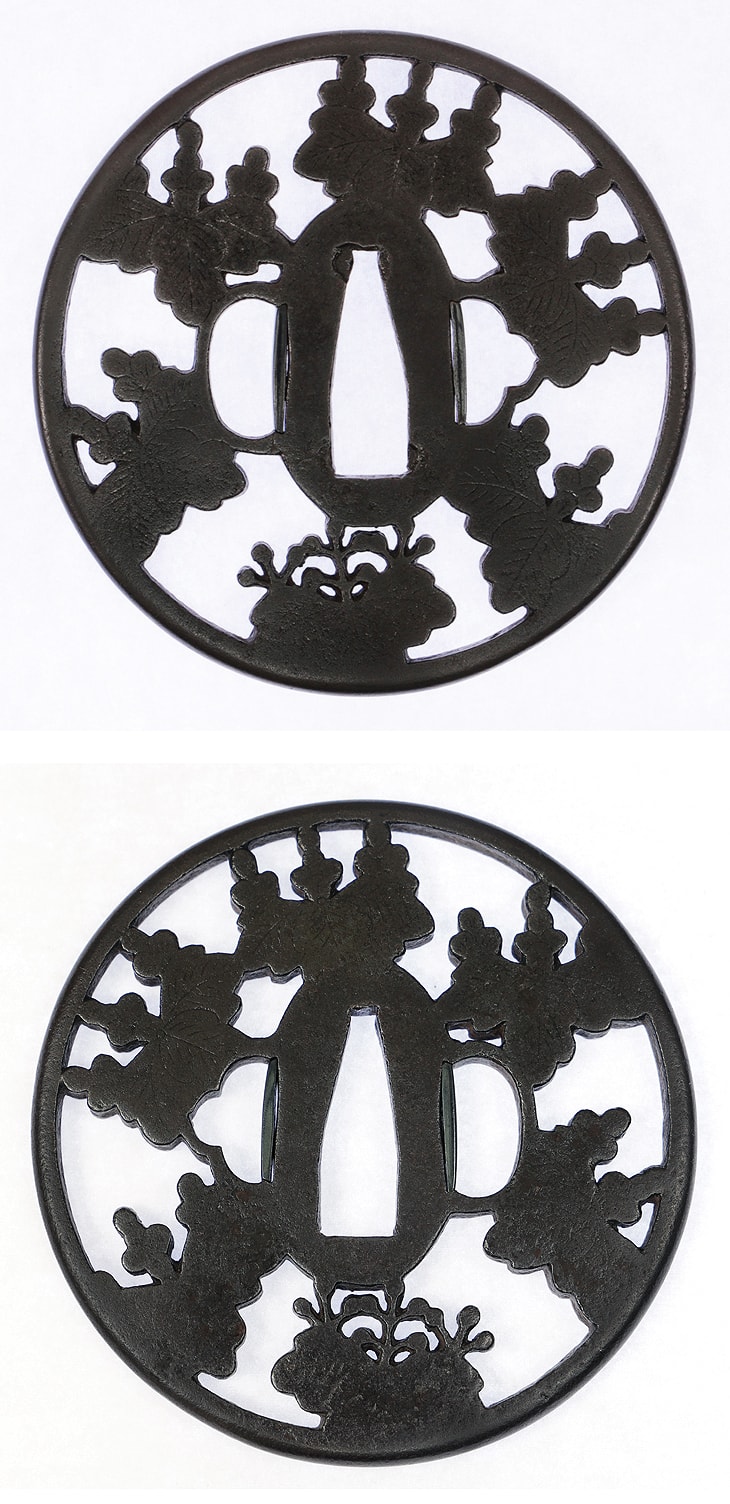
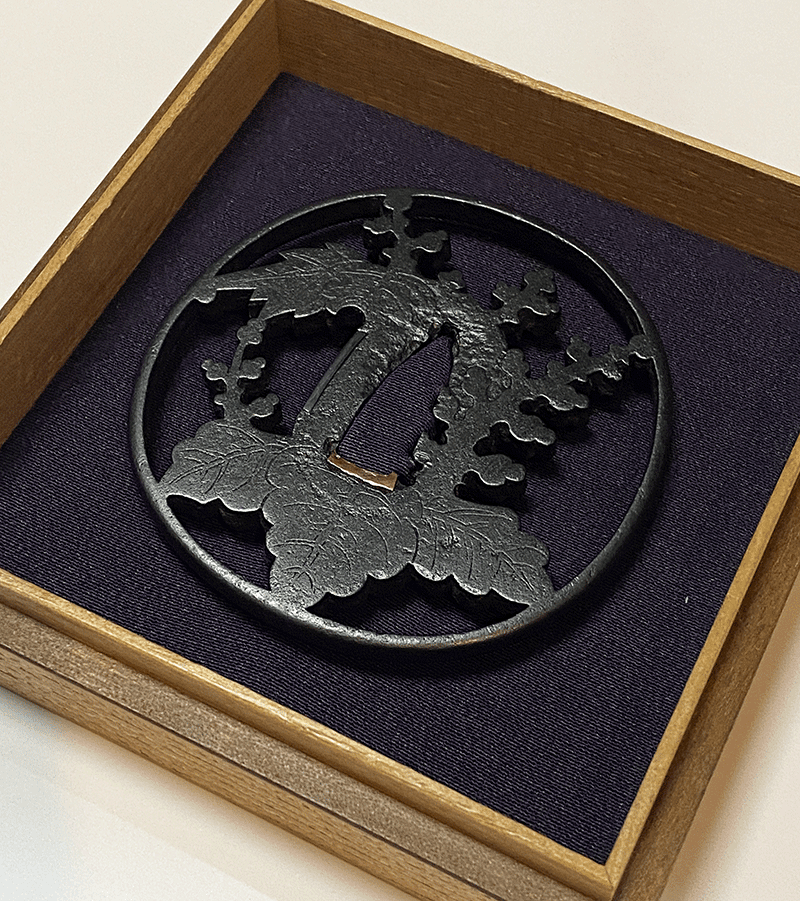
The first-generation Kanshiro excelled particularly in iron ji-sukashi (ground openwork) plates, working favored motifs including the tokiri or nagekiri (throwing paulownia), edagiri (branching paulownia), aged pine (oimatsu), and chrysanthemum designs. The tokiri design takes a cursive-style paulownia blossom crest and abstracts it into openwork; because of its appearance it is also called odori-kiri (dancing paulownia) or nimai-kiri (two-sheet paulownia). His iron plates characteristically display a gentle, pliant quality with a distinctive "taste" (aji), and his patination frequently shows the so-called yokan-iro — a deep, lustrous reddish-brown reminiscent of sweet bean jelly. Many of his works adopt the shodeigata profile with a subtly flared lower portion (shita-bari), and his outlines often incorporate a deliberate, slight distortion that creates an uneven, varied movement across the design. The distribution of thickness (nikuoki) is thoughtfully devised, and his kebori (hairline engraving) is characteristically fine and animated, applied with attentive density yet never pressing or forced. A compositional hallmark is the "positive-and-negative" (in'yo) structuring of openwork, as seen in chrysanthemum tsuba where the flower form serves simultaneously as silhouette and ground design. Distinguishing features from works of the Hayashi school include gentler carving contours, more animated kebori leaf-vein lines, and a distinctive treatment whereby the inner edge of the rim takes on a chrysanthemum-flower-like character. While the first generation worked primarily in iron, examples in copper (sudo) and brass (shinchu) also exist, following the precedent of his teacher Hirata Hikozo. The second-generation Kanshiro, by contrast, demonstrates his true strengths in works that make sophisticated use of inlay on brass or suaka grounds.

The Nishigaki school occupies a position of singular importance within the Higo metalworking tradition. Works of such high tone and strong individuality captivated viewers, and the designs of Kanshiro's tsuba were copied in great numbers by makers of Akasaka tsuba and by Tosa Myochin; however, it is with Kanshiro that this manner is regarded as having its beginning. His mature works embody the quiet austerity (sabimi) and refined elegance (gashu) associated with the Hosokawa tradition of tea, expressing a richness communicated in a restrained and dignified way. The influence of Hosokawa Sansai — celebrated both as a tea devotee and as one of the "Seven Sages of Rikyu" — is manifest throughout Kanshiro's oeuvre in the poetic sensibility that pervades each composition. Whether in the unrestrained freedom of his paulownia openwork, the suggestive resonance of open spaces, or the sophisticated interplay of form and negative space, Kanshiro's art conveys precisely the cultivated elegance of the lofty recluse with which his name has long been associated.

Historical importance

Where Kanshiro stands among comparable artisans: across all of nihontō, and within tradition, era, and period. The tiers (Foremost · Leading · Major · Notable) weigh official designations from the NBTHK and Japan's Agency for Cultural Affairs, together with historical honors of lasting repute such as the Sansaku and Meibutsu-chō.

随一
Foremost
屈指
Leading
有数
Major
著名
Notable

Select a lens to see how it's measured.

Designation record
31 designated works
Jūyō
31
8 works by Kanshiro on the market→
Kanshiro — full profileHigo school
About the school

Nishigaki

西垣

Higo · Higo

36 pieces on the market now

›

The Nishigaki school is one of the four great lineages of Higo metalworkers, ranked alongside the Hayashi, Hirata, and Shimizu families. Its founder, Nishigaki Kanshiro I (also known as Yoshihiro), was born in Keicho 18 (1613) at Nakatsu in Buzen Province, the son of a Shinto priest. Learn more →

2 recorded smiths40 designated works
Leading smiths
SmithEraDesignated
Kanshiro勘四郎—31
Kanzaemon勘左衛門—0
Kanzaemon勘左衛門—0
Kanpei勘平—0
Nagahisa永久—5
Explore the Nishigaki school →
NBTHK Certificate
Jūyō Tōsōgu重要刀装具
Important Fitting
›

Exceptional craft of very high artistic value, judged to rank with a nationally recognized Important Art Object (Jūyō Bijutsuhin).

Unsigned (attr. Nishigaki Kanshiro)
As written on the certificate
About the NBTHK›

The NBTHK (Nihon Bijutsu Tōken Hozon Kyōkai, the Society for the Preservation of Japanese Art Swords) is a public-interest incorporated foundation founded in 1948 and supervised by Japan’s Agency for Cultural Affairs (Bunkachō); it is based at the Japanese Sword Museum in Tokyo. Its expert panels physically examine each submitted work (shinsa) and issue a certificate (kanteishō) ranking it by artistic and historical merit. NBTHK papers are the most widely recognized standard of authentication for Japanese swords and fittings.

NBTHK official site→
Seller
S
Samurai Nippon
Established 1977 · 49 yrs on the market
🇯🇵Ships from Japan
›
✓Verified dealersamurai-nippon.net
✓Ships worldwide✓English supportWire transferPayPalCredit card
Return policy

For one-of-a-kind items such as swords, sword fittings, and antiques, please contact us about a return within 3 days of the item's arrival and ship it back within 8 days. Refunds are issued the same day the returned item arrives.

View all of Samurai Nippon’s listings→View this item on the dealer’s site→

More works by Nishigaki Kanshiro

View all →
Iida Koendo
Jūyō
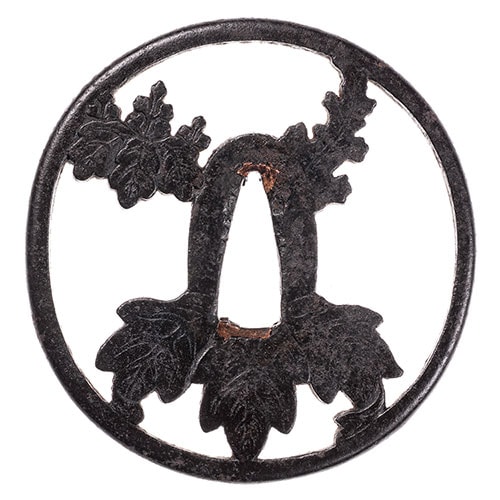
Tsuba - Jūyō - by Nishigaki Kanshiro - Nishigaki KanshiroTsuba - Jūyō - by Nishigaki Kanshiro - Nishigaki Kanshiro

Tsuba

ByNishigaki Kanshiro
¥4,400,000
Iida Koendo
Tokuho
Tsuba - Tokuho - by Nishigaki Kanshiro - Tosogu: Kanshiro NishigakiTsuba - Tokuho - by Nishigaki Kanshiro - Tosogu: Kanshiro Nishigaki

Tsuba

ByNishigaki Kanshiro
¥1,650,000
Tetsugendo
Fuchi-Kashira - by Nishigaki Kanshiro - Fuchi-Kashira: Nishigaki Kanshiro - Higo School WavesFuchi-Kashira - by Nishigaki Kanshiro - Fuchi-Kashira: Nishigaki Kanshiro - Higo School Waves

Fuchi-Kashira

ByNishigaki Kanshiro
¥4,500
Aoi Art
Jūyō
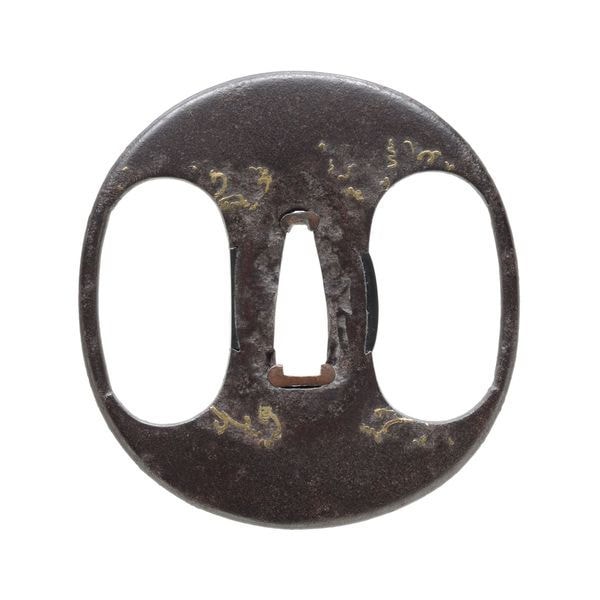
Tsuba - Jūyō - by Nishigaki Kanshiro - Mumei (judged as Nishigaki Kanshiro)Tsuba - Jūyō - by Nishigaki Kanshiro - Mumei (judged as Nishigaki Kanshiro)

Tsuba

ByNishigaki Kanshiro
¥3,500,000
Iida Koendo
Tokuho
Tsuba - Tokuho - by Nishigaki Kanshiro - Tosogu: Mumei KanshiroTsuba - Tokuho - by Nishigaki Kanshiro - Tosogu: Mumei Kanshiro

Tsuba

ByNishigaki Kanshiro
Ask
Iida Koendo
Tokuho
Tsuba - Tokuho - by Nishigaki Kanshiro - Kanshiro NishigakiTsuba - Tokuho - by Nishigaki Kanshiro - Kanshiro Nishigaki

Tsuba

ByNishigaki Kanshiro
Ask
Iida Koendo
Tokuho
Tsuba - Tokuho - by Nishigaki Kanshiro - Tosogu: KanshiroTsuba - Tokuho - by Nishigaki Kanshiro - Tosogu: Kanshiro

Tsuba

ByNishigaki Kanshiro
Ask

Previously sold by Nishigaki Kanshiro

Japanese Sword Books and Tsuba
Tokuho
Tsuba - Tokuho - by Nishigaki Kanshiro - Copper Higo Tsuba, Tokubetsu Hozon to KanshiroTsuba - Tokuho - by Nishigaki Kanshiro - Copper Higo Tsuba, Tokubetsu Hozon to Kanshiro
Sold

Tsuba

ByNishigaki Kanshiro
SOLD
Samurai Nippon
Tokuho
Tsuba - Tokuho - by Nishigaki Kanshiro - Rokukirimon Sukashi ZuTsuba - Tokuho - by Nishigaki Kanshiro - Rokukirimon Sukashi Zu
Sold

Tsuba

ByNishigaki Kanshiro
SOLD
Gallery Youyou
Hozon
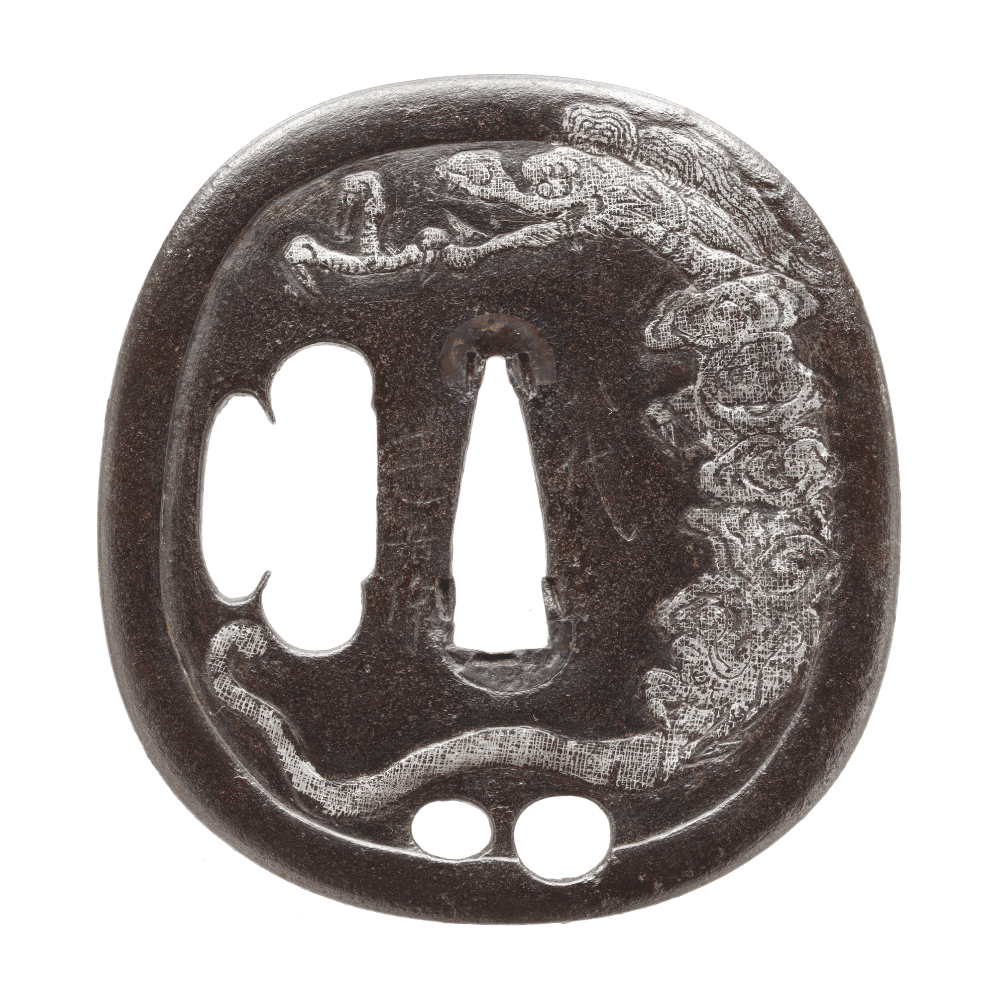
Tsuba - Hozon - by Nishigaki Kanshiro - Okina-nawa Karakusa-zuTsuba - Hozon - by Nishigaki Kanshiro - Okina-nawa Karakusa-zu
Sold

Tsuba

ByNishigaki Kanshiro
SOLD
Choshuya
Hozon
Tsuba - Hozon - by Nishigaki Kanshiro - Paulownia Tree Openwork Tsuba (Unsigned Kanshiro)Tsuba - Hozon - by Nishigaki Kanshiro - Paulownia Tree Openwork Tsuba (Unsigned Kanshiro)
Sold

Tsuba

ByNishigaki Kanshiro
SOLD
Nihonto US
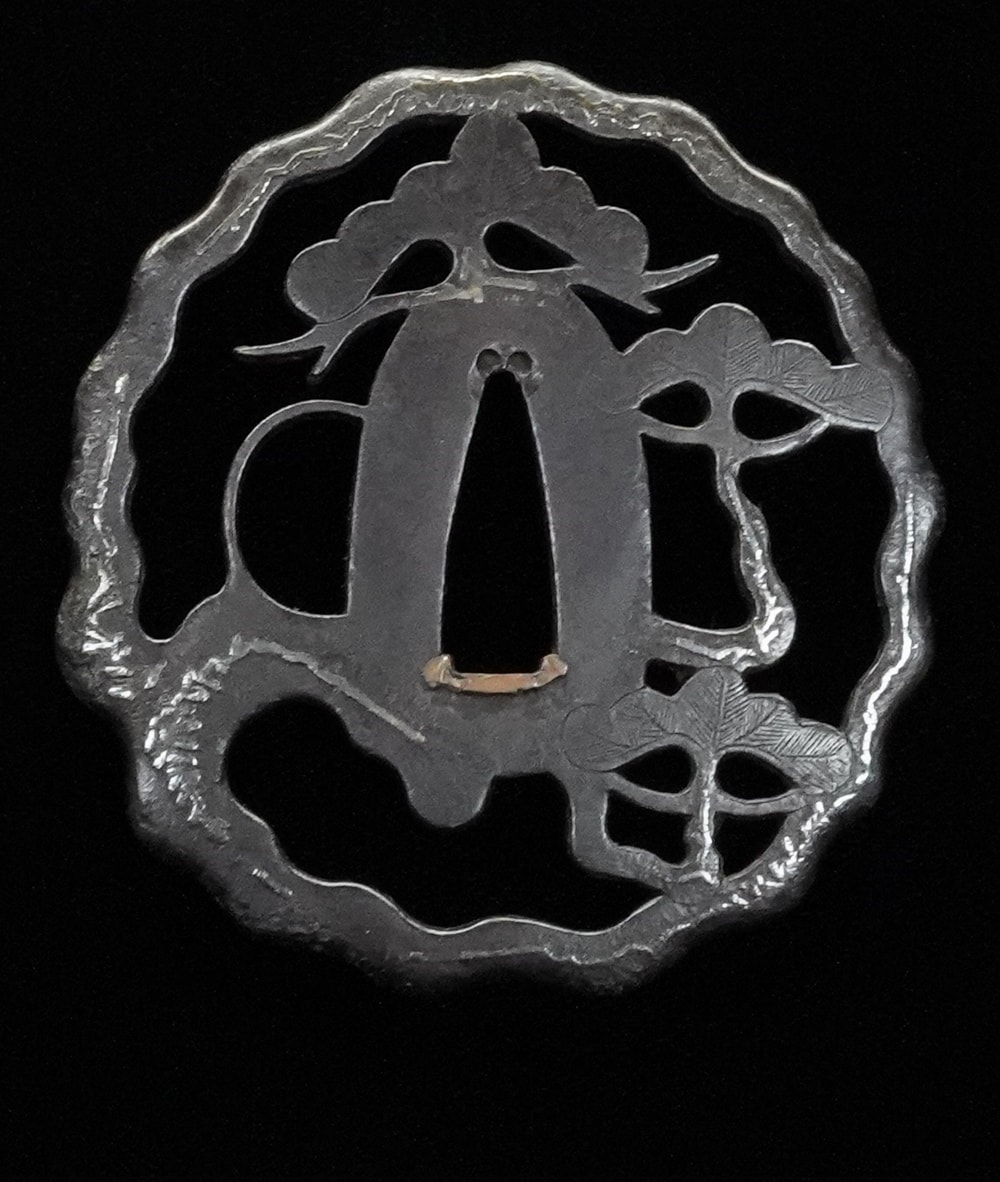
Tsuba - by Nishigaki Kanshiro - Kanshiro - Pine Tree DesignTsuba - by Nishigaki Kanshiro - Kanshiro - Pine Tree Design
Sold

Tsuba

ByNishigaki Kanshiro
SOLD
Eirakudo
Tokuho
Tsuba - Tokuho - by Nishigaki Kanshiro - KanshiroTsuba - Tokuho - by Nishigaki Kanshiro - Kanshiro
Sold

Tsuba

ByNishigaki Kanshiro
SOLD
Iida Koendo
Hozon
Tsuba - Hozon - by Nishigaki Kanshiro - TosoguTsuba - Hozon - by Nishigaki Kanshiro - Tosogu
Sold

Tsuba

ByNishigaki Kanshiro
SOLD
Ginza Seikodo
Tokuho
Tsuba - Tokuho - by Nishigaki Kanshiro - Kanshiro - Double Line and Paulownia Crest MotifTsuba - Tokuho - by Nishigaki Kanshiro - Kanshiro - Double Line and Paulownia Crest Motif
Sold

Tsuba

ByNishigaki Kanshiro
SOLD

More from the Nishigaki school

View all →
Nihonto Art
Tsuba - by Nishigaki Yoshinori - Tsuba - Nishigaki School - KanshiroTsuba - by Nishigaki Yoshinori - Tsuba - Nishigaki School - Kanshiro

Tsuba

ByNishigaki Yoshinori
¥680
Sugie Art
Tokuho
Tsuba - Tokuho - by Nishigaki School - Tsuba by Yoshihiro, ordered by Sou clan, with haze and cherry blossom design, Tokubetsu Hozon certificateTsuba - Tokuho - by Nishigaki School - Tsuba by Yoshihiro, ordered by Sou clan, with haze and cherry blossom design, Tokubetsu Hozon certificate

Tsuba

ByNishigaki School
¥1,500,000
Choshuya
Hozon
Tsuba - Hozon - by Nishigaki School - Efugo Sukashi Tsuba: Unsigned NishigakiTsuba - Hozon - by Nishigaki School - Efugo Sukashi Tsuba: Unsigned Nishigaki

Tsuba

ByNishigaki School
¥180,000
Gallery Youyou
Hozon
Tsuba - Hozon - by Nishigaki School - Paulownia OpenworkTsuba - Hozon - by Nishigaki School - Paulownia Openwork

Tsuba

ByNishigaki School
¥540,000
Yamasiroya
Hozon
Tsuba - Hozon - by Nishigaki School - Pine Tree Openwork Design (Mumei, Nishigaki)Tsuba - Hozon - by Nishigaki School - Pine Tree Openwork Design (Mumei, Nishigaki)

Tsuba

ByNishigaki School
¥130,000
Gallery Youyou
Hozon
Tsuba - Hozon - by Nishigaki Nagahisa - Autumn Grass Design Tsuba: Tosogu Japanese Art Samurai Art Tsuba DetailTsuba - Hozon - by Nishigaki Nagahisa - Autumn Grass Design Tsuba: Tosogu Japanese Art Samurai Art Tsuba Detail

Tsuba

ByNishigaki Nagahisa
¥320,000
Eirakudo
Tokuho
Tsuba - Tokuho - by Nishigaki School - NishigakiTsuba - Tokuho - by Nishigaki School - Nishigaki

Tsuba

ByNishigaki School
¥360,000
Giuseppe Piva
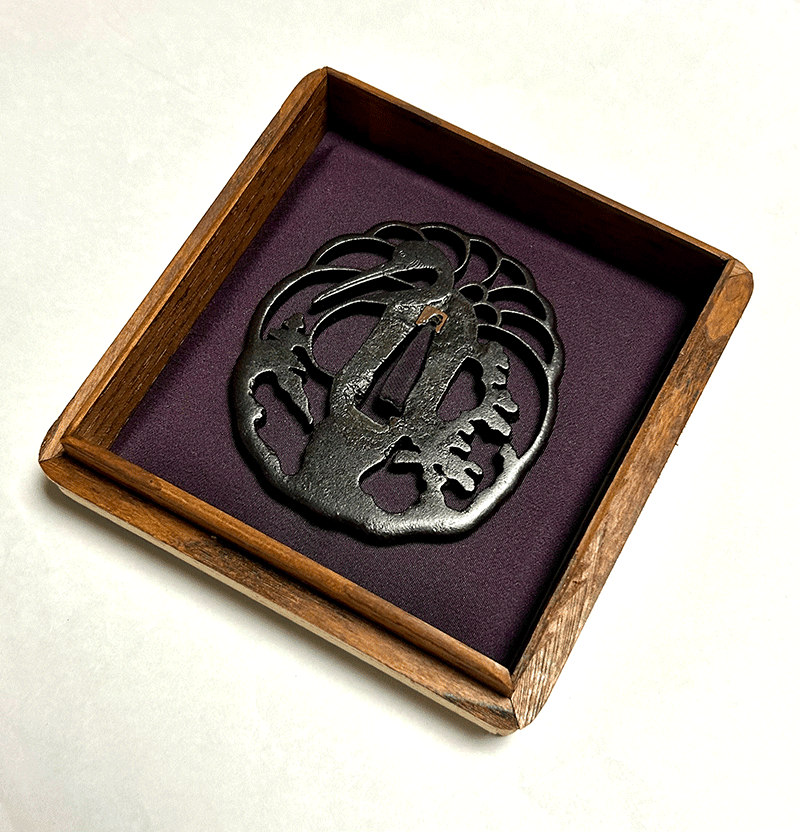
Tsuba - by Nishigaki School - Higo Nishigaki Tsuba with crane and pine treeTsuba - by Nishigaki School - Higo Nishigaki Tsuba with crane and pine tree

Tsuba

ByNishigaki School
¥2,500

More from the Higo Kinkō tradition

View all →
Iida Koendo
Jūyō
Tsuba - Jūyō - by Hirata Hikozo - Tosogu: NBTHK Juyo Tosogu No.66 - Mumei Hikozo TsubaTsuba - Jūyō - by Hirata Hikozo - Tosogu: NBTHK Juyo Tosogu No.66 - Mumei Hikozo Tsuba

Tsuba

ByHirata Hikozo
¥5,500,000
Eirakudo
Jūyō
Tsuba - Jūyō - by Hayashi Matashichi - Hayashi MatashichiTsuba - Jūyō - by Hayashi Matashichi - Hayashi Matashichi

Tsuba

ByHayashi Matashichi
Ask
Eirakudo
Jūyō
Tsuba - Jūyō - by Hayashi Shigemitsu - Hayashi ShigemitsuTsuba - Jūyō - by Hayashi Shigemitsu - Hayashi Shigemitsu

Tsuba

ByHayashi Shigemitsu
Ask
Nihontocraft
Hozon
Tsuba - Hozon - by Higo Kinko School - Higo Nishigaki TsubaTsuba - Hozon - by Higo Kinko School - Higo Nishigaki Tsuba

Tsuba

ByHigo Kinko School
¥1,800
Iida Koendo
Tokuho
Tsuba - Tokuho - by Hayashi School - Tosogu: Mumei (Hayashi)Tsuba - Tokuho - by Hayashi School - Tosogu: Mumei (Hayashi)

Tsuba

ByHayashi School
¥880,000
Legacy Swords
Hozon
Fuchi-Kashira - Hozon - by Kinko Misumi Masaharu - Rare Signed Higo Fuchigashira Set by Misumi Koji (Masaharu) with NBTHK Hozon PaperFuchi-Kashira - Hozon - by Kinko Misumi Masaharu - Rare Signed Higo Fuchigashira Set by Misumi Koji (Masaharu) with NBTHK Hozon Paper

Fuchi-Kashira

ByKinko Misumi Masaharu
¥3,900
Samurai Nippon
Jūyō
Tsuba - Jūyō - by Hirata Hikozo - Okinayasuri Shiho Chidori ZuTsuba - Jūyō - by Hirata Hikozo - Okinayasuri Shiho Chidori Zu

Tsuba

ByHirata Hikozo
Ask
Samurai Nippon
Tokuho
Tsuba - Tokuho - by Hirata School - Sayumon Sukashi ZuTsuba - Tokuho - by Hirata School - Sayumon Sukashi Zu

Tsuba

ByHirata School
¥750,000

Swords

  • Katana
  • Wakizashi
  • Tantō
  • Tachi
  • Naginata
  • Yari

Fittings

  • Tsuba
  • Fuchi-Kashira
  • Kozuka
  • Menuki

By Certification

  • Tokujū
  • Jūyō
  • Tokuho
  • Hozon

Resources

  • Dealer Directory
  • Artist Directory
  • Glossary
  • Browse All
Nihontowatch© 2026
TermsPrivacyCookiesAbout

Description

This is an unsigned tsuba by Nishigaki Kanshiro, featuring a dynamic wave design (Hato Zu) in brass. It is designated as a 50th session Juyo Tosogu by the NBTHK. The tsuba showcases Kanshiro's unique style with a 'shiri-gata' shape and skillfully carved waves, enhanced with lacquer to create a sense of movement.

NBTHK Setsumei

Jūyō-Tōsōgu, 50th Session — Designated October 15, 2004 Tsuba, mumei: Nishigaki Kanshirō (西垣勘四郎) Measurements Height (tate): 7.5 cm Width (yoko): 7.2 cm Rim thickness (mimi no atsusa): 0.4 cm Description Form: shōdei-gata (mudguard-shaped), single plate (ichimai) Material: brass ground (shinchu-ji) Construction: carved from the plate with modeled relief transitions Design: breaking waves (hatō) Decoration: sukidashi-bori; lacquer (urushi) applied effectively in the troughs between waves Rim: tapered modeling from the thickened seppa-dai toward the rim, finished in a clean, ring-rim-like (kanmimi-fū) manner Hitsu-ana: two openings (ryō hitsu-ana) Signature: unsigned (mumei) Artisan Nishigaki Kanshirō (attributed; associated with the Higo Nishigaki group) Era Early Edo period Explanation The first-generation Nishigaki Kanshirō, also known as Yoshihiro, was born in Nakatsu in Buzen Province in Keichō 18 (1613). He became a pupil of Hirata Hikozō, trained under him, and was permitted to inherit and continue the transmissions of that line’s silverworking traditions. After becoming independent, he entered the service of the Hosokawa as a retained craftsman, receiving from Hosokawa Sansai a stipend of twenty nin fuchi. In Kan’ei 9 (1632), 12th month, he accompanied his lord upon the family’s transfer and moved to Yatsushiro in Higo Province; he later relocated again to the artisans’ quarter in Kumamoto. Together with the Hayashi, Hirata, and Shimizu houses, he formed the mainstream of the Higo community of metalworkers and established what became known as the Nishigaki group. He died in Genroku 6 (1693), 6th month, at the age of eighty-one. As to the scope of his workmanship, his ji-sukashi plates often show a softness of ground, and the treatment of the flat surfaces frequently includes subtle variations. In addition, many examples display a slight flex or distortion in form. A major hallmark is his frequent use of shōdei-gata with a “flared lower” profile (shita-bari). Moreover, in works not made in iron there also exist examples, like those of his teacher Hirata Hikozō, employing copper (sudō) or brass (shinchu) grounds. This tsuba is made of brass and is formed in shōdei-gata. The seppa-dai is constructed thickly, and as the surface proceeds toward the rim the hiraniku is reduced, producing a sophisticated, ring-rim-like contour. Kanshirō’s distinctive “muddy waves” (doro-nami) are rendered in sukidashi-bori, and lacquer is used skillfully in the spaces between the waves, bringing the composition to an energetic, animated finish. With ample period coloration, this is an excellent piece that expresses the particular quiet austerity (sabimi) characteristic of the first-generation Higo Kanshirō, deepening its overall flavor and appeal.

NihontoWatch Mon

NihontoWatch

MarketAuctions
Encyclopedia
Fittings›Higo Kinkō›Nishigaki›Kanshiro›Tsuba: Hato Zu (Waves Design)
tsubaJūyō
Nishigaki Kanshiro

Tsuba: Hato Zu (Waves Design)

mumei · Nishigaki · Edo

Price on request
Visit seller website →
Nishigaki Kanshiro — 1 of 8
Nishigaki Kanshiro — 2 of 8
Nishigaki Kanshiro — 3 of 8
Nishigaki Kanshiro — 4 of 8
Nishigaki Kanshiro — 5 of 8
Nishigaki Kanshiro — 6 of 8
Nishigaki Kanshiro — 7 of 8
Nishigaki Kanshiro — 8 of 8
1 / 8
1 / 8
Nishigaki Kanshiro — 1 of 8Nishigaki Kanshiro — 2 of 8Nishigaki Kanshiro — 3 of 8Nishigaki Kanshiro — 4 of 8Nishigaki Kanshiro — 5 of 8Nishigaki Kanshiro — 6 of 8Nishigaki Kanshiro — 7 of 8Nishigaki Kanshiro — 8 of 8
Measurements & details
Maker

Nishigaki Kanshiro

Era

Edo

Province

Higo

Signature

Unsigned

Papers

Jūyō #50 (NBTHK)

Description

This is an unsigned tsuba by Nishigaki Kanshiro, featuring a dynamic wave design (Hato Zu) in brass. It is designated as a 50th session Juyo Tosogu by the NBTHK. The tsuba showcases Kanshiro's unique style with a 'shiri-gata' shape and skillfully carved waves, enhanced with lacquer to create a sense of movement.

NBTHK Zufu Commentary

Juyo #50

AI translation — may contain errors

-Tōsōgu, 50th Session — Designated October 15, 2004

, : Nishigaki Kanshirō (西垣勘四郎)

Measurements Height (): 7.5 cm Width (): 7.2 cm Rim thickness (mimi no atsusa): 0.4 cm

Description Form: shōdei-gata (mudguard-shaped), single plate () Material: brass ground (shinchu-) Construction: carved from the plate with modeled relief transitions Design: breaking waves (hatō) Decoration: ; lacquer (urushi) applied effectively in the troughs between waves Rim: tapered modeling from the thickened toward the rim, finished in a clean, ring-rim-like (kanmimi-) manner : two openings (ryō hitsu-ana) Signature: unsigned ()

Artisan Nishigaki Kanshirō (attributed; associated with the Nishigaki group)

Era Early period

Explanation The first-generation Nishigaki Kanshirō, also known as Yoshihiro, was born in Nakatsu in Buzen Province in Keichō 18 (1613). He became a pupil of Hirata Hikozō, trained under him, and was permitted to inherit and continue the transmissions of that line’s silverworking traditions. After becoming independent, he entered the service of the Hosokawa as a retained craftsman, receiving from Hosokawa Sansai a stipend of twenty nin .

In ’ei 9 (1632), 12th month, he accompanied his lord upon the family’s transfer and moved to Yatsushiro in Province; he later relocated again to the artisans’ quarter in Kumamoto. Together with the Hayashi, Hirata, and Shimizu houses, he formed the mainstream of the community of metalworkers and established what became known as the Nishigaki group. He died in Genroku 6 (1693), 6th month, at the age of eighty-one.

As to the scope of his workmanship, his plates often show a softness of ground, and the treatment of the flat surfaces frequently includes subtle variations. In addition, many examples display a slight flex or distortion in form. A major hallmark is his frequent use of shōdei-gata with a “flared lower” profile (shita-bari). Moreover, in works not made in iron there also exist examples, like those of his teacher Hirata Hikozō, employing copper (sudō) or brass (shinchu) grounds.

This is made of brass and is formed in shōdei-gata. The is constructed thickly, and as the surface proceeds toward the rim the is reduced, producing a sophisticated, ring-rim-like contour. Kanshirō’s distinctive “muddy waves” (doro-nami) are rendered in , and lacquer is used skillfully in the spaces between the waves, bringing the composition to an energetic, animated finish. With ample period coloration, this is an excellent piece that expresses the particular quiet austerity (sabimi) characteristic of the first-generation Kanshirō, deepening its overall flavor and appeal.
About the maker

Kanshiro

勘四郎

Higo · Higo

8 pieces on the market now

›

Nishigaki Kanshiro, also known as Yoshihiro, was born in Keicho 18 (1613) at Nakatsu in Buzen Province, the son of a Shinto priest. He became a disciple of Hirata Hikozo, received full transmission licensing (soden menkyo), and established himself independently. He subsequently entered the service of the Hosokawa family as a retained craftsman (kakae-ko), receiving a stipend of twenty persons' rations from Hosokawa Sansai Tadaoki. In the twelfth month of Kan'ei 9 (1632), he accompanied his lord upon transfer of fief and relocated to Yatsushiro in Higo Province, later moving again to the artisans' quarter in Kumamoto. Together with the Hayashi, Hirata, and Shimizu families, he formed the mainstream of the Higo group of metalsmiths and founded the Nishigaki school, counted among the four great lineages of Higo metalworkers. Hayashi Matashichi was of the same generation, born in the same year; because their materials and manner of workmanship share certain similarities, the two have often been contrasted in terms of artistic character: Matashichi is said to possess the dignified bearing of a kunshi, whereas Kanshiro is characterized as having the elegant refinement of a koshi. Both absorbed the cultivation of Hosokawa Sansai and gave expression upon the tsuba to a poetic resonance (fuin) informed by the aesthetics of tea. The second-generation Kanshiro, the eldest son of the founder, bore the common name Mosaku and also used the names Yoshito and Eikyu; he was born in Kan'ei 16 (1639) and died in Kyoho 2 (1717) at the age of seventy-nine. The first Kanshiro died in the sixth month of Genroku 6 (1693) at the age of eighty-one.

The first-generation Kanshiro excelled particularly in iron ji-sukashi (ground openwork) plates, working favored motifs including the tokiri or nagekiri (throwing paulownia), edagiri (branching paulownia), aged pine (oimatsu), and chrysanthemum designs. The tokiri design takes a cursive-style paulownia blossom crest and abstracts it into openwork; because of its appearance it is also called odori-kiri (dancing paulownia) or nimai-kiri (two-sheet paulownia). His iron plates characteristically display a gentle, pliant quality with a distinctive "taste" (aji), and his patination frequently shows the so-called yokan-iro — a deep, lustrous reddish-brown reminiscent of sweet bean jelly. Many of his works adopt the shodeigata profile with a subtly flared lower portion (shita-bari), and his outlines often incorporate a deliberate, slight distortion that creates an uneven, varied movement across the design. The distribution of thickness (nikuoki) is thoughtfully devised, and his kebori (hairline engraving) is characteristically fine and animated, applied with attentive density yet never pressing or forced. A compositional hallmark is the "positive-and-negative" (in'yo) structuring of openwork, as seen in chrysanthemum tsuba where the flower form serves simultaneously as silhouette and ground design. Distinguishing features from works of the Hayashi school include gentler carving contours, more animated kebori leaf-vein lines, and a distinctive treatment whereby the inner edge of the rim takes on a chrysanthemum-flower-like character. While the first generation worked primarily in iron, examples in copper (sudo) and brass (shinchu) also exist, following the precedent of his teacher Hirata Hikozo. The second-generation Kanshiro, by contrast, demonstrates his true strengths in works that make sophisticated use of inlay on brass or suaka grounds.

The Nishigaki school occupies a position of singular importance within the Higo metalworking tradition. Works of such high tone and strong individuality captivated viewers, and the designs of Kanshiro's tsuba were copied in great numbers by makers of Akasaka tsuba and by Tosa Myochin; however, it is with Kanshiro that this manner is regarded as having its beginning. His mature works embody the quiet austerity (sabimi) and refined elegance (gashu) associated with the Hosokawa tradition of tea, expressing a richness communicated in a restrained and dignified way. The influence of Hosokawa Sansai — celebrated both as a tea devotee and as one of the "Seven Sages of Rikyu" — is manifest throughout Kanshiro's oeuvre in the poetic sensibility that pervades each composition. Whether in the unrestrained freedom of his paulownia openwork, the suggestive resonance of open spaces, or the sophisticated interplay of form and negative space, Kanshiro's art conveys precisely the cultivated elegance of the lofty recluse with which his name has long been associated.

Historical importance

Where Kanshiro stands among comparable artisans: across all of nihontō, and within tradition, era, and period. The tiers (Foremost · Leading · Major · Notable) weigh official designations from the NBTHK and Japan's Agency for Cultural Affairs, together with historical honors of lasting repute such as the Sansaku and Meibutsu-chō.

随一
Foremost
屈指
Leading
有数
Major
著名
Notable

Select a lens to see how it's measured.

Designation record
31 designated works
Jūyō
31
8 works by Kanshiro on the market→
Kanshiro — full profileHigo school
About the school

Nishigaki

西垣

Higo · Higo

36 pieces on the market now

›

The Nishigaki school is one of the four great lineages of Higo metalworkers, ranked alongside the Hayashi, Hirata, and Shimizu families. Its founder, Nishigaki Kanshiro I (also known as Yoshihiro), was born in Keicho 18 (1613) at Nakatsu in Buzen Province, the son of a Shinto priest. Learn more →

2 recorded smiths40 designated works
Leading smiths
SmithEraDesignated
Kanshiro勘四郎—31
Kanzaemon勘左衛門—0
Kanzaemon勘左衛門—0
Kanpei勘平—0
Nagahisa永久—5
Explore the Nishigaki school →
NBTHK Certificate
Jūyō Tōsōgu重要刀装具
Important Fitting
›

Exceptional craft of very high artistic value, judged to rank with a nationally recognized Important Art Object (Jūyō Bijutsuhin).

Unsigned (attr. Nishigaki Kanshiro)
As written on the certificate
About the NBTHK›

The NBTHK (Nihon Bijutsu Tōken Hozon Kyōkai, the Society for the Preservation of Japanese Art Swords) is a public-interest incorporated foundation founded in 1948 and supervised by Japan’s Agency for Cultural Affairs (Bunkachō); it is based at the Japanese Sword Museum in Tokyo. Its expert panels physically examine each submitted work (shinsa) and issue a certificate (kanteishō) ranking it by artistic and historical merit. NBTHK papers are the most widely recognized standard of authentication for Japanese swords and fittings.

NBTHK official site→
Seller
S
Samurai Nippon
Established 1977 · 49 yrs on the market
🇯🇵Ships from Japan
›
✓Verified dealersamurai-nippon.net
✓Ships worldwide✓English supportWire transferPayPalCredit card
Return policy

For one-of-a-kind items such as swords, sword fittings, and antiques, please contact us about a return within 3 days of the item's arrival and ship it back within 8 days. Refunds are issued the same day the returned item arrives.

View all of Samurai Nippon’s listings→View this item on the dealer’s site→

More works by Nishigaki Kanshiro

View all →
Iida Koendo
Jūyō
Tsuba - Jūyō - by Nishigaki Kanshiro - Nishigaki KanshiroTsuba - Jūyō - by Nishigaki Kanshiro - Nishigaki Kanshiro

Tsuba

ByNishigaki Kanshiro
¥4,400,000
Iida Koendo
Tokuho
Tsuba - Tokuho - by Nishigaki Kanshiro - Tosogu: Kanshiro NishigakiTsuba - Tokuho - by Nishigaki Kanshiro - Tosogu: Kanshiro Nishigaki

Tsuba

ByNishigaki Kanshiro
¥1,650,000
Tetsugendo
Fuchi-Kashira - by Nishigaki Kanshiro - Fuchi-Kashira: Nishigaki Kanshiro - Higo School WavesFuchi-Kashira - by Nishigaki Kanshiro - Fuchi-Kashira: Nishigaki Kanshiro - Higo School Waves

Fuchi-Kashira

ByNishigaki Kanshiro
¥4,500
Aoi Art
Jūyō
Tsuba - Jūyō - by Nishigaki Kanshiro - Mumei (judged as Nishigaki Kanshiro)Tsuba - Jūyō - by Nishigaki Kanshiro - Mumei (judged as Nishigaki Kanshiro)

Tsuba

ByNishigaki Kanshiro
¥3,500,000
Iida Koendo
Tokuho
Tsuba - Tokuho - by Nishigaki Kanshiro - Tosogu: Mumei KanshiroTsuba - Tokuho - by Nishigaki Kanshiro - Tosogu: Mumei Kanshiro

Tsuba

ByNishigaki Kanshiro
Ask
Iida Koendo
Tokuho
Tsuba - Tokuho - by Nishigaki Kanshiro - Kanshiro NishigakiTsuba - Tokuho - by Nishigaki Kanshiro - Kanshiro Nishigaki

Tsuba

ByNishigaki Kanshiro
Ask
Iida Koendo
Tokuho
Tsuba - Tokuho - by Nishigaki Kanshiro - Tosogu: KanshiroTsuba - Tokuho - by Nishigaki Kanshiro - Tosogu: Kanshiro

Tsuba

ByNishigaki Kanshiro
Ask

Previously sold by Nishigaki Kanshiro

Japanese Sword Books and Tsuba
Tokuho
Tsuba - Tokuho - by Nishigaki Kanshiro - Copper Higo Tsuba, Tokubetsu Hozon to KanshiroTsuba - Tokuho - by Nishigaki Kanshiro - Copper Higo Tsuba, Tokubetsu Hozon to Kanshiro
Sold

Tsuba

ByNishigaki Kanshiro
SOLD
Samurai Nippon
Tokuho
Tsuba - Tokuho - by Nishigaki Kanshiro - Rokukirimon Sukashi ZuTsuba - Tokuho - by Nishigaki Kanshiro - Rokukirimon Sukashi Zu
Sold

Tsuba

ByNishigaki Kanshiro
SOLD
Gallery Youyou
Hozon
Tsuba - Hozon - by Nishigaki Kanshiro - Okina-nawa Karakusa-zuTsuba - Hozon - by Nishigaki Kanshiro - Okina-nawa Karakusa-zu
Sold

Tsuba

ByNishigaki Kanshiro
SOLD
Choshuya
Hozon
Tsuba - Hozon - by Nishigaki Kanshiro - Paulownia Tree Openwork Tsuba (Unsigned Kanshiro)Tsuba - Hozon - by Nishigaki Kanshiro - Paulownia Tree Openwork Tsuba (Unsigned Kanshiro)
Sold

Tsuba

ByNishigaki Kanshiro
SOLD
Nihonto US
Tsuba - by Nishigaki Kanshiro - Kanshiro - Pine Tree DesignTsuba - by Nishigaki Kanshiro - Kanshiro - Pine Tree Design
Sold

Tsuba

ByNishigaki Kanshiro
SOLD
Eirakudo
Tokuho
Tsuba - Tokuho - by Nishigaki Kanshiro - KanshiroTsuba - Tokuho - by Nishigaki Kanshiro - Kanshiro
Sold

Tsuba

ByNishigaki Kanshiro
SOLD
Iida Koendo
Hozon
Tsuba - Hozon - by Nishigaki Kanshiro - TosoguTsuba - Hozon - by Nishigaki Kanshiro - Tosogu
Sold

Tsuba

ByNishigaki Kanshiro
SOLD
Ginza Seikodo
Tokuho
Tsuba - Tokuho - by Nishigaki Kanshiro - Kanshiro - Double Line and Paulownia Crest MotifTsuba - Tokuho - by Nishigaki Kanshiro - Kanshiro - Double Line and Paulownia Crest Motif
Sold

Tsuba

ByNishigaki Kanshiro
SOLD

More from the Nishigaki school

View all →
Nihonto Art
Tsuba - by Nishigaki Yoshinori - Tsuba - Nishigaki School - KanshiroTsuba - by Nishigaki Yoshinori - Tsuba - Nishigaki School - Kanshiro

Tsuba

ByNishigaki Yoshinori
¥680
Sugie Art
Tokuho
Tsuba - Tokuho - by Nishigaki School - Tsuba by Yoshihiro, ordered by Sou clan, with haze and cherry blossom design, Tokubetsu Hozon certificateTsuba - Tokuho - by Nishigaki School - Tsuba by Yoshihiro, ordered by Sou clan, with haze and cherry blossom design, Tokubetsu Hozon certificate

Tsuba

ByNishigaki School
¥1,500,000
Choshuya
Hozon
Tsuba - Hozon - by Nishigaki School - Efugo Sukashi Tsuba: Unsigned NishigakiTsuba - Hozon - by Nishigaki School - Efugo Sukashi Tsuba: Unsigned Nishigaki

Tsuba

ByNishigaki School
¥180,000
Gallery Youyou
Hozon
Tsuba - Hozon - by Nishigaki School - Paulownia OpenworkTsuba - Hozon - by Nishigaki School - Paulownia Openwork

Tsuba

ByNishigaki School
¥540,000
Yamasiroya
Hozon
Tsuba - Hozon - by Nishigaki School - Pine Tree Openwork Design (Mumei, Nishigaki)Tsuba - Hozon - by Nishigaki School - Pine Tree Openwork Design (Mumei, Nishigaki)

Tsuba

ByNishigaki School
¥130,000
Gallery Youyou
Hozon
Tsuba - Hozon - by Nishigaki Nagahisa - Autumn Grass Design Tsuba: Tosogu Japanese Art Samurai Art Tsuba DetailTsuba - Hozon - by Nishigaki Nagahisa - Autumn Grass Design Tsuba: Tosogu Japanese Art Samurai Art Tsuba Detail

Tsuba

ByNishigaki Nagahisa
¥320,000
Eirakudo
Tokuho
Tsuba - Tokuho - by Nishigaki School - NishigakiTsuba - Tokuho - by Nishigaki School - Nishigaki

Tsuba

ByNishigaki School
¥360,000
Giuseppe Piva
Tsuba - by Nishigaki School - Higo Nishigaki Tsuba with crane and pine treeTsuba - by Nishigaki School - Higo Nishigaki Tsuba with crane and pine tree

Tsuba

ByNishigaki School
¥2,500

More from the Higo Kinkō tradition

View all →
Iida Koendo
Jūyō
Tsuba - Jūyō - by Hirata Hikozo - Tosogu: NBTHK Juyo Tosogu No.66 - Mumei Hikozo TsubaTsuba - Jūyō - by Hirata Hikozo - Tosogu: NBTHK Juyo Tosogu No.66 - Mumei Hikozo Tsuba

Tsuba

ByHirata Hikozo
¥5,500,000
Eirakudo
Jūyō
Tsuba - Jūyō - by Hayashi Matashichi - Hayashi MatashichiTsuba - Jūyō - by Hayashi Matashichi - Hayashi Matashichi

Tsuba

ByHayashi Matashichi
Ask
Eirakudo
Jūyō
Tsuba - Jūyō - by Hayashi Shigemitsu - Hayashi ShigemitsuTsuba - Jūyō - by Hayashi Shigemitsu - Hayashi Shigemitsu

Tsuba

ByHayashi Shigemitsu
Ask
Nihontocraft
Hozon
Tsuba - Hozon - by Higo Kinko School - Higo Nishigaki TsubaTsuba - Hozon - by Higo Kinko School - Higo Nishigaki Tsuba

Tsuba

ByHigo Kinko School
¥1,800
Iida Koendo
Tokuho
Tsuba - Tokuho - by Hayashi School - Tosogu: Mumei (Hayashi)Tsuba - Tokuho - by Hayashi School - Tosogu: Mumei (Hayashi)

Tsuba

ByHayashi School
¥880,000
Legacy Swords
Hozon
Fuchi-Kashira - Hozon - by Kinko Misumi Masaharu - Rare Signed Higo Fuchigashira Set by Misumi Koji (Masaharu) with NBTHK Hozon PaperFuchi-Kashira - Hozon - by Kinko Misumi Masaharu - Rare Signed Higo Fuchigashira Set by Misumi Koji (Masaharu) with NBTHK Hozon Paper

Fuchi-Kashira

ByKinko Misumi Masaharu
¥3,900
Samurai Nippon
Jūyō
Tsuba - Jūyō - by Hirata Hikozo - Okinayasuri Shiho Chidori ZuTsuba - Jūyō - by Hirata Hikozo - Okinayasuri Shiho Chidori Zu

Tsuba

ByHirata Hikozo
Ask
Samurai Nippon
Tokuho
Tsuba - Tokuho - by Hirata School - Sayumon Sukashi ZuTsuba - Tokuho - by Hirata School - Sayumon Sukashi Zu

Tsuba

ByHirata School
¥750,000

Swords

  • Katana
  • Wakizashi
  • Tantō
  • Tachi
  • Naginata
  • Yari

Fittings

  • Tsuba
  • Fuchi-Kashira
  • Kozuka
  • Menuki

By Certification

  • Tokujū
  • Jūyō
  • Tokuho
  • Hozon

Resources

  • Dealer Directory
  • Artist Directory
  • Glossary
  • Browse All
Nihontowatch© 2026
TermsPrivacyCookiesAbout

Certificate Reading

Certificate reading — 無銘(西垣勘四郎)

Certificate Reading

Certificate reading — 無銘(西垣勘四郎)