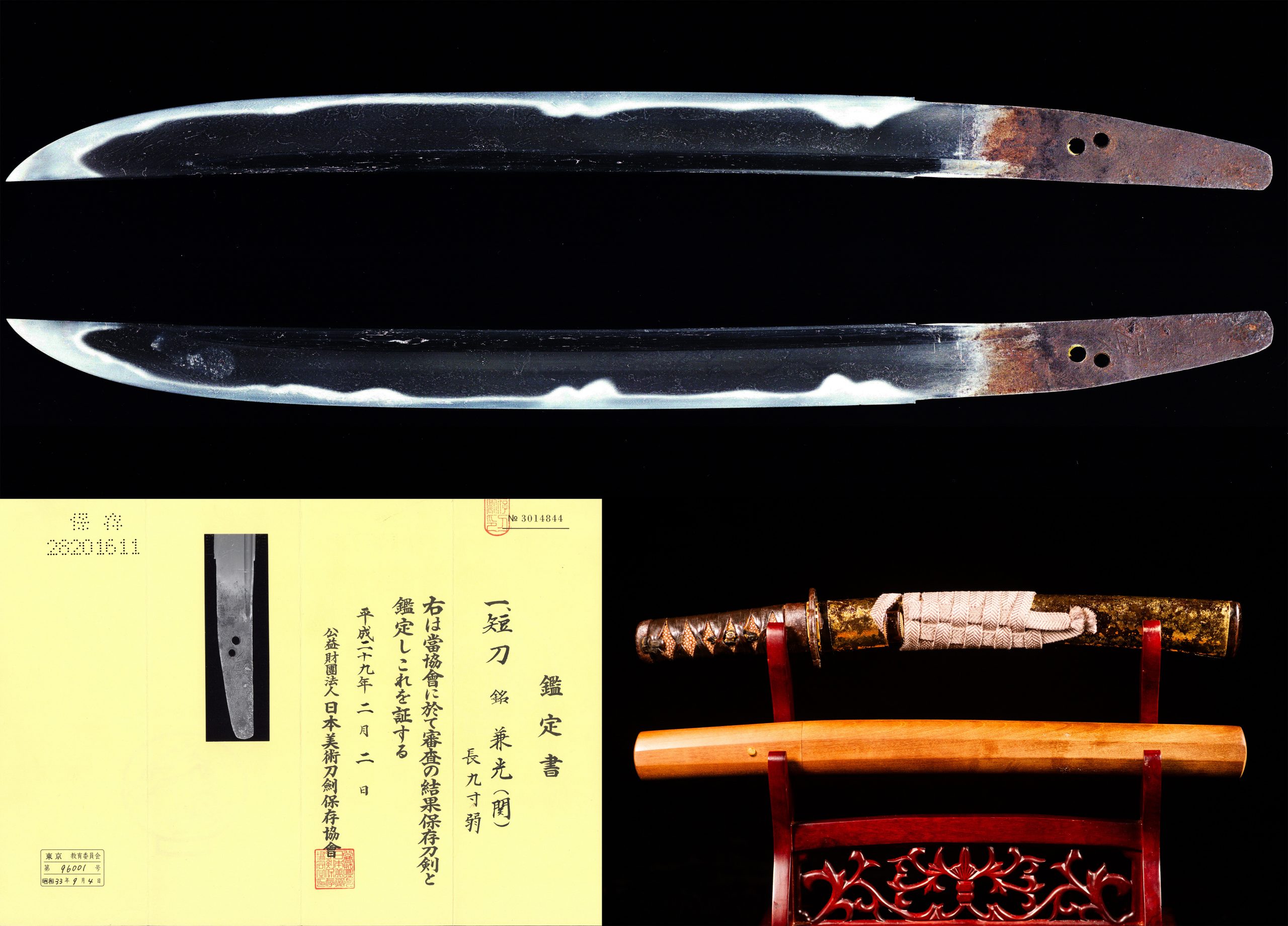
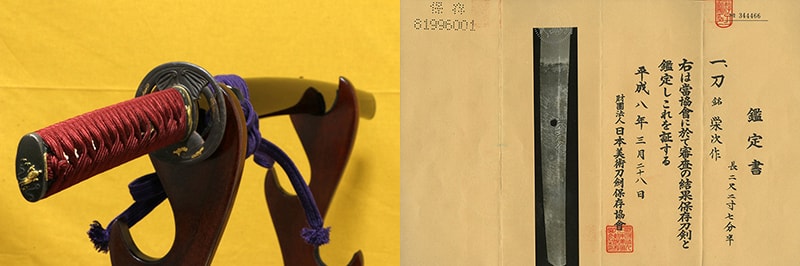
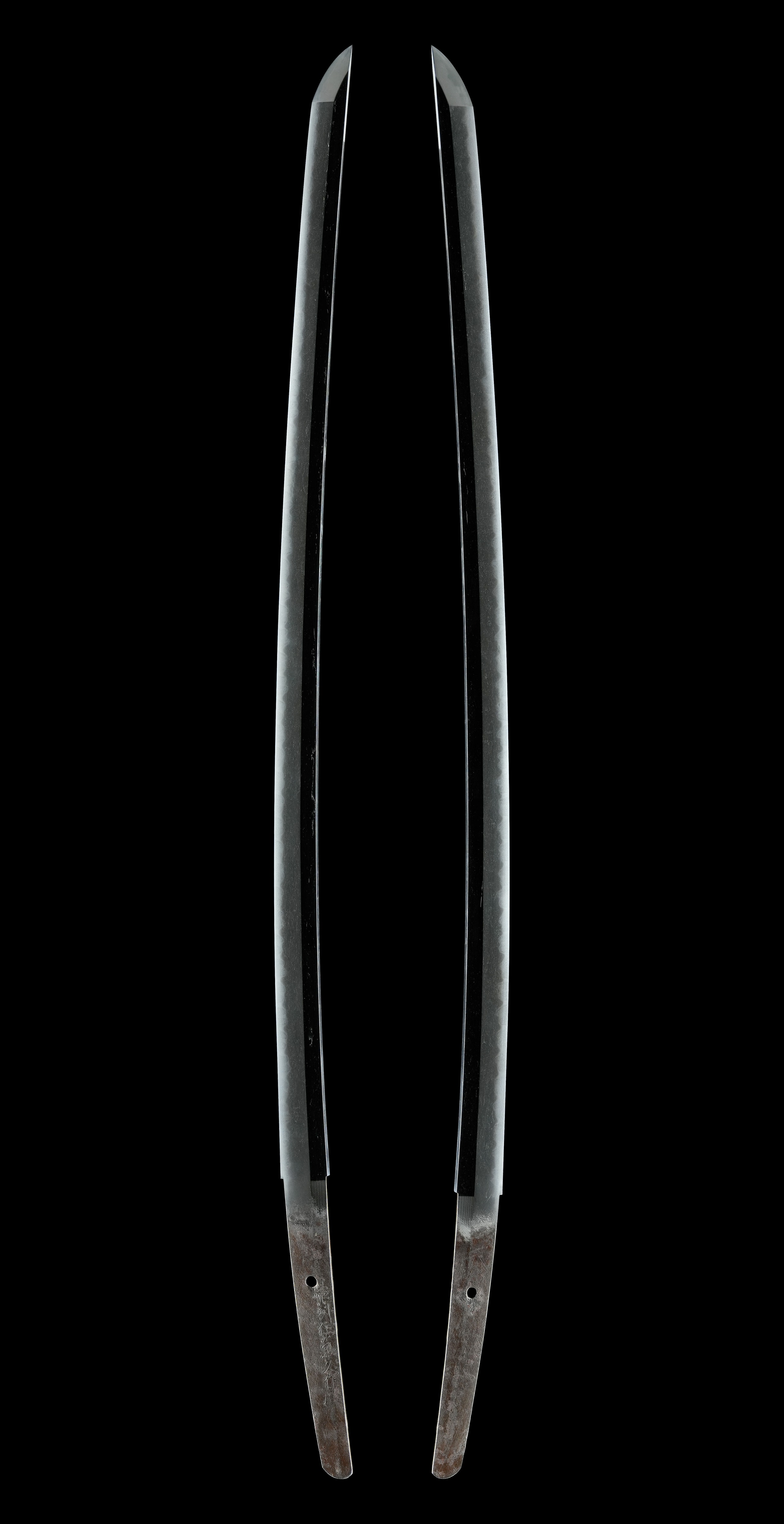
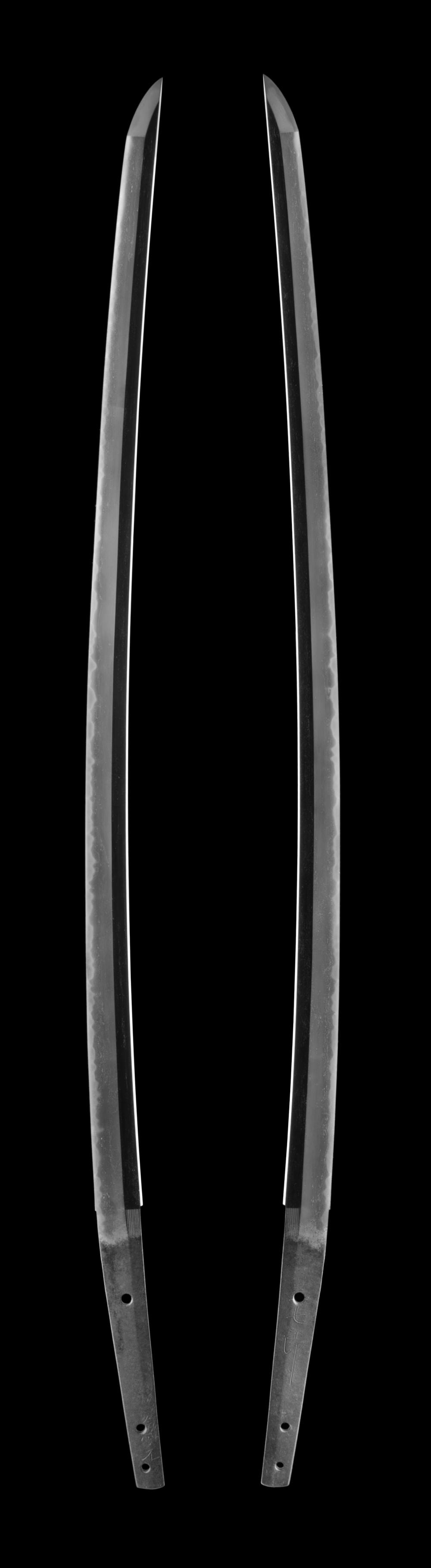
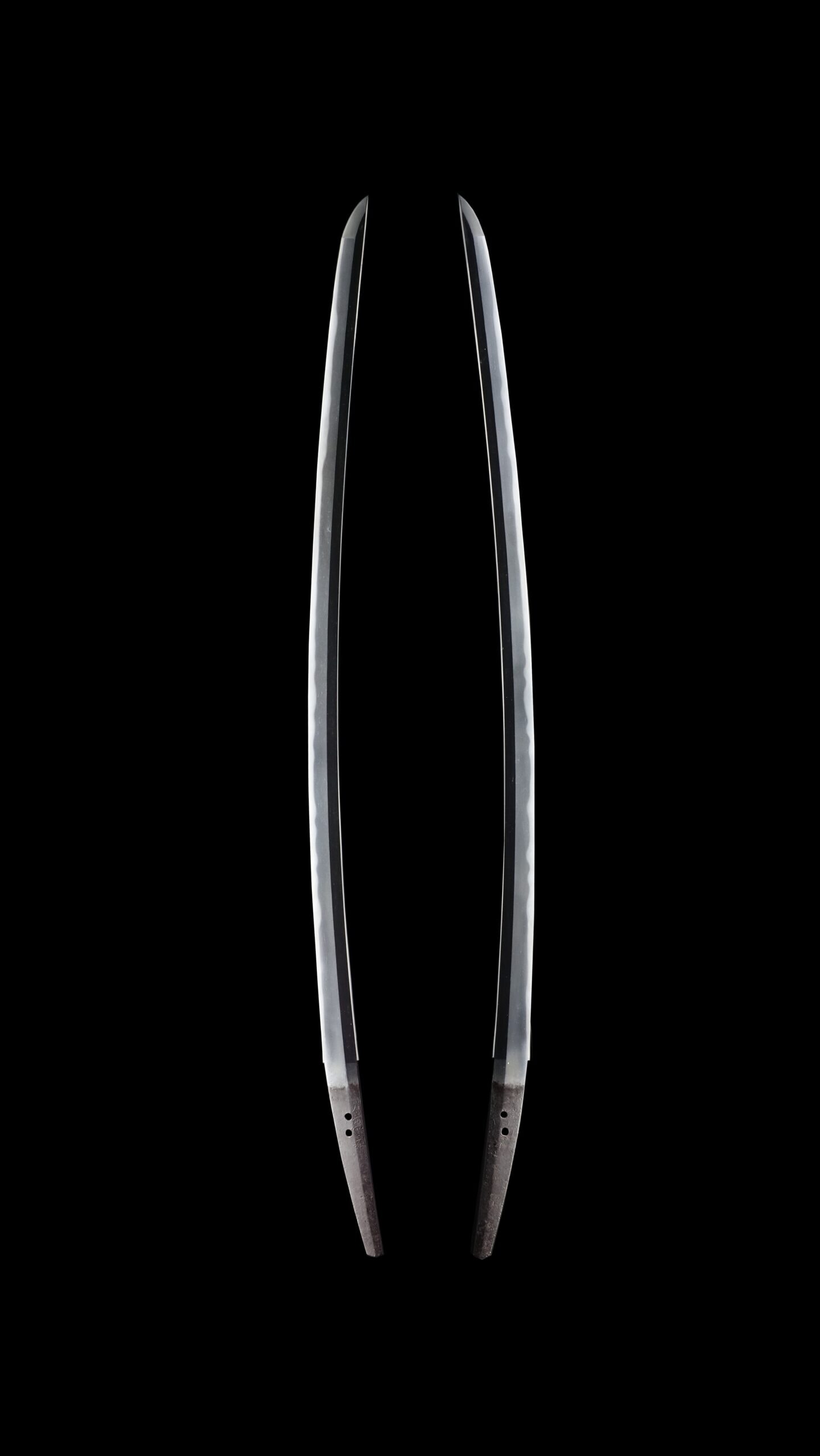
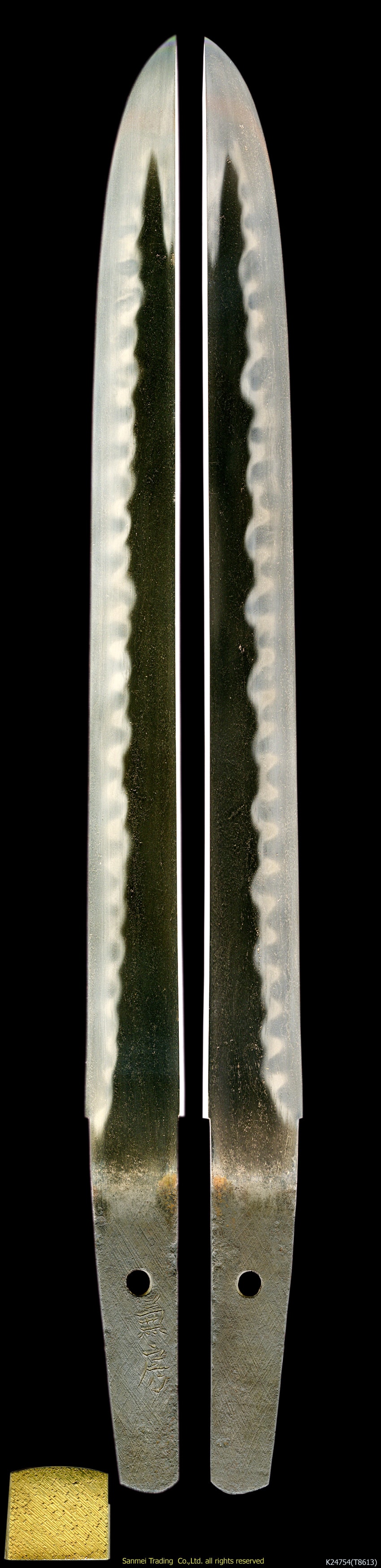
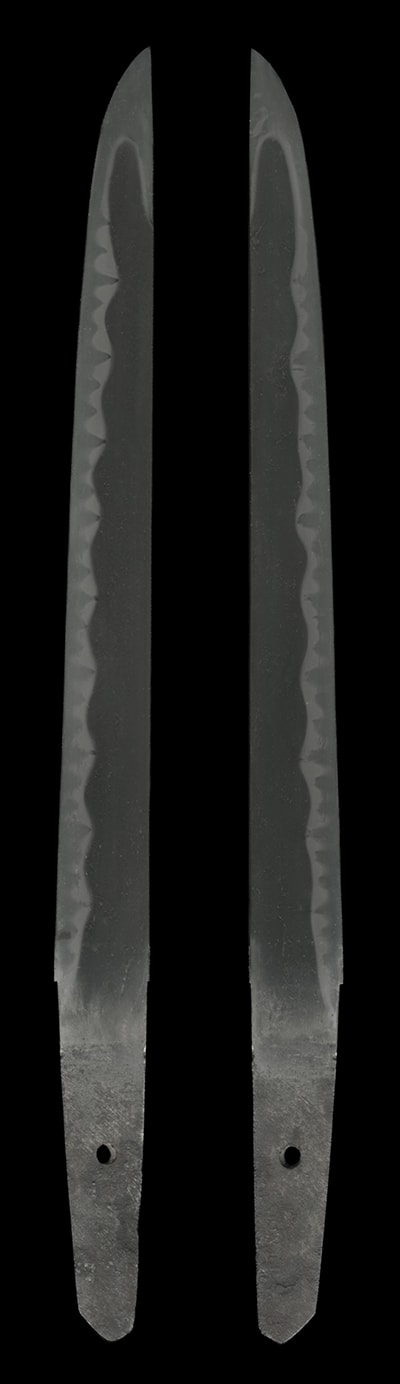
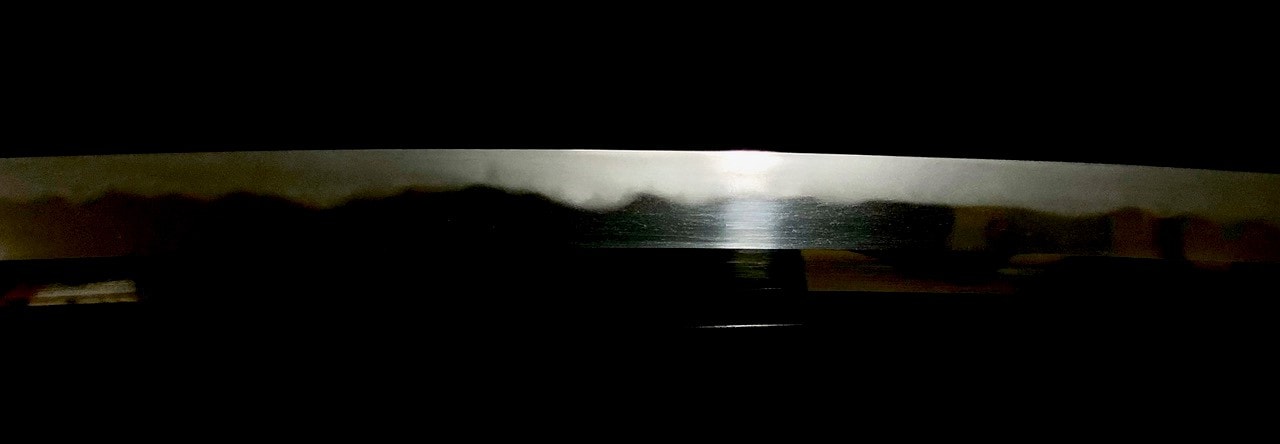
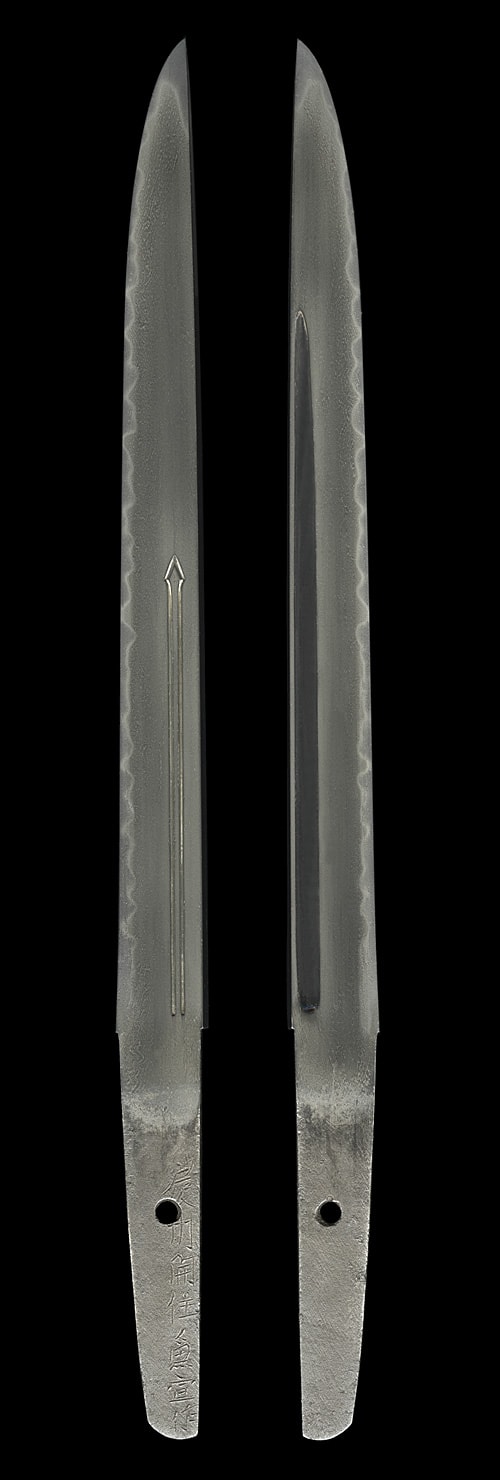
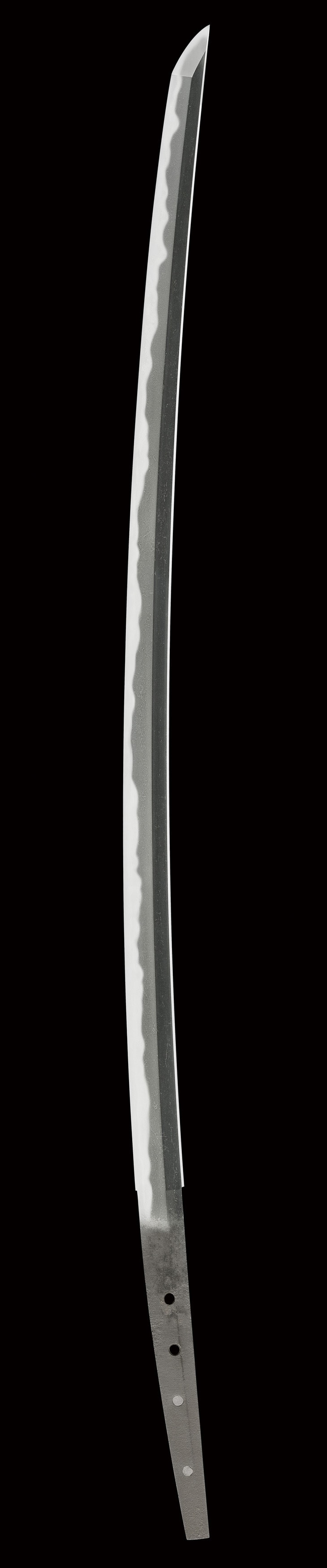
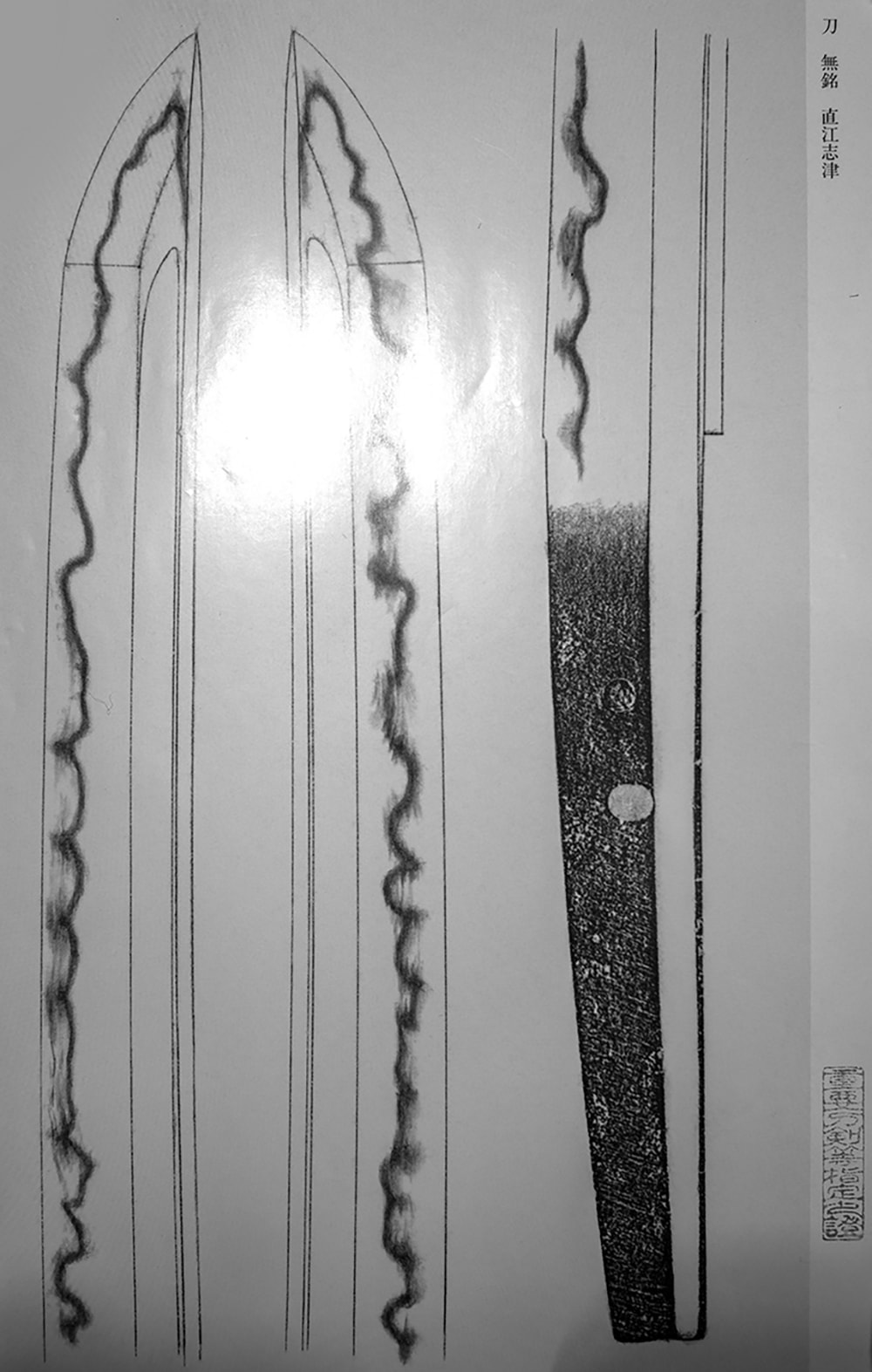
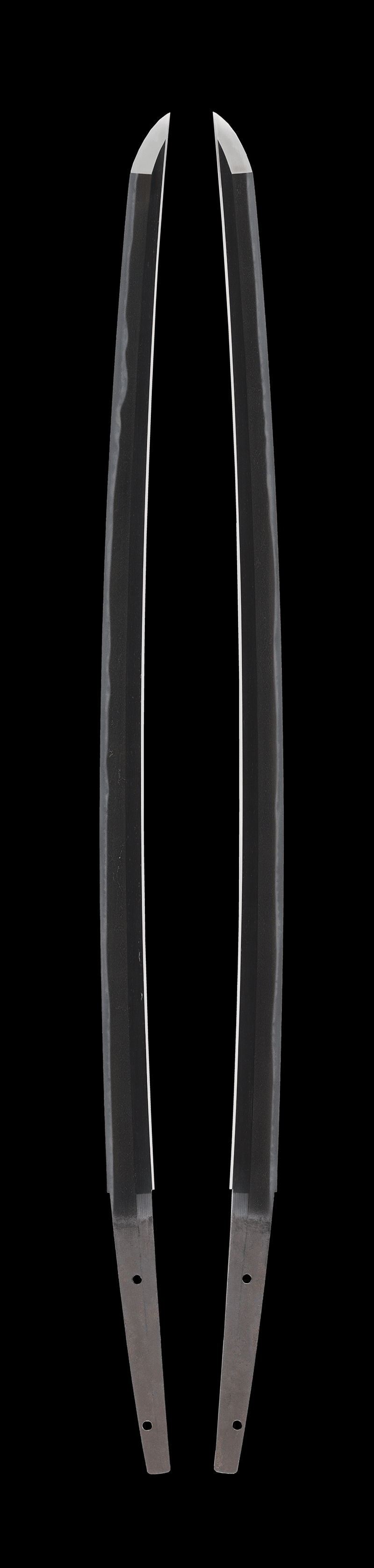
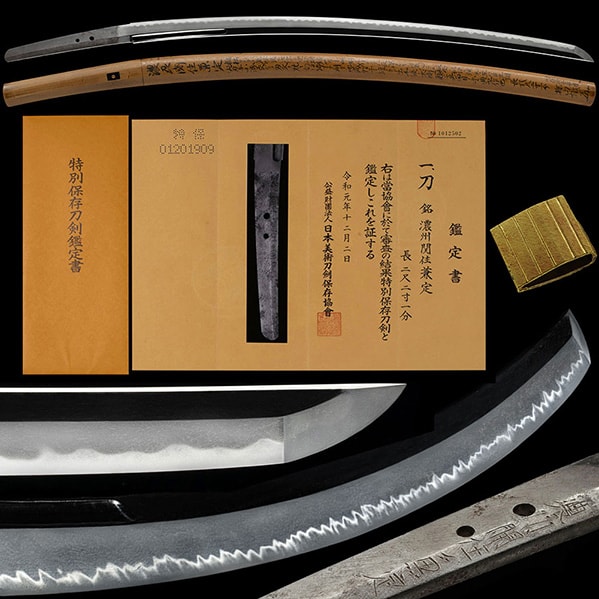
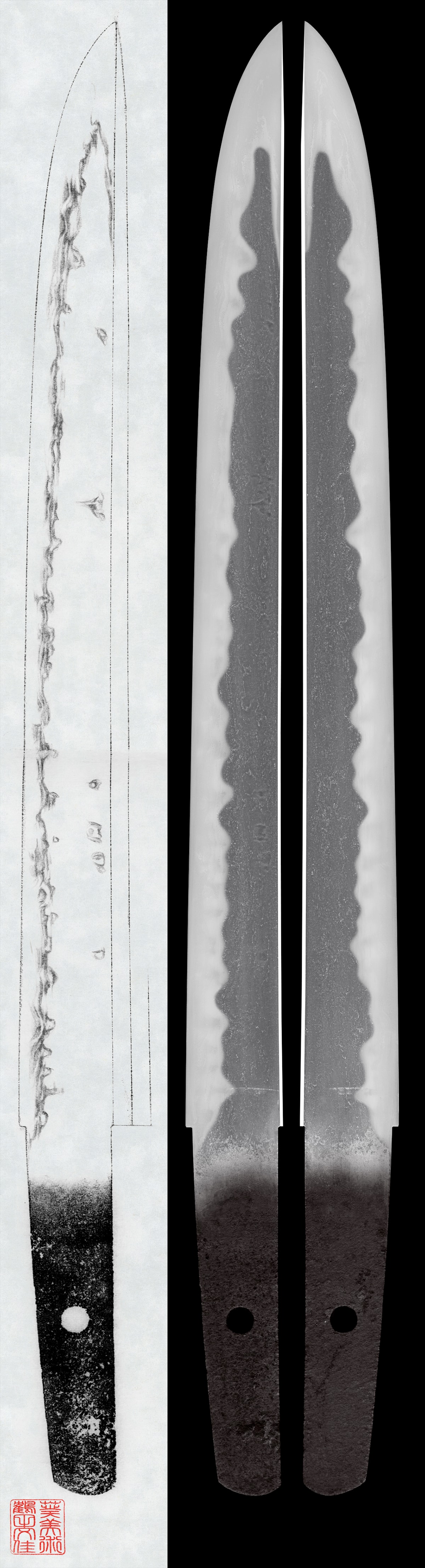
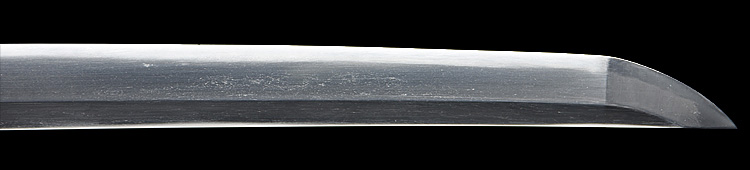
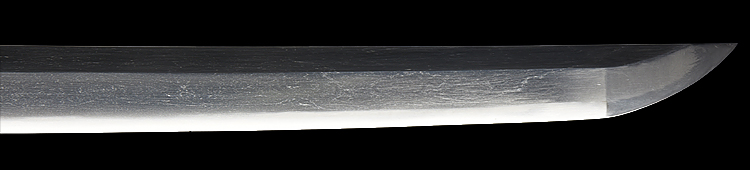
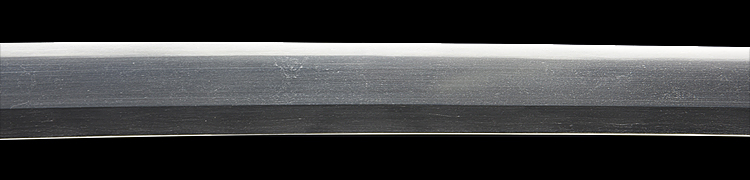
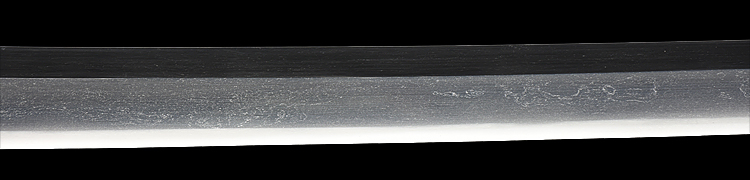
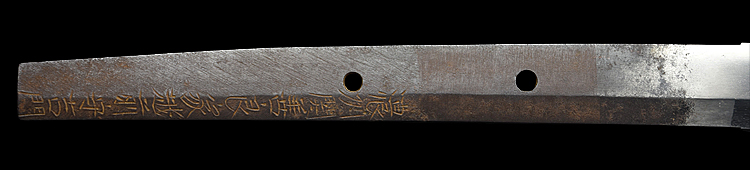
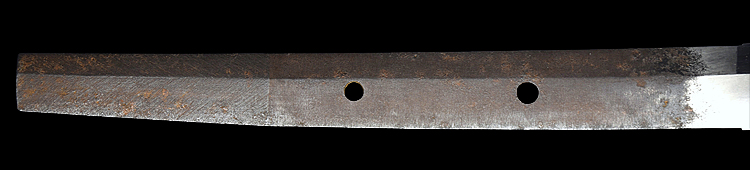
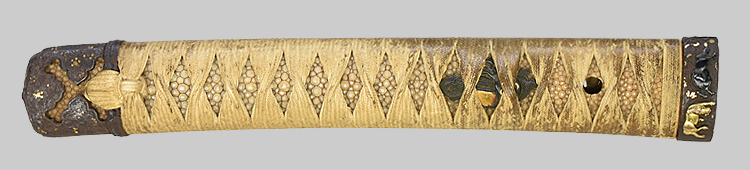
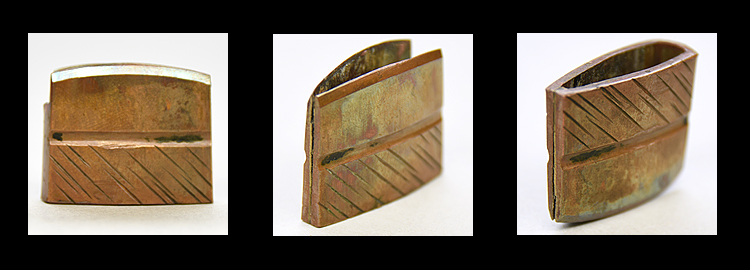
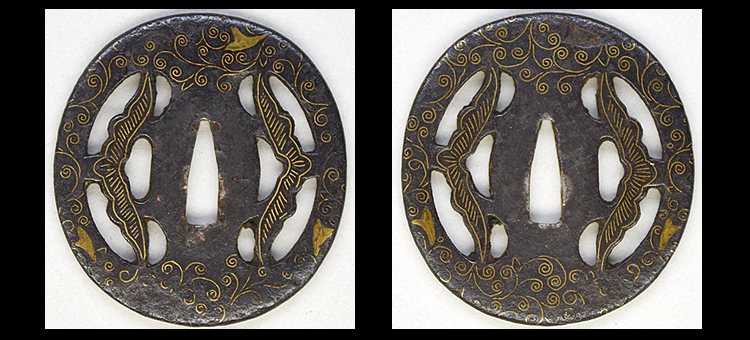
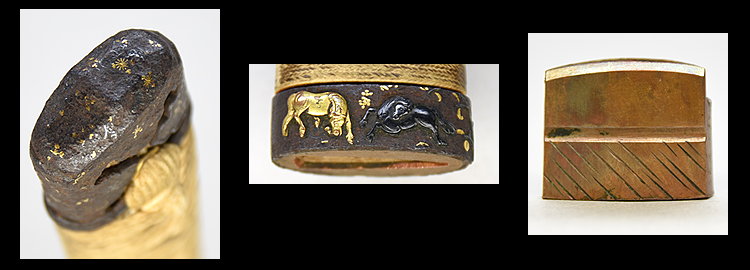
This katana by Echizen no Kami Yoshikado features a well-packed ko-itame hada mixed with mokume, with thick ji-nie and faint utsuri. The hamon is a shallow notare mixed with ko-midare, with a soft nioi-guchi and fine ko-nie. It comes with a shirasaya and a hiramaki-saya hantachi koshirae.
 NihontoWatchBETA
mei · Seki · Edo · nagasa 70cm · sori 1.2cm




Mino-den · Mino
143 pieces on the market now
Seki (関), in Mino Province, grew from two roots set down in the Nanbokuchō period and rose to become the great center of mass sword production in the late medieval age. Learn more →
| Smith | Era | Designated |
|---|---|---|
| Kinju金重 | 1340-1346 | 45 |
| Ujifusa氏房 | 1596-1615 | 16 |
| Kaneyuki金行 | 1350-1352 | 10 |
| Ujifusa氏房 | 1571-1592 | 9 |
| Kanekore兼之 | 1504-1555 | 7 |
Certifies a genuine blade worth preserving: a signature confirmed correct, or, if unsigned, an era, province, and school that the NBTHK can reliably identify.
The NBTHK (Nihon Bijutsu Tōken Hozon Kyōkai, the Society for the Preservation of Japanese Art Swords) is a public-interest incorporated foundation founded in 1948 and supervised by Japan’s Agency for Cultural Affairs (Bunkachō); it is based at the Japanese Sword Museum in Tokyo. Its expert panels physically examine each submitted work (shinsa) and issue a certificate (kanteishō) ranking it by artistic and historical merit. NBTHK papers are the most widely recognized standard of authentication for Japanese swords and fittings.
NBTHK official siteWithin one week of the item's arrival (cooling-off is possible within Japan only). For defects that differ from the purchase conditions, we will accept the return and refund the payment. For other cases such as overseas, we will consult separately.
This katana by Echizen no Kami Yoshikado features a well-packed ko-itame hada mixed with mokume, with thick ji-nie and faint utsuri. The hamon is a shallow notare mixed with ko-midare, with a soft nioi-guchi and fine ko-nie. It comes with a shirasaya and a hiramaki-saya hantachi koshirae.
NihontoWatchBETAmei · Seki · Edo · nagasa 70cm · sori 1.2cm
Mino-den · Mino
143 pieces on the market now
Seki (関), in Mino Province, grew from two roots set down in the Nanbokuchō period and rose to become the great center of mass sword production in the late medieval age. Learn more →
| Smith | Era | Designated |
|---|---|---|
| Kinju金重 | 1340-1346 | 45 |
| Ujifusa氏房 | 1596-1615 | 16 |
| Kaneyuki金行 | 1350-1352 | 10 |
| Ujifusa氏房 | 1571-1592 | 9 |
| Kanekore兼之 | 1504-1555 | 7 |
Certifies a genuine blade worth preserving: a signature confirmed correct, or, if unsigned, an era, province, and school that the NBTHK can reliably identify.
The NBTHK (Nihon Bijutsu Tōken Hozon Kyōkai, the Society for the Preservation of Japanese Art Swords) is a public-interest incorporated foundation founded in 1948 and supervised by Japan’s Agency for Cultural Affairs (Bunkachō); it is based at the Japanese Sword Museum in Tokyo. Its expert panels physically examine each submitted work (shinsa) and issue a certificate (kanteishō) ranking it by artistic and historical merit. NBTHK papers are the most widely recognized standard of authentication for Japanese swords and fittings.
NBTHK official siteWithin one week of the item's arrival (cooling-off is possible within Japan only). For defects that differ from the purchase conditions, we will accept the return and refund the payment. For other cases such as overseas, we will consult separately.