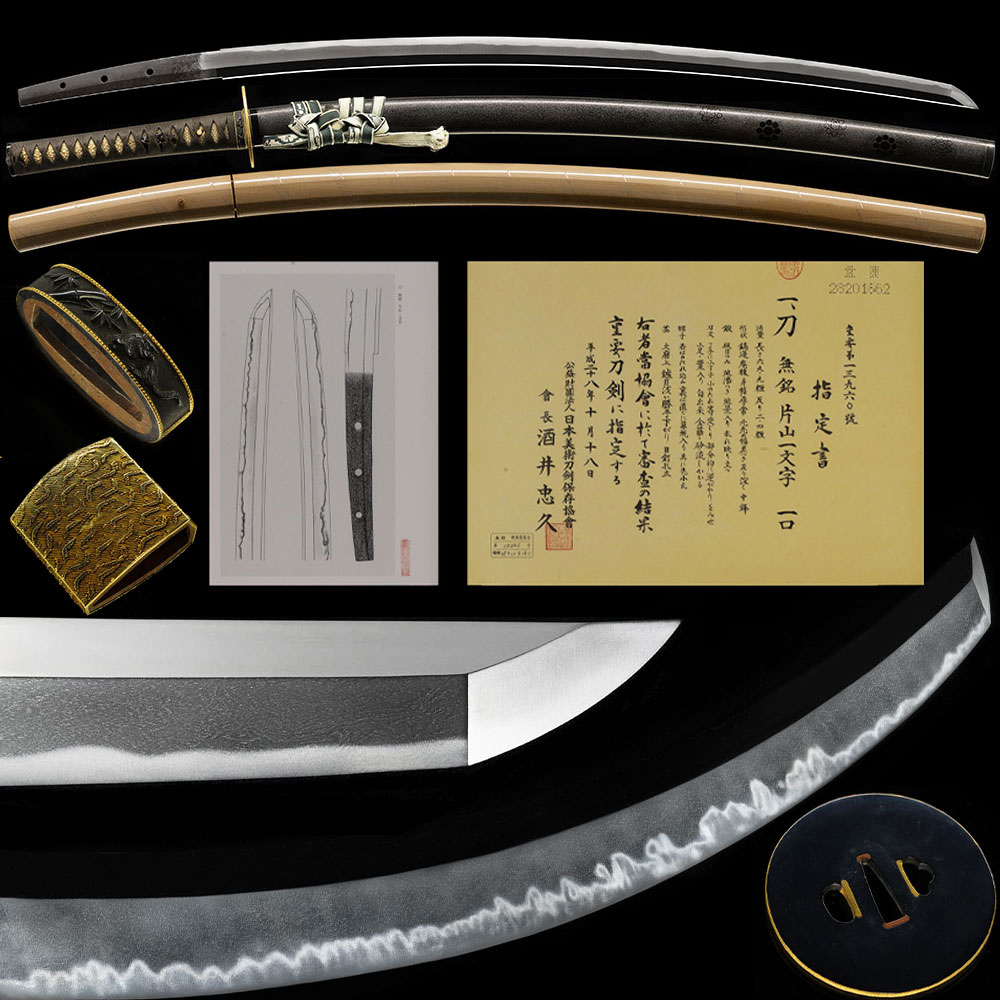
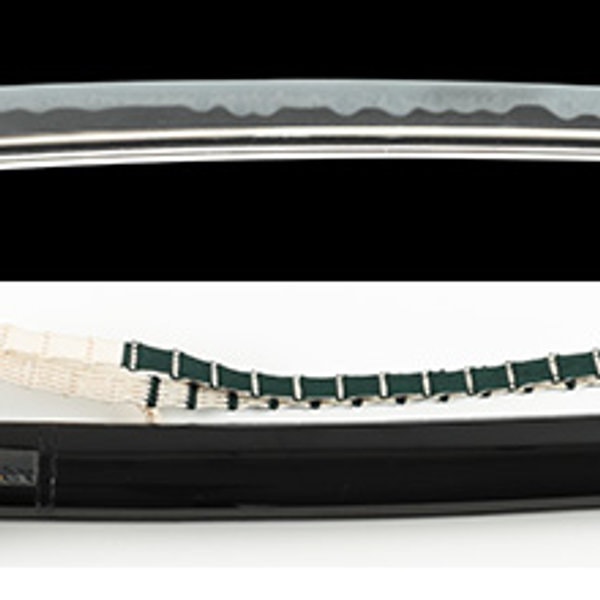
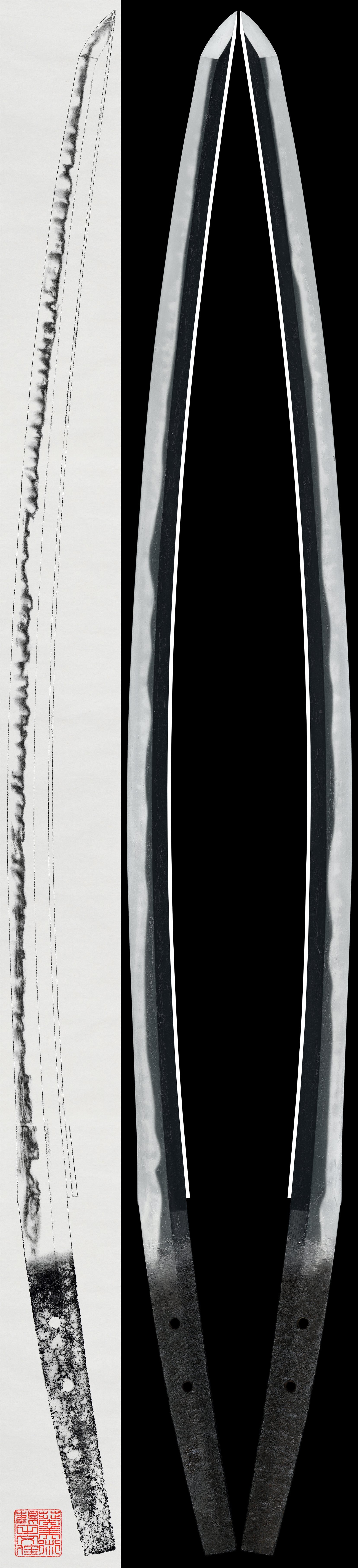
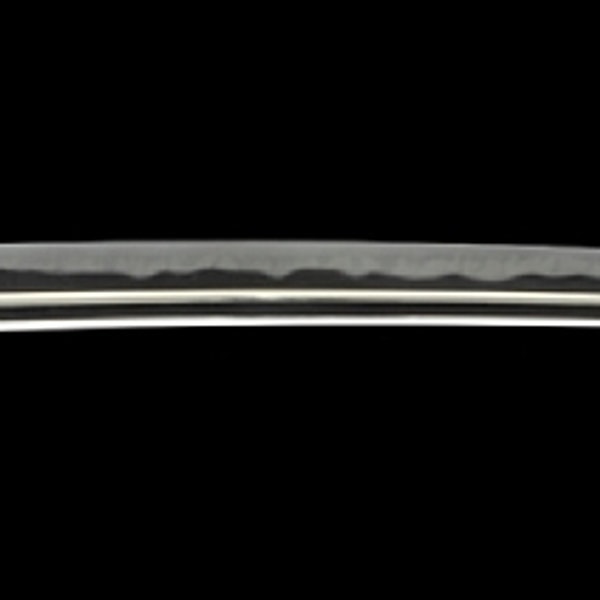
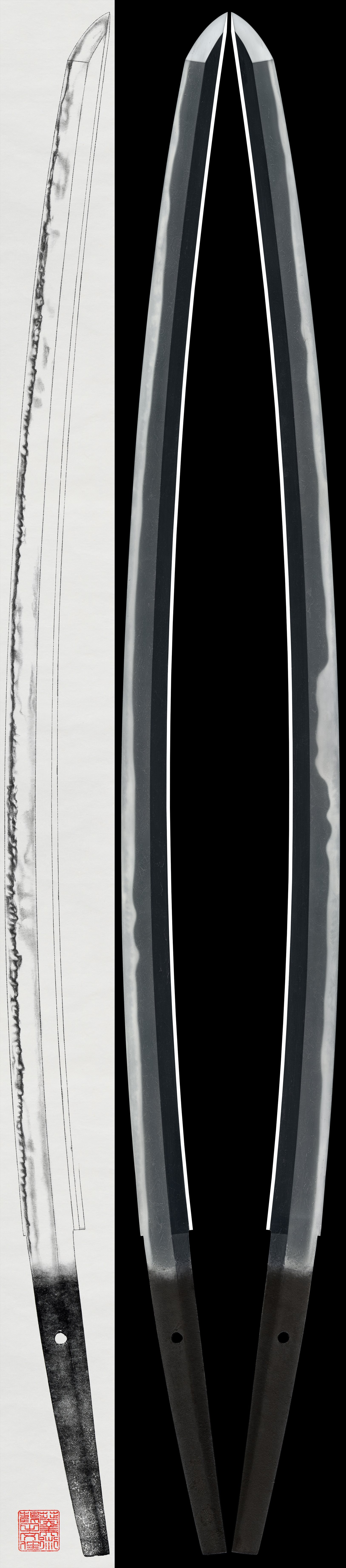
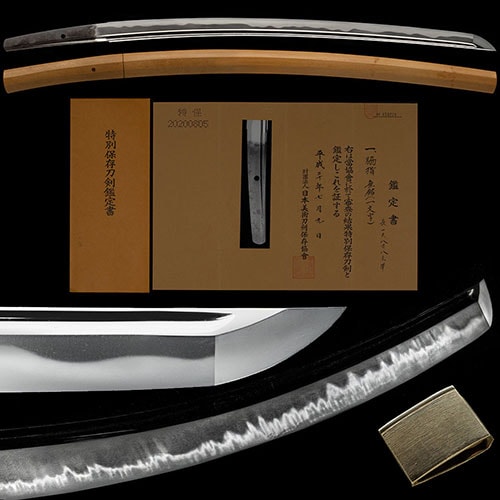
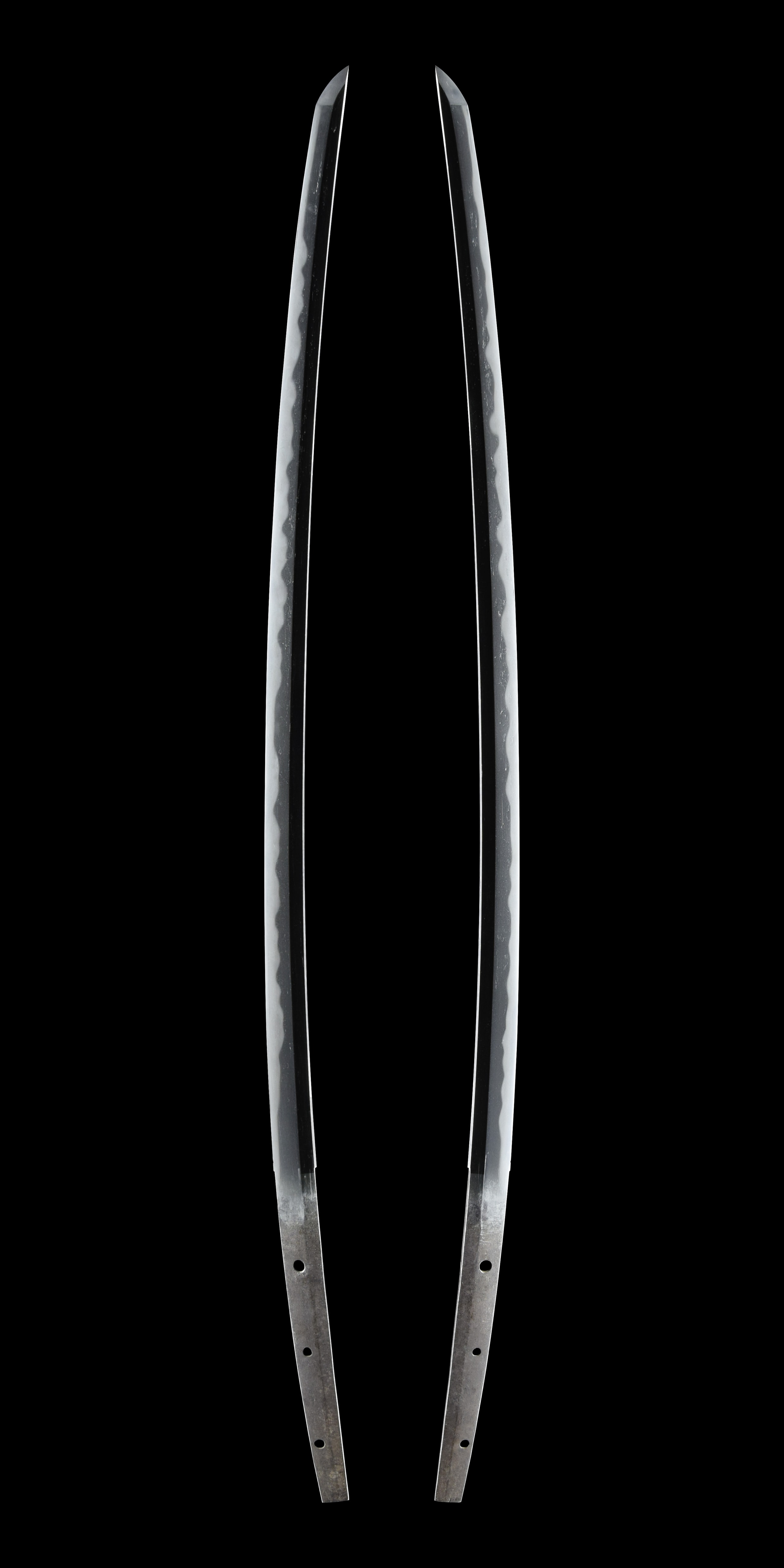
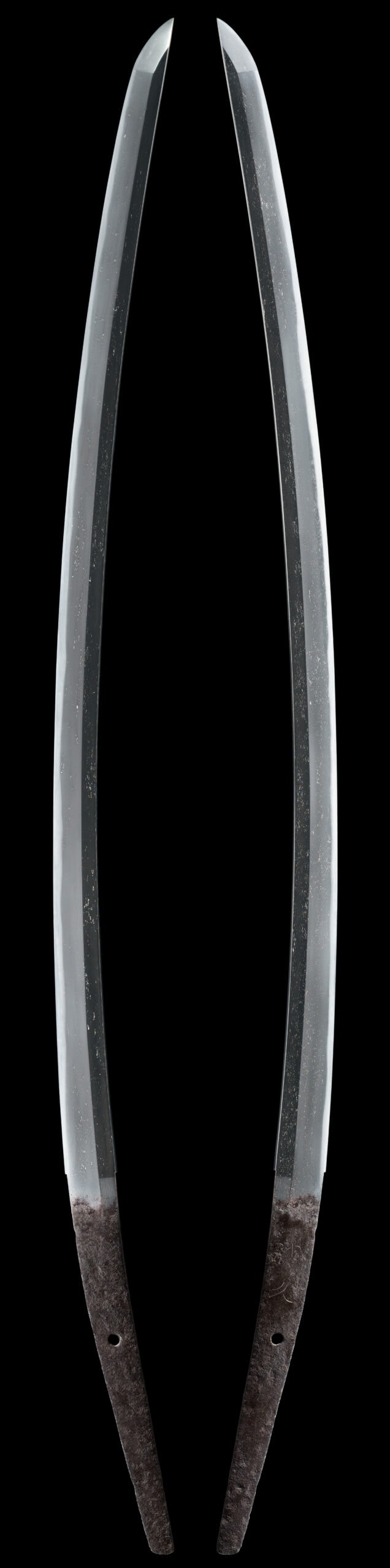
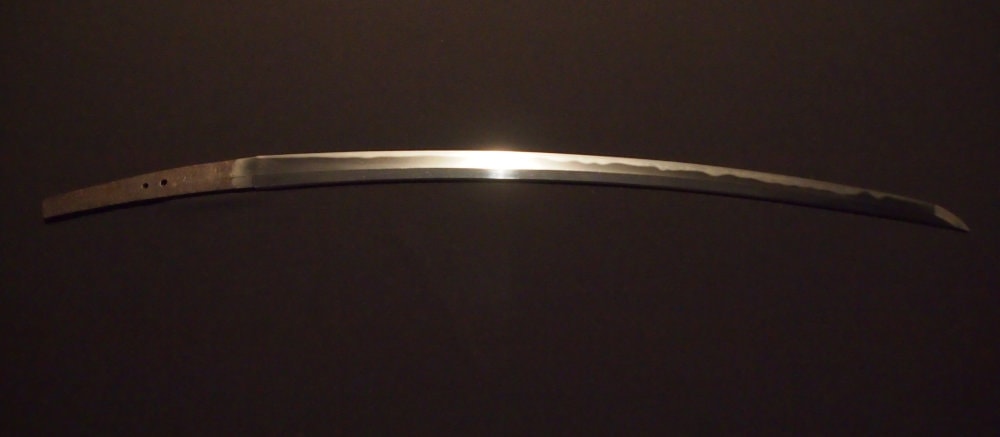
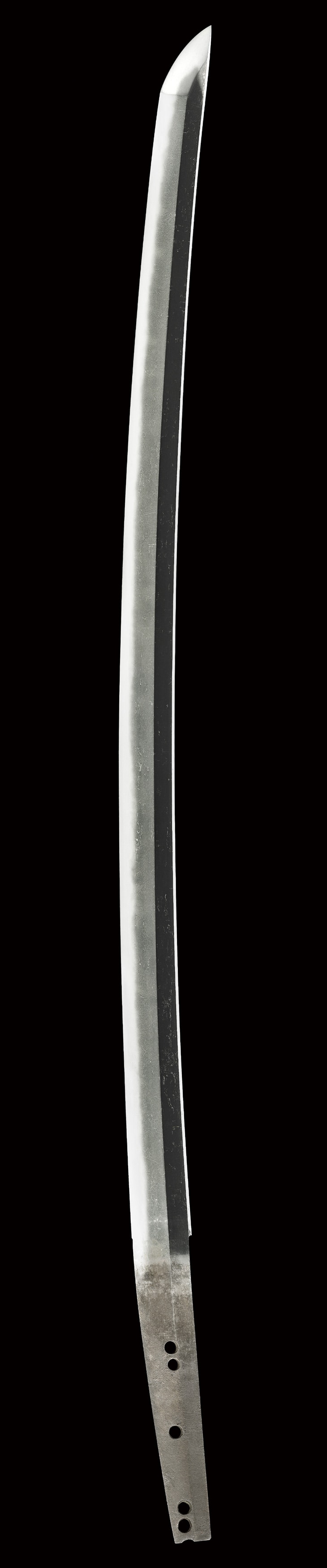
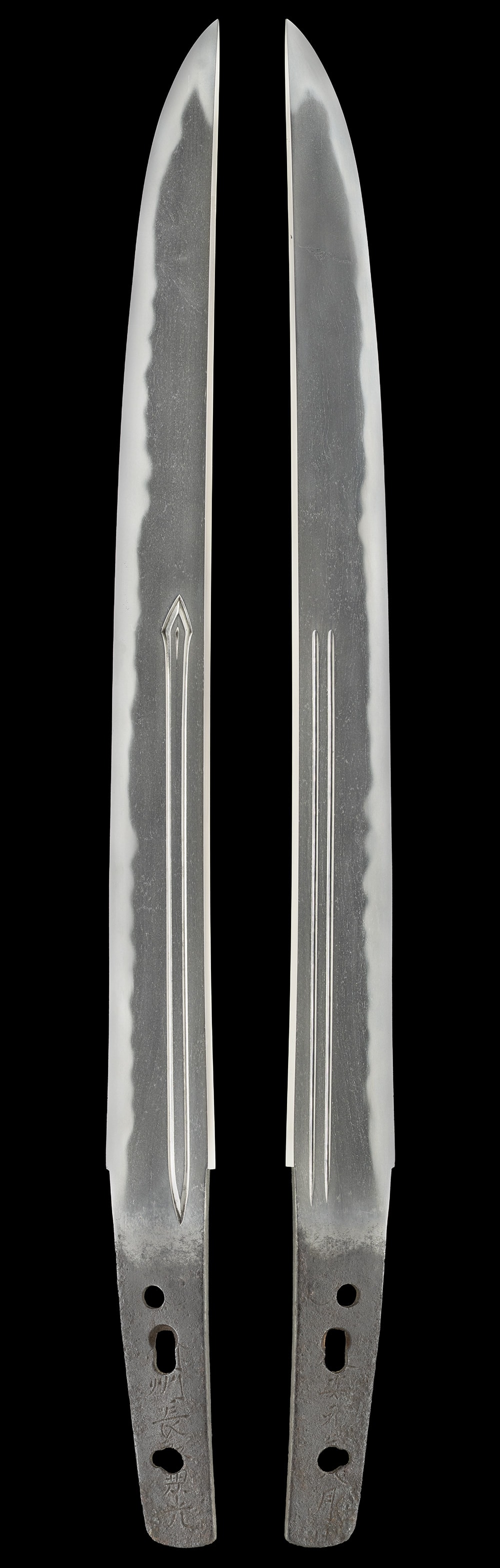
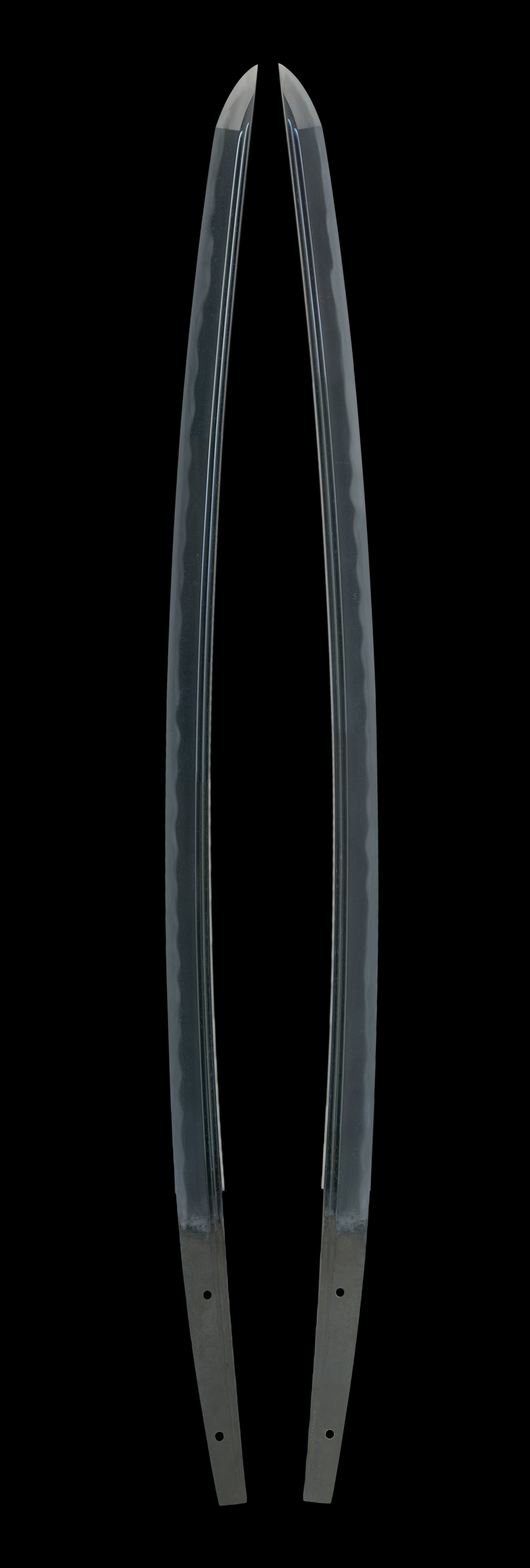
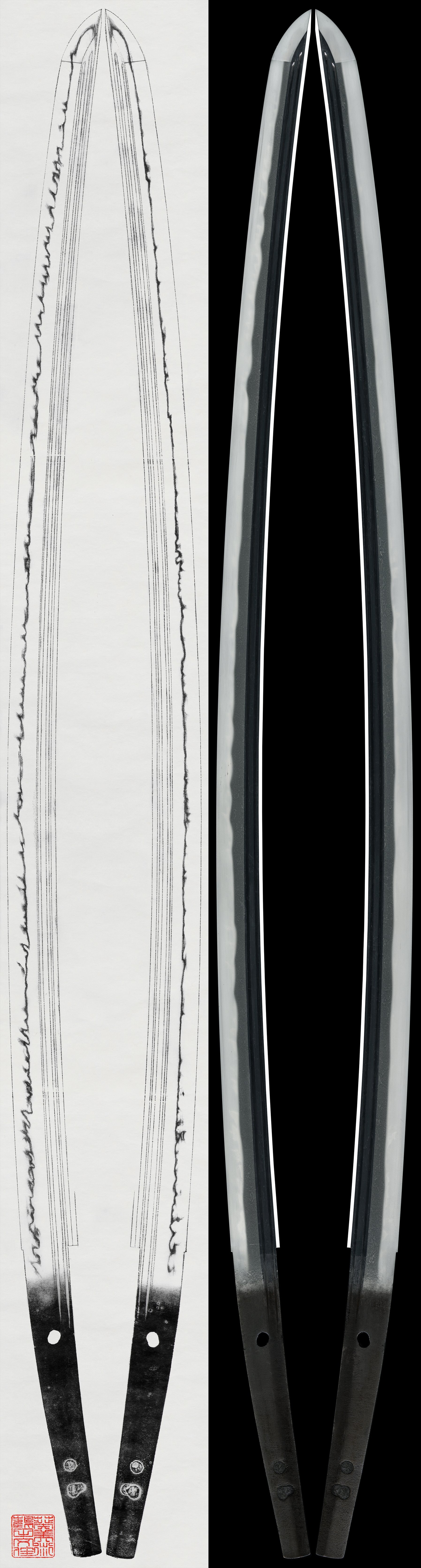
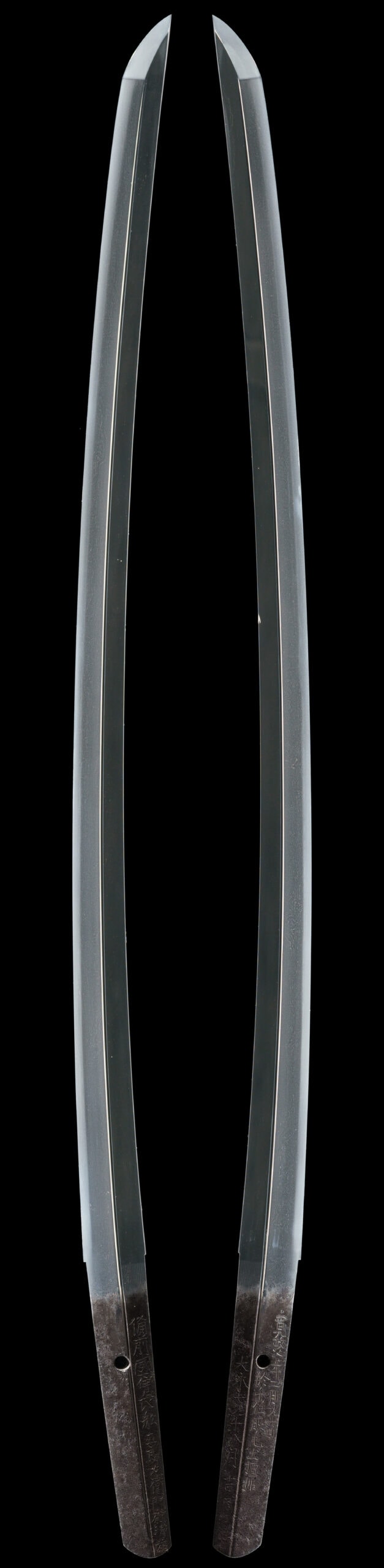
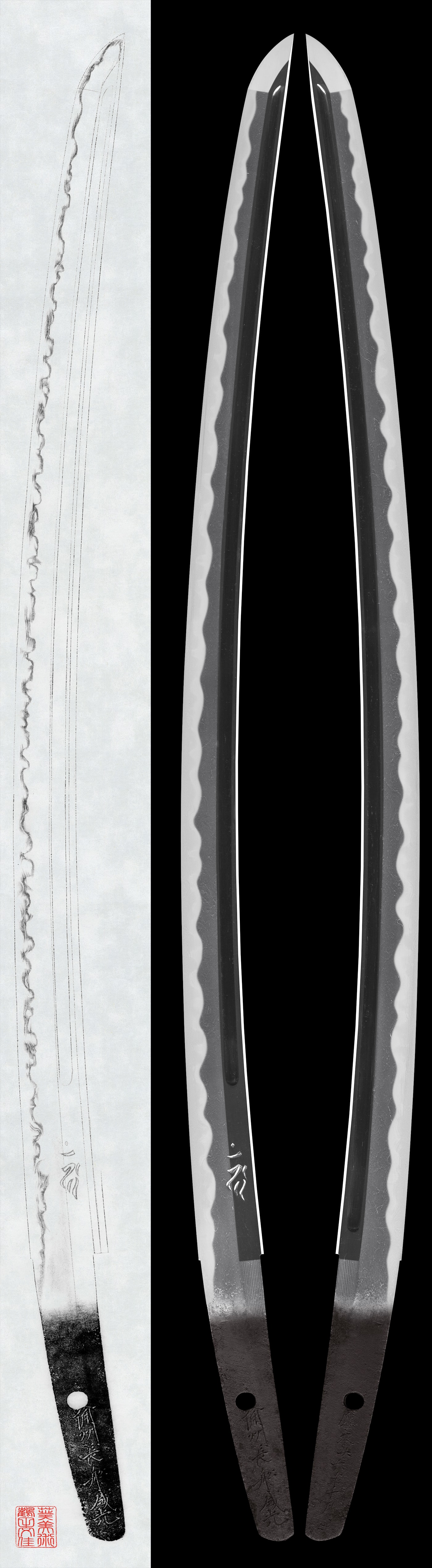
The Ichimonji school (Ichimonji-ha) represents one of the two paramount traditions of Bizen Province swordmaking during the Kamakura period, flourishing alongside the Osafune lineage from the early thirteenth century through the Nanbokuchō era. The school's name derives from the practice of carving the character ichi (一, "one") onto the nakago, though signatures varied considerably—some blades bear only this single ideograph, others append an individual maker's name beneath it, and still others carry personal names alone. The tradition prospered across multiple geographic centers within Bizen, most notably at Fukuoka during the mid-Kamakura period, followed by Yoshioka from the late Kamakura into the Nanbokuchō era, with additional branches at Katayama and Iwato. Each locale developed its own stylistic nuances while maintaining the school's fundamental aesthetic principles. The collective technical signature of Ichimonji work centers on brilliant chōji-midare tempering executed with extraordinary virtuosity. The mid-Kamakura Fukuoka Ichimonji masters in particular forged blades of exceptional flamboyance, tempering large-scale chōji, layered jūka-chōji (multi-petaled clove patterns), fukuro-chōji (bag-shaped clove forms), and kawazu-kochōji (frog-leg small clove patterns) that rise and fall dramatically across the blade surface. The jigane characteristically displays vivid midare-utsuri (irregular reflection in the steel) standing clearly against an itame foundation, with densely adhering ji-nie (martensitic particles in the ground steel) and fine chikei (地景, steel veining). The tempering itself is distinguished by a soft, luminous nioiguchi (hardening boundary) rich in internal activity—ashi and yō (leg-like and leaf-like crystalline formations) appear in profusion, while kinsuji and sunagashi (金筋・砂流し, lightning-like and sand-flow patterns) run frequently through the ha.
The Yoshioka Ichimonji branch, which rose to prominence as Fukuoka's influence waned, typically produced more restrained work with chōji patterns of smaller scale, often incorporating conspicuous gunome (clover-shaped elements) and occasionally showing saka-gakari (reverse-slanting) tendencies. The Katayama Ichimonji group, reportedly founded when the smith Norifusa relocated from Fukuoka, became particularly renowned for naginata (polearms), forging strong, clear steel with somewhat smaller chōji-midare patterns that characteristically lean in reverse, featuring fine, intricate ashi within the temper. The Ichimonji school's enduring influence stems from its synthesis of technical excellence with aesthetic grandeur. Early works of the tradition often display ko-midare (small irregular patterns) more prominently than chōji and retain a Ko-Bizen character, but by the middle Kamakura period the school had perfected the magnificent chōji-midare for which it became celebrated. These blades preserve the powerful tachi form of their era—deep koshizori (curvature concentrated at the base), pronounced funbari (flaring at the base), and well-balanced nikuoki (flesh or convexity of the blade)—combined with forging of exceptional quality in which both ji and ha achieve a bright, kenzen (sound and healthy) character. The school's masters succeeded in creating works that unite martial vigor with ornamental brilliance, tempering patterns that alternate between sumptuous, boldly undulating compositions and more controlled arrangements with aligned yakigashira (temper peaks), combining motion and stillness in a manner that engages the viewer without exhausting the eye. This aesthetic achievement, coupled with the school's technical sophistication in producing dense, fine-textured steel with vivid utsuri and richly active tempering, secured Ichimonji's position as one of the most celebrated and influential sword-forging lineages in Japanese history. Learn more →