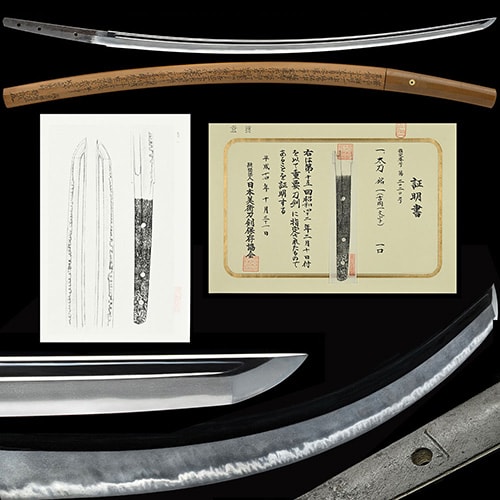
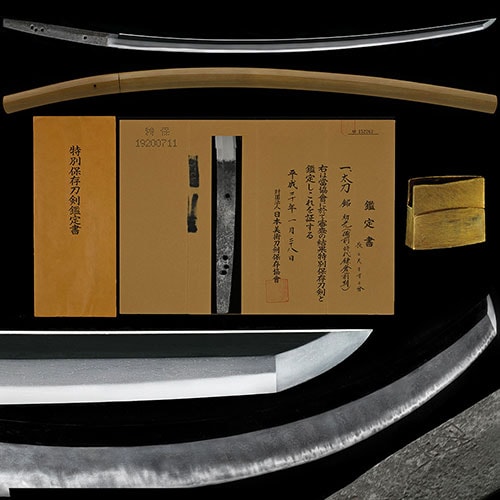
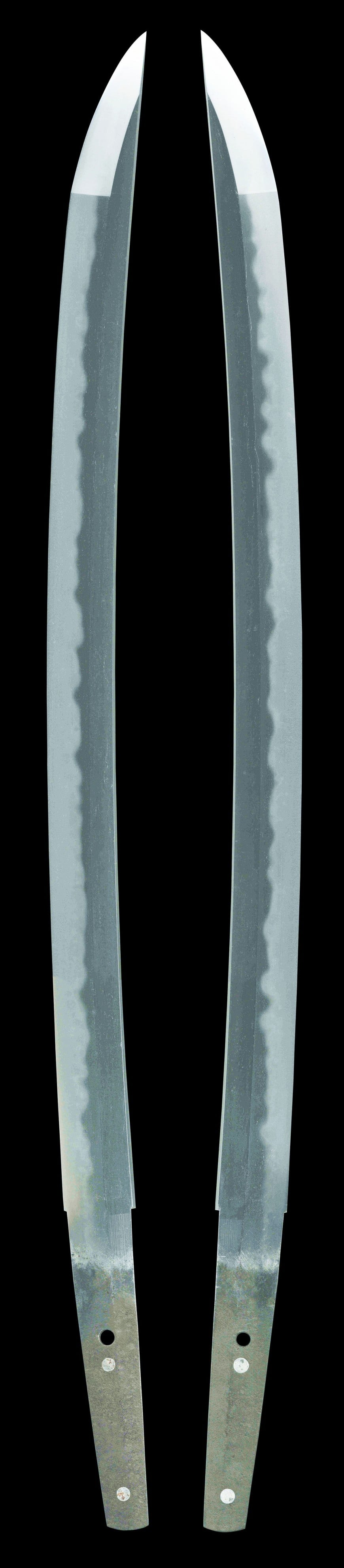
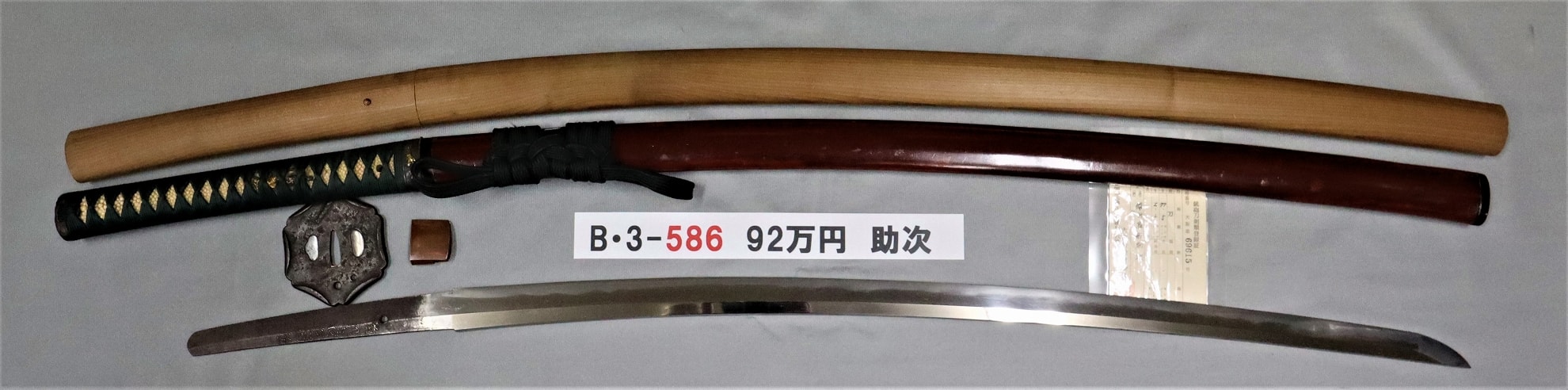
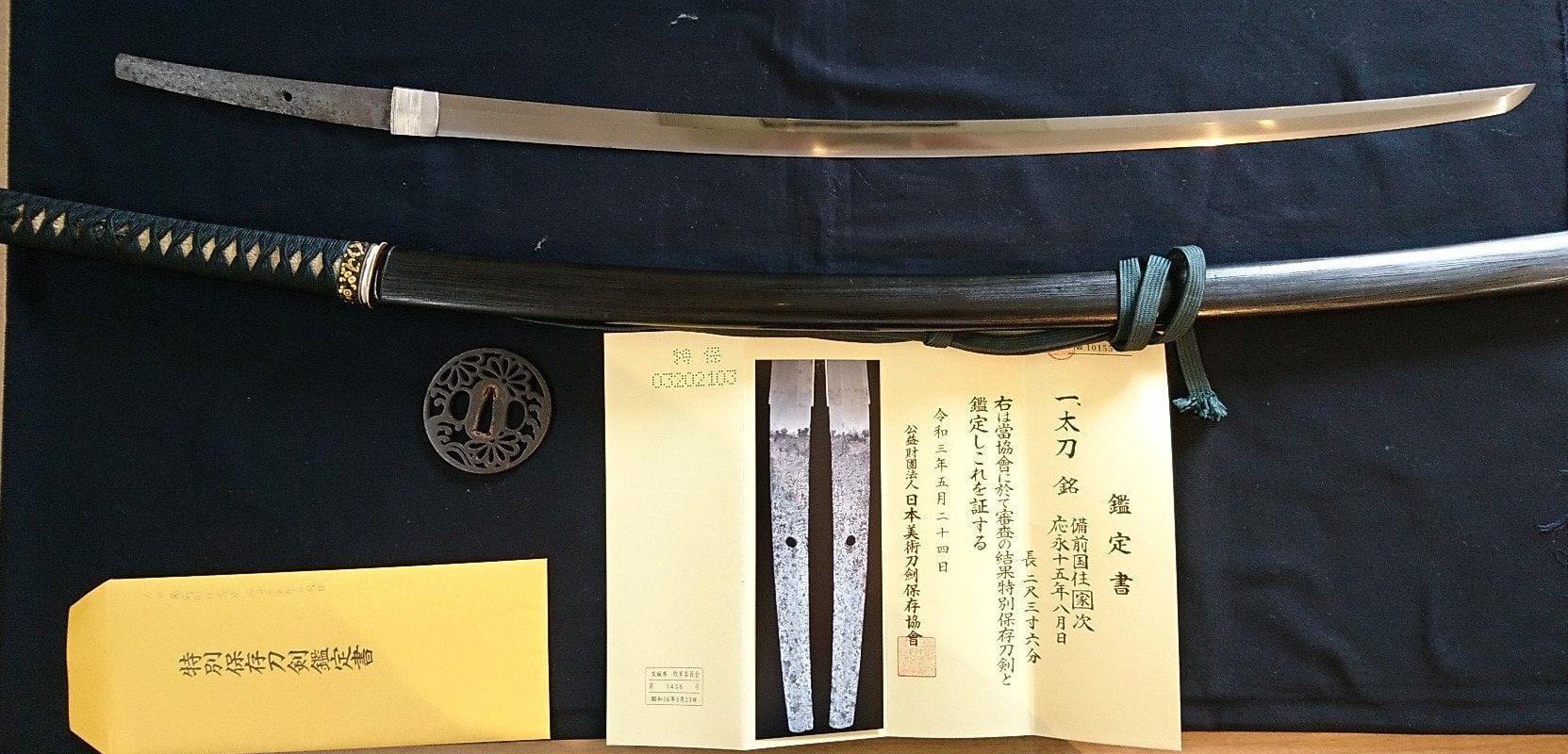
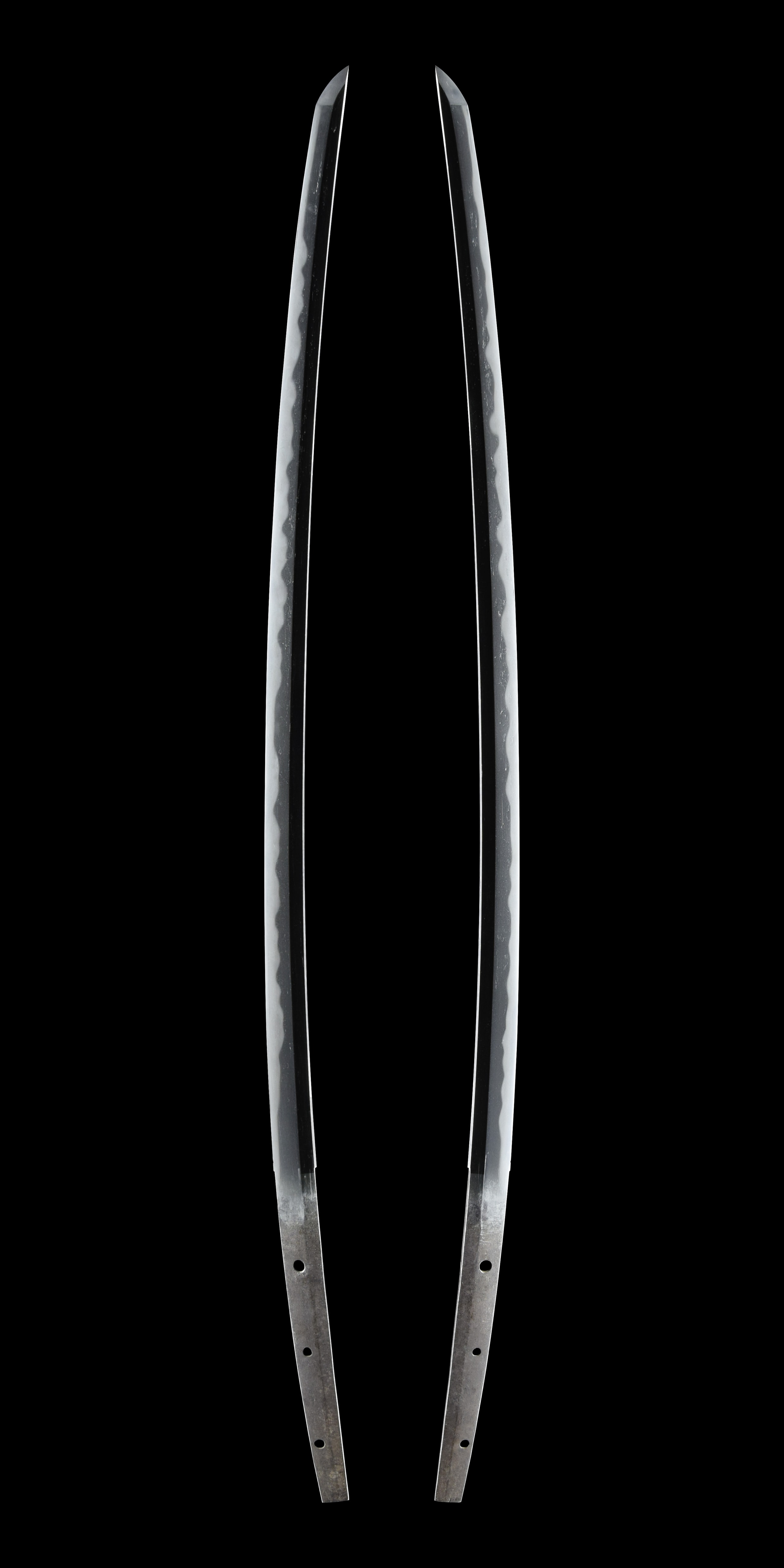
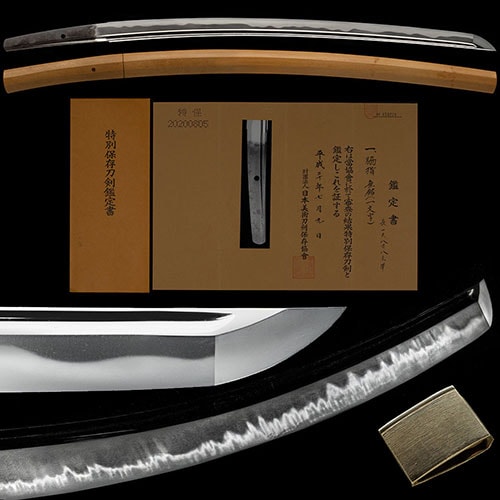
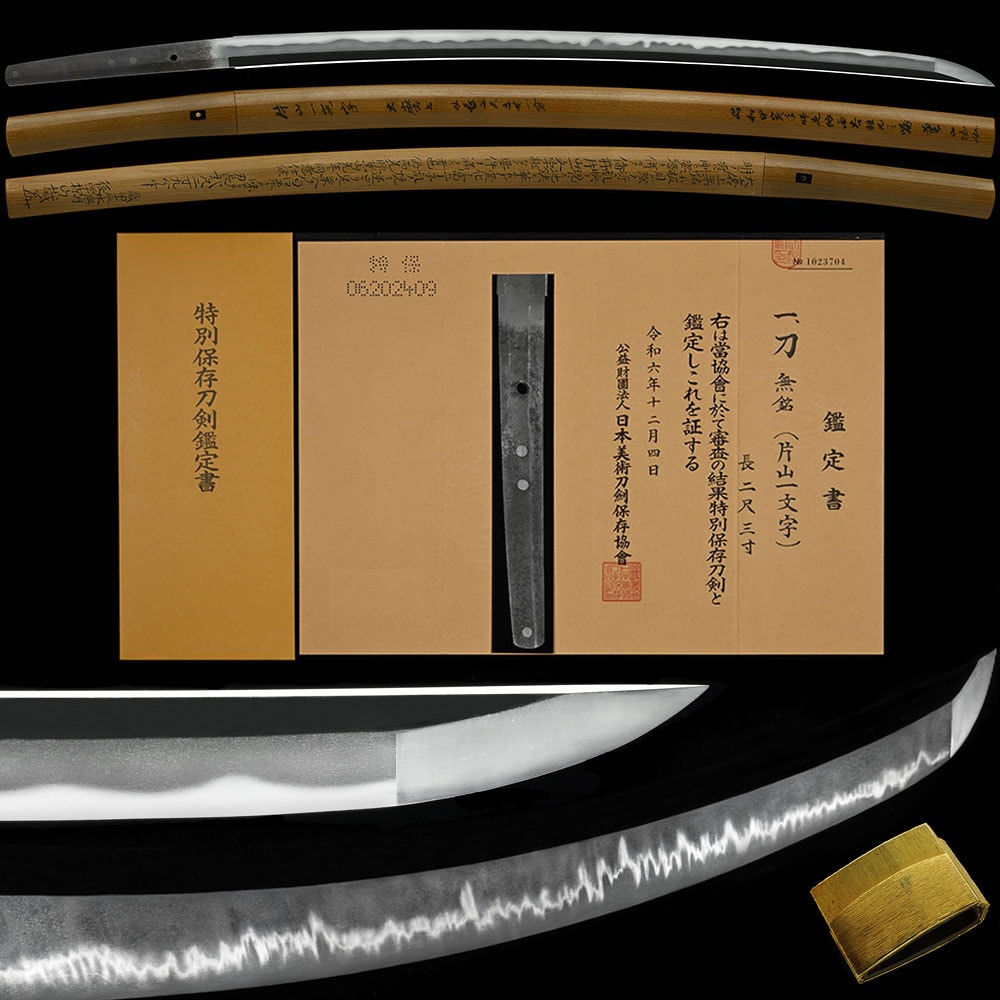
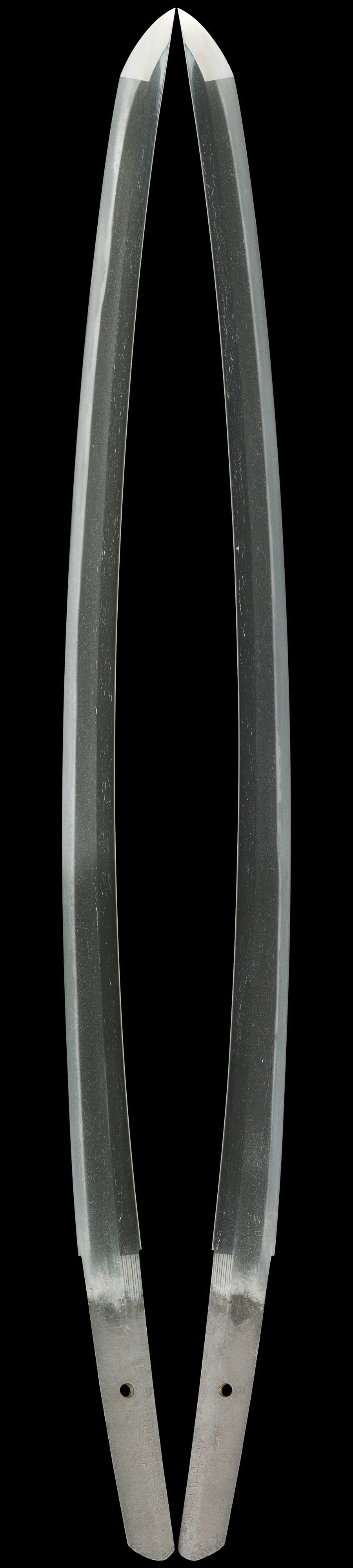
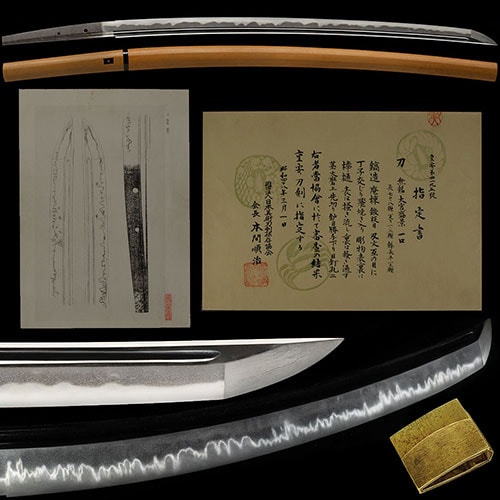
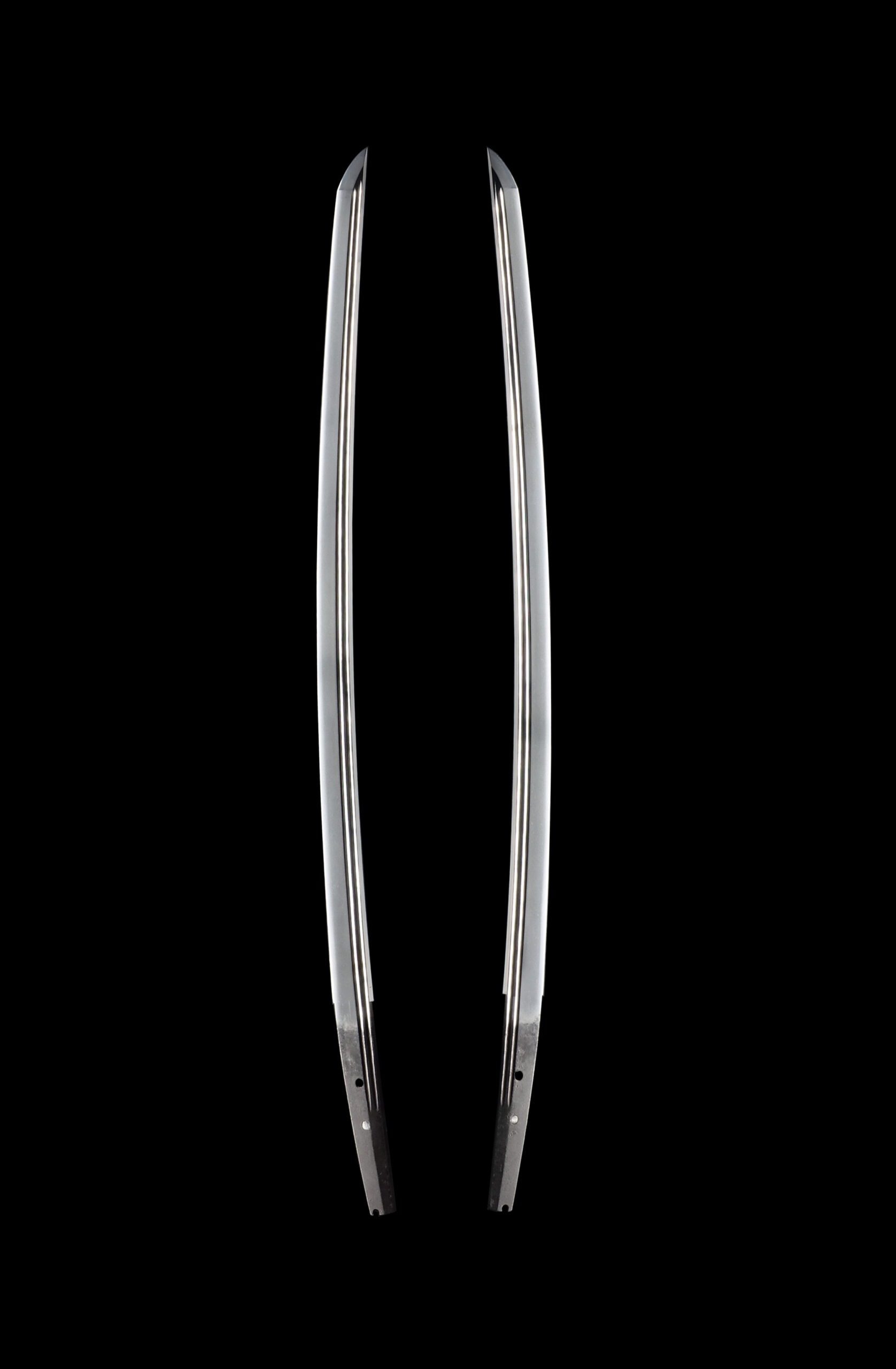
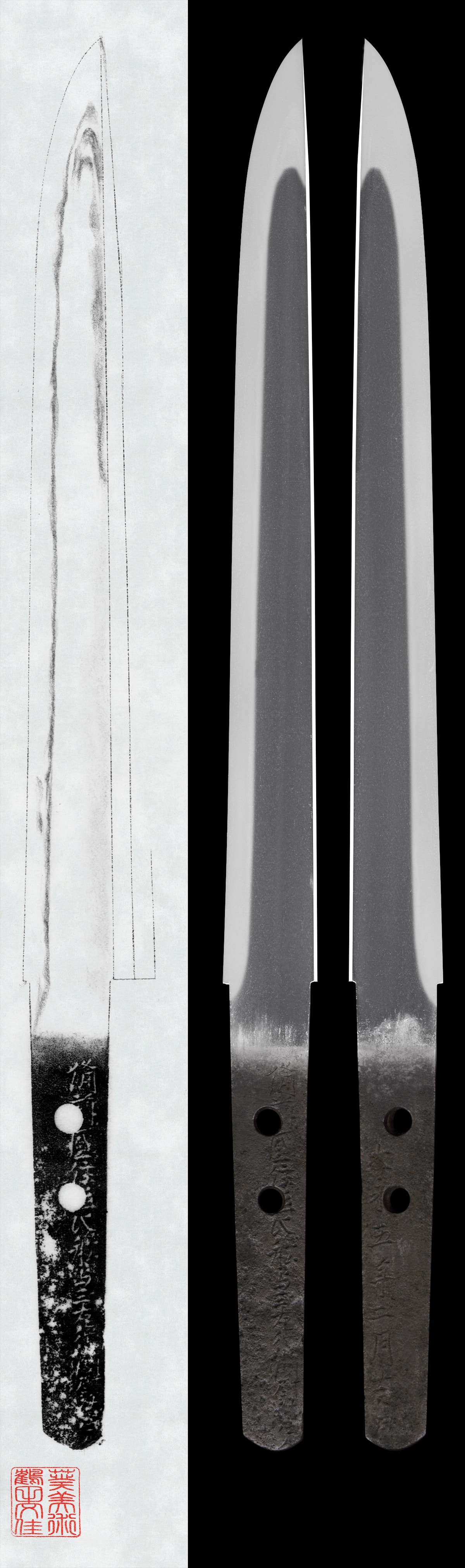
The name Chikatsugu appears across multiple provincial traditions — smiths so signed are cited in signature compendia under , Bitchū Aoe, and Bingo — making attribution a matter of careful analysis. The Nitta-shō Chikatsugu, active in the late period, worked alongside family members such as Chikayori, Ujiyori, and Noritsugu, whose dated works bearing era inscriptions from Bunpō through Gentoku help establish the group's approximate working period. A separate Chikatsugu, identified by the inscription "Bishū-jū Chikatsugu" and associated with the school of Bingo Province, was active during the period, with a dated work of Shōhei 7 (1352). Judging from the manner of inscription, scholarship has concluded that the "Bishū" designation refers not to but to Bingo, placing this smith firmly within the tradition.
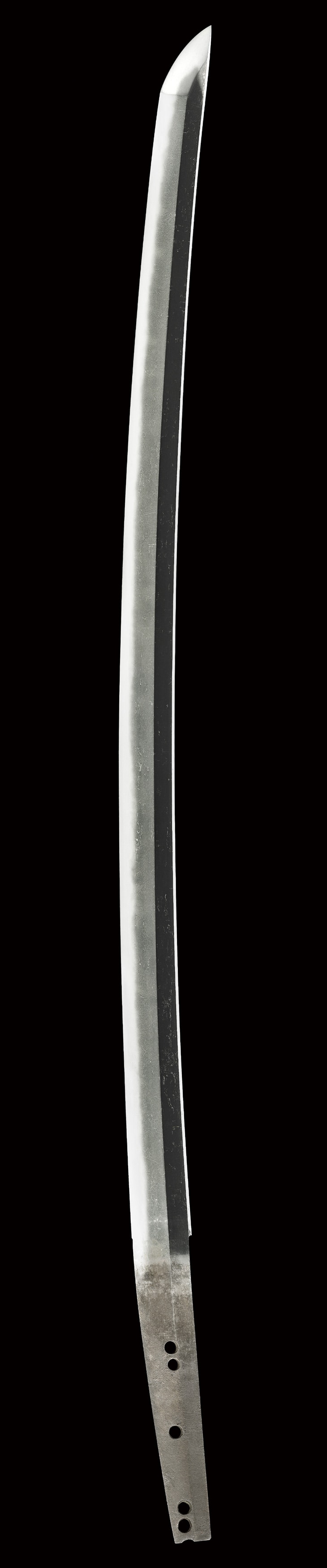
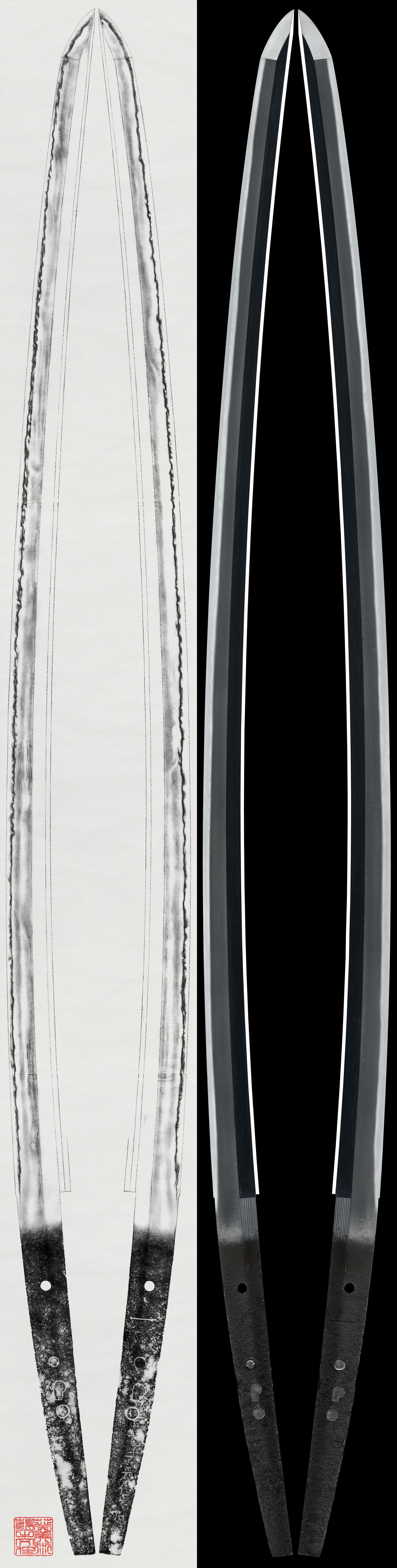
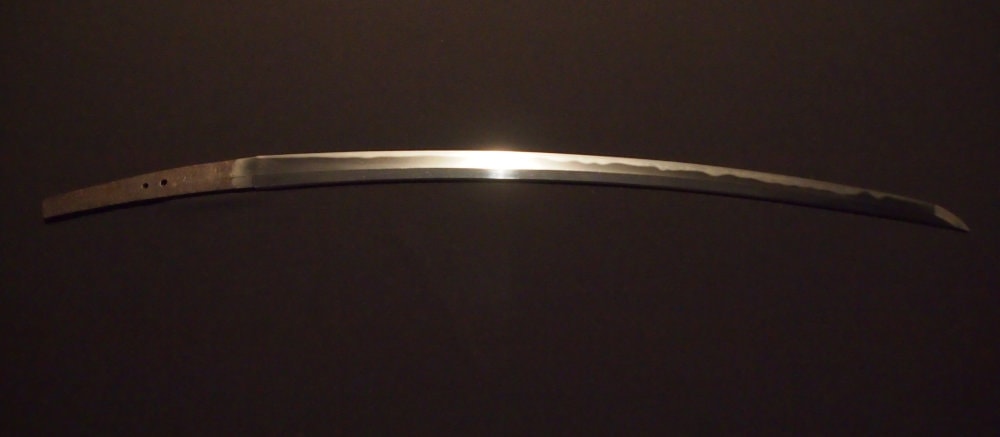
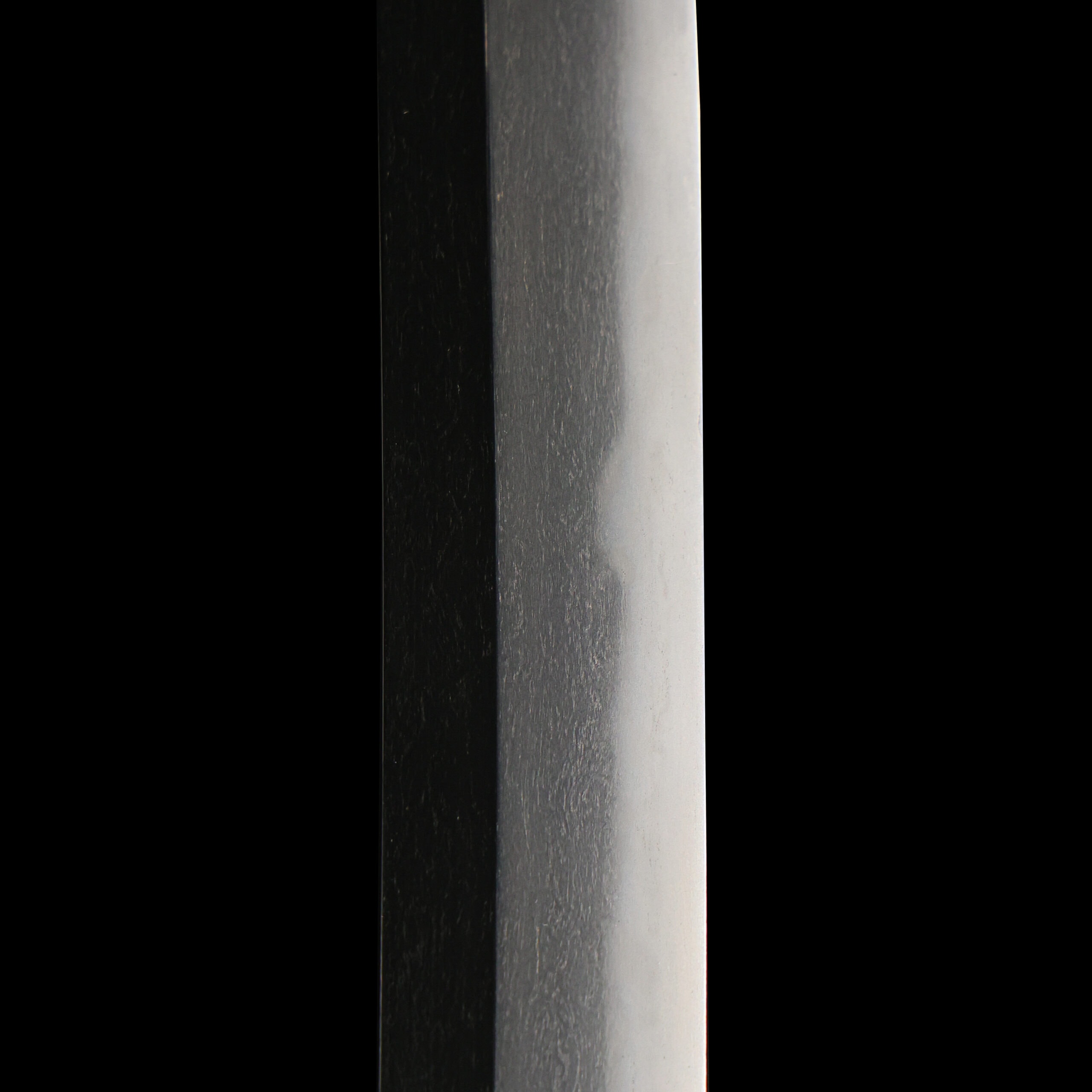
The Chikatsugu favors mixed with in which the grain stands out (), with fine in - form and fine . Toward the , appears, while toward the a straight stands. The is characteristically low-tempered with a mixture of and , containing and in a -dominant temper with . The Bingo Chikatsugu displays a related but distinct manner: his assumes a crepe-like texture (), with mottled standing distinctly, and his , while -toned with and , carries brilliantly lustrous and a Yamato temperament coexisting with an -style character — features recognized as hallmarks of Bingo smithing.
Extant signed works by smiths named Chikatsugu are extremely rare across all attributed traditions, and surviving examples constitute valuable reference material for the study of late and provincial swordsmithing. The Bingo Chikatsugu's work is considered especially precious, as a retaining an almost tang with both signature and date inscription represents a documentary survival of exceptional scarcity. Together, the works attributed to this name illuminate the interplay between , , and Bingo traditions during a period of intense regional cross-pollination in Japanese sword production.