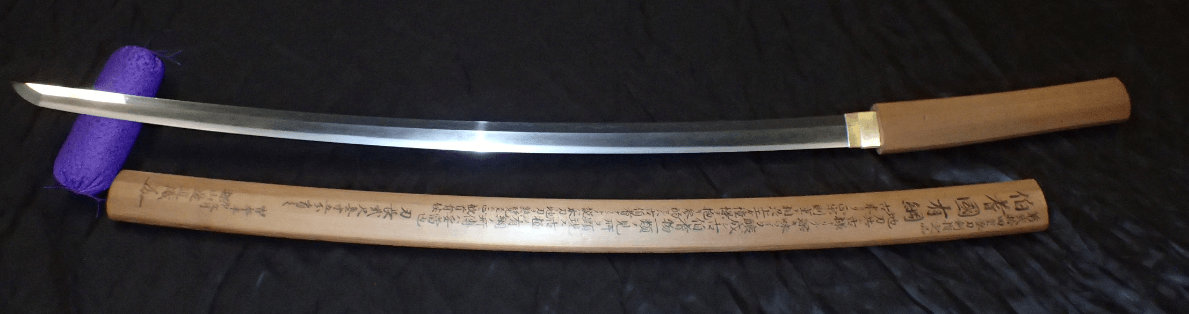
The curved, ridged tachi took its classic form in the Heian provinces while the court refined its culture in the capital. Its patrons were the military nobility whose feuds ended in the Genpei War, and whose blades became heirlooms almost at once.
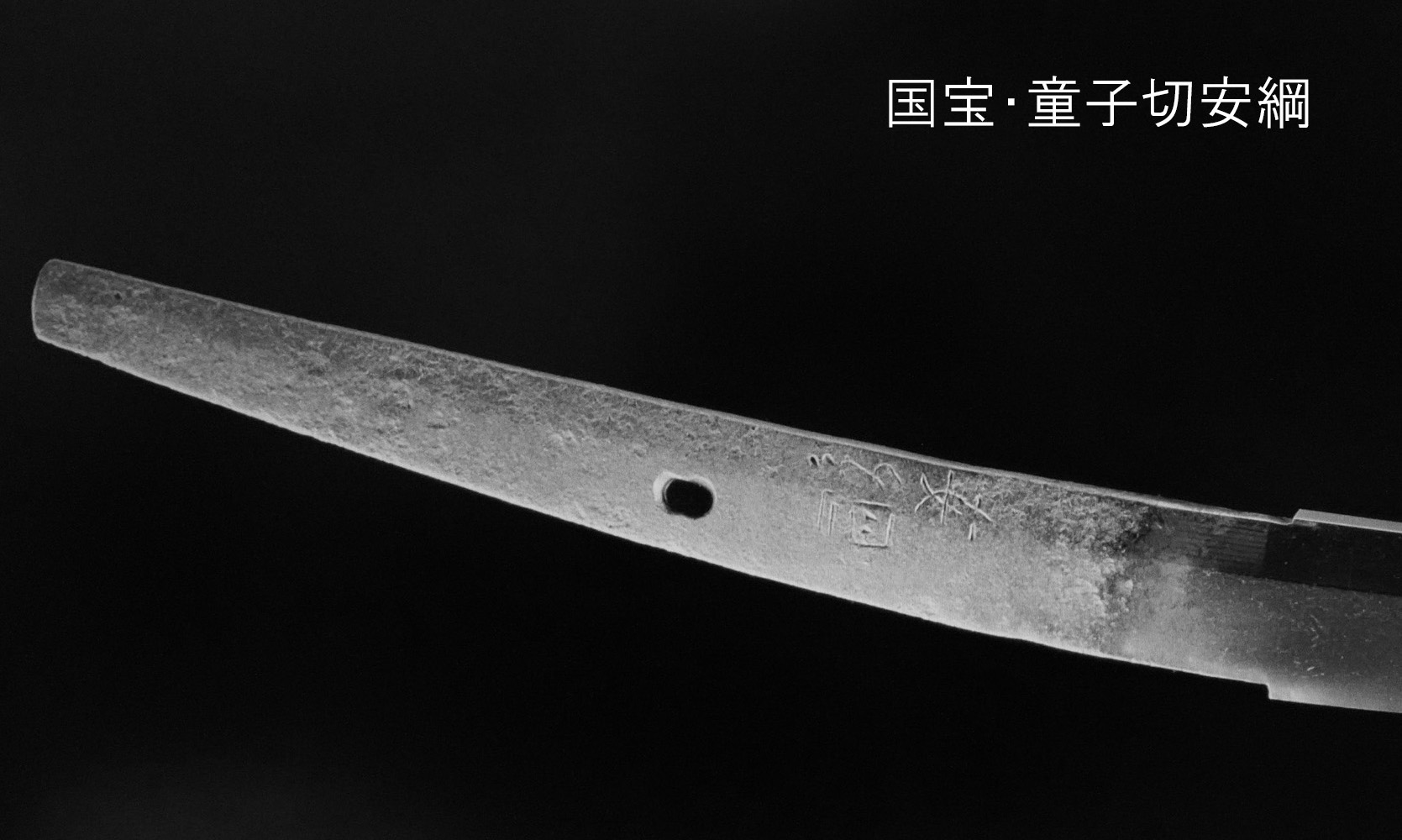
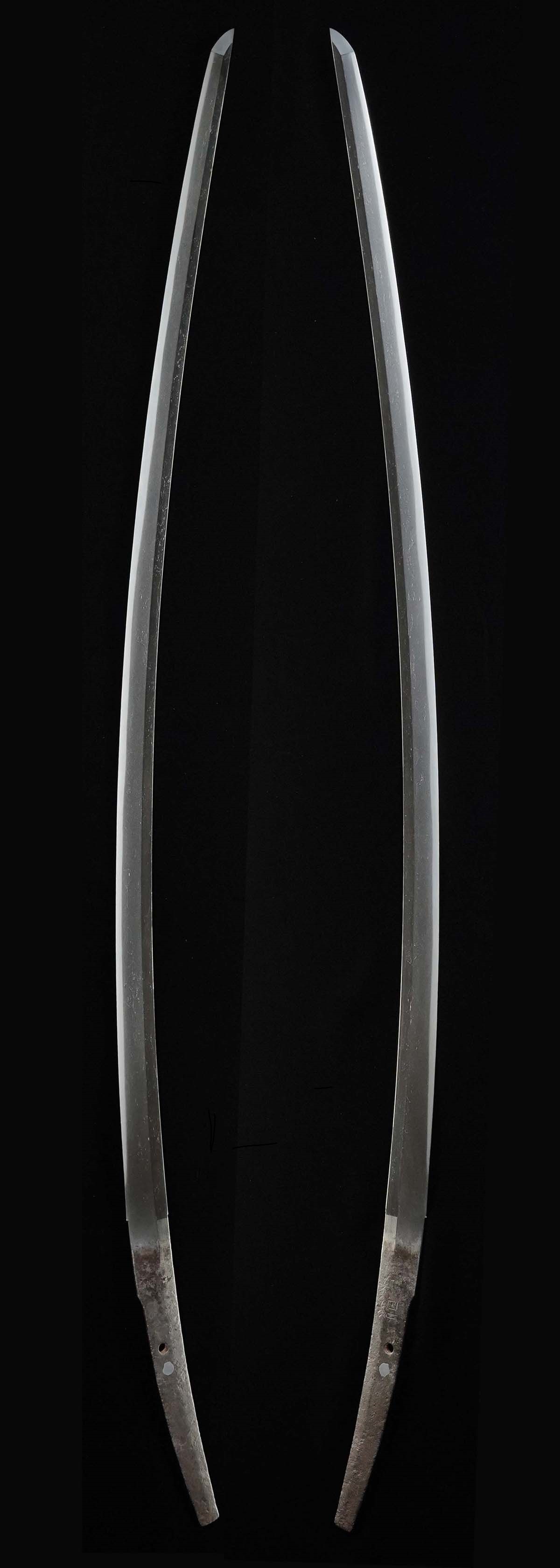
This is a tachi by Yasutsuna, a swordsmith from Houki province active during the Heian period. Yasutsuna is known as the maker of Dojigiri Yasutsuna, one of the Five Great Swords of Japan. This particular tachi features an ubu nakago and is a masterpiece that represents the Fujiwara culture of the Heian period.
 NihontoWatch
mei · Heian · nagasa 76.5cm · sori 3.1cm
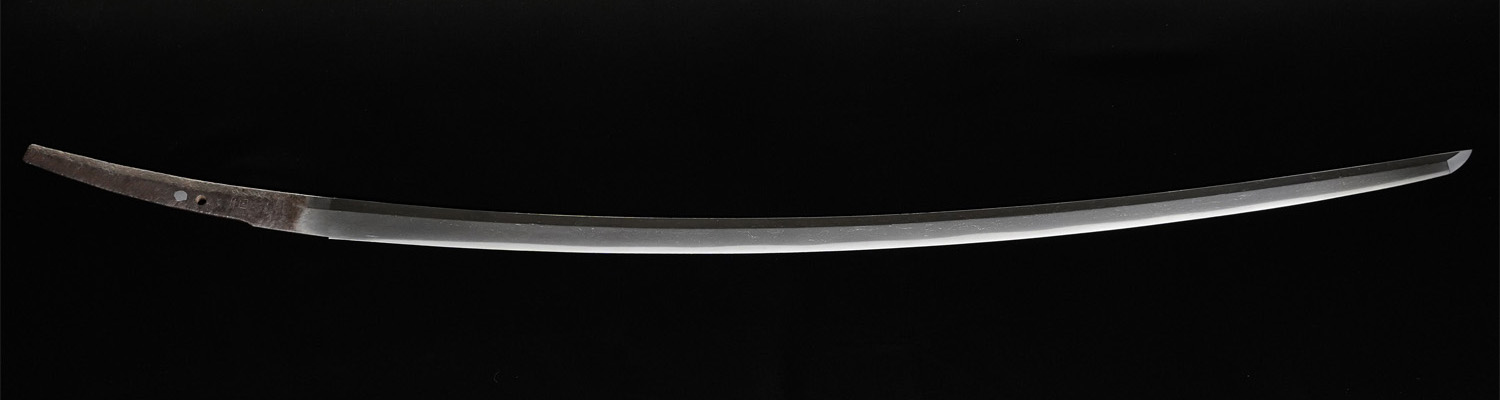
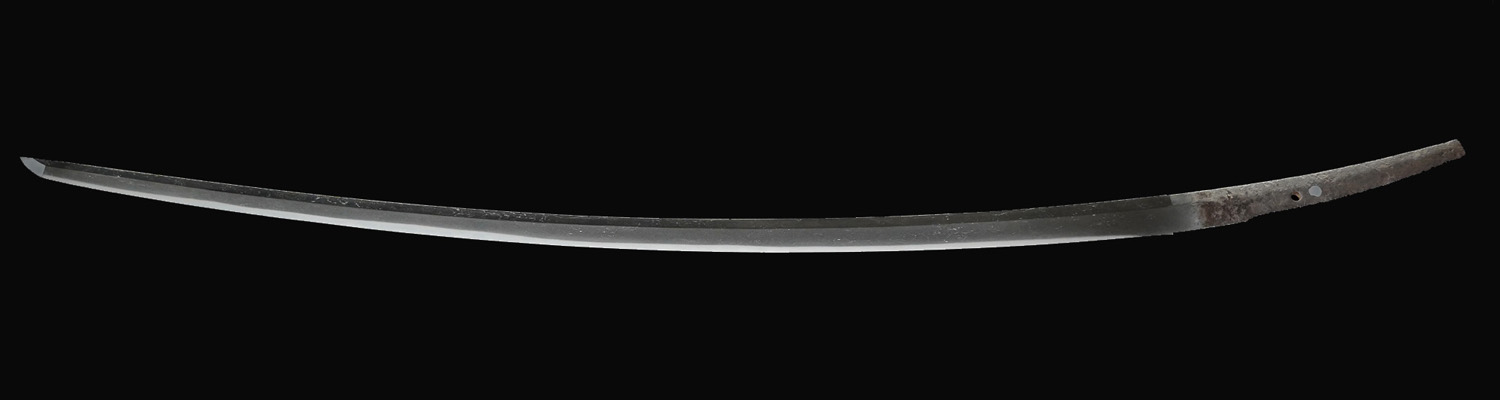
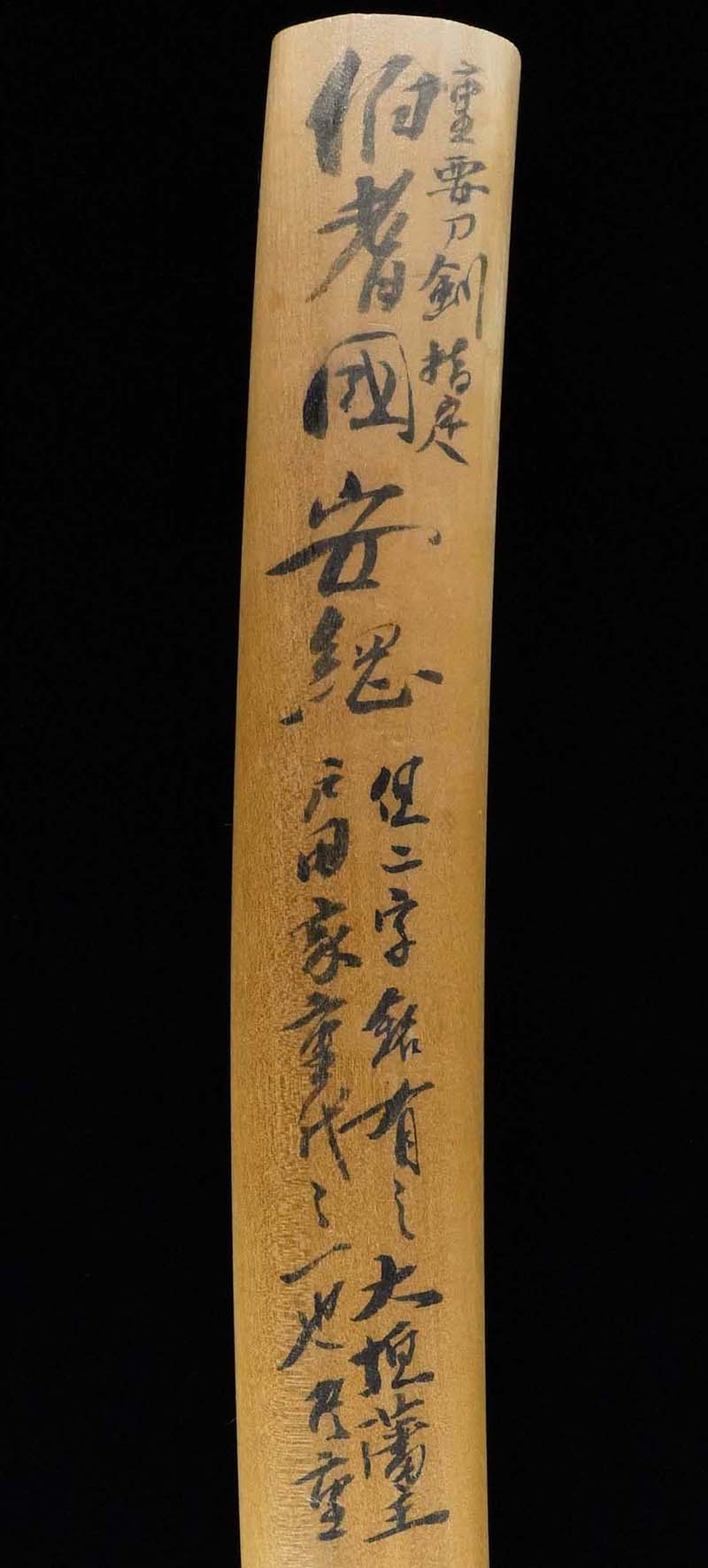
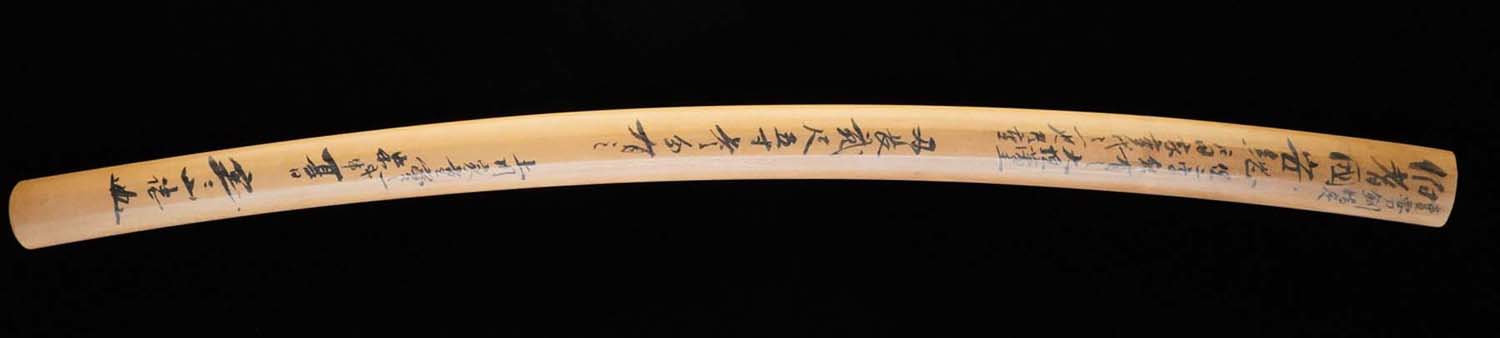
Ko-Hoki (Hoki) · Hoki · around 987-1150
Fujishiro Sai-jo saku · Tōken Taikan top 1%
Nearly every entry the NBTHK has published on Yasutsuna of Hoki returns to the same anchor: the existence of the Meibutsu Dojigiri Yasutsuna, the sources write, "has further elevated his renown," and within his oeuvre that sword remains the most celebrated of his name. Yasutsuna is the representative smith of Ko-Hoki, the old school of Hoki province, and he stands in the oldest stratum of the curved Japanese sword. The sword registries transmit an active period around the Daido era (806 to 810), but the published record consistently lowers the dating: judging from the surviving work, he reads as a smith of the late Heian period, roughly contemporary with Sanjo Munechika, and one earlier designation places him around the Eien era (987 to 989). A Juyo entry of 1962 fixes his historical position exactly, calling his age the time when the sword was passing from the straight chokuto to the curved tachi, and when that new form had, for the time being, settled into a standard shape. Other entries call him "a renowned master from the earliest phase of true curved swords" and a celebrated master representing the very beginnings of the Japanese sword. Among the Ko-Hoki smiths his signed works survive in comparatively large numbers, so that, almost alone at this depth of antiquity, his hand can be studied from the inscription as well as from the steel.
His tachi keep the classical silhouette of the Heian period. The blade is typically slender, the koshizori high with pronounced funbari, and the width narrows toward a small kissaki. The sources single out one point of the form again and again: compared with Ko-Bizen work, the tendency of his blades to incline downward toward the tip is not especially conspicuous, and this restraint of the upper curve is named a distinctive trait of his shaping. A few works run larger, and the Tokubetsu Juyo tachi of the Satake line is noted as being of bigger, more robust construction than what is commonly encountered from him.
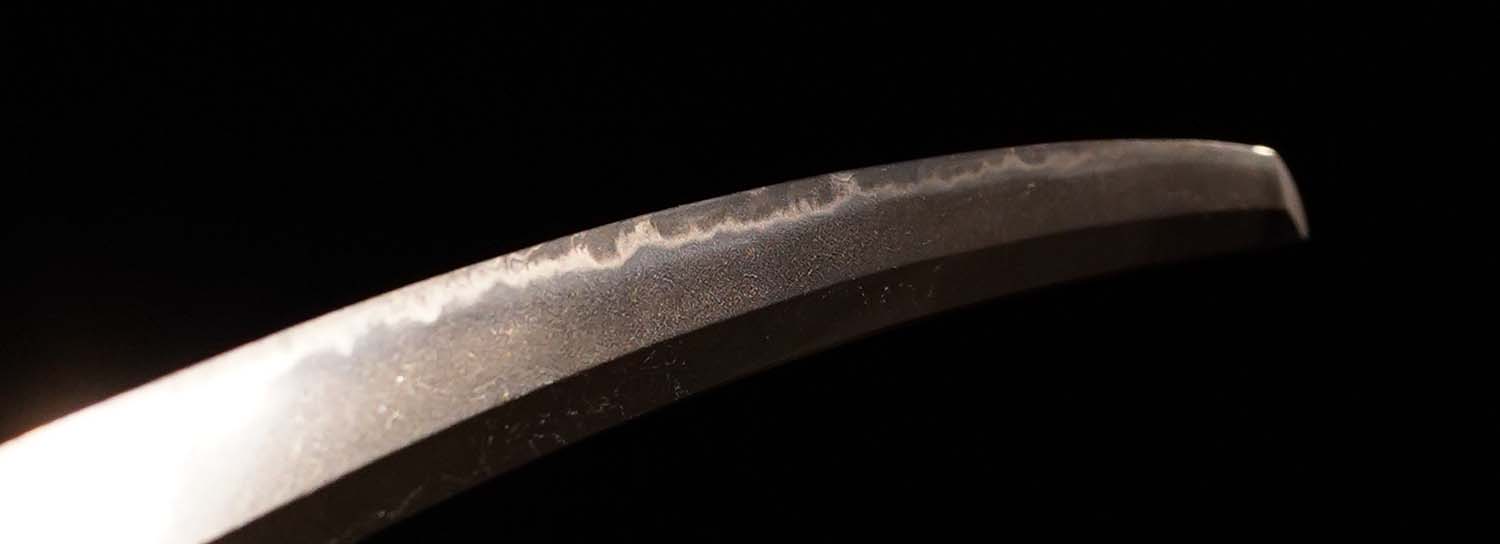
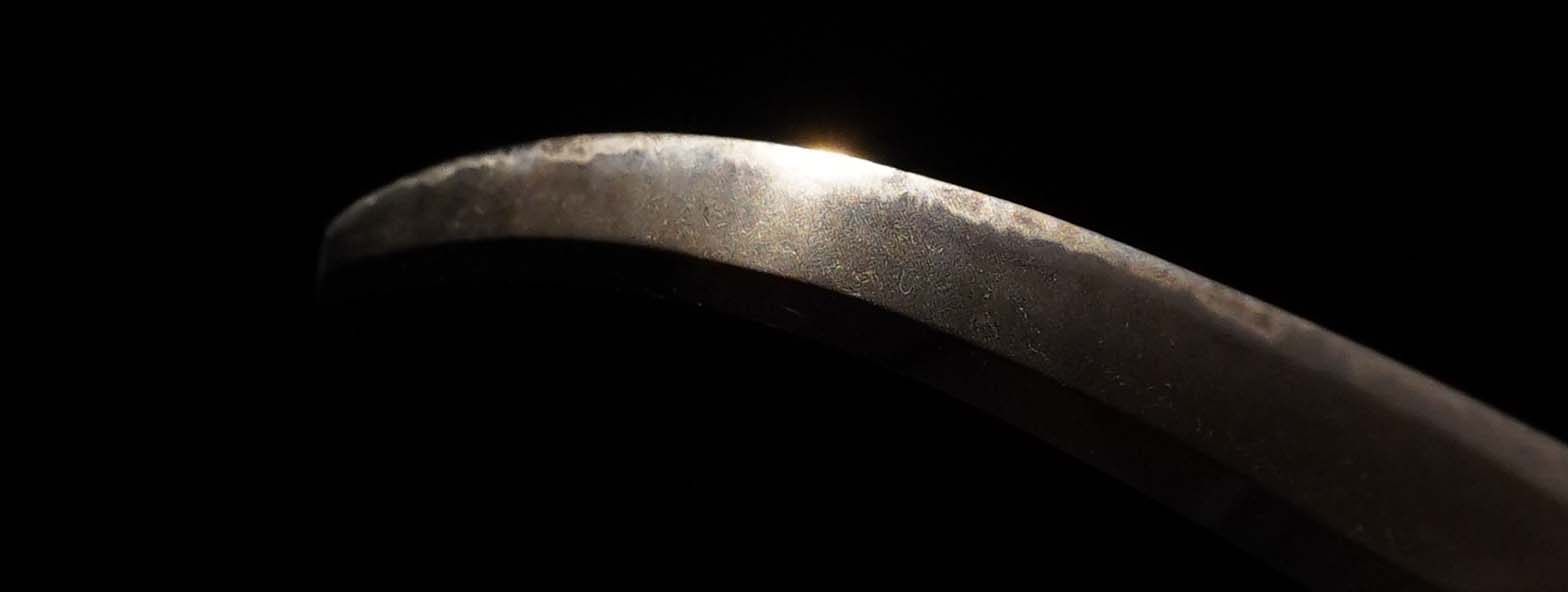
The jigane carries the deepest part of his identity. He forges itame mixed with o-itame and mokume, and the hada stands out. Thick ji-nie covers it, chikei and jifu enter, and the steel itself shows a darkish color (黒み) out of which a jifu-utsuri rises. Over that dark steel he tempers a nie-laden ko-midare on a base of shallow suguha and notare. Within it ko-gunome, ko-choji and ko-notare mingle conspicuously, kinsuji and sunagashi weave through the ha, and on many blades the temper is dropped above the machi in yakiotoshi (焼落し). It is this combination that the published sources contrast with old Bizen, writing that his workmanship "differs somewhat in feeling from groups such as Ko-Bizen." The boshi runs sugu to a small ko-maru or to yakizume, often swept with hakikake. Within the school the published record also isolates a personal tell: in the upper half of the hamon the ko-gunome and ko-notare mix in a somewhat independent form, a point one Juyo entry names as the place where Yasutsuna is distinguished even among Ko-Hoki.
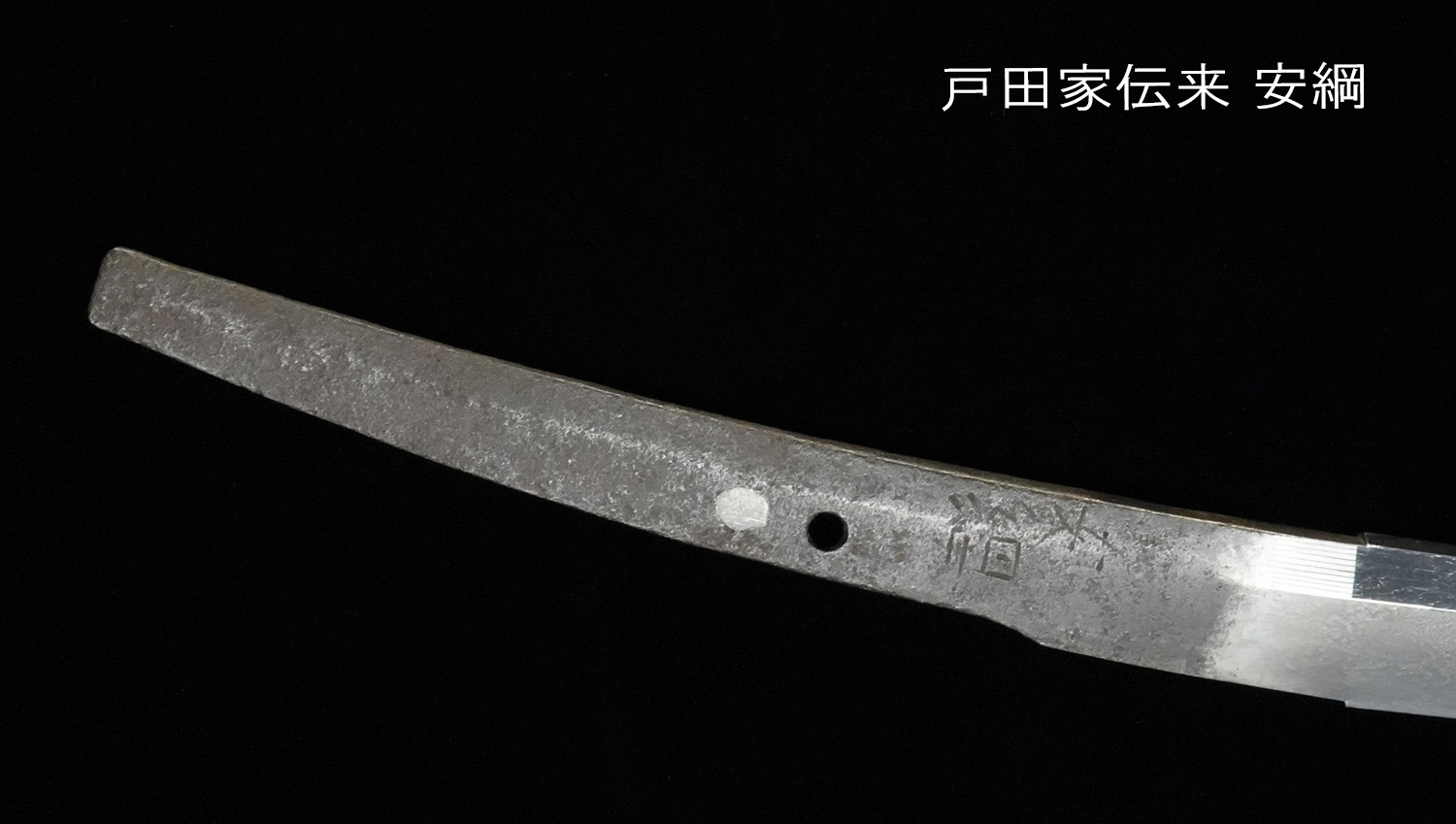
The signature is its own field of study. He cut a large two-character mei on the haki-omote toward the mune, and the habit of his chisel is recorded in entry after entry: the character Tsuna is larger than the character Yasu and is set slightly to the right, his signing habit (手癖), one seen in other Ko-Hoki works as well. The benchmark is the Dojigiri itself; of one Juyo tachi the sources state that the manner of the signature is "exactly like that of the Dojigiri Yasutsuna," and a Juyo Bijutsuhin entry judges another mei similar to the Dojigiri. Tachi surviving with the nakago unaltered are extremely few, and an ubu signed Yasutsuna is counted exceedingly precious in the published record. Beside the prime manner the NBTHK documents a quieter register. One signed tachi, in which the ko-gunome and ko-notare recede, is read as an appearance rather close to Ko-Bizen work and expressly called one style register of the smith; another, in a more subdued hoso-suguha dressing, is still betrayed by the abundant vertical workings along the habuchi. The unsigned remainder, o-suriage blades, are accepted on the archaic elegance (古雅) of their ji and ha: one carries the origami of Hon'ami Koon dated Kanbun 4 (1664), another the origami of Hon'ami Koyu dated Kanpo 3 (1743), and the mumei katana handed down in the Maeda house, carrying a thread of Yamato spirit[[c:1]], has its tradition affirmed.
His manner is, in effect, the definition of Ko-Hoki. The school is read through him: the standing dark jigane, the jifu-utsuri and the nie-charged small midare with its yakiotoshi form the axis along which the published sources set Hoki apart from old Bizen, and unsigned blades of sufficient age and flavor gather to his name as den Yasutsuna. Even the signing habit extends beyond him, since the rightward-set Tsuna recurs elsewhere in the school. The published record treats him as a single late Heian master, with no division into generations, and so presents him plainly as the first fully formed personality of the curved sword, working at the moment the tachi itself was being settled.
Fujishiro grades him Sai-jo saku. Thirty-five designated works stand on record. Two are National Treasures and five are Important Cultural Properties, patrimony preserved beyond any market, and six more were certified Juyo Bijutsuhin between 1933 and 1941, then in the hands of the Satake, Sakai, Matsudaira and Ikeda houses, of the shrine Tsuboi Hachimangu, and of the Maeda; the Ikeda blade had been shortened in the Bakumatsu period by Osafune Sukehira, probably for the wear of the daimyo himself. Thirteen of his blades carry recorded provenance, and the roll runs through the men and houses that held the country: Toyotomi Hideyoshi, Tokugawa Ieyasu and Tokugawa Hidetada, the Echizen Matsudaira line, the Shimazu, the Imperial Family, and the Satake of Kubota in Dewa, who handed down two of his signed tachi. Of recorded whereabouts today, his blades rest with the Tokyo National Museum, the Sano Art Museum and Ogamiyama Jinja, and one has crossed the sea to the Boston Museum of Fine Arts. For the private collector the realistic horizon is the Tokubetsu Juyo and Juyo tiers, twenty-one blades in all, most of them long held; a Yasutsuna of any kind comes to the market only rarely, and a signed example, let alone an ubu one, is among the rarest encounters the field can offer.
Where Yasutsuna stands among comparable artisans: across all of nihontō, and within tradition, era, and period. The tiers (Foremost · Leading · Major · Notable) weigh official designations from the NBTHK and Japan's Agency for Cultural Affairs, together with historical honors of lasting repute such as the Sansaku and Meibutsu-chō.
Select a lens to see how it's measured.
Wakimono · Hoki
Phase: Ko-Hoki古伯耆· 966–1334
4 pieces on the market now
Ko-Hoki occupies the deepest stratum of the school, the chapter in which the Hoki name first enters the record at all. The published commentary places Yasutsuna roughly contemporary with Sanjo Munechika in the late Heian period, correcting the older reference-book dating that pushed him back to the Daido era (806 to 810), and the gap between that legend and the inferred reality is itself a measure of how far back this phase reaches. Gathered around Yasutsuna is the Ohara group: Masamori (read also as Sanemori), transmitted as his son, with Aritsuna, Sadatsuna, Yasuie and Masakage (Sanekage) named beside him, a circle the setsumei describes as flourishing from the late Heian into the early Kamakura period. Hoki Kunimune extends the manner toward the Kamakura age, his work judged to stand apart from Bizen Saburo Kunimune and possibly to predate him. Signed survivals at this antiquity are thin, more frequent under Yasutsuna than any other hand, and the meibutsu Dojigiri Yasutsuna fixes the period's highest reference. The style of this phase is read first in the steel. The setsumei return blade after blade to itame with standing grain, mixed with o-itame and mokume in large pattern, thick ji-nie, entering chikei and patchy jifu that rises into jifu-utsuri or midare-utsuri across a ground of darkish, blackish (kanai-iro) tone. The temper rests on a suguha base broken into ko-midare, with ko-choji, ko-gunome and shallow ko-notare mingled small in scale, the nie lying thick and the nioiguchi tending to urumi or shizumi; kinsuji and sunagashi run insistently, and many blades drop the edge above the machi in yakiotoshi.
The sugata keeps an archaic koshizori tachi form with funbari and a small kissaki, the boshi running straight to ko-maru or yakizume. Against the later Sue-Hoki the contrast is one of vigor and individuality: where the late phase settles this rustic register into something tamer and more regular, Ko-Hoki stands open, dark and forceful, each hand still distinct, Yasutsuna's midare running larger while Sadatsuna's finest signed work brightens unusually toward Bizen. For kantei the recurring task is to separate Hoki from Ko-Bizen, whose contemporaneous ko-midare it superficially resembles. The setsumei draw the line on close view: Ko-Bizen steel is bright and tight, while the Hoki ji stands open and dark with conspicuous large itame, a clouded nioiguchi, and kinsuji and sunagashi working through a softer provincial edge that carries an ancient fragrance (koko). A thread of Yamato spirit is read in certain pieces, such as the unsigned Yasutsuna long held in the Maeda house, and Sadatsuna's o-sujikai yasurime point toward Aoe even as judgment keeps him in Ko-Hoki. Yasutsuna and Masamori head the phase, and the signature habit of cutting tsuna (綱) larger than yasu (安) and shifted to the right is a noted diagnostic. The Dojigiri stands above the named works, with the Imperial Yasunori tachi and Sadatsuna and Kunimune blades transmitted through the Tokugawa, the Satake of Dewa, and the Hisamatsu-Matsudaira, the provenance running through the houses that held the country. Learn more →
| Smith | Era | Designated |
|---|---|---|
| Yasutsuna安綱 | 987-1150 | 35 |
| Ohara大原 | 987-1596 | 16 |
| Sadatsuna貞綱 | 1184-1185 | 19 |
| Hiroyoshi廣賀 | 1532-1565 | 6 |
| Aritsuna有綱 | 1181-1182 | 5 |
The Heian period (794 to 1185)
The curved, ridged tachi took its classic form in the Heian provinces while the court refined its culture in the capital. Its patrons were the military nobility whose feuds ended in the Genpei War, and whose blades became heirlooms almost at once.
A blade of top-grade workmanship and condition, formally judged to rank with a nationally recognized Important Art Object (Jūyō Bijutsuhin). Awarded only at the NBTHK’s competitive annual examination.
Of Japan’s roughly 2.5 million registered swords, only 12,307 (about 1 in 203) have ever attained Jūyō.
The NBTHK (Nihon Bijutsu Tōken Hozon Kyōkai, the Society for the Preservation of Japanese Art Swords) is a public-interest incorporated foundation founded in 1948 and supervised by Japan’s Agency for Cultural Affairs (Bunkachō); it is based at the Japanese Sword Museum in Tokyo. Its expert panels physically examine each submitted work (shinsa) and issue a certificate (kanteishō) ranking it by artistic and historical merit. NBTHK papers are the most widely recognized standard of authentication for Japanese swords and fittings.
NBTHK official siteIf the item's contents differ significantly from our description, we accept returns within 3 days counted from receipt. Because mail-order sales have no cooling-off provision under the Act on Specified Commercial Transactions, cooling-off is not available.
This is a tachi by Yasutsuna, a swordsmith from Houki province active during the Heian period. Yasutsuna is known as the maker of Dojigiri Yasutsuna, one of the Five Great Swords of Japan. This particular tachi features an ubu nakago and is a masterpiece that represents the Fujiwara culture of the Heian period.
NihontoWatchmei · Heian · nagasa 76.5cm · sori 3.1cm
Ko-Hoki (Hoki) · Hoki · around 987-1150
Fujishiro Sai-jo saku · Tōken Taikan top 1%
Nearly every entry the NBTHK has published on Yasutsuna of Hoki returns to the same anchor: the existence of the Meibutsu Dojigiri Yasutsuna, the sources write, "has further elevated his renown," and within his oeuvre that sword remains the most celebrated of his name. Yasutsuna is the representative smith of Ko-Hoki, the old school of Hoki province, and he stands in the oldest stratum of the curved Japanese sword. The sword registries transmit an active period around the Daido era (806 to 810), but the published record consistently lowers the dating: judging from the surviving work, he reads as a smith of the late Heian period, roughly contemporary with Sanjo Munechika, and one earlier designation places him around the Eien era (987 to 989). A Juyo entry of 1962 fixes his historical position exactly, calling his age the time when the sword was passing from the straight chokuto to the curved tachi, and when that new form had, for the time being, settled into a standard shape. Other entries call him "a renowned master from the earliest phase of true curved swords" and a celebrated master representing the very beginnings of the Japanese sword. Among the Ko-Hoki smiths his signed works survive in comparatively large numbers, so that, almost alone at this depth of antiquity, his hand can be studied from the inscription as well as from the steel.
His tachi keep the classical silhouette of the Heian period. The blade is typically slender, the koshizori high with pronounced funbari, and the width narrows toward a small kissaki. The sources single out one point of the form again and again: compared with Ko-Bizen work, the tendency of his blades to incline downward toward the tip is not especially conspicuous, and this restraint of the upper curve is named a distinctive trait of his shaping. A few works run larger, and the Tokubetsu Juyo tachi of the Satake line is noted as being of bigger, more robust construction than what is commonly encountered from him.
The jigane carries the deepest part of his identity. He forges itame mixed with o-itame and mokume, and the hada stands out. Thick ji-nie covers it, chikei and jifu enter, and the steel itself shows a darkish color (黒み) out of which a jifu-utsuri rises. Over that dark steel he tempers a nie-laden ko-midare on a base of shallow suguha and notare. Within it ko-gunome, ko-choji and ko-notare mingle conspicuously, kinsuji and sunagashi weave through the ha, and on many blades the temper is dropped above the machi in yakiotoshi (焼落し). It is this combination that the published sources contrast with old Bizen, writing that his workmanship "differs somewhat in feeling from groups such as Ko-Bizen." The boshi runs sugu to a small ko-maru or to yakizume, often swept with hakikake. Within the school the published record also isolates a personal tell: in the upper half of the hamon the ko-gunome and ko-notare mix in a somewhat independent form, a point one Juyo entry names as the place where Yasutsuna is distinguished even among Ko-Hoki.
The signature is its own field of study. He cut a large two-character mei on the haki-omote toward the mune, and the habit of his chisel is recorded in entry after entry: the character Tsuna is larger than the character Yasu and is set slightly to the right, his signing habit (手癖), one seen in other Ko-Hoki works as well. The benchmark is the Dojigiri itself; of one Juyo tachi the sources state that the manner of the signature is "exactly like that of the Dojigiri Yasutsuna," and a Juyo Bijutsuhin entry judges another mei similar to the Dojigiri. Tachi surviving with the nakago unaltered are extremely few, and an ubu signed Yasutsuna is counted exceedingly precious in the published record. Beside the prime manner the NBTHK documents a quieter register. One signed tachi, in which the ko-gunome and ko-notare recede, is read as an appearance rather close to Ko-Bizen work and expressly called one style register of the smith; another, in a more subdued hoso-suguha dressing, is still betrayed by the abundant vertical workings along the habuchi. The unsigned remainder, o-suriage blades, are accepted on the archaic elegance (古雅) of their ji and ha: one carries the origami of Hon'ami Koon dated Kanbun 4 (1664), another the origami of Hon'ami Koyu dated Kanpo 3 (1743), and the mumei katana handed down in the Maeda house, carrying a thread of Yamato spirit[[c:1]], has its tradition affirmed.
His manner is, in effect, the definition of Ko-Hoki. The school is read through him: the standing dark jigane, the jifu-utsuri and the nie-charged small midare with its yakiotoshi form the axis along which the published sources set Hoki apart from old Bizen, and unsigned blades of sufficient age and flavor gather to his name as den Yasutsuna. Even the signing habit extends beyond him, since the rightward-set Tsuna recurs elsewhere in the school. The published record treats him as a single late Heian master, with no division into generations, and so presents him plainly as the first fully formed personality of the curved sword, working at the moment the tachi itself was being settled.
Fujishiro grades him Sai-jo saku. Thirty-five designated works stand on record. Two are National Treasures and five are Important Cultural Properties, patrimony preserved beyond any market, and six more were certified Juyo Bijutsuhin between 1933 and 1941, then in the hands of the Satake, Sakai, Matsudaira and Ikeda houses, of the shrine Tsuboi Hachimangu, and of the Maeda; the Ikeda blade had been shortened in the Bakumatsu period by Osafune Sukehira, probably for the wear of the daimyo himself. Thirteen of his blades carry recorded provenance, and the roll runs through the men and houses that held the country: Toyotomi Hideyoshi, Tokugawa Ieyasu and Tokugawa Hidetada, the Echizen Matsudaira line, the Shimazu, the Imperial Family, and the Satake of Kubota in Dewa, who handed down two of his signed tachi. Of recorded whereabouts today, his blades rest with the Tokyo National Museum, the Sano Art Museum and Ogamiyama Jinja, and one has crossed the sea to the Boston Museum of Fine Arts. For the private collector the realistic horizon is the Tokubetsu Juyo and Juyo tiers, twenty-one blades in all, most of them long held; a Yasutsuna of any kind comes to the market only rarely, and a signed example, let alone an ubu one, is among the rarest encounters the field can offer.
Where Yasutsuna stands among comparable artisans: across all of nihontō, and within tradition, era, and period. The tiers (Foremost · Leading · Major · Notable) weigh official designations from the NBTHK and Japan's Agency for Cultural Affairs, together with historical honors of lasting repute such as the Sansaku and Meibutsu-chō.
Select a lens to see how it's measured.
Wakimono · Hoki
Phase: Ko-Hoki古伯耆· 966–1334
4 pieces on the market now
Ko-Hoki occupies the deepest stratum of the school, the chapter in which the Hoki name first enters the record at all. The published commentary places Yasutsuna roughly contemporary with Sanjo Munechika in the late Heian period, correcting the older reference-book dating that pushed him back to the Daido era (806 to 810), and the gap between that legend and the inferred reality is itself a measure of how far back this phase reaches. Gathered around Yasutsuna is the Ohara group: Masamori (read also as Sanemori), transmitted as his son, with Aritsuna, Sadatsuna, Yasuie and Masakage (Sanekage) named beside him, a circle the setsumei describes as flourishing from the late Heian into the early Kamakura period. Hoki Kunimune extends the manner toward the Kamakura age, his work judged to stand apart from Bizen Saburo Kunimune and possibly to predate him. Signed survivals at this antiquity are thin, more frequent under Yasutsuna than any other hand, and the meibutsu Dojigiri Yasutsuna fixes the period's highest reference. The style of this phase is read first in the steel. The setsumei return blade after blade to itame with standing grain, mixed with o-itame and mokume in large pattern, thick ji-nie, entering chikei and patchy jifu that rises into jifu-utsuri or midare-utsuri across a ground of darkish, blackish (kanai-iro) tone. The temper rests on a suguha base broken into ko-midare, with ko-choji, ko-gunome and shallow ko-notare mingled small in scale, the nie lying thick and the nioiguchi tending to urumi or shizumi; kinsuji and sunagashi run insistently, and many blades drop the edge above the machi in yakiotoshi.
The sugata keeps an archaic koshizori tachi form with funbari and a small kissaki, the boshi running straight to ko-maru or yakizume. Against the later Sue-Hoki the contrast is one of vigor and individuality: where the late phase settles this rustic register into something tamer and more regular, Ko-Hoki stands open, dark and forceful, each hand still distinct, Yasutsuna's midare running larger while Sadatsuna's finest signed work brightens unusually toward Bizen. For kantei the recurring task is to separate Hoki from Ko-Bizen, whose contemporaneous ko-midare it superficially resembles. The setsumei draw the line on close view: Ko-Bizen steel is bright and tight, while the Hoki ji stands open and dark with conspicuous large itame, a clouded nioiguchi, and kinsuji and sunagashi working through a softer provincial edge that carries an ancient fragrance (koko). A thread of Yamato spirit is read in certain pieces, such as the unsigned Yasutsuna long held in the Maeda house, and Sadatsuna's o-sujikai yasurime point toward Aoe even as judgment keeps him in Ko-Hoki. Yasutsuna and Masamori head the phase, and the signature habit of cutting tsuna (綱) larger than yasu (安) and shifted to the right is a noted diagnostic. The Dojigiri stands above the named works, with the Imperial Yasunori tachi and Sadatsuna and Kunimune blades transmitted through the Tokugawa, the Satake of Dewa, and the Hisamatsu-Matsudaira, the provenance running through the houses that held the country. Learn more →
| Smith | Era | Designated |
|---|---|---|
| Yasutsuna安綱 | 987-1150 | 35 |
| Ohara大原 | 987-1596 | 16 |
| Sadatsuna貞綱 | 1184-1185 | 19 |
| Hiroyoshi廣賀 | 1532-1565 | 6 |
| Aritsuna有綱 | 1181-1182 | 5 |
The Heian period (794 to 1185)
The curved, ridged tachi took its classic form in the Heian provinces while the court refined its culture in the capital. Its patrons were the military nobility whose feuds ended in the Genpei War, and whose blades became heirlooms almost at once.
A blade of top-grade workmanship and condition, formally judged to rank with a nationally recognized Important Art Object (Jūyō Bijutsuhin). Awarded only at the NBTHK’s competitive annual examination.
Of Japan’s roughly 2.5 million registered swords, only 12,307 (about 1 in 203) have ever attained Jūyō.
The NBTHK (Nihon Bijutsu Tōken Hozon Kyōkai, the Society for the Preservation of Japanese Art Swords) is a public-interest incorporated foundation founded in 1948 and supervised by Japan’s Agency for Cultural Affairs (Bunkachō); it is based at the Japanese Sword Museum in Tokyo. Its expert panels physically examine each submitted work (shinsa) and issue a certificate (kanteishō) ranking it by artistic and historical merit. NBTHK papers are the most widely recognized standard of authentication for Japanese swords and fittings.
NBTHK official siteIf the item's contents differ significantly from our description, we accept returns within 3 days counted from receipt. Because mail-order sales have no cooling-off provision under the Act on Specified Commercial Transactions, cooling-off is not available.