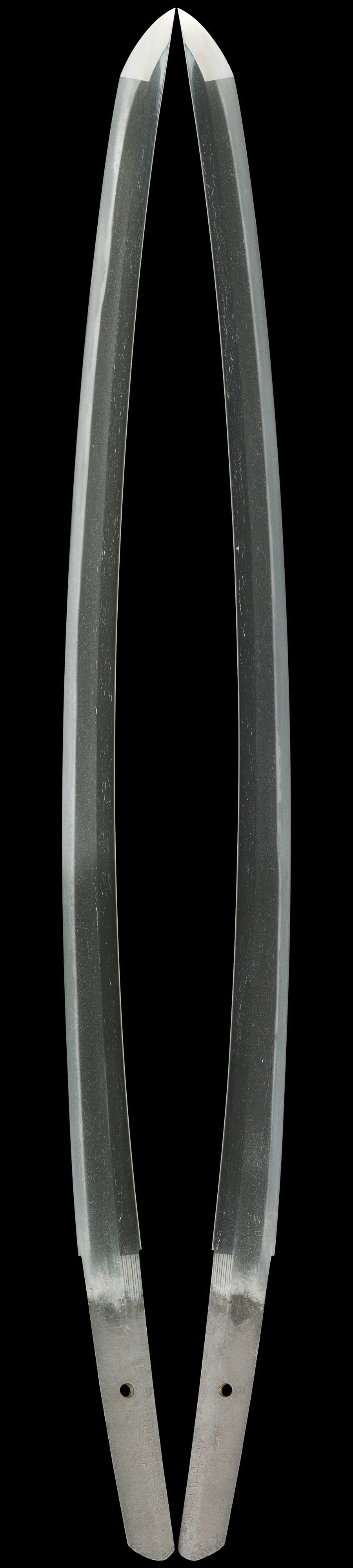
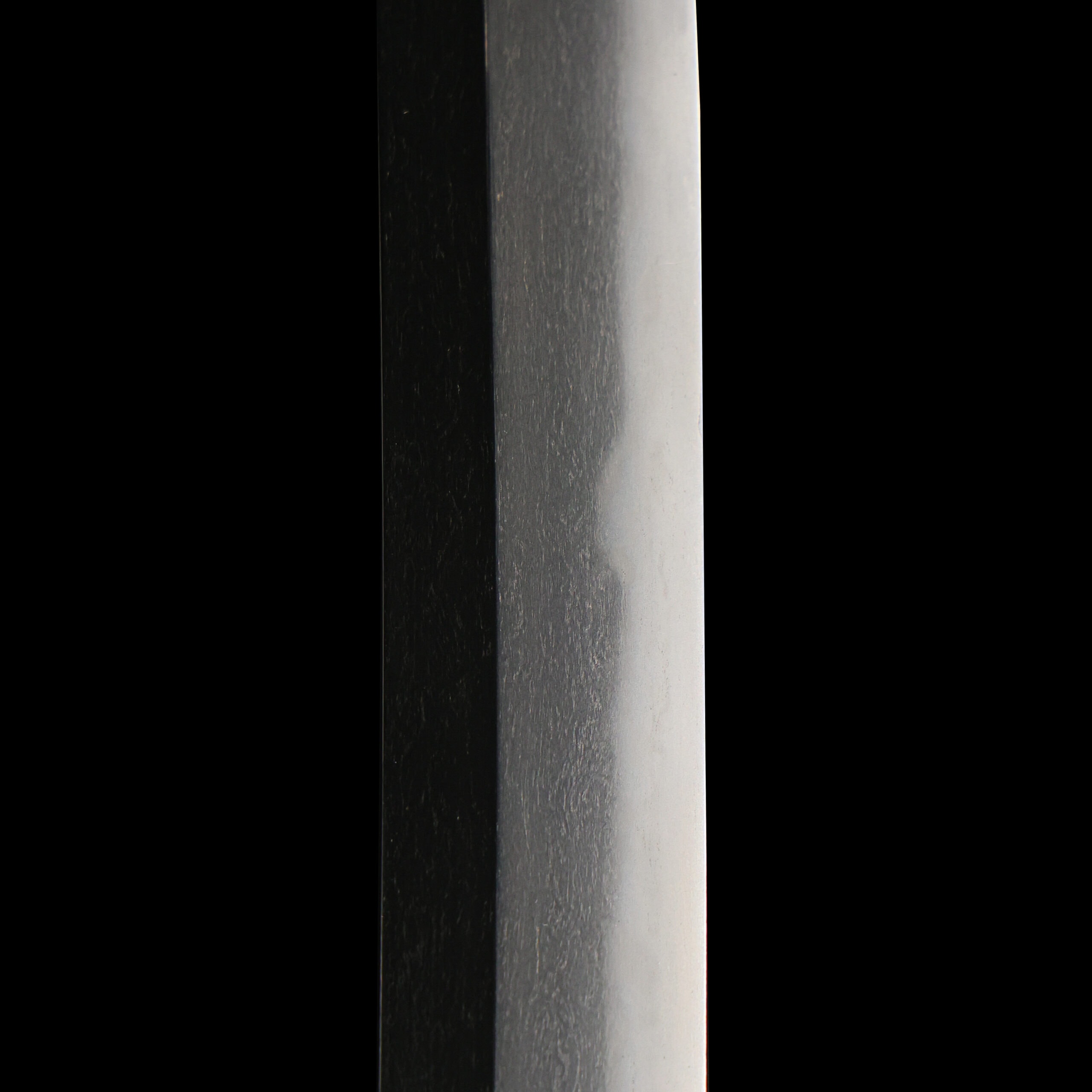
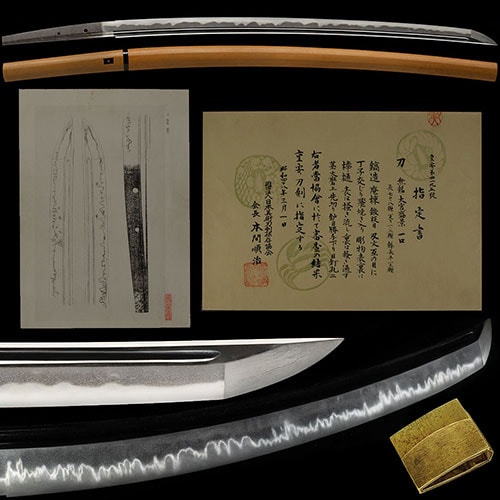
War at home and trade abroad made Muromachi Bizen the busiest forge region in Japan: a century of Sengoku demand after the Ōnin War, and export missions to Ming China carrying blades by the tens of thousands.
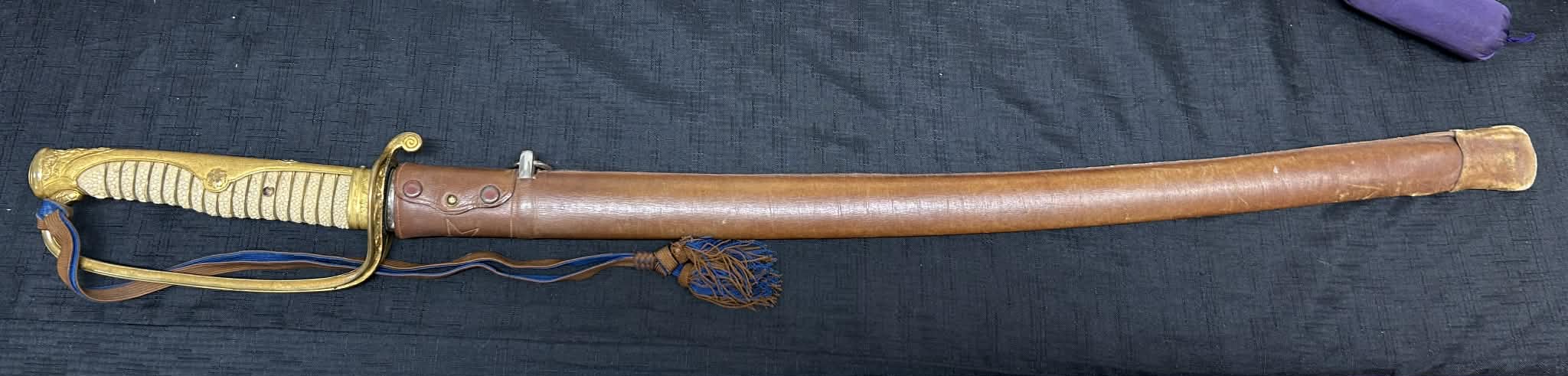
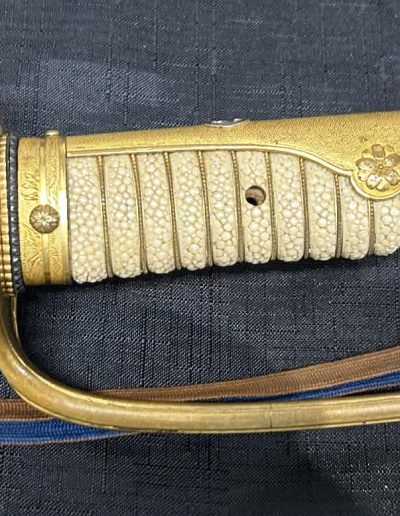
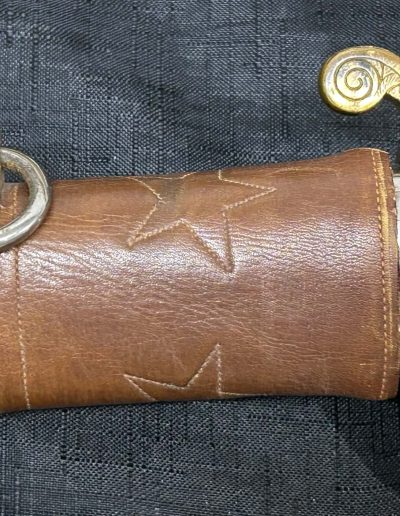
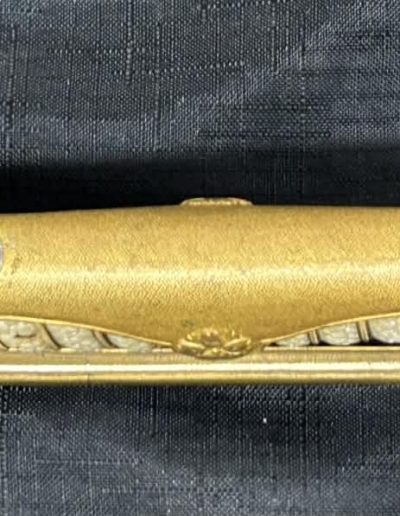
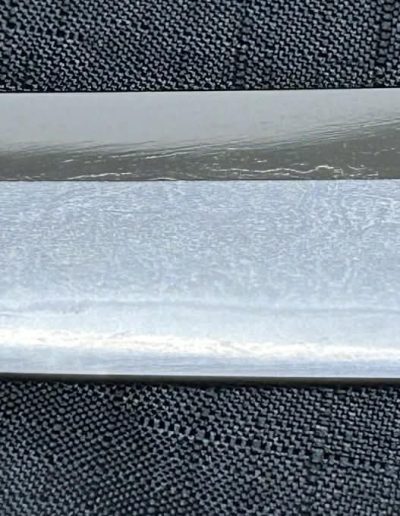
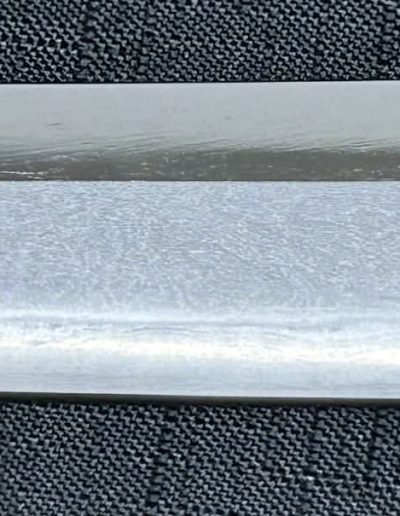
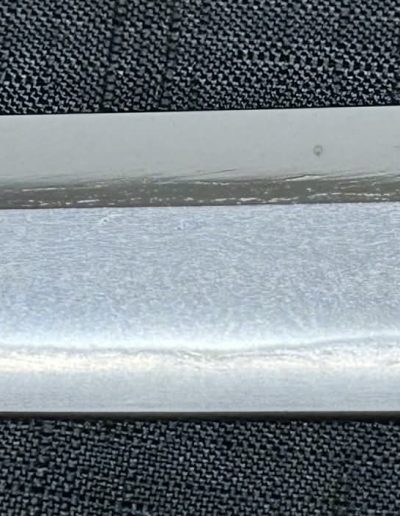
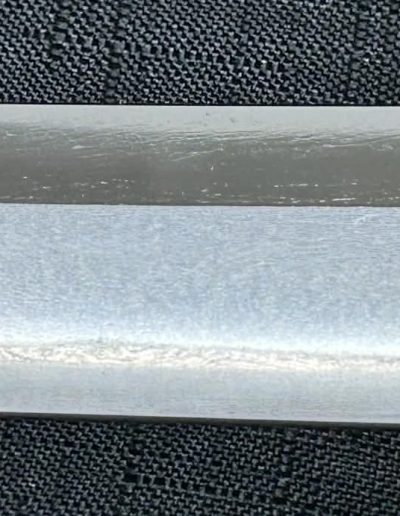
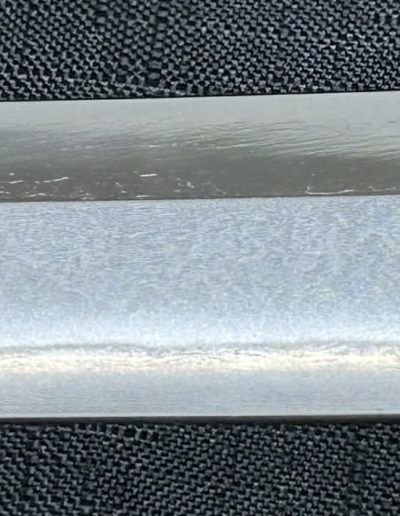
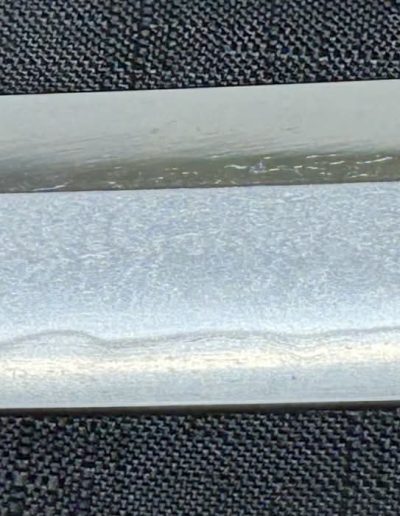
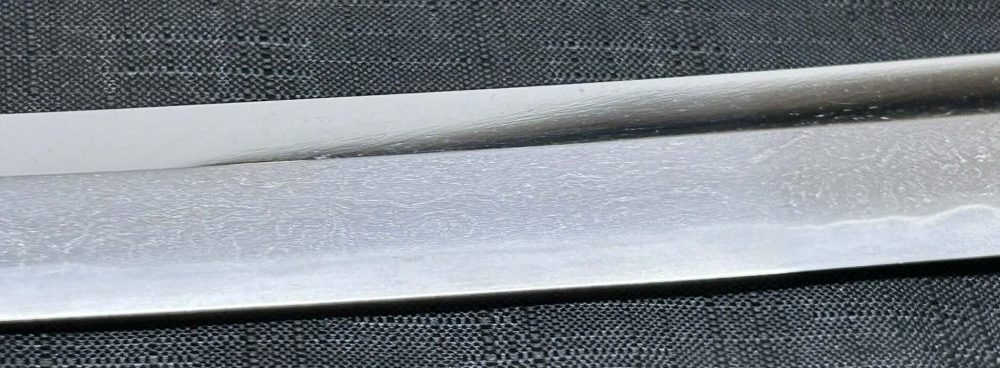
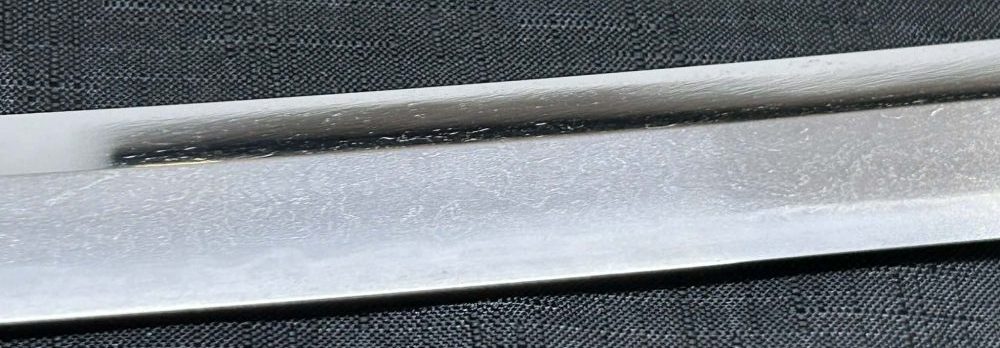
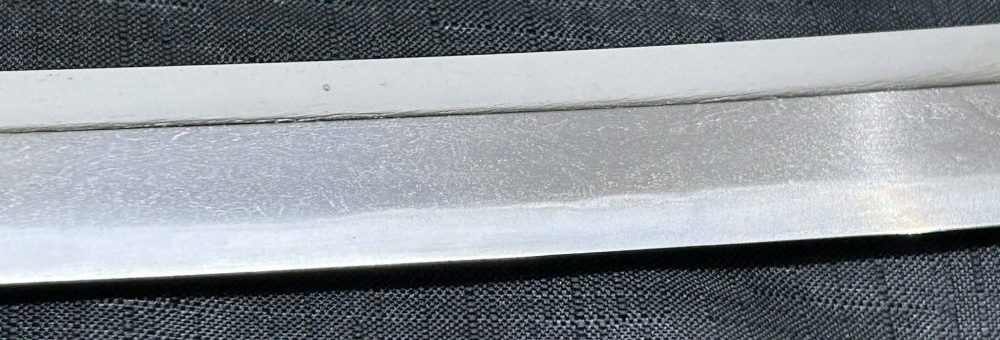
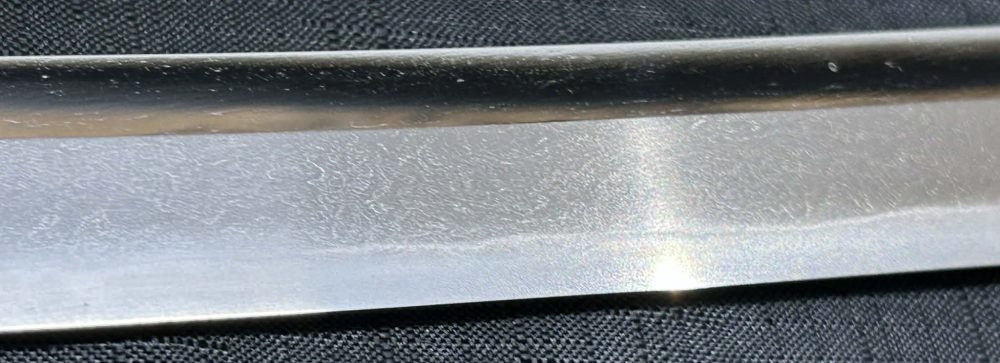
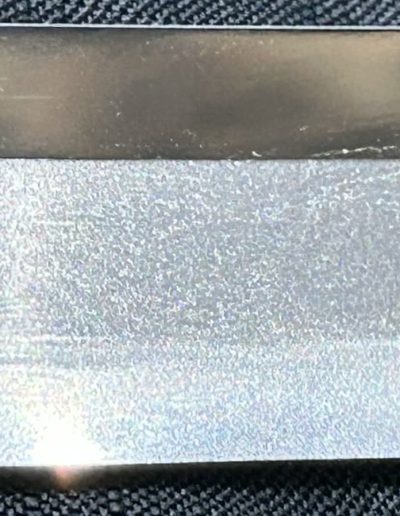
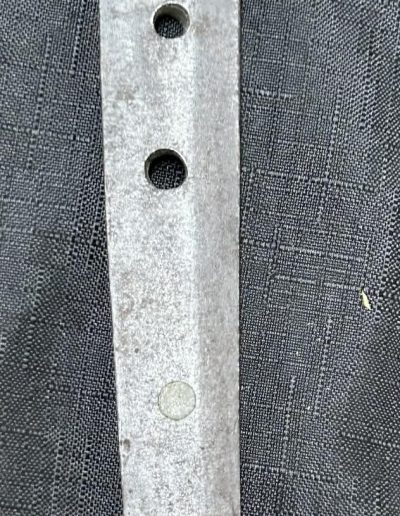
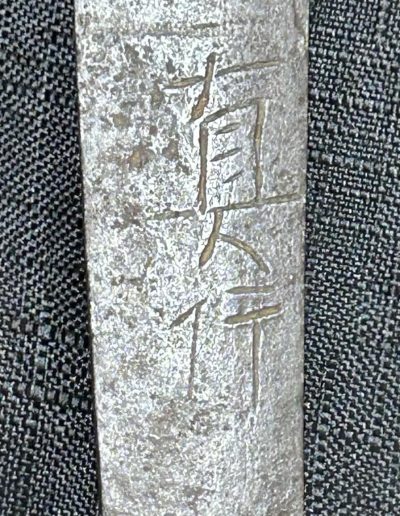
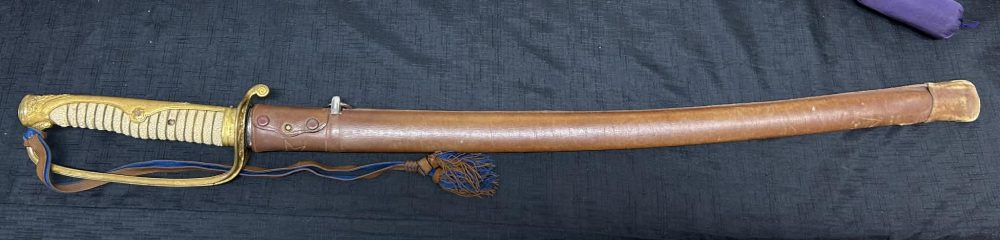
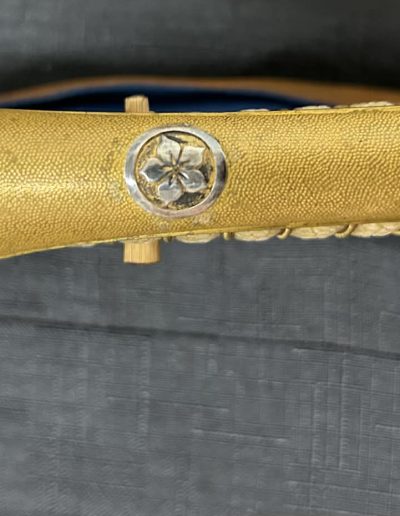
This is a Koto period katana by Saneyuki, mounted in an excellent original mint condition Kyu Gunto Koshirae featuring a silver family mon and a high-quality 2-piece habaki. The blade, recently polished in Japan, is flawlessly forged with beautiful hada and a super active hamon packed with hataraki. It comes with an NBTHK Hozon certificate and a newly made shirasaya.
 NihontoWatch
Mihara · Eikyo (1429-1441) · nagasa 69.2cm

Bizen-den · Bitchu · around 1293-1299
1 piece on the market now
Where Saneyuki stands among comparable artisans: across all of nihontō, and within tradition, era, and period. The tiers (Foremost · Leading · Major · Notable) weigh official designations from the NBTHK and Japan's Agency for Cultural Affairs, together with historical honors of lasting repute such as the Sansaku and Meibutsu-chō.
Select a lens to see how it's measured.
Bizen-den · Bitchu
1 piece on the market now
The setsumei of the Senoo group (妹尾) locate it in Bitchu, on land that the documents identify as developed by Senoo Taro Kaneyasu, a retainer of the Taira. The forging ground lay in the lower basin of the Takahashi River, east of Aoe and so positioned closer to neighboring Bizen. The Genki Mekikisho and the Kokon Meizukushi, repeatedly cited across these blades, divide the Bitchu smiths into the Aoe smiths (Aoe kaji) and the Senoo smiths (Senoo kaji); the chief recorded distinction is that Aoe names customarily carry the character tsugu (次), which the Senoo smiths rarely use. The blades span the late Heian period to the mid Kamakura period, and name Noritaka as the progenitor, with members appearing across the corpus as Masatsune, Tsuneto, Koreshige, Yasuie, Hirotsune, Tsunemasa, Moritsune, Tsunazane, Sukezane, Munesada, Tokimasa, Yukizane, Yukimasa, and a den Yukikuni. The setsumei consistently read the group against Ko-Bizen rather than Aoe, quoting the old phrase that Senoo work "resembles Bizen pieces" (Bizen-mono ni nitari), while for Masatsune they raise an unresolved question of connection with the contemporaneous Ko-Bizen Masatsune of the same name. A shared vocabulary recurs through the descriptions. The jigane is forged in itame or ko-itame mixed with mokume, the grain often standing slightly (hada-dachi), with adhering ji-nie, fine chikei, and mottling (ji-mura, jifu) that yields a chirimen-like crepe texture; the blades carry jifu-utsuri or a faint midare-utsuri. The hamon is a suguha-based line with shallow notare, mixed with ko-midare, ko-gunome, and ko-chōji, animated by ashi and yō, with sunagashi and kinsuji and a nioiguchi that frequently takes a subdued (shizumi) or moist (urumi) tendency.
The bōshi tends to sugu with a ko-maru turnback, sometimes with hakikake. The nakago shows ō-sujikai file marks and individual character signatures (jimei) cut in tachi-mei placement. Within this shared frame the setsumei mark distinct hands rather than one uniform output: Tsuneto's blade is brighter at the nioiguchi with conspicuous, florid ko-chōji; the Sukezane of Senoo runs a higher, more brilliant temper with reverse-slanting that the description reads as resembling Aoe work; Munesada and Yukizane present a more archaic, subdued bearing; and the several Masatsune blades sit so close to Ko-Bizen that one carried a Hon'ami Koyu origami attributing it to Bizen Masatsune. For kantei, the setsumei isolate the points that separate Senoo from the Ko-Bizen it imitates: a prominent mokume and standing hada in the jigane, the crepe-like ji-mura, and unambiguous ō-sujikai yasurime, together with the tachi-mei signing habit that sets the group apart from Aoe. Masatsune is named the representative smith, his works not particularly scarce while surviving pieces by the other hands are described as exceedingly rare; Noritaka is treated as founder, and reference works note two generations each for Tsuneto and the Senoo Sukezane, placed across the Hoji, Joei, and Bun'ei eras. Named provenance recorded in the corpus includes a tachi transmitted in the Great Tokugawa house, a Sukezane held in the Bizen Ikeda family with its ito-maki tachi koshirae, and a Masatsune orikaeshi-mei held in the Sendai Date family. The setsumei present the Senoo smiths as a Bitchu line standing beside Aoe and reaching toward Bizen, valued where signed examples survive as source material for study of the individual smiths and of the group as a whole. Learn more →
| Smith | Era | Designated |
|---|---|---|
| Yukizane行眞 | 1260-1261 | 4 |
| Moritsune守恒 | 1233-1234 | 2 |
| Munesada宗貞 | 1240-1243 | 1 |
| Noritsune則恒 | 1260-1261 | 1 |
| Kaneyasu包安 | 1261-1264 | 1 |
Bizen in the Muromachi period
War at home and trade abroad made Muromachi Bizen the busiest forge region in Japan: a century of Sengoku demand after the Ōnin War, and export missions to Ming China carrying blades by the tens of thousands.
Certifies a genuine blade worth preserving: a signature confirmed correct, or, if unsigned, an era, province, and school that the NBTHK can reliably identify.
The NBTHK (Nihon Bijutsu Tōken Hozon Kyōkai, the Society for the Preservation of Japanese Art Swords) is a public-interest incorporated foundation founded in 1948 and supervised by Japan’s Agency for Cultural Affairs (Bunkachō); it is based at the Japanese Sword Museum in Tokyo. Its expert panels physically examine each submitted work (shinsa) and issue a certificate (kanteishō) ranking it by artistic and historical merit. NBTHK papers are the most widely recognized standard of authentication for Japanese swords and fittings.
NBTHK official site
A$10,000
This is a Koto period katana by Saneyuki, mounted in an excellent original mint condition Kyu Gunto Koshirae featuring a silver family mon and a high-quality 2-piece habaki. The blade, recently polished in Japan, is flawlessly forged with beautiful hada and a super active hamon packed with hataraki. It comes with an NBTHK Hozon certificate and a newly made shirasaya.
NihontoWatchMihara · Eikyo (1429-1441) · nagasa 69.2cm
Bizen-den · Bitchu · around 1293-1299
1 piece on the market now
Where Saneyuki stands among comparable artisans: across all of nihontō, and within tradition, era, and period. The tiers (Foremost · Leading · Major · Notable) weigh official designations from the NBTHK and Japan's Agency for Cultural Affairs, together with historical honors of lasting repute such as the Sansaku and Meibutsu-chō.
Select a lens to see how it's measured.
Bizen-den · Bitchu
1 piece on the market now
The setsumei of the Senoo group (妹尾) locate it in Bitchu, on land that the documents identify as developed by Senoo Taro Kaneyasu, a retainer of the Taira. The forging ground lay in the lower basin of the Takahashi River, east of Aoe and so positioned closer to neighboring Bizen. The Genki Mekikisho and the Kokon Meizukushi, repeatedly cited across these blades, divide the Bitchu smiths into the Aoe smiths (Aoe kaji) and the Senoo smiths (Senoo kaji); the chief recorded distinction is that Aoe names customarily carry the character tsugu (次), which the Senoo smiths rarely use. The blades span the late Heian period to the mid Kamakura period, and name Noritaka as the progenitor, with members appearing across the corpus as Masatsune, Tsuneto, Koreshige, Yasuie, Hirotsune, Tsunemasa, Moritsune, Tsunazane, Sukezane, Munesada, Tokimasa, Yukizane, Yukimasa, and a den Yukikuni. The setsumei consistently read the group against Ko-Bizen rather than Aoe, quoting the old phrase that Senoo work "resembles Bizen pieces" (Bizen-mono ni nitari), while for Masatsune they raise an unresolved question of connection with the contemporaneous Ko-Bizen Masatsune of the same name. A shared vocabulary recurs through the descriptions. The jigane is forged in itame or ko-itame mixed with mokume, the grain often standing slightly (hada-dachi), with adhering ji-nie, fine chikei, and mottling (ji-mura, jifu) that yields a chirimen-like crepe texture; the blades carry jifu-utsuri or a faint midare-utsuri. The hamon is a suguha-based line with shallow notare, mixed with ko-midare, ko-gunome, and ko-chōji, animated by ashi and yō, with sunagashi and kinsuji and a nioiguchi that frequently takes a subdued (shizumi) or moist (urumi) tendency.
The bōshi tends to sugu with a ko-maru turnback, sometimes with hakikake. The nakago shows ō-sujikai file marks and individual character signatures (jimei) cut in tachi-mei placement. Within this shared frame the setsumei mark distinct hands rather than one uniform output: Tsuneto's blade is brighter at the nioiguchi with conspicuous, florid ko-chōji; the Sukezane of Senoo runs a higher, more brilliant temper with reverse-slanting that the description reads as resembling Aoe work; Munesada and Yukizane present a more archaic, subdued bearing; and the several Masatsune blades sit so close to Ko-Bizen that one carried a Hon'ami Koyu origami attributing it to Bizen Masatsune. For kantei, the setsumei isolate the points that separate Senoo from the Ko-Bizen it imitates: a prominent mokume and standing hada in the jigane, the crepe-like ji-mura, and unambiguous ō-sujikai yasurime, together with the tachi-mei signing habit that sets the group apart from Aoe. Masatsune is named the representative smith, his works not particularly scarce while surviving pieces by the other hands are described as exceedingly rare; Noritaka is treated as founder, and reference works note two generations each for Tsuneto and the Senoo Sukezane, placed across the Hoji, Joei, and Bun'ei eras. Named provenance recorded in the corpus includes a tachi transmitted in the Great Tokugawa house, a Sukezane held in the Bizen Ikeda family with its ito-maki tachi koshirae, and a Masatsune orikaeshi-mei held in the Sendai Date family. The setsumei present the Senoo smiths as a Bitchu line standing beside Aoe and reaching toward Bizen, valued where signed examples survive as source material for study of the individual smiths and of the group as a whole. Learn more →
| Smith | Era | Designated |
|---|---|---|
| Yukizane行眞 | 1260-1261 | 4 |
| Moritsune守恒 | 1233-1234 | 2 |
| Munesada宗貞 | 1240-1243 | 1 |
| Noritsune則恒 | 1260-1261 | 1 |
| Kaneyasu包安 | 1261-1264 | 1 |
Bizen in the Muromachi period
War at home and trade abroad made Muromachi Bizen the busiest forge region in Japan: a century of Sengoku demand after the Ōnin War, and export missions to Ming China carrying blades by the tens of thousands.
Certifies a genuine blade worth preserving: a signature confirmed correct, or, if unsigned, an era, province, and school that the NBTHK can reliably identify.
The NBTHK (Nihon Bijutsu Tōken Hozon Kyōkai, the Society for the Preservation of Japanese Art Swords) is a public-interest incorporated foundation founded in 1948 and supervised by Japan’s Agency for Cultural Affairs (Bunkachō); it is based at the Japanese Sword Museum in Tokyo. Its expert panels physically examine each submitted work (shinsa) and issue a certificate (kanteishō) ranking it by artistic and historical merit. NBTHK papers are the most widely recognized standard of authentication for Japanese swords and fittings.
NBTHK official siteA$10,000