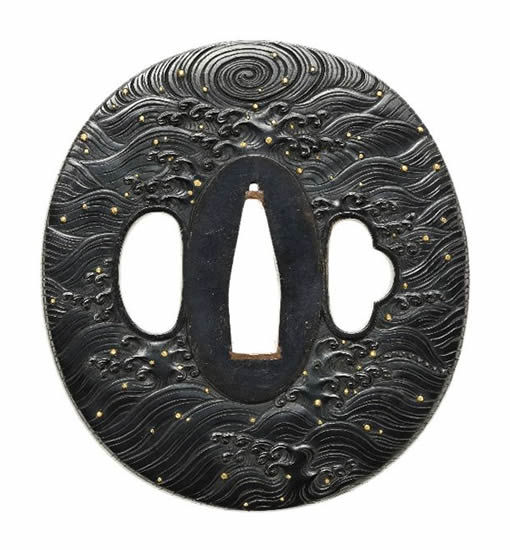
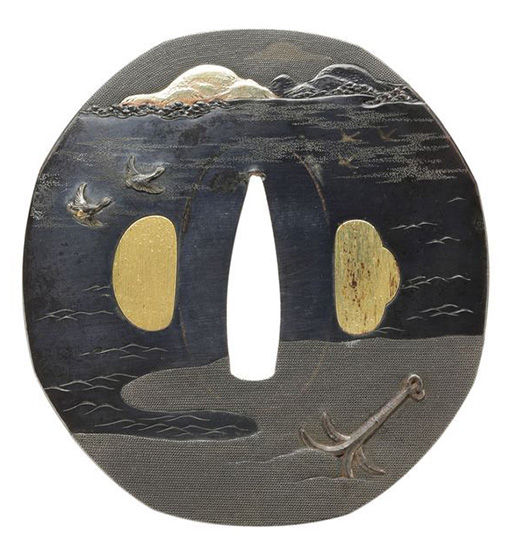
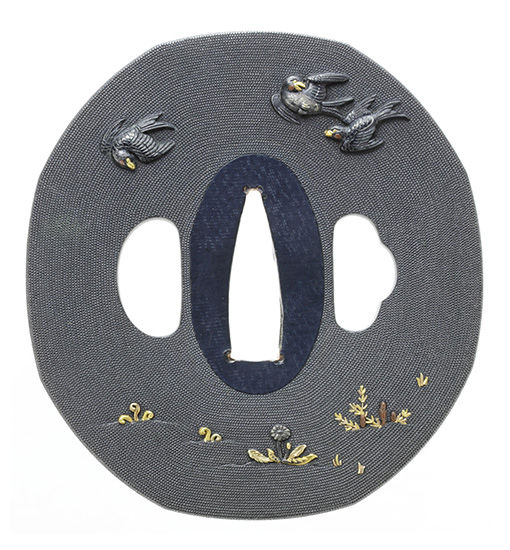
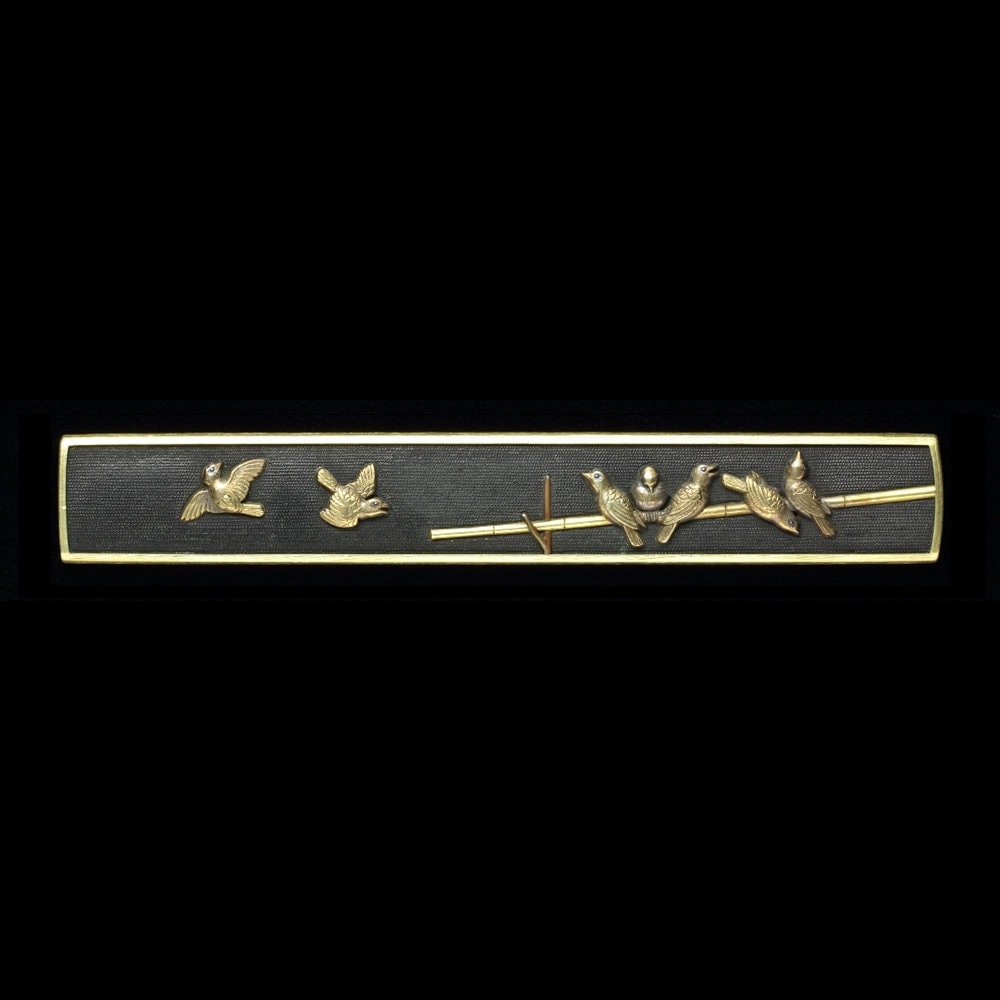
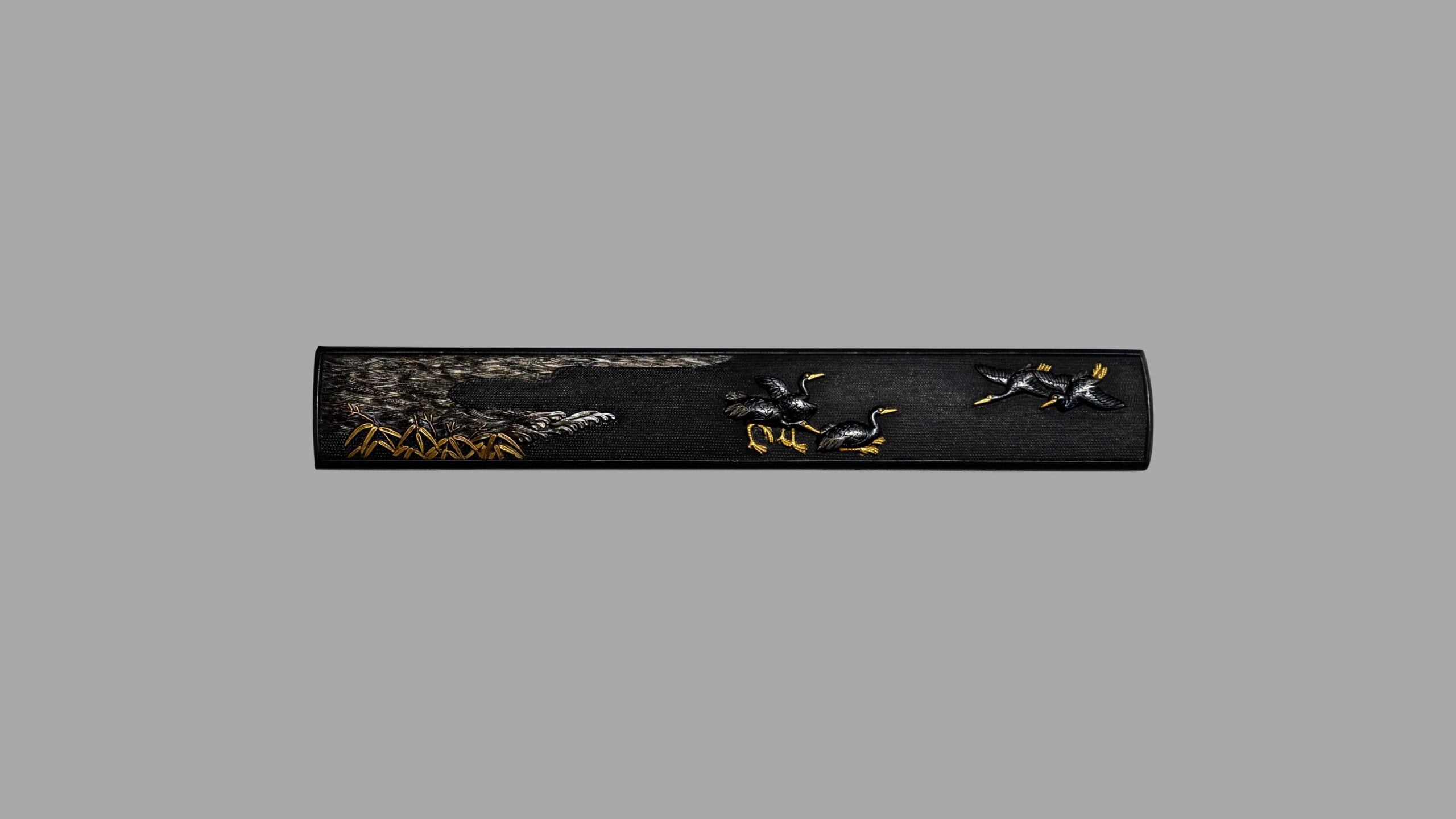
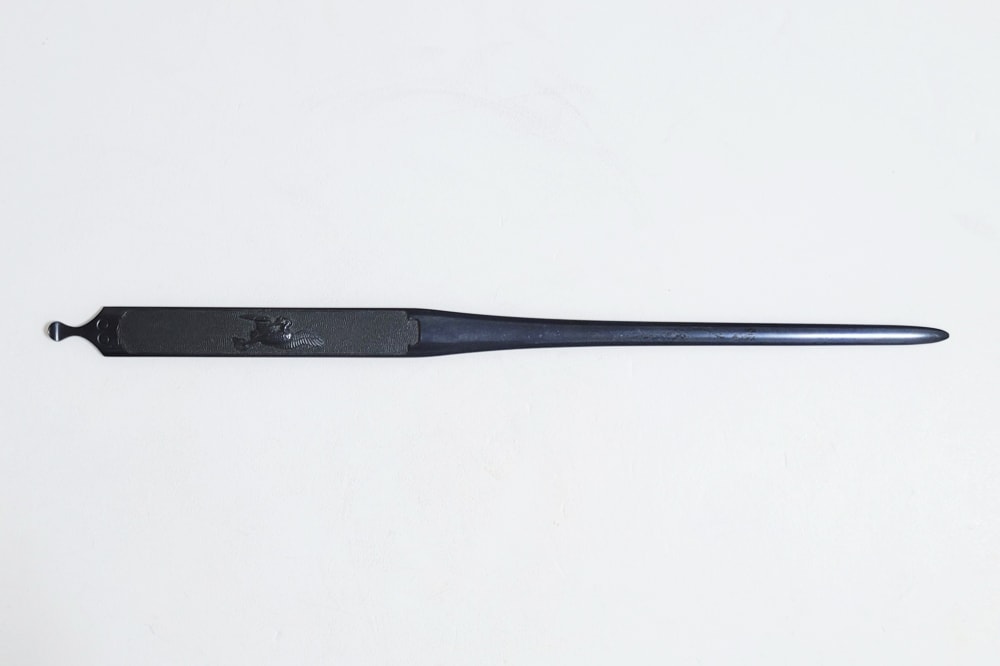
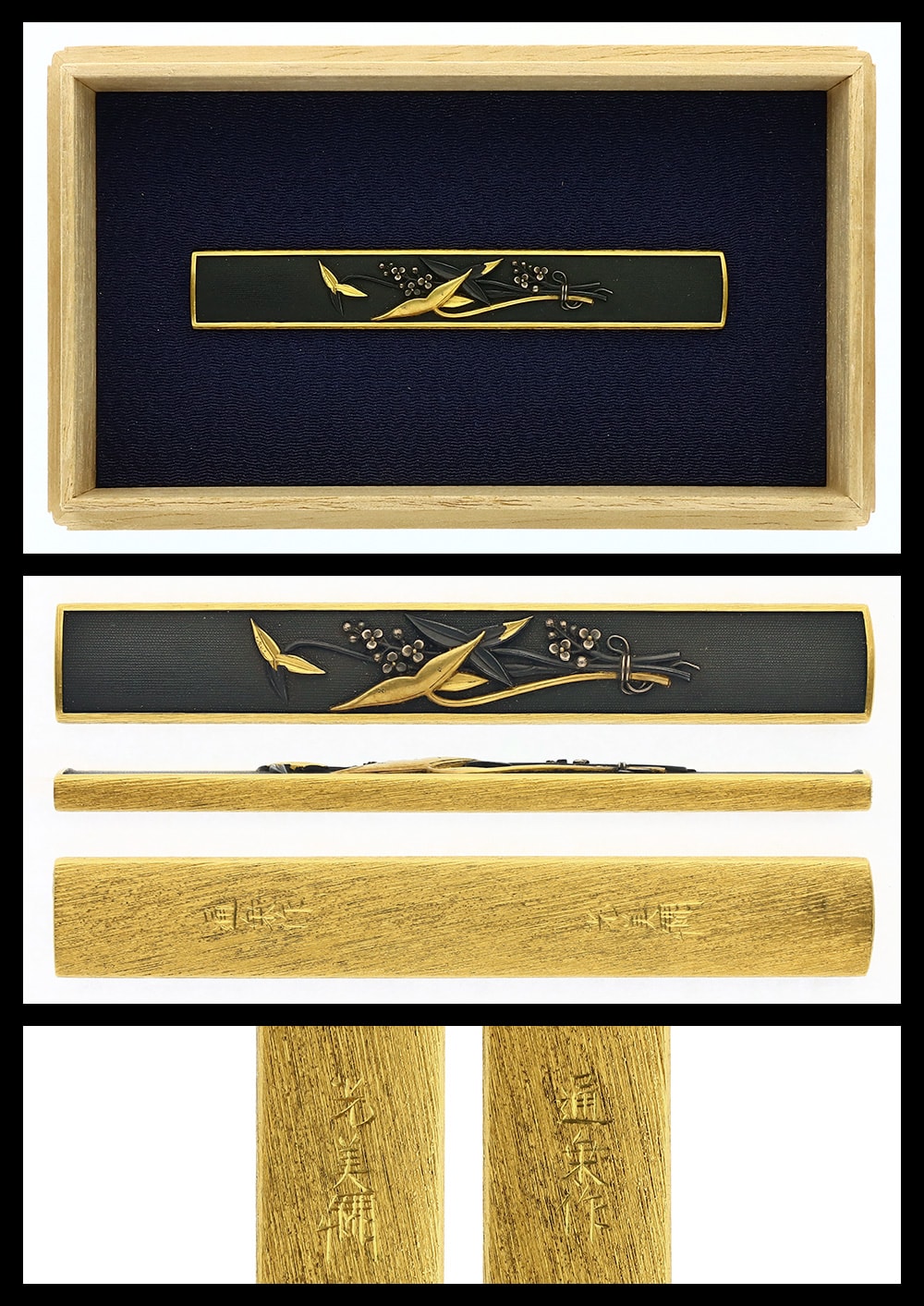
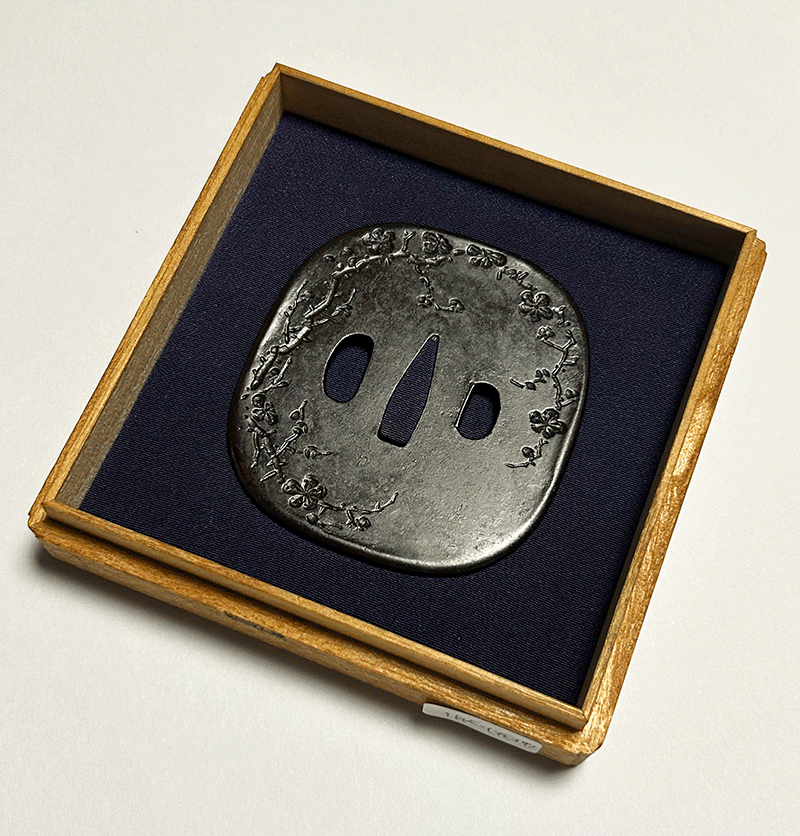
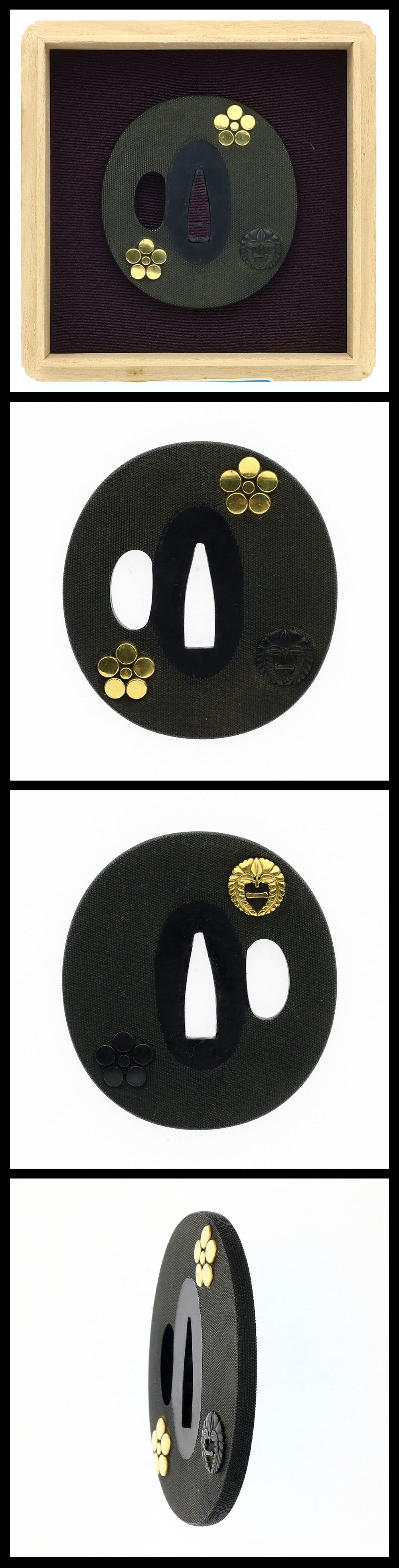
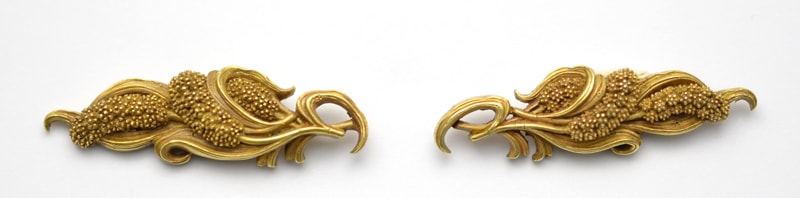
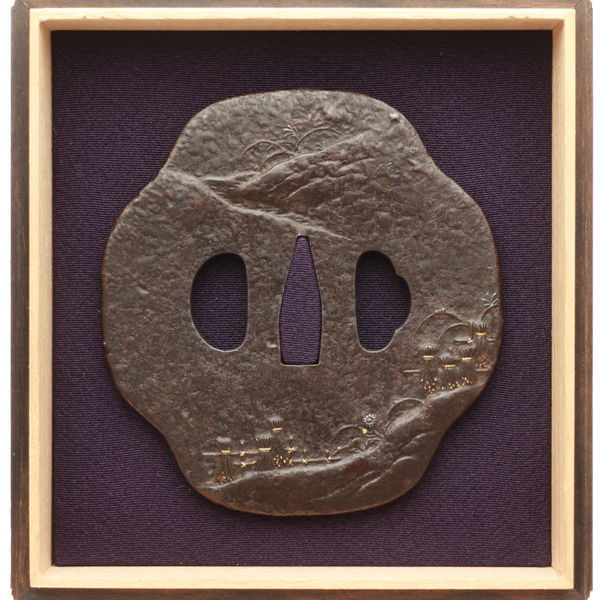
This is a tsuba made by Taisen Yoshihide in the Late Edo period. It depicts an autumn scene with rice racks and chrysanthemums on the front, and a stream with a bridge and dragonflies on the back. The iron ground has hammer marks and a black glossy color.
 NihontoWatch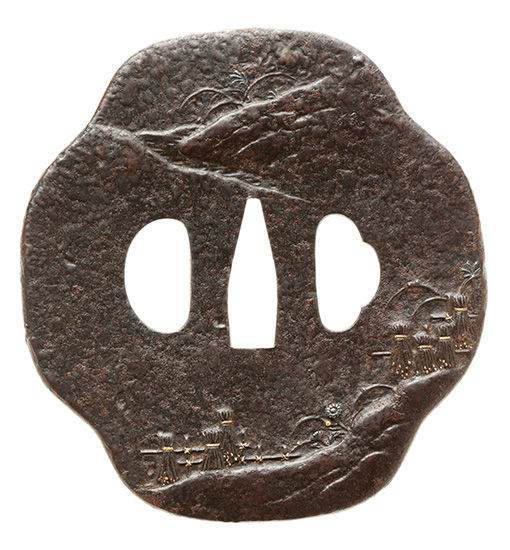
Goto Yoshihide
Edo
Musashi
Signed
Tokuho (NBTHK)
Iebori · around 1670
2 pieces on the market now
Sonobe Yoshihide (園部芳英) was the second-generation head of the Sonobe house of metalworkers, succeeding his father Yoshitsugu, who had founded the line after training under Tanaka Yoshiaki (田中芳章), a master in the Goto lineage. Through the Tanaka connection, the Sonobe family was permitted to associate with the Goto main house, and Yoshihide is considered to have received direct guidance from Goto Mitsuaki (後藤光乗), the sixteenth hereditary master. Known by the personal name Dengoro and later adopting his father's common-use name Denzo, Yoshihide worked at the foot of Kan'ei-ji in Ueno — a location he recorded on certain works with the poetic inscription "Tendai sanroku"[[c:1]]. He died in Genji 1 (1864) at the age of fifty-nine, leaving sons Yoshitada and Yoshiharu to continue the family tradition.
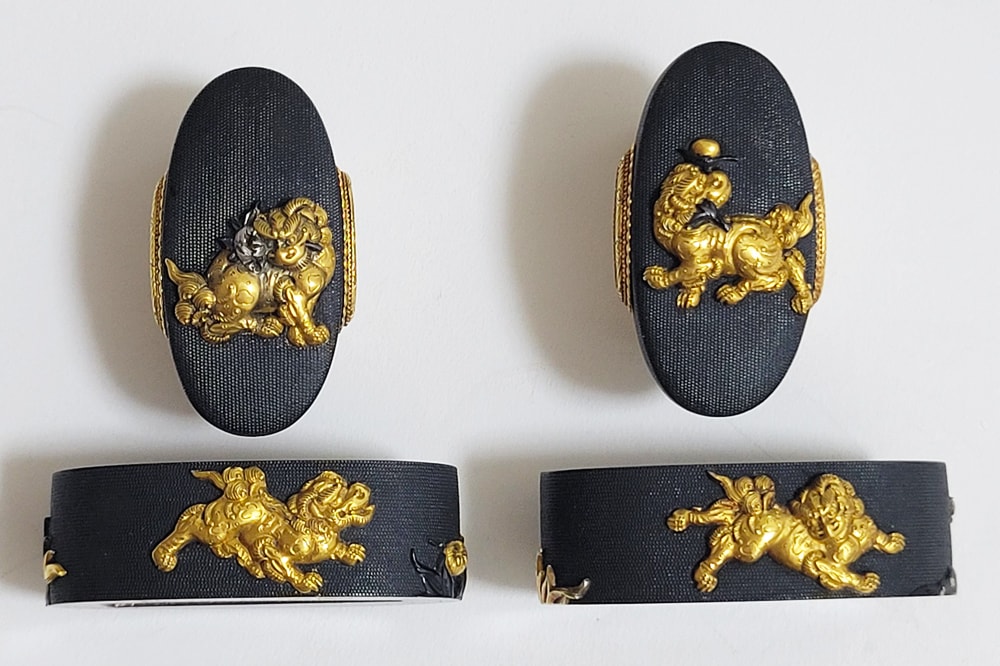
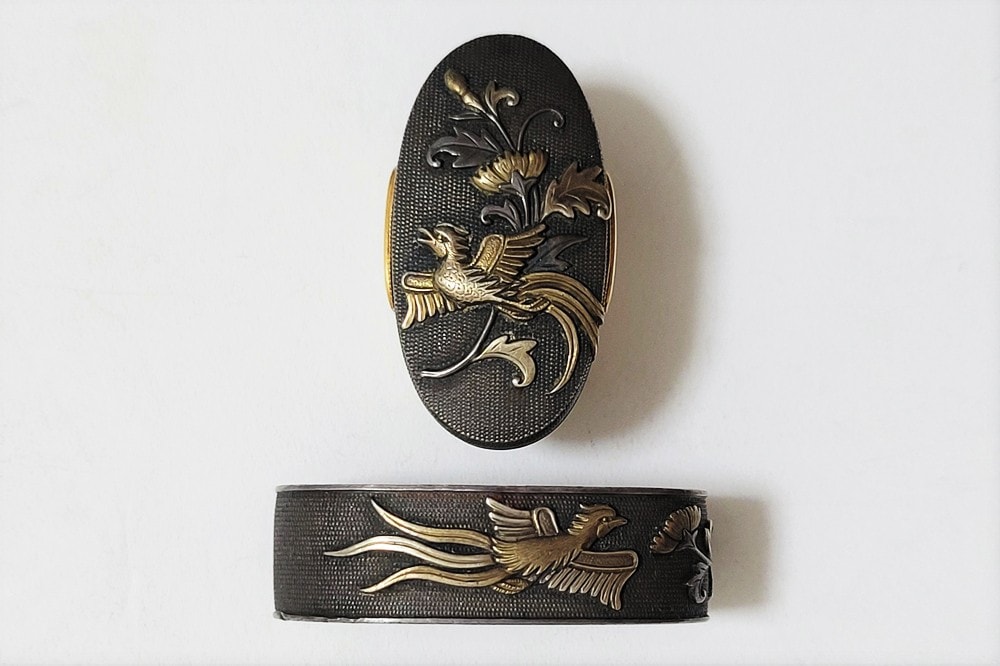
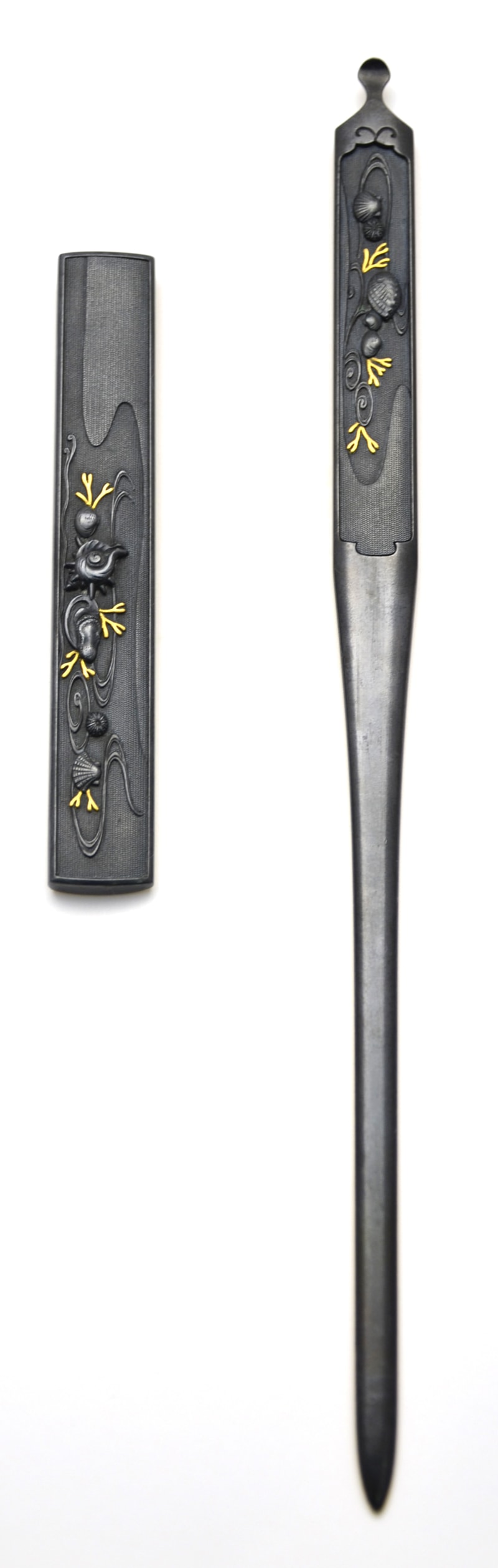
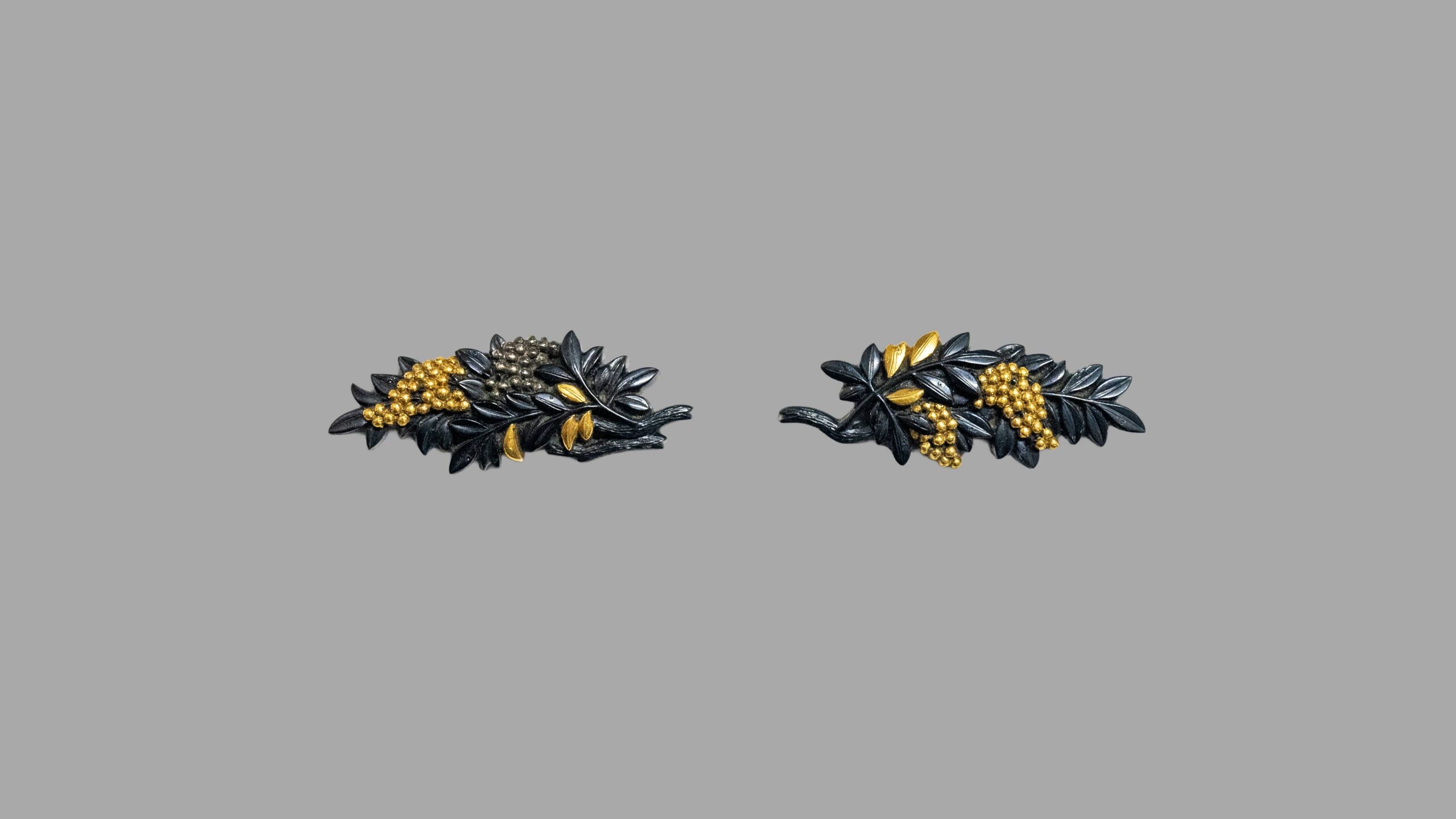
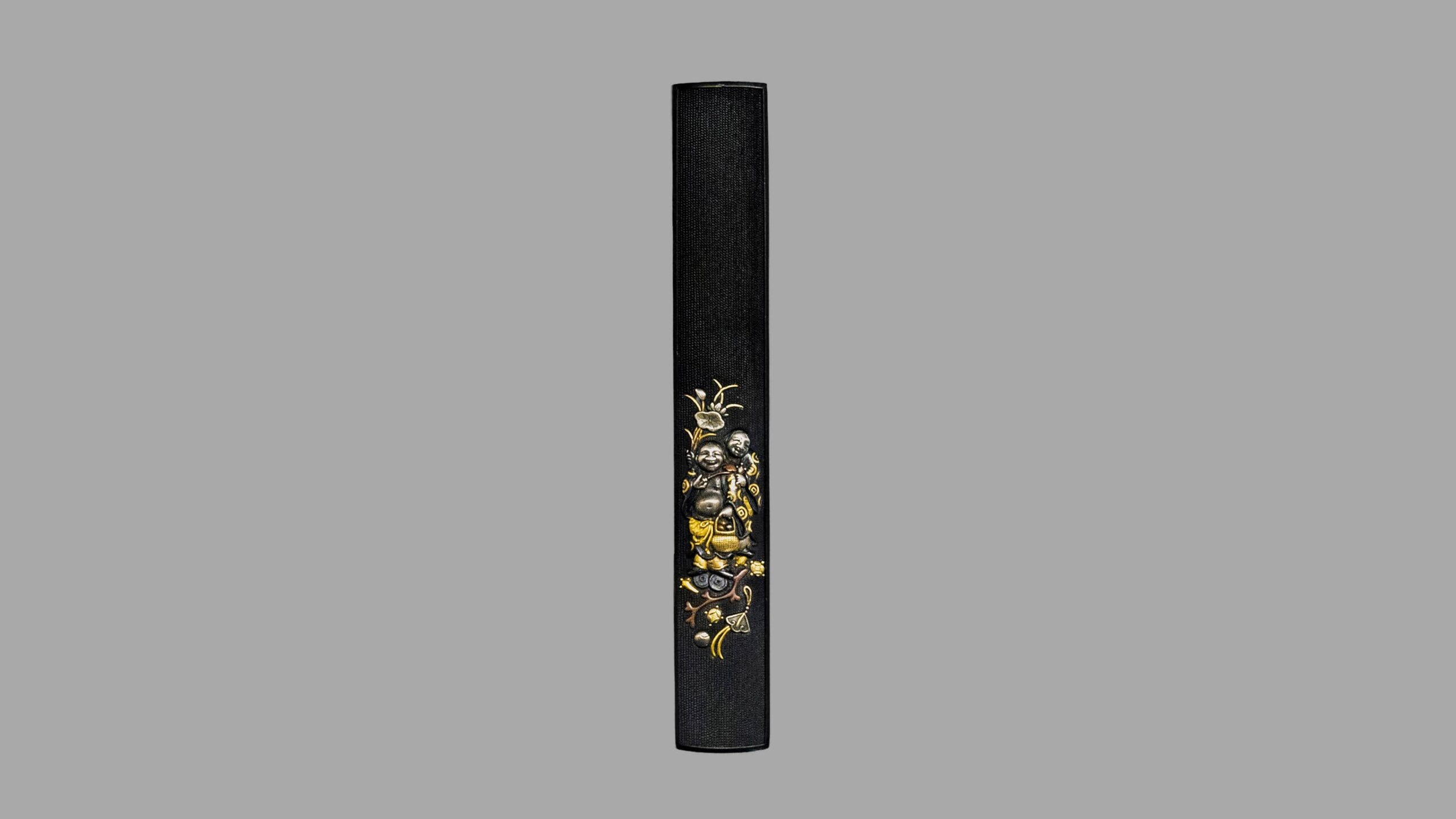
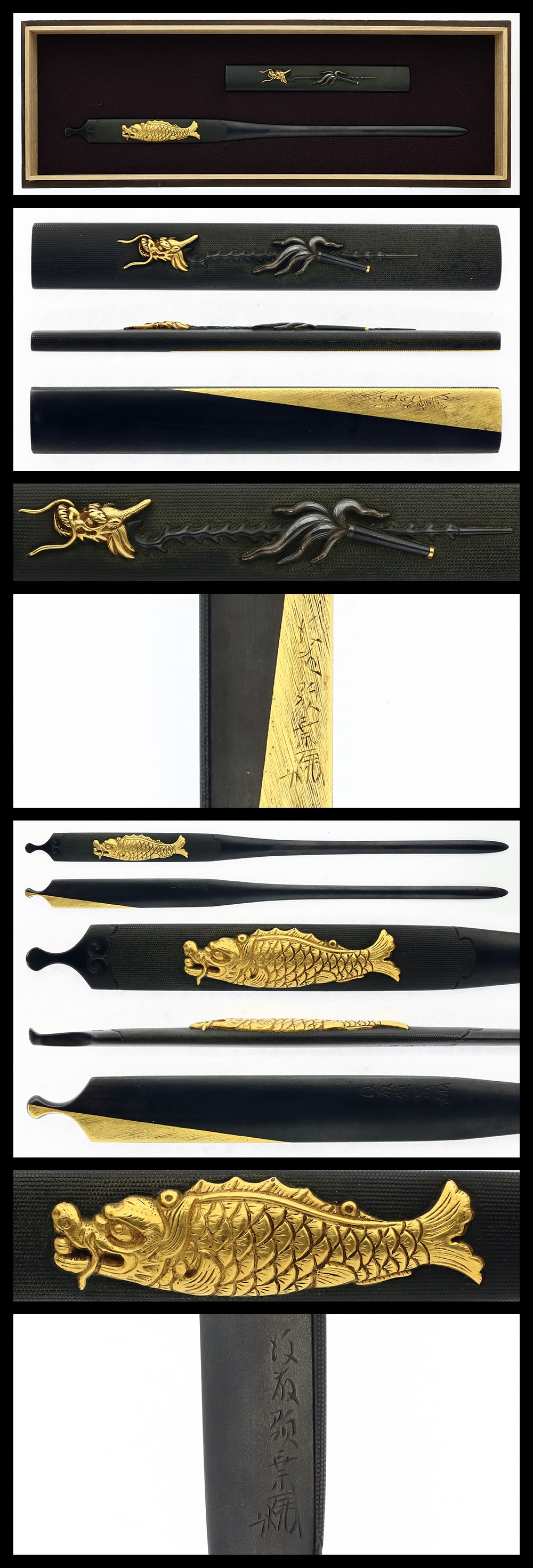
Yoshihide's oeuvre demonstrates a thorough command of Goto-school carving methods inherited through the Tanaka master-line, executed with what the NBTHK characterizes as "dignified and meticulously accomplished carving technique." His standard idiom employs shakudo nanako-ji grounds enriched with takabori in gold and silver iroe, frequently augmented by gold crests (kinmon) and gilt reverse plates (kin'ura). His mitokoromono sets and issaku-kanagu suites — complete unified fitting ensembles for formal daisho and kozukato mountings — exhibit an elevated coherence of design, from the fine nanako granulation through to the gilt-backed, file-finished construction of individual components. Where the commission demanded it, as in his unryu-themed daisho fittings, Yoshihide proved equally adept at katakiribori combined with kin-hira zogan, a technique noted as uncommon in his usual practice yet rendered with particular splendor.
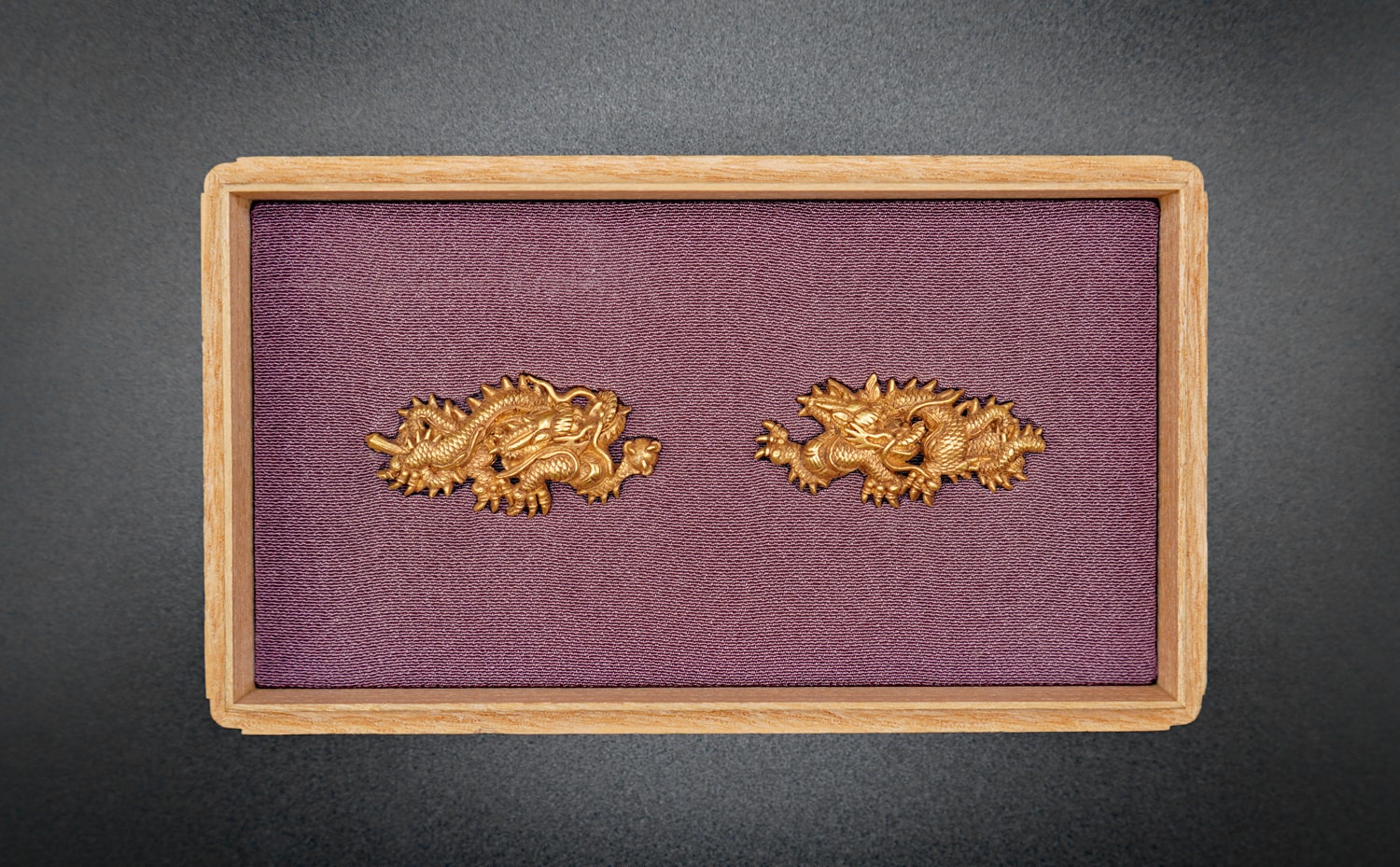
The NBTHK repeatedly situates Yoshihide's achievement within the formal aesthetic of high-ranking warrior furnishings, describing his work as "brilliant in coloration yet dignified in taste" and as concealing "a lofty sense of formal elegance within its minute detail." His productions are assessed as careful commissions of daimyo-class quality, combining the inherited Sonobe "family-carving" approach with his own "refined and precise carving skill." Whether rendering the bold, vigorous movement of mythical kirin or the restrained protocol of crest-scattered ceremonial fittings, Yoshihide's work is consistently recognized as demonstrating the Sonobe family manner "to the fullest" — a synthesis of Goto orthodoxy and individual mastery that the NBTHK regards as "truly superb."
Where Yoshihide stands among comparable artisans: across all of nihontō, and within tradition, era, and period. The tiers (Foremost · Leading · Major · Notable) weigh official designations from the NBTHK and Japan's Agency for Cultural Affairs, together with historical honors of lasting repute such as the Sansaku and Meibutsu-chō.
Select a lens to see how it's measured.
Iebori · Yamashiro
312 pieces on the market now
The Goto house stands as the preeminent dynasty of sword-fitting makers in the history of Japanese metalwork, an unbroken lineage of seventeen generations spanning from the founding master Yujo (1440--1512), who served Ashikaga Yoshimasa amid the refined culture of Higashiyama, through the final head Hojo (1816--1856) in the closing years of the Tokugawa shogunate. Learn more →
| Smith | Era | Designated |
|---|---|---|
| Goto Joshin後藤乗真 | 1512-1562 | 68 |
| Goto Yujo後藤祐乗 | 1440-1512 | 41 |
| Goto Kenjo後藤顕乗 | 1586-1663 | 46 |
| Goto Sojo後藤宗乗 | 1461-1538 | 55 |
| Goto Eijo後藤栄乗 | 1577-1617 | 35 |
A Hozon-certified fitting of notably superior craftsmanship and condition, often with signature or workmanship of high reference value.
The NBTHK (Nihon Bijutsu Tōken Hozon Kyōkai, the Society for the Preservation of Japanese Art Swords) is a public-interest incorporated foundation founded in 1948 and supervised by Japan’s Agency for Cultural Affairs (Bunkachō); it is based at the Japanese Sword Museum in Tokyo. Its expert panels physically examine each submitted work (shinsa) and issue a certificate (kanteishō) ranking it by artistic and historical merit. NBTHK papers are the most widely recognized standard of authentication for Japanese swords and fittings.
NBTHK official siteIf, due to our fault, the item differs significantly from its proper condition, the item may be returned. Cooling-off is within one week of the item's arrival.
This is a tsuba made by Taisen Yoshihide in the Late Edo period. It depicts an autumn scene with rice racks and chrysanthemums on the front, and a stream with a bridge and dragonflies on the back. The iron ground has hammer marks and a black glossy color.
NihontoWatchGoto Yoshihide
Edo
Musashi
Signed
Tokuho (NBTHK)
Iebori · around 1670
2 pieces on the market now
Sonobe Yoshihide (園部芳英) was the second-generation head of the Sonobe house of metalworkers, succeeding his father Yoshitsugu, who had founded the line after training under Tanaka Yoshiaki (田中芳章), a master in the Goto lineage. Through the Tanaka connection, the Sonobe family was permitted to associate with the Goto main house, and Yoshihide is considered to have received direct guidance from Goto Mitsuaki (後藤光乗), the sixteenth hereditary master. Known by the personal name Dengoro and later adopting his father's common-use name Denzo, Yoshihide worked at the foot of Kan'ei-ji in Ueno — a location he recorded on certain works with the poetic inscription "Tendai sanroku"[[c:1]]. He died in Genji 1 (1864) at the age of fifty-nine, leaving sons Yoshitada and Yoshiharu to continue the family tradition.
Yoshihide's oeuvre demonstrates a thorough command of Goto-school carving methods inherited through the Tanaka master-line, executed with what the NBTHK characterizes as "dignified and meticulously accomplished carving technique." His standard idiom employs shakudo nanako-ji grounds enriched with takabori in gold and silver iroe, frequently augmented by gold crests (kinmon) and gilt reverse plates (kin'ura). His mitokoromono sets and issaku-kanagu suites — complete unified fitting ensembles for formal daisho and kozukato mountings — exhibit an elevated coherence of design, from the fine nanako granulation through to the gilt-backed, file-finished construction of individual components. Where the commission demanded it, as in his unryu-themed daisho fittings, Yoshihide proved equally adept at katakiribori combined with kin-hira zogan, a technique noted as uncommon in his usual practice yet rendered with particular splendor.
The NBTHK repeatedly situates Yoshihide's achievement within the formal aesthetic of high-ranking warrior furnishings, describing his work as "brilliant in coloration yet dignified in taste" and as concealing "a lofty sense of formal elegance within its minute detail." His productions are assessed as careful commissions of daimyo-class quality, combining the inherited Sonobe "family-carving" approach with his own "refined and precise carving skill." Whether rendering the bold, vigorous movement of mythical kirin or the restrained protocol of crest-scattered ceremonial fittings, Yoshihide's work is consistently recognized as demonstrating the Sonobe family manner "to the fullest" — a synthesis of Goto orthodoxy and individual mastery that the NBTHK regards as "truly superb."
Where Yoshihide stands among comparable artisans: across all of nihontō, and within tradition, era, and period. The tiers (Foremost · Leading · Major · Notable) weigh official designations from the NBTHK and Japan's Agency for Cultural Affairs, together with historical honors of lasting repute such as the Sansaku and Meibutsu-chō.
Select a lens to see how it's measured.
Iebori · Yamashiro
312 pieces on the market now
The Goto house stands as the preeminent dynasty of sword-fitting makers in the history of Japanese metalwork, an unbroken lineage of seventeen generations spanning from the founding master Yujo (1440--1512), who served Ashikaga Yoshimasa amid the refined culture of Higashiyama, through the final head Hojo (1816--1856) in the closing years of the Tokugawa shogunate. Learn more →
| Smith | Era | Designated |
|---|---|---|
| Goto Joshin後藤乗真 | 1512-1562 | 68 |
| Goto Yujo後藤祐乗 | 1440-1512 | 41 |
| Goto Kenjo後藤顕乗 | 1586-1663 | 46 |
| Goto Sojo後藤宗乗 | 1461-1538 | 55 |
| Goto Eijo後藤栄乗 | 1577-1617 | 35 |
A Hozon-certified fitting of notably superior craftsmanship and condition, often with signature or workmanship of high reference value.
The NBTHK (Nihon Bijutsu Tōken Hozon Kyōkai, the Society for the Preservation of Japanese Art Swords) is a public-interest incorporated foundation founded in 1948 and supervised by Japan’s Agency for Cultural Affairs (Bunkachō); it is based at the Japanese Sword Museum in Tokyo. Its expert panels physically examine each submitted work (shinsa) and issue a certificate (kanteishō) ranking it by artistic and historical merit. NBTHK papers are the most widely recognized standard of authentication for Japanese swords and fittings.
NBTHK official siteIf, due to our fault, the item differs significantly from its proper condition, the item may be returned. Cooling-off is within one week of the item's arrival.