 NihontoWatchNihontoWatch
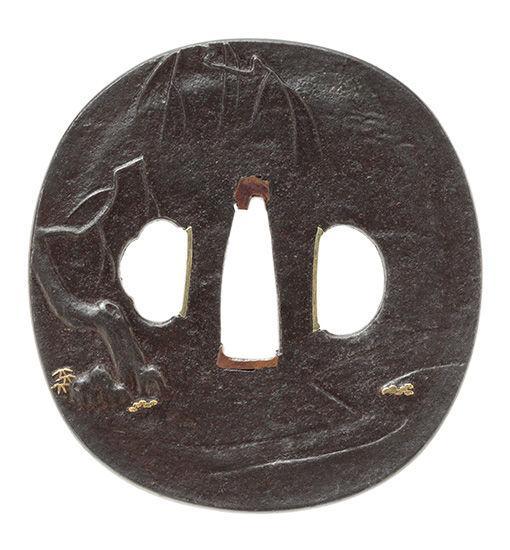
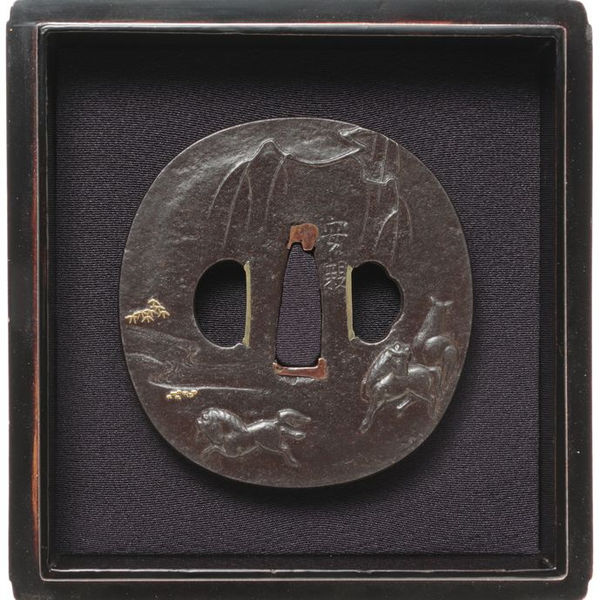
みちのくの尾駮の駒も野飼には あれこそまされなつくものかは(後撰和歌集) 東路のおくの牧なる荒馬を なつくるものは春の若草(拾玉集) 綱たへてはなれはてにし陸奥の 尾駮の駒を昨日見しかな(相模 拾遺和歌集) 平安時代あるいは鎌倉時代の和歌にも放牧の様子が採られているように、奥羽は名馬の産地として広く認識されていた。また、多くの歌枕が奥羽に求められていることからも、訪れることが容易ではない異国の地に対する憧れが、これらの歌から感じとることができる。 都から遠く離れた奥羽の地に栄えた牧場経営の始まりは、古く大陸から渡来した民族との交易によるものとも考えられている。 天平年間、東山道各国で産した軍馬をその国外に持ち出すことを禁じる勅詔が発せられたことがあった。性の良い軍馬が好まれていただけでなく農耕馬としても需要が高まったためであるが、禁止令をすり抜けるように良馬が駄馬と称されて売買され、遂にはその駄馬さえも売買が禁止されるに至った。即ち勅詔を超えて需要があったのである。馬は鉄製の剣や鏃と共に最先端の武具であり、誰もが大量に所有することによって武力と権力の裏付けとしたのである。 逢ふ坂の関の清水に影見えて 今ぞ引くらむ望月の駒(紀貫之) 古く宮中では、八月の中旬に各国で産した優れた馬を迎え入れる駒迎の行事が行われていた。逢坂の関で御馬寮司が若駒を受け取り、宮中に迎え入れるもので、その様子は絵画にも採られている。かつて奥羽の馬もその対象であったが、奥羽の馬は次第に高価になったものであろうか、鎌倉時代には信濃国望月産の駒のみが宮中に運ばれるようになったという。ここでも奥羽の馬が高く評価され、高い値をつけていたことが窺いとれよう。 牧とは柵を廻らした放牧場を指すが、奥羽では専ら野飼されていたようだ。野飼とは山野に放して飼うこと。自然の中を自由に走らせることで気性の強い馬を育てたのであろう。源義経が京の源義仲を攻めた宇治川の合戦で、先陣争いを演じた梶原景季の磨(する)墨(すみ)も佐々木高綱の生食(いけづき)も、そのような環境で育てられた荒馬であった。奥羽の馬の評価は殊に鎌倉時代以降、武家によって高められていったのである。 土屋(つちや)安(やす)親(ちか)は、このような牧の様子や飼われていた馬の姿を、遠い故郷の風景として思い浮かべたのであろう、本作以外にも馬を題材に採った鐔が幾つか遺されている。野原に立つ巨木の周りに牛と共に佇む放馬を構成美豊かに彫り描いた作は余りにも有名。また鐔の切羽台の周りに八駿馬を布置した、古代中国の伝承を彫り描いた鐔も、同様に自然の営みに取材しながらも優れた構成感覚を示した作である。この鐔では、個性的な図柄構成に挑戦したものではなく、むしろ自然な景観を捉えていると思われ、柳の古木の下に佇む馬を彫り描き、静かに過ぎてゆく時の流れを感じさせる作
NihontoWatchOffered by Choshuya
This piece has sold
14 on the market
Get an email when new Tsuchiya School work hits the market.

As written by the shop
Machibori · Musashi (Edo)
14 pieces on the market now
The Tsuchiya school is a branch of the Nara kinkō tradition, established in Edo (Musashi Province) by Tsuchiya Yasuchika, counted among the Nara Sansaku (Three Great Masters of Nara). Six generations of main-line heads carried the name Yasuchika (安親), perpetuating a continuous workshop lineage from the Genroku era through the late Edo period. The Shōnai Kinkō Meifu records Yasutsugu (安族) as a pupil of the first-generation Yasuchika who served as a cooperative assistant craftsman in Edo before returning to Shōnai[[c:2]], where his descendants continued in metalwork. The sixth-generation head, Tsuchiya Masachika — also known as Hōgen Yasuchika — was the eldest son of Kunichika (the fifth-generation head), born in Shimotsuke Province at Shimodate. He "traveled widely to study and refine his skills[[c:3]]," establishing himself at Shiba-Shinbashi in Edo and serving as domain craftsman to the Satake family of Akita. He was granted the court title Hōgen, used the art names Sekienji and Tōsen, and died in Man'en 2 (1861).
A further branch member, Tsuchiya Morichika I, signed under the extended form Tōensha Tsuchiya Kōsen Morichika. The school's collective style is rooted in the Nara tradition's carving vocabulary, with sukidashi-takabori (relief carving raised from the ground) as its foundational technique. Iron and shakudō are the primary ground metals, frequently worked in ishime-ji or tsuchime-ji (hammered ground), with rich iroe in gold, silver, shibuichi, and suaka. " The pictorial sensibility favors literary and allusive compositions; Morichika's Five Seasonal Festivals suite expresses each observance "through evocative images of associated objects and settings that allude to the observances[[c:5]]" rather than depicting ceremonial scenes literally. " The setsumei consistently position the Tsuchiya school as a vehicle for the continuation of Nara-school principles across the mid- and late Edo periods. " Commissioned works for daimyō patrons — the Satake family of Akita and the Matsui family of Maebashi — attest to the enduring esteem in which the Tsuchiya line was held by the upper warrior class. Learn more →
| Smith | Era | Designated |
|---|---|---|
| Yasuchika安親 | 1804-1830 | 0 |
| Yasuchika安親 | 1718-1778 | 0 |
| Yasunari安成 | — | 0 |
| Yasunori安則 | — | 0 |
| Kunichika国親 | — | 0 |
If, due to our fault, the item differs significantly from its proper condition, the item may be returned. Cooling-off is within one week of the item's arrival.