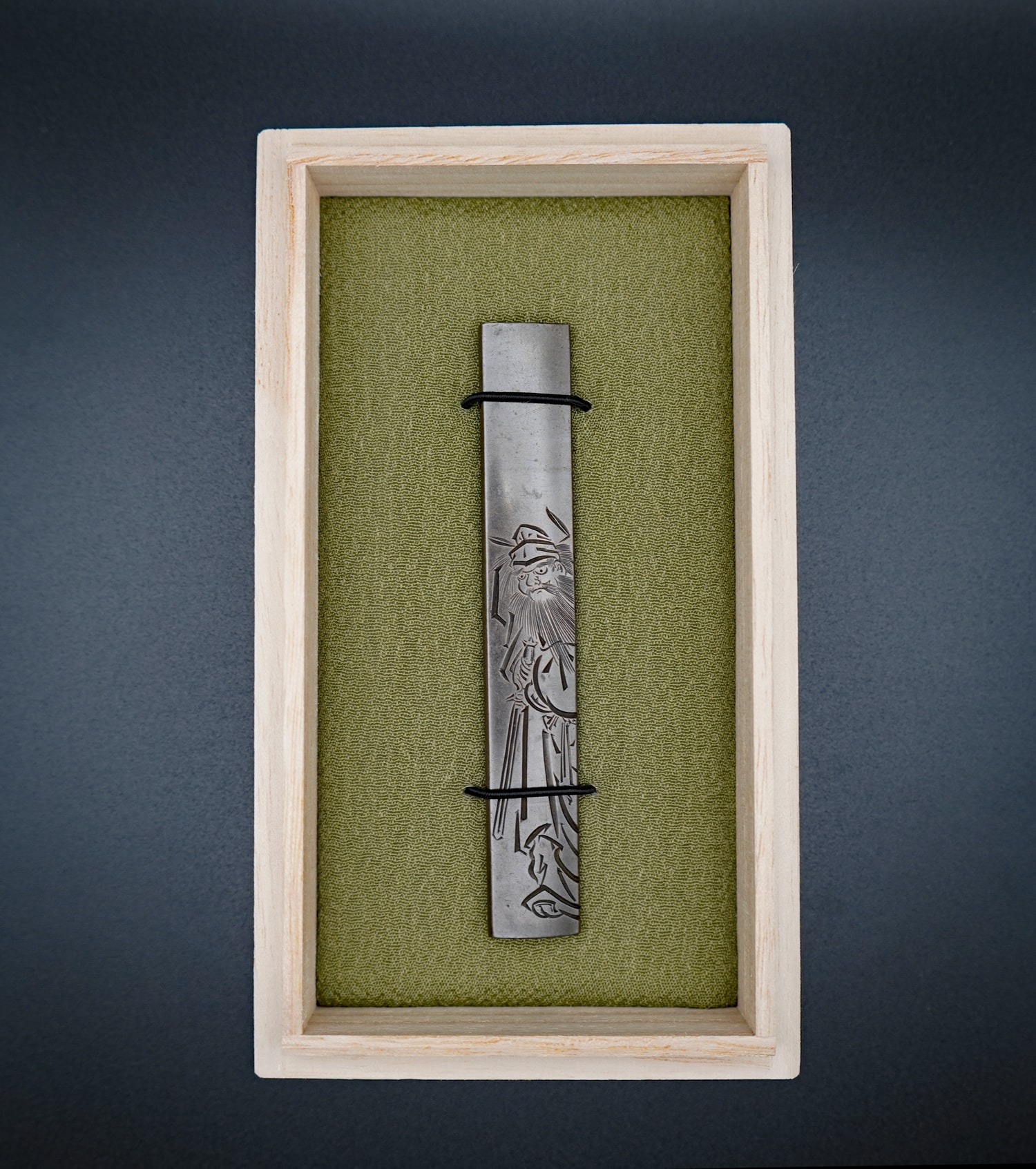
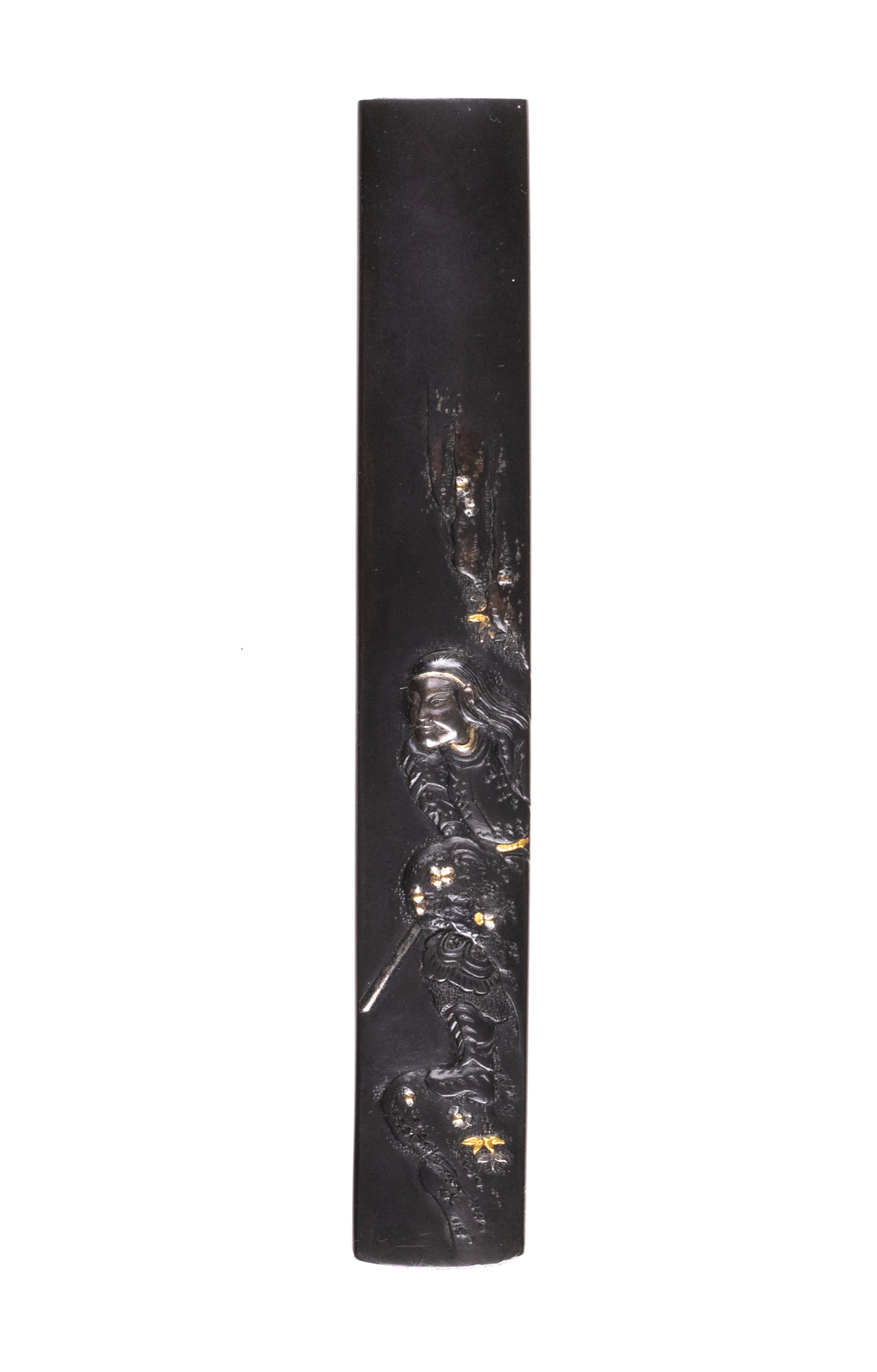
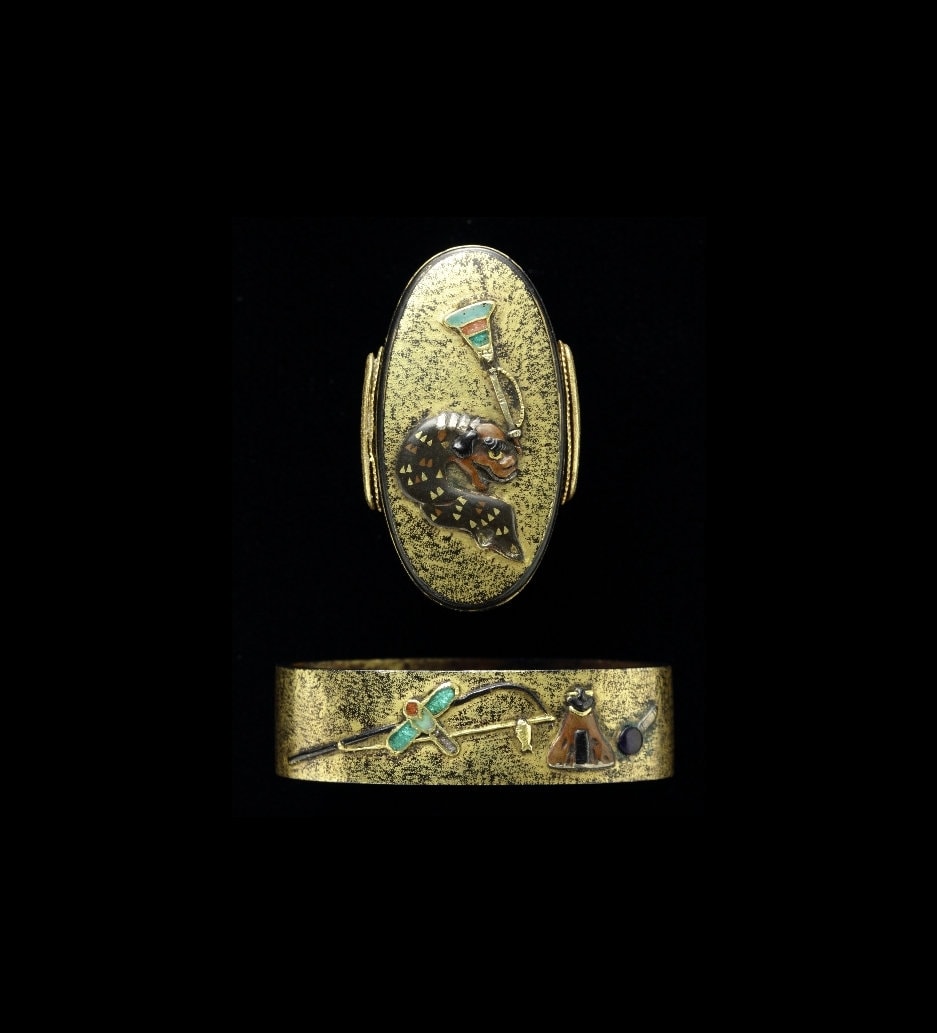
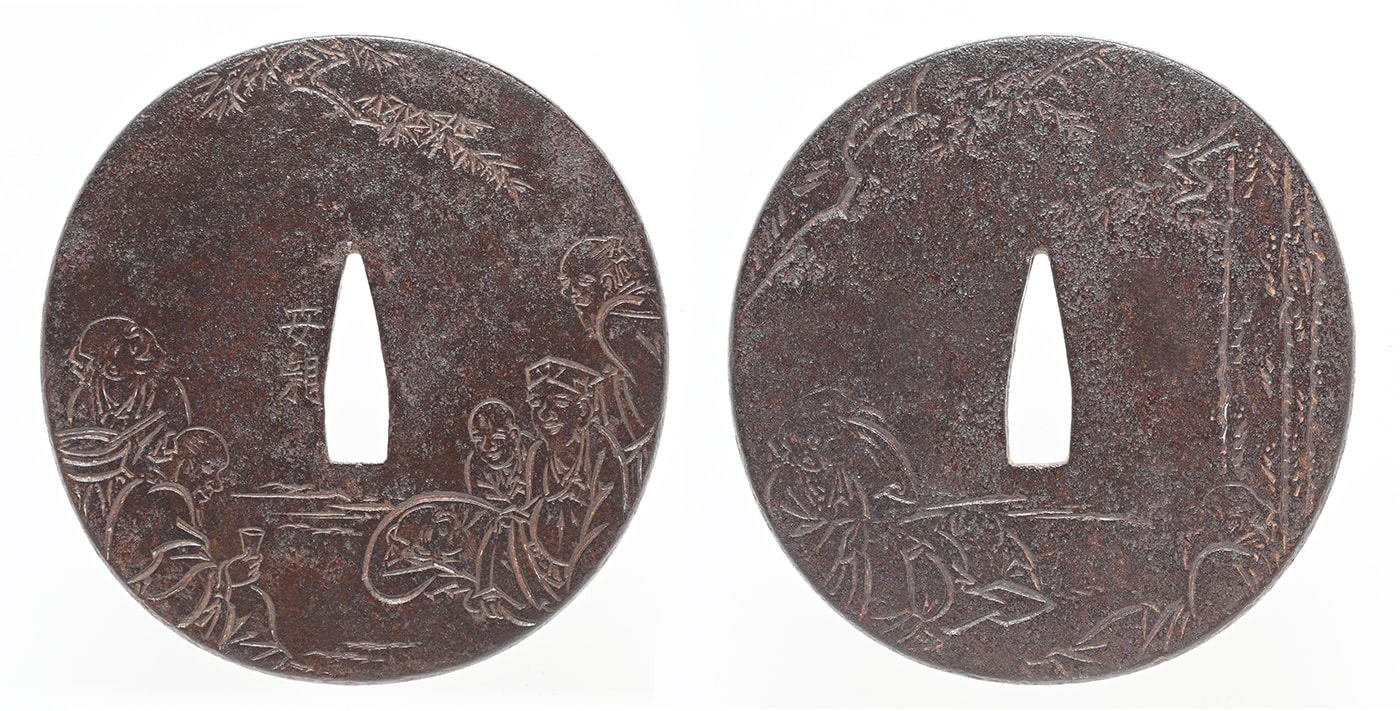
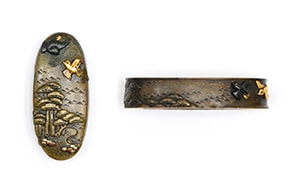
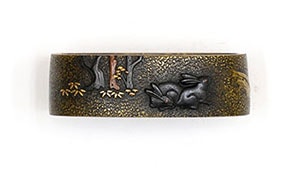
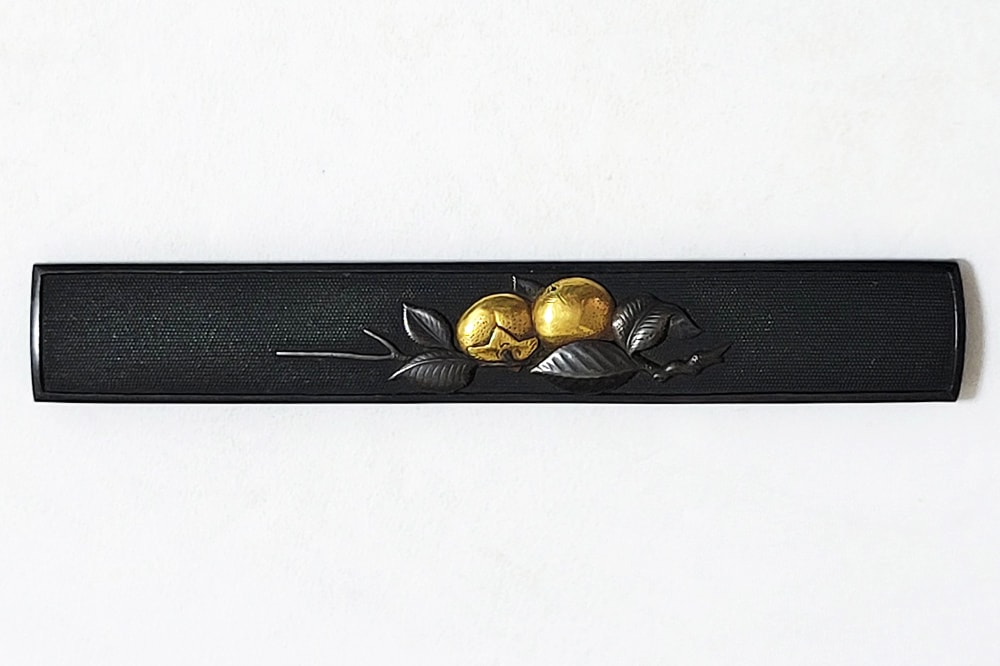
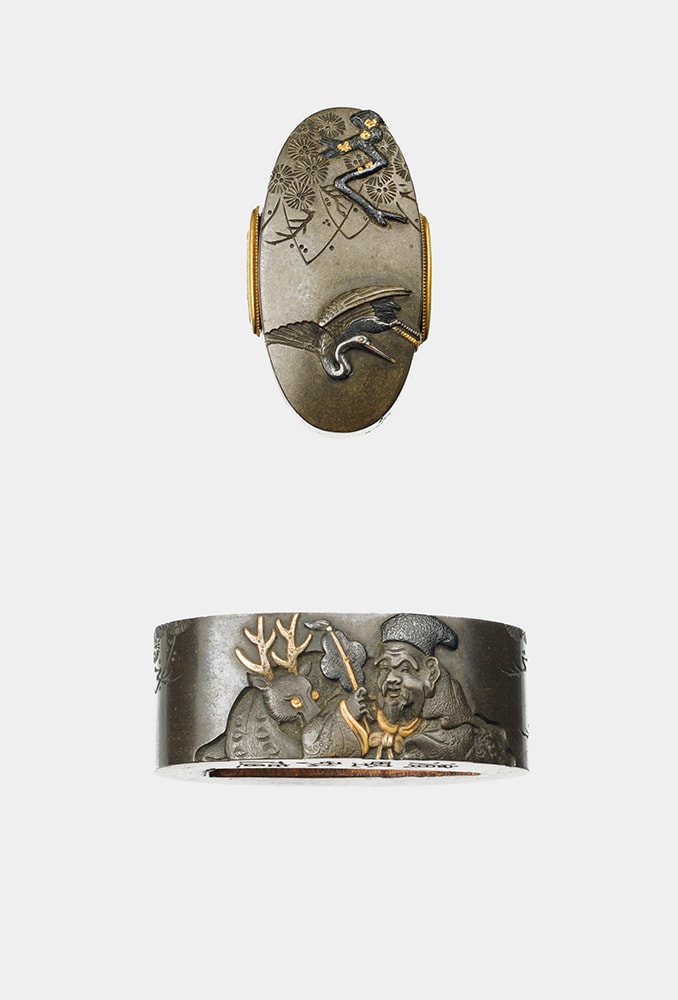
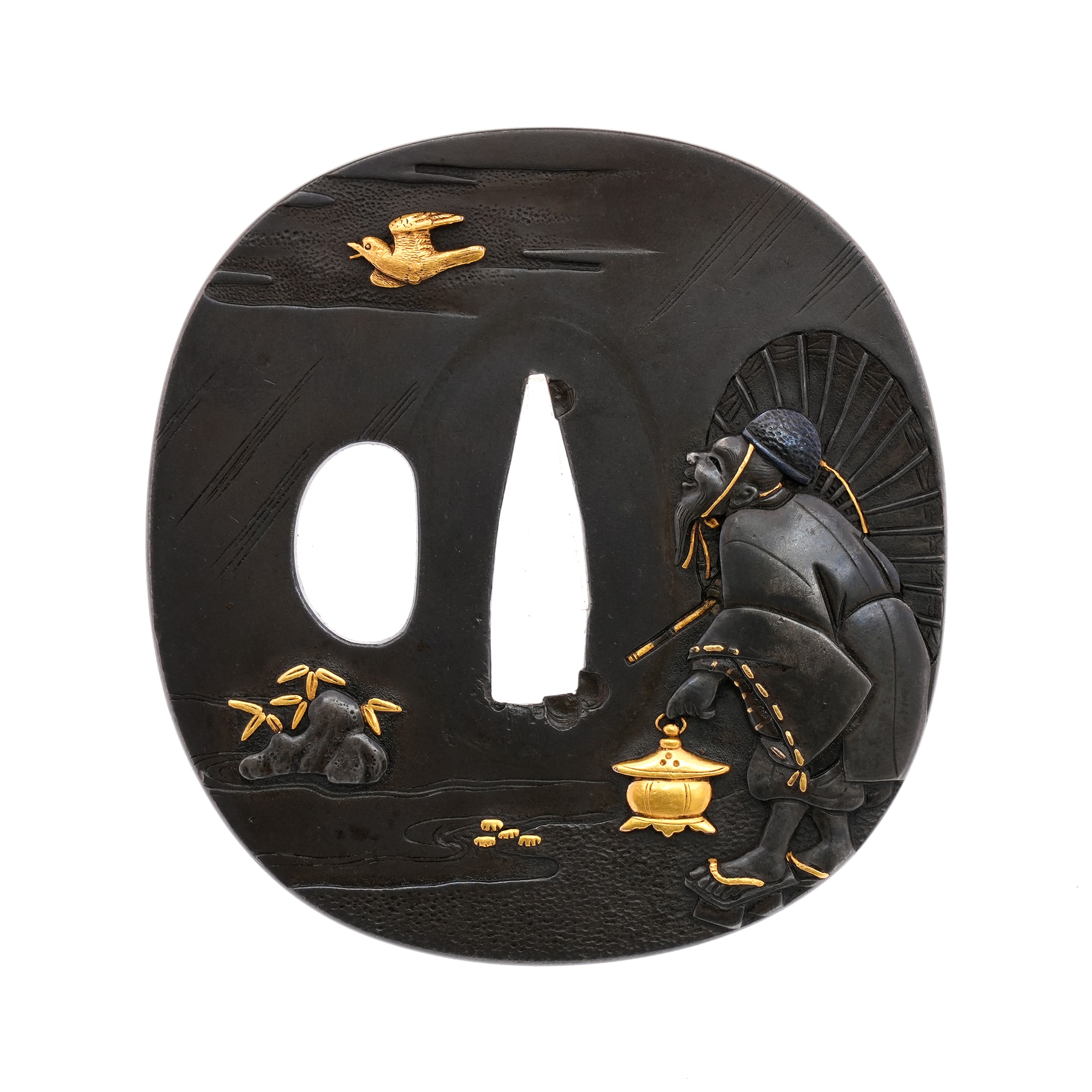
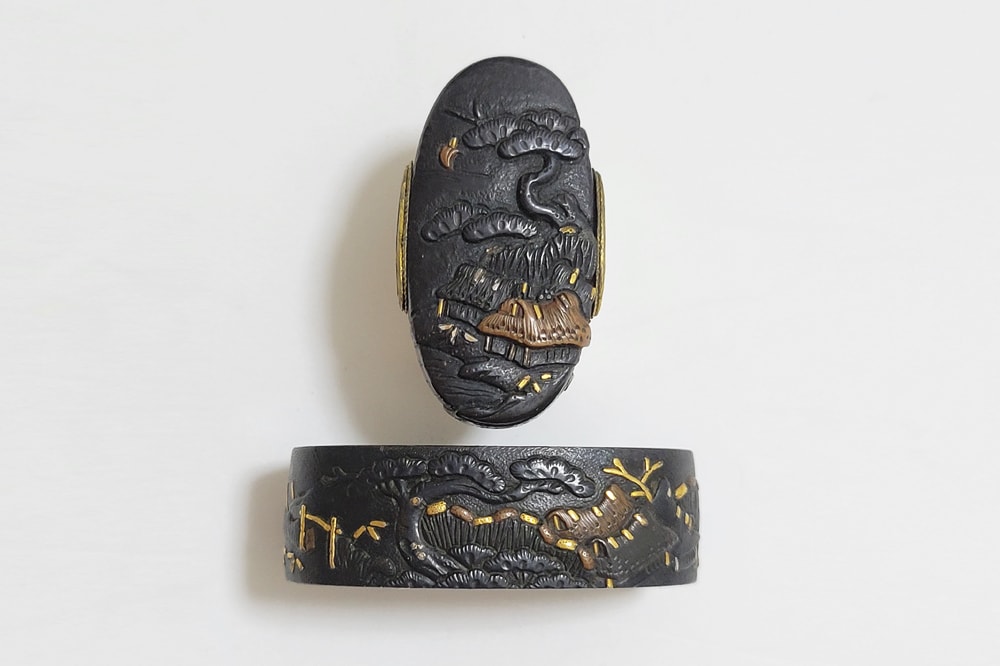
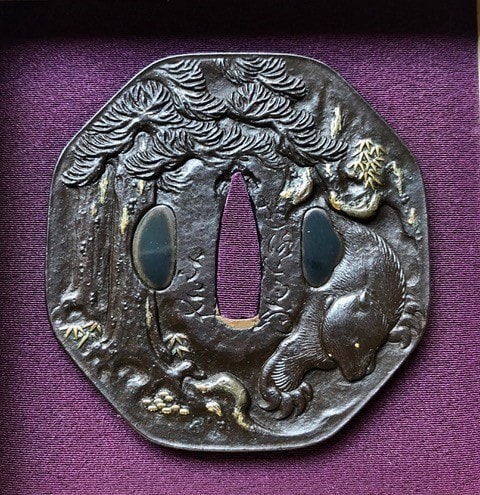
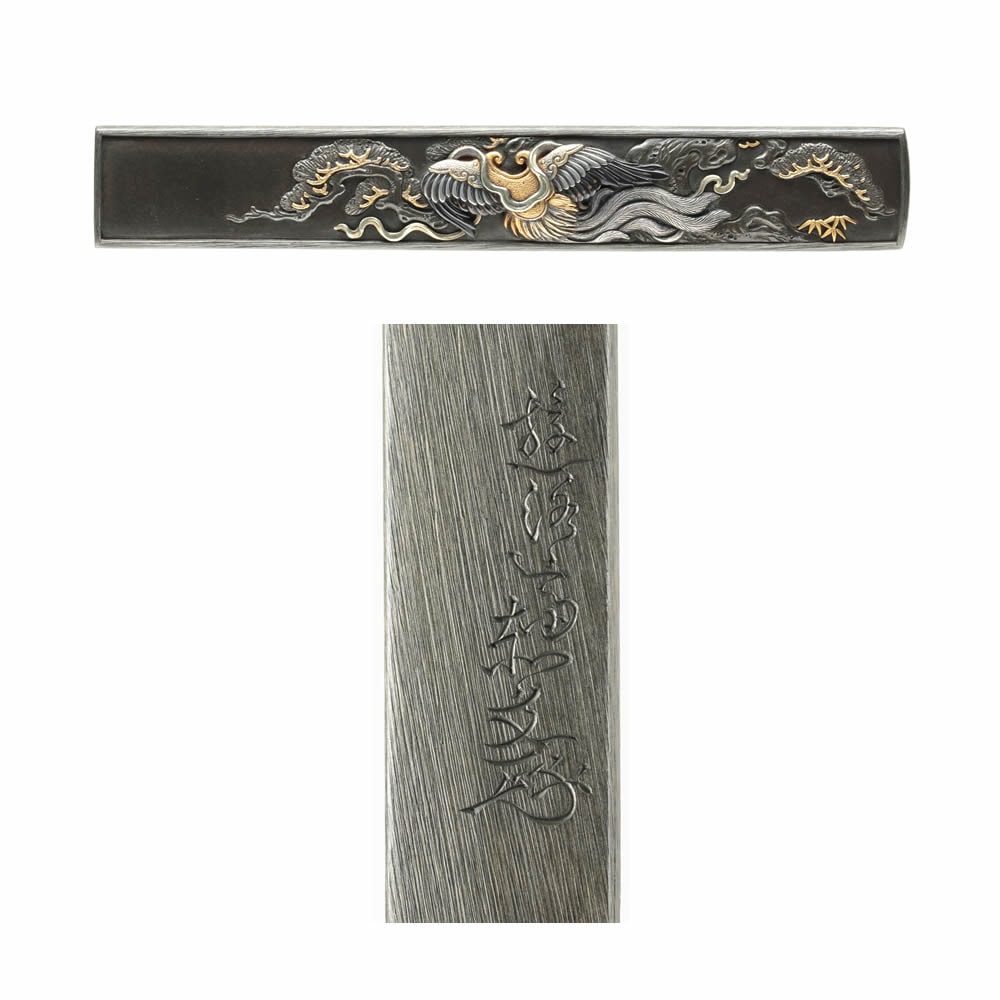
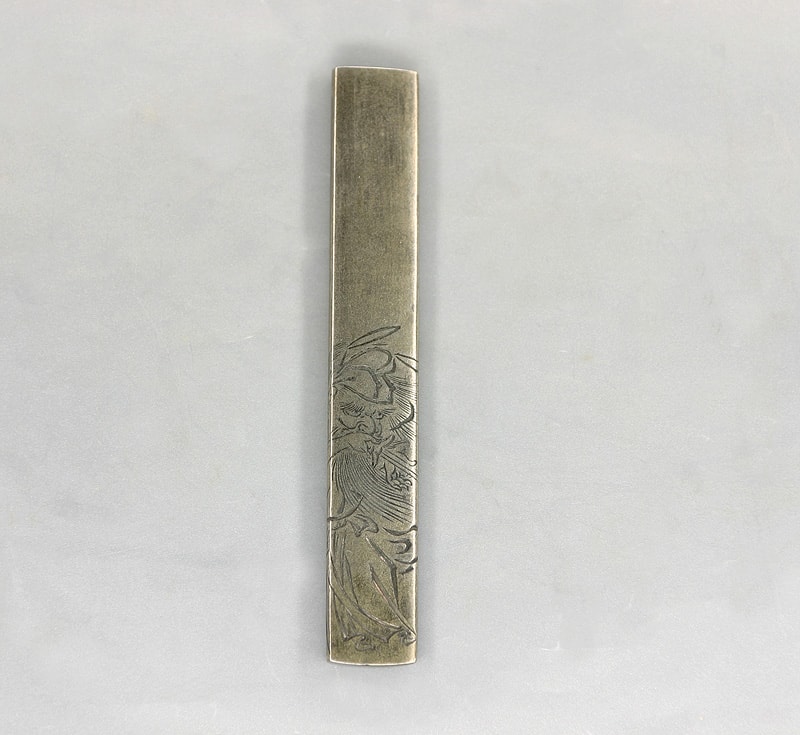
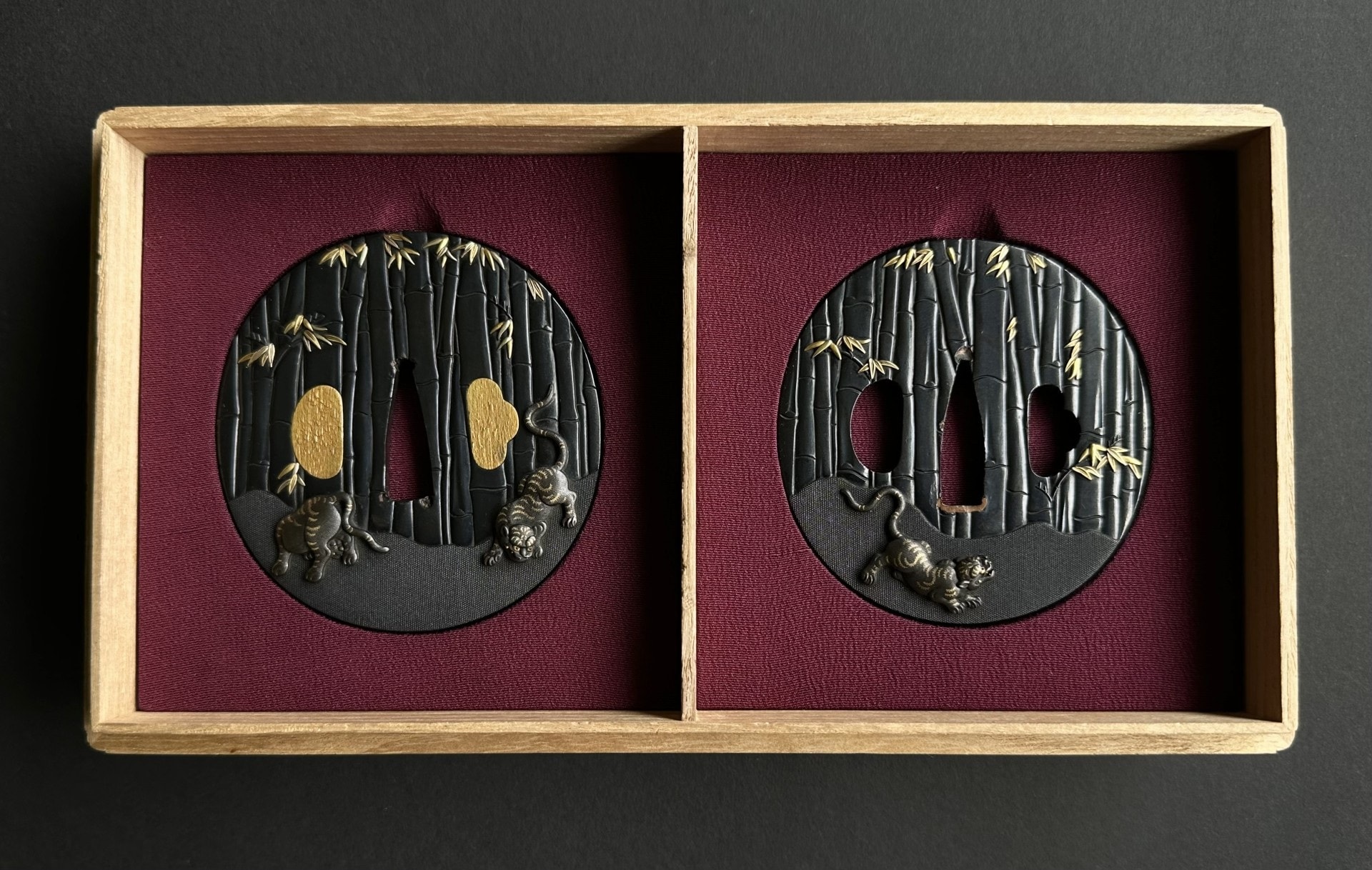
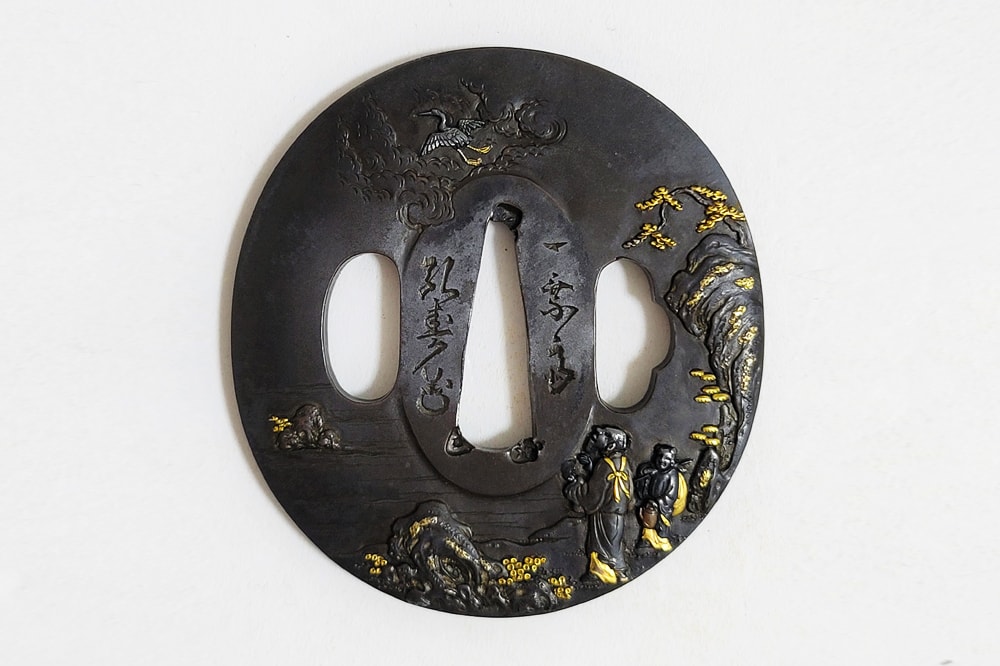
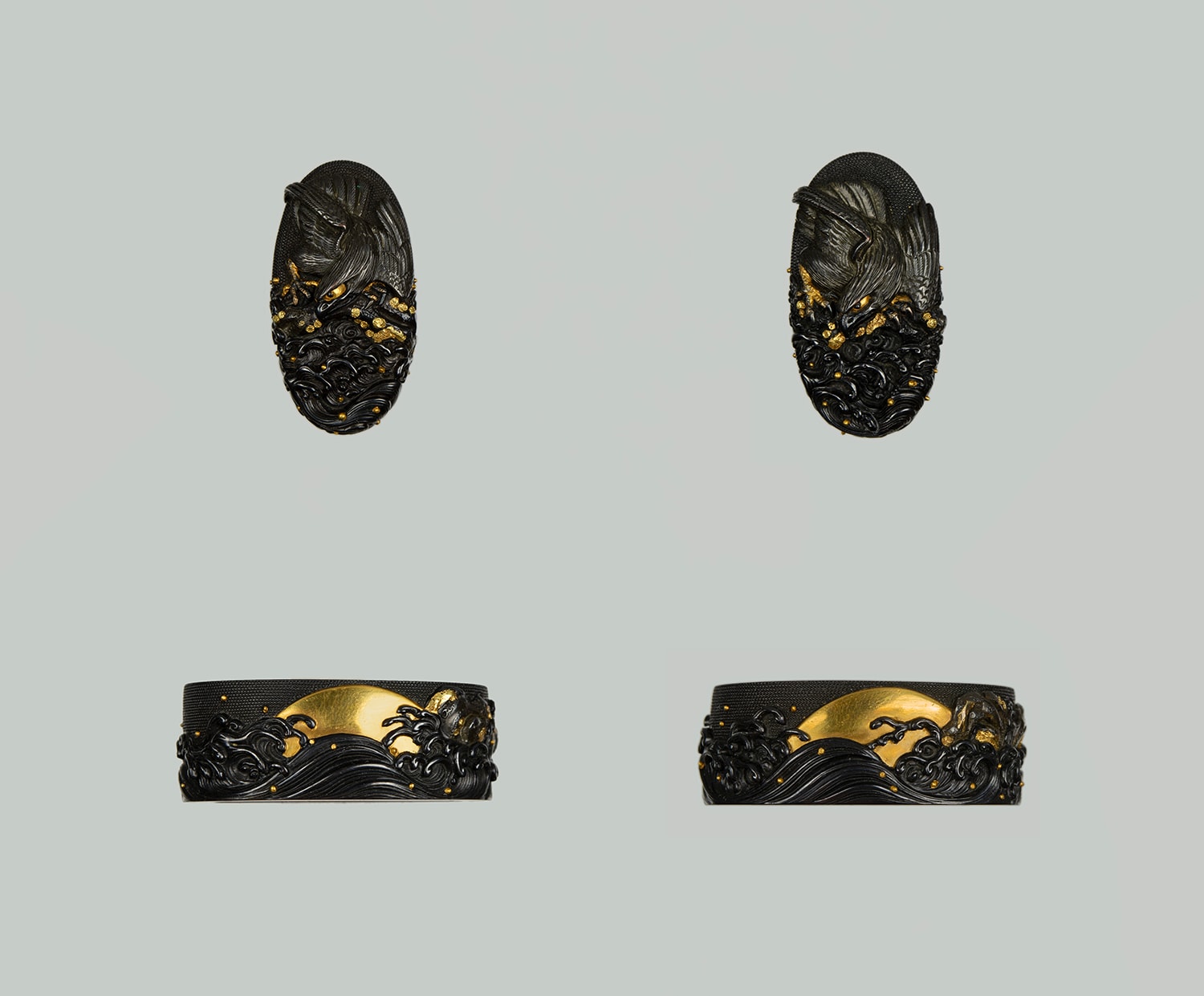
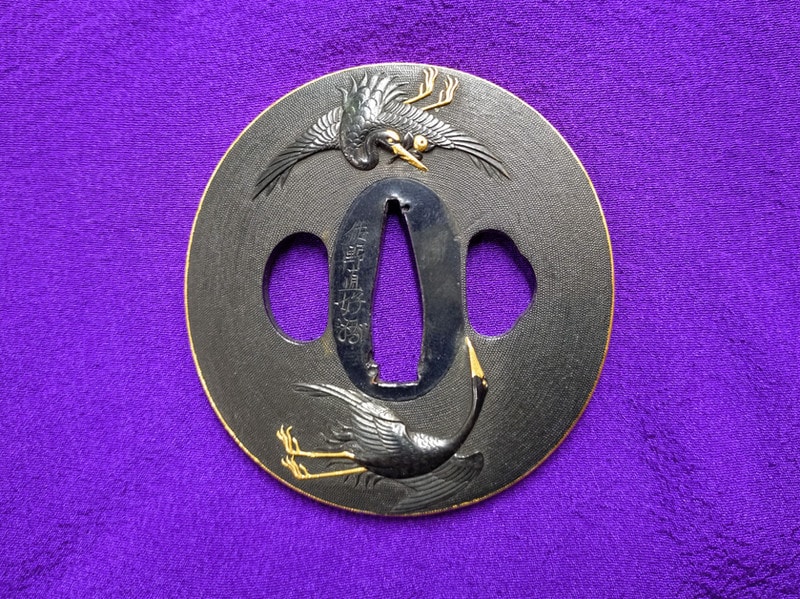
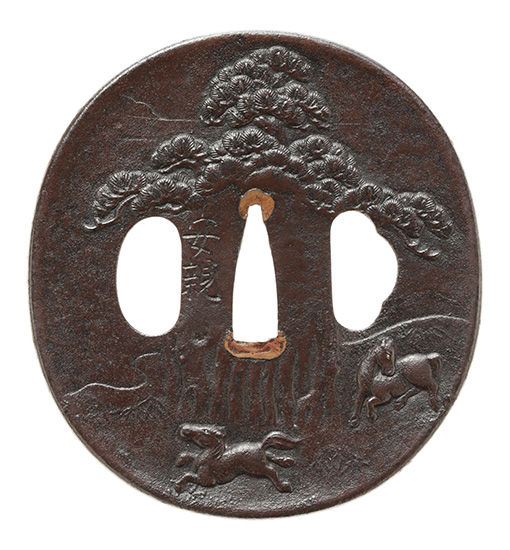
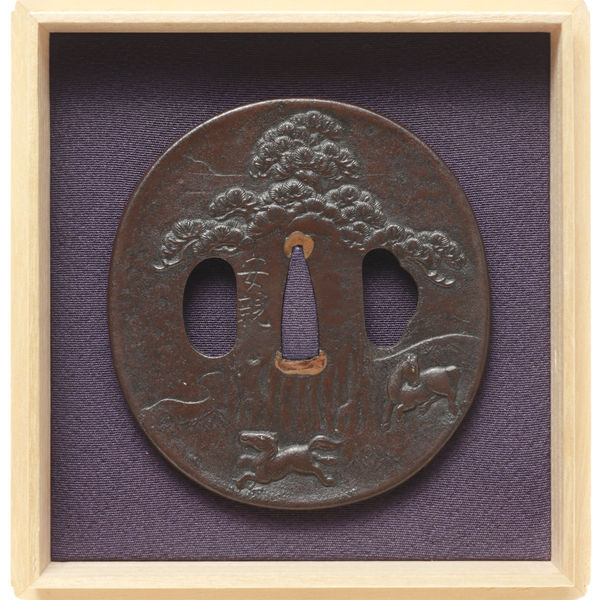
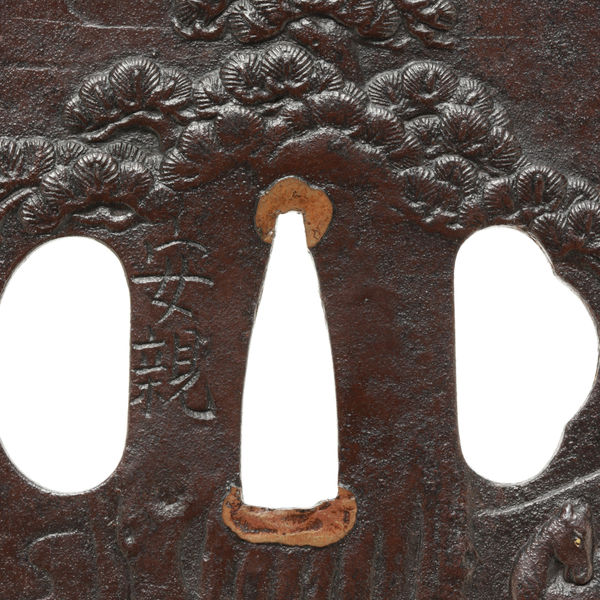
This is a tsuba featuring horses under a pine tree, signed by Yasuchika and copied by Yoshitane. It dates to the Late Edo period and originates from Honjo, Dewa province - Edo, Musashi province. The tsuba has a Tokubetsuhozon certificate by NBTHK and comes in a Kiri box.
安親は、弥五八と称し、 庄内藩士土屋忠左衛門の子として寛文十年に生まれている。 長ずるに及んで正阿弥珍久の門に学び、師の娘を娶り、 元禄十六年三十四歳の時に江戸に出府、奈良辰政について更に修行し、天性の才能が開花した。 正徳頃には水戸光圀の甥で、奥州守山二万石の 藩主松平大学頭に抱えられ、享保十六年に六十一歳で剃髪して東雨と号し、数々の名作を世に遺し、後に奈良利寿・杉浦乗意と共に『奈良三作』 と称えられている。 本作は目出度い樹木である松の下に、鹿を従えた寿老人を配している。 ゆったりと落ち着いた構図は広い空間を感じさせ、安親独自の彫技表 現をもって温かな情感が溢れ出ている。 この小柄は、安親銘前期の作品と鑑せられるが、すでに馥郁たる安親芸術を見事に開花させている。
 NihontoWatch
mei · Edo
Machibori · Musashi (Edo)
17 pieces on the market now
The Tsuchiya school is a branch of the Nara kinkō tradition, established in Edo (Musashi Province) by Tsuchiya Yasuchika, counted among the Nara Sansaku (Three Great Masters of Nara). Six generations of main-line heads carried the name Yasuchika (安親), perpetuating a continuous workshop lineage from the Genroku era through the late Edo period. The Shōnai Kinkō Meifu records Yasutsugu (安族) as a pupil of the first-generation Yasuchika who served as a cooperative assistant craftsman in Edo before returning to Shōnai[[c:2]], where his descendants continued in metalwork. The sixth-generation head, Tsuchiya Masachika — also known as Hōgen Yasuchika — was the eldest son of Kunichika (the fifth-generation head), born in Shimotsuke Province at Shimodate. He "traveled widely to study and refine his skills[[c:3]]," establishing himself at Shiba-Shinbashi in Edo and serving as domain craftsman to the Satake family of Akita. He was granted the court title Hōgen, used the art names Sekienji and Tōsen, and died in Man'en 2 (1861).
A further branch member, Tsuchiya Morichika I, signed under the extended form Tōensha Tsuchiya Kōsen Morichika. The school's collective style is rooted in the Nara tradition's carving vocabulary, with sukidashi-takabori (relief carving raised from the ground) as its foundational technique. Iron and shakudō are the primary ground metals, frequently worked in ishime-ji or tsuchime-ji (hammered ground), with rich iroe in gold, silver, shibuichi, and suaka. " The pictorial sensibility favors literary and allusive compositions; Morichika's Five Seasonal Festivals suite expresses each observance "through evocative images of associated objects and settings that allude to the observances[[c:5]]" rather than depicting ceremonial scenes literally. " The setsumei consistently position the Tsuchiya school as a vehicle for the continuation of Nara-school principles across the mid- and late Edo periods. " Commissioned works for daimyō patrons — the Satake family of Akita and the Matsui family of Maebashi — attest to the enduring esteem in which the Tsuchiya line was held by the upper warrior class. Learn more →
| Smith | Era | Designated |
|---|---|---|
| Yasuchika安親 | 1804-1830 | 0 |
| Yasuchika安親 | 1718-1778 | 0 |
| Yasunari安成 | — | 0 |
| Yasunori安則 | — | 0 |
| Kunichika国親 | — | 0 |
Exceptional craft of very high artistic value, judged to rank with a nationally recognized Important Art Object (Jūyō Bijutsuhin).
The NBTHK (Nihon Bijutsu Tōken Hozon Kyōkai, the Society for the Preservation of Japanese Art Swords) is a public-interest incorporated foundation founded in 1948 and supervised by Japan’s Agency for Cultural Affairs (Bunkachō); it is based at the Japanese Sword Museum in Tokyo. Its expert panels physically examine each submitted work (shinsa) and issue a certificate (kanteishō) ranking it by artistic and historical merit. NBTHK papers are the most widely recognized standard of authentication for Japanese swords and fittings.
NBTHK official siteIf, due to our fault, the item differs significantly from its proper condition, the item may be returned. Cooling-off is within one week of the item's arrival.
This is a tsuba featuring horses under a pine tree, signed by Yasuchika and copied by Yoshitane. It dates to the Late Edo period and originates from Honjo, Dewa province - Edo, Musashi province. The tsuba has a Tokubetsuhozon certificate by NBTHK and comes in a Kiri box.
安親は、弥五八と称し、 庄内藩士土屋忠左衛門の子として寛文十年に生まれている。 長ずるに及んで正阿弥珍久の門に学び、師の娘を娶り、 元禄十六年三十四歳の時に江戸に出府、奈良辰政について更に修行し、天性の才能が開花した。 正徳頃には水戸光圀の甥で、奥州守山二万石の 藩主松平大学頭に抱えられ、享保十六年に六十一歳で剃髪して東雨と号し、数々の名作を世に遺し、後に奈良利寿・杉浦乗意と共に『奈良三作』 と称えられている。 本作は目出度い樹木である松の下に、鹿を従えた寿老人を配している。 ゆったりと落ち着いた構図は広い空間を感じさせ、安親独自の彫技表 現をもって温かな情感が溢れ出ている。 この小柄は、安親銘前期の作品と鑑せられるが、すでに馥郁たる安親芸術を見事に開花させている。
NihontoWatchmei · Edo
Machibori · Musashi (Edo)
17 pieces on the market now
The Tsuchiya school is a branch of the Nara kinkō tradition, established in Edo (Musashi Province) by Tsuchiya Yasuchika, counted among the Nara Sansaku (Three Great Masters of Nara). Six generations of main-line heads carried the name Yasuchika (安親), perpetuating a continuous workshop lineage from the Genroku era through the late Edo period. The Shōnai Kinkō Meifu records Yasutsugu (安族) as a pupil of the first-generation Yasuchika who served as a cooperative assistant craftsman in Edo before returning to Shōnai[[c:2]], where his descendants continued in metalwork. The sixth-generation head, Tsuchiya Masachika — also known as Hōgen Yasuchika — was the eldest son of Kunichika (the fifth-generation head), born in Shimotsuke Province at Shimodate. He "traveled widely to study and refine his skills[[c:3]]," establishing himself at Shiba-Shinbashi in Edo and serving as domain craftsman to the Satake family of Akita. He was granted the court title Hōgen, used the art names Sekienji and Tōsen, and died in Man'en 2 (1861).
A further branch member, Tsuchiya Morichika I, signed under the extended form Tōensha Tsuchiya Kōsen Morichika. The school's collective style is rooted in the Nara tradition's carving vocabulary, with sukidashi-takabori (relief carving raised from the ground) as its foundational technique. Iron and shakudō are the primary ground metals, frequently worked in ishime-ji or tsuchime-ji (hammered ground), with rich iroe in gold, silver, shibuichi, and suaka. " The pictorial sensibility favors literary and allusive compositions; Morichika's Five Seasonal Festivals suite expresses each observance "through evocative images of associated objects and settings that allude to the observances[[c:5]]" rather than depicting ceremonial scenes literally. " The setsumei consistently position the Tsuchiya school as a vehicle for the continuation of Nara-school principles across the mid- and late Edo periods. " Commissioned works for daimyō patrons — the Satake family of Akita and the Matsui family of Maebashi — attest to the enduring esteem in which the Tsuchiya line was held by the upper warrior class. Learn more →
| Smith | Era | Designated |
|---|---|---|
| Yasuchika安親 | 1804-1830 | 0 |
| Yasuchika安親 | 1718-1778 | 0 |
| Yasunari安成 | — | 0 |
| Yasunori安則 | — | 0 |
| Kunichika国親 | — | 0 |
Exceptional craft of very high artistic value, judged to rank with a nationally recognized Important Art Object (Jūyō Bijutsuhin).
The NBTHK (Nihon Bijutsu Tōken Hozon Kyōkai, the Society for the Preservation of Japanese Art Swords) is a public-interest incorporated foundation founded in 1948 and supervised by Japan’s Agency for Cultural Affairs (Bunkachō); it is based at the Japanese Sword Museum in Tokyo. Its expert panels physically examine each submitted work (shinsa) and issue a certificate (kanteishō) ranking it by artistic and historical merit. NBTHK papers are the most widely recognized standard of authentication for Japanese swords and fittings.
NBTHK official siteIf, due to our fault, the item differs significantly from its proper condition, the item may be returned. Cooling-off is within one week of the item's arrival.