 NihontoWatchNihontoWatch
This is a work attributed to the sixth generation Akasaka Tadatoki, based on the distinctive mei and the shape of the nakago-hitsu. The sukashi design is reminiscent of a net pattern of light reflected on the water's surface. In Higo tsuba, this is called mitsuura sukashi. The shape of the mesh is slightly elongated above and below the seppa-dai, becoming slightly wider toward the outer circumference. The refined lines of the sukashi are less than 0.5mm in width. Despite this, they give a strong and supple impression. It would be enjoyable to hold it up against a landscape to view it.
NihontoWatchOffered by Choshuya

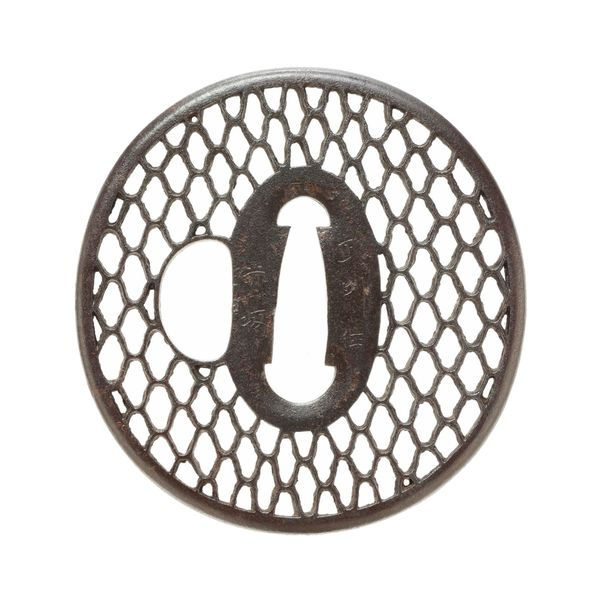
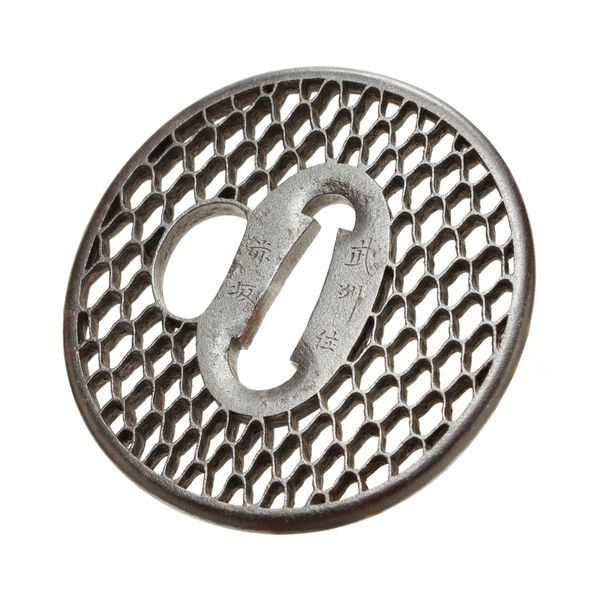
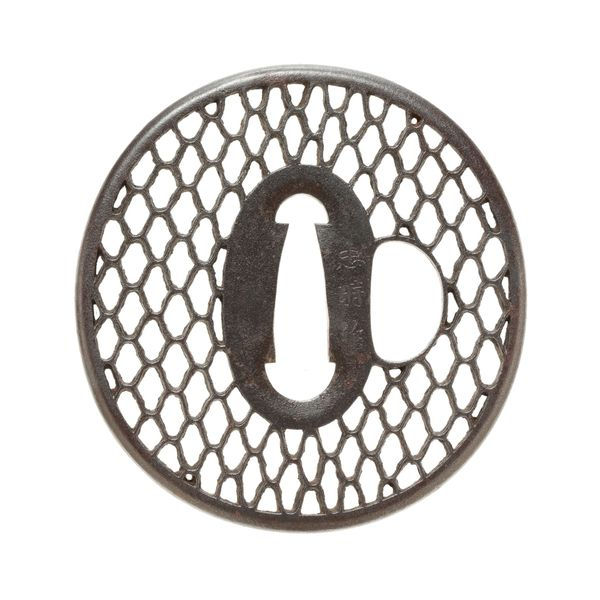
Translated from the shop's Japanese ·
Rows still in Japanese are as written by the shop
Machine translation from the shop's Japanese · may contain errors ·
Iron-tsuba · Musashi · around 1704-1764
6 pieces on the market now
Iron-tsuba · Edo
Phase: Akasaka赤坂· 1688–1860
56 pieces on the market now
| Smith | Era | Designated |
|---|---|---|
| Tadamasa忠正 | 1624-1657 | 5 |
| Tadashige忠重 | 1730-1816 | 5 |
| Tadatoki忠時 | 1704-1764 | 0 |
| Juchiku/Toshitake寿竹 | — | 0 |
| Tadanori忠則 | 1730-1780 | 0 |
Certifies a genuine fitting worth preserving: a correct signature, or, if unsigned, an identifiable era and school, with recognized artistic and craft value.
The NBTHK (Nihon Bijutsu Tōken Hozon Kyōkai, the Society for the Preservation of Japanese Art Swords) is a public-interest incorporated foundation founded in 1948 and supervised by Japan’s Agency for Cultural Affairs (Bunkachō); it is based at the Japanese Sword Museum in Tokyo. Its expert panels physically examine each submitted work (shinsa) and issue a certificate (kanteishō) ranking it by artistic and historical merit. NBTHK papers are the most widely recognized standard of authentication for Japanese swords and fittings.
NBTHK official siteIf, due to our fault, the item differs significantly from its proper condition, the item may be returned. Cooling-off is within one week of the item's arrival.