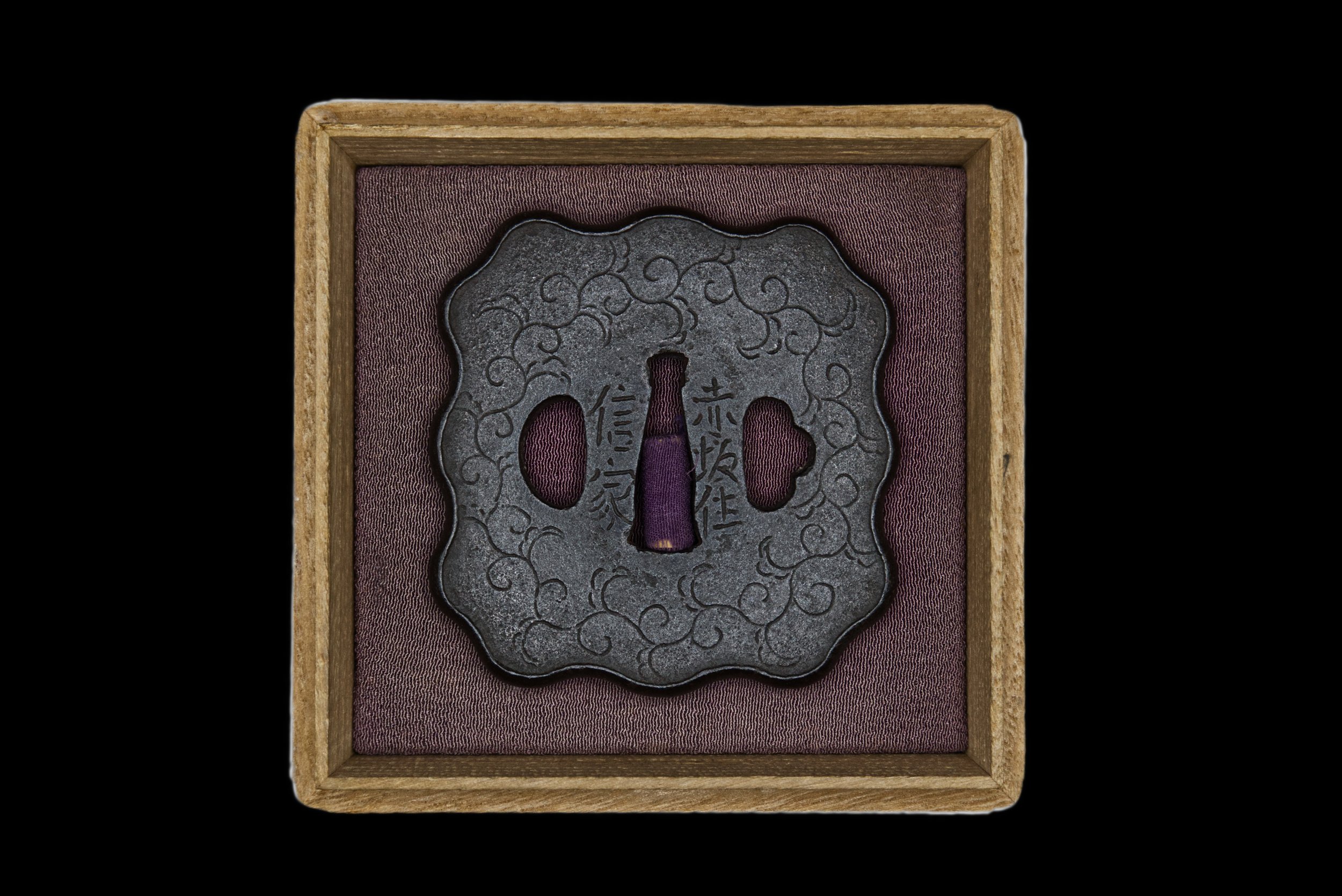
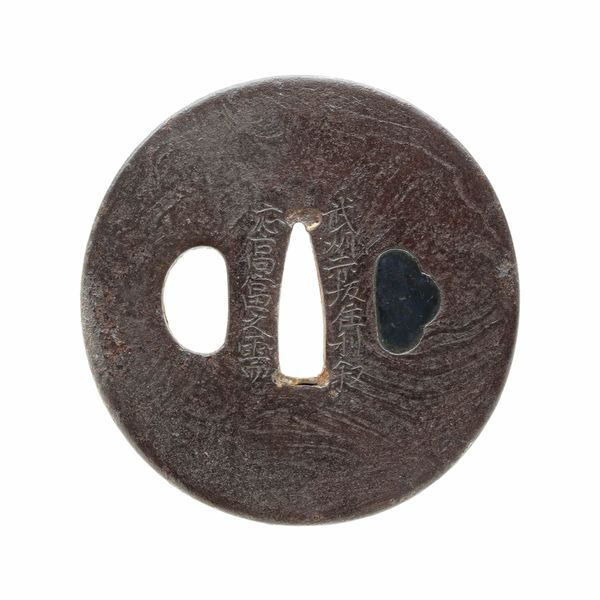
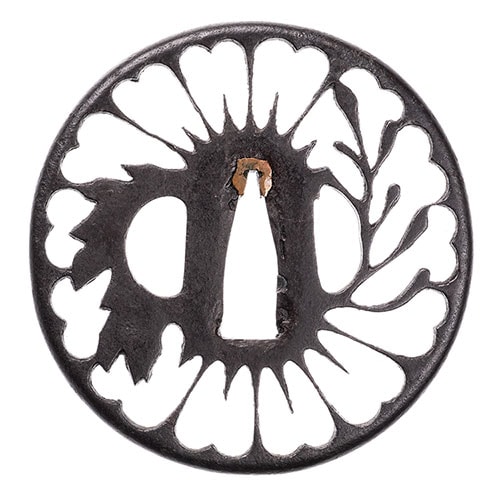
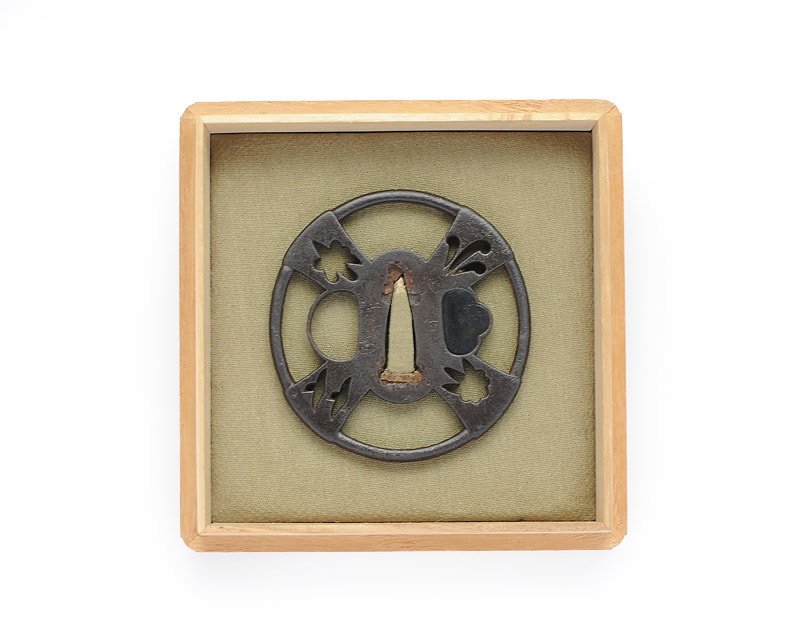
Tayuemon Tadashige was a tsubako of the Akasaka school, the lineage of makers who relocated from Kyoto to Akasaka in at the beginning of the period and flourished there until the end of the Tokugawa shogunate. Tadashige entered the workshop of the fourth-generation master Tadatoshi during the latter's final active years; in practical terms, however, his training was conducted under the fifth-generation Tadatoshi. He proved remarkably long-lived, with signed works from his later career bearing the inscription "made by Tadashige at the age of eighty-four," and his skill has been praised as among the most accomplished of the Akasaka masters active from the mid- period onward. His eldest son, (忠好), is known to have executed - works on his behalf in these advanced years.
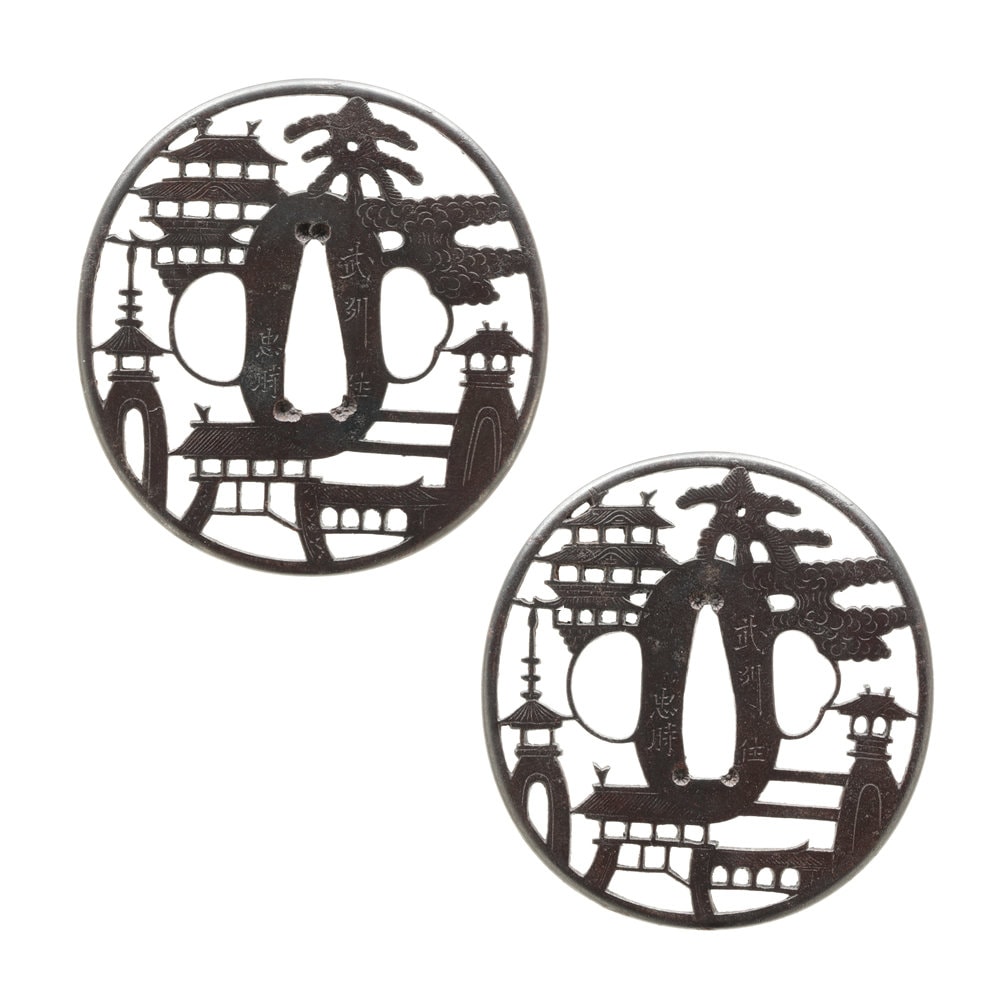
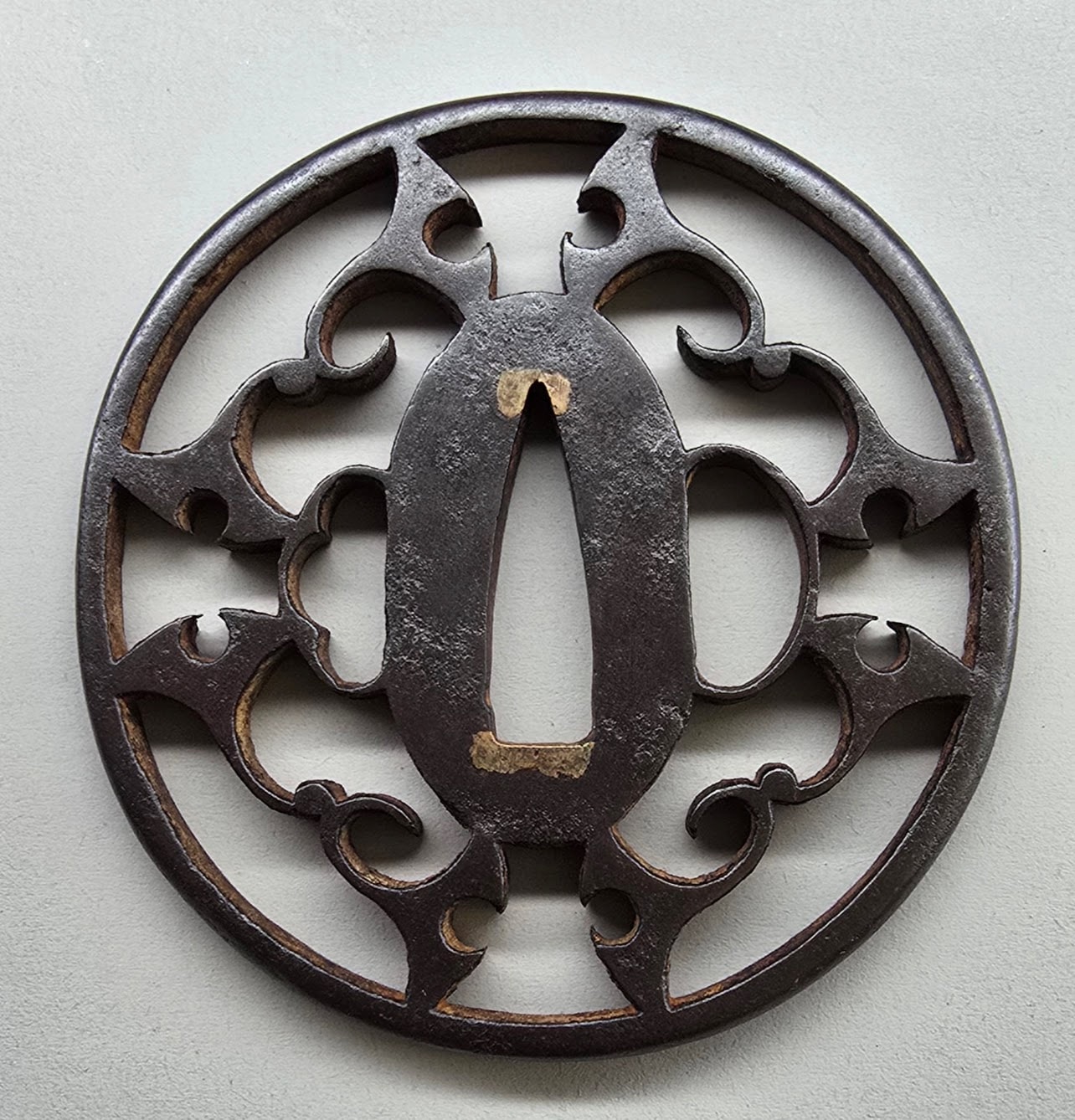
Tadashige's follow the established Akasaka constructional idiom — iron plates forged with the school's characteristic sanmai-awase (three-plate composite lamination), finished with a moderately raised at the center, broadening connecting webs near the rim for visual stability, and a customary rounded edge. Within this framework, his iron displays what the describes as "superb forging" and a patinated sabiiro "rich in character" with a "distinctive sheen" that appears "clear and fresh." His openwork () is distinguished by keen cutting edges and crisp, incisive carving, while fine-line engraving evokes atmosphere and scent in his naturalistic compositions — plum beneath blue moonlight, aged pine branches, sacred deer within shrine precincts.
The identifies Tadashige as outstanding in design even within a school celebrated for the novelty of its compositions, crediting him with a "progressive temperament" that led him to incorporate decorative pattern ideas associated with Ogata Korin. His inventions, such as the "three-tiered matsukaze" motif, are noted as having no precedent even among . Across the designated works, the evaluative language is remarkably consistent: "large in scale and dignified," "strikingly innovative," "exceptionally well-balanced and notably distinguished." Tadashige's achievement lies in his synthesis of Akasaka orthodoxy with an enterprising creative spirit, producing openwork of "pronounced dignity and distinction" that the regards as fully displaying "the characteristic strengths of Akasaka work, whose true specialty is a stylish and tasteful openwork aesthetic."