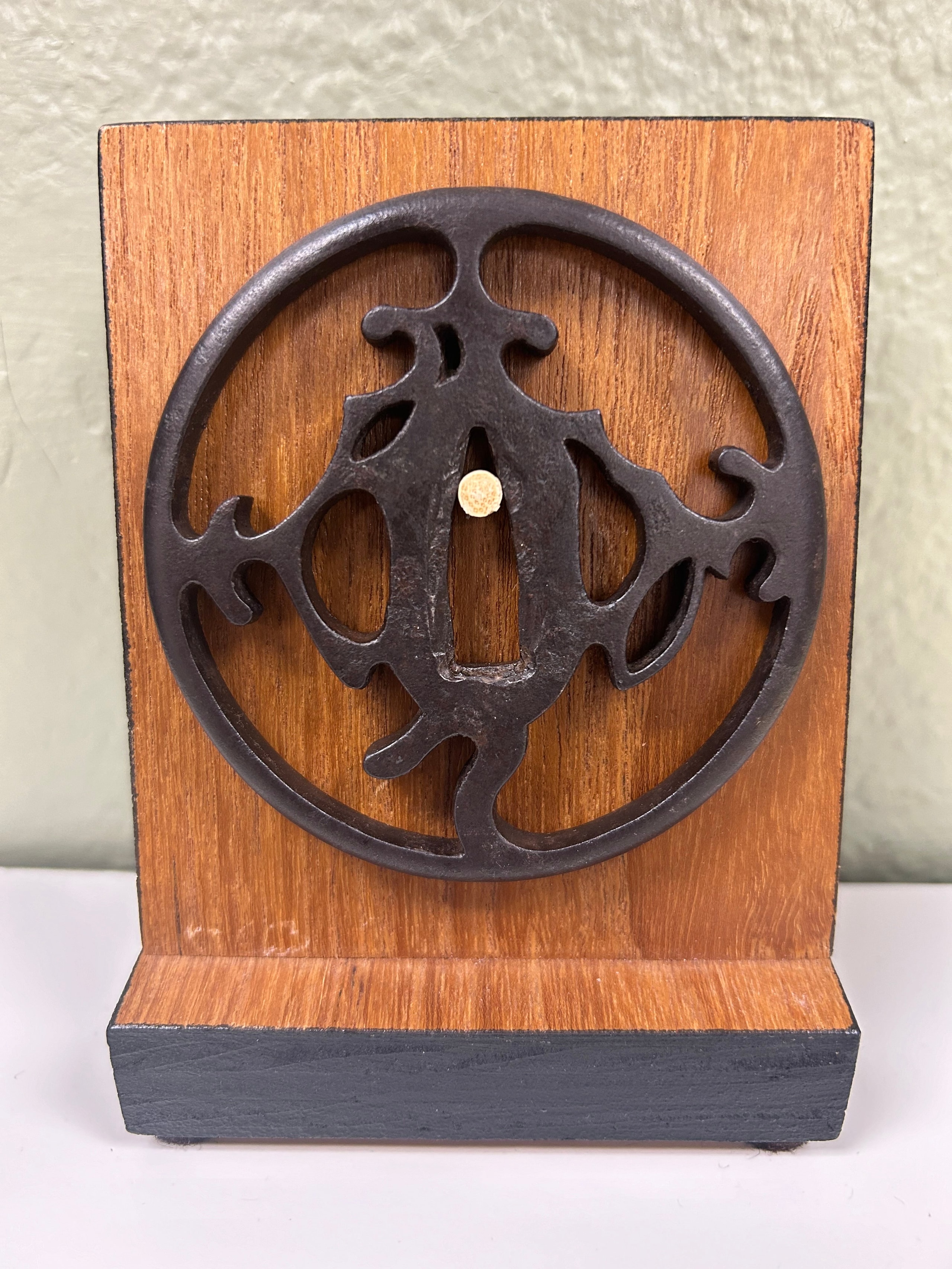
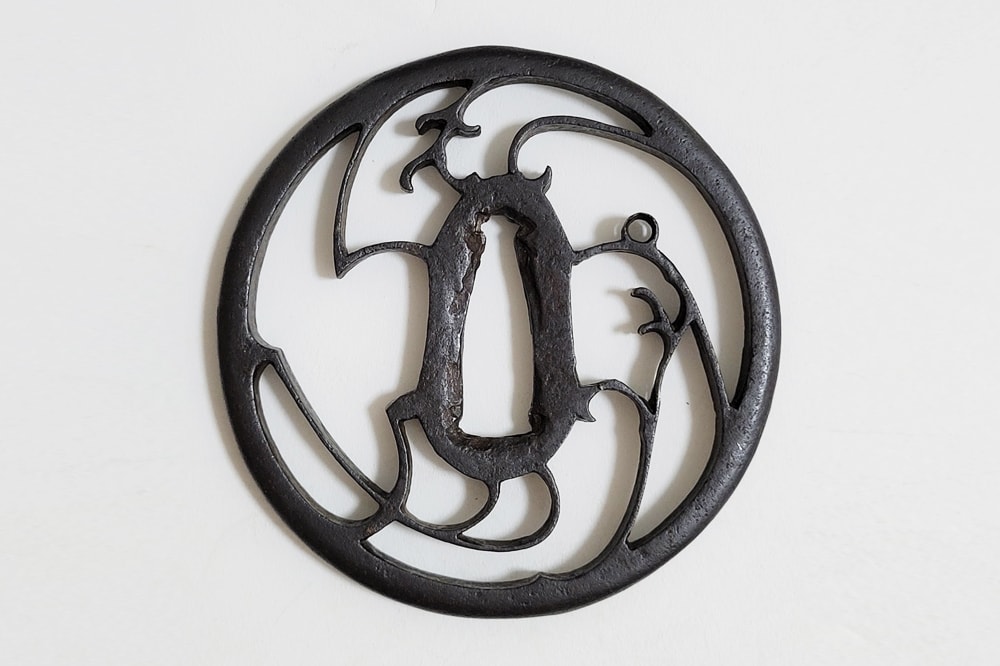
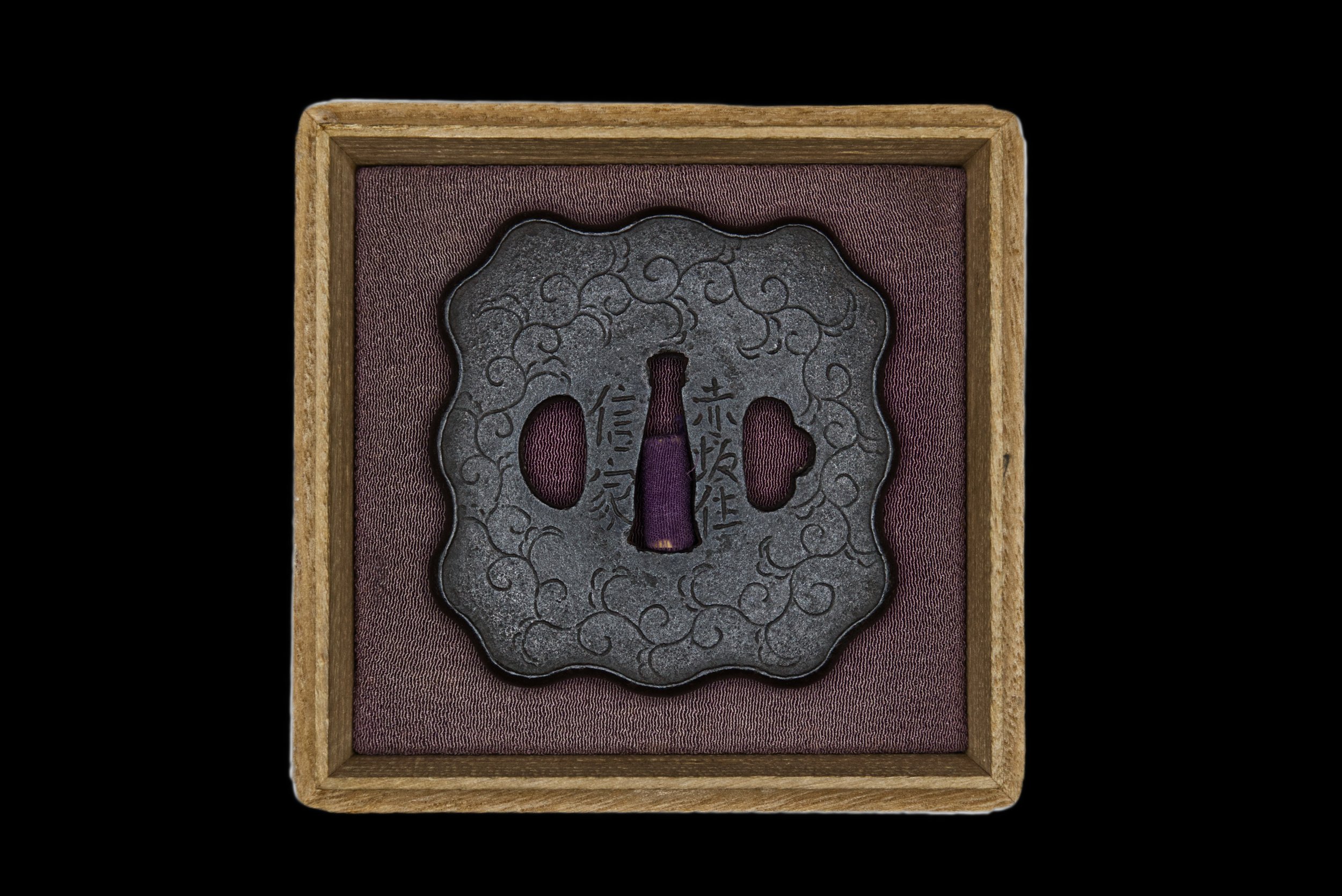
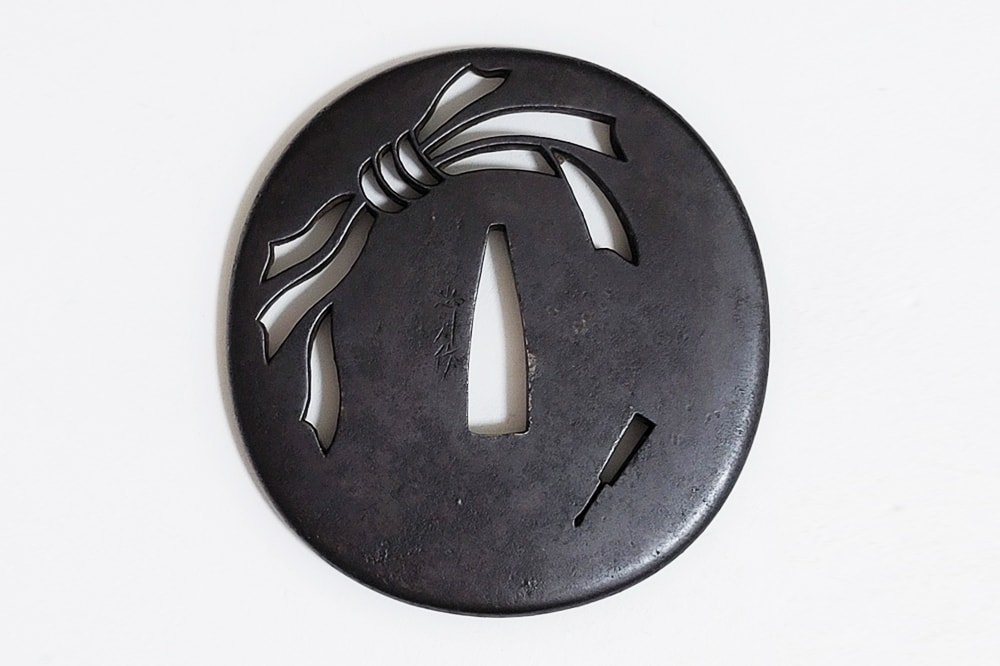
Tadamasa, called Shozaemon, is the first generation of the Akasaka school of iron openwork . The published sources open the school's record with its migration: 「赤坂鐔は、江戸時代の初頭に京から江戸赤坂に移住し、以後幕末まで栄えた鐔工の一派である」 (Akasaka are the work of a line that moved from Kyoto to Akasaka in at the start of the period and flourished there to the end of the shogunate). As makers of the pierced iron guard the Akasaka smiths are named beside those of Kyoto, Owari and . The first Tadamasa is said to have worked from the Kan'ei era into Meireki, his manner drawing on Kyoto and Owari openwork while adding points of his own.
None of the early work is signed. The published sources state that 「初代忠正、二代忠正、三代忠虎の所謂上三代の古赤坂は、在銘作が確認されておらず」 (no signed work is confirmed for the so-called upper three generations of old Akasaka, the first Tadamasa, the second Tadamasa and the third Tadatora), and that signatures begin only with the fourth generation Tadatoki around Genroku. Every guard recorded under this name is therefore an attribution, made by the on the iron, the composition and a small set of construction features.
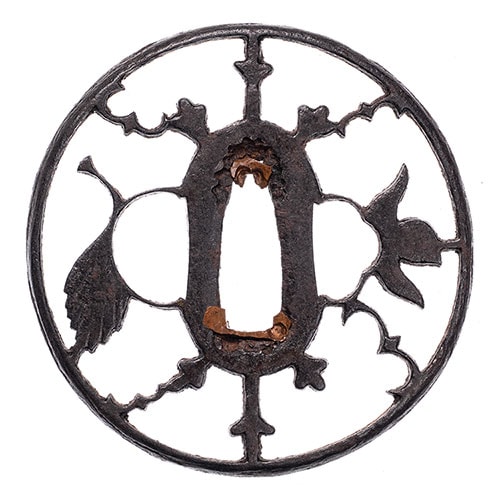
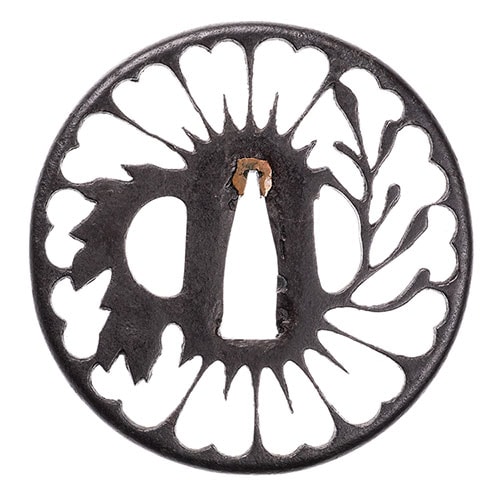
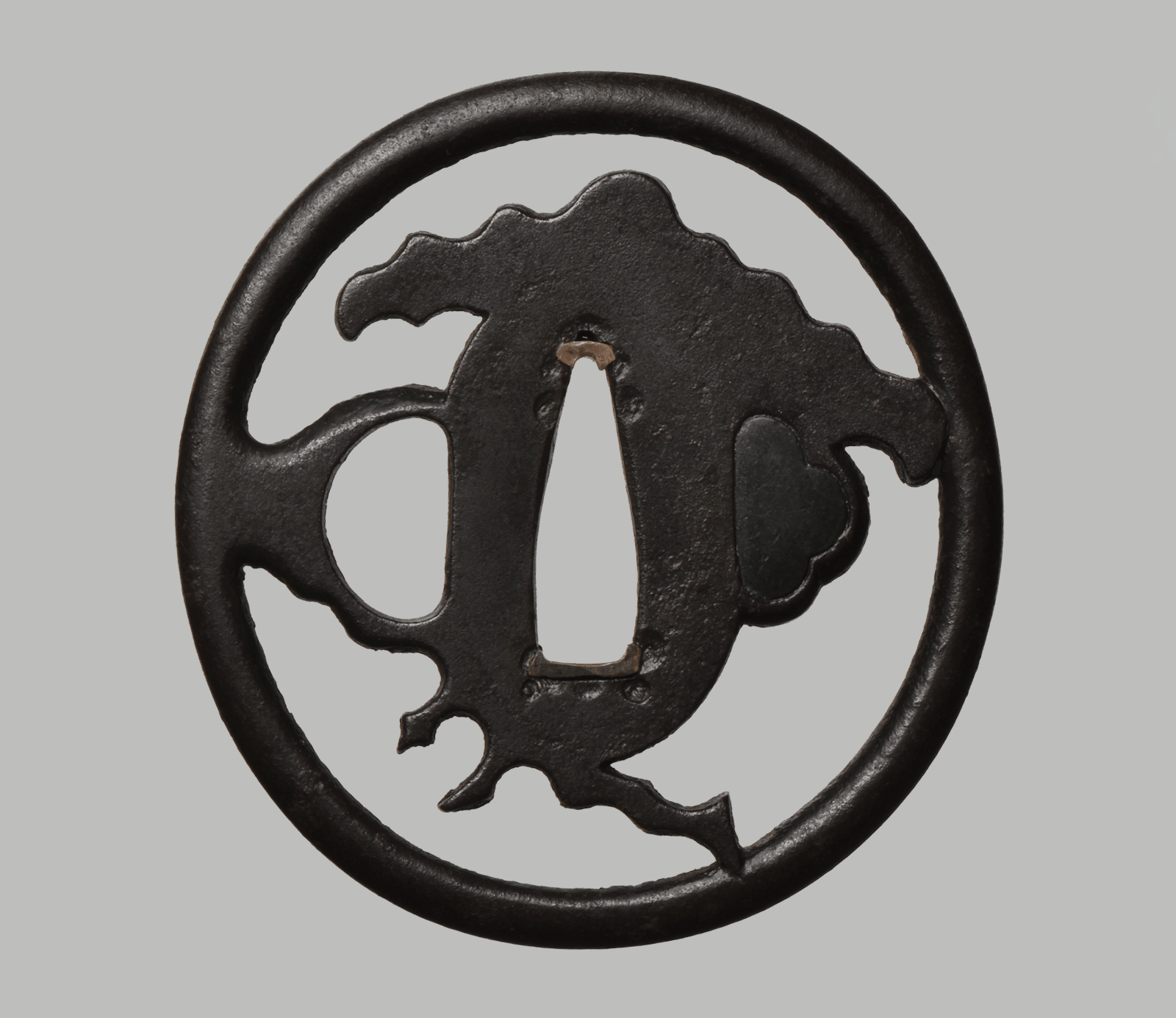
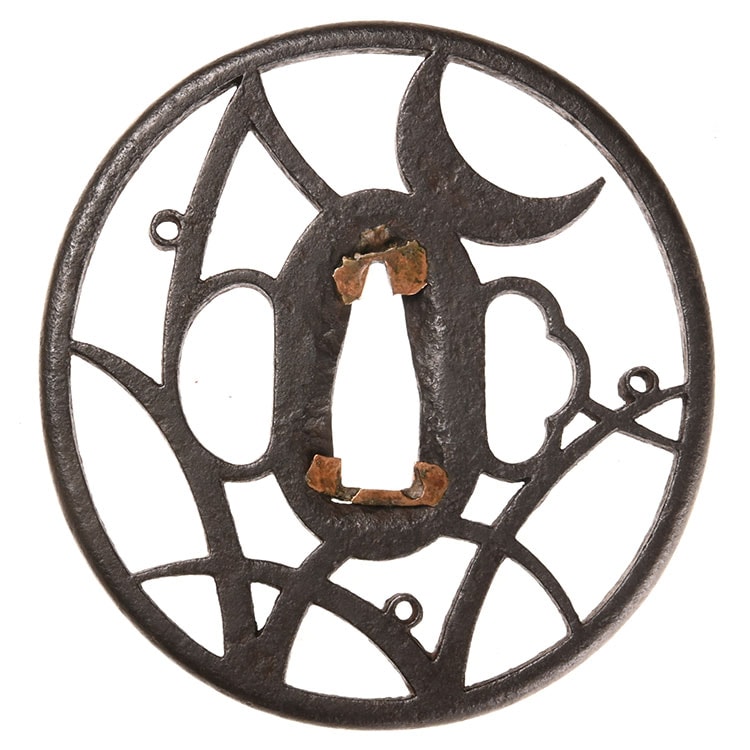
Those features are consistent across his guards. The iron is well forged and thick, often the three-layer laminate the records call sanmai-awase, worked to a settled hammered surface. The modelling rises toward the centre, the openwork ties broaden where they meet the rim for stability, and the rim is a strong rounded . The upper part of the narrows to a point, and the is cut smaller than the ; on one mantis guard the published sources gather these tells together, writing that 「切羽台の上部が尖りごころとなる点や彫りの内側に顕著に表れた筋状の合わせ鍛え目、耳に見られる縞状の線骨には古様がよく示されており」 (the pointed upper , the streaked laminate seams showing inside the carving and the banded lines in the rim display the old manner well).
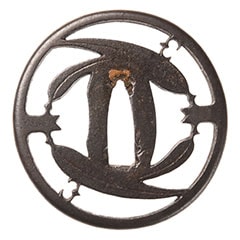
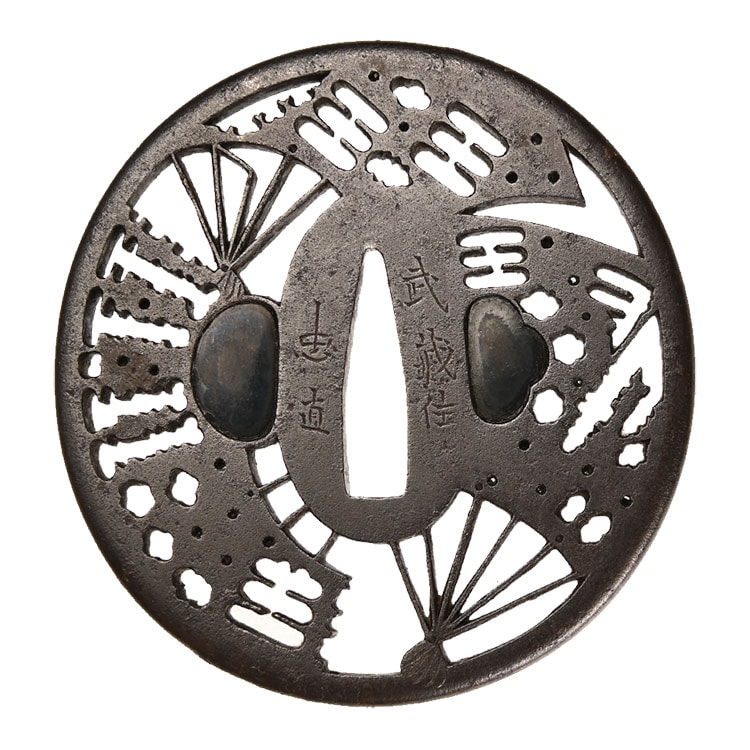
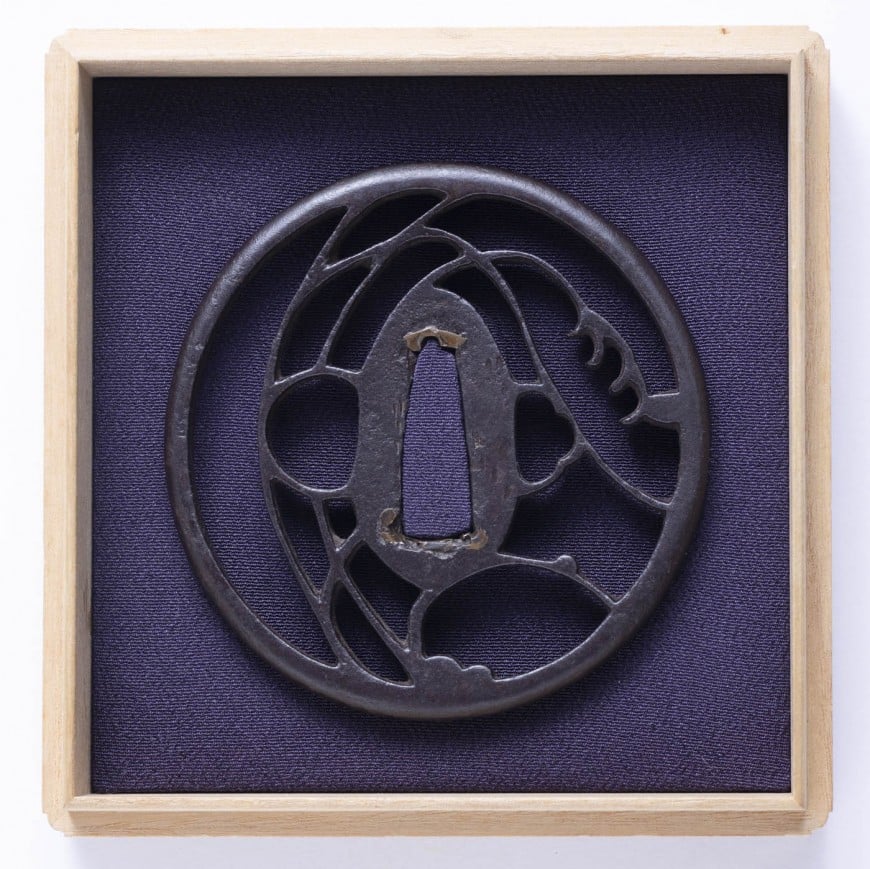
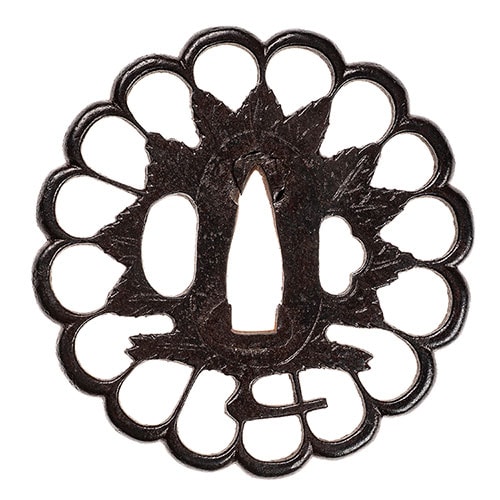
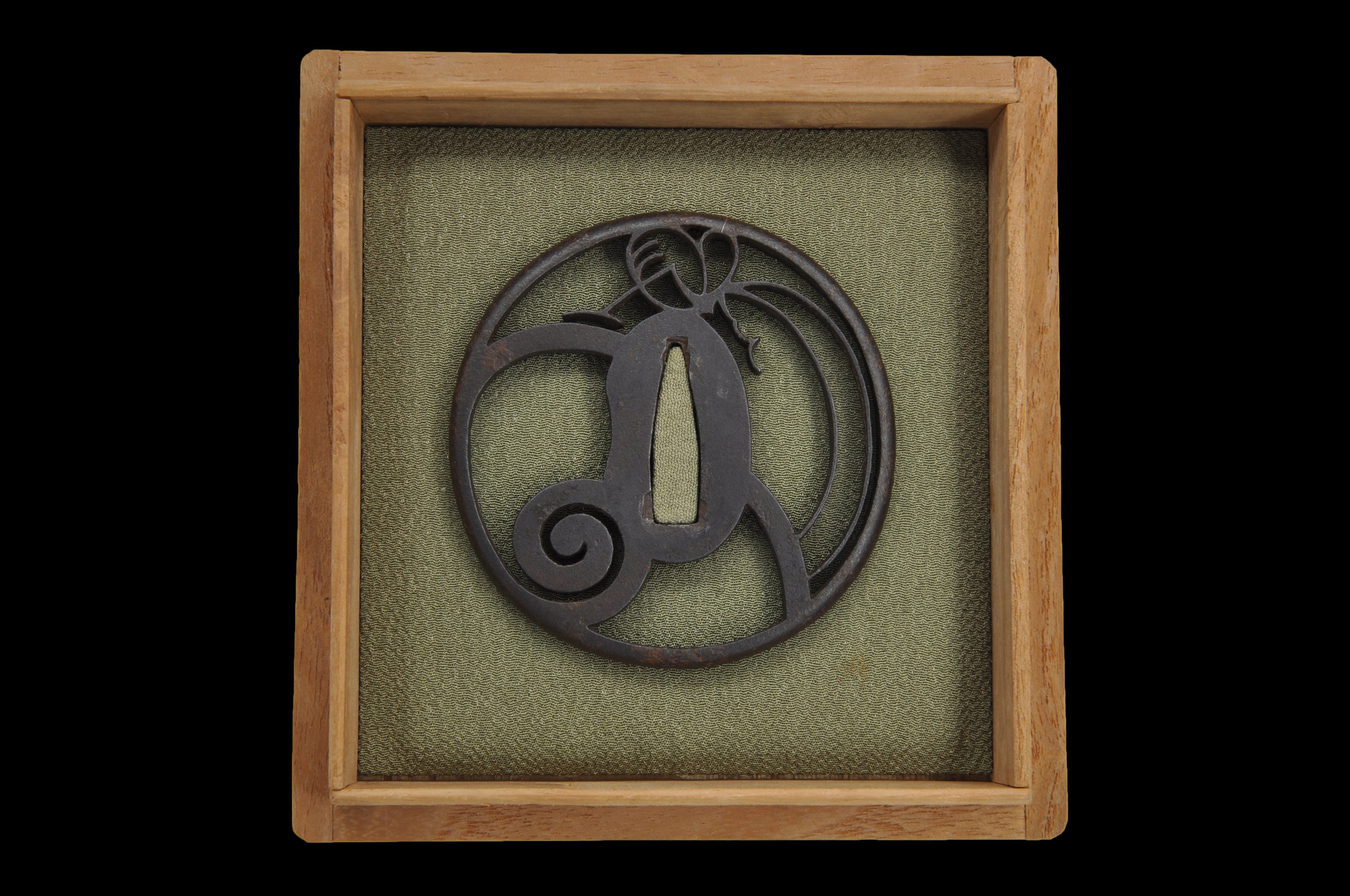
His designs pierce natural scenes and allusive devices through the iron, finished sparely with hairline engraving. The records list the burning-firewood of Hachi-no-ki, the Shigure-tei pavilion, the Musashino field, the mantis and wind-blown bamboo among the subjects he favoured, and the interlocking-rings design is itself known as one of his. On the Hachi-no-ki guard an axe and a pine-bark lozenge stand for the whole tale of loyalty, a bold composition that the sources call 「堂々としてかつ気韻に満ちた作である」 (dignified and full of spirit). On the Musashino guard 「鉄味も画題も風雅なものとなっており、構図も野趣に満ちた作品となった」 (both the iron and the subject are elegant, and the composition is full of rustic flavour).
The distinguishes him from the line that followed. The second Tadamasa bore the same name, worked beside him and shares the construction tells, so those tells mark the old upper generations rather than the founder alone; the guards the assigns to the second generation are recorded under that entry. What sets the first apart in the records is age and bearing. Of the interlocking-rings guard the sources write 「古赤坂の中でも品格が一段と高く、時代も最も古く鑑せられる初代忠正の優品である」 (among old Akasaka a work of a distinctly higher dignity, judged the oldest in date, a fine piece of the first Tadamasa).
For the collector he stands at the head of a school whose later generations signed in numbers, while his own hand is known only through attribution. Five of his guards are designated , each judged the first generation in its title, and they come to light only from time to time. Because the upper three generations are unsigned, the published sources make the iron, the pointed and the small the evidence by which an early Akasaka guard is recognised.