NihontoWatch Mon

NihontoWatch

MarketAuctions
Encyclopedia
NihontoWatch Mon

NihontoWatch

MarketAuctions
Encyclopedia

Description

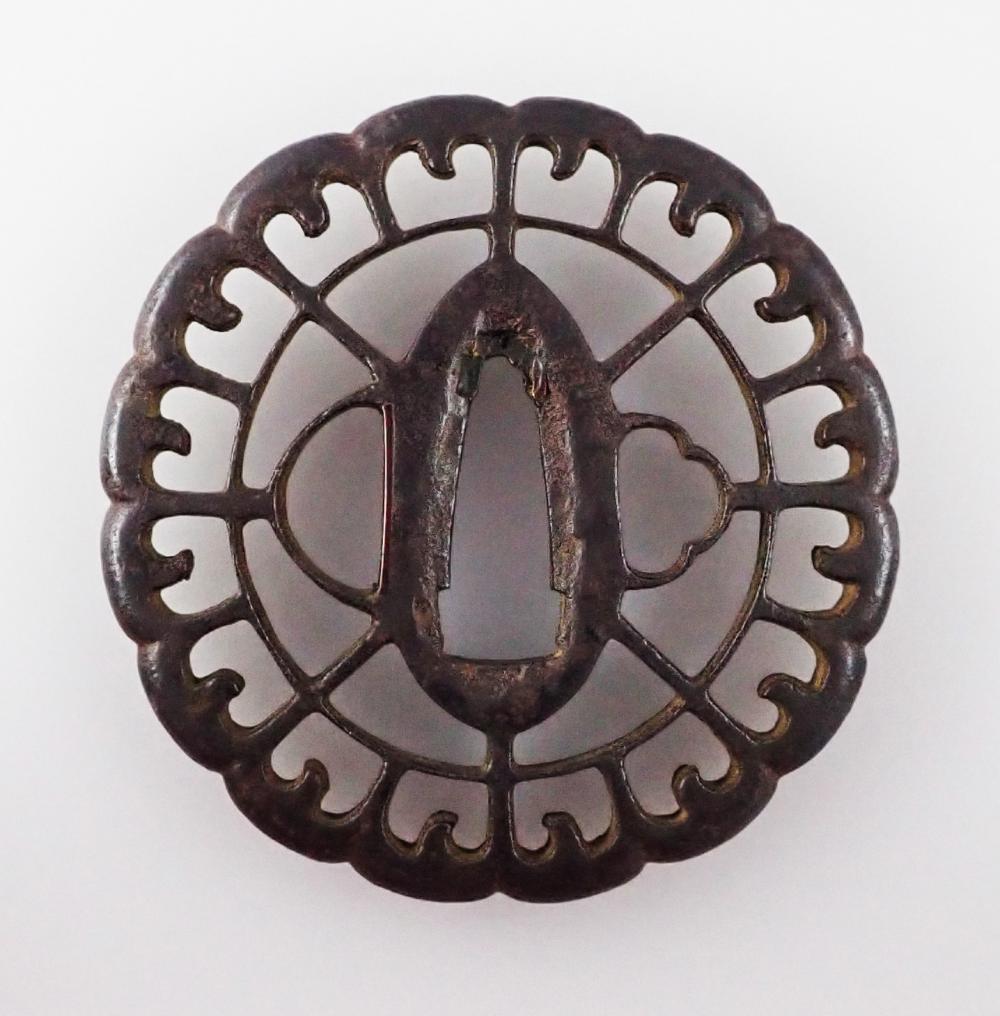
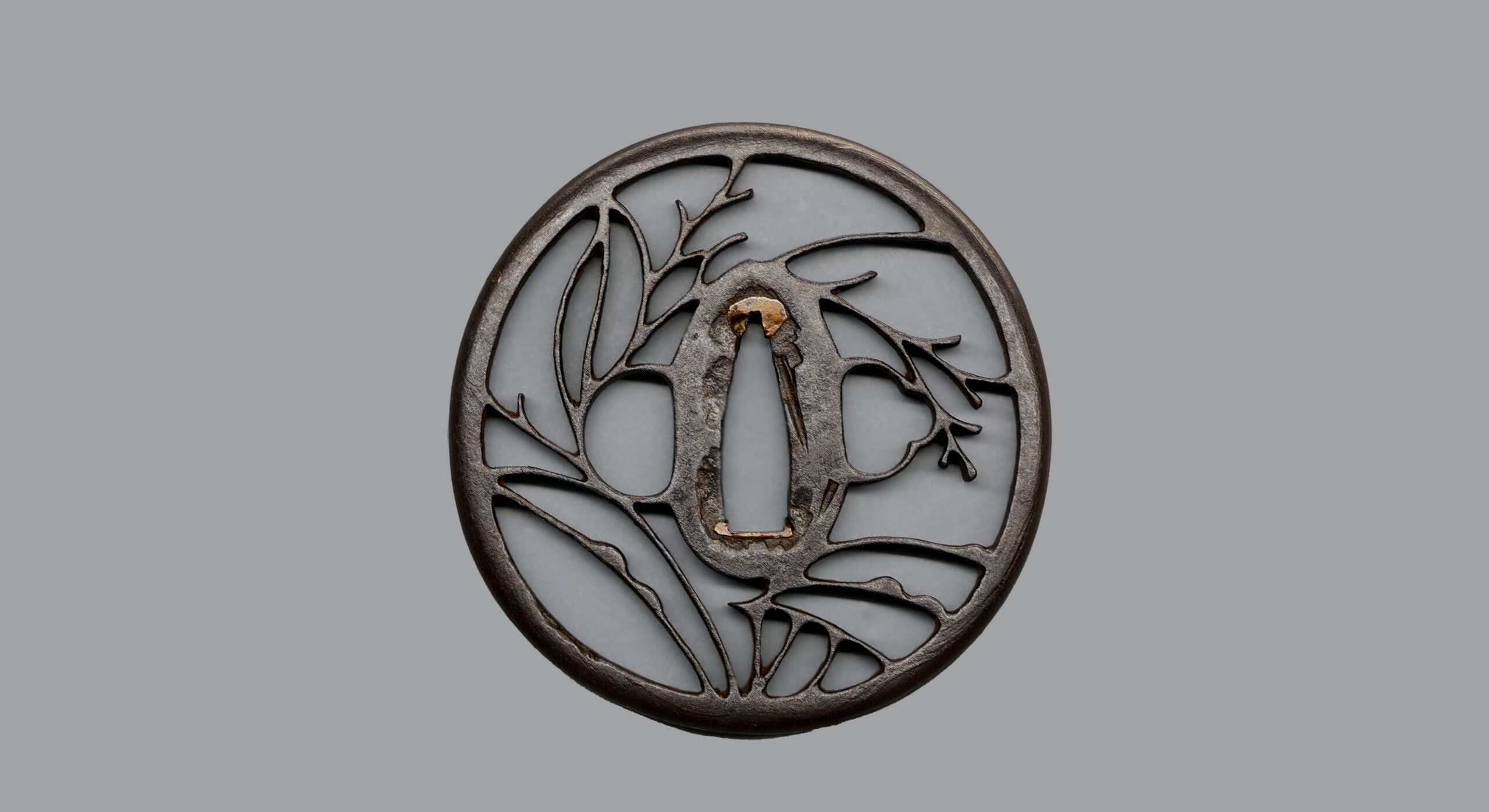
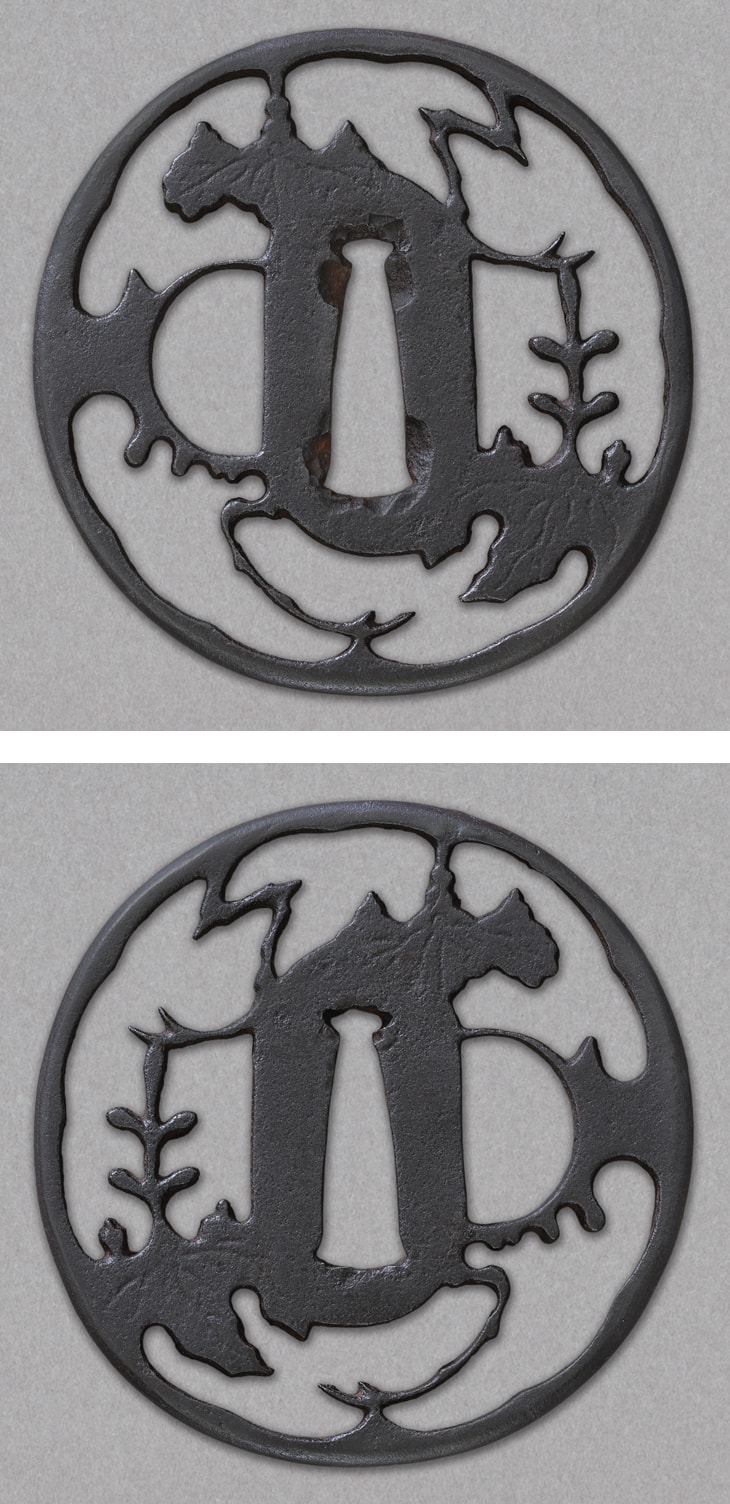
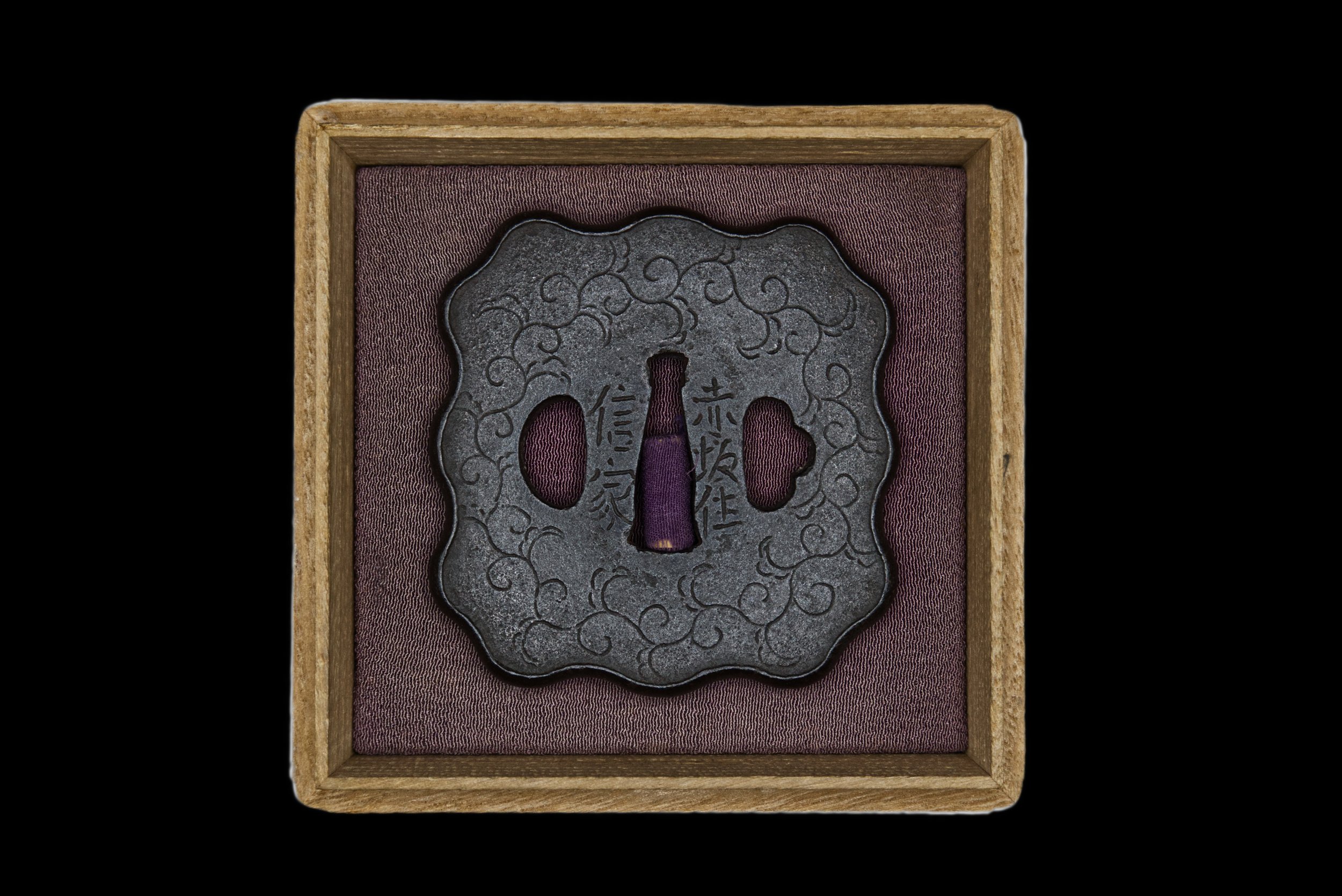
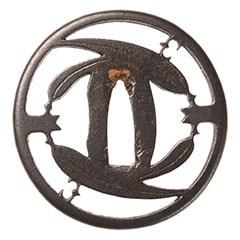
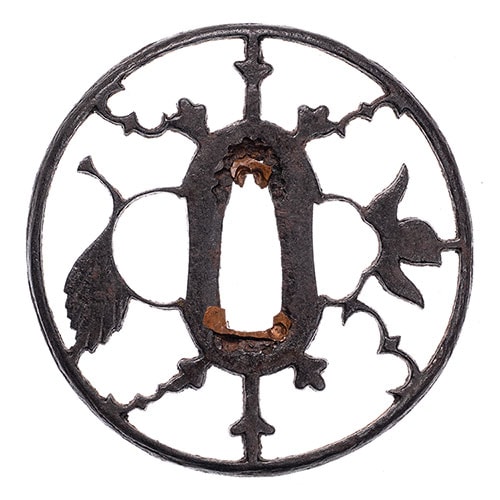
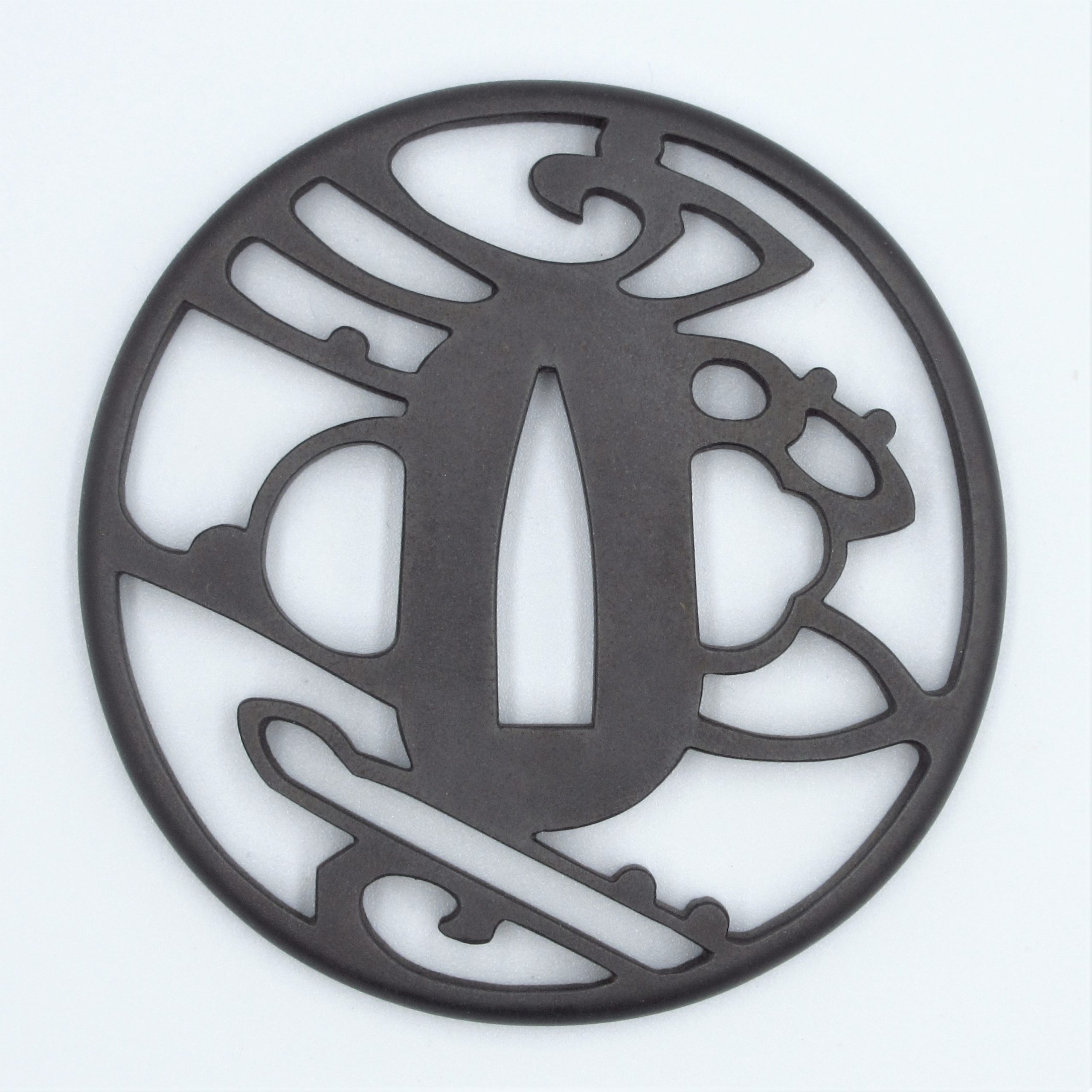
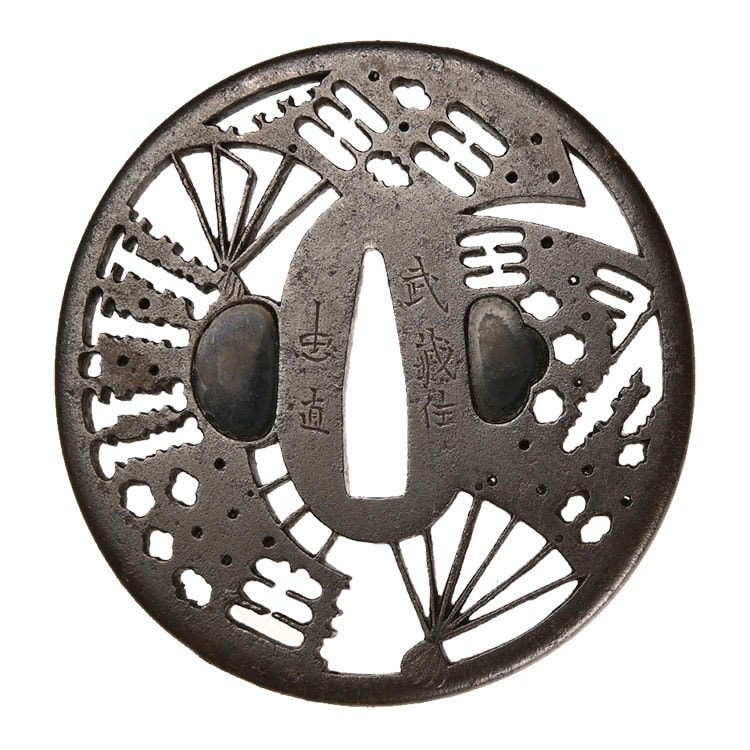
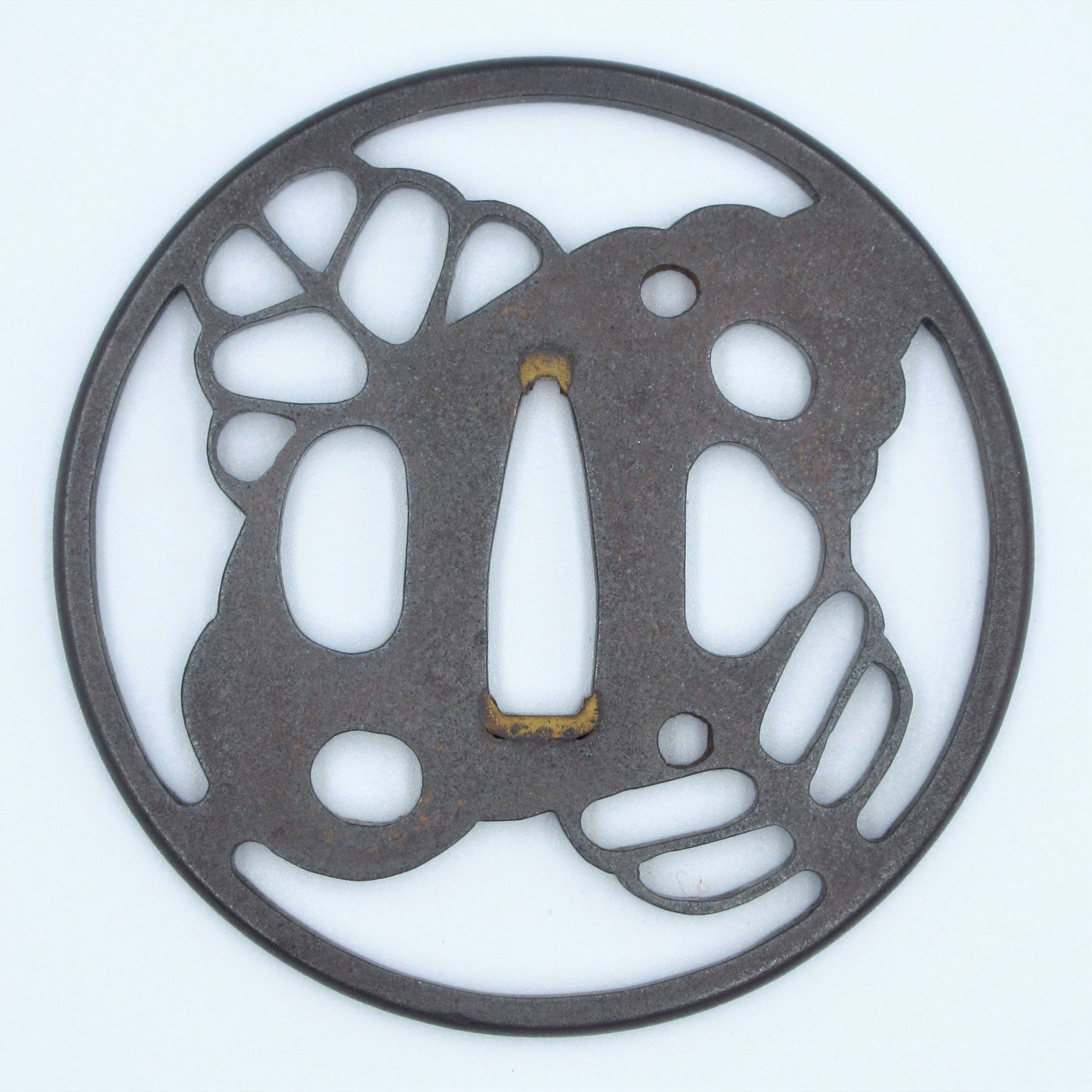
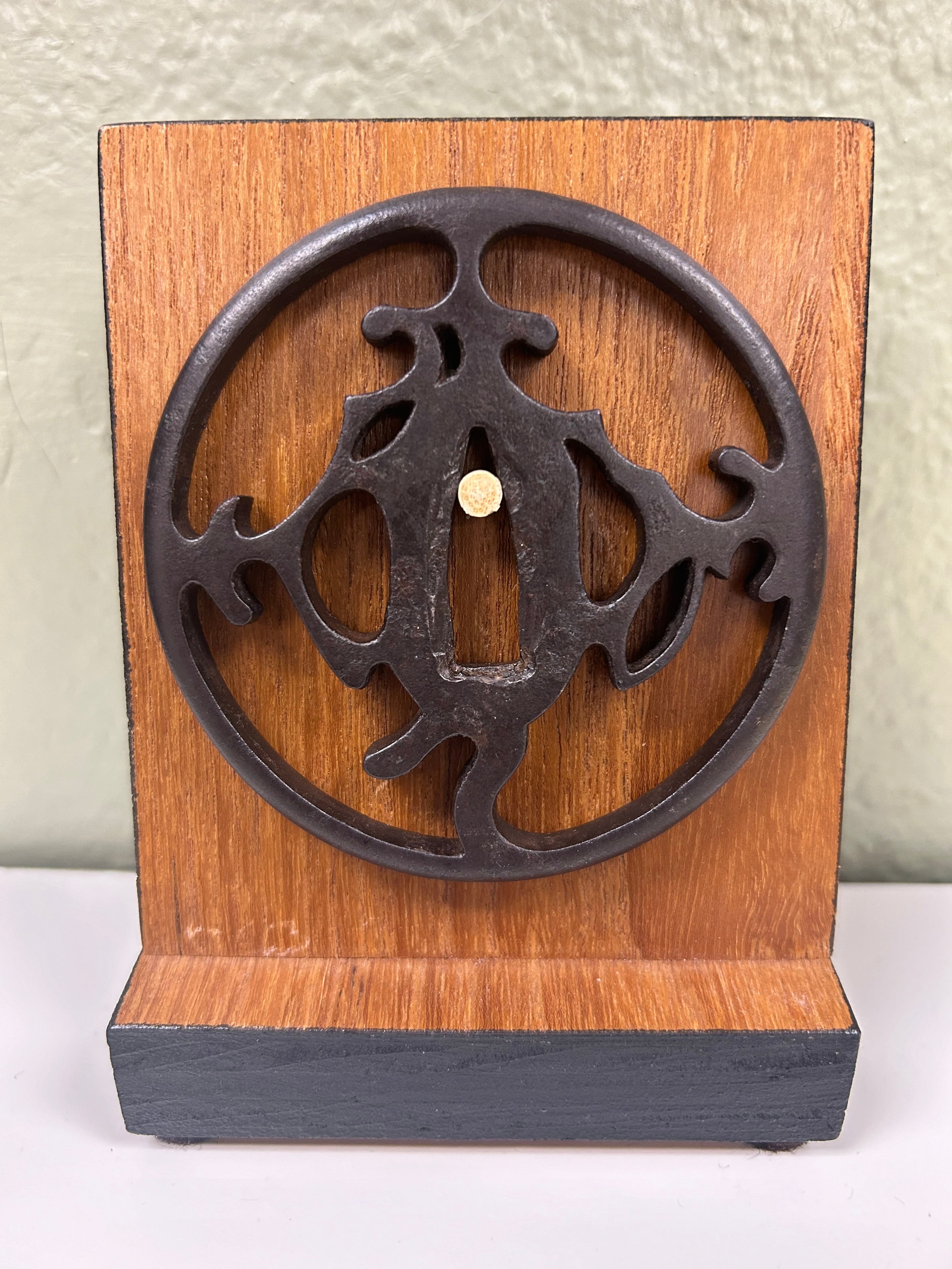
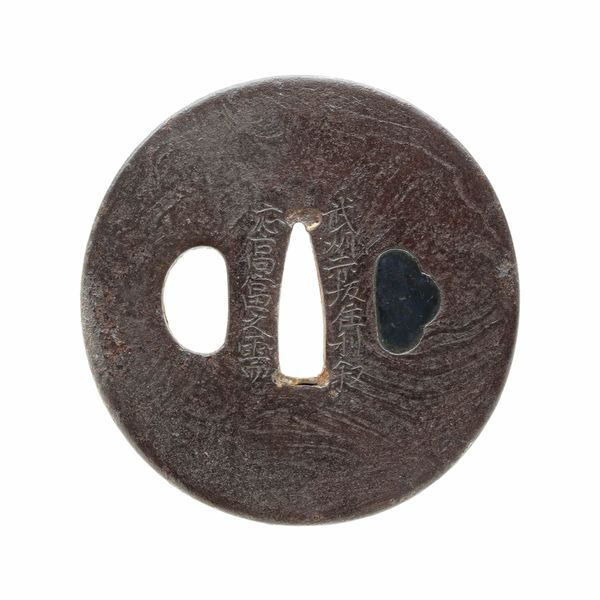
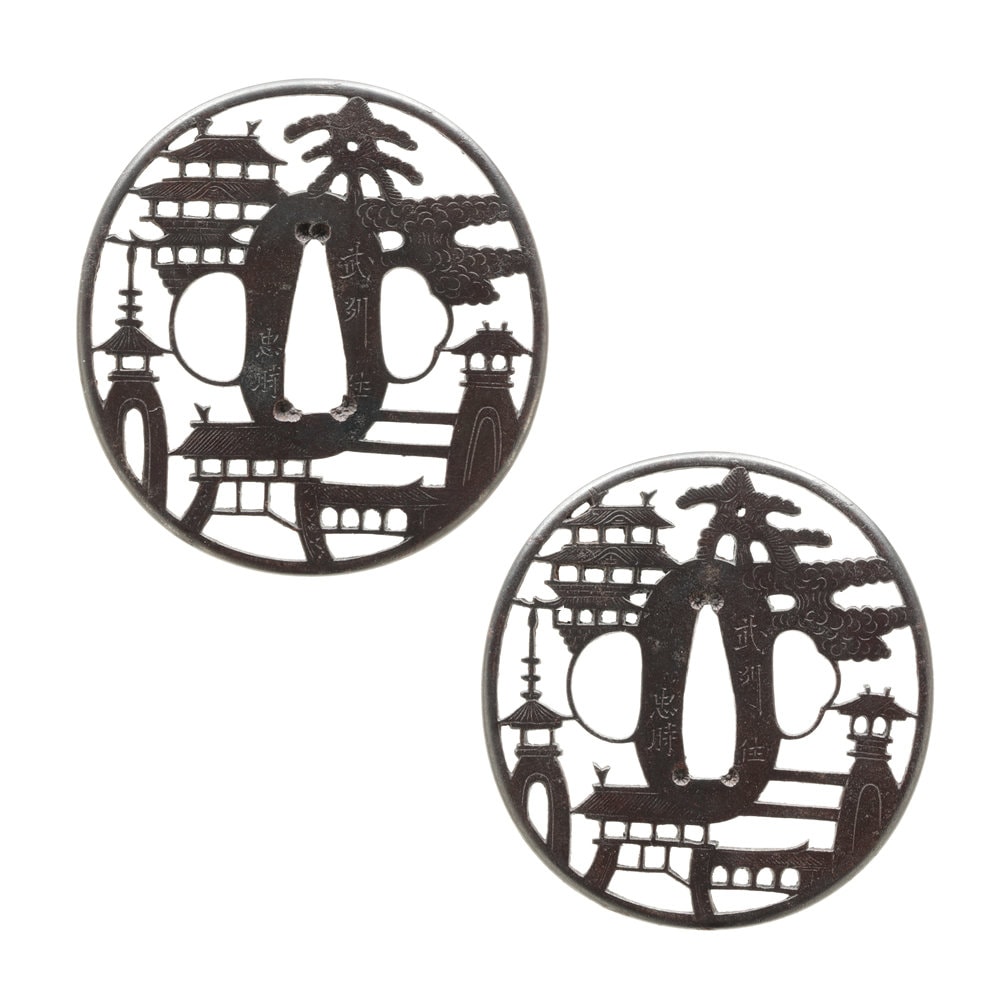
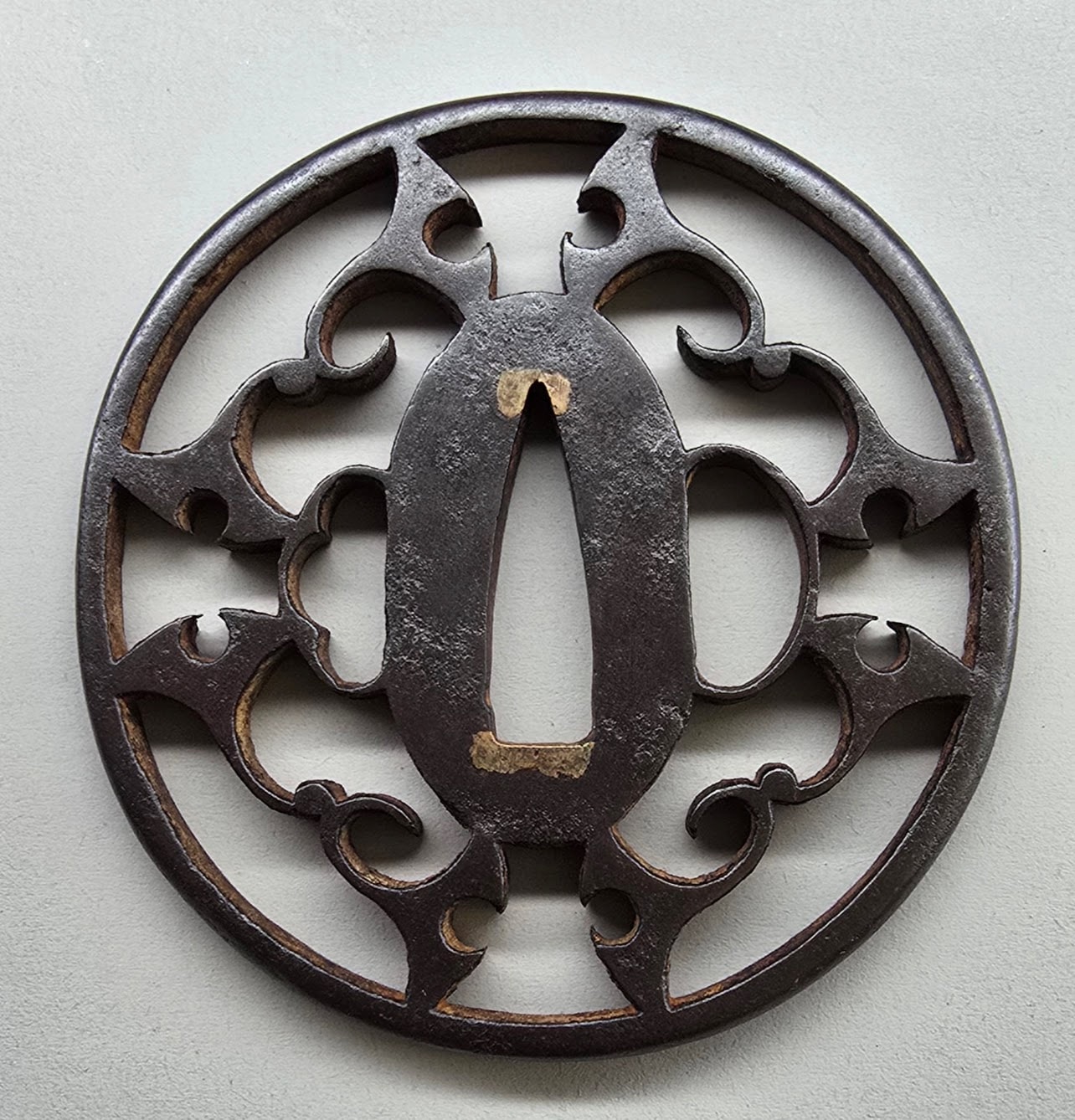
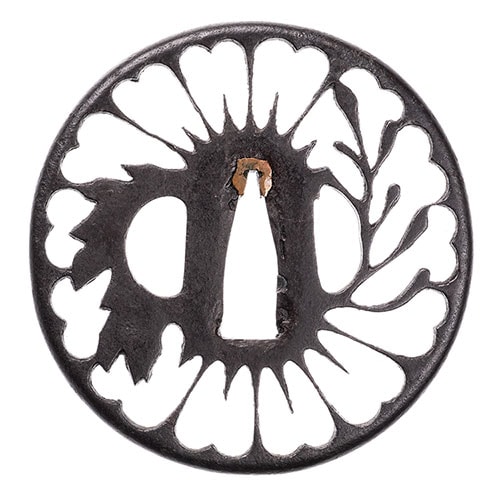
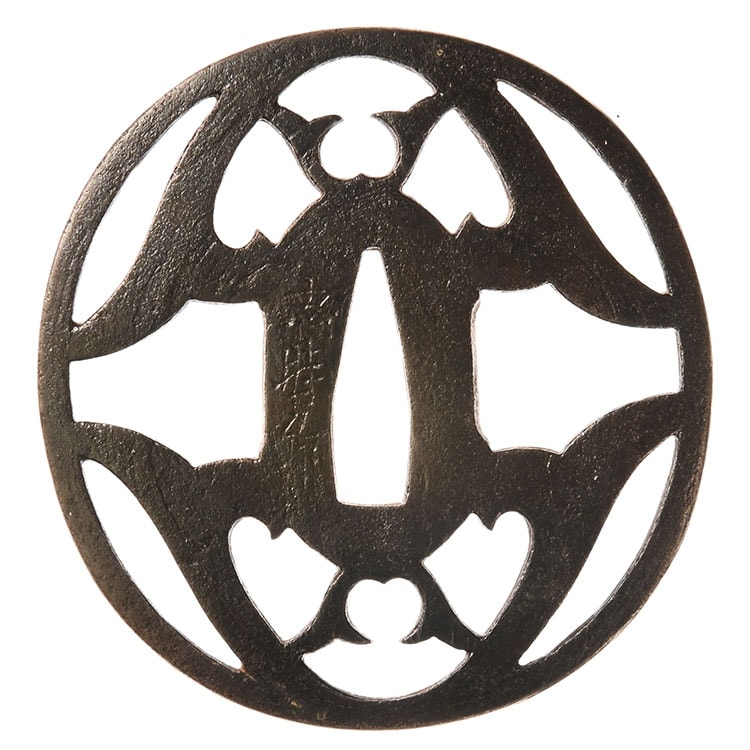
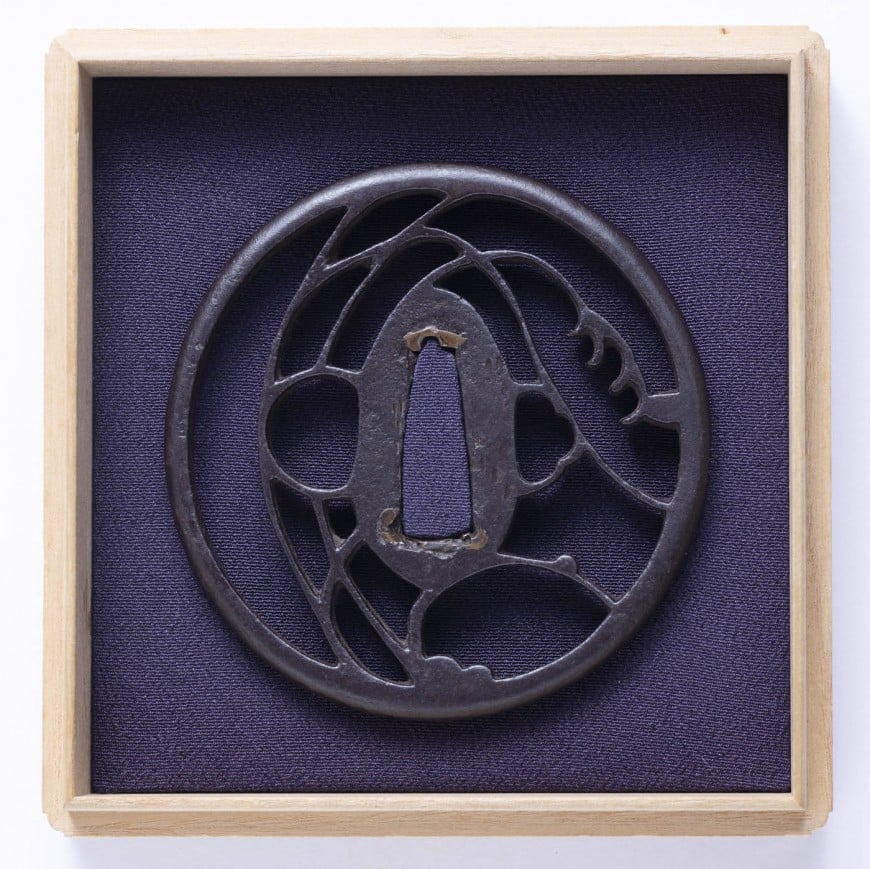
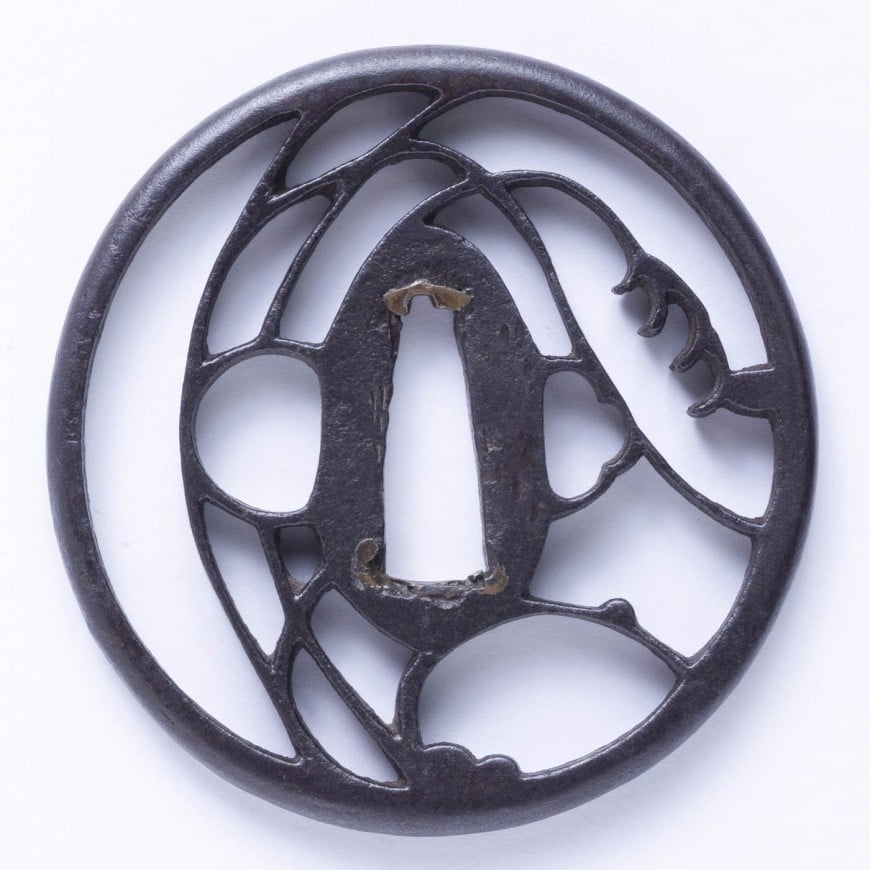
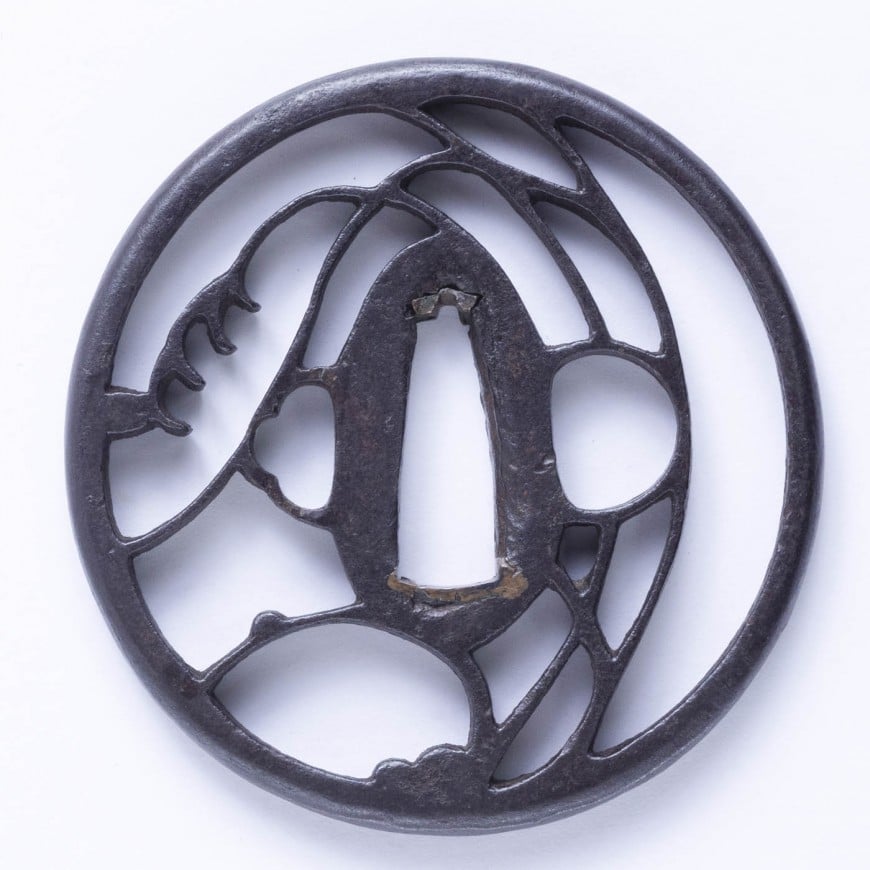
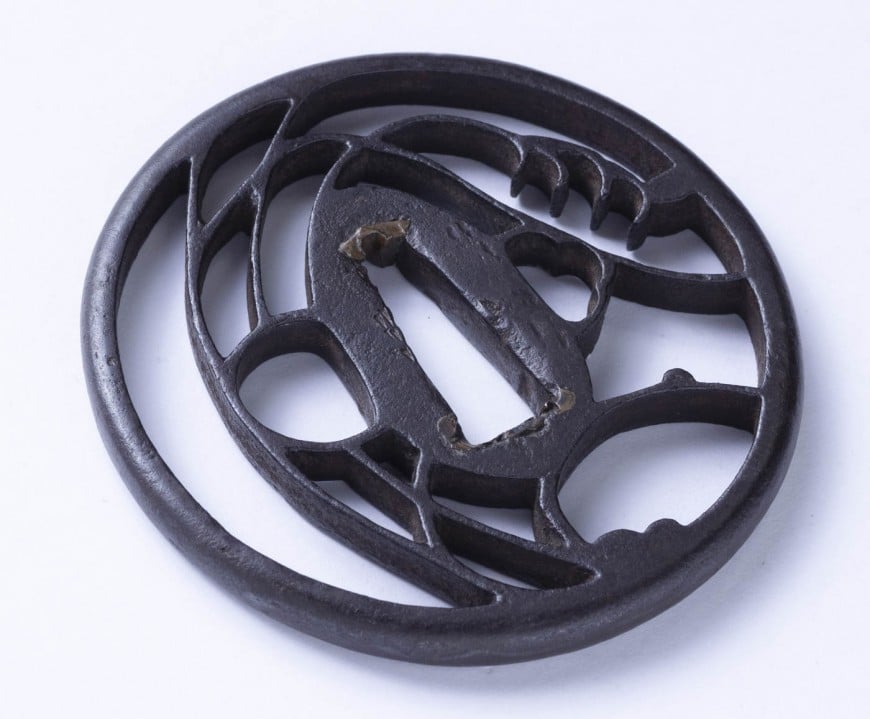
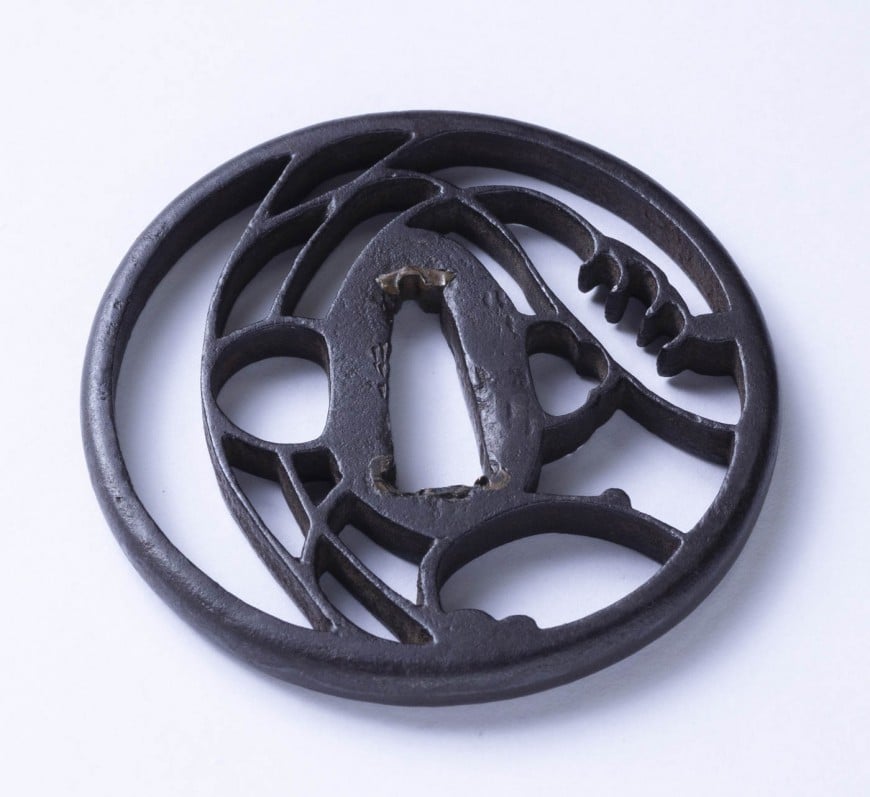
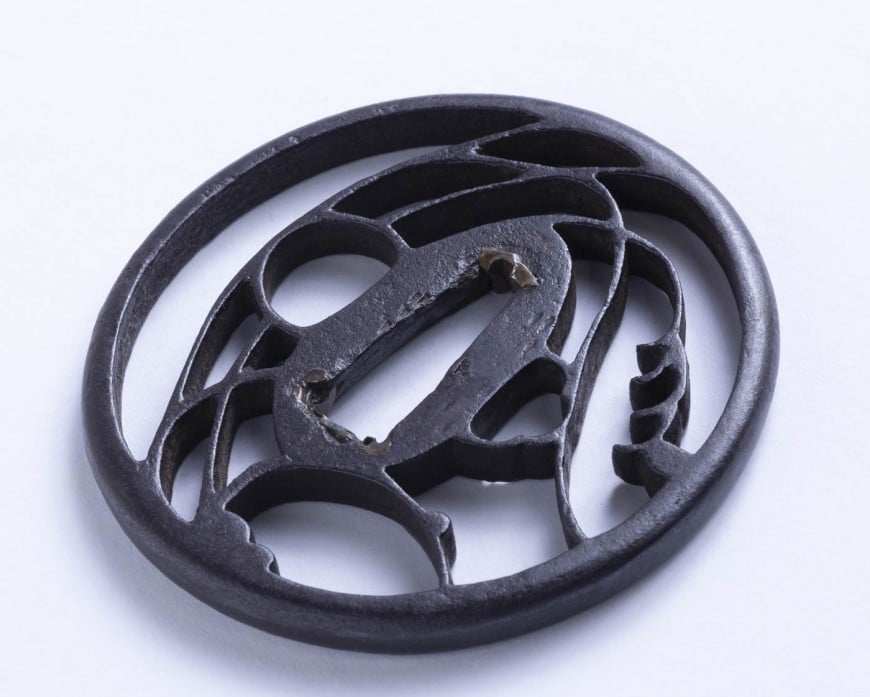
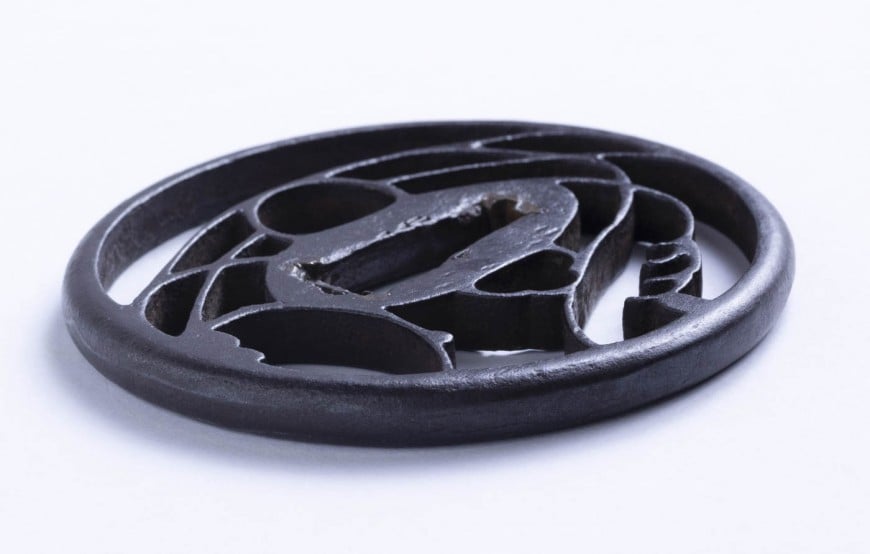
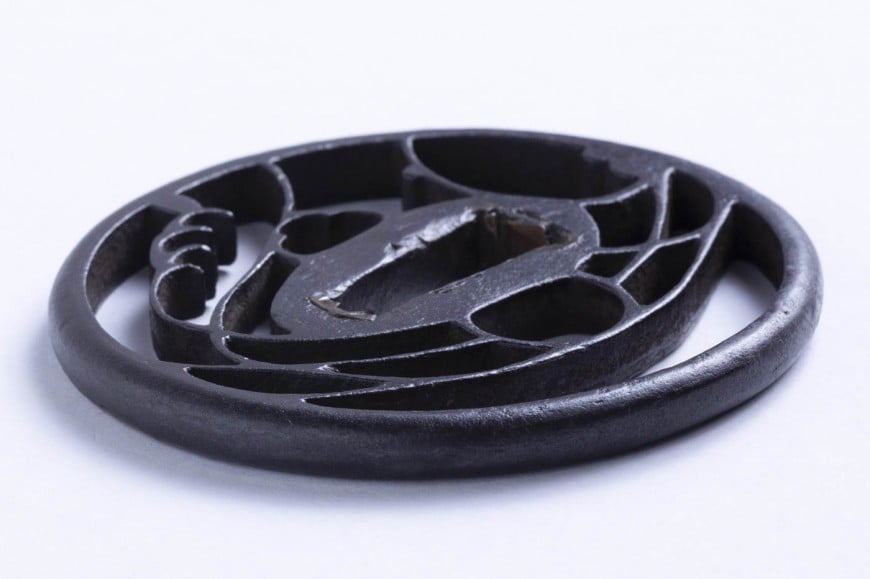
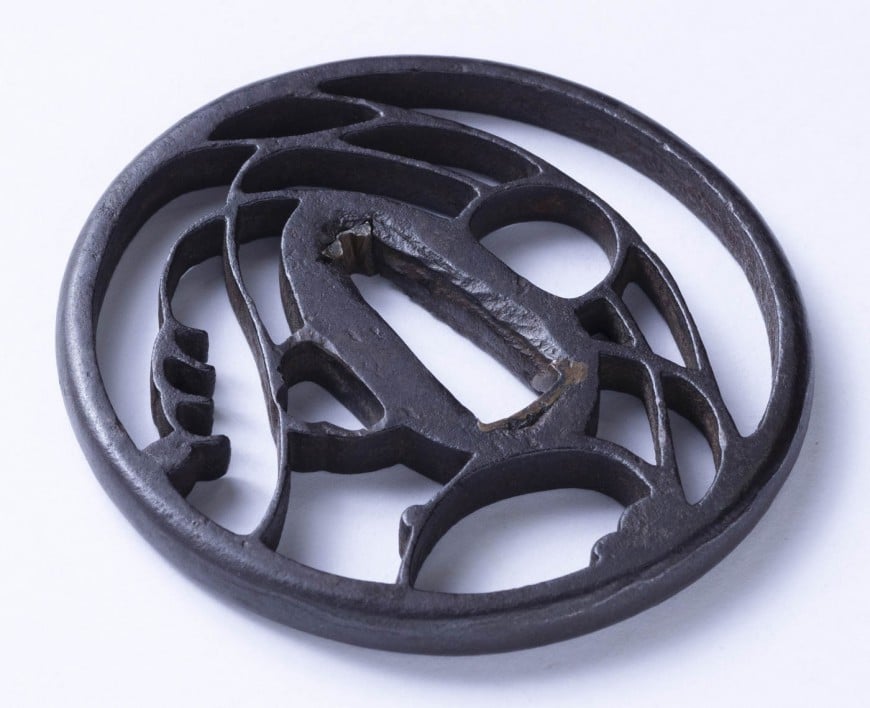
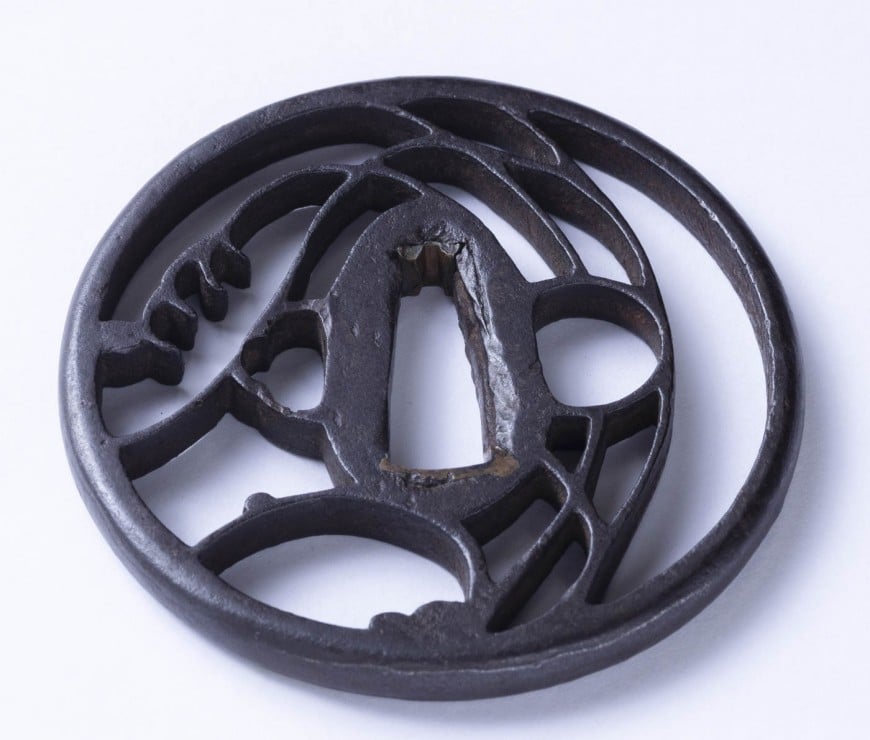
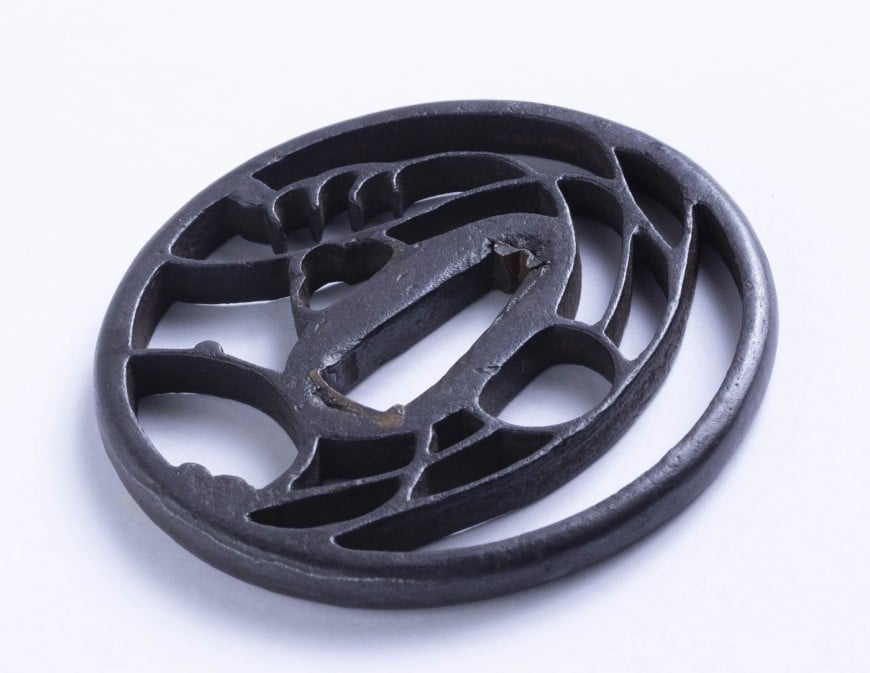
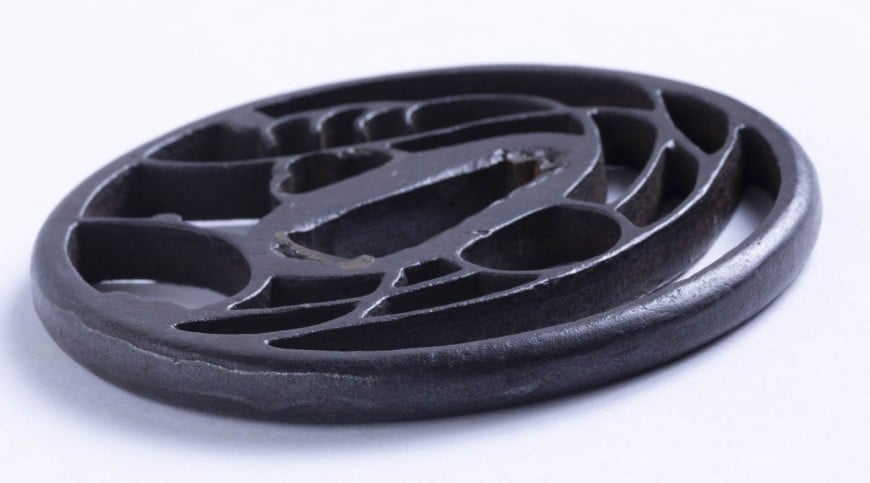
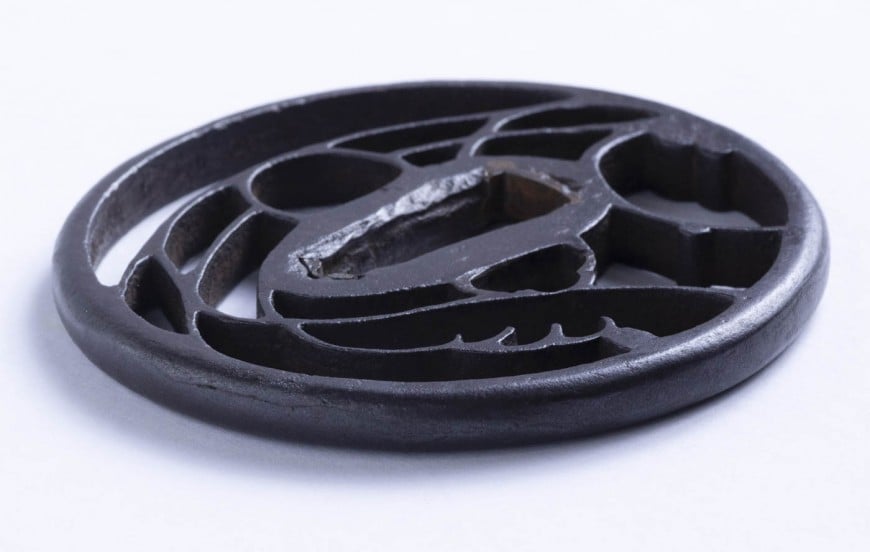
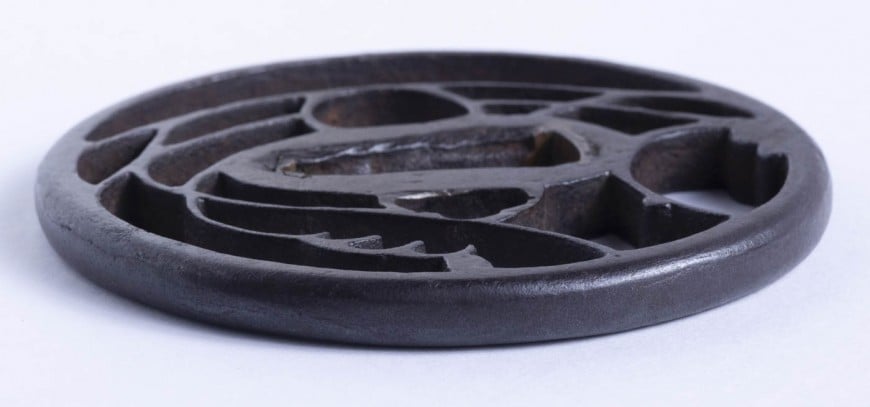
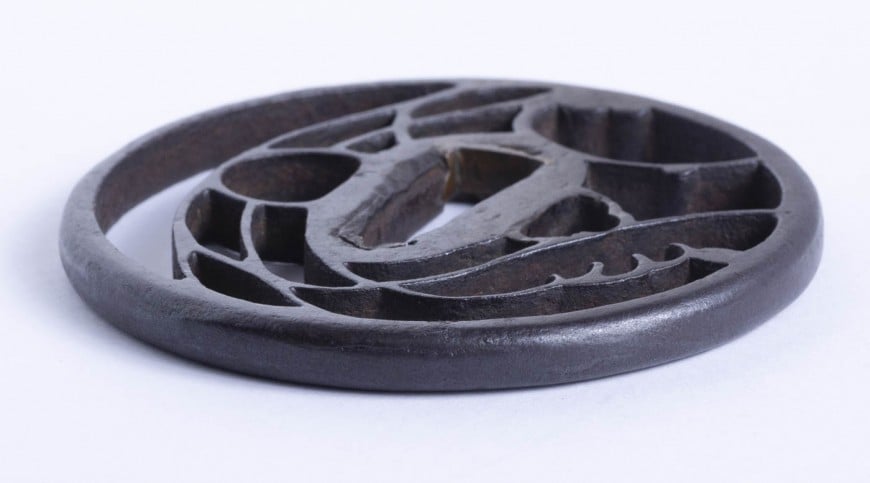
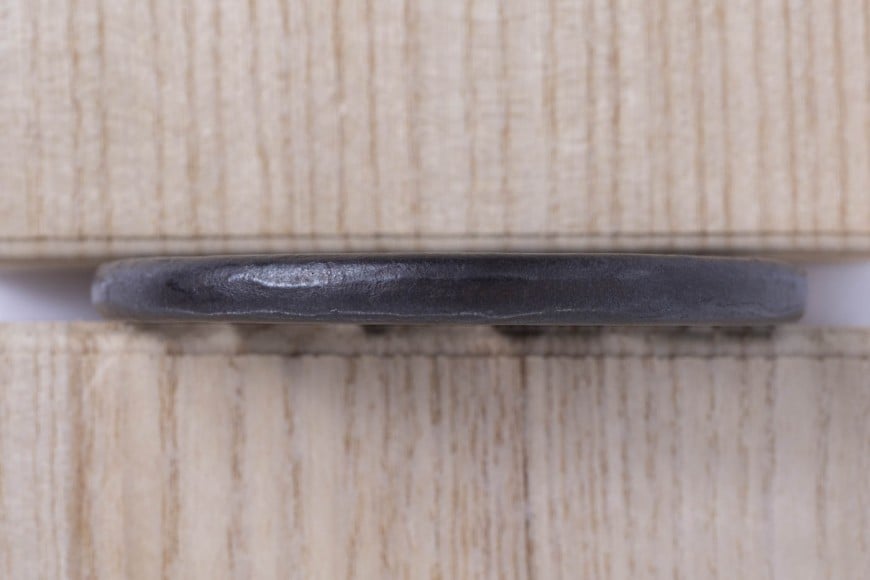
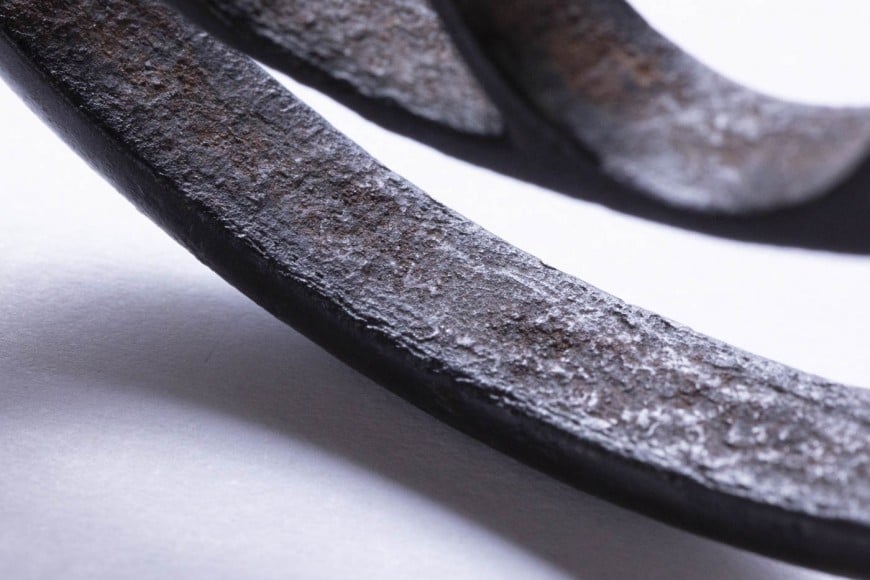
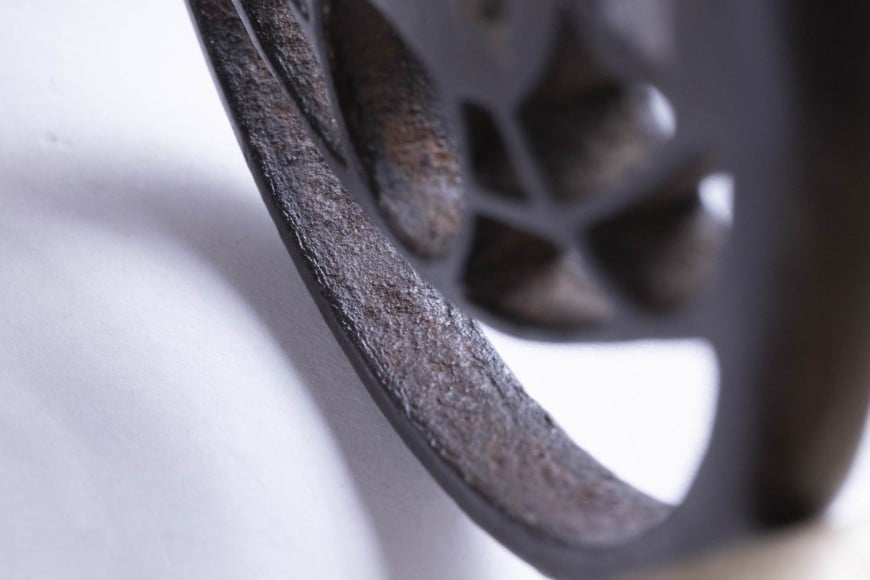
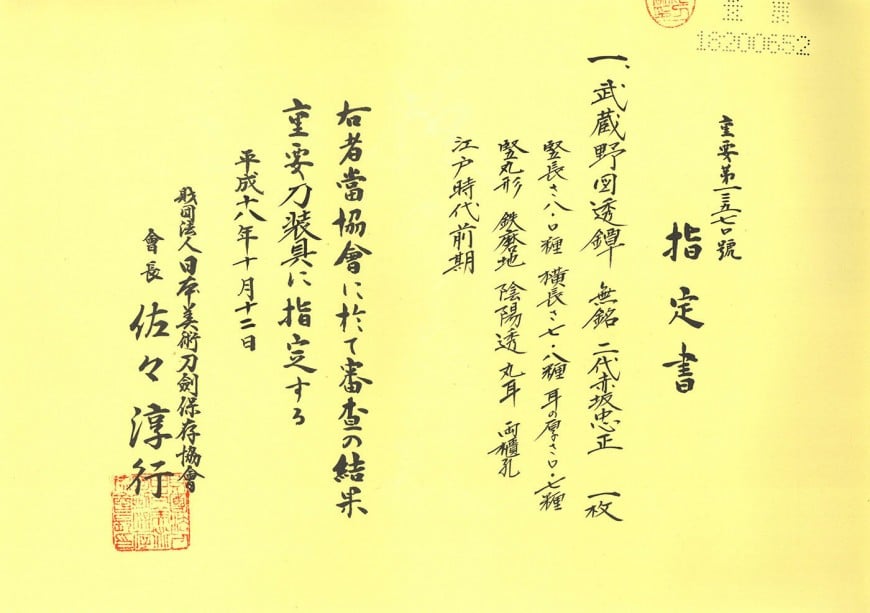
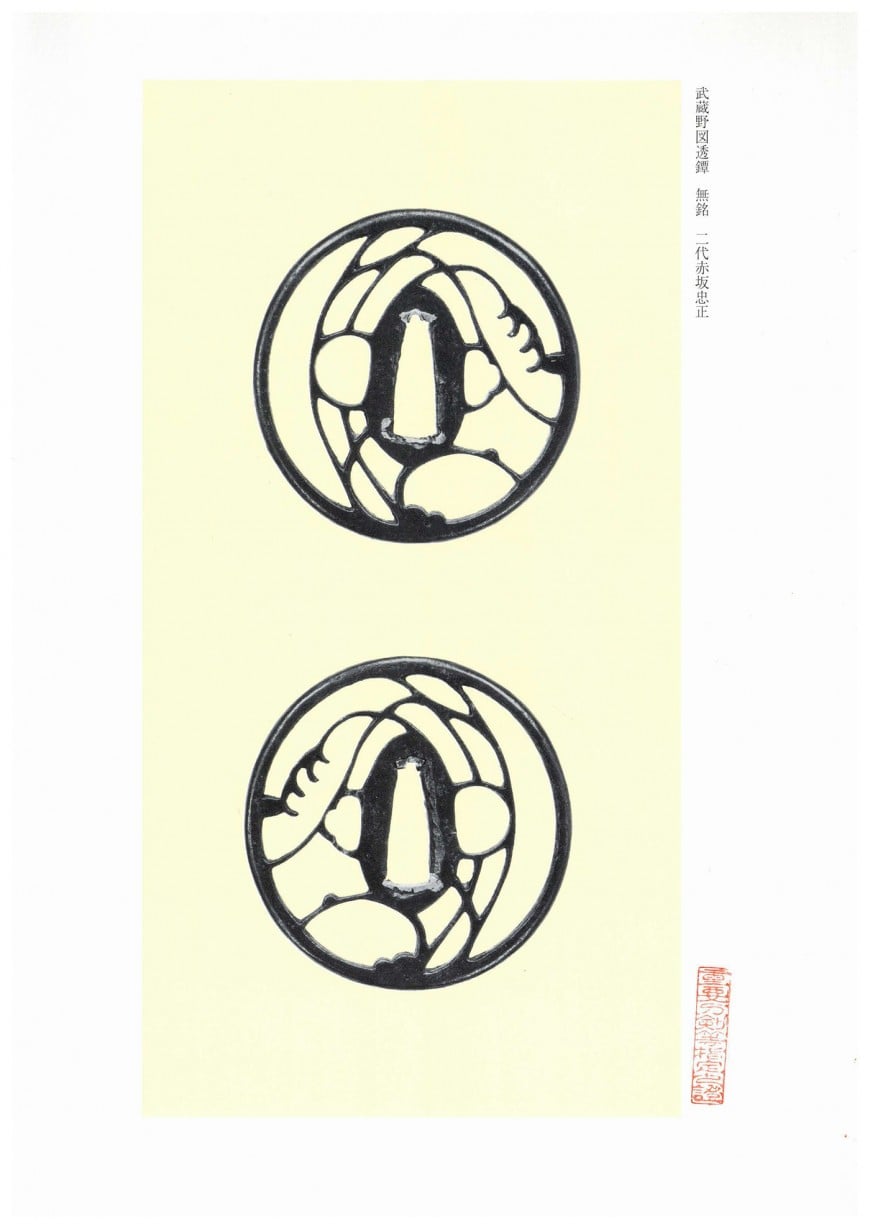
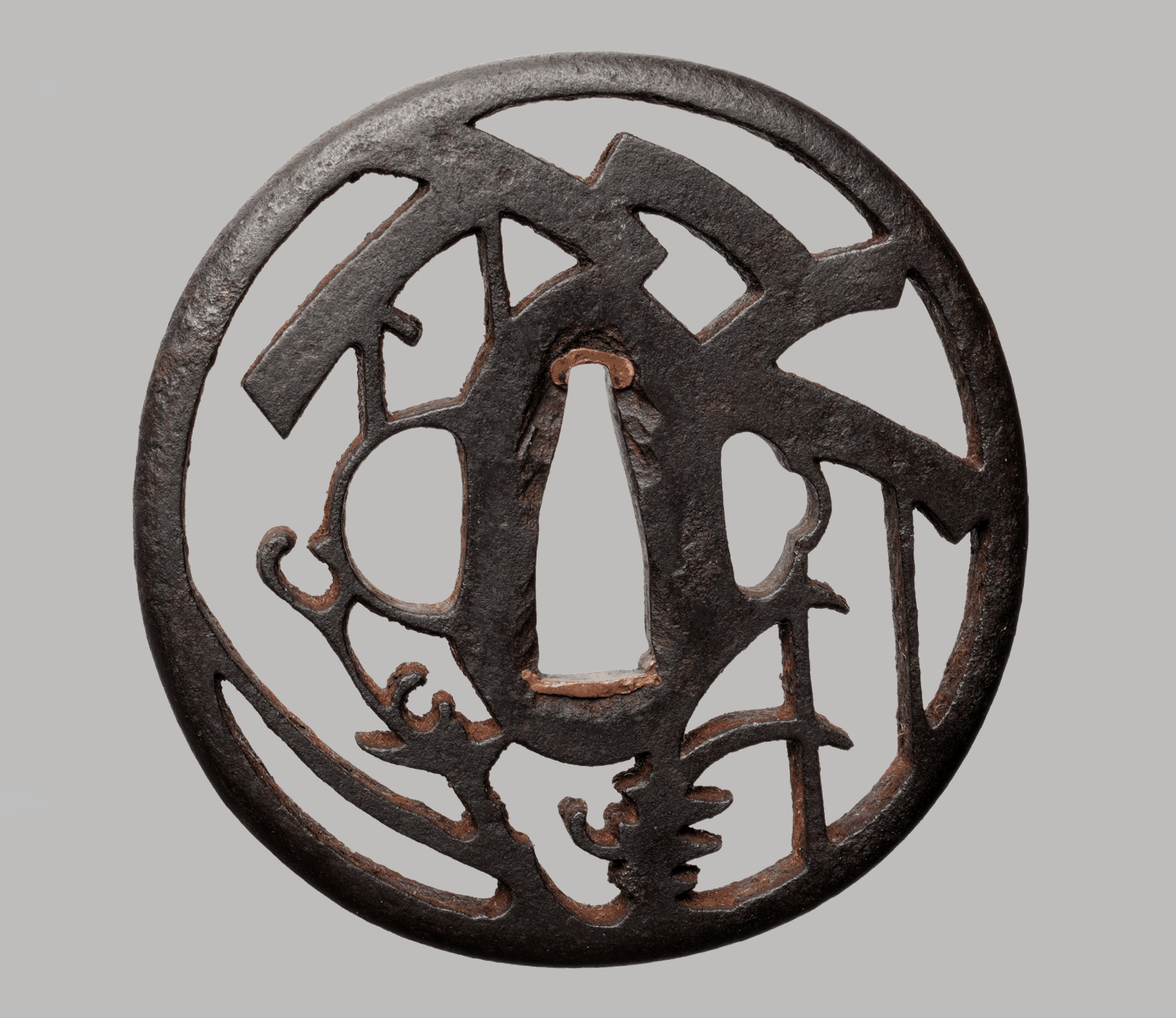
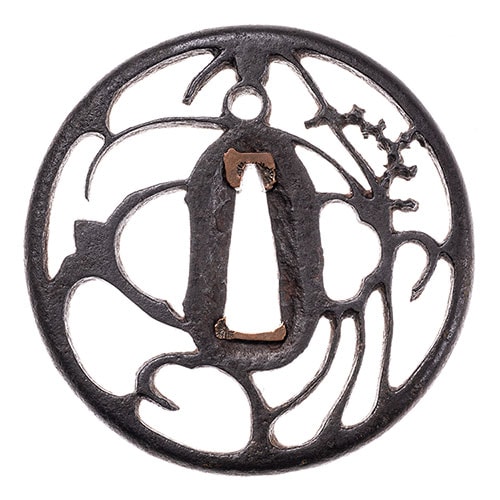
This tsuba is attributed to the 2nd generation Akasaka Tadamasa, a renowned Akasaka school craftsman from the early Edo period. It features a Musashino-zu sukashi (openwork) design depicting pampas grass with dew and a crescent moon. The iron plate exhibits excellent forging and color, characteristic of Ko-Akasaka works, and is designated as Tokubetsu Juyo Tosogu by the NBTHK.

NBTHK Setsumei

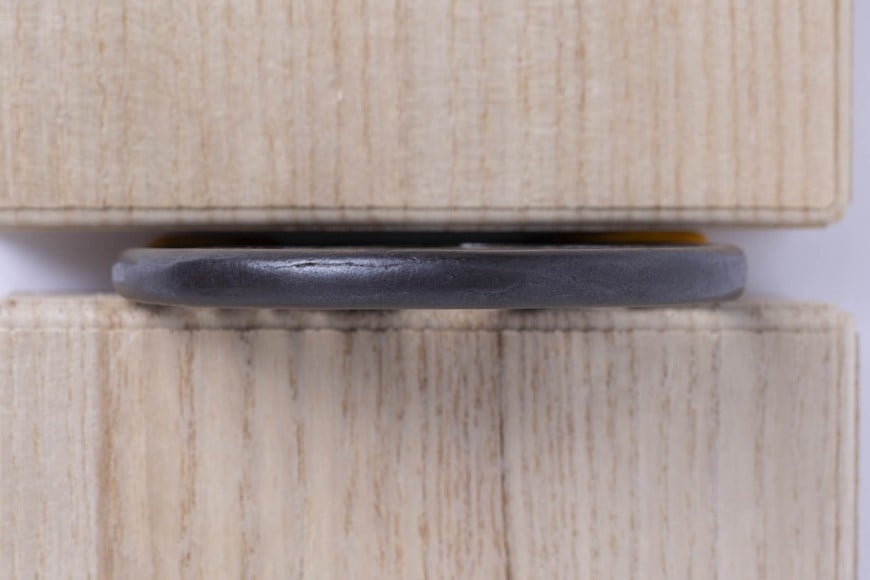
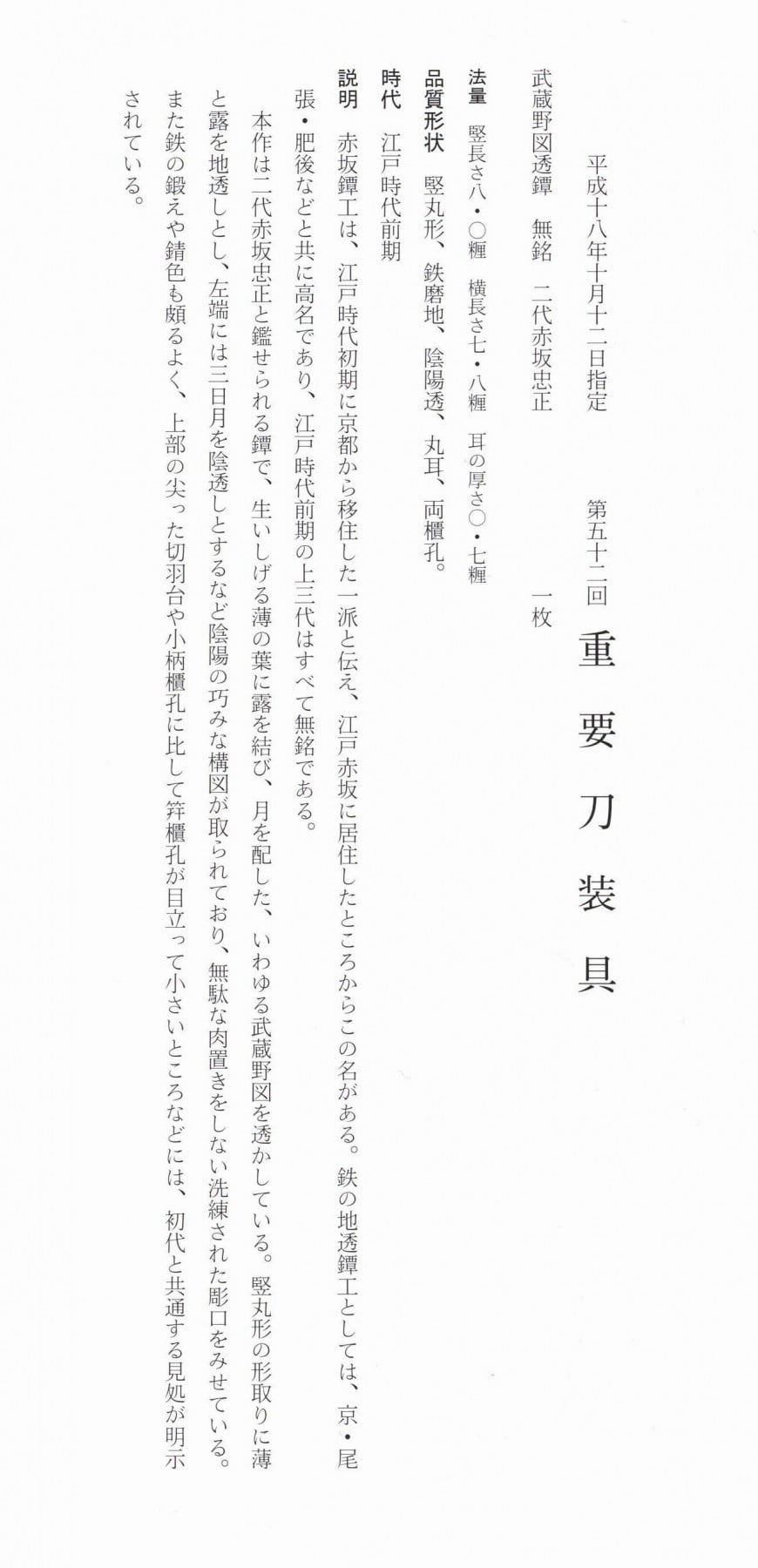
Jūyō-Tōsōgu, 52nd Session — Designated October 12, 2006 Tsuba, mumei: Akasaka Tadamasa, 2nd generation (二代赤坂忠正) Measurements Height (tate): 8.0 cm Width (yoko): 7.8 cm Rim thickness (mimi): 0.7 cm Description Form: tatemaru-gata (vertical round form) Material: iron, polished ground (tetsu migaki-ji) Construction: openwork with combined positive/negative treatment (in’yō-sukashi) Design: “Musashino” scene (Musashino-zu): luxuriant susuki (pampas grass) leaves bearing dew, with the moon Decoration: openwork (sukashi) Rim: rounded rim (maru-mimi) Hitsu-ana: two hitsu-ana (ryō-hitsu) Signature: mumei Artisan Akasaka school; attributed to Akasaka Tadamasa, 2nd generation (Nidai Akasaka Tadamasa). Era Early Edo period. Explanation The Akasaka tsuba-makers are said to have been a group that移 moved from Kyoto in the early Edo period; because they resided at Akasaka in Edo, they came to be known by this name. Among iron openwork (ji-sukashi) tsuba makers, they are renowned alongside those of Kyōto, Owari, and Higo. Furthermore, the first three generations of the school in the early Edo period are all unsigned. This work is a tsuba appraised as Nidai Akasaka Tadamasa. It renders in openwork the so-called “Musashino” design, placing dew upon thickly growing susuki leaves and adding the moon. Within the tatemaru-gata outline, the pampas grass and dew are treated as ground openwork, while at the left edge a crescent moon is expressed as negative openwork—an adroit composition employing the interplay of positive and negative (in’yō). The carving shows a refined, crisp contour, with no needless accumulation of metal. The forging of the iron and the color of the patina are also exceptionally fine. Features such as the pointed upper seppa-dai and the noticeably small kōgai-hitsu-ana in comparison to the kozuka-hitsu-ana clearly display points of appreciation shared with the work of the first generation.

NihontoWatch MonNihontoWatch
MarketAuctionsEncyclopedia
Fittings›Akasaka›Ko-Akasaka›Tadamasa›Tsuba: Mumei, 2nd Akasaka Tadamasa, Musashino-zu Sukashi
tsubaJūyō
Akasaka Tadamasa

Tsuba: Mumei, 2nd Akasaka Tadamasa, Musashino-zu Sukashi

mumei · Akasaka · Edo

¥3,500,000
Visit seller website →
Akasaka Tadamasa — 1 of 22
Akasaka Tadamasa — 2 of 22
Akasaka Tadamasa — 3 of 22
Akasaka Tadamasa — 4 of 22
Akasaka Tadamasa — 5 of 22
Akasaka Tadamasa — 6 of 22
Akasaka Tadamasa — 7 of 22
Akasaka Tadamasa — 8 of 22
Akasaka Tadamasa — 9 of 22
Akasaka Tadamasa — 10 of 22
Akasaka Tadamasa — 11 of 22
Akasaka Tadamasa — 12 of 22
Akasaka Tadamasa — 13 of 22
Akasaka Tadamasa — 14 of 22
Akasaka Tadamasa — 15 of 22
Akasaka Tadamasa — 16 of 22
Akasaka Tadamasa — 17 of 22
Akasaka Tadamasa — 18 of 22
Akasaka Tadamasa — 19 of 22
Akasaka Tadamasa — 20 of 22
Akasaka Tadamasa — 21 of 22
Akasaka Tadamasa — 22 of 22
1 / 22
1 / 22
Akasaka Tadamasa — 1 of 22Akasaka Tadamasa — 2 of 22Akasaka Tadamasa — 3 of 22Akasaka Tadamasa — 4 of 22Akasaka Tadamasa — 5 of 22Akasaka Tadamasa — 6 of 22Akasaka Tadamasa — 7 of 22Akasaka Tadamasa — 8 of 22Akasaka Tadamasa — 9 of 22Akasaka Tadamasa — 10 of 22Akasaka Tadamasa — 11 of 22Akasaka Tadamasa — 12 of 22Akasaka Tadamasa — 13 of 22Akasaka Tadamasa — 14 of 22Akasaka Tadamasa — 15 of 22Akasaka Tadamasa — 16 of 22Akasaka Tadamasa — 17 of 22Akasaka Tadamasa — 18 of 22Akasaka Tadamasa — 19 of 22Akasaka Tadamasa — 20 of 22Akasaka Tadamasa — 21 of 22Akasaka Tadamasa — 22 of 22
Measurements & details
Maker

Akasaka Tadamasa

Era

Edo

Province

Musashi

Signature

Unsigned

Papers

Jūyō #52 (NBTHK)

Description

This tsuba is attributed to the 2nd generation Akasaka Tadamasa, a renowned Akasaka school craftsman from the early Edo period. It features a Musashino-zu sukashi (openwork) design depicting pampas grass with dew and a crescent moon. The iron plate exhibits excellent forging and color, characteristic of Ko-Akasaka works, and is designated as Tokubetsu Juyo Tosogu by the NBTHK.

NBTHK Zufu Commentary

Juyo #52

AI translation — may contain errors

-Tōsōgu, 52nd Session — Designated October 12, 2006

, : Akasaka Tadamasa, 2nd generation (二代赤坂忠正)

Measurements Height (): 8.0 cm Width (): 7.8 cm Rim thickness (mimi): 0.7 cm

Description Form: (vertical round form) Material: iron, polished ground (tetsu ) Construction: openwork with combined positive/negative treatment (in’-) Design: “Musashino” scene (Musashino-zu): luxuriant (pampas grass) leaves bearing dew, with the moon Decoration: openwork () Rim: rounded rim () : two (ryō-hitsu) Signature:

Artisan Akasaka school; attributed to Akasaka Tadamasa, 2nd generation (Nidai Akasaka Tadamasa).

Era Early period.

Explanation The Akasaka -makers are said to have been a group that移 moved from Kyoto in the early period; because they resided at Akasaka in , they came to be known by this name. Among iron openwork () makers, they are renowned alongside those of Kyōto, Owari, and . Furthermore, the first three generations of the school in the early period are all unsigned.

This work is a appraised as Nidai Akasaka Tadamasa. It renders in openwork the so-called “Musashino” design, placing dew upon thickly growing leaves and adding the moon. Within the outline, the pampas grass and dew are treated as ground openwork, while at the left edge a crescent moon is expressed as negative openwork—an adroit composition employing the interplay of positive and negative (in’). The carving shows a refined, crisp contour, with no needless accumulation of metal.

The forging of the iron and the color of the patina are also exceptionally fine. Features such as the pointed upper and the noticeably small -ana in comparison to the -ana clearly display points of appreciation shared with the work of the first generation.
About the maker

Tadamasa

忠正

Iron-tsuba · Nagato · around 1624-1658

1 piece on the market now

›

Tadamasa, called Shozaemon, is the founding hand of the Akasaka school of iron openwork tsuba, a line said in the records to have moved from Kyoto to the Akasaka district of Edo at the start of the Edo period and to have flourished there to the end of the bakufu. He is named with the makers of Kyoto, Owari and Higo as one of the celebrated workers of the pierced iron guard. The first three generations, the so-called old Akasaka or upper three generations (1st Tadamasa, 2nd Tadamasa, 3rd Tadatora), are all unsigned; in-mei work begins only with the fourth generation Tadatoki around Genroku, with the signature Bushu-ju Akasaka Hikojuro Tadatoki saku, and the legitimate line thereafter took the name Tadatoki to the ninth generation. The name Tadamasa was carried by both a first and a second generation, both called Shozaemon; by a genealogy the descendant Tadatoki submitted to the bakufu in the Bunsei era, the first Tadamasa died in Meireki 3 (1657) and the second in Enpo 5 (1677). All accepted work of these upper generations is unsigned, so attribution rests on the iron, the openwork composition and a small set of construction features.

Historical importance

Where Tadamasa stands among comparable artisans: across all of nihontō, and within tradition, era, and period. The tiers (Foremost · Leading · Major · Notable) weigh official designations from the NBTHK and Japan's Agency for Cultural Affairs, together with historical honors of lasting repute such as the Sansaku and Meibutsu-chō.

随一
Foremost
屈指
Leading
有数
Major
著名
Notable

Select a lens to see how it's measured.

Designation record
7 designated works
Jūyō
7
1 work by Tadamasa on the market→
Tadamasa — full profileIron-tsuba school
About the school

Akasaka

赤坂

Iron-tsuba · Edo

Phase: Ko-Akasaka古赤坂· 1624–1700

76 pieces on the market now

›
3 recorded smiths16 designated works
Leading smiths
SmithEraDesignated
Tadamasa忠正1624-16587
Tadashige忠重1730-18165
Tadatoki忠時1704-17640
Juchiku/Toshitake寿竹—0
Tadanori忠則1730-17800
Explore the Akasaka school →
NBTHK Certificate
Jūyō Tōsōgu重要刀装具
Important Fitting
›

Exceptional craft of very high artistic value, judged to rank with a nationally recognized Important Art Object (Jūyō Bijutsuhin).

About the NBTHK›

The NBTHK (Nihon Bijutsu Tōken Hozon Kyōkai, the Society for the Preservation of Japanese Art Swords) is a public-interest incorporated foundation founded in 1948 and supervised by Japan’s Agency for Cultural Affairs (Bunkachō); it is based at the Japanese Sword Museum in Tokyo. Its expert panels physically examine each submitted work (shinsa) and issue a certificate (kanteishō) ranking it by artistic and historical merit. NBTHK papers are the most widely recognized standard of authentication for Japanese swords and fittings.

NBTHK official site→
Seller
W
Wakeidou
Established 1953 · 73 yrs on the market
🇯🇵Ships from Japan
›
✓Verified dealerwakeidou.com
Settles in JPY
Wire transferPayPalCredit card
Return policy

Returns accepted within 7 days for internet purchases.

View all of Wakeidou’s listings→View this item on the dealer’s site→

Previously sold by Akasaka Tadamasa

Nihonto Art
Tsuba - by Akasaka Tadamasa - Akasaka 2nd Gen. TadamasaTsuba - by Akasaka Tadamasa - Akasaka 2nd Gen. Tadamasa
Sold

Tsuba

ByAkasaka Tadamasa
SOLD
Choshuya
Tokuho
Tsuba - Tokuho - by Akasaka Tadamasa - Goose Design, Unsigned Akasaka Tadamasa 2nd GenerationTsuba - Tokuho - by Akasaka Tadamasa - Goose Design, Unsigned Akasaka Tadamasa 2nd Generation
Sold

Tsuba

ByAkasaka Tadamasa
SOLD
Shoubudou
Hozon
Tsuba - Hozon - by Akasaka Tadamasa - Mumei Akasaka 2nd Gen. Tadamasa, Warabite KurumadasukiTsuba - Hozon - by Akasaka Tadamasa - Mumei Akasaka 2nd Gen. Tadamasa, Warabite Kurumadasuki
Sold

Tsuba

ByAkasaka Tadamasa
SOLD
Ginza Seikodo
Tokuho
Tsuba - Tokuho - by Akasaka Tadamasa - 2nd Gen. Akasaka Tadamasa - Reeds SukashiTsuba - Tokuho - by Akasaka Tadamasa - 2nd Gen. Akasaka Tadamasa - Reeds Sukashi
Sold

Tsuba

ByAkasaka Tadamasa
SOLD

More Ko-Akasaka works

View all →
Eirakudo
Tokuho
Tsuba - Tokuho - by Akasaka Masatora - Akasaka 3rd Generation Tadatora Tsuba with Bamboo Leaf and Flying Goose Sukashi - Tokubetsu Hozon TosoguTsuba - Tokuho - by Akasaka Masatora - Akasaka 3rd Generation Tadatora Tsuba with Bamboo Leaf and Flying Goose Sukashi - Tokubetsu Hozon Tosogu

Tsuba

ByAkasaka Masatora
¥650,000
Eirakudo
Tokuho
Tsuba - Tokuho - by Ko-Akasaka School - Ko-Akasaka Tsuba - Tokubetsu Hozon TosoguTsuba - Tokuho - by Ko-Akasaka School - Ko-Akasaka Tsuba - Tokubetsu Hozon Tosogu

Tsuba

ByKo-Akasaka School
¥350,000
Eirakudo
Hozon
Tsuba - Hozon - by Akasaka Tadanao - Akasaka Tadanao - Broken Fan Design, Hozon TosoguTsuba - Hozon - by Akasaka Tadanao - Akasaka Tadanao - Broken Fan Design, Hozon Tosogu

Tsuba

ByAkasaka Tadanao
¥230,000
Touken Matsumoto
Hozon
Tsuba - Hozon - by Ko-Akasaka School - Musashino Sukashi TsubaTsuba - Hozon - by Ko-Akasaka School - Musashino Sukashi Tsuba

Tsuba

ByKo-Akasaka School
¥550,000
Nosyudo
Tsuba - by Akasaka Masatora - Akasaka 3rd Gen. Masatora, Ryusui-sukashi (Modern Reproduction)Tsuba - by Akasaka Masatora - Akasaka 3rd Gen. Masatora, Ryusui-sukashi (Modern Reproduction)

Tsuba

ByAkasaka Masatora
¥40,000
Nosyudo
Tsuba - by Akasaka Masatora - Akasaka Tadahora Kashiwa-zu Sukashi (Modern)Tsuba - by Akasaka Masatora - Akasaka Tadahora Kashiwa-zu Sukashi (Modern)

Tsuba

ByAkasaka Masatora
¥55,000
Tetsugendo
Tsuba - by Akasaka Masatora - Akasaka 3rd Gen. Tadatora TsubaTsuba - by Akasaka Masatora - Akasaka 3rd Gen. Tadatora Tsuba

Tsuba

ByAkasaka Masatora
¥2,000

More from the Akasaka school

View all →
Choshuya
Tsuba - by Akasaka School - Mokume-kitae Tsuba (鍔) Signed Bushu Akasaka ju Toshinobu, made at the request of Takatomi, February, Kansei 7 (1795), Fittings for KoshiraeTsuba - by Akasaka School - Mokume-kitae Tsuba (鍔) Signed Bushu Akasaka ju Toshinobu, made at the request of Takatomi, February, Kansei 7 (1795), Fittings for Koshirae

Tsuba

ByAkasaka School
¥100,000
Choshuya
Tokuho
Tsuba - Tokuho - by Akasaka Tadatoki - Roukaku Sukashi Daisho Tsuba - Bushu ju TadatokiTsuba - Tokuho - by Akasaka Tadatoki - Roukaku Sukashi Daisho Tsuba - Bushu ju Tadatoki

Tsuba

ByAkasaka Tadatoki
¥300,000
Eirakudo
Tokuho
Tsuba - Tokuho - by Akasaka School - AkasakaTsuba - Tokuho - by Akasaka School - Akasaka

Tsuba

ByAkasaka School
¥250,000
Eirakudo
Tokuho
Tsuba - Tokuho - by Akasaka Tadatoki - Tadatoki - Waves Sukashi, Tokubetsu Hozon TosoguTsuba - Tokuho - by Akasaka Tadatoki - Tadatoki - Waves Sukashi, Tokubetsu Hozon Tosogu

Tsuba

ByAkasaka Tadatoki
¥320,000
Eirakudo
Tokuho
Tsuba - Tokuho - by Akasaka School - Akasaka Musashino Sukashi Tsuba Tokubetsu Hozon TosoguTsuba - Tokuho - by Akasaka School - Akasaka Musashino Sukashi Tsuba Tokubetsu Hozon Tosogu

Tsuba

ByAkasaka School
¥260,000
Aoi Art
Tokuho
Tsuba - Tokuho - by Akasaka Tadatoki - Daisho Tsuba: Bushu Ju Akasaka TadatokiTsuba - Tokuho - by Akasaka Tadatoki - Daisho Tsuba: Bushu Ju Akasaka Tadatoki

Tsuba

ByAkasaka Tadatoki
¥350,000
Eirakudo
Tokuho
Tsuba - Tokuho - by Akasaka Tadatoki - Bushu Akasaka Tadatoki (6th Generation) - Kagegenji-kurumamonzu DesignTsuba - Tokuho - by Akasaka Tadatoki - Bushu Akasaka Tadatoki (6th Generation) - Kagegenji-kurumamonzu Design

Tsuba

ByAkasaka Tadatoki
¥200,000
Samurai Shokai
Hozon
Tsuba - Hozon - by Akasaka Tadatoki - Akasaka Tadatoki - Floral and Goose DesignTsuba - Hozon - by Akasaka Tadatoki - Akasaka Tadatoki - Floral and Goose Design

Tsuba

ByAkasaka Tadatoki
¥85,000

Swords

  • Katana
  • Wakizashi
  • Tantō
  • Tachi
  • Naginata
  • Yari

Fittings

  • Tsuba
  • Fuchi-Kashira
  • Kozuka
  • Menuki

By Certification

  • Tokujū
  • Jūyō
  • Tokuho
  • Hozon

Resources

  • Dealer Directory
  • Artist Directory
  • Glossary
  • Browse All
Nihontowatch© 2026
TermsPrivacyCookiesAbout

Description

This tsuba is attributed to the 2nd generation Akasaka Tadamasa, a renowned Akasaka school craftsman from the early Edo period. It features a Musashino-zu sukashi (openwork) design depicting pampas grass with dew and a crescent moon. The iron plate exhibits excellent forging and color, characteristic of Ko-Akasaka works, and is designated as Tokubetsu Juyo Tosogu by the NBTHK.

NBTHK Setsumei

Jūyō-Tōsōgu, 52nd Session — Designated October 12, 2006 Tsuba, mumei: Akasaka Tadamasa, 2nd generation (二代赤坂忠正) Measurements Height (tate): 8.0 cm Width (yoko): 7.8 cm Rim thickness (mimi): 0.7 cm Description Form: tatemaru-gata (vertical round form) Material: iron, polished ground (tetsu migaki-ji) Construction: openwork with combined positive/negative treatment (in’yō-sukashi) Design: “Musashino” scene (Musashino-zu): luxuriant susuki (pampas grass) leaves bearing dew, with the moon Decoration: openwork (sukashi) Rim: rounded rim (maru-mimi) Hitsu-ana: two hitsu-ana (ryō-hitsu) Signature: mumei Artisan Akasaka school; attributed to Akasaka Tadamasa, 2nd generation (Nidai Akasaka Tadamasa). Era Early Edo period. Explanation The Akasaka tsuba-makers are said to have been a group that移 moved from Kyoto in the early Edo period; because they resided at Akasaka in Edo, they came to be known by this name. Among iron openwork (ji-sukashi) tsuba makers, they are renowned alongside those of Kyōto, Owari, and Higo. Furthermore, the first three generations of the school in the early Edo period are all unsigned. This work is a tsuba appraised as Nidai Akasaka Tadamasa. It renders in openwork the so-called “Musashino” design, placing dew upon thickly growing susuki leaves and adding the moon. Within the tatemaru-gata outline, the pampas grass and dew are treated as ground openwork, while at the left edge a crescent moon is expressed as negative openwork—an adroit composition employing the interplay of positive and negative (in’yō). The carving shows a refined, crisp contour, with no needless accumulation of metal. The forging of the iron and the color of the patina are also exceptionally fine. Features such as the pointed upper seppa-dai and the noticeably small kōgai-hitsu-ana in comparison to the kozuka-hitsu-ana clearly display points of appreciation shared with the work of the first generation.

NihontoWatch MonNihontoWatch
MarketAuctionsEncyclopedia
Fittings›Akasaka›Ko-Akasaka›Tadamasa›Tsuba: Mumei, 2nd Akasaka Tadamasa, Musashino-zu Sukashi
tsubaJūyō
Akasaka Tadamasa

Tsuba: Mumei, 2nd Akasaka Tadamasa, Musashino-zu Sukashi

mumei · Akasaka · Edo

¥3,500,000
Visit seller website →
Akasaka Tadamasa — 1 of 22
Akasaka Tadamasa — 2 of 22
Akasaka Tadamasa — 3 of 22
Akasaka Tadamasa — 4 of 22
Akasaka Tadamasa — 5 of 22
Akasaka Tadamasa — 6 of 22
Akasaka Tadamasa — 7 of 22
Akasaka Tadamasa — 8 of 22
Akasaka Tadamasa — 9 of 22
Akasaka Tadamasa — 10 of 22
Akasaka Tadamasa — 11 of 22
Akasaka Tadamasa — 12 of 22
Akasaka Tadamasa — 13 of 22
Akasaka Tadamasa — 14 of 22
Akasaka Tadamasa — 15 of 22
Akasaka Tadamasa — 16 of 22
Akasaka Tadamasa — 17 of 22
Akasaka Tadamasa — 18 of 22
Akasaka Tadamasa — 19 of 22
Akasaka Tadamasa — 20 of 22
Akasaka Tadamasa — 21 of 22
Akasaka Tadamasa — 22 of 22
1 / 22
1 / 22
Akasaka Tadamasa — 1 of 22Akasaka Tadamasa — 2 of 22Akasaka Tadamasa — 3 of 22Akasaka Tadamasa — 4 of 22Akasaka Tadamasa — 5 of 22Akasaka Tadamasa — 6 of 22Akasaka Tadamasa — 7 of 22Akasaka Tadamasa — 8 of 22Akasaka Tadamasa — 9 of 22Akasaka Tadamasa — 10 of 22Akasaka Tadamasa — 11 of 22Akasaka Tadamasa — 12 of 22Akasaka Tadamasa — 13 of 22Akasaka Tadamasa — 14 of 22Akasaka Tadamasa — 15 of 22Akasaka Tadamasa — 16 of 22Akasaka Tadamasa — 17 of 22Akasaka Tadamasa — 18 of 22Akasaka Tadamasa — 19 of 22Akasaka Tadamasa — 20 of 22Akasaka Tadamasa — 21 of 22Akasaka Tadamasa — 22 of 22
Measurements & details
Maker

Akasaka Tadamasa

Era

Edo

Province

Musashi

Signature

Unsigned

Papers

Jūyō #52 (NBTHK)

Description

This tsuba is attributed to the 2nd generation Akasaka Tadamasa, a renowned Akasaka school craftsman from the early Edo period. It features a Musashino-zu sukashi (openwork) design depicting pampas grass with dew and a crescent moon. The iron plate exhibits excellent forging and color, characteristic of Ko-Akasaka works, and is designated as Tokubetsu Juyo Tosogu by the NBTHK.

NBTHK Zufu Commentary

Juyo #52

AI translation — may contain errors

-Tōsōgu, 52nd Session — Designated October 12, 2006

, : Akasaka Tadamasa, 2nd generation (二代赤坂忠正)

Measurements Height (): 8.0 cm Width (): 7.8 cm Rim thickness (mimi): 0.7 cm

Description Form: (vertical round form) Material: iron, polished ground (tetsu ) Construction: openwork with combined positive/negative treatment (in’-) Design: “Musashino” scene (Musashino-zu): luxuriant (pampas grass) leaves bearing dew, with the moon Decoration: openwork () Rim: rounded rim () : two (ryō-hitsu) Signature:

Artisan Akasaka school; attributed to Akasaka Tadamasa, 2nd generation (Nidai Akasaka Tadamasa).

Era Early period.

Explanation The Akasaka -makers are said to have been a group that移 moved from Kyoto in the early period; because they resided at Akasaka in , they came to be known by this name. Among iron openwork () makers, they are renowned alongside those of Kyōto, Owari, and . Furthermore, the first three generations of the school in the early period are all unsigned.

This work is a appraised as Nidai Akasaka Tadamasa. It renders in openwork the so-called “Musashino” design, placing dew upon thickly growing leaves and adding the moon. Within the outline, the pampas grass and dew are treated as ground openwork, while at the left edge a crescent moon is expressed as negative openwork—an adroit composition employing the interplay of positive and negative (in’). The carving shows a refined, crisp contour, with no needless accumulation of metal.

The forging of the iron and the color of the patina are also exceptionally fine. Features such as the pointed upper and the noticeably small -ana in comparison to the -ana clearly display points of appreciation shared with the work of the first generation.
About the maker

Tadamasa

忠正

Iron-tsuba · Nagato · around 1624-1658

1 piece on the market now

›

Tadamasa, called Shozaemon, is the founding hand of the Akasaka school of iron openwork tsuba, a line said in the records to have moved from Kyoto to the Akasaka district of Edo at the start of the Edo period and to have flourished there to the end of the bakufu. He is named with the makers of Kyoto, Owari and Higo as one of the celebrated workers of the pierced iron guard. The first three generations, the so-called old Akasaka or upper three generations (1st Tadamasa, 2nd Tadamasa, 3rd Tadatora), are all unsigned; in-mei work begins only with the fourth generation Tadatoki around Genroku, with the signature Bushu-ju Akasaka Hikojuro Tadatoki saku, and the legitimate line thereafter took the name Tadatoki to the ninth generation. The name Tadamasa was carried by both a first and a second generation, both called Shozaemon; by a genealogy the descendant Tadatoki submitted to the bakufu in the Bunsei era, the first Tadamasa died in Meireki 3 (1657) and the second in Enpo 5 (1677). All accepted work of these upper generations is unsigned, so attribution rests on the iron, the openwork composition and a small set of construction features.

Historical importance

Where Tadamasa stands among comparable artisans: across all of nihontō, and within tradition, era, and period. The tiers (Foremost · Leading · Major · Notable) weigh official designations from the NBTHK and Japan's Agency for Cultural Affairs, together with historical honors of lasting repute such as the Sansaku and Meibutsu-chō.

随一
Foremost
屈指
Leading
有数
Major
著名
Notable

Select a lens to see how it's measured.

Designation record
7 designated works
Jūyō
7
1 work by Tadamasa on the market→
Tadamasa — full profileIron-tsuba school
About the school

Akasaka

赤坂

Iron-tsuba · Edo

Phase: Ko-Akasaka古赤坂· 1624–1700

76 pieces on the market now

›
3 recorded smiths16 designated works
Leading smiths
SmithEraDesignated
Tadamasa忠正1624-16587
Tadashige忠重1730-18165
Tadatoki忠時1704-17640
Juchiku/Toshitake寿竹—0
Tadanori忠則1730-17800
Explore the Akasaka school →
NBTHK Certificate
Jūyō Tōsōgu重要刀装具
Important Fitting
›

Exceptional craft of very high artistic value, judged to rank with a nationally recognized Important Art Object (Jūyō Bijutsuhin).

About the NBTHK›

The NBTHK (Nihon Bijutsu Tōken Hozon Kyōkai, the Society for the Preservation of Japanese Art Swords) is a public-interest incorporated foundation founded in 1948 and supervised by Japan’s Agency for Cultural Affairs (Bunkachō); it is based at the Japanese Sword Museum in Tokyo. Its expert panels physically examine each submitted work (shinsa) and issue a certificate (kanteishō) ranking it by artistic and historical merit. NBTHK papers are the most widely recognized standard of authentication for Japanese swords and fittings.

NBTHK official site→
Seller
W
Wakeidou
Established 1953 · 73 yrs on the market
🇯🇵Ships from Japan
›
✓Verified dealerwakeidou.com
Settles in JPY
Wire transferPayPalCredit card
Return policy

Returns accepted within 7 days for internet purchases.

View all of Wakeidou’s listings→View this item on the dealer’s site→

Previously sold by Akasaka Tadamasa

Nihonto Art
Tsuba - by Akasaka Tadamasa - Akasaka 2nd Gen. TadamasaTsuba - by Akasaka Tadamasa - Akasaka 2nd Gen. Tadamasa
Sold

Tsuba

ByAkasaka Tadamasa
SOLD
Choshuya
Tokuho
Tsuba - Tokuho - by Akasaka Tadamasa - Goose Design, Unsigned Akasaka Tadamasa 2nd GenerationTsuba - Tokuho - by Akasaka Tadamasa - Goose Design, Unsigned Akasaka Tadamasa 2nd Generation
Sold

Tsuba

ByAkasaka Tadamasa
SOLD
Shoubudou
Hozon
Tsuba - Hozon - by Akasaka Tadamasa - Mumei Akasaka 2nd Gen. Tadamasa, Warabite KurumadasukiTsuba - Hozon - by Akasaka Tadamasa - Mumei Akasaka 2nd Gen. Tadamasa, Warabite Kurumadasuki
Sold

Tsuba

ByAkasaka Tadamasa
SOLD
Ginza Seikodo
Tokuho
Tsuba - Tokuho - by Akasaka Tadamasa - 2nd Gen. Akasaka Tadamasa - Reeds SukashiTsuba - Tokuho - by Akasaka Tadamasa - 2nd Gen. Akasaka Tadamasa - Reeds Sukashi
Sold

Tsuba

ByAkasaka Tadamasa
SOLD

More Ko-Akasaka works

View all →
Eirakudo
Tokuho
Tsuba - Tokuho - by Akasaka Masatora - Akasaka 3rd Generation Tadatora Tsuba with Bamboo Leaf and Flying Goose Sukashi - Tokubetsu Hozon TosoguTsuba - Tokuho - by Akasaka Masatora - Akasaka 3rd Generation Tadatora Tsuba with Bamboo Leaf and Flying Goose Sukashi - Tokubetsu Hozon Tosogu

Tsuba

ByAkasaka Masatora
¥650,000
Eirakudo
Tokuho
Tsuba - Tokuho - by Ko-Akasaka School - Ko-Akasaka Tsuba - Tokubetsu Hozon TosoguTsuba - Tokuho - by Ko-Akasaka School - Ko-Akasaka Tsuba - Tokubetsu Hozon Tosogu

Tsuba

ByKo-Akasaka School
¥350,000
Eirakudo
Hozon
Tsuba - Hozon - by Akasaka Tadanao - Akasaka Tadanao - Broken Fan Design, Hozon TosoguTsuba - Hozon - by Akasaka Tadanao - Akasaka Tadanao - Broken Fan Design, Hozon Tosogu

Tsuba

ByAkasaka Tadanao
¥230,000
Touken Matsumoto
Hozon
Tsuba - Hozon - by Ko-Akasaka School - Musashino Sukashi TsubaTsuba - Hozon - by Ko-Akasaka School - Musashino Sukashi Tsuba

Tsuba

ByKo-Akasaka School
¥550,000
Nosyudo
Tsuba - by Akasaka Masatora - Akasaka 3rd Gen. Masatora, Ryusui-sukashi (Modern Reproduction)Tsuba - by Akasaka Masatora - Akasaka 3rd Gen. Masatora, Ryusui-sukashi (Modern Reproduction)

Tsuba

ByAkasaka Masatora
¥40,000
Nosyudo
Tsuba - by Akasaka Masatora - Akasaka Tadahora Kashiwa-zu Sukashi (Modern)Tsuba - by Akasaka Masatora - Akasaka Tadahora Kashiwa-zu Sukashi (Modern)

Tsuba

ByAkasaka Masatora
¥55,000
Tetsugendo
Tsuba - by Akasaka Masatora - Akasaka 3rd Gen. Tadatora TsubaTsuba - by Akasaka Masatora - Akasaka 3rd Gen. Tadatora Tsuba

Tsuba

ByAkasaka Masatora
¥2,000

More from the Akasaka school

View all →
Choshuya
Tsuba - by Akasaka School - Mokume-kitae Tsuba (鍔) Signed Bushu Akasaka ju Toshinobu, made at the request of Takatomi, February, Kansei 7 (1795), Fittings for KoshiraeTsuba - by Akasaka School - Mokume-kitae Tsuba (鍔) Signed Bushu Akasaka ju Toshinobu, made at the request of Takatomi, February, Kansei 7 (1795), Fittings for Koshirae

Tsuba

ByAkasaka School
¥100,000
Choshuya
Tokuho
Tsuba - Tokuho - by Akasaka Tadatoki - Roukaku Sukashi Daisho Tsuba - Bushu ju TadatokiTsuba - Tokuho - by Akasaka Tadatoki - Roukaku Sukashi Daisho Tsuba - Bushu ju Tadatoki

Tsuba

ByAkasaka Tadatoki
¥300,000
Eirakudo
Tokuho
Tsuba - Tokuho - by Akasaka School - AkasakaTsuba - Tokuho - by Akasaka School - Akasaka

Tsuba

ByAkasaka School
¥250,000
Eirakudo
Tokuho
Tsuba - Tokuho - by Akasaka Tadatoki - Tadatoki - Waves Sukashi, Tokubetsu Hozon TosoguTsuba - Tokuho - by Akasaka Tadatoki - Tadatoki - Waves Sukashi, Tokubetsu Hozon Tosogu

Tsuba

ByAkasaka Tadatoki
¥320,000
Eirakudo
Tokuho
Tsuba - Tokuho - by Akasaka School - Akasaka Musashino Sukashi Tsuba Tokubetsu Hozon TosoguTsuba - Tokuho - by Akasaka School - Akasaka Musashino Sukashi Tsuba Tokubetsu Hozon Tosogu

Tsuba

ByAkasaka School
¥260,000
Aoi Art
Tokuho
Tsuba - Tokuho - by Akasaka Tadatoki - Daisho Tsuba: Bushu Ju Akasaka TadatokiTsuba - Tokuho - by Akasaka Tadatoki - Daisho Tsuba: Bushu Ju Akasaka Tadatoki

Tsuba

ByAkasaka Tadatoki
¥350,000
Eirakudo
Tokuho
Tsuba - Tokuho - by Akasaka Tadatoki - Bushu Akasaka Tadatoki (6th Generation) - Kagegenji-kurumamonzu DesignTsuba - Tokuho - by Akasaka Tadatoki - Bushu Akasaka Tadatoki (6th Generation) - Kagegenji-kurumamonzu Design

Tsuba

ByAkasaka Tadatoki
¥200,000
Samurai Shokai
Hozon
Tsuba - Hozon - by Akasaka Tadatoki - Akasaka Tadatoki - Floral and Goose DesignTsuba - Hozon - by Akasaka Tadatoki - Akasaka Tadatoki - Floral and Goose Design

Tsuba

ByAkasaka Tadatoki
¥85,000

Swords

  • Katana
  • Wakizashi
  • Tantō
  • Tachi
  • Naginata
  • Yari

Fittings

  • Tsuba
  • Fuchi-Kashira
  • Kozuka
  • Menuki

By Certification

  • Tokujū
  • Jūyō
  • Tokuho
  • Hozon

Resources

  • Dealer Directory
  • Artist Directory
  • Glossary
  • Browse All
Nihontowatch© 2026
TermsPrivacyCookiesAbout
NihontoWatch Mon

NihontoWatch

MarketAuctions
Encyclopedia
NihontoWatch Mon

NihontoWatch

MarketAuctions
Encyclopedia