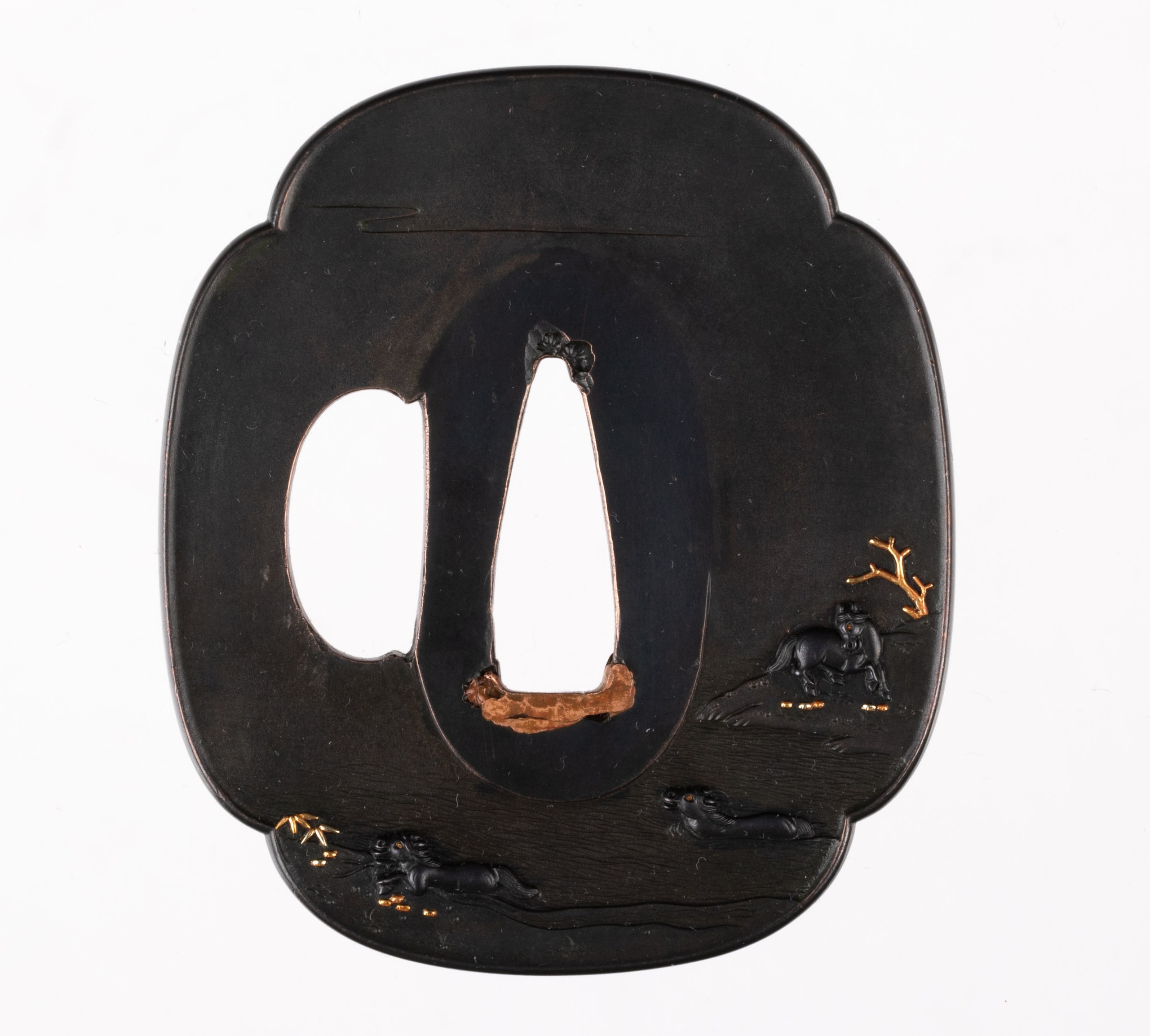
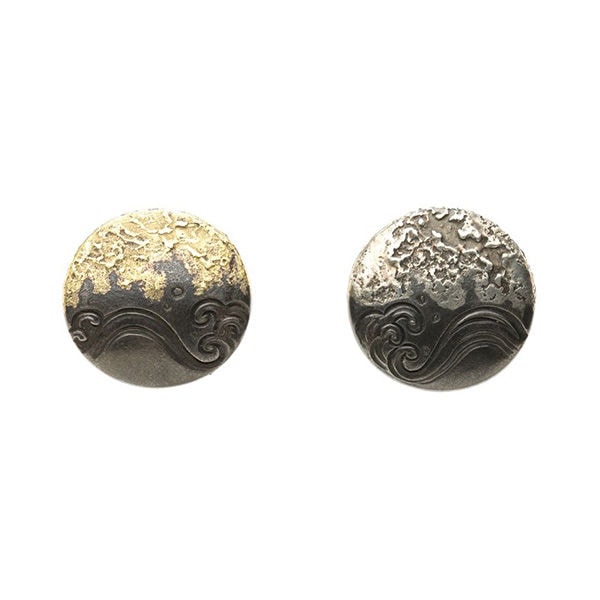
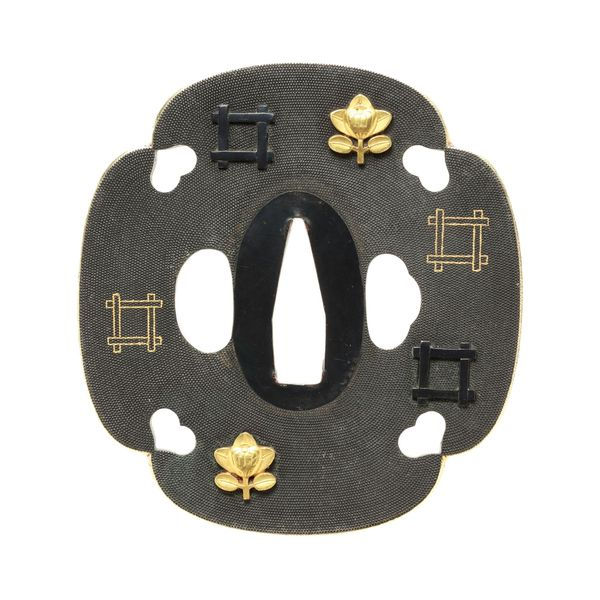
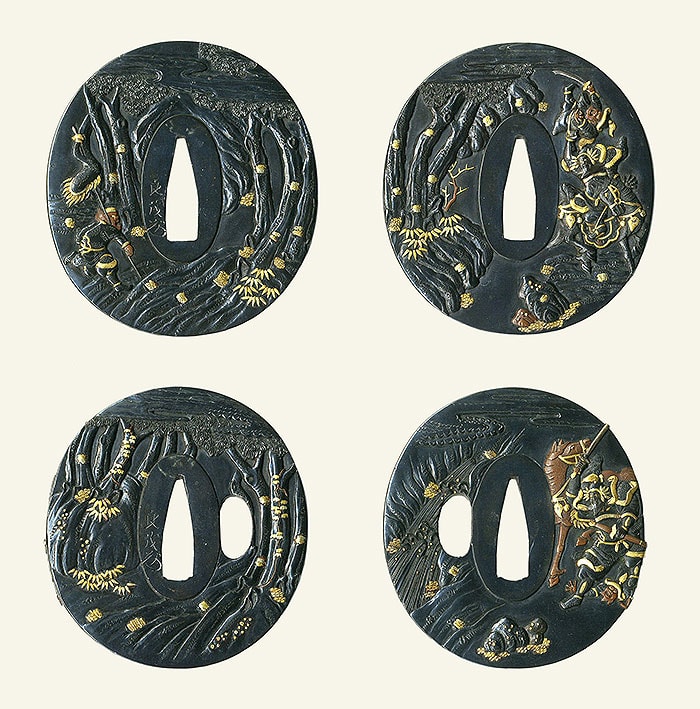
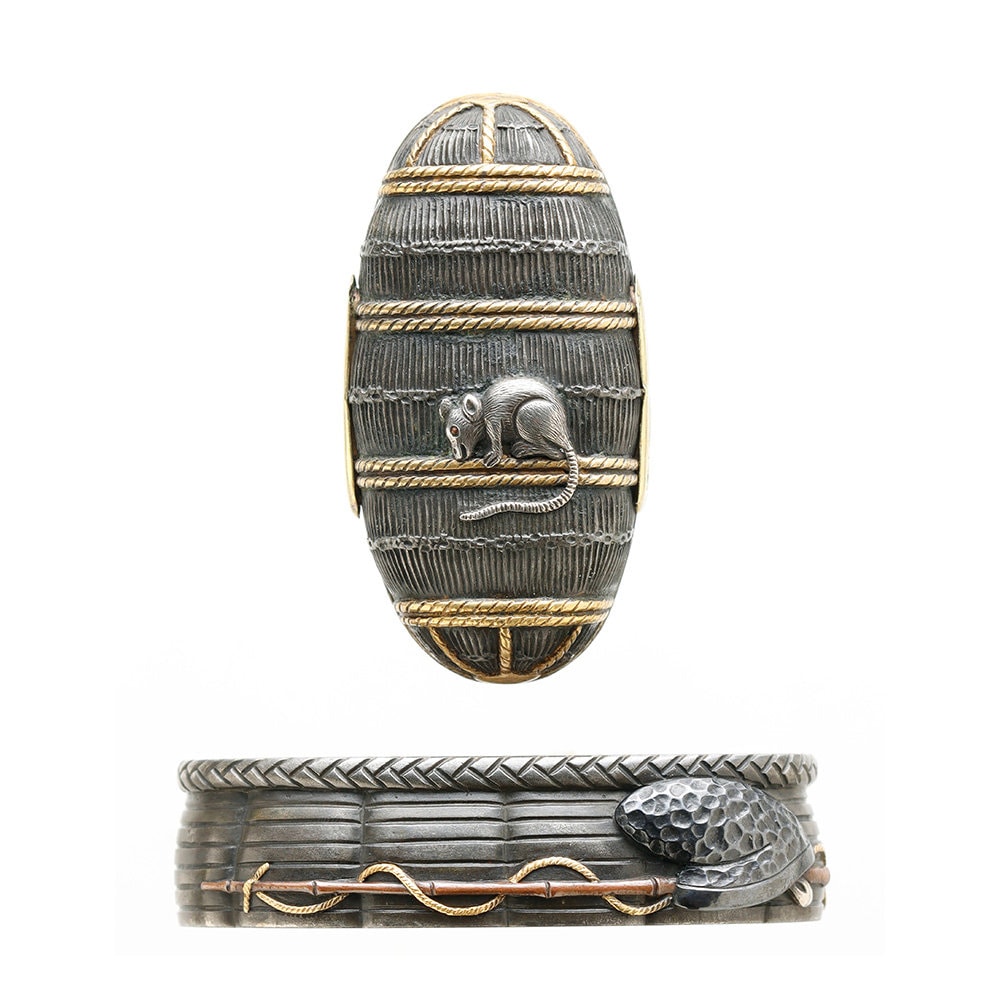
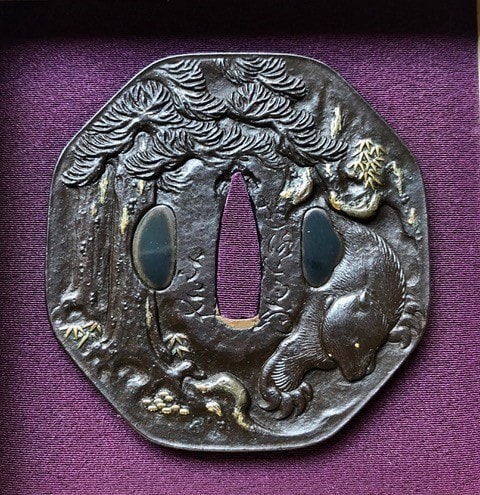
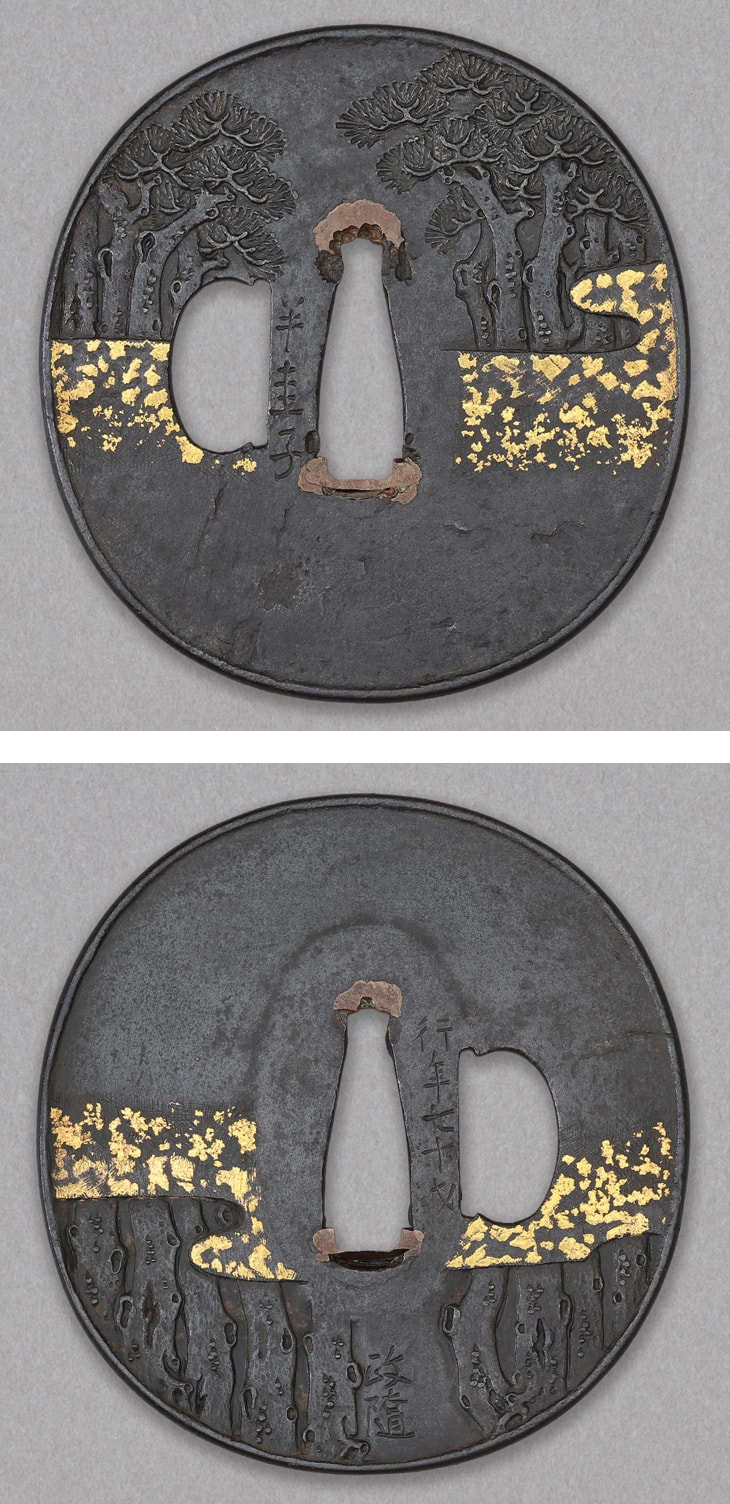
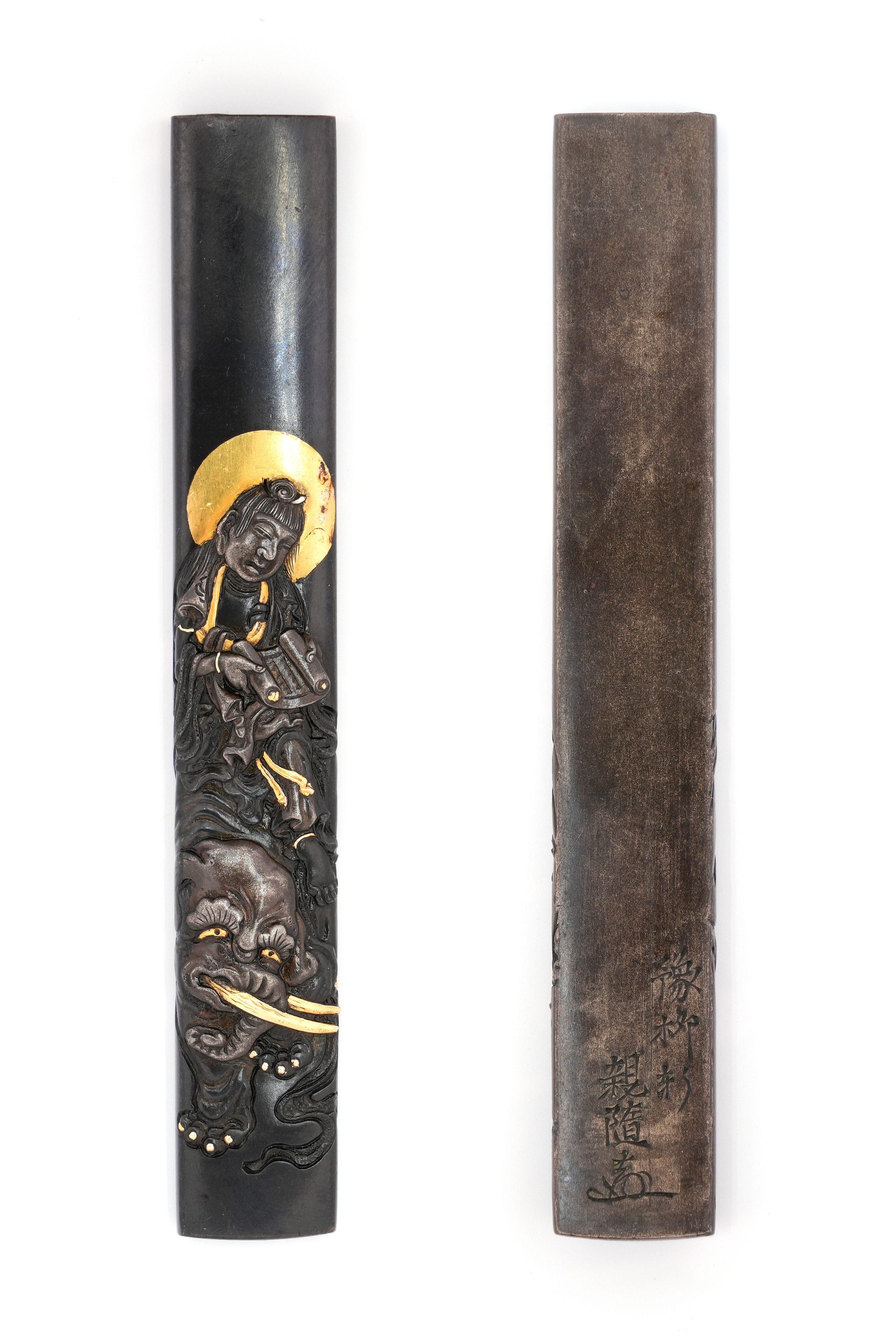
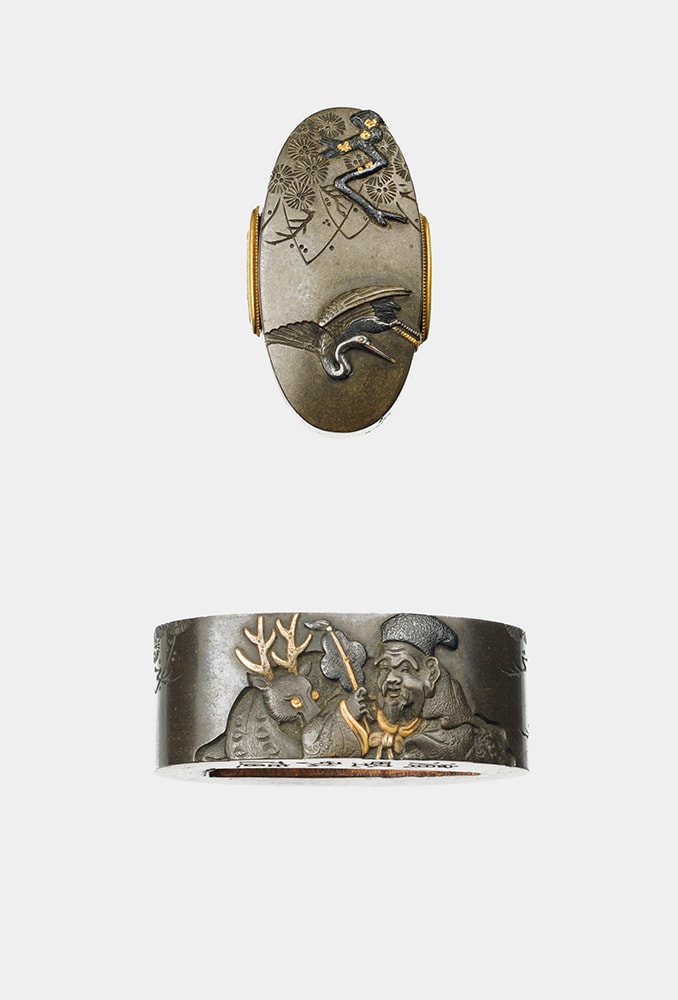
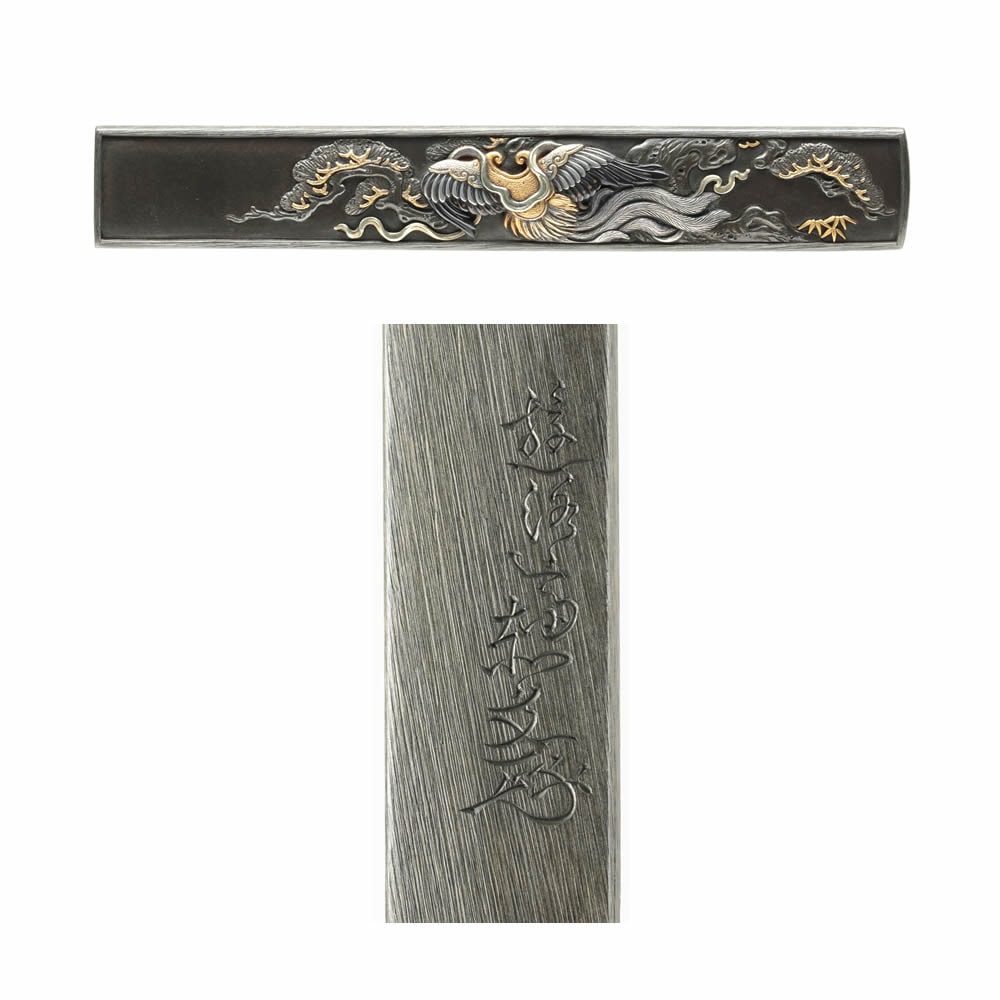
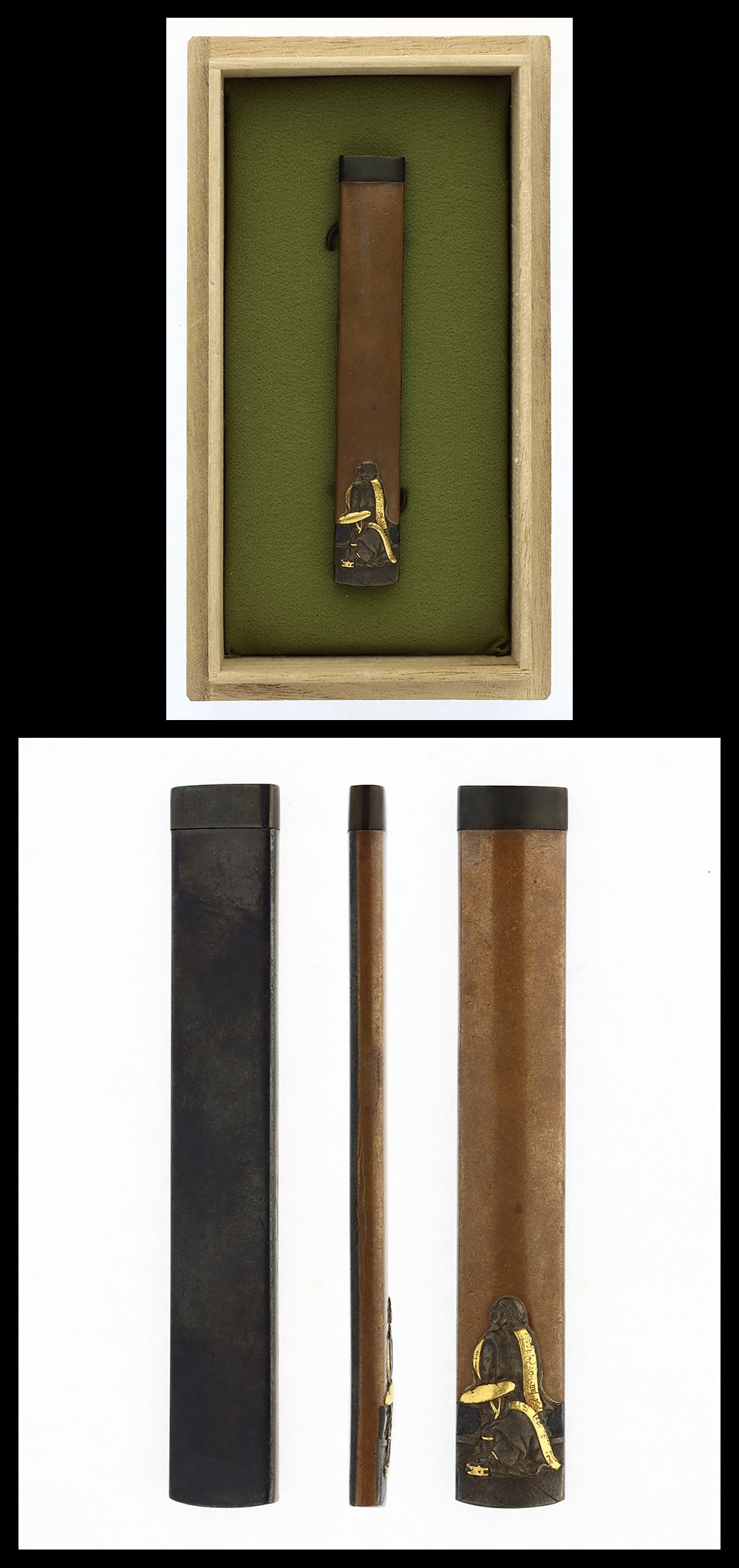
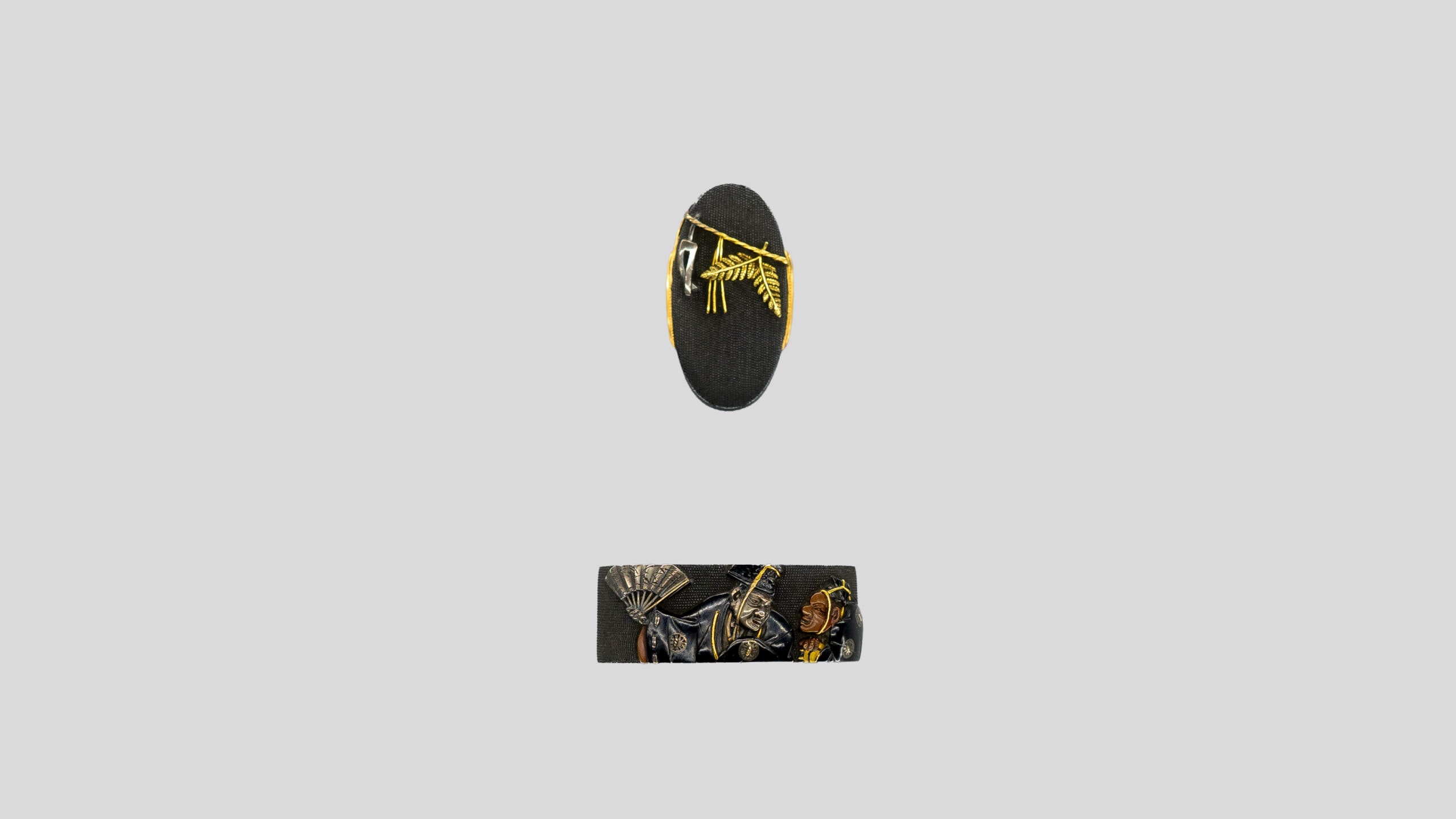
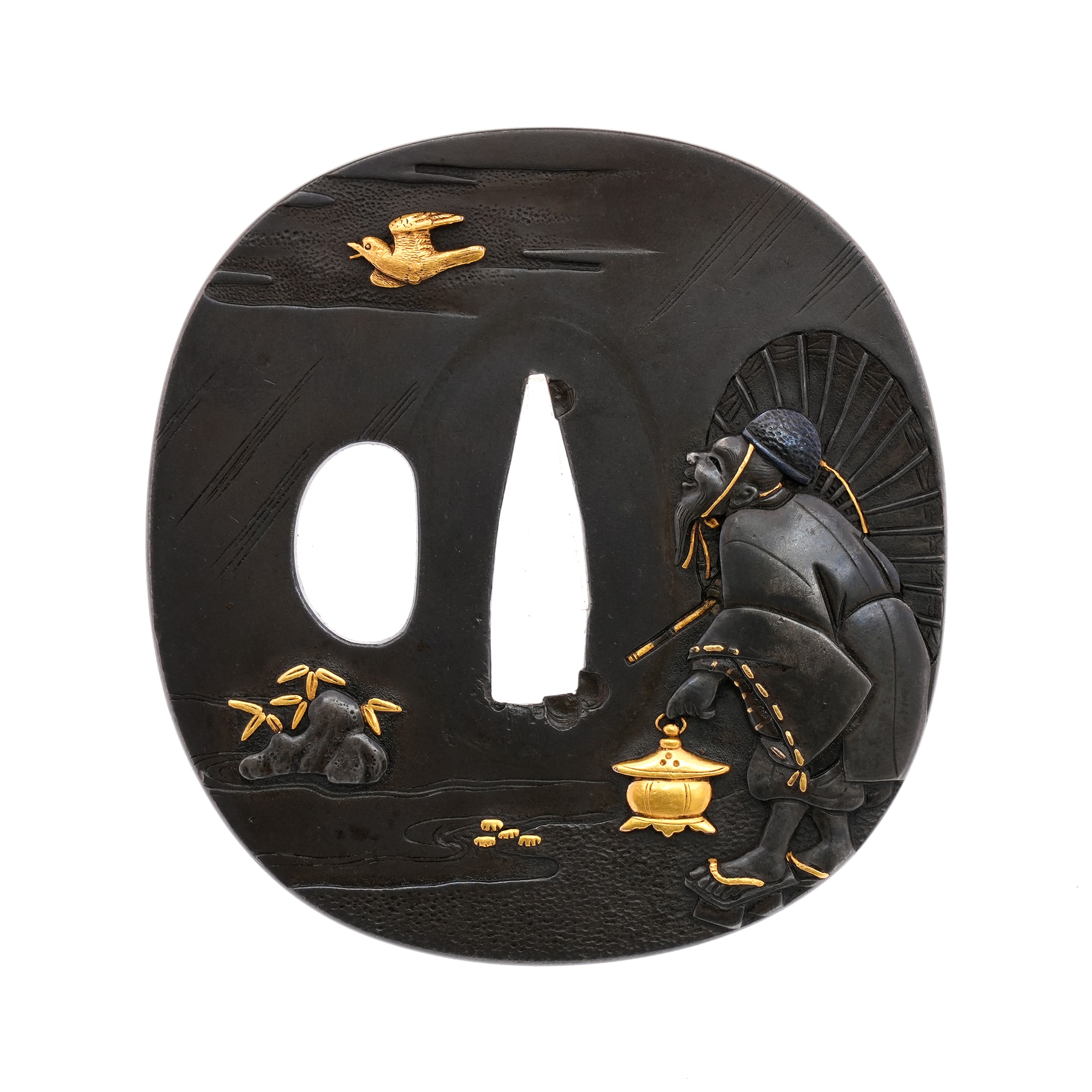
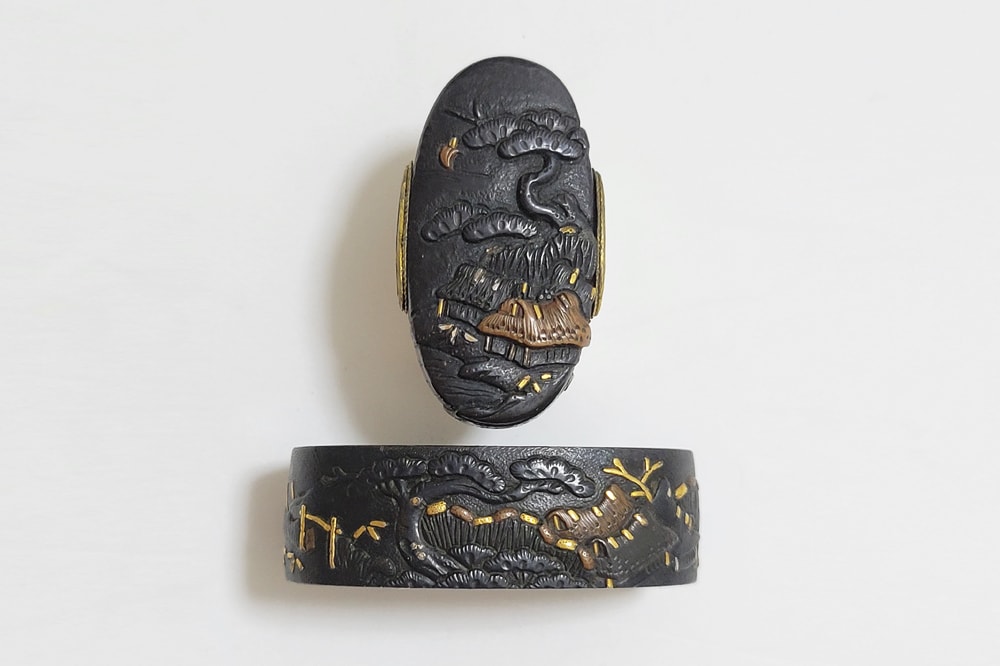
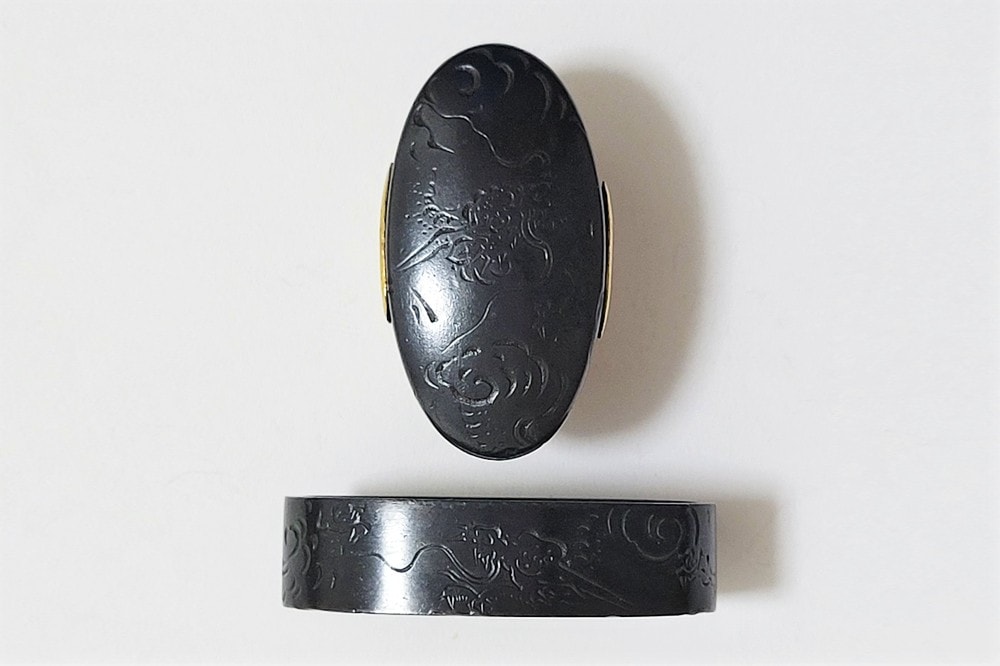
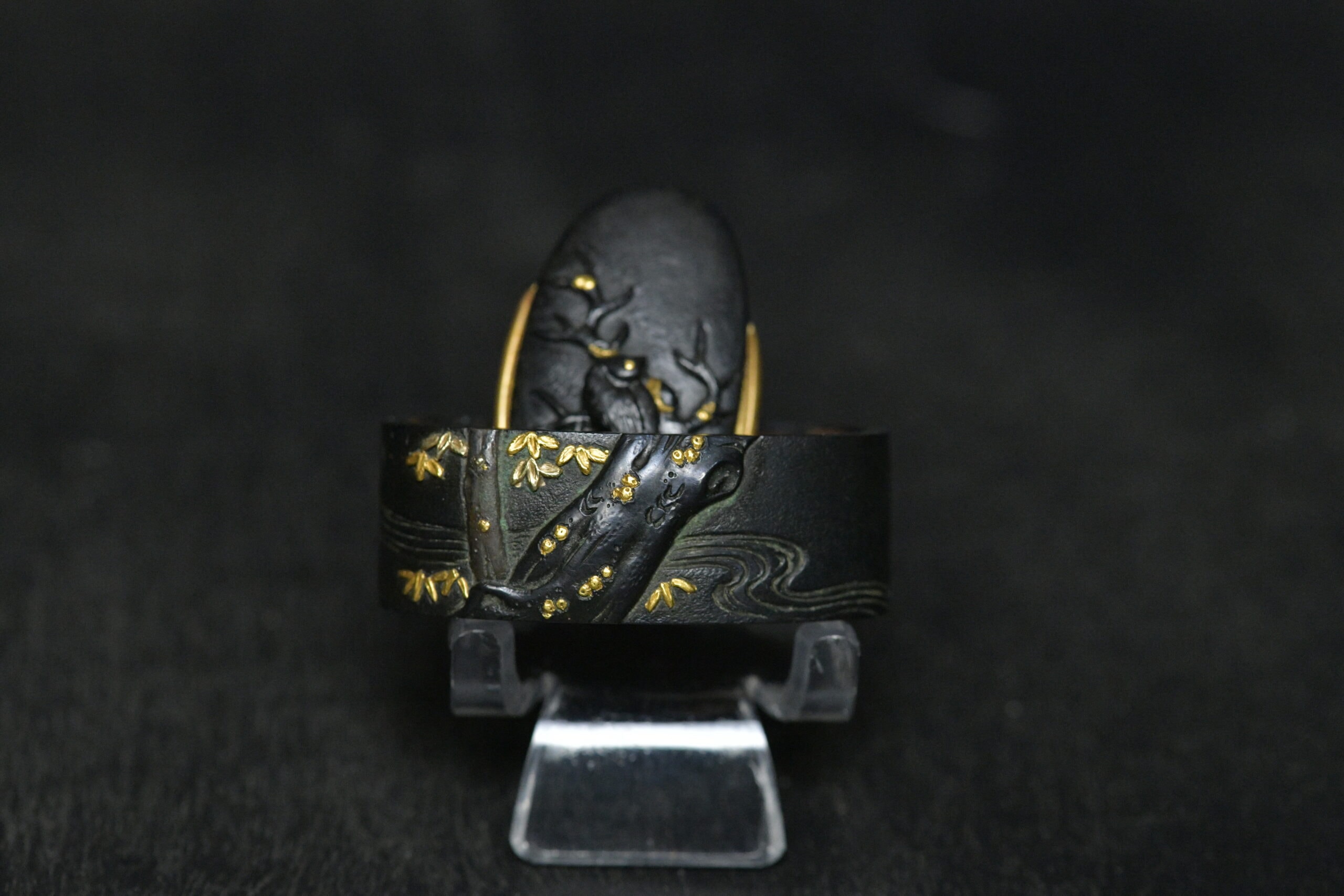
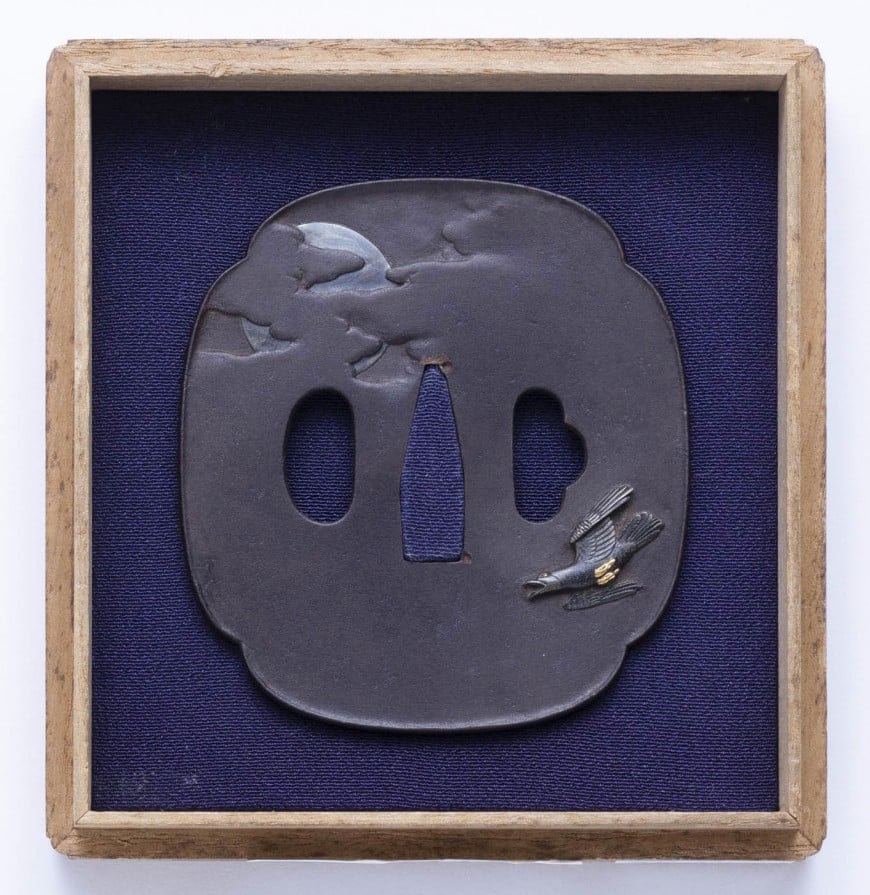
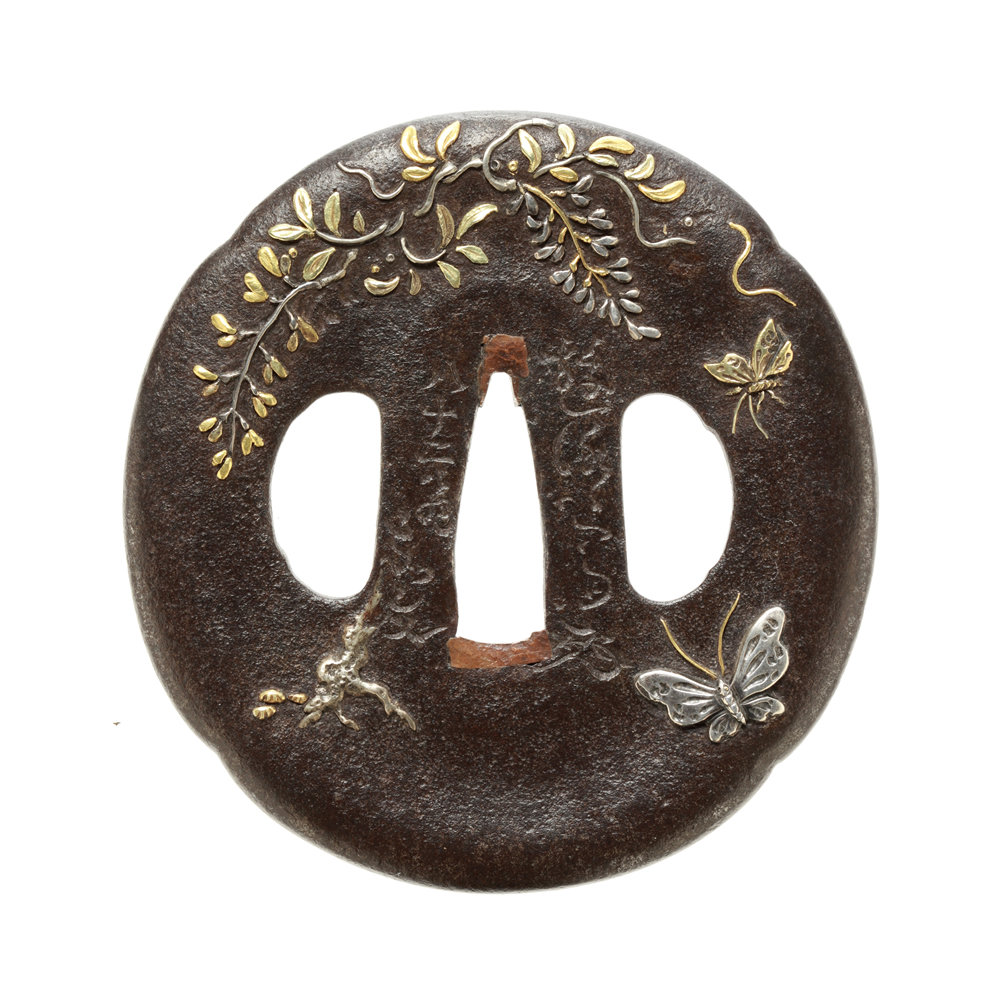
This tsuba, made by Yurakusai Sekibun, features a design of wisteria and butterflies. Sekibun, also known as Masazo, was born in Murakami, Echigo province around the Kansei era and studied in Kyoto and under the Hamano school in Edo. This piece showcases his distinctive style with a high-relief carving of wisteria and butterflies on an iron mokkogata base, enhanced with vibrant gold and silver inlays, capturing the essence of spring.
 NihontoWatch
mei · Hamano · Edo
Hamano School
Edo
Dewa
Signed
Tokuho (NBTHK)
Machibori · Edo
31 pieces on the market now
The Hamano school of machibori carving was established in mid-Edo Edo by Hamano Masazui (浜野政隨), commonly known as Tarōbei, an exceptionally gifted pupil of Nara Toshihisa. As the Edo Kinkō Meifu states of him that he "thunders through the world," Masazui won widespread renown as one of the "Four Guardian Kings of Nara" (Nara Shitennō). Learn more →
| Smith | Era | Designated |
|---|---|---|
| Shozui政随 | — | 17 |
| Sekibun赤文 | 1670 | 8 |
| Noriyuki矩随 | — | 4 |
| Yoshinao義直 | — | 0 |
| Haruchika春親 | — | 0 |
A Hozon-certified fitting of notably superior craftsmanship and condition, often with signature or workmanship of high reference value.
The NBTHK (Nihon Bijutsu Tōken Hozon Kyōkai, the Society for the Preservation of Japanese Art Swords) is a public-interest incorporated foundation founded in 1948 and supervised by Japan’s Agency for Cultural Affairs (Bunkachō); it is based at the Japanese Sword Museum in Tokyo. Its expert panels physically examine each submitted work (shinsa) and issue a certificate (kanteishō) ranking it by artistic and historical merit. NBTHK papers are the most widely recognized standard of authentication for Japanese swords and fittings.
NBTHK official siteIf, due to our fault, the item differs significantly from its proper condition, the item may be returned. Cooling-off is within one week of the item's arrival.
This tsuba, made by Yurakusai Sekibun, features a design of wisteria and butterflies. Sekibun, also known as Masazo, was born in Murakami, Echigo province around the Kansei era and studied in Kyoto and under the Hamano school in Edo. This piece showcases his distinctive style with a high-relief carving of wisteria and butterflies on an iron mokkogata base, enhanced with vibrant gold and silver inlays, capturing the essence of spring.
NihontoWatchmei · Hamano · Edo
Hamano School
Edo
Dewa
Signed
Tokuho (NBTHK)
Machibori · Edo
31 pieces on the market now
The Hamano school of machibori carving was established in mid-Edo Edo by Hamano Masazui (浜野政隨), commonly known as Tarōbei, an exceptionally gifted pupil of Nara Toshihisa. As the Edo Kinkō Meifu states of him that he "thunders through the world," Masazui won widespread renown as one of the "Four Guardian Kings of Nara" (Nara Shitennō). Learn more →
| Smith | Era | Designated |
|---|---|---|
| Shozui政随 | — | 17 |
| Sekibun赤文 | 1670 | 8 |
| Noriyuki矩随 | — | 4 |
| Yoshinao義直 | — | 0 |
| Haruchika春親 | — | 0 |
A Hozon-certified fitting of notably superior craftsmanship and condition, often with signature or workmanship of high reference value.
The NBTHK (Nihon Bijutsu Tōken Hozon Kyōkai, the Society for the Preservation of Japanese Art Swords) is a public-interest incorporated foundation founded in 1948 and supervised by Japan’s Agency for Cultural Affairs (Bunkachō); it is based at the Japanese Sword Museum in Tokyo. Its expert panels physically examine each submitted work (shinsa) and issue a certificate (kanteishō) ranking it by artistic and historical merit. NBTHK papers are the most widely recognized standard of authentication for Japanese swords and fittings.
NBTHK official siteIf, due to our fault, the item differs significantly from its proper condition, the item may be returned. Cooling-off is within one week of the item's arrival.
![Kozuka - Hozon - by Hamano School - Bee Design, Signed Noriyuki Hamano at 70 years old [Gold Seal]](/_next/image?url=https%3A%2F%2Fitbhfhyptogxcjbjfzwx.supabase.co%2Fstorage%2Fv1%2Fobject%2Fpublic%2Flisting-images%2Fchoshuya%2FL35403%2F00.jpg&w=2560&q=90)