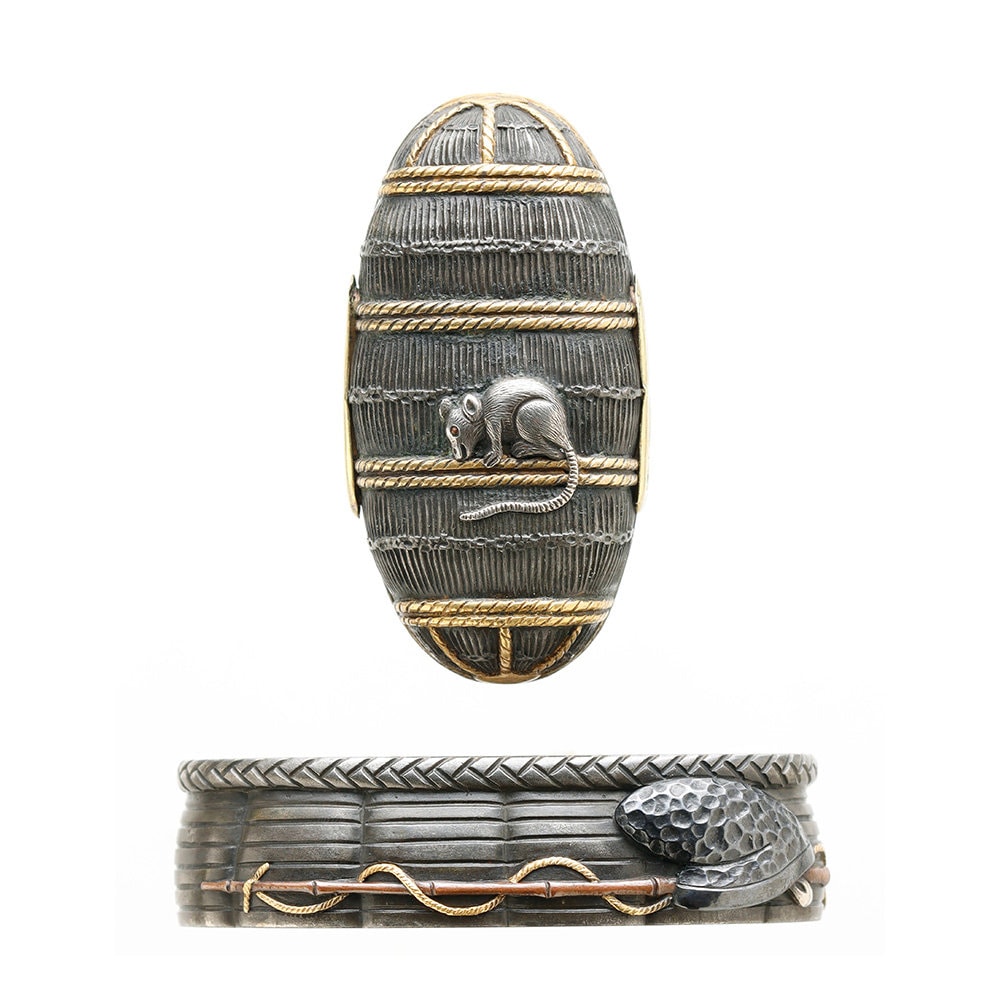
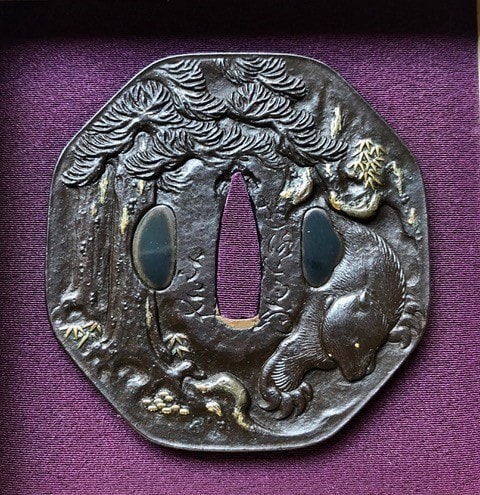
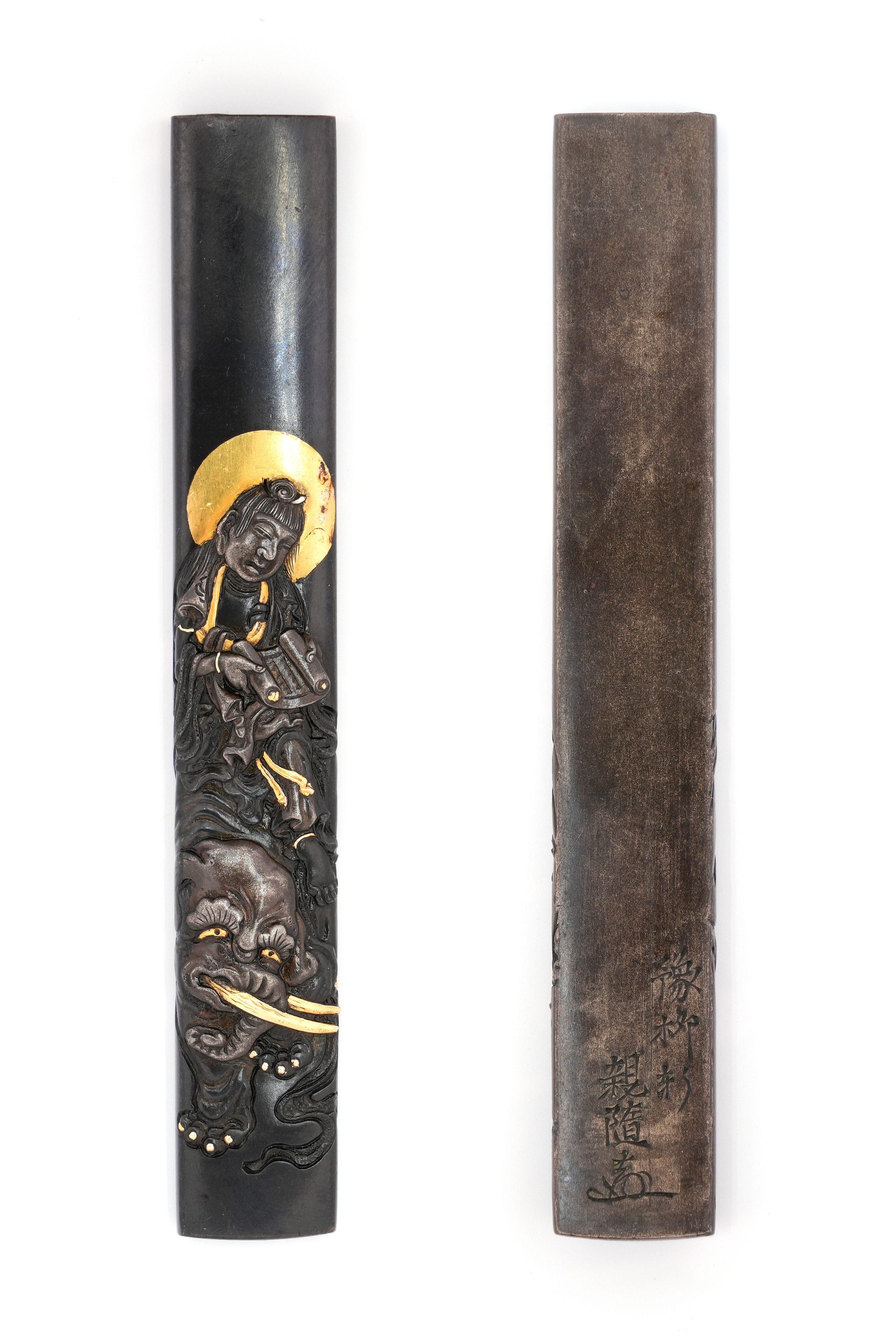
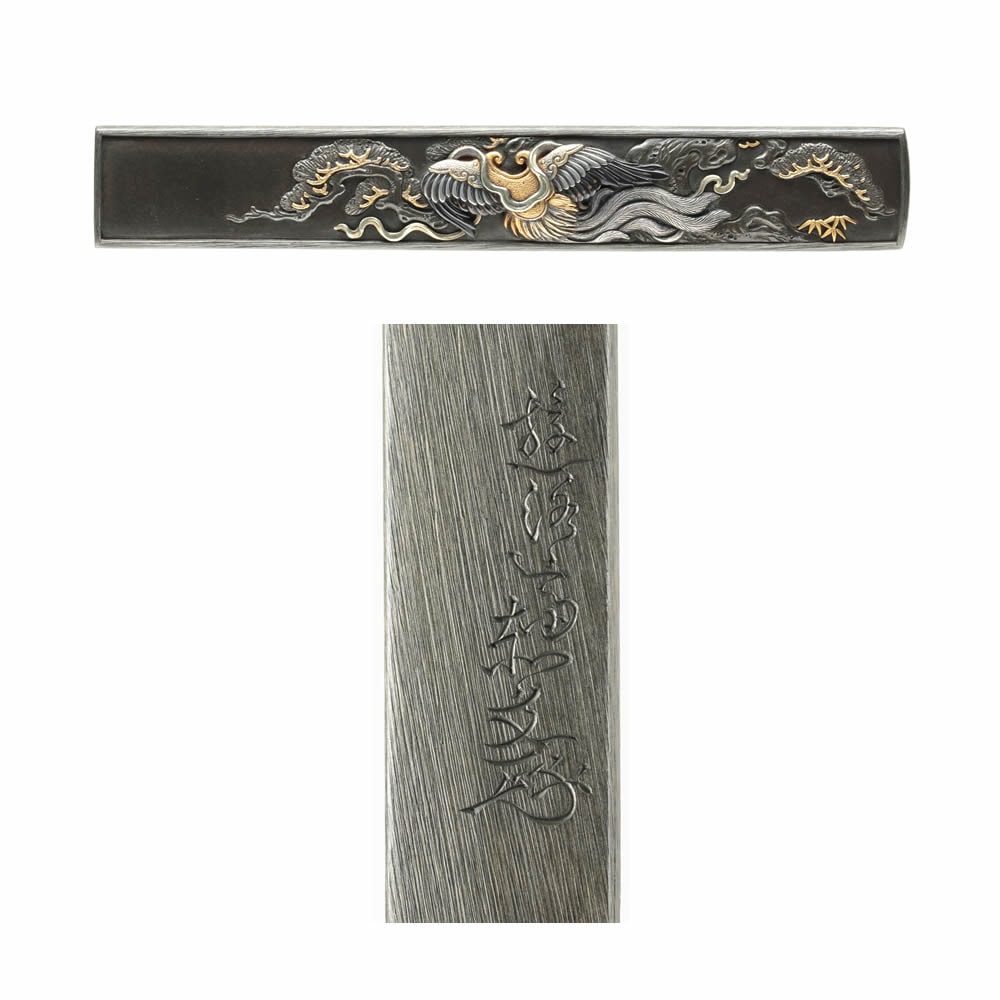
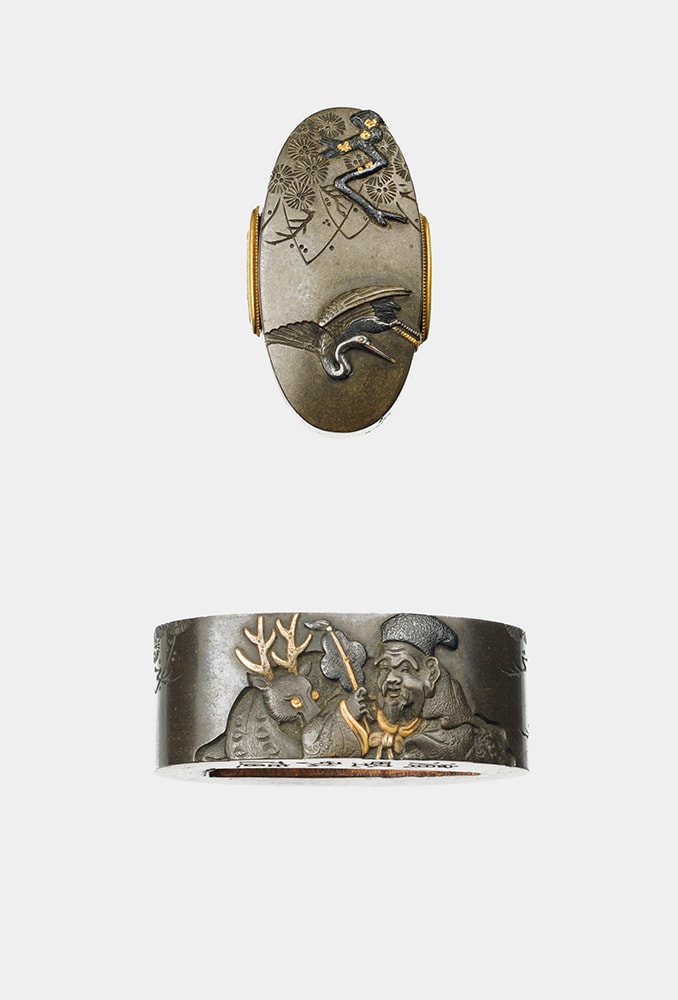
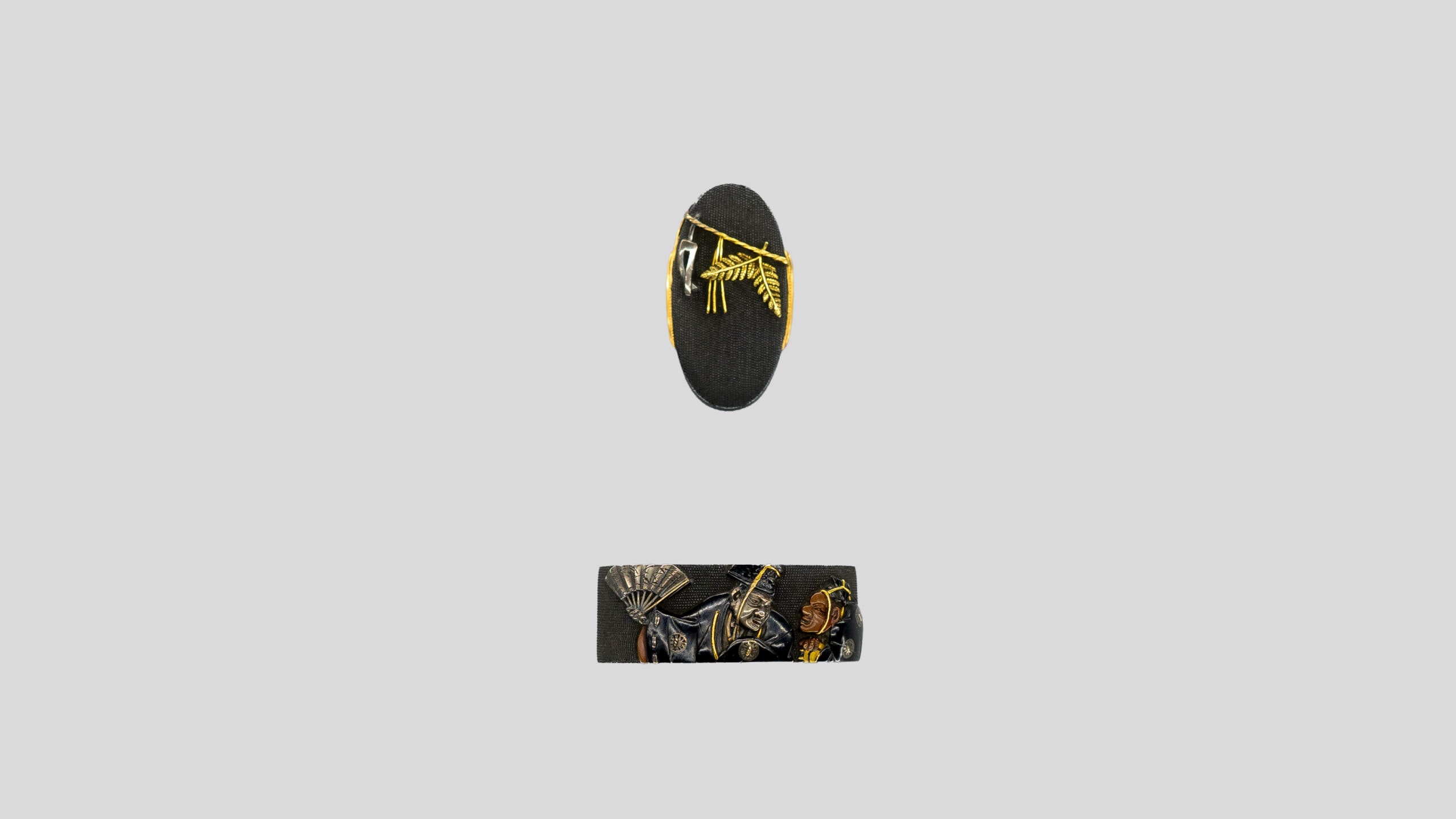
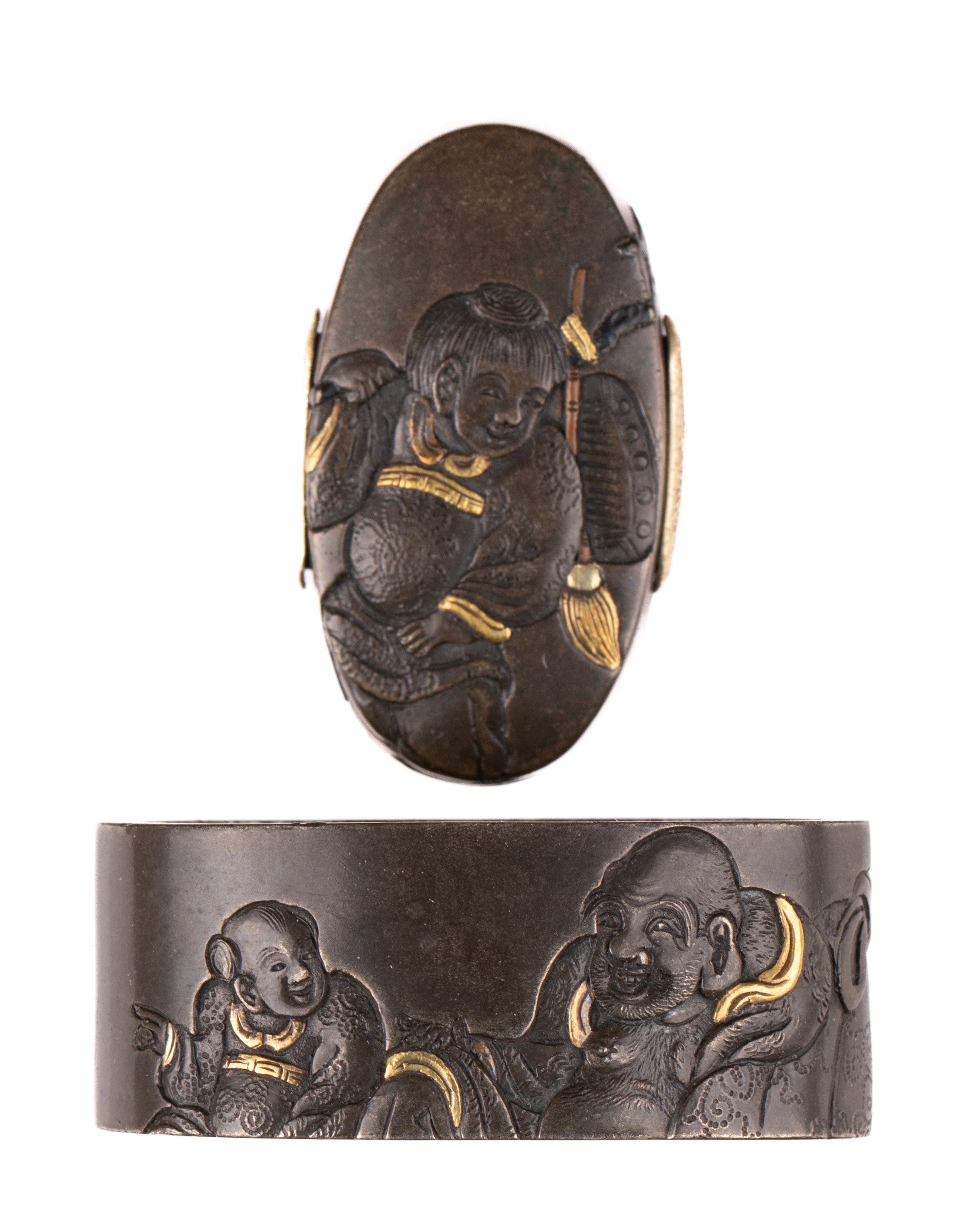
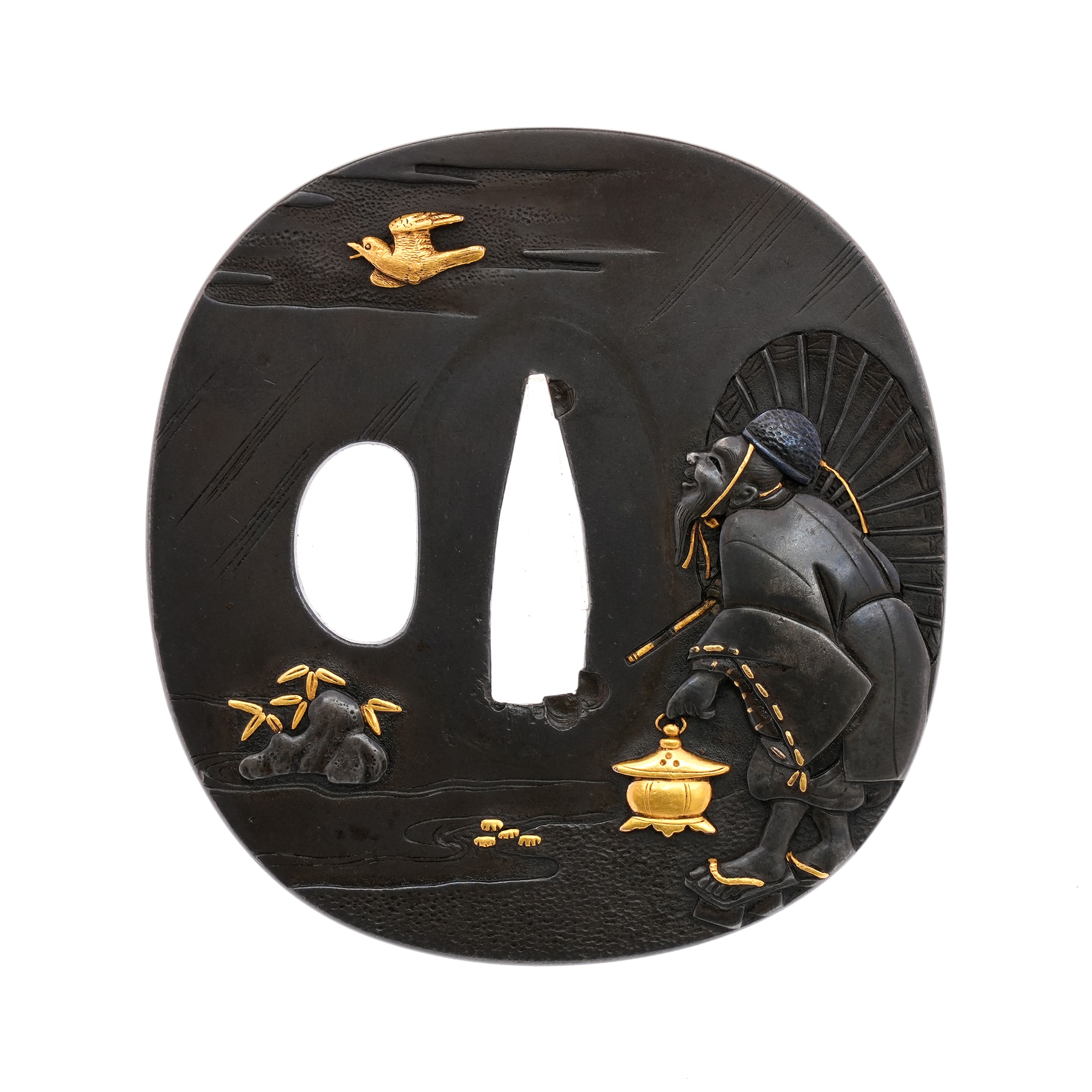
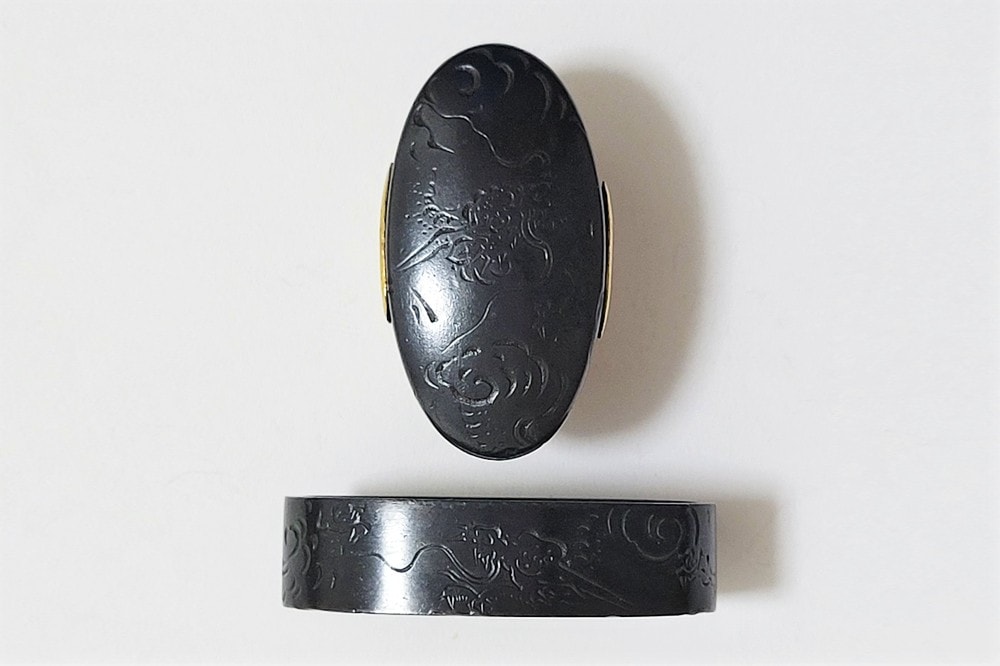
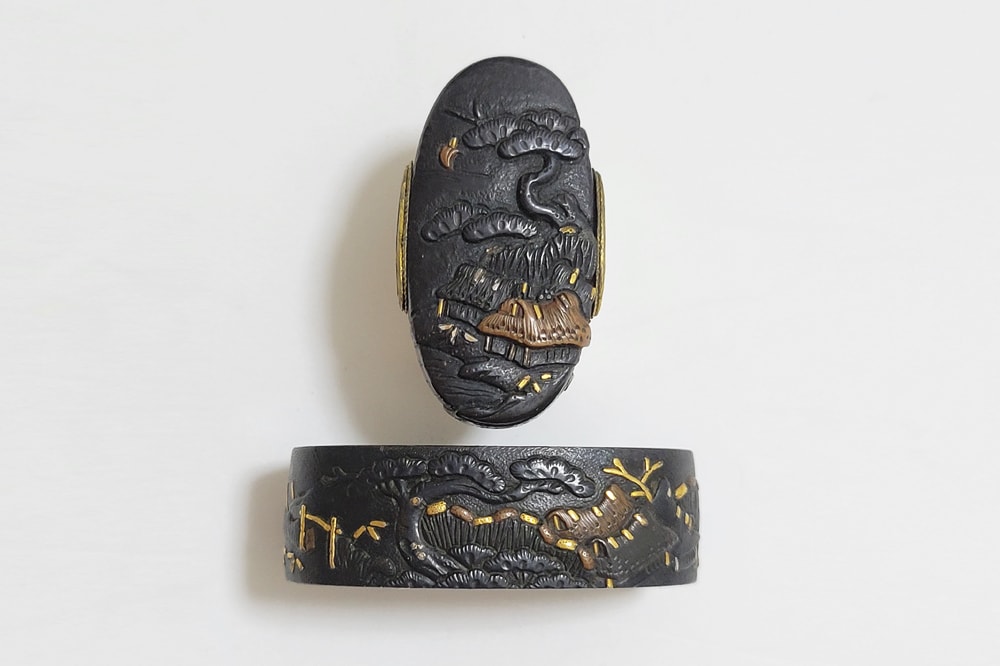
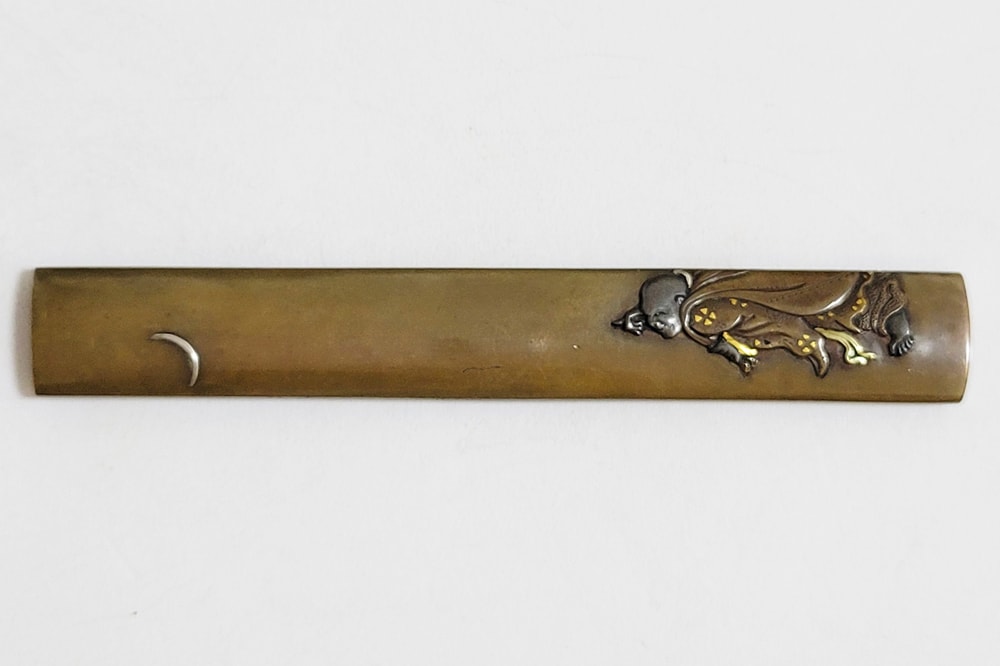
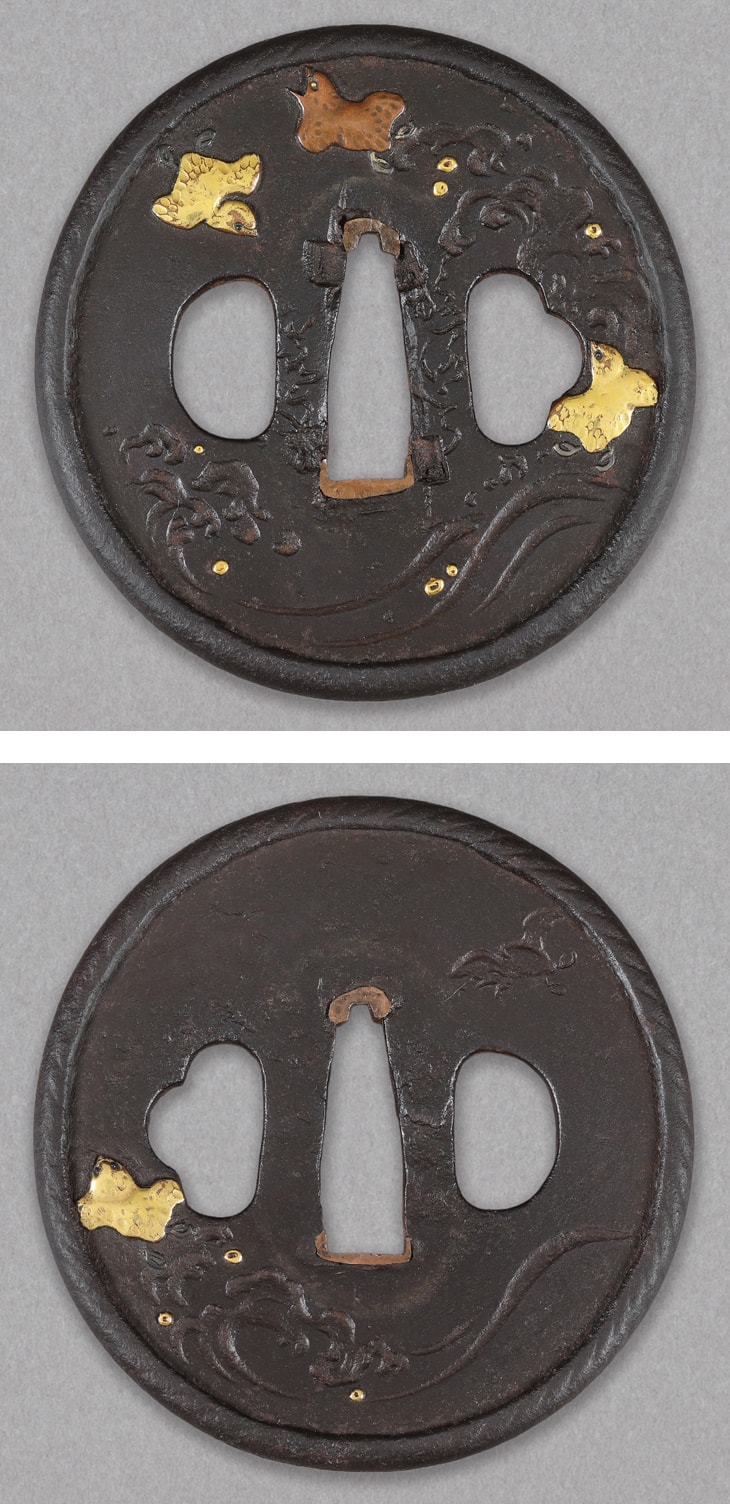
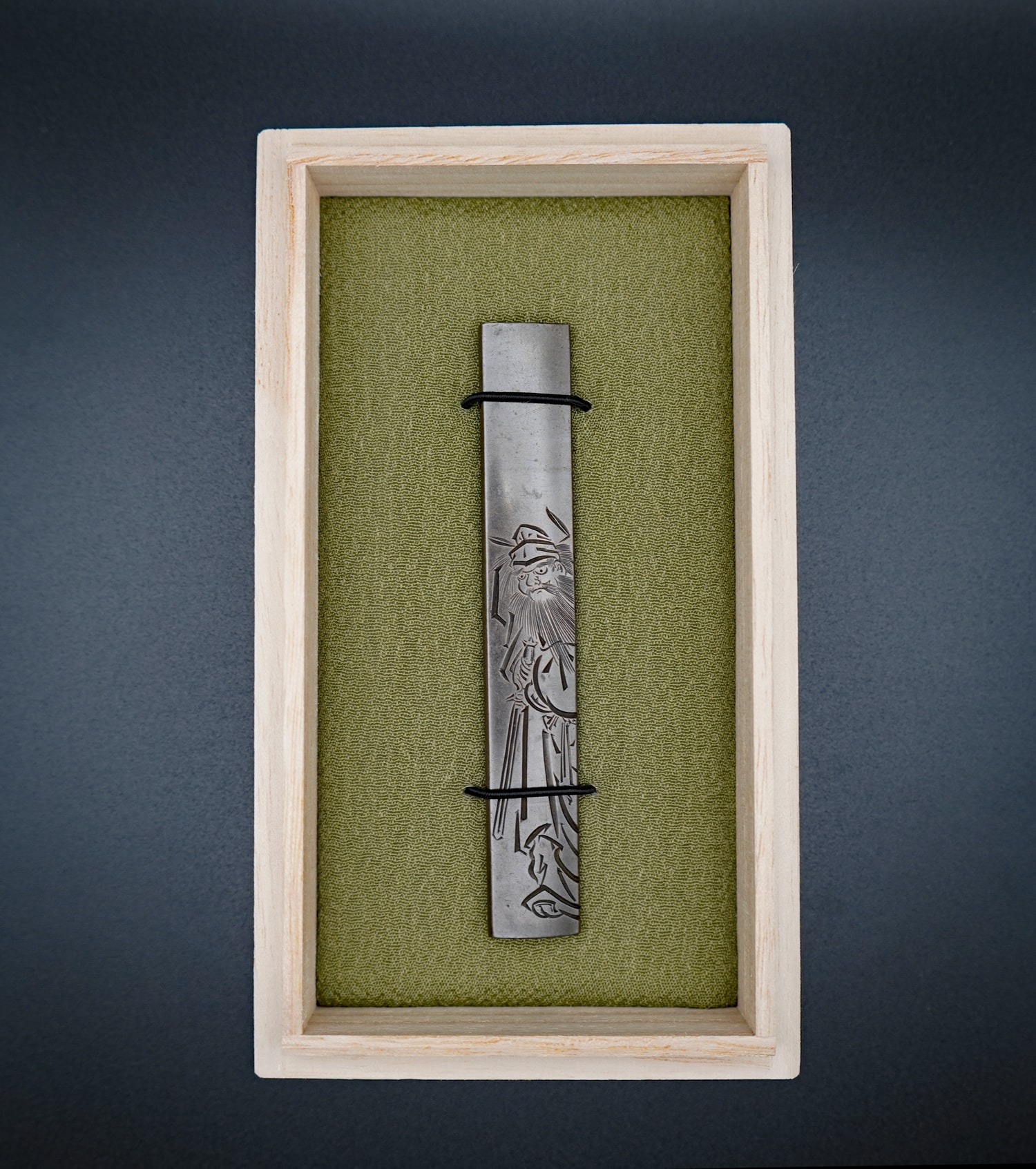
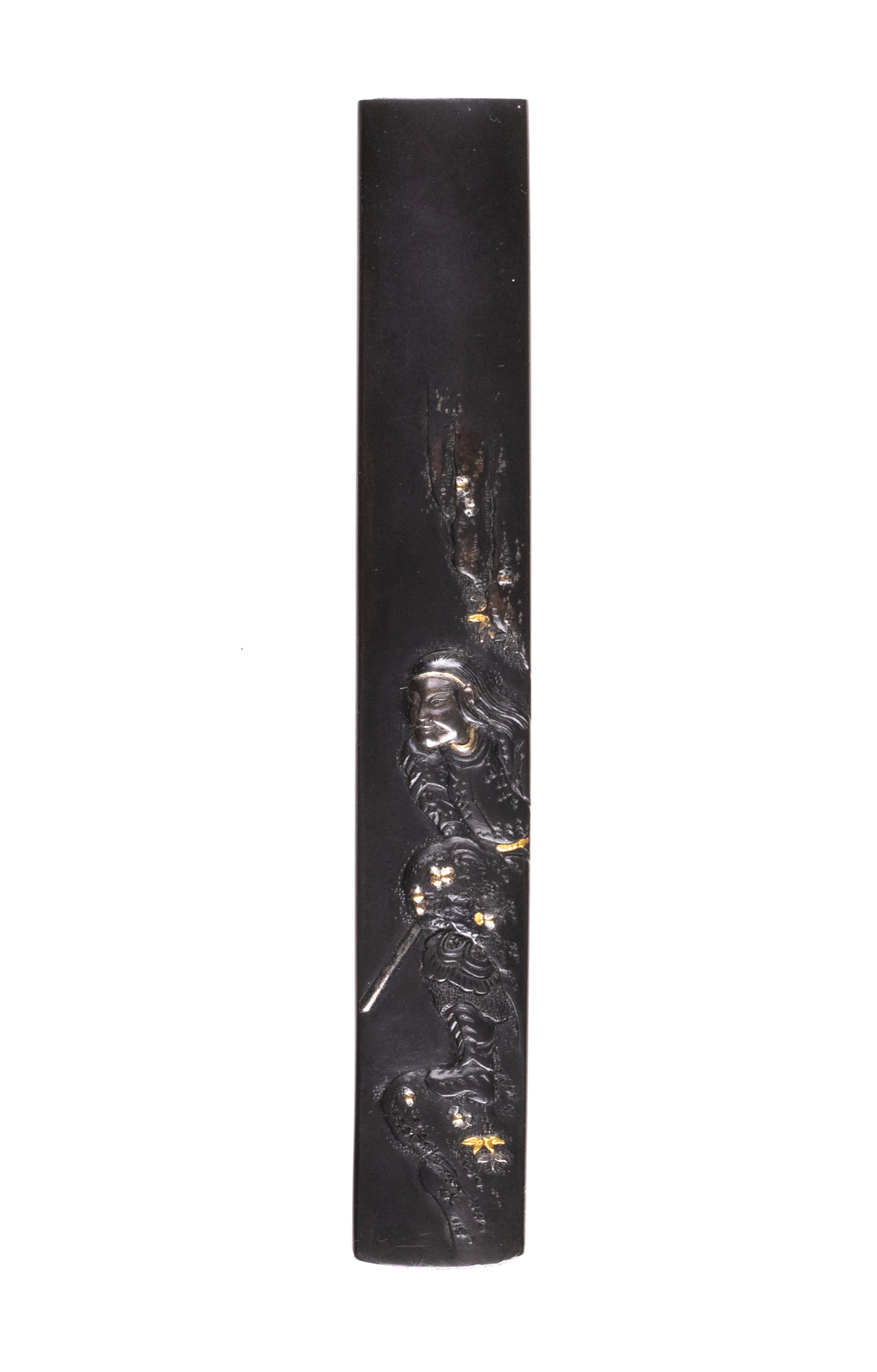
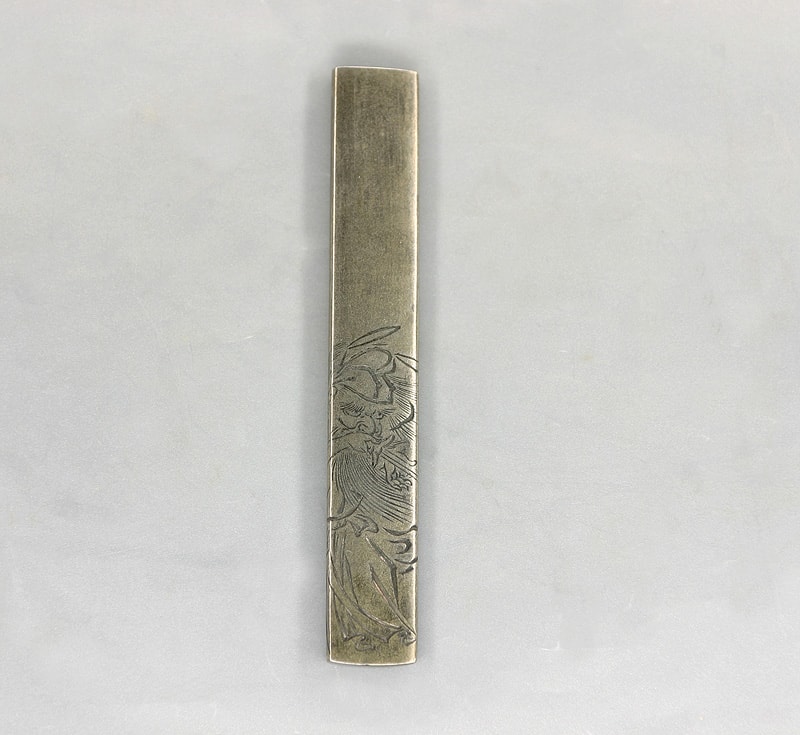
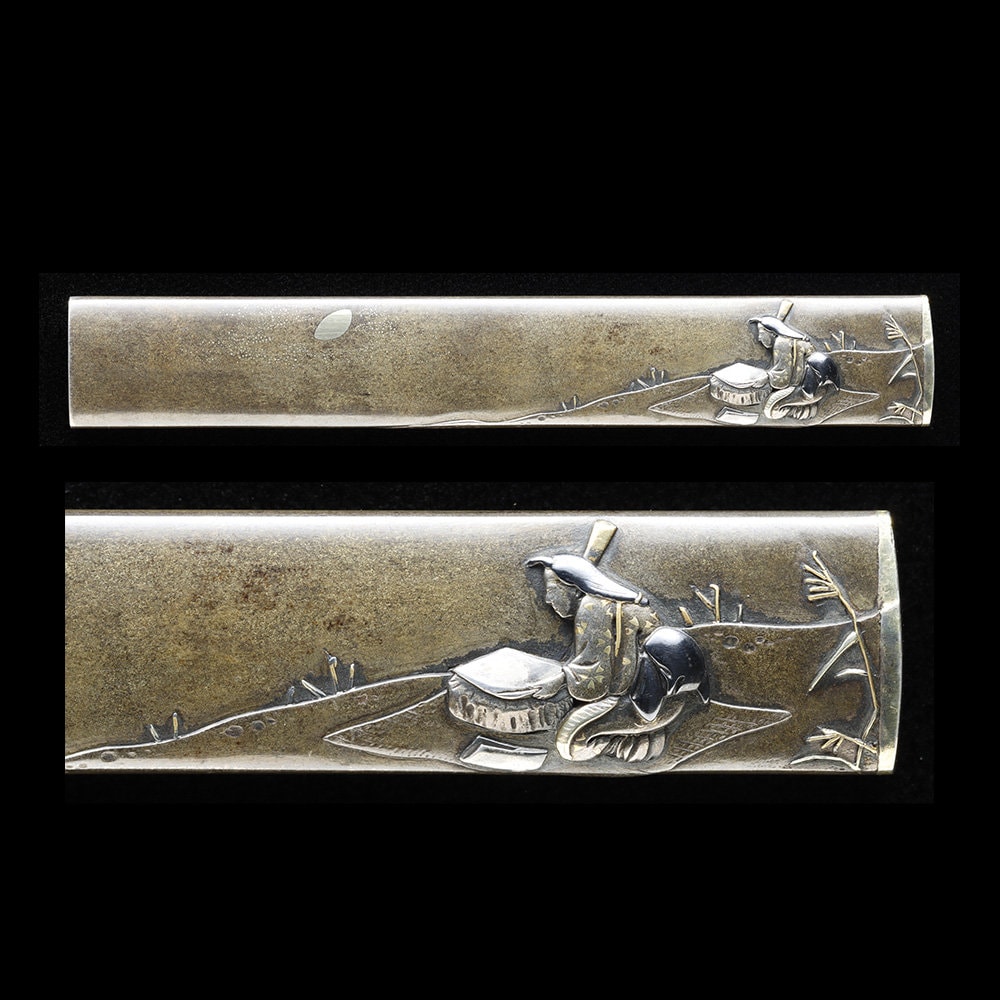
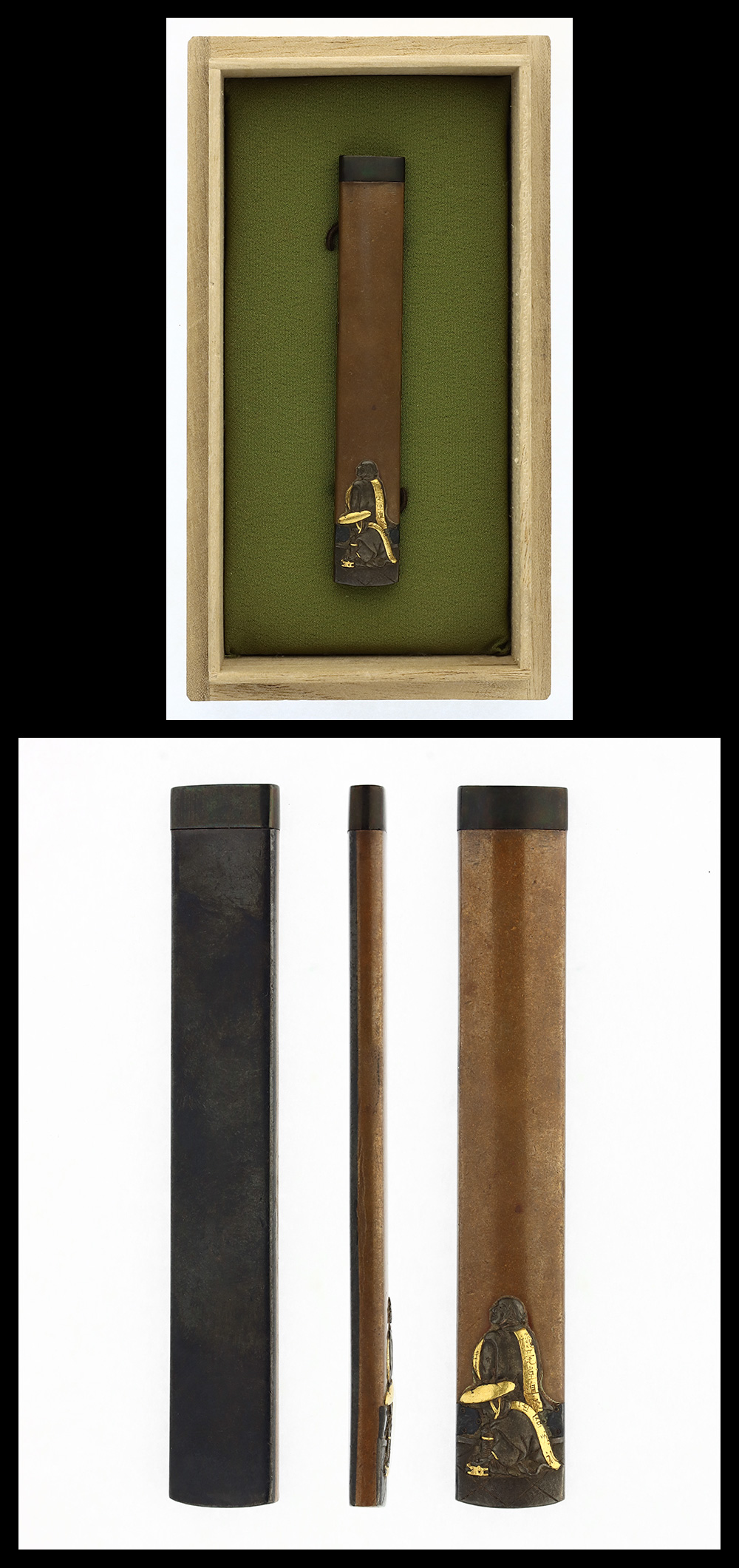
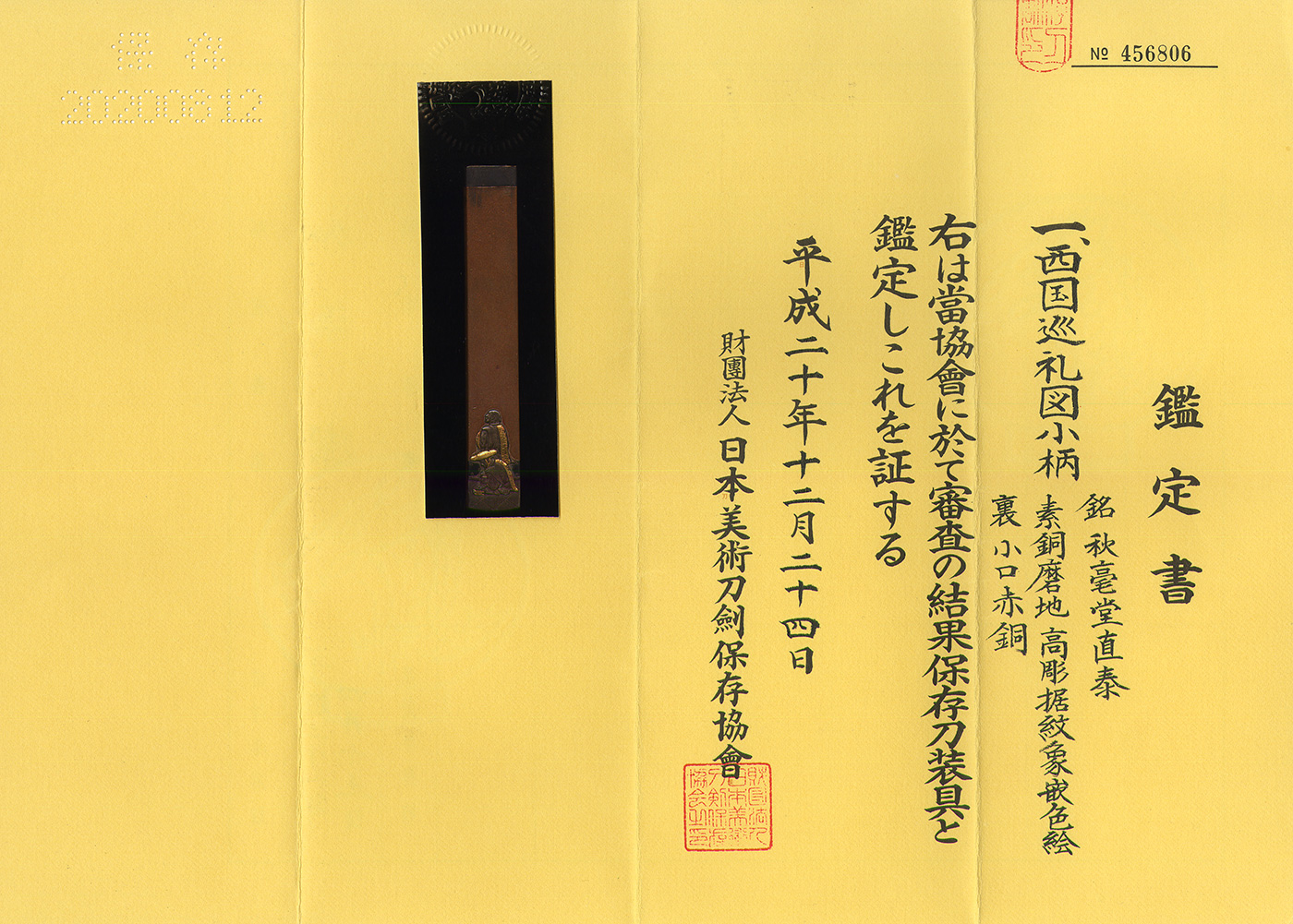
This is a kozuka by Shugodo Naoyasu from the late Edo period. It features a traveler carved on a copper ground, adorned with colored metal inlay. The item comes with an NBTHK Hozon Tosogu certificate and is presented in a Kiri box.
 NihontoWatchBETA
mei · Shugodo · Edo
Hamano Naoyasu
Edo
Signed
Hozon (NBTHK)
Machibori · Musashi
1 piece on the market now
Machibori · Edo
31 pieces on the market now
The Hamano school of machibori carving was established in mid-Edo Edo by Hamano Masazui (浜野政隨), commonly known as Tarōbei, an exceptionally gifted pupil of Nara Toshihisa. As the Edo Kinkō Meifu states of him that he "thunders through the world," Masazui won widespread renown as one of the "Four Guardian Kings of Nara" (Nara Shitennō). Learn more →
| Smith | Era | Designated |
|---|---|---|
| Shozui政随 | — | 17 |
| Sekibun赤文 | 1670 | 8 |
| Noriyuki矩随 | — | 4 |
| Yoshinao義直 | — | 0 |
| Haruchika春親 | — | 0 |
Certifies a genuine fitting worth preserving: a correct signature, or, if unsigned, an identifiable era and school, with recognized artistic and craft value.
The NBTHK (Nihon Bijutsu Tōken Hozon Kyōkai, the Society for the Preservation of Japanese Art Swords) is a public-interest incorporated foundation founded in 1948 and supervised by Japan’s Agency for Cultural Affairs (Bunkachō); it is based at the Japanese Sword Museum in Tokyo. Its expert panels physically examine each submitted work (shinsa) and issue a certificate (kanteishō) ranking it by artistic and historical merit. NBTHK papers are the most widely recognized standard of authentication for Japanese swords and fittings.
NBTHK official siteIf you wish to return an item, please notify us within 3 days of receipt. After this period we cannot accept cancellations. Please ship the return to us within 5 business days. Cancellation is conditional on the item being kept in the same condition as at the time of sale, so please handle it with care.
This is a kozuka by Shugodo Naoyasu from the late Edo period. It features a traveler carved on a copper ground, adorned with colored metal inlay. The item comes with an NBTHK Hozon Tosogu certificate and is presented in a Kiri box.
NihontoWatchBETAmei · Shugodo · Edo
Hamano Naoyasu
Edo
Signed
Hozon (NBTHK)
Machibori · Musashi
1 piece on the market now
Machibori · Edo
31 pieces on the market now
The Hamano school of machibori carving was established in mid-Edo Edo by Hamano Masazui (浜野政隨), commonly known as Tarōbei, an exceptionally gifted pupil of Nara Toshihisa. As the Edo Kinkō Meifu states of him that he "thunders through the world," Masazui won widespread renown as one of the "Four Guardian Kings of Nara" (Nara Shitennō). Learn more →
| Smith | Era | Designated |
|---|---|---|
| Shozui政随 | — | 17 |
| Sekibun赤文 | 1670 | 8 |
| Noriyuki矩随 | — | 4 |
| Yoshinao義直 | — | 0 |
| Haruchika春親 | — | 0 |
Certifies a genuine fitting worth preserving: a correct signature, or, if unsigned, an identifiable era and school, with recognized artistic and craft value.
The NBTHK (Nihon Bijutsu Tōken Hozon Kyōkai, the Society for the Preservation of Japanese Art Swords) is a public-interest incorporated foundation founded in 1948 and supervised by Japan’s Agency for Cultural Affairs (Bunkachō); it is based at the Japanese Sword Museum in Tokyo. Its expert panels physically examine each submitted work (shinsa) and issue a certificate (kanteishō) ranking it by artistic and historical merit. NBTHK papers are the most widely recognized standard of authentication for Japanese swords and fittings.
NBTHK official siteIf you wish to return an item, please notify us within 3 days of receipt. After this period we cannot accept cancellations. Please ship the return to us within 5 business days. Cancellation is conditional on the item being kept in the same condition as at the time of sale, so please handle it with care.