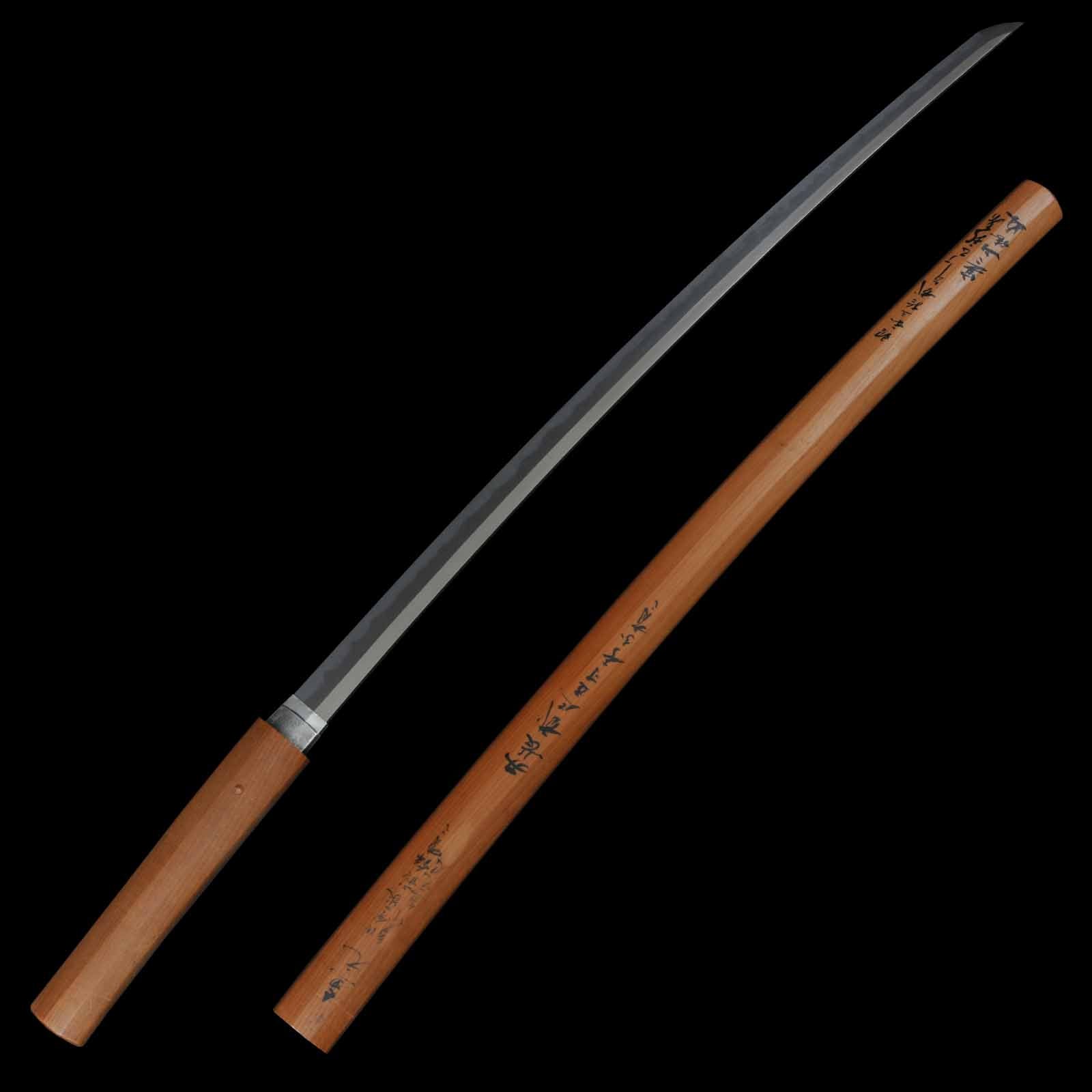
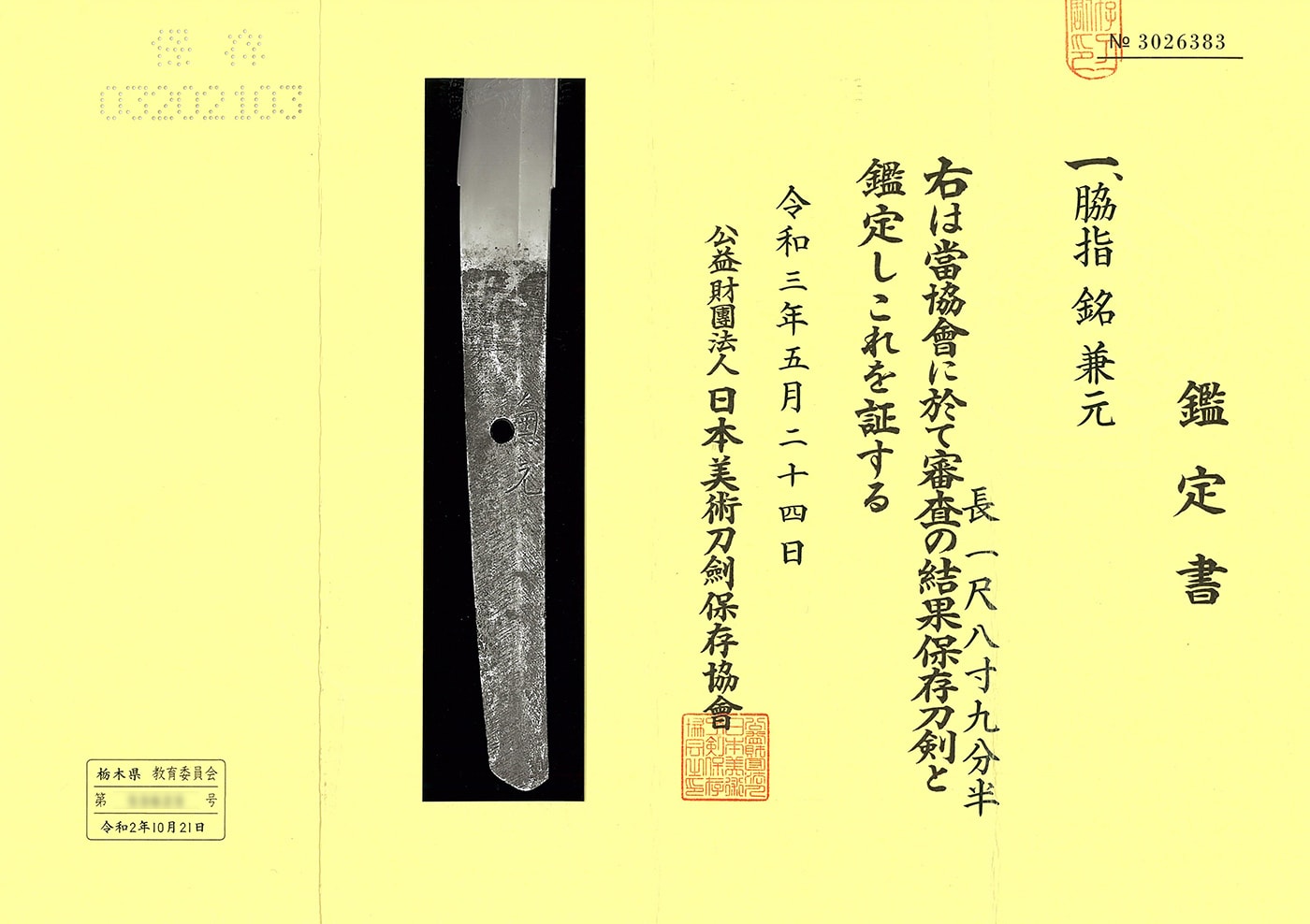
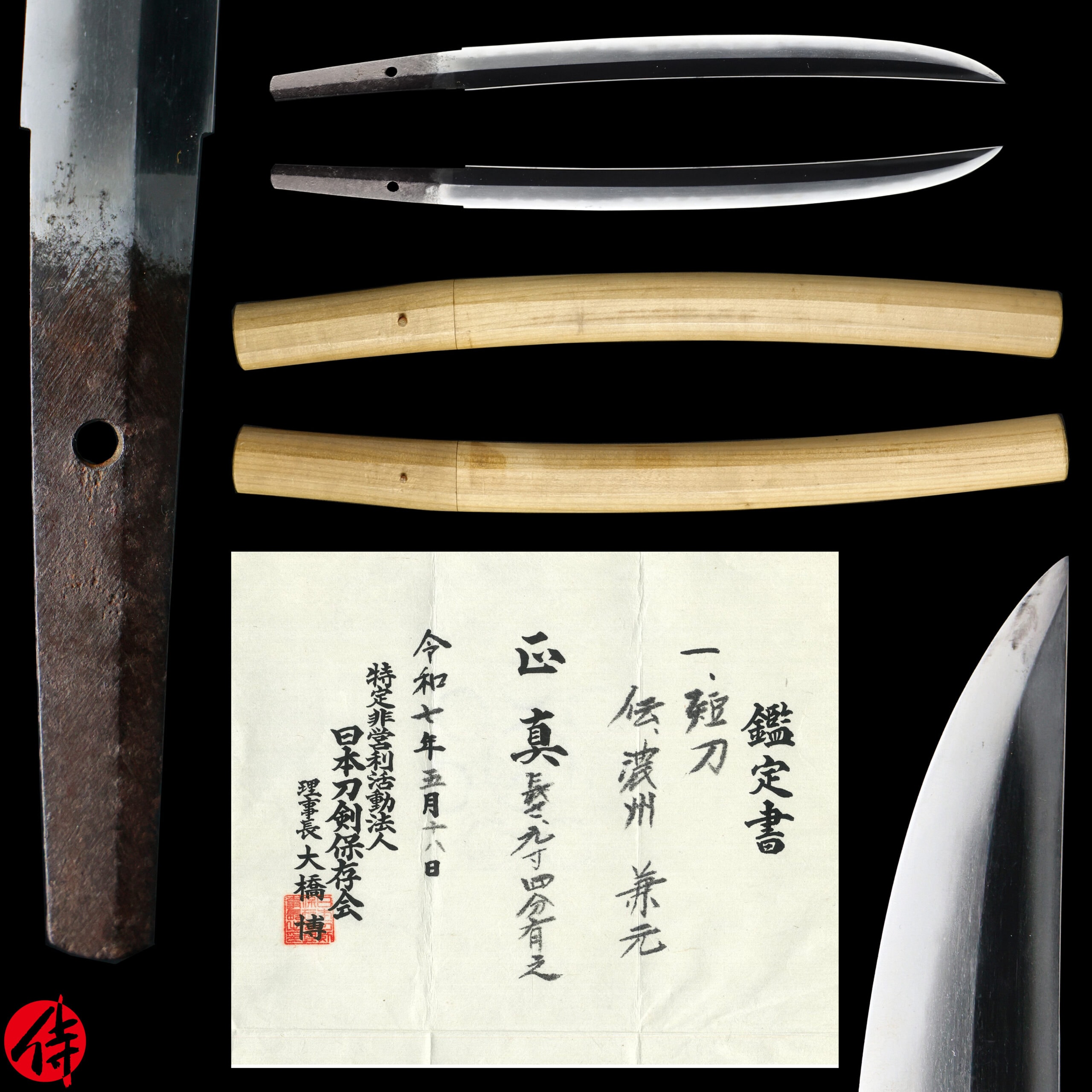
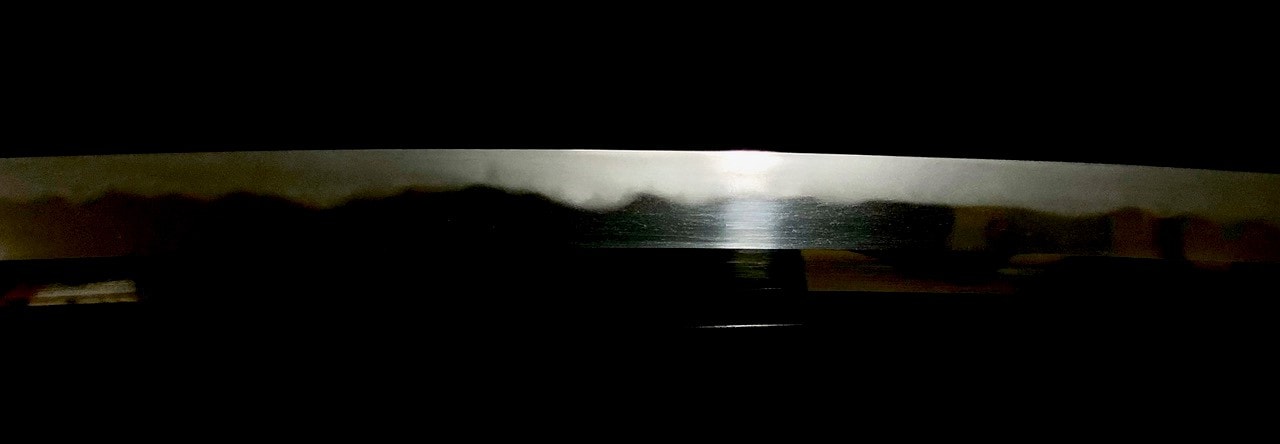
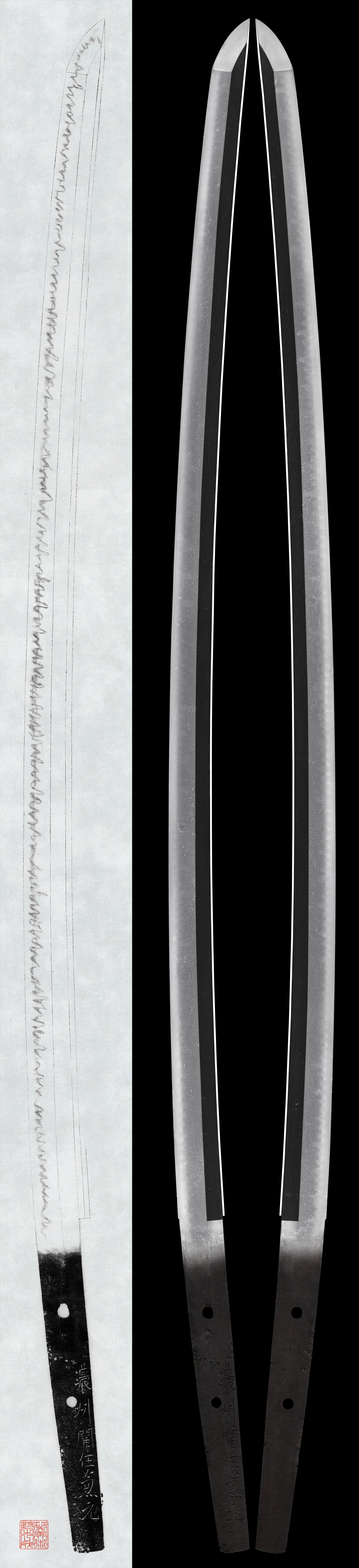
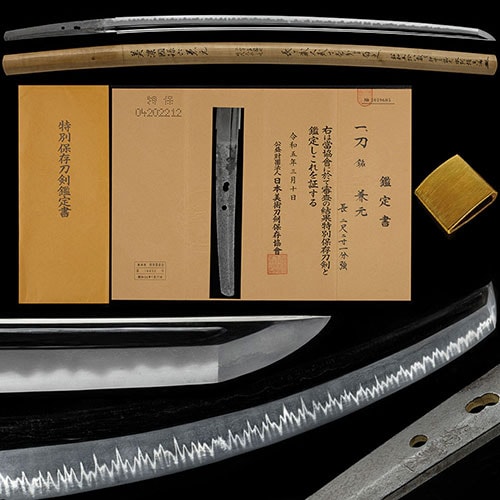
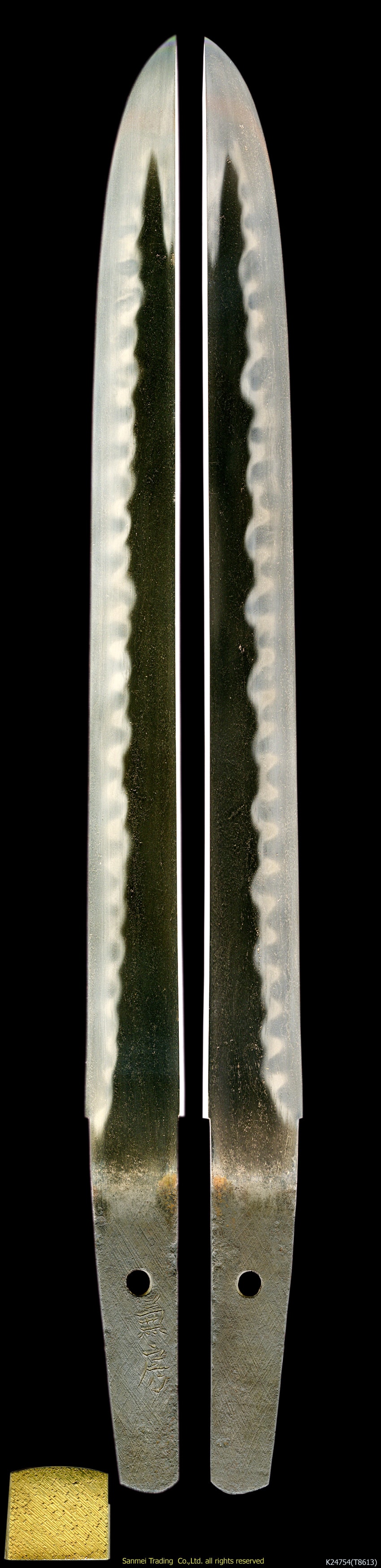
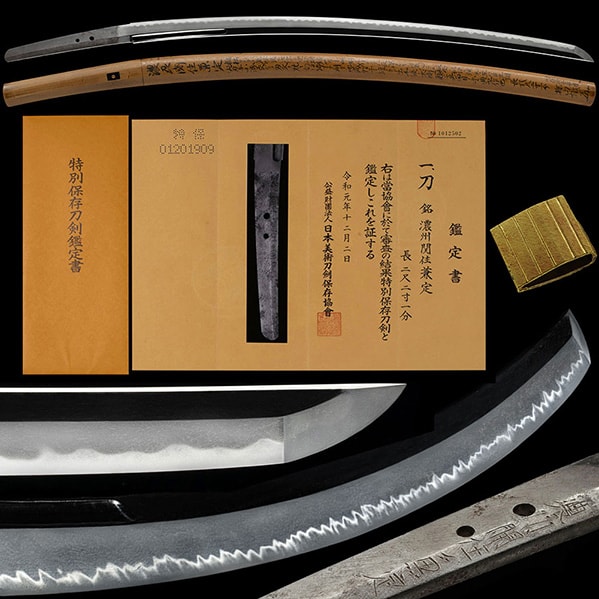
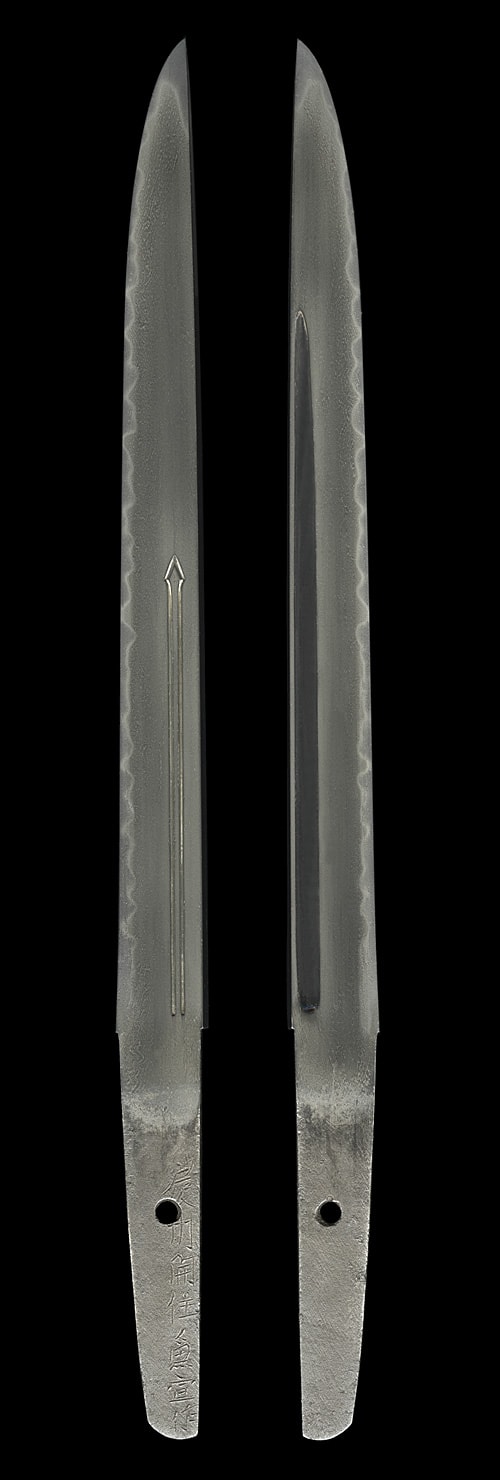
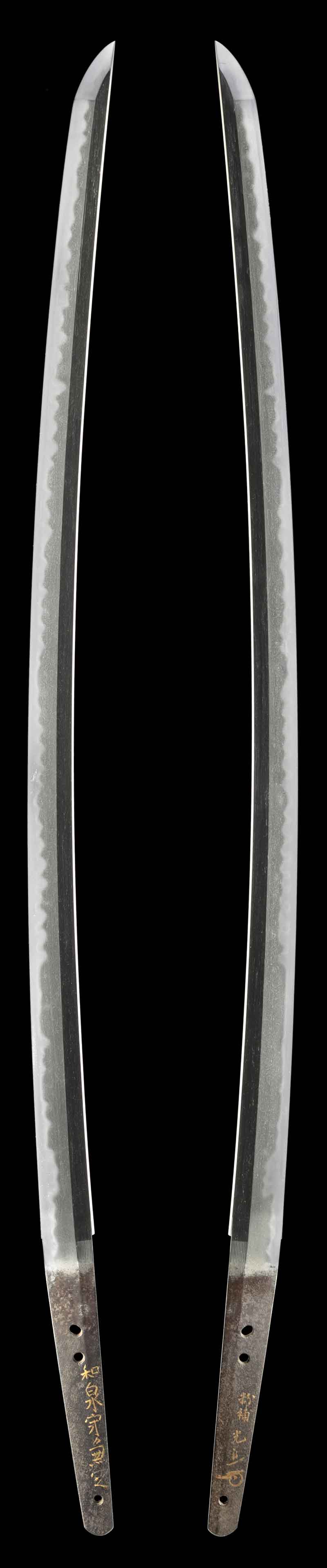
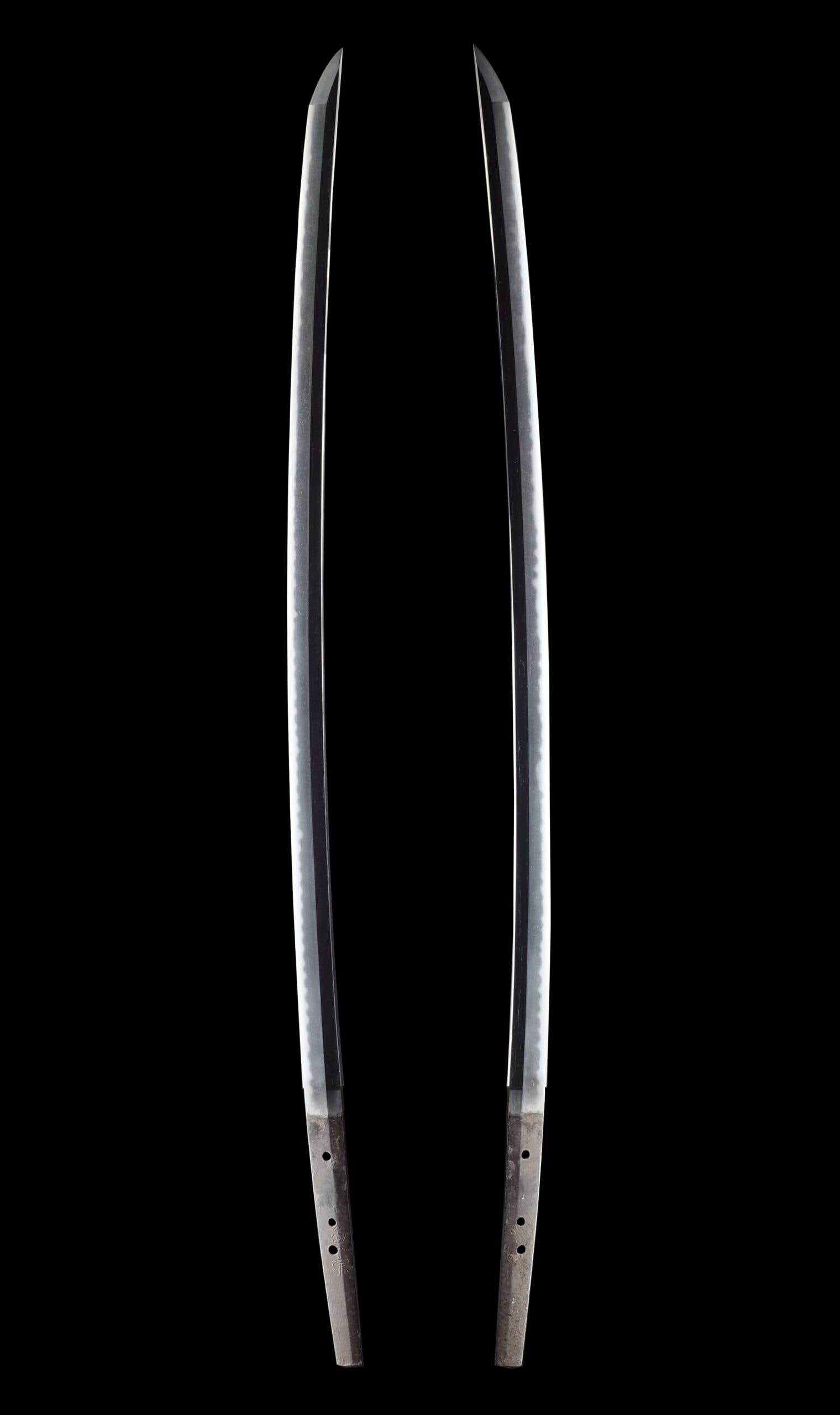
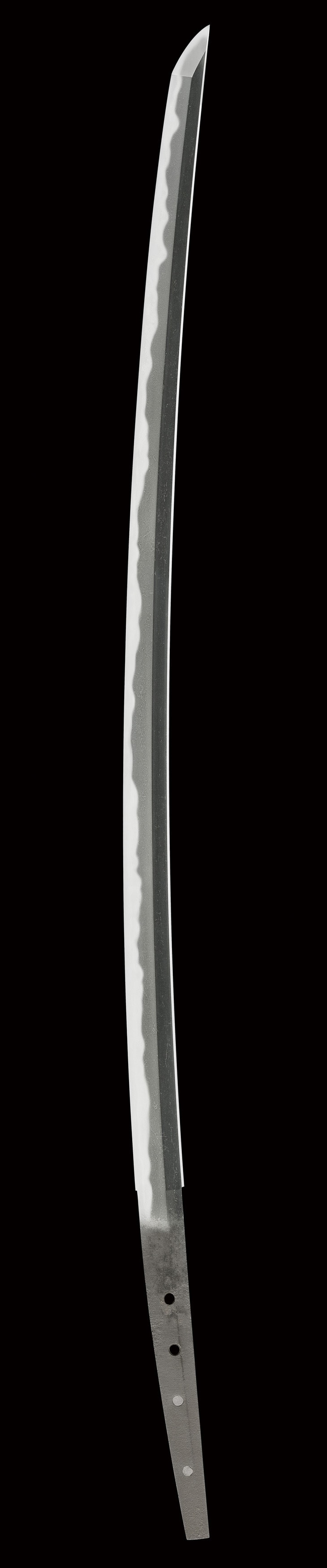
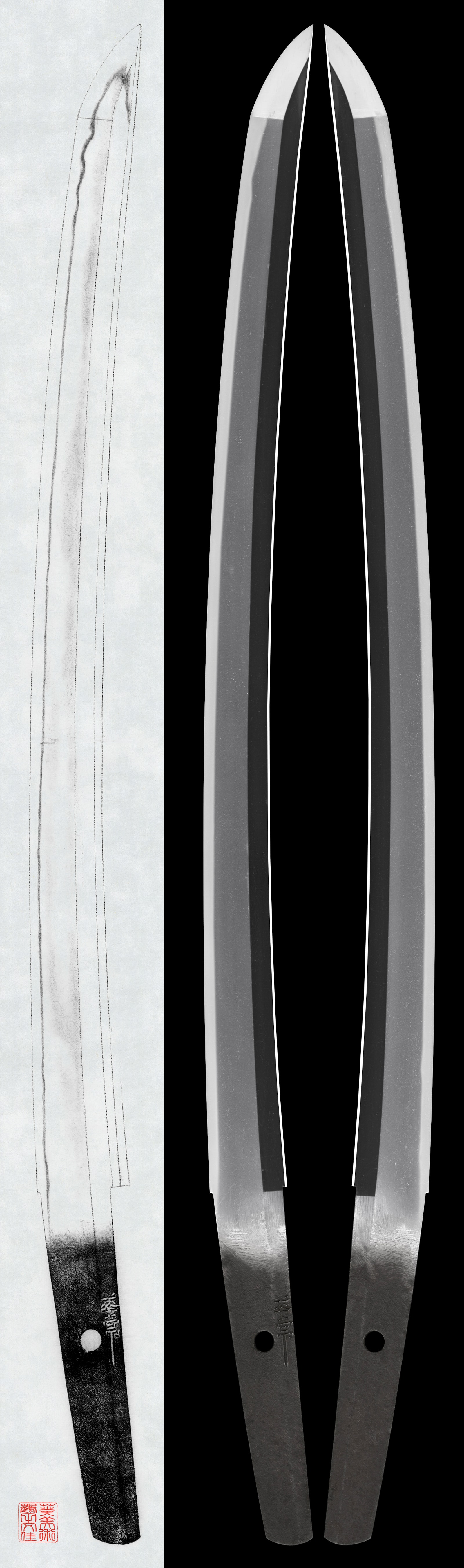
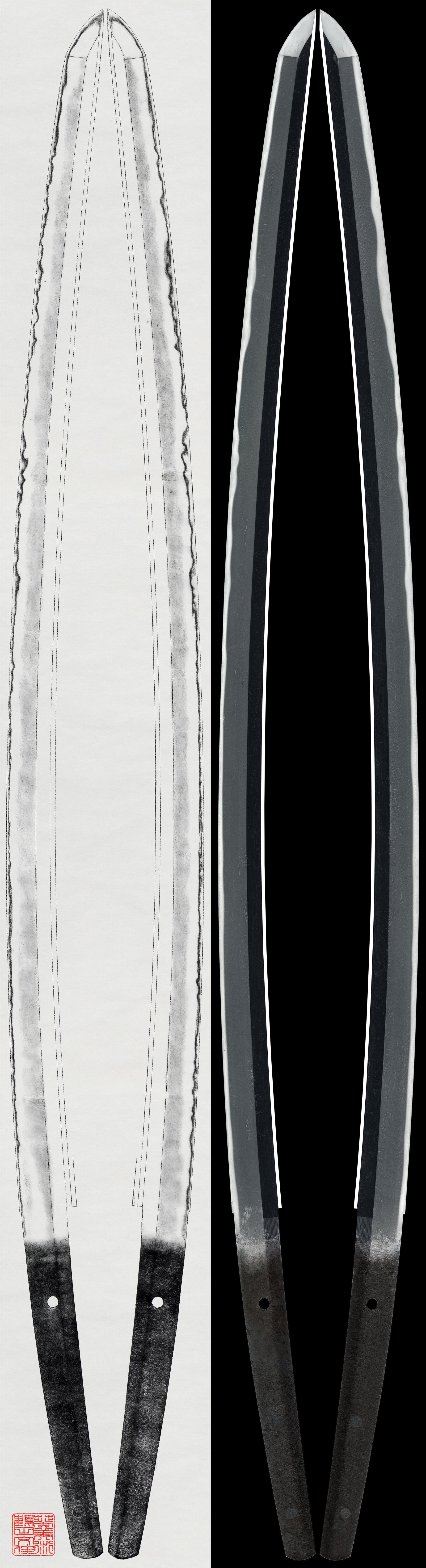
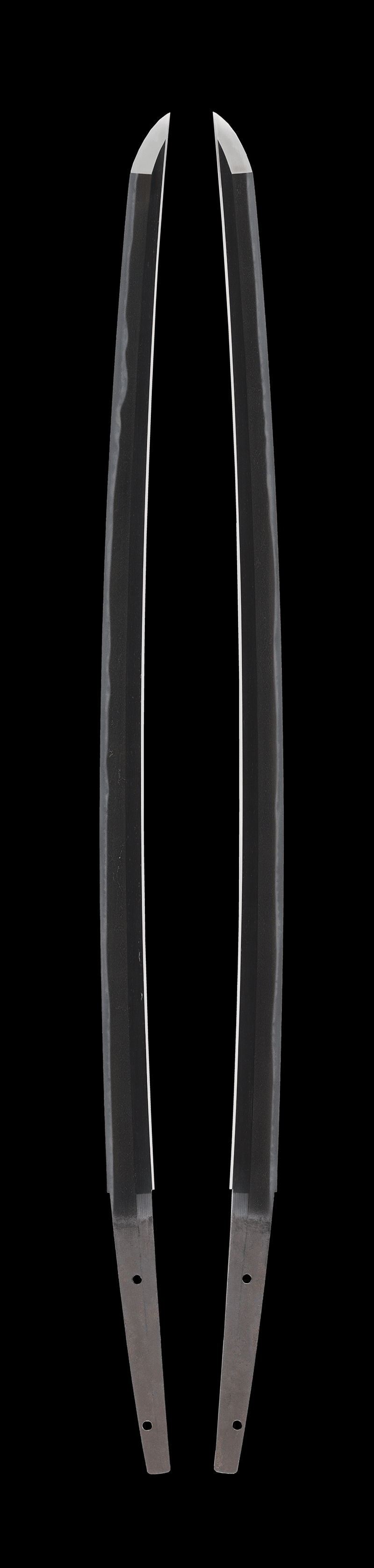
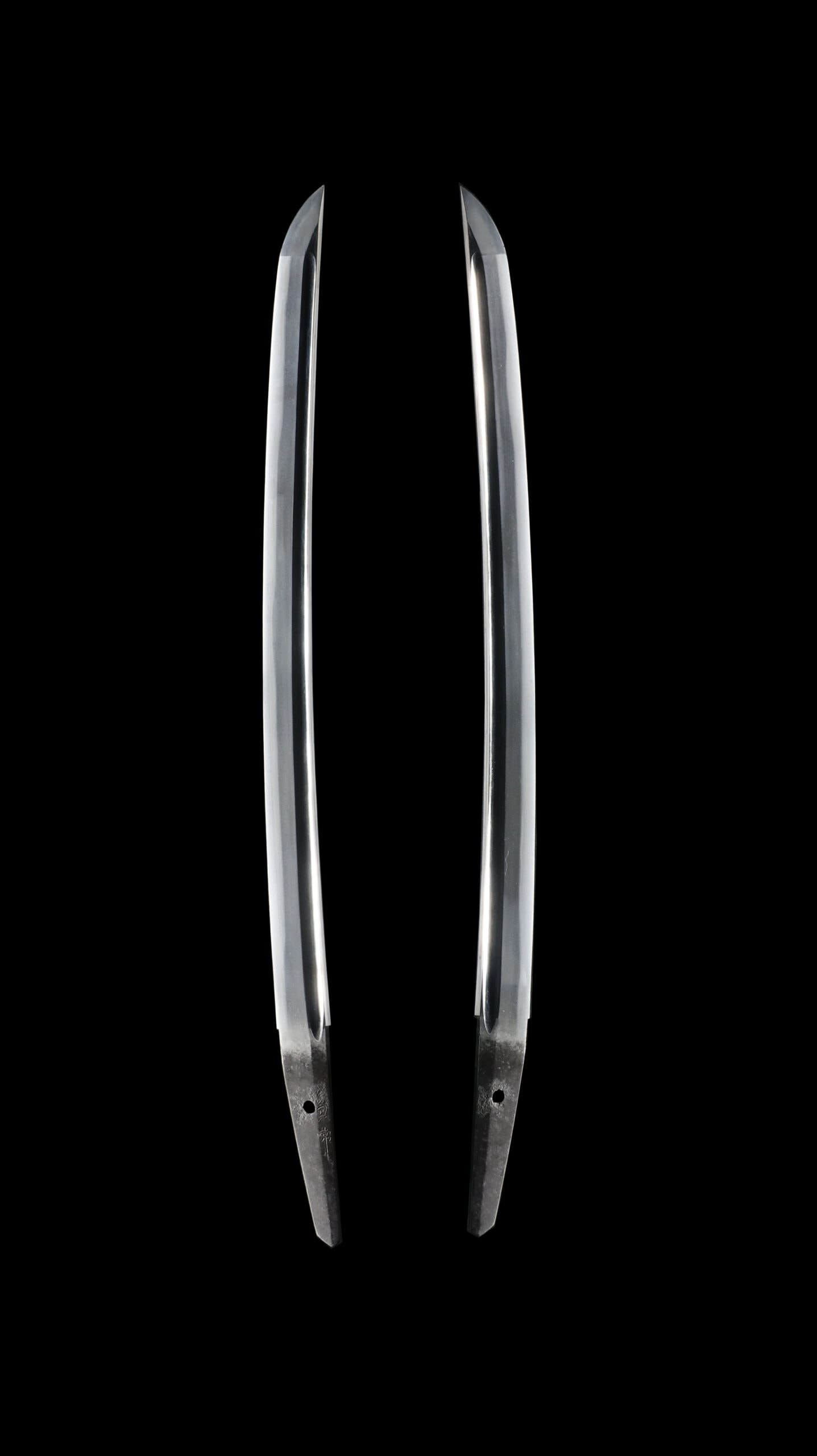
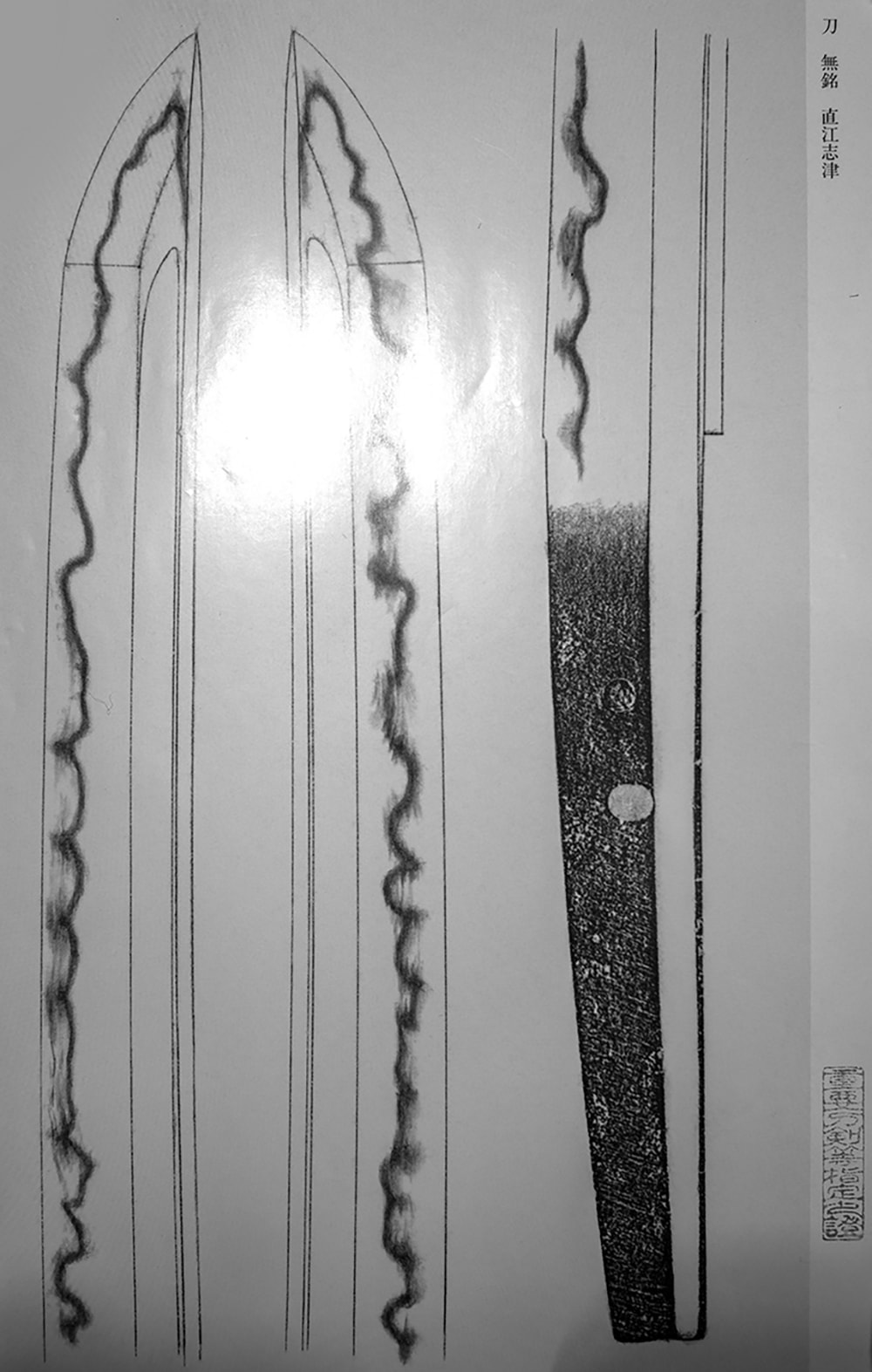
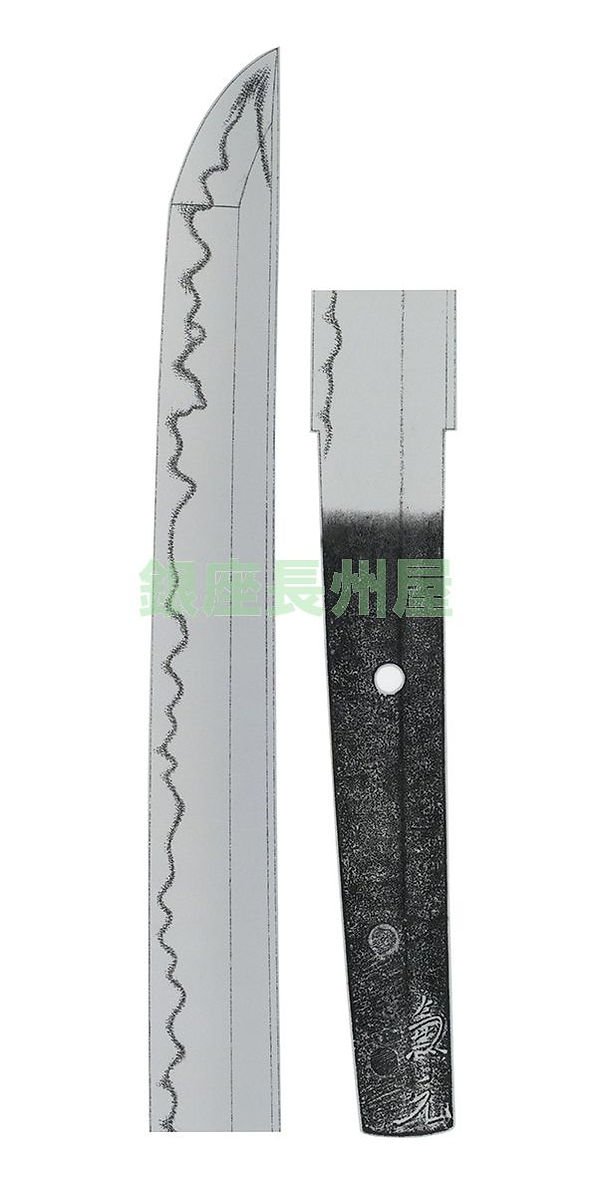
This is a wakizashi by Kanemoto from the late Muromachi period, specifically around the Daiei era. Kanemoto was a Mino swordsmith known for his distinctive Sanbonsugi hamon, which was highly prized by Sengoku-era warriors for its exceptional cutting ability. The blade is from Mino Province.
 NihontoWatchBETA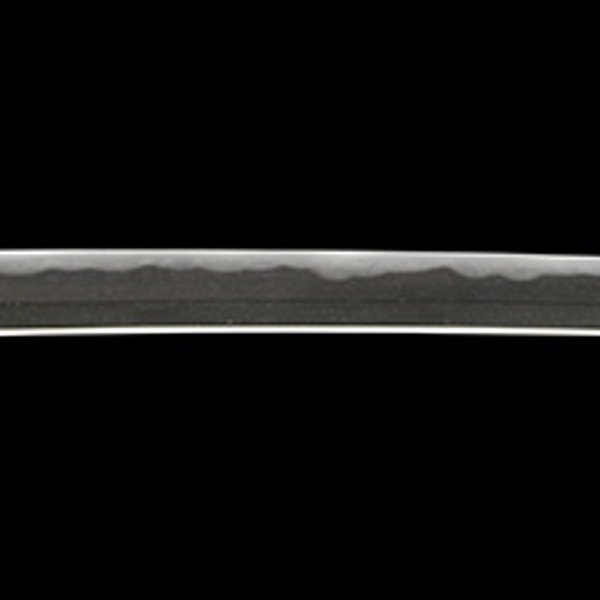
Mino-den · Mino
24 pieces on the market now
Kanemoto (兼元) worked at Akasaka in Mino Province, and the line takes its place among the smiths of the late Muromachi period whom the NBTHK registers under the Mino-den tradition centered on Seki. The setsumei place the family within the Sue-Seki (Sue-Mino) milieu, naming Kanemoto alongside Kanesada as the two leading figures of the province in this era; one tantō note instead pairs the name with Kaneshiba, and another with Izumi no Kami Kaneshige, marking the company the line kept. Learn more →
| Smith | Era | Designated |
|---|---|---|
| Kanemoto兼元 | 1521-1528 | 30 |
| Kanemoto兼元 | 1532-1555 | 0 |
| Kanemoto兼元 | 1573-1592 | 0 |
| Kanemoto兼元 | 1592-1596 | 0 |
| Kanemoto兼元 | 1818-1830 | 0 |
We could not find an authenticity certificate on the seller’s listing. Japanese swords and fittings are normally papered by the NBTHK (or the NTHK). Without one, the attribution is the seller’s own assessment and has not been independently verified — treat it with caution and ask the dealer about certification before buying.
If, due to our fault, the item differs significantly from its proper condition, the item may be returned. Cooling-off is within one week of the item's arrival.
This is a wakizashi by Kanemoto from the late Muromachi period, specifically around the Daiei era. Kanemoto was a Mino swordsmith known for his distinctive Sanbonsugi hamon, which was highly prized by Sengoku-era warriors for its exceptional cutting ability. The blade is from Mino Province.
NihontoWatchBETAMino-den · Mino
24 pieces on the market now
Kanemoto (兼元) worked at Akasaka in Mino Province, and the line takes its place among the smiths of the late Muromachi period whom the NBTHK registers under the Mino-den tradition centered on Seki. The setsumei place the family within the Sue-Seki (Sue-Mino) milieu, naming Kanemoto alongside Kanesada as the two leading figures of the province in this era; one tantō note instead pairs the name with Kaneshiba, and another with Izumi no Kami Kaneshige, marking the company the line kept. Learn more →
| Smith | Era | Designated |
|---|---|---|
| Kanemoto兼元 | 1521-1528 | 30 |
| Kanemoto兼元 | 1532-1555 | 0 |
| Kanemoto兼元 | 1573-1592 | 0 |
| Kanemoto兼元 | 1592-1596 | 0 |
| Kanemoto兼元 | 1818-1830 | 0 |
We could not find an authenticity certificate on the seller’s listing. Japanese swords and fittings are normally papered by the NBTHK (or the NTHK). Without one, the attribution is the seller’s own assessment and has not been independently verified — treat it with caution and ask the dealer about certification before buying.
If, due to our fault, the item differs significantly from its proper condition, the item may be returned. Cooling-off is within one week of the item's arrival.