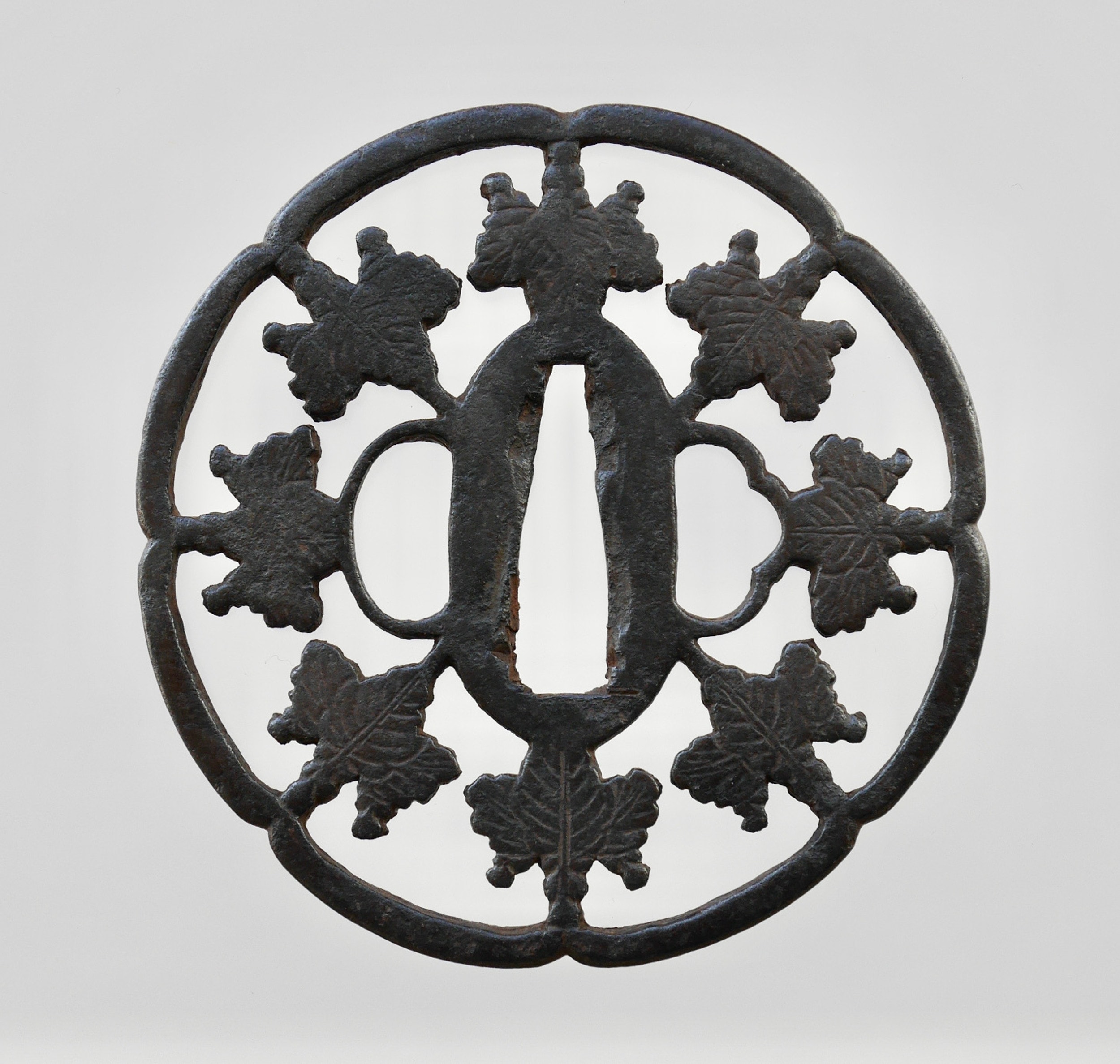
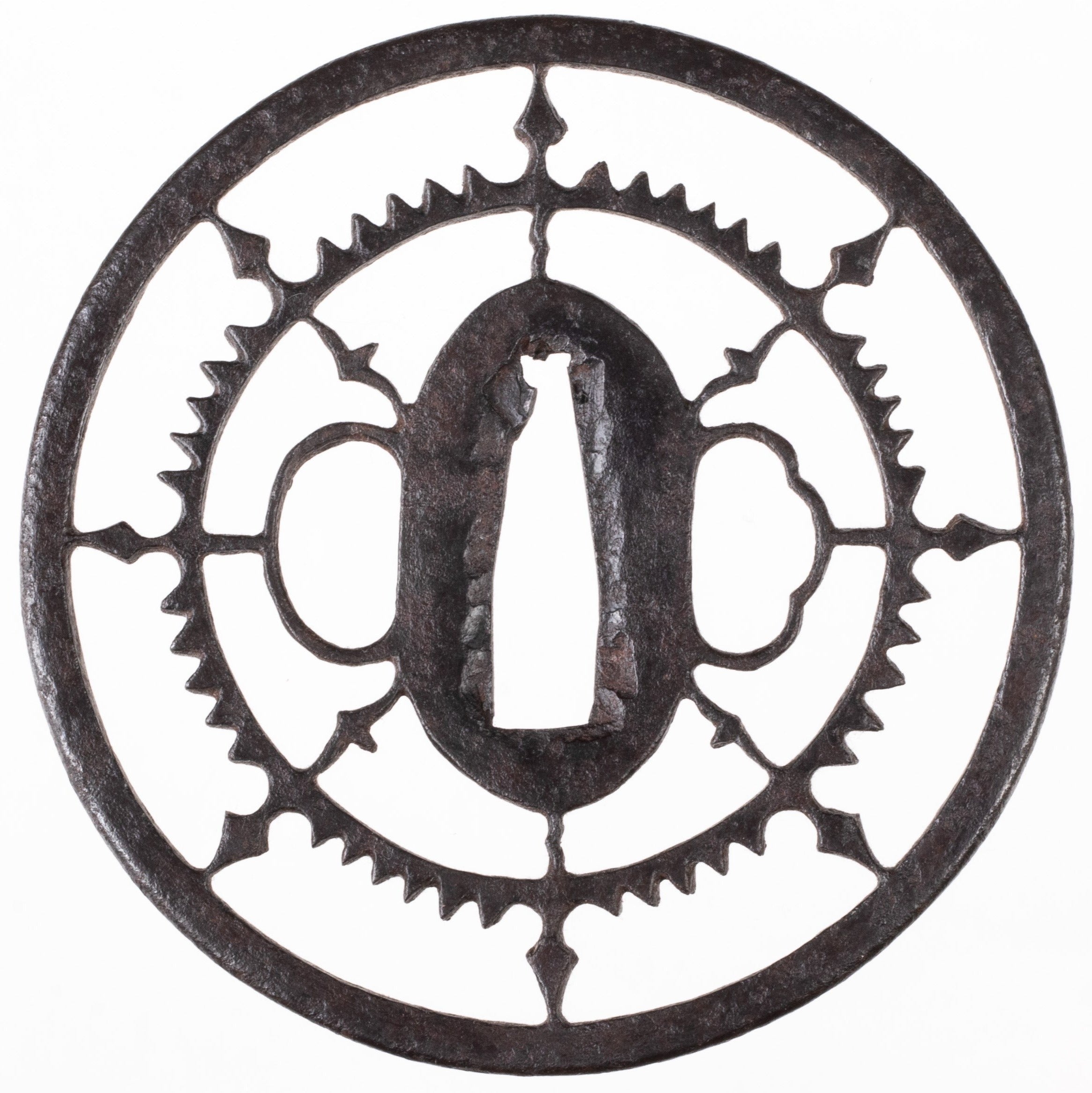
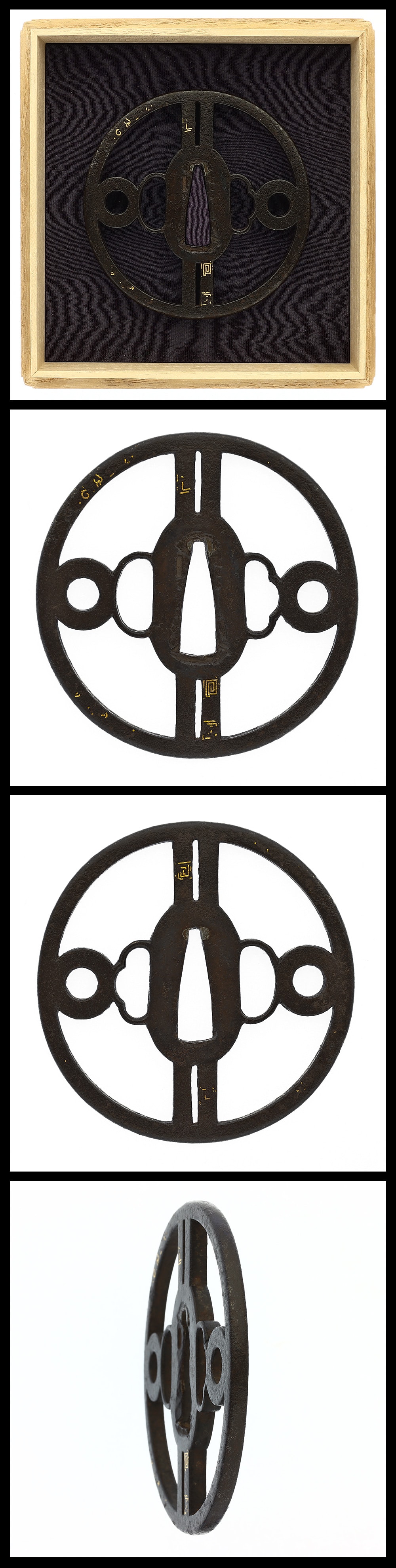
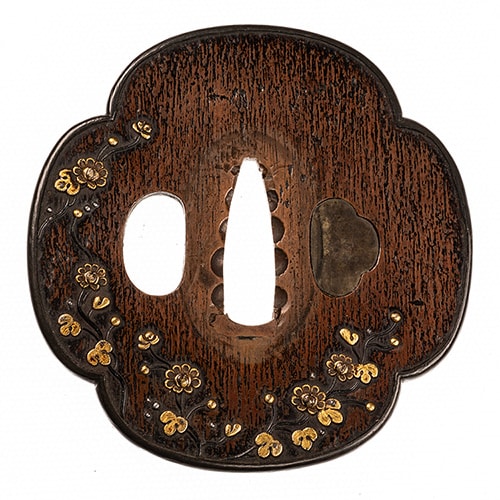
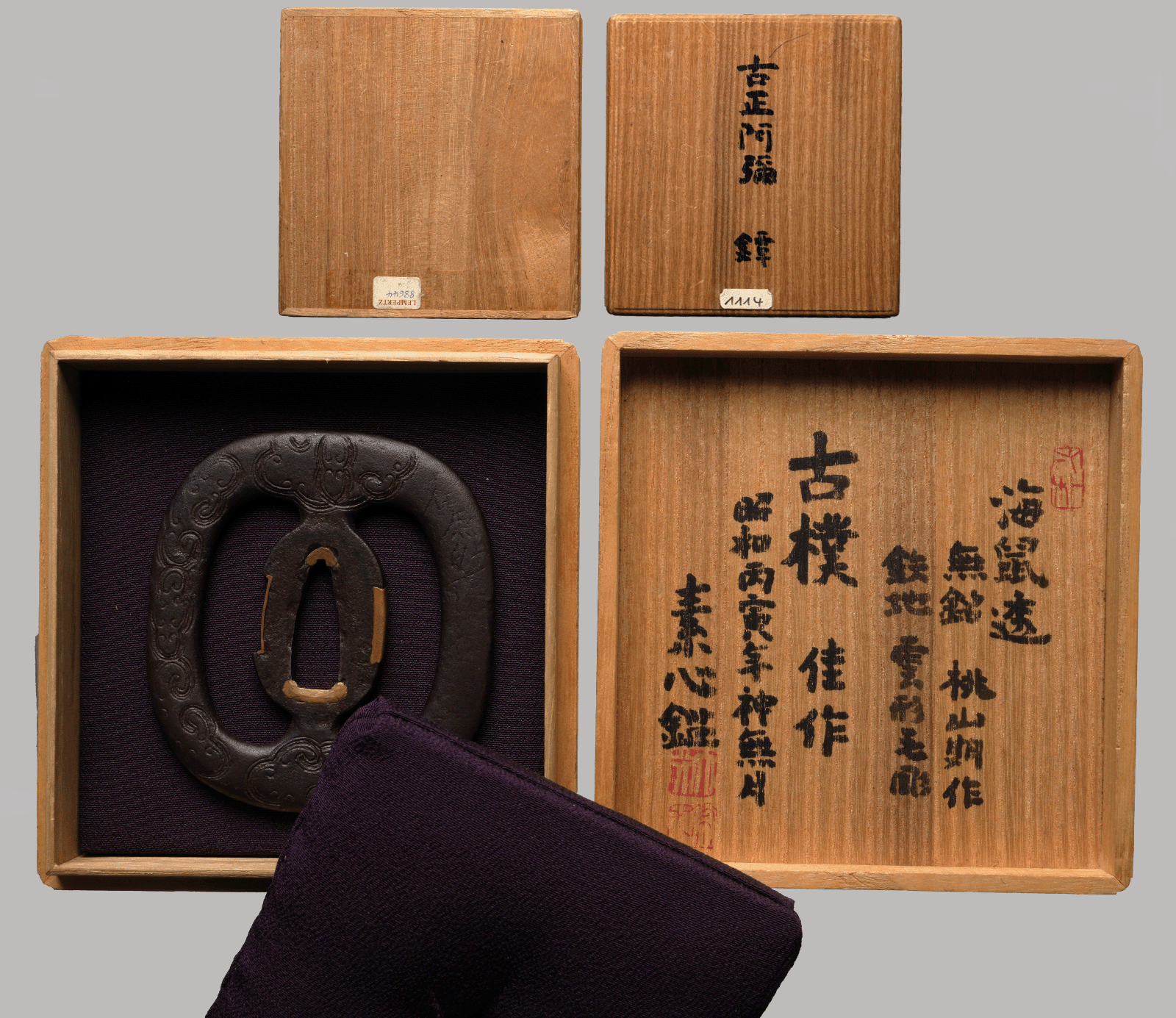
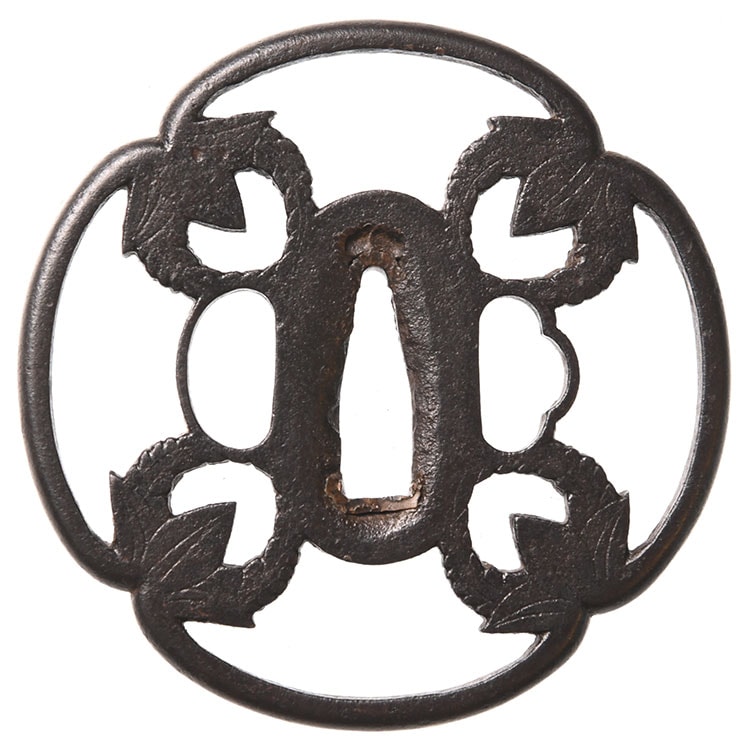
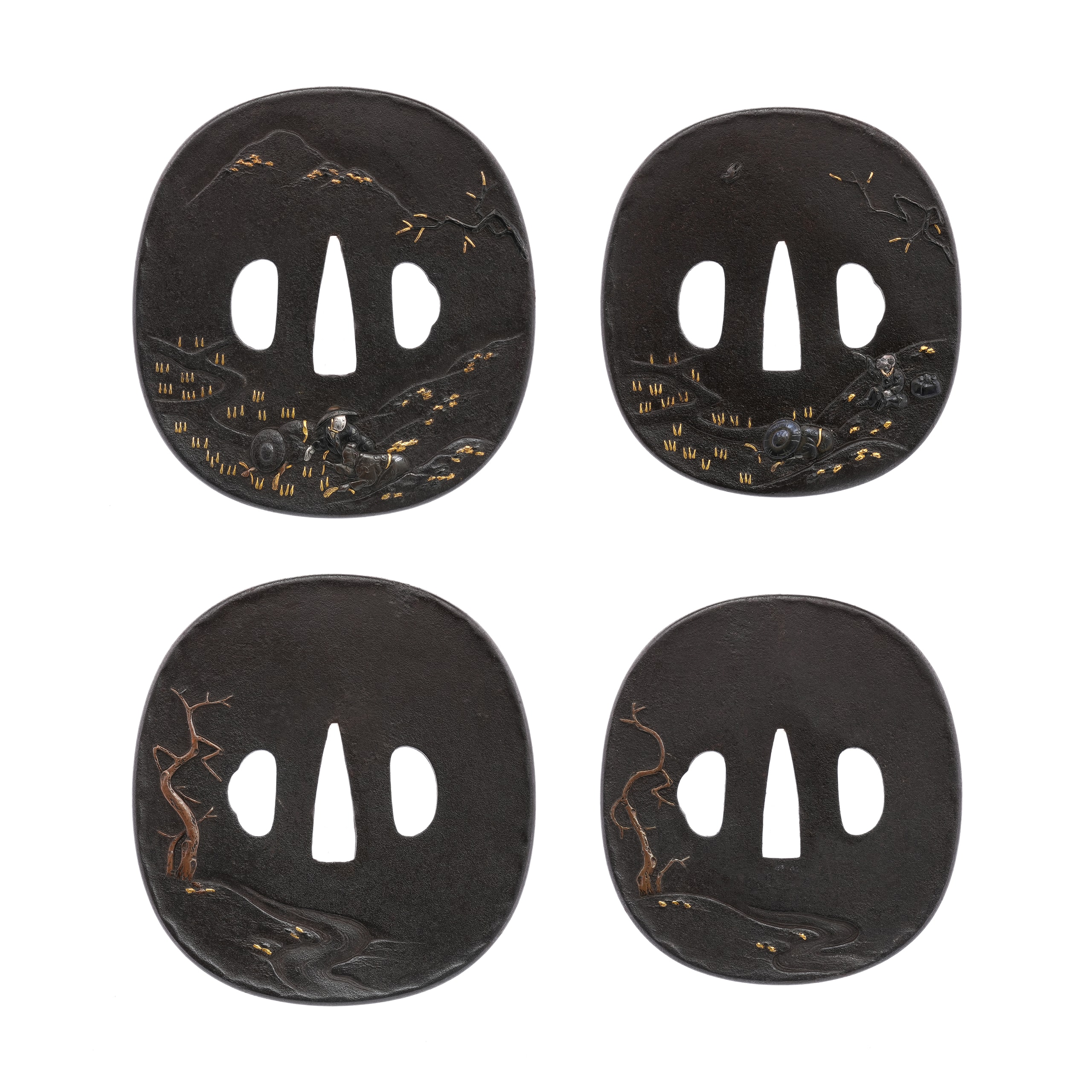
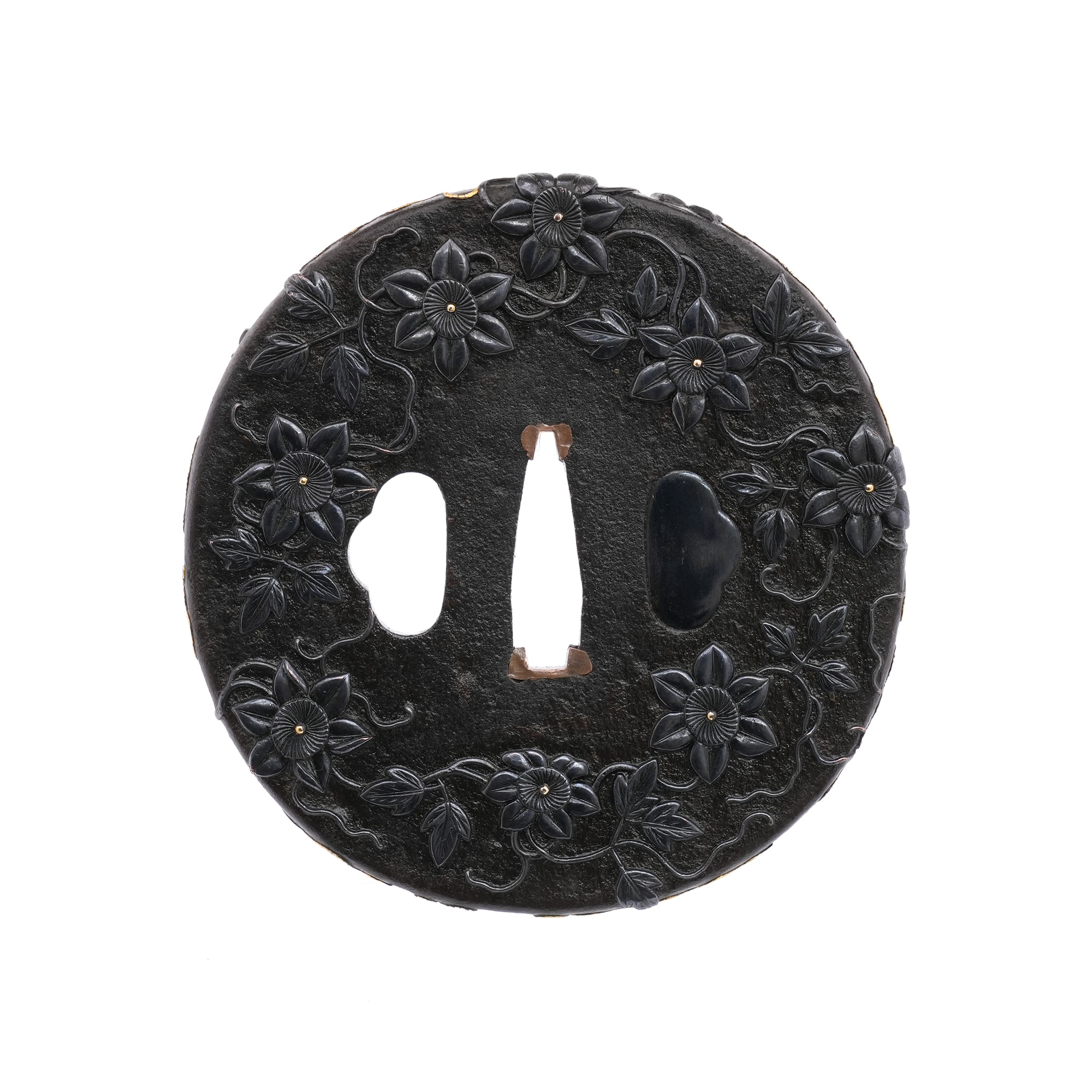
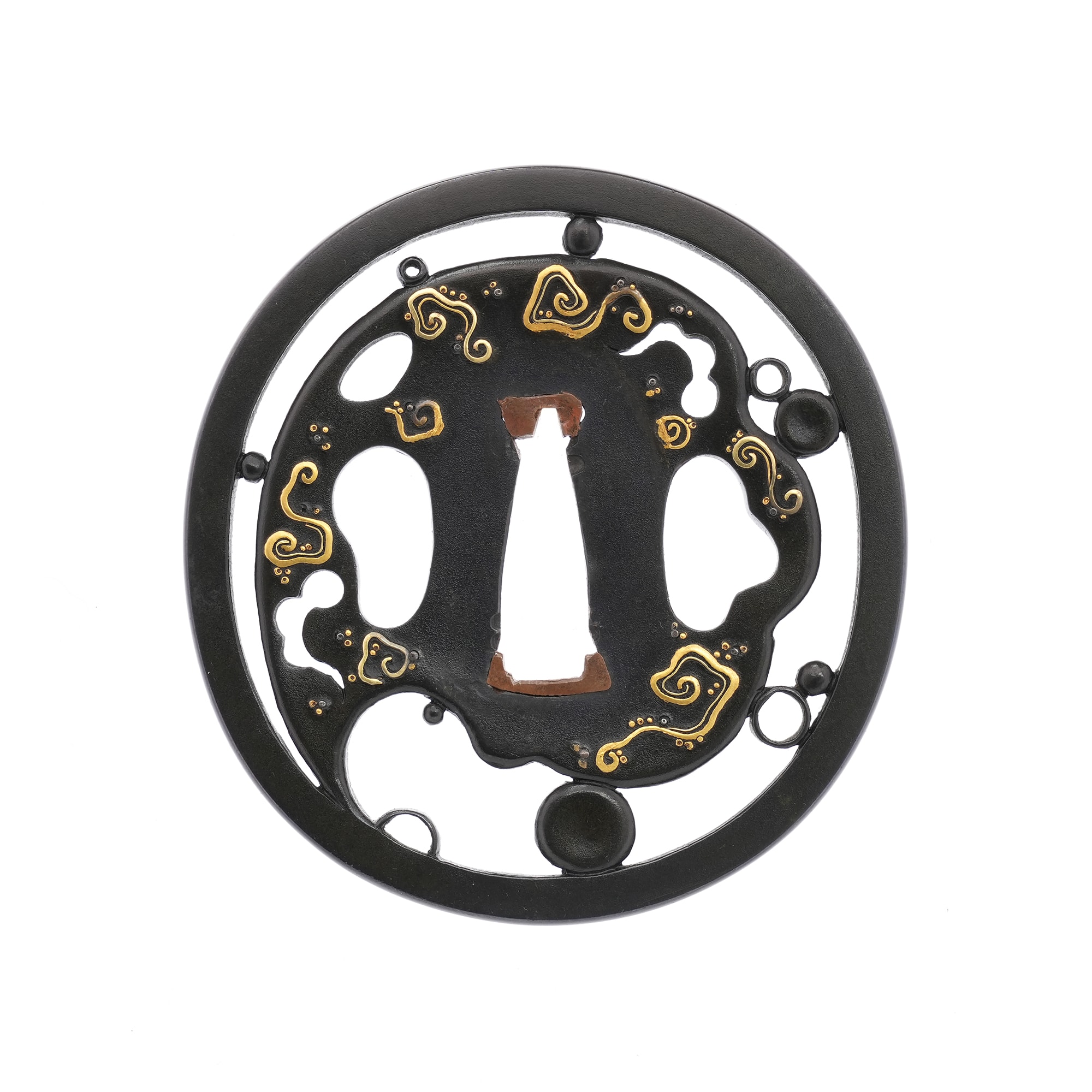
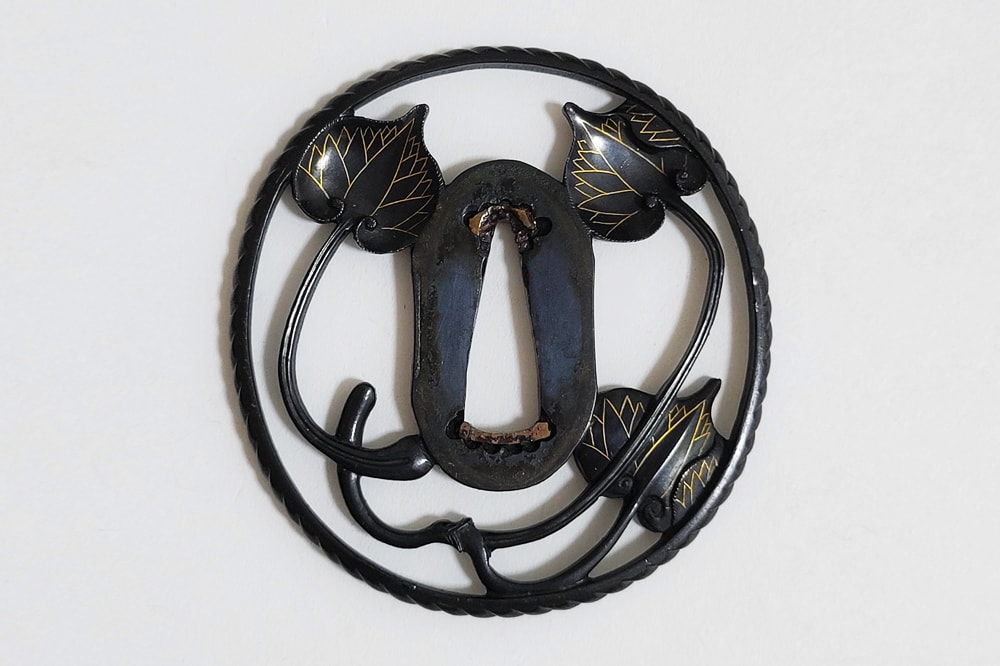
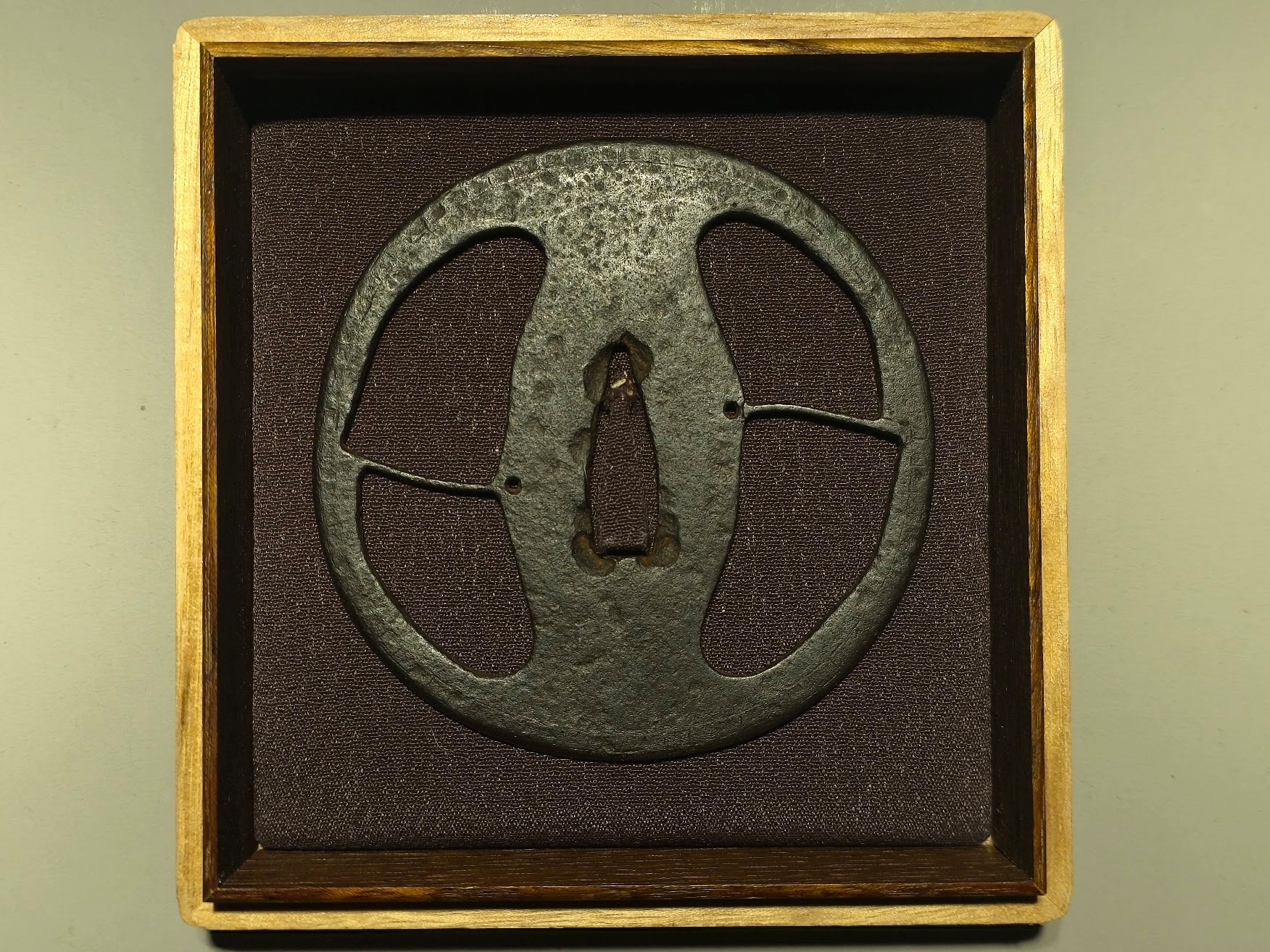
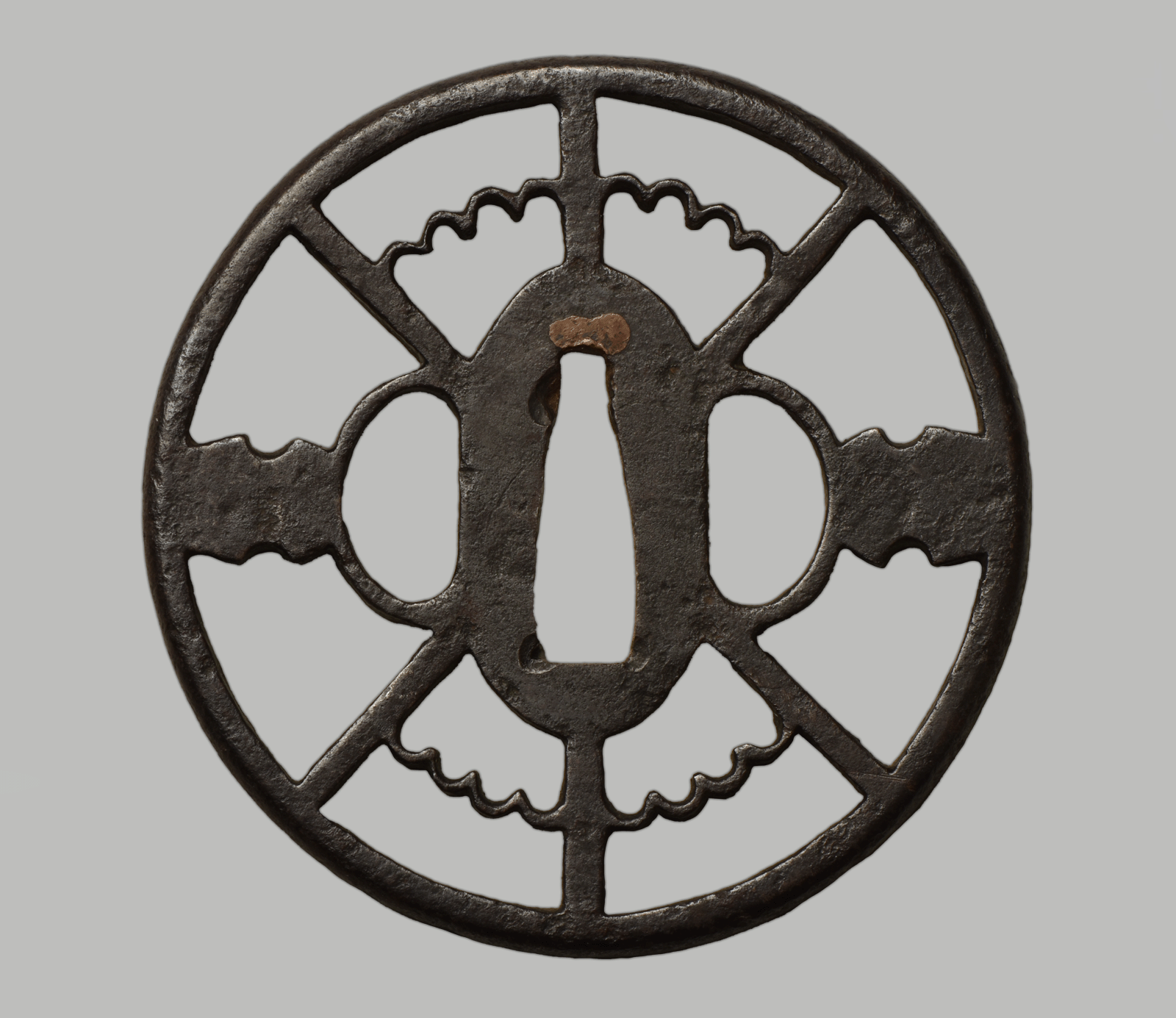
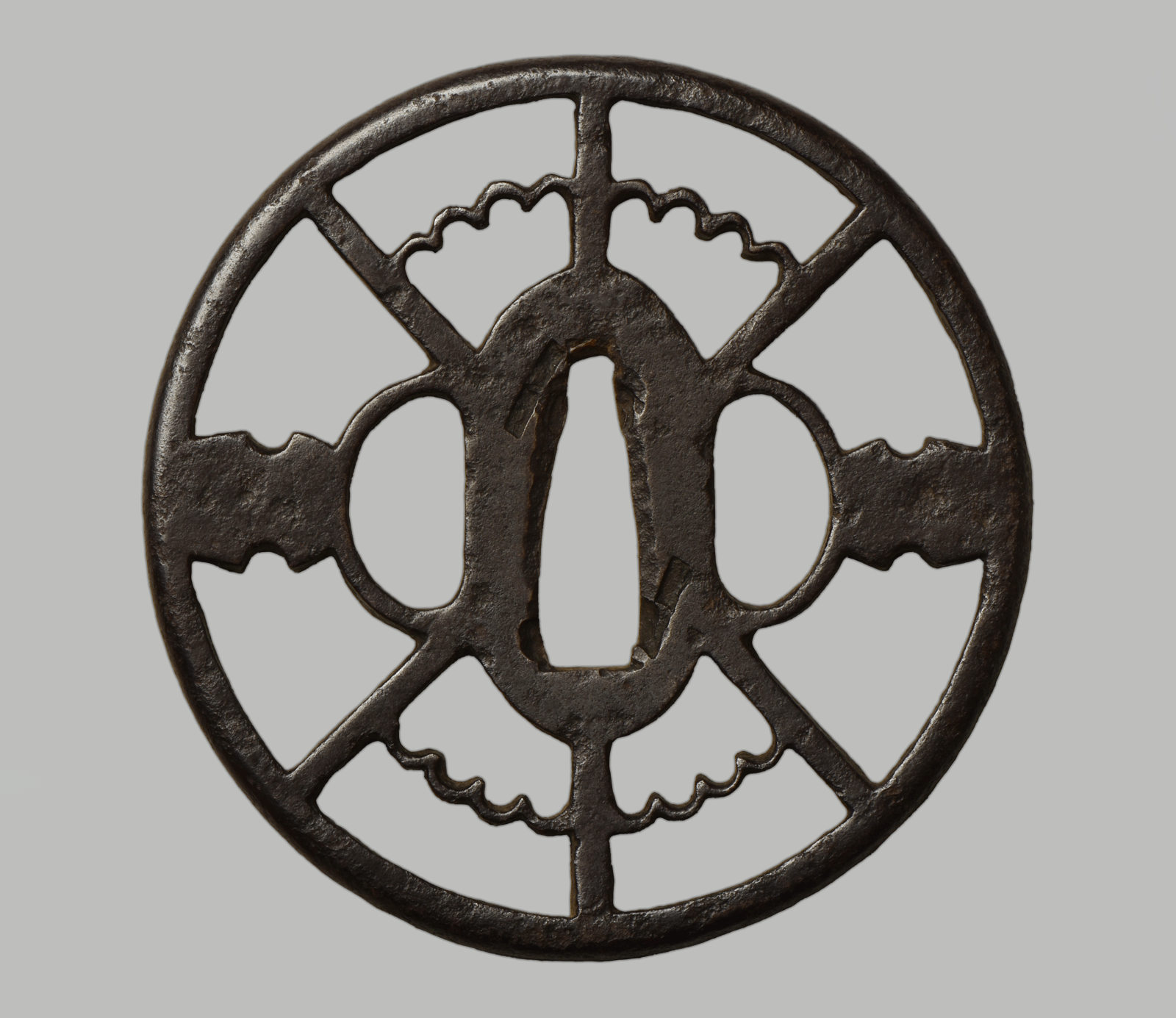
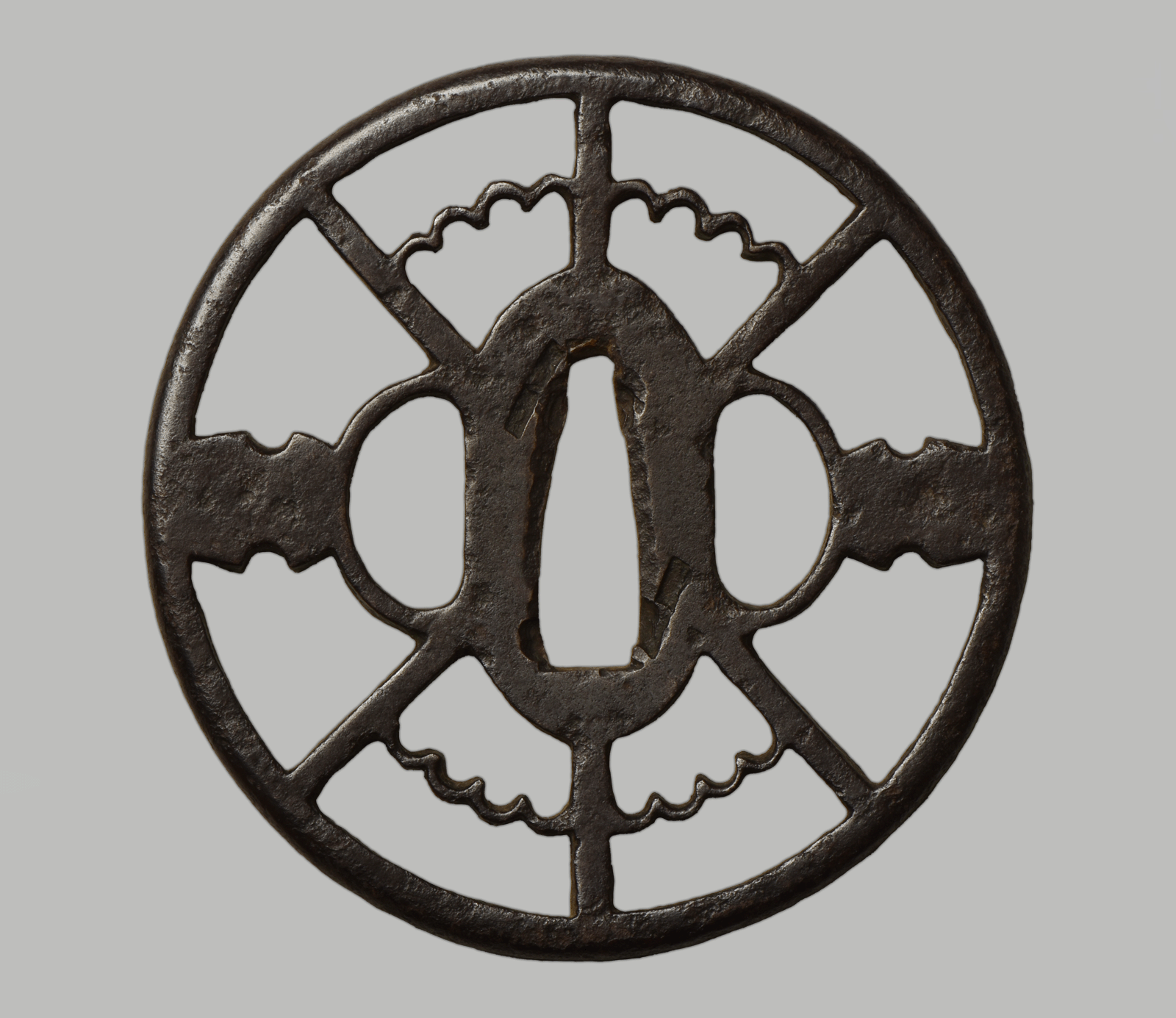
This is a refined Ko-Shoami sukashi tsuba with a circular plate divided by four radiating spokes into balanced fields, each filled with a tightly ordered lattice. The openwork is finely controlled, and a calm, dark patina softens the overall impression and highlights the sculptural depth of the sukashi. It is characteristic of early Shoami taste, where visual authority is achieved through symmetry, repetition, and disciplined negative space rather than pictorial narration.
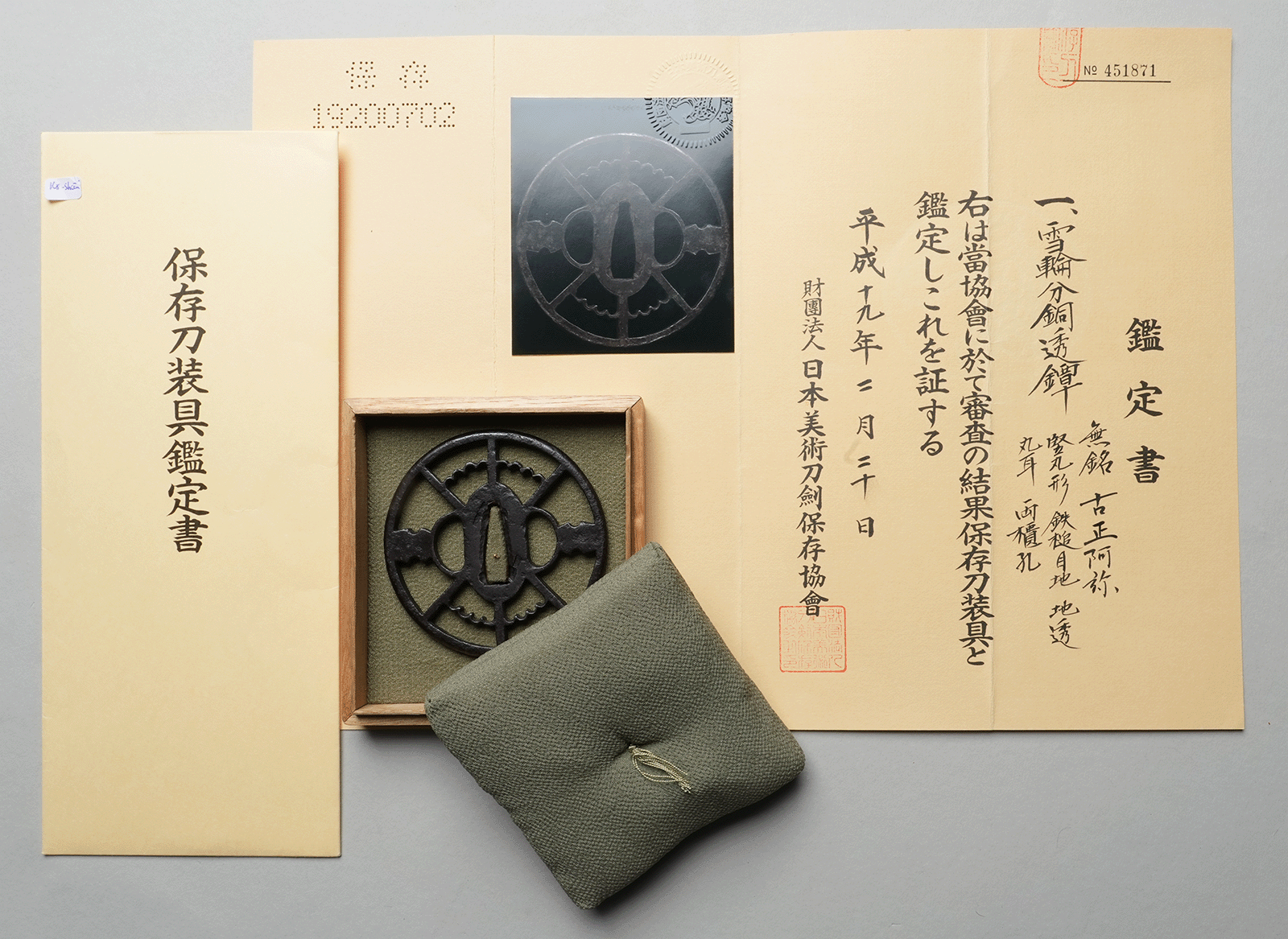
Certificate reading — 無銘(古正阿弥)
 NihontoWatch
mumei · Ko-Shoami · Muromachi
Ko-Shoami School
Muromachi
Unsigned
Hozon (NBTHK)
Iron-tsuba
The Ko-Shōami (Old Shōami) represent a collective of specialist tsuba makers active in Kyōto from the middle through the late Muromachi period, extending into the Momoyama era. The prevailing scholarly view holds that these artisans originally worked as general tōsōgu craftsmen before becoming specialized tsuba makers. Unlike other major schools of the period, Ko-Shōami works lack widely celebrated individual masterpieces, and attributions typically reference the group name rather than specific hands. Learn more →
Certifies a genuine fitting worth preserving: a correct signature, or, if unsigned, an identifiable era and school, with recognized artistic and craft value.
The NBTHK (Nihon Bijutsu Tōken Hozon Kyōkai, the Society for the Preservation of Japanese Art Swords) is a public-interest incorporated foundation founded in 1948 and supervised by Japan’s Agency for Cultural Affairs (Bunkachō); it is based at the Japanese Sword Museum in Tokyo. Its expert panels physically examine each submitted work (shinsa) and issue a certificate (kanteishō) ranking it by artistic and historical merit. NBTHK papers are the most widely recognized standard of authentication for Japanese swords and fittings.
NBTHK official site14-day return window in original/unused condition; antique items (swords, menuki, tsuba and similar) are expressly excluded from exchange; EU consumers retain a 14-day cancellation right; refunds within 10 business days of approval.
This is a refined Ko-Shoami sukashi tsuba with a circular plate divided by four radiating spokes into balanced fields, each filled with a tightly ordered lattice. The openwork is finely controlled, and a calm, dark patina softens the overall impression and highlights the sculptural depth of the sukashi. It is characteristic of early Shoami taste, where visual authority is achieved through symmetry, repetition, and disciplined negative space rather than pictorial narration.
Certificate reading — 無銘(古正阿弥)
NihontoWatchmumei · Ko-Shoami · Muromachi
Ko-Shoami School
Muromachi
Unsigned
Hozon (NBTHK)
Iron-tsuba
The Ko-Shōami (Old Shōami) represent a collective of specialist tsuba makers active in Kyōto from the middle through the late Muromachi period, extending into the Momoyama era. The prevailing scholarly view holds that these artisans originally worked as general tōsōgu craftsmen before becoming specialized tsuba makers. Unlike other major schools of the period, Ko-Shōami works lack widely celebrated individual masterpieces, and attributions typically reference the group name rather than specific hands. Learn more →
Certifies a genuine fitting worth preserving: a correct signature, or, if unsigned, an identifiable era and school, with recognized artistic and craft value.
The NBTHK (Nihon Bijutsu Tōken Hozon Kyōkai, the Society for the Preservation of Japanese Art Swords) is a public-interest incorporated foundation founded in 1948 and supervised by Japan’s Agency for Cultural Affairs (Bunkachō); it is based at the Japanese Sword Museum in Tokyo. Its expert panels physically examine each submitted work (shinsa) and issue a certificate (kanteishō) ranking it by artistic and historical merit. NBTHK papers are the most widely recognized standard of authentication for Japanese swords and fittings.
NBTHK official site14-day return window in original/unused condition; antique items (swords, menuki, tsuba and similar) are expressly excluded from exchange; EU consumers retain a 14-day cancellation right; refunds within 10 business days of approval.