 NihontoWatchNihontoWatch
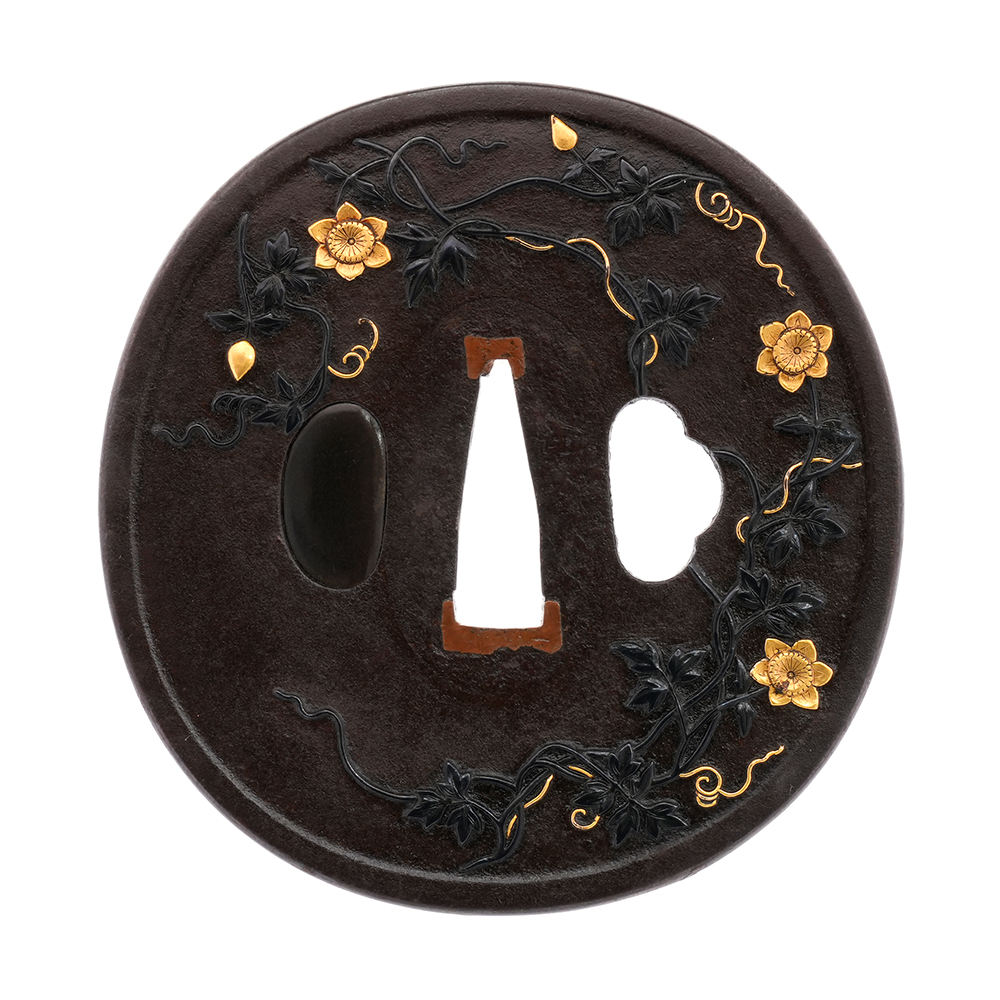
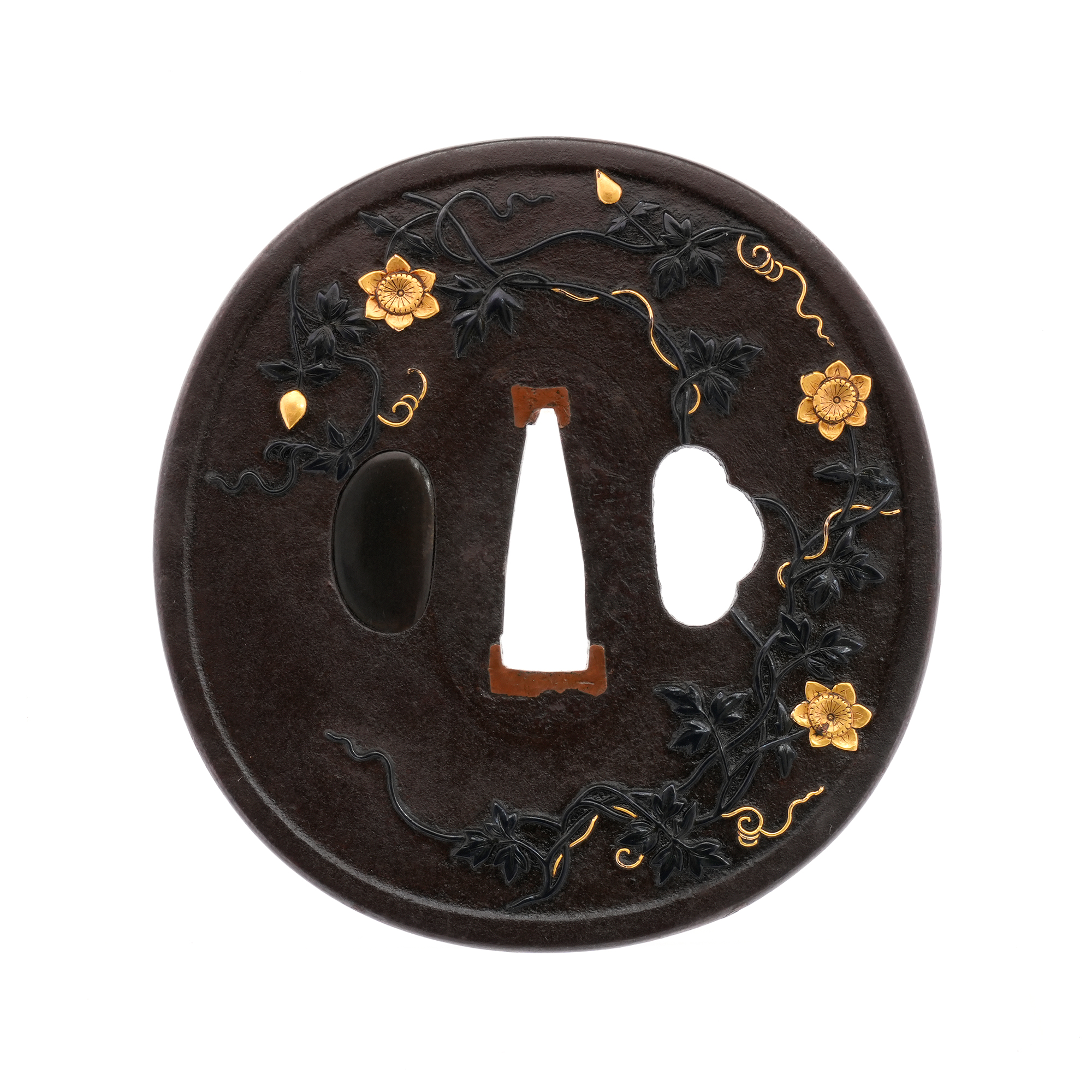
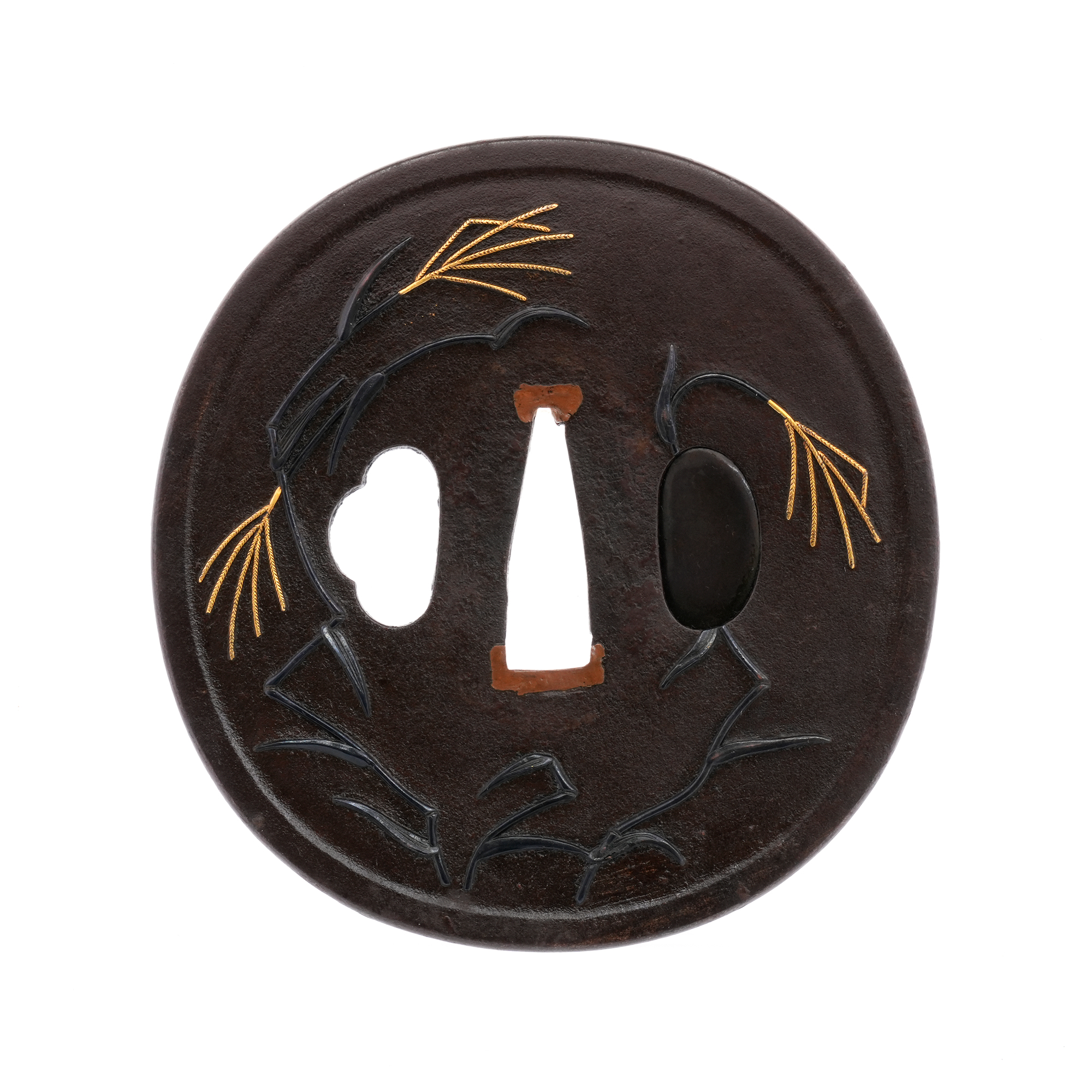
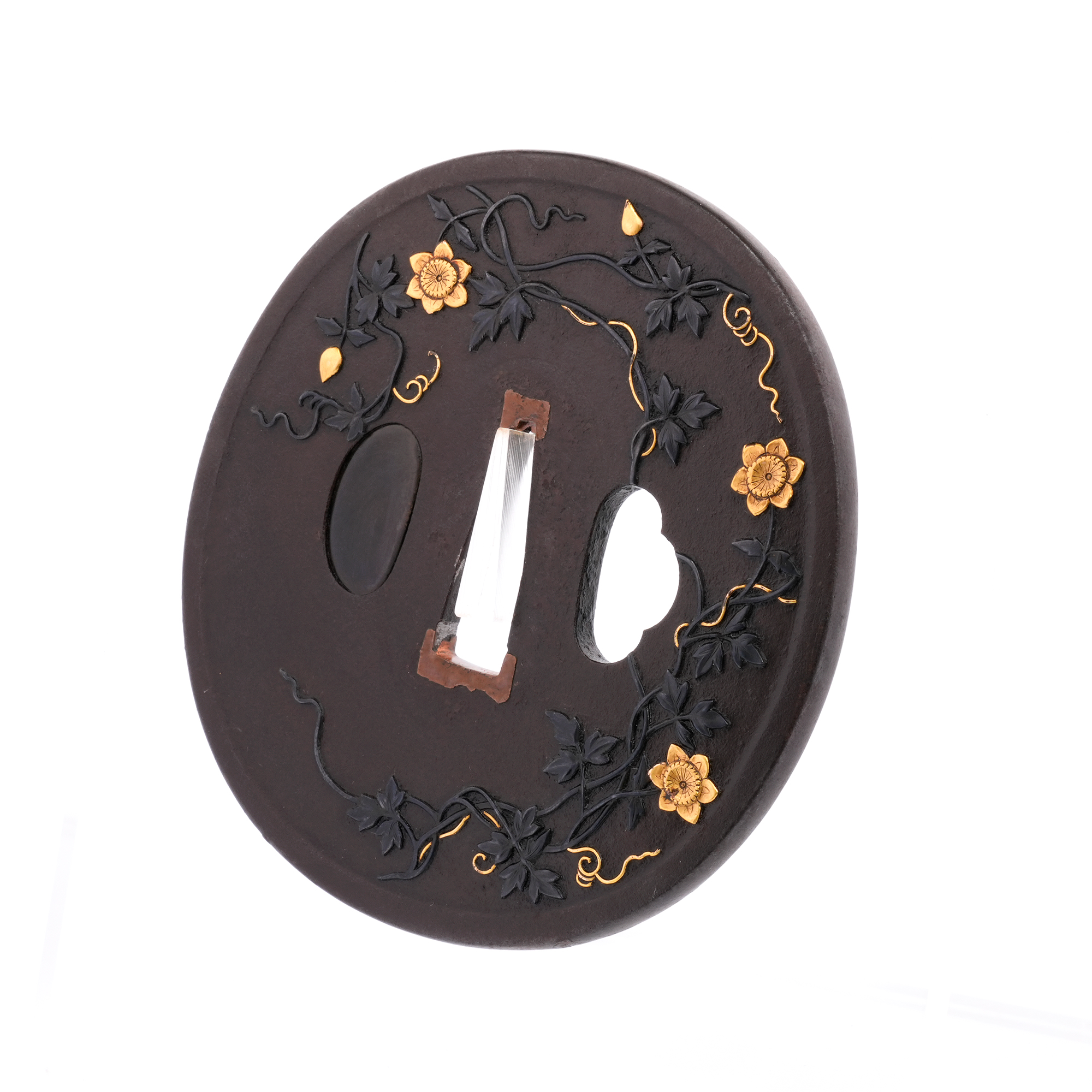
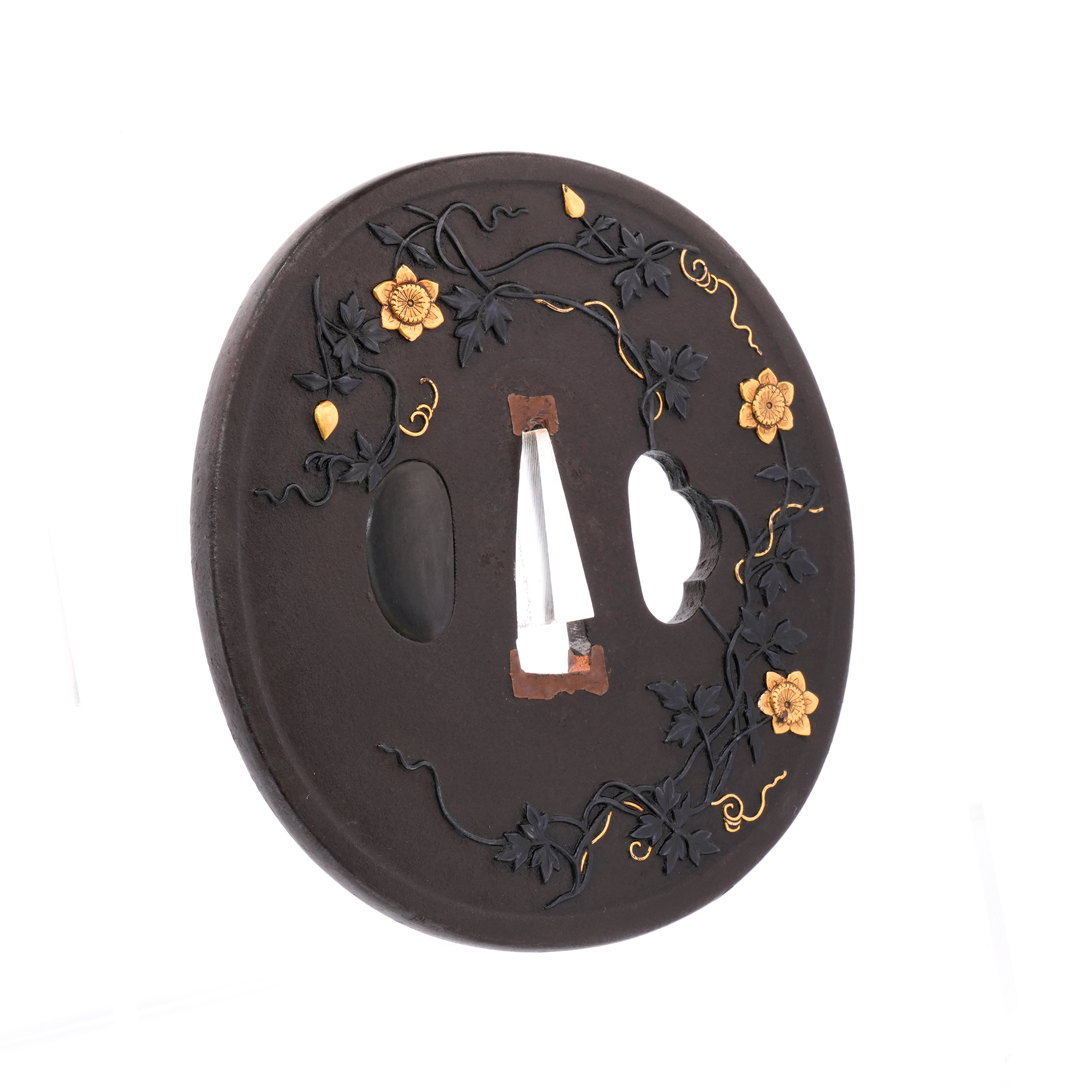
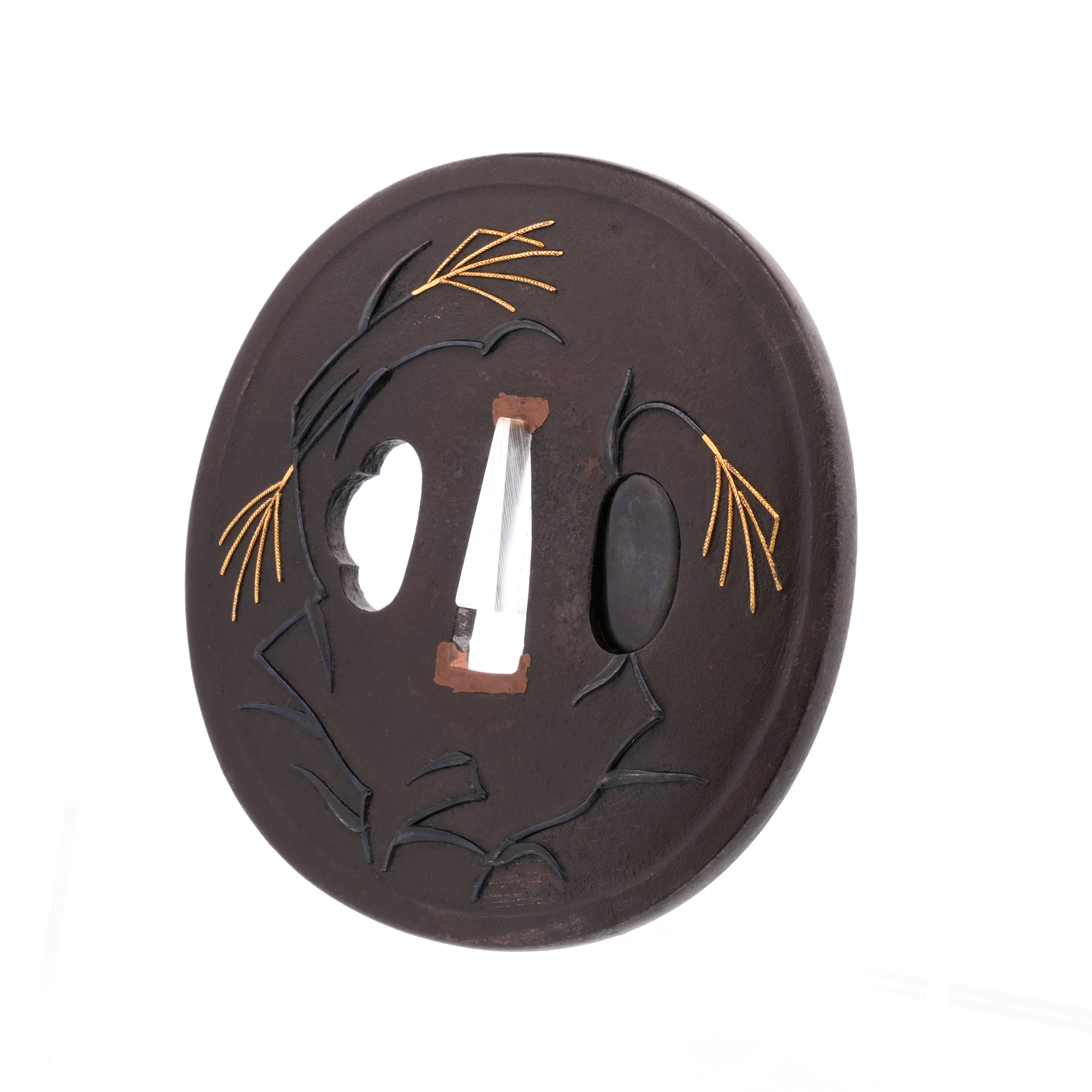
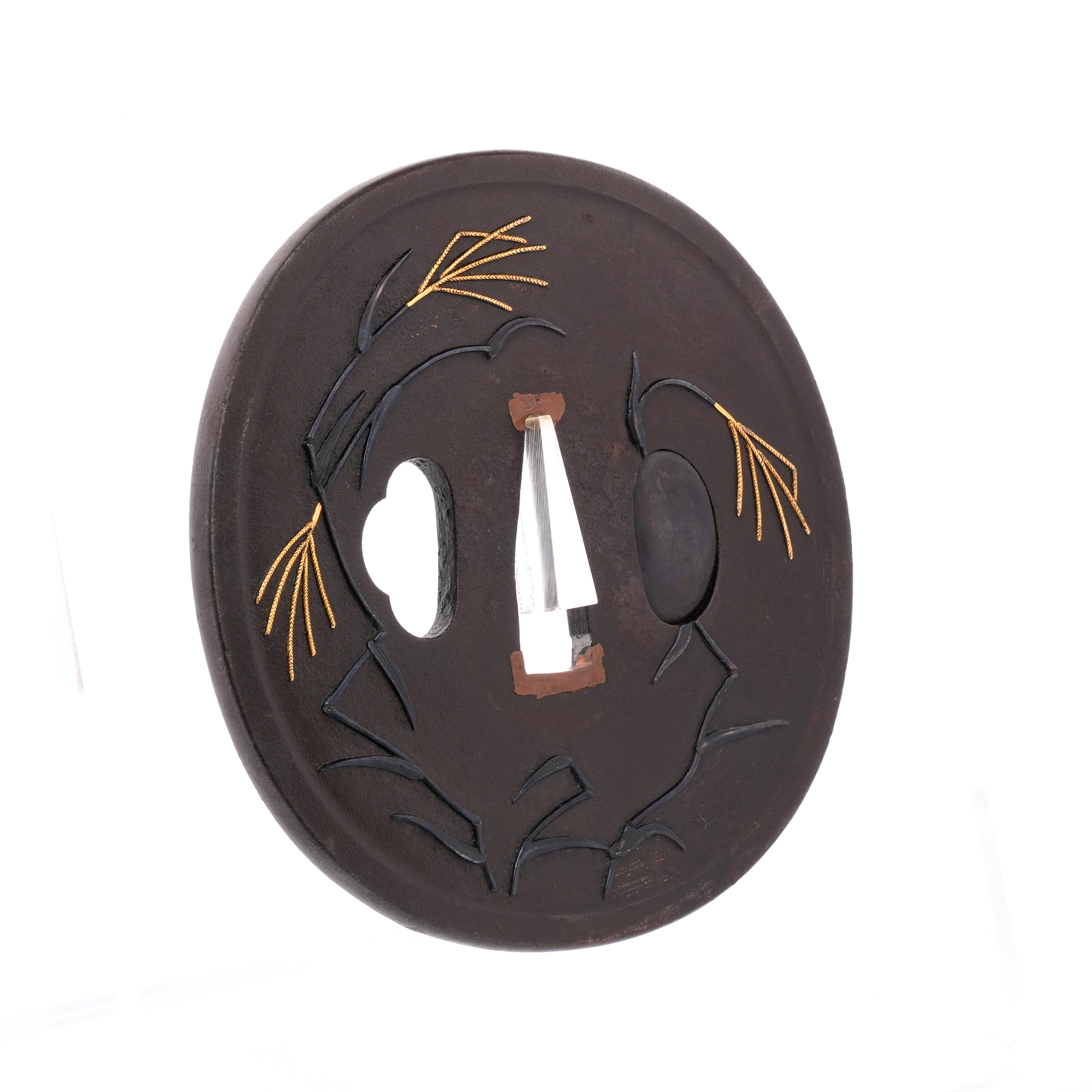
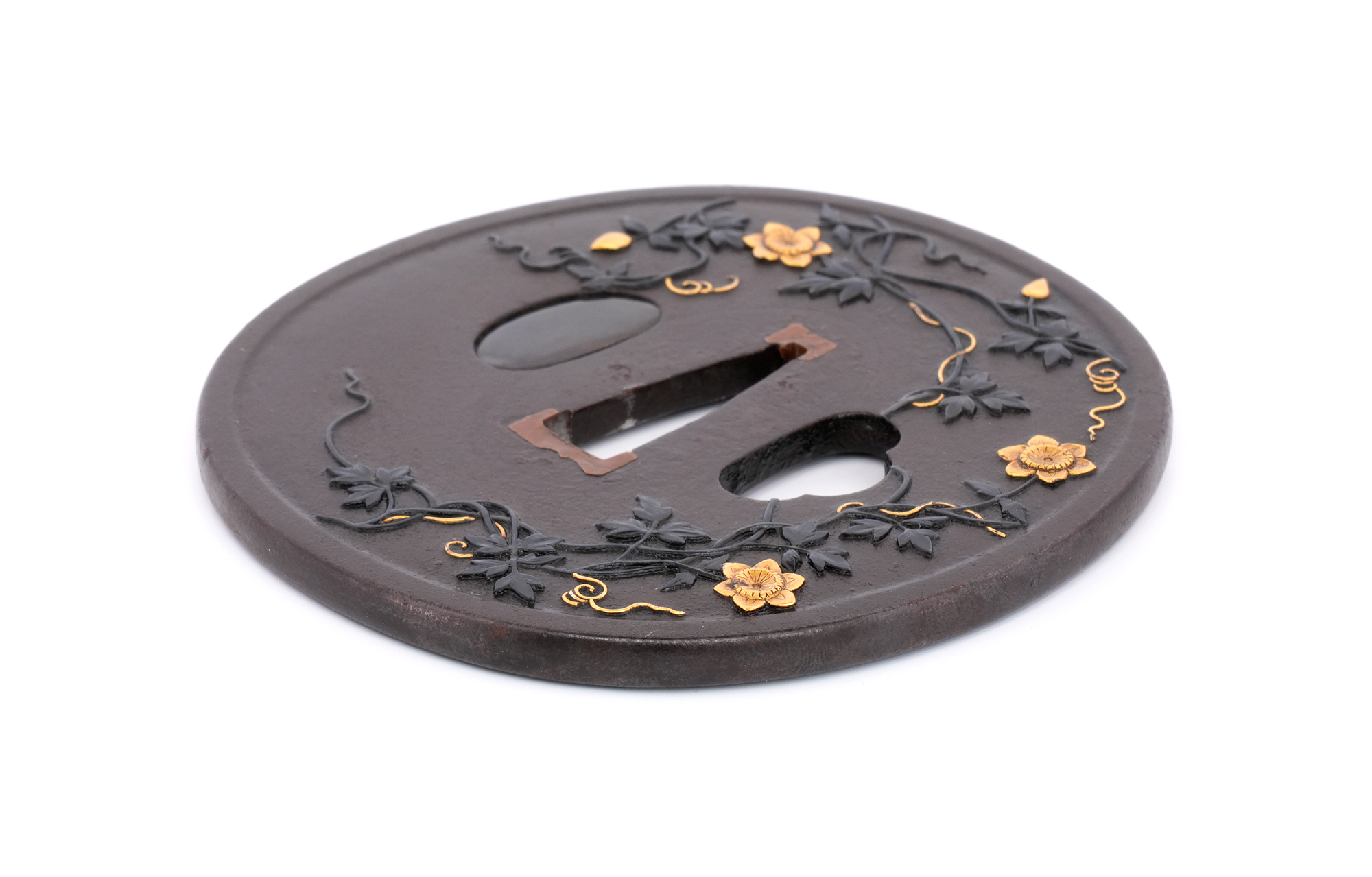
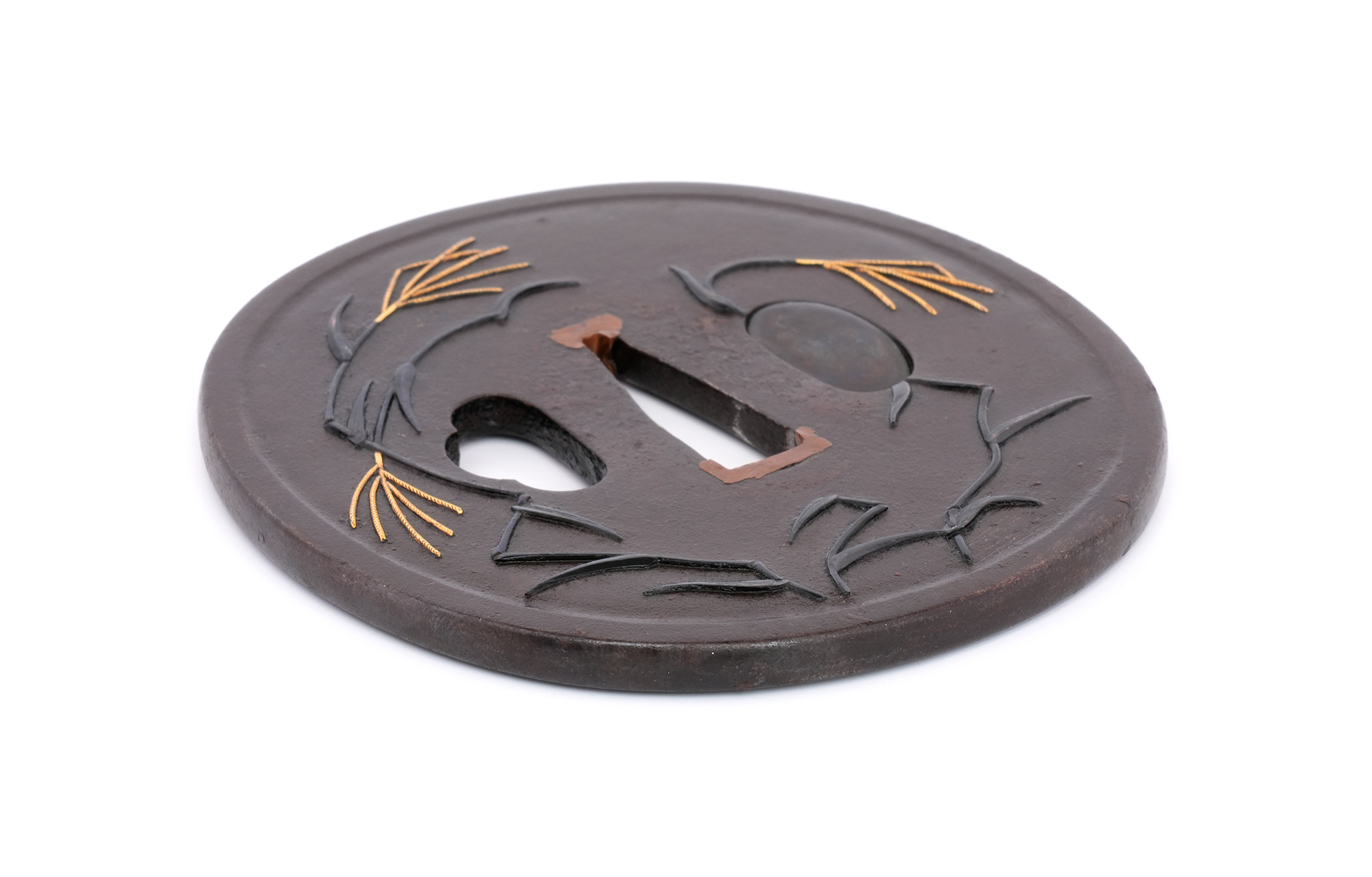
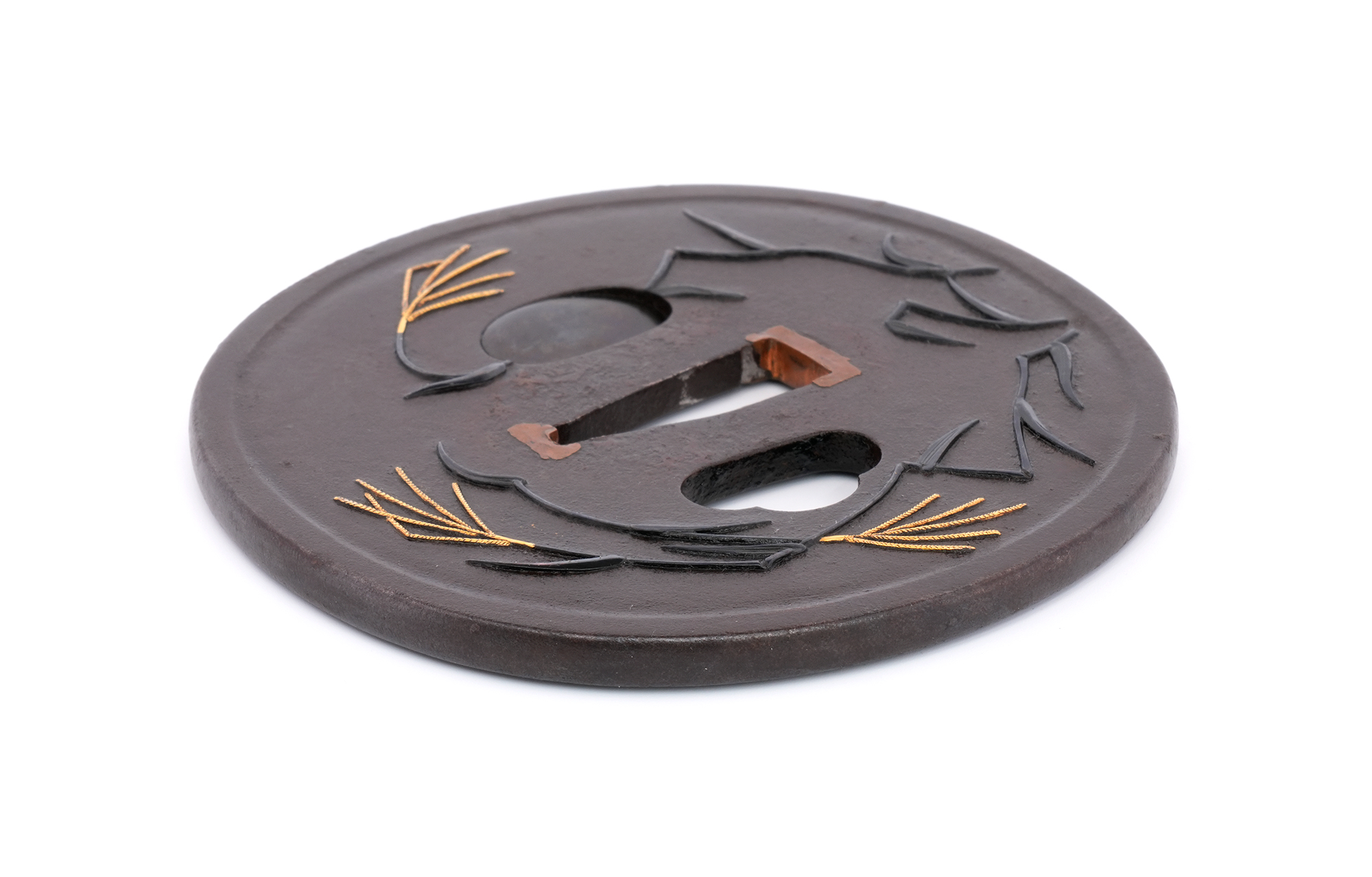
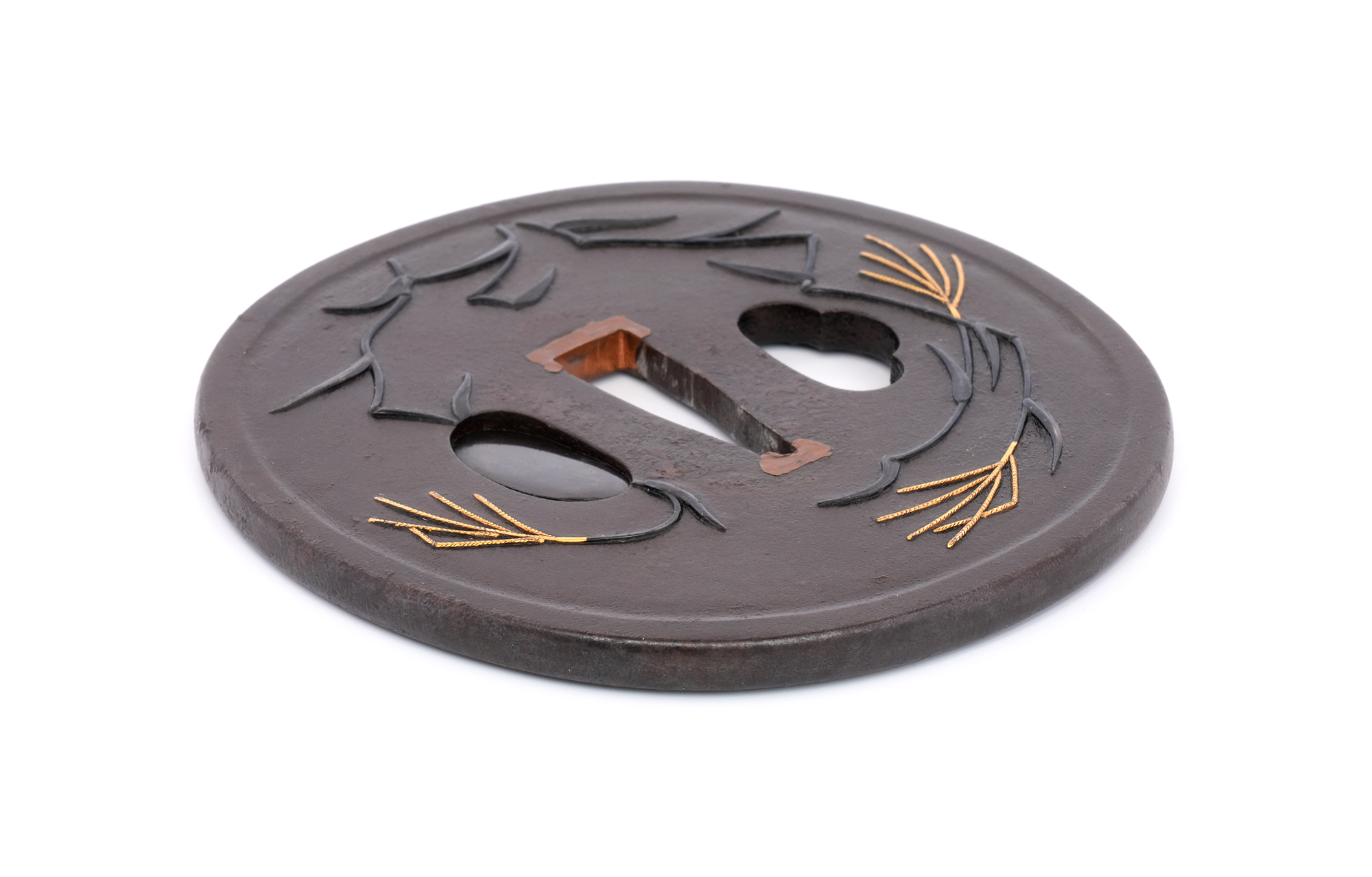
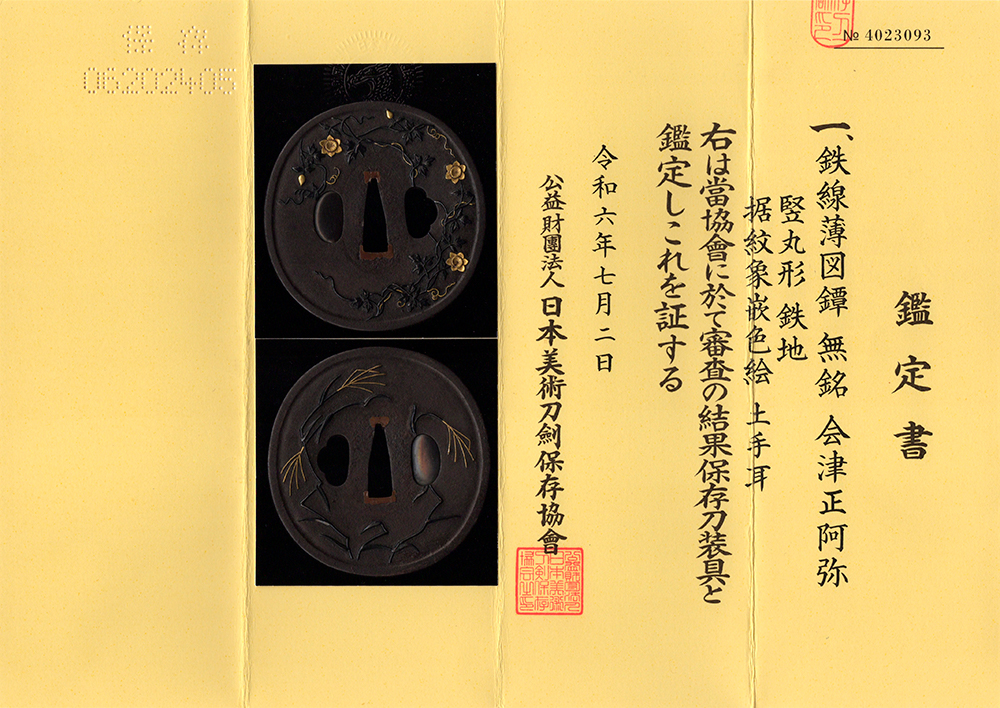
Shoami is a lineage of kinko with a long tradition dating back to the Muromachi period, branching out to various regions to produce tsuba with local characteristics; the Aizu Shoami, as a branch that developed in the Aizu region, left behind highly decorative works combining hori, zogan, and iroe while making the most of the character of the tetsu-ji. This item, though mumei, is given a kiwame as "Aizu Shoami" and is described as kaku-maru gata, tetsu-ji, suemon zogan iroe, and dote-mimi, a tsuba that neatly conveys the characteristics of this school. The main theme on the omote, the tessen (clematis), is a climbing plant named "iron line" because it is strong despite its thin and supple vines; its appearance of blooming neat flowers in early summer and continuing to grow while intertwining has been layered with wishes for strong vitality and long-lasting prosperity. In this piece, the vines are wound in a large circular ring, with leaves, buds, and tendrils arranged in between, and three flowers are made to bloom vividly with kin-iroe; fine radial lines are carved into the flower centers, adding a delicate expression to the gorgeous gold surfaces. The composition, where the vines surround the seppa-dai and weave between the left and right hitsu-ana, is expansive, and the varying sizes of the flowers, buds, and leaves along with the curves of the tendrils create a pleasant rhythm against the quiet tetsu-ji. On the ura, susuki (pampas grass) is arranged largely, with the arching leaves and stems expressed through suemon zogan, while kin-iroe is applied to the ear tips swaying in the wind, condensing the clear air of an autumn field into a concise composition. In contrast to the omote with its densely wound flowers and vines, the ura takes wide margins and contrasts the tightened black leaves with the golden ears, creating a design where both the season and the scenery completely change when the tsuba is turned over; the ability to enjoy plants of different seasons—early summer tessen and autumn susuki—on the front and back adds depth to the appreciation. The tetsu-ji possesses a calm tsuchime expression and a deep brown koshoku, and the dote-mimi running around the contour powerfully tightens the kaku-maru gata form which exceeds 84 mm. The suemon zogan is well-preserved down to the thin lines of the vines, the overlapping leaf tips, and the long stems of the susuki, and there is no noticeable loss in the kin-iroe; the three color tones of the blackish-brown tetsu-ji, the lustrous suemon, and the bright gold resonate clearly with each other, and since the kozuka hitsu-ana is carefully filled with shakudo and suaka sekigane remain at the top and bottom of the nakago-ana, it conveys the history of having actually been used on a koshirae without spoiling the unity of the overall design. Despite being a large-sized tetsu tsuba with a substantial volume of 179 grams, it does not lean solely toward heaviness; the composition, which lightly brings together the thin vines and tendrils of the tessen and the wind-blown ears of the susuki, displays the harmony of tetsu-aji and decorativeness typical of Aizu Shoami. Accompanied by a Hozon Tosogu Kanteisho and blessed with a good state of preservation for the zogan and iroe, the content holds high appeal for collecting; it is a highly impressive work that shows well in a display, allowing one to enjoy the imposing presence of a large tsuba, a floral design rich in seasonal feeling, and the vivid contrast between iron and gold all at once.
Shoami School正阿弥派
Offered by Toushin
159 on the market

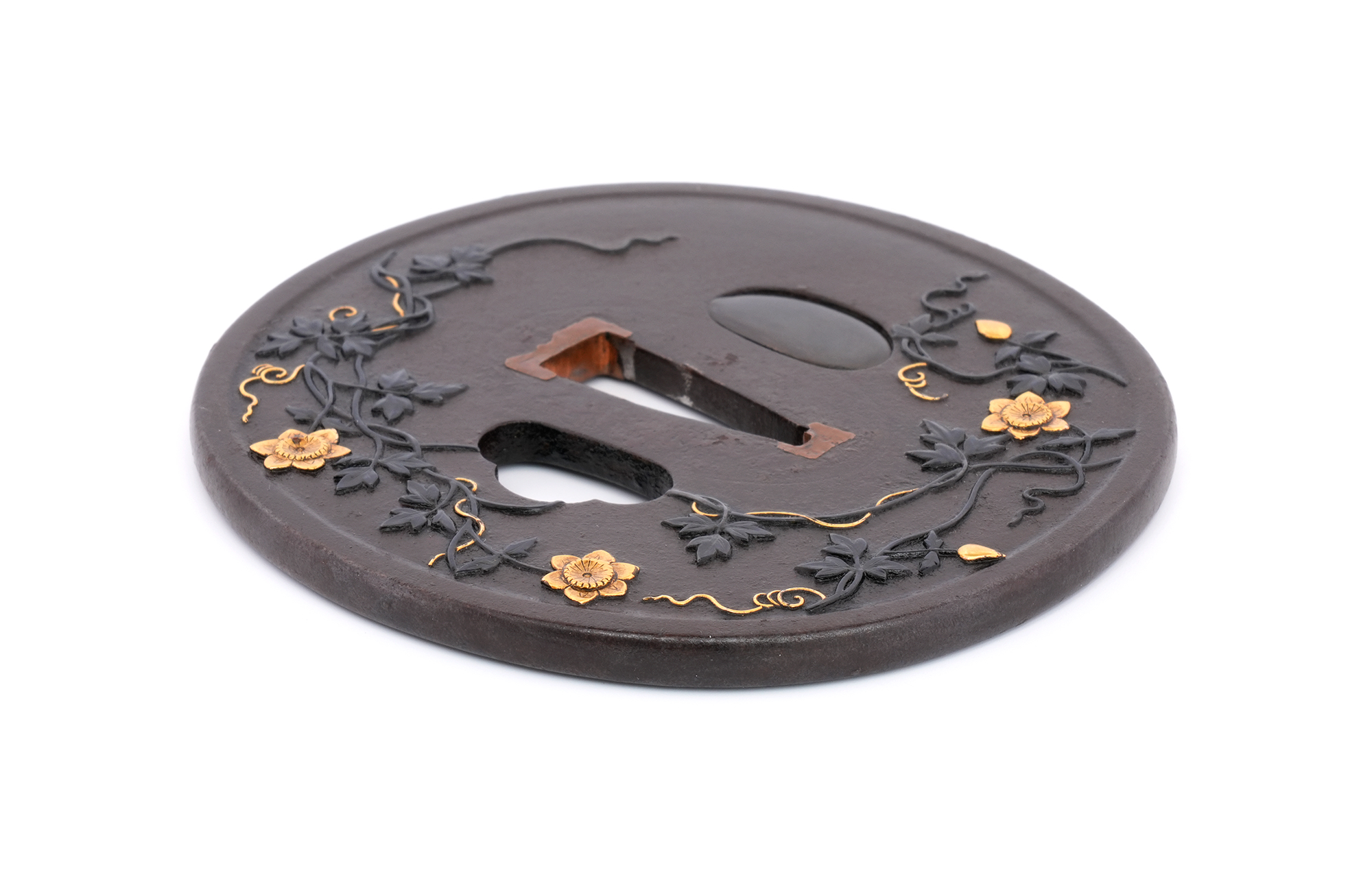
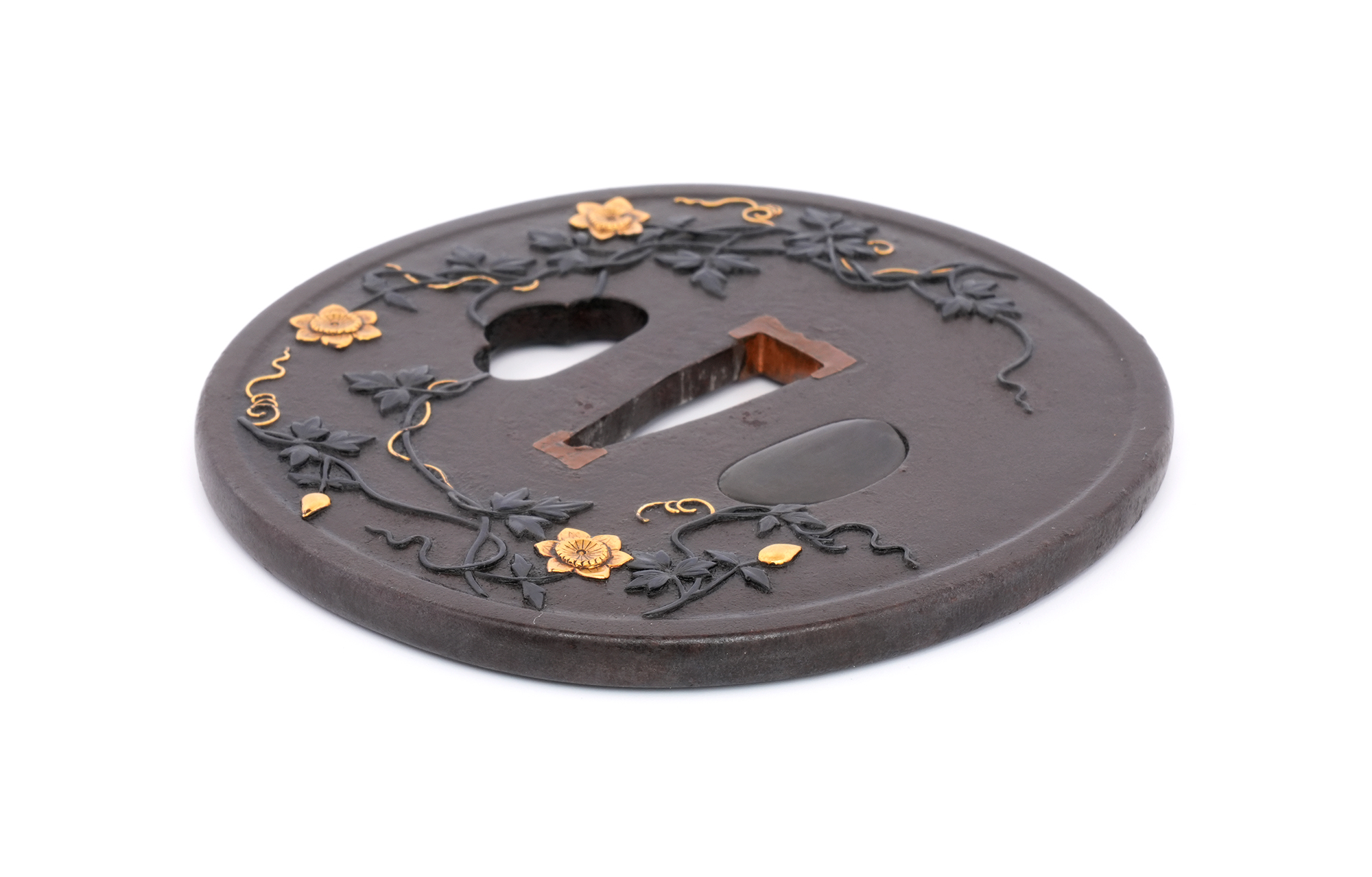
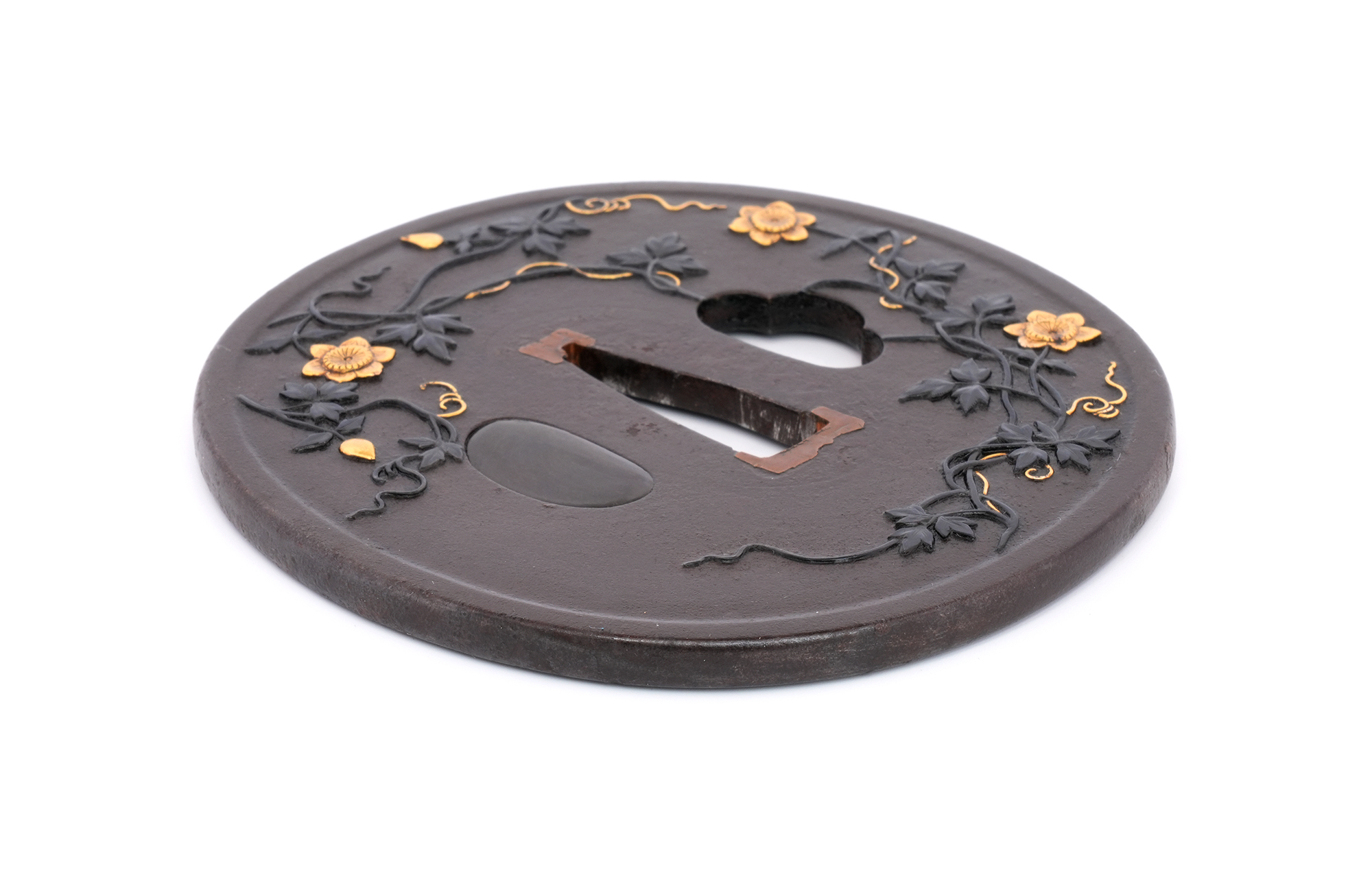
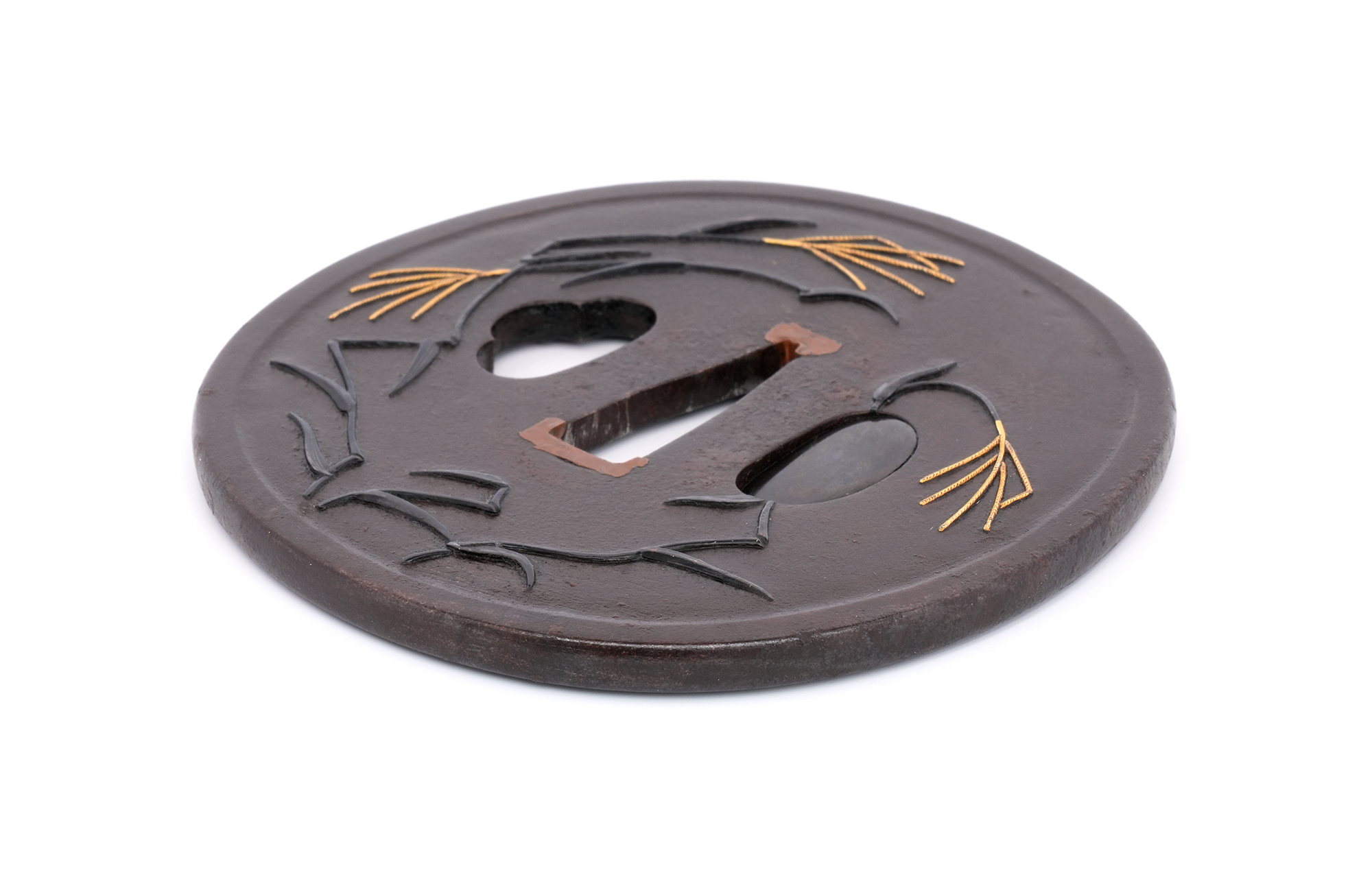
As written by the shop
Machine translation from the shop's Japanese · may contain errors ·
Iron-tsuba · Kyoto
159 pieces on the market now
The Shoami (正阿弥) school arose in Kyoto as one of the principal lineages among the specialist tsuba makers who came to the fore from the middle through the late Muromachi period. Its roots lie in the capital's communities of ami-shū, who served as dōbōshū (attendant artisans) and within whose circles Shōami lineages existed; the prevailing view today is that these artisans originally worked as makers of tōsōgu in general and later became specialized tsuba craftsmen. Works of this early Kyoto phase are customarily referred to as Ko-Shōami ("Old Shōami") — a corpus without widely celebrated signed masterpieces, yet one that defines the school's foundation. In the Momoyama period the group prospered in Kyoto: the maker Hikojūrō, whose tachi tsuba and ō-seppa bear the date Keichō 8 (1603), belonged to this flourishing. Entering the Edo period, the school's craftsmen migrated and formed flourishing offshoots in many regions — chief among them, in the setsumei, the Akita Shōami, founded in effect by Denbei Shigeyoshi, an officially retained artisan of the Satake lords from Enpō 3 (1675) whose main line continued through Dennai Shigetaka, Denshichi Shigetsune, and Kakitsu Shigeō, and the Okayama Shōami, whose Tōshirō (Fujishirō) house served the Ikeda domain into the nineteenth century. Surveying the style of works termed Ko-Shōami, the usual practice is to pierce the iron plate with openwork carving and then apply nunome-zōgan (textile-pattern inlay) in gold, silver, and other metals. Characteristic are thin, well-forged plates of polished ground (migaki-ji) with daring large openwork — paired square seals, namako apertures, four-petaled flowers, diamond clouds with warabite — enlivened by hizashi-yasuri ("sun-ray" file marks) with shakudō inlay, rope-pattern silver inlay on the rim, or linked thunder-pattern (raimon-tsunagi) gold nunome-zōgan. The school equally commanded the formal soft-metal idiom: tachi fittings and itomaki tachi koshirae suites associated with Hikojūrō, Chōemon, and the Akita master Rokumi are executed in shakudō nanako-ji with family crests scattered in gold iroe.
The regional branches developed distinct vocabularies. Shōami Denbei — born in Shōnai in Keian 4 (1651), trained in Edo under Shōami Yoshinaga, and Akita's foremost metalworker — rendered local subjects such as Akita's famed butterbur (fuki) and cloud-and-dragon themes in nikubori ji-sukashi with inlay, produced guri-bori achieving effects reminiscent of lacquer tsuishu, and deployed line inlay, nunome-zōgan, and gold cloisonné inlay entirely identical to the methods of the main Hirata lineage. In Okayama, Shōami Katsuyoshi united weighty takabori with painstakingly meticulous inlay in gold, silver, shakudō, suaka, and shibuichi, absorbing aspects of Gotō Ichijō's manner through his elder brother Katsuzane. The setsumei attest the school's standing at the highest levels of warrior culture: Ko-Shōami guards grace mountings transmitted in the Higo Hosokawa family and the "Great Tokugawa" house, a Higo koshirae modeled on the "Nobunaga koshirae," and the personal mounting of Terao Nobuyuki, senior disciple of Miyamoto Musashi. Dated works — Hikojūrō's Keichō 8 set, judged of exceptionally high documentary value for the advancement of Shōami studies, and Rokumi's guard of Tenmei 2 (1782) — anchor the school's chronology. Denbei's work is praised as conveying the well-practiced hand of traditions inherited from the Shōami forebears, adding elegance to the ideal of practical beauty, while the narrative guards of Denshichi and Shigeteru sustained the Akita line's assured composition and carving under Satake patronage. The tradition closed with Katsuyoshi, ninth head of the Okayama Shōami, who ceased making sword fittings upon the Haitōrei of Meiji 9 (1876); masterpieces such as his Jikokuten guard and the Naniwa-gata uta-e tsuba carved in his seventy-third year stand among the summits of late metalwork, securing this widespread network — to which perhaps a tenth of all surviving tsuba is attributed — an enduring place in the tosogu canon. Learn more →
| Smith | Era | Designated |
|---|---|---|
| Denbei傳兵衛 | — | 13 |
| Shoami Katsuyoshi正阿弥勝義 | — | 7 |
| Matashichi又七 | — | 0 |
| Yoshikazu吉一 | — | 0 |
| Jihachiro治八郎 | — | 0 |
Certifies a genuine fitting worth preserving: a correct signature, or, if unsigned, an identifiable era and school, with recognized artistic and craft value.
The NBTHK (Nihon Bijutsu Tōken Hozon Kyōkai, the Society for the Preservation of Japanese Art Swords) is a public-interest incorporated foundation founded in 1948 and supervised by Japan’s Agency for Cultural Affairs (Bunkachō); it is based at the Japanese Sword Museum in Tokyo. Its expert panels physically examine each submitted work (shinsa) and issue a certificate (kanteishō) ranking it by artistic and historical merit. NBTHK papers are the most widely recognized standard of authentication for Japanese swords and fittings.
NBTHK official siteAs a rule we do not accept returns, except when we have sent a different item from the one ordered or when there is a significant discrepancy between the description and the item. If you wish to return an item, please contact us within 3 days of its arrival and then send it back.
¥275,000