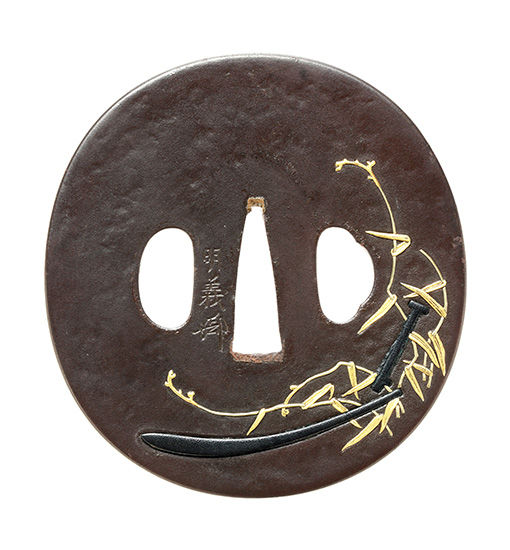
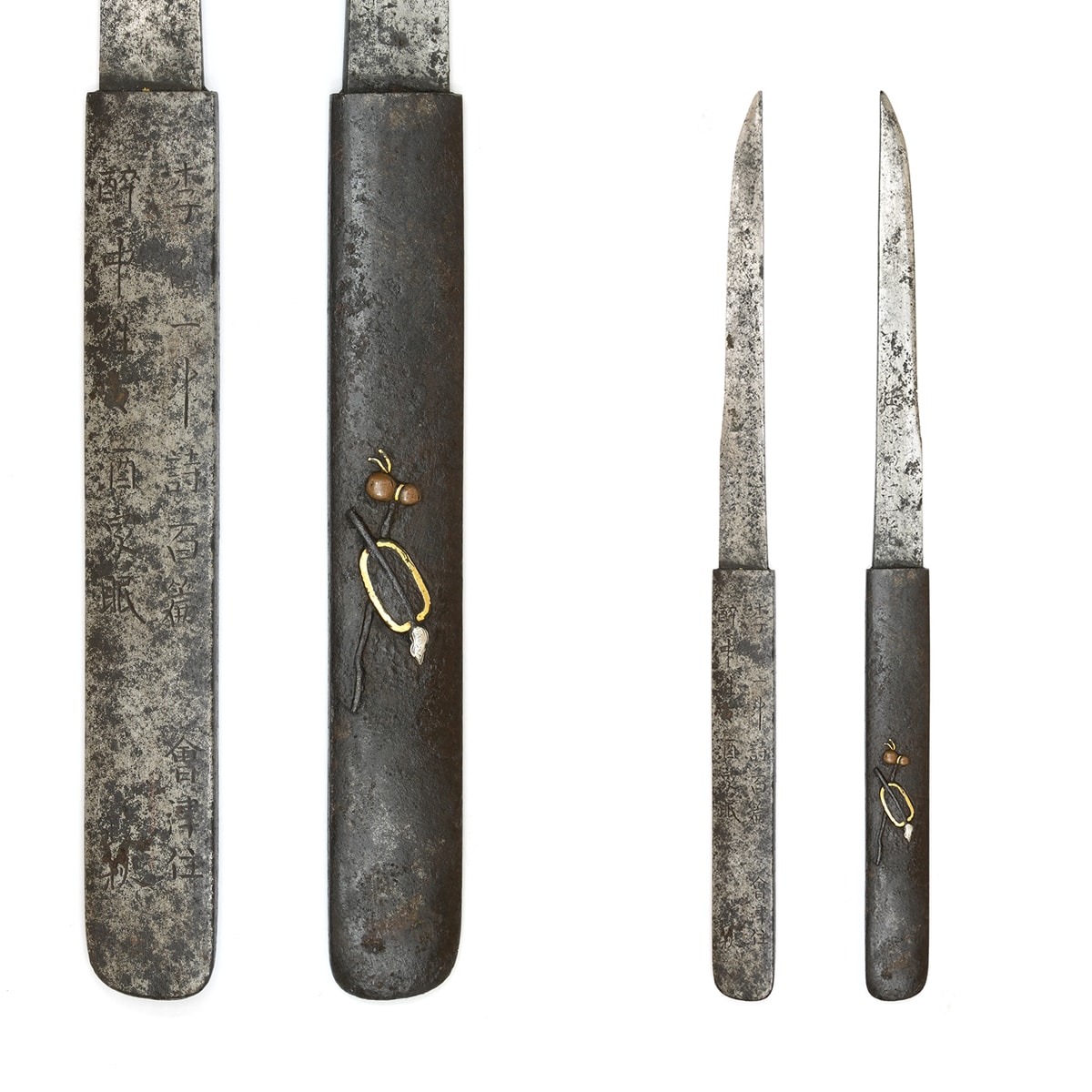
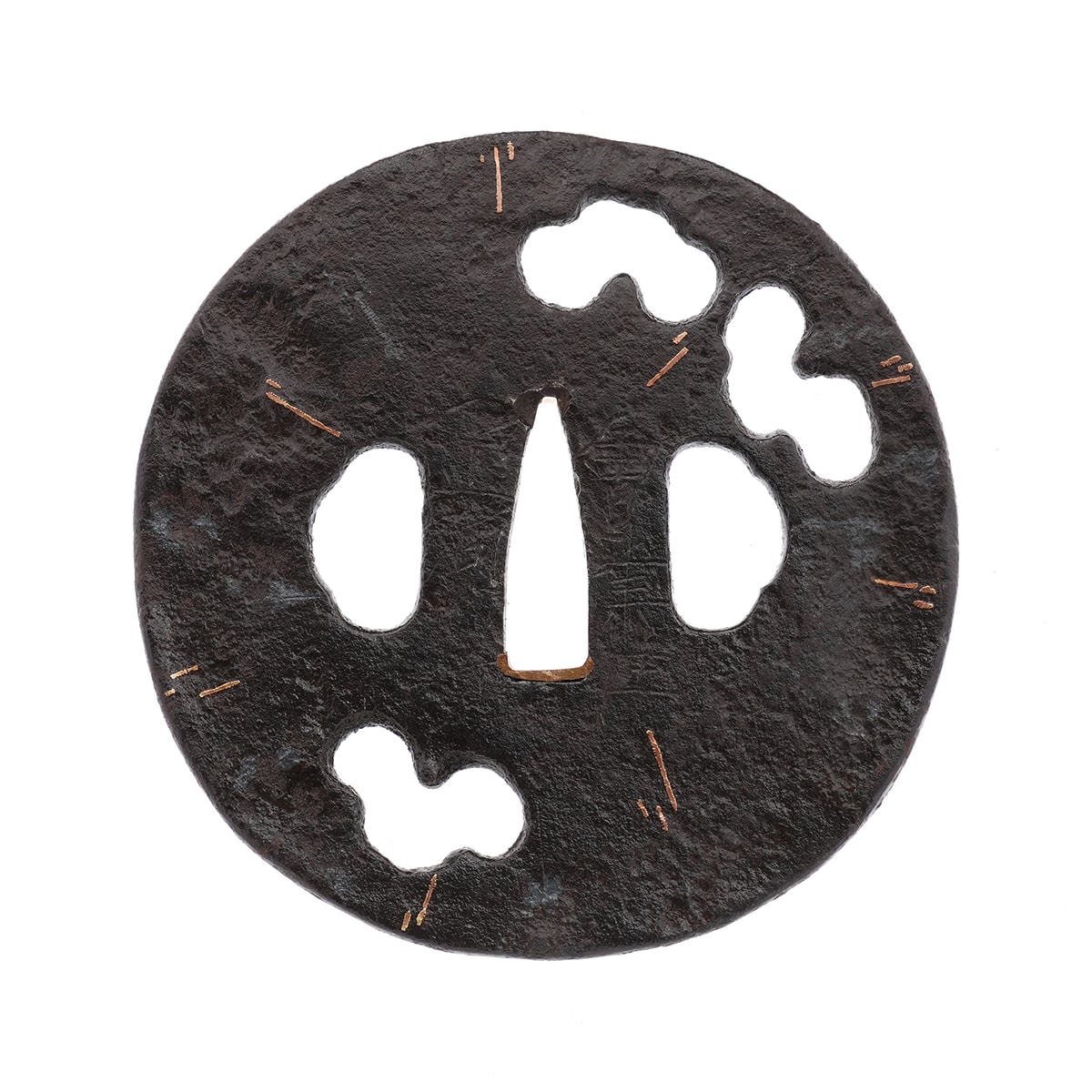
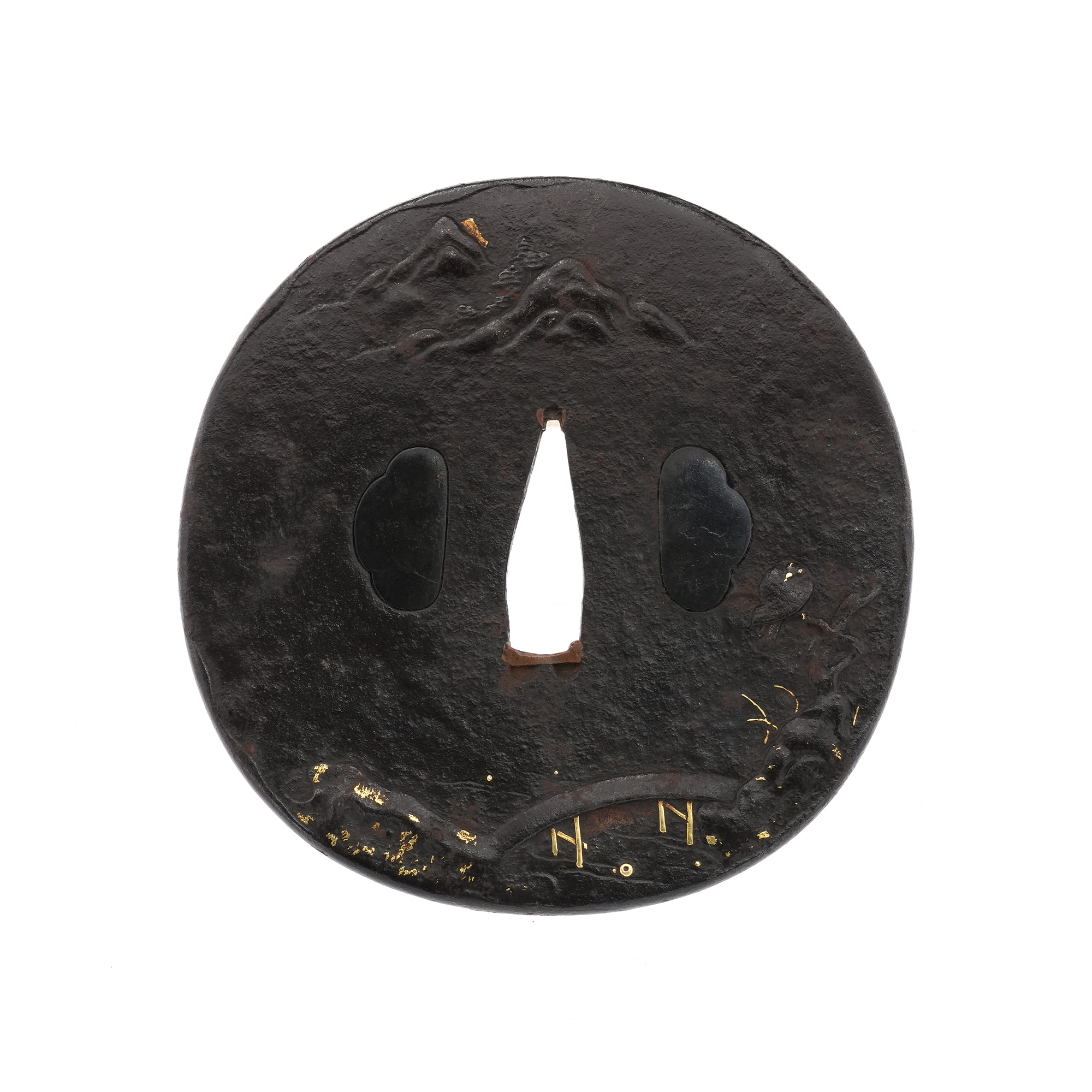
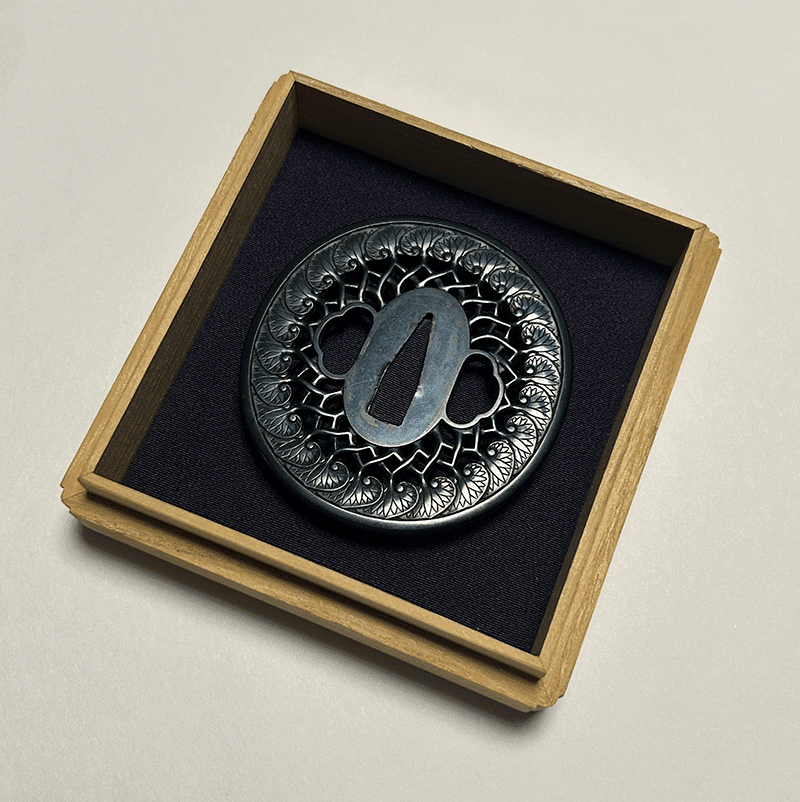
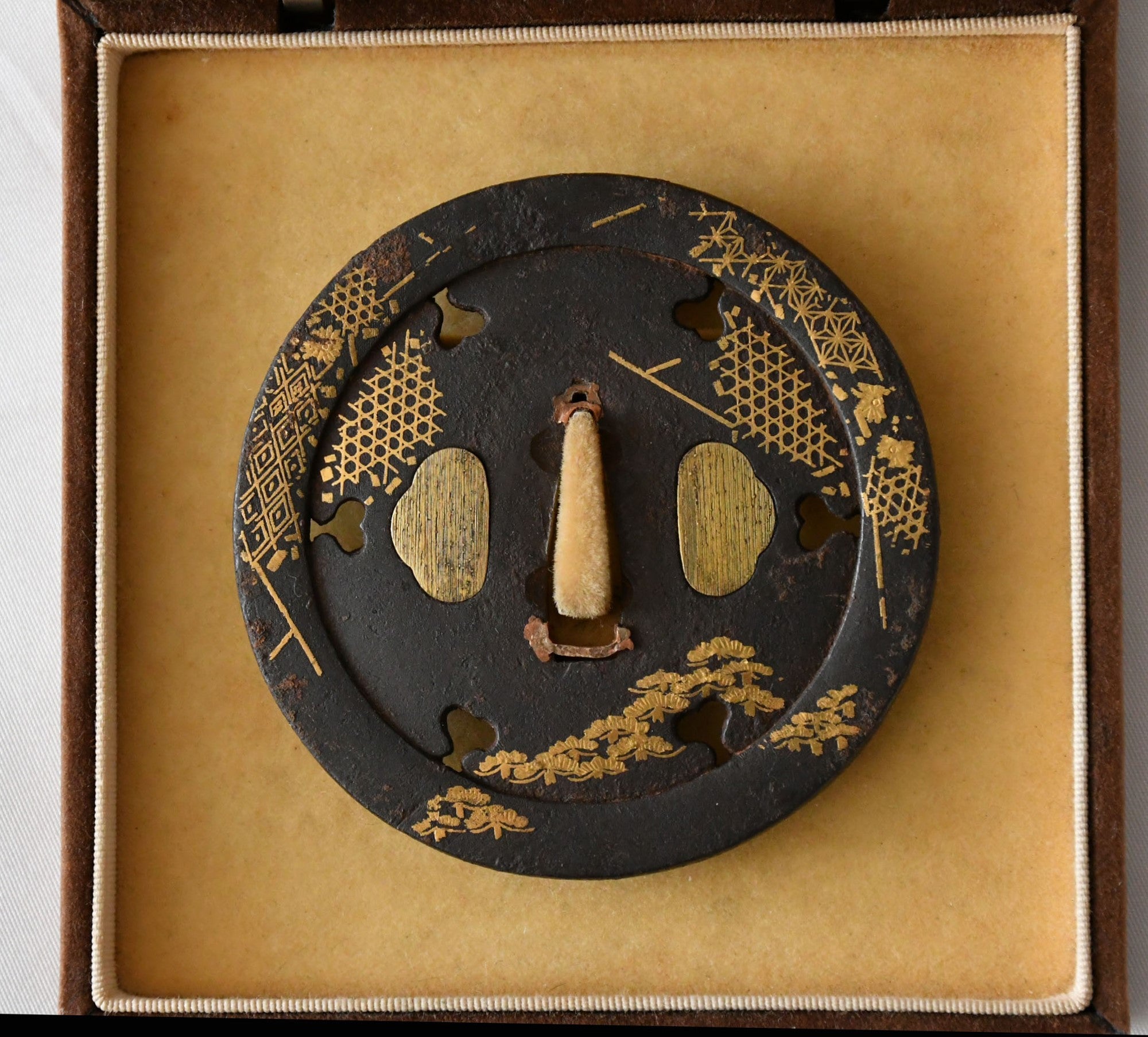
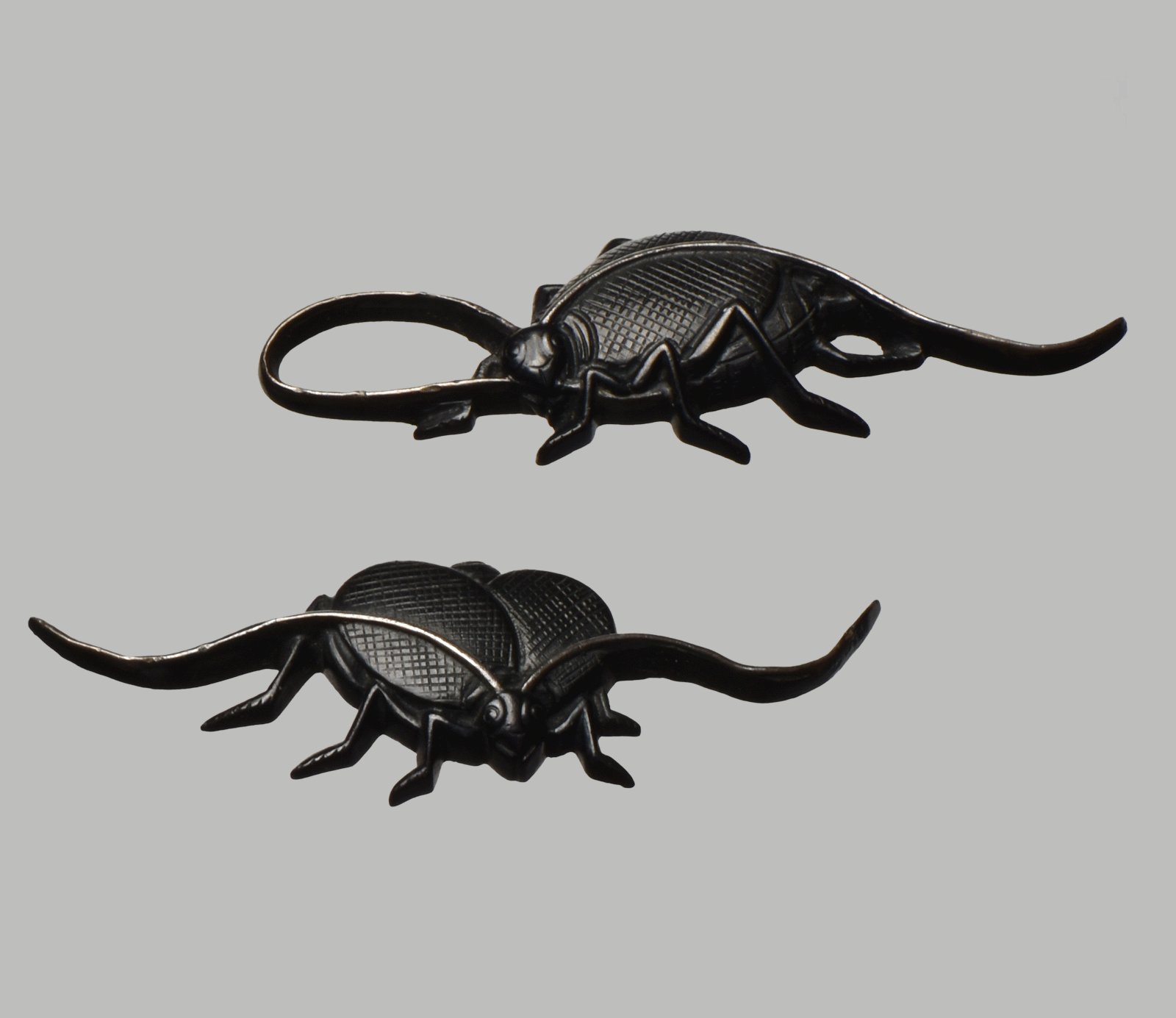
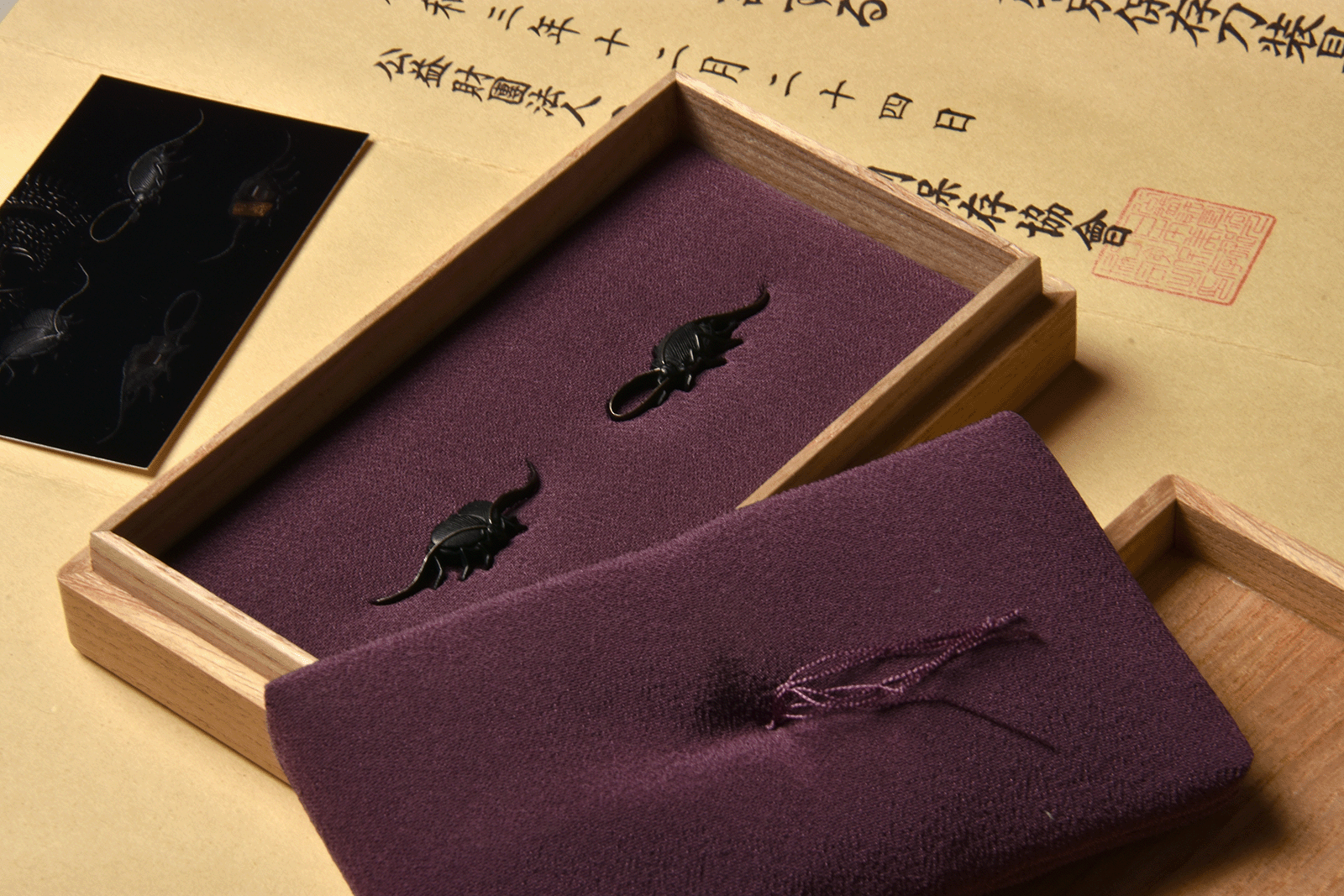
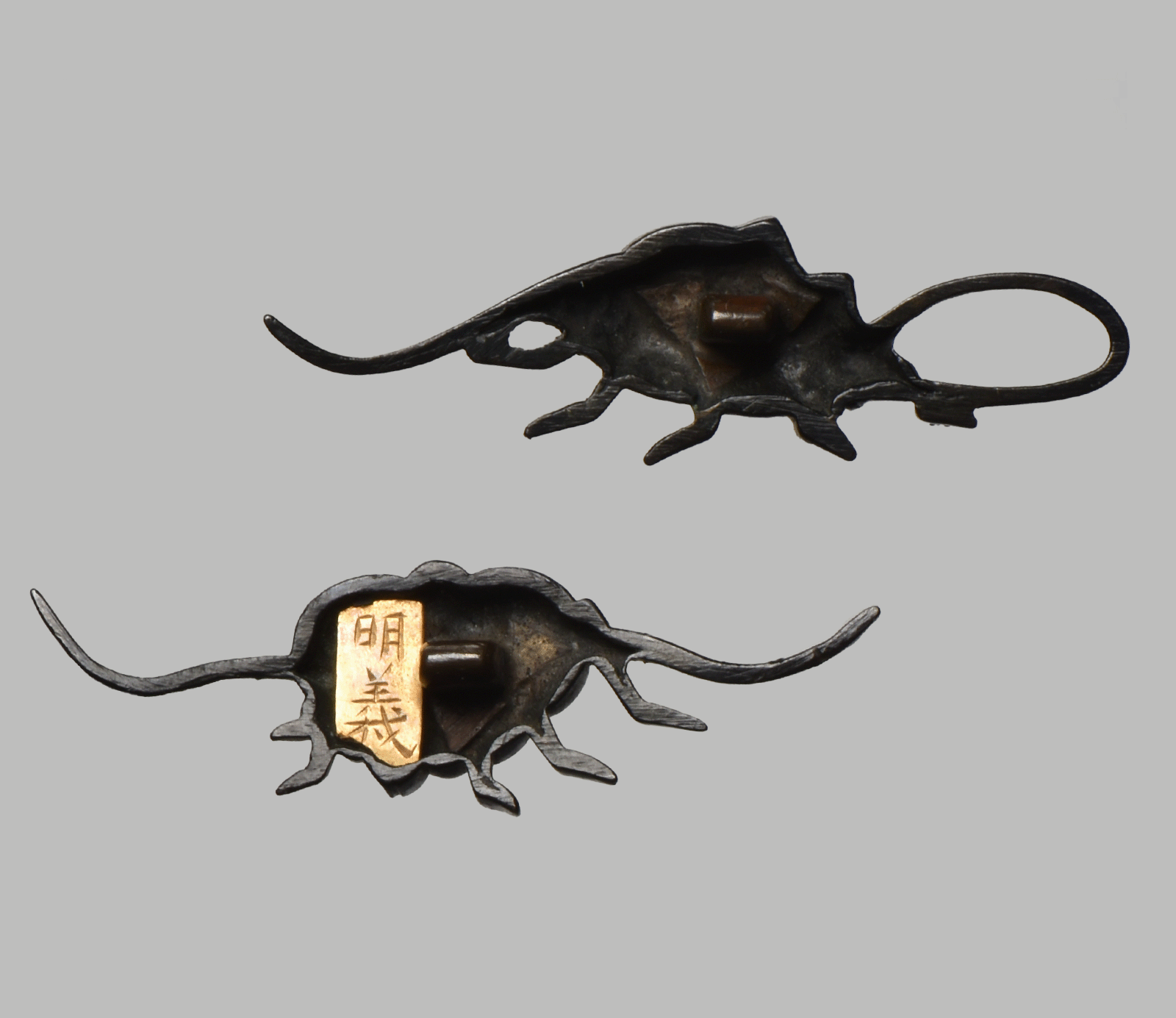
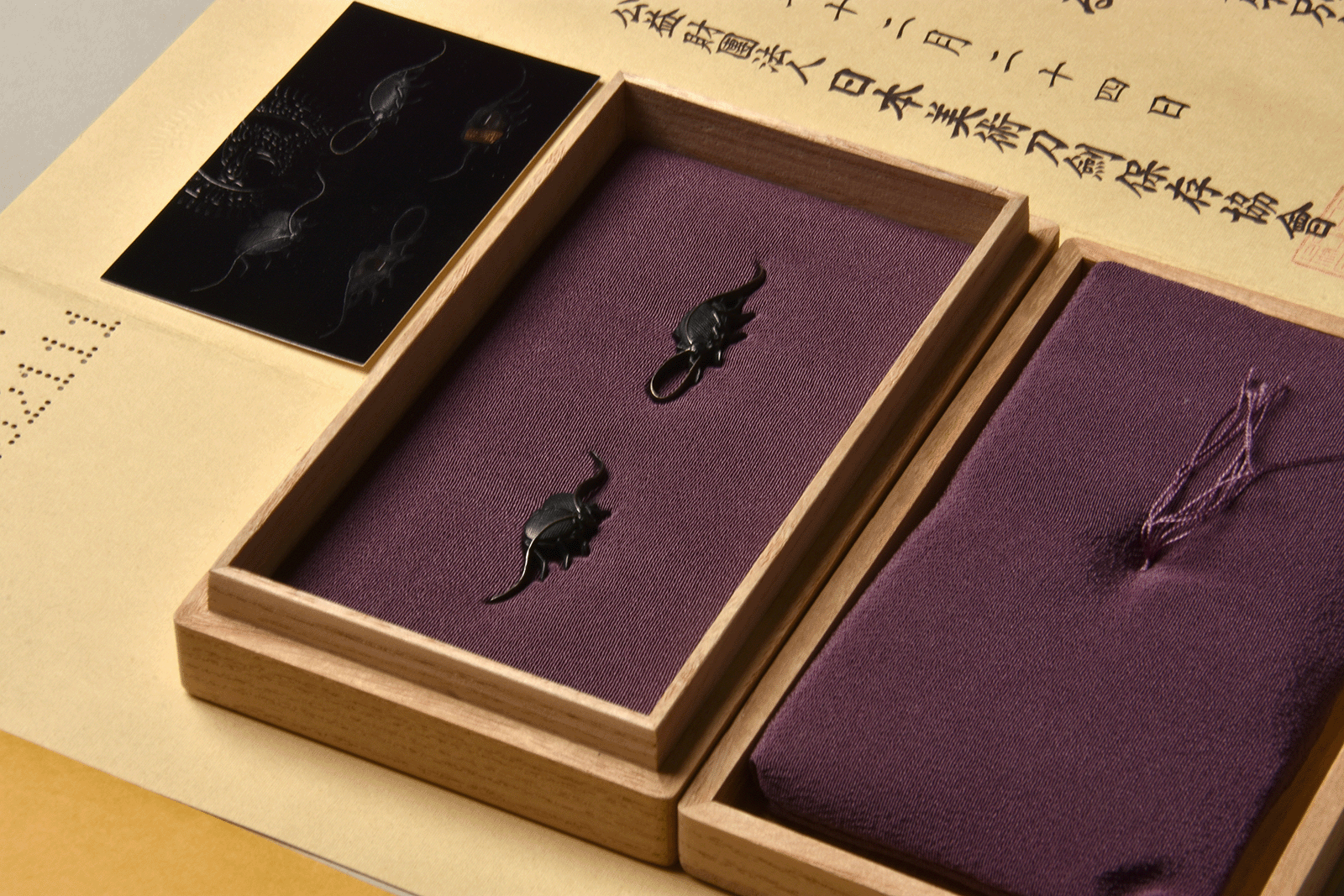
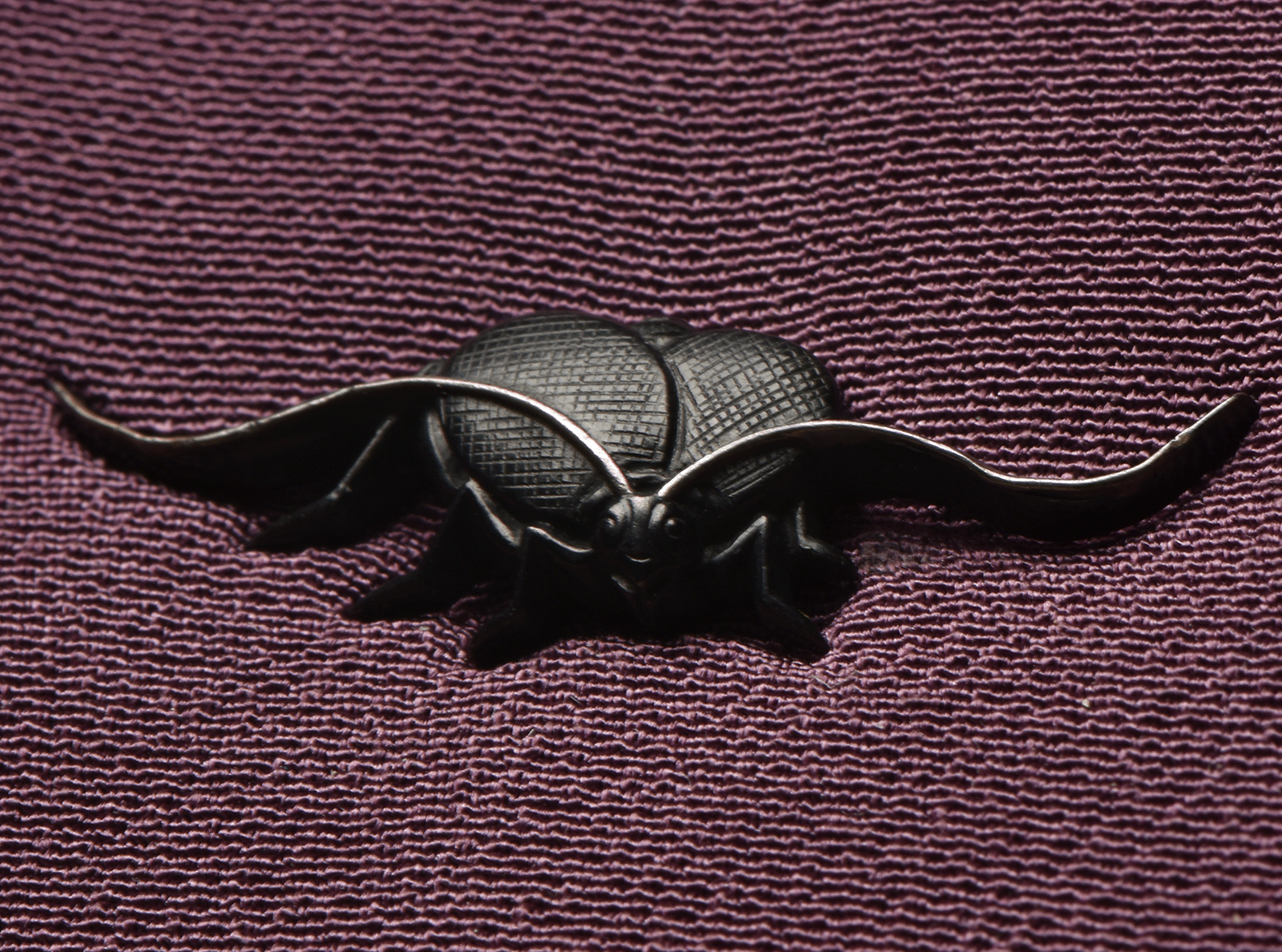
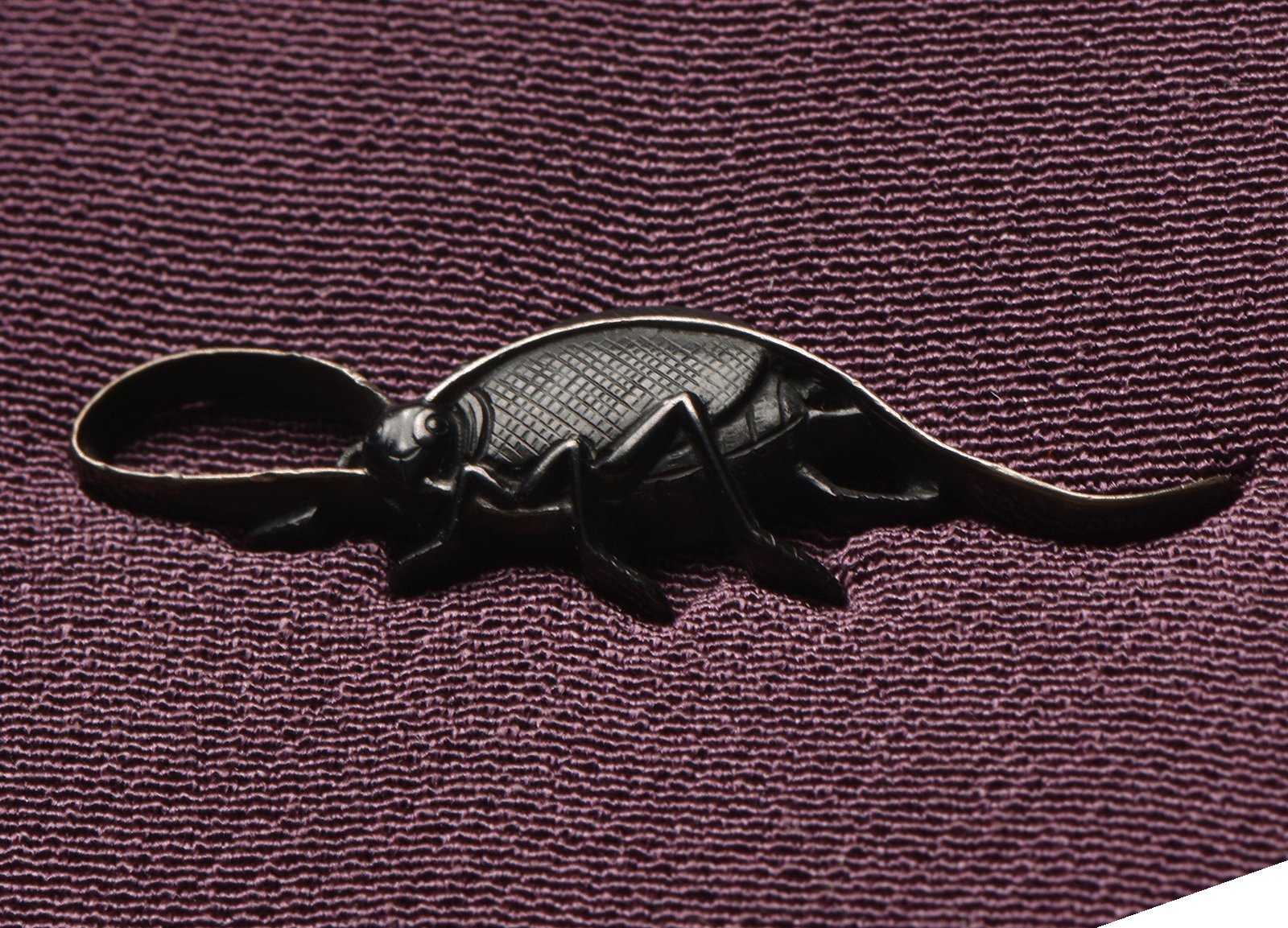
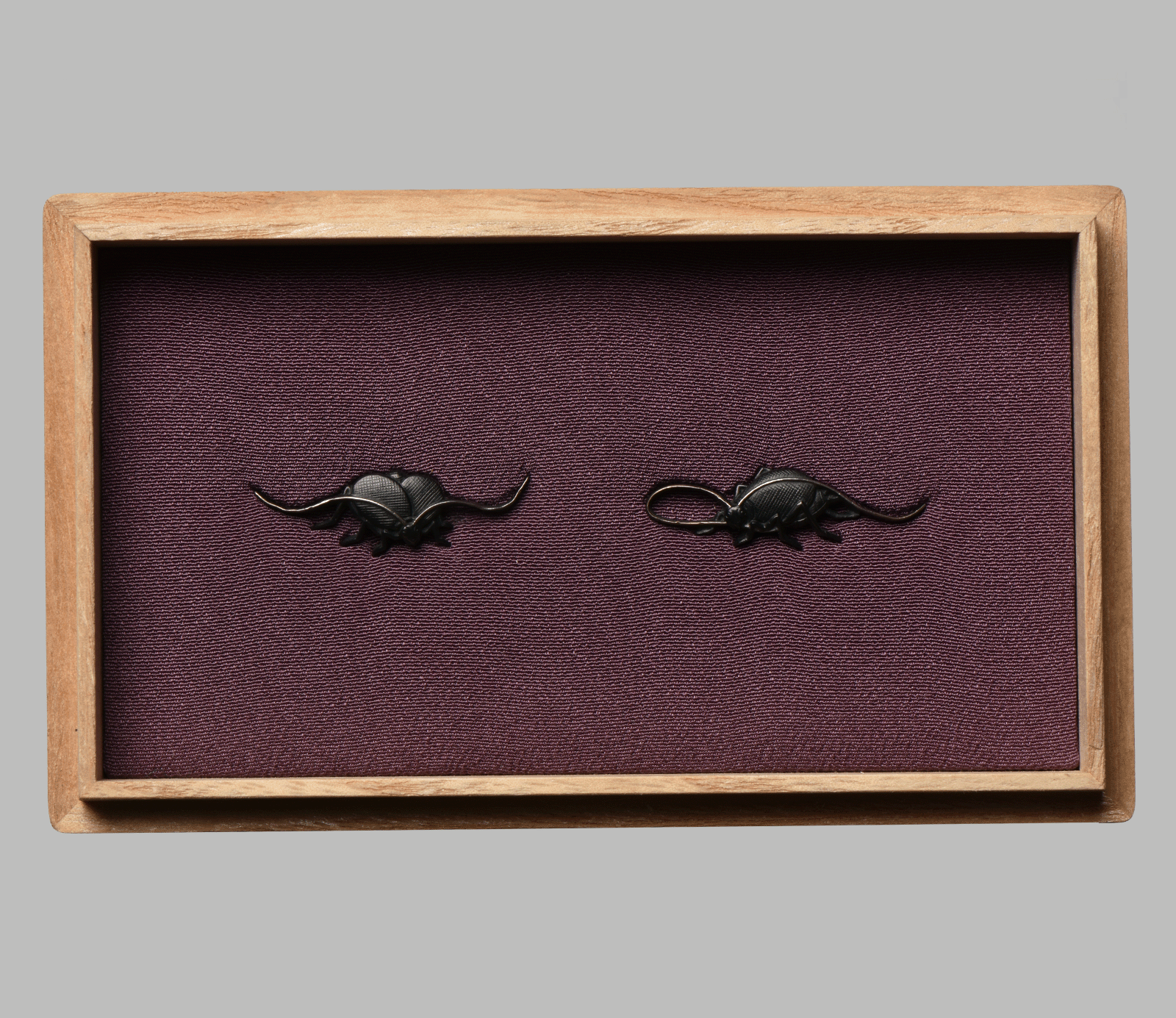
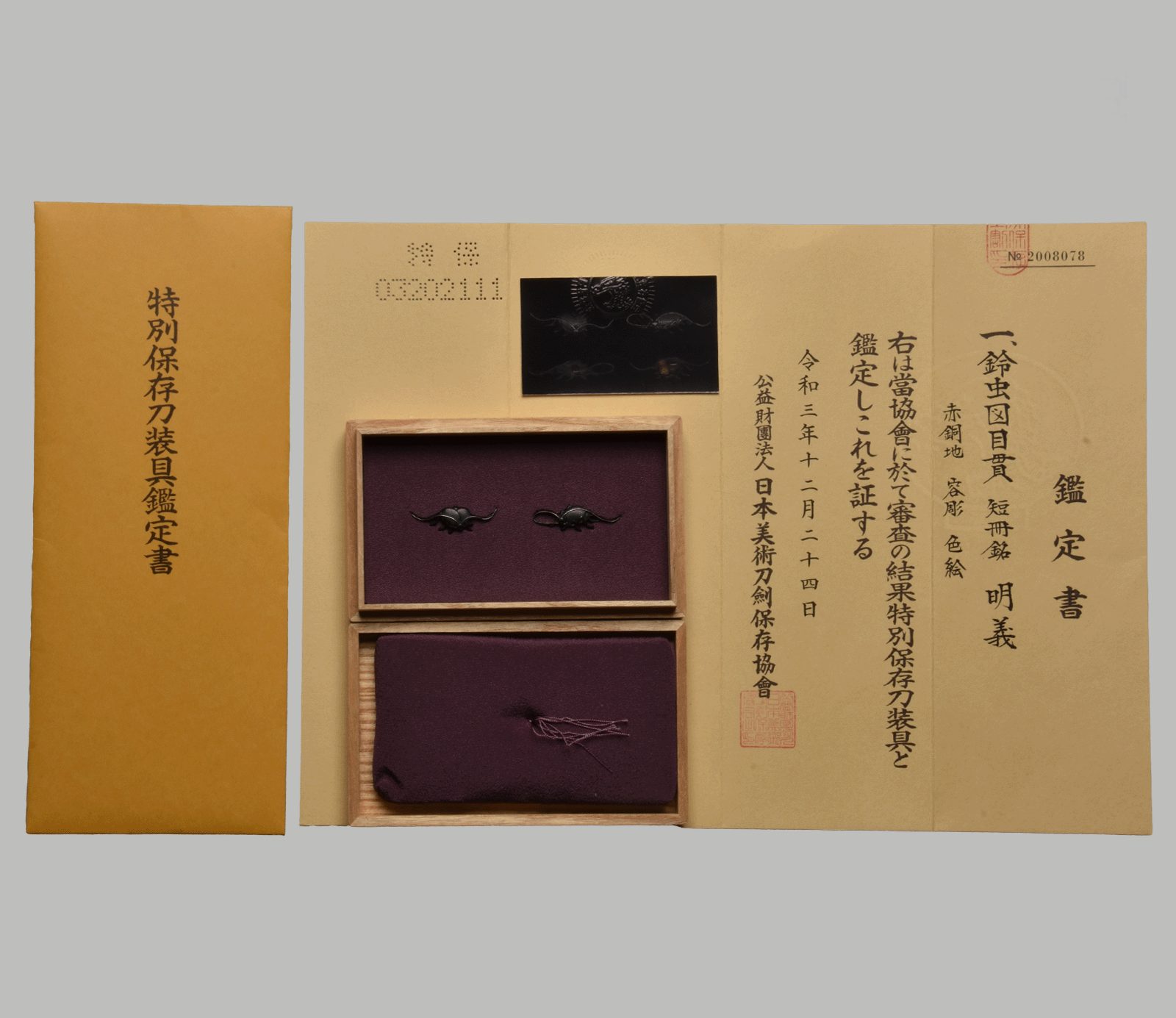
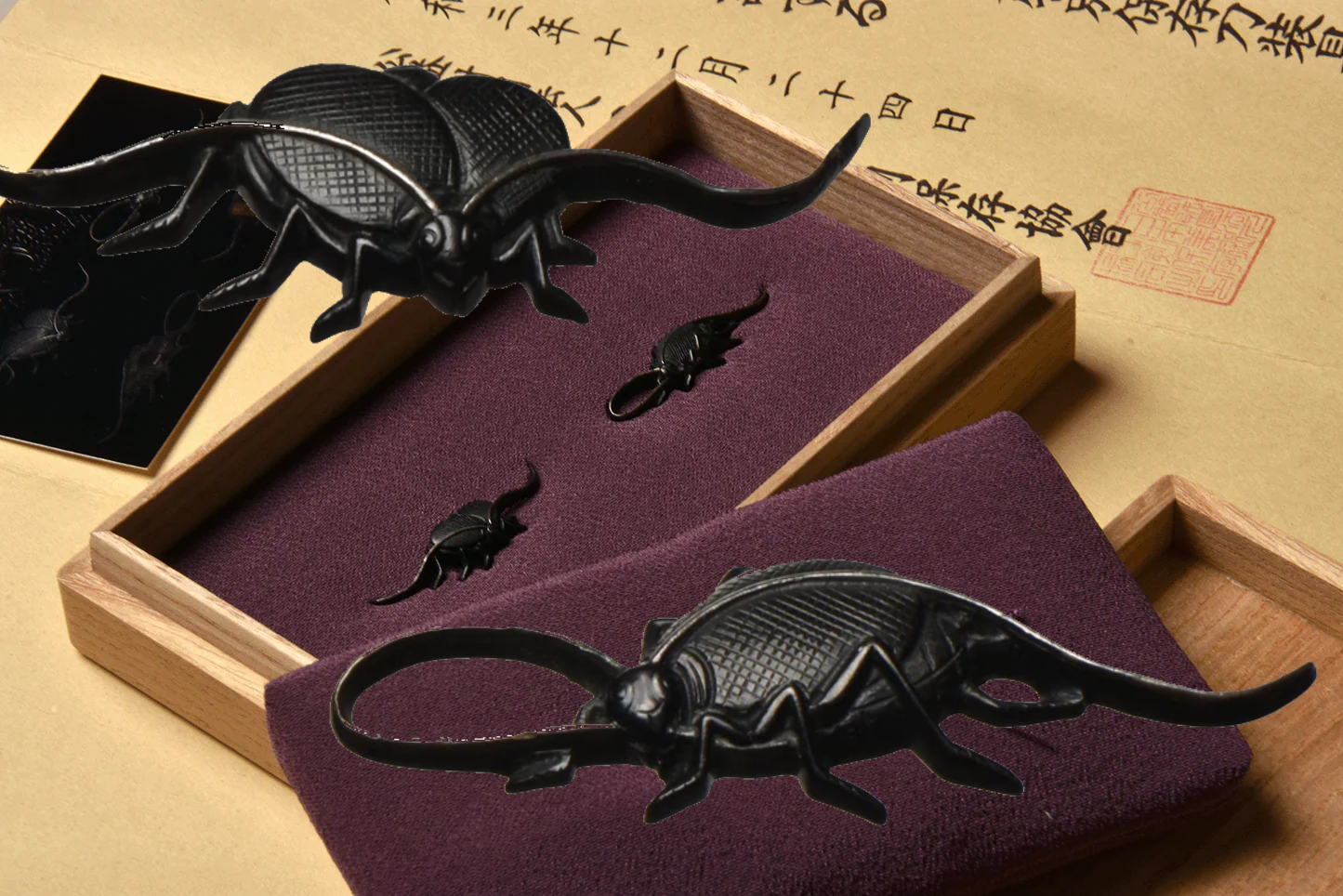
A pair of antique menuki by Kono Akiyoshi, certified NBTHK Tokubetsu Hozon, depicting two finely modeled insects, likely crickets or ground beetles. The menuki are rendered with exceptional precision and naturalism in the refined kinko style characteristic of the Kono School. The craftsmanship, style, and documented lineage suggest a late Edo period origin.
Certificate reading — 銘 明義
 NihontoWatch
mei · Kono · Edo
Aizu Akiyoshi
Edo
Signed
Tokuho (NBTHK)
Iron-tsuba · Mutsu · around 1670
3 pieces on the market now
Where Akiyoshi stands among comparable artisans: across all of nihontō, and within tradition, era, and period. The tiers (Foremost · Leading · Major · Notable) weigh official designations from the NBTHK and Japan's Agency for Cultural Affairs, together with historical honors of lasting repute such as the Sansaku and Meibutsu-chō.
Select a lens to see how it's measured.
Iron-tsuba · Mutsu
8 pieces on the market now
| Smith | Era | Designated |
|---|---|---|
| Akiyoshi明義 | 1670 | 1 |
A Hozon-certified fitting of notably superior craftsmanship and condition, often with signature or workmanship of high reference value.
The NBTHK (Nihon Bijutsu Tōken Hozon Kyōkai, the Society for the Preservation of Japanese Art Swords) is a public-interest incorporated foundation founded in 1948 and supervised by Japan’s Agency for Cultural Affairs (Bunkachō); it is based at the Japanese Sword Museum in Tokyo. Its expert panels physically examine each submitted work (shinsa) and issue a certificate (kanteishō) ranking it by artistic and historical merit. NBTHK papers are the most widely recognized standard of authentication for Japanese swords and fittings.
NBTHK official site14-day return window in original/unused condition; antique items (swords, menuki, tsuba and similar) are expressly excluded from exchange; EU consumers retain a 14-day cancellation right; refunds within 10 business days of approval.
€2,350