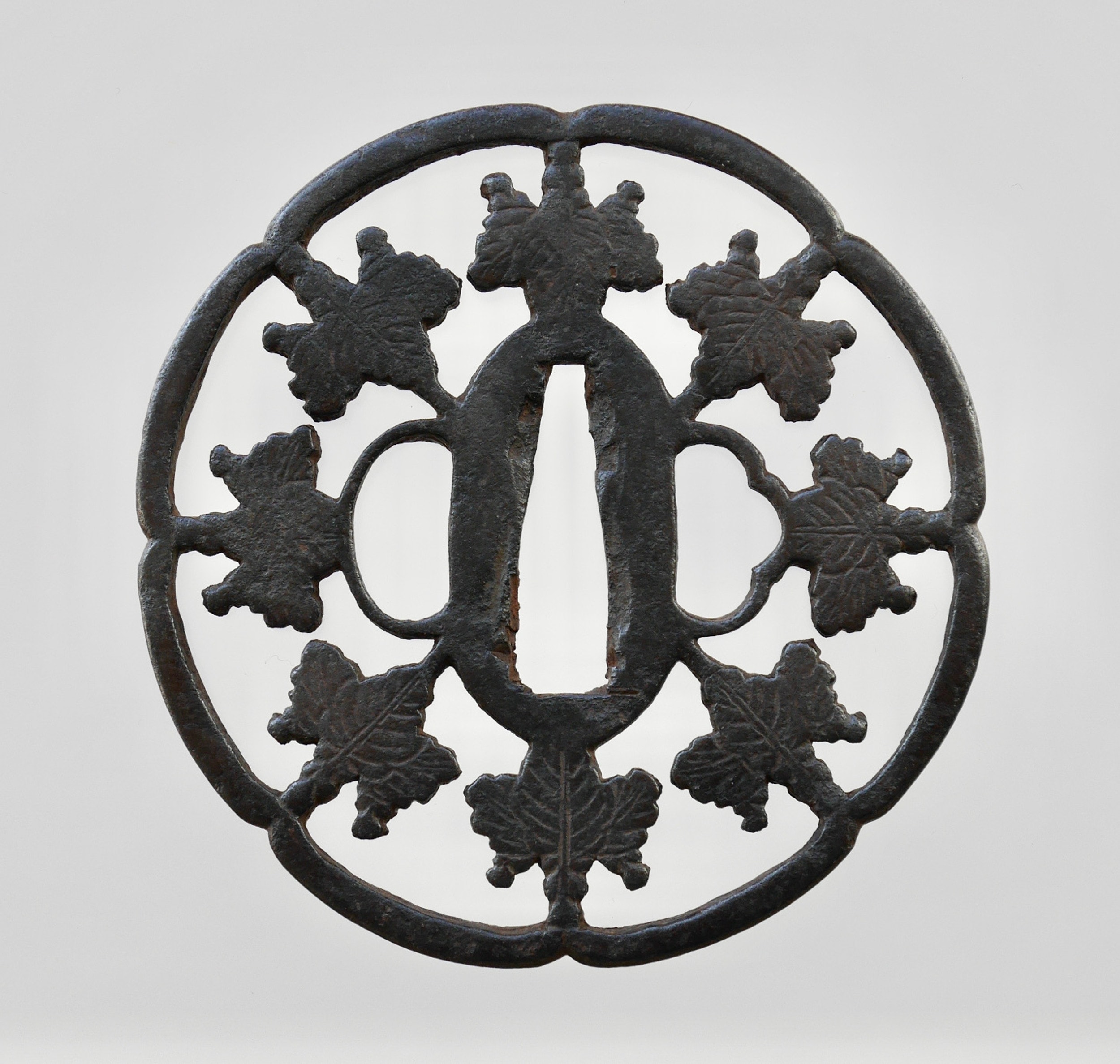
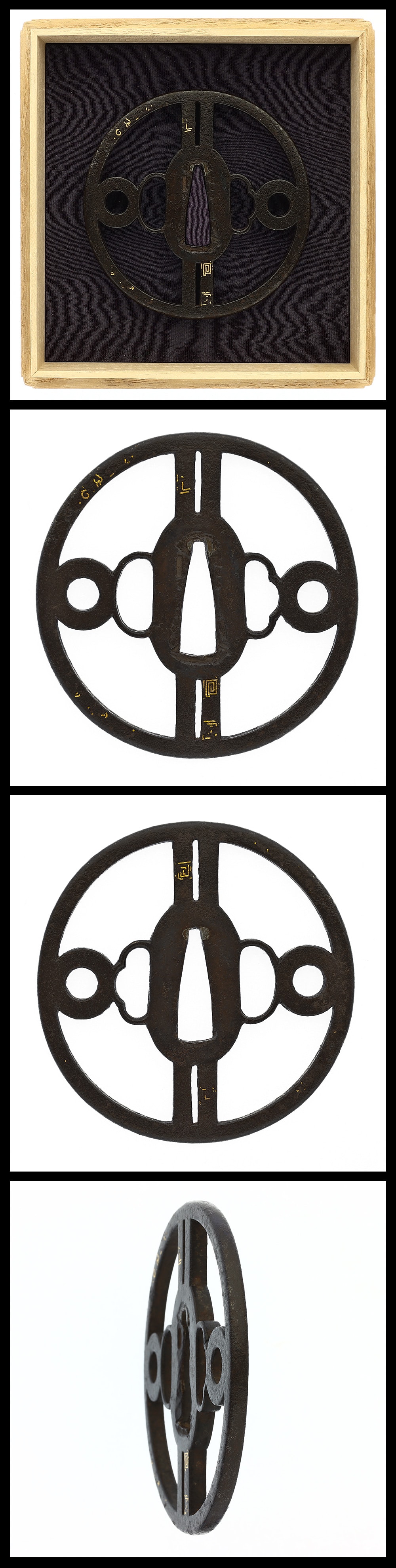
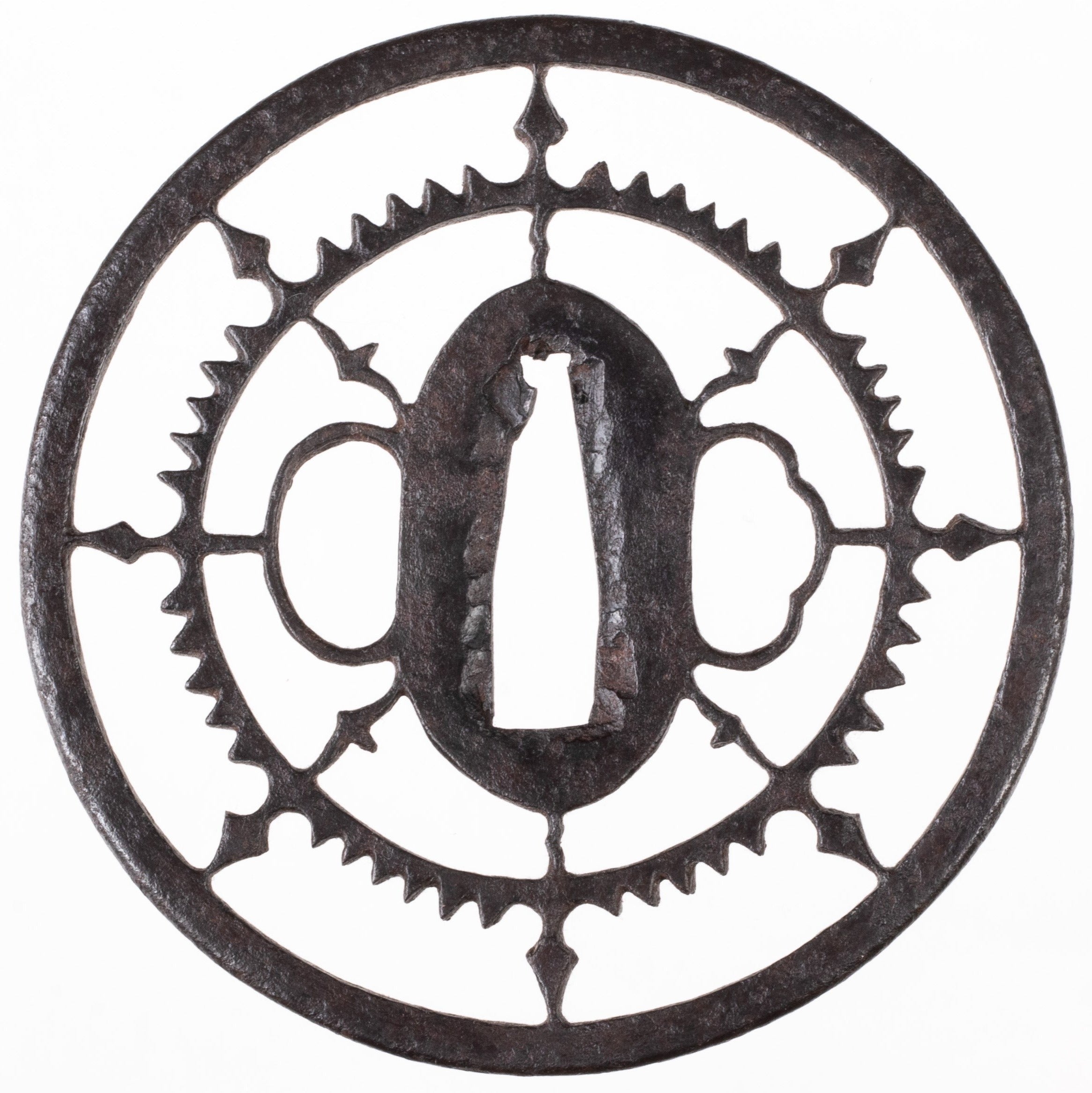
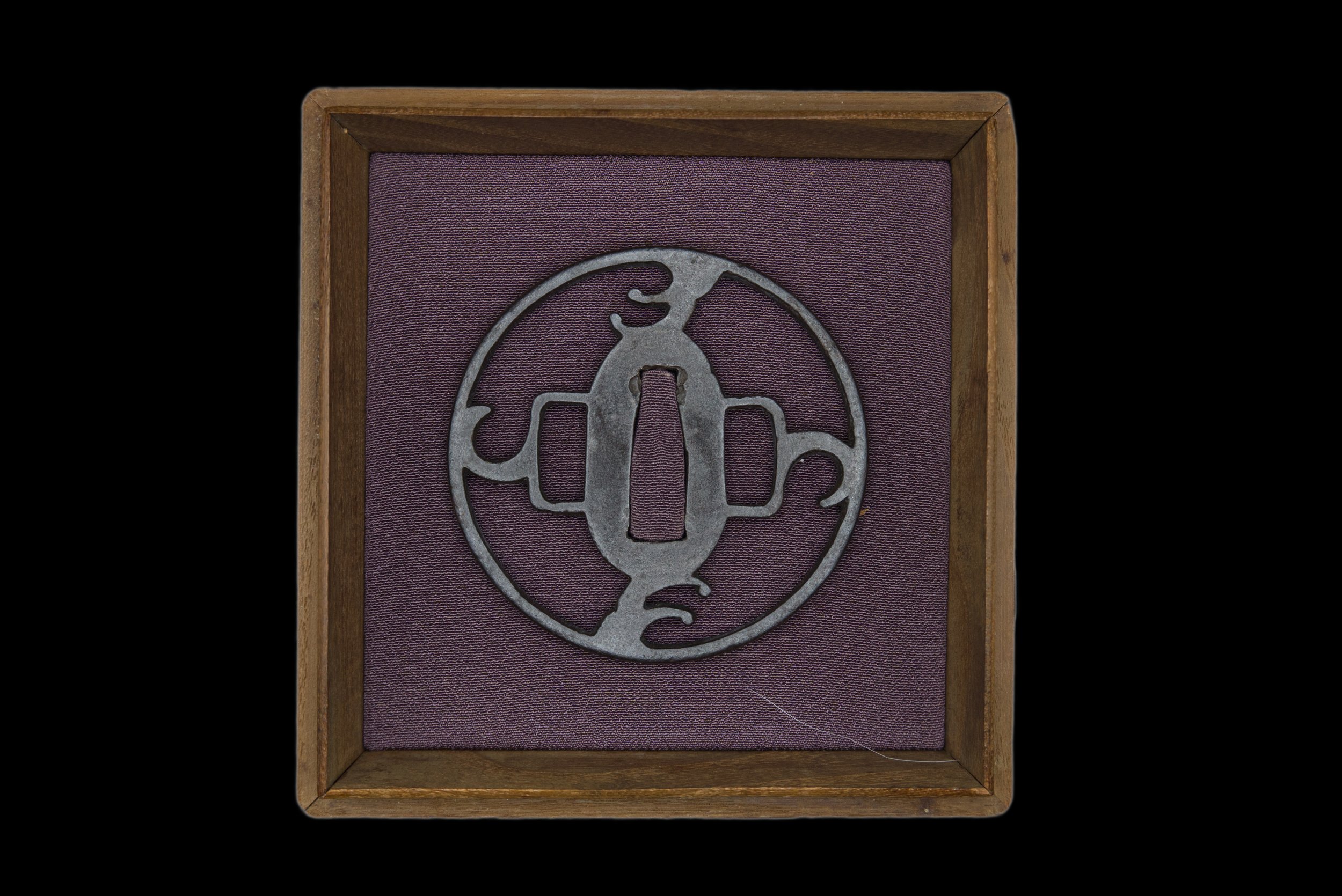
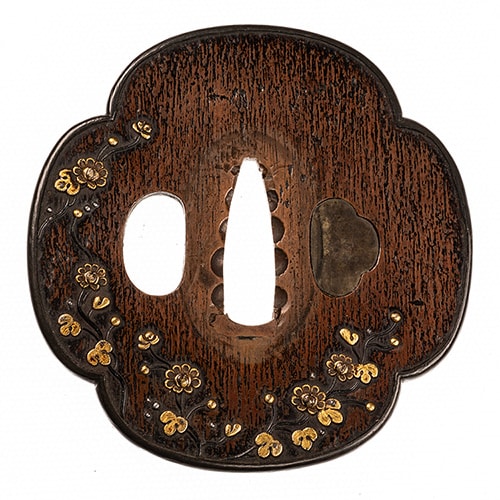
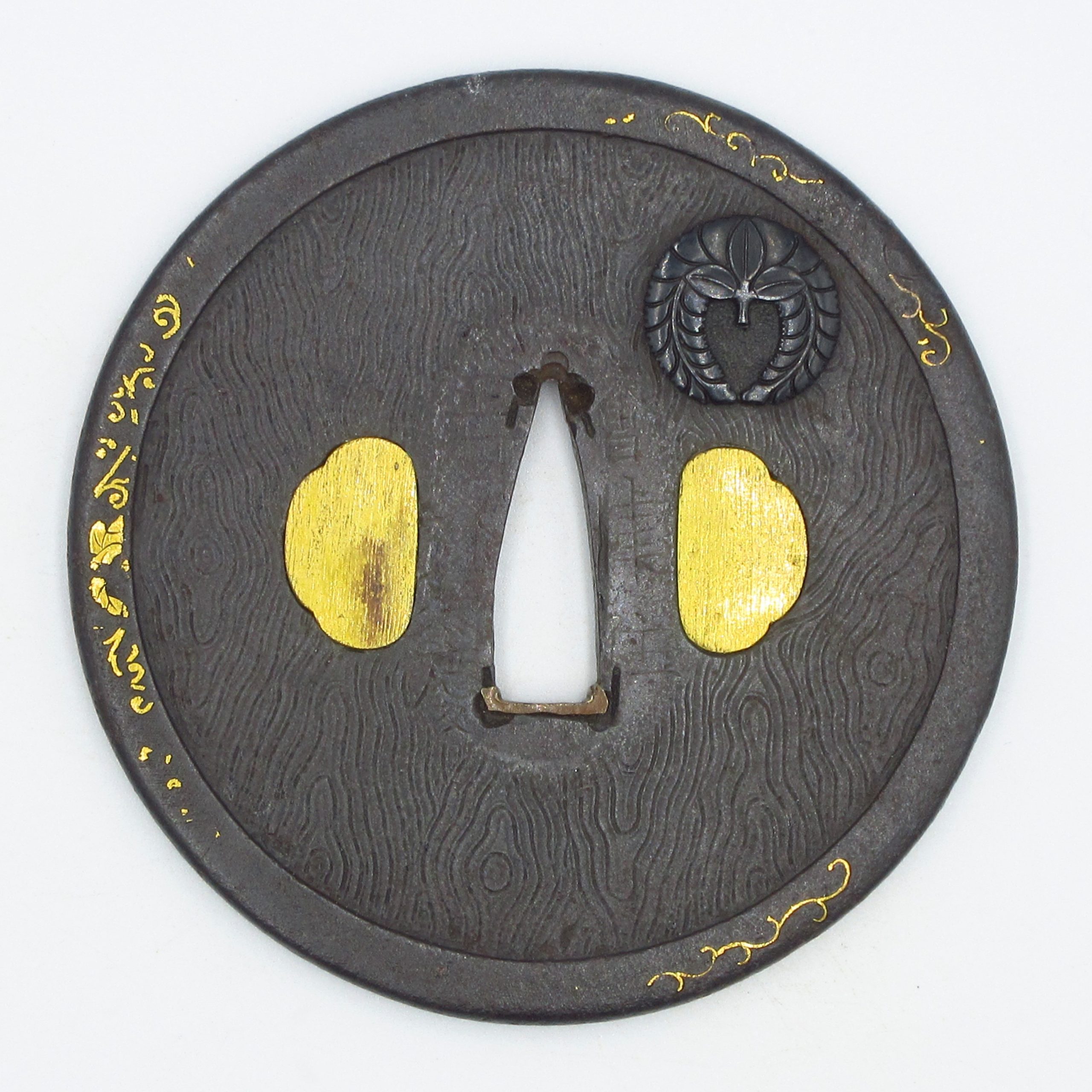
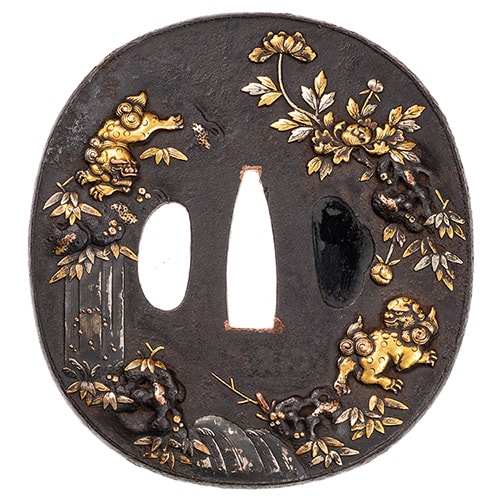
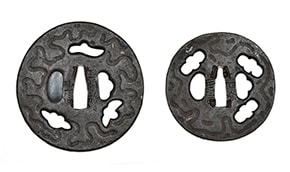
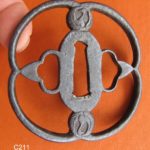
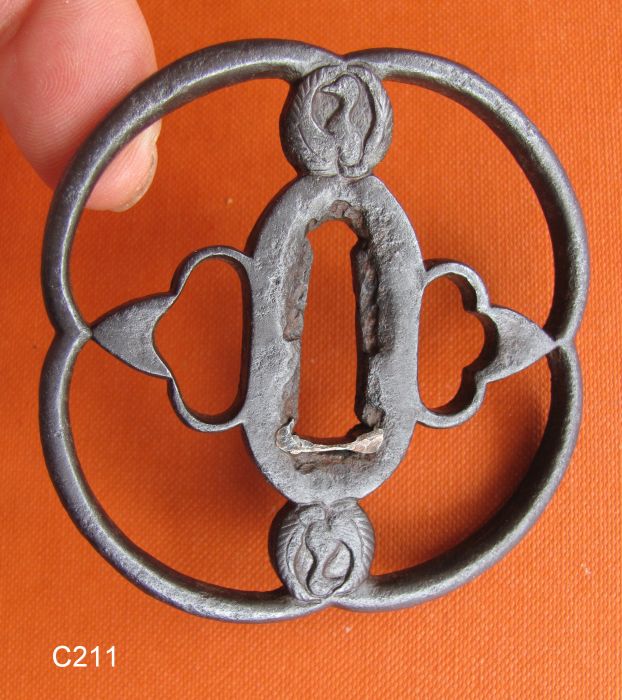
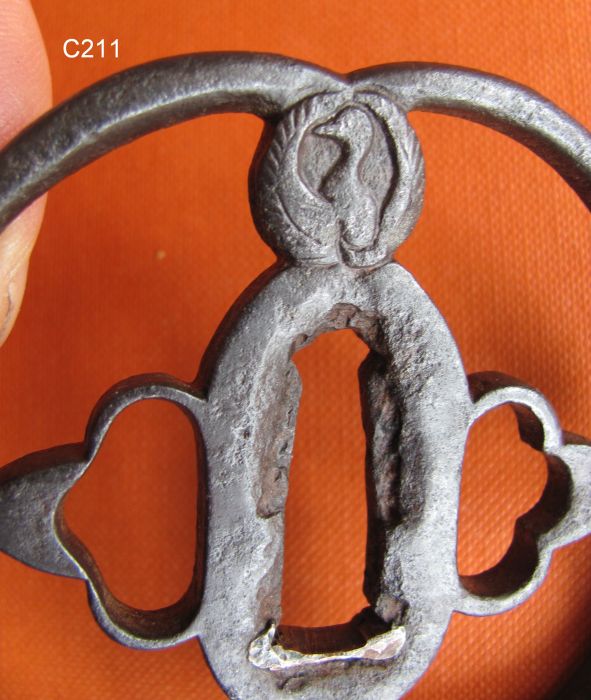
This is an iron sukashi tsuba attributed to the Ko-Shoami school. It features openwork carving and comes with an NBTHK Hozon paper, confirming its authenticity and quality. The tsuba is currently sold out.
 NihontoWatch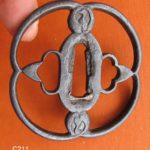
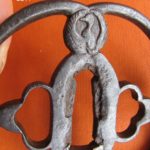
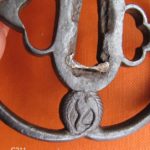
Ko-Shoami School
Kotō
Hozon (NBTHK)
Iron-tsuba
The Ko-Shōami (Old Shōami) represent a collective of specialist tsuba makers active in Kyōto from the middle through the late Muromachi period, extending into the Momoyama era. The prevailing scholarly view holds that these artisans originally worked as general tōsōgu craftsmen before becoming specialized tsuba makers. Unlike other major schools of the period, Ko-Shōami works lack widely celebrated individual masterpieces, and attributions typically reference the group name rather than specific hands. Rare examples of kodōgu attributed to the school—such as menuki depicting deer in a pine grove with traces of uttori-iroe—suggest a broader early production range, yet such pieces remain exceptional within the known corpus. The characteristic Ko-Shōami technical approach centers on piercing iron plates with bold openwork (ji-sukashi, nikubori-sukashi) and enriching the design through nunome-zōgan in gold, silver, shakudo, and brass. Typical works employ well-forged iron with polished surfaces (migaki-ji) or textured grounds (ishime-ji), often finished with hizashi-yasuri (sun-ray file marks) embellished with shakudo inlay.
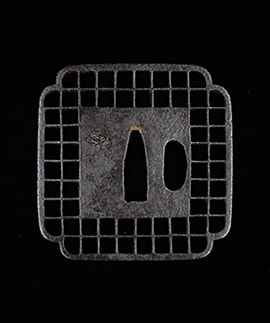
Compositions favor geometric motifs—large square seals (kaku-in), net patterns (ami-me), mulberry leaves pierced with seaweed and karakusa arabesques—rendered in a manner that balances daring openwork with controlled inlay. Rims typically receive gold or silver nunome-zōgan in rope (nawame) or arabesque patterns, tightening the overall composition. " Ko-Shōami tsuba are distinguished by their simple, clean aesthetic and well-proportioned circular forms (maru-gata), often with angular or raised rims (kaku-mimi, dote-mimi). The firmness of their nunome-zōgan execution and the quality of their forged iron plate establish these works as representative examples of mid-to-late Muromachi tsuba craftsmanship. Though lacking the lineage documentation of signed schools, Ko-Shōami pieces were esteemed enough to enter prestigious collections, including the Higo Hosokawa family. The school's influence lies in its refinement of openwork and inlay techniques that would inform later Kyōto traditions. Learn more →
Certifies a genuine fitting worth preserving: a correct signature, or, if unsigned, an identifiable era and school, with recognized artistic and craft value.
The NBTHK (Nihon Bijutsu Tōken Hozon Kyōkai, the Society for the Preservation of Japanese Art Swords) is a public-interest incorporated foundation founded in 1948 and supervised by Japan’s Agency for Cultural Affairs (Bunkachō); it is based at the Japanese Sword Museum in Tokyo. Its expert panels physically examine each submitted work (shinsa) and issue a certificate (kanteishō) ranking it by artistic and historical merit. NBTHK papers are the most widely recognized standard of authentication for Japanese swords and fittings.
NBTHK official site3-day return window from receipt.
This is an iron sukashi tsuba attributed to the Ko-Shoami school. It features openwork carving and comes with an NBTHK Hozon paper, confirming its authenticity and quality. The tsuba is currently sold out.
NihontoWatchKo-Shoami School
Kotō
Hozon (NBTHK)
Iron-tsuba
The Ko-Shōami (Old Shōami) represent a collective of specialist tsuba makers active in Kyōto from the middle through the late Muromachi period, extending into the Momoyama era. The prevailing scholarly view holds that these artisans originally worked as general tōsōgu craftsmen before becoming specialized tsuba makers. Unlike other major schools of the period, Ko-Shōami works lack widely celebrated individual masterpieces, and attributions typically reference the group name rather than specific hands. Rare examples of kodōgu attributed to the school—such as menuki depicting deer in a pine grove with traces of uttori-iroe—suggest a broader early production range, yet such pieces remain exceptional within the known corpus. The characteristic Ko-Shōami technical approach centers on piercing iron plates with bold openwork (ji-sukashi, nikubori-sukashi) and enriching the design through nunome-zōgan in gold, silver, shakudo, and brass. Typical works employ well-forged iron with polished surfaces (migaki-ji) or textured grounds (ishime-ji), often finished with hizashi-yasuri (sun-ray file marks) embellished with shakudo inlay.
Compositions favor geometric motifs—large square seals (kaku-in), net patterns (ami-me), mulberry leaves pierced with seaweed and karakusa arabesques—rendered in a manner that balances daring openwork with controlled inlay. Rims typically receive gold or silver nunome-zōgan in rope (nawame) or arabesque patterns, tightening the overall composition. " Ko-Shōami tsuba are distinguished by their simple, clean aesthetic and well-proportioned circular forms (maru-gata), often with angular or raised rims (kaku-mimi, dote-mimi). The firmness of their nunome-zōgan execution and the quality of their forged iron plate establish these works as representative examples of mid-to-late Muromachi tsuba craftsmanship. Though lacking the lineage documentation of signed schools, Ko-Shōami pieces were esteemed enough to enter prestigious collections, including the Higo Hosokawa family. The school's influence lies in its refinement of openwork and inlay techniques that would inform later Kyōto traditions. Learn more →
Certifies a genuine fitting worth preserving: a correct signature, or, if unsigned, an identifiable era and school, with recognized artistic and craft value.
The NBTHK (Nihon Bijutsu Tōken Hozon Kyōkai, the Society for the Preservation of Japanese Art Swords) is a public-interest incorporated foundation founded in 1948 and supervised by Japan’s Agency for Cultural Affairs (Bunkachō); it is based at the Japanese Sword Museum in Tokyo. Its expert panels physically examine each submitted work (shinsa) and issue a certificate (kanteishō) ranking it by artistic and historical merit. NBTHK papers are the most widely recognized standard of authentication for Japanese swords and fittings.
NBTHK official site3-day return window from receipt.