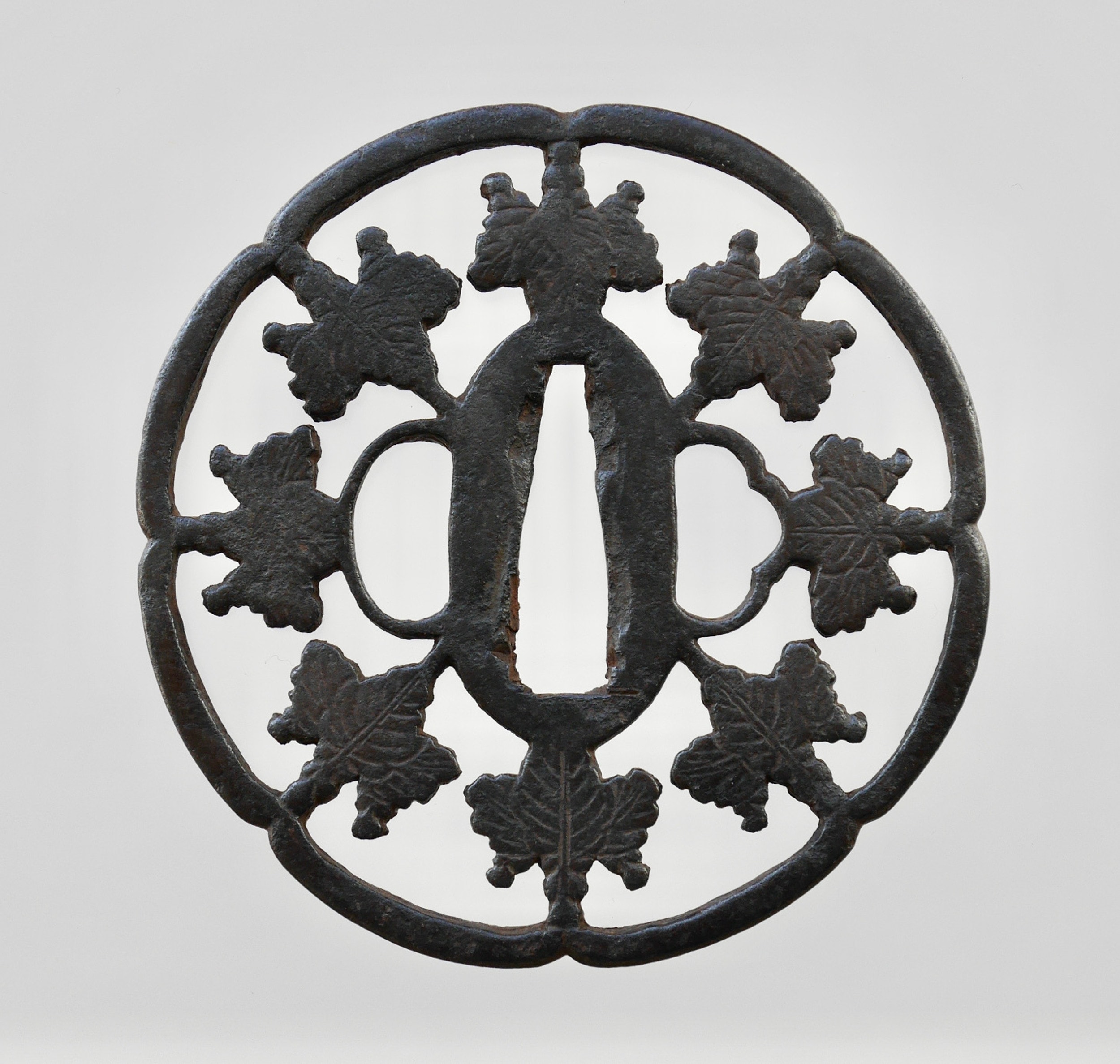
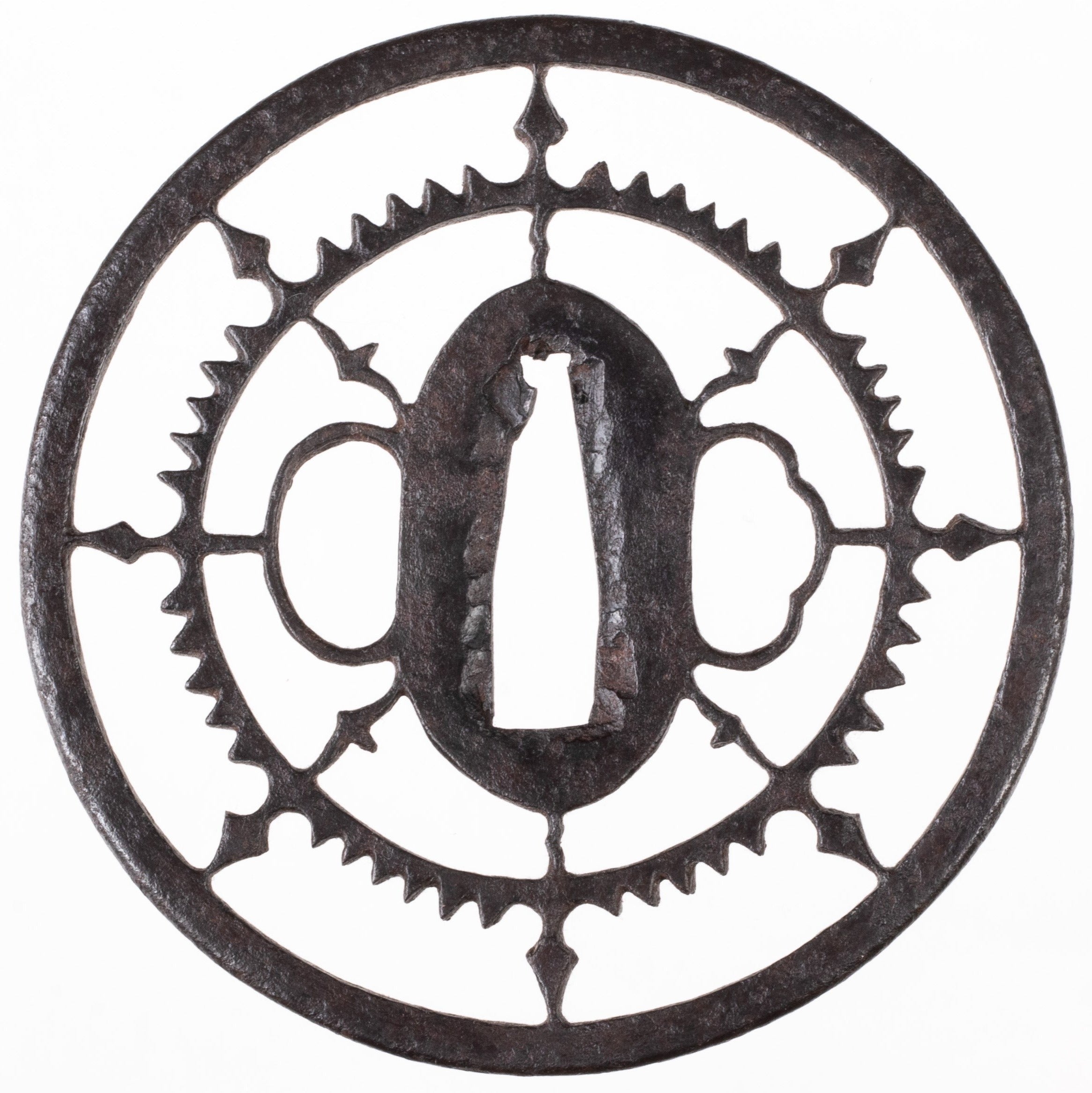
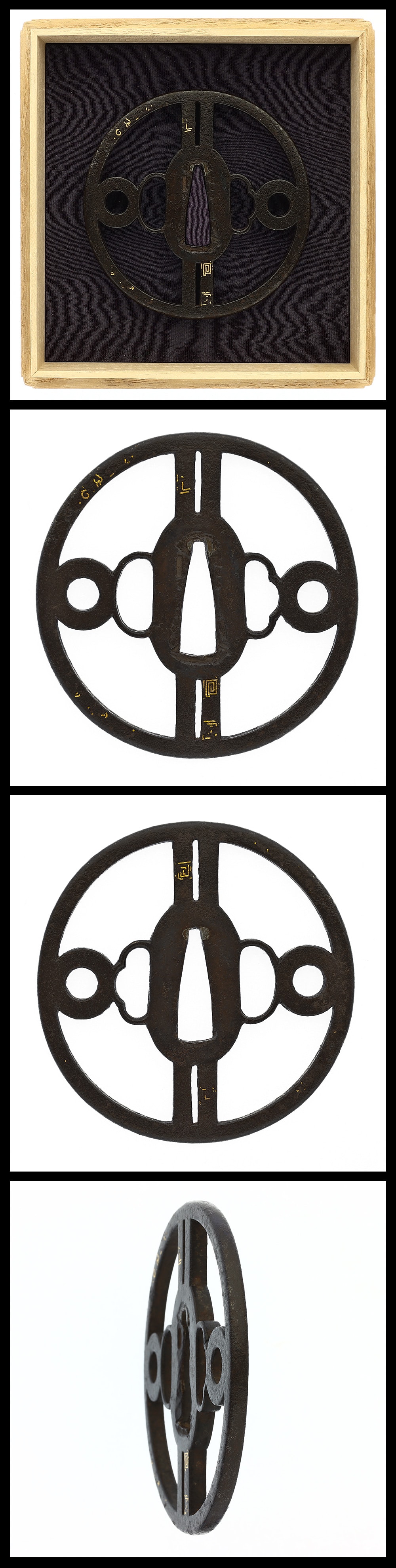
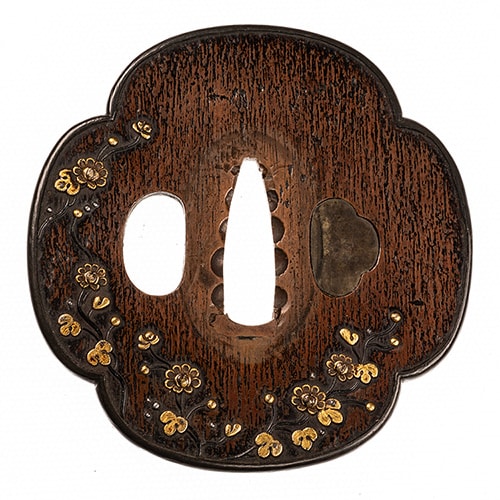
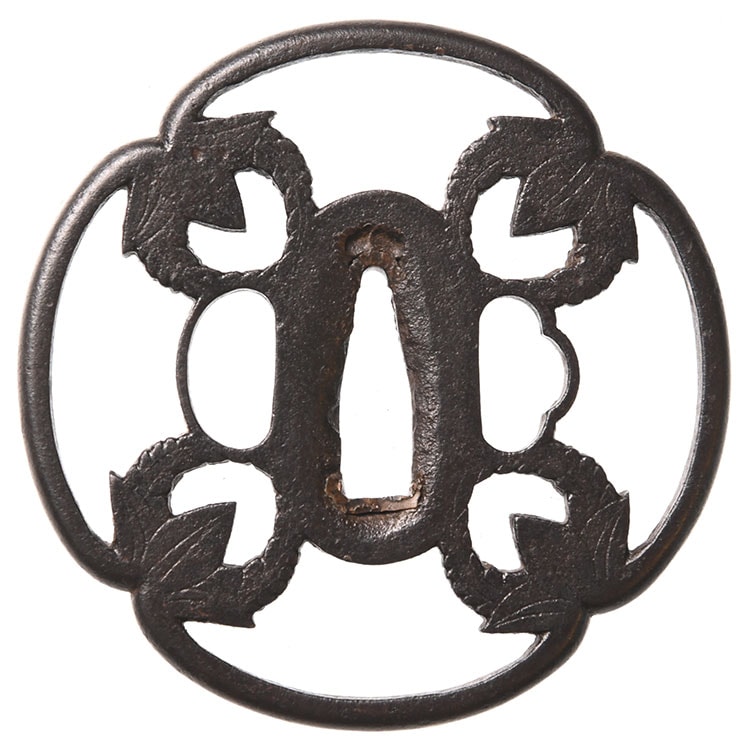
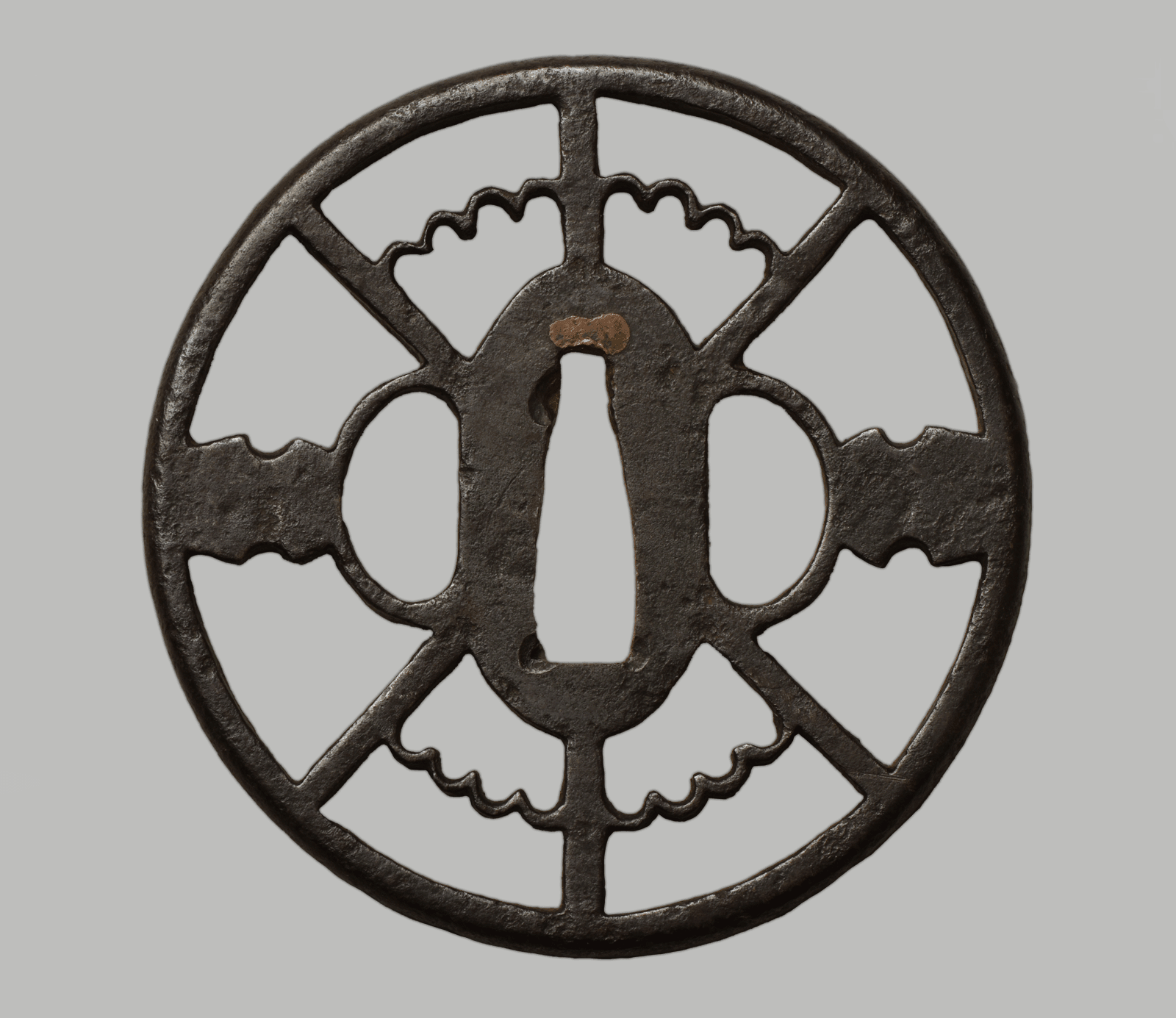
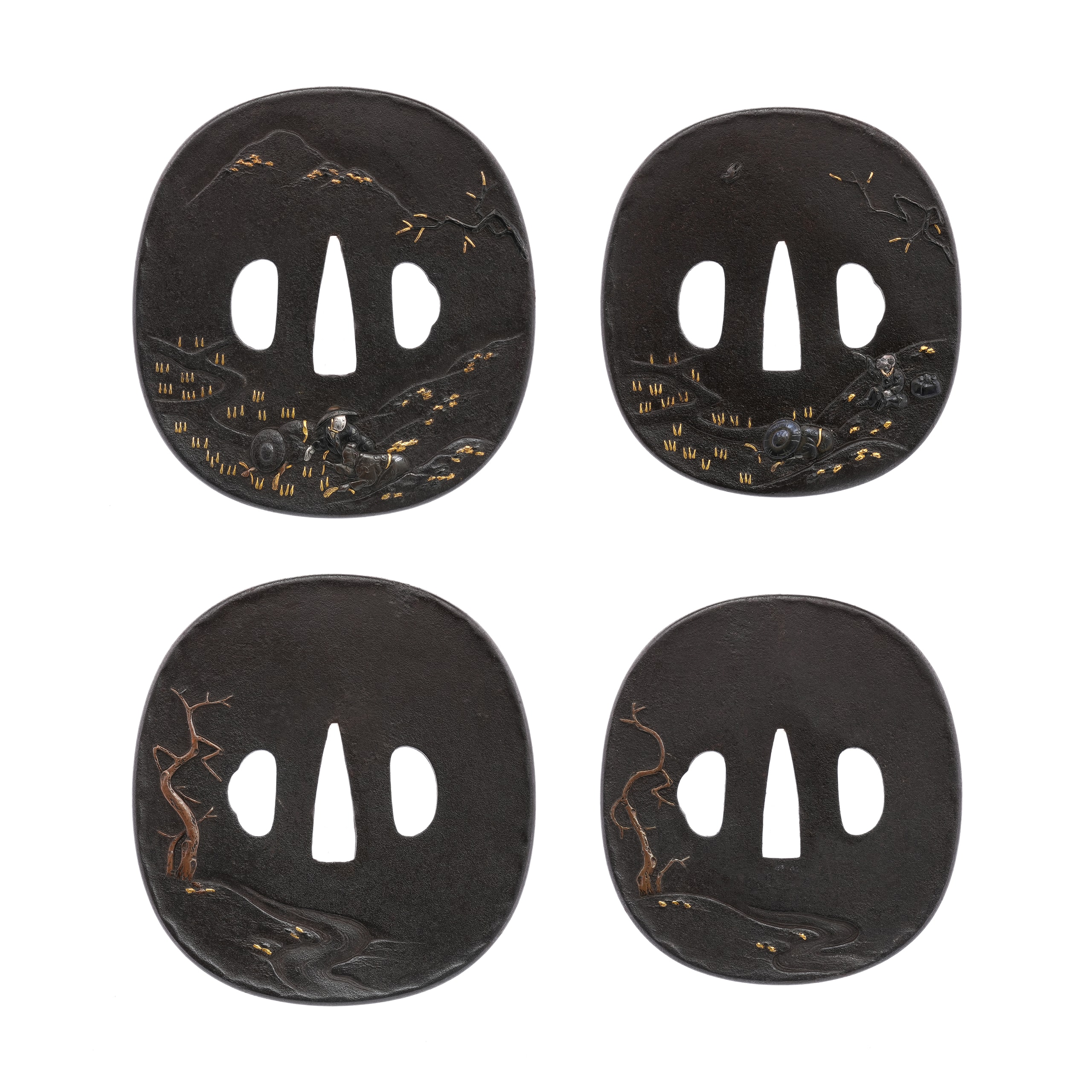
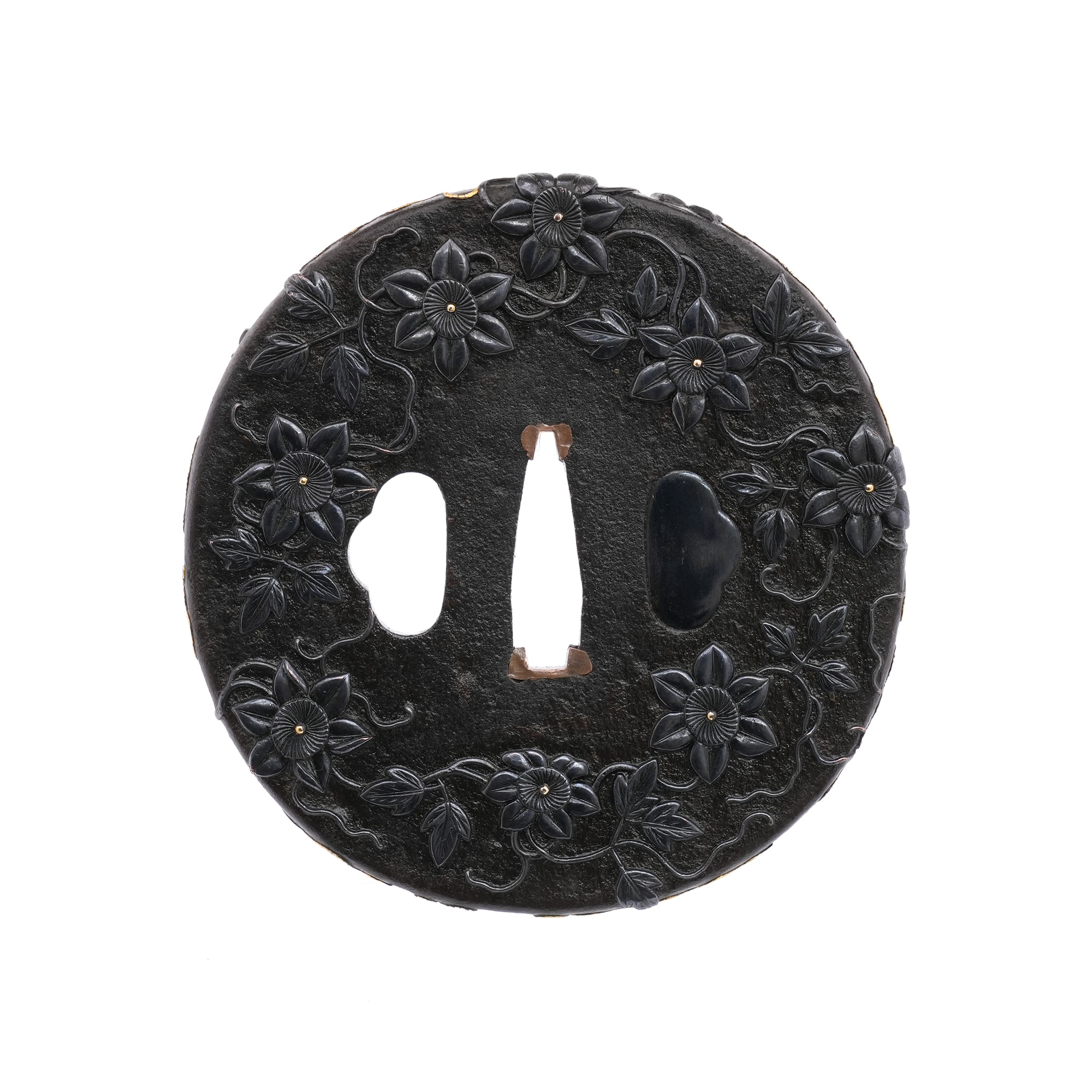
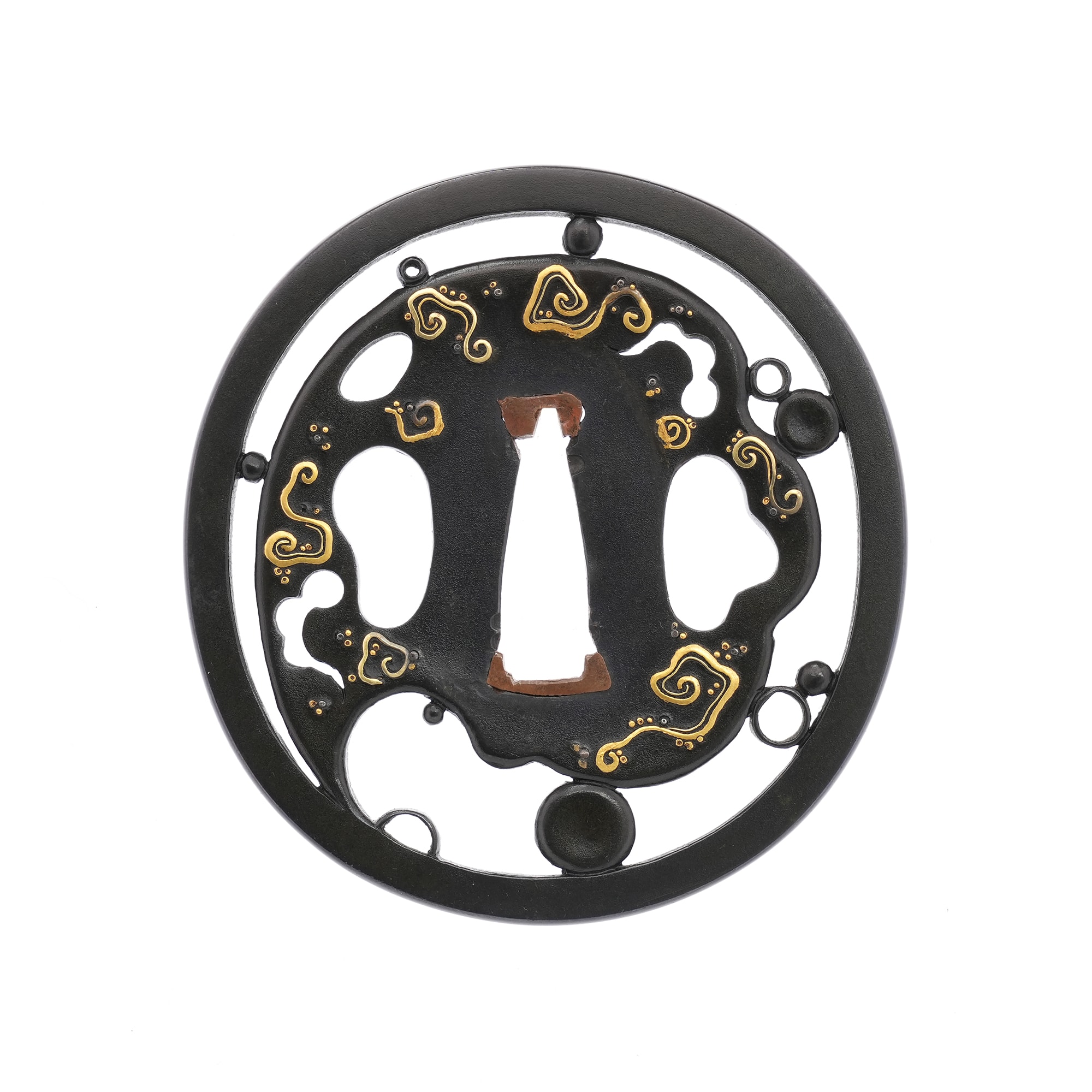
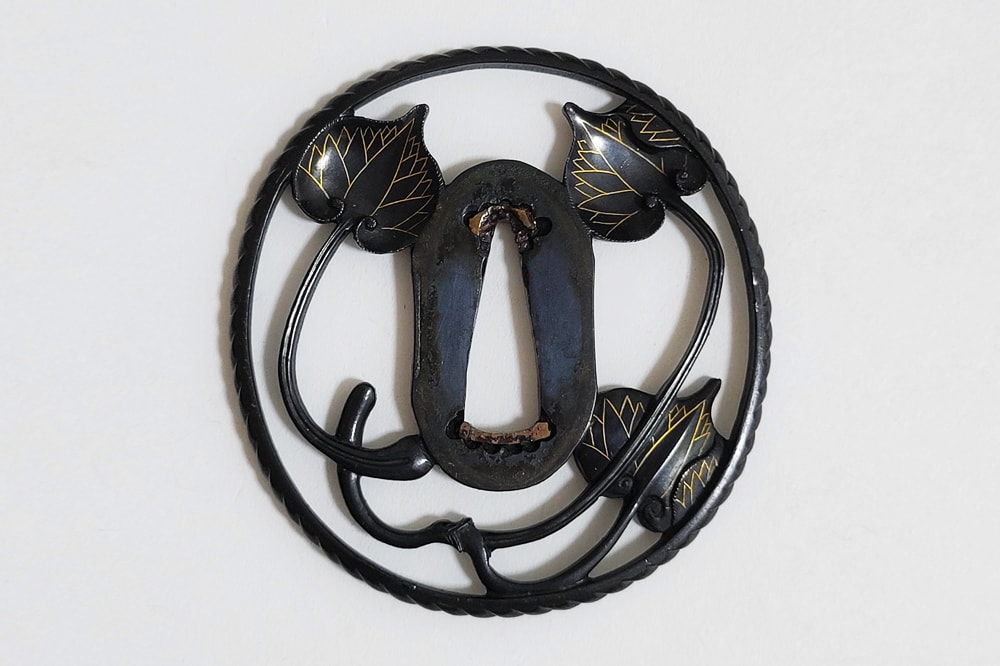
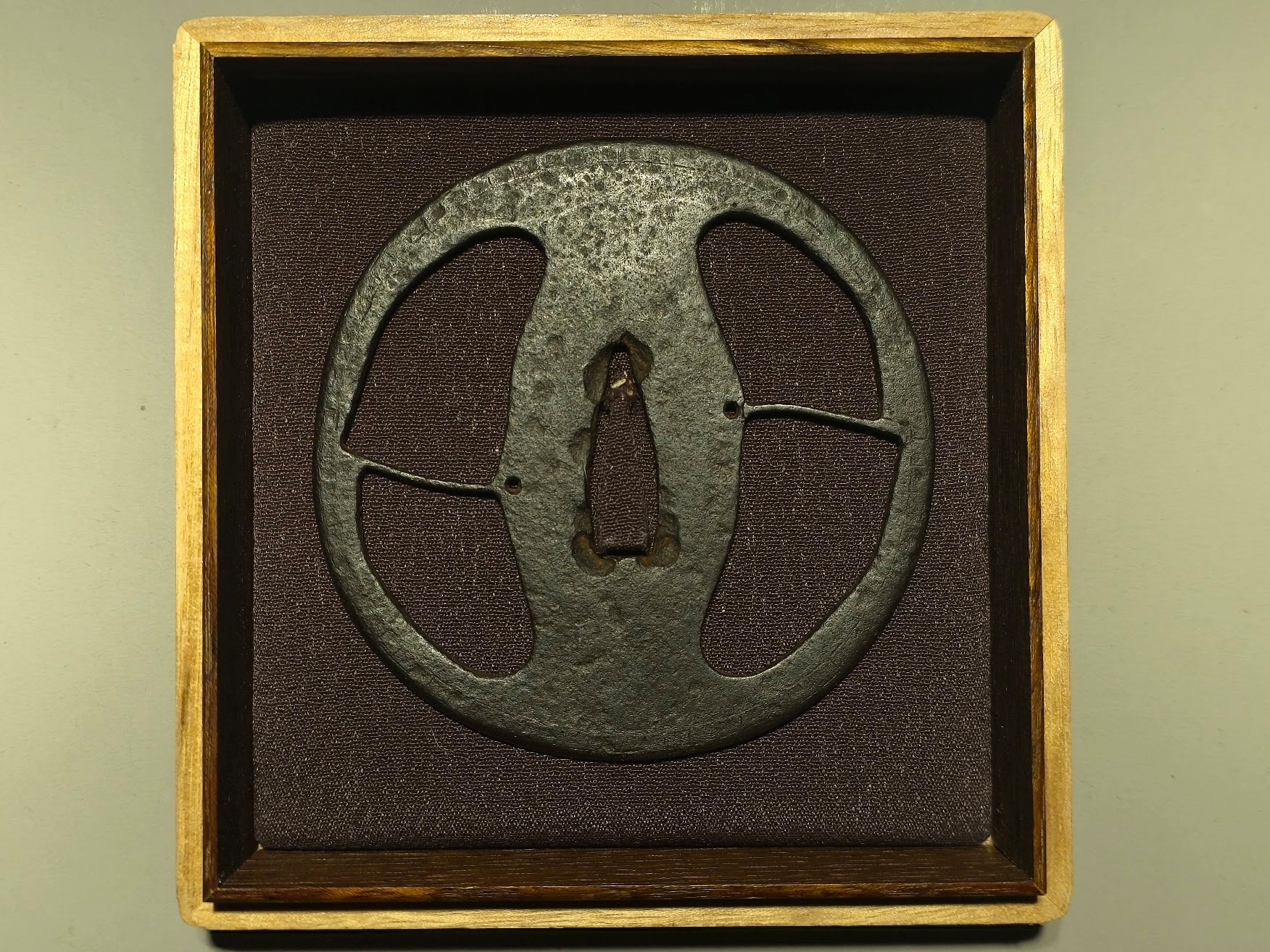
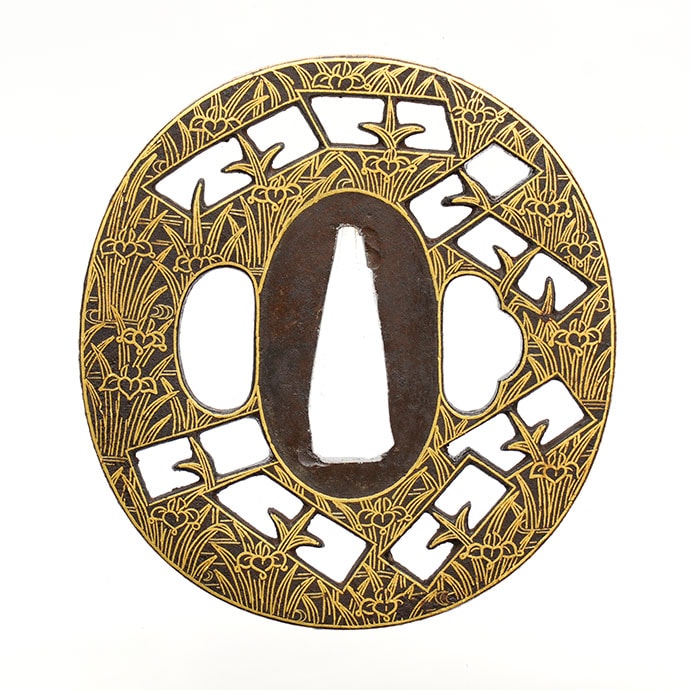
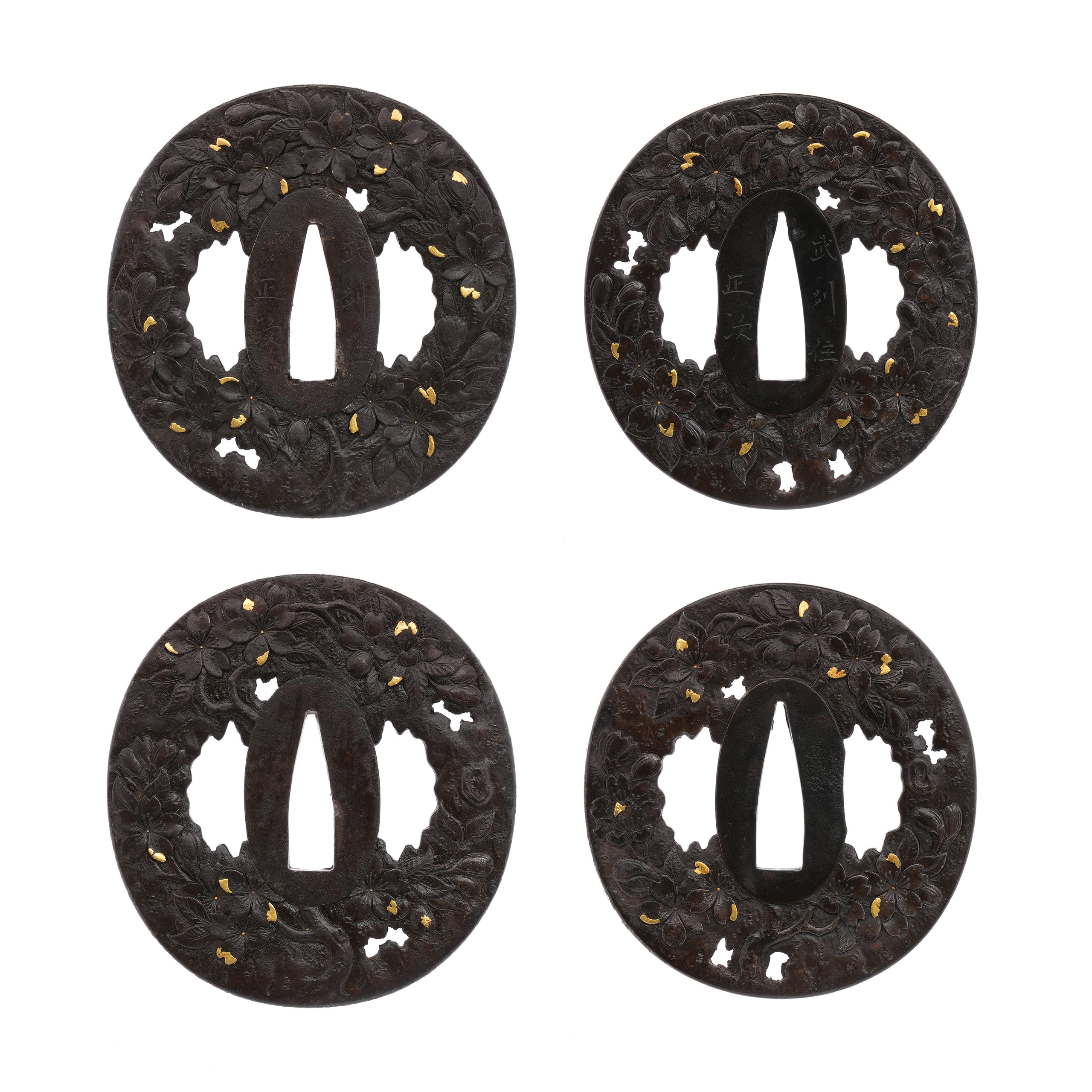
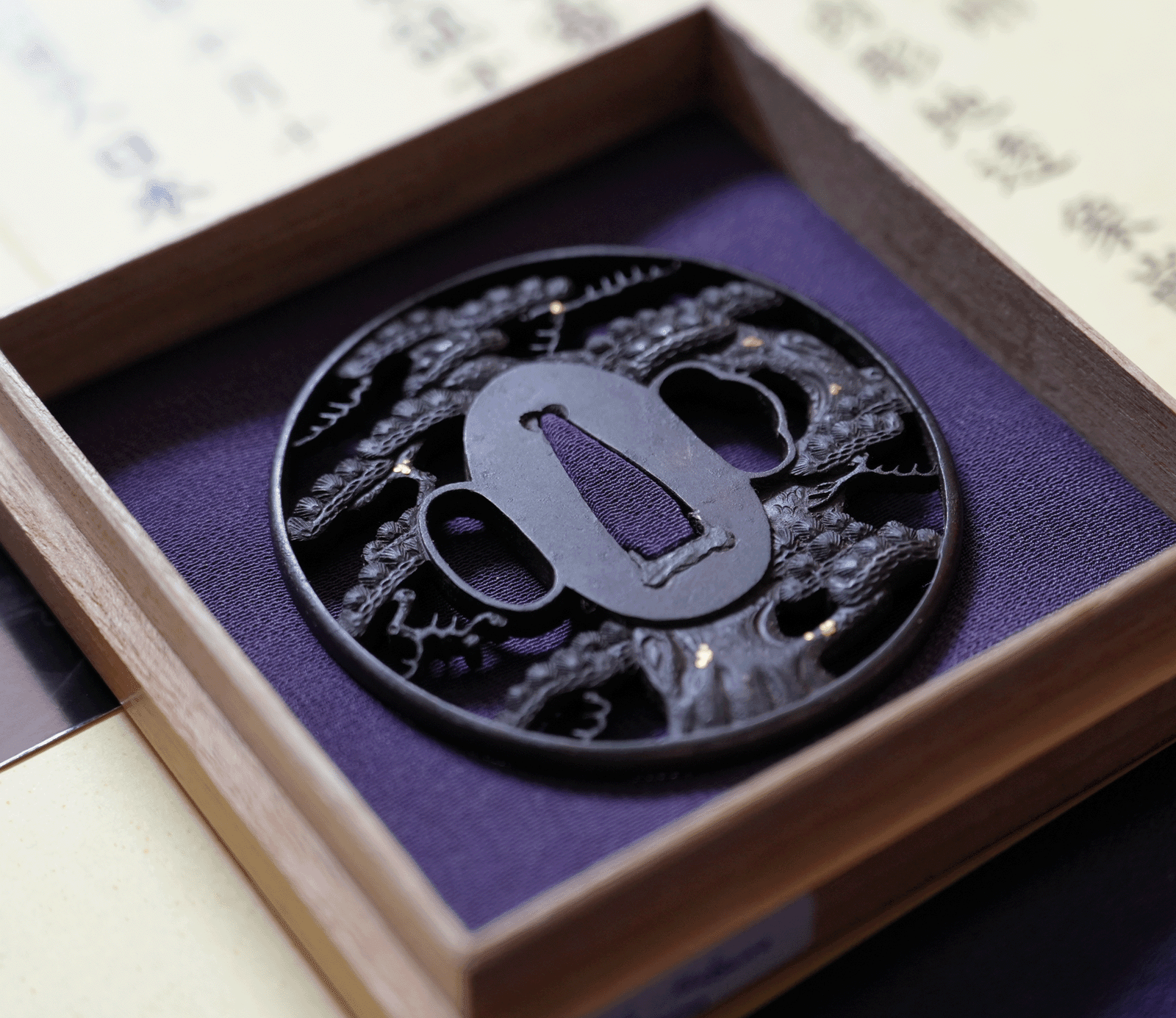
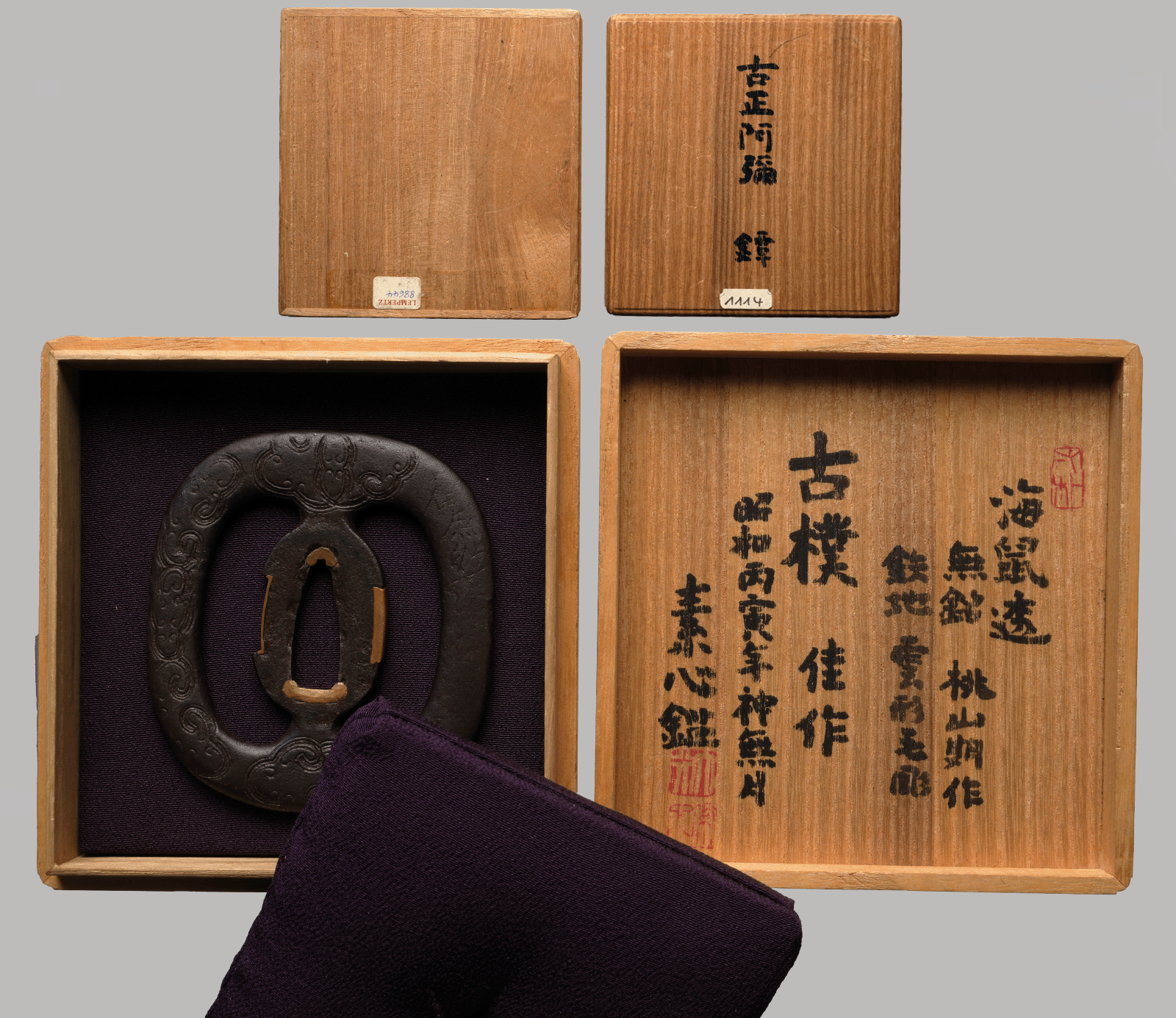
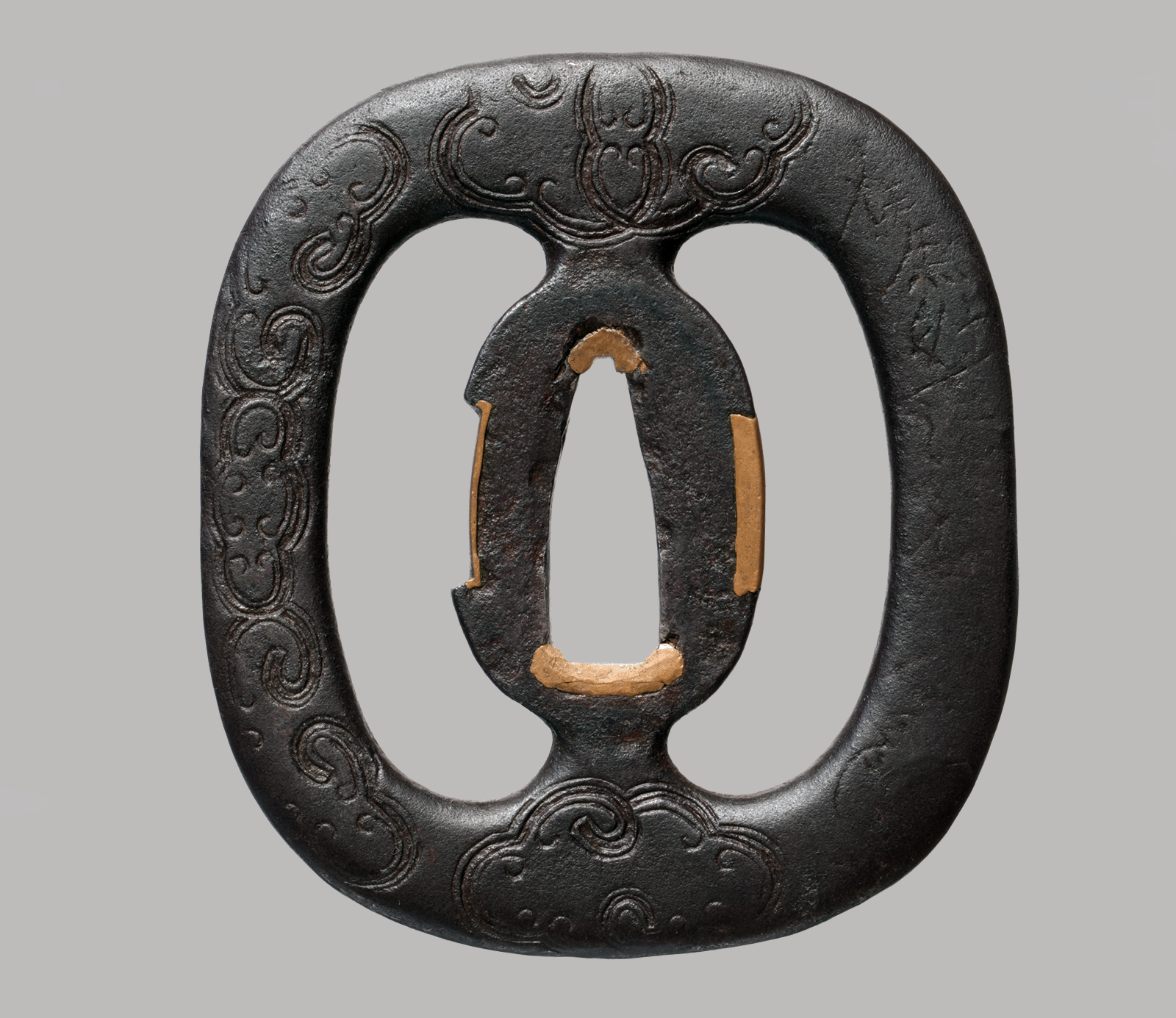
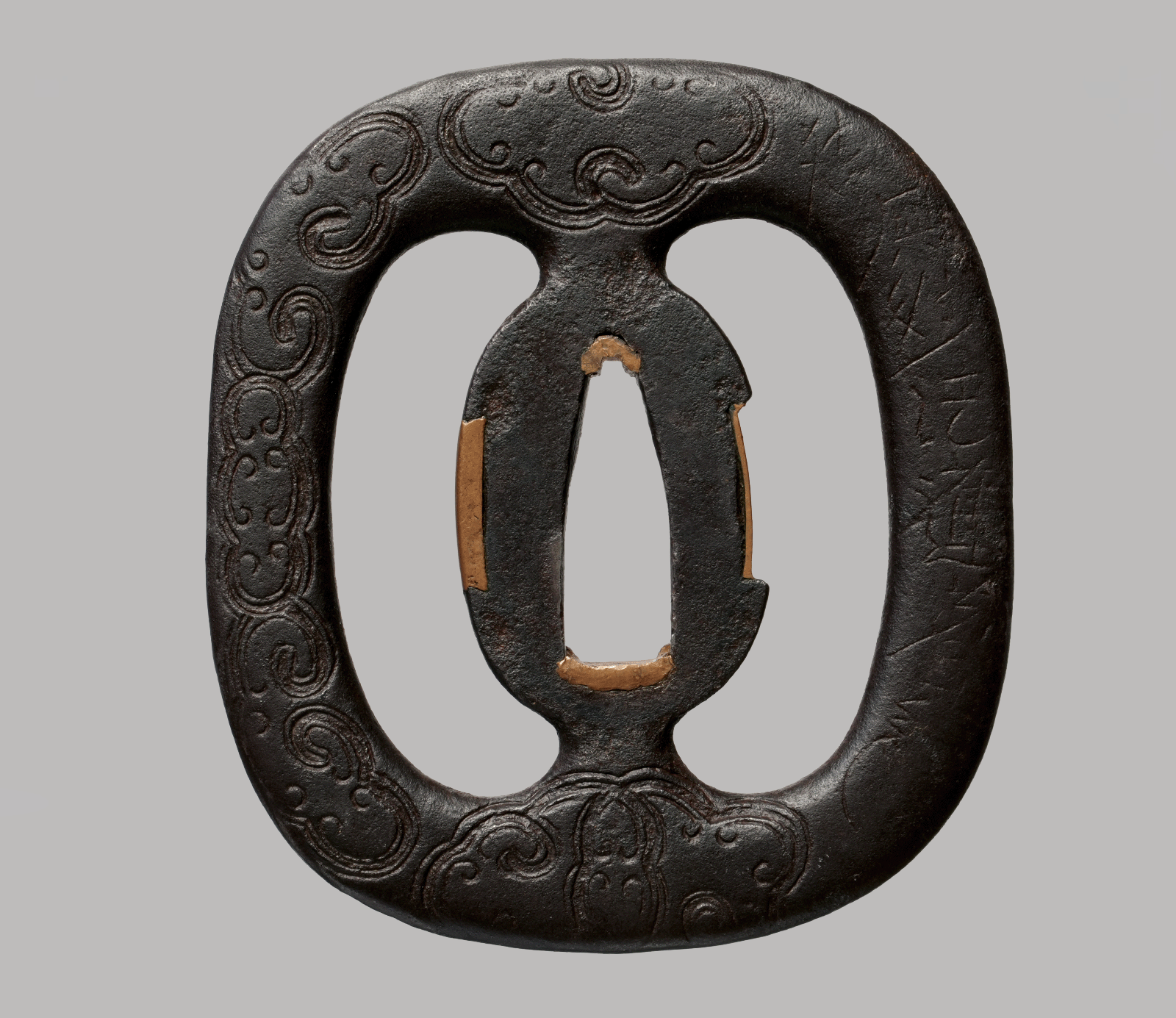
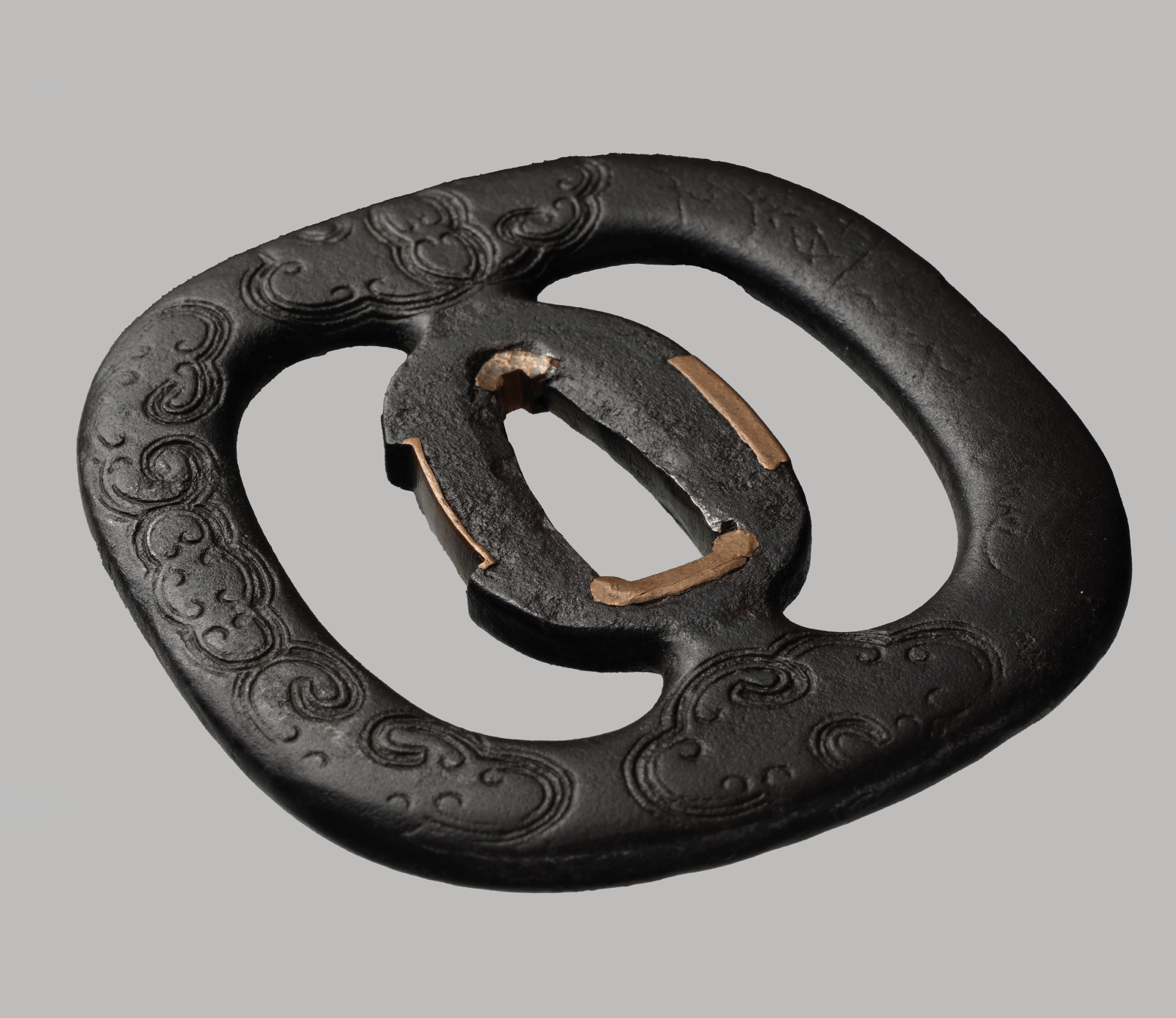
This powerful Ko-Shōami tsuba from the Momoyama period features a namako-sukashi (sea cucumber openwork) design with arabesque clouds. The iron plate is dense and well-forged, displaying a compact, slightly glossy surface. It is attributed as an excellent example of early workmanship by Sasano Masayuki, a foremost authority on early iron tsuba.
 NihontoWatch
mumei · Ko-Shoami · Momoyama
Ko-Shoami School
Momoyama
Unsigned
Iron-tsuba
The Ko-Shōami (Old Shōami) represent a collective of specialist tsuba makers active in Kyōto from the middle through the late Muromachi period, extending into the Momoyama era. The prevailing scholarly view holds that these artisans originally worked as general tōsōgu craftsmen before becoming specialized tsuba makers. Unlike other major schools of the period, Ko-Shōami works lack widely celebrated individual masterpieces, and attributions typically reference the group name rather than specific hands. Learn more →
We could not find an authenticity certificate on the seller’s listing. Japanese swords and fittings are normally papered by the NBTHK (or the NTHK). Without one, the attribution is the seller’s own assessment and has not been independently verified — treat it with caution and ask the dealer about certification before buying.
14-day return window in original/unused condition; antique items (swords, menuki, tsuba and similar) are expressly excluded from exchange; EU consumers retain a 14-day cancellation right; refunds within 10 business days of approval.
This powerful Ko-Shōami tsuba from the Momoyama period features a namako-sukashi (sea cucumber openwork) design with arabesque clouds. The iron plate is dense and well-forged, displaying a compact, slightly glossy surface. It is attributed as an excellent example of early workmanship by Sasano Masayuki, a foremost authority on early iron tsuba.
NihontoWatchmumei · Ko-Shoami · Momoyama
Ko-Shoami School
Momoyama
Unsigned
Iron-tsuba
The Ko-Shōami (Old Shōami) represent a collective of specialist tsuba makers active in Kyōto from the middle through the late Muromachi period, extending into the Momoyama era. The prevailing scholarly view holds that these artisans originally worked as general tōsōgu craftsmen before becoming specialized tsuba makers. Unlike other major schools of the period, Ko-Shōami works lack widely celebrated individual masterpieces, and attributions typically reference the group name rather than specific hands. Learn more →
We could not find an authenticity certificate on the seller’s listing. Japanese swords and fittings are normally papered by the NBTHK (or the NTHK). Without one, the attribution is the seller’s own assessment and has not been independently verified — treat it with caution and ask the dealer about certification before buying.
14-day return window in original/unused condition; antique items (swords, menuki, tsuba and similar) are expressly excluded from exchange; EU consumers retain a 14-day cancellation right; refunds within 10 business days of approval.