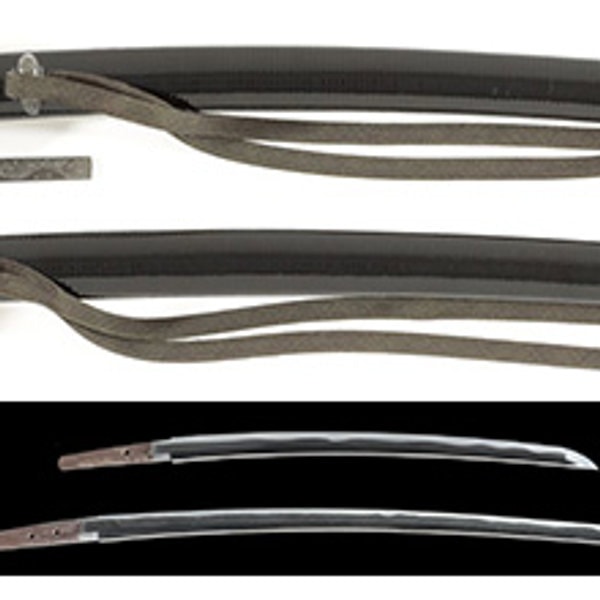

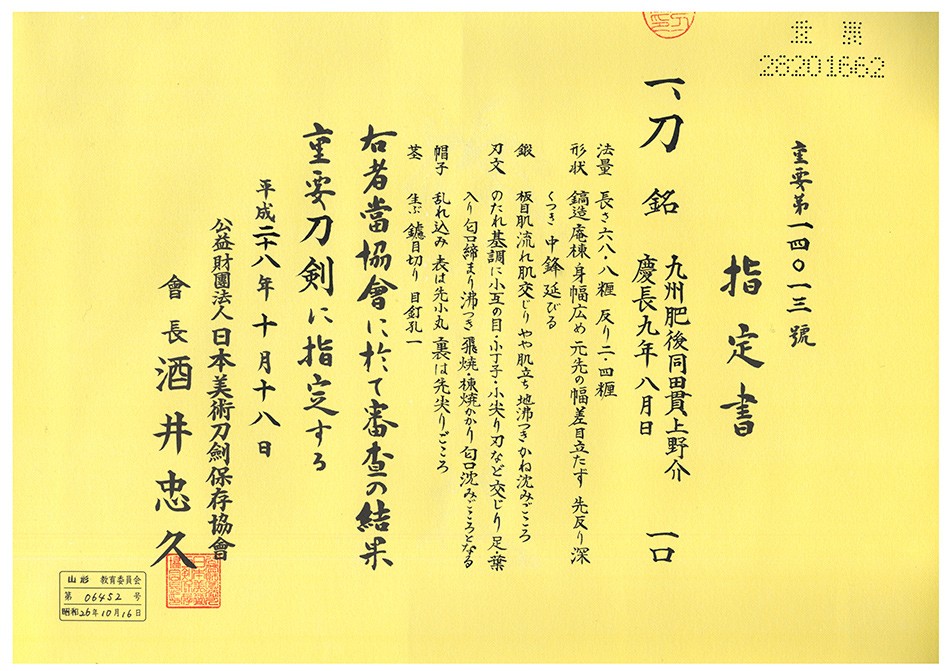
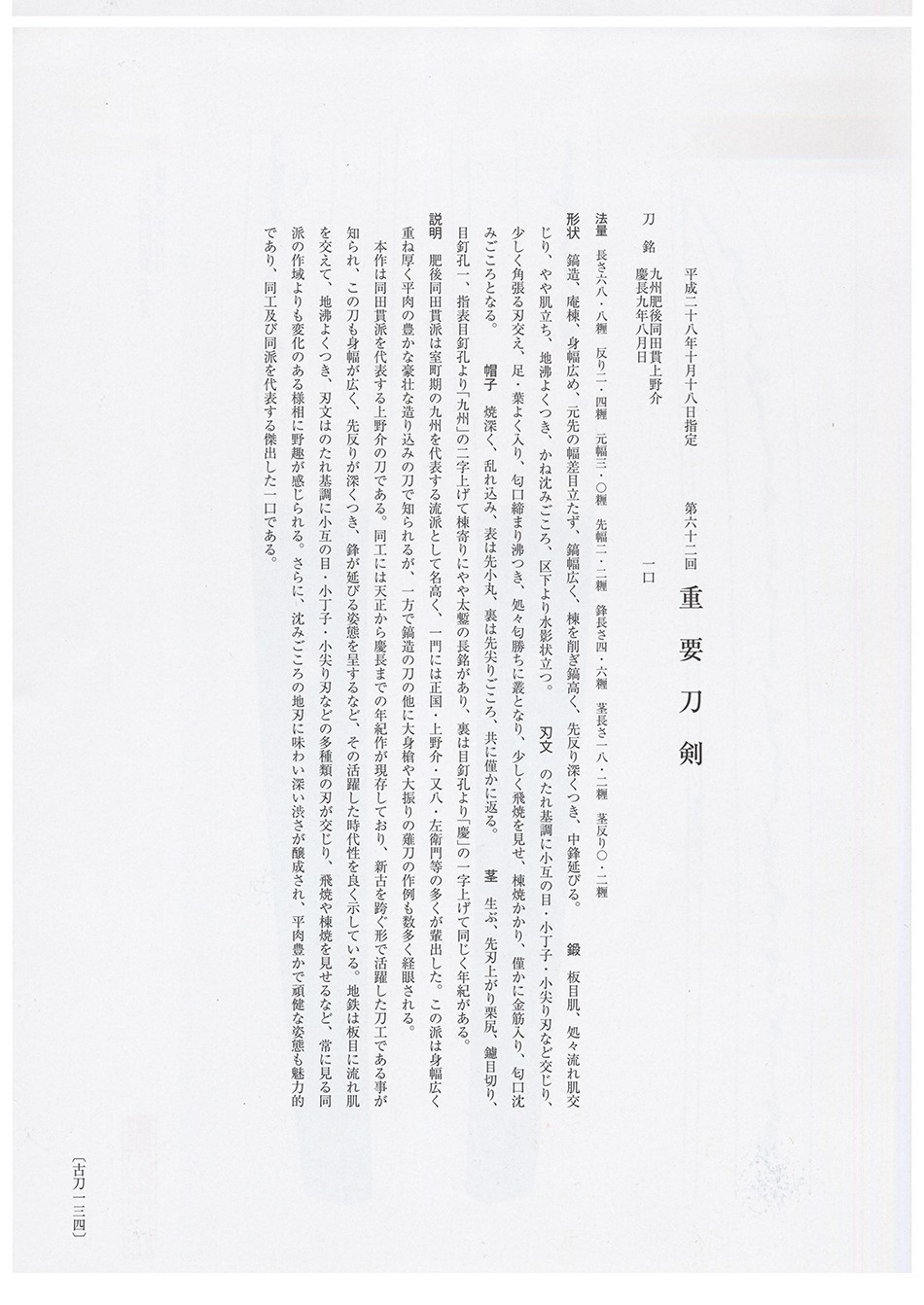
-, 62nd Session — Designated October 18, 2016
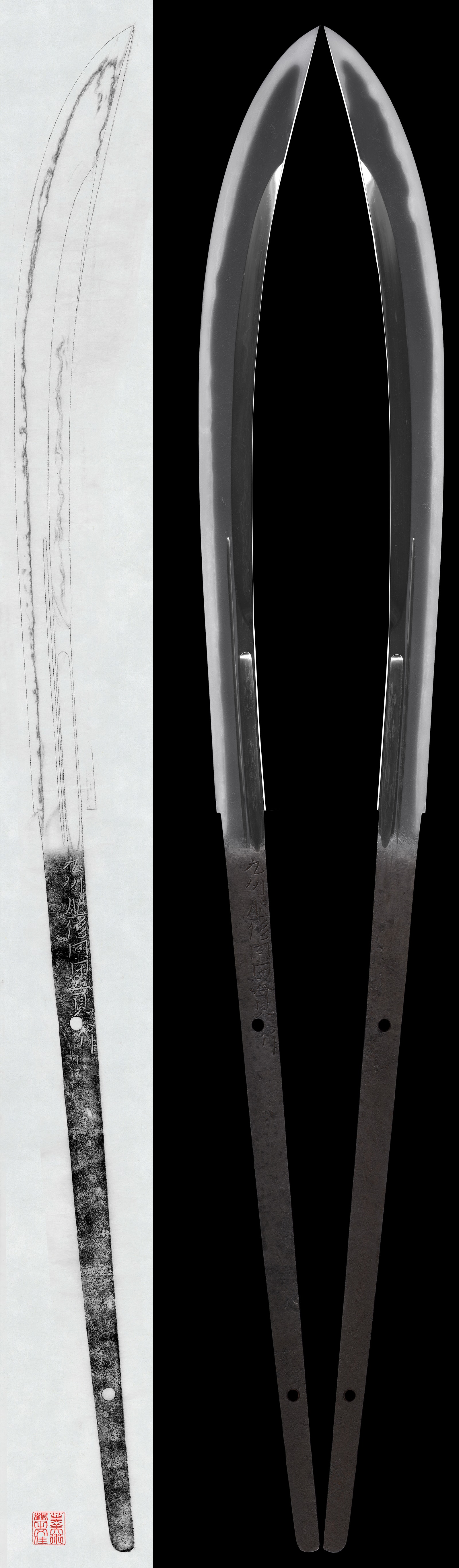
, : Kyūshū Dōtanuki Ueno no (九州肥後同田貫上野介)
Measurements 68.8 cm, 2.4 cm, 3.0 cm, 2.1 cm, 4.6 cm, 18.1 cm, 0.2 cm
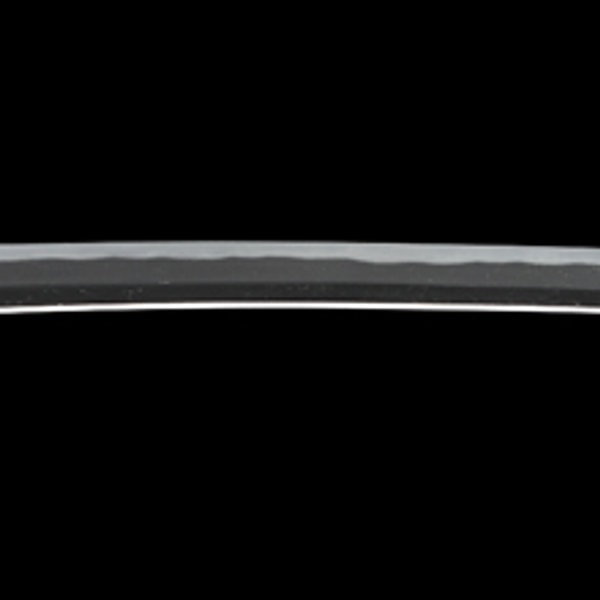
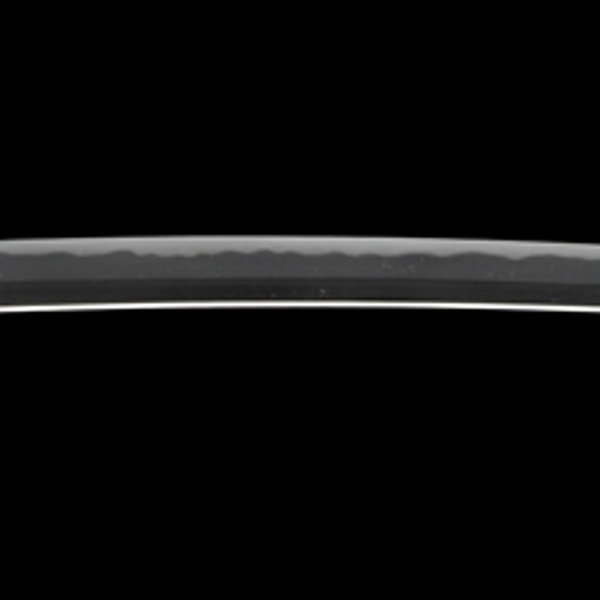
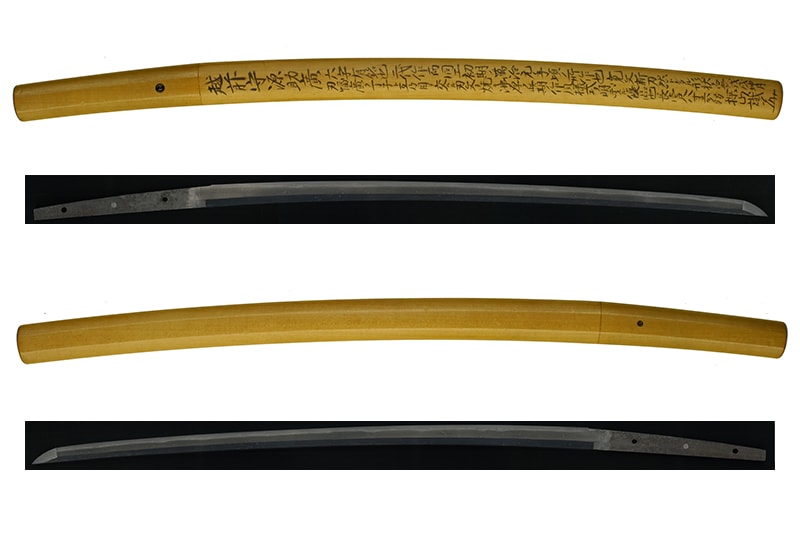
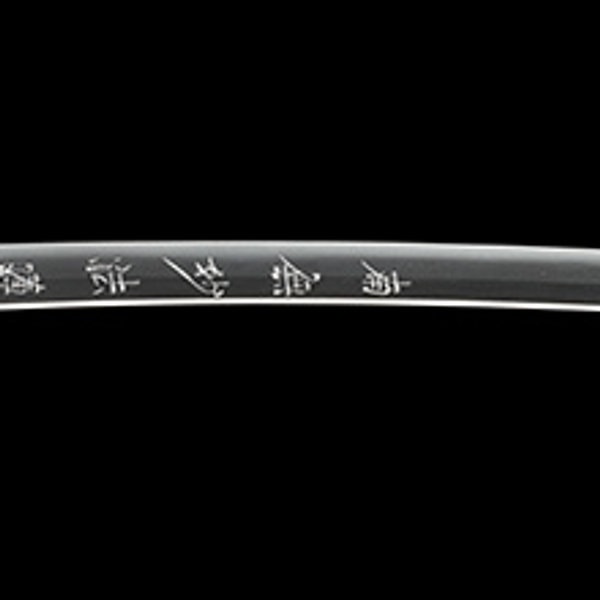
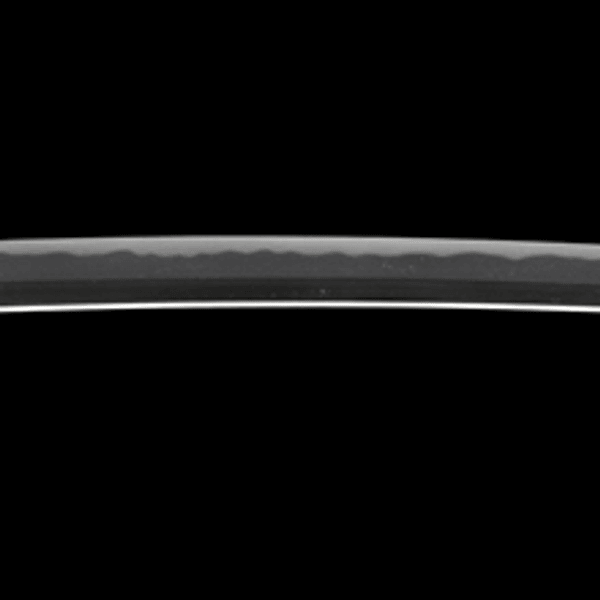
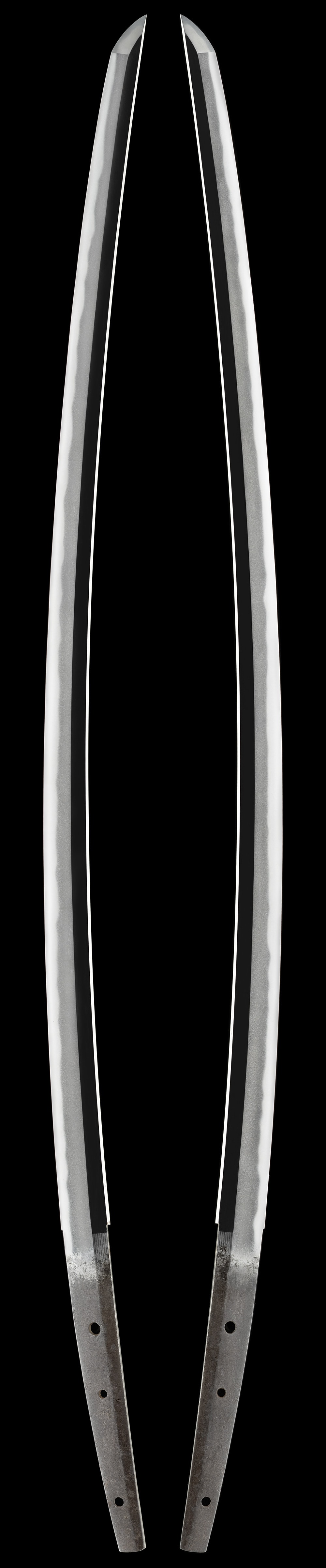
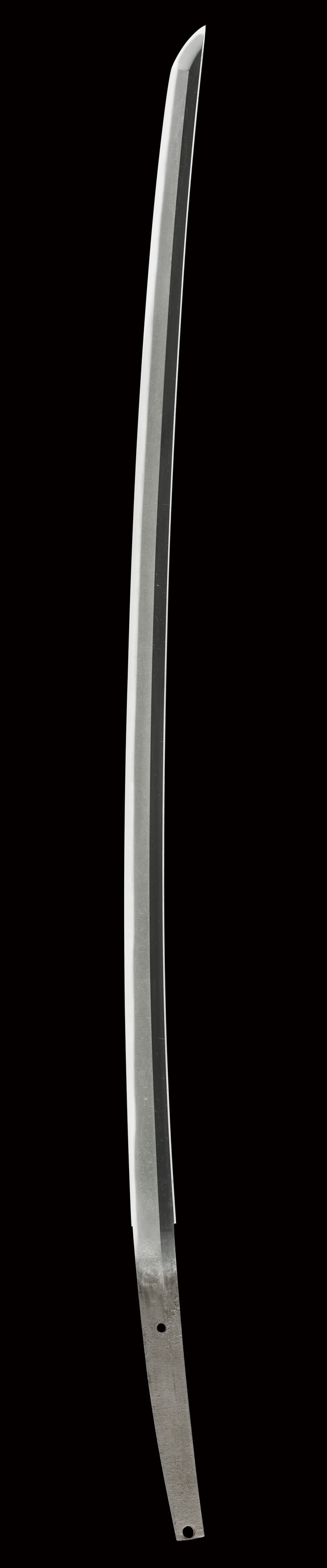
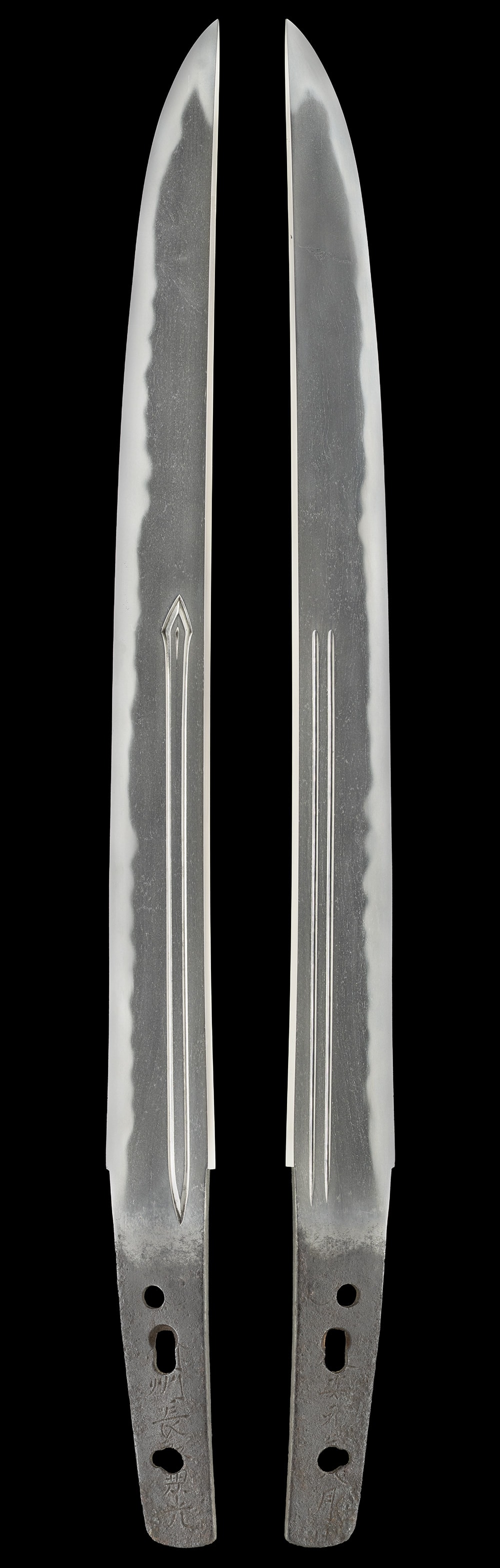
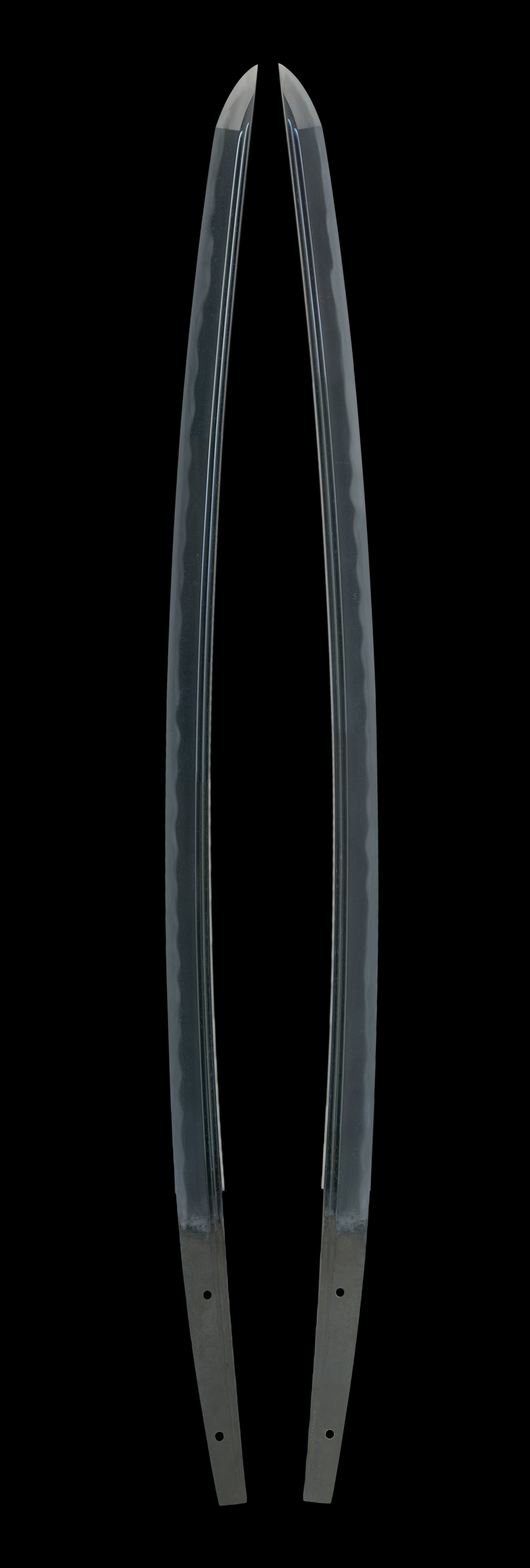
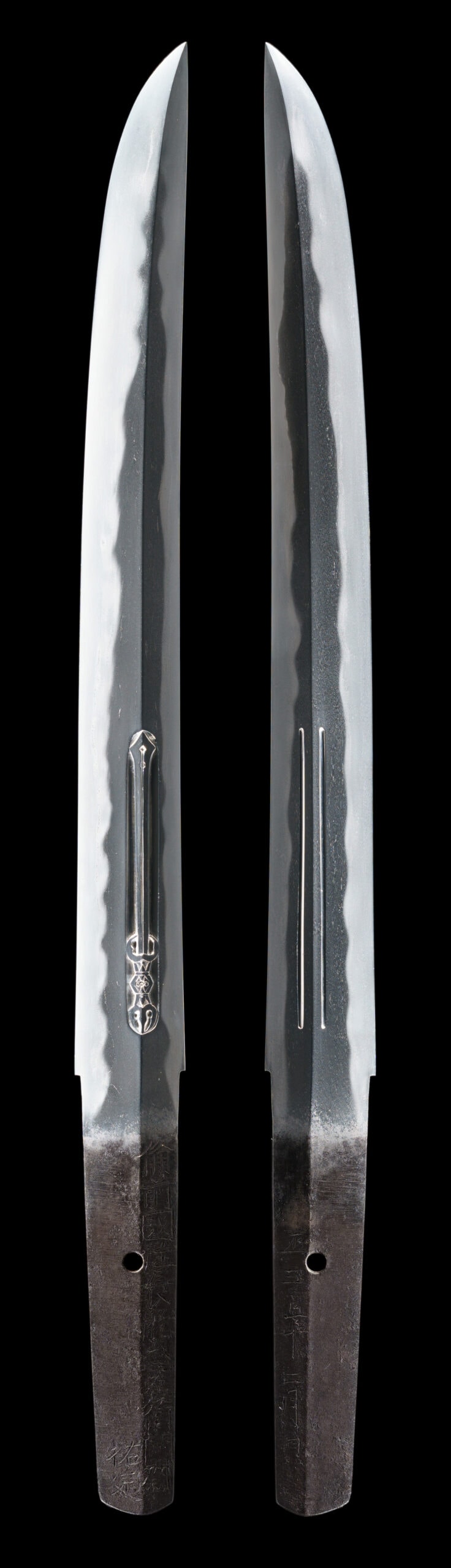
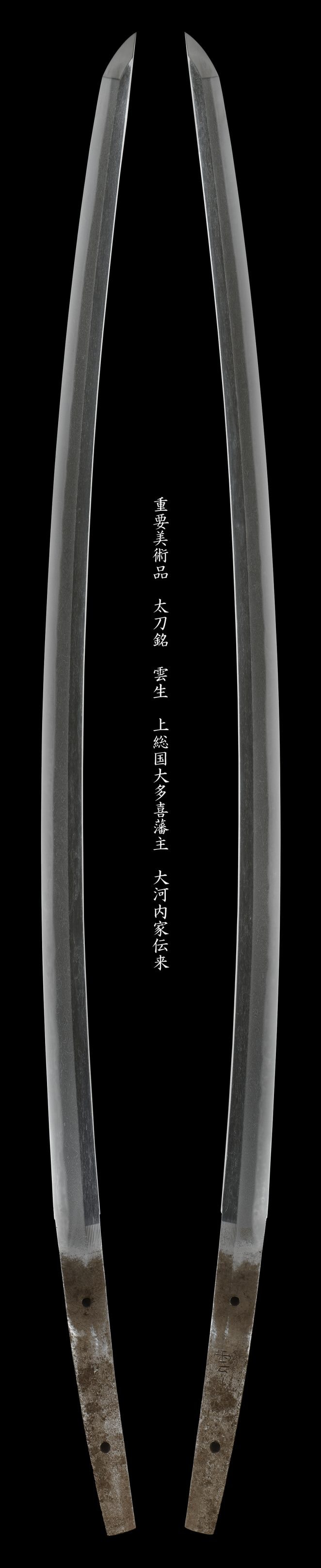
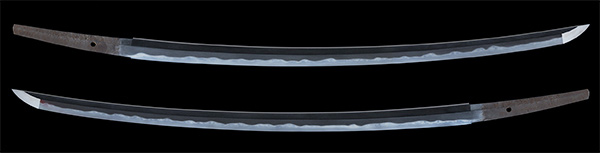
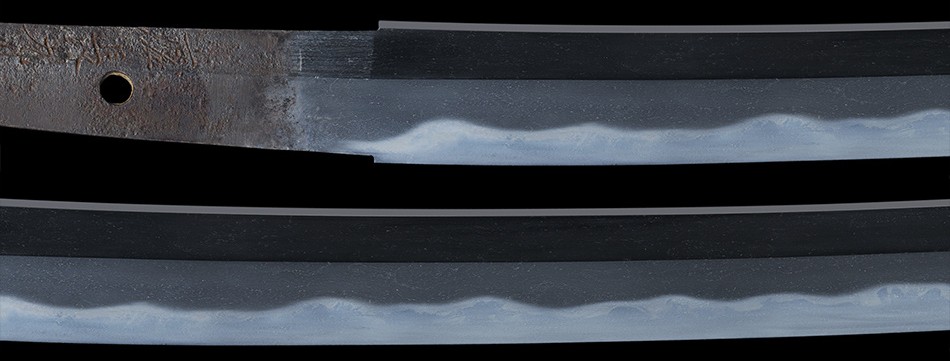
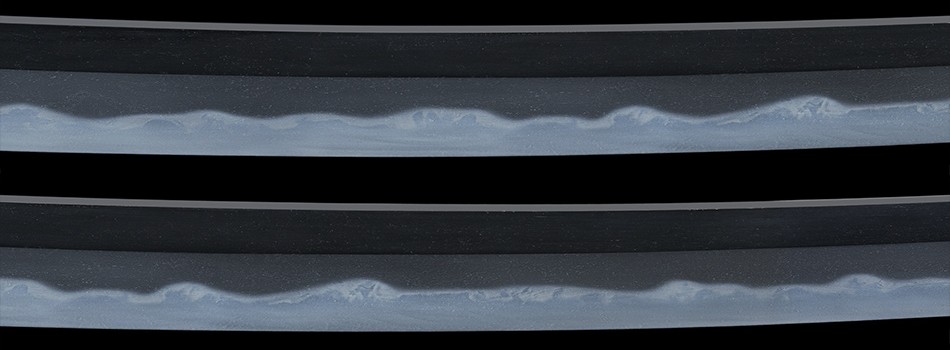
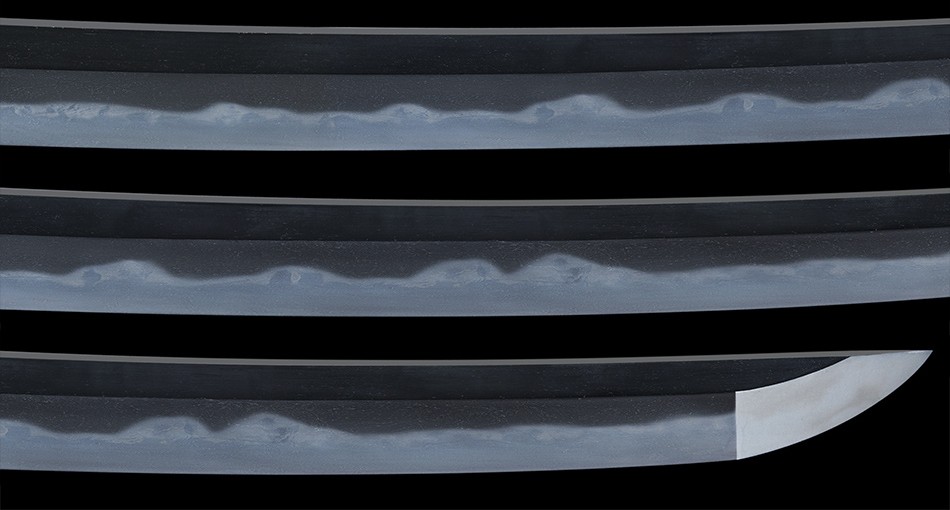
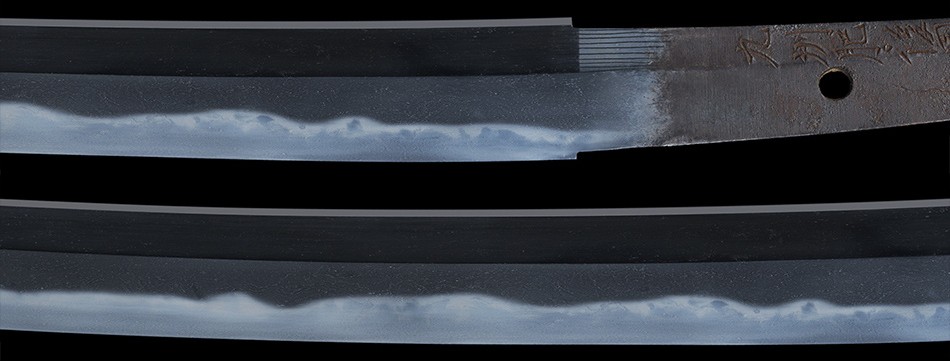
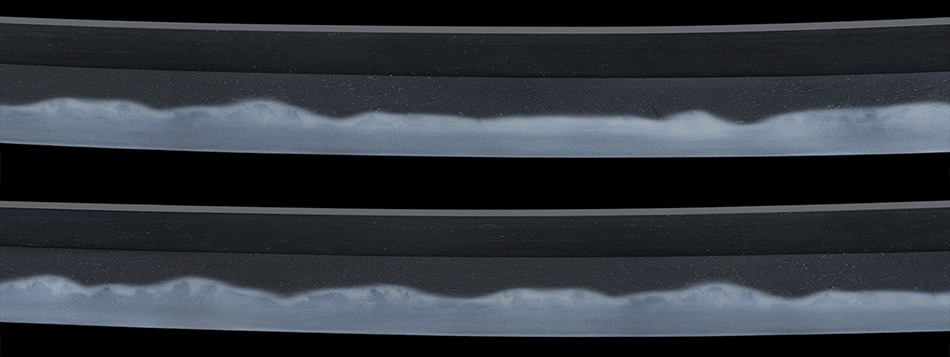
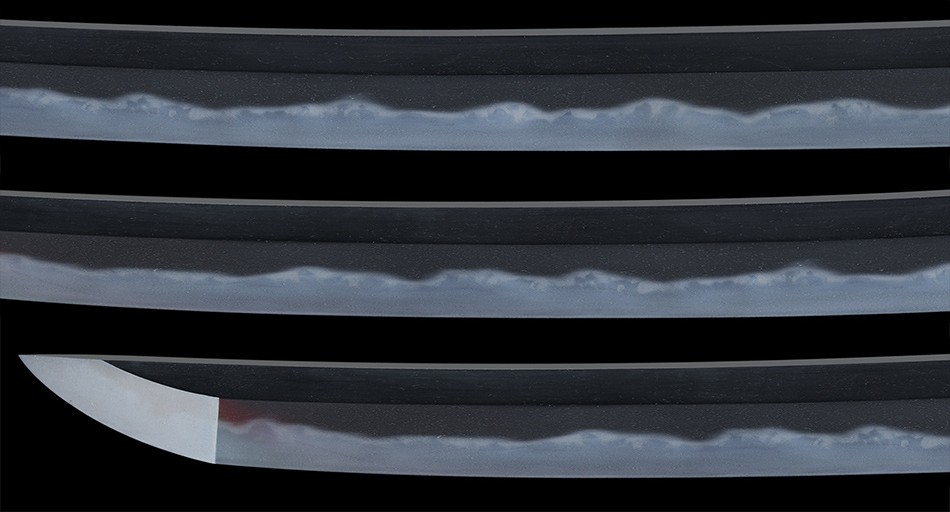
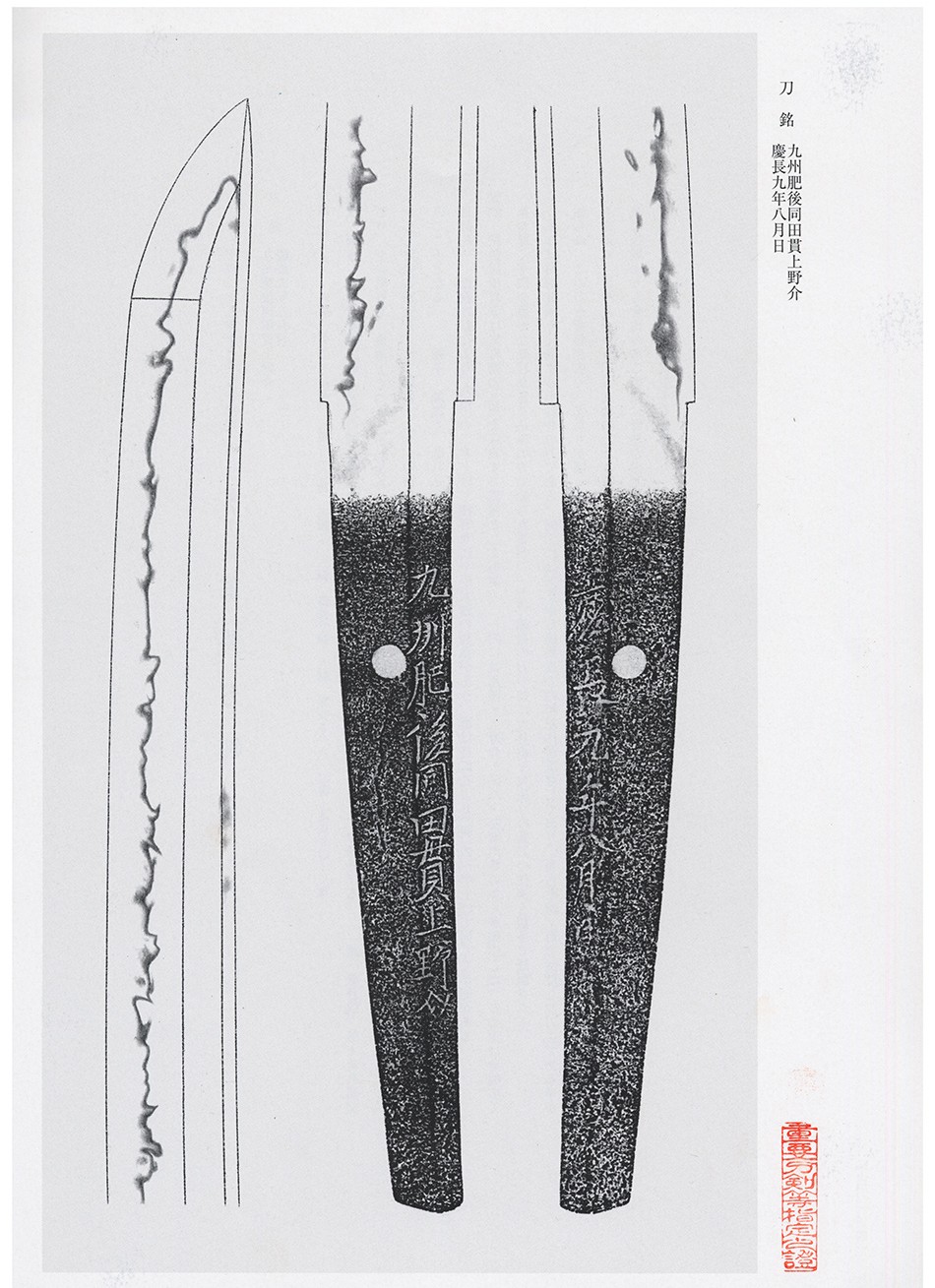
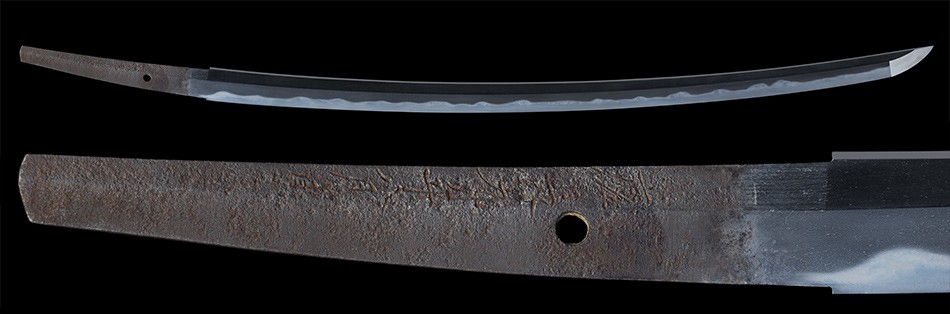
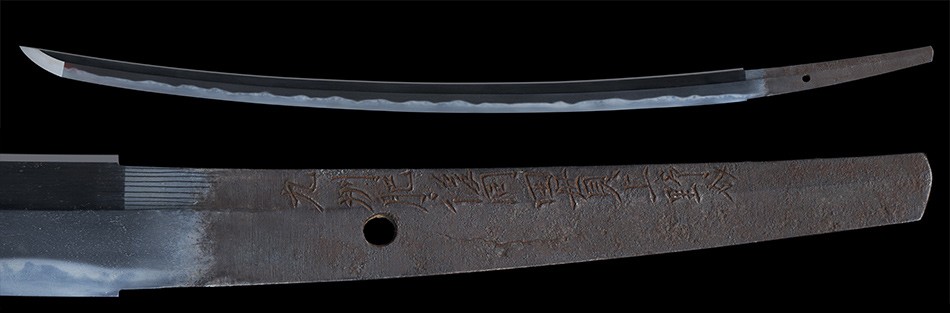
Description Keijō: , ; somewhat wide ; little difference between base and tip width; wide ; the is beveled, the is high; pronounced ; extended . : , with areas of ; slightly ; adheres well; the steel shows a (subdued tendency), and from below the a water-shadow-like (suikei-like) effect appears. : as the base pattern, mixed with , , and ko-; with some slightly angular elements; and enter well; the is tight and adheres; in places it becomes -dominant and forms clusters; slight appears; there is ; faint are seen; the also takes on a (subdued tendency). : deep tempering, ; on the the tip is ; on the it shows a pointed tendency; both turn back only slightly. : None. : ; ; ; one ; on the , above the , the two characters “Kyūshū” (九州) are raised, and toward the there is a long signature cut with a somewhat thick chisel; on the , above the , the character “Kei” (慶) is raised and the date is similarly inscribed.
Artisan Kyūshū Dōtanuki Ueno no (九州肥後同田貫上野介)
Era Keichō 9 (1604)
Explanation The Dōtanuki group is celebrated as a prominent Kyūshū lineage representing the period, and within the school many smiths emerged, including Masakuni, Ueno no , and Matahachi Saemon, among others. This group is known for boldly constructed swords with wide , thick , and ample , yet beyond swords, many examples of large ōmi- and large-scale are also encountered.
This work is a sword by Ueno no , one of the representative smiths of the Dōtanuki group. Extant works by this smith include dated examples from Tenshō through Keichō, and he is thus known as a maker active across the transition between old and new traditions. This sword likewise shows its period well: the is wide, the is pronounced, and the is extended. The is mixed with , with abundant , while the is based on and incorporates a variety of smaller patterns such as , , and ko-, and further shows and . In comparison to the typically seen working range of this school, it displays greater variation and conveys a rustic flavor. Moreover, the subdued (-inclined) character of both and fosters a deeply flavored, restrained austerity, and its ample and robust appearance are also appealing. It is an outstanding example representing both this smith and the Dōtanuki group. (Catalog classification: 134)