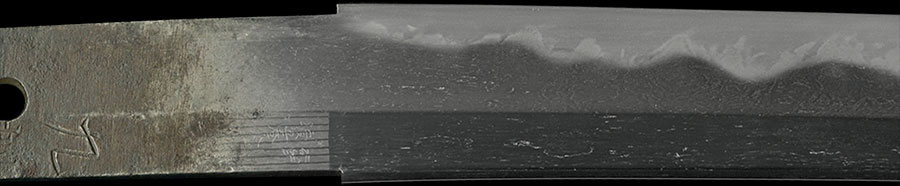
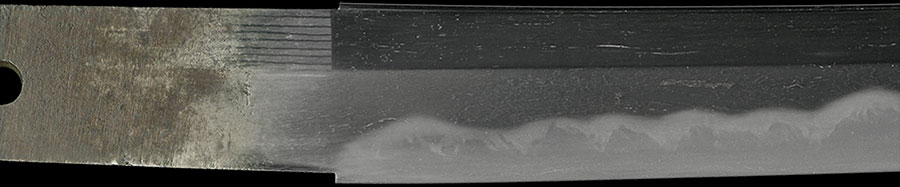
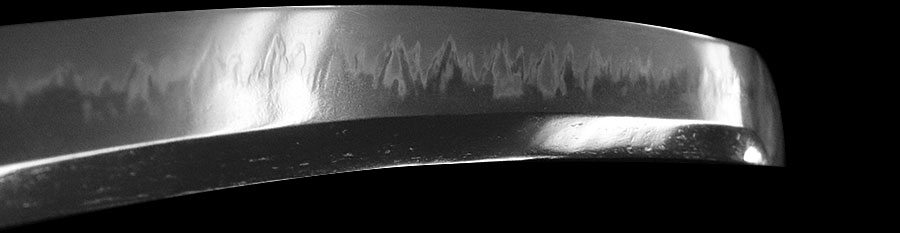
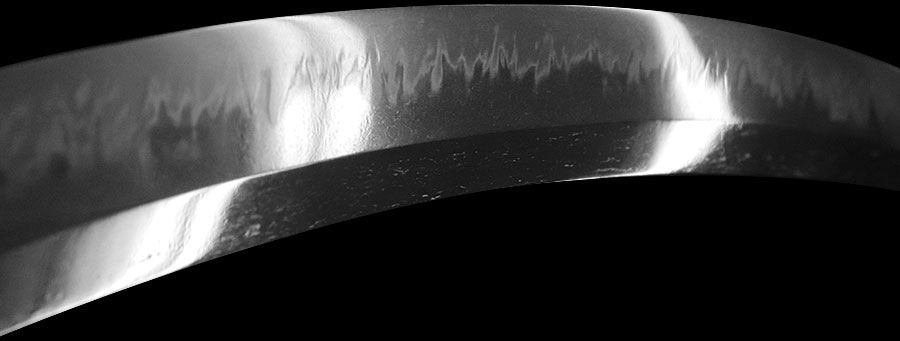
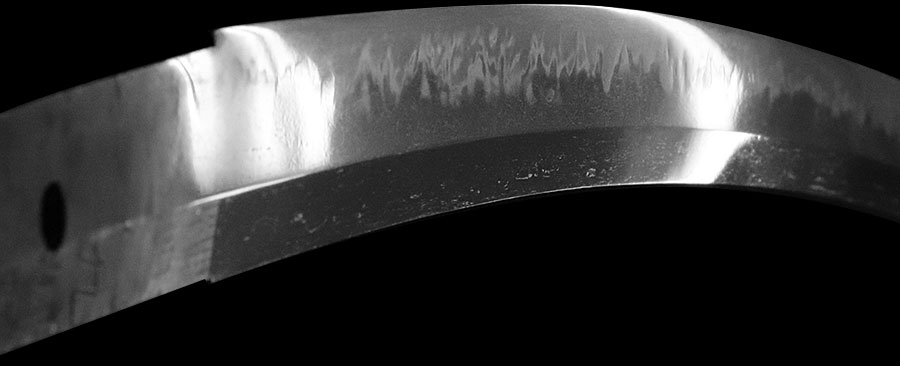
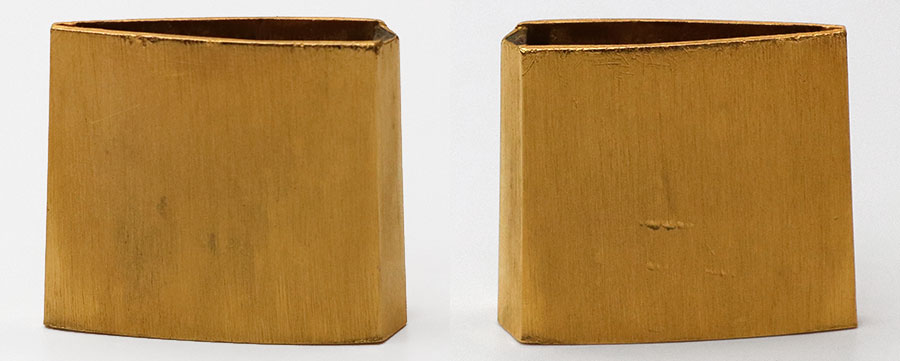
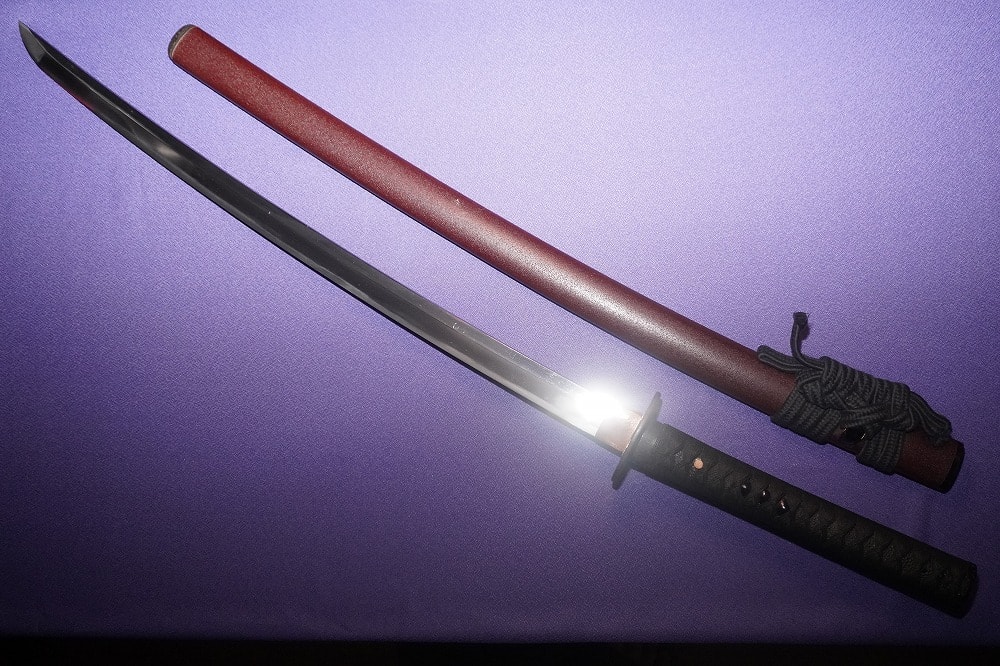
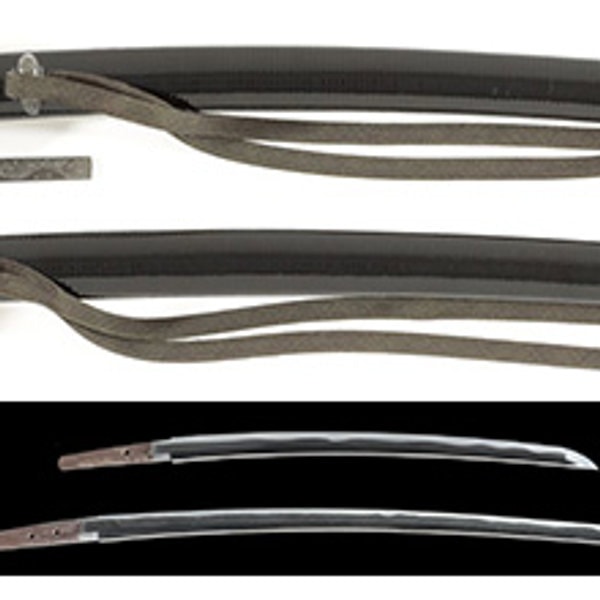
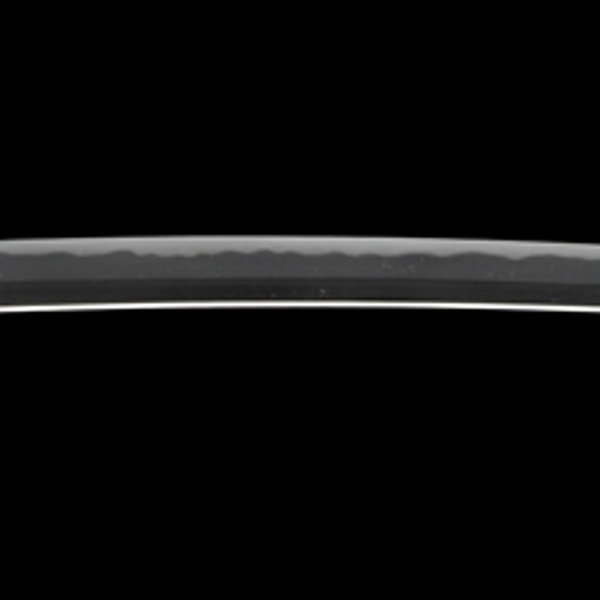
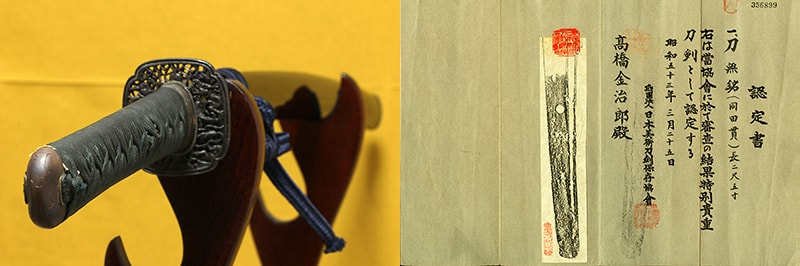
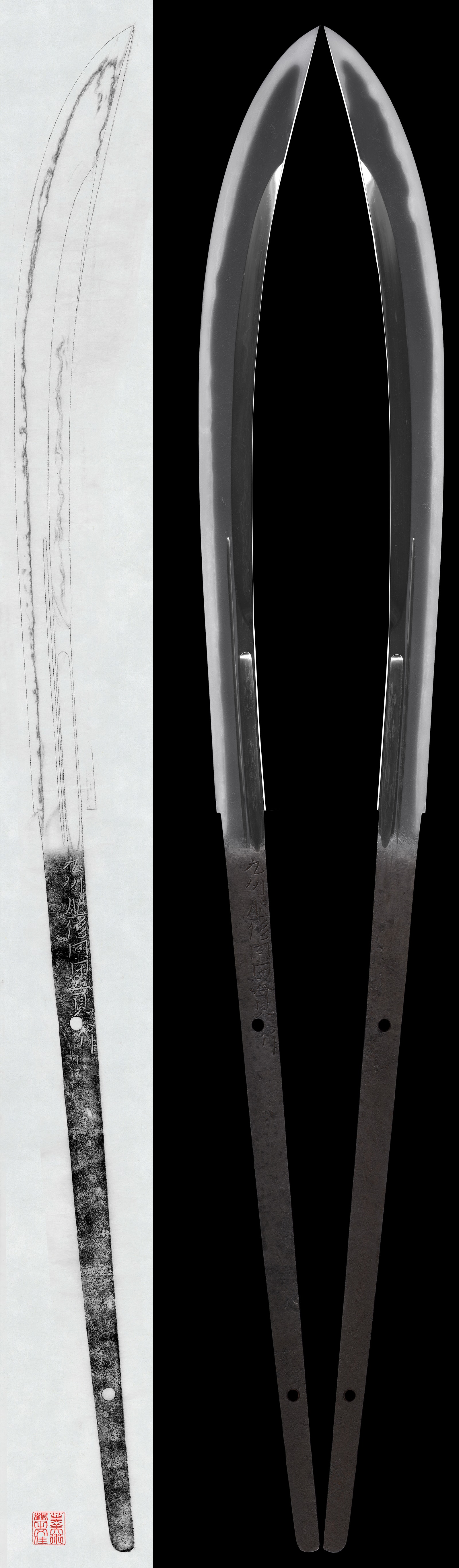
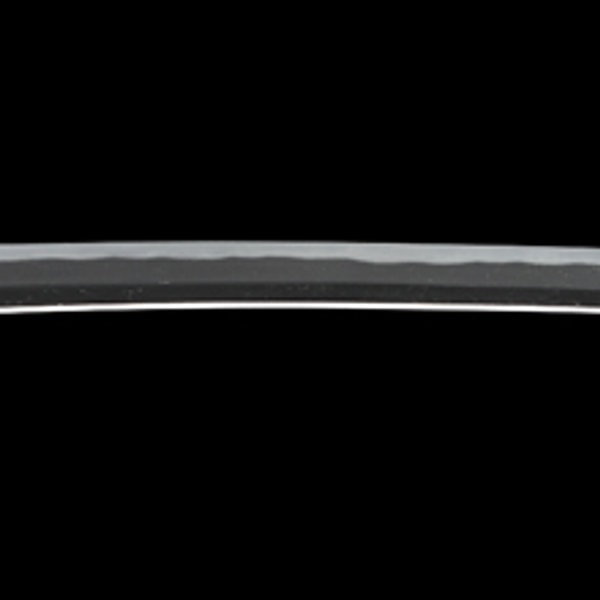
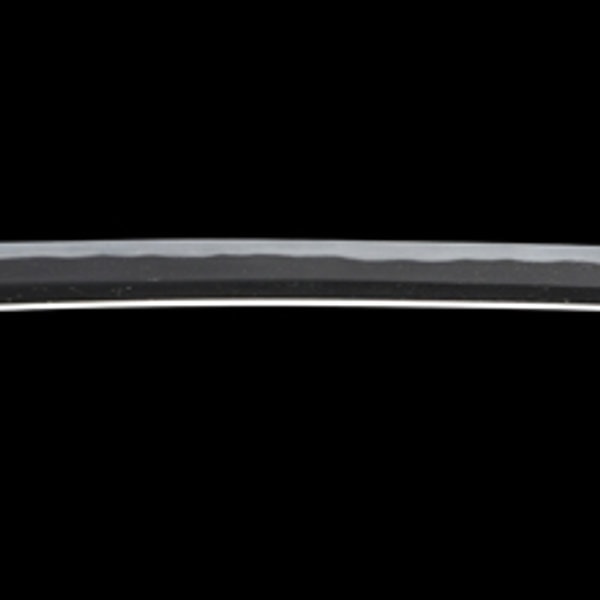
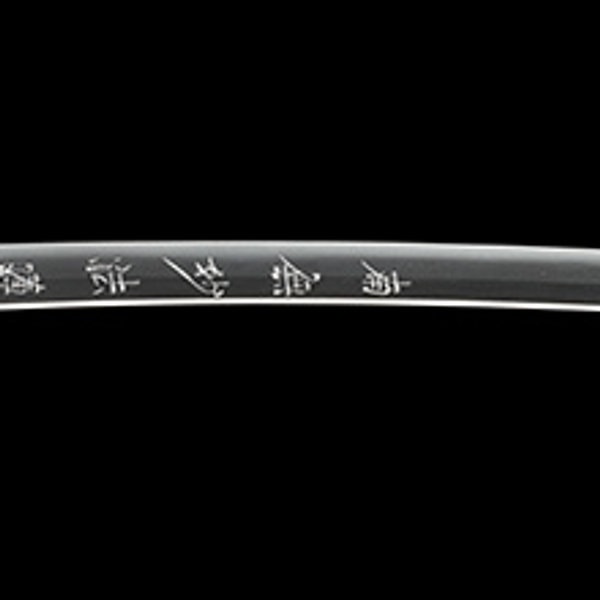
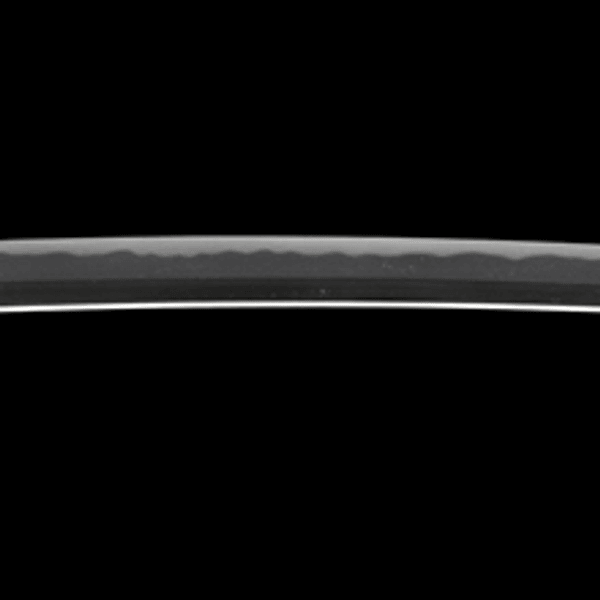
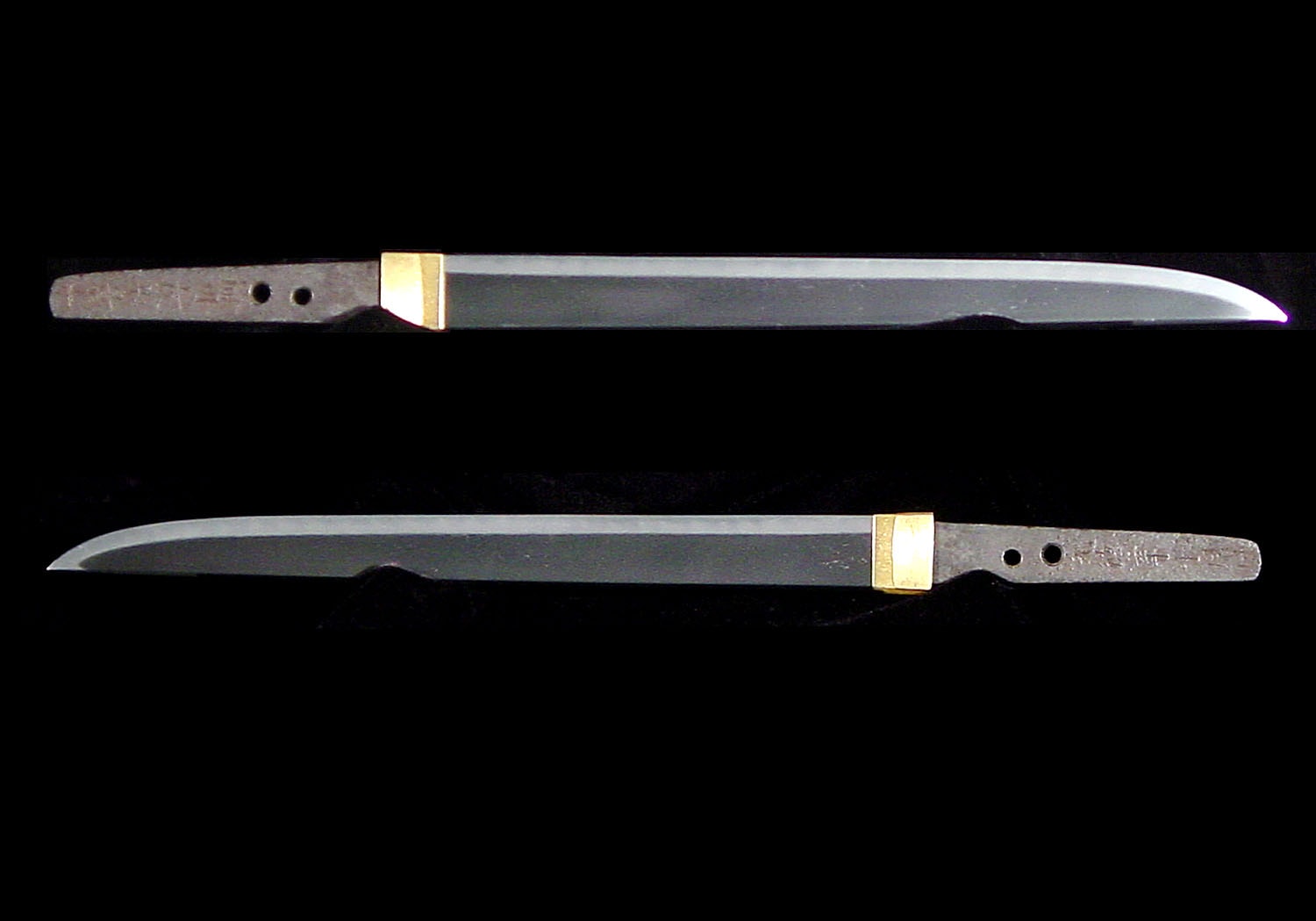
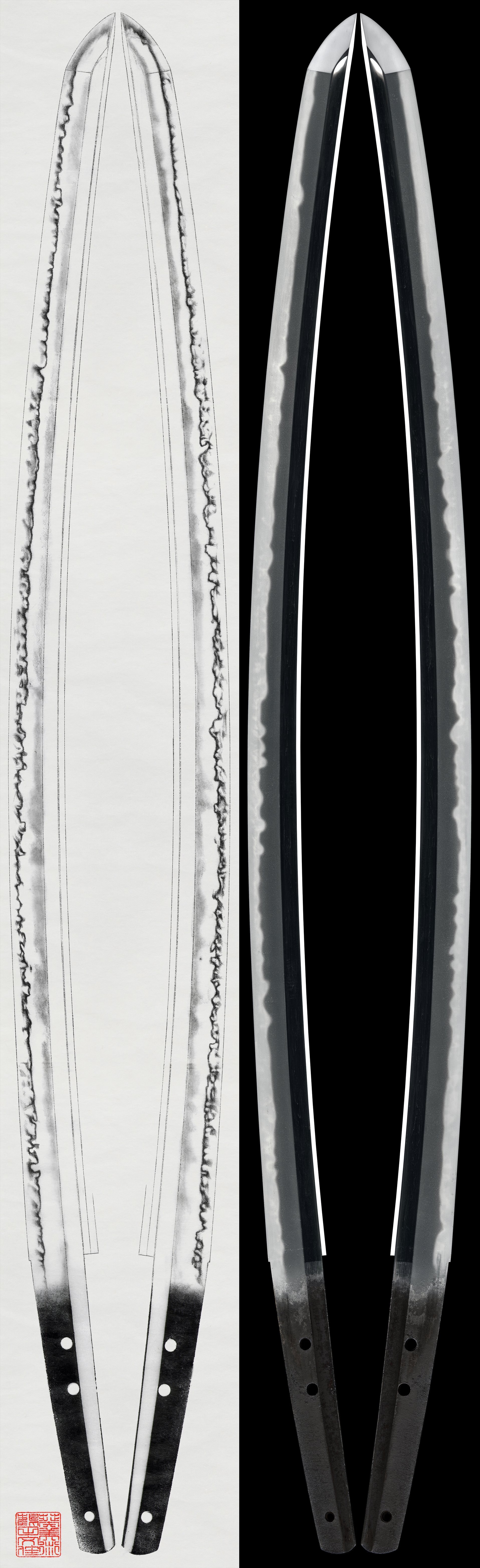
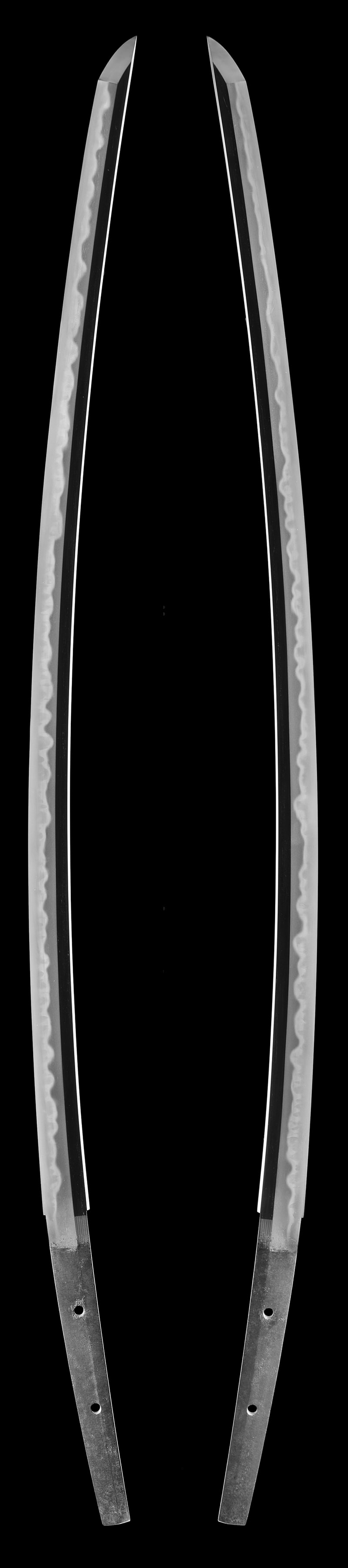
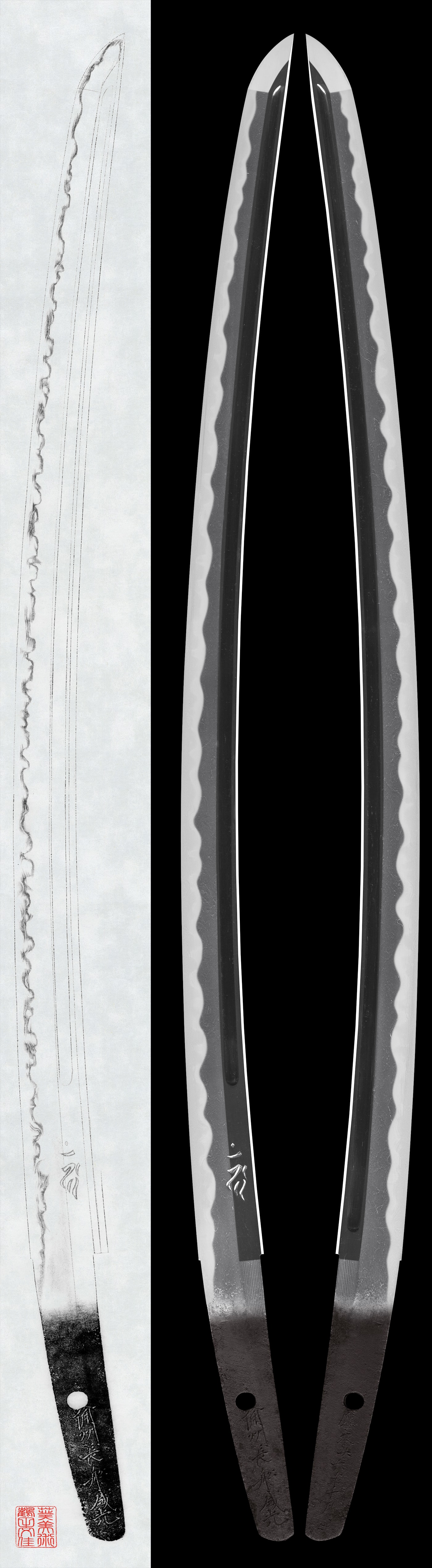
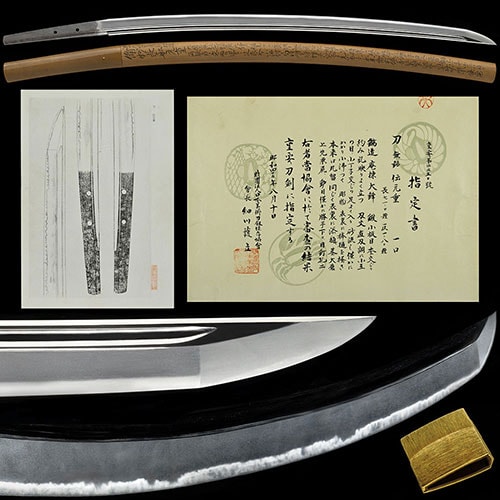
(Famous through Touken Ranbu) According to the sayagaki by the renowned Tanobe Michihiro Sensei, this katana is praised as a magnificent and superior masterpiece, possessing a robust build with a yakiba that resembles the famous blades of Sue-Bizen. In Higo Kumamoto, the Dotanuki school flourished during the Sengoku period. Dotanuki Uemon was a descendant of the Enju school, specifically the Maga clan. Around the Tensho era (1580) (439 years ago), it is said that during the Bunroku Campaign, the Dotanuki school crossed the sea with Kato Kiyomasa and forged swords in that land. This school is also famous for the "Lone Wolf and Cub" series starring Yorozuya Kinnosuke, where the Dotanuki sword took the world by storm, leading to immense post-war popularity and prices that rose without ceiling. This katana exhibits a gousou (magnificent/grand) sugata with a wide motohaba and sakihaba, and a slightly extended kissaki. The jigane is a powerfully forged itame-hada. The hamon is a masterfully executed fukushiki gunome choji-ba that resembles the work of Sue-Bizen Yosozaemon-no-jo Sukesada, resulting in a blade overflowing with haki (spirit). Katana with a mei by Dotanuki Uemon are currently very few in number and extremely precious. As this is the first time this blade has appeared on the market in an "ubu" (raw/fresh) state, we are offering it at a special discount price. Please enjoy this masterpiece by Higo Dotanuki Uemon of Kyushu.
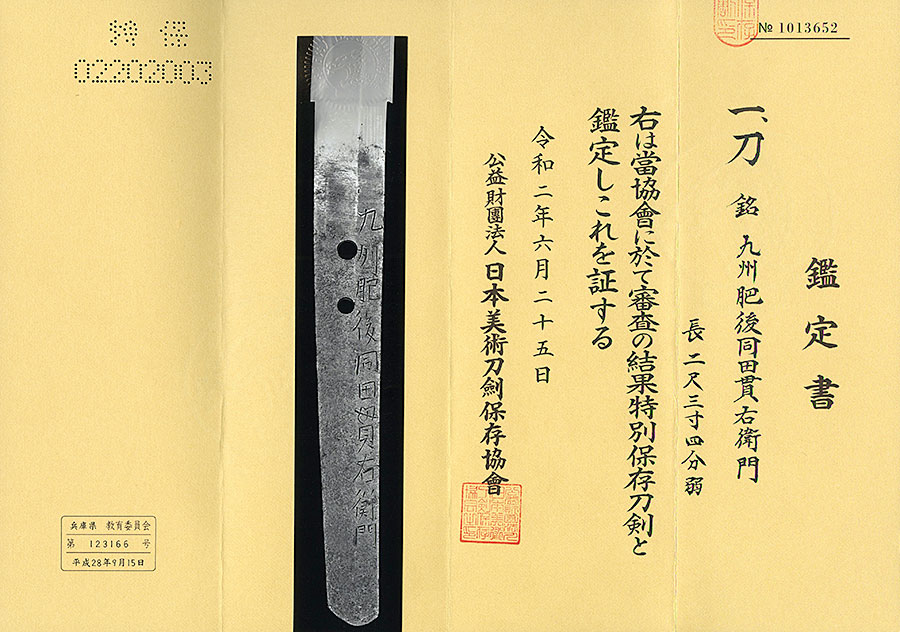
Certificate reading — 銘 九州肥後同田貫右衛門
Keicho (1596-1615) · nagasa 70.8cm · sori 2cm


Bizen-den · Higo · around 1573-1611
Tōken Taikan top 60%
4 pieces on the market now
Where Dotanuki stands among comparable artisans: across all of nihontō, and within tradition, era, and period. The tiers (Foremost · Leading · Major · Notable) weigh official designations from the NBTHK and Japan's Agency for Cultural Affairs, together with historical honors of lasting repute such as the Sansaku and Meibutsu-chō.
Select a lens to see how it's measured.
Years he was demonstrably active, proven by signed-and-dated blades
Bizen-den · Higo
14 pieces on the market now
The Dōtanuki (同田貫) line took shape in Kikuchi District of Higo Province toward the close of the Muromachi period and carried its activity forward into the shintō era, spanning the Momoyama transition into early Edo. Learn more →

| Smith | Era | Designated |
|---|---|---|
| Kozukenosuke上野介 | 1596-1615 | 0 |
| Muneharu宗春 | 1865-1868 | 0 |
| Kunikatsu國勝 | 1558-1570 | 0 |
| Kagemasa景和 | 1596-1615 | 0 |
| Masahiro昌廣 | 1789-1801 | 1 |
A Hozon-certified blade judged to show notably superior workmanship and a better state of preservation. The bar is higher: re-tempered blades and most unsigned Muromachi/Edo works are excluded.
The NBTHK (Nihon Bijutsu Tōken Hozon Kyōkai, the Society for the Preservation of Japanese Art Swords) is a public-interest incorporated foundation founded in 1948 and supervised by Japan’s Agency for Cultural Affairs (Bunkachō); it is based at the Japanese Sword Museum in Tokyo. Its expert panels physically examine each submitted work (shinsa) and issue a certificate (kanteishō) ranking it by artistic and historical merit. NBTHK papers are the most widely recognized standard of authentication for Japanese swords and fittings.
NBTHK official siteFor returns due to customer circumstances, the cost is the customer's responsibility. For returns due to our mis-shipment or a defective item, we bear the cost.
(Famous through Touken Ranbu) According to the sayagaki by the renowned Tanobe Michihiro Sensei, this katana is praised as a magnificent and superior masterpiece, possessing a robust build with a yakiba that resembles the famous blades of Sue-Bizen. In Higo Kumamoto, the Dotanuki school flourished during the Sengoku period. Dotanuki Uemon was a descendant of the Enju school, specifically the Maga clan. Around the Tensho era (1580) (439 years ago), it is said that during the Bunroku Campaign, the Dotanuki school crossed the sea with Kato Kiyomasa and forged swords in that land. This school is also famous for the "Lone Wolf and Cub" series starring Yorozuya Kinnosuke, where the Dotanuki sword took the world by storm, leading to immense post-war popularity and prices that rose without ceiling. This katana exhibits a gousou (magnificent/grand) sugata with a wide motohaba and sakihaba, and a slightly extended kissaki. The jigane is a powerfully forged itame-hada. The hamon is a masterfully executed fukushiki gunome choji-ba that resembles the work of Sue-Bizen Yosozaemon-no-jo Sukesada, resulting in a blade overflowing with haki (spirit). Katana with a mei by Dotanuki Uemon are currently very few in number and extremely precious. As this is the first time this blade has appeared on the market in an "ubu" (raw/fresh) state, we are offering it at a special discount price. Please enjoy this masterpiece by Higo Dotanuki Uemon of Kyushu.
Certificate reading — 銘 九州肥後同田貫右衛門
Keicho (1596-1615) · nagasa 70.8cm · sori 2cm


Bizen-den · Higo · around 1573-1611
Tōken Taikan top 60%
4 pieces on the market now
Where Dotanuki stands among comparable artisans: across all of nihontō, and within tradition, era, and period. The tiers (Foremost · Leading · Major · Notable) weigh official designations from the NBTHK and Japan's Agency for Cultural Affairs, together with historical honors of lasting repute such as the Sansaku and Meibutsu-chō.
Select a lens to see how it's measured.
Years he was demonstrably active, proven by signed-and-dated blades
Bizen-den · Higo
14 pieces on the market now
The Dōtanuki (同田貫) line took shape in Kikuchi District of Higo Province toward the close of the Muromachi period and carried its activity forward into the shintō era, spanning the Momoyama transition into early Edo. Learn more →
| Smith | Era | Designated |
|---|---|---|
| Kozukenosuke上野介 | 1596-1615 | 0 |
| Muneharu宗春 | 1865-1868 | 0 |
| Kunikatsu國勝 | 1558-1570 | 0 |
| Kagemasa景和 | 1596-1615 | 0 |
| Masahiro昌廣 | 1789-1801 | 1 |
A Hozon-certified blade judged to show notably superior workmanship and a better state of preservation. The bar is higher: re-tempered blades and most unsigned Muromachi/Edo works are excluded.
The NBTHK (Nihon Bijutsu Tōken Hozon Kyōkai, the Society for the Preservation of Japanese Art Swords) is a public-interest incorporated foundation founded in 1948 and supervised by Japan’s Agency for Cultural Affairs (Bunkachō); it is based at the Japanese Sword Museum in Tokyo. Its expert panels physically examine each submitted work (shinsa) and issue a certificate (kanteishō) ranking it by artistic and historical merit. NBTHK papers are the most widely recognized standard of authentication for Japanese swords and fittings.
NBTHK official siteFor returns due to customer circumstances, the cost is the customer's responsibility. For returns due to our mis-shipment or a defective item, we bear the cost.