NihontoWatch Mon

NihontoWatch

MarketAuctions
Encyclopedia
NihontoWatch Mon

NihontoWatch

MarketAuctions
Encyclopedia

Description

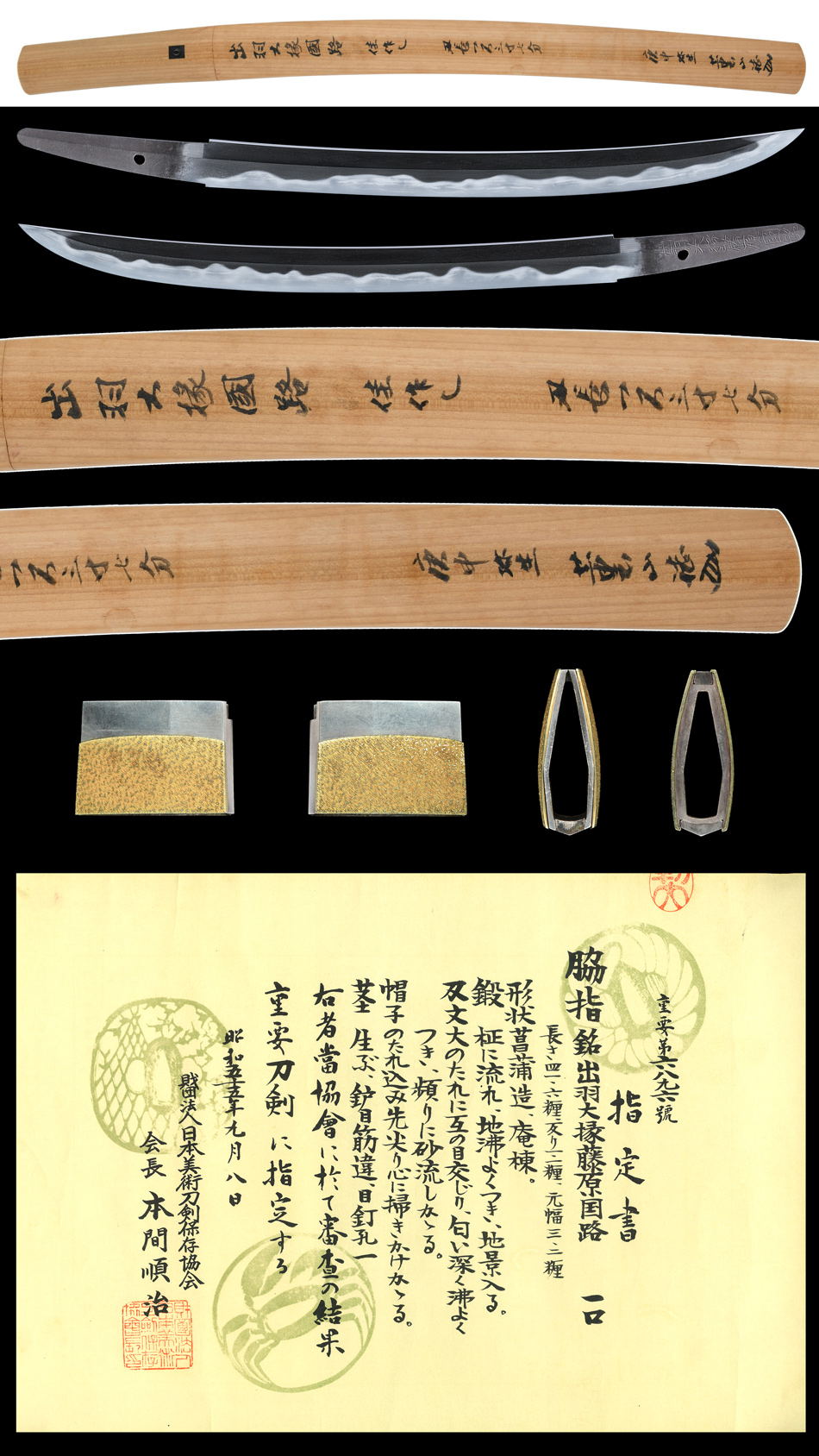
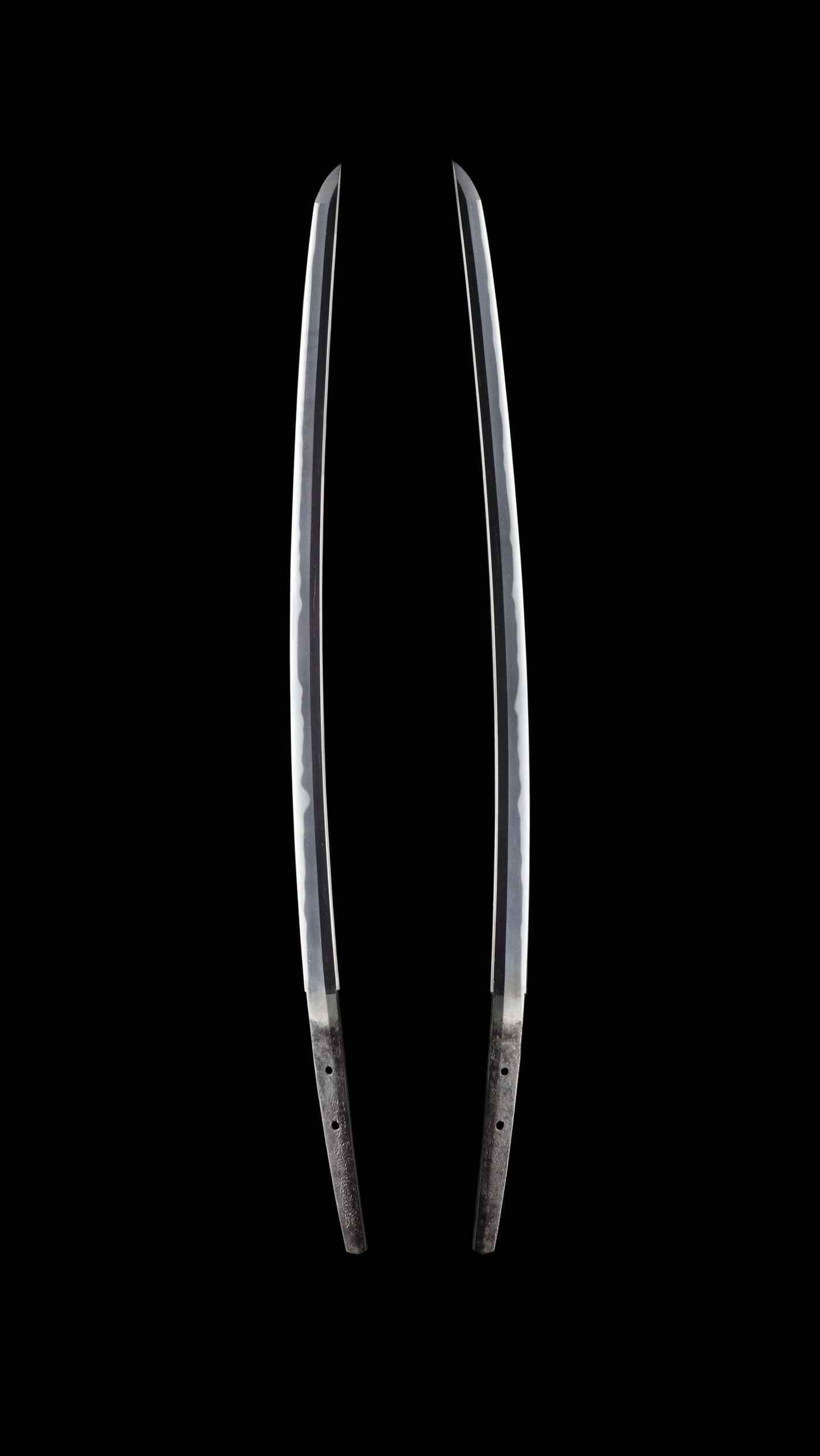
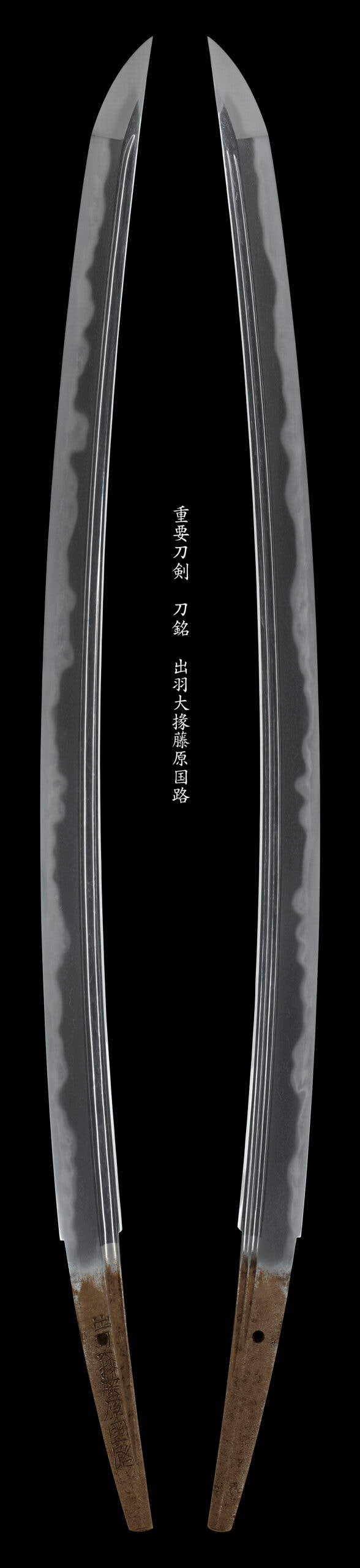
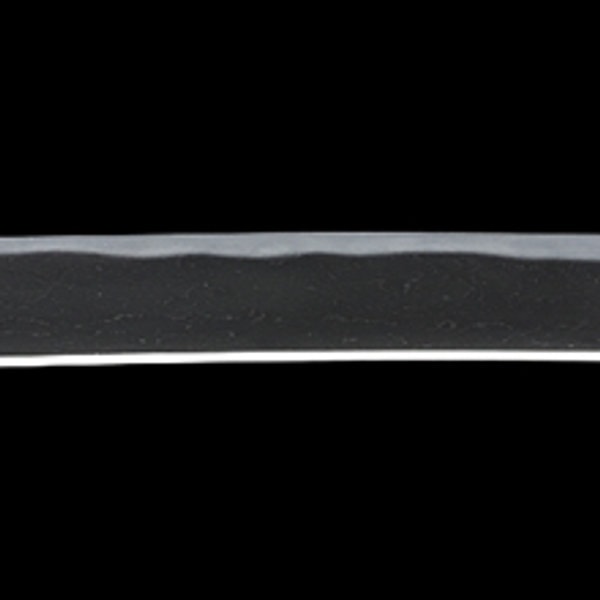
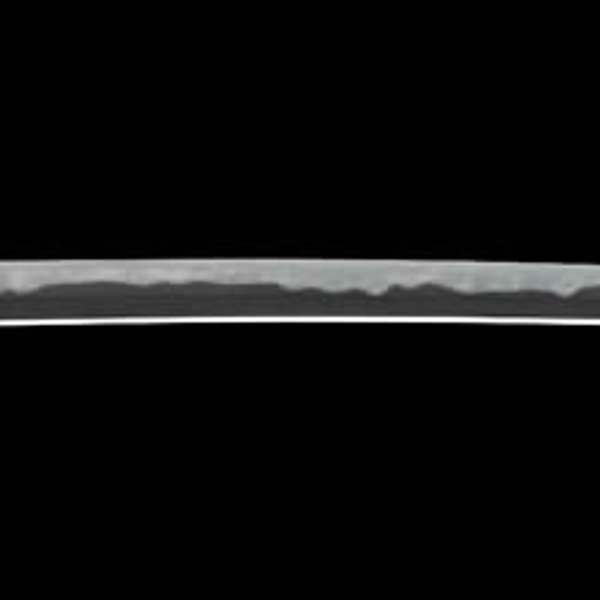
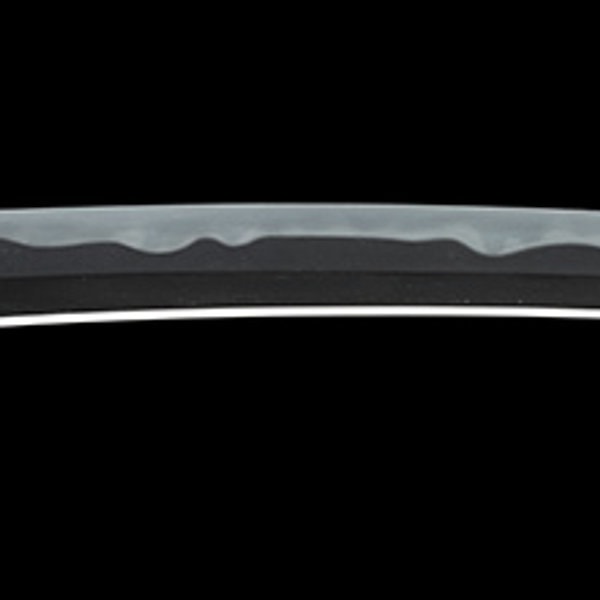
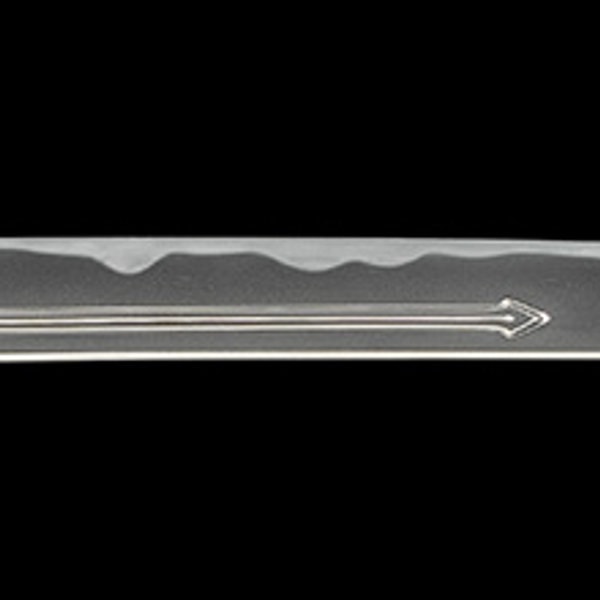
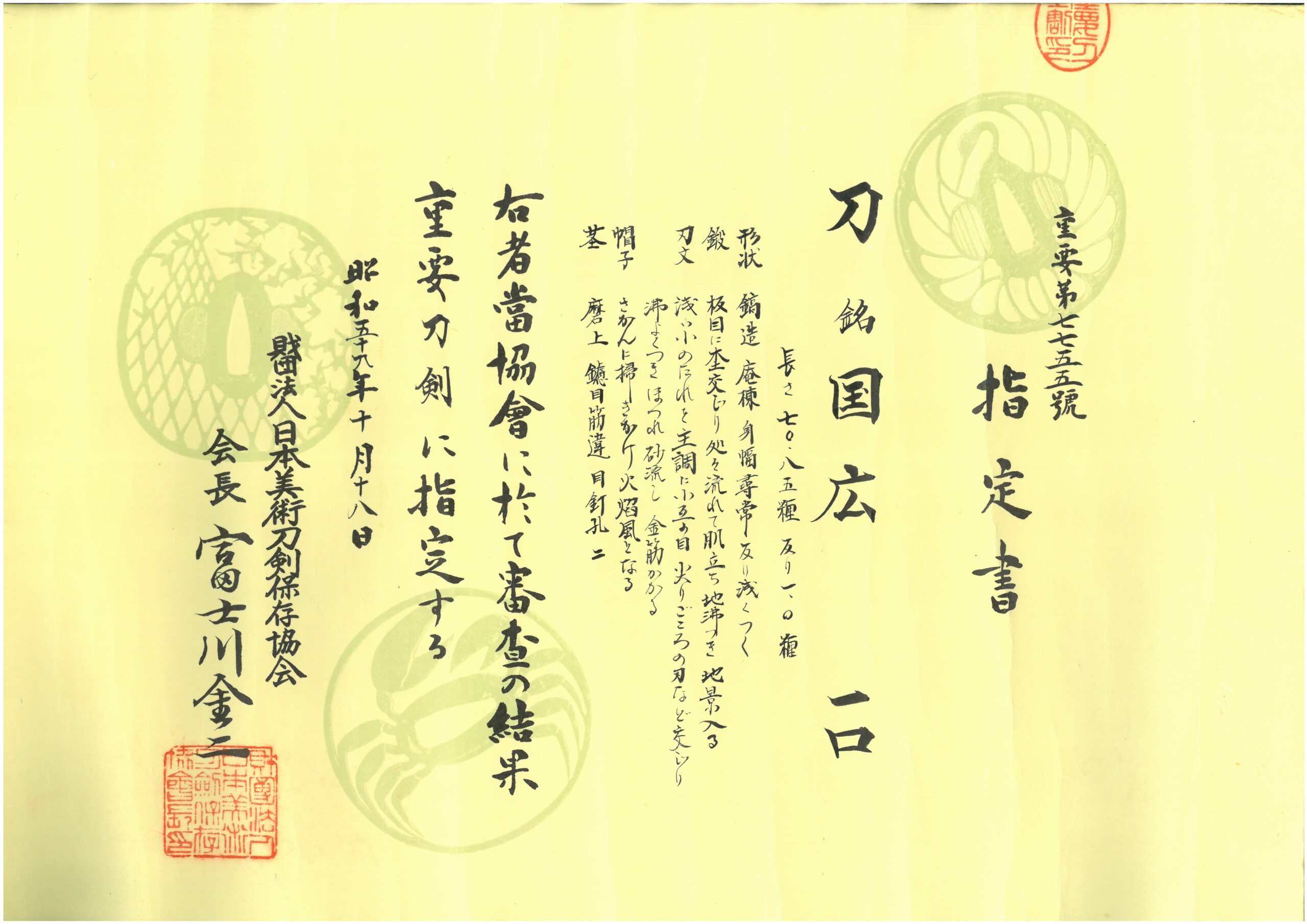
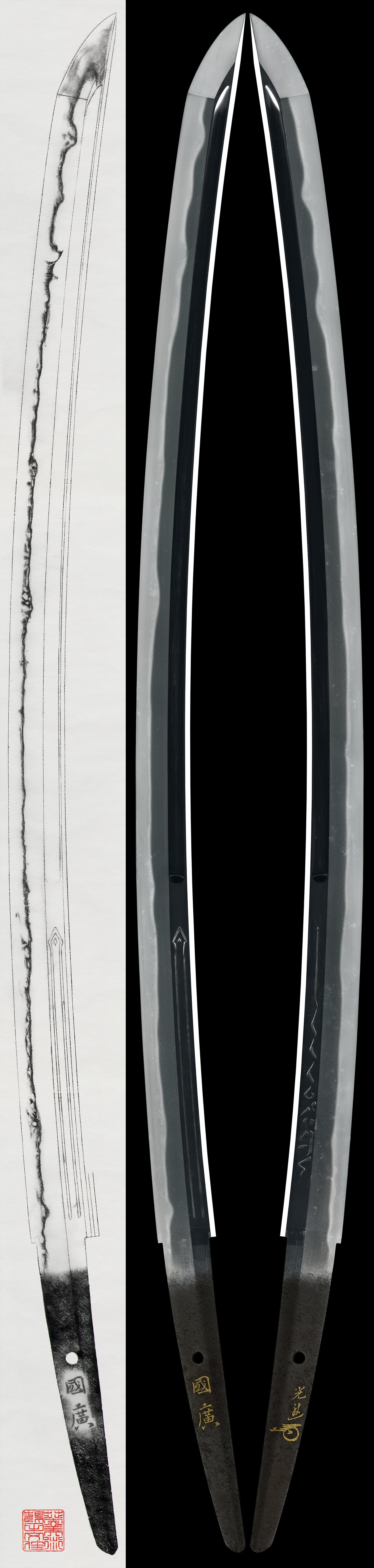
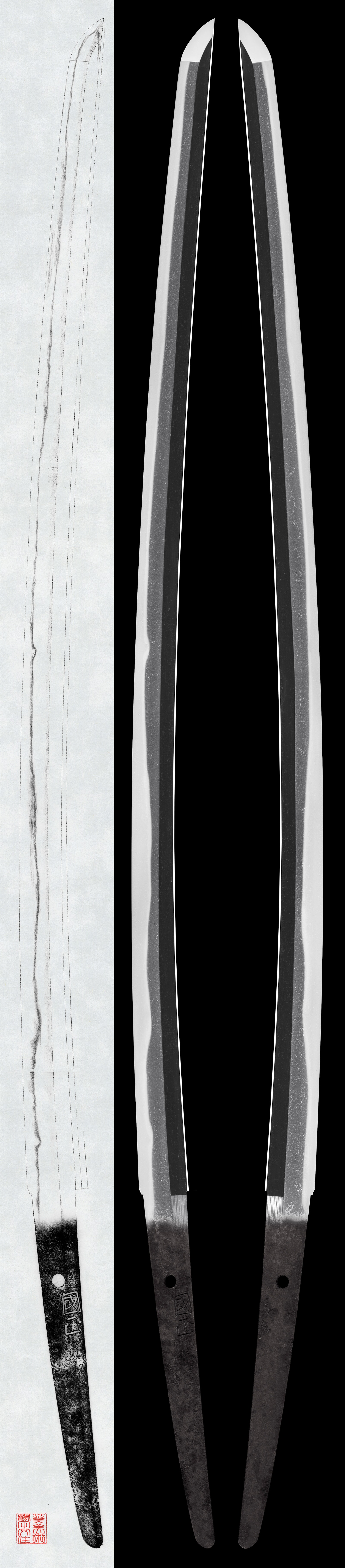
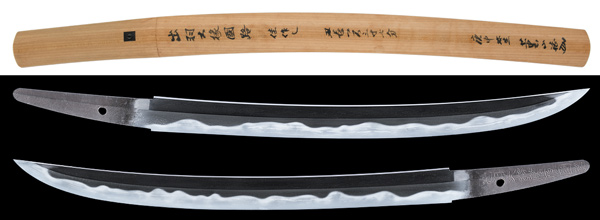
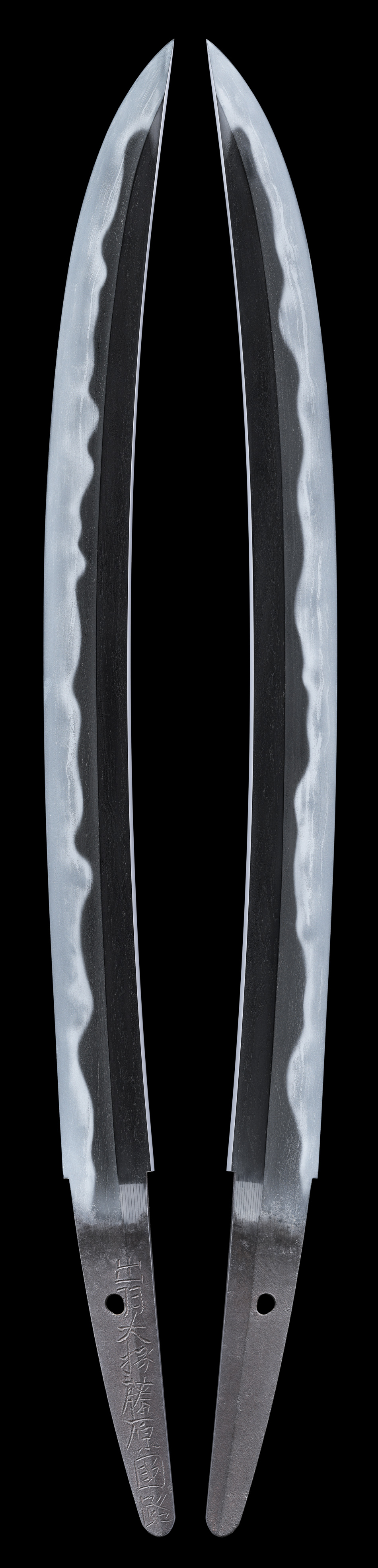
This is a wakizashi made by Dewa Daijo Fujiwara Kunimichi in Yamashiro province during the early Edo period. The blade has a masame hada and an oh-notare hamon with gunome. It is certified as a Juyo Token by the NBTHK.

NBTHK Setsumei

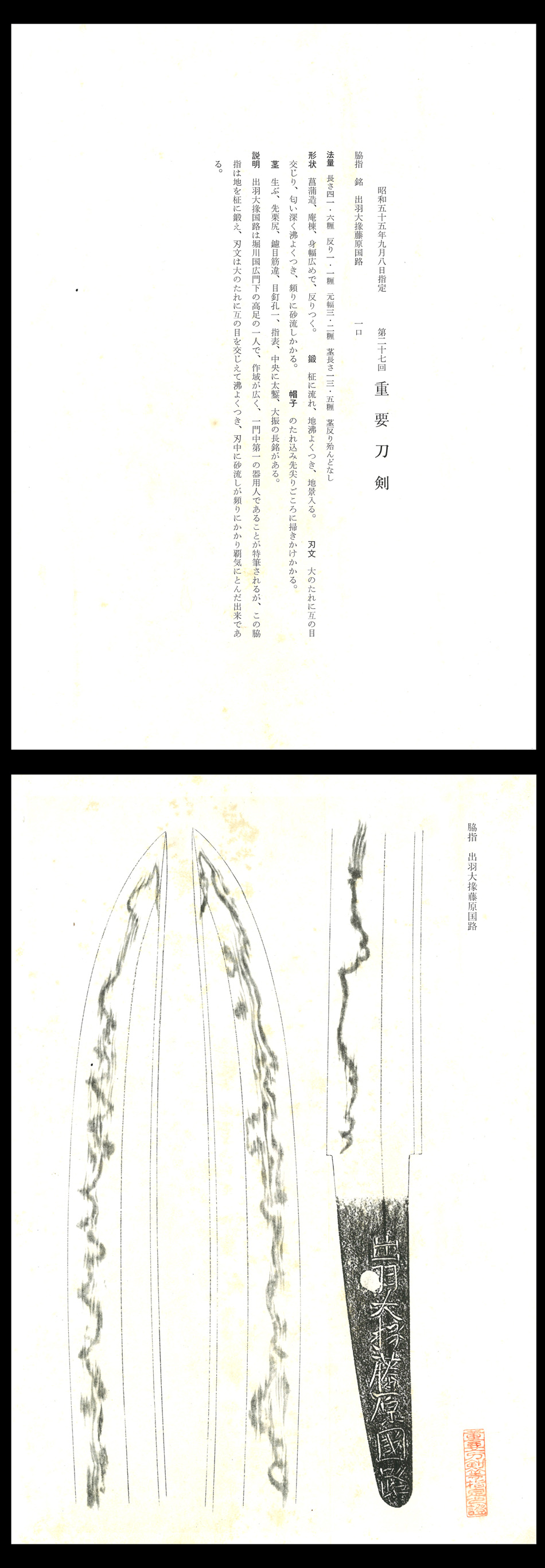
Juyo-Token, 28th Session — Designated July 10, 1982 Wakizashi, mei: Dewadaijō Fujiwara Kunimichi (出羽大掾藤原国路) Measurements Nagasa 49.4 cm, sori 0.9 cm, motohaba 2.8 cm, sakihaba 1.8 cm, kissaki-nagasa 2.7 cm, nakago-nagasa 11.8 cm Description Keijo: shinogi-zukuri, iori-mune. Kitae: itame-hada with masame flowing (nagare); ji-nie adheres well and chikei appear. Hamon: chōji in tare form, mixed with gunome; the nioi is deep and nie adheres, with frequent sunagashi. Boshi: notare-komi, turning back in ko-maru with hakikake. Horimono: None. Nakago: ubu-nakago; tip kurijiri; file marks katte-sagari; one mekugi-ana. Artisan Dewadaijō Fujiwara Kunimichi (出羽大掾藤原国路) Era Not stated. Explanation This is a wakizashi submitted to the Society and, upon examination, has been designated an Important Sword (Jūyō Tōken). The tang bears signatures reading “Dewadaijō Fujiwara Kunimichi, made this” (出羽大掾藤原国路 作之) and “Dewadaijō Kunimichi, made this” (出羽大掾国路 作之). The workmanship is described as shinogi-zukuri with an iori-mune. The jihada is itame with flowing masame, showing abundant ji-nie and chikei. The hamon is a chōji-based tare mixed with gunome, with a deep nioi and attached nie, and frequent sunagashi. The boshi is notare-komi and turns back in ko-maru with hakikake.

NihontoWatch MonNihontoWatch
MarketAuctionsEncyclopedia
Swords›Horikawa›Kunimichi›Wakizashi: Dewa Daijo Fujiwara Kunimichi - Juyo Token
wakizashiJūyō
Horikawa Kunimichi

Wakizashi: Dewa Daijo Fujiwara Kunimichi - Juyo Token

mei · Keicho-Kanbun (1608-1662) · nagasa 41.5cm · sori 1.1cm

SOLD
Horikawa Kunimichi — 1 of 4
Horikawa Kunimichi — 2 of 4
Horikawa Kunimichi — 3 of 4
Horikawa Kunimichi — 4 of 4
1 / 4
1 / 4
Horikawa Kunimichi — 1 of 4Horikawa Kunimichi — 2 of 4Horikawa Kunimichi — 3 of 4Horikawa Kunimichi — 4 of 4
Measurements & details
Smith
Horikawa Kunimichi
Type
Wakizashi
School
Horikawa
Period
Around 1615–1624(Keicho-Kanbun)
Province
Yamashiro
Signature
Signed(99% of this smith's designated works are signed)
Measurements
Nagasa 41.5cmSori 1.1cmMotohaba 3.36cmSakihaba 3.15cmKasane 0.77cm
Description

This is a wakizashi made by Dewa Daijo Fujiwara Kunimichi in Yamashiro province during the early Edo period. The blade has a masame hada and an oh-notare hamon with gunome. It is certified as a Juyo Token by the NBTHK.

NBTHK Zufu Commentary

Juyo #27

AI translation — may contain errors

-, 28th Session — Designated July 10, 1982

, : Dewadaijō Fujiwara Kunimichi (出羽大掾藤原国路)

Measurements 49.4 cm, 0.9 cm, 2.8 cm, 1.8 cm, 2.7 cm, 11.8 cm

Description Keijo: , . : with flowing (); adheres well and appear. : in form, mixed with ; the is deep and adheres, with frequent . : , turning back in with . : None. : ; tip ; file marks ; one .

Artisan Dewadaijō Fujiwara Kunimichi (出羽大掾藤原国路)

Era Not stated.

Explanation This is a submitted to the Society and, upon examination, has been designated an Important Sword ( ). The tang bears signatures reading “Dewadaijō Fujiwara Kunimichi, made this” (出羽大掾藤原国路 作之) and “Dewadaijō Kunimichi, made this” (出羽大掾国路 作之). The workmanship is described as with an . The is with flowing , showing abundant and . The is a -based mixed with , with a deep and attached , and frequent . The is and turns back in with .

About the maker

Kunimichi

國路

Horikawa (Yamashiro / Kyoto) · Yamashiro · around 1615-1624

Fujishiro Jo-jo saku · Tōken Taikan top 11%

8 pieces on the market now

›

Dewa Daijō Fujiwara Kunimichi worked in Kyoto in the Keichō-shintō years, the foremost pupil of Horikawa Kunihiro and, the published sources say, the most versatile hand of that whole circle, calling him "the most dexterous of the Horikawa school"[[c:1]]. His career is unusually long. Dated blades run from Keichō 13 (1608) to Kanbun 2 (1662), and one piece carries an added inscription giving his age as seventy-seven in Keian 5, so that some accounts even propose a second-generation Kunimichi for the works after the Jōō era. He is said to have lived in the Ebisugawa quarter near Horikawa, and the sword books record that he first studied under Iga-no-kami Kinmichi of the Mishina house before entering Kunihiro's gate; after his teacher's death he received the title Dewa Daijō, around Keichō 19 to Genna 1, in an arrangement sponsored by Kinmichi.

His characteristic work is a copy of the Sōshū tradition, and within it the Naoe-Shizu manner above all. The published sources are consistent on where his strength lay: he handled every tradition but Bizen with skill, "and of these the Sōshū tradition was his greatest specialty, looking devotedly to Shizu and Samonji"[[c:2]]. Over a board-grain jigane that stands up he tempers a notare and ko-notare base into which gunome and large gunome gather, building to a lively large midare with tobiyaki; the nioi is deep, the nie thick and at times coarse, with broad sunagashi and long kinsuji. The published sources name exactly these as the points by which he is known, his strong, lively nie, his large flamboyant midare, and the rich work of sunagashi and kinsuji. His most personal feature lies in the bōshi: a shallow notare-komi that thrusts up and turns pointed with hakikake, "the so-called Sanpin bōshi, entering in notare and becoming pointed at the tip"[[c:3]].

The jigane is where he is most himself. His itame stands up and is often dry and coarse, a distinctive zanguri texture mixed with mokume and flowing grain, inclining toward masame near the edge, with ji-nie adhering and chikei entering. It is not the unhurried, expansive steel of his teacher; it is a tauter, more worked jigane, and the published sources, while granting that in breadth of range he even surpasses Kunihiro, are clear that in leisurely grandeur of scale he does not match him. Across the temper run the activities he is read by, ashi entering well, the nioiguchi deep and at times brightly clear, muneyaki along the back of some blades, and on the more boisterous pieces a tendency toward coarse nie and basake.

Two registers divide his work. The first and most frequent is the flamboyant Shizu copy, the large midare fully tempered, the bōshi pointed in the Mishina manner, devotional carvings of suken, bonji and gomabashi on the omote and ura, and on his wide hira-zukuri wakizashi a Fudō or a Kurikara. The second is a subdued, low-temper register encountered from time to time, the hamon quiet, the nioiguchi tighter, the line dignified and sometimes carrying an archaic colour like old Shizu; one Tokubetsu-Jūyō katana of this kind lacks all flamboyance and is so richly covered in nie in both ji and ha that the published sources say it could "be mistaken for a work by his teacher Kunihiro"[[c:4]], proof of how completely he had absorbed the Horikawa hand. His signatures track his life across both registers, the early Kunidō written with the character 道, the prime full signature Dewa Daijō Fujiwara Kunimichi after he took the title, and the late pieces prefixed Rai, the changing name read together with the pointed bōshi as evidence of his connection to the Mishina house.

What sets Kunimichi apart within the Horikawa school is not a single feature but a balance. Among Kunihiro's pupils he and Izumi-no-kami Kunisada are reckoned the two most prolific, and his collaborator Kunitsugu, transmitted as either his son or his disciple, served as his capable daisaku and signed a joint katana before taking his own title. Against the school's other great hands his own features set him off: the standing, dry zanguri jigane, the pointed Sanpin bōshi that the Horikawa norm does not show, the thick coarse nie and long kinsuji of a thorough Shizu copy. The published sources call his finest work in this manner "the flower of his Shizu copies"[[c:5]], and praise his strongest pieces as overflowing with power, close to the highest rank of his oeuvre; his Samonji copy, too, is held to stand without disadvantage beside his teacher's.

For the collector Kunimichi is an attainable major name among the Keichō-shintō smiths, where so much of the school's best is held rather than traded. Fujishiro grades him Jō-jō saku. He has no National Treasures; his record runs instead through two Important Cultural Properties, two Tokubetsu-Jūyō and many Jūyō, sixty-seven blades in all in the Tokubetsu-Jūyō and Jūyō tiers, with seventy-four designated works on record, alongside prewar Jūyō-Bijutsuhin that include the great long tachi dedicated to the Goryō Shrine in Kyoto. The provenance recorded for his blades reaches into the Imperial Family and old collections, with examples now held at the Goryō Shrine and the Yasaka Shrine in Kyoto and others long in private hands. Of the seven tiers above only a small number can ever change hands, and most designated blades, even in private collections, are kept rather than sold; but a signed Dewa Daijō Kunimichi in the tradeable tier does come to a patient collector from time to time, a Kyoto Shizu copy of the first rank by the most versatile of Kunihiro's pupils.

Historical importance

Where Kunimichi stands among comparable artisans: across all of nihontō, and within tradition, era, and period. The tiers (Foremost · Leading · Major · Notable) weigh official designations from the NBTHK and Japan's Agency for Cultural Affairs, together with historical honors of lasting repute such as the Sansaku and Meibutsu-chō.

随一
Foremost
屈指
Leading
有数
Major
著名
Notable

Select a lens to see how it's measured.

Designation record
74 designated works
Jūyō Bunkazai
2
Jūyō Bijutsuhin
4
Gyobutsu (Imperial)
1
Tokubetsu Jūyō
2
Jūyō
65
8 works by Kunimichi on the market→
Kunimichi — full profileHorikawa (Yamashiro / Kyoto) school

Dated Works

Years he was demonstrably active, proven by signed-and-dated blades

Active period
1615–1639Editorial estimate: 1615–1624
7 of 71 designated works carry a date
1610
1620
1630
1640
About the school

Horikawa

堀川

Shinto · Yamashiro

64 pieces on the market now

›

At Ichijo Horikawa in Kyoto, from Keicho 4 (1599), Horikawa Kunihiro gathered the pupils whose work the published sources name with his own as the opening of the shinto age. Kunihiro himself reached forging late and by a roundabout road. Learn more →

25 recorded smiths495 designated works
Leading smiths
SmithEraDesignated
Kunihiro國廣1573-1613148
Kunimichi國路1615-162474
Kunisada國貞1624-164688
Masahiro正弘1596-161514
Kunitomo國儔1596-161527
Explore the Horikawa school →
✓N.B.T.H.K Jūyō
Seller
W
World Seiyudo
Established 2008 · 18 yrs on the market
🇯🇵Ships from Japan
›
✓Verified dealerworld-seiyudo.com
✓Ships worldwide✓English supportWire transferPayPalCredit card
Return policy

No cooling-off period or returns; refund only if the purchased sword is proven fake, capped at purchase price (excludes commission sales, accessories, auction items).

View all of World Seiyudo’s listings→View this item on the dealer’s site→

More works by Horikawa Kunimichi

View all →
Token-Net
Jūyō
Katana - Jūyō - by Horikawa Kunimichi - Dewa Daijo Fujiwara Kunimichi (Yamashiro)Katana - Jūyō - by Horikawa Kunimichi - Dewa Daijo Fujiwara Kunimichi (Yamashiro)

Katana

ByHorikawa Kunimichi
¥7,800,000
Goushuya
Jūyō
Katana - Jūyō - by Horikawa Kunimichi - Juyo Token Katana: Dewa Daijo Fujiwara KunimichiKatana - Jūyō - by Horikawa Kunimichi - Juyo Token Katana: Dewa Daijo Fujiwara Kunimichi

Katana

ByHorikawa Kunimichi
Ask
Nihontocraft
Tokuho
Naginata - Tokuho - by Horikawa Kunimichi - Naginata by Dewa Daijo KunimichiNaginata - Tokuho - by Horikawa Kunimichi - Naginata by Dewa Daijo Kunimichi

Naginata

ByHorikawa Kunimichi
Ask
Choshuya
Tokuho
Wakizashi - Tokuho - by Horikawa Kunimichi - Hira-zukuri Wakizashi: KunimichiWakizashi - Tokuho - by Horikawa Kunimichi - Hira-zukuri Wakizashi: Kunimichi

Wakizashi

ByHorikawa Kunimichi
Ask
Choshuya
Tokuho
Tanto - Tokuho - by Horikawa Kunimichi - Signed Heianjo ju KUNIMICHI Keicho 16 nen kichijitsu (Wazamono)Tanto - Tokuho - by Horikawa Kunimichi - Signed Heianjo ju KUNIMICHI Keicho 16 nen kichijitsu (Wazamono)

Tantō

ByHorikawa Kunimichi
¥2,800,000
Sugie Art
Tokuho
Wakizashi - Tokuho - by Horikawa Kunimichi - Tokubetsu Hozon Wakizashi by Dewa Daijo Fujiwara KunimichiWakizashi - Tokuho - by Horikawa Kunimichi - Tokubetsu Hozon Wakizashi by Dewa Daijo Fujiwara Kunimichi

Wakizashi

ByHorikawa Kunimichi
¥2,000,000
Nipponto
Jūyō
Katana - Jūyō - by Horikawa Kunimichi - Juyo Katana by Dewadaijo Fujiwara KunimichiKatana - Jūyō - by Horikawa Kunimichi - Juyo Katana by Dewadaijo Fujiwara Kunimichi

Katana

ByHorikawa Kunimichi
Ask
Nipponto
Tokuho
Katana - Tokuho - by Horikawa Kunimichi - Katana by Dewa Daijo Fujiwara Kunimichi, Horikawa Kunihiro StudentKatana - Tokuho - by Horikawa Kunimichi - Katana by Dewa Daijo Fujiwara Kunimichi, Horikawa Kunihiro Student

Katana

ByHorikawa Kunimichi
Ask

Previously sold by Horikawa Kunimichi

World Seiyudo
Hozon
Katana - Hozon - by Horikawa Kunimichi - Kotobuki Den Dewa Daijo Kunimichi - NTHK Hozon TokenKatana - Hozon - by Horikawa Kunimichi - Kotobuki Den Dewa Daijo Kunimichi - NTHK Hozon Token
Sold

Katana

ByHorikawa Kunimichi
SOLD
Choshuya
Wakizashi - by Horikawa Kunimichi - Dewa Daijo Fujiwara Kunimichi (Wazamono), 1674Wakizashi - by Horikawa Kunimichi - Dewa Daijo Fujiwara Kunimichi (Wazamono), 1674
Sold

Wakizashi

ByHorikawa Kunimichi
SOLD
Choshuya
Wakizashi - by Horikawa Kunimichi - Dewadaijo Fujiwara KunimichiWakizashi - by Horikawa Kunimichi - Dewadaijo Fujiwara Kunimichi
Sold

Wakizashi

ByHorikawa Kunimichi
SOLD
Choshuya
Wakizashi - by Horikawa Kunimichi - Dewadaijo Fujiwara Kunimichi (Wazamono)Wakizashi - by Horikawa Kunimichi - Dewadaijo Fujiwara Kunimichi (Wazamono)
Sold

Wakizashi

ByHorikawa Kunimichi
SOLD
Choshuya
Yari - by Horikawa Kunimichi - Hirasankaku Naoyari: Dewadaijo Fujiwara Kunimichi (Wazamono), 243Yari - by Horikawa Kunimichi - Hirasankaku Naoyari: Dewadaijo Fujiwara Kunimichi (Wazamono), 243
Sold

Yari

ByHorikawa Kunimichi
SOLD
Giheiya
Tokuho
Wakizashi - Tokuho - by Horikawa Kunimichi - Dewa Daijo Fujiwara no Kunimichi - Tokubetsu HozonWakizashi - Tokuho - by Horikawa Kunimichi - Dewa Daijo Fujiwara no Kunimichi - Tokubetsu Hozon
Sold

Wakizashi

ByHorikawa Kunimichi
SOLD
Choshuya
Wakizashi - by Horikawa Kunimichi - Dewa Daijo Fujiwara Kunimichi (Owazamono)Wakizashi - by Horikawa Kunimichi - Dewa Daijo Fujiwara Kunimichi (Owazamono)
Sold

Wakizashi

ByHorikawa Kunimichi
SOLD
Choshuya
Katana - by Horikawa Kunimichi - Japanese Sword for Sale | Ginza Choshuya | Signed: Dewa Daijo Fujiwara Kunimichi, 701Katana - by Horikawa Kunimichi - Japanese Sword for Sale | Ginza Choshuya | Signed: Dewa Daijo Fujiwara Kunimichi, 701
Sold

Katana

ByHorikawa Kunimichi
SOLD

More from the Horikawa school

View all →
Touken Matsumoto
Tokuho
Wakizashi - Tokuho - by Horikawa Kunisada - Izumi no Kami Fujiwara KunisadaWakizashi - Tokuho - by Horikawa Kunisada - Izumi no Kami Fujiwara Kunisada

Wakizashi

ByHorikawa Kunisada
¥1,000,000
Choshuya
Tokuho
Katana - Tokuho - by Horikawa Kunihiro - Signed KunihiroKatana - Tokuho - by Horikawa Kunihiro - Signed Kunihiro

Katana

ByHorikawa Kunihiro
¥4,000,000
Aoi Art
Tokuho
Katana - Tokuho - by Horikawa Yoshitake - Izumo Kami Fujiwara YoshitakeKatana - Tokuho - by Horikawa Yoshitake - Izumo Kami Fujiwara Yoshitake

Katana

ByHorikawa Yoshitake
¥1,500,000
Eirakudo
Tokuho
Katana - Tokuho - by Horikawa Kunisada - Kunisada Katana with Chrysanthemum Crest - Tokubetsu Hozon TokenKatana - Tokuho - by Horikawa Kunisada - Kunisada Katana with Chrysanthemum Crest - Tokubetsu Hozon Token

Katana

ByHorikawa Kunisada
¥5,000,000
Goushuya
Jūyō
Katana - Jūyō - by Horikawa Kunihiro - Juyo Token: KunihiroKatana - Jūyō - by Horikawa Kunihiro - Juyo Token: Kunihiro

Katana

ByHorikawa Kunihiro
Ask
Token-Net
Jūyō
Katana - Jūyō - by Horikawa Kunisada - Izumi no Kami Kunisada (Settsu) - 17th Juyo TokenKatana - Jūyō - by Horikawa Kunisada - Izumi no Kami Kunisada (Settsu) - 17th Juyo Token

Katana

ByHorikawa Kunisada
¥7,800,000
Kanda Toukodo
Tokuho
Katana - Tokuho - by Horikawa Kunisada - Izumi no Kami Fujiwara KunisadaKatana - Tokuho - by Horikawa Kunisada - Izumi no Kami Fujiwara Kunisada

Katana

ByHorikawa Kunisada
¥2,400,000
Eirakudo
Tokuho
Katana - Tokuho - by Horikawa Kunisada - Inoue Izuminokami Kunisada - Tokubetsu Hozon TokenKatana - Tokuho - by Horikawa Kunisada - Inoue Izuminokami Kunisada - Tokubetsu Hozon Token

Katana

ByHorikawa Kunisada
¥6,000,000

Swords

  • Katana
  • Wakizashi
  • Tantō
  • Tachi
  • Naginata
  • Yari

Fittings

  • Tsuba
  • Fuchi-Kashira
  • Kozuka
  • Menuki

By Certification

  • Tokujū
  • Jūyō
  • Tokuho
  • Hozon

Resources

  • Dealer Directory
  • Artist Directory
  • Glossary
  • Browse All
Nihontowatch© 2026
TermsPrivacyCookiesAbout

Description

This is a wakizashi made by Dewa Daijo Fujiwara Kunimichi in Yamashiro province during the early Edo period. The blade has a masame hada and an oh-notare hamon with gunome. It is certified as a Juyo Token by the NBTHK.

NBTHK Setsumei

Juyo-Token, 28th Session — Designated July 10, 1982 Wakizashi, mei: Dewadaijō Fujiwara Kunimichi (出羽大掾藤原国路) Measurements Nagasa 49.4 cm, sori 0.9 cm, motohaba 2.8 cm, sakihaba 1.8 cm, kissaki-nagasa 2.7 cm, nakago-nagasa 11.8 cm Description Keijo: shinogi-zukuri, iori-mune. Kitae: itame-hada with masame flowing (nagare); ji-nie adheres well and chikei appear. Hamon: chōji in tare form, mixed with gunome; the nioi is deep and nie adheres, with frequent sunagashi. Boshi: notare-komi, turning back in ko-maru with hakikake. Horimono: None. Nakago: ubu-nakago; tip kurijiri; file marks katte-sagari; one mekugi-ana. Artisan Dewadaijō Fujiwara Kunimichi (出羽大掾藤原国路) Era Not stated. Explanation This is a wakizashi submitted to the Society and, upon examination, has been designated an Important Sword (Jūyō Tōken). The tang bears signatures reading “Dewadaijō Fujiwara Kunimichi, made this” (出羽大掾藤原国路 作之) and “Dewadaijō Kunimichi, made this” (出羽大掾国路 作之). The workmanship is described as shinogi-zukuri with an iori-mune. The jihada is itame with flowing masame, showing abundant ji-nie and chikei. The hamon is a chōji-based tare mixed with gunome, with a deep nioi and attached nie, and frequent sunagashi. The boshi is notare-komi and turns back in ko-maru with hakikake.

NihontoWatch MonNihontoWatch
MarketAuctionsEncyclopedia
Swords›Horikawa›Kunimichi›Wakizashi: Dewa Daijo Fujiwara Kunimichi - Juyo Token
wakizashiJūyō
Horikawa Kunimichi

Wakizashi: Dewa Daijo Fujiwara Kunimichi - Juyo Token

mei · Keicho-Kanbun (1608-1662) · nagasa 41.5cm · sori 1.1cm

SOLD
Horikawa Kunimichi — 1 of 4
Horikawa Kunimichi — 2 of 4
Horikawa Kunimichi — 3 of 4
Horikawa Kunimichi — 4 of 4
1 / 4
1 / 4
Horikawa Kunimichi — 1 of 4Horikawa Kunimichi — 2 of 4Horikawa Kunimichi — 3 of 4Horikawa Kunimichi — 4 of 4
Measurements & details
Smith
Horikawa Kunimichi
Type
Wakizashi
School
Horikawa
Period
Around 1615–1624(Keicho-Kanbun)
Province
Yamashiro
Signature
Signed(99% of this smith's designated works are signed)
Measurements
Nagasa 41.5cmSori 1.1cmMotohaba 3.36cmSakihaba 3.15cmKasane 0.77cm
Description

This is a wakizashi made by Dewa Daijo Fujiwara Kunimichi in Yamashiro province during the early Edo period. The blade has a masame hada and an oh-notare hamon with gunome. It is certified as a Juyo Token by the NBTHK.

NBTHK Zufu Commentary

Juyo #27

AI translation — may contain errors

-, 28th Session — Designated July 10, 1982

, : Dewadaijō Fujiwara Kunimichi (出羽大掾藤原国路)

Measurements 49.4 cm, 0.9 cm, 2.8 cm, 1.8 cm, 2.7 cm, 11.8 cm

Description Keijo: , . : with flowing (); adheres well and appear. : in form, mixed with ; the is deep and adheres, with frequent . : , turning back in with . : None. : ; tip ; file marks ; one .

Artisan Dewadaijō Fujiwara Kunimichi (出羽大掾藤原国路)

Era Not stated.

Explanation This is a submitted to the Society and, upon examination, has been designated an Important Sword ( ). The tang bears signatures reading “Dewadaijō Fujiwara Kunimichi, made this” (出羽大掾藤原国路 作之) and “Dewadaijō Kunimichi, made this” (出羽大掾国路 作之). The workmanship is described as with an . The is with flowing , showing abundant and . The is a -based mixed with , with a deep and attached , and frequent . The is and turns back in with .

About the maker

Kunimichi

國路

Horikawa (Yamashiro / Kyoto) · Yamashiro · around 1615-1624

Fujishiro Jo-jo saku · Tōken Taikan top 11%

8 pieces on the market now

›

Dewa Daijō Fujiwara Kunimichi worked in Kyoto in the Keichō-shintō years, the foremost pupil of Horikawa Kunihiro and, the published sources say, the most versatile hand of that whole circle, calling him "the most dexterous of the Horikawa school"[[c:1]]. His career is unusually long. Dated blades run from Keichō 13 (1608) to Kanbun 2 (1662), and one piece carries an added inscription giving his age as seventy-seven in Keian 5, so that some accounts even propose a second-generation Kunimichi for the works after the Jōō era. He is said to have lived in the Ebisugawa quarter near Horikawa, and the sword books record that he first studied under Iga-no-kami Kinmichi of the Mishina house before entering Kunihiro's gate; after his teacher's death he received the title Dewa Daijō, around Keichō 19 to Genna 1, in an arrangement sponsored by Kinmichi.

His characteristic work is a copy of the Sōshū tradition, and within it the Naoe-Shizu manner above all. The published sources are consistent on where his strength lay: he handled every tradition but Bizen with skill, "and of these the Sōshū tradition was his greatest specialty, looking devotedly to Shizu and Samonji"[[c:2]]. Over a board-grain jigane that stands up he tempers a notare and ko-notare base into which gunome and large gunome gather, building to a lively large midare with tobiyaki; the nioi is deep, the nie thick and at times coarse, with broad sunagashi and long kinsuji. The published sources name exactly these as the points by which he is known, his strong, lively nie, his large flamboyant midare, and the rich work of sunagashi and kinsuji. His most personal feature lies in the bōshi: a shallow notare-komi that thrusts up and turns pointed with hakikake, "the so-called Sanpin bōshi, entering in notare and becoming pointed at the tip"[[c:3]].

The jigane is where he is most himself. His itame stands up and is often dry and coarse, a distinctive zanguri texture mixed with mokume and flowing grain, inclining toward masame near the edge, with ji-nie adhering and chikei entering. It is not the unhurried, expansive steel of his teacher; it is a tauter, more worked jigane, and the published sources, while granting that in breadth of range he even surpasses Kunihiro, are clear that in leisurely grandeur of scale he does not match him. Across the temper run the activities he is read by, ashi entering well, the nioiguchi deep and at times brightly clear, muneyaki along the back of some blades, and on the more boisterous pieces a tendency toward coarse nie and basake.

Two registers divide his work. The first and most frequent is the flamboyant Shizu copy, the large midare fully tempered, the bōshi pointed in the Mishina manner, devotional carvings of suken, bonji and gomabashi on the omote and ura, and on his wide hira-zukuri wakizashi a Fudō or a Kurikara. The second is a subdued, low-temper register encountered from time to time, the hamon quiet, the nioiguchi tighter, the line dignified and sometimes carrying an archaic colour like old Shizu; one Tokubetsu-Jūyō katana of this kind lacks all flamboyance and is so richly covered in nie in both ji and ha that the published sources say it could "be mistaken for a work by his teacher Kunihiro"[[c:4]], proof of how completely he had absorbed the Horikawa hand. His signatures track his life across both registers, the early Kunidō written with the character 道, the prime full signature Dewa Daijō Fujiwara Kunimichi after he took the title, and the late pieces prefixed Rai, the changing name read together with the pointed bōshi as evidence of his connection to the Mishina house.

What sets Kunimichi apart within the Horikawa school is not a single feature but a balance. Among Kunihiro's pupils he and Izumi-no-kami Kunisada are reckoned the two most prolific, and his collaborator Kunitsugu, transmitted as either his son or his disciple, served as his capable daisaku and signed a joint katana before taking his own title. Against the school's other great hands his own features set him off: the standing, dry zanguri jigane, the pointed Sanpin bōshi that the Horikawa norm does not show, the thick coarse nie and long kinsuji of a thorough Shizu copy. The published sources call his finest work in this manner "the flower of his Shizu copies"[[c:5]], and praise his strongest pieces as overflowing with power, close to the highest rank of his oeuvre; his Samonji copy, too, is held to stand without disadvantage beside his teacher's.

For the collector Kunimichi is an attainable major name among the Keichō-shintō smiths, where so much of the school's best is held rather than traded. Fujishiro grades him Jō-jō saku. He has no National Treasures; his record runs instead through two Important Cultural Properties, two Tokubetsu-Jūyō and many Jūyō, sixty-seven blades in all in the Tokubetsu-Jūyō and Jūyō tiers, with seventy-four designated works on record, alongside prewar Jūyō-Bijutsuhin that include the great long tachi dedicated to the Goryō Shrine in Kyoto. The provenance recorded for his blades reaches into the Imperial Family and old collections, with examples now held at the Goryō Shrine and the Yasaka Shrine in Kyoto and others long in private hands. Of the seven tiers above only a small number can ever change hands, and most designated blades, even in private collections, are kept rather than sold; but a signed Dewa Daijō Kunimichi in the tradeable tier does come to a patient collector from time to time, a Kyoto Shizu copy of the first rank by the most versatile of Kunihiro's pupils.
Historical importance

Where Kunimichi stands among comparable artisans: across all of nihontō, and within tradition, era, and period. The tiers (Foremost · Leading · Major · Notable) weigh official designations from the NBTHK and Japan's Agency for Cultural Affairs, together with historical honors of lasting repute such as the Sansaku and Meibutsu-chō.

随一
Foremost
屈指
Leading
有数
Major
著名
Notable

Select a lens to see how it's measured.

Designation record
74 designated works
Jūyō Bunkazai
2
Jūyō Bijutsuhin
4
Gyobutsu (Imperial)
1
Tokubetsu Jūyō
2
Jūyō
65
8 works by Kunimichi on the market→
Kunimichi — full profileHorikawa (Yamashiro / Kyoto) school

Dated Works

Years he was demonstrably active, proven by signed-and-dated blades

Active period
1615–1639Editorial estimate: 1615–1624
7 of 71 designated works carry a date
1610
1620
1630
1640
About the school

Horikawa

堀川

Shinto · Yamashiro

64 pieces on the market now

›

At Ichijo Horikawa in Kyoto, from Keicho 4 (1599), Horikawa Kunihiro gathered the pupils whose work the published sources name with his own as the opening of the shinto age. Kunihiro himself reached forging late and by a roundabout road. Learn more →

25 recorded smiths495 designated works
Leading smiths
SmithEraDesignated
Kunihiro國廣1573-1613148
Kunimichi國路1615-162474
Kunisada國貞1624-164688
Masahiro正弘1596-161514
Kunitomo國儔1596-161527
Explore the Horikawa school →
✓N.B.T.H.K Jūyō
Seller
W
World Seiyudo
Established 2008 · 18 yrs on the market
🇯🇵Ships from Japan
›
✓Verified dealerworld-seiyudo.com
✓Ships worldwide✓English supportWire transferPayPalCredit card
Return policy

No cooling-off period or returns; refund only if the purchased sword is proven fake, capped at purchase price (excludes commission sales, accessories, auction items).

View all of World Seiyudo’s listings→View this item on the dealer’s site→

More works by Horikawa Kunimichi

View all →
Token-Net
Jūyō
Katana - Jūyō - by Horikawa Kunimichi - Dewa Daijo Fujiwara Kunimichi (Yamashiro)Katana - Jūyō - by Horikawa Kunimichi - Dewa Daijo Fujiwara Kunimichi (Yamashiro)

Katana

ByHorikawa Kunimichi
¥7,800,000
Goushuya
Jūyō
Katana - Jūyō - by Horikawa Kunimichi - Juyo Token Katana: Dewa Daijo Fujiwara KunimichiKatana - Jūyō - by Horikawa Kunimichi - Juyo Token Katana: Dewa Daijo Fujiwara Kunimichi

Katana

ByHorikawa Kunimichi
Ask
Nihontocraft
Tokuho
Naginata - Tokuho - by Horikawa Kunimichi - Naginata by Dewa Daijo KunimichiNaginata - Tokuho - by Horikawa Kunimichi - Naginata by Dewa Daijo Kunimichi

Naginata

ByHorikawa Kunimichi
Ask
Choshuya
Tokuho
Wakizashi - Tokuho - by Horikawa Kunimichi - Hira-zukuri Wakizashi: KunimichiWakizashi - Tokuho - by Horikawa Kunimichi - Hira-zukuri Wakizashi: Kunimichi

Wakizashi

ByHorikawa Kunimichi
Ask
Choshuya
Tokuho
Tanto - Tokuho - by Horikawa Kunimichi - Signed Heianjo ju KUNIMICHI Keicho 16 nen kichijitsu (Wazamono)Tanto - Tokuho - by Horikawa Kunimichi - Signed Heianjo ju KUNIMICHI Keicho 16 nen kichijitsu (Wazamono)

Tantō

ByHorikawa Kunimichi
¥2,800,000
Sugie Art
Tokuho
Wakizashi - Tokuho - by Horikawa Kunimichi - Tokubetsu Hozon Wakizashi by Dewa Daijo Fujiwara KunimichiWakizashi - Tokuho - by Horikawa Kunimichi - Tokubetsu Hozon Wakizashi by Dewa Daijo Fujiwara Kunimichi

Wakizashi

ByHorikawa Kunimichi
¥2,000,000
Nipponto
Jūyō
Katana - Jūyō - by Horikawa Kunimichi - Juyo Katana by Dewadaijo Fujiwara KunimichiKatana - Jūyō - by Horikawa Kunimichi - Juyo Katana by Dewadaijo Fujiwara Kunimichi

Katana

ByHorikawa Kunimichi
Ask
Nipponto
Tokuho
Katana - Tokuho - by Horikawa Kunimichi - Katana by Dewa Daijo Fujiwara Kunimichi, Horikawa Kunihiro StudentKatana - Tokuho - by Horikawa Kunimichi - Katana by Dewa Daijo Fujiwara Kunimichi, Horikawa Kunihiro Student

Katana

ByHorikawa Kunimichi
Ask

Previously sold by Horikawa Kunimichi

World Seiyudo
Hozon
Katana - Hozon - by Horikawa Kunimichi - Kotobuki Den Dewa Daijo Kunimichi - NTHK Hozon TokenKatana - Hozon - by Horikawa Kunimichi - Kotobuki Den Dewa Daijo Kunimichi - NTHK Hozon Token
Sold

Katana

ByHorikawa Kunimichi
SOLD
Choshuya
Wakizashi - by Horikawa Kunimichi - Dewa Daijo Fujiwara Kunimichi (Wazamono), 1674Wakizashi - by Horikawa Kunimichi - Dewa Daijo Fujiwara Kunimichi (Wazamono), 1674
Sold

Wakizashi

ByHorikawa Kunimichi
SOLD
Choshuya
Wakizashi - by Horikawa Kunimichi - Dewadaijo Fujiwara KunimichiWakizashi - by Horikawa Kunimichi - Dewadaijo Fujiwara Kunimichi
Sold

Wakizashi

ByHorikawa Kunimichi
SOLD
Choshuya
Wakizashi - by Horikawa Kunimichi - Dewadaijo Fujiwara Kunimichi (Wazamono)Wakizashi - by Horikawa Kunimichi - Dewadaijo Fujiwara Kunimichi (Wazamono)
Sold

Wakizashi

ByHorikawa Kunimichi
SOLD
Choshuya
Yari - by Horikawa Kunimichi - Hirasankaku Naoyari: Dewadaijo Fujiwara Kunimichi (Wazamono), 243Yari - by Horikawa Kunimichi - Hirasankaku Naoyari: Dewadaijo Fujiwara Kunimichi (Wazamono), 243
Sold

Yari

ByHorikawa Kunimichi
SOLD
Giheiya
Tokuho
Wakizashi - Tokuho - by Horikawa Kunimichi - Dewa Daijo Fujiwara no Kunimichi - Tokubetsu HozonWakizashi - Tokuho - by Horikawa Kunimichi - Dewa Daijo Fujiwara no Kunimichi - Tokubetsu Hozon
Sold

Wakizashi

ByHorikawa Kunimichi
SOLD
Choshuya
Wakizashi - by Horikawa Kunimichi - Dewa Daijo Fujiwara Kunimichi (Owazamono)Wakizashi - by Horikawa Kunimichi - Dewa Daijo Fujiwara Kunimichi (Owazamono)
Sold

Wakizashi

ByHorikawa Kunimichi
SOLD
Choshuya
Katana - by Horikawa Kunimichi - Japanese Sword for Sale | Ginza Choshuya | Signed: Dewa Daijo Fujiwara Kunimichi, 701Katana - by Horikawa Kunimichi - Japanese Sword for Sale | Ginza Choshuya | Signed: Dewa Daijo Fujiwara Kunimichi, 701
Sold

Katana

ByHorikawa Kunimichi
SOLD

More from the Horikawa school

View all →
Touken Matsumoto
Tokuho
Wakizashi - Tokuho - by Horikawa Kunisada - Izumi no Kami Fujiwara KunisadaWakizashi - Tokuho - by Horikawa Kunisada - Izumi no Kami Fujiwara Kunisada

Wakizashi

ByHorikawa Kunisada
¥1,000,000
Choshuya
Tokuho
Katana - Tokuho - by Horikawa Kunihiro - Signed KunihiroKatana - Tokuho - by Horikawa Kunihiro - Signed Kunihiro

Katana

ByHorikawa Kunihiro
¥4,000,000
Aoi Art
Tokuho
Katana - Tokuho - by Horikawa Yoshitake - Izumo Kami Fujiwara YoshitakeKatana - Tokuho - by Horikawa Yoshitake - Izumo Kami Fujiwara Yoshitake

Katana

ByHorikawa Yoshitake
¥1,500,000
Eirakudo
Tokuho
Katana - Tokuho - by Horikawa Kunisada - Kunisada Katana with Chrysanthemum Crest - Tokubetsu Hozon TokenKatana - Tokuho - by Horikawa Kunisada - Kunisada Katana with Chrysanthemum Crest - Tokubetsu Hozon Token

Katana

ByHorikawa Kunisada
¥5,000,000
Goushuya
Jūyō
Katana - Jūyō - by Horikawa Kunihiro - Juyo Token: KunihiroKatana - Jūyō - by Horikawa Kunihiro - Juyo Token: Kunihiro

Katana

ByHorikawa Kunihiro
Ask
Token-Net
Jūyō
Katana - Jūyō - by Horikawa Kunisada - Izumi no Kami Kunisada (Settsu) - 17th Juyo TokenKatana - Jūyō - by Horikawa Kunisada - Izumi no Kami Kunisada (Settsu) - 17th Juyo Token

Katana

ByHorikawa Kunisada
¥7,800,000
Kanda Toukodo
Tokuho
Katana - Tokuho - by Horikawa Kunisada - Izumi no Kami Fujiwara KunisadaKatana - Tokuho - by Horikawa Kunisada - Izumi no Kami Fujiwara Kunisada

Katana

ByHorikawa Kunisada
¥2,400,000
Eirakudo
Tokuho
Katana - Tokuho - by Horikawa Kunisada - Inoue Izuminokami Kunisada - Tokubetsu Hozon TokenKatana - Tokuho - by Horikawa Kunisada - Inoue Izuminokami Kunisada - Tokubetsu Hozon Token

Katana

ByHorikawa Kunisada
¥6,000,000

Swords

  • Katana
  • Wakizashi
  • Tantō
  • Tachi
  • Naginata
  • Yari

Fittings

  • Tsuba
  • Fuchi-Kashira
  • Kozuka
  • Menuki

By Certification

  • Tokujū
  • Jūyō
  • Tokuho
  • Hozon

Resources

  • Dealer Directory
  • Artist Directory
  • Glossary
  • Browse All
Nihontowatch© 2026
TermsPrivacyCookiesAbout
NihontoWatch Mon

NihontoWatch

MarketAuctions
Encyclopedia
NihontoWatch Mon

NihontoWatch

MarketAuctions
Encyclopedia