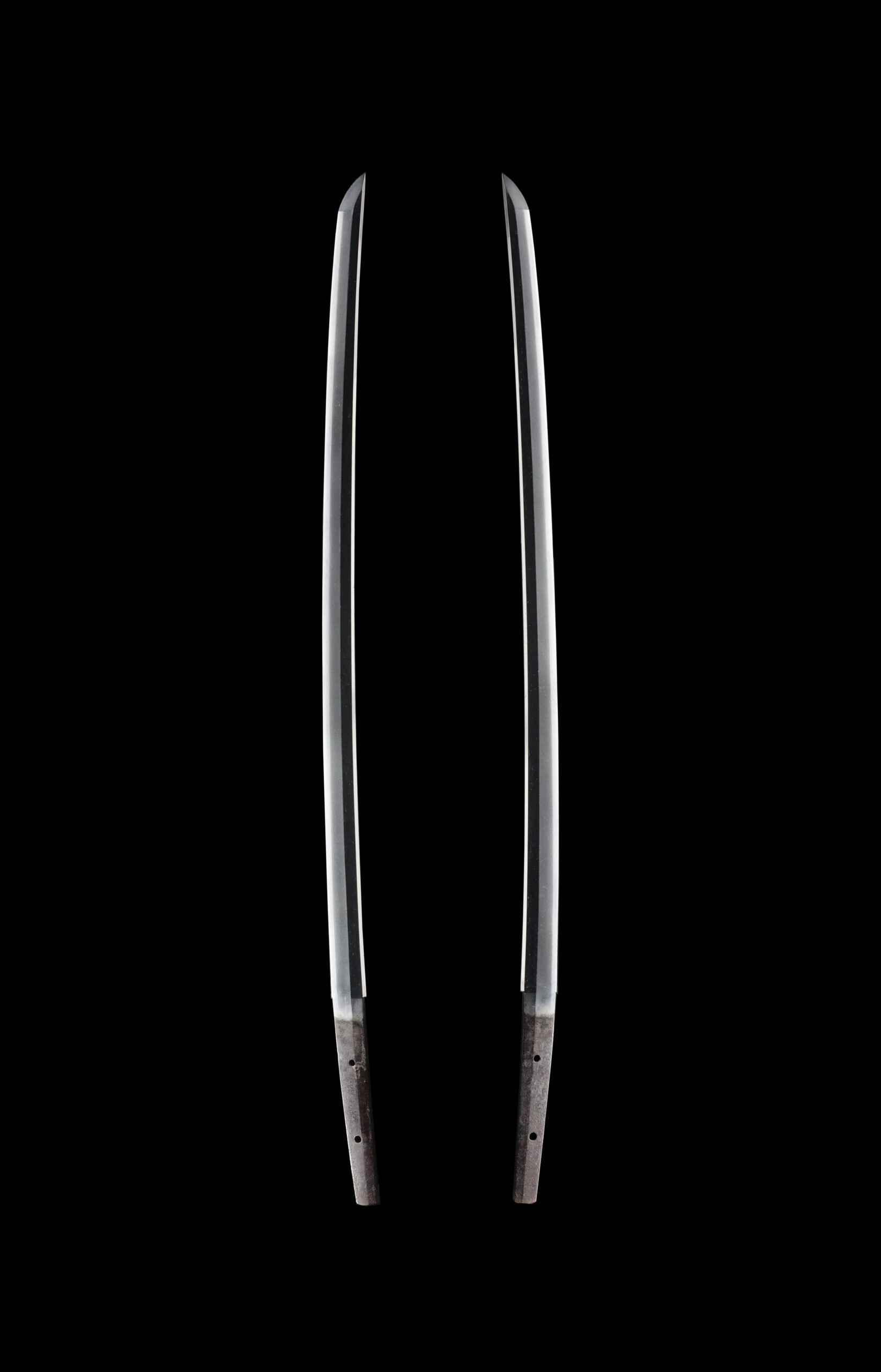
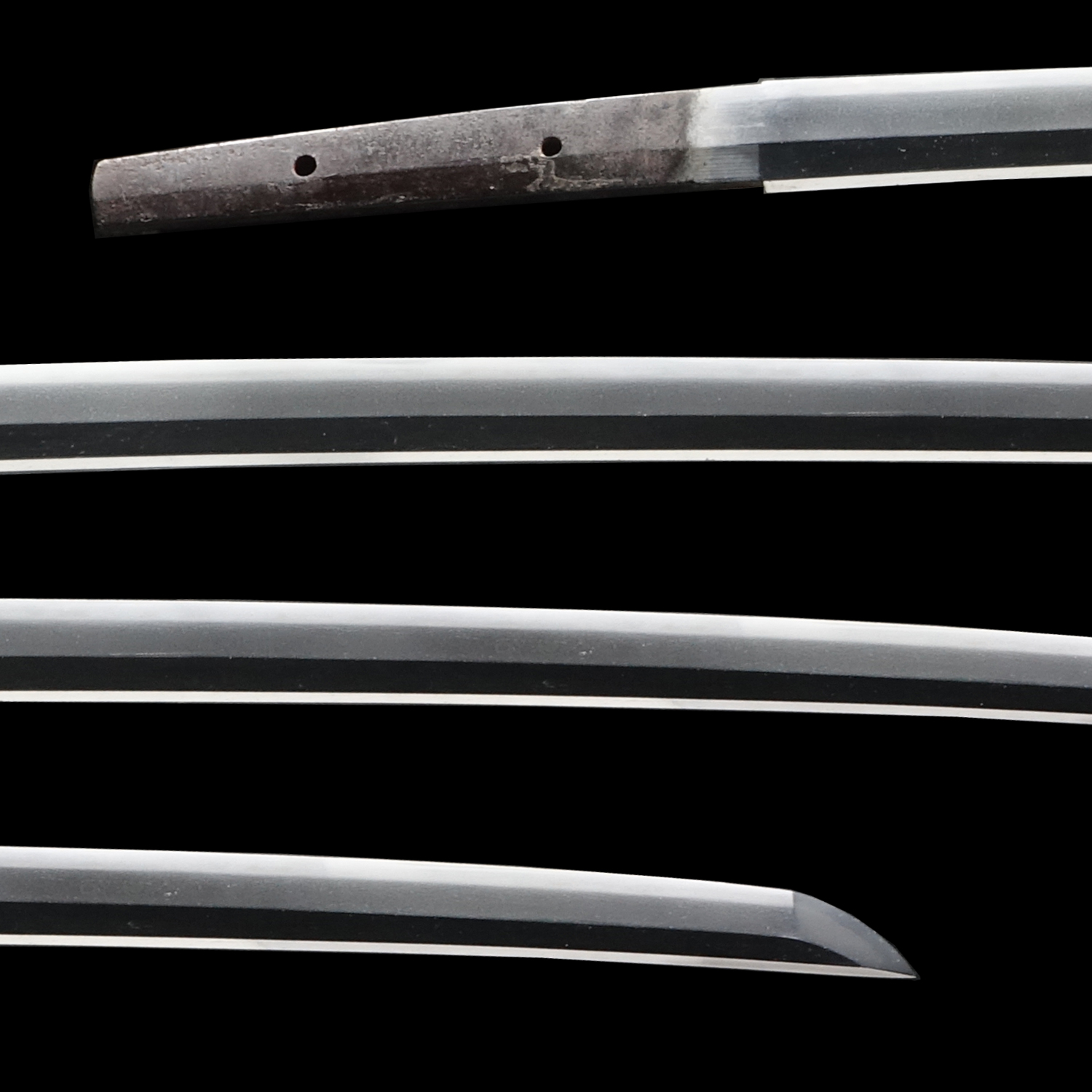
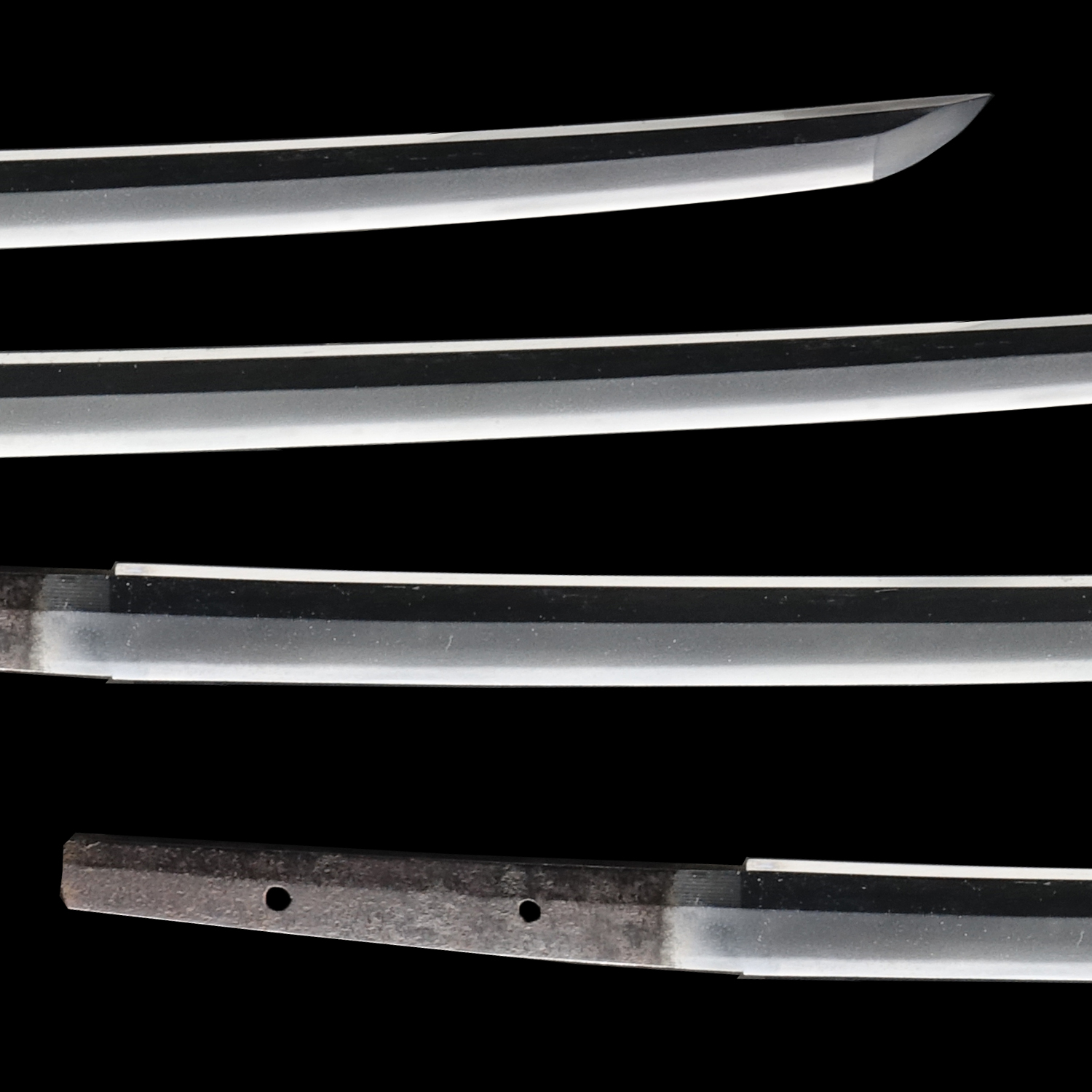
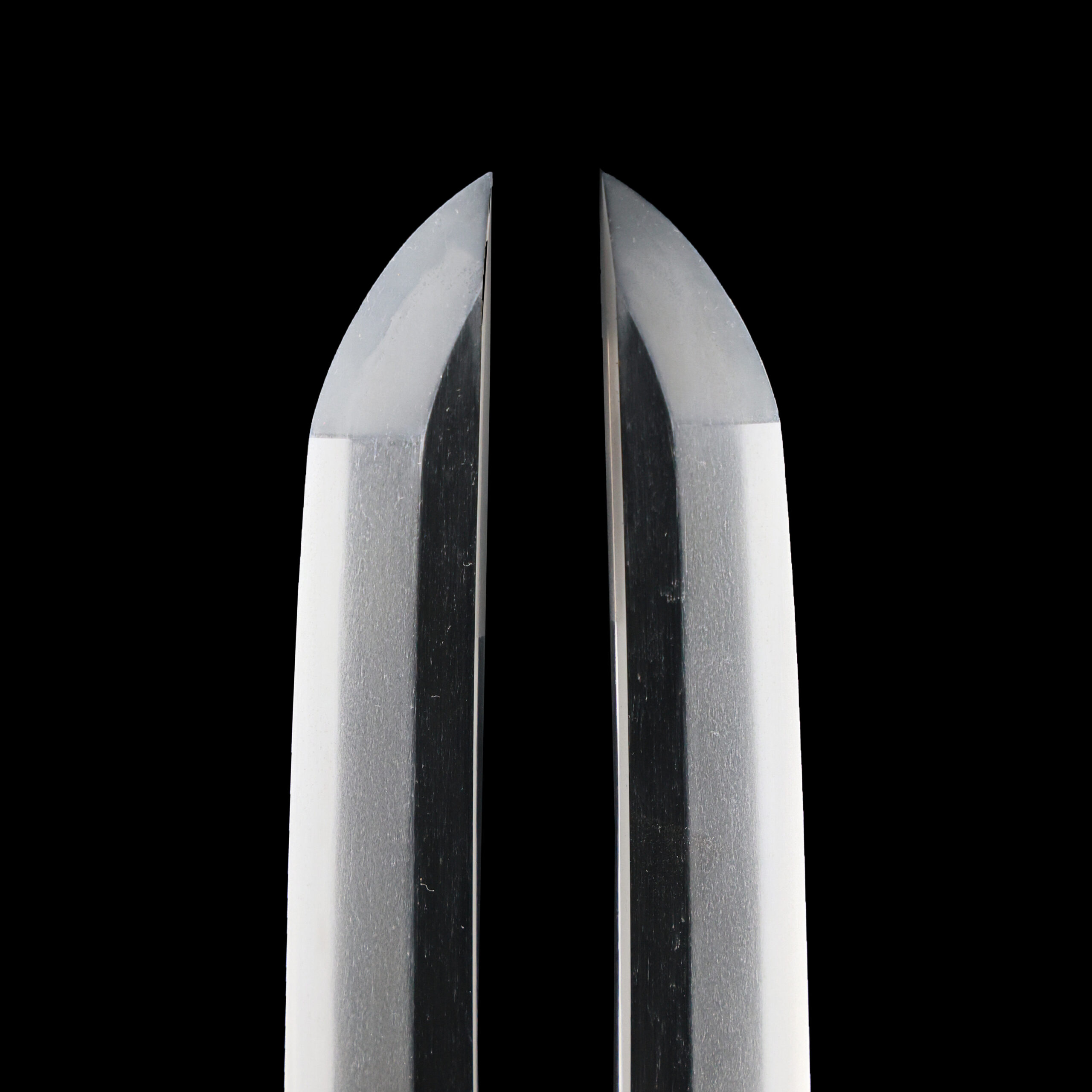
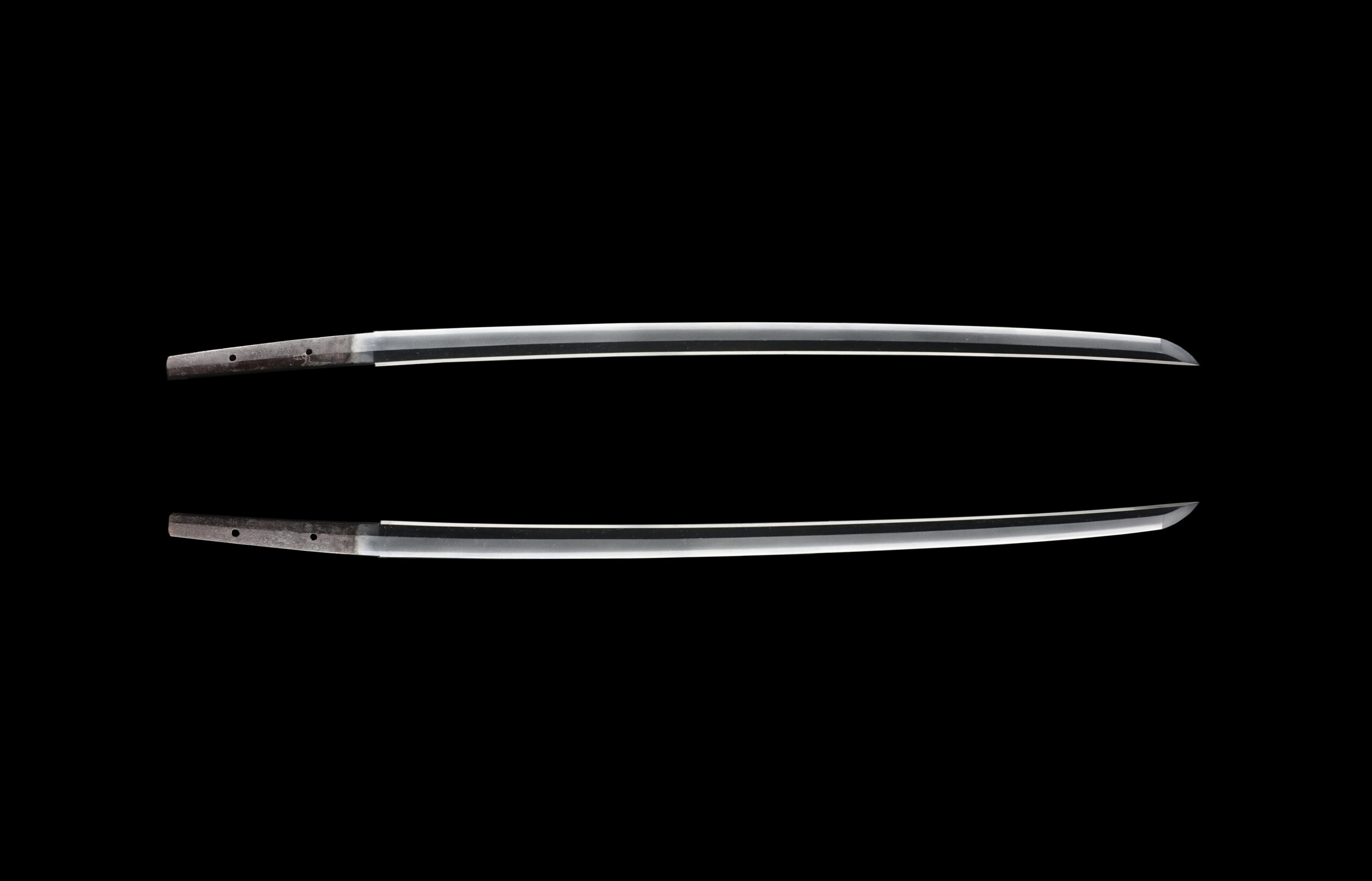
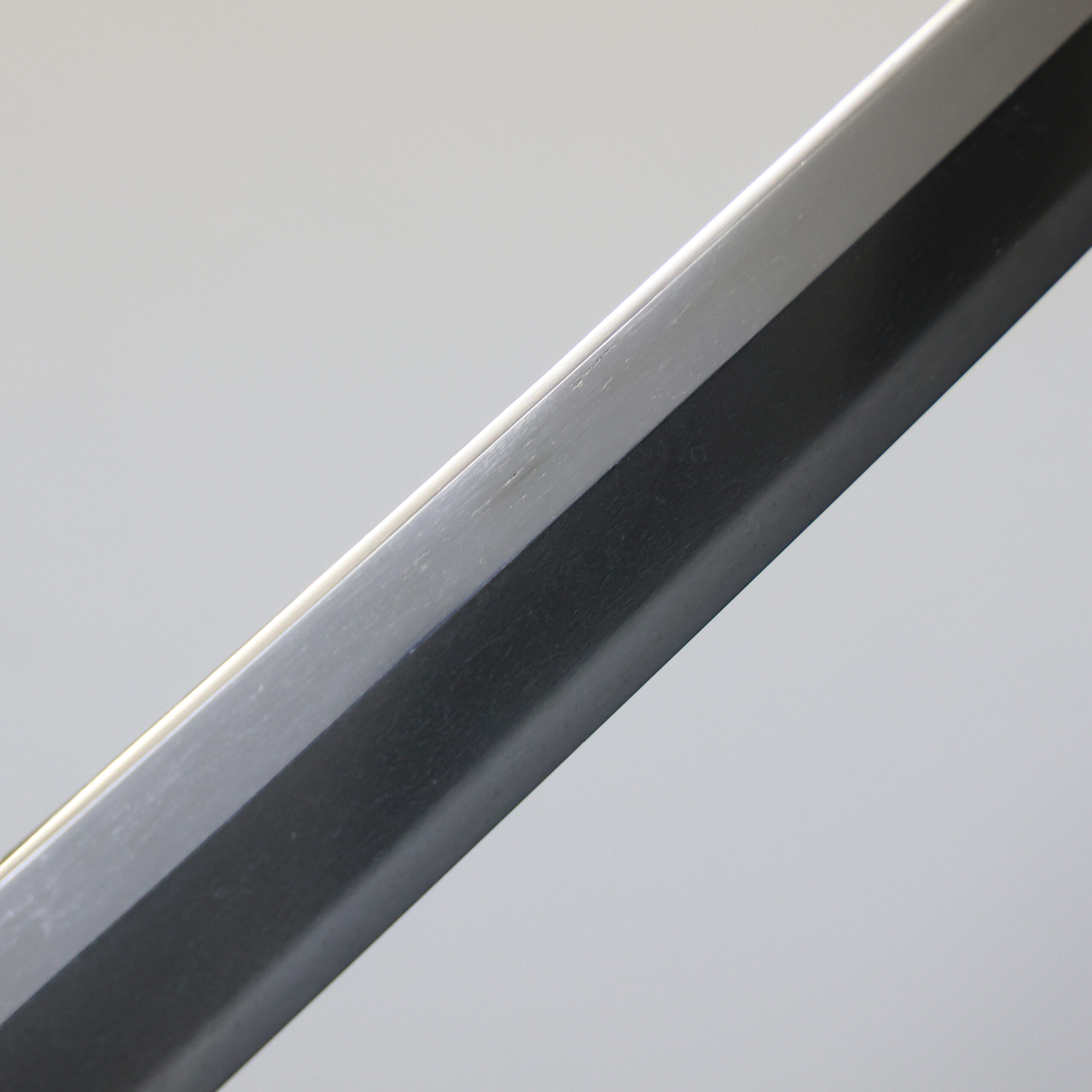
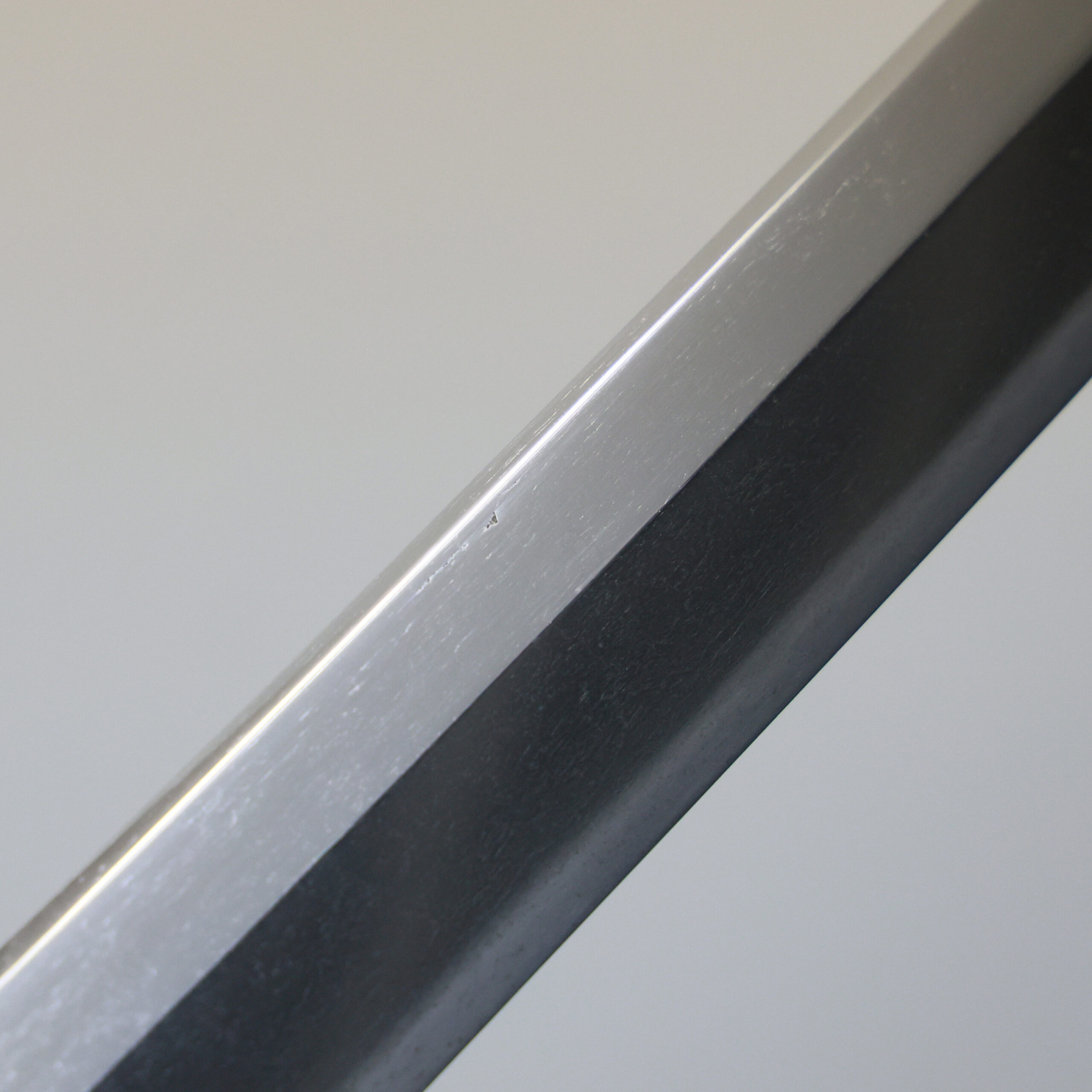
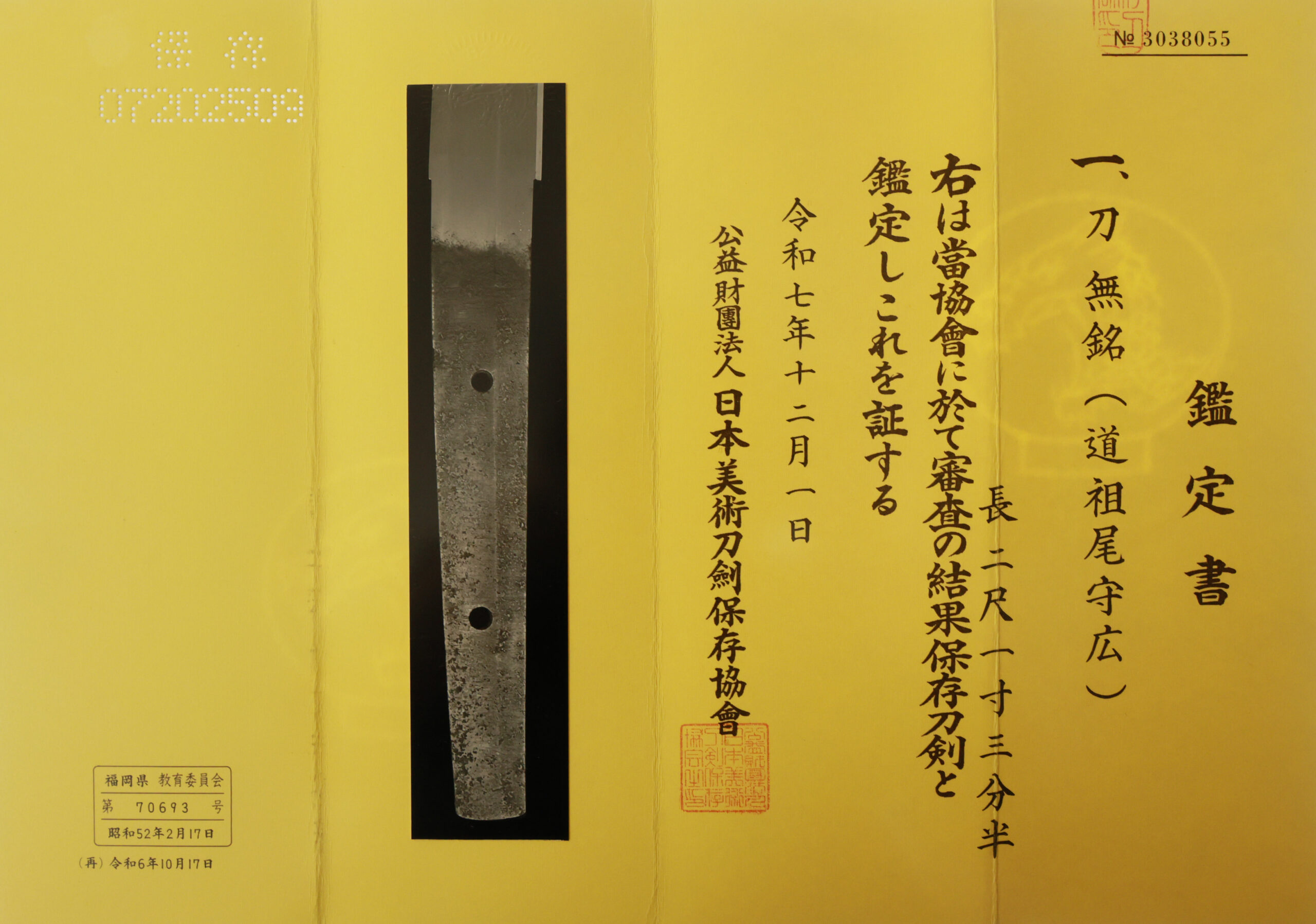
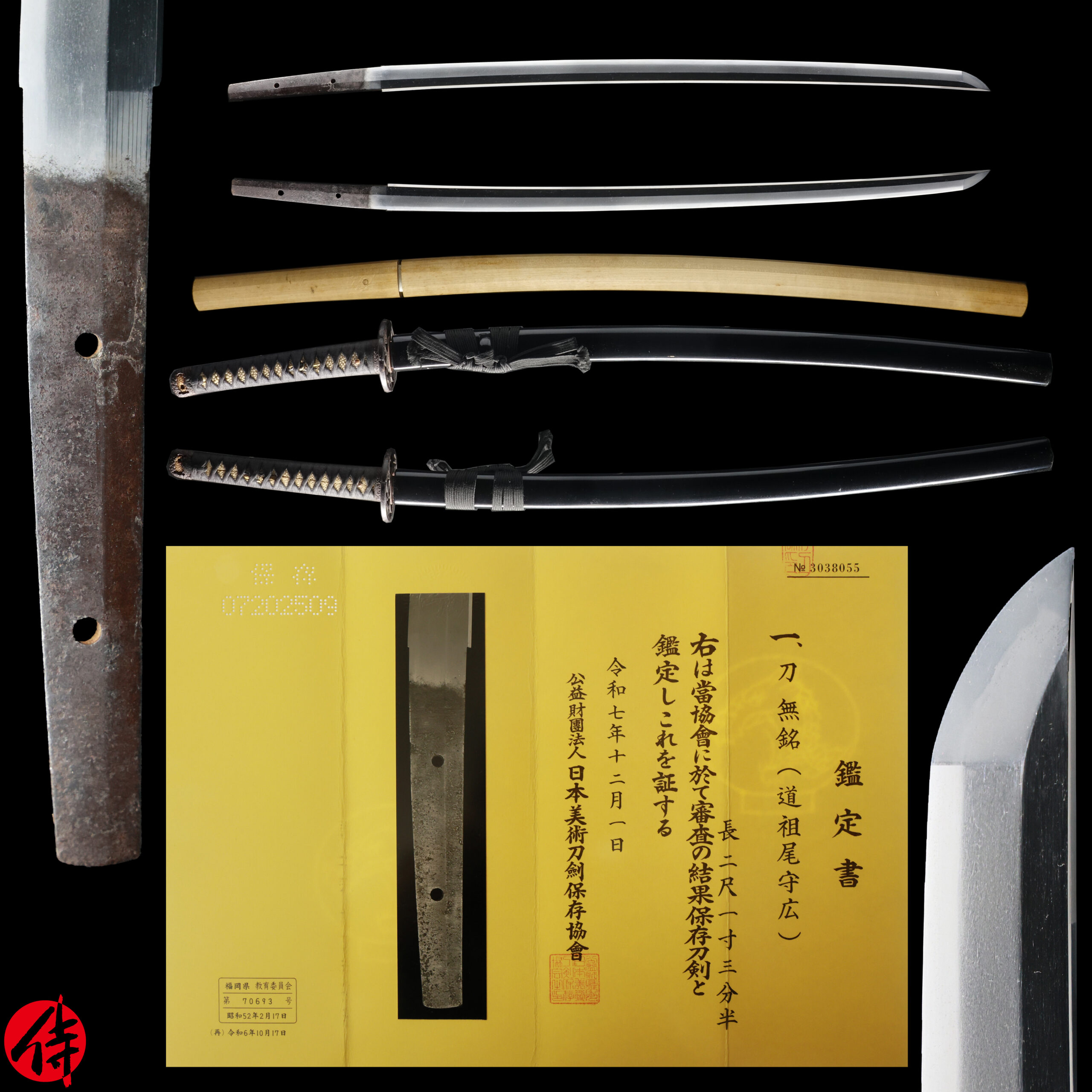
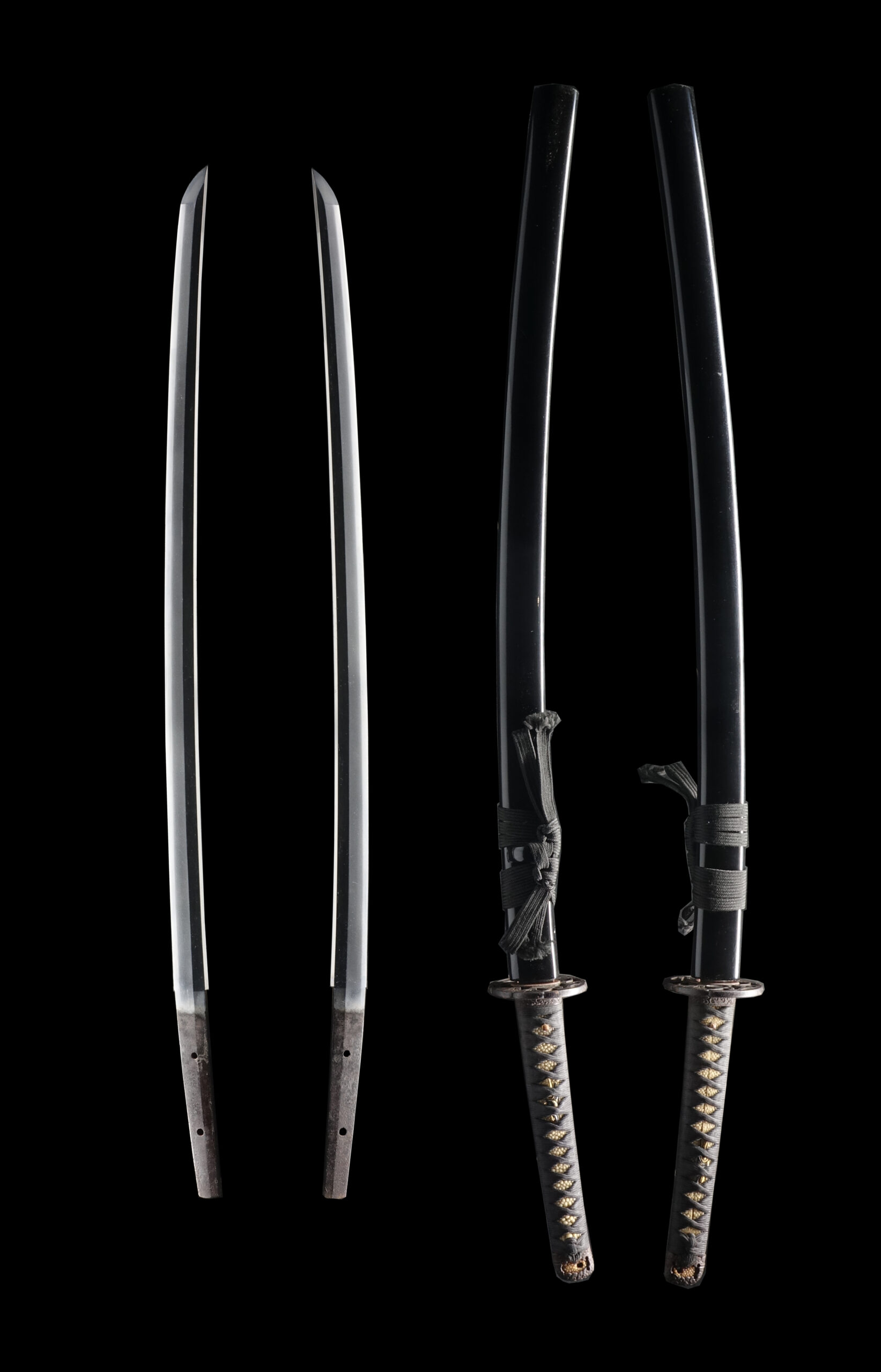
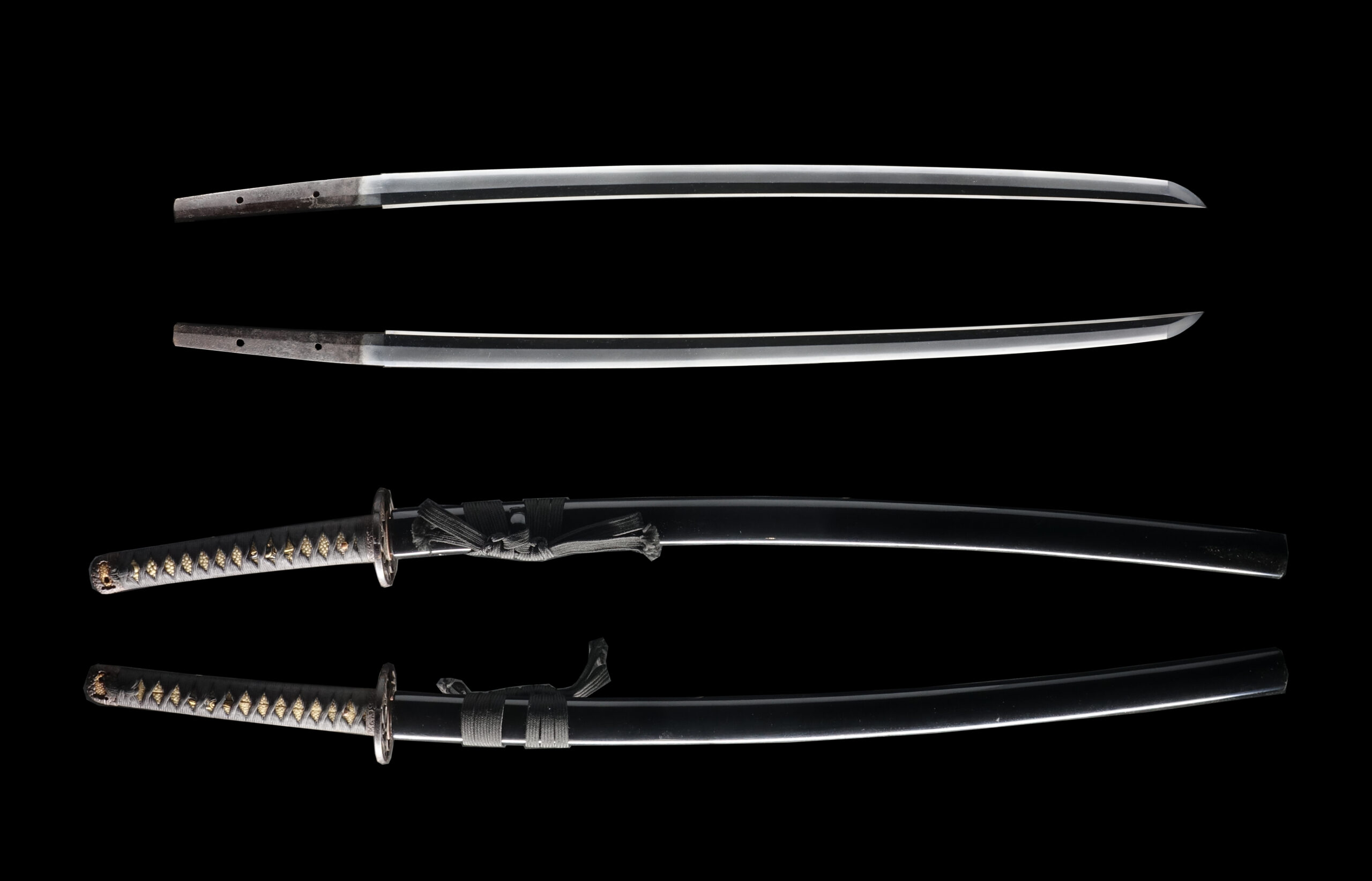
Where Ko-Hoki belongs to the dawn of the curved blade under Yasutsuna and the Ohara circle, Sue-Hoki names the province's late continuation, the smiths of Hoki who worked through the closing phase of the Muromachi period rather than its founding age. The setsumei gather this later body around a few documented lines. Chief among them is the Hiroyoshi (広賀) name, also read Hiroga and Hiroka, which the records first place around the Bunmei era (1469 to 1487) and carry on into the shinto period across several generations. That line is transmitted as descending from Tsunahiro of Sagami: the first Hiroyoshi is said to have gone down to Soshu Kamakura during the Tenbun era and, his study completed, returned home, after which the name divided into two houses, the Mita and the Doso. To these the commentary adds Yukikage of the Inaba ko-kaji (dated Choroku 2/1458) and Morihiro of the Sainoo group at Kurayoshi, placed around the Tensho era. The published sources rank Hiroga, with Wakasa Fuyuhiro, among the representative makers of the San'in region in this period. The setsumei describe a style that has moved away from the dark, open, archaic register of the Ohara masters toward the shared idiom of late-Muromachi production. The construction is the uchigatana of the age: shinogi-zukuri with sakizori and an extended chu-kissaki, the jigane a tightly forged ko-itame with ji-nie rather than the large, conspicuously standing itame of Yasutsuna.
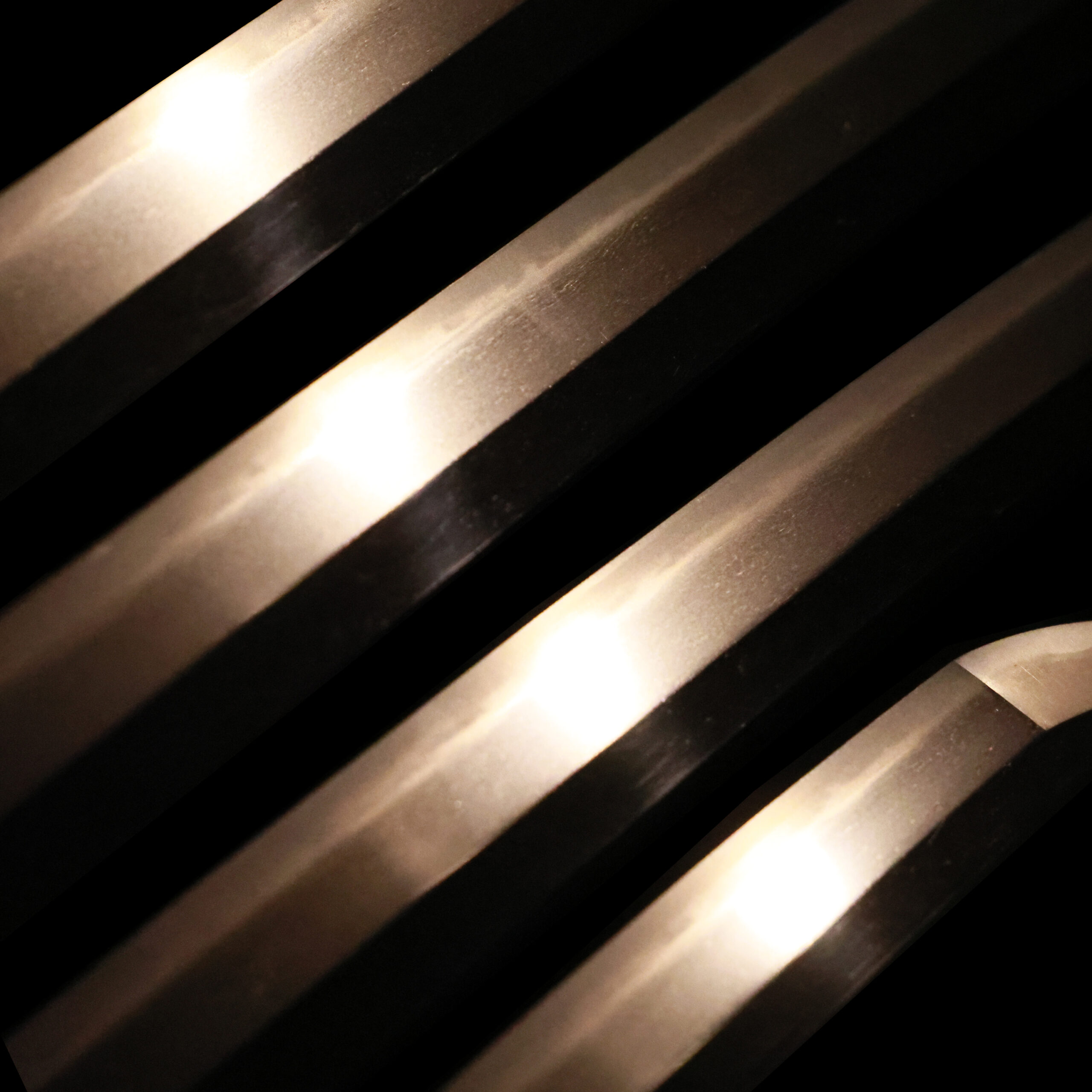
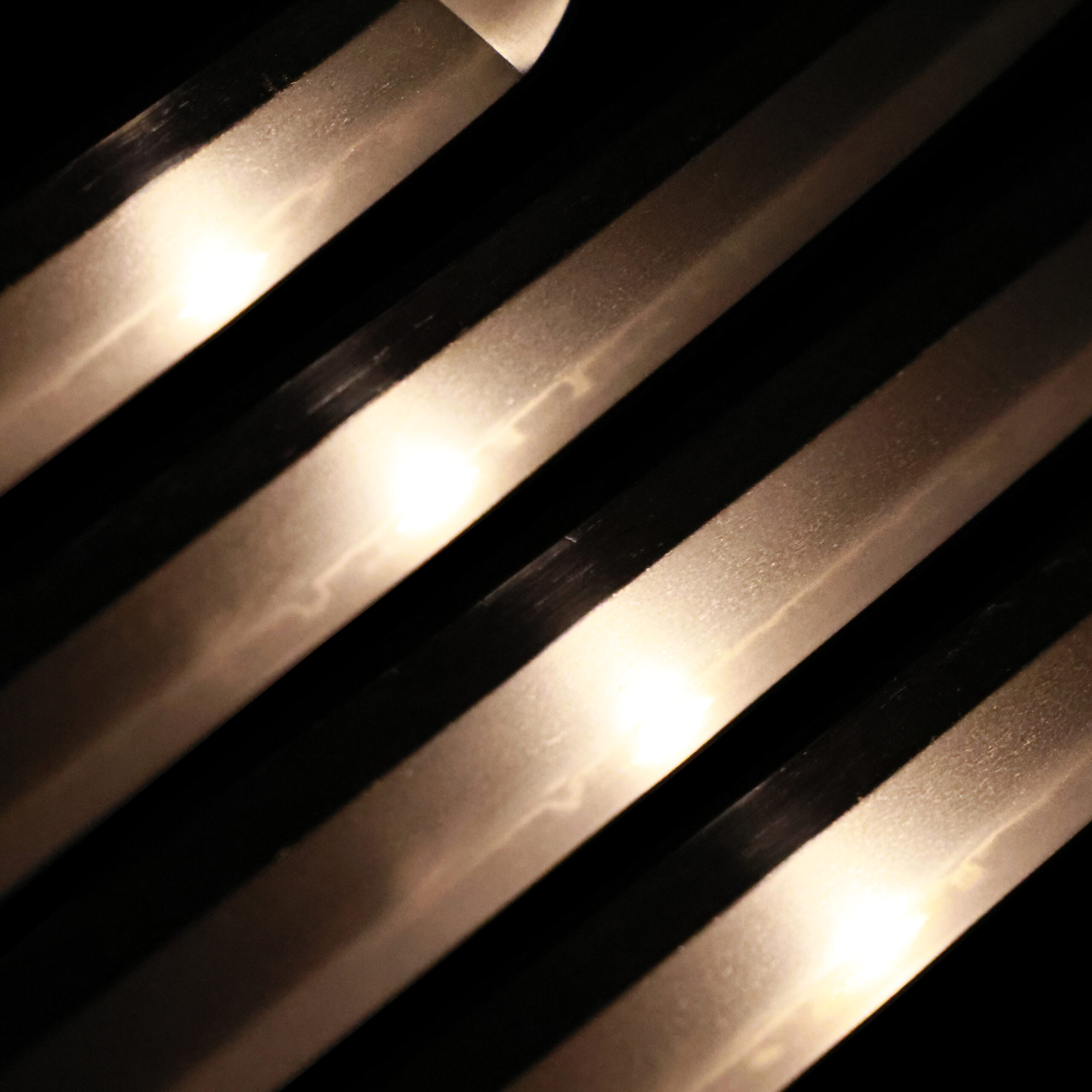
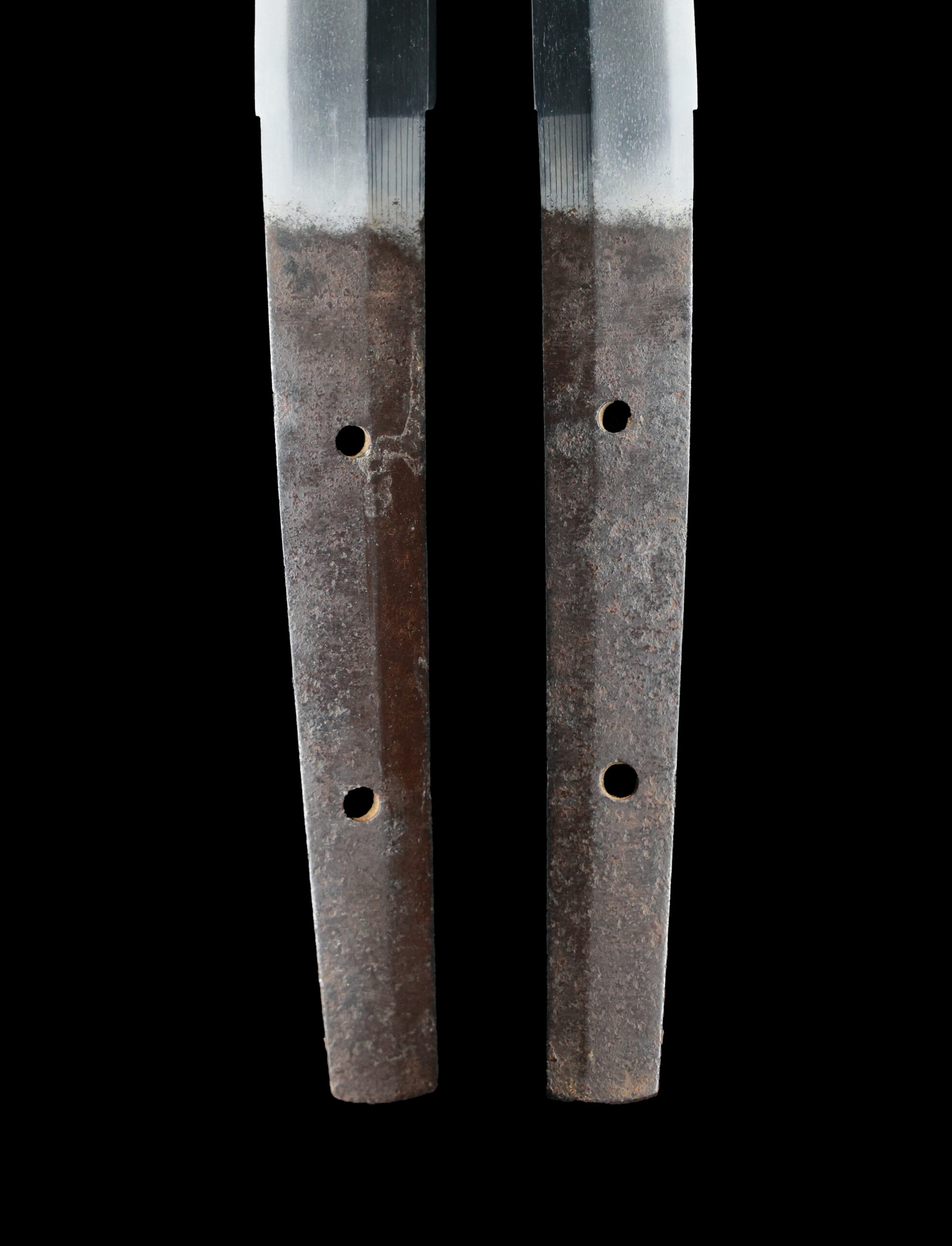
The records read the hamon as belonging to two manners. One is the late-Soshu approach, with large gunome-midare, tobiyaki developing into hitatsura, and thickly gathered nie; the other follows late Bizen. A suguha base mixed with gunome and choji recurs across the Hiroyoshi blades, and one tanto's explanation notes that the school specialized in gunome and hitatsura, so that a suguha work stood as a rarity. The setsumei place this output close in feeling to Sue-Bizen Kiyomitsu, Wakasa Fuyuhiro, and Bungo Munekage, situating Sue-Hoki within a standardized San'in current rather than the singular provincial vigor of the older phase. For kantei the commentary fixes the distinction differently than it does for Ko-Hoki. Where the ancient phase is held apart from old Bizen by its dark, open steel, the later Hoki blades are read against their late-Muromachi neighbors and against finer work: the Morihiro katana is described as approaching the impression of an old niji Kunitoshi and as a piece that might be mistaken for a superior (joko) smith's hand. The signing habits anchor identity, the long mei giving residence and the Mita or Doso house, with dated examples from Tenbun through Eiroku and into the Tensho era. Provenance is recorded at the modest scale of the working blade: one Eiroku 8 katana was made for a patron of Banshu Hiroto and long dedicated to Hiroto Shrine, the roughened nakago attributed to its years in that keeping. Learn more →

 NihontoWatch