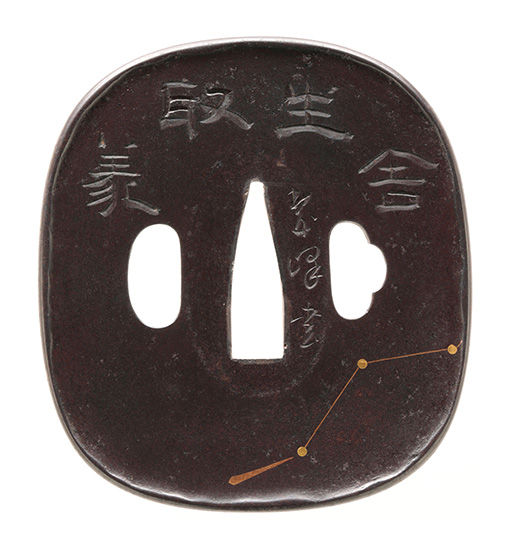
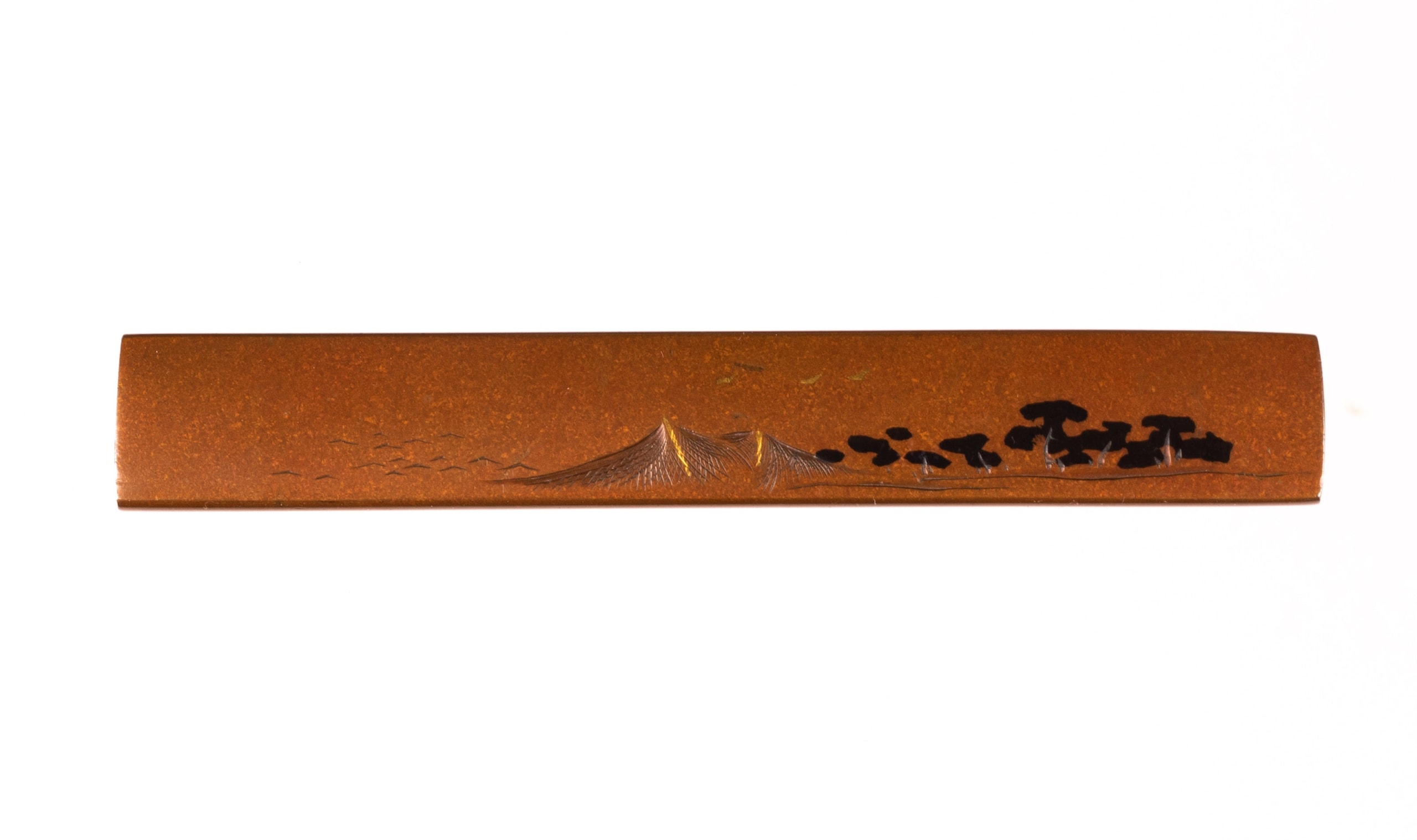
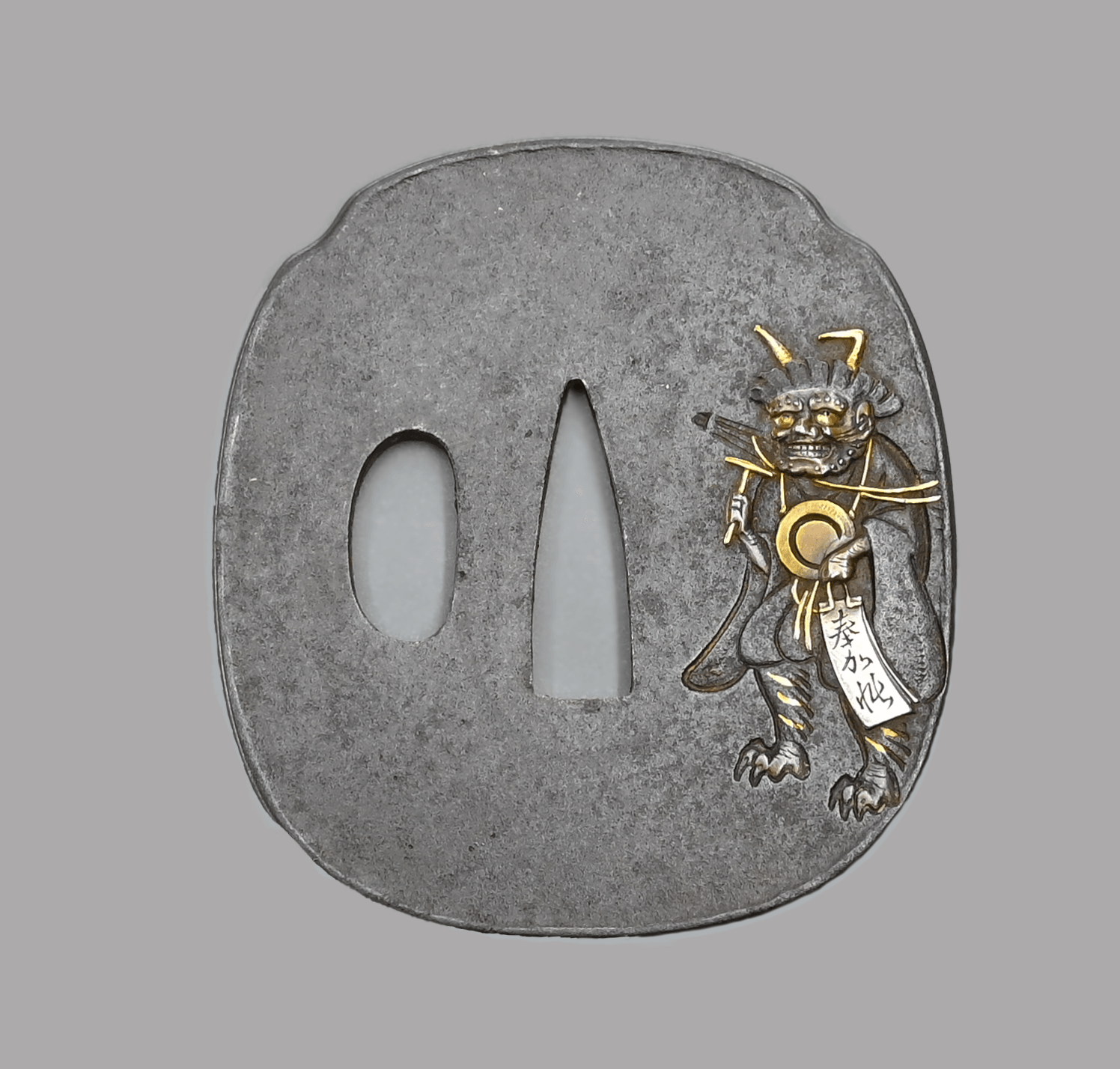
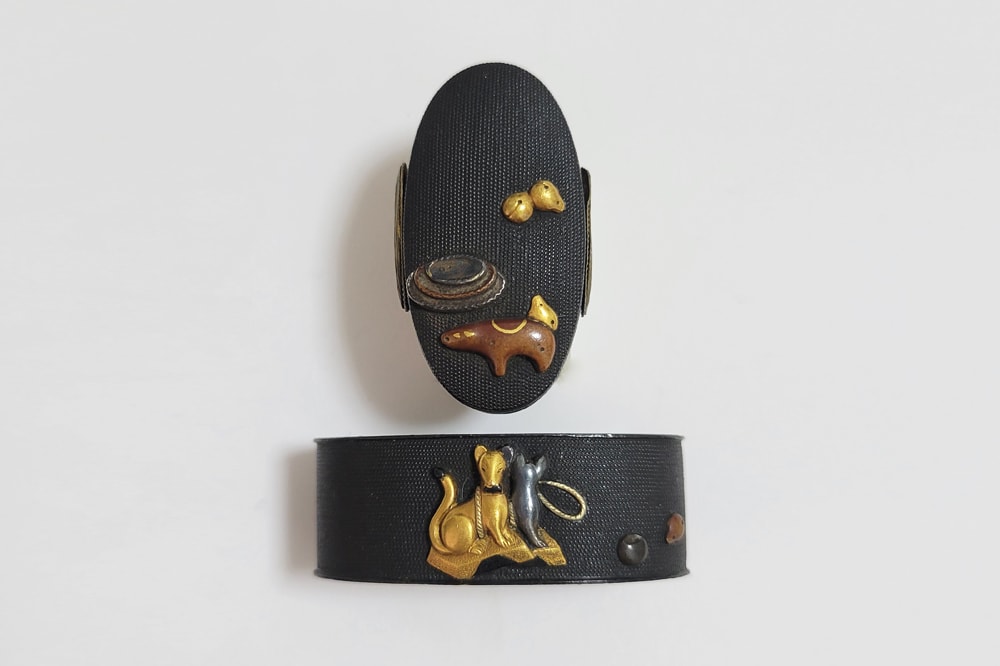
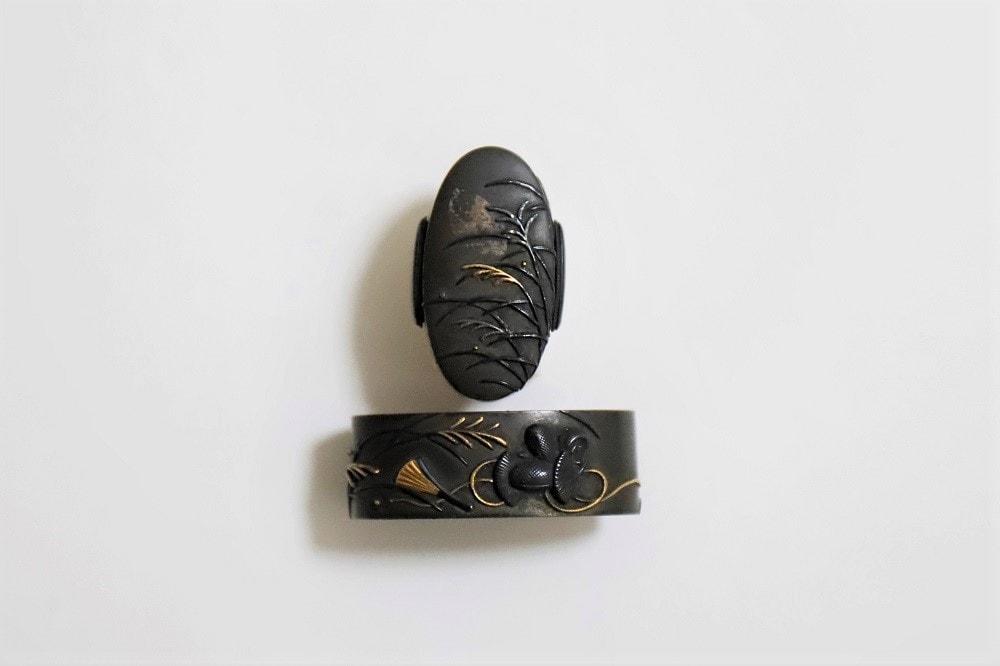
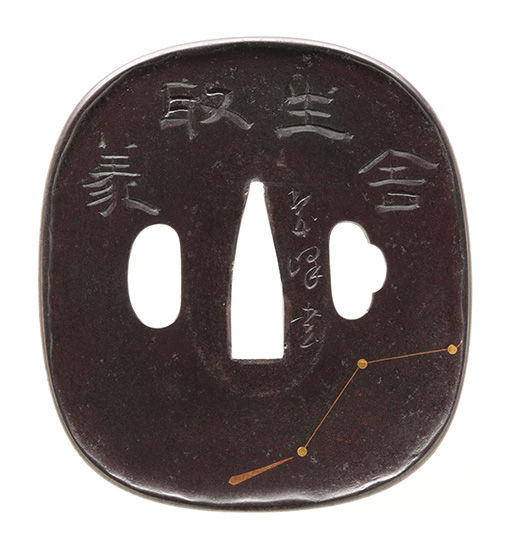
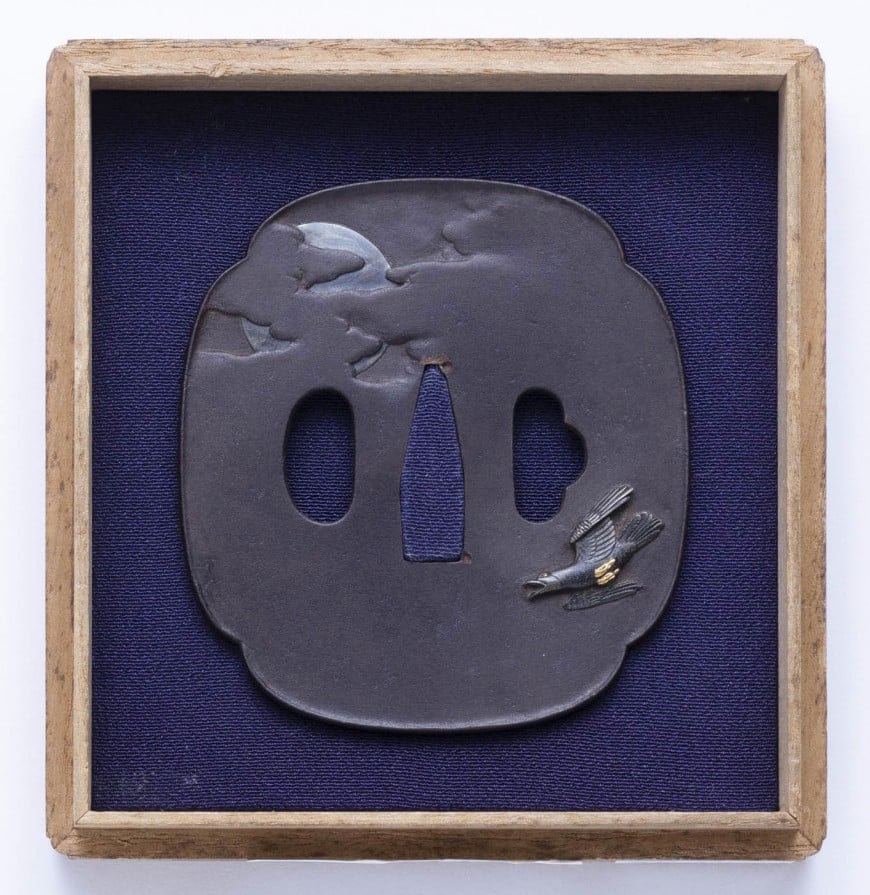
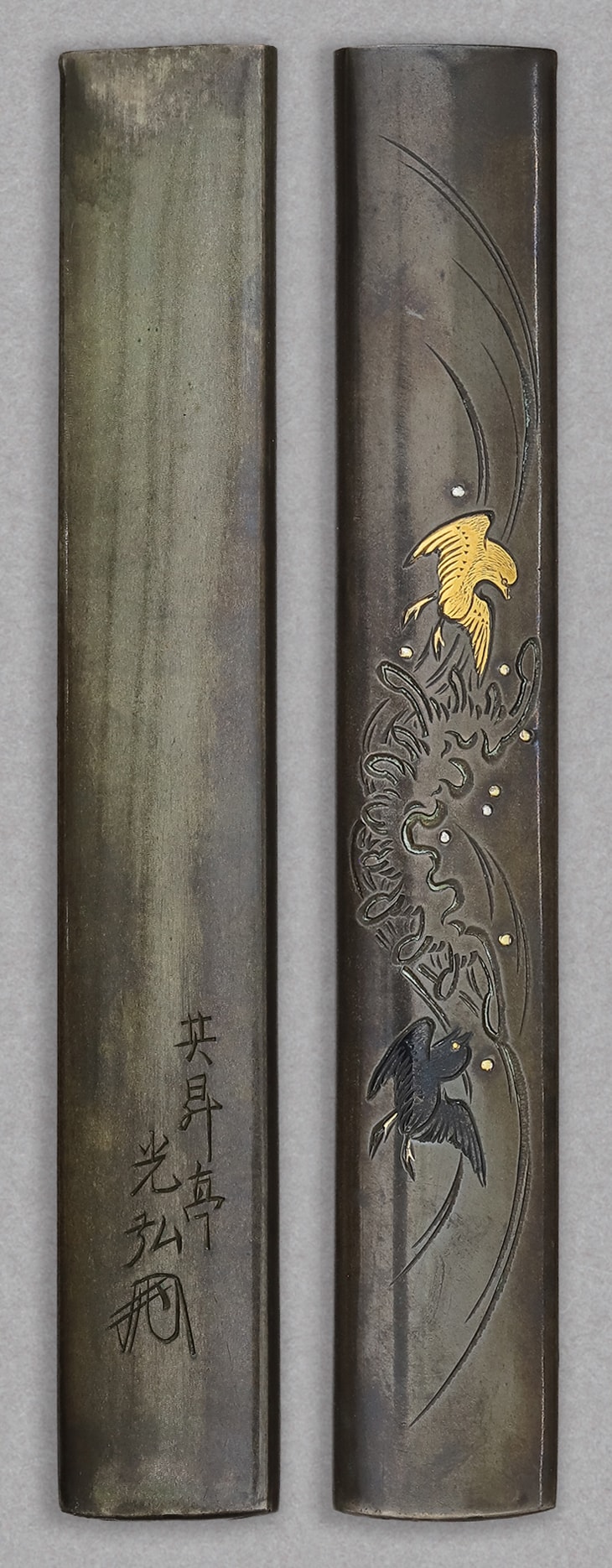
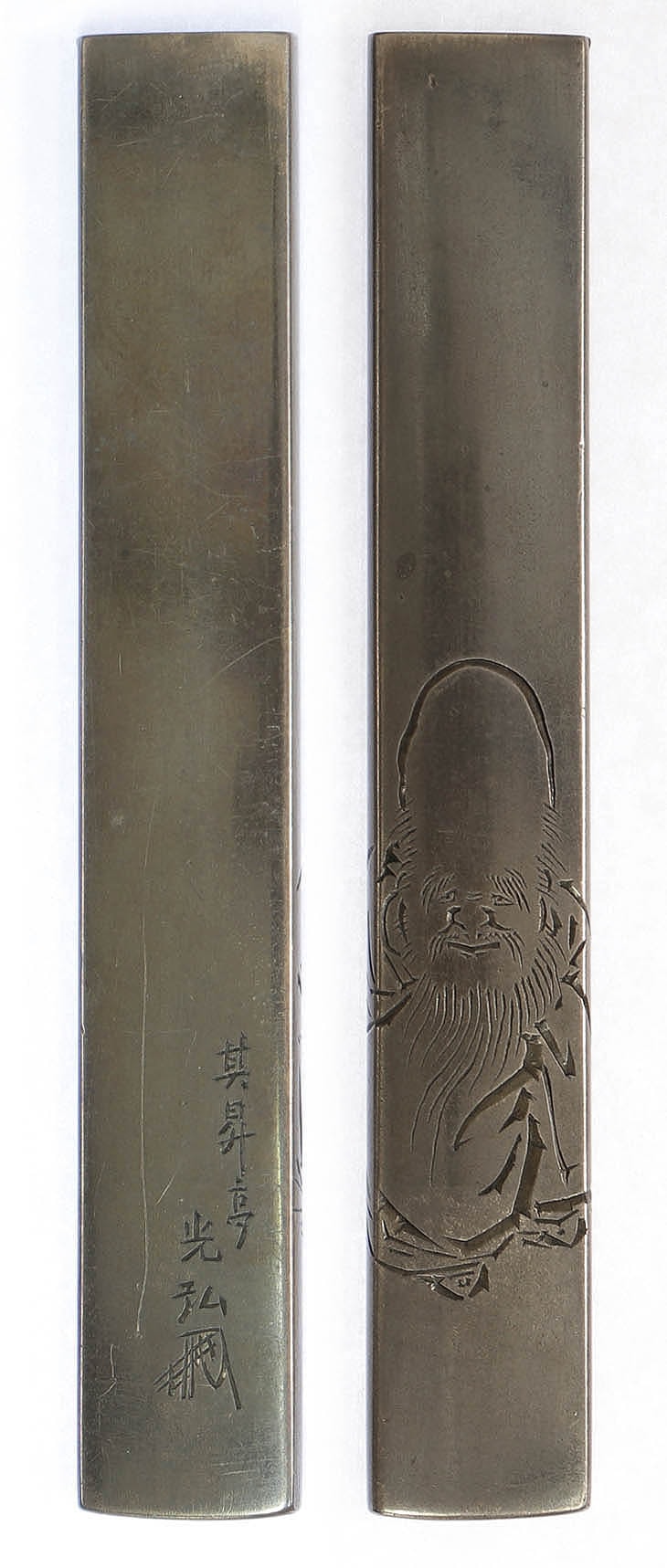
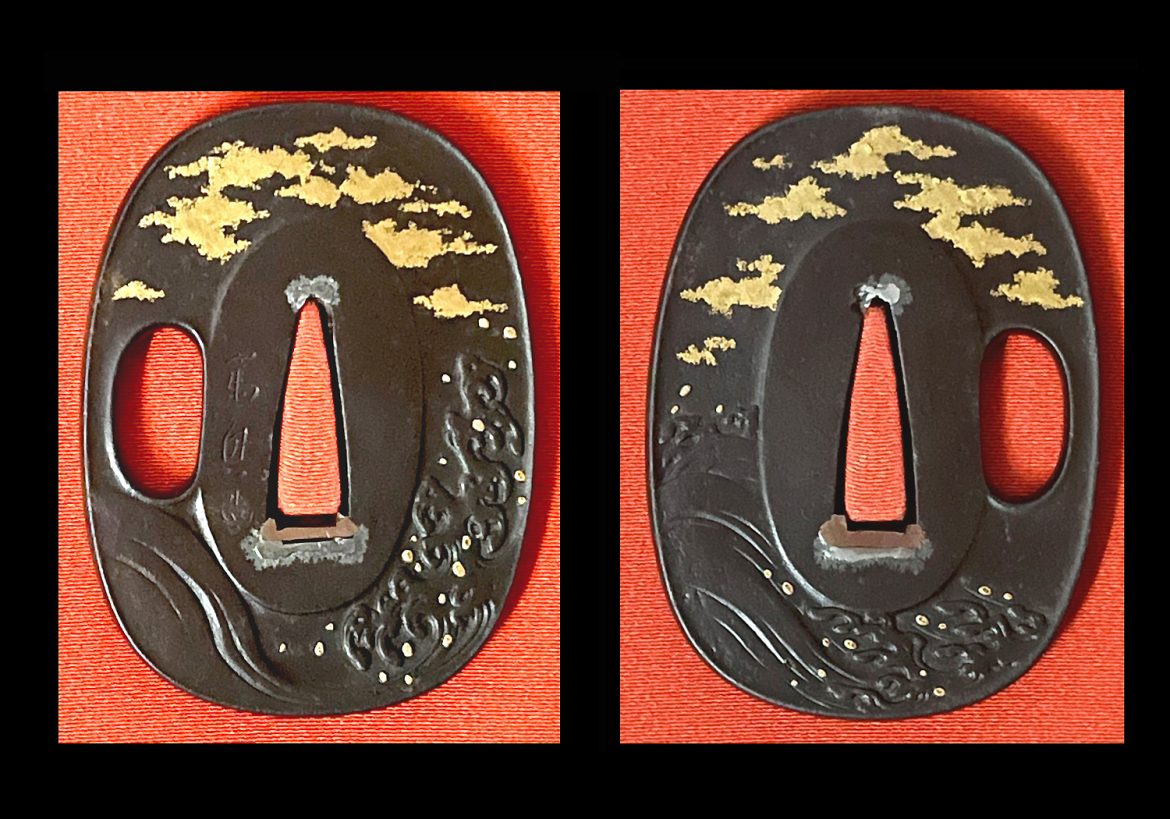
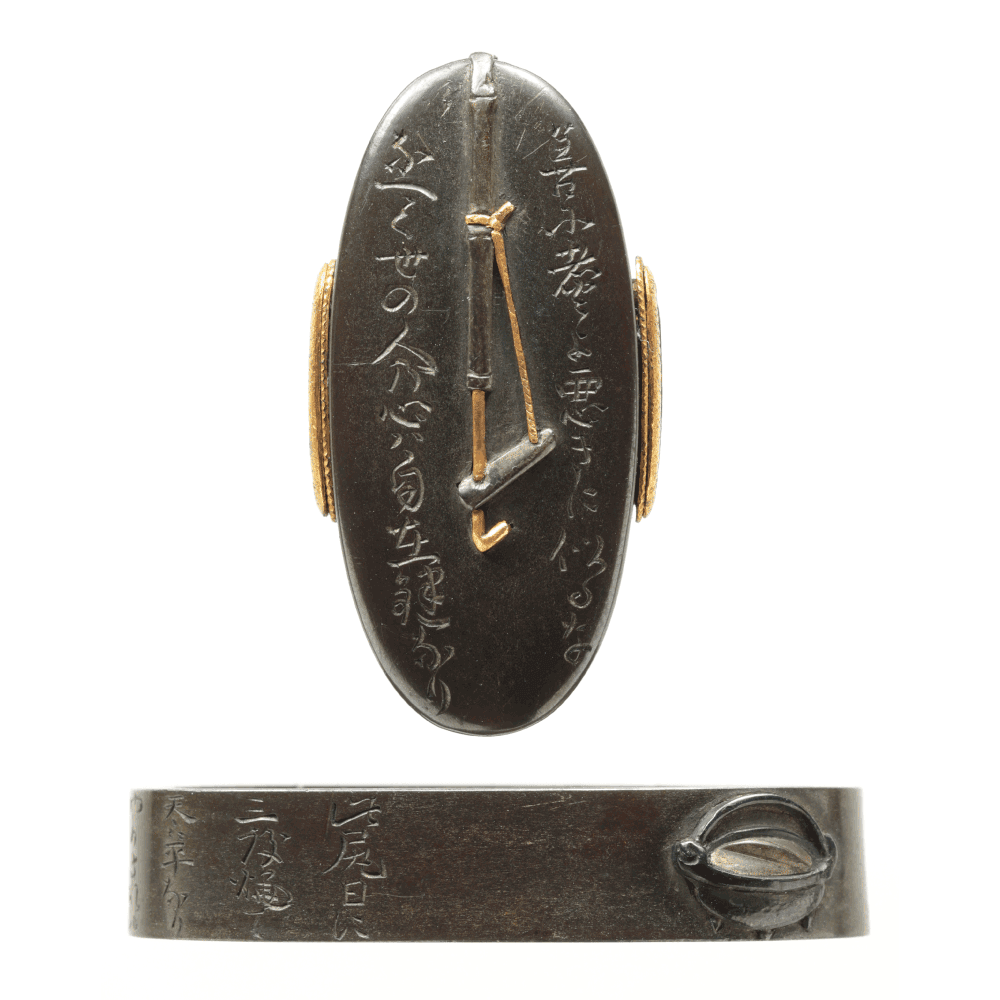
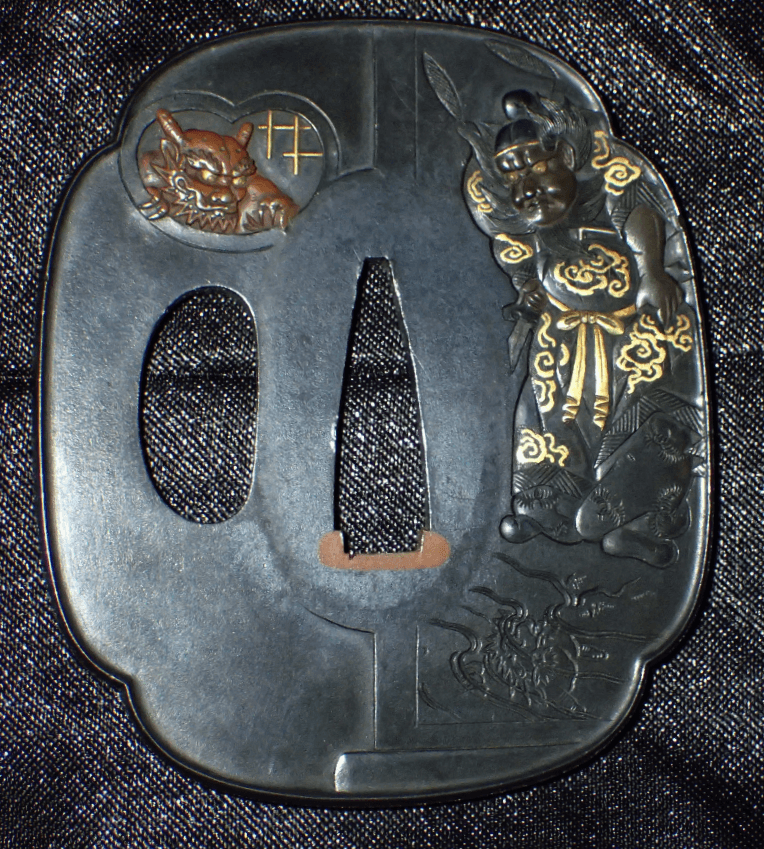
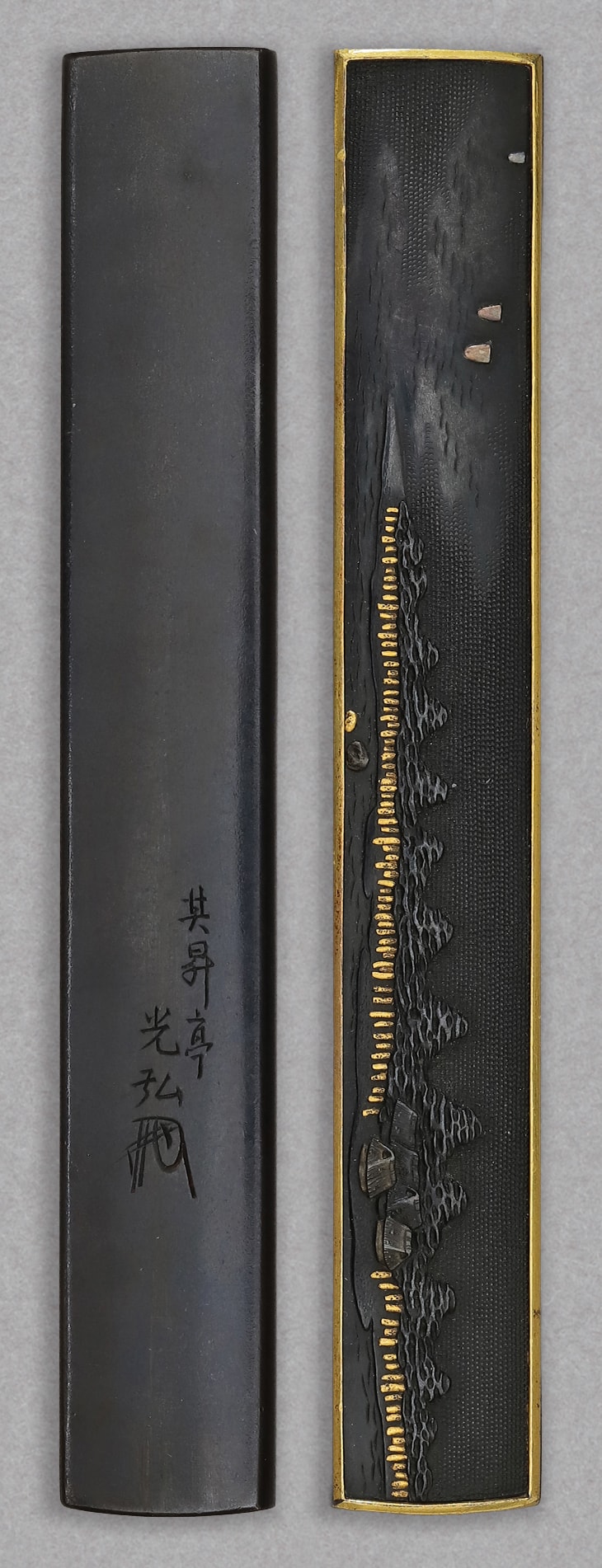
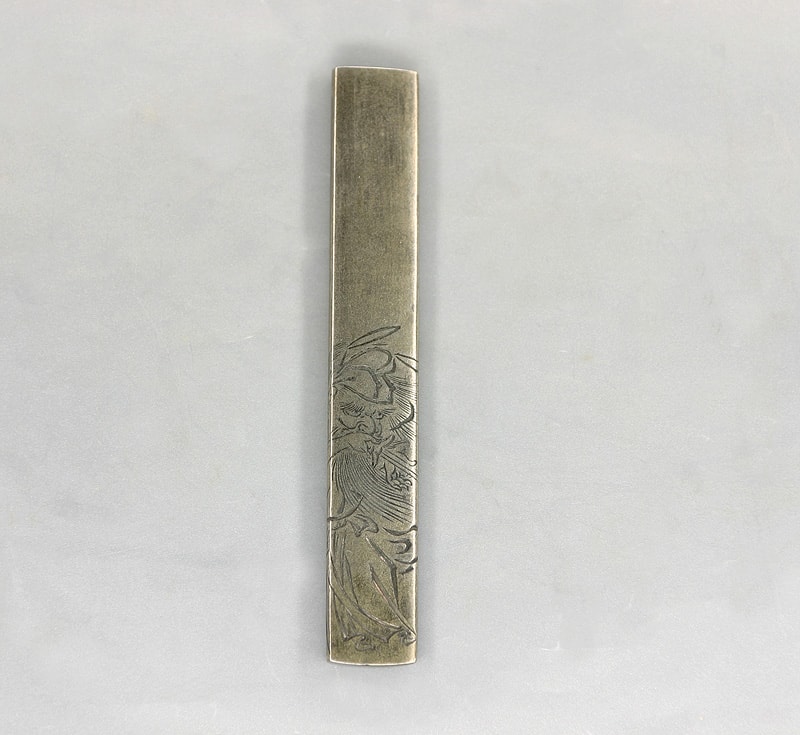
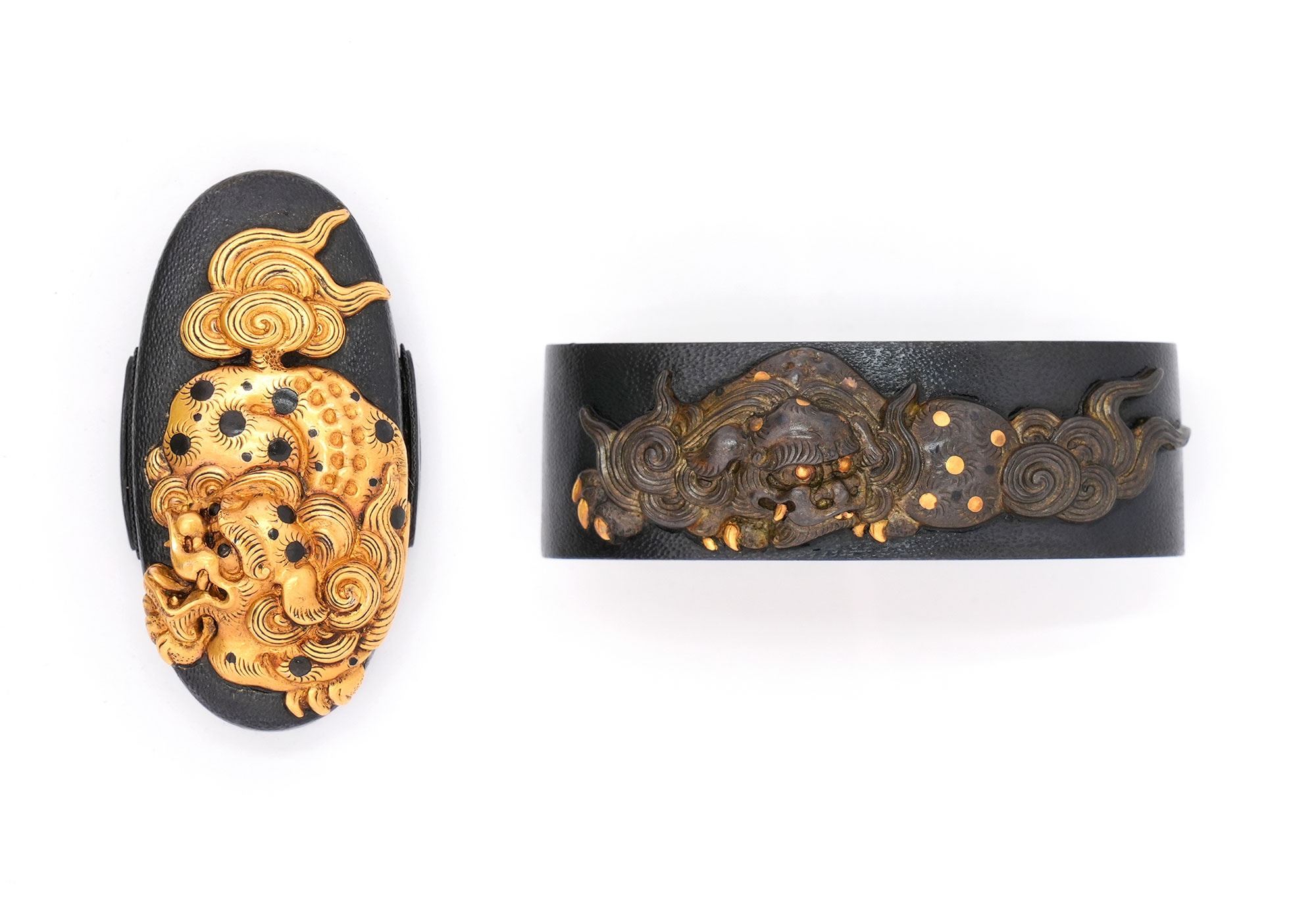
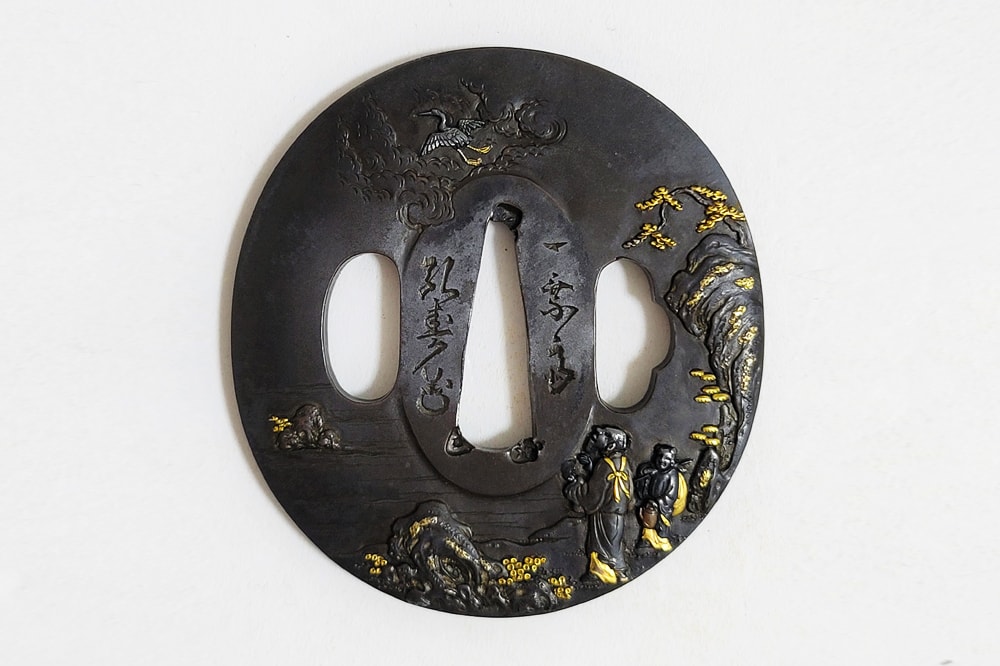
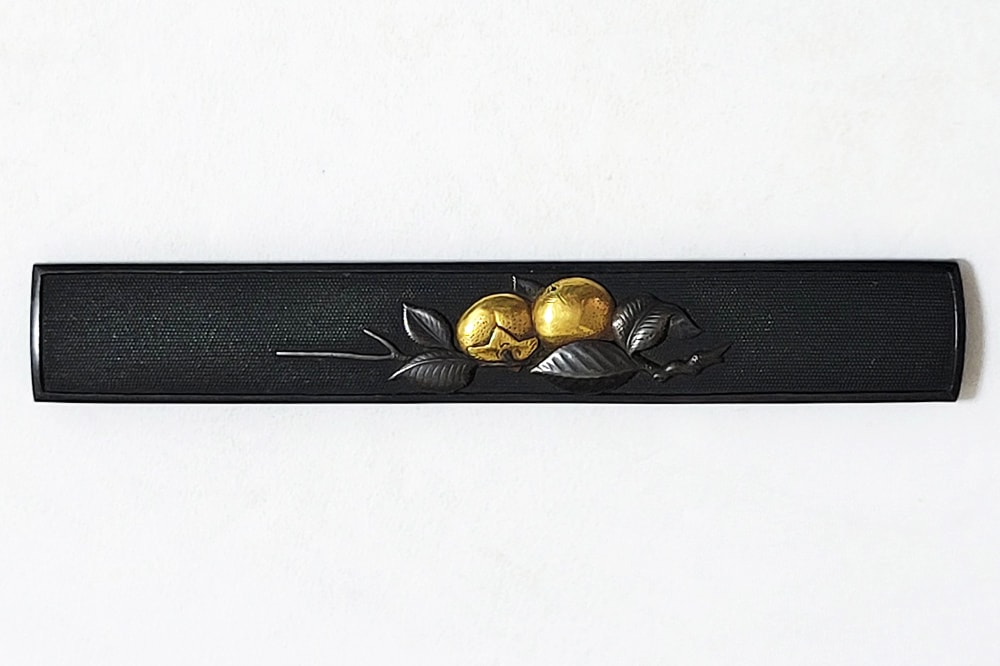
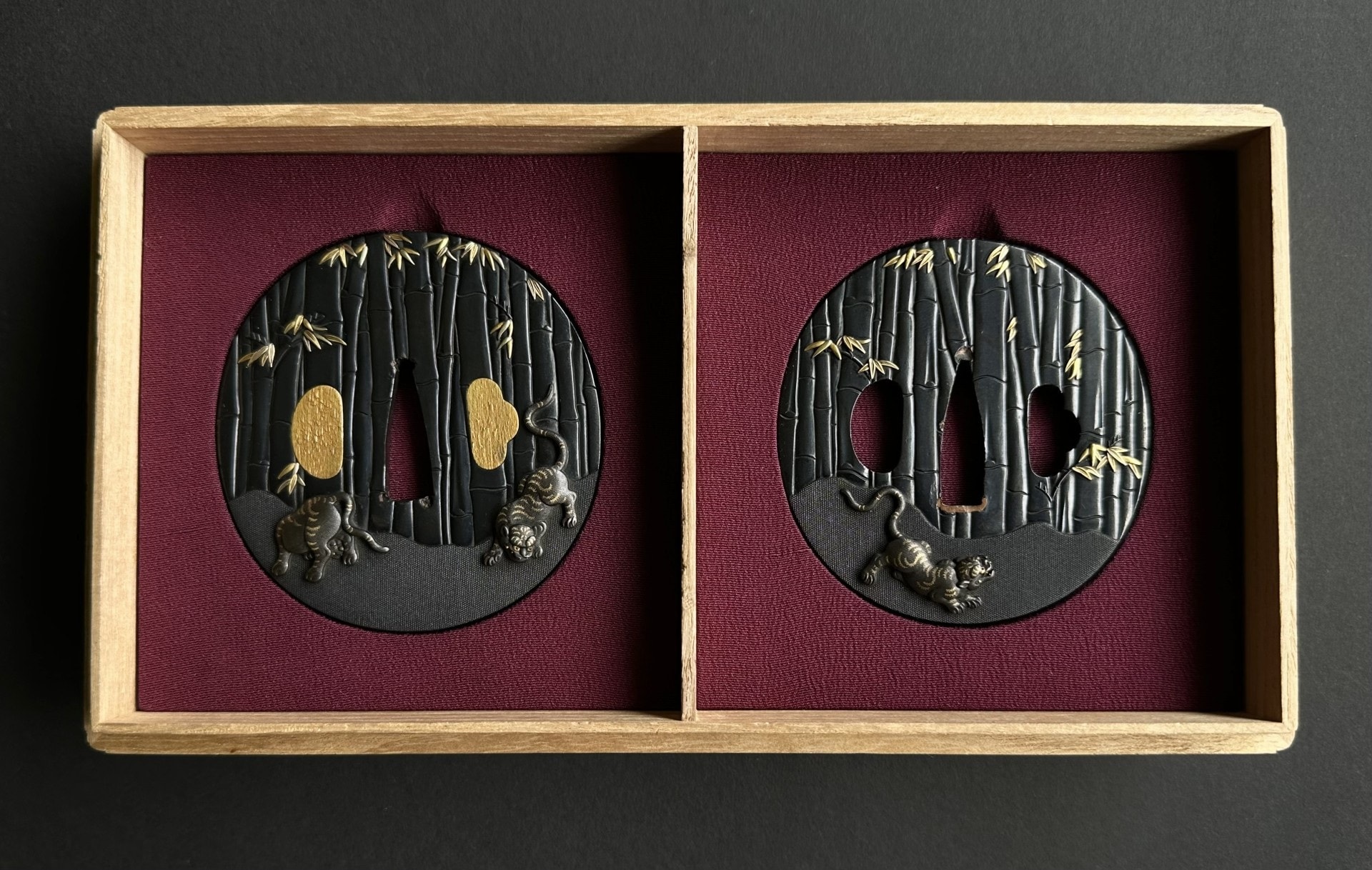
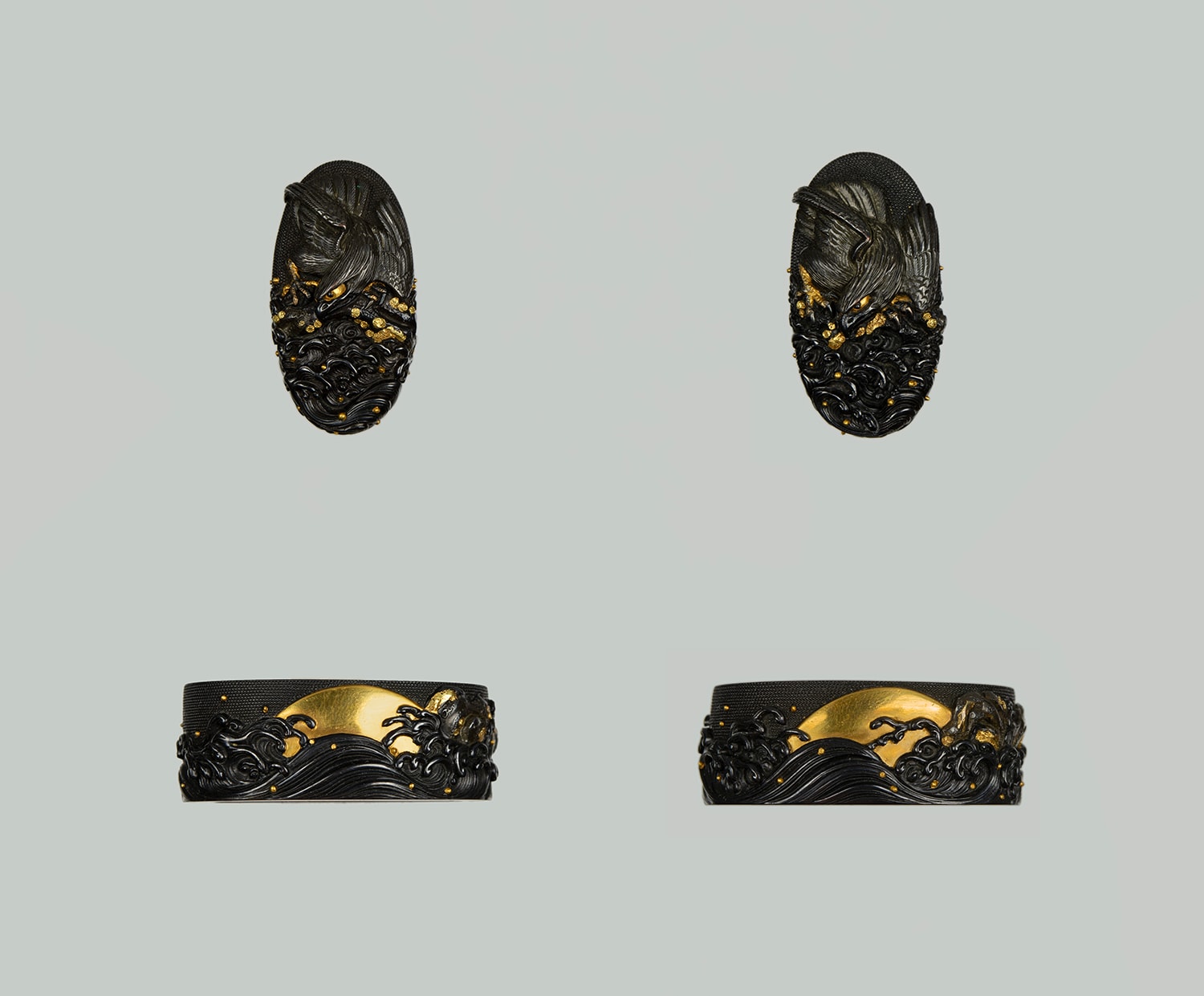
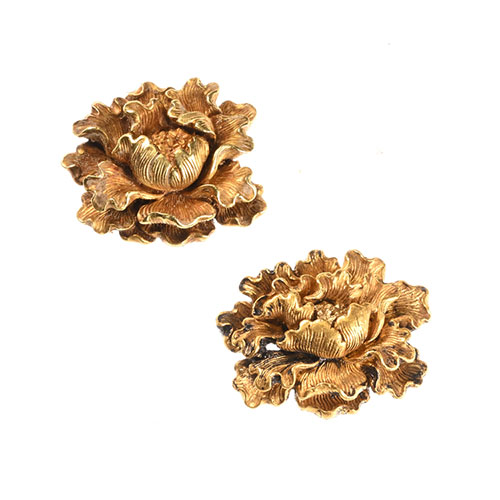
This is a pair of menuki featuring a single peony design, crafted by Motohiro (仲上元広) of Yamashiro province. Motohiro, a student of Ohtsuki Mitsuoki, was known for his magnificent works utilizing gold and silver iroe in the takanikubori style. These menuki are made of solid gold (kinmuku) and date from the late Edo period.
 NihontoWatch
mei · Edo

Otsuki School
Edo
Yamashiro
Signed
Tokuho (NBTHK)
Machibori · Yamashiro
23 pieces on the market now
The Otsuki school is a distinguished lineage of Kyoto kinko (metalworkers) whose production spans from the mid-Edo period through the Bakumatsu era, consistently identified by the NBTHK as one of the most eminent metalworking lineages of the capital. " The school also acknowledged its debt to earlier Kyoto masters, with the NBTHK detecting in Mitsuoki's modeling the influence of Umetada Myoju and in his pictorial conception the influence of Kaneie. The collective technical vocabulary of the Otsuki school centers on takabori iroe (high-relief carving with polychrome metalwork), deployed with a fundamentally pictorial intelligence that distinguishes it from most other metalworking lineages. Across multiple generations, Otsuki artists worked in katakiribori (single-chisel engraving), hira-zogan (flat inlay), sukidashi-bori (relief modeling from the plate), and fine kebori (hairline engraving), often combining several techniques within a single composition. A defining characteristic is the school's command of varied ground materials -- iron, shakudo, shibuichi, oborogin, brass, and even solid gold -- finished as migaki-ji (polished), nanako-ji (fish-roe stipple), arashi-ji, or ishime-ji, each selected to serve the pictorial demands of the subject. " In subsequent generations, Atsuoki demonstrated daring compositional arrangements while maintaining an unmistakably Kyoto refinement, and Hidekuni achieved effects of "keen sharpness and driving momentum" through masterful deployment of irogane alloys.
Across the school's output, compositions characteristically make effective use of generous open space to achieve atmospheric depth, narrative pull, and a lyric quality that the NBTHK repeatedly identifies as distinctively Otsuki. The Otsuki school's legacy rests on its fusion of painter's sensibility with metalworker's discipline, producing works of a character at once bold and subtly graceful. " Atsuoki's commissions for both the Tokugawa shogunate and the imperial household -- including fittings for the wearing sword of the fourteenth shogun Tokugawa Iemochi and for Emperor Komei -- attest to the esteem in which the school was held at the highest levels of patronage. Hidekuni's later works exhibit "an airy and unconventional spirit" emblematic of Mitsuoki's own late manner, confirming that the school's aesthetic evolution was one of deepening refinement rather than mere technical inheritance. The NBTHK consistently positions the Otsuki school among Kyoto's most eminent metalworking traditions, and its members' works -- from Motohiro's ambitious narrative programs treating the Fifty-three Stations of the Tokaido to Kaizan Oki's compositions of "elevated tone and dignity" -- constitute an essential chapter in the history of late Edo-period chokinshi artistry. Learn more →
| Smith | Era | Designated |
|---|---|---|
| Tokuoki篤興 | 1813-1891 | 20 |
| Mitsuoki光興 | 1766-1834 | 12 |
| Hidekuni秀国 | 1670 | 8 |
| Oki/Masaoki/Minayama Oki応起 | 1670 | 7 |
| Harutsura春貫 | — | 6 |
A Hozon-certified fitting of notably superior craftsmanship and condition, often with signature or workmanship of high reference value.
The NBTHK (Nihon Bijutsu Tōken Hozon Kyōkai, the Society for the Preservation of Japanese Art Swords) is a public-interest incorporated foundation founded in 1948 and supervised by Japan’s Agency for Cultural Affairs (Bunkachō); it is based at the Japanese Sword Museum in Tokyo. Its expert panels physically examine each submitted work (shinsa) and issue a certificate (kanteishō) ranking it by artistic and historical merit. NBTHK papers are the most widely recognized standard of authentication for Japanese swords and fittings.
NBTHK official siteReturns/exchanges/cancellations not accepted after shipment except for significant defects; if defective, return/exchange possible within 3 days of arrival (return shipping paid by customer).
This is a pair of menuki featuring a single peony design, crafted by Motohiro (仲上元広) of Yamashiro province. Motohiro, a student of Ohtsuki Mitsuoki, was known for his magnificent works utilizing gold and silver iroe in the takanikubori style. These menuki are made of solid gold (kinmuku) and date from the late Edo period.
NihontoWatchmei · Edo
Otsuki School
Edo
Yamashiro
Signed
Tokuho (NBTHK)
Machibori · Yamashiro
23 pieces on the market now
The Otsuki school is a distinguished lineage of Kyoto kinko (metalworkers) whose production spans from the mid-Edo period through the Bakumatsu era, consistently identified by the NBTHK as one of the most eminent metalworking lineages of the capital. " The school also acknowledged its debt to earlier Kyoto masters, with the NBTHK detecting in Mitsuoki's modeling the influence of Umetada Myoju and in his pictorial conception the influence of Kaneie. The collective technical vocabulary of the Otsuki school centers on takabori iroe (high-relief carving with polychrome metalwork), deployed with a fundamentally pictorial intelligence that distinguishes it from most other metalworking lineages. Across multiple generations, Otsuki artists worked in katakiribori (single-chisel engraving), hira-zogan (flat inlay), sukidashi-bori (relief modeling from the plate), and fine kebori (hairline engraving), often combining several techniques within a single composition. A defining characteristic is the school's command of varied ground materials -- iron, shakudo, shibuichi, oborogin, brass, and even solid gold -- finished as migaki-ji (polished), nanako-ji (fish-roe stipple), arashi-ji, or ishime-ji, each selected to serve the pictorial demands of the subject. " In subsequent generations, Atsuoki demonstrated daring compositional arrangements while maintaining an unmistakably Kyoto refinement, and Hidekuni achieved effects of "keen sharpness and driving momentum" through masterful deployment of irogane alloys.
Across the school's output, compositions characteristically make effective use of generous open space to achieve atmospheric depth, narrative pull, and a lyric quality that the NBTHK repeatedly identifies as distinctively Otsuki. The Otsuki school's legacy rests on its fusion of painter's sensibility with metalworker's discipline, producing works of a character at once bold and subtly graceful. " Atsuoki's commissions for both the Tokugawa shogunate and the imperial household -- including fittings for the wearing sword of the fourteenth shogun Tokugawa Iemochi and for Emperor Komei -- attest to the esteem in which the school was held at the highest levels of patronage. Hidekuni's later works exhibit "an airy and unconventional spirit" emblematic of Mitsuoki's own late manner, confirming that the school's aesthetic evolution was one of deepening refinement rather than mere technical inheritance. The NBTHK consistently positions the Otsuki school among Kyoto's most eminent metalworking traditions, and its members' works -- from Motohiro's ambitious narrative programs treating the Fifty-three Stations of the Tokaido to Kaizan Oki's compositions of "elevated tone and dignity" -- constitute an essential chapter in the history of late Edo-period chokinshi artistry. Learn more →
| Smith | Era | Designated |
|---|---|---|
| Tokuoki篤興 | 1813-1891 | 20 |
| Mitsuoki光興 | 1766-1834 | 12 |
| Hidekuni秀国 | 1670 | 8 |
| Oki/Masaoki/Minayama Oki応起 | 1670 | 7 |
| Harutsura春貫 | — | 6 |
A Hozon-certified fitting of notably superior craftsmanship and condition, often with signature or workmanship of high reference value.
The NBTHK (Nihon Bijutsu Tōken Hozon Kyōkai, the Society for the Preservation of Japanese Art Swords) is a public-interest incorporated foundation founded in 1948 and supervised by Japan’s Agency for Cultural Affairs (Bunkachō); it is based at the Japanese Sword Museum in Tokyo. Its expert panels physically examine each submitted work (shinsa) and issue a certificate (kanteishō) ranking it by artistic and historical merit. NBTHK papers are the most widely recognized standard of authentication for Japanese swords and fittings.
NBTHK official siteReturns/exchanges/cancellations not accepted after shipment except for significant defects; if defective, return/exchange possible within 3 days of arrival (return shipping paid by customer).