 NihontoWatchNihontoWatch
Tomotsuru was a kinko who lived in Inaba no Kuni Tottori and was active in the late Edo period, and Tsuraheide used the surname Kotani, went to Edo in his youth to study under Yanagawa Naotsura, and later lived in Inaba no Kuni Tottori and was active during the Bakumatsu period. The mei "Tsurahide hori" and "Tomotsuru" are carved on this work, suggesting it is a gassaku where Tomotsuru forged the jitegane and Tsurahide, who mastered the carving techniques of the Yanagawa school, was responsible for the engraving, and it can be said to be a precious example that conveys the friendship and exchange as kinko between these two who lived in the same Inaba no Kuni. The ryu is considered a spiritual beast that rules over water and clouds to ascend to the heavens, and as an auspicious design symbolizing mighty power, leaps, and protection, it has been favored for use in samurai furnishings and tosogu since ancient times. In this design, a single ryu moves freely through surging clouds, depicting a grand scene of the sky that utilizes the omote and ura of the tsuba as a single composition. This work is a tatemaru-gata tetsu-migaki-ji with both hitsu-ana opened, expressing a single ryu and swirling unki across the omote and ura through katakiri-kebori, and it is composed so that the ryu appearing on the omote hides its body among the clouds and wraps around to the ura, with the ryushin winding through the tsuba surface naturally guiding the gaze from the omote to the ura. The tetsu-ji forged by Tomotsuru exhibits a neat and calm blackish-brown color, and with that ground as a stage, Tsurahide gave skillful strength, weakness, depth, and shallowness to the lines of the katakiri-kebori, carving out the face of the ryu showing a sharp gaze, the fine uroko and mane, and the movement of the softly swirling clouds, creating depth and dynamism within the restrained tailoring of the single-colored tetsu-ji, making it a gassaku where one can appreciate the skill and exchange of two Inaba kinko within a single piece.
NihontoWatchOffered by Toushin
59 on the market

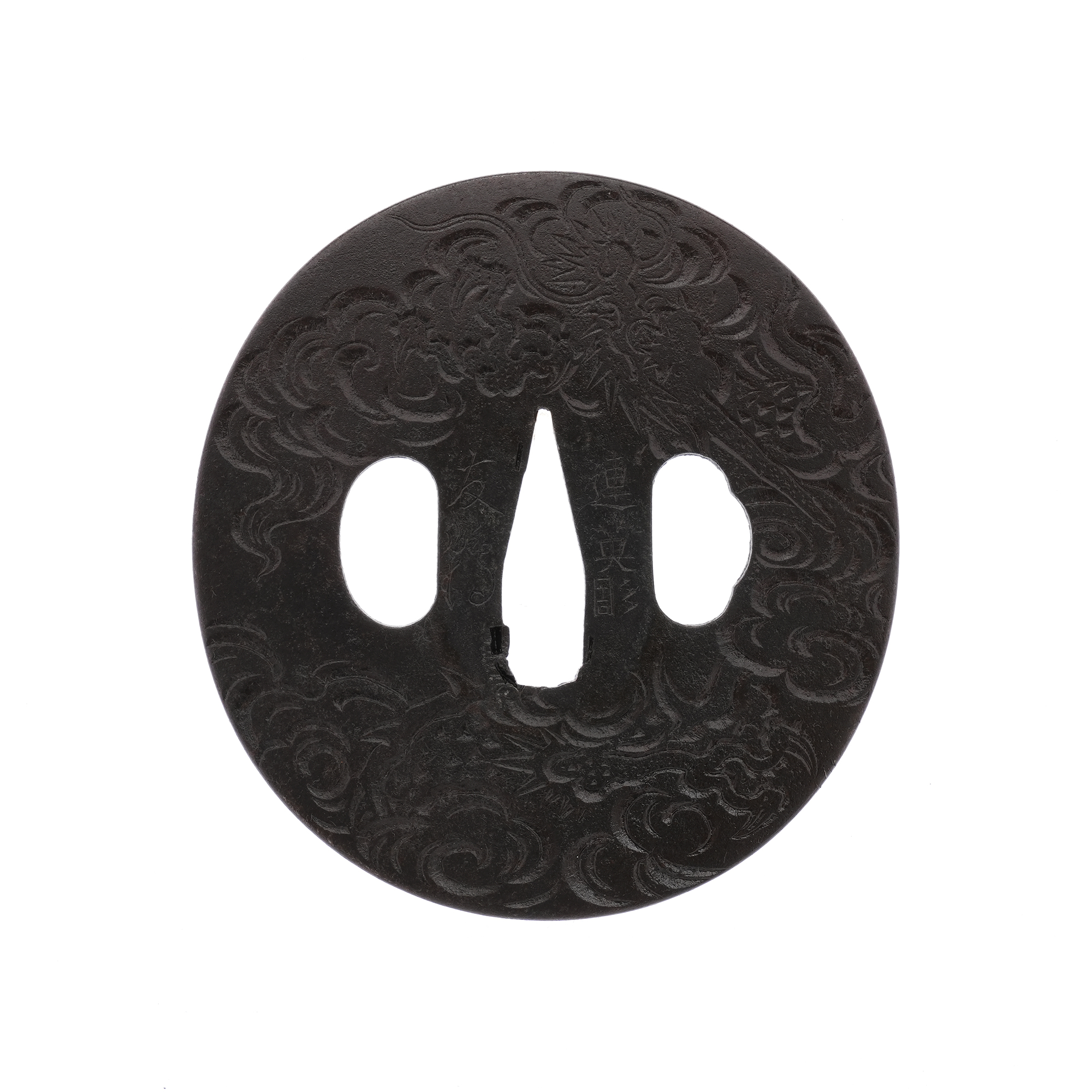
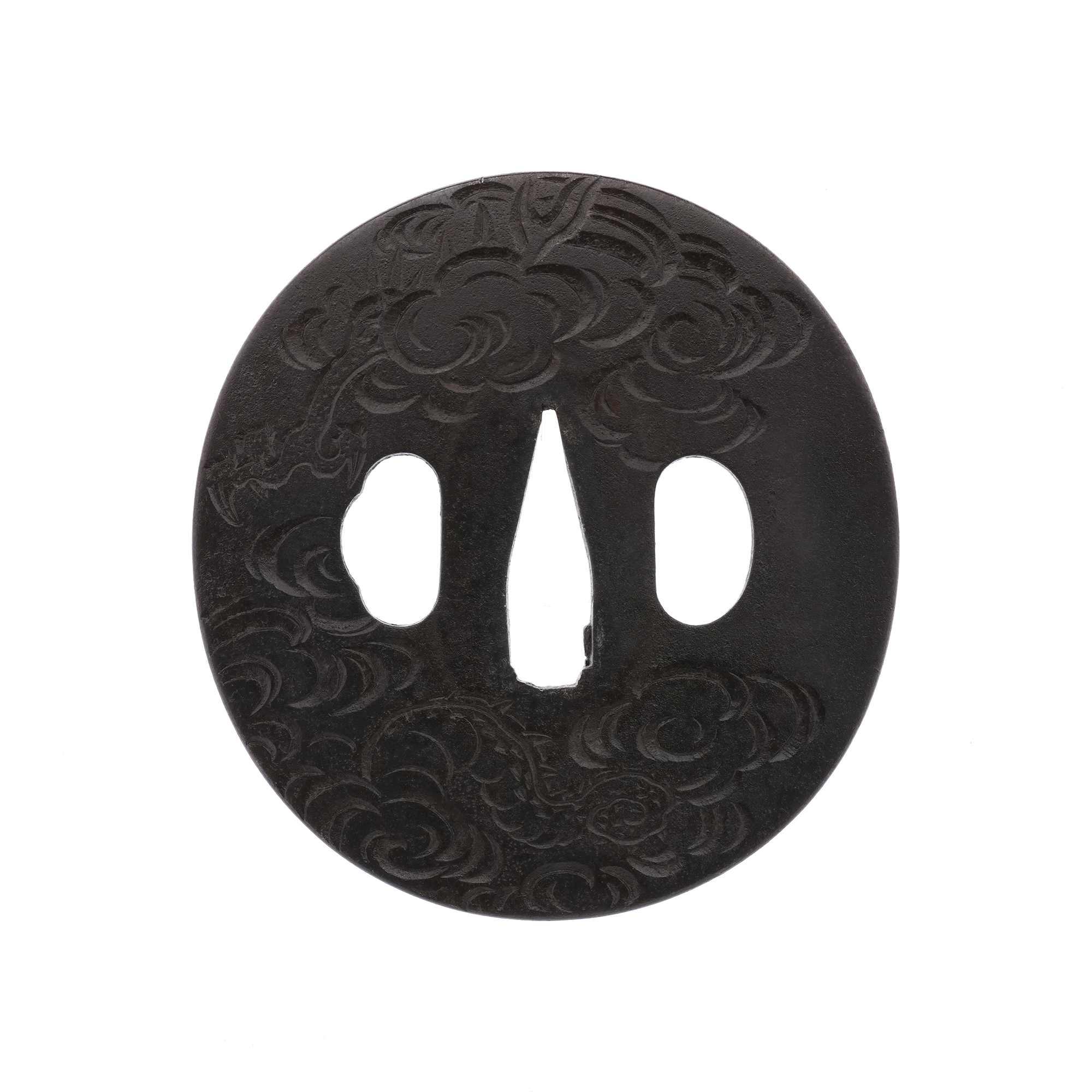
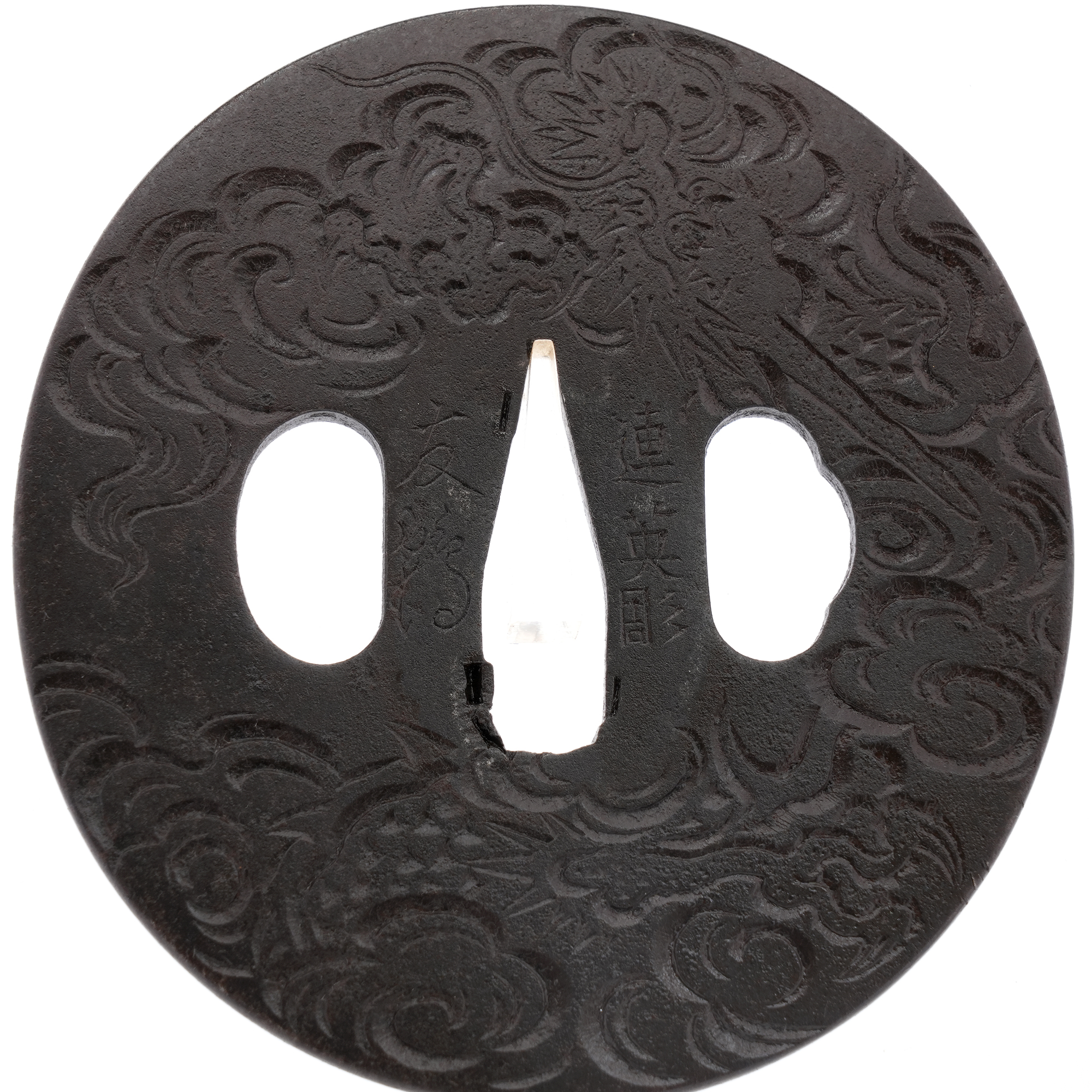
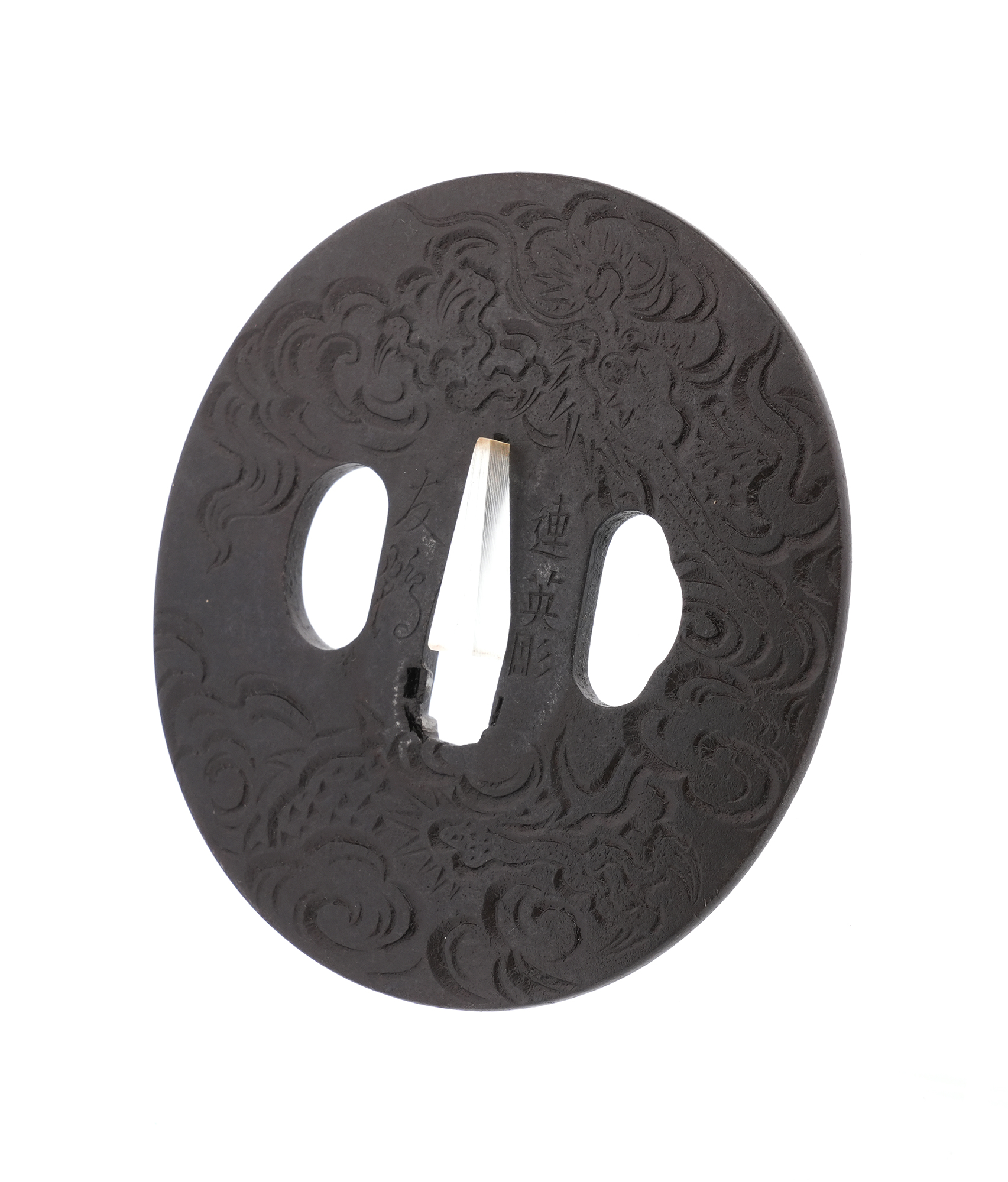
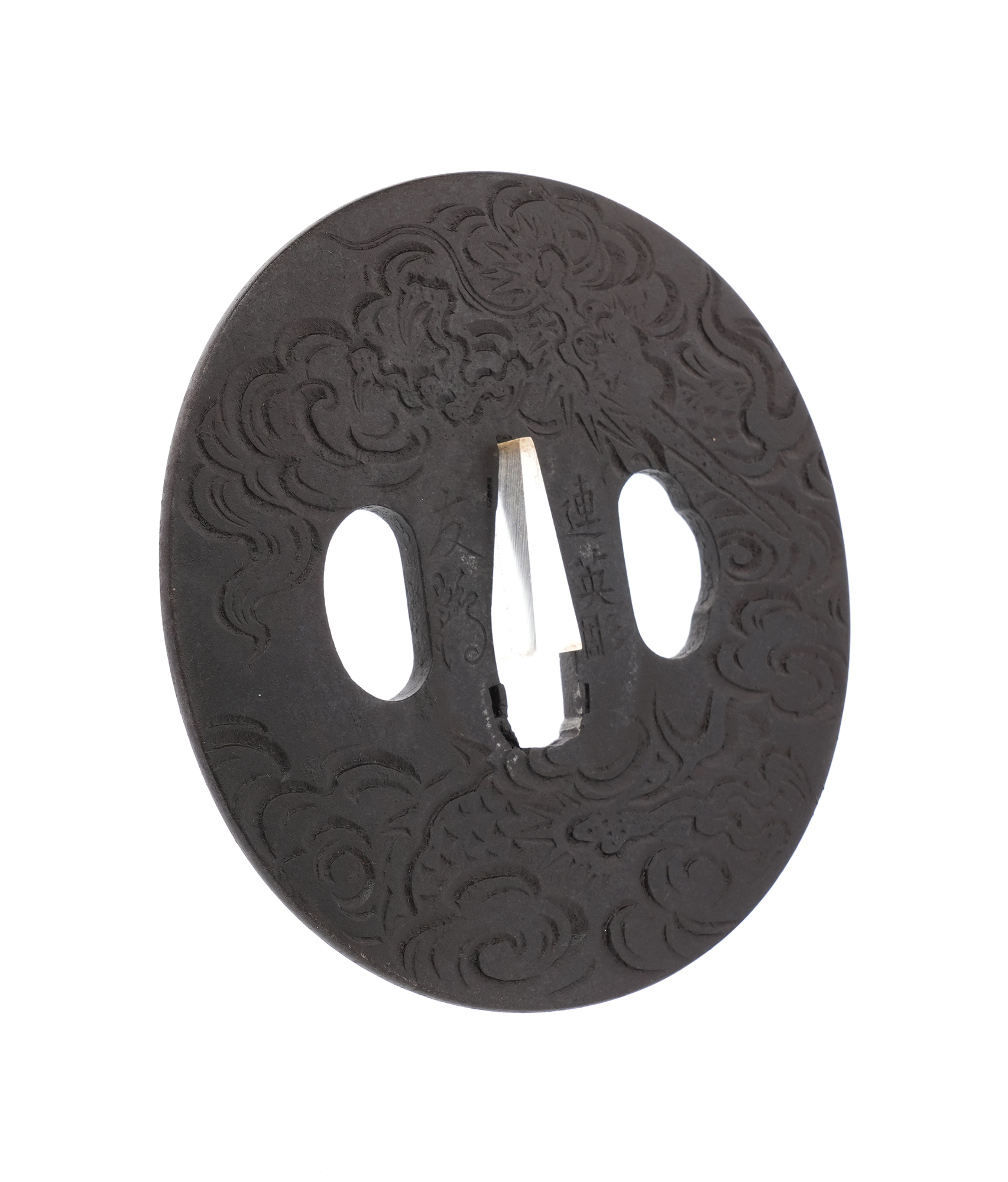
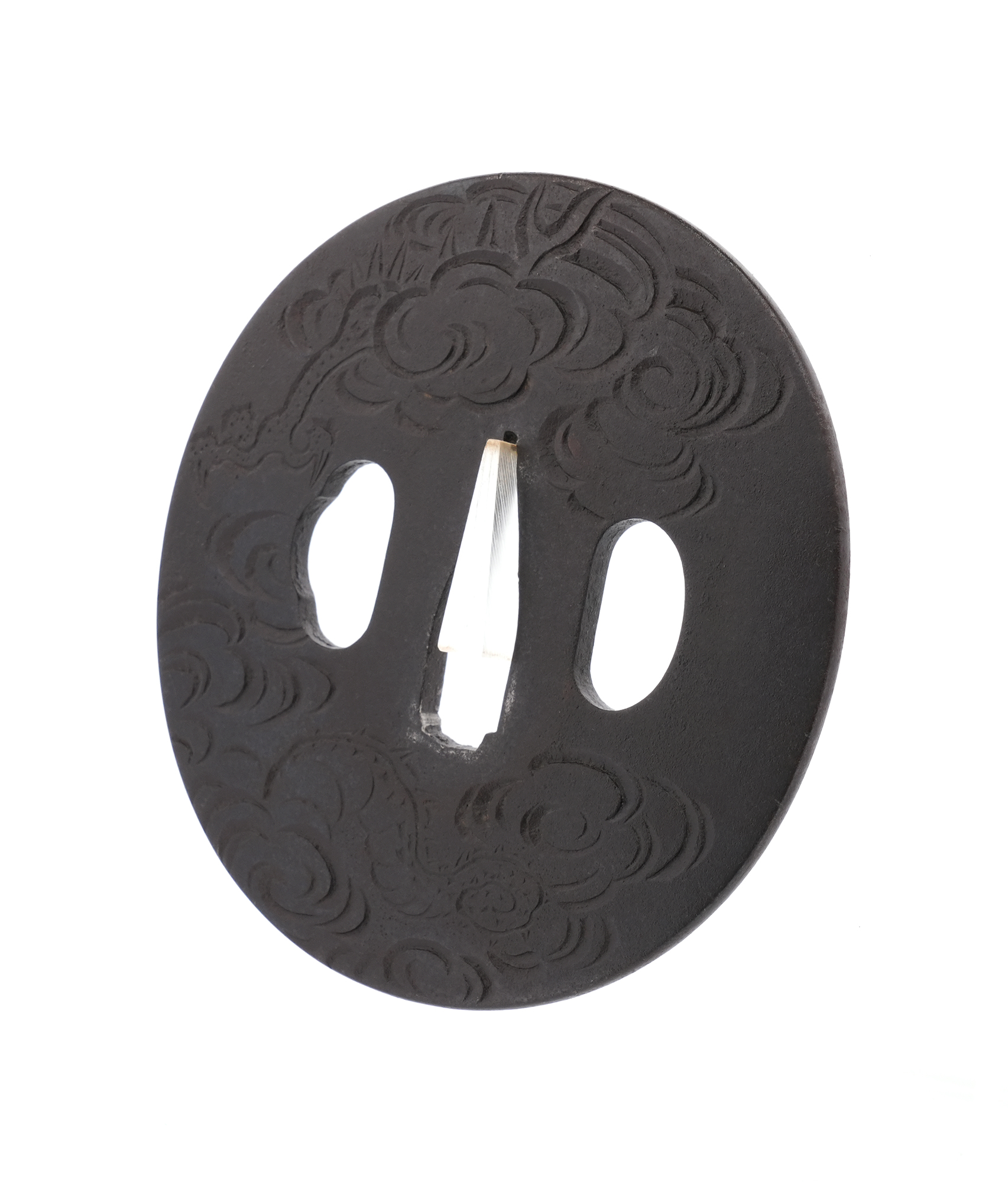
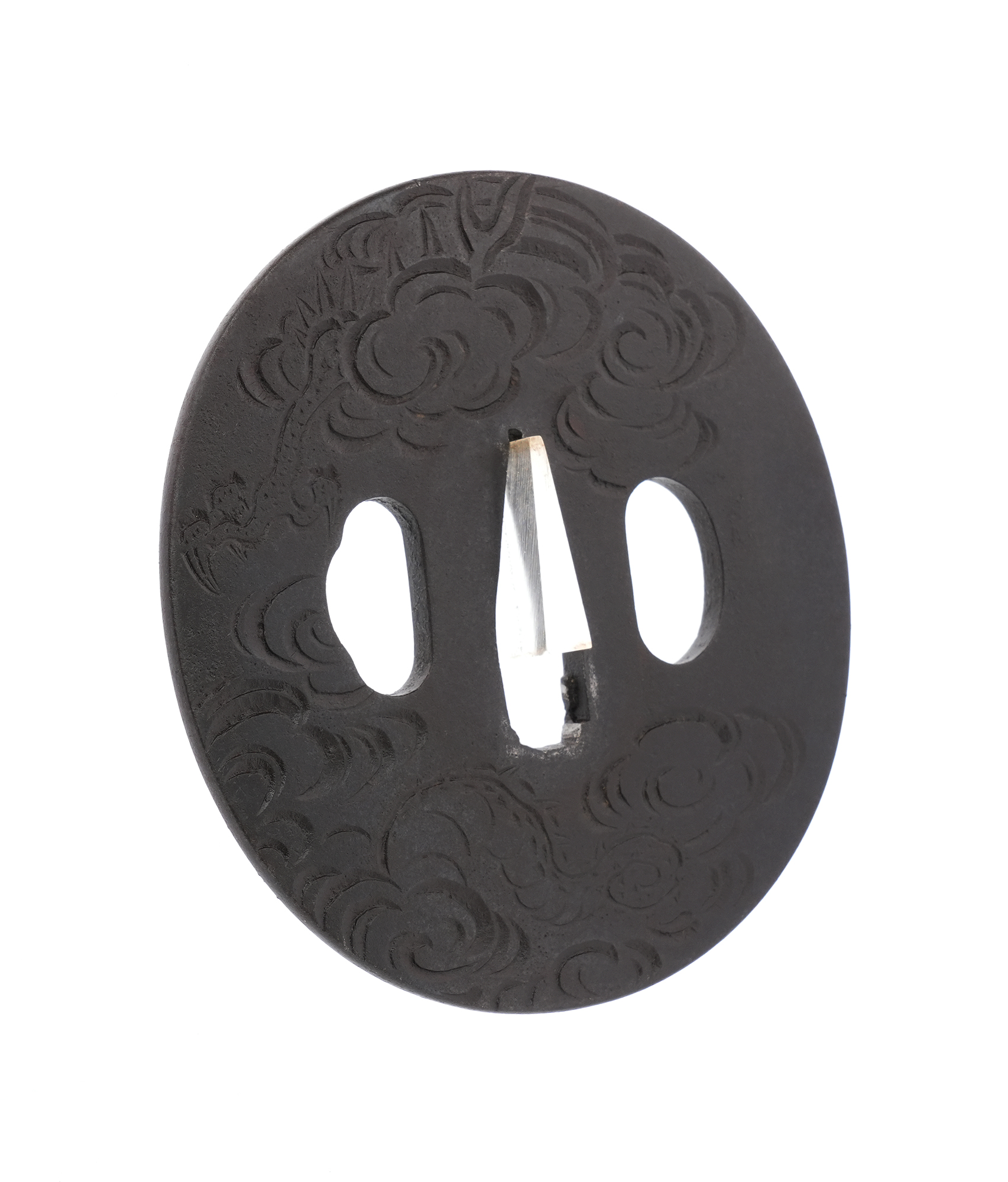
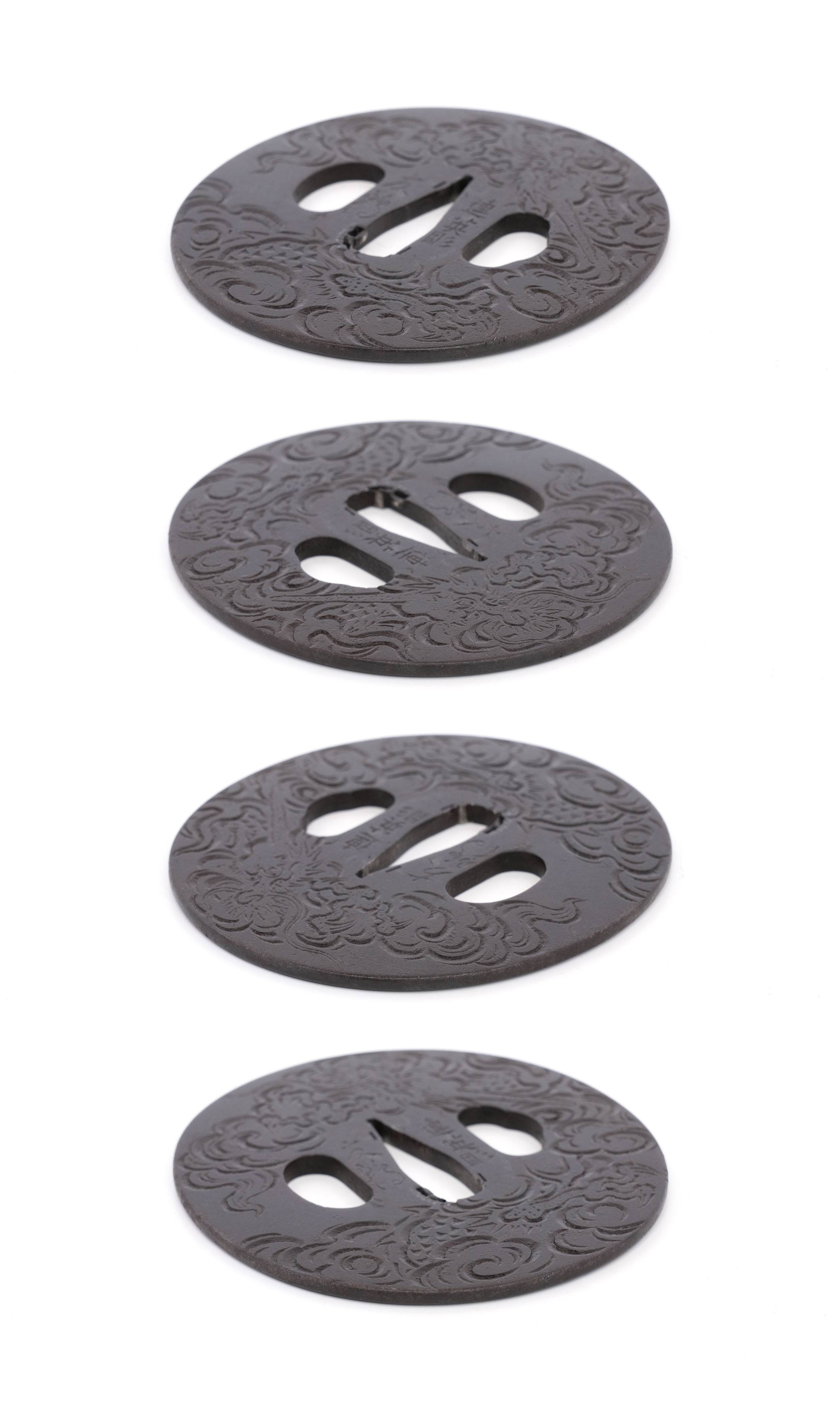
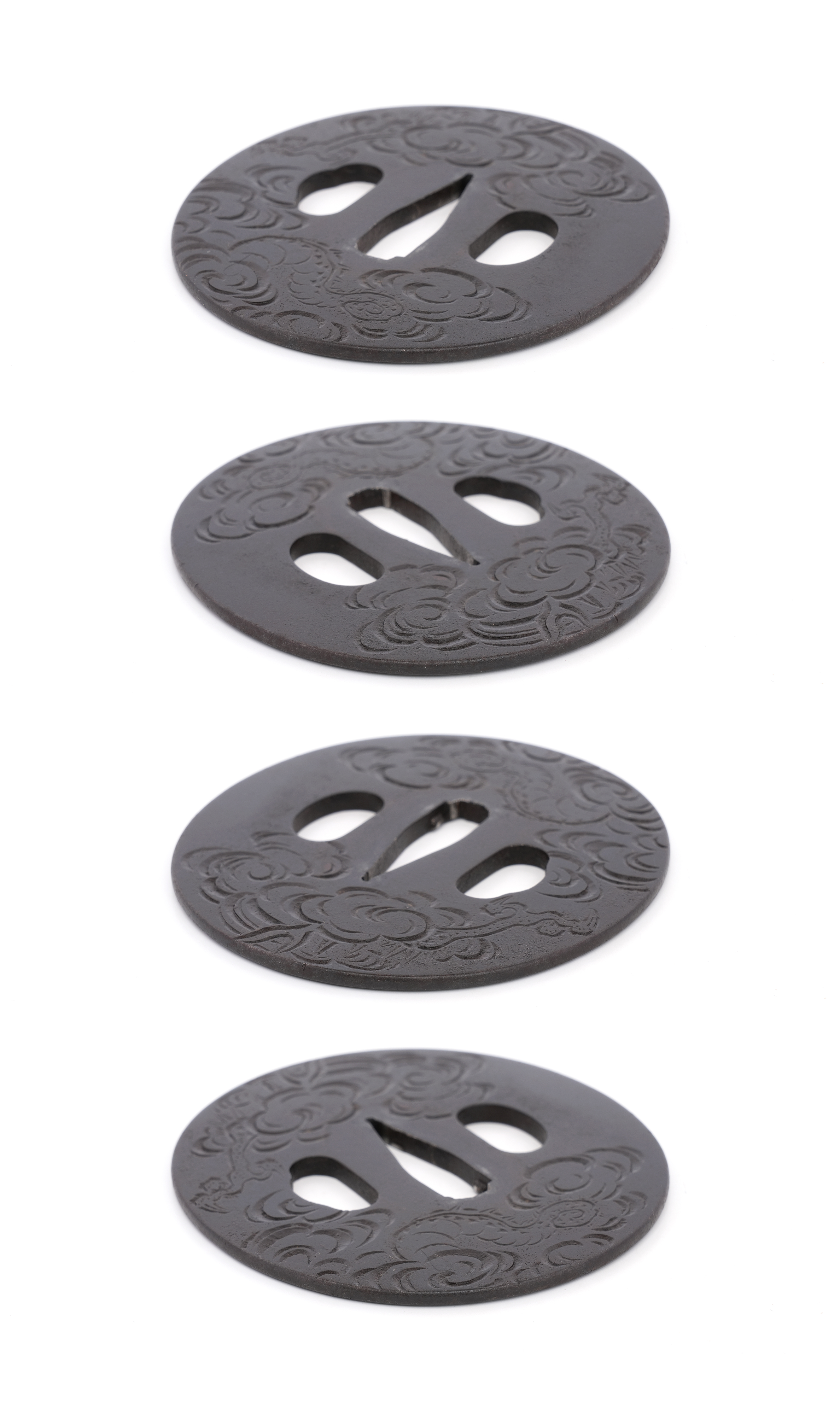
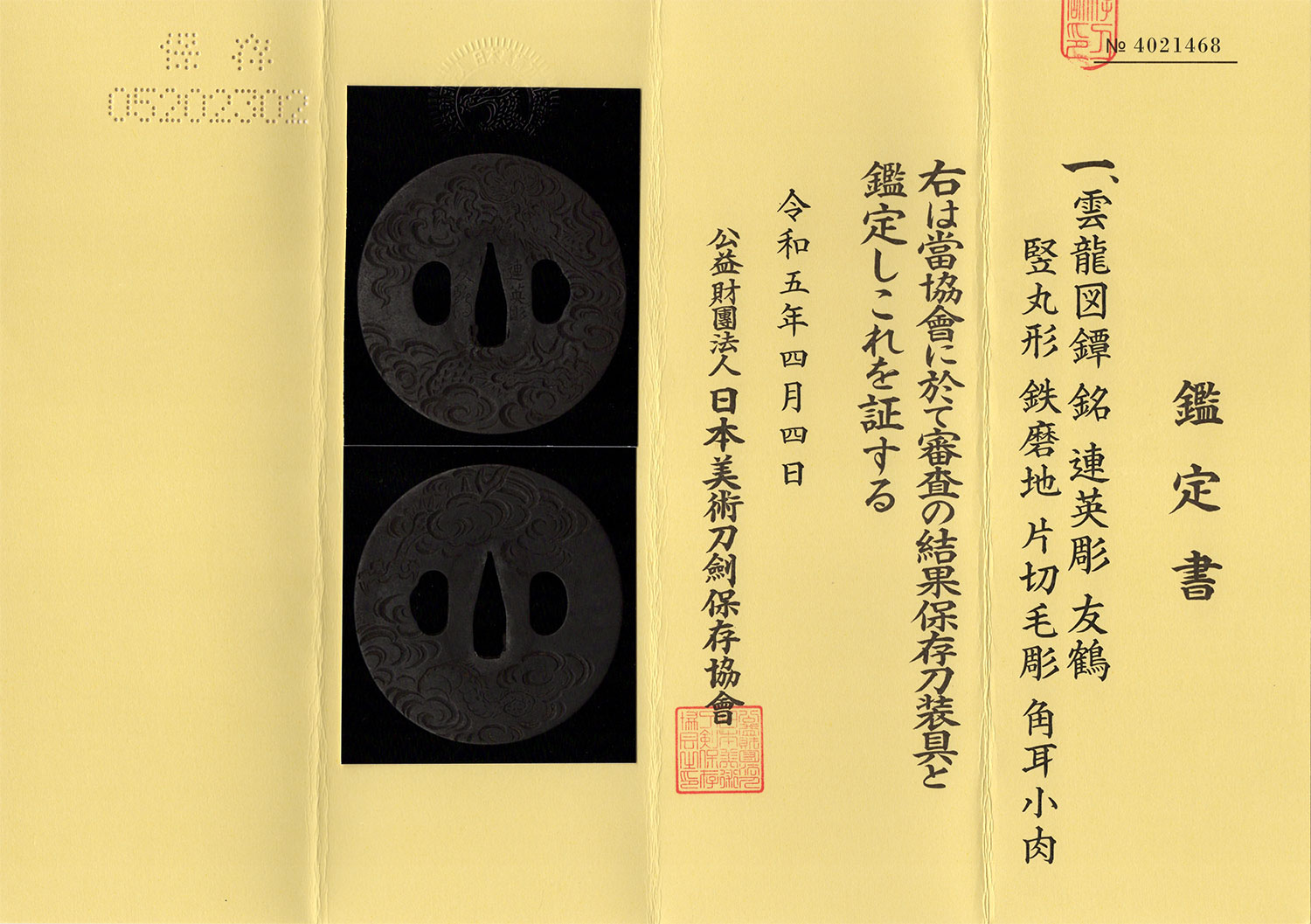
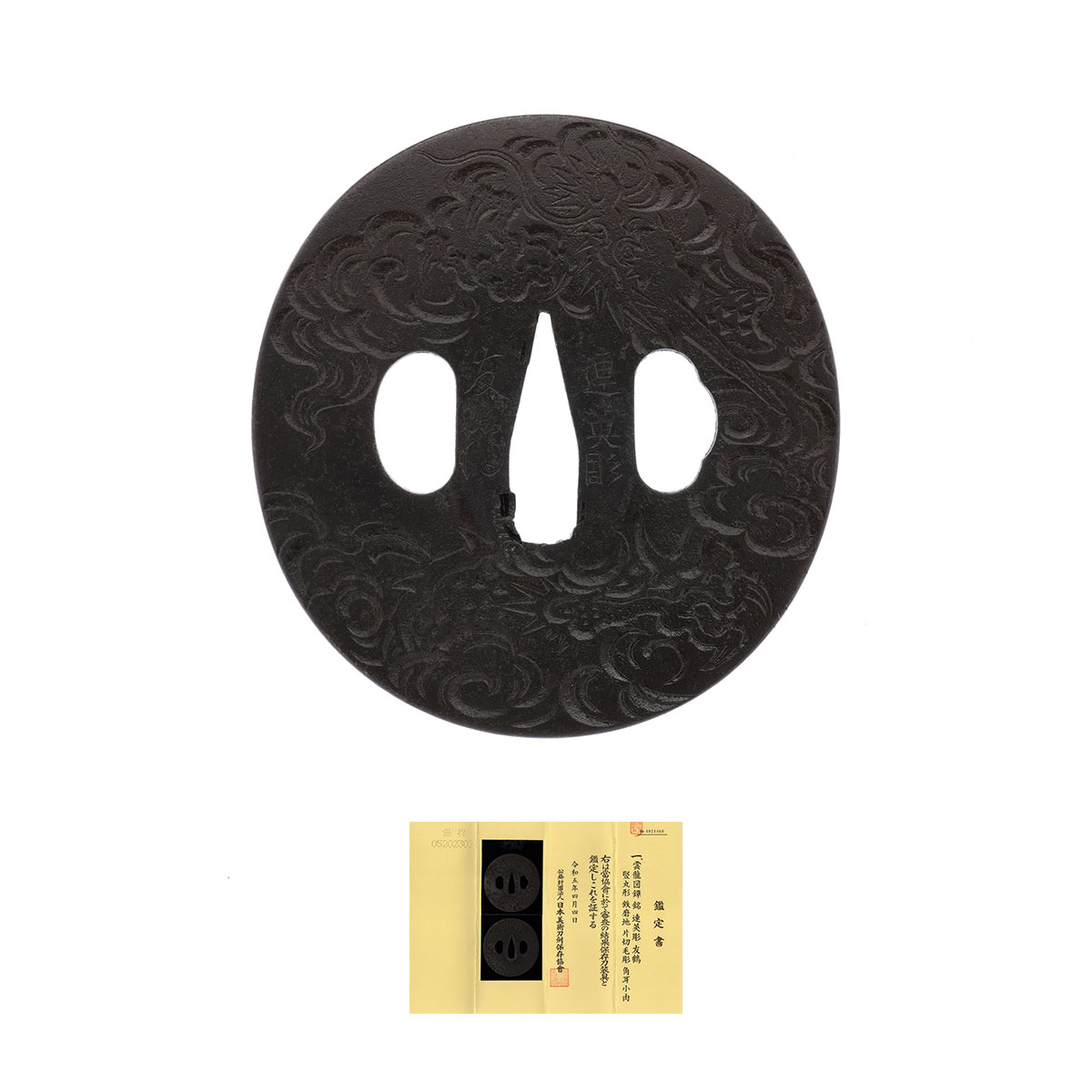
As written by the shop
Machine translation from the shop's Japanese · may contain errors ·
Machibori · Edo
59 pieces on the market now
The Yanagawa (柳川) school ranks among the principal machibori ("town carving") lineages of Edo metalwork, arising in the mid-Edo period as a direct offshoot of the Yokoya house. Its founder, Yanagawa Naomasa (1692–1757), studied under Yoshioka Inaba-no-suke and under Yokoya Sōmin, and established himself in the Otamagaike district of Edo. The NBTHK setsumei consistently locate the school within this filiation, styling it "the Yanagawa branch within the Yokoya lineage" (横谷門下柳川派) and naming Naomasa as the family founder (家祖). Naomasa had no biological heirs and devoted himself to the training of disciples, and the successive heads of the house inherited the character nao (直). " The collective idiom of the school is the classic Yokoya-derived vocabulary of Edo kinkō work: grounds of shakudō (赤銅) dressed in nanako-ji (魚子地), high-relief carving (takabori) — frequently executed as applied motifs (suemon) — and polychrome inlay (zōgan iroe) in gold, silver, and shibuichi, deployed across kozuka, kōgai, fuchi-kashira, menuki, and tsuba. The school was likewise renowned for excellent katakiribori (single-cut carving), and its repertoire favored classical subjects: shishi (lions) with peonies, tigers, Chinese sages, and figural themes such as the Seven Lucky Gods.
Fidelity to the manner of Sōmin remained the school's touchstone across generations. " Equally characteristic is the school's mode of transmission, whereby pupils composed their art-names from characters granted by the Yanagawa masters. The measure of the Yanagawa school's significance lies as much in what it engendered as in its own production. Ishiguro Masatsune, a pupil of Katō Naotsune of the Yanagawa school, formed his name by combining masa (政) from Naomasa and tsune (常) from Naotsune; the setsumei record that he "moved beyond the manner of the Yanagawa school, devising innovative treatments particularly within bird-and-flower subjects," founding the Ishiguro lineage, which "continued to prosper through successive generations until the Meiji period" and produced the celebrated "twin peaks" Masayoshi and Masaaki. " Through these ramifying lines, the Yanagawa school served as the essential conduit by which the Yokoya manner of takabori iroe on shakudō nanako-ji grounds was disseminated across the late-Edo metalworking world. Learn more →
| Smith | Era | Designated |
|---|---|---|
| Haruaki春明 | — | 18 |
| Naoharu直春 | — | 7 |
| Naomasa直政 | — | 5 |
| Akinori/Meijo明乗 | — | 0 |
| Akio明雄 | — | 0 |
Certifies a genuine fitting worth preserving: a correct signature, or, if unsigned, an identifiable era and school, with recognized artistic and craft value.
The NBTHK (Nihon Bijutsu Tōken Hozon Kyōkai, the Society for the Preservation of Japanese Art Swords) is a public-interest incorporated foundation founded in 1948 and supervised by Japan’s Agency for Cultural Affairs (Bunkachō); it is based at the Japanese Sword Museum in Tokyo. Its expert panels physically examine each submitted work (shinsa) and issue a certificate (kanteishō) ranking it by artistic and historical merit. NBTHK papers are the most widely recognized standard of authentication for Japanese swords and fittings.
NBTHK official siteAs a rule we do not accept returns, except when we have sent a different item from the one ordered or when there is a significant discrepancy between the description and the item. If you wish to return an item, please contact us within 3 days of its arrival and then send it back.
¥297,000