Unification closed the mass market, and Seki’s smiths moved to where the new money was: the Mishina line to Kyōto with court titles, Daidō smiths to castle towns across the provinces. Mino became the great technical ancestor of the Shintō age.
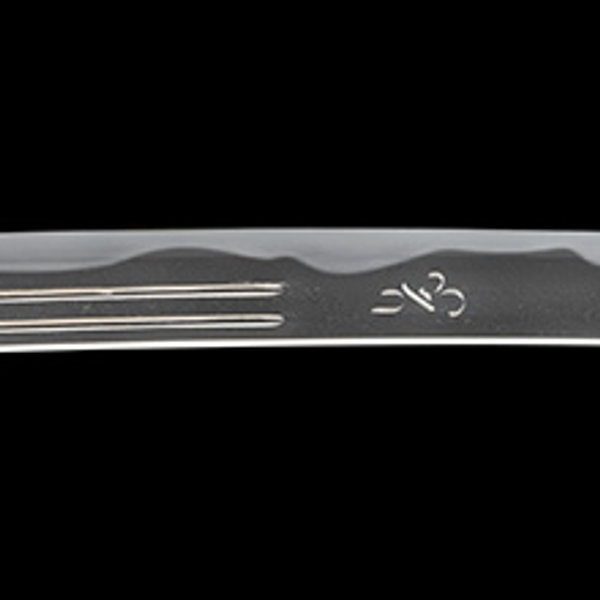
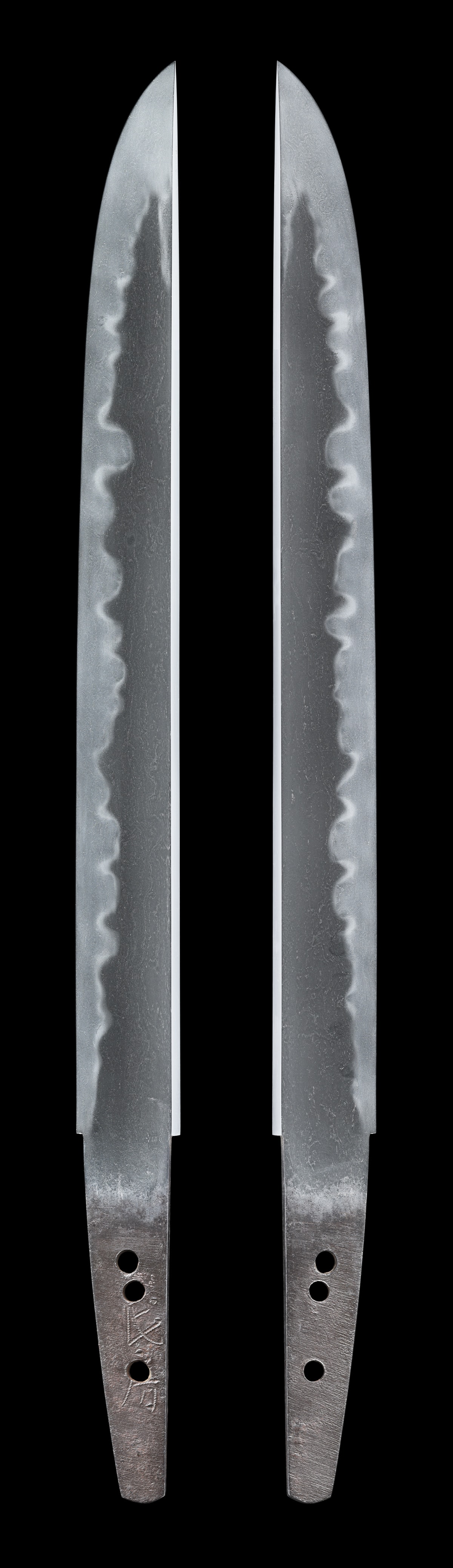
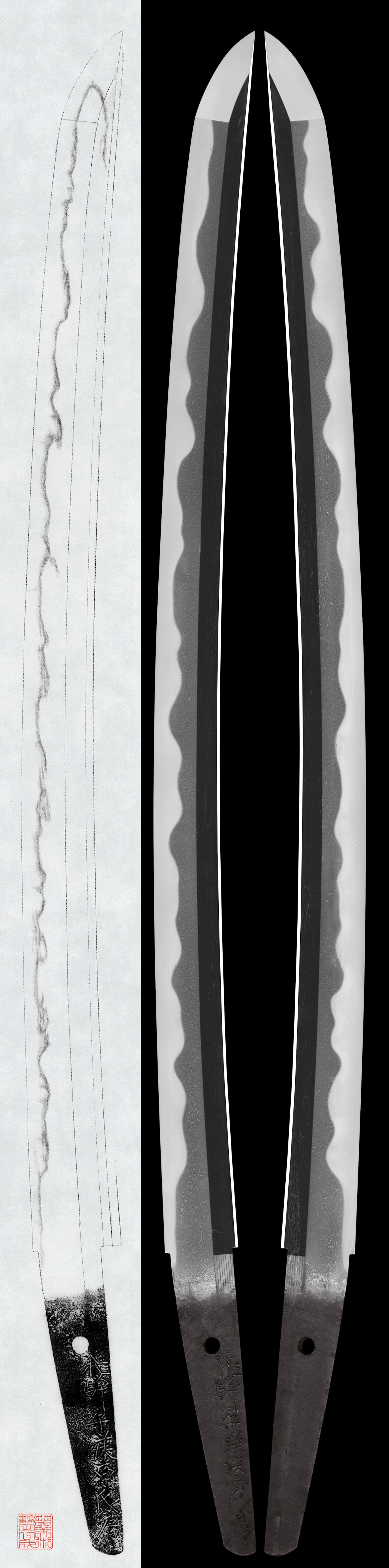
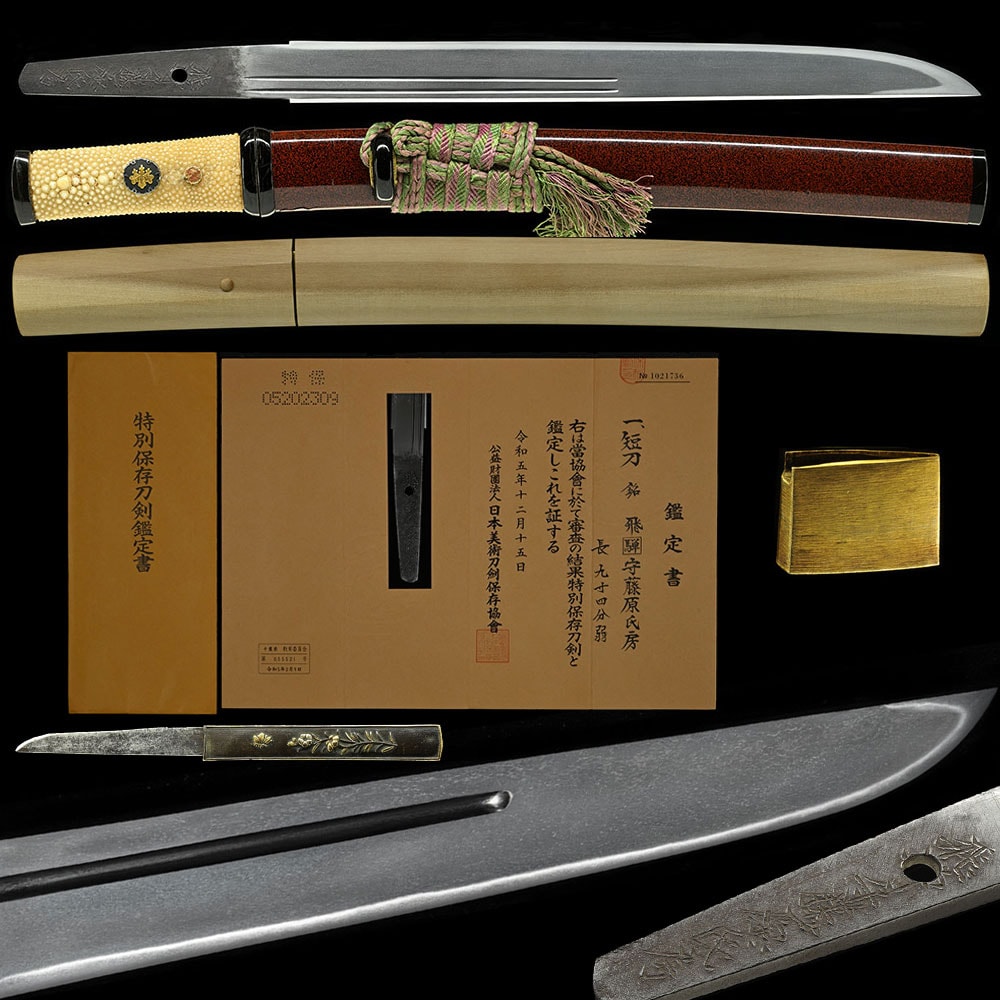
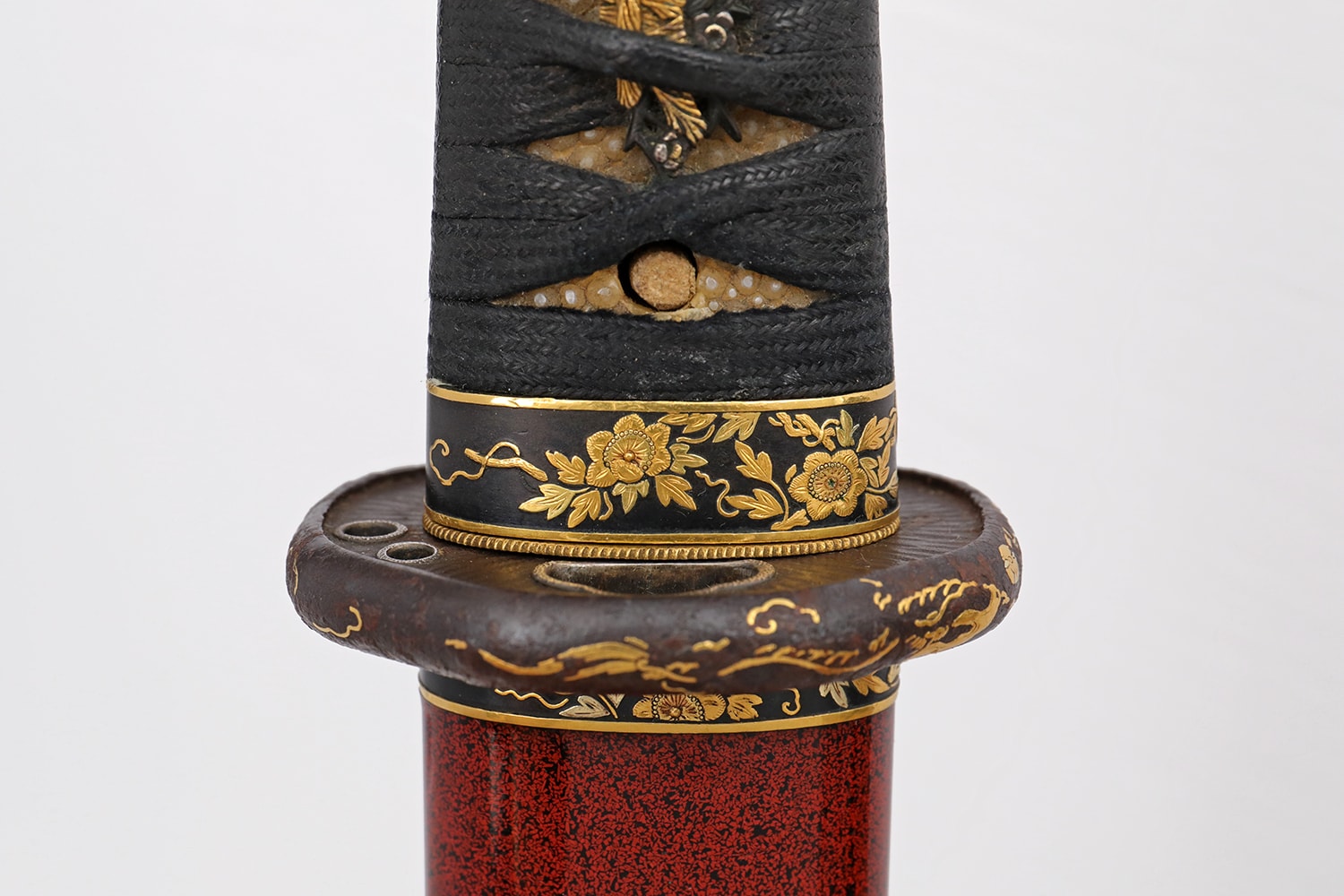
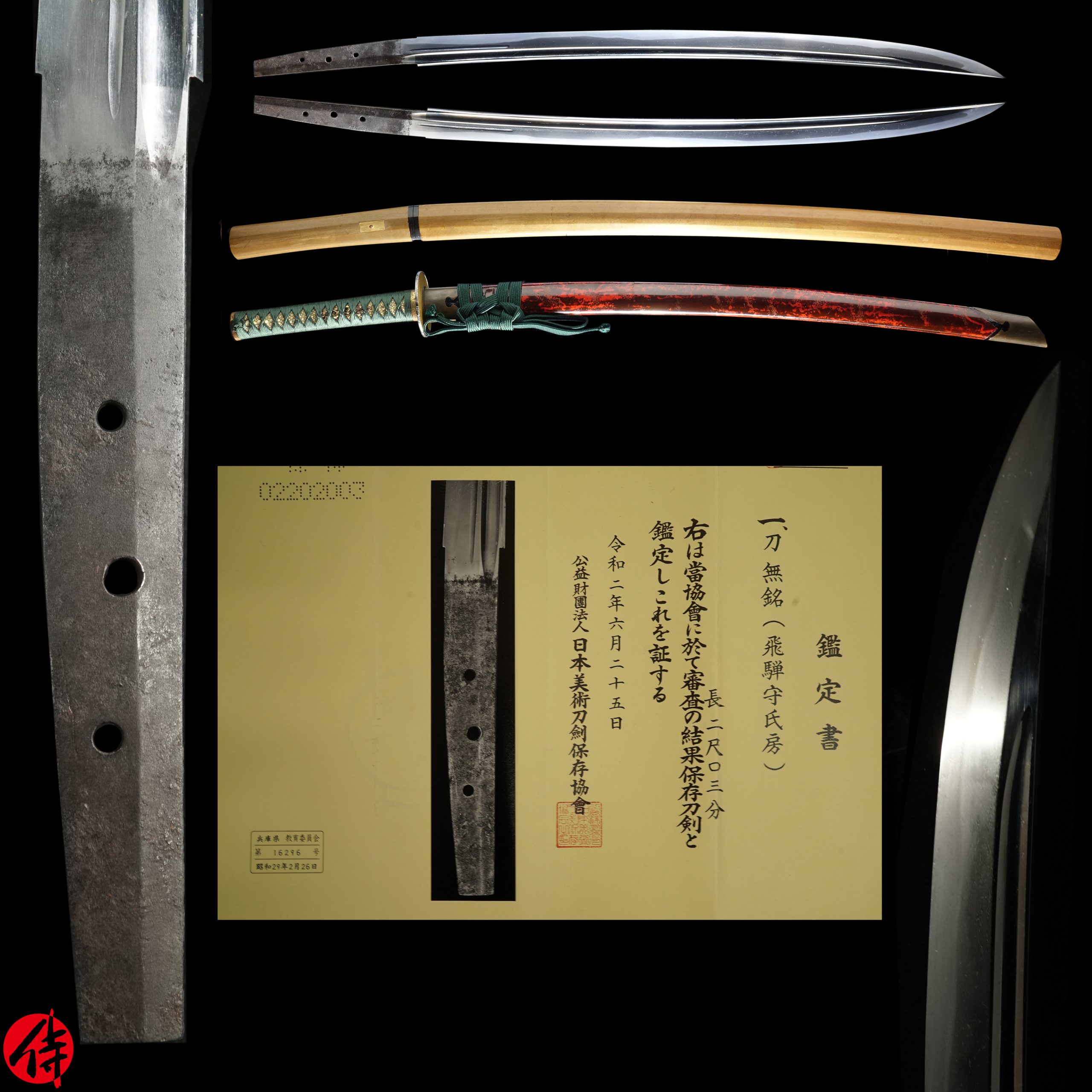
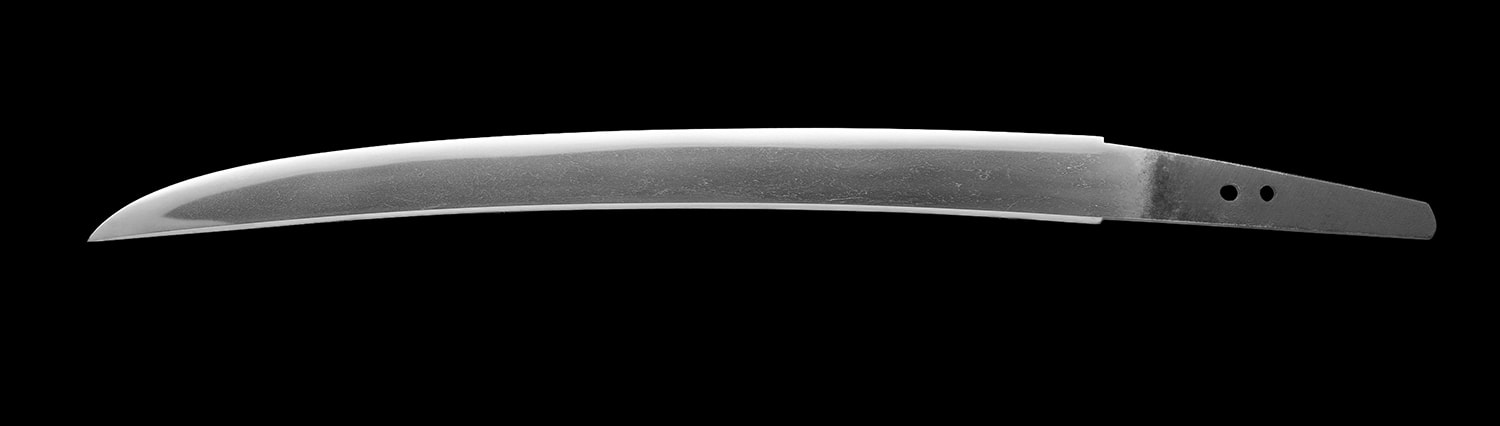
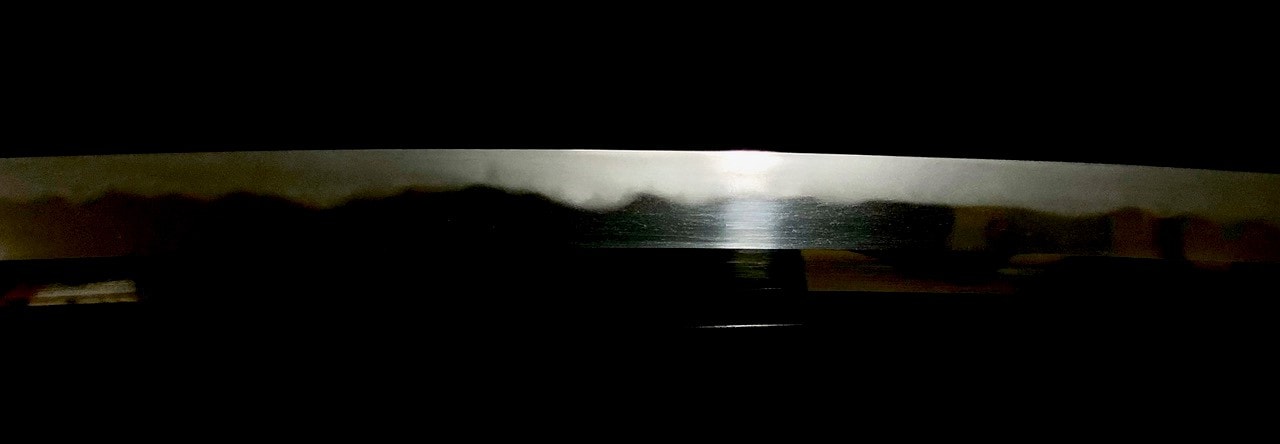
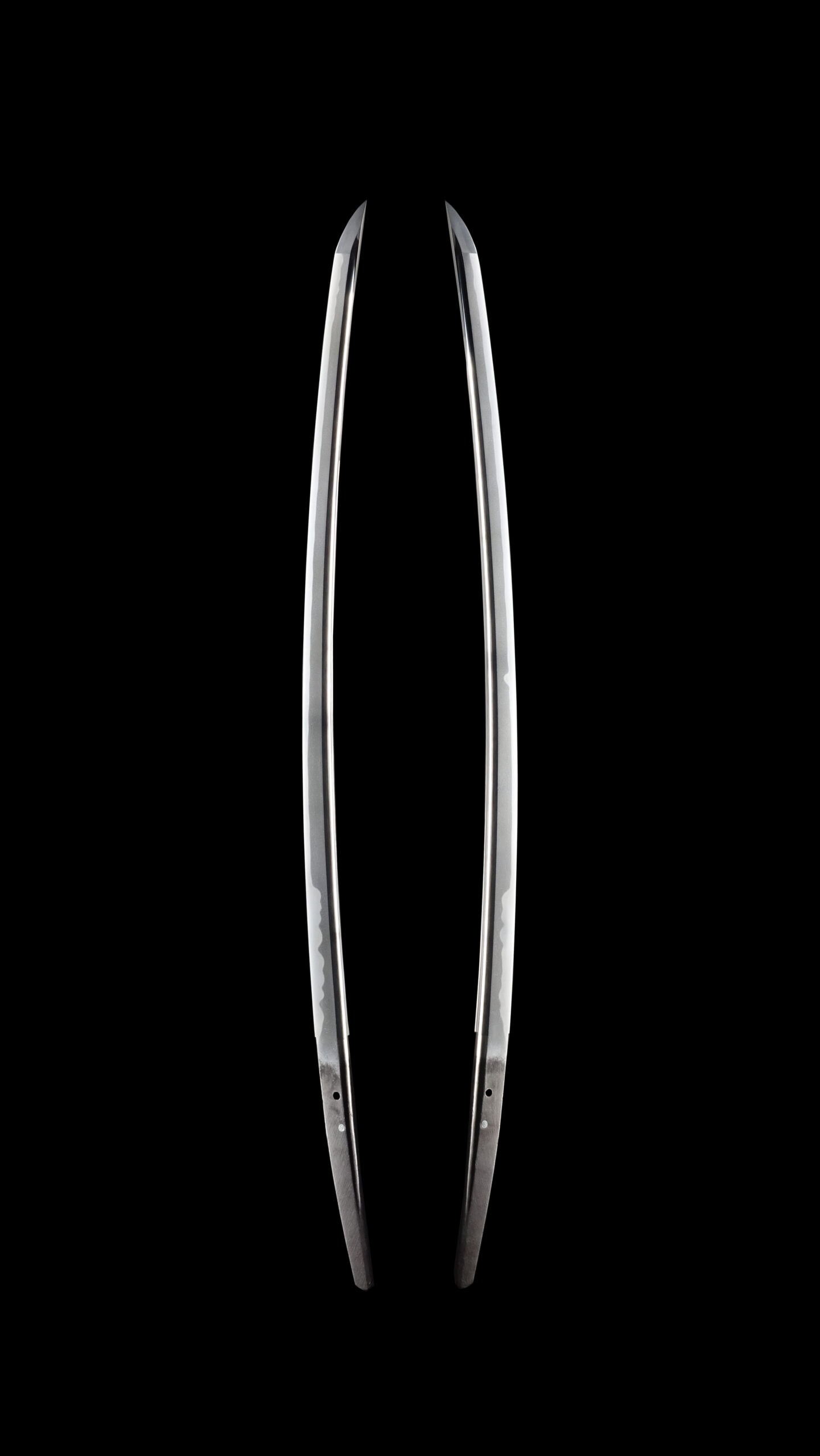
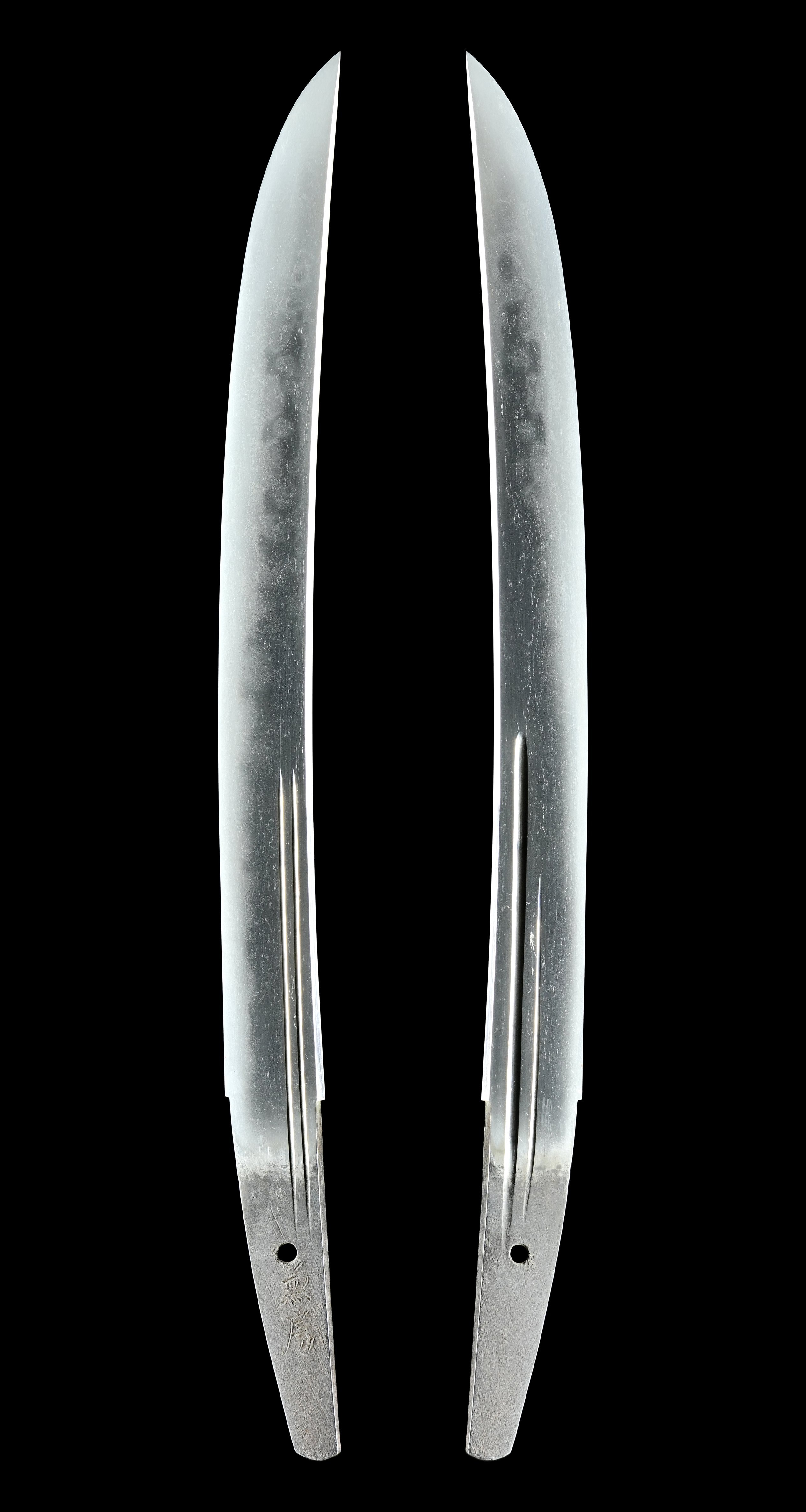
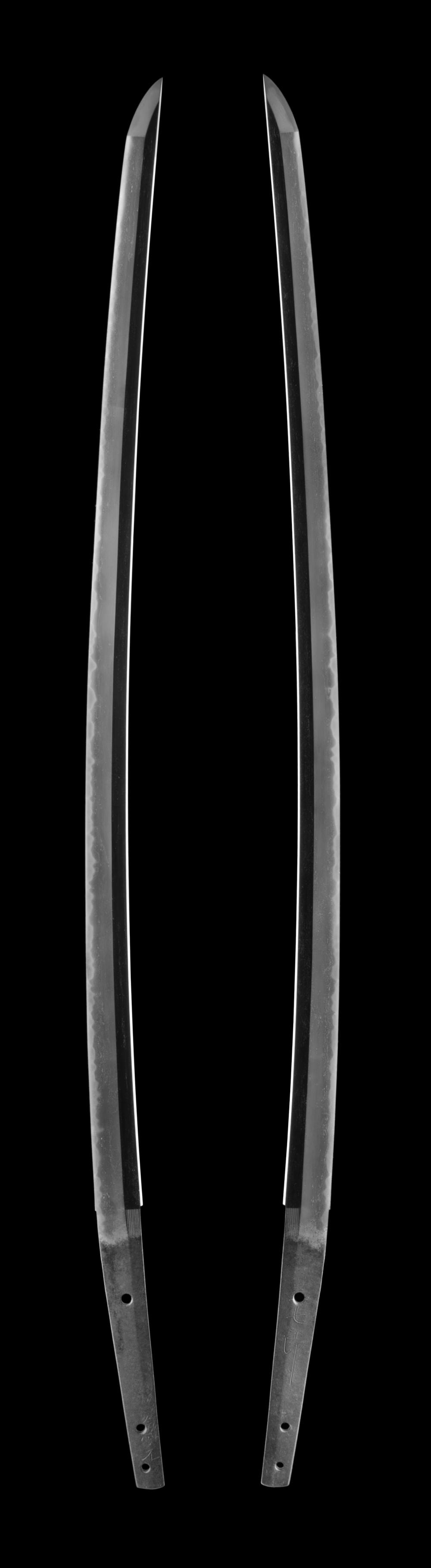
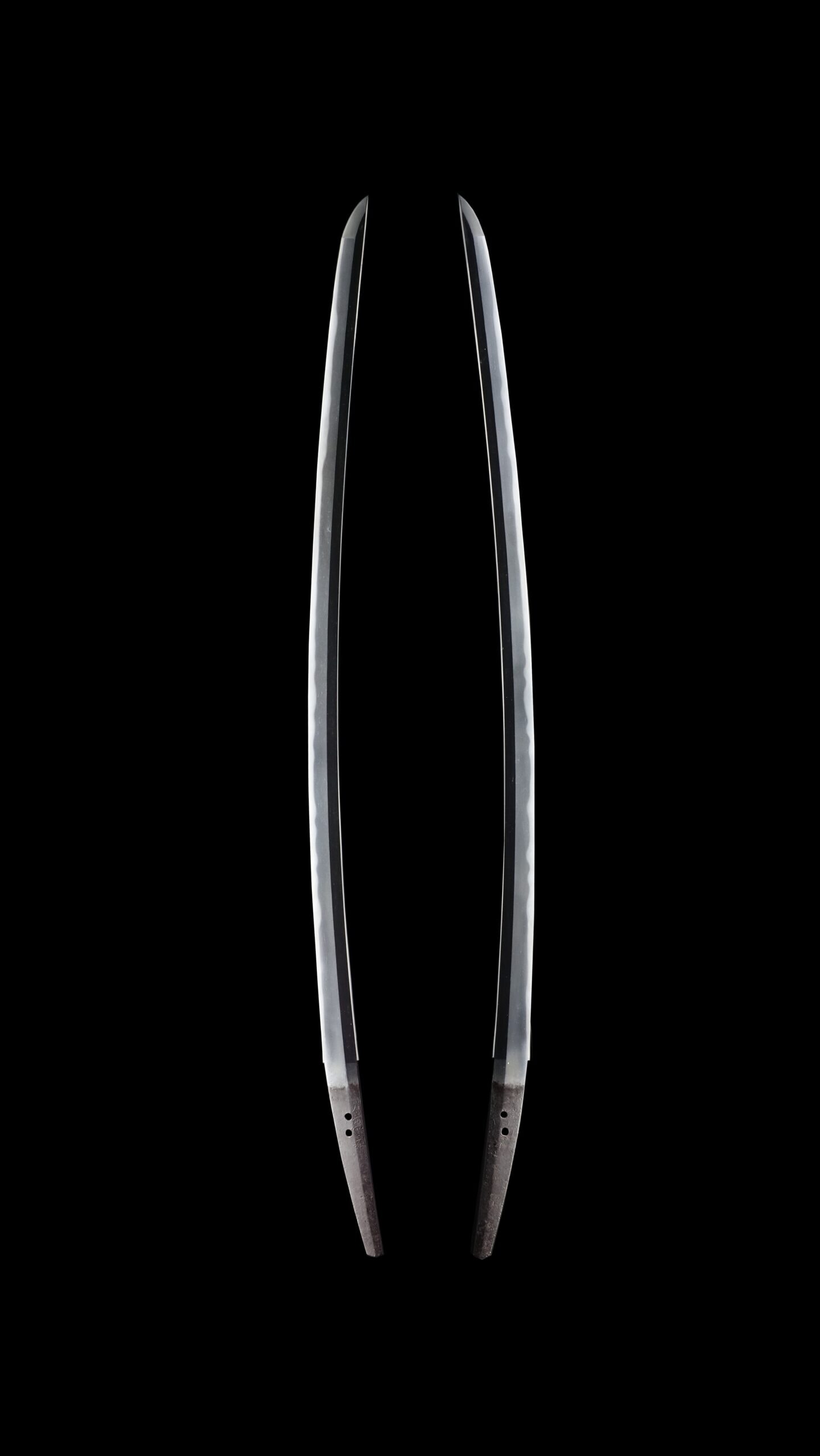
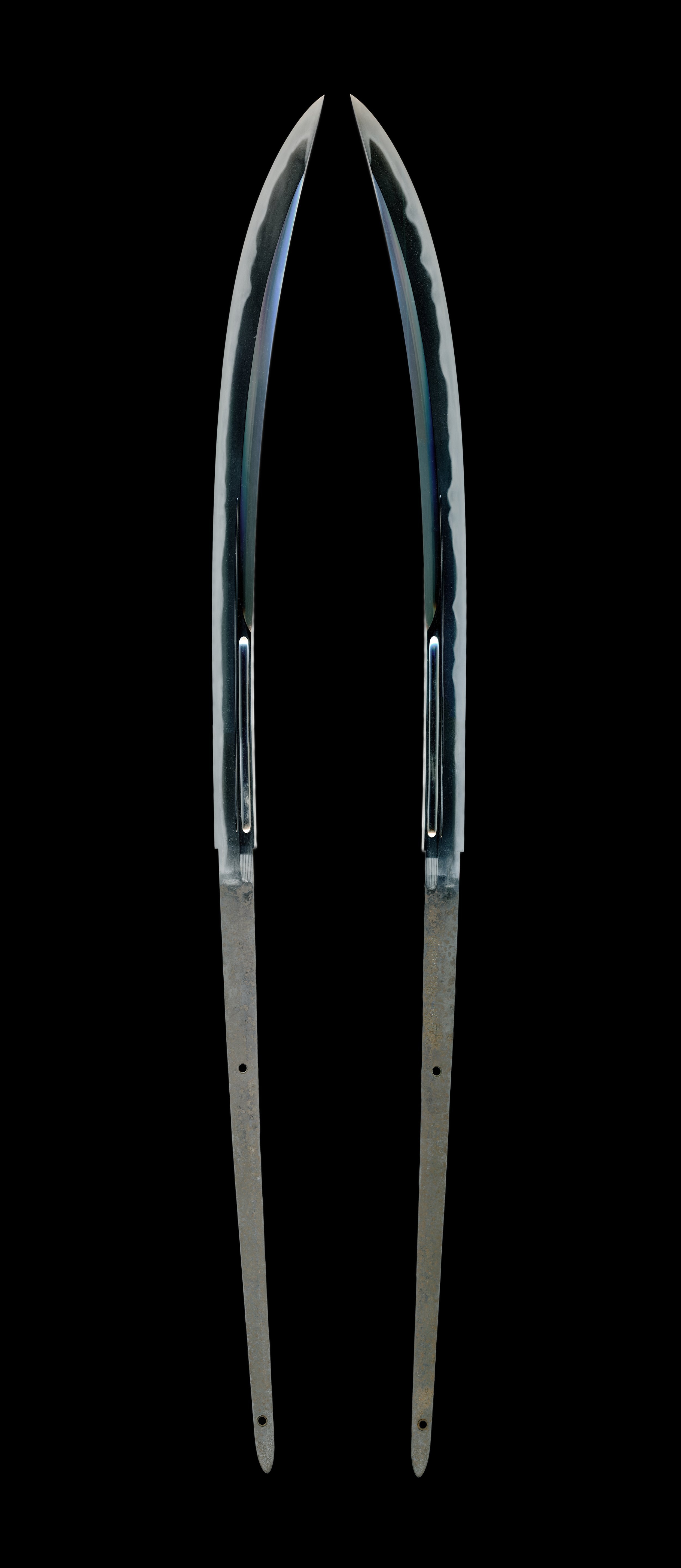
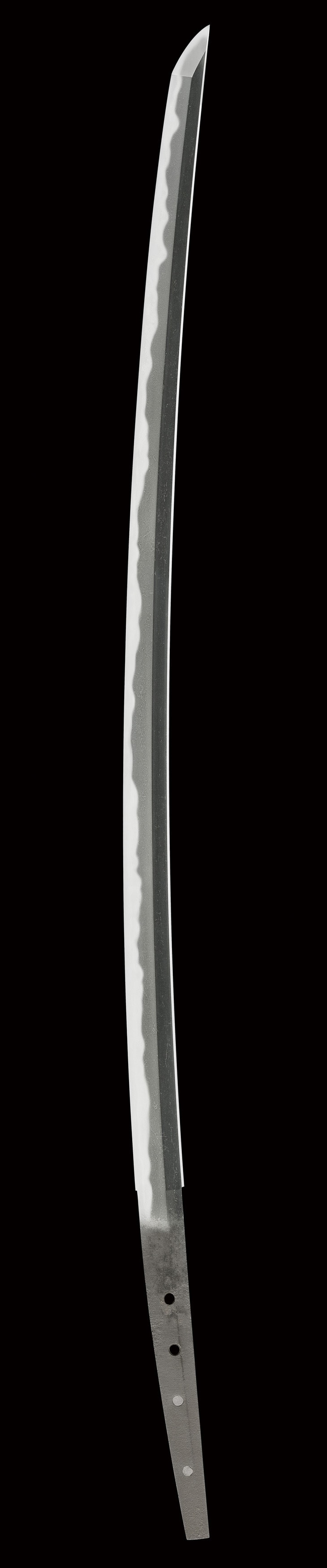
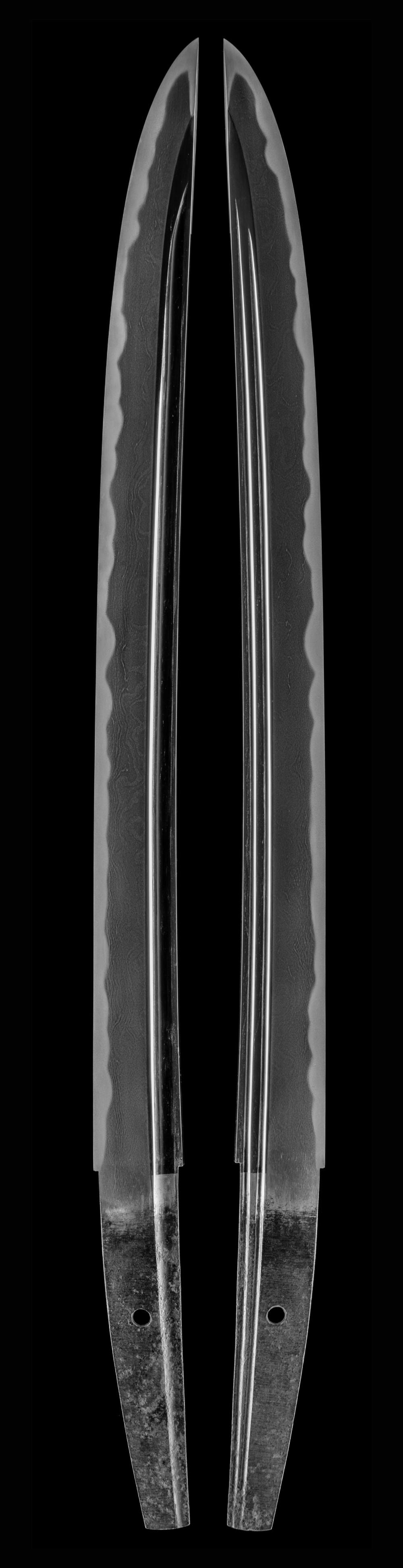
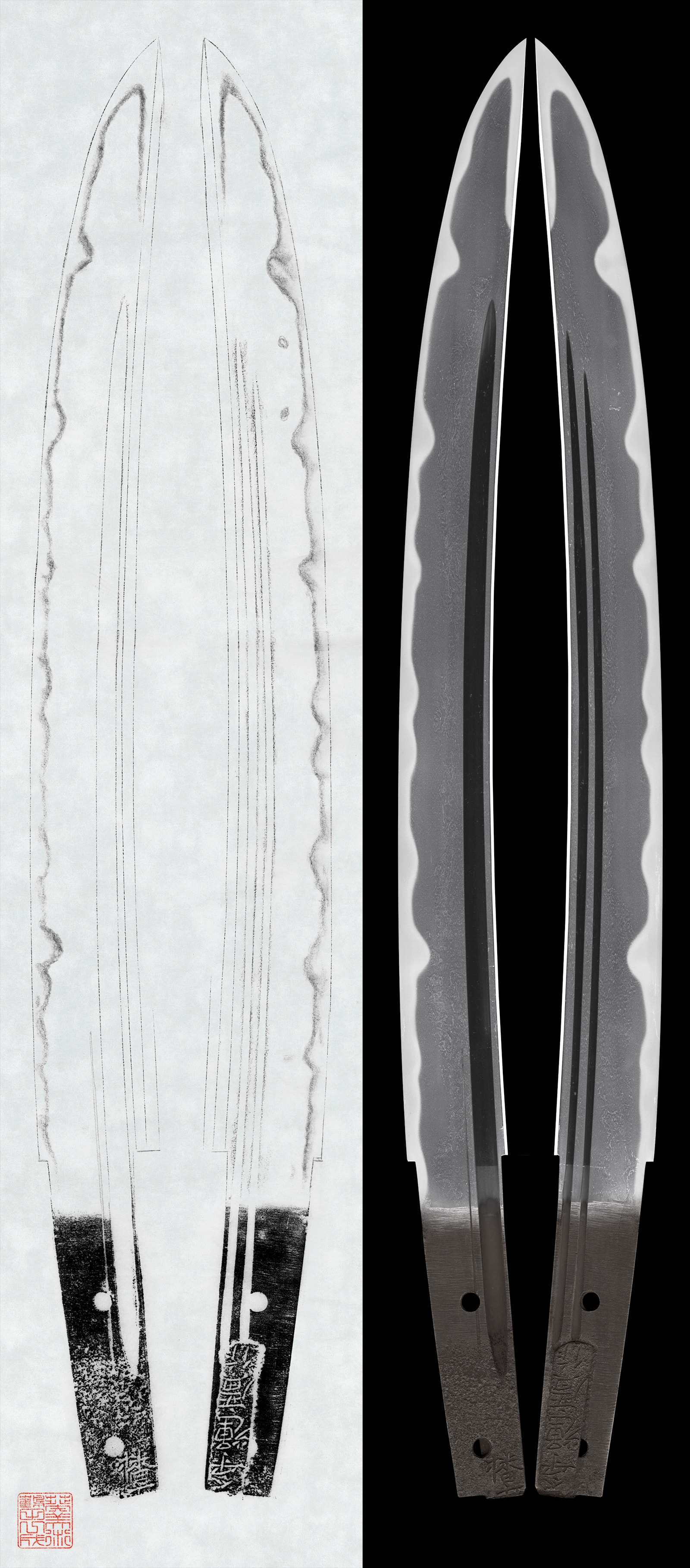
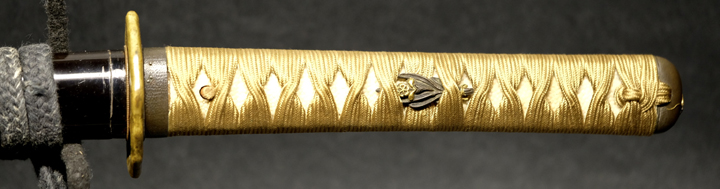
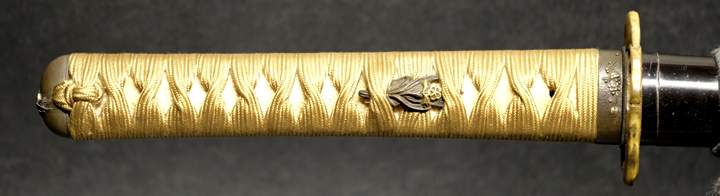
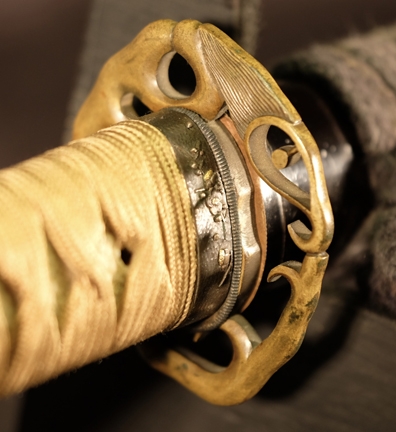
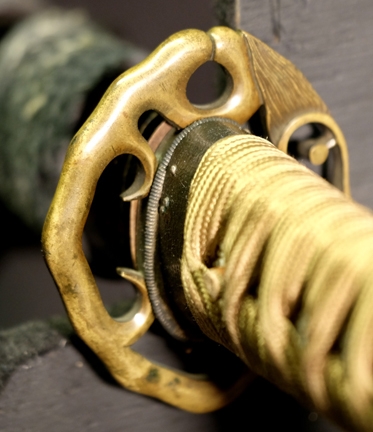
This is a wakizashi by Ujifusa in koshirae. The mei is considered spurious and needs further research. The sword features a notare hamon over kawazu choji and comes with a roiro saya and shakudo menuki.
 NihontoWatch
gimei · Shinto · nagasa 52.55cm · sori 1.51cm






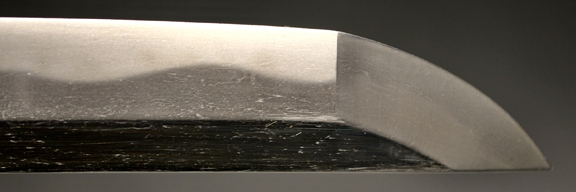
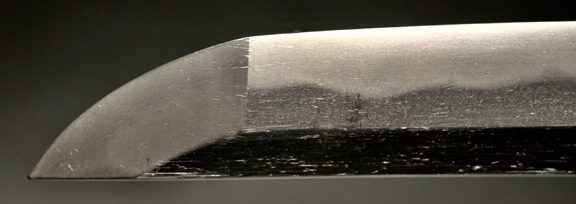
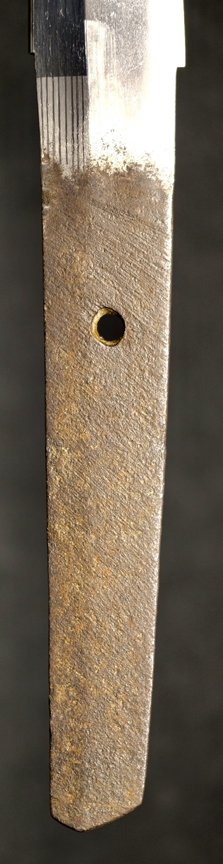
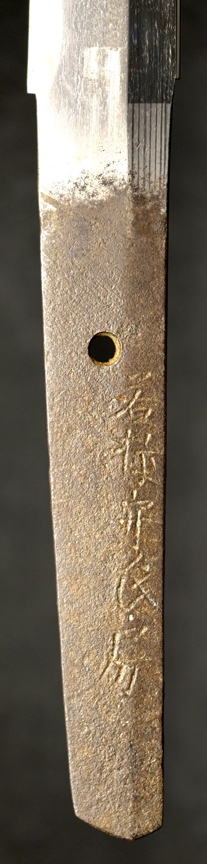


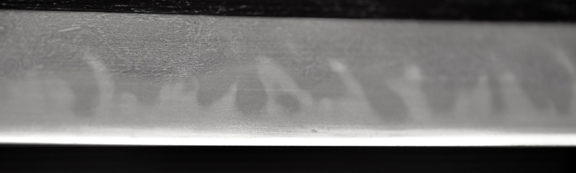

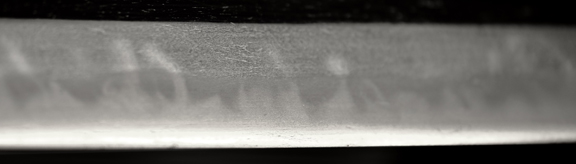
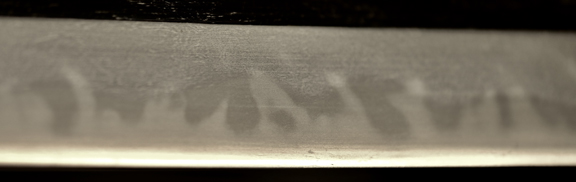
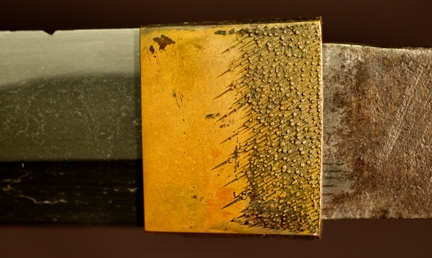
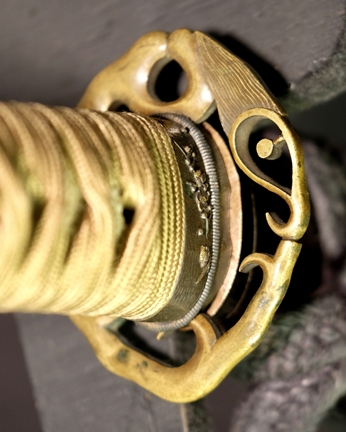
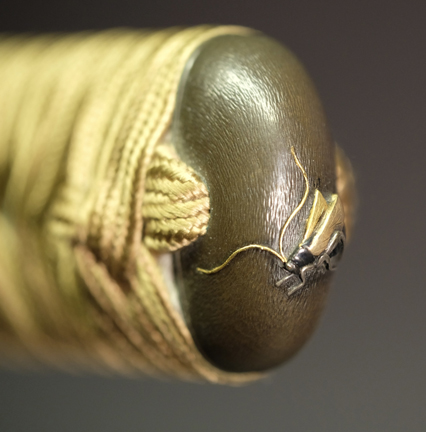
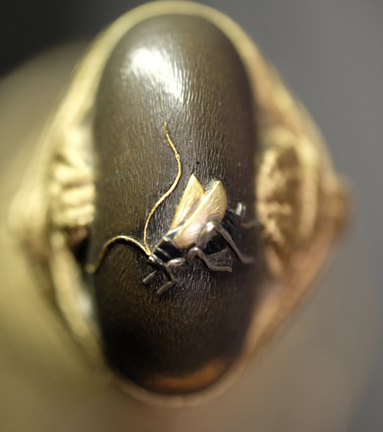
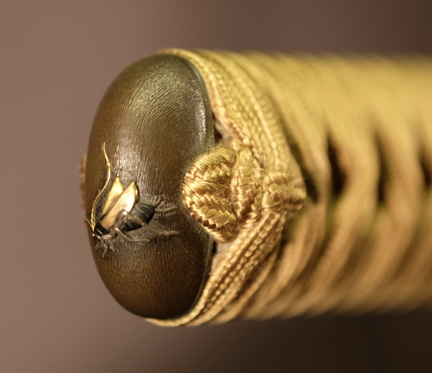
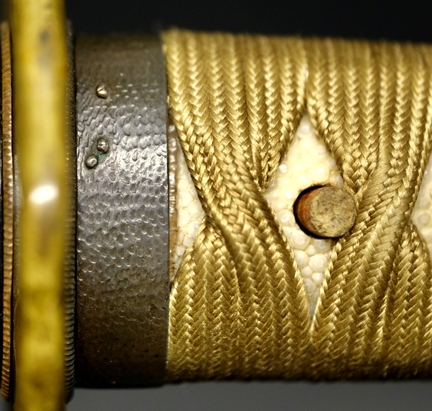
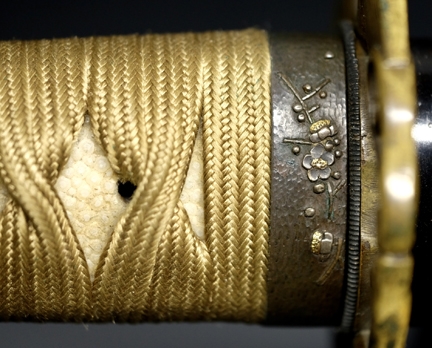
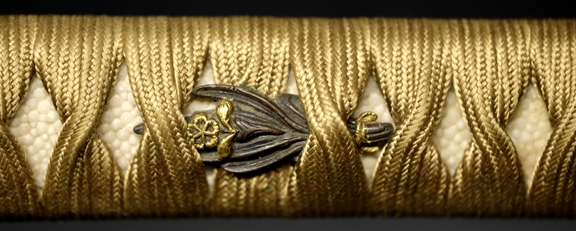



Owari-Seki (Mino-derived Owari shinto; retained by the Owari Tokugawa) · Owari · around 1596-1615
Fujishiro Jo saku · Tōken Taikan top 26%
8 pieces on the market now
Hida no Kami Fujiwara Ujifusa was the son of Wakasa no Kami Ujifusa, born at Seki in Mino in Eiroku 10 and first called Kawamura Isechiyo, later Heijuro. The published sources follow his career closely: a page to Oda Nobutaka who became a ronin after his lord's death, then a retainer of Sakuma Masakatsu in Owari, he moved to Kiyosu and began forging swords from about Tensho 17. In Tensho 19, when the Kampaku Toyotomi Hidetsugu took Kiyosu, Ujifusa, Masatsune and Nobutaka were received at Jurakudai and each presented a blade, and Ujifusa was granted the title Hida no Kami. Those three smiths were counted in later generations as the Owari Sansaku, the makers who established Owari shinto under the Tokugawa. About Keicho 15 to 16 he moved to Nagoya and served Tokugawa Yoshinao as a retained smith; he passed the headship to Bizen no Kami Ujifusa in Kan'ei 8 and died that year at sixty-five. Three generations worked under the name, the first holding Hida no Kami, the second Bizen no Kami, and the third again Hida no Kami, and it is the first generation, the founder, who carries the line's reputation.
His characteristic hand is a broad, unrestrained notare, the temper the published sources name his particular forte. On a wide-bodied katana with shallow sori and an extended large kissaki, the shape they call the archetypal Keicho-shinto sugata, he tempers a generous o-notare as the main tone, mixing gunome and small notare into it, with ashi and yo entering, ko-nie well attached, and patches of uneven mura-nie and yubashiri breaking the line. The same broad manner runs across his naginata and, on his sun-nobi hira-zukuri wakizashi, widens into a box-tinged hako-gatta notare. One such wakizashi the sources call a temper that 'fully and without reserve displays this smith's forte'[[c:1]]. On a dated Keicho 11 katana the same open notare mixed with gunome is named a typical work that clearly shows Ujifusa's own character.
The jigane under that temper is a standing one. Over an itame that tends to rise, at times a large itame or a coarse zanguri jigane, mixed with mokume and flowing toward masame along the shinogi-ji, the ji-nie gathers. It is the grain of the Mino Seki body from which he came, and on his best signed katana the published sources read in it the Shizu manner, calling one blade the finest of his work and the piece that 'most clearly manifests the Shizu style of his native Mino'[[c:2]]. The boshi over this ji is tempered deeply, turning in notare-komi to a ko-maru or o-maru with a long return and hakikake; on his tanto and several other blades it rises instead in tsukiage to a pointed tip, the Sanpin manner of the Mino Mishina smiths. His katana carry a plain bo-hi run through, his naginata a naginata-hi with soe-hi, while figural and devotional carving, which the sources call rare for him, appears only on the hira-zukuri wakizashi.
Within this one hand the published sources draw out two further faces. The first is his most numerous, the wide, shallow-curved, large-pointed body that recalls the look of greatly shortened Nanbokucho blades, qualified, the judges caution, by the sakizori that fixes it as Keicho work; among such pieces some, they note, resemble at a glance the work of Muramasa. The second is rare, and the sources twice mark it as unusual for him: a bright chu-suguha worked with hotsure, nijuba and fine kinsuji over a finely applied ji-nie jigane, the boshi deep and pointed. On these suguha katana the judges read a private aspiration to the superior Soshu masters, naming Go and Samonji, and find a forging well refined and carrying 'an archaic flavor as though he had privately aspired to the superior Sagami masters'[[c:3]]. A Keicho 7 tanto presents the Sanpin boshi in a way that calls Echizen Yasutsugu to mind, yet the larger-scale notare and the stronger, unevenly gathered nie are read as Ujifusa's own.
What sets him apart is the combination the judges keep returning to. He is a Seki smith by descent, and the standing, flowing jigane with masame along the shinogi-ji, the pointed Sanpin boshi and the broad notare all carry that Mino root; but the wide, powerful Keicho-shinto body, the deep nie, and the reach toward Soshu in his suguha work mark the Owari master who served the Tokugawa rather than the provincial Seki hand. His broad open notare distinguishes him from the tighter Mino gunome, and his bright deep-nie suguha from the plainer straight tempers of his peers; the documented careers of Ujifusa, Masatsune and Nobutaka together, received at Jurakudai and remembered as the Owari Sansaku, place him at the founding of a new tradition rather than at the end of an old one.
For the collector he is a well-documented founder rather than a rarity of legend. Fujishiro grades him Jo saku. He has no National Treasures and no Important Cultural Properties; his record runs instead through the Juyo tier, where signed and frequently dated katana, wakizashi, tanto and naginata of the first generation survive in some number, several bearing Keicho-era dates that the published sources prize, calling them 'valuable material for the study of Hida no Kami Ujifusa'[[c:4]]. Because his blades with a Fujiwara Ason signature and a dated tang are uncommon, those dated pieces are held the most instructive of all. Provenance for his work is little recorded, so it is best described simply as held in private hands; a signed first-generation Ujifusa, broad and vigorous and clearly cut with its long signature, comes to market only from time to time, and a dated example is the one a student of Owari shinto would most wish to encounter.
Where Ujifusa stands among comparable artisans: across all of nihontō, and within tradition, era, and period. The tiers (Foremost · Leading · Major · Notable) weigh official designations from the NBTHK and Japan's Agency for Cultural Affairs, together with historical honors of lasting repute such as the Sansaku and Meibutsu-chō.
Select a lens to see how it's measured.
Years he was demonstrably active, proven by signed-and-dated blades
Mino-den · Mino
153 pieces on the market now
Seki (関), in Mino Province, grew from two roots set down in the Nanbokuchō period and rose to become the great center of mass sword production in the late medieval age. The published sources trace the wellspring of Mino swordmaking to Kinju (whose name the commentary also reads Kaneshige), counted since antiquity among the Masamune Jittetsu, the ten disciples of Sōshū Masamune, and to Kaneuji of the Shizu line; the Kokon Meizukushi records Kinju as a native of Tsuruga in Echizen who "crossed over to Seki and resided there," carrying the Sōshū-den manner east. Beneath that Sagami inheritance lay a Yamato foundation, legible in the Tegai descent of the Seki Zensada line through Kaneyoshi, so that the Mino-den the Seki workshops forged stands as a fusion of Yamato grain and Sōshū activity in nie. From this Nanbokuchō founding the name multiplied across the Muromachi period into Sue-Seki, the last and largest body of the tradition; its representative masters at the close of the old-sword age were Magoroku Kanemoto, famed for the sanbonsugi, and Izumi no Kami Kanesada, the smith called Nosada, while the Kanefusa, Ujifusa and Daidō hands worked beside them and the move of Wakasa no Kami Ujifusa to Kiyosu carried the Mino body to the threshold of Owari shintō. A common Mino vocabulary binds the Seki body, however widely its members range. The forging is an itame that stands and runs to masame, often mixed with mokume and nagare, over which rises the cool whitish shirake-utsuri of Mino steel rather than the bright midare-utsuri of Bizen; this pale, standing jigane is the constant tell the judges read first, present alike on Kinju's Nanbokuchō katana, Kaneyoshi's Ōei tachi and Nosada's late-Muromachi blades. Over it the smiths temper gunome into which the pointed togariba of Mino enters, with ko-nie clinging to a tight nioiguchi, ashi and yō, and sunagashi streaming through; the bōshi answers in midare-komi turning to a pointed or jizō-cast ko-maru swept with hakikake. From this shared grammar the individual hands diverge.
Kanemoto fixed the regular three-cedar sanbonsugi of pointed teeth; Kanefusa devised the rounded-head, constricted-waist "Kanefusa midare"; Kinju and the early founders held a calmer, rounder gunome away from the restless Shizu line, their work laid with thicker ji-nie and dry, standing grain. The late masters carried the manner to a higher finish: Nosada wove togariba among rounder forms for a broader temper than Kanemoto's one-sided file, and turned at times to a slender Rai-styled suguha with a hidden gunome; Kaneyoshi held instead to a cool ito-suguha, the disciplined Yamato face of late Seki, lightly broken with ko-gunome. A collector seeks Seki because it is the connoisseur's ground for reading Mino-den across a vast body of signed and attributed work. The kantei runs through the jigane first: the standing, masame-leaning itame and the whitish shirake separate a Seki blade from Bizen and Yamashiro, after which the pointed togariba, the dry nie, and the pointed or jizō bōshi confirm the province; the discriminations the judges draw, Kinju held apart from Shizu by his rounder gunome, Nosada parted from Kanemoto by his breadth, give the eye its anchors. Within the school the standing of the best members is settled: Magoroku Kanemoto for the sanbonsugi, Nosada whom the swordbooks call simply "an excellent master" and the most accomplished of the several Kanesada hands, and the early Kinju as a rare and precious founding name, his record running through the Jūyō tier with the signed pieces few and the long blades attributed den. Signature works carry real provenance: a Kinju tantō presented to the Tokugawa shogunal house in 1679, a Nosada katana borne by a chief retainer of the Kii Tokugawa and a tachi forged for the father of Takeda Shingen, a Kaneyoshi tachi transmitted in the Chikuzen Kuroda family. Beyond connoisseurship, Seki's blades earned a battlefield reputation for cutting; the full hiraniku and stout build of the Sue-Seki katana, made to sever, set the wazamono standing that made Mino the working sword of its age. Learn more →
| Smith | Era | Designated |
|---|---|---|
| Kinju金重 | 1340-1346 | 45 |
| Ujifusa氏房 | 1596-1615 | 16 |
| Kaneyuki金行 | 1350-1352 | 10 |
| Ujifusa氏房 | 1571-1592 | 9 |
| Kanekore兼之 | 1504-1555 | 7 |
Unification closed the mass market, and Seki’s smiths moved to where the new money was: the Mishina line to Kyōto with court titles, Daidō smiths to castle towns across the provinces. Mino became the great technical ancestor of the Shintō age.
We could not find an authenticity certificate on the seller’s listing. Japanese swords and fittings are normally papered by the NBTHK (or the NTHK). Without one, the attribution is the seller’s own assessment and has not been independently verified — treat it with caution and ask the dealer about certification before buying.
All swords sold for $5000 USD or less are considered final! Swords above the $5000 range may be returned for any reason within 48 hrs. Buyer will receive a full refund minus shipping/handling, insurance and or any fees incurred in shipping or sale.
This is a wakizashi by Ujifusa in koshirae. The mei is considered spurious and needs further research. The sword features a notare hamon over kawazu choji and comes with a roiro saya and shakudo menuki.
NihontoWatchgimei · Shinto · nagasa 52.55cm · sori 1.51cm
Owari-Seki (Mino-derived Owari shinto; retained by the Owari Tokugawa) · Owari · around 1596-1615
Fujishiro Jo saku · Tōken Taikan top 26%
8 pieces on the market now
Hida no Kami Fujiwara Ujifusa was the son of Wakasa no Kami Ujifusa, born at Seki in Mino in Eiroku 10 and first called Kawamura Isechiyo, later Heijuro. The published sources follow his career closely: a page to Oda Nobutaka who became a ronin after his lord's death, then a retainer of Sakuma Masakatsu in Owari, he moved to Kiyosu and began forging swords from about Tensho 17. In Tensho 19, when the Kampaku Toyotomi Hidetsugu took Kiyosu, Ujifusa, Masatsune and Nobutaka were received at Jurakudai and each presented a blade, and Ujifusa was granted the title Hida no Kami. Those three smiths were counted in later generations as the Owari Sansaku, the makers who established Owari shinto under the Tokugawa. About Keicho 15 to 16 he moved to Nagoya and served Tokugawa Yoshinao as a retained smith; he passed the headship to Bizen no Kami Ujifusa in Kan'ei 8 and died that year at sixty-five. Three generations worked under the name, the first holding Hida no Kami, the second Bizen no Kami, and the third again Hida no Kami, and it is the first generation, the founder, who carries the line's reputation.
His characteristic hand is a broad, unrestrained notare, the temper the published sources name his particular forte. On a wide-bodied katana with shallow sori and an extended large kissaki, the shape they call the archetypal Keicho-shinto sugata, he tempers a generous o-notare as the main tone, mixing gunome and small notare into it, with ashi and yo entering, ko-nie well attached, and patches of uneven mura-nie and yubashiri breaking the line. The same broad manner runs across his naginata and, on his sun-nobi hira-zukuri wakizashi, widens into a box-tinged hako-gatta notare. One such wakizashi the sources call a temper that 'fully and without reserve displays this smith's forte'[[c:1]]. On a dated Keicho 11 katana the same open notare mixed with gunome is named a typical work that clearly shows Ujifusa's own character.
The jigane under that temper is a standing one. Over an itame that tends to rise, at times a large itame or a coarse zanguri jigane, mixed with mokume and flowing toward masame along the shinogi-ji, the ji-nie gathers. It is the grain of the Mino Seki body from which he came, and on his best signed katana the published sources read in it the Shizu manner, calling one blade the finest of his work and the piece that 'most clearly manifests the Shizu style of his native Mino'[[c:2]]. The boshi over this ji is tempered deeply, turning in notare-komi to a ko-maru or o-maru with a long return and hakikake; on his tanto and several other blades it rises instead in tsukiage to a pointed tip, the Sanpin manner of the Mino Mishina smiths. His katana carry a plain bo-hi run through, his naginata a naginata-hi with soe-hi, while figural and devotional carving, which the sources call rare for him, appears only on the hira-zukuri wakizashi.
Within this one hand the published sources draw out two further faces. The first is his most numerous, the wide, shallow-curved, large-pointed body that recalls the look of greatly shortened Nanbokucho blades, qualified, the judges caution, by the sakizori that fixes it as Keicho work; among such pieces some, they note, resemble at a glance the work of Muramasa. The second is rare, and the sources twice mark it as unusual for him: a bright chu-suguha worked with hotsure, nijuba and fine kinsuji over a finely applied ji-nie jigane, the boshi deep and pointed. On these suguha katana the judges read a private aspiration to the superior Soshu masters, naming Go and Samonji, and find a forging well refined and carrying 'an archaic flavor as though he had privately aspired to the superior Sagami masters'[[c:3]]. A Keicho 7 tanto presents the Sanpin boshi in a way that calls Echizen Yasutsugu to mind, yet the larger-scale notare and the stronger, unevenly gathered nie are read as Ujifusa's own.
What sets him apart is the combination the judges keep returning to. He is a Seki smith by descent, and the standing, flowing jigane with masame along the shinogi-ji, the pointed Sanpin boshi and the broad notare all carry that Mino root; but the wide, powerful Keicho-shinto body, the deep nie, and the reach toward Soshu in his suguha work mark the Owari master who served the Tokugawa rather than the provincial Seki hand. His broad open notare distinguishes him from the tighter Mino gunome, and his bright deep-nie suguha from the plainer straight tempers of his peers; the documented careers of Ujifusa, Masatsune and Nobutaka together, received at Jurakudai and remembered as the Owari Sansaku, place him at the founding of a new tradition rather than at the end of an old one.
For the collector he is a well-documented founder rather than a rarity of legend. Fujishiro grades him Jo saku. He has no National Treasures and no Important Cultural Properties; his record runs instead through the Juyo tier, where signed and frequently dated katana, wakizashi, tanto and naginata of the first generation survive in some number, several bearing Keicho-era dates that the published sources prize, calling them 'valuable material for the study of Hida no Kami Ujifusa'[[c:4]]. Because his blades with a Fujiwara Ason signature and a dated tang are uncommon, those dated pieces are held the most instructive of all. Provenance for his work is little recorded, so it is best described simply as held in private hands; a signed first-generation Ujifusa, broad and vigorous and clearly cut with its long signature, comes to market only from time to time, and a dated example is the one a student of Owari shinto would most wish to encounter.
Where Ujifusa stands among comparable artisans: across all of nihontō, and within tradition, era, and period. The tiers (Foremost · Leading · Major · Notable) weigh official designations from the NBTHK and Japan's Agency for Cultural Affairs, together with historical honors of lasting repute such as the Sansaku and Meibutsu-chō.
Select a lens to see how it's measured.
Years he was demonstrably active, proven by signed-and-dated blades
Mino-den · Mino
153 pieces on the market now
Seki (関), in Mino Province, grew from two roots set down in the Nanbokuchō period and rose to become the great center of mass sword production in the late medieval age. The published sources trace the wellspring of Mino swordmaking to Kinju (whose name the commentary also reads Kaneshige), counted since antiquity among the Masamune Jittetsu, the ten disciples of Sōshū Masamune, and to Kaneuji of the Shizu line; the Kokon Meizukushi records Kinju as a native of Tsuruga in Echizen who "crossed over to Seki and resided there," carrying the Sōshū-den manner east. Beneath that Sagami inheritance lay a Yamato foundation, legible in the Tegai descent of the Seki Zensada line through Kaneyoshi, so that the Mino-den the Seki workshops forged stands as a fusion of Yamato grain and Sōshū activity in nie. From this Nanbokuchō founding the name multiplied across the Muromachi period into Sue-Seki, the last and largest body of the tradition; its representative masters at the close of the old-sword age were Magoroku Kanemoto, famed for the sanbonsugi, and Izumi no Kami Kanesada, the smith called Nosada, while the Kanefusa, Ujifusa and Daidō hands worked beside them and the move of Wakasa no Kami Ujifusa to Kiyosu carried the Mino body to the threshold of Owari shintō. A common Mino vocabulary binds the Seki body, however widely its members range. The forging is an itame that stands and runs to masame, often mixed with mokume and nagare, over which rises the cool whitish shirake-utsuri of Mino steel rather than the bright midare-utsuri of Bizen; this pale, standing jigane is the constant tell the judges read first, present alike on Kinju's Nanbokuchō katana, Kaneyoshi's Ōei tachi and Nosada's late-Muromachi blades. Over it the smiths temper gunome into which the pointed togariba of Mino enters, with ko-nie clinging to a tight nioiguchi, ashi and yō, and sunagashi streaming through; the bōshi answers in midare-komi turning to a pointed or jizō-cast ko-maru swept with hakikake. From this shared grammar the individual hands diverge.
Kanemoto fixed the regular three-cedar sanbonsugi of pointed teeth; Kanefusa devised the rounded-head, constricted-waist "Kanefusa midare"; Kinju and the early founders held a calmer, rounder gunome away from the restless Shizu line, their work laid with thicker ji-nie and dry, standing grain. The late masters carried the manner to a higher finish: Nosada wove togariba among rounder forms for a broader temper than Kanemoto's one-sided file, and turned at times to a slender Rai-styled suguha with a hidden gunome; Kaneyoshi held instead to a cool ito-suguha, the disciplined Yamato face of late Seki, lightly broken with ko-gunome. A collector seeks Seki because it is the connoisseur's ground for reading Mino-den across a vast body of signed and attributed work. The kantei runs through the jigane first: the standing, masame-leaning itame and the whitish shirake separate a Seki blade from Bizen and Yamashiro, after which the pointed togariba, the dry nie, and the pointed or jizō bōshi confirm the province; the discriminations the judges draw, Kinju held apart from Shizu by his rounder gunome, Nosada parted from Kanemoto by his breadth, give the eye its anchors. Within the school the standing of the best members is settled: Magoroku Kanemoto for the sanbonsugi, Nosada whom the swordbooks call simply "an excellent master" and the most accomplished of the several Kanesada hands, and the early Kinju as a rare and precious founding name, his record running through the Jūyō tier with the signed pieces few and the long blades attributed den. Signature works carry real provenance: a Kinju tantō presented to the Tokugawa shogunal house in 1679, a Nosada katana borne by a chief retainer of the Kii Tokugawa and a tachi forged for the father of Takeda Shingen, a Kaneyoshi tachi transmitted in the Chikuzen Kuroda family. Beyond connoisseurship, Seki's blades earned a battlefield reputation for cutting; the full hiraniku and stout build of the Sue-Seki katana, made to sever, set the wazamono standing that made Mino the working sword of its age. Learn more →
| Smith | Era | Designated |
|---|---|---|
| Kinju金重 | 1340-1346 | 45 |
| Ujifusa氏房 | 1596-1615 | 16 |
| Kaneyuki金行 | 1350-1352 | 10 |
| Ujifusa氏房 | 1571-1592 | 9 |
| Kanekore兼之 | 1504-1555 | 7 |
Unification closed the mass market, and Seki’s smiths moved to where the new money was: the Mishina line to Kyōto with court titles, Daidō smiths to castle towns across the provinces. Mino became the great technical ancestor of the Shintō age.
We could not find an authenticity certificate on the seller’s listing. Japanese swords and fittings are normally papered by the NBTHK (or the NTHK). Without one, the attribution is the seller’s own assessment and has not been independently verified — treat it with caution and ask the dealer about certification before buying.
All swords sold for $5000 USD or less are considered final! Swords above the $5000 range may be returned for any reason within 48 hrs. Buyer will receive a full refund minus shipping/handling, insurance and or any fees incurred in shipping or sale.