Muromachi turned sword making into an industry: the uchigatana rose with massed infantry warfare, Osafune and Seki produced bundle swords beside custom orders, and the Ming trade carried Japanese blades abroad by the tens of thousands.
 NihontoWatchNihontoWatch
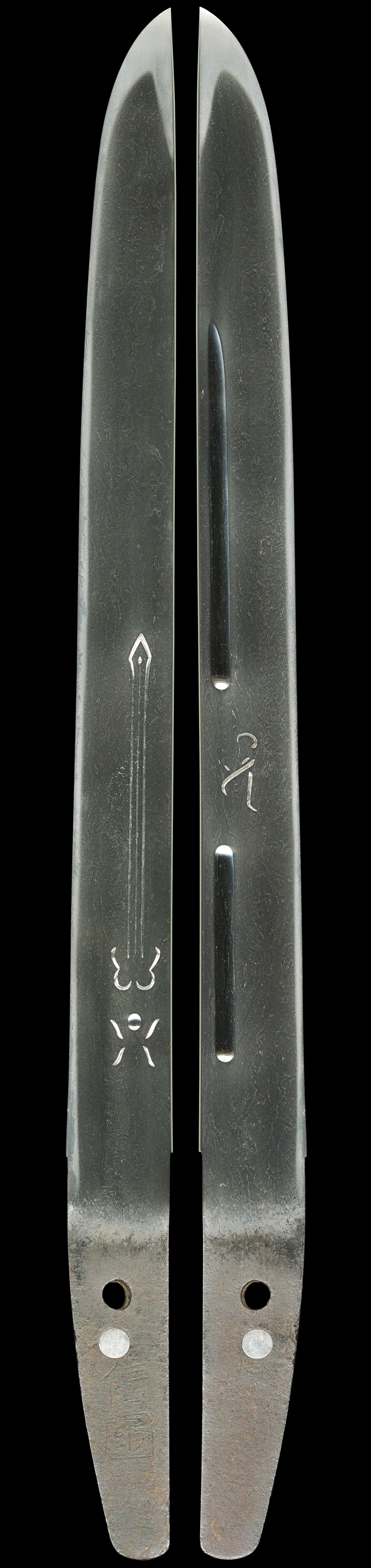
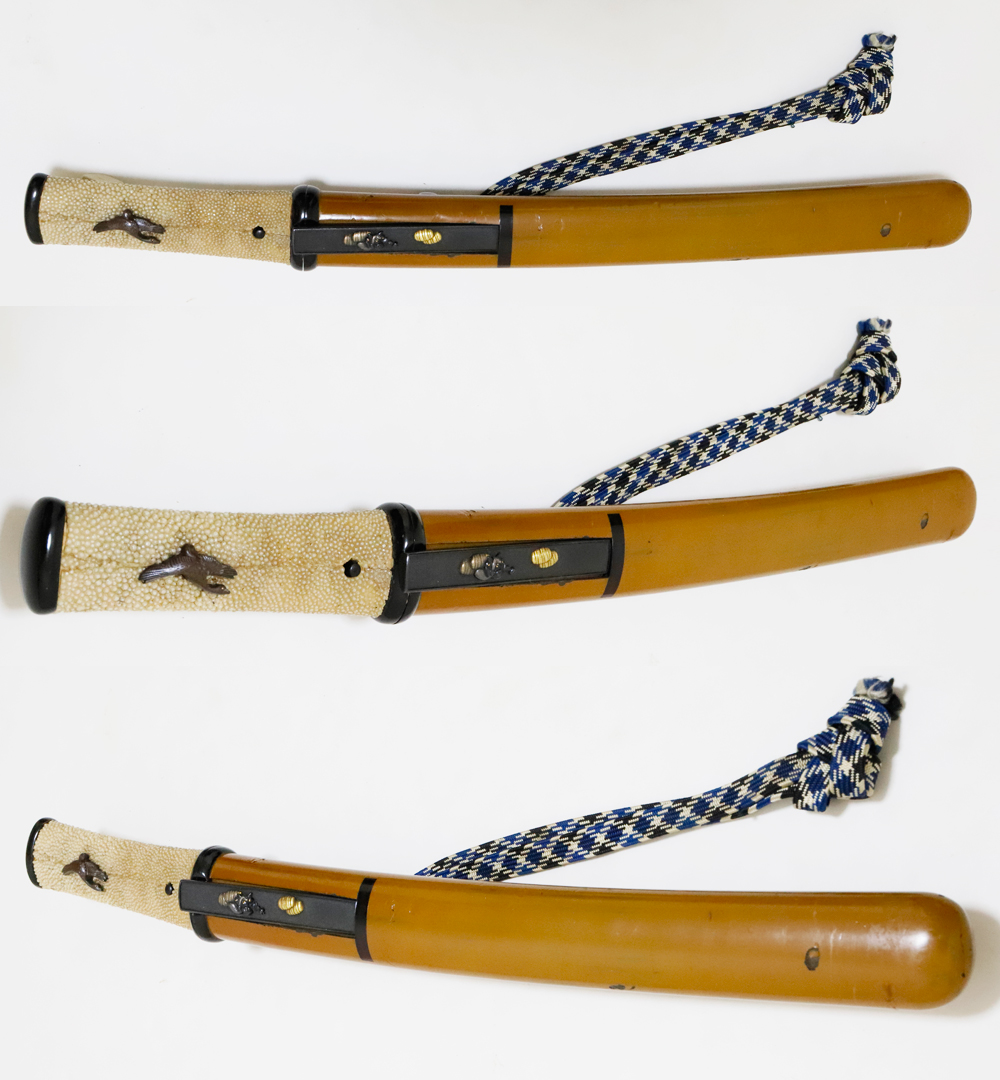
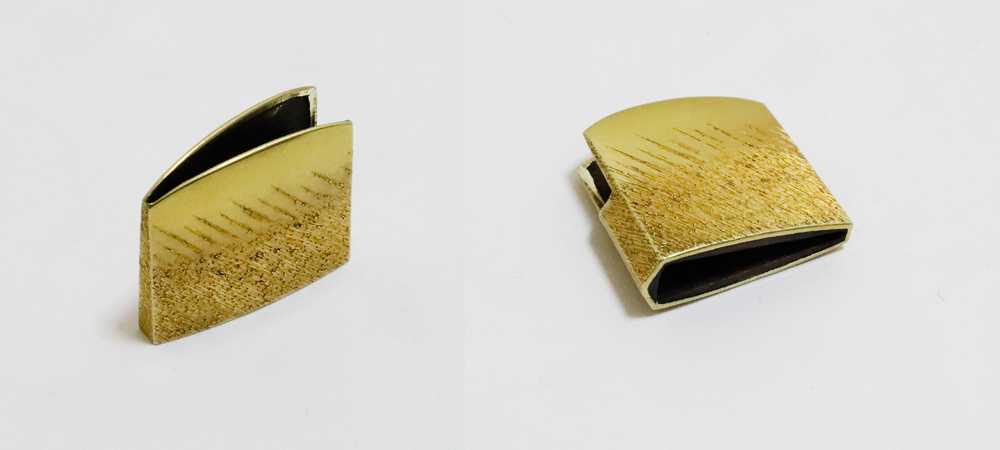
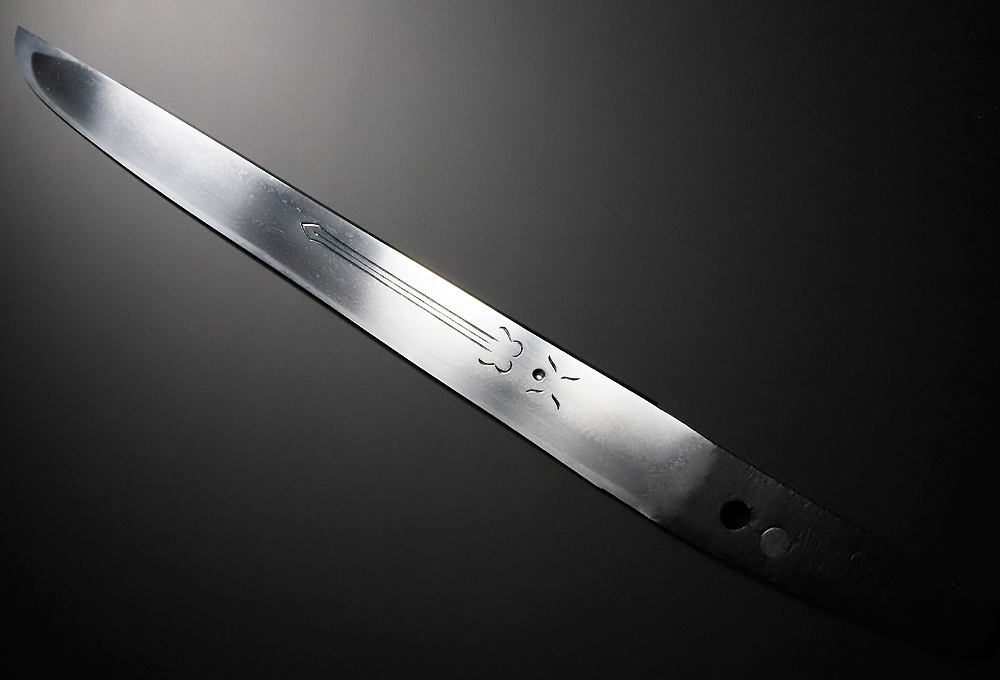
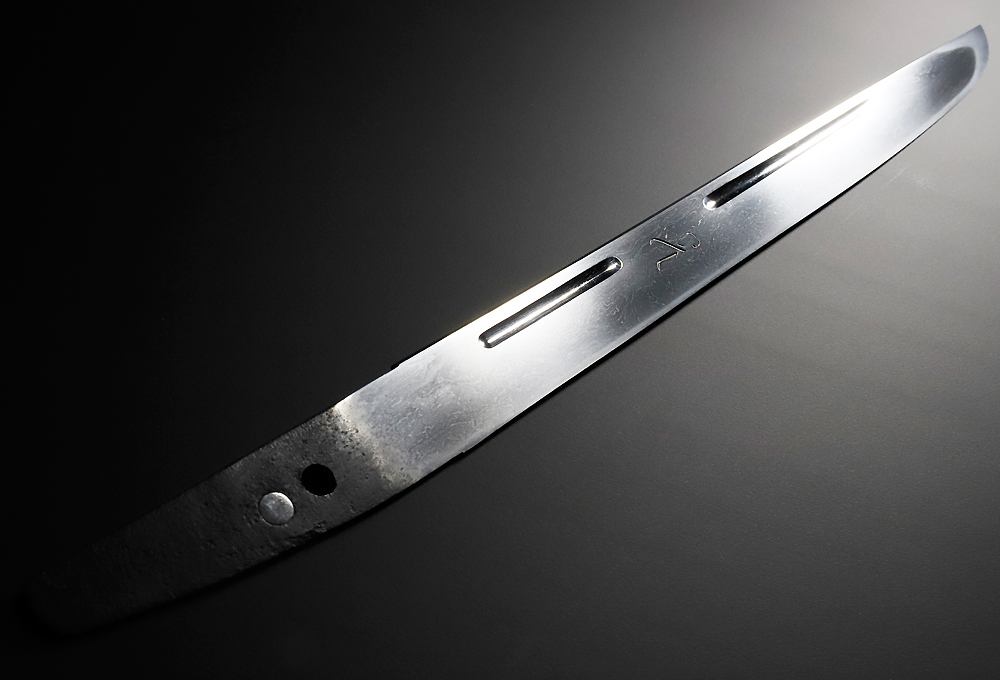
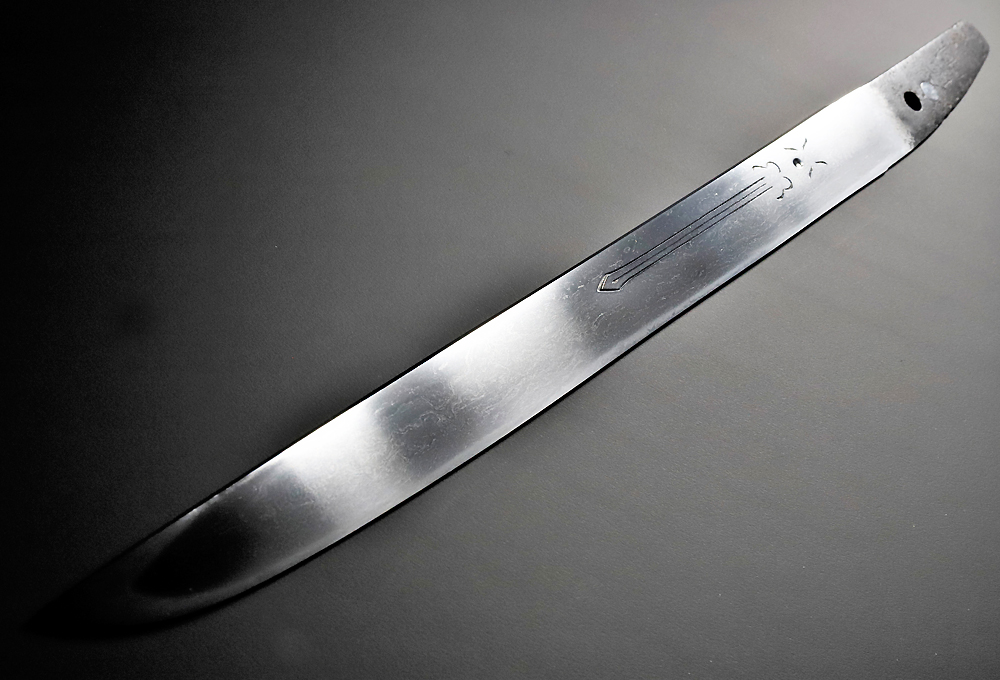
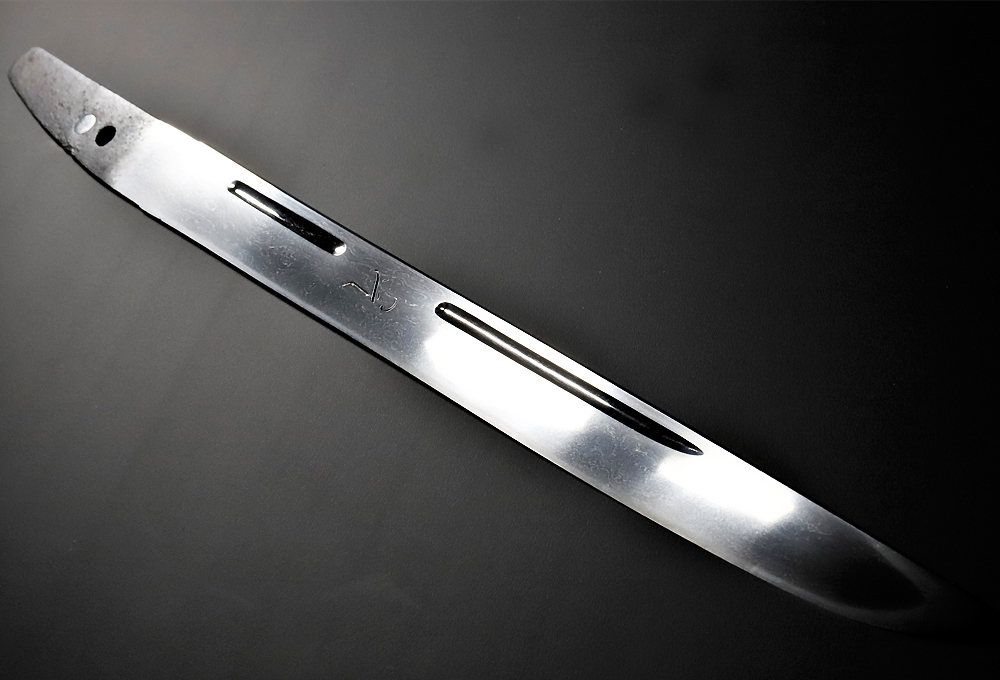
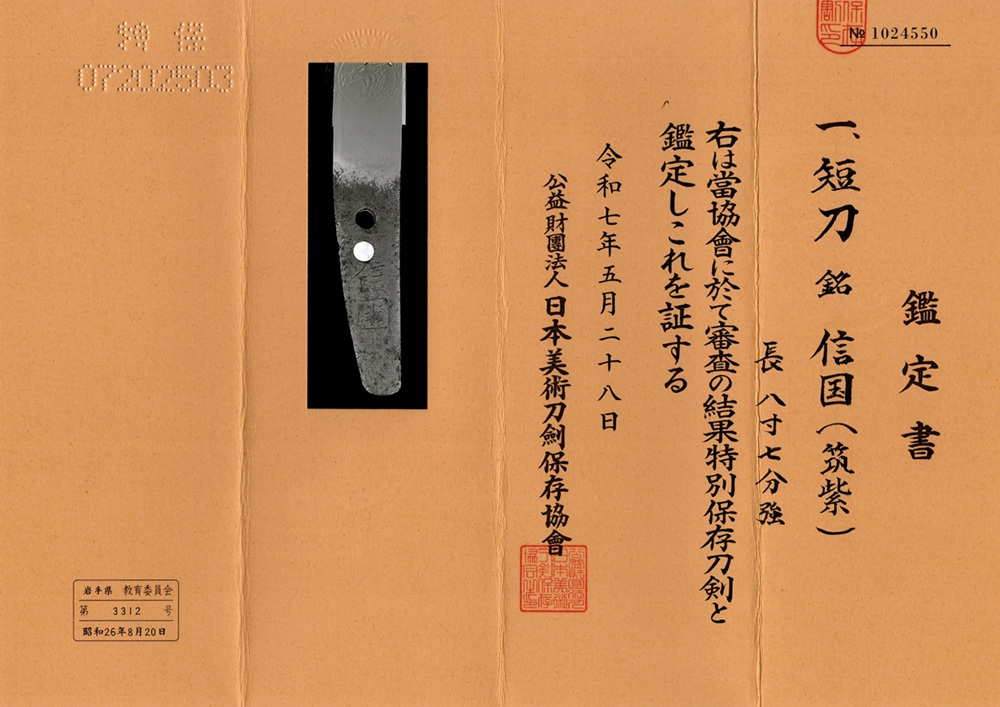
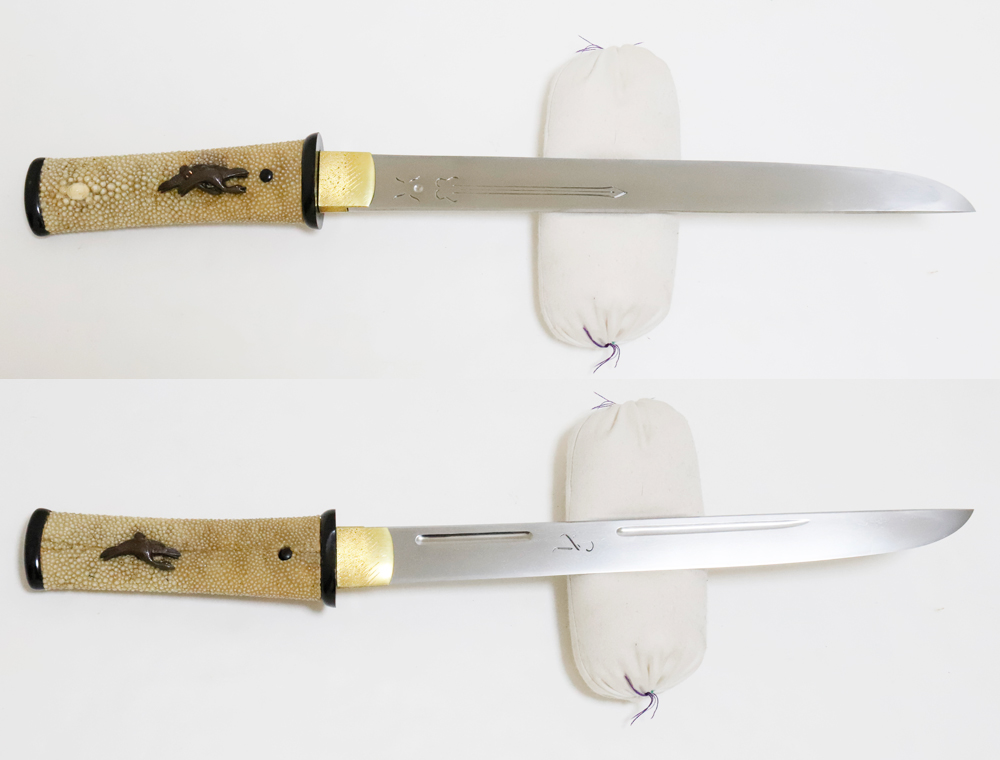
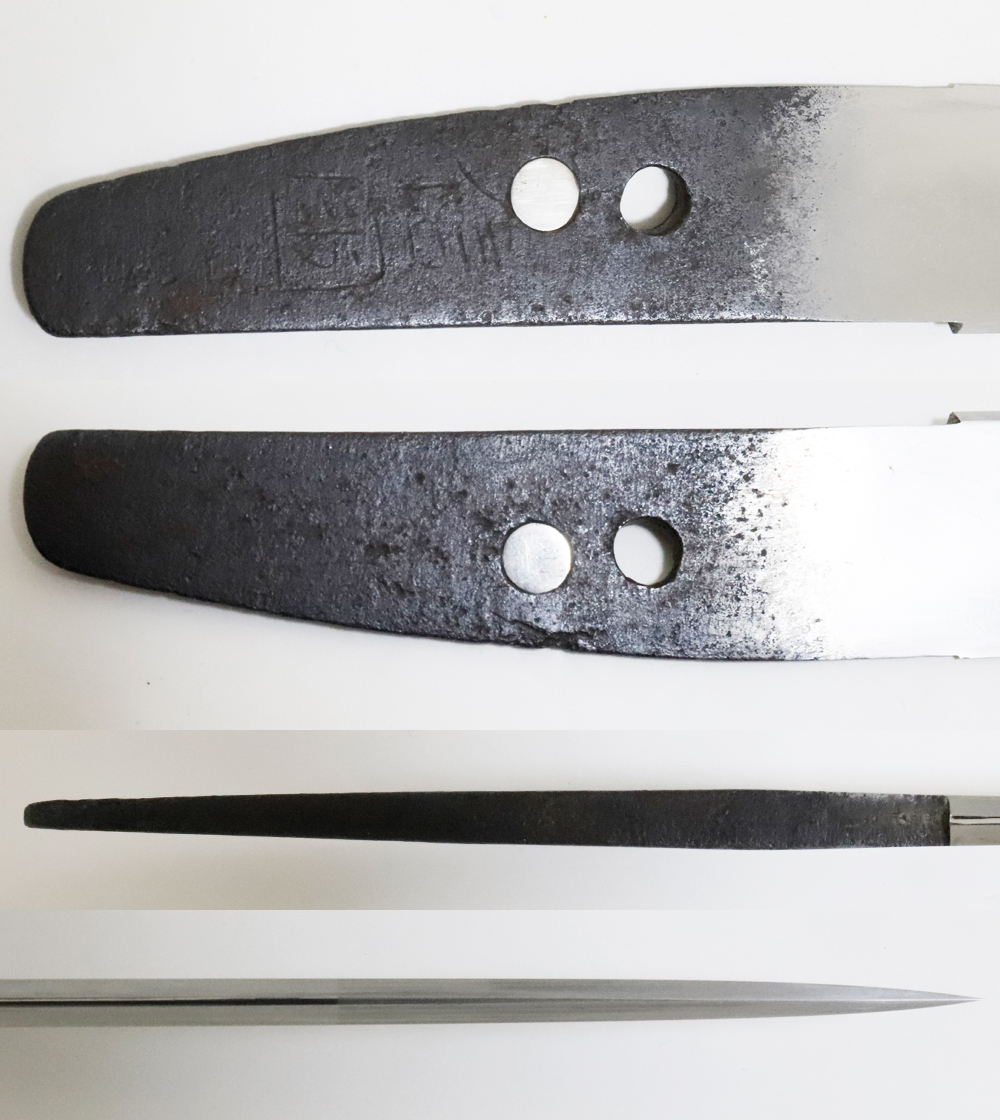
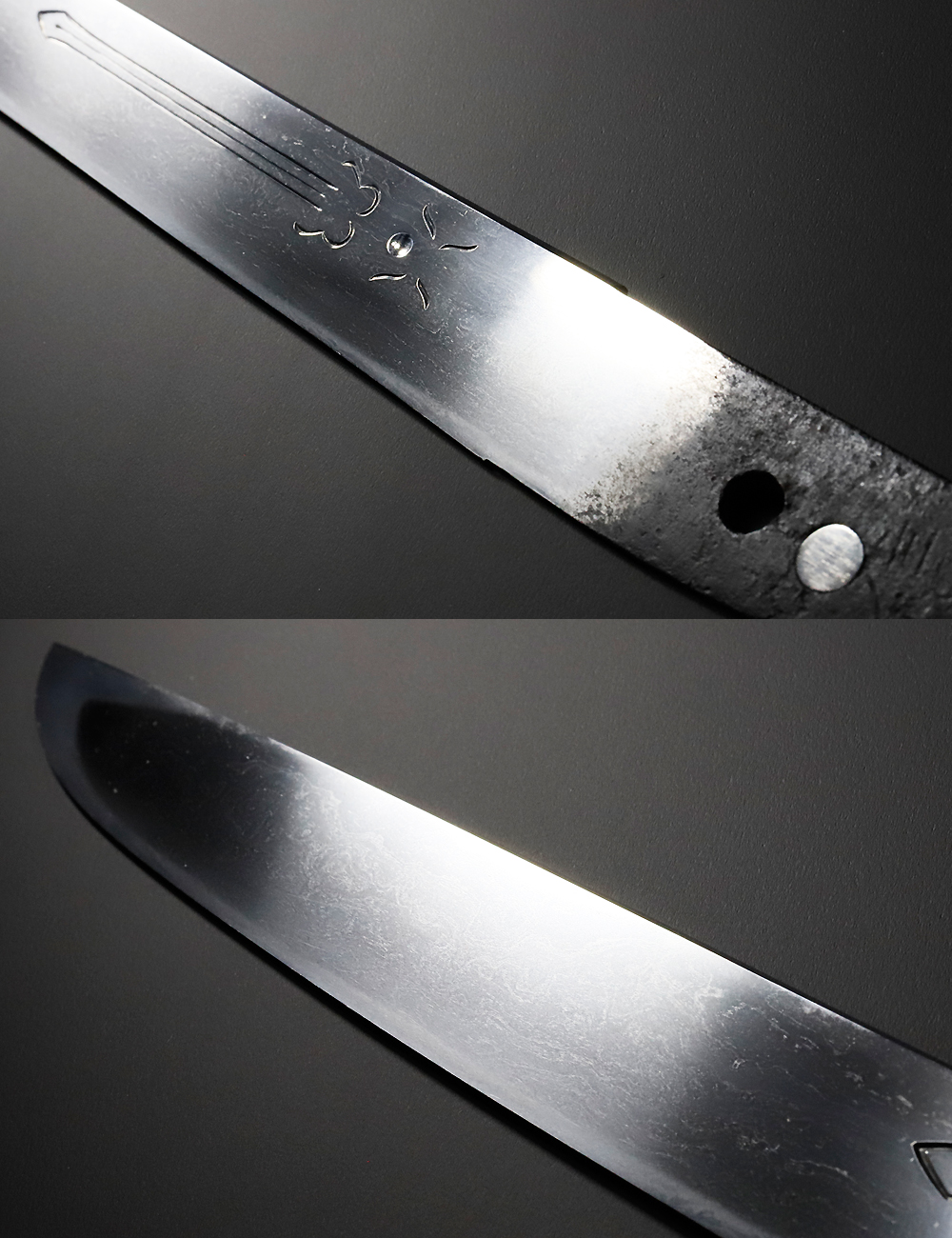
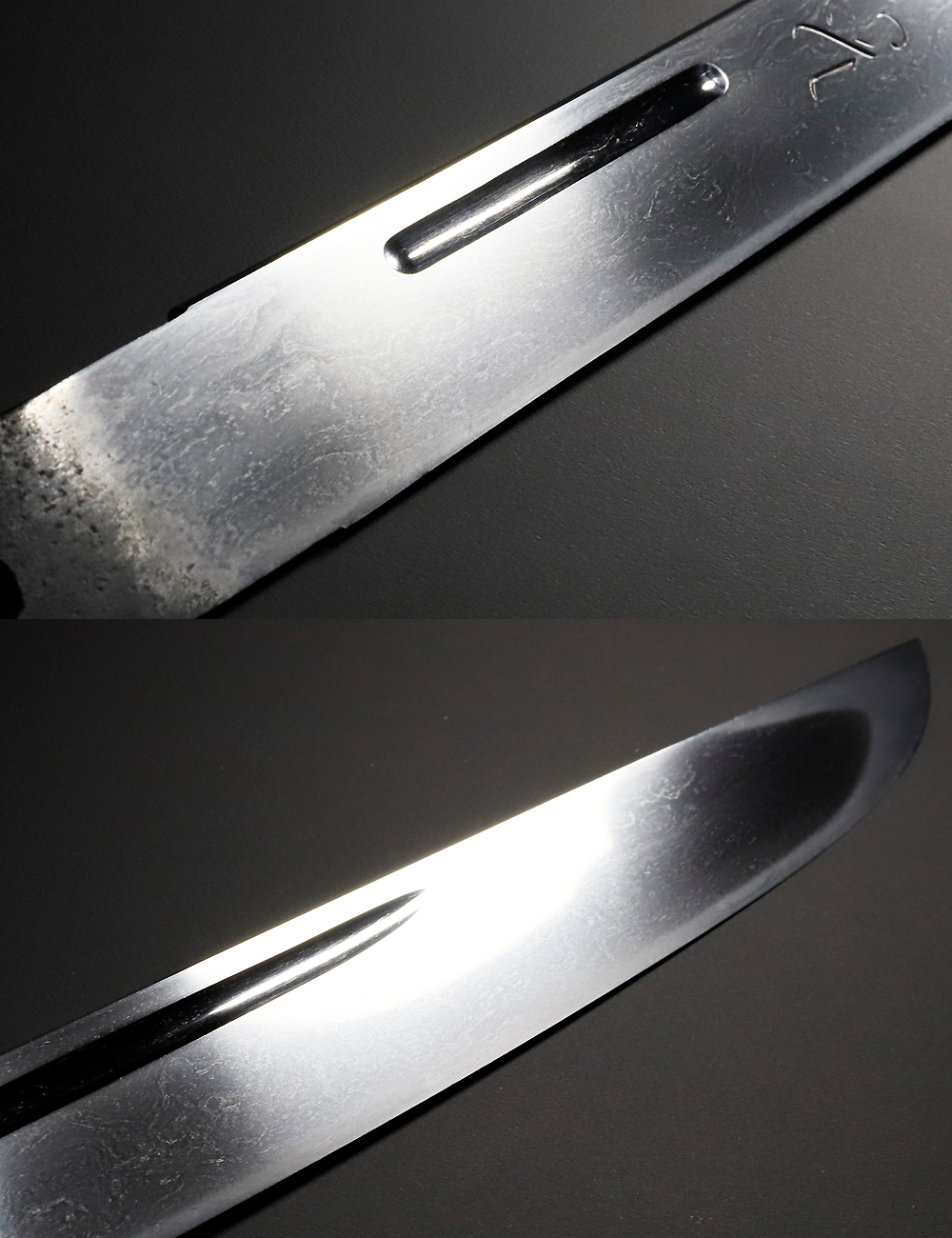
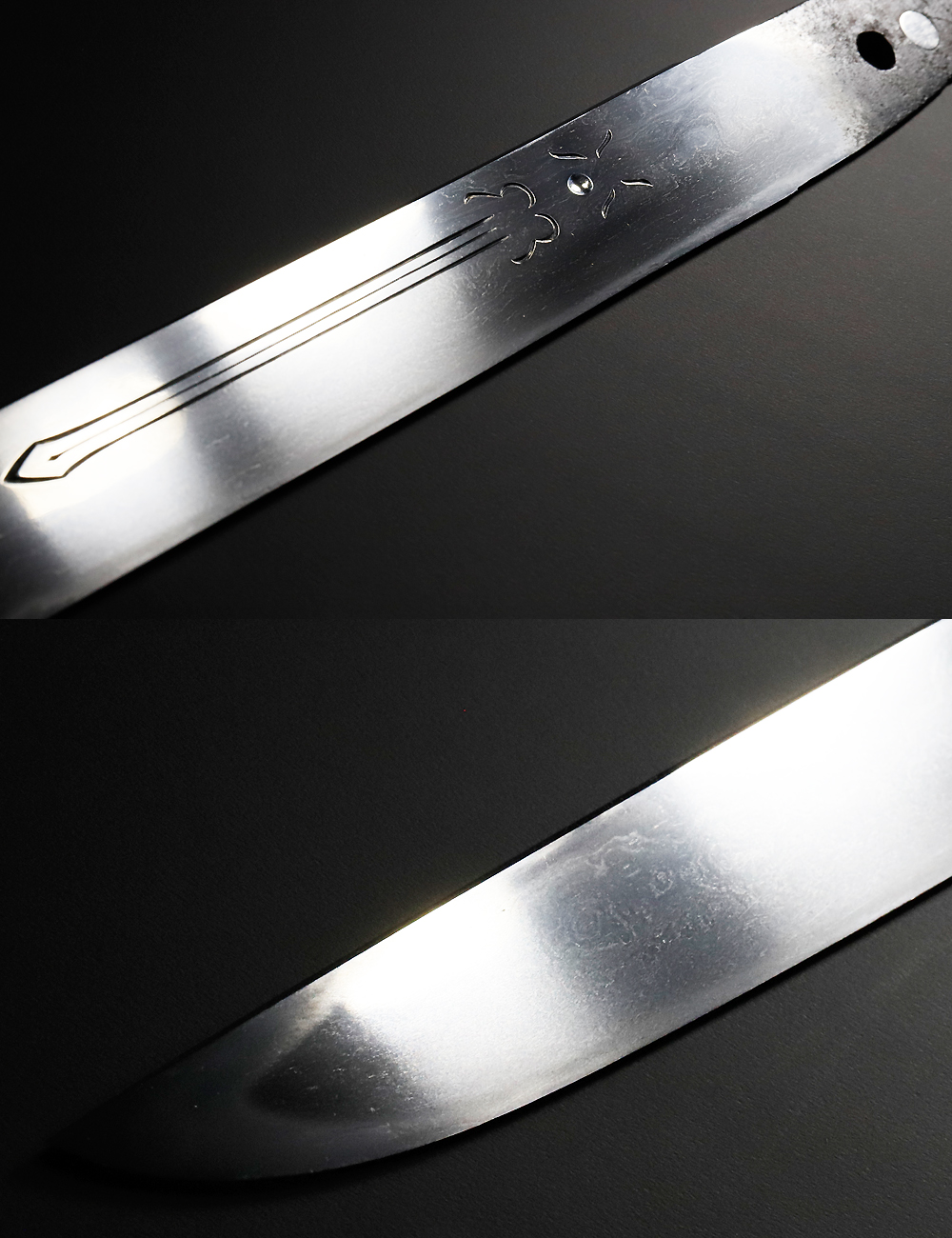
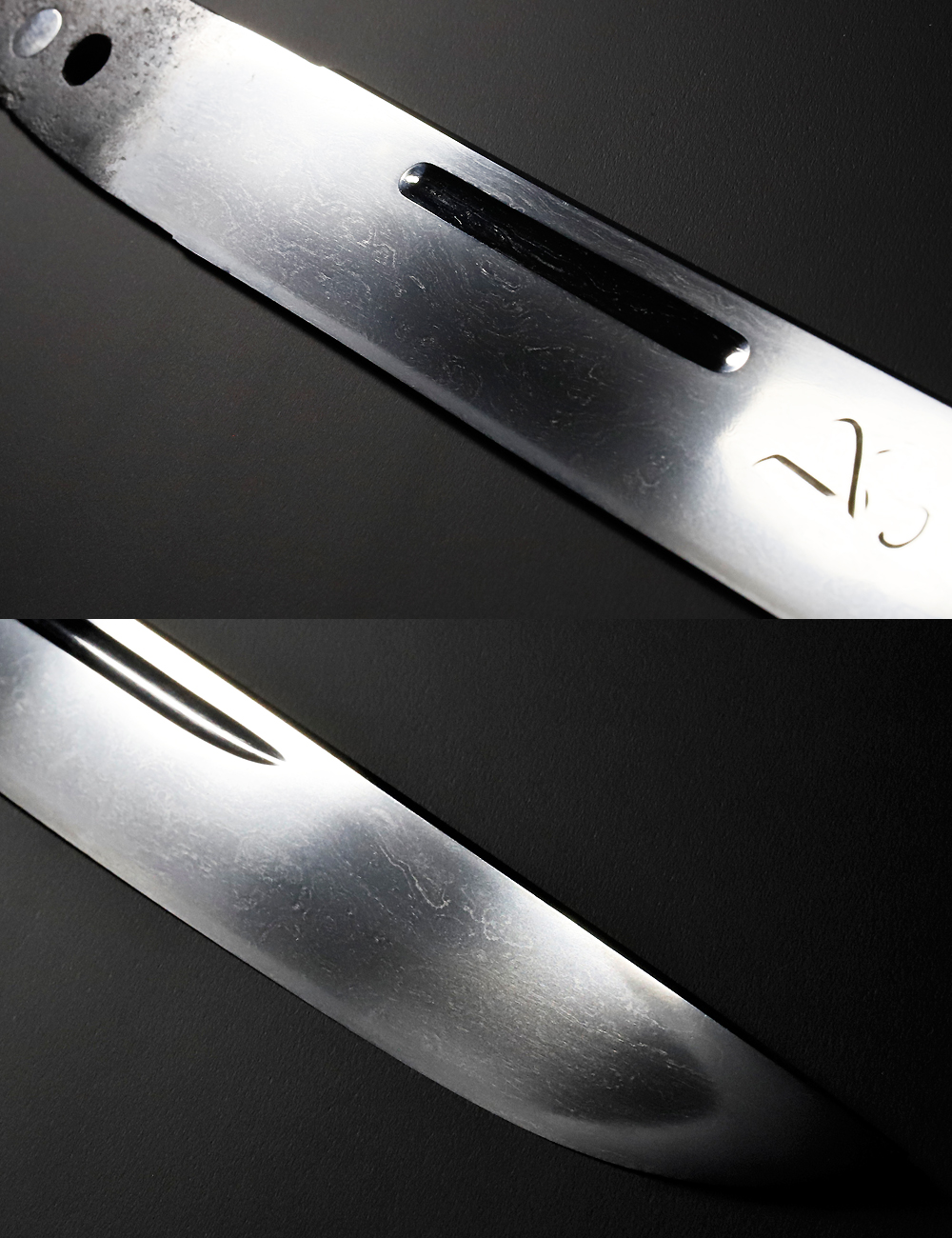
The Nobukuni school is a prestigious school of swordsmiths that originated in Kyoto, Yamashiro Province, during the Nanbokucho period. It is said that the first generation Nobukuni was connected to the lineage of Ryokai of the Rai school and also studied under Soshu Sadamune. They are known for a style that is based on the Yamashiro den while showing the influence of the Soshu den, and the school is particularly noted for its excellent sword carvings. Entering the Muromachi period, Yoshiie, who is said to be the son of the third generation Nobukuni, moved to Usa-gun, Buzen Province, and forged swords while serving the Ajimu clan. In contrast to the Kyo Nobukuni that flourished in Kyoto, the school that moved to Kyushu is called Chikushi Nobukuni. That lineage was passed down to later generations, and they were active as swordsmiths for the Fukuoka domain during the Edo period. This piece is a tanto judged to be by the early Muromachi period Chikushi Nobukuni. It presents a graceful sugata with hira-zukuri, mitsumune, a standard mihaba, thin kasane, and takenoko-zori. The itame-hada, mixed with mokume, is slightly hadadachi, and the hamon is a suguha-cho with a narrow yakihaba, featuring ko-midare mixed with hotsure. On the omote, a suken and tsume-renge are carved, and on the ura, a bonji representing Bishamonten is carved, with a bo-hi and koshi-hi layered over it. The diverse carvings applied to the omote and ura well convey the tradition of the Nobukuni school, which excelled in horimono, and can be said to be the highlight of this piece. This is an early Muromachi period Chikushi Nobukuni tanto, featuring refined ji-ha that inherits the tradition of Yamashiro Nobukuni and precise sword carvings. Passed the Reiwa 7 Tokubetsu Hozon Token shinsa. Comes with a brown urushi-nuri saya aikuchi koshirae.
Offered by Touken Matsumoto


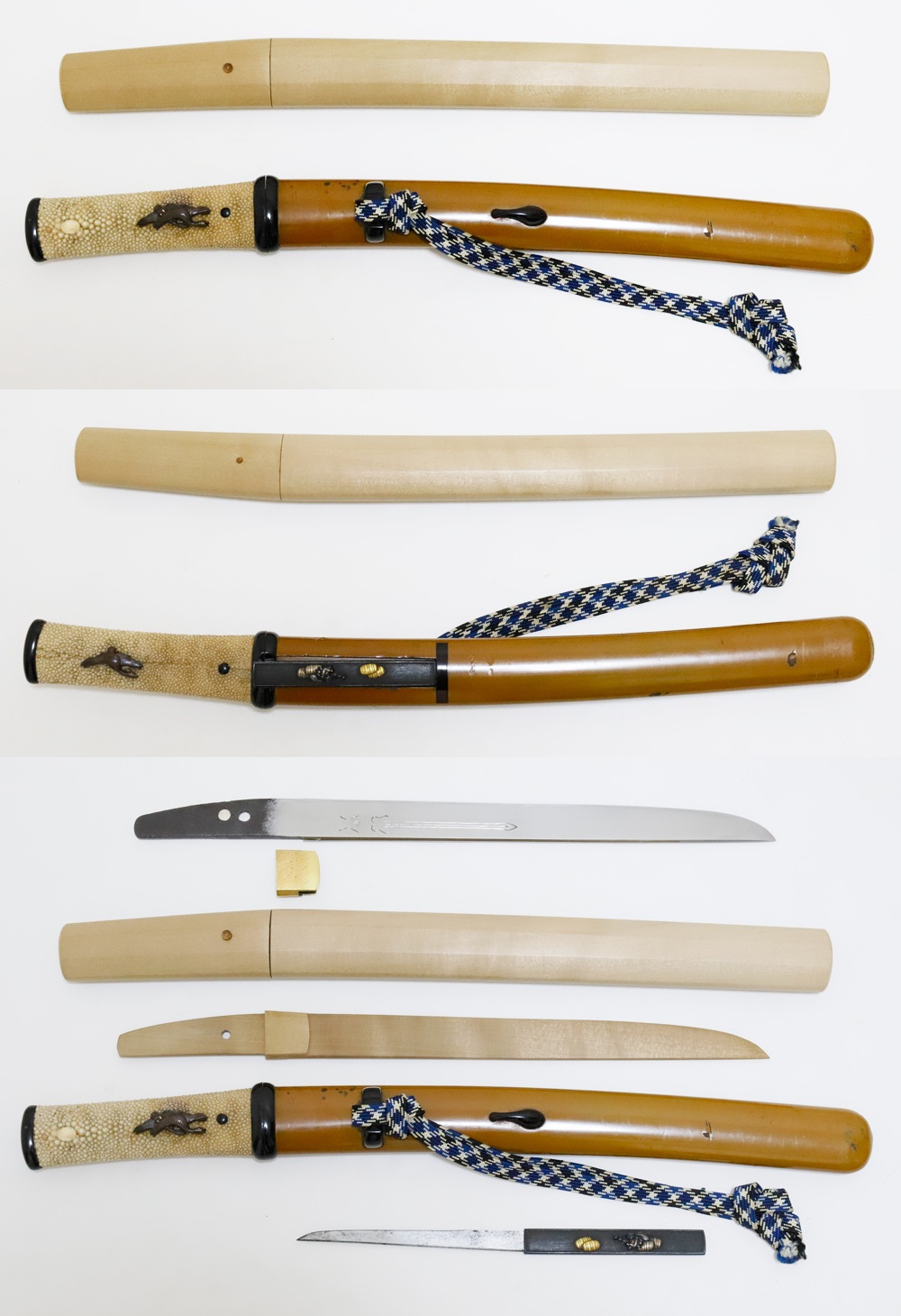
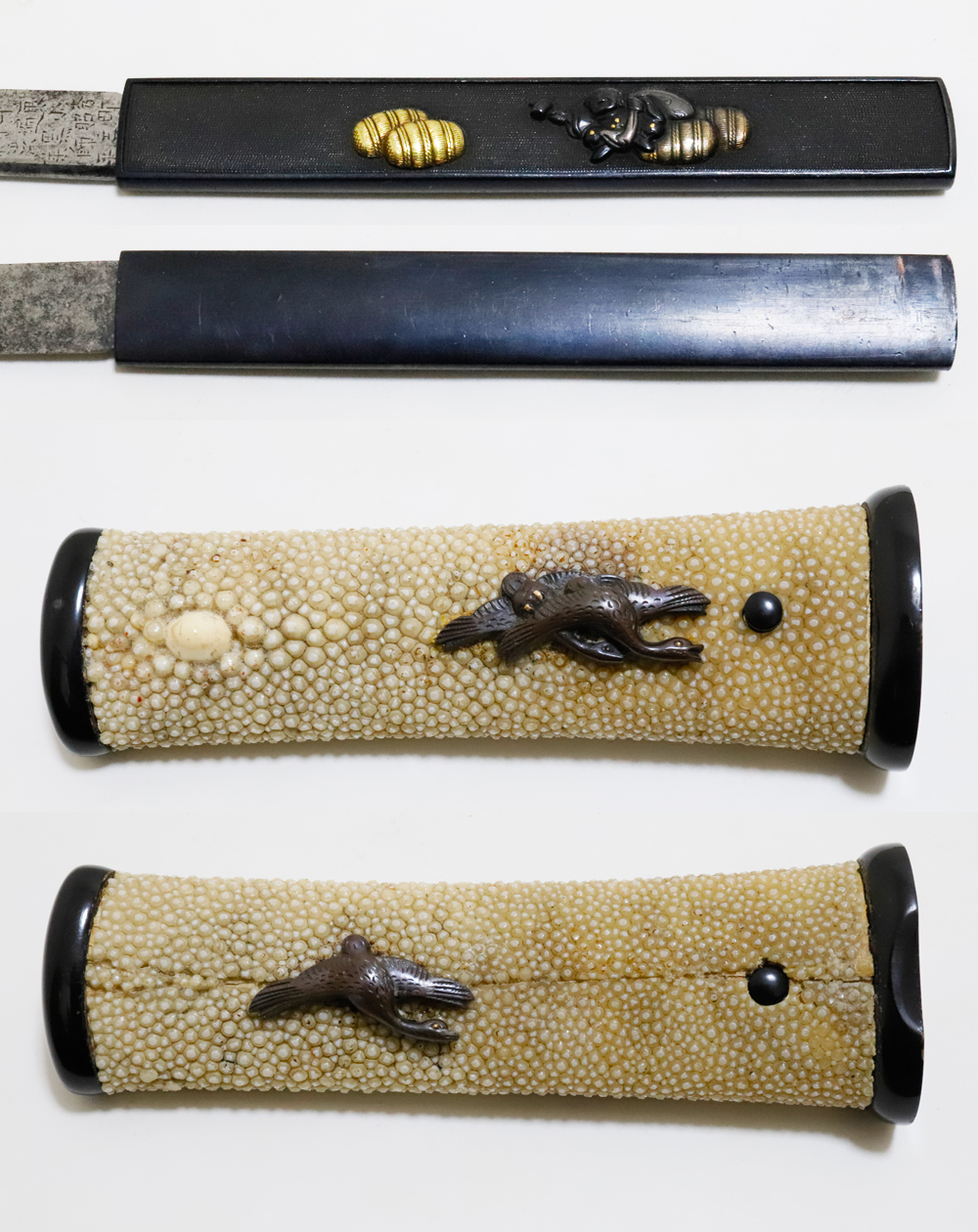
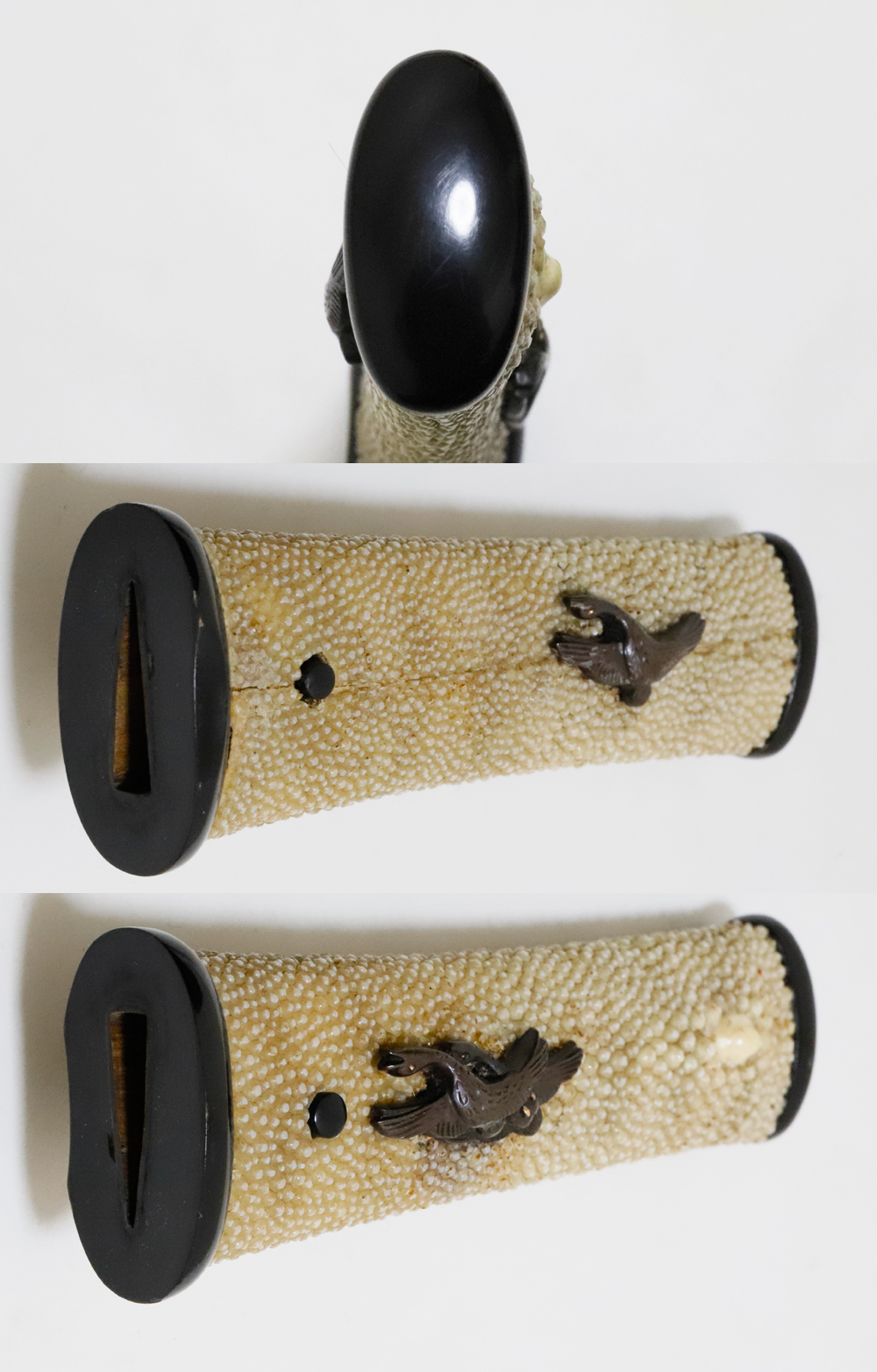
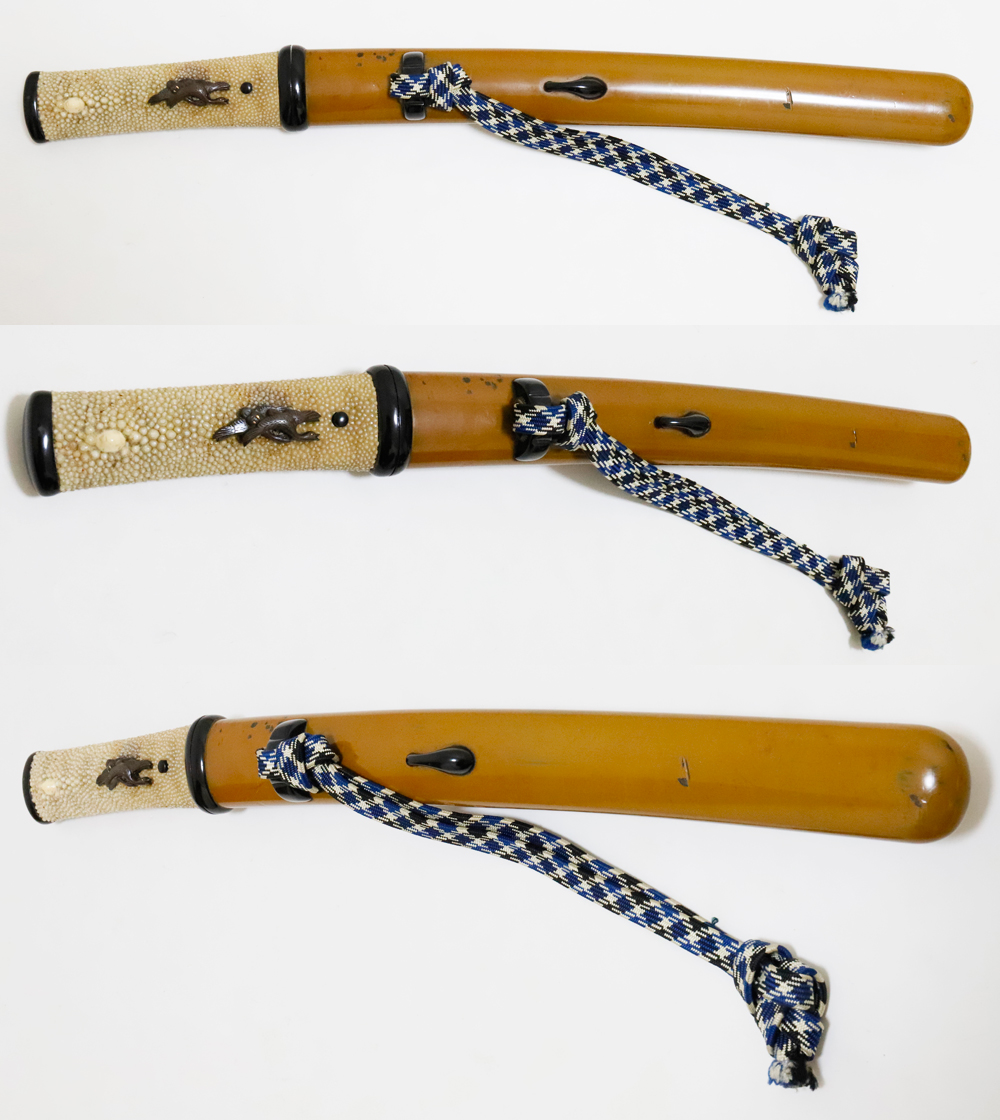
Machine translation of the shop's Japanese ·
Machine translation from the shop's Japanese · may contain errors ·
Yamashiro-den · Yamashiro
24 pieces on the market now
Few Kyoto houses bridged two traditions as deliberately as Nobukuni (信国), the Yamashiro-den lineage whose work runs from the Nanbokucho period through Muromachi and on, in a western branch, into the shinto age. The first generation, the smith the NBTHK counts as shodai, is the master of the Enbun, Koan and Joji years; the older registers placed a founding Nobukuni back in the Kenmu era, but the published sources set that legend aside, since no work survives so early and the style of the oldest dated blades connects directly with that of Sadamune. Two inheritances meet in him. By blood he belongs to the Ryokai line, recorded as son or grandson of Ryo Hisanobu and therefore of Rai descent; by training he is said to have studied under Soshu Sadamune, counted among the Sadamune Santetsu, the three brilliant pupils. The name then passed on: a change-of-generation Nobukuni with Eitoku, Shitoku and Meitoku dates stands at the close of Nanbokucho, and in early Muromachi come the so-called Oei Nobukuni, Saemon-no-jo and Shikibu-no-jo, conventionally the third generation. The published commentary keeps these hands apart and notes that several smiths of the same signature appear within the Nanbokucho period alone. Through Muromachi the line moved to Buzen and then Chikuzen, where it served the Kuroda house of Fukuoka as retained smiths and flourished as the Chikuzen Nobukuni group of Yoshisada, Yoshimasa, Yoshitsugu, Yoshikane and Shigekane. A single steel underlies the whole school. The jigane is an itame mixed with mokume that flows toward the ha and stands into masame, with thick ji-nie and chikei entering frequently; on the finer-forged pieces a streak-like nie-utsuri rises, and that masame-tinged surface is read as the visible token of the Ryokai pedigree.
Over it the temper divides into the manners the sources name together: a suguha expressing the Kyoto tradition, refined in ko-nie with fine hotsure and a niju-ba tendency, carried on tanto and ko-wakizashi; and a ko-notare mixed with gunome inheriting the Sadamune style, laid thick in nie, with kinsuji, sunagashi, hotsure and conspicuous yubashiri, on the most flamboyant pieces stringing into a two-tiered ha. From the late Nanbokucho succession into the Oei generation a third range enters, a gunome-led midare whose tell is paired gunome linked across the valleys by a low ko-notare into a yahazu, arrow-notch, profile, with muneyaki, tobiyaki and niju-ba on the liveliest blades. Above all stands the carving the sources call the house art, the horimono of bonji, kurikara, suken, gomabashi, sanko-ken and the invocation of Hachiman Daibosatsu, often layered one over another in kasanebori; few smiths of the age are so consistently identified by what they carved. The Chikuzen branch carried the masame-leaning itame forward and added a choji-midare with midare-utsuri, Yoshikane reaching toward Soshu-den with deep nioi and thick nie, Shigekane ranked highest in skill within his group and noted as a copyist of meibutsu who emulated Fudo Kuniyuki at the Hama Palace. To kantei Nobukuni is to read the Kyoto traces that part him from Sadamune: the nie-utsuri, the niju-ba, and the hada that drifts into masame along the ha. Within the long succession the shodai remains the touchstone, his dated work the standard against which unsigned blades and generation questions are resolved, the reversed left-form kuni marking the Oei Saemon-no-jo, the yahazu the daigawari hand. The best members rank Jo-jo saku under Fujishiro, and the carving reputation is the constant thread, distinguishing these blades from the plainer utilitarian grooving of contemporary Bizen. Provenance runs through the great houses: the Kuroda wakizashi once carried by Kuroda Nagamasa, a Hongan-ji meibutsu held to have been cherished by Rennyo Shonin, the signed Arao Nobukuni descended in the Asano of Geishu, pieces in the Sanada, Tosa Yamauchi and Tamura families, and a tachi bestowed on the Owari Tokugawa. Examples rest today in the Tokugawa Art Museum, the Kyoto National Museum, shrines such as Atsuta and Ise, and long-held private collections, with the Chikuzen smiths' shogunal-command pieces preserving the historical episodes that produced them. Learn more →
| Smith | Era | Designated |
|---|---|---|
| Nobukuni信國 | 1356-1368 | 70 |
| Nobukuni信國 | 1383-1392 | 33 |
| Nobukuni信國 | 1394-1428 | 44 |
| Yoshikane吉包 | 1661-1686 | 6 |
| Masanobu正信 | 1356-1361 | 4 |
The Muromachi period (1392 to 1573)
Muromachi turned sword making into an industry: the uchigatana rose with massed infantry warfare, Osafune and Seki produced bundle swords beside custom orders, and the Ming trade carried Japanese blades abroad by the tens of thousands.
A Hozon-certified blade judged to show notably superior workmanship and a better state of preservation. The bar is higher: re-tempered blades and most unsigned Muromachi/Edo works are excluded.
The NBTHK (Nihon Bijutsu Tōken Hozon Kyōkai, the Society for the Preservation of Japanese Art Swords) is a public-interest incorporated foundation founded in 1948 and supervised by Japan’s Agency for Cultural Affairs (Bunkachō); it is based at the Japanese Sword Museum in Tokyo. Its expert panels physically examine each submitted work (shinsa) and issue a certificate (kanteishō) ranking it by artistic and historical merit. NBTHK papers are the most widely recognized standard of authentication for Japanese swords and fittings.
NBTHK official siteReturns within 7 days of the item's arrival. Returns are not possible if (1) the item has been altered, or (2) for overseas transactions.
¥500,000