Edo was the sword’s age of connoisseurship: the Hon’ami appraisers, the shogunal register of famous blades of 1719, and a thriving literature turned the sword into an object of study even as it ceased to be drawn in war.
 NihontoWatchNihontoWatch
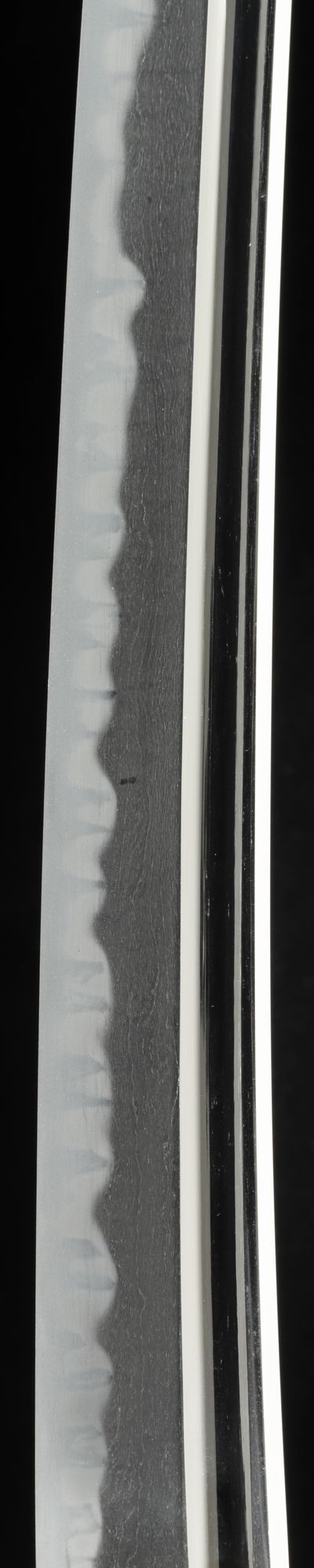
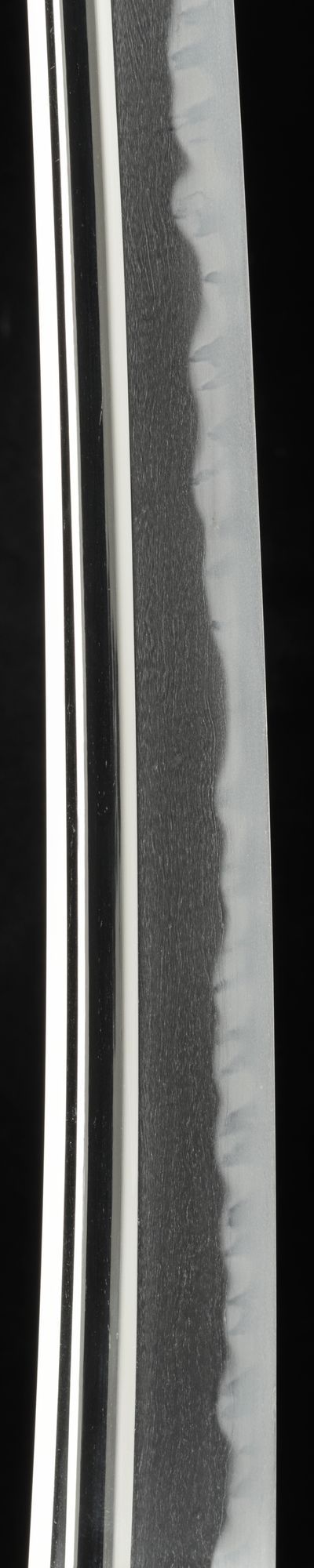
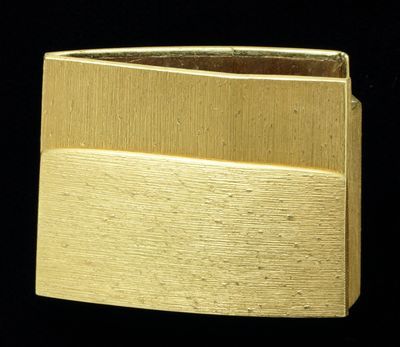
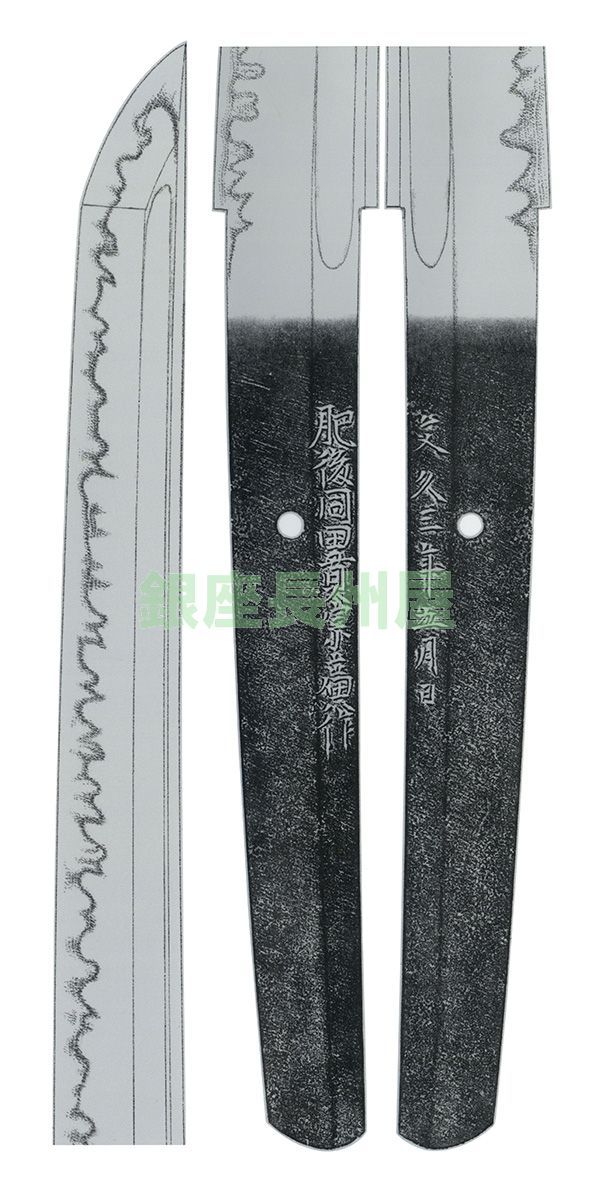
Moto-haba (width at Ha-machi) approx. 3.49cm Saki-haba (width at Kissaki) approx. 2cm 同田貫宗廣は戦国期の同田貫上野介の十代孫で、名を小山延壽太郎という。肥後藩士で刀工の沼田有宗(注1)に師事し、初銘を直廣と切り、古作を範に意欲的に鎚を振るい、天保二年から明治四年頃までの作品がある。元先とも身幅が広く大鋒に仕立てた与三左衛門尉祐定写しの弘化二年紀の脇差、草倶利迦羅と梵字に護摩箸彫の映えた南北朝期の腰刀を想起させる慶応三年紀の平造脇差等の遺作(注2)がある。 二尺五寸近い長寸のこの刀は、身幅も広く重ねが極めて厚く三分を超え、しかも刃肉がたっぷりと付き、棒樋が掻かれて重量が調整されて尚ずしりと重く、先反りが付いて中鋒に造り込まれた、同田貫鍛冶が活躍した戦国時代の刀を想わせる剛毅な姿。地鉄は柾目主調の板目肌で、地景が太く入って肌模様が鮮明になり、厚く付いた地沸は柾肌と共に流れ、映りが立つ。互の目乱の刃文は二つ連れた尖りごころの刃、矢筈風の刃、牛角形の刃を交えて高低に変化し、匂口締まりごころに小沸が付いて焼頭が匂で尖り、刃中も匂で澄む。帽子は乱れ込んで丸く返り、美濃風の地蔵帽子となる。栗尻が張った茎の保存状態は良好で、横鑢から始まるやや急な筋違の鑢目、鎬地に鑚強く入念に刻された小振りの銘字も師沼田有宗と同じく特徴的。剛腕の武士の需であろう、孫六兼元を範に精鍛された一刀で、出来が優れている(注3)。 注1...水心子正秀の刀剣書に心酔して鍛刀し、『刀剣疑解』を著した。「肥後國有宗」と銘した天保四年二月日紀の与三左衛門尉祐定写しの刀がある(本号有宗参照)。
NihontoWatchOffered by Choshuya
This piece has sold
10 on the market
Get an email when a new Dotanuki Munehiro piece hits the market.






Bizen-den · Higo · around 1830-1868
Tōken Taikan top 87%
Bizen-den · Higo
10 pieces on the market now
The Dōtanuki (同田貫) line took shape in Kikuchi District of Higo Province toward the close of the Muromachi period and carried its activity forward into the shintō era, spanning the Momoyama transition into early Edo. The setsumei of the group's own blades name several of its hands: Ueno no Suke, whose dated work runs from Tenshō through Keichō and who is therefore described as a maker active across the divide between old and new traditions; Fujiwara Masakuni, treated as a leading smith of the school; Masahiro, whose naginata the register notes is absent from the meikan and so supplements that omission; and Matahachi. The accounts further list Samanosuke, Hyōbu, Matahachizaemon, and Kunikatsu among the line's signing smiths. The group is repeatedly framed as a representative Kyūshū lineage of the period, working in the domain that would become the ground of Higo's later military culture. The shared vocabulary of the setsumei is plain and consistent. The sugata is described as sturdy and uncompromising, bukotsu, with wide mihaba, thick kasane, and ample hiraniku, and little difference between base and tip width; on swords the sakizori can be pronounced and the chū-kissaki extended, while the spears and large naginata show flaring, full heads. The kitae is itame, often with nagare and mokume mixed in and a tendency toward hada-dachi, with ji-nie adhering and chikei at times visible.
The hamon moves between two registers: a notare base mixed with ko-gunome, ko-chōji, and ko-togariba, and a quieter suguha with ko-ashi and yō; across both the nioiguchi tends to be tight, nie gathers densely, and sunagashi, kinsuji, tobiyaki, and muneyaki recur. The hand is recognized by this combination of robust unrefined build and a midareba whose tight nioiguchi and clustered nie read as rustic rather than ornamental. The register notes a shizumi-gokoro, a subdued tendency in both ji and ha, that lends a restrained austerity. " The setsumei return again and again to cutting power: the sharpness of these blades is highly praised, and they are recorded as practical weapons carried into use. Provenance survives in mounted form, including a naginata by Masakuni accompanied by a black lacquer mounting with gold maki-e judged contemporary with the blade, and a Matahachi naginata with its black-lacquered pole mounting. Within the line, individual works are singled out as superior examples that convey the school's character, the Ueno no Suke katana of Keichō 16 being read as exceptionally fine among its peers. The register places Dōtanuki as a Higo lineage whose unadorned strength and cutting reputation hold a recognized standing in the shintō-period record. Learn more →
| Smith | Era | Designated |
|---|---|---|
| Muneharu宗春 | 1865-1868 | 0 |
| Kunikatsu國勝 | 1558-1570 | 0 |
| Kagemasa景和 | 1596-1615 | 0 |
| Munehiro宗廣 | 1830-1868 | 0 |
| Kozukenosuke上野介 | 1596-1615 | 0 |
The Edo period (1615 to 1868)
Edo was the sword’s age of connoisseurship: the Hon’ami appraisers, the shogunal register of famous blades of 1719, and a thriving literature turned the sword into an object of study even as it ceased to be drawn in war.
A Hozon-certified blade judged to show notably superior workmanship and a better state of preservation. The bar is higher: re-tempered blades and most unsigned Muromachi/Edo works are excluded.
The NBTHK (Nihon Bijutsu Tōken Hozon Kyōkai, the Society for the Preservation of Japanese Art Swords) is a public-interest incorporated foundation founded in 1948 and supervised by Japan’s Agency for Cultural Affairs (Bunkachō); it is based at the Japanese Sword Museum in Tokyo. Its expert panels physically examine each submitted work (shinsa) and issue a certificate (kanteishō) ranking it by artistic and historical merit. NBTHK papers are the most widely recognized standard of authentication for Japanese swords and fittings.
NBTHK official siteIf, due to our fault, the item differs significantly from its proper condition, the item may be returned. Cooling-off is within one week of the item's arrival.