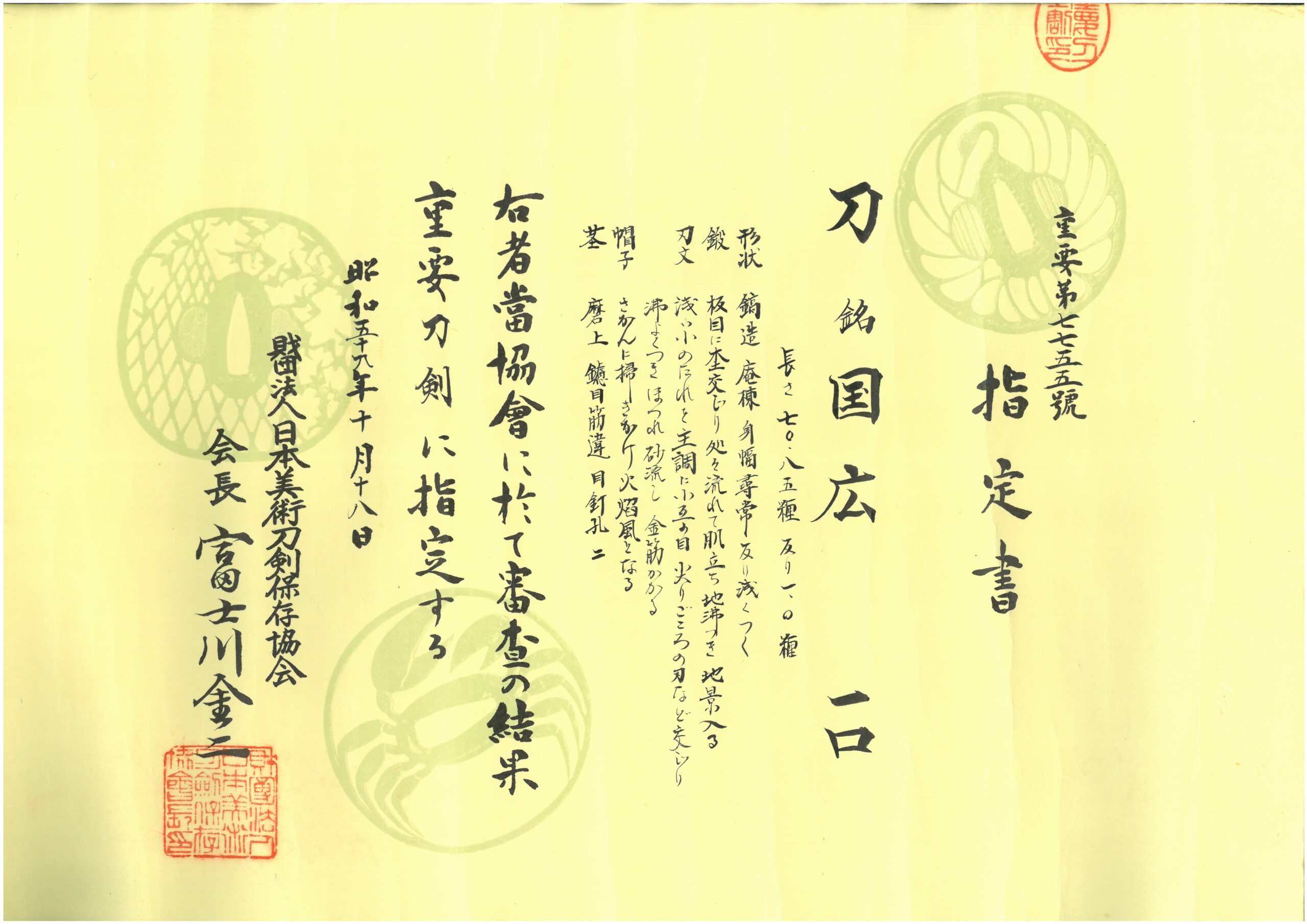
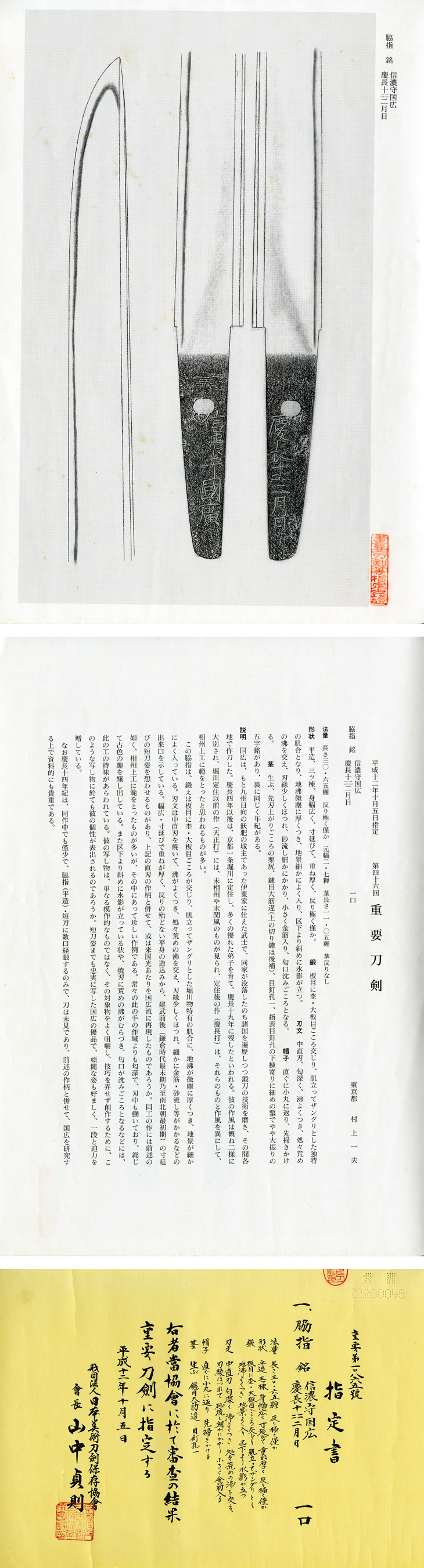
-, 46th Session — Designated October 5, 2000
, : Shinano no Kami Kunihiro (信濃守国広)
Measurements 30.65 cm, extremely slight, 2.7 cm, 11.05 cm, none
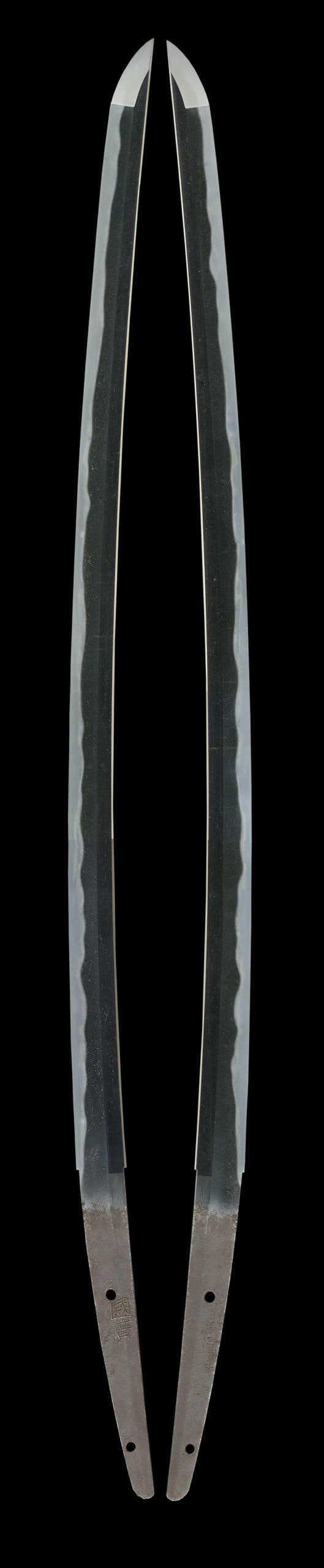
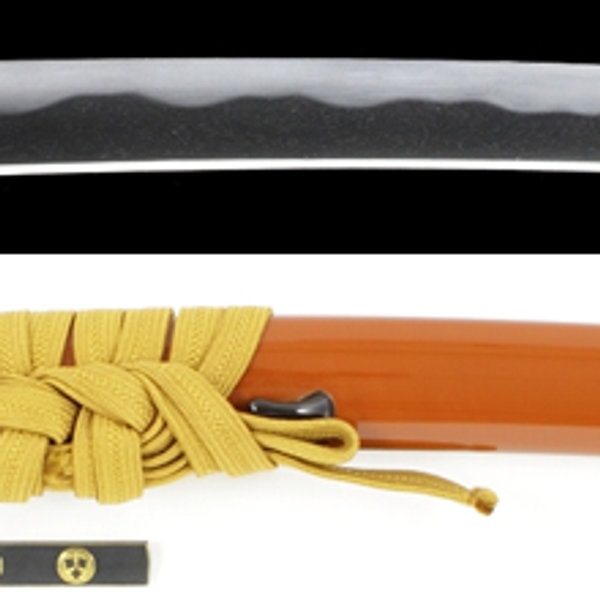
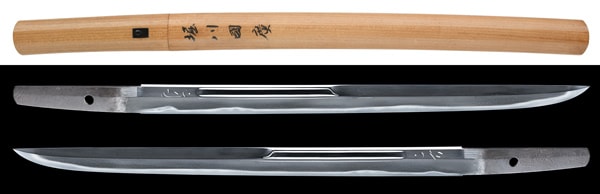
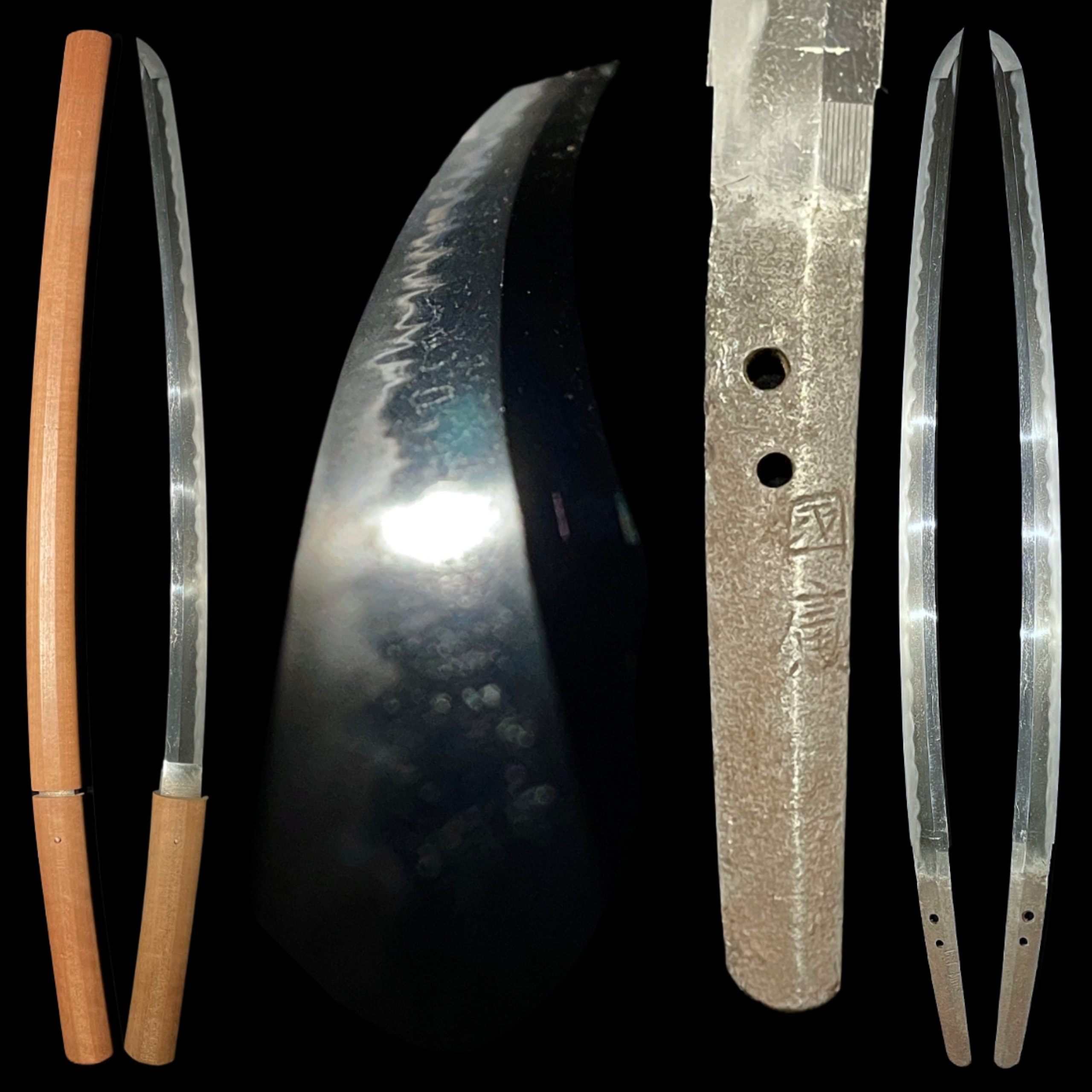
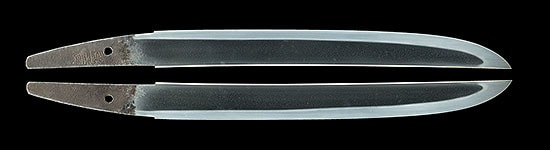
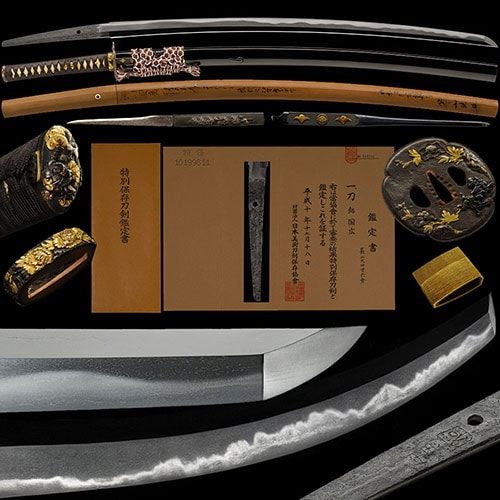
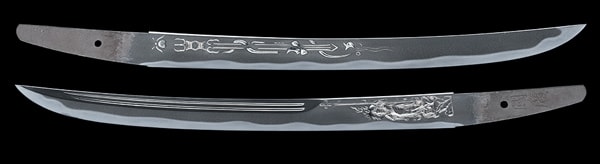
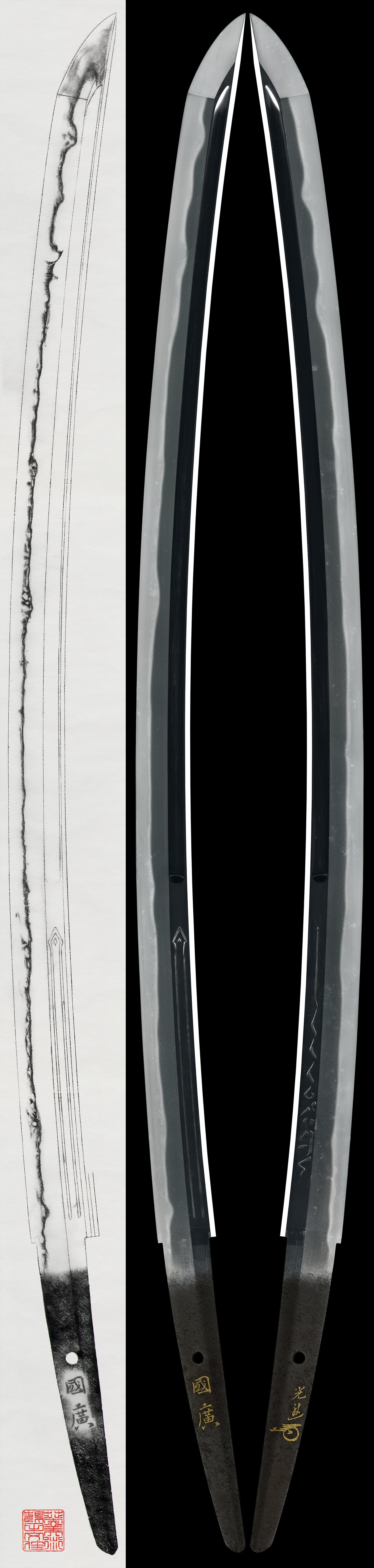
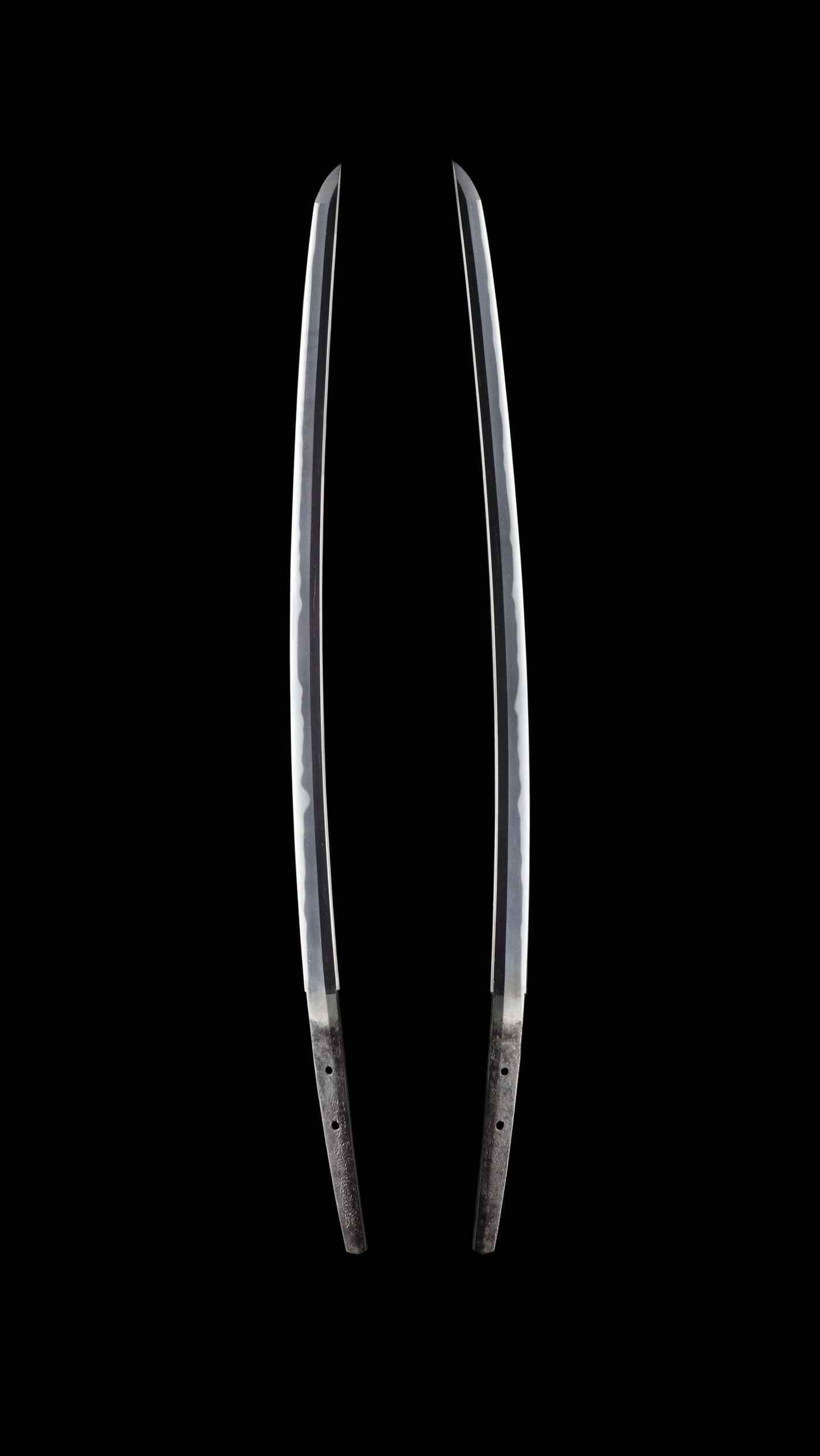
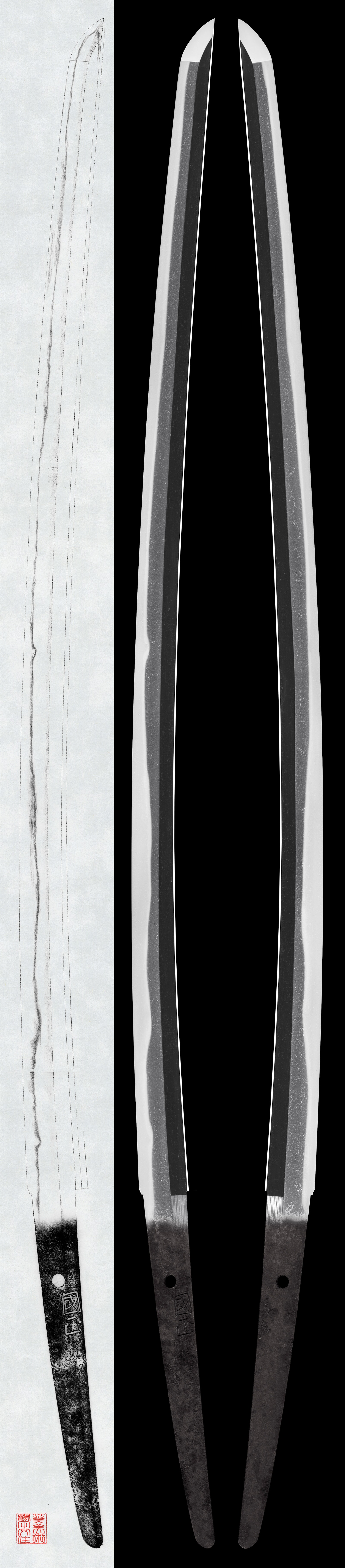
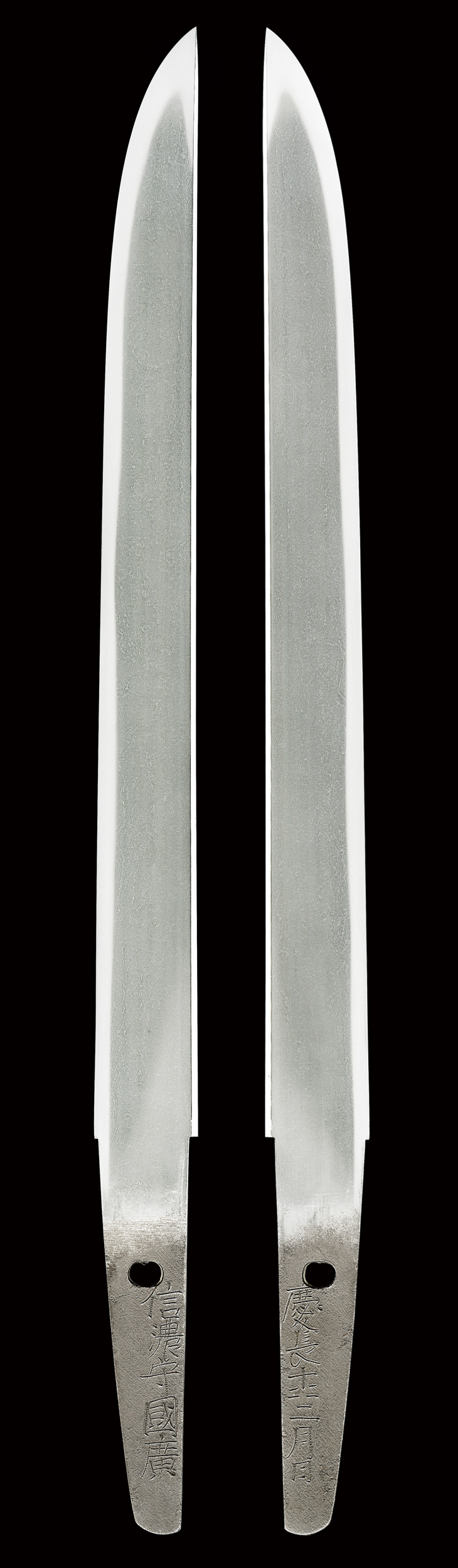
Description Keijō: ; ; wide with a slightly elongated () proportion; thick ; almost no curvature. : mixed with and a tendency toward ; the grain stands up, producing the distinctive, rough-textured -mono skin; extremely fine adheres thickly; fine enter well; from just above the an oblique suikage appears. : ; deep ; adheres well, with patches of somewhat coarse intermixed; the shows slight ; fine appear, with small ; the tends toward (subdued). : straight, turning back in ; the tip shows . : None. : ; -tending ; in large (the upper are a later addition); one ; on the , below the and toward the , there is a rather large five-character signature cut with a comparatively fine chisel; the reverse bears the date inscription as well.
Artisan Shinano no Kami Kunihiro ( Kunihiro)
Era Keichō era (dated; Keichō 14 [1609], 12th month, day unspecified)
Explanation Kunihiro was originally a warrior in the service of the family, lords of Obi Castle in province (Kyūshū). After that house fell into decline, he traveled through various provinces, refining his swordmaking skills, and during this period he produced blades in a number of regions. From Keichō 4 (1599) onward he settled permanently at Ichijō in Kyoto, where he trained many excellent disciples; he is said to have died in Keichō 19 (1614). His workmanship can broadly be divided into two types: among his works prior to settling at (so-called Tenshō-uchi), examples are seen that follow the styles of late (sue-Sōshū) and late Seki (). By contrast, his works after settling there (so-called Keichō-uchi) differ in style from these, and many appear to have taken as their model the superior masters of .
This shows an forge mixed with and an tendency; the grain stands up to produce the distinctive, rough-textured characteristic of work. Extremely fine adheres thickly, and fine enter in abundance. The is a with well-adhering , and in places it includes somewhat coarse ; the is slightly , and within the temper there appear fine and , among other activities.
Its broad, slightly elongated proportions with thick , and its nearly flat construction with very little curvature, call to mind the form seen around the Kenmu era (the very end of the period to the opening of the period). Taken together with the above straight-tempered style, one might suppose that Kunihiro here sought to recreate, in his own manner, something in the vein of Kunimitsu. As noted, many of Kunihiro’s works take their model from the superior masters; within that body of work, this is an unusual example. Relative to his customary range in this manner, the is deeper, and there is also active work within the ; overall, it gives forth an antique flavor. Moreover, the way an oblique suikage rises from below the , and the uneven distribution of coarse within the hardened edge, together with the ’s tendency toward , reveal the distinctive “taste” of this smith.
Kunihiro’s (re-creative copies) are not merely imitative reproductions; rather, he thoroughly digests the model and, without ostentatious display of technique, creates anew. For that reason, even in such an his individuality is likely to emerge. This is a superior piece by Kunihiro that faithfully reproduces even the -like form; its robust build is also pleasing, and the work thereby gains still greater forcefulness.
In addition, a date of Keichō 14 is itself scarce among his works: it is limited to only a few examples, confined to and ; of this date have not been encountered. Combined with the aforementioned workmanship, this piece is also of great documentary value as source material for the study of Kunihiro.