The Yamato schools grew up in the shadow of Nara’s great monasteries: Tegai took its name from a gate of Tōdaiji. Their austere masame and quiet suguha are a temple aesthetic, prized ever since for exactly that restraint.
 NihontoWatchNihontoWatch
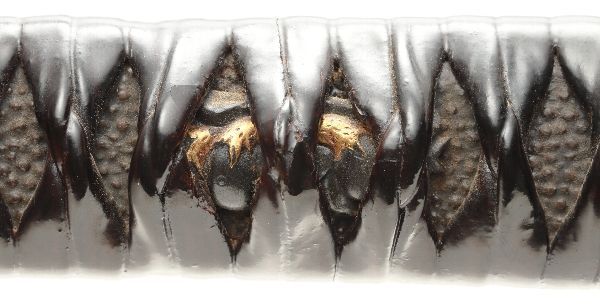
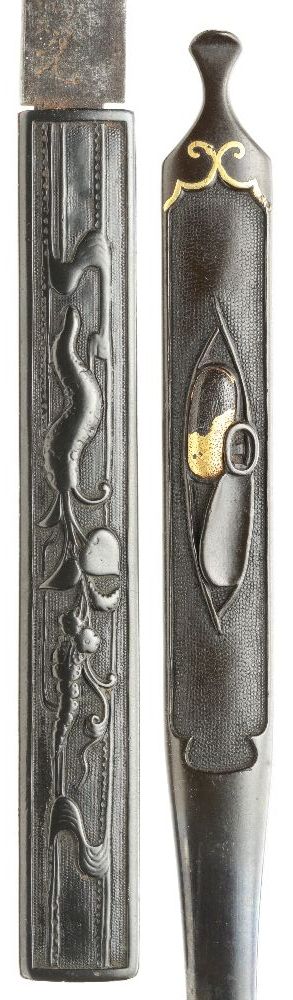
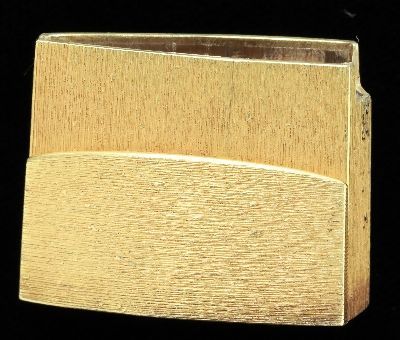
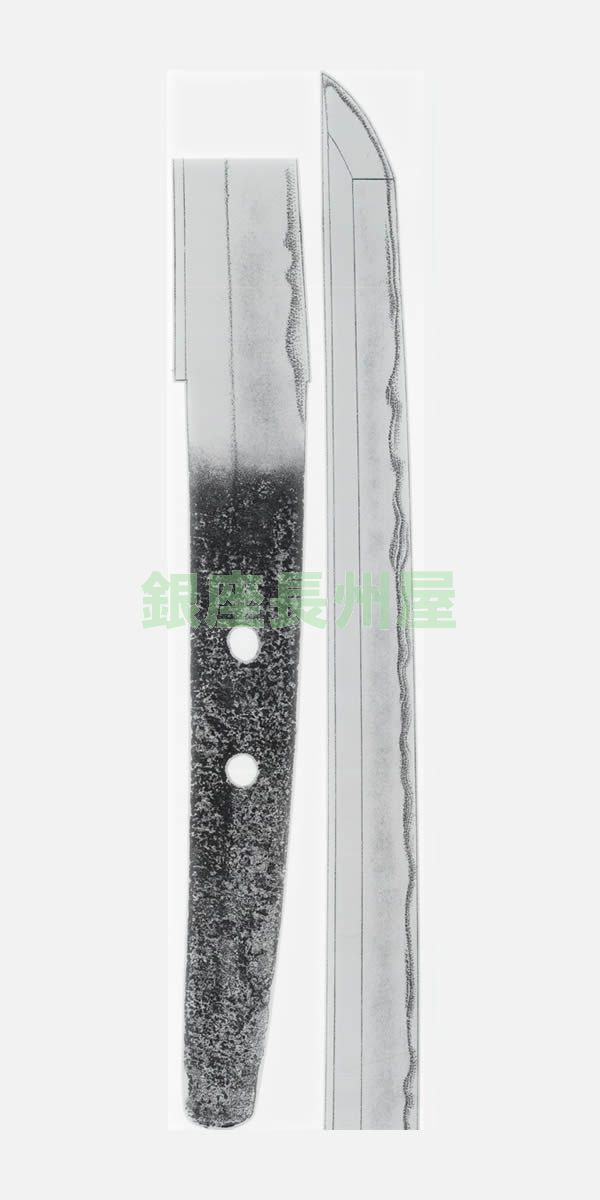
大和国に栄えた五派の中でも殊に歴史が古く、東大寺の背後若草山西の千手院谷にあった僧院に属していたと伝えるのが千手院鍛冶である。大和物の作風の源流を成して地鉄鍛えが古調であるところに特徴がある。平安時代後期の行信と重弘の工銘が記されてはいるも在銘作はなく、遺作のほとんどが無銘である。 この太刀は、ゆったりとした反りに腰反りが加わり、先伏しごころに小鋒に結んだ、実戦の時代へと向かいつつある鎌倉時代初期の姿格好。大太刀に添えて操作性に富んだ小太刀を備えていたものであろう。鮮明な地景を伴う板目鍛えの地鉄は、大きく揺れて流れて所々柾目肌が際立ち、肌間を埋める小板目鍛えに地沸が浮かび、鎬寄りに淡く乱れた沸映りが立って一際古調。刃文は小模様に連続する小互の目を基調に焼頭が尖りごころとなり、物打辺りが湯走りで乱れ、帽子は掃き掛けて僅かに返る。匂口柔らか味のある焼刃は物打辺りが特に冴えて明るく二重刃、打ちのけが層を成し、刃中は肌目に沿って金線、沸筋、砂流しが働き、殊に鋭い金線が区上から鋒まで途絶えることなく連続する。棟の所々に遺されている受け疵が戦場での活躍を物語るのみならず、強い衝撃を受けても尚健体を保っていることに驚きを禁じ得ない。 附されている拵は、戦国時代の野戦用を忠実に再現したもので、引き締まった鞘と立鼓のとられた柄形とし、黒漆塗の鮫皮に古金工の目貫を革緒で両捻巻に仕上げ、さらに黒漆を塗り施した堅固な造り込み。特筆すべきは、平安鎌倉の古式に則り、鞘塗の下地を動物の薄革で包んで堅牢さを高めている点。刀身、拵共に古を偲ぶ数奇者の美意識が示された作となっている。
NihontoWatchOffered by Choshuya
This piece has sold
14 on the market
Get an email when new Senjuin School work hits the market.









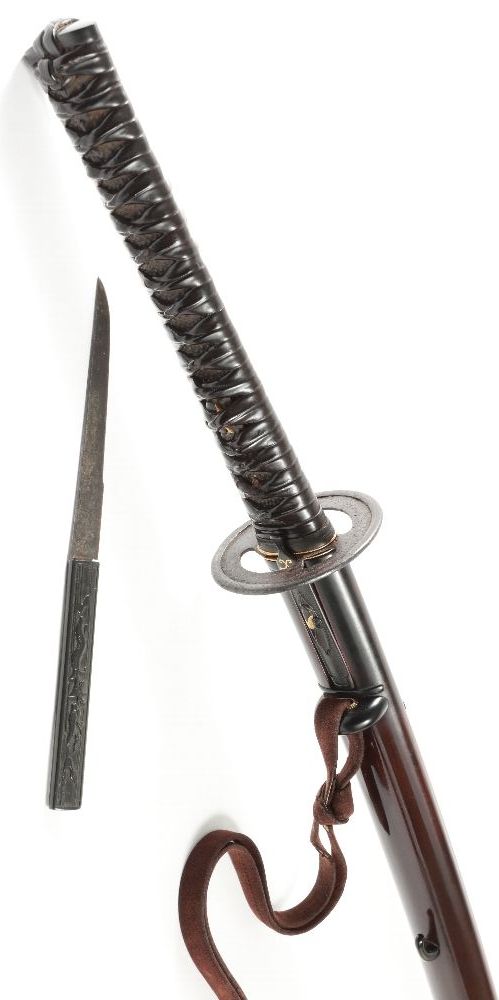
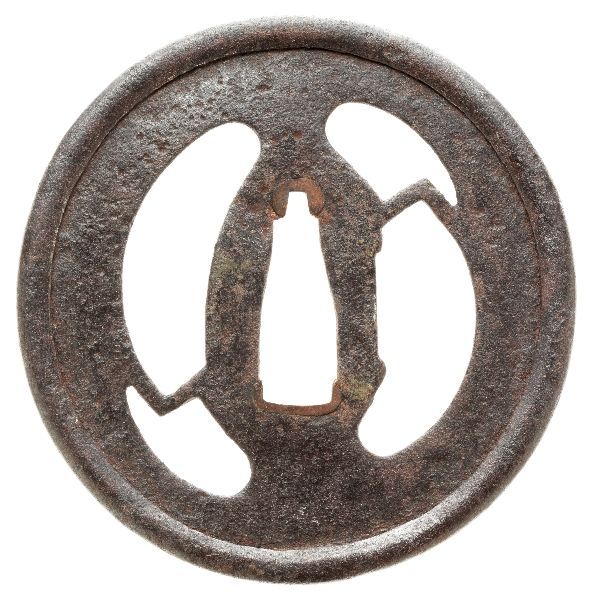
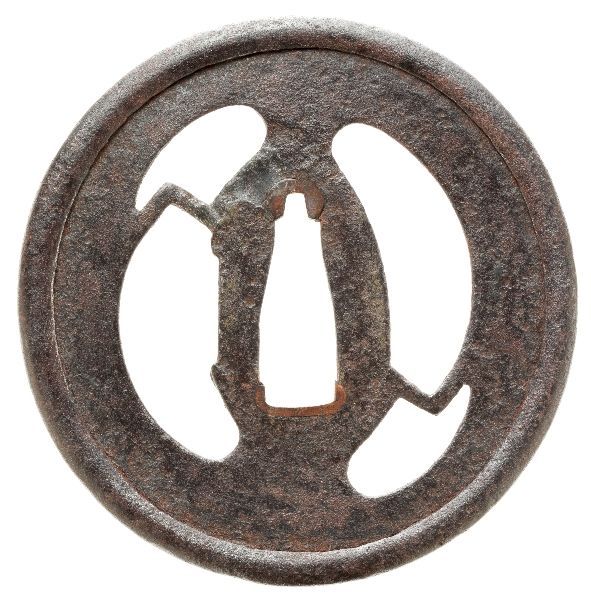
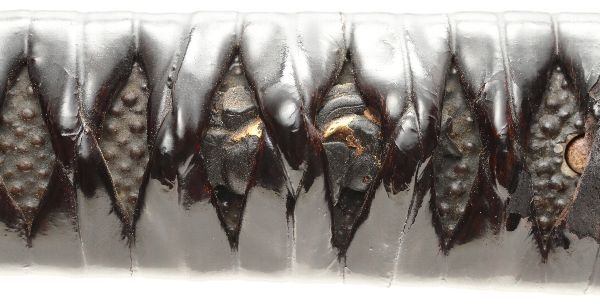


Yamato-den · Yamato
14 pieces on the market now
Among the five schools of the Yamato-den, Senjuin (千手院) is held to be the earliest in origin, its name drawn from the Senjudo, a hall enshrining Senju Kannon (the Thousand-Armed Avalokitesvara) said to have stood at the western foothills of Mt. Wakakusa in Nara. The smiths who gathered in that quarter, working under the patronage and within the orbit of the great temples, formed the group, and their close association with the warrior-monks of the monastic establishments is thought to account for the scarcity of signed work that marks the school across its whole span. Old transmitted writings name two masters of the late Heian period, Yukinobu and Shigehiro, though no secure example by either has been confirmed; the oldest surviving signed piece is a tachi cut with the three-character inscription "Senjuin," placed in the early Kamakura period. Blades prefixed Ko-Senjuin are assigned to the earliest phase and retain the lingering presence of the straight-sword (chokuto) tradition, material indispensable to the study of how the curved shinogi-zukuri blade took form. Production runs from the late Heian period through the Nanbokucho era. The school's vocabulary is rooted firmly in Yamato practice. The jigane is an itame mixed with mokume and passages of nagare-masame, often tending toward hada-dachi, with thick ji-nie adhering well, abundant chikei, and in finer examples a faint nie-utsuri that leaves the steel bright and clear; the masame gathers and strengthens toward the edge on the most Yamato of the blades. The hamon is fundamentally a suguha with a shallow notare tendency, mixing ko-choji, ko-gunome, and ko-midare, the habuchi fraying into hotsure with uchi-noke, nijuba, kuichigai-ba, and yubashiri worked in profusion; thick ko-nie lies along a clear nioiguchi, while kinsuji and sunagashi run vigorously through the ji and ha. The boshi enters straight and forms a ko-maru with vigorous hakikake, or finishes in yakizume.
Within this shared foundation the hands diverge. Yoshihiro is singled out as the smith whose ji and ha vary most, his nie especially strong, swelling from the school's quiet suguha into a flamboyant large midare with kinsuji and sunagashi that reads toward Soshu. Sukemitsu gathers ko-choji, ko-gunome, and small midare on a bright suguha-cho, a Bizen-leaning admixture set against the school's plainer temper, his bold two-character mei itself a mark of the hand. Nobuyoshi of the Ryumon group, a Yamato branch, divides between a lively midare carrying utsuri and a Bizen character and a subdued suguha fraying into hotsure in which the Yamato color stands strongest. To kantei a Senjuin blade is to read its position among its neighbours, and the long-standing rule holds that within the Yamato Five Schools a hamon of unusually vigorous and changeable character should be appraised as Senjuin, against the more restrained tempers of Tegai, Shikkake, Taima, and Hosho. The masame in the ha, the hotsure, kuichigai-ba, and nijuba, and the yakizume or hakikake boshi keep the work within Yamato, while the brightness of the nioiguchi and the ko-midare on the edge set it apart from the plainer suguha of its sister schools. Surviving forms span tachi, katana, kodachi, ken, and yari, the ken notably numerous because they served as goshintai and ritual implements rather than weapons of the warrior class; many blades keep their ubu nakago, with pronounced koshizori and funbari of archaic bearing. Yoshihiro's dated signatures give him a face among many anonymous hands, his manner the touchstone for Soshu-tinged mumei attributions; Nobuyoshi is carried to high standing by a single great signed tachi recorded in Honma's inventory of the Imperial collection; Sukemitsu is anchored by a dated reference tachi in the Tokyo National Museum. The bulk of the school's record is mumei, the attributions resting on construction, the flowing masame-inclined forging, and the bright suguha alone, and provenance runs through religious institutions such as Tanzan Shrine and Kyoo Gokoku-ji (To-ji), attesting to the school's monastic roots. Learn more →
| Smith | Era | Designated |
|---|---|---|
| Nobuyoshi延吉 | 1288-1293 | 29 |
| Yoshihiro吉弘 | 1352-1356 | 5 |
| Yoshihiro義弘 | 1312-1317 | 3 |
| Yasushige康重 | 1306-1308 | 1 |
| Akimitsu日光 | 1303-1306 | 0 |
Yamato in the Kamakura period
The Yamato schools grew up in the shadow of Nara’s great monasteries: Tegai took its name from a gate of Tōdaiji. Their austere masame and quiet suguha are a temple aesthetic, prized ever since for exactly that restraint.
A Hozon-certified blade judged to show notably superior workmanship and a better state of preservation. The bar is higher: re-tempered blades and most unsigned Muromachi/Edo works are excluded.
The NBTHK (Nihon Bijutsu Tōken Hozon Kyōkai, the Society for the Preservation of Japanese Art Swords) is a public-interest incorporated foundation founded in 1948 and supervised by Japan’s Agency for Cultural Affairs (Bunkachō); it is based at the Japanese Sword Museum in Tokyo. Its expert panels physically examine each submitted work (shinsa) and issue a certificate (kanteishō) ranking it by artistic and historical merit. NBTHK papers are the most widely recognized standard of authentication for Japanese swords and fittings.
NBTHK official siteIf, due to our fault, the item differs significantly from its proper condition, the item may be returned. Cooling-off is within one week of the item's arrival.